
Hi. I have been quiet for a while because I was working on several big things at once. A cell on the map is no longer just a number — you can step inside it and see a place where people live.
The infection inside became ground you can see and take back with your own hands. That is the main thing that changed over the last five versions.
🏙️ A district became a place
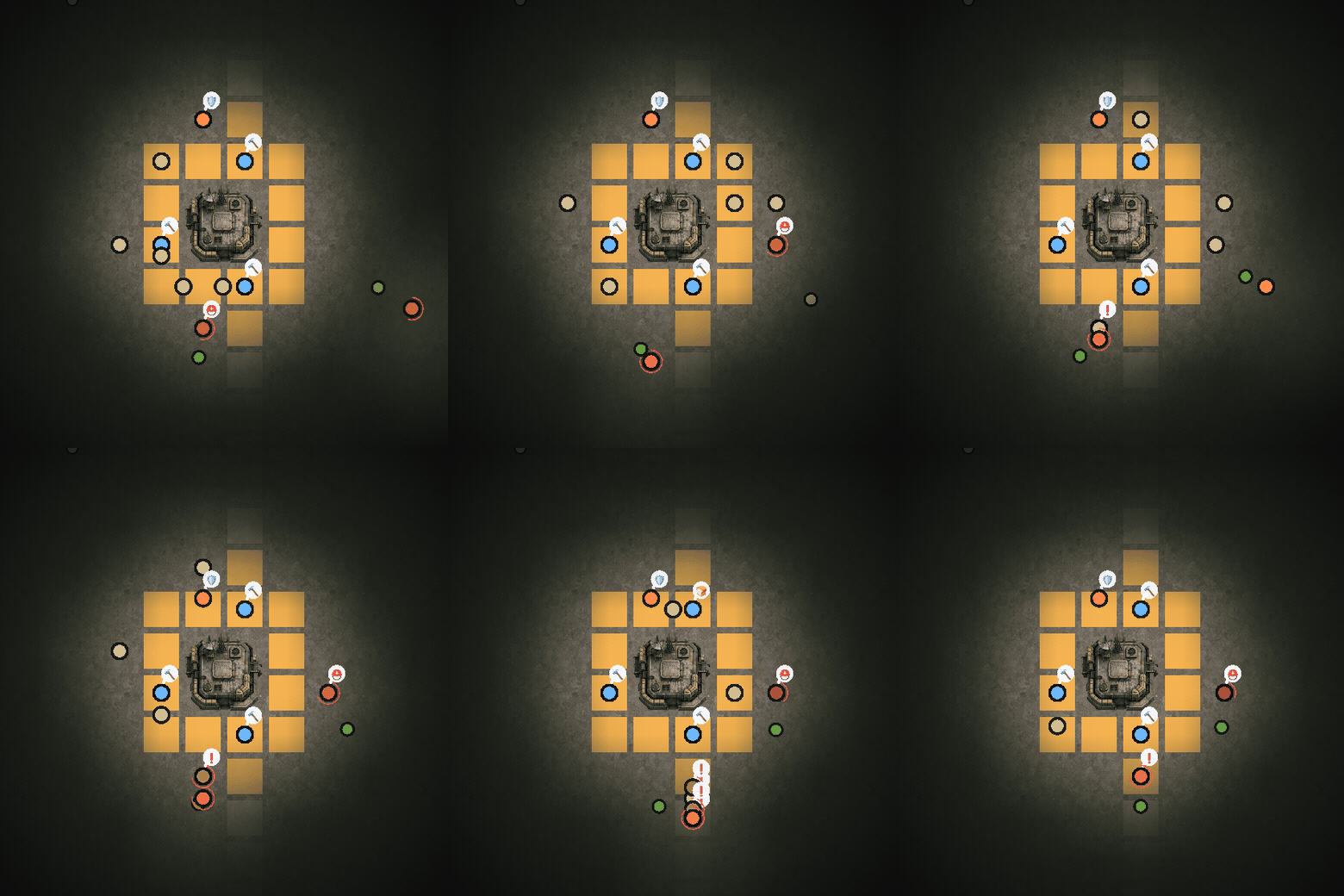
A cell used to be a line in a list, and now you can look down into any cell you own and watch its life from above. You see the central building, the structures around it, the streets and the residents going about their day. The layout is not random: a ring of road runs around every building, the rings are linked into one network, and the same cell always comes out the same way — that is its face.
There are exactly as many people on the scene as this cell really has: every assigned worker, plus the free residents it can actually feed and house. The colour of a figure shows the role, and the bubble above the head shows what the person is doing right now. The district has a night too: when it gets dark people go home to sleep, and if there is no housing here they walk past the edge and come back in the morning. The world does not freeze while you watch — the district runs in step with it at whatever speed you chose.
🌫️ Infection and the fence
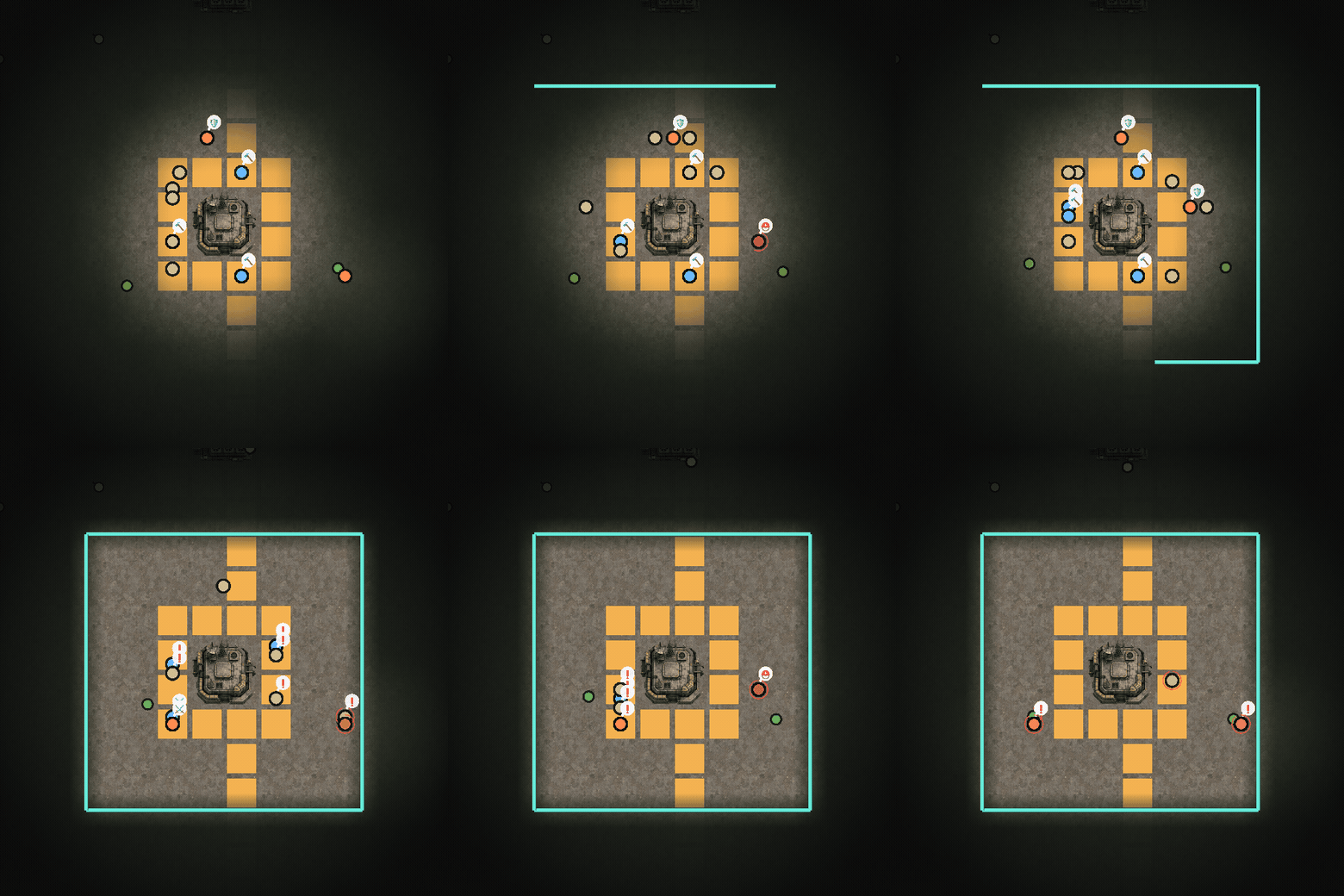
Infection stopped being a number and settled on the ground as fog. Every cell carries its own field of it, split into small patches, so you can see which ground is poisoned, how the infection spreads and how it retreats. A cell starts covered end to end, and everything after that is your work.
A dissolver device clears a circle of ground around itself, and the higher its tier and the better its power, the wider that circle grows. The main tool, though, is the fence: you place it segment by segment, clicking any edge inside the district and running the wall exactly where you want it. Close the contour and you get a safe yard, because inside a sealed fence the ground clears itself. The wall is raised by free residents, so the work goes on as long as there are hands nearby, and when materials run short you order a delivery from the colony and wait for the convoy.
🛡️ Defense made of people
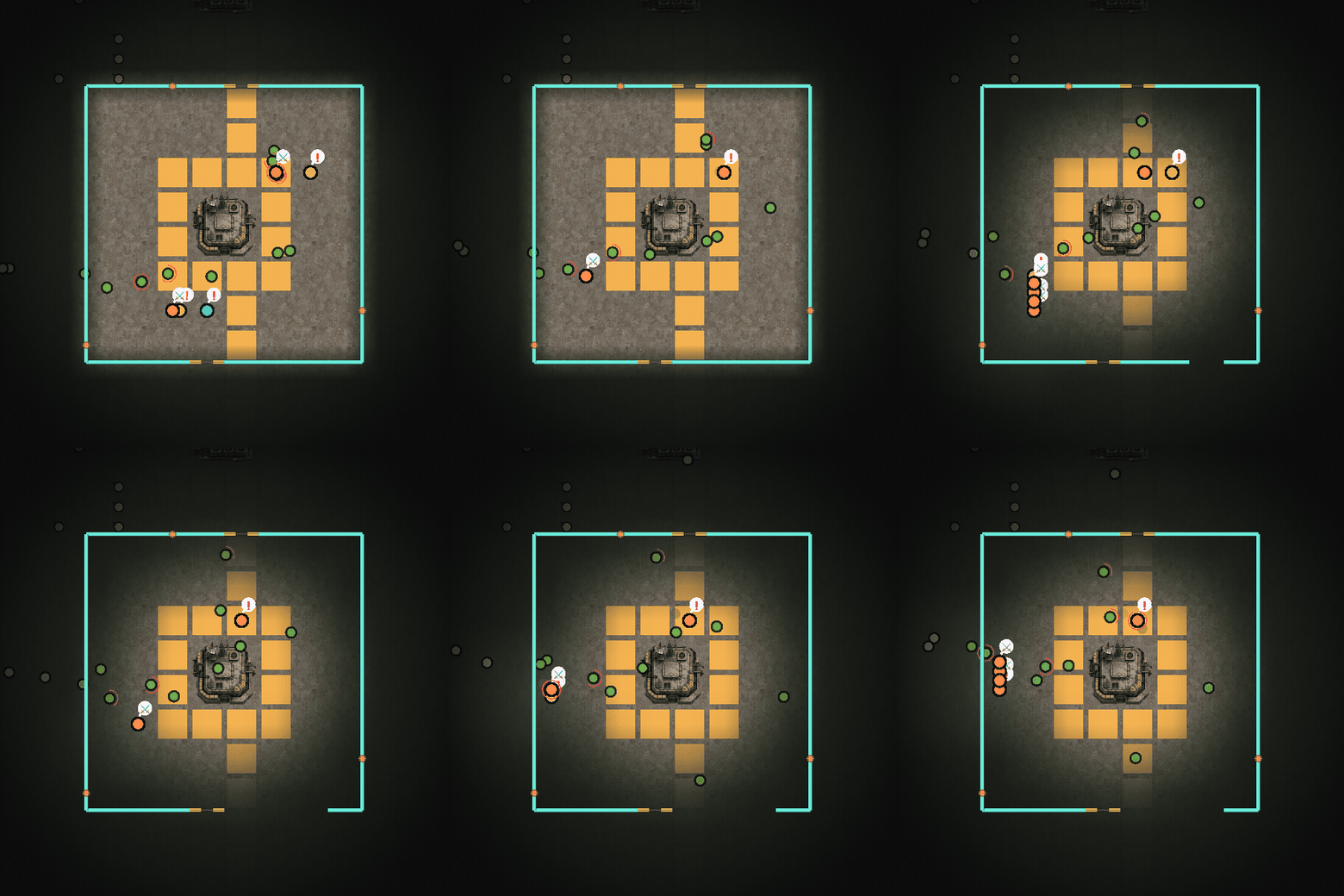
Defense now rests on living people. Militia step out to the edge, you have exactly as many barrels as there are people out there, and you set their rules of engagement yourself. A quarter of the free residents joins the defense of border districts without your involvement, but everyone who goes into the militia is a pair of hands taken off repairs, and the population summary shows you that trade-off.
The creatures do not march in a blind column towards your base. Most of them wander their own infected ground and hunt whoever steps into the fog, and only some risk breaking inside. The wall holds and fails section by section: each stretch wears down on its own, and where a creature pushed through, a ruin stays behind with the fog flowing straight into it. Gates let your people through but hold the creatures, and a fighting ramp on a finished stretch is the only place you can shoot outward from.
🗺️ Interface and controls
You can zoom the district map with the wheel and drag it with the mouse, and it opens up as far as your residents can see it. The panel shows the device tier, its radius, its power and whether it can be upgraded. The assign buttons now go dim when the connected district runs out of housing, so you can see the reason instead of guessing why nothing happens.
People can only be assigned where the housing of your connected territory reaches, so a distant corner stays empty until you extend the colony to it. There is also a bug report tool on F9: a screenshot, a snapshot of the state and your note in one press.
🧹 Under the hood
The district scene invents nothing — everything you see there is derived from the state of the cell and its neighbours, so the numbers on the scene and in the cell panel cannot drift apart. The district also remembers itself between visits: residents and creatures are saved, and while you are away it catches up on what it missed.
Dozens of playtest fixes closed old rough edges: residents no longer wander into the fog with nothing to do, panic only rises from a creature that actually broke in, and guards patrol the inner face of the fence without losing health in the fog. A separate polish release fixed the localisation, an honest housing count and other small but annoying things.
📦 Cleaning up the code
One release went entirely into refactoring: ten of the most overgrown files were split by responsibility into 24 new modules, and the files themselves shrank almost by half. The public entry points did not move, so from the outside everything works as before, and from now on it will be easier to move through this code.
That work is not finished, and I will not pretend otherwise: some files barely shrank, and the largest file in the project — the catalogue of everyday events in residents' lives — I did not touch at all. One more release was purely technical, spent on internal tooling.
🙏 What is next
More than forty people have added Latticefall to their Steam wishlist. For someone else that may be a small number; for me these are real people waiting for the game, and it is a huge motivation. Thank you. If you have questions, ask — I will answer.
Right now I am polishing the game towards a demo, so releases will come less often but each one will be bigger. Add the game to your wishlist — that is the best support I can get.