
Ahoy, traders and seafarers! Welcome back to another exciting devlog for High Seas, High Profits! Grab your ledgers and quills, because we've got a boatload of updates to share. Let's dive right in!
The Trader's Hall: Your Medieval Money Machine
I've been hard at work on the Trader's Hall, the beating heart of our medieval trading empire. This central hub is where you'll manage your goods & production, and where you chat with other traders. Think of it as a medieval Wall Street, but with more rats and less air conditioning.
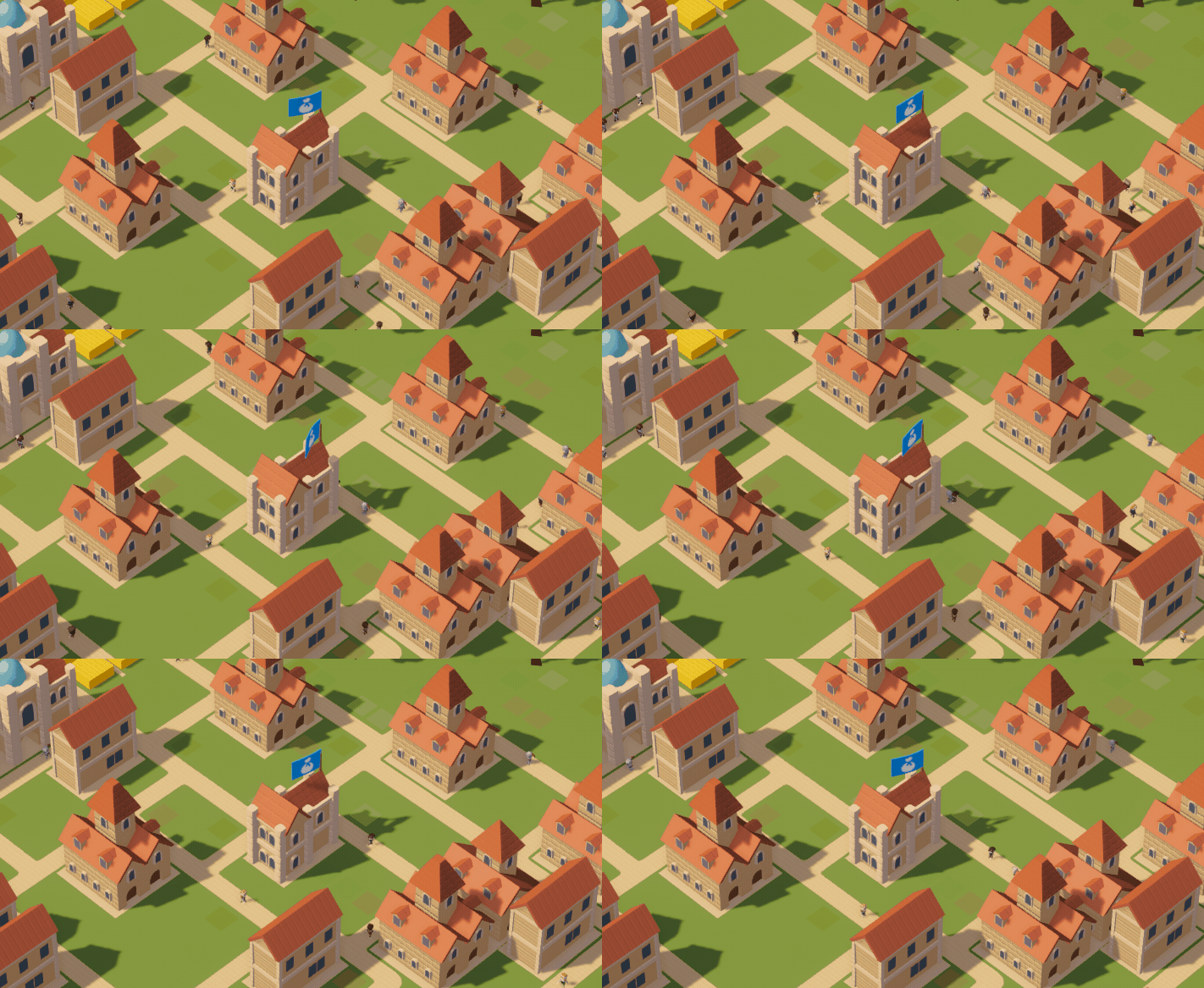
The first thing you'll notice is the snazzy new blue flag adorning the hall, complete with a white goods bag icon. I'm so fond of it that you might see flags popping up all over the place soon.
Five Pillars of Trade: The Trader's Hall Features
The Trader's Hall now boasts five key features, each designed to give you full control over your budding trade empire:
The Overview: This is your one-stop-shop for all things trade-related in your city. Want to know which goods have production bonuses? Curious about city-wide perks? Need a list of traders operating in your turf? The Overview has got you covered.
The Warehouse: This is where your goods are stored, with businesses providing cargo space. Don't worry about running out of room - the city's got your back with cheap rental space. Unless you're playing on higher difficulty levels, in which case... well, good luck counting those pennies!
Production: Here's where you can see what both you & the other traders are making in the city.
Consumption: Keep track of what your city and businesses are eating up. It's sort of like a medieval grocery list.
Trading: Set up your buy and sell orders, manage your stock limits, and watch as your automated trading empire grows. It's like programming your coffee maker, but for profits!
Production and Consumption: A Delicate Balance
Let's talk numbers. I've been wrestling with production values, trying to ensure that 10 sacks of clay don't magically turn into 30 sacks of bricks. It's harder than it sounds - medieval alchemy is tricky business! Did you know it takes 4 people a whole month to mix 6 barrels of wine with 1 barrel of honey and make 7 barrels of mead? I suspect most of that time is 'quality control tasting'.
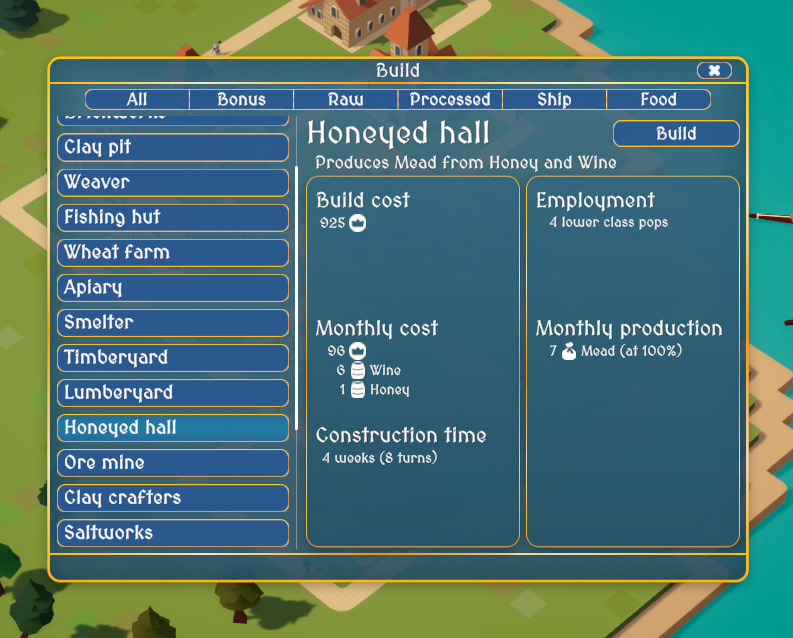
I've also implemented a system where production and consumption depend on employed population. Some businesses even require an upper-class pop as a manager. No manager? Your business operates at half capacity. It's like medieval middle management, but with EVEN MORE fancy hats.
In the future you'll be able to save and load order sets, because who wants to manually input "buy low, sell high" for the umpteenth time?
The Nitty-Gritty: Production and Consumption Cycles
Here's how it all comes together:
- Businesses start in a "Needs resources" phase.
- The warehouse is checked for available inputs.
- If resources are available, they're removed from the warehouse.
- Four turns later, voila! Production complete.
- Rinse and repeat.
The city market acts as a warehouse for NPC traders & city owned businesses. It's like a medieval Amazon fulfillment center, but 'Prime' means you get first pick of the least moldy items.
Wrapping Up
That's all for now, folks! We've covered trading halls, production cycles, automatic trading, and even touched on medieval wine-mixing techniques. Who said trading simulations couldn't be educational?
Stay tuned for more updates, wishlist if you haven't and until next time, happy trading!