
Hey everyone!
I want to use today to talk about a topic I have hinted at a few times, but have not given a detailed explanation of yet: Upgraded materials.
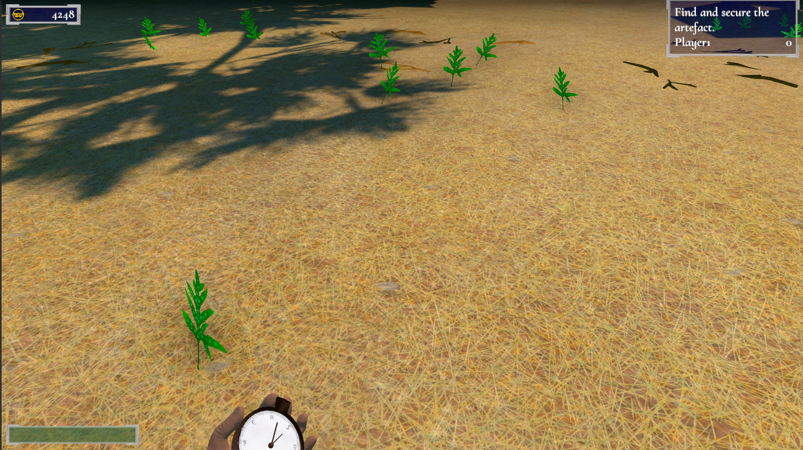
As those of you who have played the game in its current form know, many of our textures (both of the terrain and the building materials) are somewhat plain. This was fine in the beginning of our development, when everything was equally plain and placeholder, but at this stage, the ground and the building materials are lagging behind the detail put into the materials you find on the plants.
Unsurprisingly, we have therefore begun working on improved materials a little while ago, which is quite a bit more work than simply painting a texture, but I think will pay off in the long run, considering we can reuse the materials across buildings and biomes.
Two materials I want to highlight today are the cobblestone for buildings (which you’ve seen a few times in the charcoal hut), and the pine-needle texture for the ground, which we use in the Rich Lake biome.
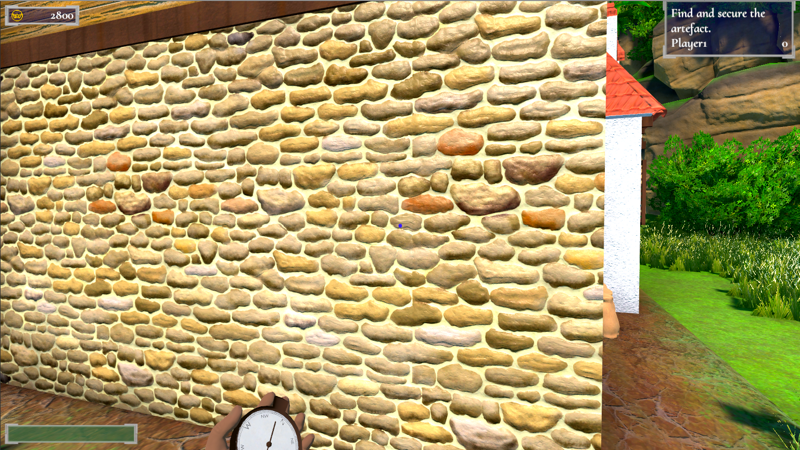
Unlike a simple drawn texture, both of these materials have been fully modelled in 3D, and have then had a normal map baked from them. The Cobblestones for instance are sculpted as a seamless texture, and then hand painted over. The normals are baked out and the albedo saved for use in Unity.
This normal map means that the light gets reflected off the material as if it were still 3D, even when we put it on a smooth surface in the game. After this is done, we of course need to maintain consistency with the painted style of the rest of the textures, and so John uses the image we render from the 3D model as a basis to create a mostly hand-drawn texture for the material (depending on the objects being modelled).
The results are then hand drawn materials, which nonetheless have a lot more depth and density of detail than any of the ones we have been using so far.
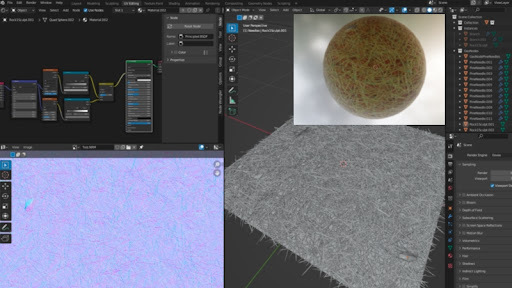
The higher density ground textures like the pine needle floor or the grasslands, are modelled elements (plants / grasses) which are then distributed procedurally over a plane using Geometry Nodes in Blender which are incredibly powerful and versatile, we can then generate a texture we want to capture the data for and use in the game.
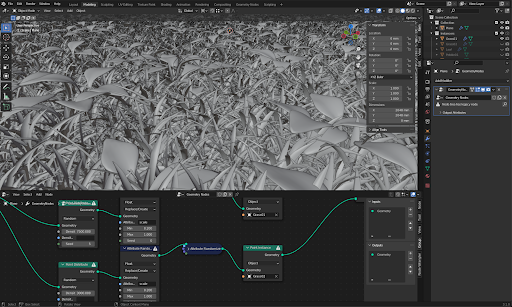
I think the results speak for themselves, and we are continuing to upgrade more and more of the materials as we go.
Until next week!