
Hey everyone!
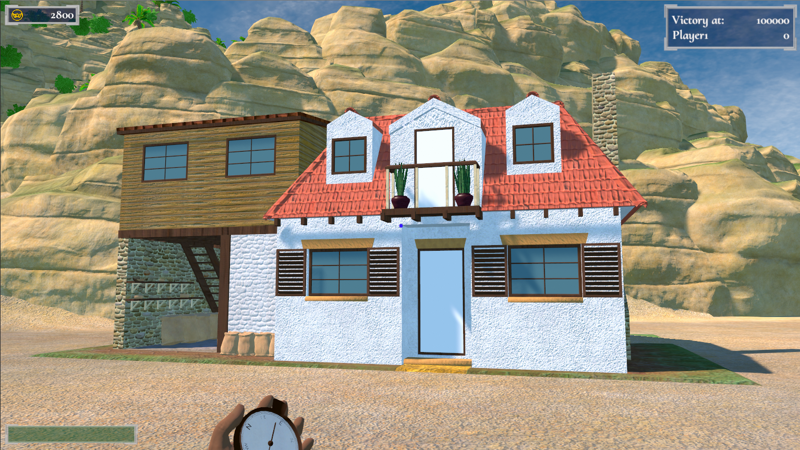
John here, I am going to take the opportunity to dive a little into some of the art processes this week. As you can see from the header image, The ammunition maker has been created for the game. A key part of the model for this artisan was the ability to reuse the texture I created for the charcoal maker which I want to speak about during this blog.
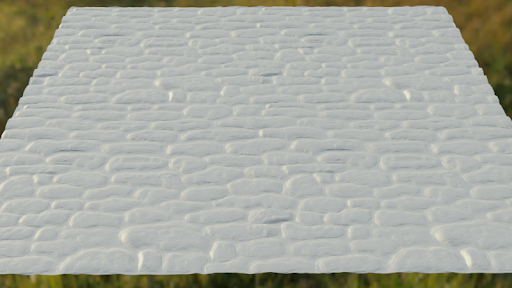
This is the texture I created to start with. You are looking at a high resolution model with the cobblestone carved in Blender where I spent some time sculpting a tileable wall, then I used the sculpt to generate normal maps and ambient occlusion maps for the texture to be useful in Unity.
This is a useful process I’d like to talk through for those of you that are interested. And it will highlight some of my future tasks for improvement of the art within the game.
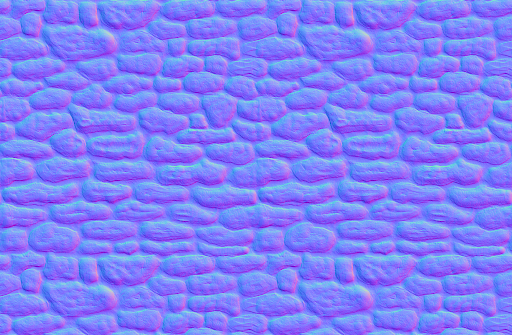
So I baked out this normal map from the sculpt. The different hues tell the game engine how to render the texture, to show shadow when in the light. The ambient occlusion provides information for the engine for when this texture is in shadow. Combine that information with the flat colour of the albedo map and the texture can produce a good looking wall on just a flat plane.
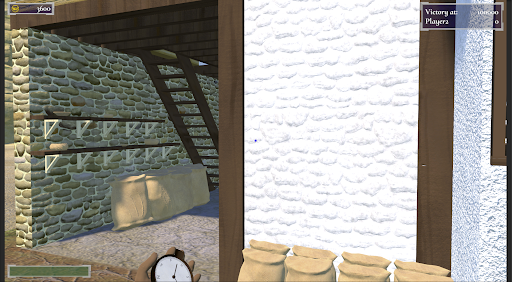
The beauty here, as seen with this screenshot - is that we can change just the albedo for the texture, and it makes it appear as though we have painted over the cobblestone wall for this building, which helps to merge the different building types together. We can equally introduce other albedos for differences and variety which will be coming in a future industry update where all of our buildings will have random elements that change each time you place a building of that type. So, for instance, you could have a row of the same houses which have individual colours for the walls or different balconies, chimneys or windows in different places etc which will all help to make the village feel more organically grown and lived in.
I have it on my to-do list to create a texture like this cobblestone for the render for the buildings (at the moment, it was rapidly done and lacks the same depth and charm) the timber roof tiles, the terracotta roof tiles and the bricks. By the time that I have finished with them, we should have a nice collection of materials which transform base models and upgrade all of our models equally. I look forward to showing you the improvements as we create them.
Until next week!