Hello everyone! We're so happy to finally unveil Virtue and a Sledgehammer , a narrative exploration game in which you go back to your hometown and tear it down with a hammer, because... well, you'll find out. View game page This is our most ambitious project to date, and sort of
Hello everyone!
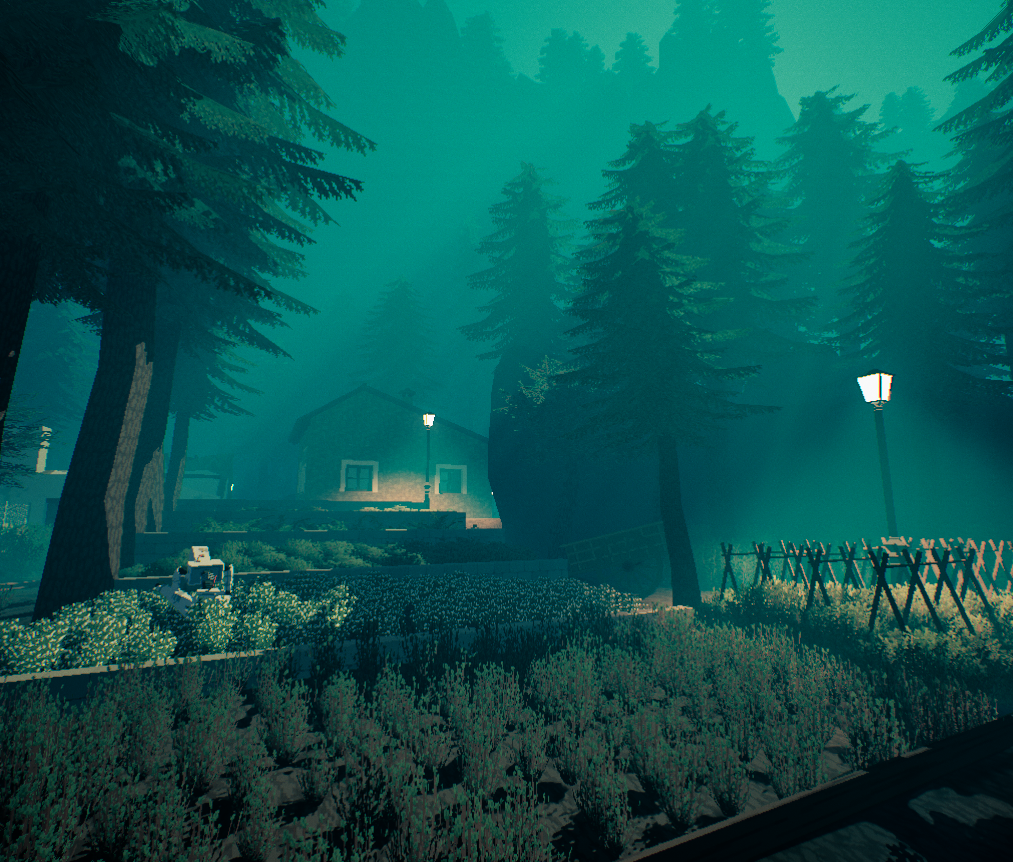
We're so happy to finally unveil Virtue and a Sledgehammer, a narrative exploration game in which you go back to your hometown and tear it down with a hammer, because... well, you'll find out.
This is our most ambitious project to date, and sort of marks the full maturation of the joint venture we've been exploring together at Deconstructeam and Selkie Harbour. We've been collaborating since 2022, created many small games, and in April 2025, released our first commercial project, Many Nights a Whisper, a meditative third-person archery game, to critical acclaim!
Virtue and a Sledgehammer is heavy in both the narrative and the hammer action. We pitched it as a "Walking simulator with a sledgehammer," but Devolver is adamant about actually selling the games they publish, so they suggested we didn't move forward with that description lol.
Anyway, there's exploration, environmental storytelling, combat, lots of destruction, but also a decent amount of reading and interactive fiction, which is our specialty!
And it's... weird and a bit messed up. Hope you can connect with what we're building here!
We just released a new game on Steam! It's short and experimental, about 1 hour long. So far, players who have been playing it are reporting it's pretty intense, check out the user reviews 🙈 And the press reviews hold high praise too! "Few games have this tension and impact" - G
We just released a new game on Steam! It's short and experimental, about 1 hour long. So far, players who have been playing it are reporting it's pretty intense, check out the user reviews 🙈
And the press reviews hold high praise too!
"Few games have this tension and impact" - GamesRadar 4/5
"A masterpiece that can be experienced in a single sitting. Don’t pass this up." - MonsterVine 4.5/5
For the past decade, Deconstructeam has been crafting 2D pixel-art narrative experiences like Gods Will Be Watching, The Red Strings Club, and The Cosmic Wheel Sisterhood. Now, we're thrilled to explore a–at least for us–new frontier: 3D games. Over the past years, we've been qui
For the past decade, Deconstructeam has been crafting 2D pixel-art narrative experiences like Gods Will Be Watching, The Red Strings Club, and The Cosmic Wheel Sisterhood. Now, we're thrilled to explore a–at least for us–new frontier: 3D games.
Over the past years, we've been quietly honing our skills, collaborating with talented indie studio Selkie Harbour, and experimenting with exciting new ideas. While our larger commercial projects are still under wraps, we’re eager to share a glimpse of something special with you:
It's a short, meditative, third-person archery game about dreams, pressure, and expectations. If you want to know more and see some cool gifs, visit our Steam page and if it piques your interest, please, wishlist the game!
This is a special milestone in our career, as it is our first self-published game, and it also paves the way to some higher quality games we never dreamt of doing... We can't wait to show you more of the other cool stuff we're working on! Please, let us know what you think since this is an essential moment of growth for us <3
Hello! We're back! It's been five years since we released The Red Strings Club (almost 10 since we released Gods Will Be Watching, phew) and now... We're proud to finally show you what we've working in for all this time, the most ambitious project we've ever attempted: The Cosmic
Hello! We're back! It's been five years since we released The Red Strings Club (almost 10 since we released Gods Will Be Watching, phew) and now... We're proud to finally show you what we've working in for all this time, the most ambitious project we've ever attempted:
It's a tarot deckbuilding narrative experience! You will play as Fortuna, a witch living in exile on an asteroid. Seeking freedom, Fortuna forms a pact with a forbidden creature—the mysterious and ancient Ábramar—who grants her the ability to craft magic-infused tarot cards.
It's a game about community, identity and personal responsibility. You will meet many Witches and get to read their past and futures using your very own Tarot deck. Slowly, you will see yourself immersed in an intergalactic Witch plot!
We're super excited to finally release this game. We hope you will support us while we're getting ready for release. Can't wait for you to play it!
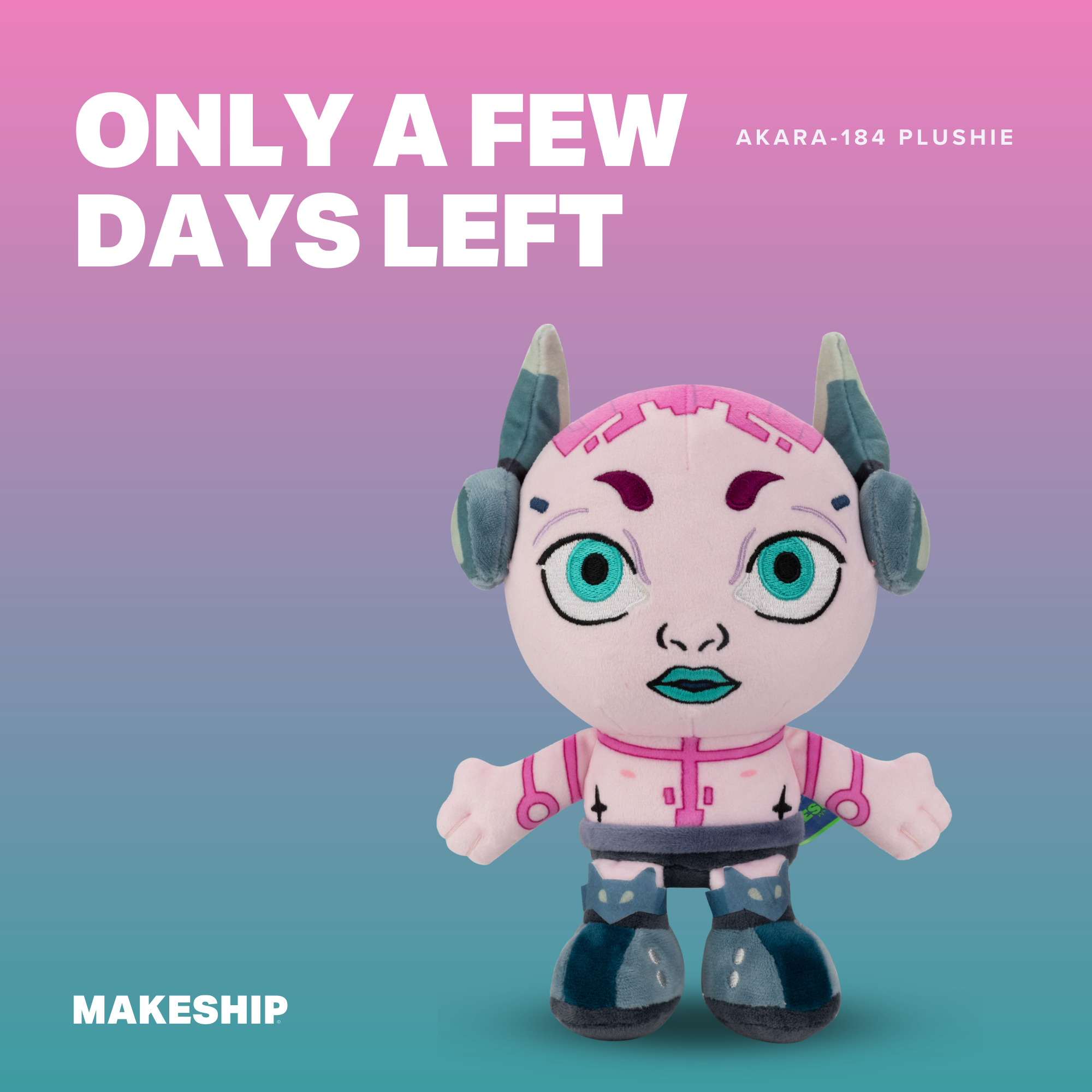
Hello world. 🧠 Did you meet our Akara-184 plushie? They are coming into existence in an adorable shape. To make us all happy. (Still deciding on the definition of happiness, though.) Available for a limited time this week!
Hello world. 🧠
Did you meet our Akara-184 plushie?
They are coming into existence in an adorable shape. To make us all happy. (Still deciding on the definition of happiness, though.)
Essays on Empathy is a curated compilation of ten interactive stories from Deconstructeam , the creator of The Red Strings Club and Gods Will Be Watching . Inhabit the lives of a diverse cast of characters from all walks of life in bite-sized, innovative, interactive stories; fro
Inhabit the lives of a diverse cast of characters from all walks of life in bite-sized, innovative, interactive stories; from a hitman working at a flower shop, to a schoolgirl who is convinced her skeleton isn't hers.
Explore 10 unique, offbeat tales including "De Tres al Cuarto," a brand new short experience exclusive to the compilation about a couple of two-bit comedians trying to make it big.
You may know Deconstructeam from their cyberpunk bartending story game The Red Strings Club , but they've made other games. Several other games, actually, which they're pulling into a colleciton called Essays On Empathy . Essays includes a bunch of previously released Deconstruct
You may know Deconstructeam from their cyberpunk bartending story game The Red Strings Club, but they've made other games. Several other games, actually, which they're pulling into a colleciton called Essays On Empathy. Essays includes a bunch of previously released Deconstructeam story romps along with their new game De Tres Al Cuarto about a couple comedians trying to make it big together. Essays On Empathy is launching on May 18th, and you can snag a peek at what it includes in a new trailer.
Essays on Empathy is a curated compilation of Deconstructeam's best efforts in seeking new narrative experiences in games. Inhabit the lives of a diverse cast of characters from all walks of life in bite-sized, innovative, interactive stories; from a hitman working at a flower sh
Essays on Empathy is a curated compilation of Deconstructeam's best efforts in seeking new narrative experiences in games.
Inhabit the lives of a diverse cast of characters from all walks of life in bite-sized, innovative, interactive stories; from a hitman working at a flower shop, to a schoolgirl who is convinced her skeleton isn't hers.
Explore 10 unique, offbeat tales including "De Tres al Cuarto," a brand new short experience exclusive to the compilation about a couple of two-bit comedians trying to make it big.
Special Reserve Games has teamed up with Deconstructeam and Devolver Digital to create the ultimate physical collector's edition of THE RED STRINGS CLUB! Limited to a run of 3,000 copies, for true fans and collectors, this special physical edition is ON SALE NOW! (while supplies
Special Reserve Games has teamed up with Deconstructeam and Devolver Digital to create the ultimate physical collector's edition of THE RED STRINGS CLUB!
Limited to a run of 3,000 copies, for true fans and collectors, this special physical edition is ON SALE NOW! (while supplies last)
The Special Reserve Games physical edition of THE RED STRINGS CLUB for Nintendo Switch features:
SWITCH CARTRIDGE
Includes critical updates, patches, and DLC
Packaged inside the Switch game case
SHIPS IN A SPECIAL RESERVE BOX
Multiple textures and processes
Makes a great shelf display and protects your game!
SEQUENTIALLY NUMBERED GAME PACKAGING
REVERSIBLE JACKET ARTWORK
32-PAGE INSTRUCTION BOOKLET
Inside the shrink-wrapped game packaging
TWO BAR COASTERS
Colorful PVC soft rubber
3.5" in diameter
5" x 7" ART CARD
Printed on thick linen paper
Watercolor-style portrait
Now that Cyberpunk 2077 is delayed again until December 10th , what are you to do? You’ve grown a lurid blue mohawk, your leather jacket is almost worn in, and your prescription mirrorshades are ready for collection at Specsavers – but for what? You might as well use this time to
Now that Cyberpunk 2077 is delayed again until December 10th, what are you to do? You’ve grown a lurid blue mohawk, your leather jacket is almost worn in, and your prescription mirrorshades are ready for collection at Specsavers – but for what? You might as well use this time to explore all games cyberpunky, from edgy and nihilistic griping about how the future sucks to wacky cyberjapes that make you wanna jump up and shout HACK THE PLANET. I have some recommendations.
Have You Played? is an endless stream of game retrospectives. One a day, every day, perhaps for all time. In The Red Strings Club , a corporation believes it holds the keys to happiness, and it’s preparing to slip them down the throats of everyone in the world. It’s a chemical en
Have You Played? is an endless stream of game retrospectives. One a day, every day, perhaps for all time.
In The Red Strings Club, a corporation believes it holds the keys to happiness, and it’s preparing to slip them down the throats of everyone in the world. It’s a chemical end: to discrimination, to suffering, and to freedom.
Now that Cyberpunk 2077 is delayed from April to September , what are you to do? You’ve grown a lurid blue mohawk, your leather jacket is almost worn in, and your prescription mirrorshades are ready for collection at Specsavers – but for what? You might as well use this time to e
Now that Cyberpunk 2077 is delayed from April to September, what are you to do? You’ve grown a lurid blue mohawk, your leather jacket is almost worn in, and your prescription mirrorshades are ready for collection at Specsavers – but for what? You might as well use this time to explore all games cyberpunky, from edgy and nihilistic griping about how the future sucks to wacky cyberjapes that make you wanna jump up and shout HACK THE PLANET. I have some recommendations.
Today's Deal: Save 50% on The Red Strings Club !* Look for the deals each day on the front page of Steam. Or follow us on twitter or Facebook for instant notifications wherever you are! *Offer ends Saturday at 10AM Pacific Time
Today's Deal: Save 50% on The Red Strings Club!*
Look for the deals each day on the front page of Steam. Or follow us on twitter or Facebook for instant notifications wherever you are!
that we spend so much time thinking about time: setting alarms, making dinner reservations, meeting deadlines, missing deadlines, scheduling due-dates, planning for investments and interest rates… A 30-year mortgage? Will I even be alive then? I mean, I wasted a solid ten minutes
that we spend so much time thinking about time: setting alarms, making dinner reservations, meeting deadlines, missing deadlines, scheduling due-dates, planning for investments and interest rates… A 30-year mortgage? Will I even be alive then? I mean, I wasted a solid ten minutes between writing the first and second sentences of this very article marvelling at what I imagine must go into the infrastructural maintenance for the Wikipedia entry for “time,” so who’s going to trust me with a mortgage? Sometimes it seems like the whole concept is one big existential prank we’ve conned ourselves into playing along with. Time, that is. Not mortgages. Hell, you know what, them too. It’s around this time that I’ll probably fix myself a drink. It’s five o’ clock somewhere, right?
The doors have been opened, the games inside have been devoured, and now it’s time to recycle the cardboard. Below you’ll find all of our picks for the best PC games of 2018, gathered together in a single post for easy reading. (more…)
The doors have been opened, the games inside have been devoured, and now it’s time to recycle the cardboard. Below you’ll find all of our picks for the best PC games of 2018, gathered together in a single post for easy reading.
Next up in our GOTY awards is The Red Strings Club, from developer Deconstructeam. Find the complete list of awards here . Joanna : The Red Strings Club takes the grittiness of '80s cyberpunk and gives it a modern, corporate edge. But it does what every good cyberpunk story shoul
Next up in our GOTY awards is The Red Strings Club, from developer Deconstructeam. Find the complete list of awards here.
Joanna: The Red Strings Club takes the grittiness of '80s cyberpunk and gives it a modern, corporate edge. But it does what every good cyberpunk story should do: make us question what it means to be human in a not too distant future. The Red Strings Club is all about the control of human emotion, whether that’s mixing drinks to make patrons more “loose” with information, or fulfilling the main quest of the story to stop Supercontinent’s Social Psyche Welfare program. As Donovan, all the detective work is done with old-school cunningness and charm, but with Brandeis’ it’s done through an implant that can precisely imitate voices. Arkasa-184 collects and synthesizes information about the bar patrons to quiz Donovan (aka you) on your listening skills. Your ability to discover key information about the high-level executives behind Social Psyche Welfare will determine your success in stopping the release of the program.
Fighting large-scale cybernetic manipulation with small-scale chemical manipulation really brings out your inner hypocrite. When it came to mixing drinks for patrons, I had no problem choosing the right cocktail to get the result I wanted, but when it came to putting a Short Span Memory Resetter in people’s drinks, I couldn’t bring myself to do it. Sure, it would give me another chance to ask the same questions again in case I missed something, but it felt like I was drugging them without their knowledge, and that made me feel gross. I couldn’t cross that line of consent, even if it meant failing the main quest.
Arkasa-184 fills the space between Q&A sessions with philosophical questions that confront you unexpectedly on your views of society and technology, morality, and free will. Prepared or not, you’ll learn something about your own views on transhumanism by (hopefully) putting some thought into these questions. Think about it: if you had the ability to get a cybernetic implant that suppressed every negative emotion you could possibly feel, would you? What broader implications would that have on not just your personal development but our society as a whole? The Red Strings Club asks you to grapple with these types of questions, and your answers to these questions that shape the future of this fictional world.
Jody: I love a philosophical cyberpunk story and The Red Strings Club is great one of those, reaching way beyond "what if robots had feelings" to take on much less abstract themes.
It's also a love story. The relationship between a bartender who can't leave his bar and a hacker who plays a mean piano is renegotiated and expanded on over the course of the game. It deals with that as maturely as it deals with the questions about free will and social responsibility and, yeah, what if a robot had feelings? What I'm saying is The Red Strings Club has a heart as well as a brain.
We asked a bunch of our regular writers to tell us what their five favourite games this year were. Today it’s the turn of Giada Zavarise , who has smuggled in an extra five games by making them awards and having runners up 2018 is the year I played Symphony Of The Night for the f
We asked a bunch of our regular writers to tell us what their five favourite games this year were. Today it’s the turn of Giada Zavarise, who has smuggled in an extra five games by making them awards and having runners up
2018 is the year I played Symphony Of The Night for the first time. Can I just rave about Symphony Of The Night for the whole article? No?
Fine. Here are some other games that aren t too shabby, either.
Hurry, hurry. There are only 37 Steam sales each year – miss a bargain now and you’ll regret it for the rest of your days. (Until the next one). As always, the latest Steam Autumn sale is a sensory overload of cut-price delights. We’re here to guide you through the white noise an
Hurry, hurry. There are only 37 Steam sales each year – miss a bargain now and you’ll regret it for the rest of your days. (Until the next one).
As always, the latest Steam Autumn sale is a sensory overload of cut-price delights. We’re here to guide you through the white noise and make a few informed choices.
Even before its recent public gameplay unveiling, Cyberpunk 2077 was the target of a very particular piece of criticism. Perhaps sparked by the transphobic joke made by the game’s Twitter account, many online have been calling out 2077 for presenting yet another future that, desp
Even before its recent public gameplay unveiling, Cyberpunk 2077 was the target of a very particular piece of criticism. Perhaps sparked by the transphobic joke made by the game’s Twitter account, many online have been calling out 2077 for presenting yet another future that, despite its overt themes of transhumanism and body modification, falls strictly into the gender binary. Despite the gender diversity already prevalent in our own world and time, players in 2077 are asked to choose between a strictly male or female character. Many online have been saying that this is at odds with the very genre from which the game gets its name and ideas. Cyberpunk shouldn’t be cis! is more or less the argument. This criticism has dogged the game for weeks now and will probably follow it all the way to release. Yet it doesn’t quite ring true to me.
In 1992 Microprose released Rex Nebular & the Cosmic Gender Bender , an adventure game set on a world where a "gender war" had killed off all the men. The remaining women separated themselves from the rest of the galaxy, hid their planet, and perpetuated their species thanks
In 1992 Microprose released Rex Nebular & the Cosmic Gender Bender, an adventure game set on a world where a "gender war" had killed off all the men. The remaining women separated themselves from the rest of the galaxy, hid their planet, and perpetuated their species thanks to the Gender Bender, a device that instantly but non-permanently transformed women into men and vice versa. What does the game do with that setup and the questions it raises? It makes jokes about how men leave the toilet seat up and women don't know what torque wrenches are.
We've come a long way since then. In 2007's Mass Effect the Asari are a monogender alien species coded as women, and they don't hide themselves away refusing to learn how wrenches work. On the surface they seem like stereotypical blue space babes, but they're also a matriarchal society that plays a central role in the politics of the series. One of the Asari, Liara T'Soni, is a potential love interest for the player-character regardless of their gender—which, at the time, was controversial. Imperfect as they were, Mass Effect and its sequels felt like they were dealing with gender and sexuality in a way that's much more common to science fiction outside of games.
If your space opera novel about aliens gives them three genders readers accept it, because of course alien societies would have different ideas about sex. By the same token in cyberpunk novels where people can have laser eyes it's easier for readers to accept gender transitioning as commonplace. When we think about the future we do so by taking modern norms and simply pushing them a bit, and that includes our modern ideas about sexuality and gender.
How soon is now?
...it may be a game about body horror giant robots and cosmic mysteries and post-reality hellscapes, but all the emotions in the game are very real
Heather Robertson
Extreme Meatpunks Forever is many things. It's a contender for best videogame name ever for starters. It's also an episodic visual novel about friends on the run in the Hellzone, which happens to include an Atari-style arcade action game where those characters climb into mechs that look like skinless monsters to fight fascists. Creator Heather Robertson (who also worked on Genderwrecked) describes it like this: "Extreme Meatpunks Forever is a serialized visual novel/mech brawler about four gay disasters beating up neonazis in giant robots made of meat."
Three episodes into the series, its heroes the Sundown Meatpunks are sleeping rough, missing their home, squabbling with each other, and shopping for protein bars in a convenience store called Blood Station where the clerk has static for a face. There's plenty of surrealness at play, but there's truth in it as well.
"It's about growing up queer in a small town," explains Robertson, "about feeling at odds with your own body, about feeling broken and trying to make a community with other broken people. Sure it may be a game about body horror giant robots and cosmic mysteries and post-reality hellscapes, but all the emotions in the game are very real—things that either I or someone very close to me have experienced."
Each of the Meatpunks has an alter ego they embody when they climb into their mech, when they become the raw and bleeding version of themselves who has to fight back. Lianna becomes Crash Queen, Cass becomes All Or Nothing, Sam becomes Roots Among Ash, and Brad becomes Ultra Brad. (We all know someone like Brad, I think.) Having mechs is one of the things that unites them. The other is, as Robertson puts it, that they are all "queer disasters".
"Science fiction is an interpretation of the present, through the lens of the future," Robertson says. "When a science fiction book talks about minority groups in the future, or specifically avoids talking about minority groups, it's a political statement. 'You will be/you will not be allowed into the future.' The first category, of largely avoiding queer issues, may even come from a good place: that the author wants to include people like them in the future but isn't quite sure how to do more good than harm so they leave it as a side issue. Representation in science fiction isn't just about who can see themselves in a fantasy. It's about who can see themselves in the future."
In an interview with The Paris Review five years back, sometimes science-fiction author Warren Ellis made the case that the genre has always been more of a way of saying things about the time it's written in than about predicting the future. "Science fiction is social fiction", he said. "That’s the line from Mary Shelley through H. G. Wells and Aldous Huxley and George Orwell to the politically committed writers of the sixties and seventies. It's about using speculation as a tool with which to examine the contemporary condition."
I get the impression Heather Robertson's ideas about science fiction are similar. Her story of queer outcasts being hassled by fascists and failed by the police is a contemporary story dramatized by being pushed ahead of us in time. "If science fiction is an interpretation of the present through the lens of the future," she says, "it only makes sense that people take it as a chance to stake their claim on the future, and to say: 'I may not make it here, but someone like me will.' Queerness is unstoppable. It is resilient, unkillable. The future is made of love."
Do androids dream of electric sex?
When people online are talking shop about the idiosyncrasies of their vaginas based on the manufacturer and the inherent quirks therein, it feels pretty cyber.
Sophia Park
Subserial Network is a game about a future where humans are long gone, and androids called synthetics who have personalities based on those lost humans try to build a society of their own, inspired by what's left of humanity—which is mainly the internet as it existed in the 1990s. You play a synthetic and see the world through web browsers, email and chat clients, even a music player reminiscent of WinAmp.
It's your job to sift through the digital creations of synthetics, their fanfic pages and proto-blogs, hunting for those who deviate. Some synthetics have begun modifying themselves, adding serial ports so they can interface in new ways, which is seen as a threat by others.
It's a story about the future, but as with all of these games there are parallels to modern concerns. "I think pursuing a highly stigmatised body modification because there’s a very firm idea of the sacredness of the body and what that body is supposed to do is just a good story in itself," says director Sophia Park, who was also responsible for Localhost. "But look, it’s happening every day. When people online are talking shop about the idiosyncrasies of their vaginas based on the manufacturer and the inherent quirks therein, it feels pretty cyber. I think being aware that there are people living that life right now, let alone the past, you know, fifty years, or whatever, is pretty cool."
In some ways it's a very personal game. "I directed the project and led the story, yeah? And the ideas first came once I started pursuing sexual reassignment surgery. And most of the game was written after I actually did it. So. It’s not about that, but it is? But it’s not. But it is." Park says that she doesn't want players to see Subserial Network as "a trans game" but as a game about characters you can find a common ground with rather than feeling excluded by your differences. "We try to take the metaphor and mess it around, recontextualize each and every element of our life experiences until it’s in a space where you don’t feel that. You feel like you can relate. And then you can understand your trans friends better, even if you don’t know why you do."
One of the Geocities-looking web pages in Subserial Network contains an interview with a synthetic who, in an attempt to understand what it means to be human, has been experimenting with sex. There's humor to it, an android with reconfigurable limbs trying to figure out what all these bits do, but also a sense that maybe by going beyond what someone with more traditional human parts could do they're actually discovering useful things about themselves.
"In Subserial Network, we extrapolate some of our experiences into a world where your entire body can be reconfigured, where you can live, entirely, online, and where you for some reason are asked to be what you just aren’t. And I think within that premise you can explain or explore a lot of things that you might feel you presently can’t," says Park. She hopes that, in doing so, people can reach "resolution, conclusion, understanding, empathy" without necessarily feeling like her game is simply making a statement about a group of people and nothing more.
In one of Subserial Network's most affecting moments, a synthetic describes finding an old magazine with a photo of the human she was based on inside it. There's a face there that she recognizes as her own, but it belongs to someone separated from her by years, someone she both is and isn't. It's haunting, even divorced of subtext.
When Park describes science fiction she talks about how it focuses on 'the new thing', "a technology or a scientific concept that is elaborately explained and the story hinges on the changes this new thing inflicts on the world. It’s a thing you’ll see in, like, Black Mirror episodes or what have you. There’s always a new thing—and the new thing has narrative consequences, and it influences the worldbuilding, and it recontextualizes narratives and genres and maybe lets us understand something better today.
"Science fiction shares a lot with horror—the new thing is instead abject, and it’s terrifying, and no one explains it. It points backwards, and society has to reconvene after the new thing is put away. But these two things are often related. Are trans people more horror or science fiction? People tend to act like we are some abject thing, or some new science experiment that redefines gender and human society. But the new thing is just the new thing, right?"
This big broken machine
The characters came out gay and they have different gender identities because it's my actual environment. I don't live in a space opera but I do live in this kind of context.
Jordi de Paco
The Red Strings Club is probably the best game I've played all year. It's three cyberpunk stories surgically attached as if by a back-alley street doc: one about a hacker, one about a bartender, and one about an android who bio-sculpts cybernetic implants. Together these three characters have the potential to bring down a corporation planning to brainwash the world by doing away with sadness, but also potentially eradicating free will and the motivation to improve our lives and those of others. The Red Strings Club interrogates the ideas we have about unhappiness (like, is it really a motivation for creativity or is that a myth we use to justify how unfairly society rewards artists?), and also questions the smaller ways we're responsible for manipulating people's emotions every day.
At the same time, The Red Strings Club presents queerness as an ordinary part of its near-future setting. Two of the main characters are gay and in a loving relationship together, and one of the secondary cast is a transgender woman. The android character is genderless and that's used as a vehicle for asking questions about the concept and its value. As Jordi de Paco, director, writer, and programmer at indie studio Deconstructeam explains, these themes weren't an intentional addition.
"Because we ourselves on the development team define ourselves as queer I just created the characters as my environment, like my friends and the kind of lives we lead", he says. "In Gods Will Be Watching, our previous game, I kind of I wasn't that aware I could do other stuff with videogames. I was just making what videogames do, with a white male protagonist and their friends. With The Red Strings Club I wanted to make more personal stuff. Suddenly, it came out naturally. The characters came out gay and they have different gender identities because it's my actual environment. I don't live in a space opera but I do live in this kind of context."
Even though The Red Strings Club developed its themes naturally, it's not been any less immune to criticism from the kind of people who use the word "forced" to describe any representation of characters different to them (which seems like every single person who uses the word "forced" on the internet). On the whole, de Paco was pleased by the response to their game. On the whole.
"With The Red Strings Club the big majority of feedback is really good and they're thankful the game made them feel things," he says, "and it happened that the bad feedback of The Red Strings Club feels like good feedback too. It's basically a lot of people complaining about it being 'a game full of fat chicks and faggots' and having 'a political agenda' and trying to 'force them through their throats' and everything."
Another response was less expected. Waypoint published an article critical of the way The Red Strings Club depicted one of its characters—who had an unhealthy obsession with a transgender woman—using her 'deadname', the name she no longer goes by. "We didn't feel like it was healthy criticism," he says, "like, 'Hey, guys, be careful with this because some people may be having conflicted emotions', we are really open to that kind of feedback. We have reasons to want to depict the reality of deadnaming in the game, we explained that on a follow-up article on Waypoint, but we were called 'cheap' and 'gross' and we 'sabotaged our vision'. It felt too harsh for us since that was not intentional at all. I understand that intention is not everything that counts, but being called out because of transphobia feels really, really tough, especially for us."
In spite of that, de Paco says he wouldn't change anything about his game if he was to make it over today. "I prefer to make it this way, because after experiencing putting a game out there with not that much that's personal in it and making something that's personal, I don't think I'd want to go back to making regular games. I really enjoy the way you can connect with the audience. Even the harsh feedback is something that makes you grow personally and it's interesting to expose yourself. I think that it's something that we have to offer that big companies don't have, so why limit that kind of potential we have? We really can explore these kind of experiences. If we cannot compete with big companies in technical issues maybe we can compete in feelings and being flawed and kinky or whatever we want to be."
Love in the time of rad sickness
Fallout 2 was the first game to depict same-sex marriage, and some of the later Fallout games embraced a similarly forward-thinking attitude. Fallout: New Vegas in particular included characters from a spectrum of sexualities, including Veronica, Arcade, Whiskey Rose, and Christine. And then there was the Think Tank, from the Old World Blues expansion.
Writer Chris Avellone, who worked on both Fallout 2 and New Vegas, explains. "In terms of game stories and sexuality, when we were doing Fallout: New Vegas—Old World Blues, the twisted view of sexuality of the Think Tank Brains was intended as symptomatic of their psychological problems—but it was repressing them that was causing at least two of them serious emotional issues." Those characters were brains floating in jars, a homage to old school B-movies, who had over many years grown disdainful of biology and forgotten much about how it worked. Their ideas about sex were idiosyncratic, to say the least.
"One of them was obsessed and aroused by the biology of the human form—she was turned on by a character blinking, yawning, chewing, etcetera—even though the others found the human form repulsive, to put it lightly. And another was a chronic masturbator, which he hid from the others. The player can champion both so they don't feel ashamed of these feelings anymore during the end sequence—and they'll side with the player if the player helps them." The message was plain. As Avellone puts it, "it's OK to be you, just don’t hurt anyone while you're being you."
Ultimately, we felt it was the relationship in the context of Morgan's condition that was important, not Morgan's gender.
Chris Avellone
Avellone also worked on the 2017 version of Prey, a game that let players choose the sex of its amnesiac protagonist, Morgan Yu. Whether you explore Talos Space Station as a man or a woman, when you meet fellow crew member Mikhaila Ilyushin you discover she had a relationship with Morgan in the past, which you've since forgotten.
Initially, Morgan had been conceived of as a man, and as Avellone says, "I suggested that Morgan, as a result of what’s happening on Talos and the disconnects and being unaware of his previous connections to others, could have his condition highlighted by being unaware of his past relationships with others". When the decision was made to allow Morgan to be played as a woman, they decided not to alter Mikhaila's role as your ex. "I think we simply asked, 'why would we?' So we didn't and left it in. Ultimately, we felt it was the relationship in the context of Morgan's condition that was important, not Morgan's gender."
Avellone's been in the videogame industry for a long time, with credits going back as far as 1996. Back then, he says, "sexuality in games was something of a taboo", something he believes is changing. As he puts it, "there’s been a shift in games over time to portray sexuality in games and show the range of sexuality in the game space."
And that's a positive trend. Like all of these developers, Avellone sees value in the genre's ability normalize things, to say that if we're going to accept interstellar travel and robots we may as well accept gay and transgender people. He brings up Iain M. Banks' novels in the Culture series as an example. "While one could argue that the way those subjects are treated in the books are sideline subjects, I think it gains a certain strength in that it's 'simply the way it is,' so much so there’s no reason to underscore it or exaggerate it because it’s simply the norm in the galactic society Banks created."
And although none of these developers think predicting the future is science fiction's main job, Park does give a shout-out to Mass Effect's vision of the 22nd century. "One thing Mass Effect did really well was in the casual bisexuality of the trilogy", she says. "I think that’s what the future looks like; everyone’s a little more fluid on the Kinsey scale, the determinative social role of human sexuality collapses, but the original architecture more or less stays up."
Whether it's acting as a weathervane for what's to come or drawing back a curtain on an aspect of the present, science fiction can use its distance from our lives to open us up to ideas we may not have considered, including ideas about gender and sexuality. Whether they're videogames, books, movies, or TV shows, our stories about the future could stand to be a bit ahead of their time.
The first three episodes of Extreme Meatpunks Forever are available on itch.io, as is Genderwrecked. Subserial Network is currently available to Humble Monthly subscribers. The Red Strings Club isoneverything.