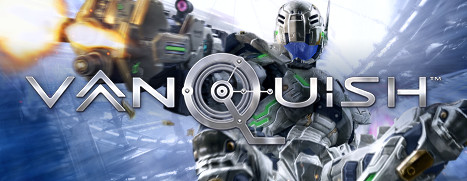
PC Gamer Editor-in-Chief Phil Savage is a man of impeccable taste, but I still hold a tiny grudge against him for not breaking the seal on PC Gamer's 98% review threshold to award Vanquish, the Xbox 360-era PlatinumGames shooter brought to PC in 2017, an unprecedented perfect sco
PC Gamer Editor-in-Chief Phil Savage is a man of impeccable taste, but I still hold a tiny grudge against him for not breaking the seal on PC Gamer's 98% review threshold to award Vanquish, the Xbox 360-era PlatinumGames shooter brought to PC in 2017, an unprecedented perfect score. "Beyond the laser-focused core loop, there isn't much to Vanquish. You start with knee-sliding acrobatics, and end the same way—around six or so hours later," Phil wrote in his 80% review when Vanquish arrived on PC... Read more.
Everyone loves a good action game. It’s the driving force behind so many of our favourite PC games, but only a few can lay claim to being the best action games of all time. That’s why we’ve compiled this list – to sort the pulled punches from the bestest biffs that PC has to offe
Everyone loves a good action game. It’s the driving force behind so many of our favourite PC games, but only a few can lay claim to being the best action games of all time. That’s why we’ve compiled this list – to sort the pulled punches from the bestest biffs that PC has to offer. Whether it’s the joy of pulling off a perfect combo, riding the wave of an explosive set-piece or the hair-raising thrill of dodging enemy attacks in slow-motion that gets you going, there’s an action game here for you.
Is… is it over yet? Are the Black Friday and Cyber Monday PC gaming deals finally finished? Just a couple more hours to go now, you can do it deals herald, you can get through this. You’ve got a week and a half holiday coming up soon, just get through the afternoon and then you c
Is… is it over yet? Are the Black Friday and Cyber Monday PC gaming deals finally finished? Just a couple more hours to go now, you can do it deals herald, you can get through this. You’ve got a week and a half holiday coming up soon, just get through the afternoon and then you can go and lie in a dark room and not dream about Cyber Monday graphics card deals you might have missed for the seventh night running.
Ahem. Sorry, I don’t know what came over me there. Probably the Cyber Monday PC gaming deals fatigue settling in, or the Black Friday fever dream I seem to have been living this past fortnight. But your deals herald is stronger than that. Nay, THE DEALER is stronger than that, and with a renewed sense of vigor that may in fact be frenzied despair, I thus present to you the final monolithic installment of our Black Friday and Cyber Monday PC deals bonanza. Gone are the deals swept away by the ever-grabbing hands of internet shoppers. All that’s left is the best of the best that are still up for grabs, from graphics cards and monitors to SSDs, gaming headsets, CPUs and mice and keyboards and more. If you’ve yet to do your Cyber Monday shopping, act fast, as these PC gaming deals won’t be around for long.
I’m sure everyone’s feeling a bit of Black Friday fatigue by now (trust me, I want this all to be over just as much as you do), but in the interests of those after that one, last, final deal to end all deals, I present to you our newly refreshed Black Friday and Cyber Monday PC g
I’m sure everyone’s feeling a bit of Black Friday fatigue by now (trust me, I want this all to be over just as much as you do), but in the interests of those after that one, last, final deal to end all deals, I present to you our newly refreshed Black Friday and Cyber Monday PC gaming deals hub. I’ve cleared away all the deals that have been swept into oblivion by the almighty wave of discount-grabbers, leaving you with the best of the best PC gaming deals that are still available. Whether you’re after a new graphics card, monitor, SSD, gaming headset or even a new CPU, mouse and keyboard, your deals herald will provide. Here are all the best Black Friday and Cyber Monday PC gaming deals you can grab right now.
Black Friday is almost over here in the UK, but the deals train is still going strong for all you folk over in the US. It seems like forever ago that I boarded at Deals Station Central, but there’s still a fair old time before we all reach our final destination that is the culmin
Black Friday is almost over here in the UK, but the deals train is still going strong for all you folk over in the US. It seems like forever ago that I boarded at Deals Station Central, but there’s still a fair old time before we all reach our final destination that is the culmination of November’s online deals frenzy, Cyber Monday. Thus, it falls to me, your ever faithful deals herald to continue striving away at the deals-based coal face to bring you the best Black Friday and Cyber Monday deals around.
Now, I’m not saying you should just spend a load of money for the sake of it. Indeed, you should only really partake of Black Friday / Cyber Monday deals madness if you really need to upgrade to something. I ended up buying a laptop today, not because it was cheap (although that was certainly a factor), but because the battery on my current workhorse is practically bursting out from beneath my touchpad. Or at least I think it’s my battery. Either way, it’s getting on a bit and I could do with a new one. So, if you are thinking about upgrading your PC, Black Friday and its accompanying deals jamboree Cyber Monday can be a great time to pick up some deals on the cheap, whether it’s a new graphics card, CPU, SSD, headset, or mouse and keyboard. So let’s dive straight in and see what bargains this year’s Black Friday has to offer.
Can you taste the Black Friday deals turkey yet? (Happy Thanksgiving, by the way, to those celebrating) Can you smell those sweet, sweet discounts wafting through the cracks in your screen that tell you, yes, it is time to buy a new gaming monitor, and maybe find a deal on a new
Can you taste the Black Friday deals turkey yet? (Happy Thanksgiving, by the way, to those celebrating) Can you smell those sweet, sweet discounts wafting through the cracks in your screen that tell you, yes, it is time to buy a new gaming monitor, and maybe find a deal on a new graphics card, CPU, SSD and literally every other PC component under the sun? Yes, you say? Me too! And have I got the best PC gaming deals for you this fine Black Friday eve.
For I, your trusted deals herald, have been beavering away this past week (month, year, it seems so long ago) to bring you the best Black Friday deals the internet has to offer. You’ll find everything here for building a new PC, including all the best Black Friday graphics card deals, monitor deals, SSD deals, gaming laptop deals, CPU deals, headset deals and please send help because I actually can’t stop saying the word ‘deals’ (DEALS).
Despite it being only Wednesday, the Black Friday deals jamboree is well and truly under way. With more deals than you can shake a stick of RAM at, now is the time to get some tasty PC gaming deals on the cheap, especially if you’re after some nice new hardware. To help you make
Despite it being only Wednesday, the Black Friday deals jamboree is well and truly under way. With more deals than you can shake a stick of RAM at, now is the time to get some tasty PC gaming deals on the cheap, especially if you’re after some nice new hardware. To help you make sense of all the deals madness, I’m here to help, as I’ve gone and gathered up all the best PC gaming Black Friday deals I can find, including deals on graphics cards, gaming monitors, SSDs, laptops and more. Yes, my soul is now nothing more than a withered husk, but at least it saves you the trouble of trawling through the internet yourself in search of the best savings. On that note, let’s get down to the business of all them deals, shall we? Here are the best Black Friday deals the internet has to offer.
Boss fights are great. Except when they're terrible! Things got heated when the PC Gamer staff debated whether the boss fight is good design or an antiquated videogame trope, so we decided to present our strongest evidence for each case. First up: a collection of our favorite bos
Boss fights are great. Except when they're terrible! Things got heated when the PC Gamer staff debated whether the boss fight is good design or an antiquated videogame trope, so we decided to present our strongest evidence for each case. First up: a collection of our favorite bosses, the battles that have stuck with us for years. On page two, the list of shame: a whole bunch of bad, stupid bosses we hated fighting but love talking shit about. They all deserve it.
The Master, Fallout
Jody: I've finished Fallout twice and never defeated The Master by just straight-up shooting him in the eyes or whatever other bits he has—he's a mutant lump of flesh so unfathomable if you try for an aimed shot half of him is just labeled "???"
The first time I made it to the end of Fallout it was with a sneaky, high-agility character who stealthed around his base and set off a nuke in it. The second time it was with a diplomatic, high-charisma type who talked the Master to death, choosing conversation options that exposed his flawed philosophy, made him realize his own monstrosity, and led him to suicide.
There's an option to just attack if you want to take the Master on with pulse grenades and a real big gun if that's your thing, but the fact you don't have to is what makes the climax of Fallout so great. Plenty of people hate bosses, so making them optional seems like such an obvious kindness it's baffling that 21 years later it's still uncommon.
Argus mech, Vanquish
Wes: Japanese videogames have been chasing what I'll call the Macross Aesthetic for decades: an overwhelming, awe-inspiring flurry of missiles crisscrossing the sky, white smoke arcing behind them. For years this was mainly a thing in 2D games: bullet hell SHMUPs and the incredible Bangai-o. Vanquish's Argus mech, while a pretty straightforward "shoot the weak point" battle, is one of my favorite boss fights of all time because it completely delivers on the promise of translating the Macross missile explosion into 3D. And it looks unbelievably cool doing it.
Deal the Argus mech enough damage, and it'll stop firing at you with its cannon to unleash a volley of hundreds of missiles. It's a stunning moment, but it's also a perfect embodiment of what Vanquish is as a game. It's a melding of over-the-top, distinctly anime Japanese action with the conventions of an American third-person shooter. In other words, there's a cliche, gruff American antihero, but he wears power armor and kicks giant missile-spewing mechs so hard they explode.
Artorias of the Abyss, Dark Souls
Austin: Artorias of the Abyss reads like a Dark Souls boss. He's a tragic figure both emblematic of and integral to the overarching story of the Abyss DLC, and he's characterized through NPC dialogue and descriptions embedded in weapons and armor. You don't want to kill him, but he's too far gone and you have no choice. That's classic Dark Souls. But at the same time, he doesn't feel like a Dark Souls boss, and that's what makes him so great.
Most of the bosses in the original game are slow, lumbering monsters that you fight by nipping at their heels until they fall over. Artorias is the total opposite. He's a relatively small but still incredibly imposing knight, and he moves wildly and quickly. His form and figure have been distorted by the abyss, but he's still got the moves. You spend the entire game plinking away at behemoths in the 19 seconds it takes them to wind up an attack, and here comes Artorias with some freakin' front-flips. He fights like you, the player. He rolls like you, swings like you, retreats like you. He's a refreshing, relentless wake-up call who gives you zero breathing room and feels like a Bloodborne or Dark Souls 3 boss, and I wouldn't have it any other way.
Jubileus, The Creator, Bayonetta
Austin: How else could a game as stylish and over-the-top as Bayonetta end if not in a galactic punchup? At this point in the game, you're picking basic enemies out of your teeth and scraping titan-sized mini-bosses off your heels. Then Jubileus, the biggest of the big bads, descends from on high with a dozen health bars and multiple forms just askin' for an ass-kickin'.
Jubileus is cleaner and more varied than most giant bosses, which have a tendency to play themselves. She has several distinct forms with unique attacks that expose cleverly placed weak points, and she gets better and better as you whittle her down. The level around you changes. Different weapons excel at damaging certain parts. It's a long fight but it earns its runtime, and Jeanne's role as partner manages to tie a climactic bow on the game's otherwise tangled story.
She's a great final boss too, a delicious mix of everything Bayonetta does right: bonkers vehicle sections, short and forgiving quick-time events, dramatic camera angles and, of course, unforgettable finishers. I can think of no better way to send off one of Platinum Games' finest than pile-driving a god into the sun.
Flowey, Undertale
Wes Fenlon: What a hell of an ending. Undertale is a game that constantly upsets your expectations, but its final boss—not exactly the true final boss, but that's part of what makes the encounter so good—breaks away from Undertale's aesthetic, and really from its reality. The fight tears at the structure of the game, making you survive an intense gauntlet, tempting you again and again to break from pacifism, before finally setting you up to play through parts of Undertale again to see the true ending. That ultimate battle is more emotionally affecting, but the first encounter with Flowey is where Undertale truly shows off how brilliantly it can execute on its meta ideas.
Dragonslayer Ornstein and Executioner Smough, Dark Souls
Joe: I've killed Gwyn loads of times. I've both lit and walked away from the final bonfire. I've tackled Lordran's brilliantly designed world in multiple configurations. I've watched countless walkthroughs and let's plays. And yet no matter how many times I complete From Software's gothic action role-player Dark Souls, I can never, ever, beat Dragonslayer Ornstein and Executioner Smough on my first attempt without the help of Solaire.
But I love it. I love the anticipation of trekking through Anor Londo, and stocking up for the big fight. I love swapping polite exchanges with the Giant Blacksmith as I upgrade my lightning halberd. I love grinding out a few extra souls levels with the Royal Sentinels that guard the boss arena. I love concocting an ill-conceived strategy in my head beforehand. I love saying to myself: "This is it. This is the moment I finally defeat these bastards first time without the help of the sunbro", before inevitably peeling my splattered face from the forum's floor thereafter.
You see, no matter how many times I'm floored by Ornstein and Smough, the fact that I'm yet to topple them on my lonesome gives me an excuse to return to one of my favourite games. With two hulking baddies—and one final form nemesis—this fight's scope for change and incidental moments makes it, for me at least, near impossible to predict. It's fast, it's frantic, and no matter how many tries it takes, I'm yet to feel a similar sense of accomplishment from any other game.
Of course, Dark Souls Remastered is just around the corner too. We go again, boys.
Mr Freeze, Batman: Arkham City
Samuel: The bosses in the Arkham series are uneven, but the second game showed considerable progress over the first, which mostly featured repetitive encounters with larger enemies. Mr Freeze is a smartly-designed battle, letting the player use each technique at Batman's disposal once—electricity, explosives and so on—before Victor Fries remembers that method and it can't be repeated.
Worse than that, he's iced up the gargoyles so there's no hiding from him above, which is a key part of your arsenal when trying to play Arkham stealthily. You're stuck on the ground with Mr Freeze as he stalks you. A former colleague of mine compared it to a great Metal Gear boss fight, and he's right—it's similarly tricksy and demands clever thinking from the player.
Monster Zoo, Dungeons of Dredmor
Evan: Can a room be a boss? I submit that a room can be a boss.
Jack Krauser, Resident Evil 4
Samuel: Resident Evil 4 is one of very few games that gets away with QTEs, which have mostly died out in games over the past decade. Leon's knife fight with Krauser is mostly cutscene-led, but it's a great example of the form—a tense sequence where you finally get to see the two characters face off.
The boss fight proper is great too, set in a maze of ruins where he'll run at you with a knife, and it later escalates to a final battle on a precarious platform as Krauser mutates. Sometimes this encounter will transition into a QTE knife fight in-game, too, which is a nice touch. Resident Evil 4's story is hokey but fun, and while you're never quite emotionally invested, it's fun to take the journey. You wait a long time to see Leon and Krauser finally face off, and the battle is exciting, over-the-top and even cinematic—it's Resident Evil 4 at its best.
The Transcendent One, Planescape: Torment
One of the biggest failings of boss fights is how often they abandon the principles of the game they're in, robbing you of agency or creativity in favor of a big arena slugfest or fancy cinematic. The opposite of that is Planescape: Torment, maybe the best RPG of all time, which utterly commits to letting you talk your way out of conflict, up until the very end. There are a number of ways your encounter with The Transcendent One can end, including combat if that's your wish. But dialogue, as always in Planescape, proves to be the more interesting option. Gaming rarely manages to get this philosophical, and even more rarely pulls it off.
Twisted Marionette, Guild Wars 2
Phil: The Twisted Marionette was available for about a month during Guild Wars 2's first update season. You can't fight it anymore—you haven't been able to fight it for over four years—but I still think it's one of the best bosses I've defeated. Rather than an instanced encounter, the Marionette was an open world event that triggered every two hours. Players on the map would have to organise themselves into five lanes of (if you were lucky) around 25 players each. The fight had two main phases. The bulk of your time was spent in your lane, defending against waves of enemies. In addition, each lane took turns in the central chamber, where they were distributed across five mini-arenas—each with a Champion to defeat. Succeed, and one of the Marionette's chains was cut. Fail, and you were one step closer to annihilation.
If each lane succeeded, the battle was won and the Marionette would collapse. It felt elegant—requiring more coordination than just chipping away at a big monster's health, but not so much that only the most hardcore servers had a shot of bringing it down. There was an arc—our server spent days unable to make the kill, but slowly started to refine our approach. We failed loads, but the process of learning, optimisation and eventually overcoming the challenge remains one of my favourite journeys within the game.
Image via Speciesgame.com forums
Aquifers, Dwarf Fortress
Wes Fenlon: Yeah, goblins and elves and running out of booze are all bad news. But the truest enemy of any fortress builder is the mighty aquifer, an underground water source that can quickly and brutally flood your fortress if you don't know how to deal with it. There's an entire Dwarf Fortress wiki page devoted to aquifers and the strategies for defeating them. That's a boss fight if I've ever seen one.
Giant Terminator Baby, Mass Effect 2
Wes: I'm not even going to dignify Mass Effect 2's final boss with its proper name, such was its stupidity. The first Mass Effect culminated with a battle against an imposing, badass rogue agent whose role turns out to be more nuanced than pure evil, followed by a series of dramatic decisions that affected the fate of the Citadel. It was the perfect mix of action and roleplaying, exactly what Mass Effect should be. The second game, despite the overall brilliance of its suicide run final mission, decided to end with the equivalent of a Contra boss battle. A Contra boss battle that was too easy and looked absolutely ridiculous. When people complain about Mass Effect becoming too much of an action series, this fight is exhibit A.
The Arkham Knight drill fight, Batman: Arkham Knight
Jody: The Arkham games had a couple of decent boss fights, but way more bad ones. They loved the kind where you have to lure some jacked-up beefy boy into charging, then dodge so he hits a wall instead. Arkham Knight managed to do the most drawn-out version of this, because you have to drive the goddamn Bat-Tank at the same time.
The Arkham Knight attacks in the tunnels under Gotham, driving a digger drill like he's a Bananaman villain. You have to lure him into sections wired with explosives, avoiding barriers and spinning fan blades, repeating this for what is probably just shy of 10 minutes but feels like hours. Meanwhile he shouts bland taunts like "You can't hide!" and "I'll find you!" to remind you that, after two games of Mark Hamill's excellent Joker, now you're up against a man who smolders with generic rage. I like the Arkham games, but they're textbook examples of why 90 percent of boss fights could be dropped to no great loss.
Image via Gameranx.com
Zerstörer Robots, Wolfenstein 2: The New Colossus
Austin: I'm generally a boss fight proponent, but Wolfenstein 2's Zerstörer Robots make a good case for cancelling bosses entirely. They simultaneously lack everything that makes Wolf 2 fun—multiple methods of approach, creative sightlines, playing execution leapfrog, satisfying feedback on kills—and exacerbate its biggest problems, like the way it sucks at telling you when you're taking damage and where it's coming from.
These robots have so much health and deal so much damage that you have no choice but to clear out the H-shaped airship you fight them on and take potshots from the interior tunnels, alternating exits each time. On higher difficulties at least, fighting them is a slow, repetitive process that isn't even in the same hemisphere as fun. I played through the entire game a few notches above normal difficulty and loved the added challenge, but these piles of junk were so dragging and infuriating that I spitefully cranked the difficulty to easy just to get past them. And I'd do it again.
Alma, F.E.A.R. 2
Wes: What a piece of shit ending.
Ghaul, Destiny 2
Austin: The final fight against Ghaul, leader of the Cabal's Red Legion and the Darth Vader walrus-thing who destroyed the Tower, is a disappointment not just because of what is, but because of what it is not.
It is a run-of-the-mill arena fight against a glorified Cabal Centurion. Ghaul himself is just a health bar with some knock-off powers. He's removed from the fight most of the time, and whenever he does raise his ugly head you just one-shot him with your constantly refilled super. You spend more time fighting the basic enemies scattered around the ship, and doing so never feels climactic because the arena is boring, they're the same old enemies and there aren't even that many. Like, this is it, Red Legion. We are on your flagship. This is the final battle. The least you could do is bring the A-team.
But the true misery of the fight is the cutscene that follows, in which Ghaul transforms into a much more interesting-looking plasma phantom and soars up to the Traveler. At this point, I—and by I, I mean everyone except the folks at Bungie apparently—thought, "Awesome, we get to kill him for real in the raid." But no. He just melts right there, so instead we fight some random fat dude in the raid. Destiny YouTuber Datto said it best: "I want to fight the big thing." Destiny 2 doesn't let you fight the big thing, and that's a bummer.
Pinwheel, Dark Souls
Joe: According to this Dark Souls wiki, Pinwheel is: "A flying, multi-masked necromancer who stole the power of the Gravelord and reigns over the Catacombs. [It] spawns multiple copies of itself and attacks the player with projectile blasts." All of which sounds pretty badass, right? Except in practice it's not really like that. At all.
In a game that prides itself on its challenging encounters, Pinwheel is an anomaly. This run in is not only easier than every other boss battle in Dark Souls, it's easier than a fair whack of its standard enemies too. Its moveset is predictable, its cloned subordinates are a pain, and its drops—bar the Rite of Kindling—are rubbish. I almost lost the plot after my umpteenth death at the hands of Ornstein and Smough—yet the feeling of finally besting them was second to none. Pinwheel, on the other hand, robbed me of that eureka feeling by being so damn weak.
The suggestion that From Software expected players to invade the Catacombs early on goes a ways to explaining why Pinwheel in so underpowered later in the game, but the Catacombs itself is surely no place for pre-Anor Londo/Sen's Fortress/Blighttown players. In any event, FTRichter’s Prepare to Die Again mod reimagines a more formidable Pinwheel.
Image via visualwalkthroughs.com
Fontaine, Bioshock
Wes: "It's terrible. You have this great game, and then you end up fighting this giant nude dude. We didn't have a better idea," Ken Levine once said. Well-put. Bioshock's final battle ditched everything brilliant about the game to end with a cliche slugfest with a big muscular guy. The game clearly didn't quite know where to go after the encounter with Andrew Ryan, but it definitely should've gone somewhere else. Maybe force the player to sit through a reading of John Galt's 80 page monologue from Atlas Shrugged? That would've been a better tonal fit, and a far greater challenge.
Eli, Metal Gear Solid 5
Samuel: Hot damn, I hated this scrap with baby Liquid Snake where you couldn't just use deadly weapons against him and be done with it. Fair enough, he's a kid, but he'll grow up to cause such trouble, what with the walking nuclear robots and inhabiting the mind of a man dressed a bit like a cowboy. Instead, you need to chase him around a beached ship until you can knock him out. And at that point, you're really ready to do so.
None of the boss fights in Metal Gear Solid 5 are that great, unfortunately, which is a shame for a series that has produced so many great ones in the past. MGS and MGS2, which both came to PC ages ago, have a slightly better hit rate, with the likes of Gray Fox in the former and Vamp in the latter. Luckily, The Phantom Pain is great at just about everything else.
Vaas, Far Cry 3
Chris: There's a lot of bad boss fights in the Far Cry series, so it's hard to pick just one. I'm going with Vaas because he's probably the most enjoyable and memorable character in the series, and thus the crappy boss fight stings more than others because he frankly deserved a better sendoff.
Creating a satisfying boss fight in a game where you're essentially a superhero bristling with weapons and capable of withstanding tremendous amounts of damage yourself… it's a challenge, really, because you're a damn boss. So, Ubisoft does what it always does when it's painted itself into a corner: stuffs you full of drugs and makes you hallucinate. Welcome to a gloomy netherworld corridor paved with TV screens (for some reason) where Vaas after Vaas after Vaas run at you, die from a single bullet, and disappear into a puff of smoke. It's not a test of endurance and skill, just patience. When every ghost Vaas is dead you get a cutscene where you do a cool hand-switching knife move that you can't actually do in the game, then you watch him expire. You're left with nothing other than a sense of disappointment and the sad fact that you're still Jason Brody.
Games like Her Story, To the Moon and What Remains of Edith Finch earned their place on our best stories in PC gaming list by virtue of their thrilling, heartfelt and enchanting tales. Sometimes, though, I just wanna slide through an enemy robot's legs and shoot them on the bum o
Games like Her Story, To the Moon and What Remains of Edith Finch earned their place on our best stories in PC gaming list by virtue of their thrilling, heartfelt and enchanting tales. Sometimes, though, I just wanna slide through an enemy robot's legs and shoot them on the bum on my way past. Is that too much to ask?
Other times, I like smashing and punching and kicking otherworldly demons to death with electrifying mid-air combos. Fanatical's latest Star Deal satisfies both admittedly specific urges, as Bayonetta and Vanquish are on sale now through tomorrow, March 28, for £8.99/$11.99.
Phil reviewed both Bayonetta and Vanquish's PC debuts last year, so I'm going to defer to him for the next couple of paragraphs.
First, Phil on Bayonetta's PC state:
The real prize is the ability to play Bayonetta at modern resolutions, at a stable frame rate. The Xbox 360 version of the original release struggled to keep a steady 60 fps during frantic, effects-laden action scenes, and the PS3 version was hot garbage. The grace and fluidity of combat requires stability, and this PC version is the one that delivers. It's the best way to play one of the best games of the last decade. Yes, Bayonetta has aged in places—some systems and story beats feel like a relic from a bygone era. But it's never anything less than entertaining, and, thanks to an exceptional, best in class combat system, it's frequently an absolute joy.
Second, Phil on Vanquish's powersliding and mouse and keyboard support:
The upshot of your colony infiltration is five acts of Russian-made robots to shoot. Vanquish's enticing gimmick is that it's a cover shooter that doesn't want you to take cover. Every room has its waist high walls and barriers, and you can hide behind them, popping out to shoot at approaching enemies. Alternatively, you can use your suit's mobility to powerslide (on your knees) across arenas, taking out enemies as you go. Aim while sliding, and you'll enter AR mode—basically bullet time. It's an effective way to clear out enemies, especially now on PC, where mouse and keyboard support makes aiming that much easier.
Again, this bundle runs now through tomorrow, March 28 at 8am PST/4pm BST. Fanatical's Star Deals operate in 24-hour cycles, so be sure to check back for future savings.
Some online stores give us a small cut if you buy something through one of our links. Read our affiliate policy for more info.
PlatinumGames, the makers of such wonderful games as Bayonetta and Nier: Automata , are looking into making and self-publishing games of their own. While they’re not announcing any specific games just yet, Platinum say they invited all staff to pitch ideas and have whittled 70-od
PlatinumGames, the makers of such wonderful games as Bayonetta and Nier: Automata, are looking into making and self-publishing games of their own. While they’re not announcing any specific games just yet, Platinum say they invited all staff to pitch ideas and have whittled 70-odd submitted design documents down to two ideas they’re focusing on. Yes, their own games are likely to offer the action you’d expect from Platinum, though obviously made on smaller budgets without the backing of big publishers. They’re not done with making games for publishers, mind, so we should see still more big-budget explore-o-ramas from them too. (more…)
Every week, we produce our Highs and Lows feature, rounding up the week in news, games and whatever else is drifting through our heads when we write it on a Friday afternoon. Since it's the end of 2017, we've produced a special round-up of the year, with contributions across our
Every week, we produce our Highs and Lows feature, rounding up the week in news, games and whatever else is drifting through our heads when we write it on a Friday afternoon. Since it's the end of 2017, we've produced a special round-up of the year, with contributions across our global team. Enjoy, and check back tomorrow for our lows of the year.
Samuel Roberts: Age of Empires 4 exists
Here something I never would have predicted at the start of 2017: Microsoft bringing back Age of Empires. Not just with enhanced editions of the older games, but with a brand new fourth entry, made by the RTS specialists at Relic. Not loads is known about it, but at Gamescom it came out of nowhere with a trailer, and in 2018 we'll hopefully see a lot more of it.
This is the first new Age of Empires in 13 years, which is crazy. Along with MechWarrior 5: Mercenaries, it's cool to see series from that era of PC gaming return. It doesn't get more PC gaming than Age of Empires for me: that series was fundamental to my interest in PC back in the late '90s, after I sampled the first game on a PC Gamer demo disc.
I hope Age of Empires 4 comes with a scenario editor. Earlier this year, I wrote about how much I loved AoE2's scenario editor, and how it let you make 20 William Wallaces fight 20 Joan of Arcs. If we can't violate the truth of history with the most ridiculous large-scale encounters imaginable, it just won't be my Age of Empires.
Andy Kelly: Paint it black
Okami is one of my all-time favourite games, but for years I had no easy, convenient way to play it. I don’t own any consoles, so I couldn't even play the 2012 re-release, and I had trouble emulating it at a stable frame-rate. So I was delighted this year when it was finally released on PC with 4K support. It finally looks like it looked in my mind when I played it on a PlayStation 2 and a tube TV back in 2006, and I’m stunned by how beautiful those ink wash-inspired visuals still are, even at modern resolutions.
A lot of great stuff was released for PC this year, so it might seem odd that my highlight is a re-release of an 11-year-old game, but I think that proves just how fond I am of Okami. As well as looking gorgeous, it's a grand adventure in the Zelda mould, full of interesting characters, beautiful locations, and puzzle-filled dungeons. It’s just a lovely place to exist in, and I loved every one of its 30+ hours. Yes, it's a big game, and the pace can be incredibly slow, but I can forgive that. It's a game to be savoured, not rushed.
Hell, I don’t even care that it’s locked to 30fps. In light of the game's quality, I'm willing to sacrifice a few frames per second. And I think it's healthy not to let technical limitations dictate your enjoyment of a game every time. When I first played Deus Ex it was at 15fps on a shitty laptop with onboard graphics, and it's still my favourite game of all time. So yeah, Okami is amazing and I'm glad I can play it whenever I like now. I'm listening to the soundtrack as I write this and feeling a powerful urge to return.
Tom Senior: Elite strats
This year I've been cheered by the gentle, ongoing presence of strategy games on PC. It's still rare to get a big blockbuster like Civilization VI every year, but War of the Chosen was brilliant, I had a good time with Dawn of War 3 before it seemed to falter after release, and Total War: Warhammer 2 is going to take over my Christmas gaming time.
It has been an interesting year for 4X strategy games as well. Stellaris and Endless Space 2 continue to grow, and I look forward to returning to both games next year after they have had more time to mature. Age of Empires Definitive Edition will provide a nice reliable hit of nostalgia in 2018, but like Samuel I'm most excited about Age of Empires IV, whenever that's due. I've been trying to second guess Relic’s approach since the game was announced. The scale of the setting might inspire a move away from the micro-heavy approaches to recent games, and I wonder if we will see a move away from complex progression mechanics and unit upgrade systems in favour of a more sweeping, accessible RTS without the esports pretensions. The future is bright for strategy fans.
Tyler Wilde: Major players
None of my favorite games this year came from Activision Blizzard, Ubisoft, Bethesda, EA, Microsoft Game Studios, Capcom, Take-Two, Warner Bros, or Sega. It's not that these publishers have stopped putting out games I enjoy—many of them published some fine games this year—but that the selection of great PC games is becoming more and more diverse and plentiful. My best of 2017 list includes Divinity: Original Sin 2, Night in the Woods, Rocket League (which didn't come out this year but is still my most-played game), Sniper Elite 4, Absolver, and Torment: Tides of Numenera, none of which were backed by a major publisher. I couldn't say the same thing five years ago. And ten years ago? Forget it.
Chris Livingston: VR isn't dead
This is a weird one for me, because among the PC Gamer staff I've perhaps been the most skeptical of VR (possibly because I lived through the first round of VR pie-in-the-sky promises in the 1980s). And by no means have I changed my views on it: it's simply not cheap or convenient enough to become a part of mainstream gaming. And won't, I think, for another decade. Still, I think (and have always thought) the technology is neat if impractical, and I was a bit worried that after it failed to truly catch on for the PC, it might simply wither and die.
So it's been great to see that some developers and publishers are still embracing it. Bethesda went all in this year, releasing a special episode of Doom plus the entirety of Fallout 4 in VR. Both games have their issues, but they're also both extremely enjoyable through a headset. Rockstar released a truncated version of LA Noire in VR, Croteam brought us Serious Sam VR, and there were some smaller games like Rick and Morty: Virtual Rick-ality that use the technology astoundingly well. Gamers are still interested, too: a Kickstarter for an 8K VR headset asked for $200,000 and received over $4 million.
VR isn't dead, and that's good. There's a long road ahead, major advances in the tech needed, and way more games required. It just needs more time, and the more developers (especially big ones) that keep their hats in the ring, the more time it'll have.
Wes Fenlon: Japanese games had a hell of a year
Japanese game companies have been struggling for years, having to spend more and more money to developer big games that bring in less and less cash as their players switch over to mobile. For a long time, this was only a woe for console players—we barely got Japanese games on PC at all! But holy hell, has 2017 been a great year for Japanese games everywhere. Off the PC, the Nintendo Switch has been a phenomenal success, and it's a joy to play games on. Zelda: Breath of the Wild is one of the best games I've ever played. Yazuka 0 was the talk of the town for months, earlier this year. Persona 5 is the most stylish RPG in ages. Nioh revitalized Team Ninja.
And on PC, the story has been just as great. Nier: Automata proved to be a smash hit beyond all expectations, and it's still being talked about constantly after being out for nine months. Sega and Platinum games brought Bayonetta and Vanquish to PC after years of fans pining, and both look and play as smoothly on PC as they deserve—easily the definitive versions of those games. Resident Evil 7 made the series scary again, something it desperately needed. With every success, it feels like Japanese developers and emboldened to plan PC builds of their games right from the start.
The highlight of my year was tapping into the excitement around Japanese games with an entire week of features devoted to them. The ones I'm most proud of are How Japan learned to love PC gaming again, which tries to capture the how and why of PC gaming finally sticking for Japanese developers, and Phantasy Star Online will never die, a feature about the incredibly welcoming fan communities still playing PSO to this day. I had both of these stories in my head for years, and publishing them was true catharsis. It's hard to imagine Japanese developers topping their 2017 output anytime soon, but that's okay. 2017 was a year of resurgence and renewed confidence, and I think everyone's excited about what comes next.
Jarred Walton: Ryzen shout, the CPUs are out
This year has been insane on the CPU front, and while we didn't award AMD's Ryzen our Best CPU of the Year, it's chiefly thanks to AMD that Intel has pulled out the stops and actually released some compelling upgrades. Starting with the Ryzen 7 parts, and then moving through Ryzen 5, Ryzen 3, and finally Ryzen Threadripper, AMD has become a viable competitor in the CPU realm once more.
My hopes for Ryzen were perhaps too high, but Ryzen 7 is still a very fast processor. The 8-core/16-thread Ryzen 7 models compete well against Intel's i7-5960X, i7-6900K, and i7-7820X, particularly in professional applications. But most games don't utilize lots of cores, so Ryzen somewhat unexpectedly does a bit poorly in games. It comes down to per-core performance, where Intel's architecture is simply better tuned at this stage.
But choice is a good thing, and we should see new Ryzen processors next year that build on this year's successes. Using an updated Zen+ architecture and a 12nm process should allow for higher clockspeeds, and hopefully AMD has refined the core design to improve latencies as well, which would boost gaming performance. There are rumors of new 400-series chipsets, but the new parts should be compatible with existing 300-series AM4 boards. Ryzen was this close to greatness, and the update may actually push AMD over the top.
Tim Clark: Finally winning something
When we moved into our new office our bosses decided to liven up the place with some motivational slogans on the walls. One of these is positioned just behind Evan's head and reads: "Results matter and success feels good". I have had plenty of time to ponder it, it wasn't until my trip to China in the summer that I truly I understood the management inspo. I was there following Muzzy's bid to win the Hearthstone Spring Championship, and though he ended up having a rough tournament, it was fascinating seeing how these young players deal with all the prep and pressure. My feature on that experience is my favourite thing I wrote this year, and China only cemented my love of the tournament scene.
I also got a tiny taste of what it's like to compete. Between the proper matches, Blizzard organised a press tournament to keep us out of trouble. Over the course of multiple 3-2 series victories (two of which I fell 2-0 behind in), and one absolute stomp against a nice Japanese lady who didn't seem to have played the game before. The rush of relief I felt when I won the final—and with a Pyroblast to face, no less—felt better than probably anything I've experienced related to gaming. Plus it meant I got to have my picture take with Ant and (the actual winner) Hoej, both of whom are absolute sweethearts.
Generally speaking I avoid any sort of serious competition, and though this was of course supposed to be a bit of fun, you better believe I took it seriously, even going so far as asking Muzzy for pick and ban advice. So I guess what I'm saying is results do matter, success does feel good. I just needed a children's card game to teach me.
At this year's E3, PC Gamer spoke to Sega Europe's senior vice president of commercial publishing John Clark about the possibility of porting as yet unported Japanese console games to PC—not least Yakuza and Persona . We were told the pair, and possibly a number of others, are "o
At this year's E3, PC Gamer spoke to Sega Europe's senior vice president of commercial publishing John Clark about the possibility of porting as yet unported Japanese console games to PC—not least Yakuza and Persona. We were told the pair, and possibly a number of others, are "on that list" of games the publisher would love to bring to desktops, and that Clark himself felt it would be "incredible" to deliver those games to a PC audience.
Below is the full conversation between our Samuel and Clark which offers an interesting peak behind the velvet rope of console-to-PC conversions.
PC Gamer: As part of your Searchlight program, you're looking for developers to collaborate with. You just announced a collaboration with Two Point Studios, with former Lionhead staff Mark Webley and Gary Carr. What can we expect from that?
John Clark: We released a game called Motorsport Manager with Playsport Games and they're a very talented startup—industry experts, great developers, just wanting to bring a vision and develop this franchise and develop this community.
Same with Two Point—a group of veterans which are starting up, ex-Bullfrog, ex-Lionhead. They have their vision, they have a vision which aligns with [the] principles we’ve got in franchise building and developing community and delivering really strong, valuable experiences.
What was the process behind signing Two Point? Did they approach you, did you scout them out? How does that conversation start?
A bit of both, really. So we have our A&R (artists and repertoire) guys, we’re constantly coming to shows such as [E3] and others where we’re always talking to developers, to people who know developers, and to channel partners who say “these guys over here, they’re doing something really, really cool.” We just keep talking to people and telling them what is driving us at Sega and we do end up finding some really, really cool opportunities.
And we’re looking to do more of that. We’ve started our relationship with Playsport Games and we’ve released a game and we want to work on more and build a franchise together with them. We hope to get to the stage with Two Point where we’ll launch a fantastic gaming experience and we’re really excited—we’re not saying what it looks like at this stage, but we think that that’s going to be the start of something big to come.
Great. Do you think we’ll hear more about that game later in the year?
Yeah, I’m trying to think about what we’ve got internally and when we’re going to release things but yeah, towards the end of the year I’m hoping we’ll give you more of an idea of what the project’s all about. You’ll love it.
You’ve had a lot of success from PC ports of Japanese console games—what motivated the decision to push hard in that direction?
Two things to that. One is over the last few years, we’ve built a really strong business around Steam—it’s been a long-standing partnership, [and] we’ve been operating on Steam in a particular way for many years. Medieval II: Total War was one of the first games to be tied into Steam when it went 'open'—and we really cherish the business that we’ve built together with Steam. Along the way, we’ve learned what’s really important to the PC audience. So that’s happening over one side of the business—we’re optimising that business and growing it and making it really relevant.
But at the same time, Sega has a real fantastic catalogue of titles. Pretty much everyone that works at Sega, they’re fans of Sega so we love all the games that we bring out, whether it’s Total War or Football Manager, or whether it’s the historic titles like Sonic the Hedgehog or Crazy Taxi or Bayonetta and Vanquish—we love those.
As gamers we play on Steam, we see our franchises on Steam, [and] we’d love to play all of our games on Steam. So when we’re looking to bring games like Bayonetta and Vanquish, [we] make sure that they’re relevant today. On one hand it’s getting the game ported to PC but on the other hand we need to make sure that they’re good PC games, making sure that technically they really, really deliver what the community wants and for what the tech-savvy community wants on Steam.
Things like frame rate is important to us, graphics card compatibility, mouse and keyboard, Steam features...we’ve managed to develop a way of working which really connects with that specific consumer as well.
When we launched Bayonetta, straight away on Steam I saw somebody say 'We want to see these games on Steam now, we want to see... Sega, we want to see you working on these...' And we re looking at that and we say 'Yeah, we know! We know!'
John Clark
I’d say more so than any other publisher with Japanese roots—we’ve seen a few publishers move into that area—you seem conscious of the demands from a PC audience.
Yeah, ultimately whether you look at console, PC or mobile, you make games specifically for the way that they’re played on that platform. I think there are quite a lot of games that don’t necessarily take the platform idiosyncrasies into account, and that’s something that we understand on PC. We see this huge platform in Steam, in the same way that on mobile you can’t just put a game on mobile and expect it to appeal to everybody.
You have to make sure it’s aligned to how the audience interacts with that game—giving it a little bit more time, a little bit more detail and making sure that the consumers are really engaged with that game and how it’s aligned technically to the way that they want to play.
What motivates your choices of games to bring to PC?
If I asked you to write me a list of the ten games you want Sega to bring out on PC, it probably isn't any different from the list [we have]. What motivates that, as I say, [is] that people just have an affinity with [our] games, and there’s no surprise in the games that would be on that list.
We recently launched Bayonetta and Vanquish, and prior to that we launched Valkyria Chronicles. Further back, we launched Typing of the Dead—and all of these games that are either sort of delivering the experiences that the community wants, or they’re enabling us to understand how the community plays those games and how the community interacts. What inspires or motivates us... I think when we launched Bayonetta, straight away on Steam I saw somebody say “We want to see these games on Steam now, we want to see... Sega, we want to see you working on these...”
And we’re looking at that and we say “Yeah, we know! We know!”—and we want to work on them as well and we haven’t finished. We just haven’t finished with Vanquish and Bayonetta, we’re still there—we are actively working on other games as we speak... we’re not ready to tell you what they are, but there will be news coming out in the next few months.
What are the challenges of porting a game to PC? Vanquish never ran at 60FPS, for example—what's the process behind that?
First, [depending on how old the game is], what’s the archiving of the source code like? Does the engine and the way that the game was built enable us to elegantly port it onto PC? As you say, they weren’t built for variable frame rates or 60 frames per second, so we worked with Platinum Games on that. But we also bring in our own expertise from some studios that we work with in the UK, and some talent that we know understand how we want to align PC games to the audience.
So there’s the technical aspect, there’s the source code, the status of the source code. There is everything from licensing and past agreements, but it could be anything from music or what items are in the game. Are we drinking a particular type of beverage, are we eating a particular type of food, or driving a particular car? That’s all relevant through a lot of Sega games, and we do need to check all of those, and it does have an influence on what is the next one on the list that we can get to.
I wonder if the success of the Japanese games you’ve ported so far has shaped any of your decisions behind the scenes in terms of what you do next—has it made you consider further collaborations with Platinum and did it affect the future of Valkyria, which now has a new entry coming out on consoles?
I can’t say explicitly if that is responsible for it, but I think it really shows that the vibrancy of the audience for any given IP—the fact that it can be multiplatform, it can exist side by side, [that] we should really, really consider the feedback of the community. We can see that, we can develop that relationship. Having the games on something like the PC platform where we’re able to really understand that relationship a lot more, when we look at further launches of Valkyira, it just makes sense to embrace that, doesn’t it?
It gives us that validation that these games are not just fond old memories—they are still relevant today and we can keep building the audience and building the community.
I know Valkyria exceeded your expectations by a long way—would you say that the Platinum stuff is doing so too?
Yeah, we’ve got strong expertise in the way that our analytic teams and our data teams work on that—a lot of it is about the speed with which the community rally around to support these projects. If we look with Bayonetta especially, the amount of support that you’re getting people to recommend they buy this game because maybe Sega will make more of them—that doesn’t go unnoticed, and therefore that’s why it’s important for us to deliver that quality.
It also drives the way that we reach out to the community with it as well, so with Bayonetta we did a specific way of communicating which was different to issuing a press release and having a pre-order campaign. We were more creative with how we engaged the community—and that’s really important to us as well, it feels as though the community is playing an active role in being evangelists of the game, and that builds a lot of value and it certainly makes us all feel really, really warm towards the community and really grateful that they’re so passionate.
The Vanquish announcement went down really well.
Yeah—for Vanquish we dropped in a Steam achievement that was, for anybody who knew Vanquish it was recognisable from Vanquish, and that was telling them that Vanquish was coming out, and it didn’t need us to put out a message whatsoever—that was messaged by the community.
Prior to that, with Bayonetta we launched the 8-Bit Bayonetta as a free game on April Fool’s Day and within that... it [took] people sixty seconds to finish this game, there were a whole load of features in there that led people to discover a URL which gave them a countdown timer, the community really got around that and really amplified the message. We don’t just want to tell you, we want you to feel part of that messaging, we want you to feel ownership because the community is so important in bringing these games back to life.
Are there any projects from your past where it’s just tangled up licensing wise or logistically to be able to do? Is that just a challenge that you face with some older games?
Absolutely. And [it's] a challenge that we accept and a challenge that we dive into and for us, it’s [about] figuring out a way through it, and we’ve got a really progressive attitude in that we want to see certain games come to market, and we’re committed to get certain games to market that fall into that exact category that you’ve just said.
It s something that of course we re talking about... Yakuza is out on console and it seems as though it would just be incredible to bring that to the PC audience.
John Clark
One thing that you haven’t done yet is bring any Atlus games to PC—I was wondering what the nature of that relationship is and whether that is something we could possibly look at in the future?
The great thing about being involved with Atlus and you see it through Sega America and Atlus—they’re bringing out Persona 5, which is an Atlus title but they’re bringing out new editions of the Yakuza titles, they’re doing that together —and so it just makes sense that we all talk together about extending all of those, incredible IP, across to Steam and recognise the fact that the PC audience adds to those community and consumer experiences, it doesn’t detract from it and it isn’t anything that they need to be concerned about, so... those conversations definitely happen.
We see our role as educating our business about PC and Steam as well as driving our business forward in sort of retail and on console as well, and we’re all aware of the opportunities that are across all platforms for the IP.
Everyone has that wish list of games they want to see on PC. You seem to be really conscious of that.
Yeah, if you send that list to us and I’ll you which ones we can tick, which ones are on our list, which ones are possibilities, which ones are not possibilities, which ones we’ve talked about, which ones we’re talking about, which ones we’re working on—they’ll be on that list.
Yakuza, is that a possibility on PC?
It’s on that list, you know? It’s something that of course we’re talking about, we can see that Yakuza definitely is out on console and it seems as though that would just be incredible to bring that to the PC audience.
I guess, along the same lines—Persona?
Of course, of course—I keep saying ahead of you, I’m trying to guess what you’re going to say next...
Sorry, I know you can’t confirm any of this.
No, absolutely. But we don’t feel that anything is off the table in terms of these conversations. The fact that as an organisation, we’re having these [conversations], they’re healthy conversations, they’re constructive, we recognise the value, we recognise the value of the community, we recognise the value of the IP.
The IP has got continued life to grow bigger and yeah, we’re having those conversations.
A weird bug in Platinum’s bumsliding shooter Vanquish , which made players take more damage if their game ran at a higher framerate, is now fixed. As some handy GIFs demonstrated on Friday, players running Vanquish at 60 frames per second would get hurt more than those at 30fps.
A weird bug in Platinum’s bumsliding shooter Vanquish [official site], which made players take more damage if their game ran at a higher framerate, is now fixed. As some handy GIFs demonstrated on Friday, players running Vanquish at 60 frames per second would get hurt more than those at 30fps. Porting house Little Stone Software and publishers Sega acknowledged the issue on Sunday, released a beta version of a fix on Monday, then, after testing, made it official last night. Would’ve been better if they had caught the bug during development but hey, Vanquish is a good game so play it. … [visit site to read more]
If you’re currently bum-sliding your way through newly-ported shooter Vanquish on a high-end rig then you might be finding it tougher than you expected. Don’t worry, your reflexes haven’t slowed overnight the PC version is actually harder than the designers intended it to be. An
If you’re currently bum-sliding your way through newly-ported shooter Vanquish [official site] on a high-end rig then you might be finding it tougher than you expected.
Don’t worry, your reflexes haven’t slowed overnight the PC version is actually harder than the designers intended it to be. An eagle-eyed NeoGaf user called .:Wesker:. seems to have has spotted a bug in the port that ties the amount of damage you take directly to your frame rate. … [visit site to read more]
It’s my first time with the high-speed bumslides and endless robo-armies of Bayonetta and Nier: Automata dev Platinum’s third-person shooter Vanquish , newly released on PC a full seven years after its console versions. I like to think that this means I see it with clear eyes, un
It’s my first time with the high-speed bumslides and endless robo-armies of Bayonetta and Nier: Automata dev Platinum’s third-person shooter Vanquish [official site], newly released on PC a full seven years after its console versions. I like to think that this means I see it with clear eyes, unclouded either by nostalgia or a predisposition to root for an underappreciated underdog.
Of course, it may instead mean that I’m unfairly holding a 2010 game to 2017 standards. That may be why I want to say things like “Vanquish looks and sounds exactly like the kind of shallow, noisy, appallingly-written, hyper-macho low culture that people who don’t play videogames think all videogames are like”. Then again, the reasons that people have kept its flame burning for the best part of the decade are surely the same reasons that make me want to say things like “yeah, Vanquish is brillo.”
Hold onto your butts! If you don’t, they’ll fall off as you rocketslide around a spacecity kicking robots in Vanquish . Almost seven years after its console debut, the third-person shooter from Bayonetta and Nier: Automata devs PlatinumGames has finally arrived on PC. It is a goo
Hold onto your butts! If you don’t, they’ll fall off as you rocketslide around a spacecity kicking robots in Vanquish [official site]. Almost seven years after its console debut, the third-person shooter from Bayonetta and Nier: Automata devs PlatinumGames has finally arrived on PC. It is a good video game. Did I not mention that you can rocketslide and kick robots? Our Alec is bumsliding around to tell us all Wot He Thinks but, for now, here’s notice that it’s out and some brief tech thoughts. … [visit site to read more]
Vanquish is Now Available on Steam! PlatinumGames ™ revolutionary sci-fi action shooter slide-boosts onto PC. Battle legions of future-tech enemies using a vast arsenal of weapons, including all DLC. Fully unlocked framerate and gorgeous HD resolutions up to 4K. The definitive wa
Vanquish is Now Available on Steam!
PlatinumGames ™ revolutionary sci-fi action shooter slide-boosts onto PC. Battle legions of future-tech enemies using a vast arsenal of weapons, including all DLC. Fully unlocked framerate and gorgeous HD resolutions up to 4K. The definitive way to play: war has accelerated.
Vanquish , the superfast and supersilly third-person shooter from PlatinumGames, will finally come to PC on May 25th, Sega have announced. Platinum are best known for hack ‘n’ slashing in games including Bayonetta (which finally hit PC in April) and Nier: Automata , and Vanquish
Vanquish [official site], the superfast and supersilly third-person shooter from PlatinumGames, will finally come to PC on May 25th, Sega have announced. Platinum are best known for hack ‘n’ slashing in games including Bayonetta (which finally hit PC in April) and Nier: Automata, and Vanquish is an interesting game for carrying some similar ideas. Vanquish can be played like any cover-based shooter but that seems a waste when you can also zip around with rocket-powered knee slides in slowmo. … [visit site to read more]