Course to 2.0 — Chapter 4/5
In case you missed it: Caribbean Legend: Age of Pirates — mega-patch 1.2 and the third DLC are out. So far this is the biggest update our favorite classic has ever seen. Be sure to give the game a go and grab the DLC — I'm certain that if all goes well, ReCon Team won't let us do
In case you missed it:
Caribbean Legend: Age of Pirates — mega-patch 1.2 and the third DLC are out. So far this is the biggest update our favorite classic has ever seen.
Be sure to give the game a go and grab the DLC — I'm certain that if all goes well, ReCon Team won't let us down and will keep the updates coming.
https://store.steampowered.com/app/4969720/Caribbean_Legend_Age_of_Pirates/
Ahoy!
Joruba here.
One more diary to go after this one.
Which means the 2.0 open beta is closer than you think.
A huge thank you to our friends on the alpha testing team, who helped us track down all manner of issues across different PC configurations.
Before I hand the mic over to our game designer, I'd like to revisit what we set out to do with 2.0—and what you'll soon get to play for yourselves.
- The update will require a new game.
- At its heart are four major improvements.
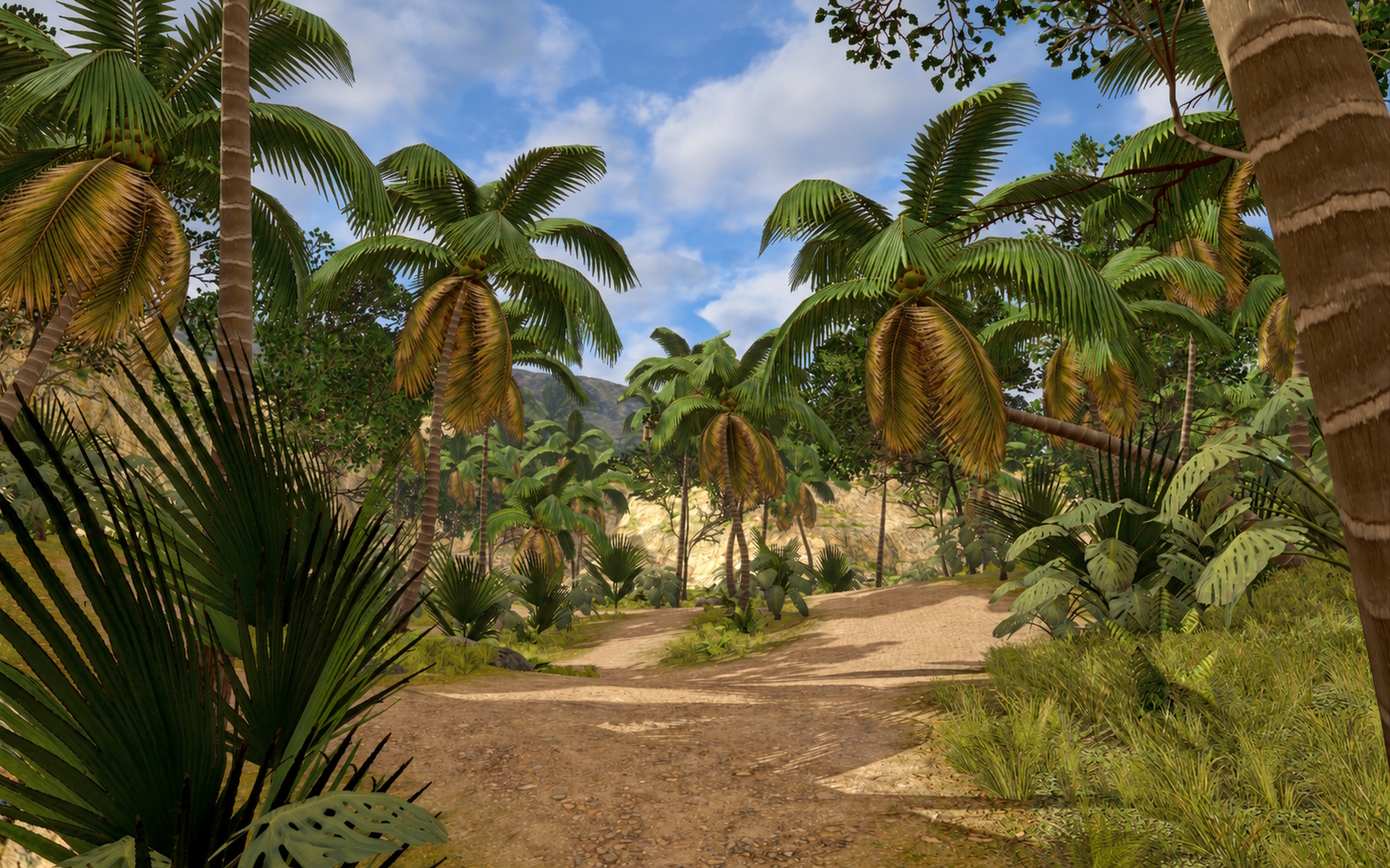
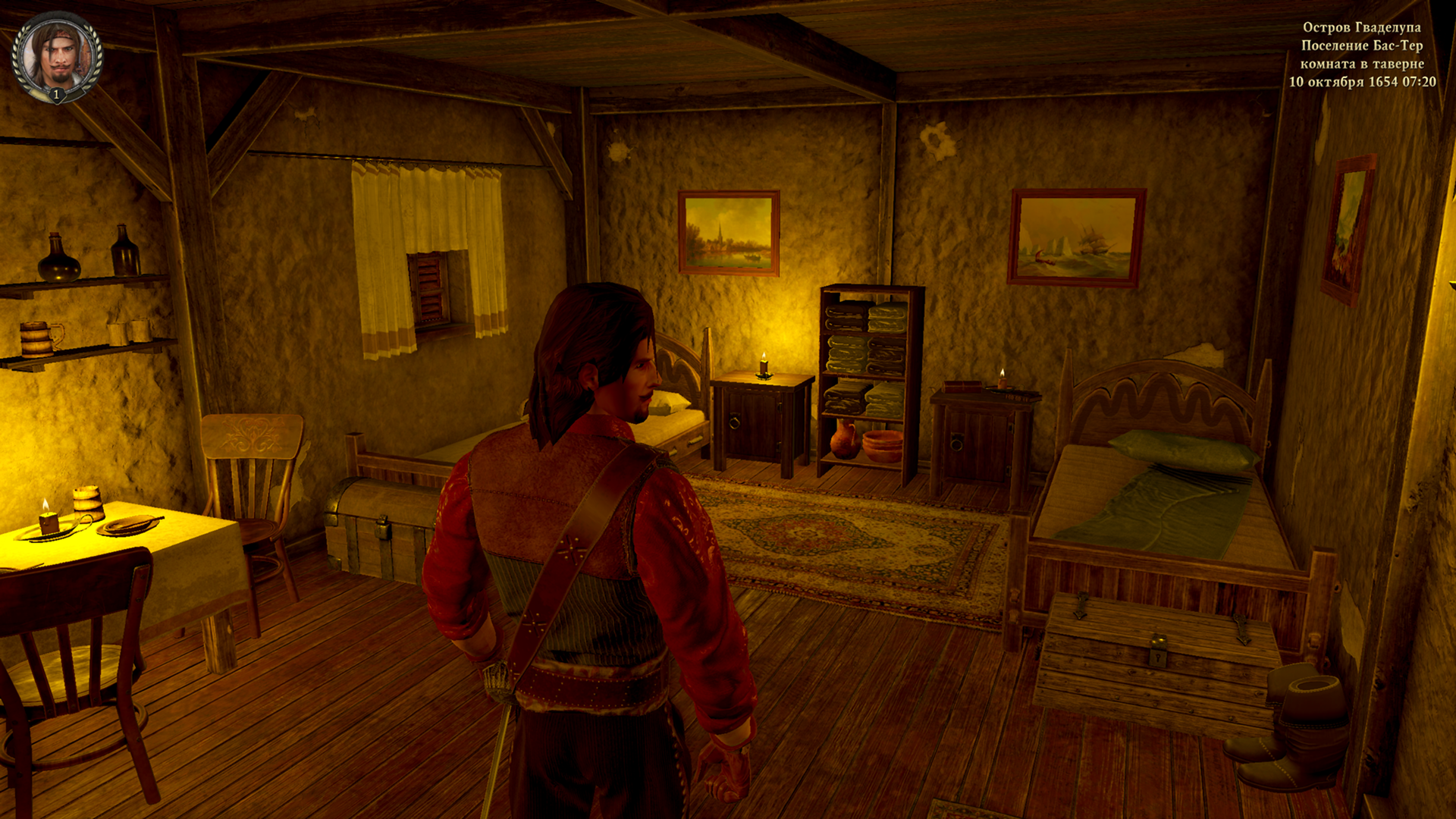
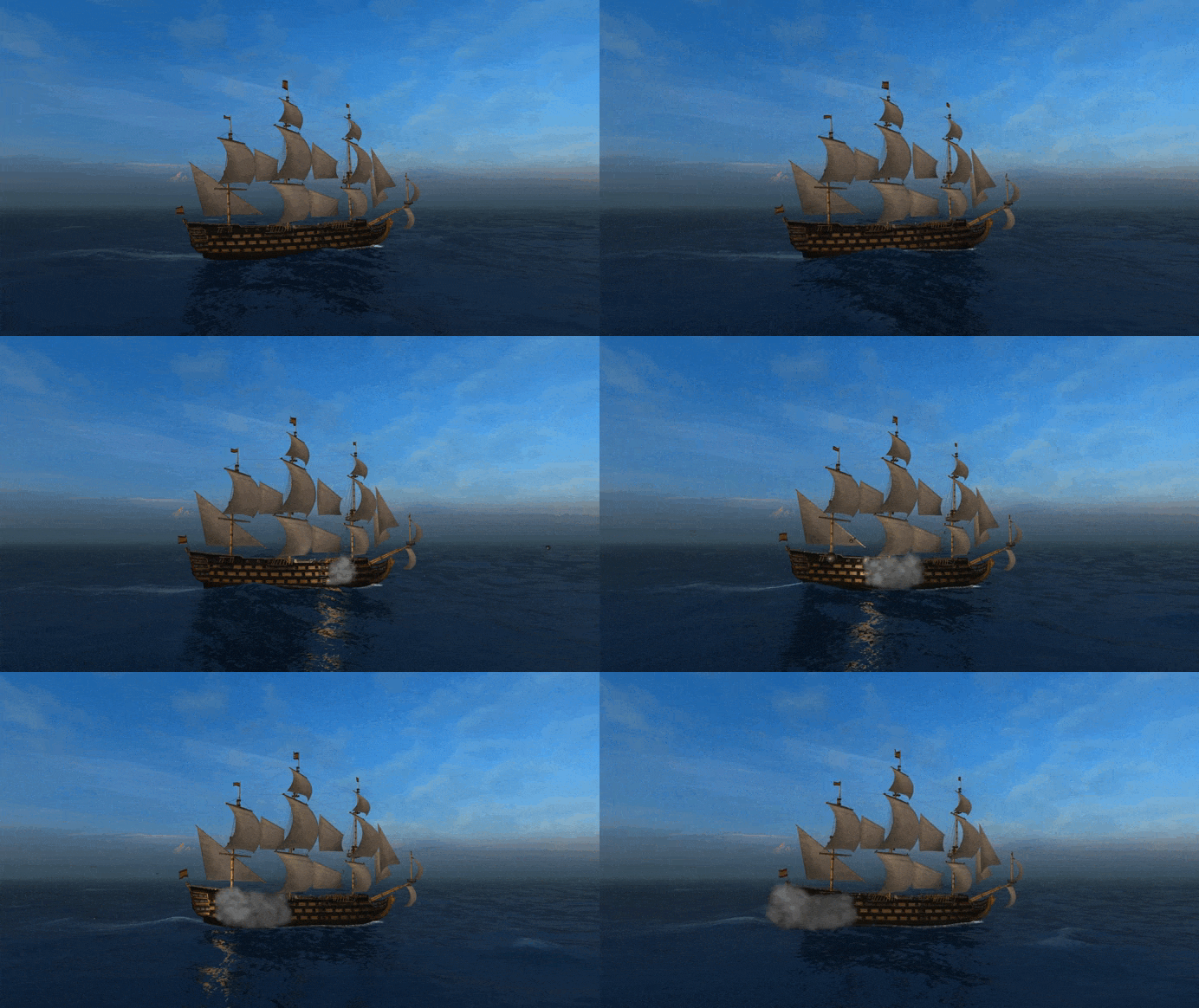
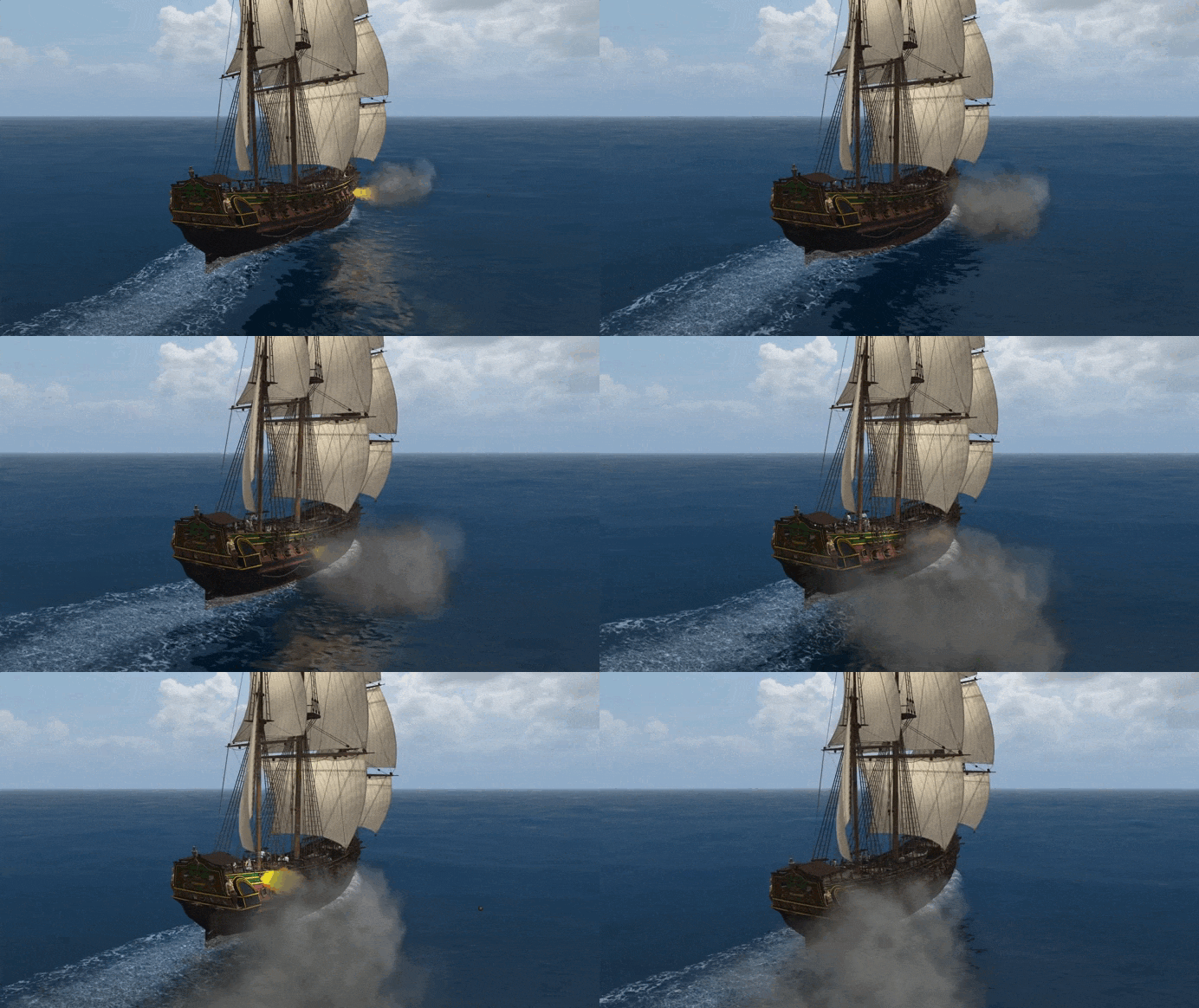
- New graphics give the game a massive visual upgrade, with modern effects, weather, lighting, and physics. A new era is coming. You'll see for yourselves soon enough.
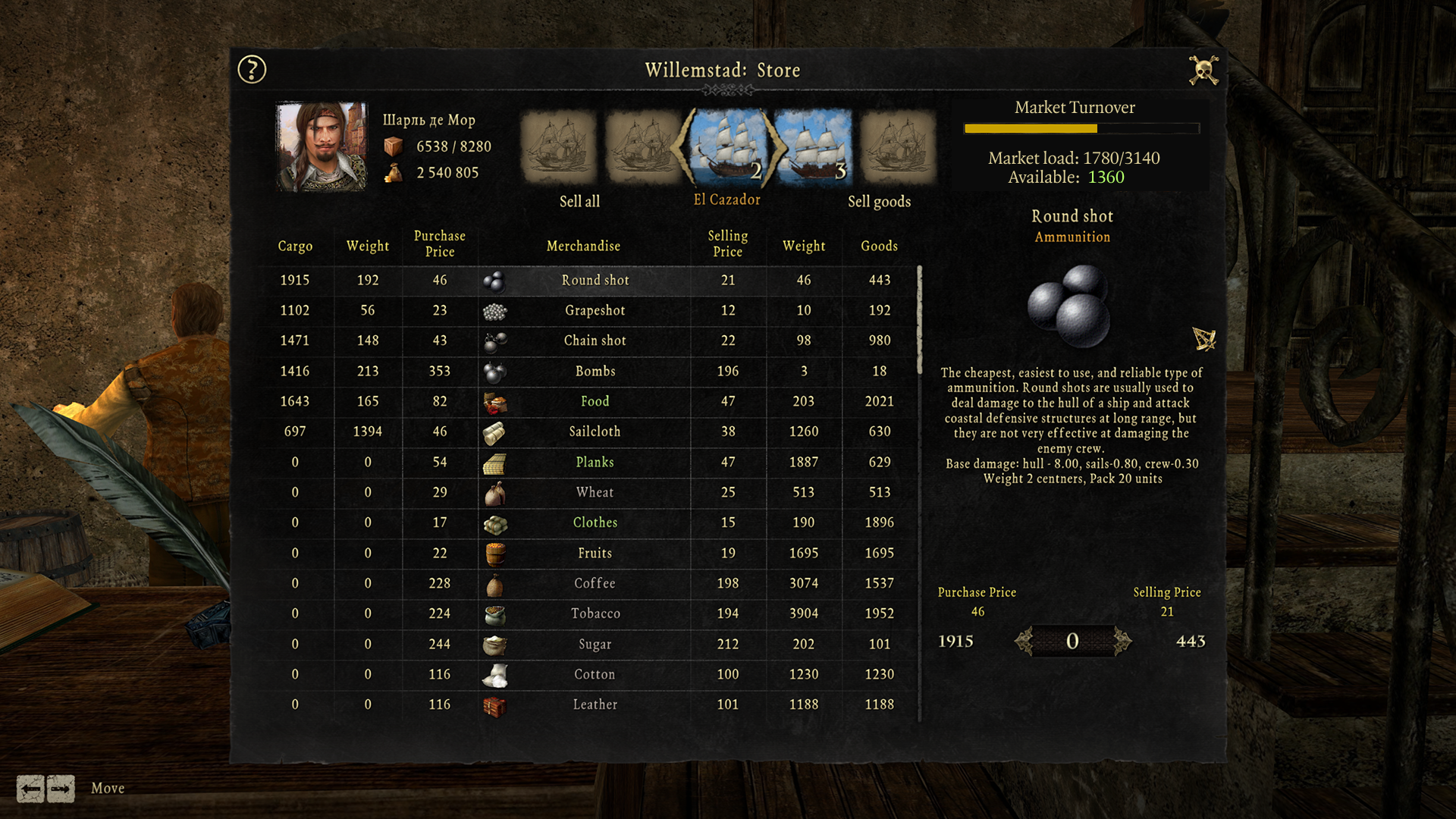
- The expanded economy will let you build a trading empire and put the colonies to work for you.
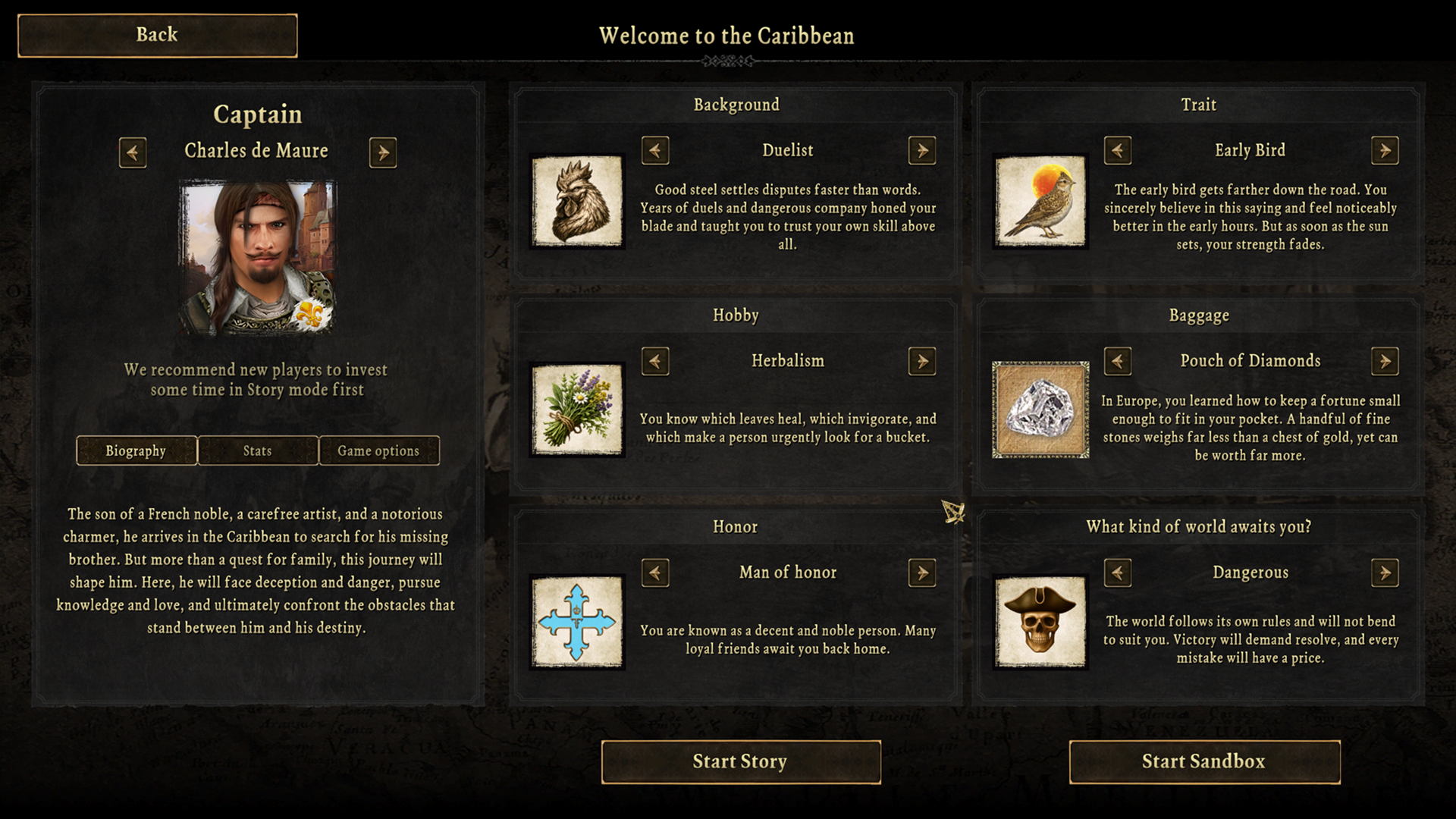
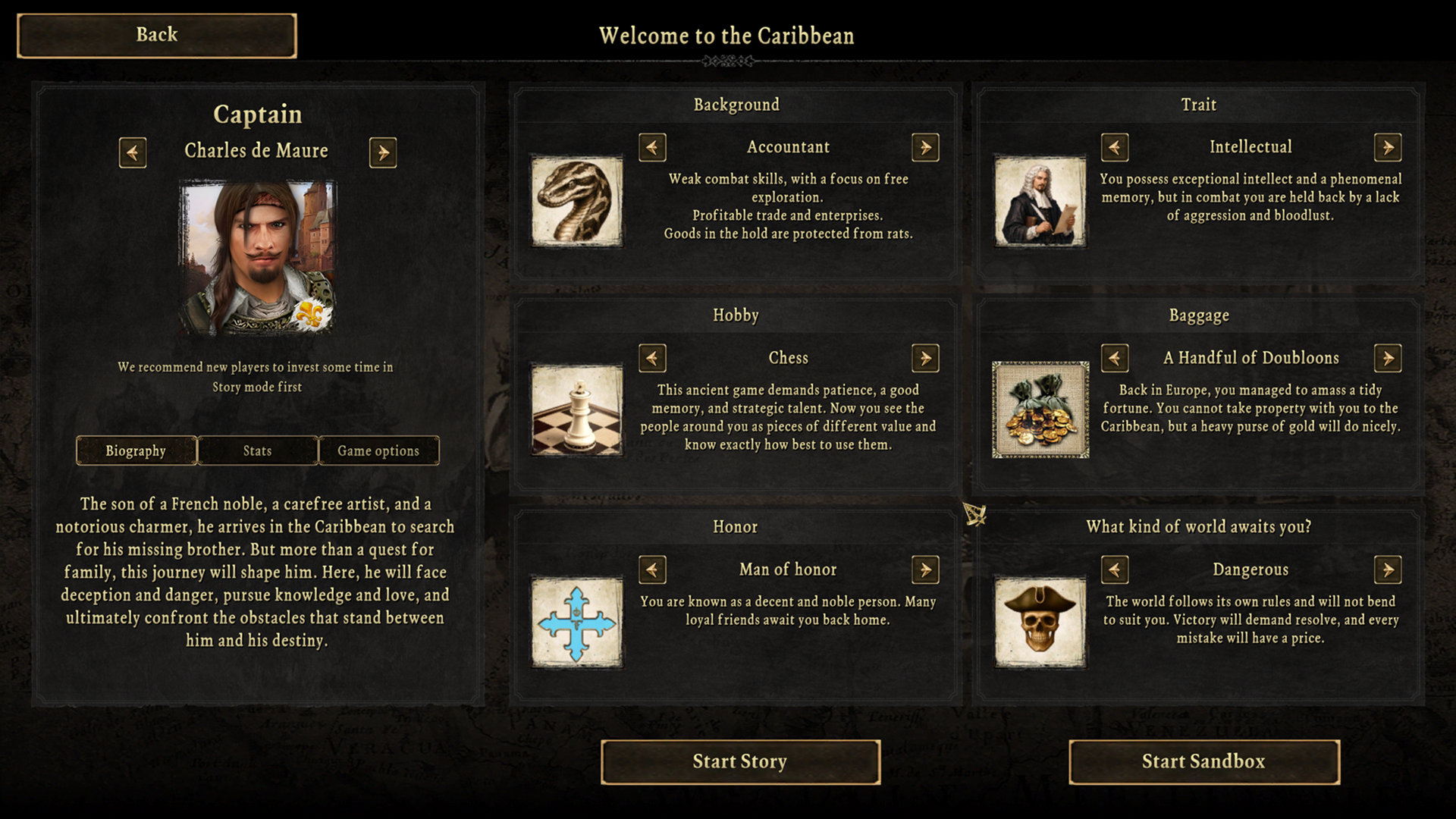
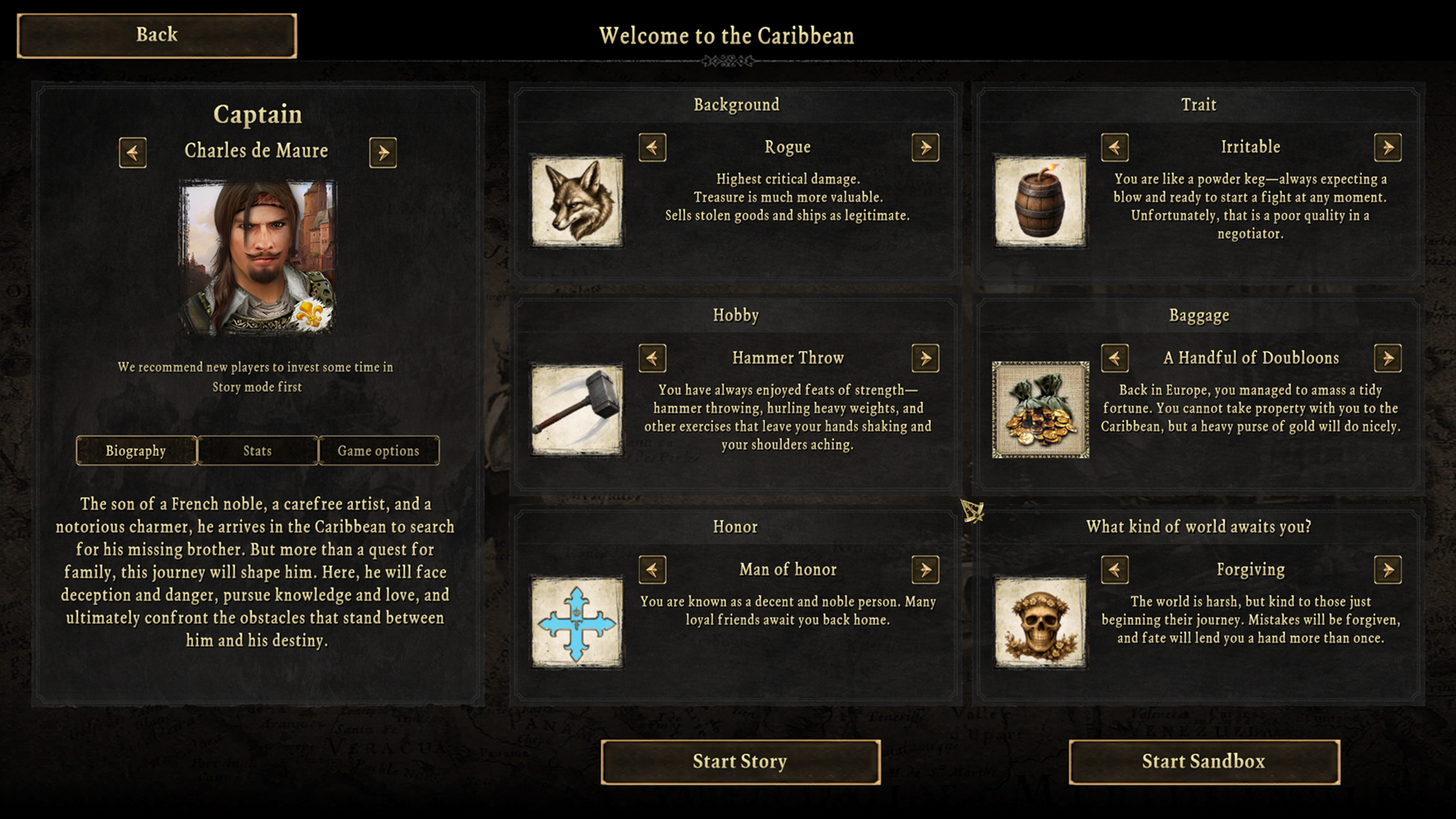
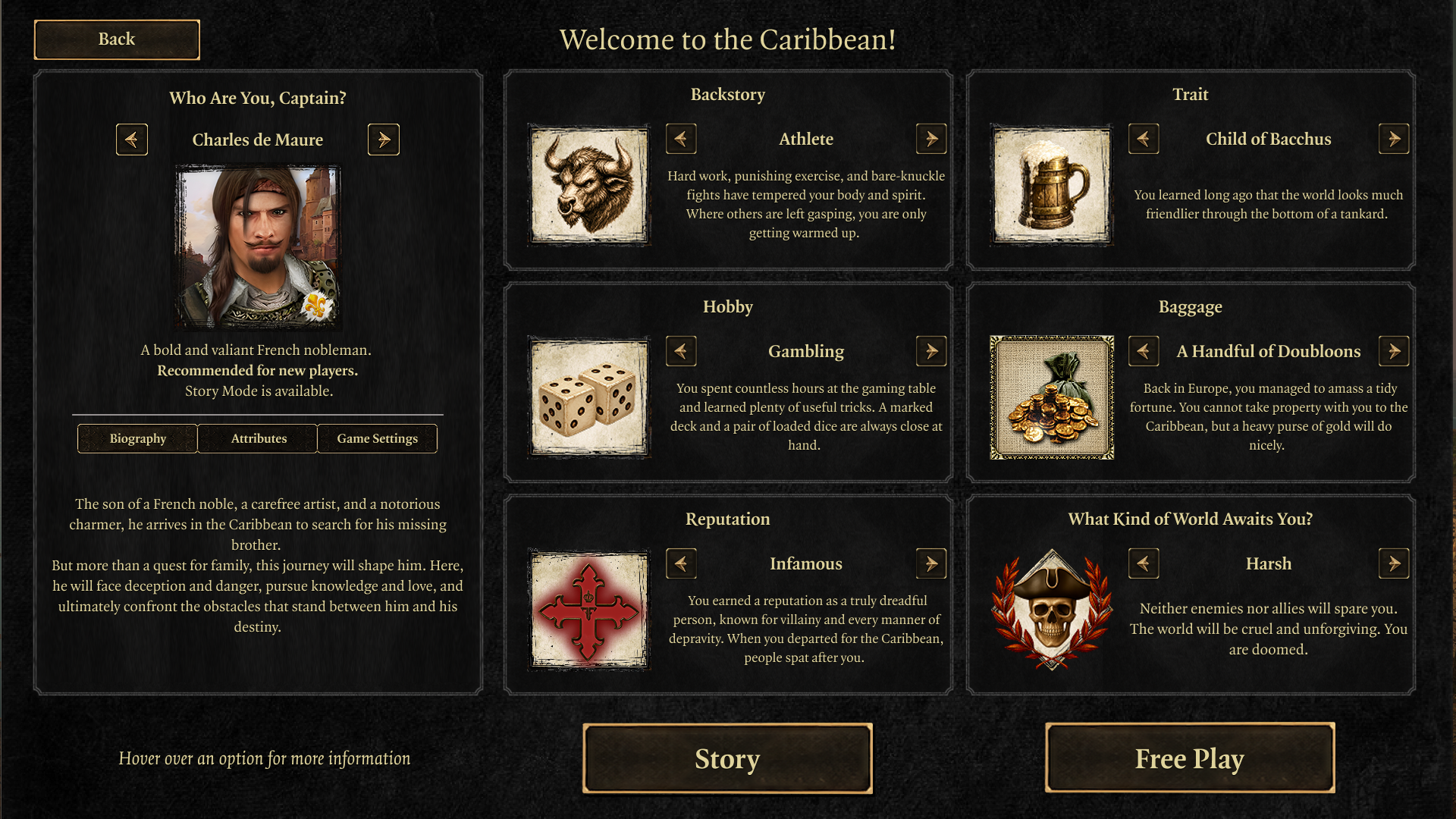
- The character creation screen lets you shape both your captain and your playthrough. Backgrounds, interests, hobbies—they all affect progression, quests, and dialogue. Difficulty settings are now customizable, too.
- With the new quest journal, you'll finally be able to play through the game without relying on guides. Alongside the dated graphics, this was the most common complaint about the game. More on that below.
Almost everything you'll read about today grew out of your comments and feedback.
Kirill, break a leg.
Set the studding sails! Next stop: the Bay of Creativity!

Kirill here, with a thoroughly emphatic welcome to you all.
Beyond the new graphics and economy, 2.0 has a whole host of improvements and fixes in store.
Today, we'll take a look at the biggest ones.

In Diary I, we took a detailed look at character creation: backgrounds, traits, and hobbies.
But builds and progression aren't the main attraction here.
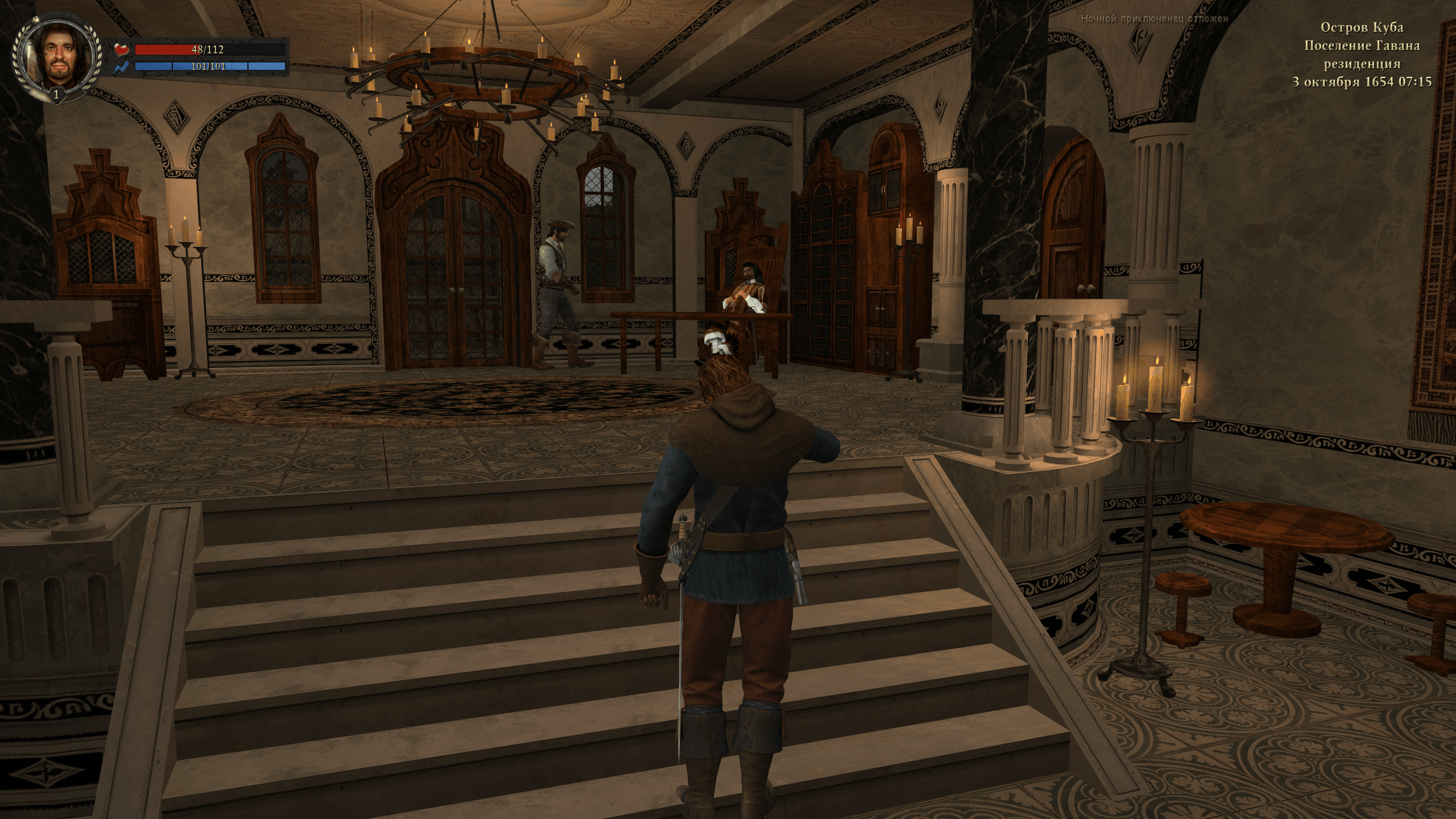
That would be the 2,000 new lines of roleplaying dialogue.
You'll have more chances to express your captain's personality, earn an unexpected bonus, or find another way through a quest. The choices you make during character creation, and your actions throughout the game, will carry through into conversations.
After all, quests and characters are still at the heart of our game.
Backgrounds, Honor, and Skill Checks
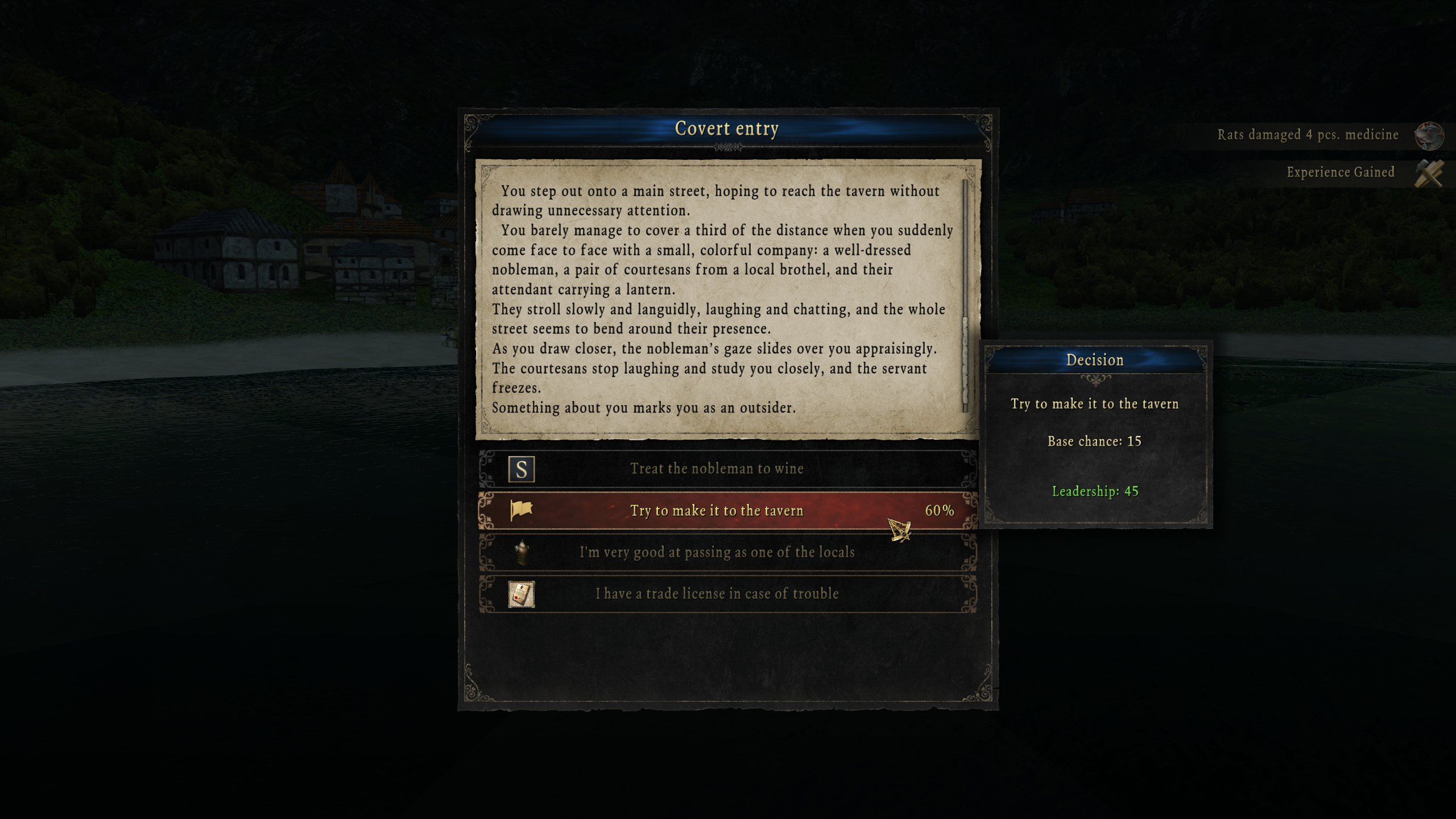
Backgrounds unlock their own dialogue options. Your captain might draw on past experience, recognize a familiar detail, or suggest a different way to handle a situation. In some conversations, that means extra experience, items, or different quest conditions. Sometimes, it's simply a chance to show the world who you are.
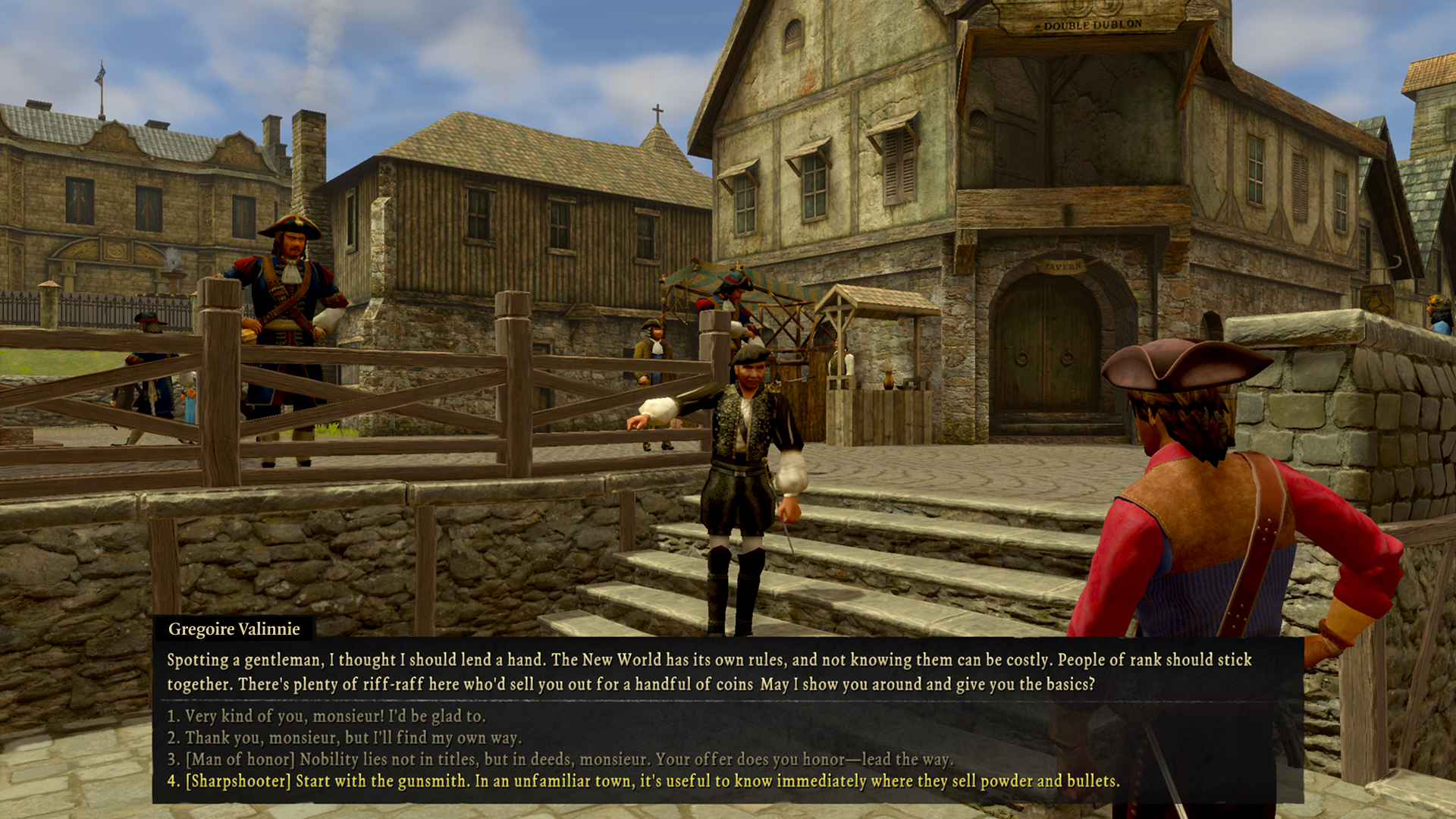
Honor has a say in conversations, too. In some scenes, it changes the tone of familiar lines and the responses they receive. In others, it opens up new options: a noble gesture, a threat, or a chance to take advantage of someone else's predicament. As your captain changes, so does the way they deal with people.
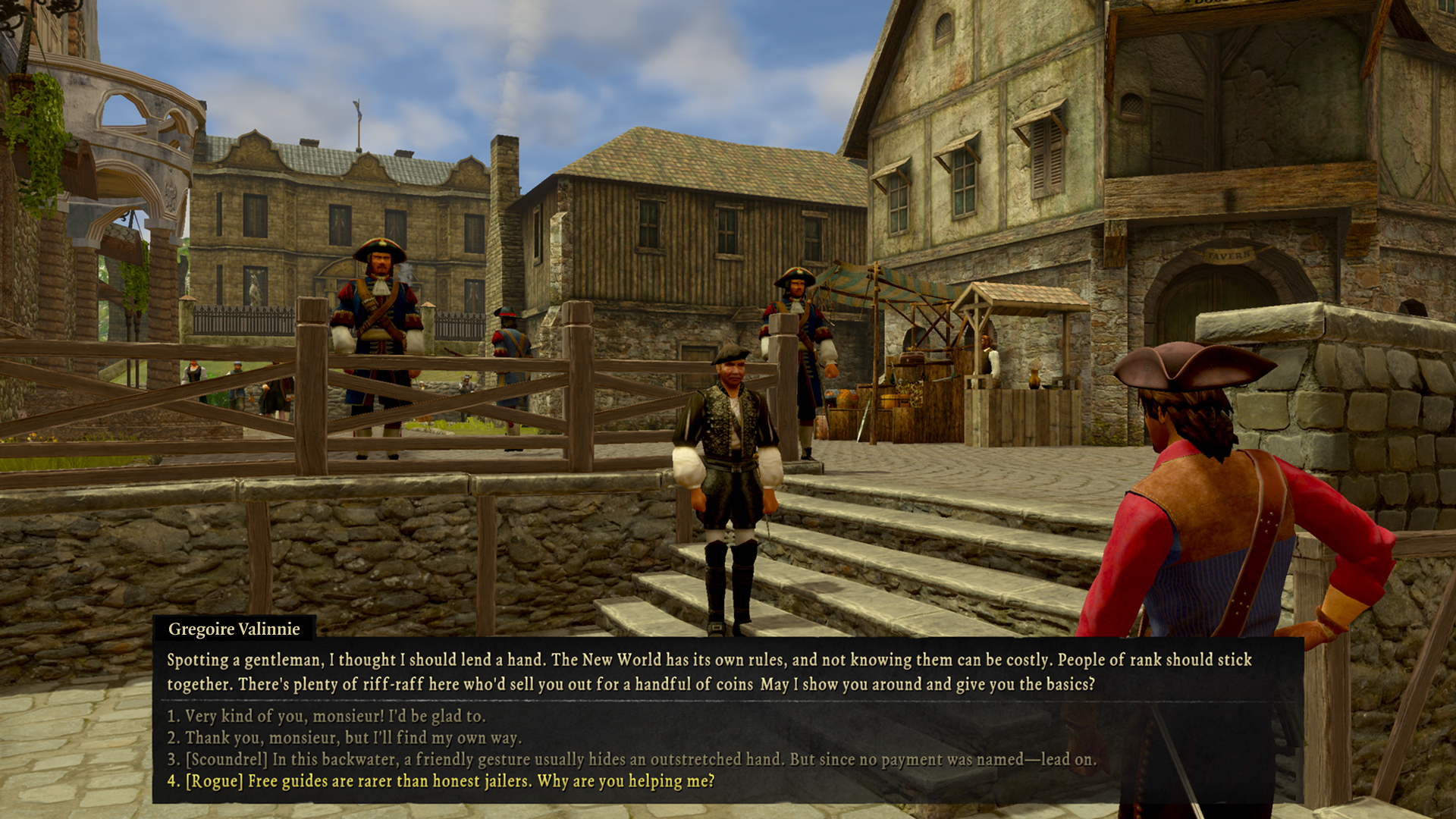
We're also giving skills a larger role in dialogue. Develop the right skill far enough, and you'll unlock additional responses: a chance to show your expertise, persuade someone, or spot an opportunity you might otherwise have missed. Both personal and naval skills will come in handy.
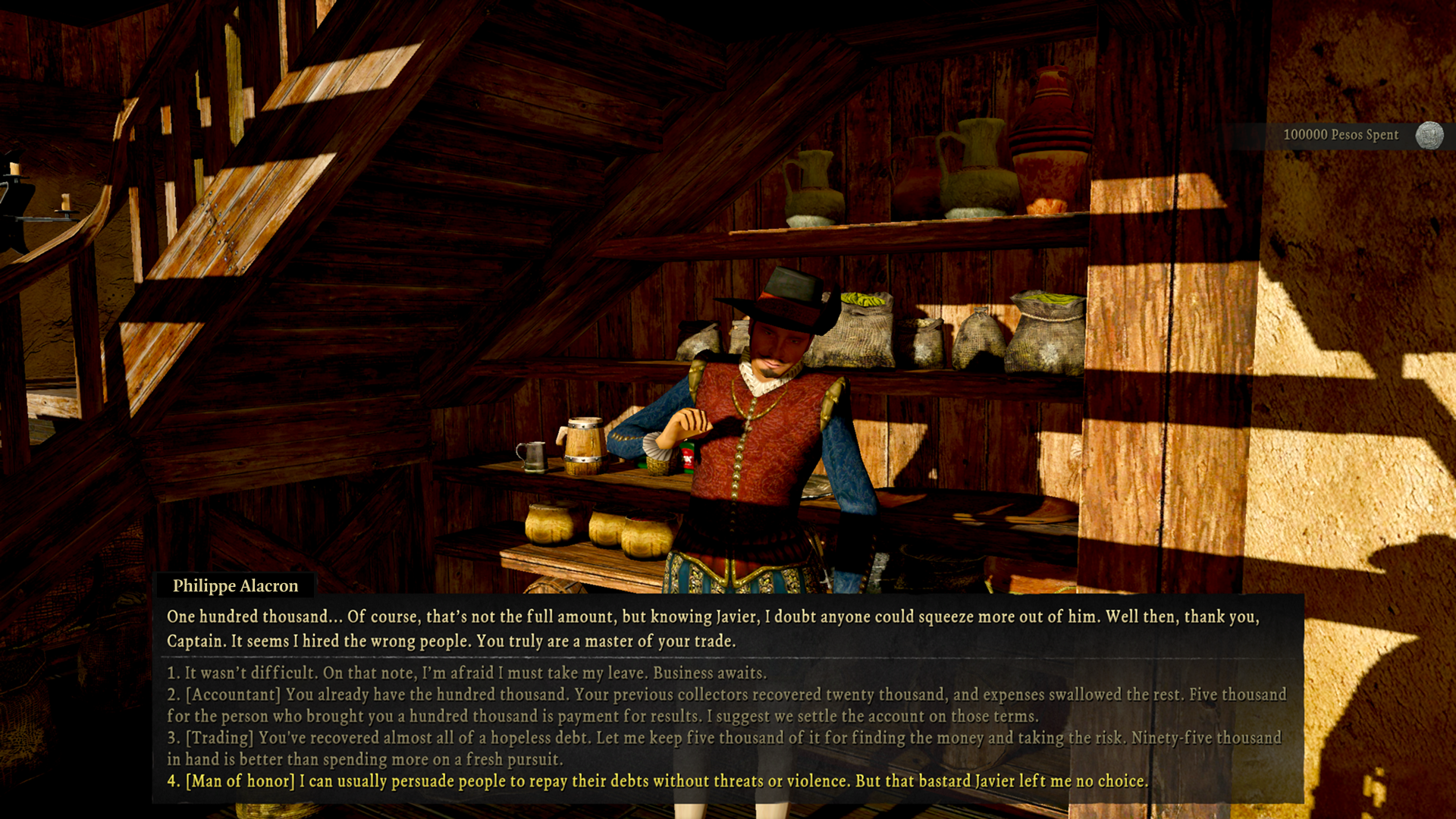
A Few Examples in Practice
You'll start seeing these changes right at the beginning of the game. Here are just a few examples from the opening stretch.
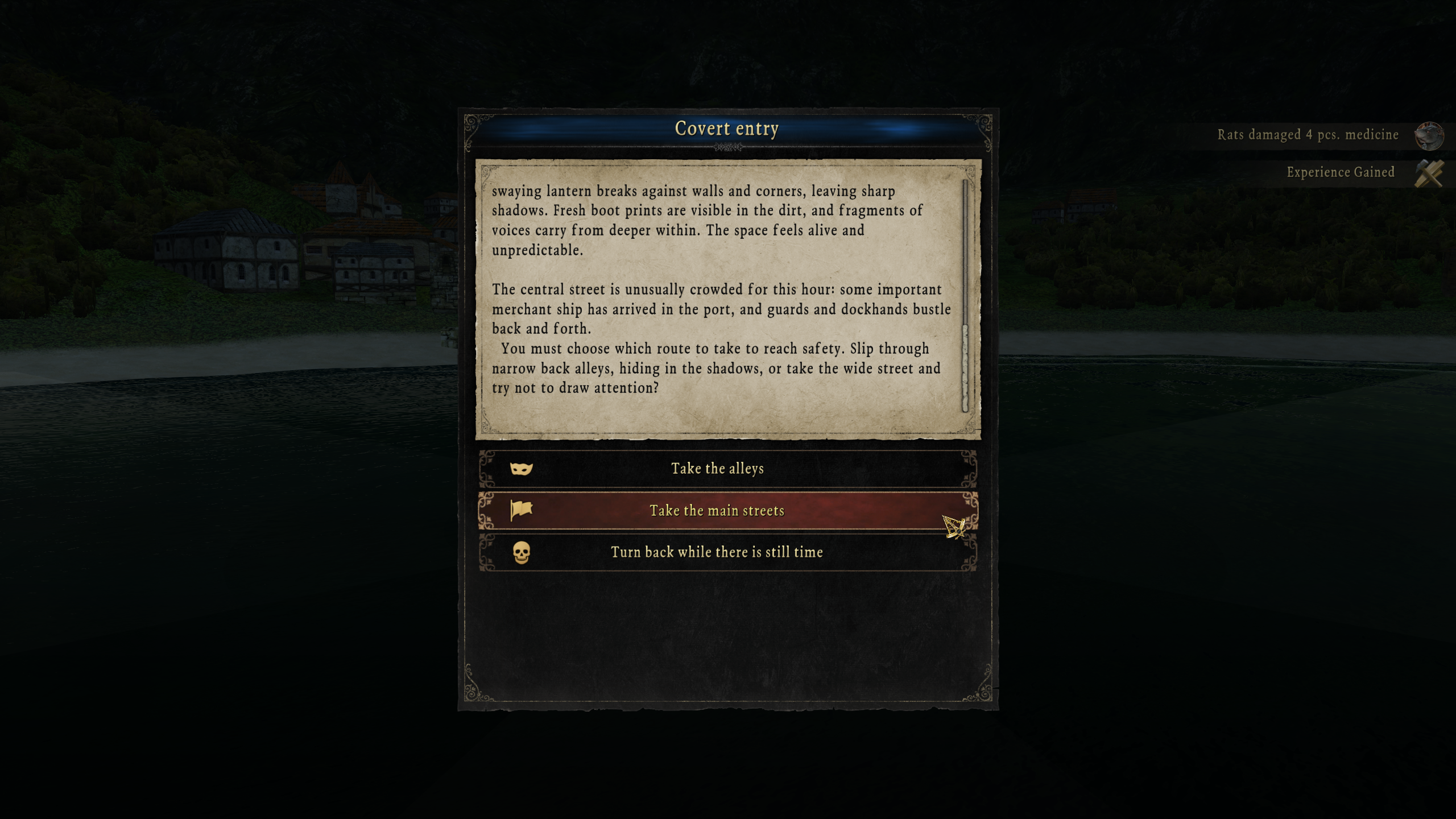
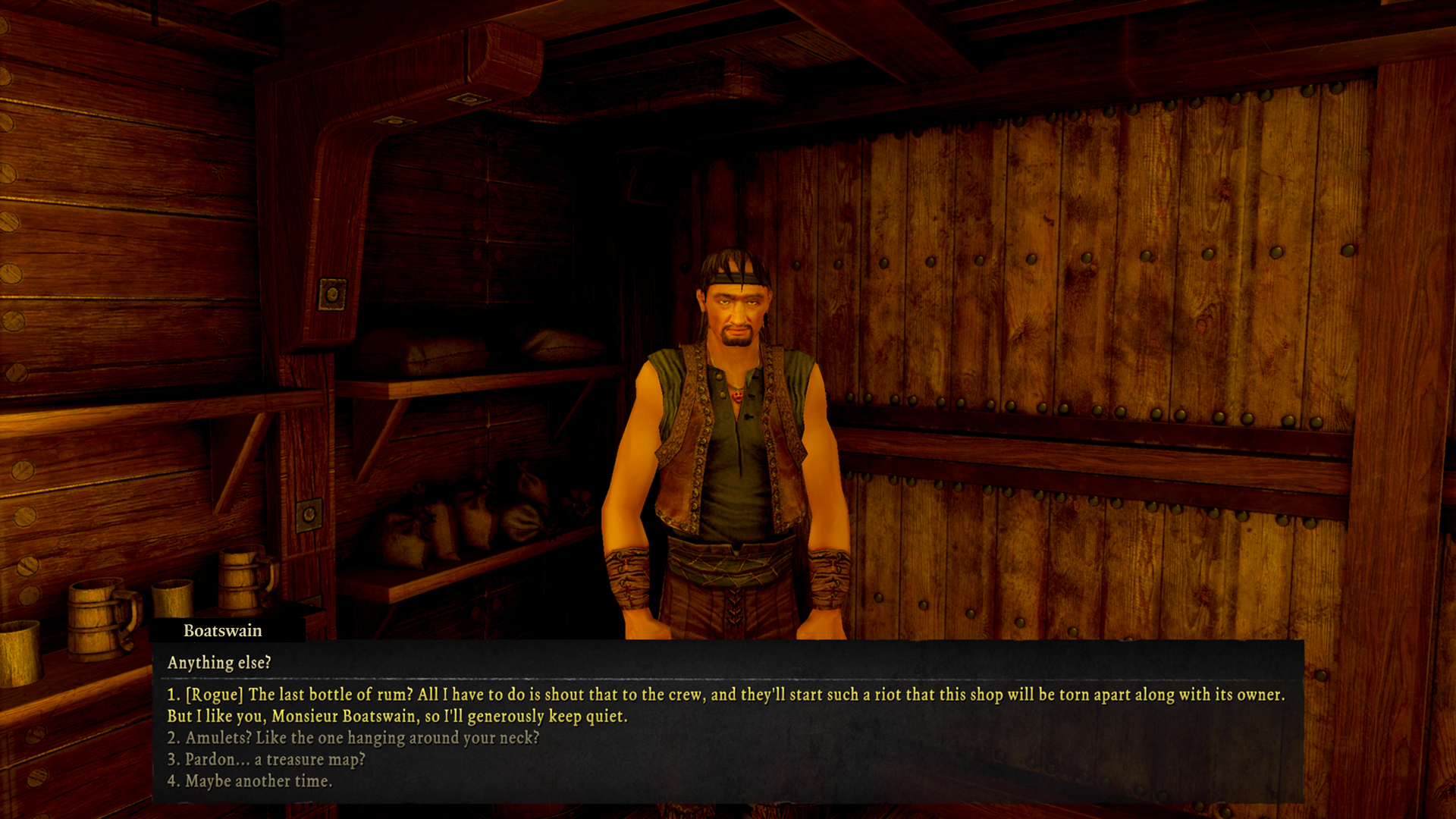
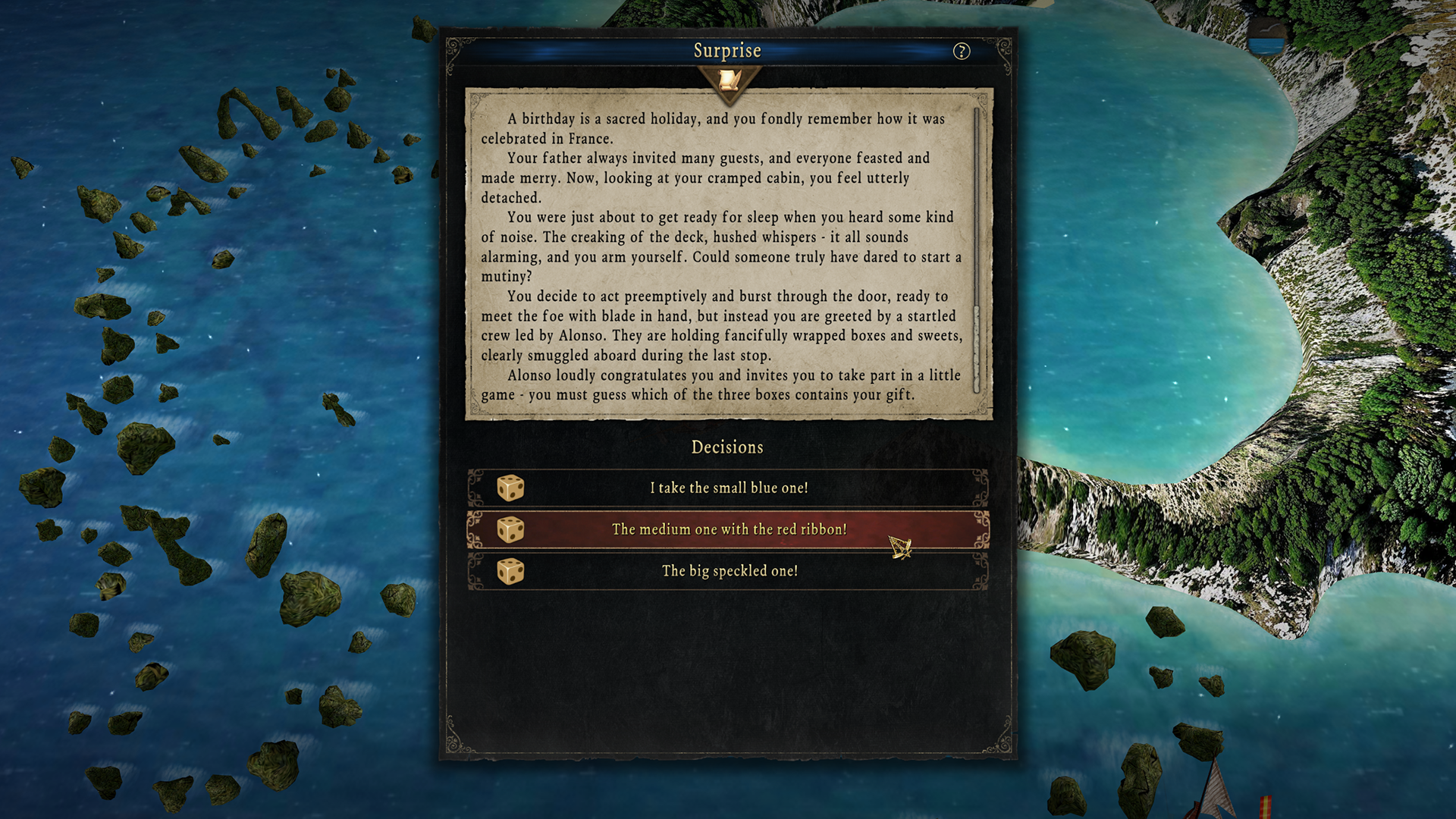
Take the Rascal. While still aboard the tutorial ship, he notices that the boatswain has one last bottle of rum—and offers to make sure the whole crew is clamoring for it.
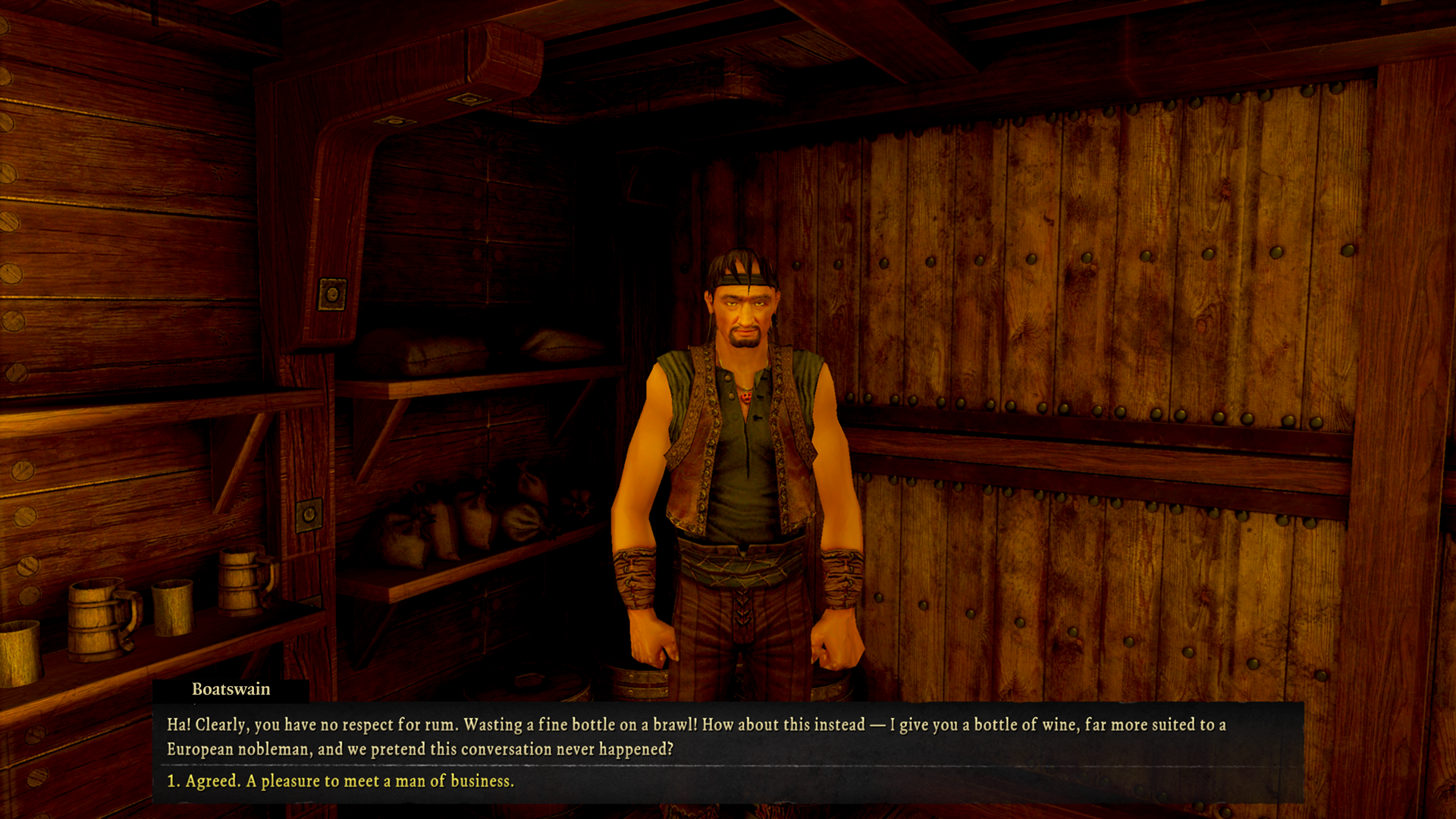
The boatswain would rather buy his silence with a bottle of wine. Our captain walks away with a gift and some Stealth experience. His background has already paid off before he even reaches Saint-Pierre.
In the same tutorial, the Athlete can put his strength to work at the windlass and finish the encounter with a dialogue option of his own. A familiar task plays out differently because of the character we chose at the start.
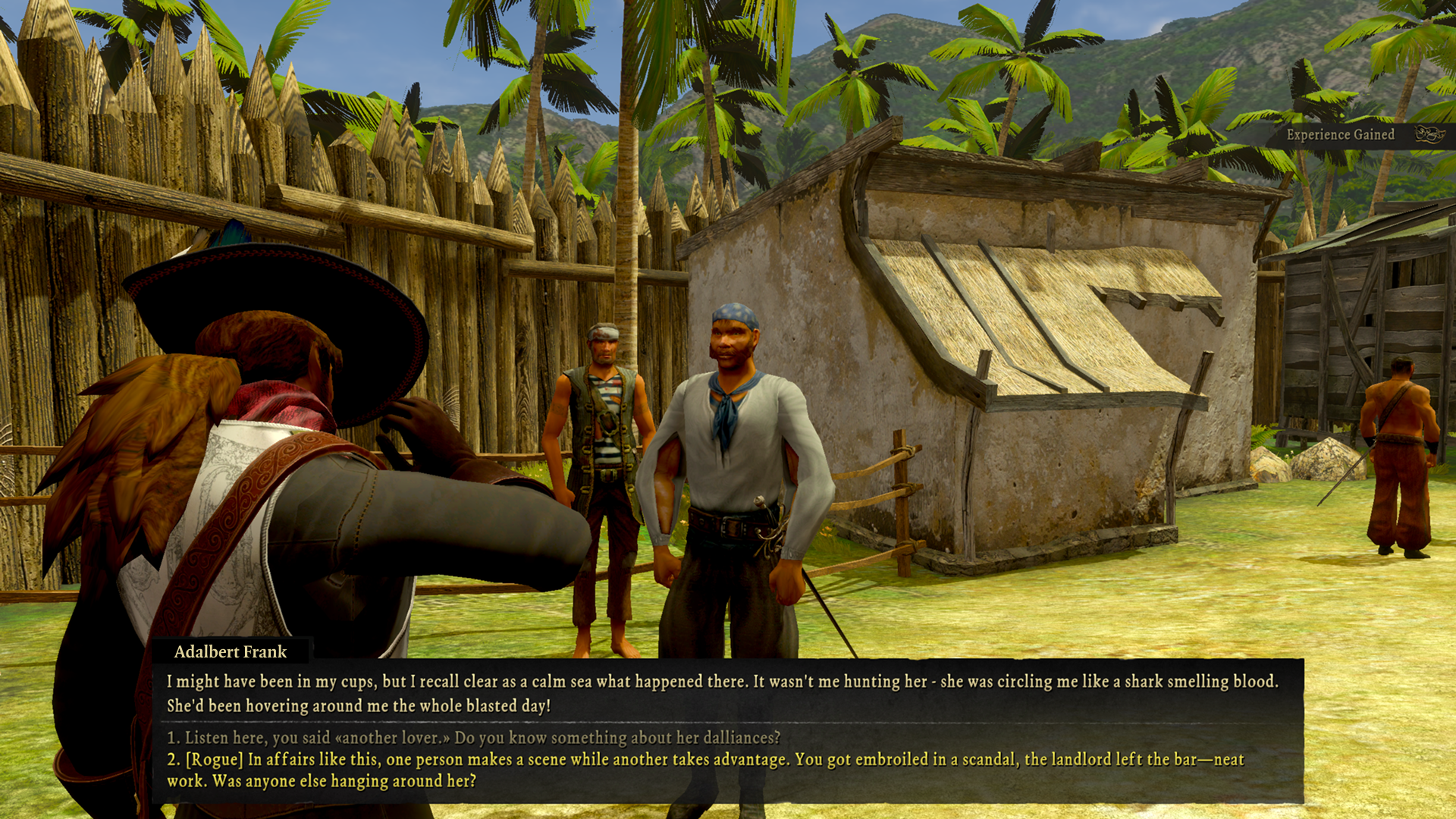
Even your meeting with Valigny can take on a very different tone depending on your background and Honor.
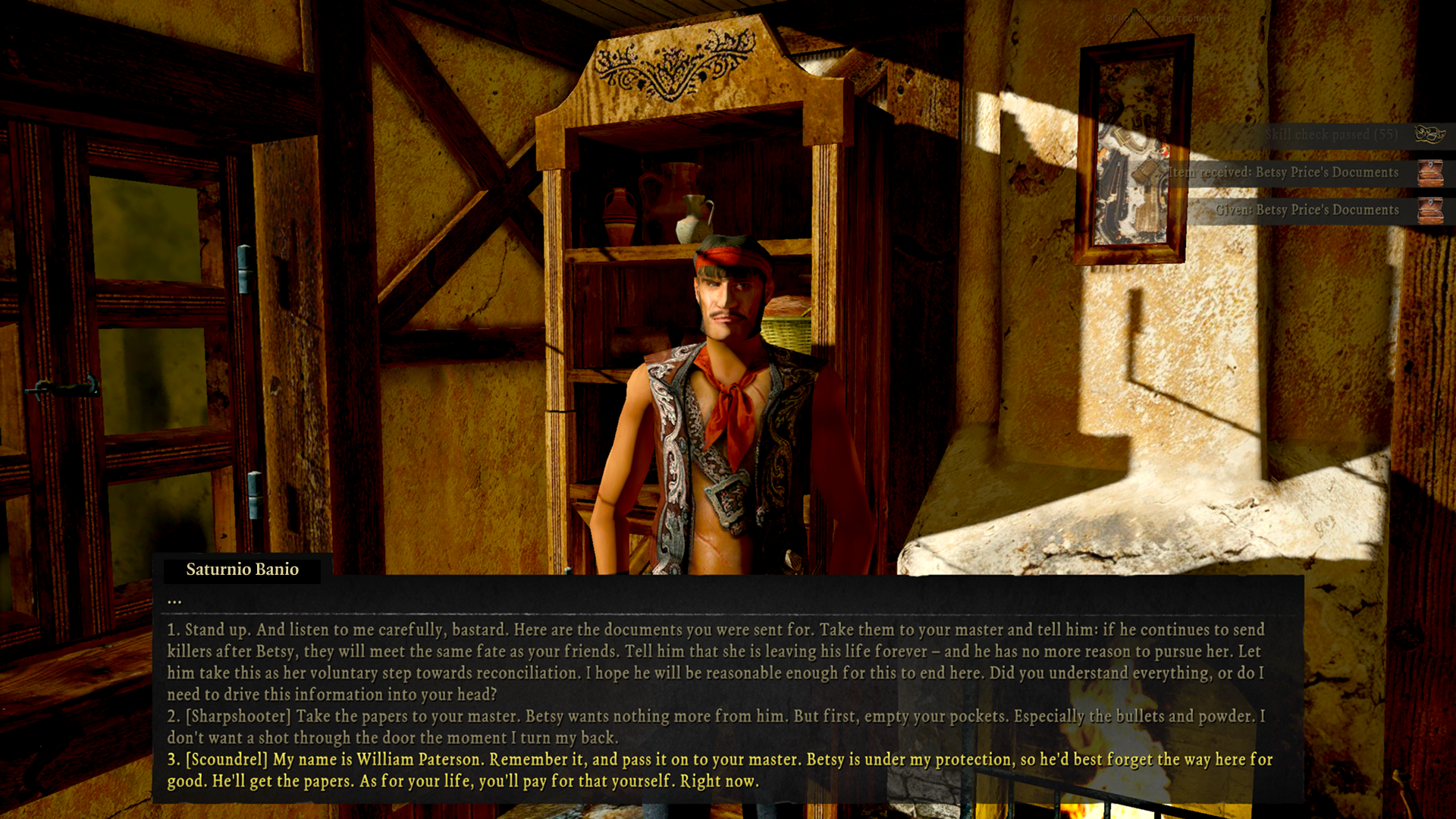
That's where roleplaying takes shape: what your captain notices, what they ask about, which jobs they accept, and how they negotiate their reward.
Reworking Black Mark
Black Mark deserves a closer look. We've heard plenty of criticism of Tommy Irons' personal quest: it left too much of his past unexplored, and some of its themes—and how they were handled—raised questions.
We've rewritten 90% of the quest's dialogue from scratch. You'll learn more about Tommy's past, get a better sense of who he is, and see his relationship with the captain develop more fully.
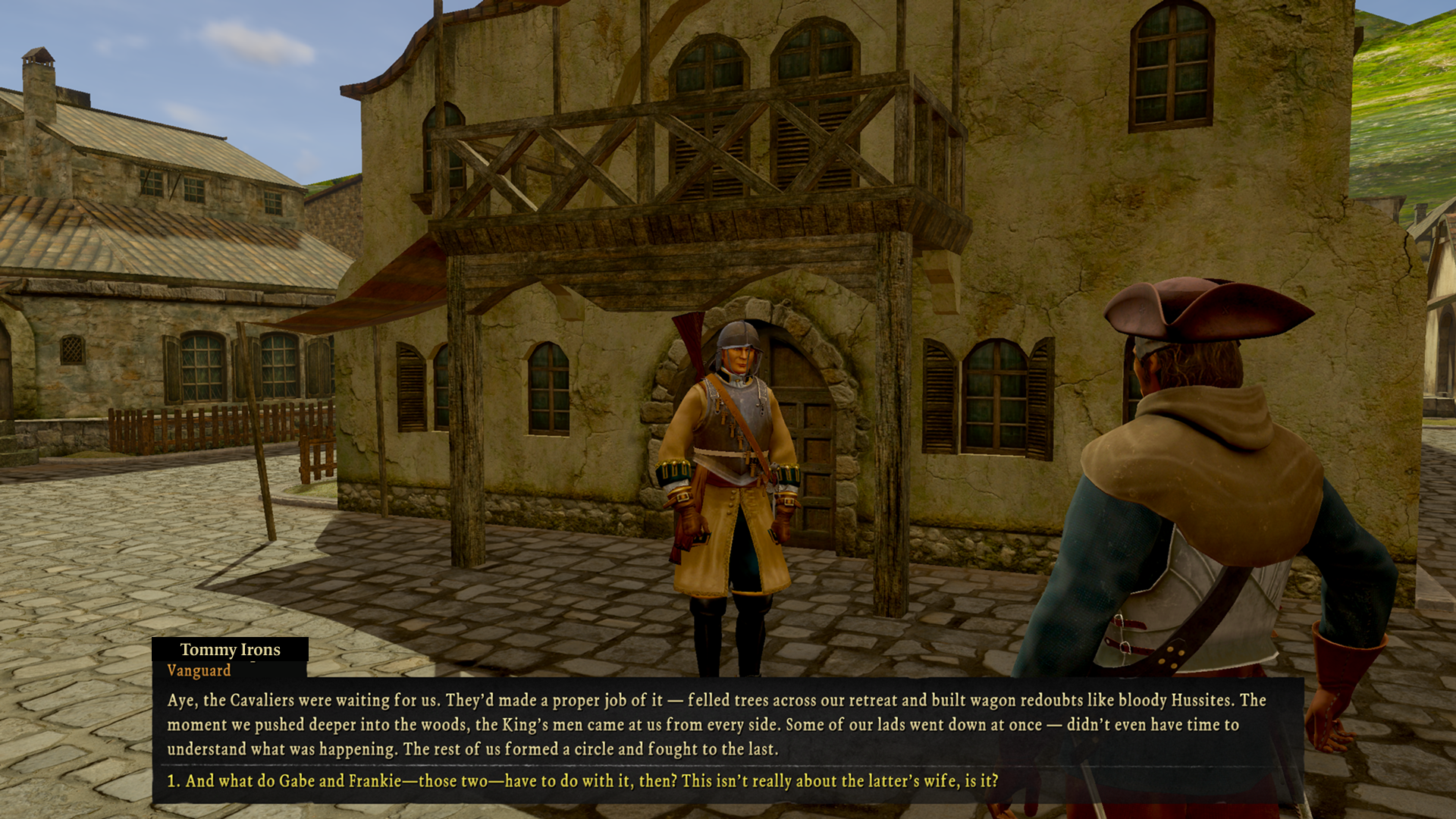
Tommy still loves to talk, boast, and test the captain's patience. He just doesn't descend into an obnoxious caricature anymore.
The captain can give as good as they get, too: their side of the banter has also been reworked.
We've added memories that Tommy shares as the story unfolds and your character develops. They'll give you a much deeper look into his past.
Squadron Markers on the Global Map
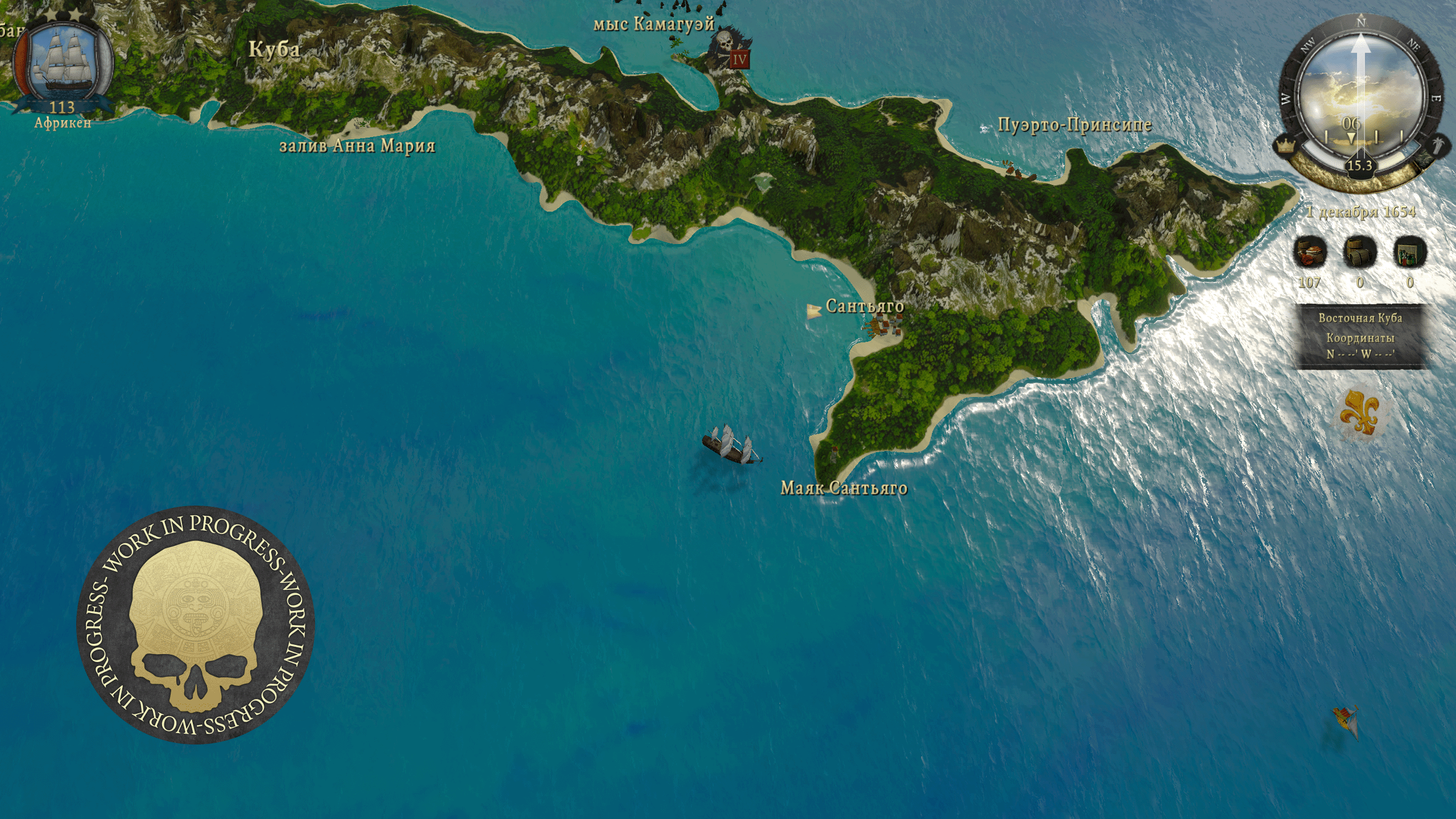
The Keen Eye ability will let you identify special squadrons: Crown traders, trade expeditions, slave traders, and siege squadrons that could cost you both your bank deposit and the ship you left at the port office.
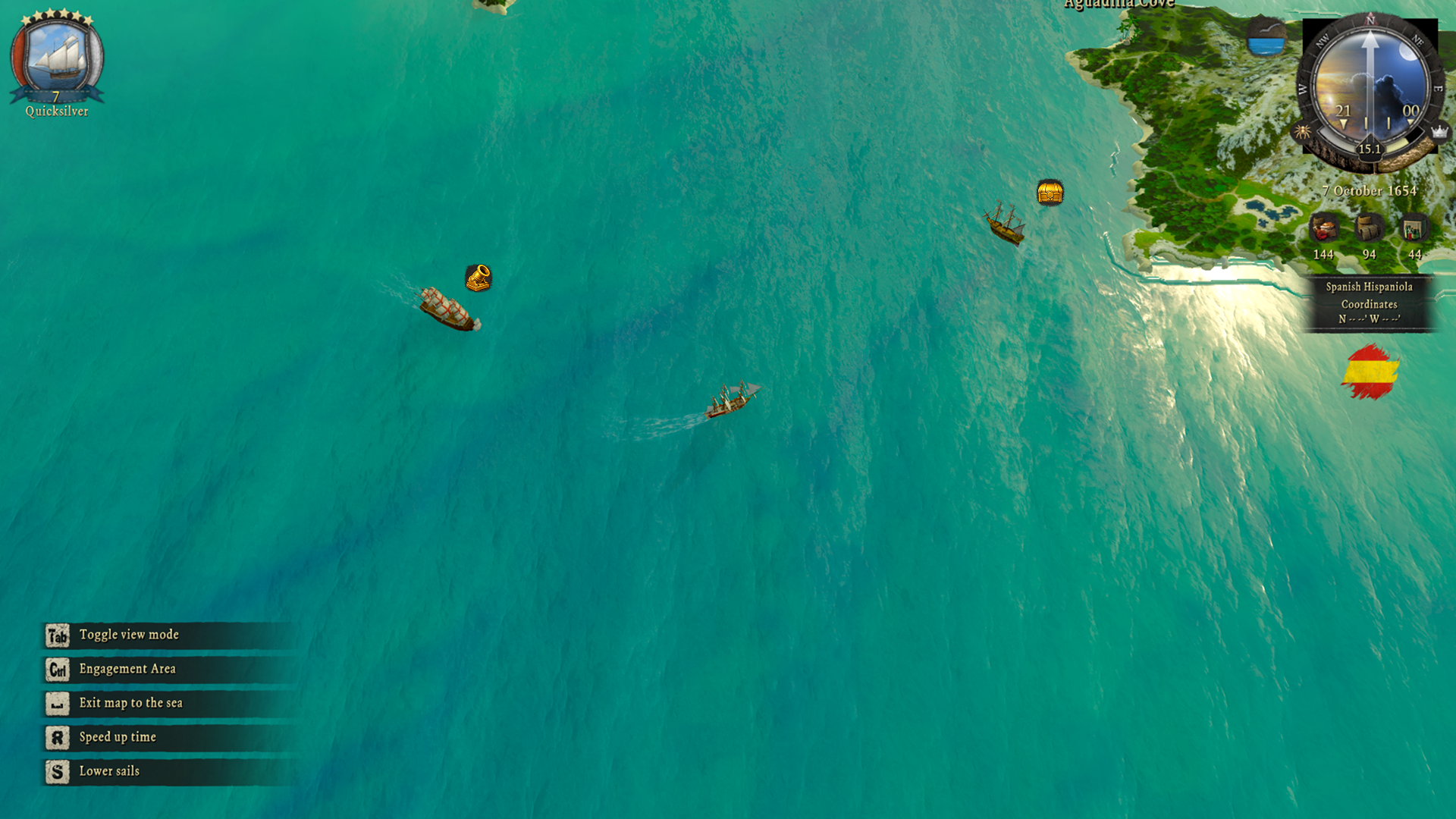
That's another reason to develop your captain and recruit useful officers. The ability will now help you on the global map, making it easier to pick out potentially valuable prey among passing ships.
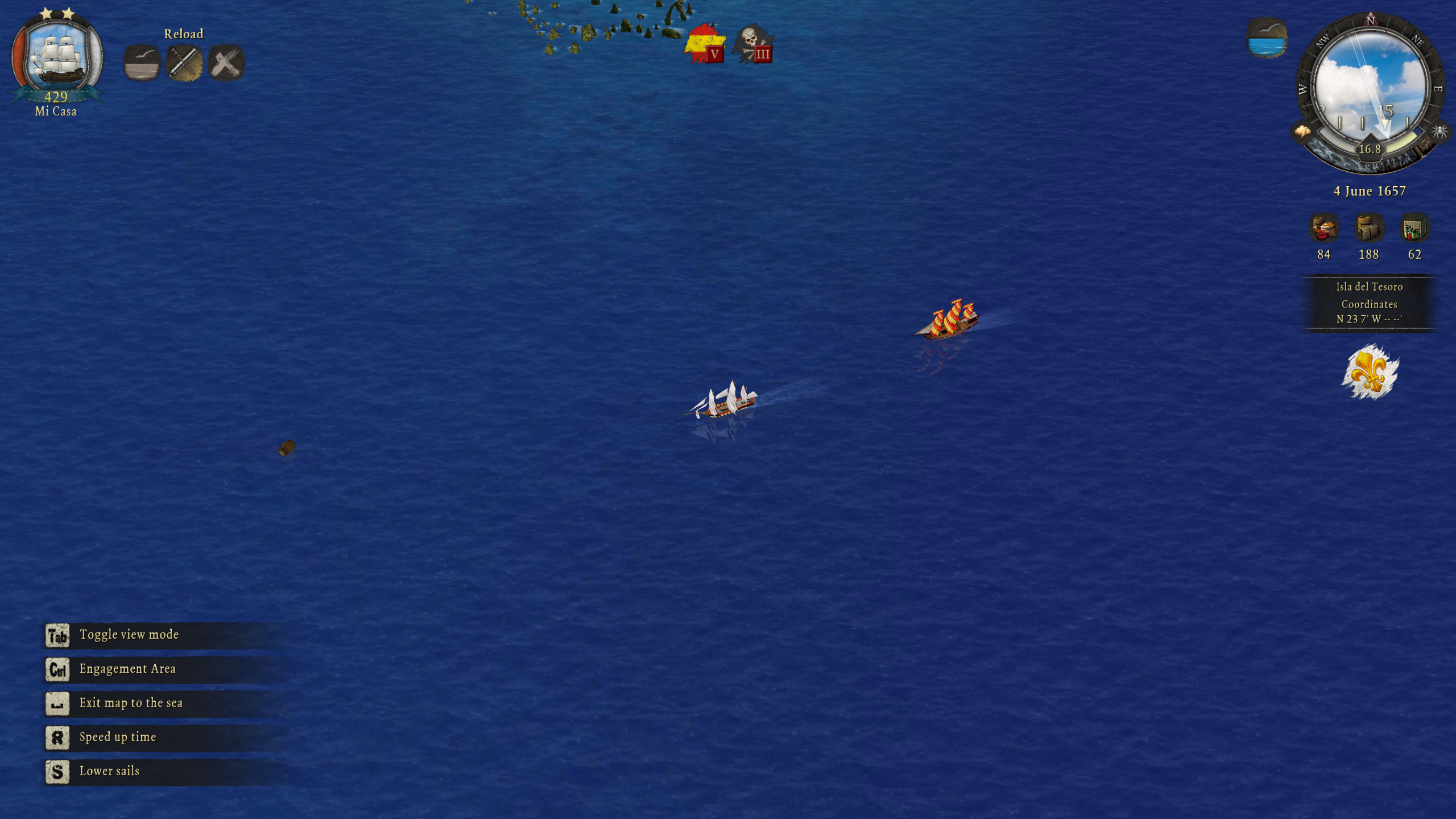
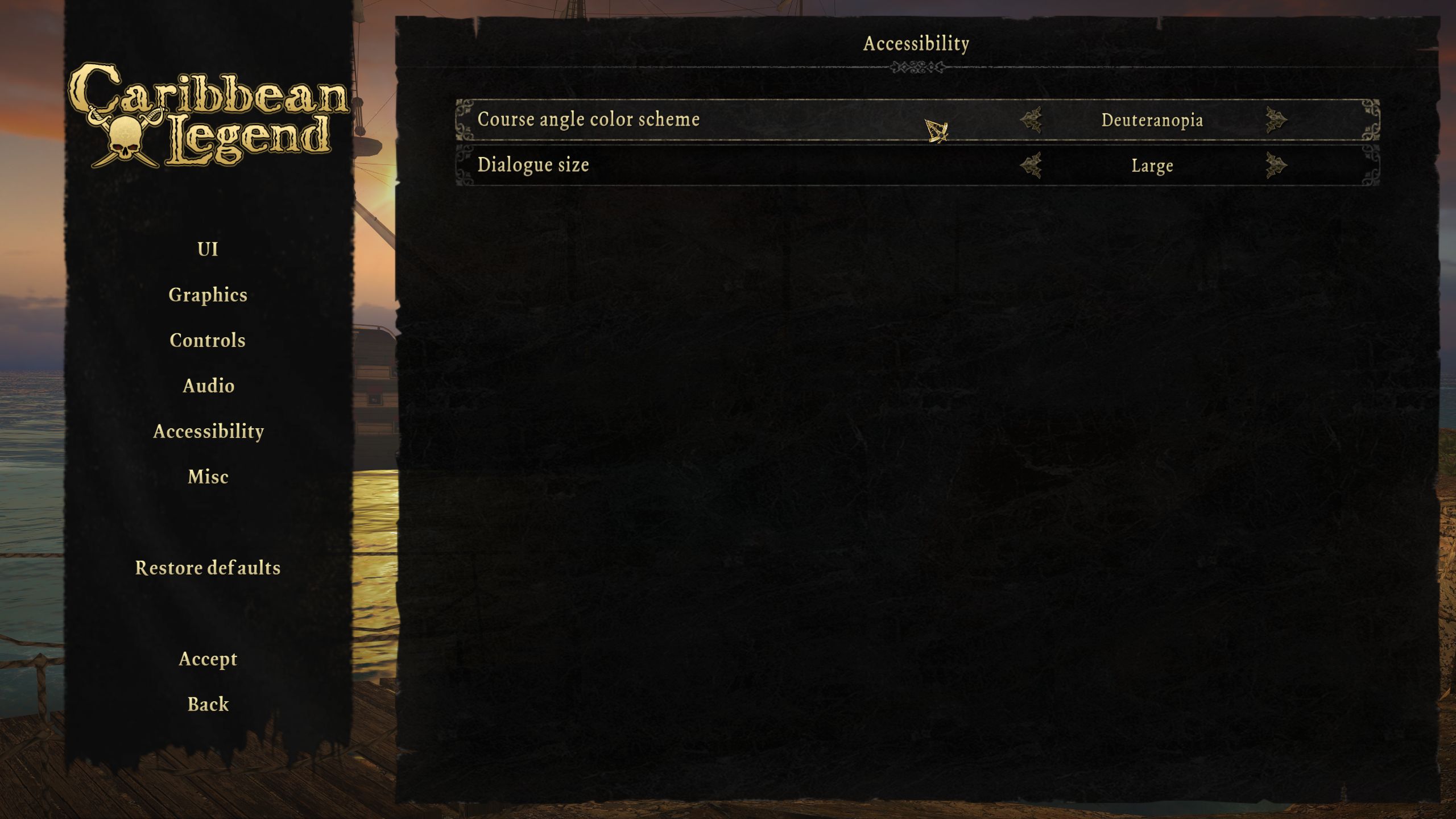
Quest ships with colored sails can be particularly difficult to identify for players with color vision deficiencies. They now have their own exclamation-mark icons, making those important encounters easier to spot among similar silhouettes. You can turn these markers off in the Accessibility settings.

The game has plenty of weapons, armor, and abilities. Too often, though, the differences between them are minor. There's usually little reason to compare individual weapons or pieces of armor beyond their type and damage.
Update 1.6 introduced a new item system. Now we're giving it the polish it needs.
Melee Weapon Properties and Attack Types
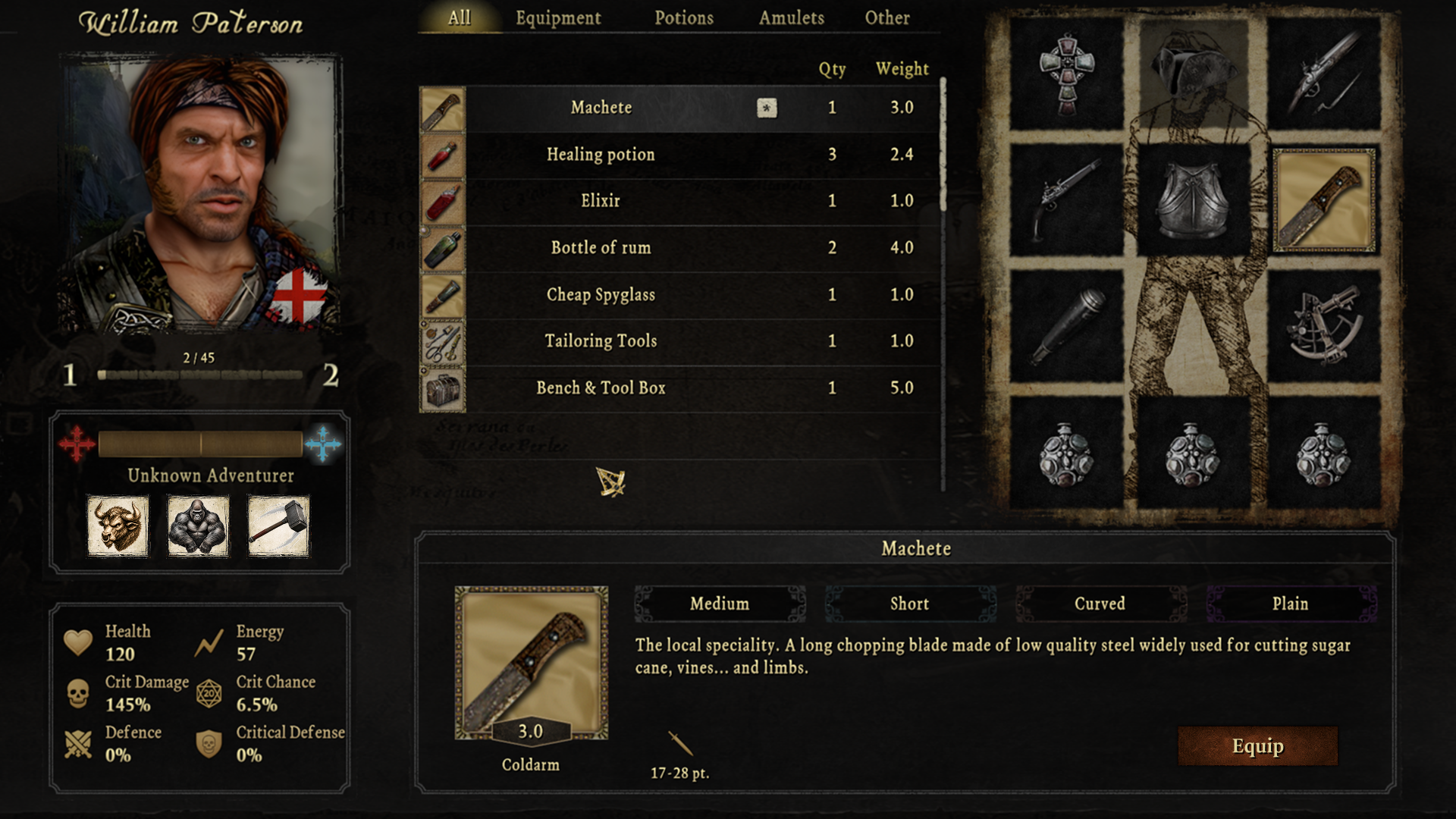
The Long, Short, Curved, and Straight descriptors now grant their own bonuses to specific attacks.
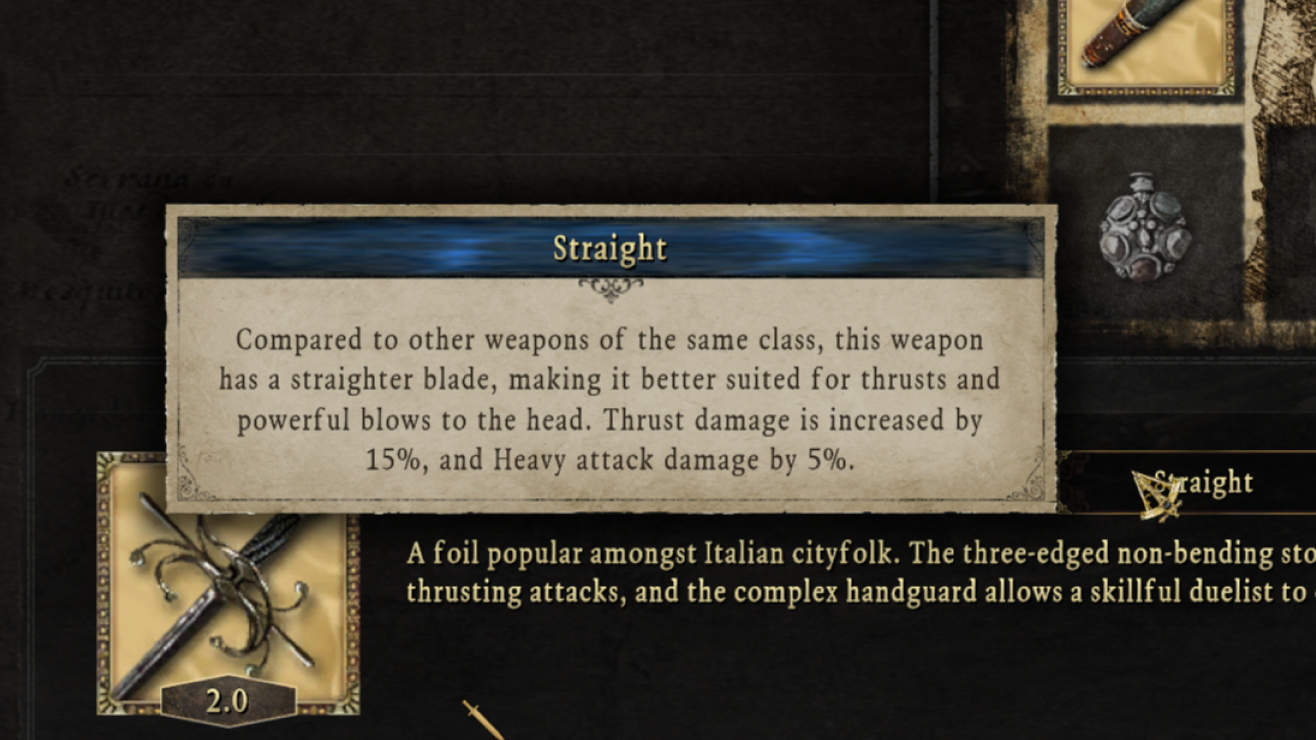
A straight blade boosts thrusts and heavy attacks.
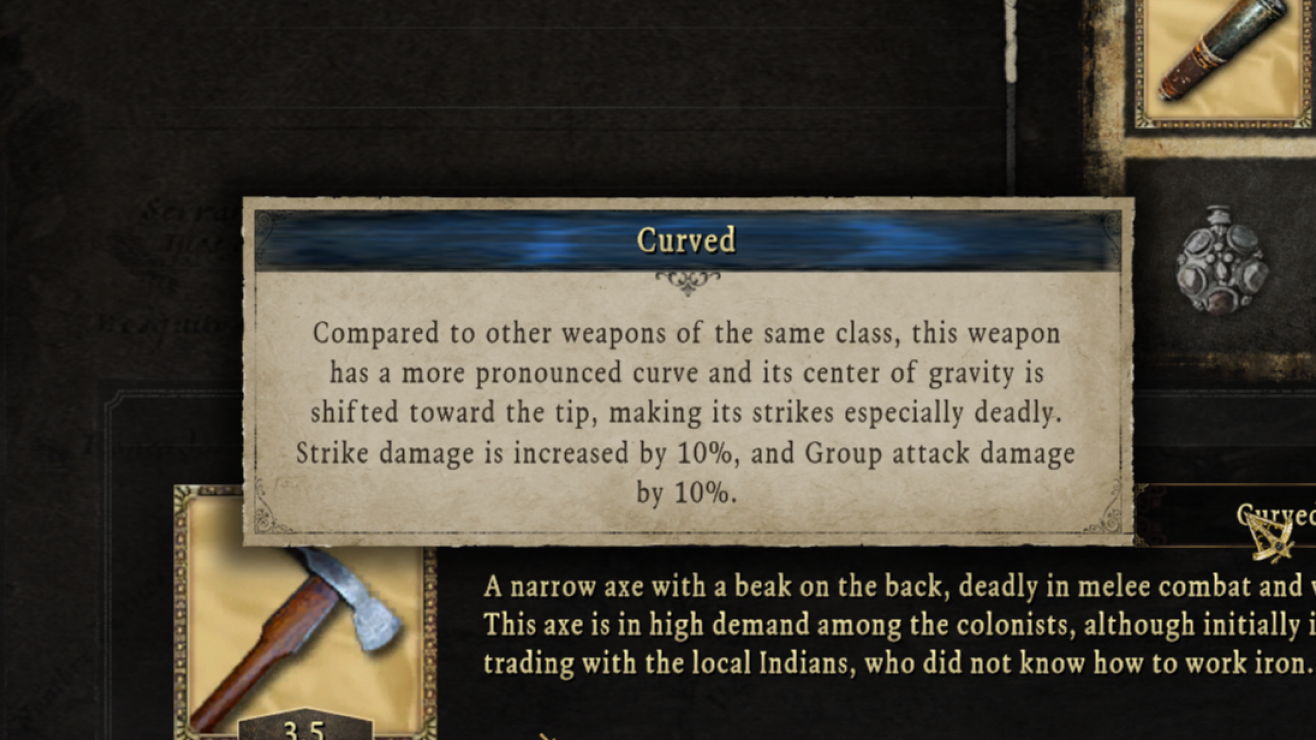
A curved blade boosts normal and sweeping attacks.
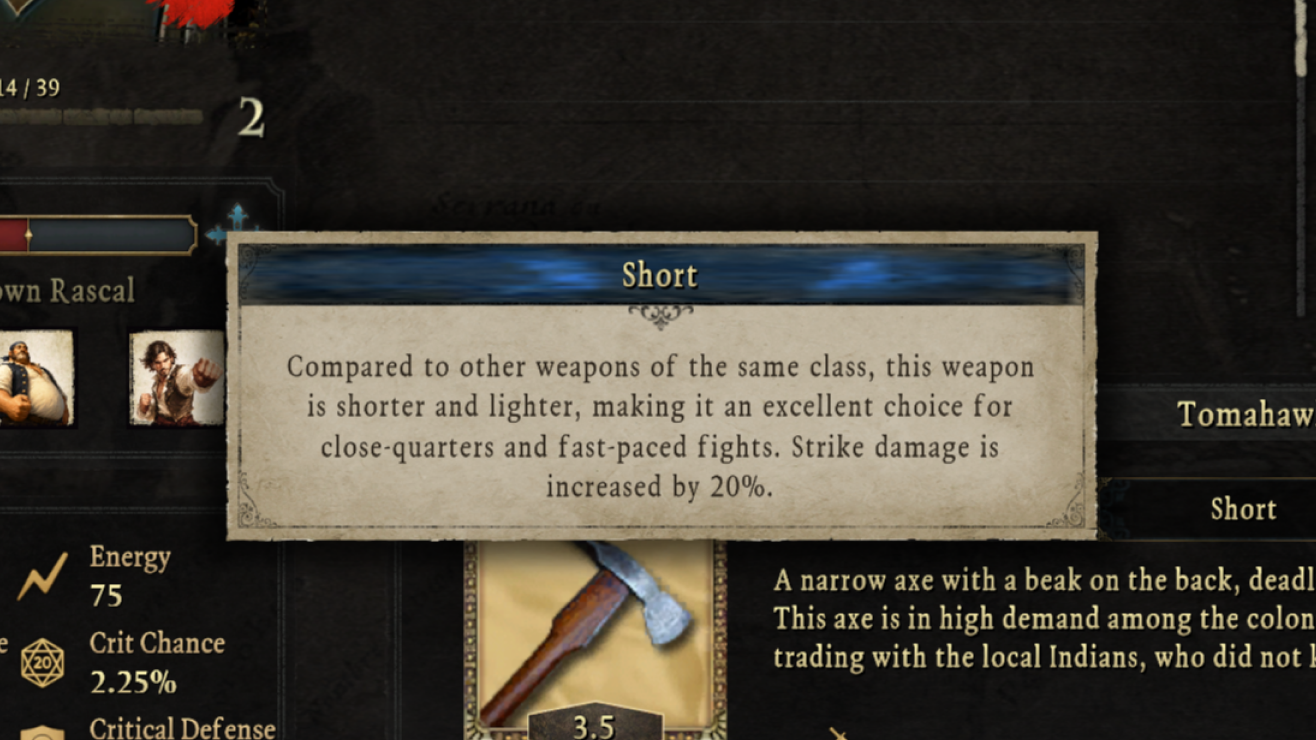
Short weapons gain a bonus to normal attacks, while long weapons boost heavy and sweeping attacks.
When comparing two finds, it pays to think about which attacks you use most. One captain might get more out of a stronger thrust; another might favor a sweeping attack. A blade's shape now matters in its own right.
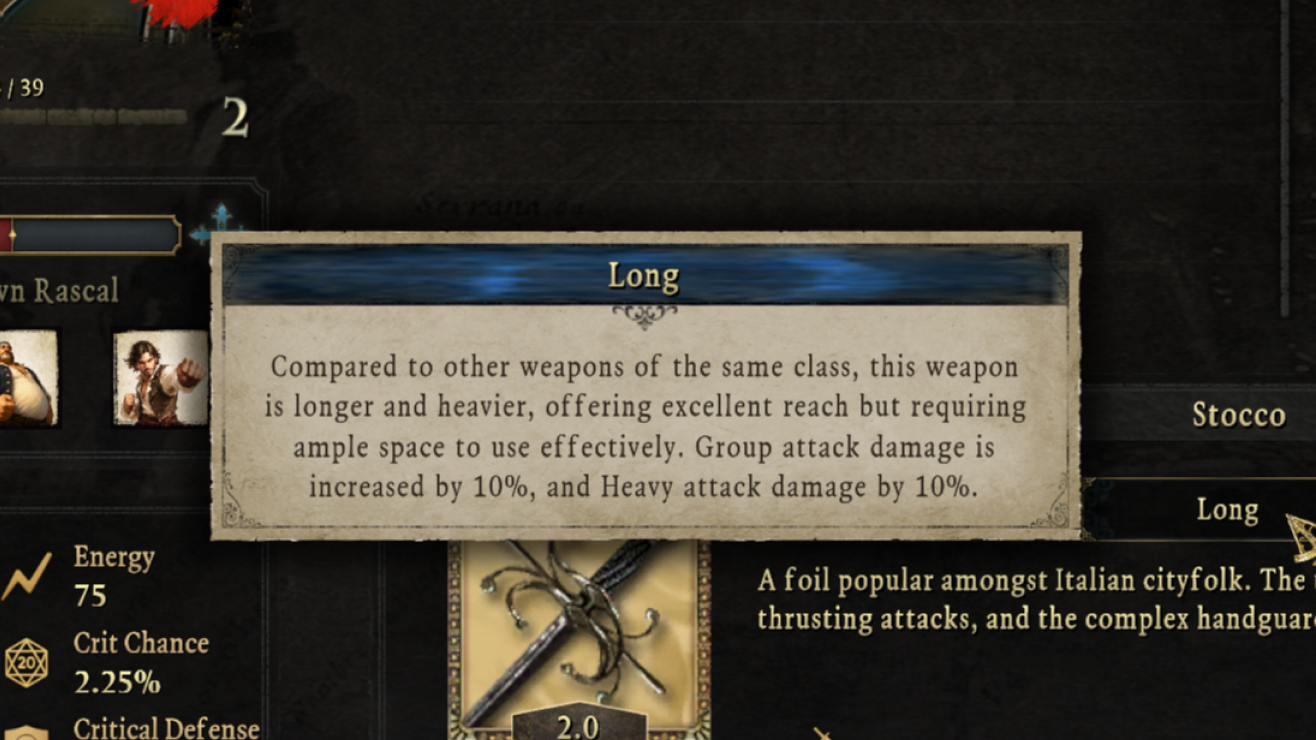
Weapons still belong to the same classes, but their strengths and weaknesses are changing. A short, curved light blade now has much more in common with a saber than a long, straight rapier does. Choosing a weapon gives you more to weigh up.
Take the Stocco and the Bilbo. Both are long, light blades, but the Stocco is straight and the Bilbo is curved. The former gains an extra boost to thrusts and heavy attacks; the latter to normal and sweeping attacks. They belong to the same school of fencing, but already favor different techniques.
New Armor Descriptors
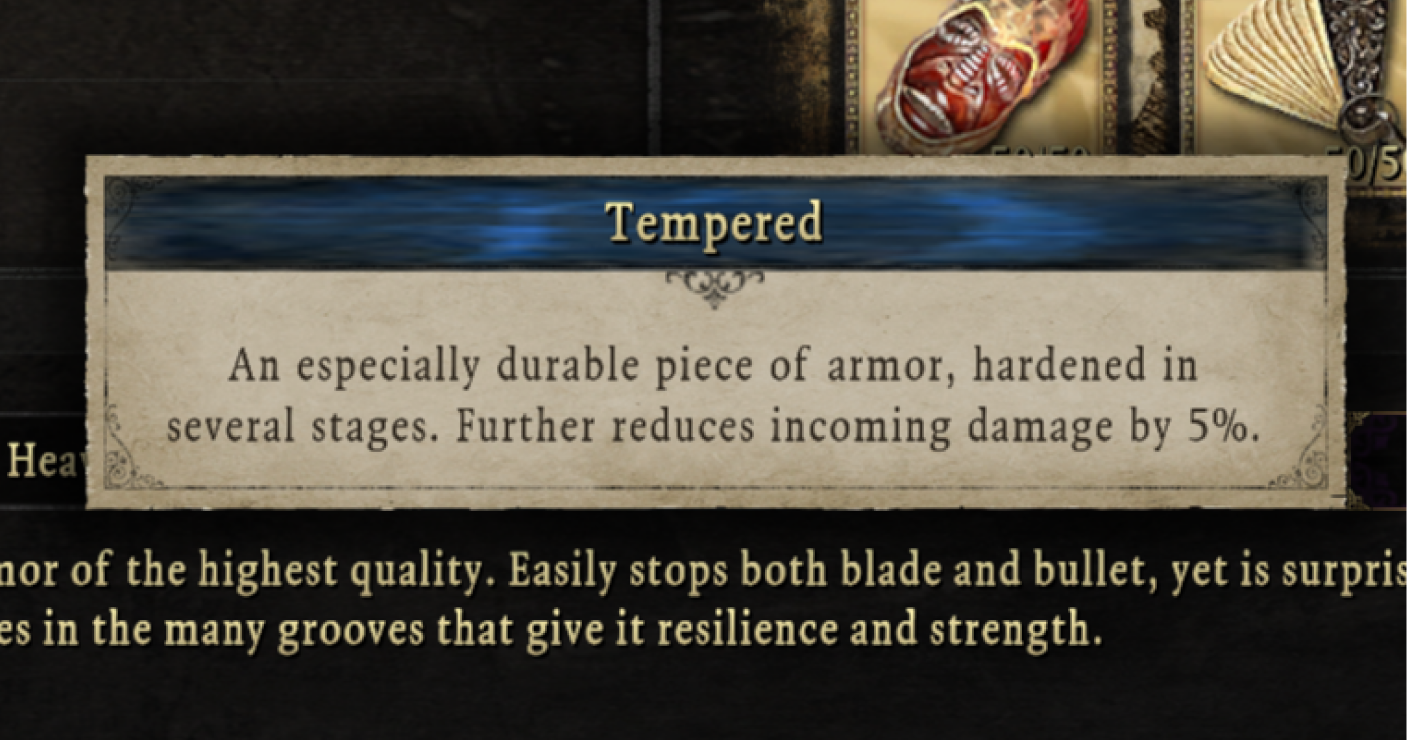
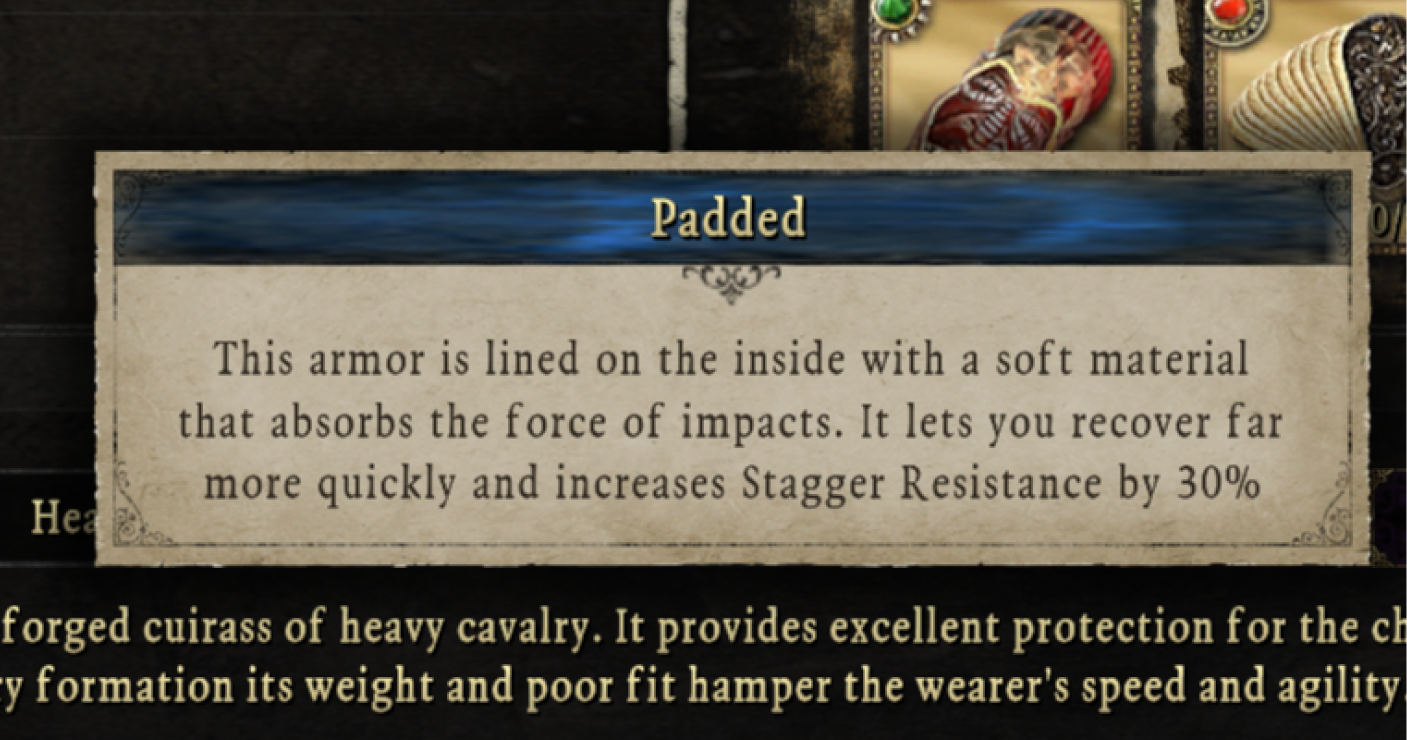
Armor is getting two new descriptors: Tempered and Padded.
Tempered armor gains an additional five percentage points of protection. It's another property to look for when choosing your gear: even within a familiar armor class, you may find a piece that offers better protection. The descriptor mainly appears on expensive late-game armor, though some earlier pieces have it as well.
Padded armor helps resist stagger. Reducing the damage from a hit and staying on your feet long enough to act afterward are now two separate reasons to choose a piece of armor.
Attack Speed and Combat Animations
Since update 1.6, we've received a lot of feedback about animation speed, especially for advanced attacks. Many players felt that fights had become too fast, leaving too little time to react to enemy attacks.
For 2.0, we've revisited combat animation speeds, including advanced attacks.
I won't bury you in numbers: most animations are now slower, with advanced attacks getting particular attention.
Heavy attacks, on the other hand, are faster.
The result is a more balanced pace, with more time to react and make decisions. That will be especially useful when playing without the option to slow down time.
Healing Potions: Recovery Speed and Weight
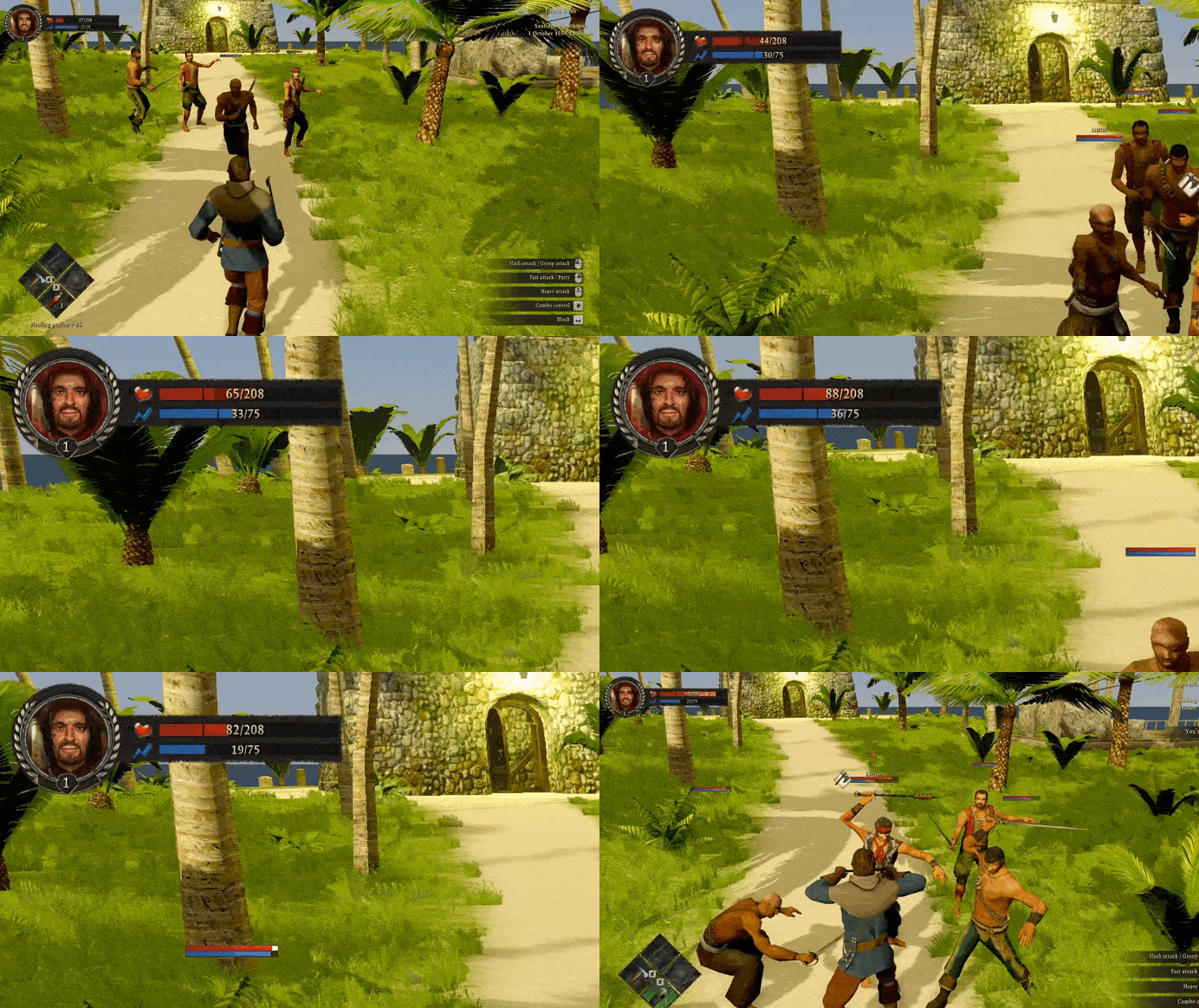
We've removed overhealing: any unused healing is now lost. Players can no longer get around this by spamming potions. Neither can enemies.
Every potion restores its allotted amount of health over the same fixed period. We've listened to your feedback on healing speed and brought back the ability to recover quickly when a fight turns nasty.
We've also revised the weight of healing supplies. Healing potions, elixirs, and mixtures are heavier now. Before heading out, you'll need to consider more than the number of bottles: the balance between healing power and carrying weight matters, too.

We want crafting to be useful and fun, rather than a tedious grind wrapped in a clumsy interface.
Recipes and Crafting
You can now see the entire recipe collection at any time, including which recipes you're missing.
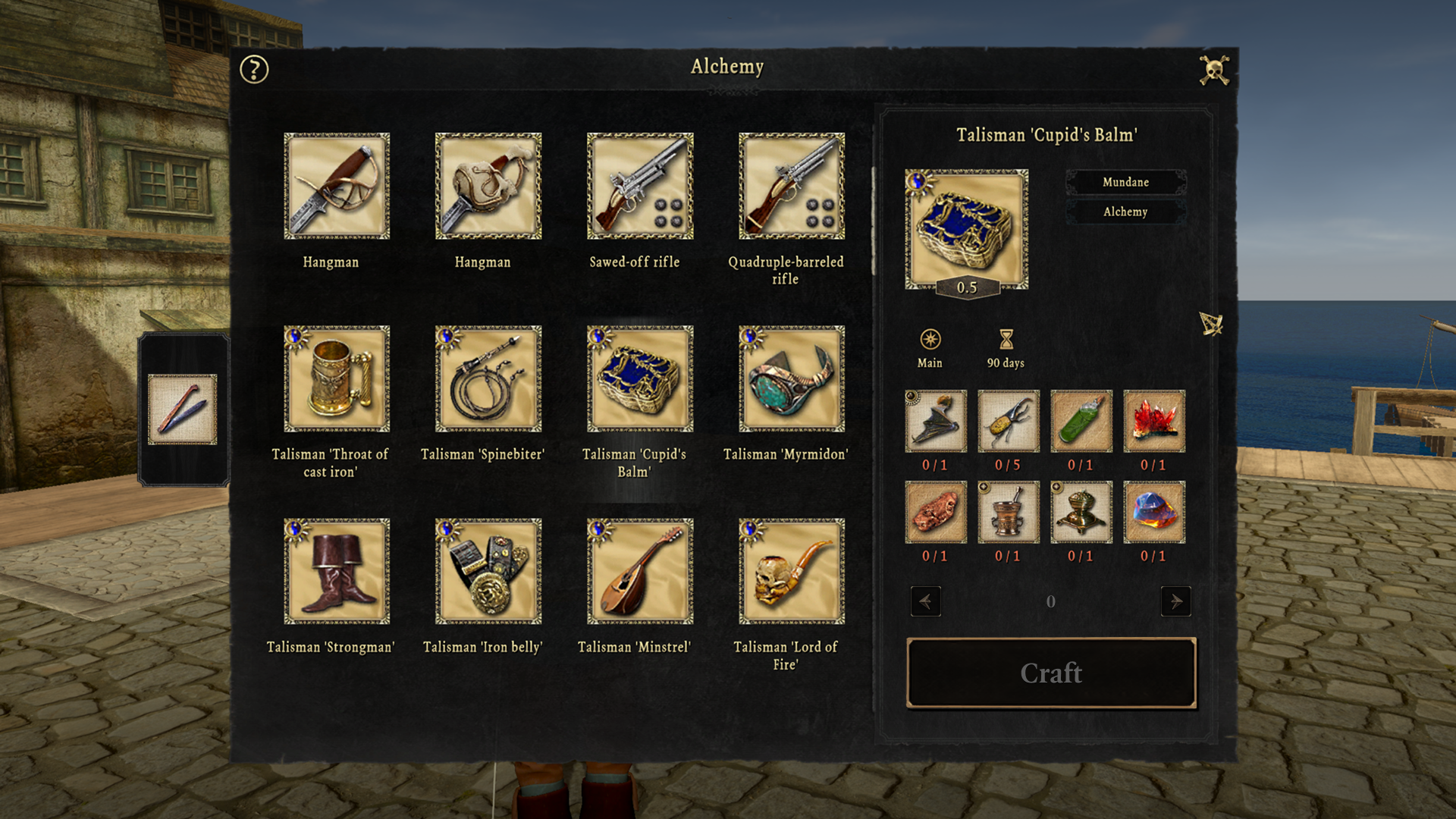
The Alchemy ability also helps you save ingredients when crafting. Character progression matters here as well: the same supplies can stretch to more crafted items.
But the biggest improvement, in my book, is that everything can now be crafted with a single button.
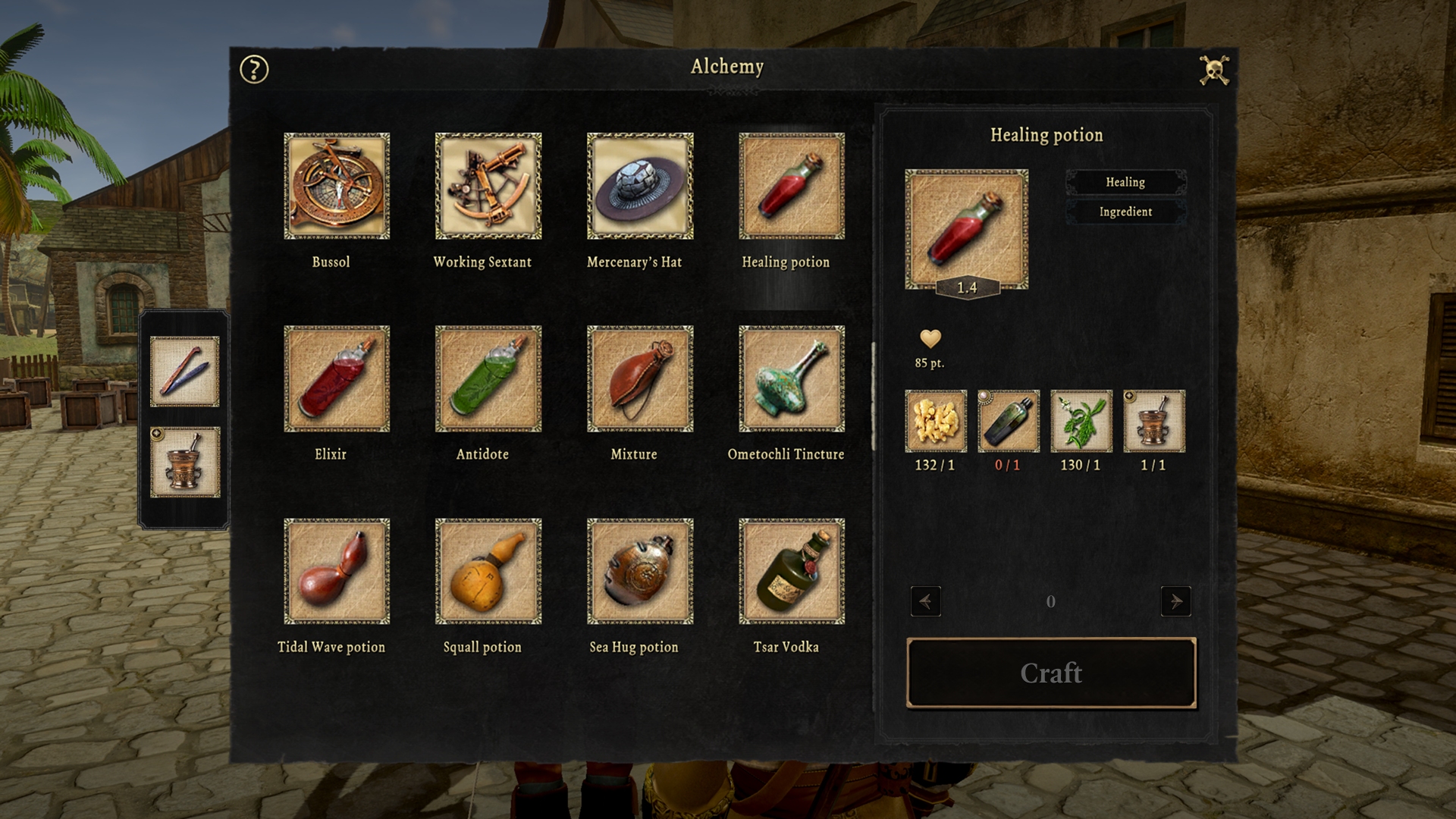
You can see which ingredients you have and how many. All you need to set is the number of items you want to make.
Ingredients, Tools, and Access to Supplies
Tools have their own section in the new Alchemy window, and there's a reason for that.
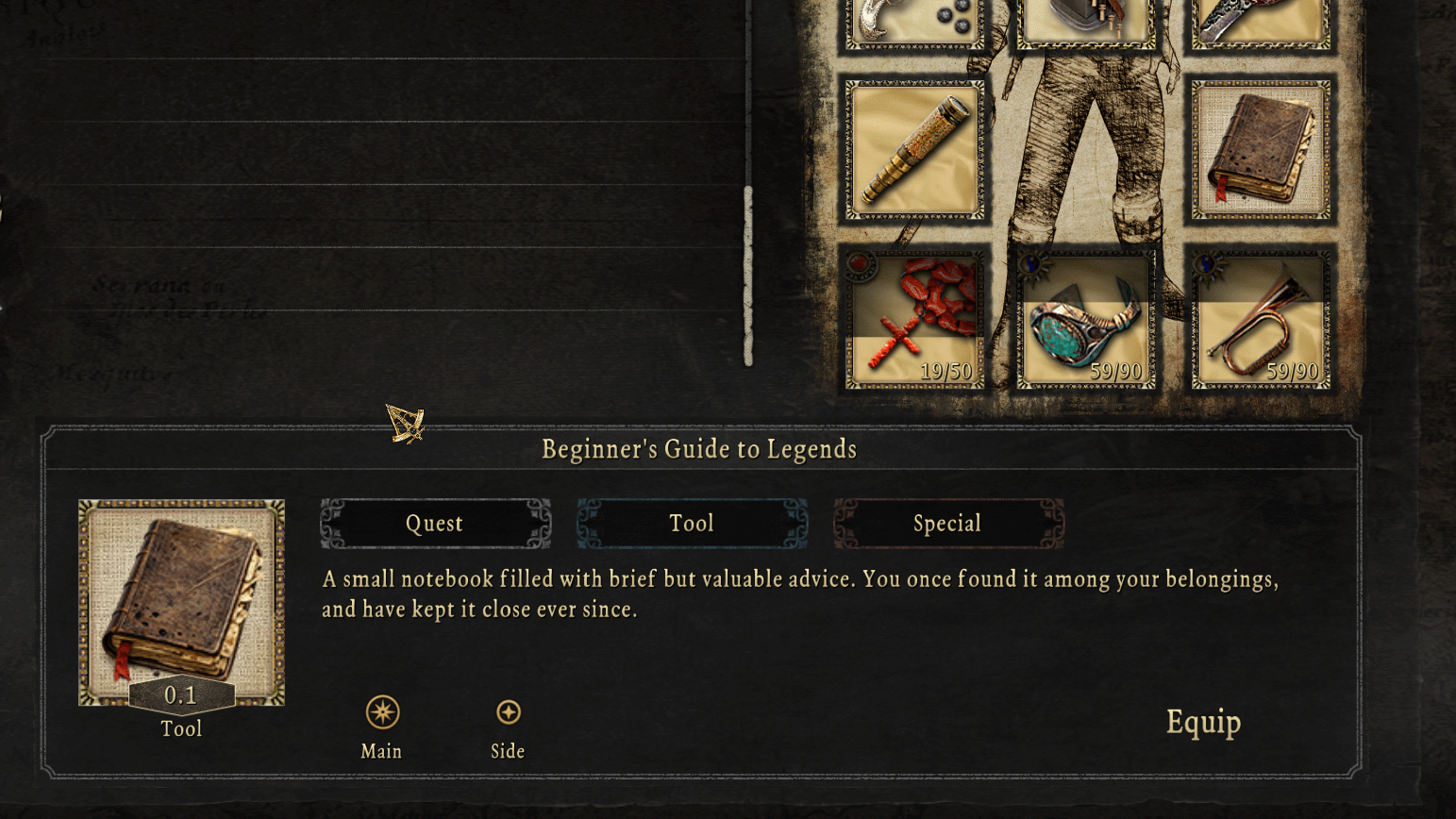
Once you've found a tool, you keep it for good.
No more strategic stockpiles of wooden spoons taking up inventory space for no good reason.
Which supplies you can use will depend on where you are. In a friendly colony or aboard your ship, Alchemy can draw on the contents of your ship's chests. Out in the field, you'll have to make do with what you brought along.
So preparing for an expedition still matters. You can store tools and ingredients aboard your ship, but before a long trip, it's worth deciding what you'll need while you're away.

Maybe you love tough fights but don't want slow progression. Maybe you'd rather not wrestle with the new economy. Or perhaps you just want to sail a big frigate across a beautiful sea, without deadlines or grinding. Or you're at the other end of the spectrum: you know the game inside out and want a proper hardcore challenge—without nonsense like taking away your saves.
Now you can have it your way.
Difficulty Levels and Enemy Behavior
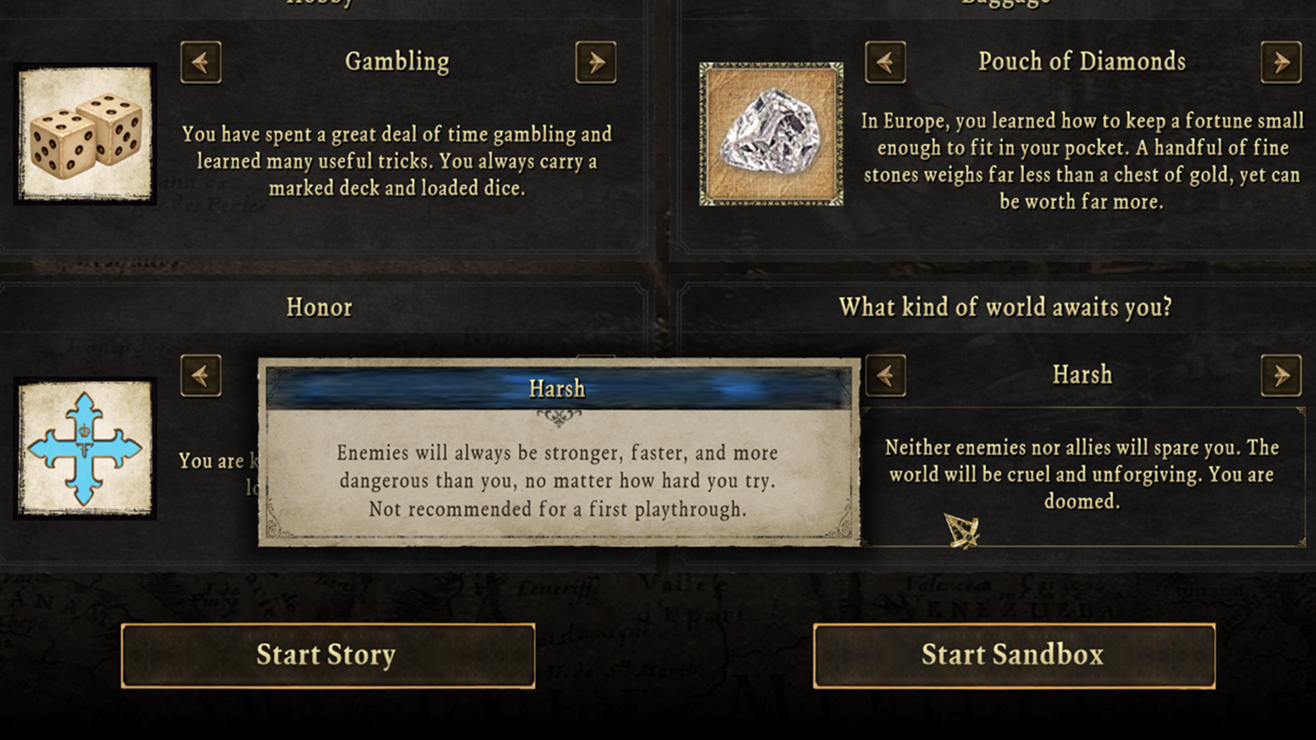
2.0 will have just three standard difficulty levels and one special option. Each comes with a clear explanation, so you won't have to guess what you're signing up for.
On land, difficulty will affect more than enemy stats: it will change the pace of combat. On the easiest setting, enemies will react, move, and attack a little more slowly. On the middle setting, combat will play out as intended by the developers. The highest standard setting will put you to the test.
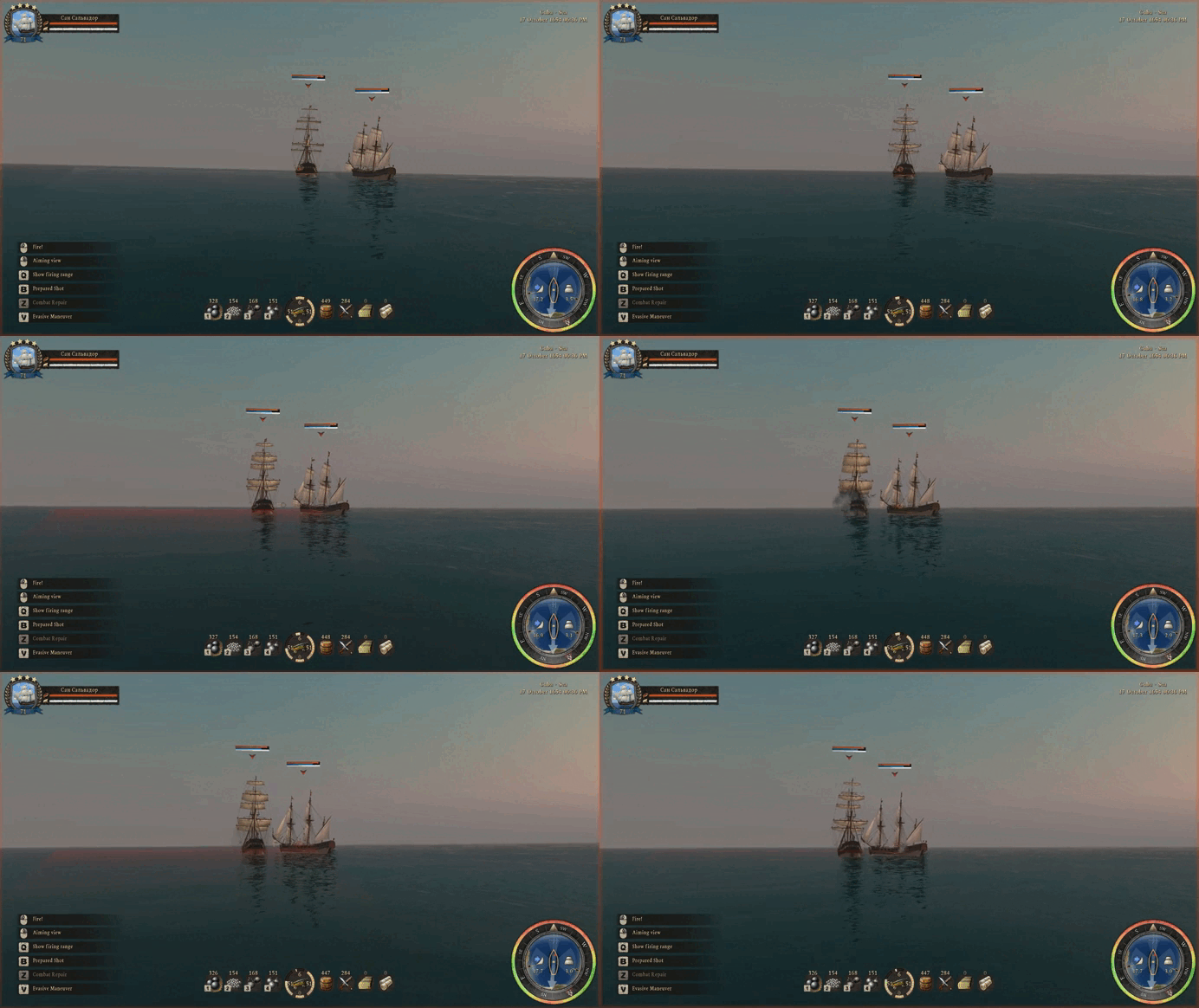
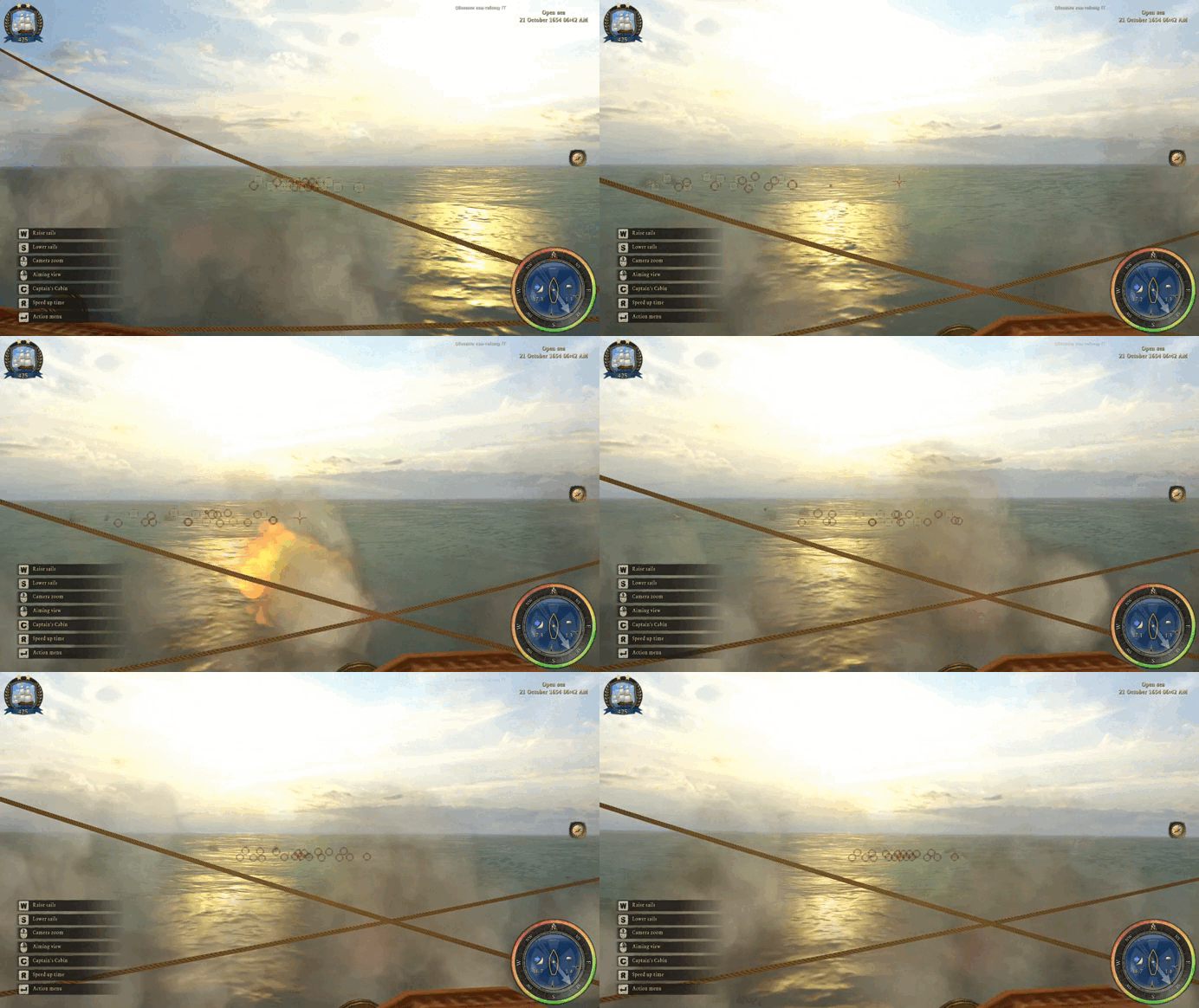
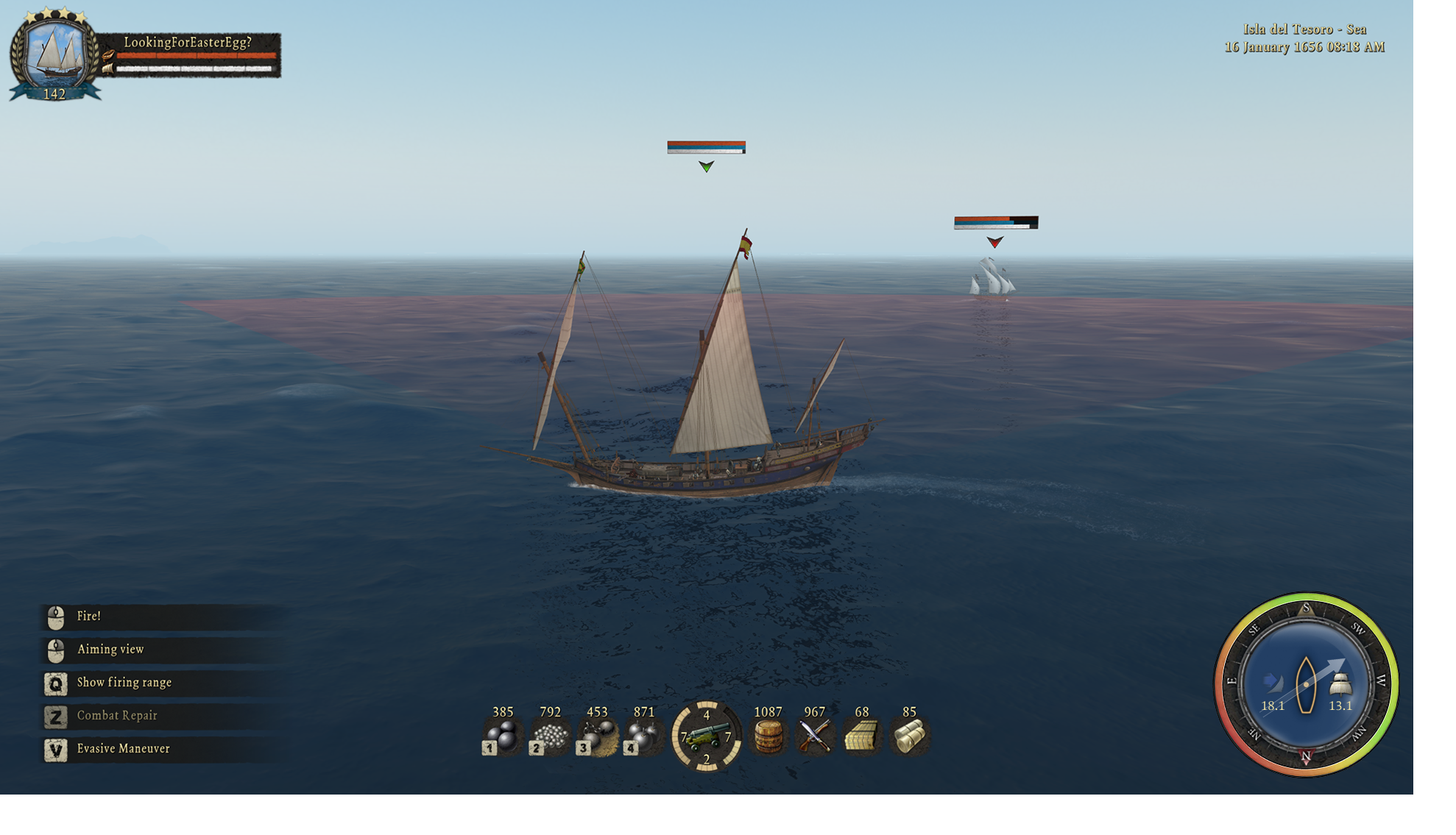
At sea, difficulty changes the accuracy of enemy ships. Their volleys will have a wider spread on the easiest setting, while higher difficulty makes their fire more accurate and naval battles more demanding.
Individual Playthrough Settings
Several aspects of your playthrough can be adjusted independently.
- Progression speed is no longer tied to difficulty. You can set it separately.
- Economic difficulty changes costs and rewards. If you're after a straightforward pirate adventure, choose the simplified economy, and earning money will play a smaller part in your journey.
- Time control on land lets you start a game without the option to slow down time ashore. This is now the default.
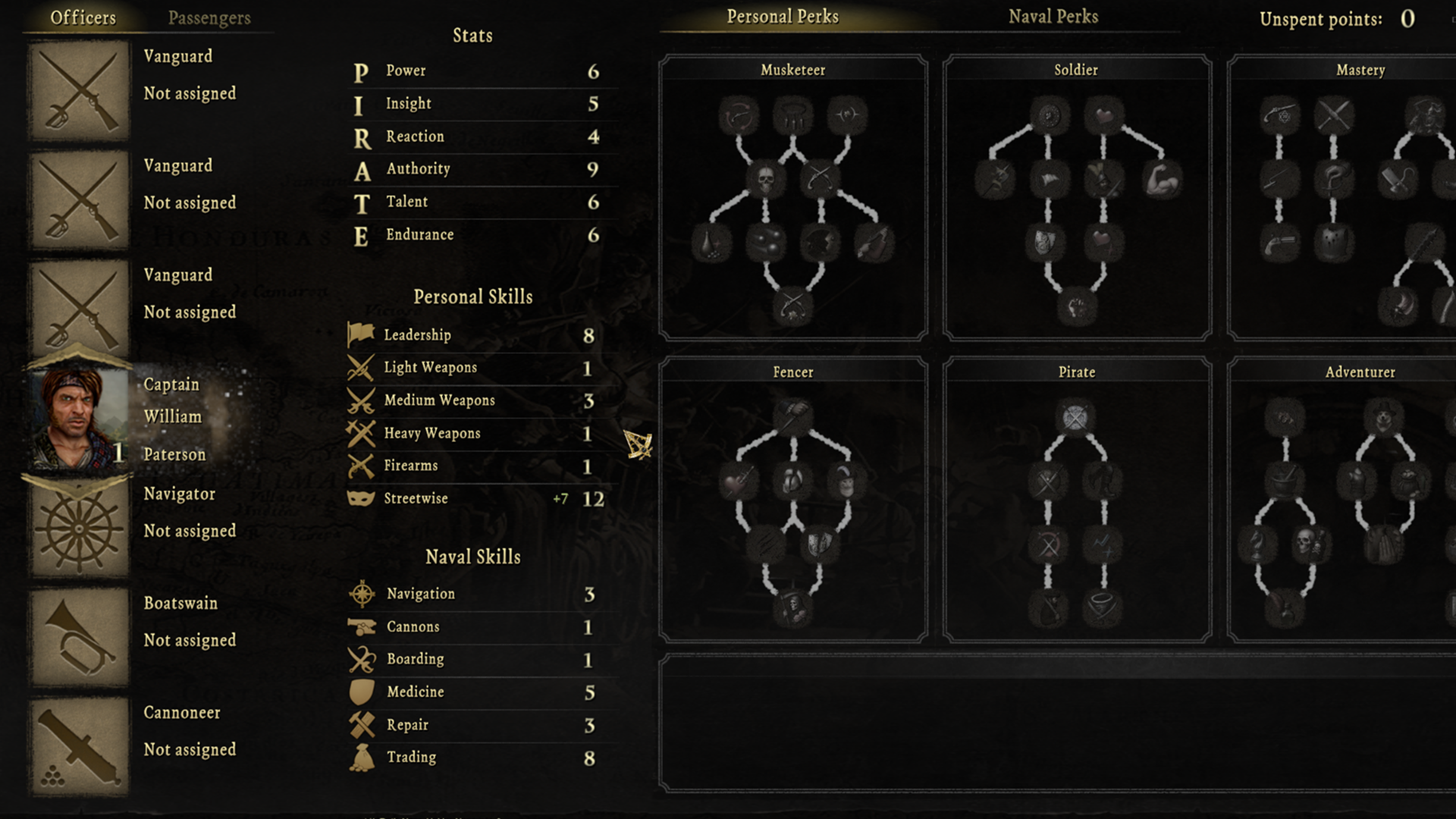
- Officer skill bonuses let you choose how much of an officer's skill your captain benefits from. If you don't like using a navigator to jump up ship classes, or prefer to learn everything yourself, this setting is for you.
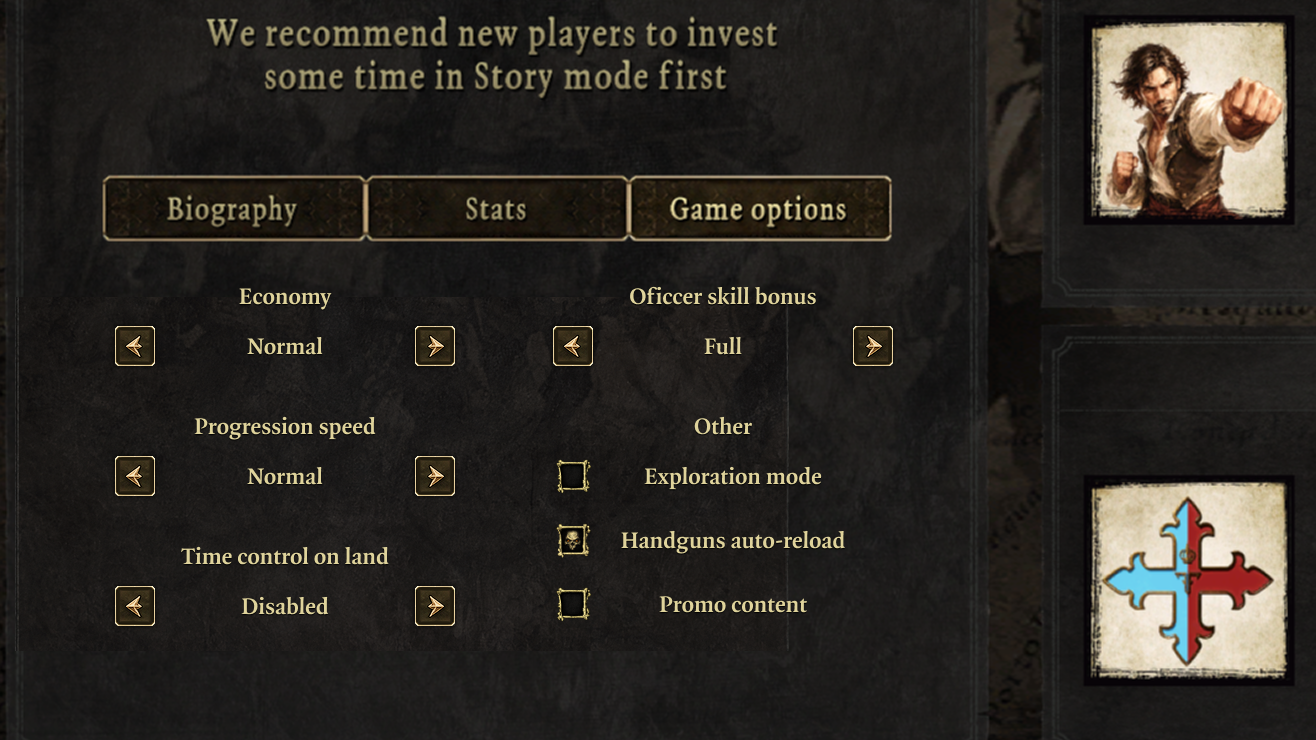
You'll recognize the remaining settings, so there's no need to dwell on them here.
Cruel Difficulty
For those looking for a serious challenge, we've added Cruel difficulty. It applies all the settings of the highest standard difficulty and locks in several additional conditions: Classic mode, handgun auto-reload enabled, the difficult economy, no time control on land, and no officer skill bonuses.
You won't be able to soften these conditions with individual toggles. Completing the game on this setting earns you a dedicated achievement.
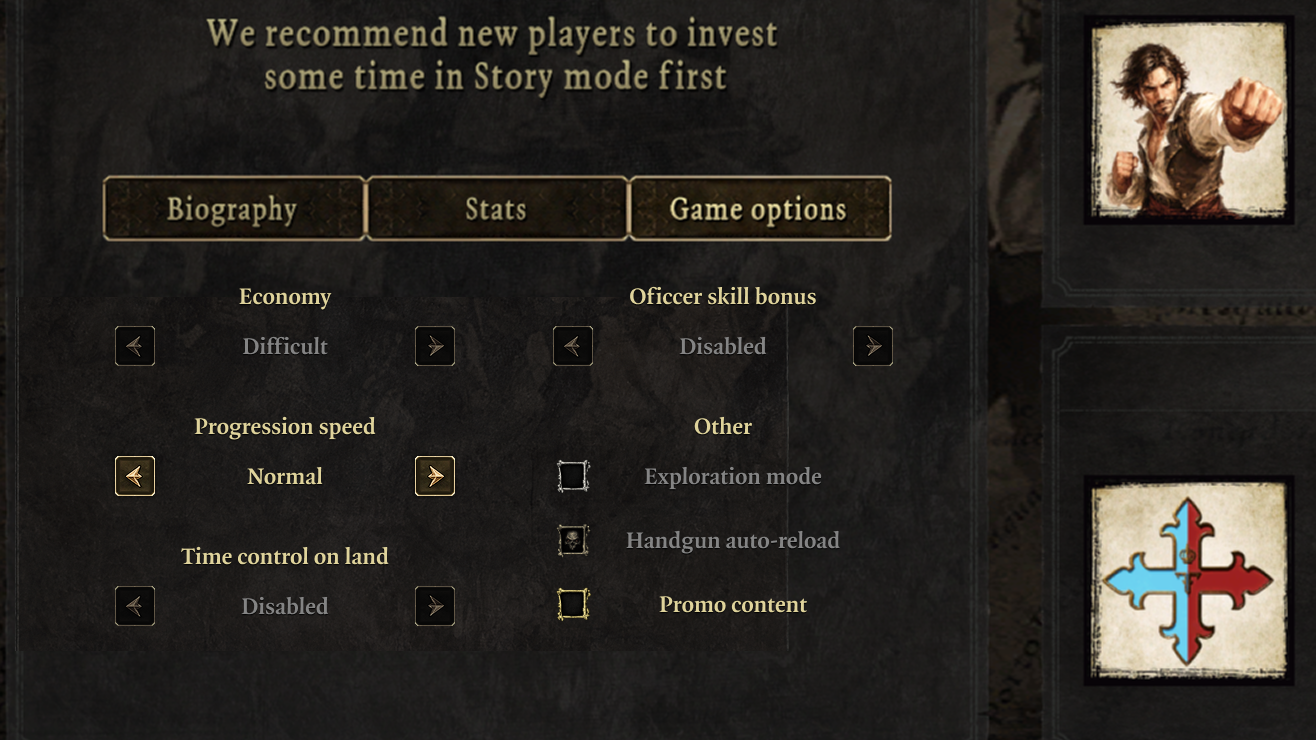
This mode is for players who've outgrown the usual challenges and want something fresh. Take my word for it: plenty of fights feel very different when you can't slow down time (:

You probably know the feeling: you come back to the game after a break, open the journal, and try to remember who you spoke to, where you were headed, and what on earth you were supposed to do next.
The problem isn't the break, or a forgetful player. In older quests, important information could come up in dialogue and never make it into the journal. A character named a place, explained a condition, or suggested your next step—and afterward, there was nowhere to read it again. Sooner or later, you'd turn to a guide to recover information the game should have kept for you.
These are quest design shortcomings we want to address as well. That meant getting the journal entries in order and clearly identifying the next objective at every stage of every quest.
Your Current Objective in the Journal
A short current objective will appear beneath the latest substantive quest entry. It tells you what to do next: who to speak to, where to go, or what to wait for.
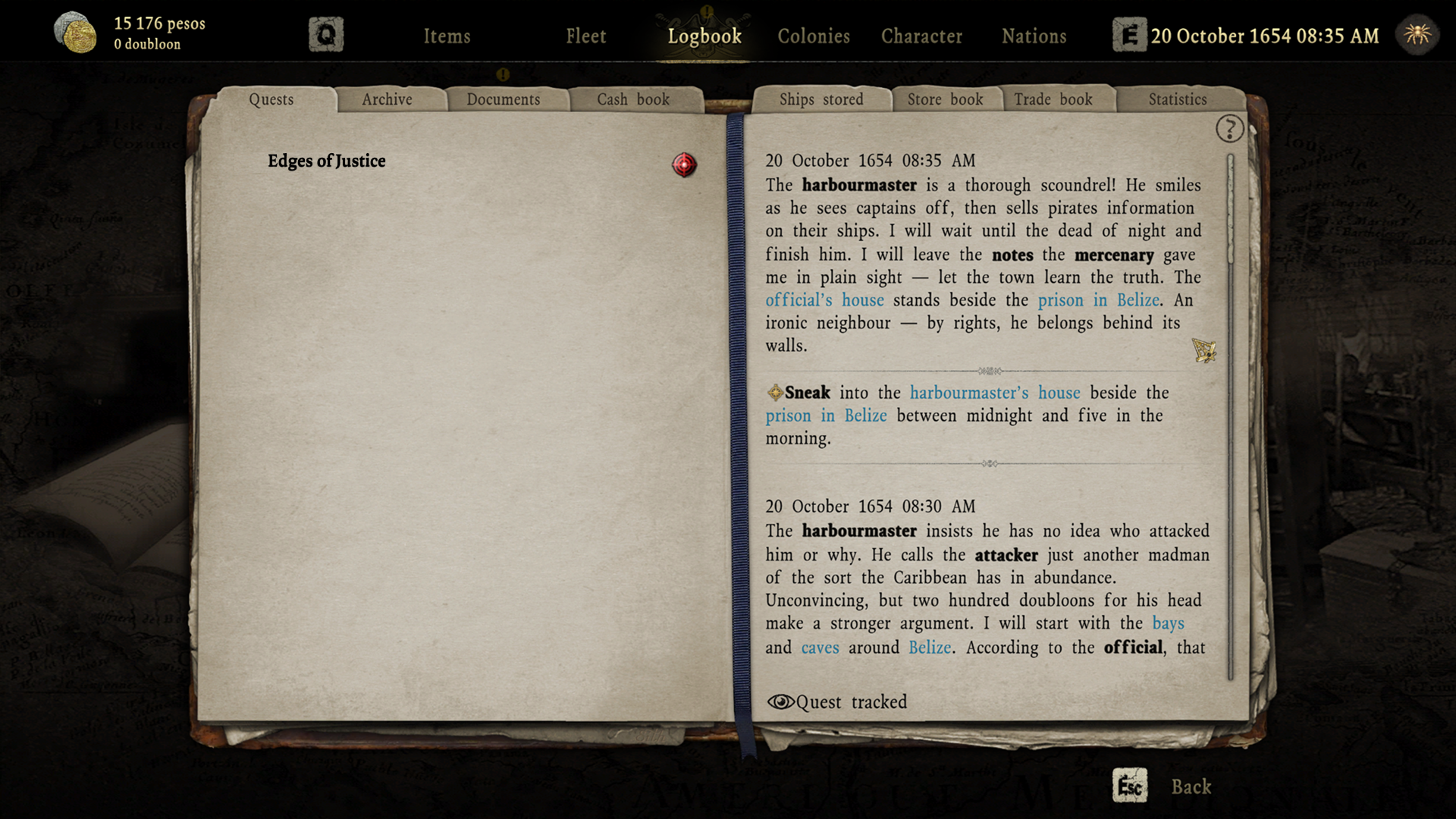
As the quest progresses, the objective updates alongside the new entry. Earlier events stay in the journal, while the old prompt gives way to the current one. You can still reread the whole adventure, but a glance at the latest entry is enough to pick up where you left off.
When a quest is completed or failed, the journal keeps its outcome. An active prompt will no longer send you back to carry out a task that's already over.
Choosing a Quest to Track
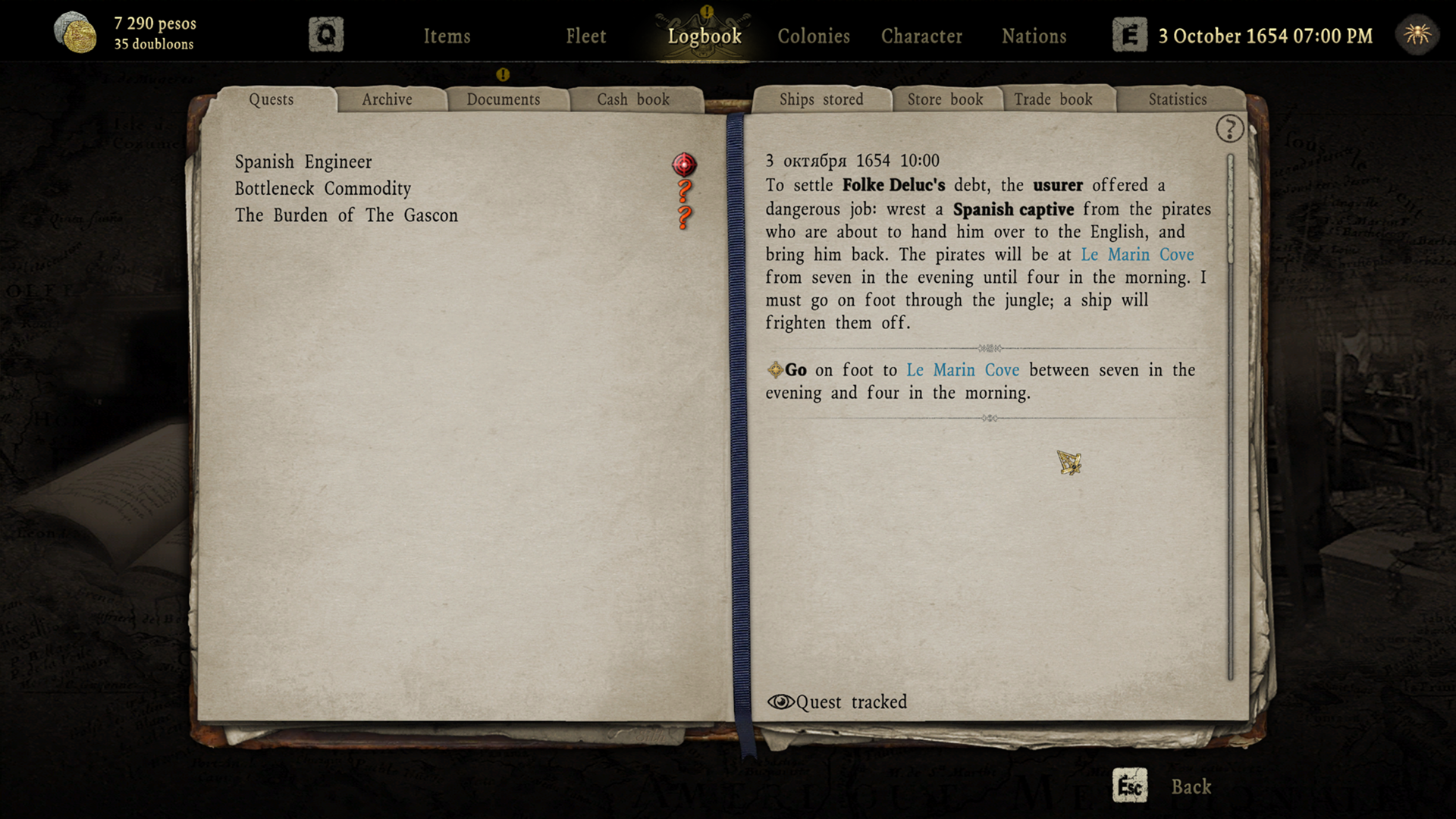
You can select one quest to track in the journal. Clear the selection or switch to another quest whenever you decide to pursue something else.
A newly received quest will automatically become the tracked quest, and your selection is stored with your save.
A Quick Reminder Without Opening the Journal
Hold the assigned key—Alt by default—to display the tracked quest's name and current objective. Release it, and the reminder disappears.
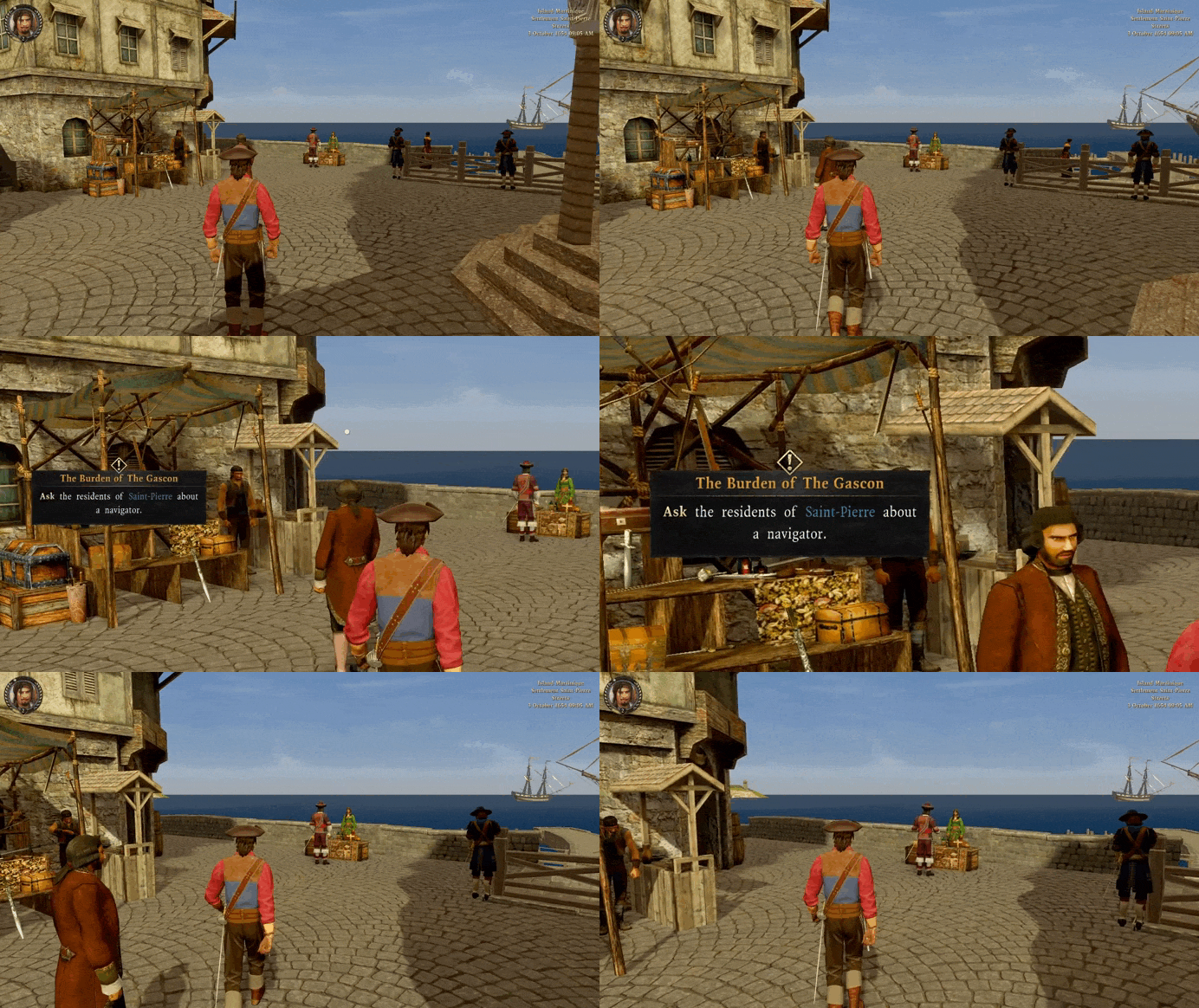
There's no need to open the journal. The game keeps running without pausing, and there's no permanent panel taking up screen space. If you need the details, the full story is still there in the journal.
Journal Revisions
Alongside these prompts, we've revised and rewritten every quest journal entry in the game, highlighted names and important conditions, filled in missing entries, and done a great deal of cleanup. In 2.0, following quests will be easy and enjoyable!
Picking Up Where You Left Off
Imagine accepting a job, getting sidetracked by another adventure, and returning to the game a few days later. Select the quest in the journal, and your next objective is right there beneath the latest entry.
On the way, hold Alt whenever you need a reminder. Speak to the right person, and a new entry appears along with your next step. Once the job is done, it stops being tracked, while the outcome stays in the journal.
That's how we want to help you keep your bearings: remind you of what you already know, right when you need it, and make sure the important details are written down.
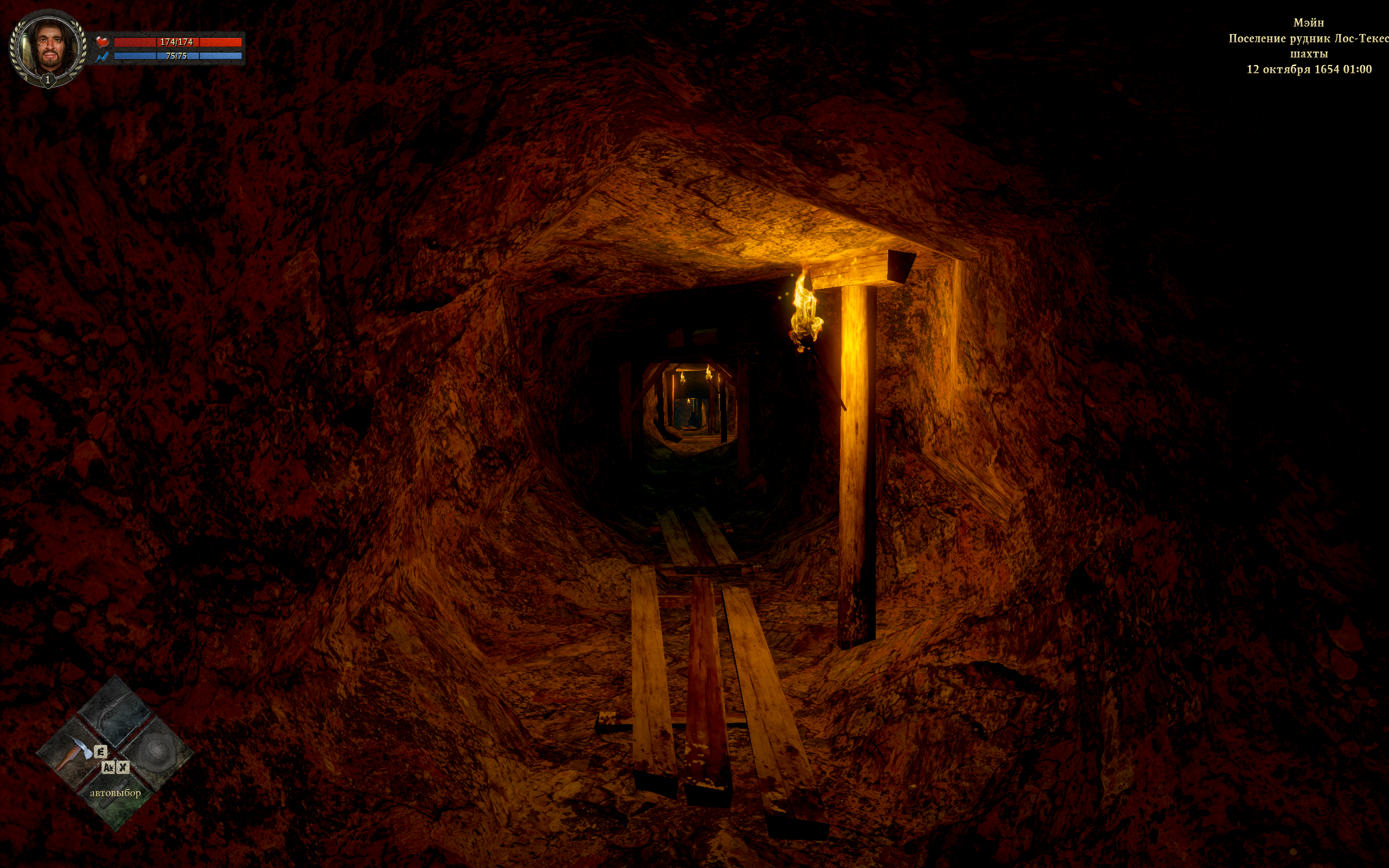
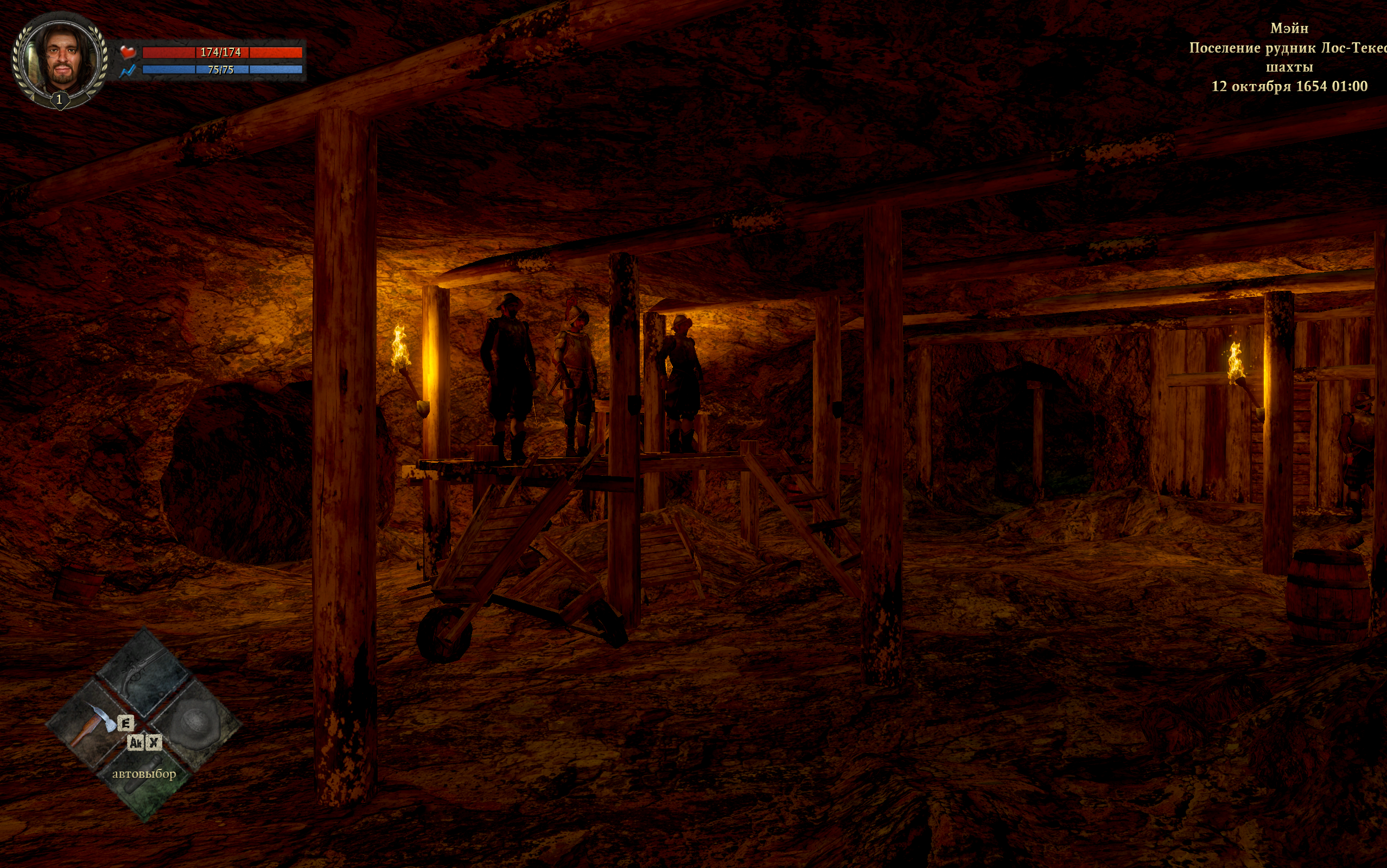
what we do - we do for you ːjollyrː

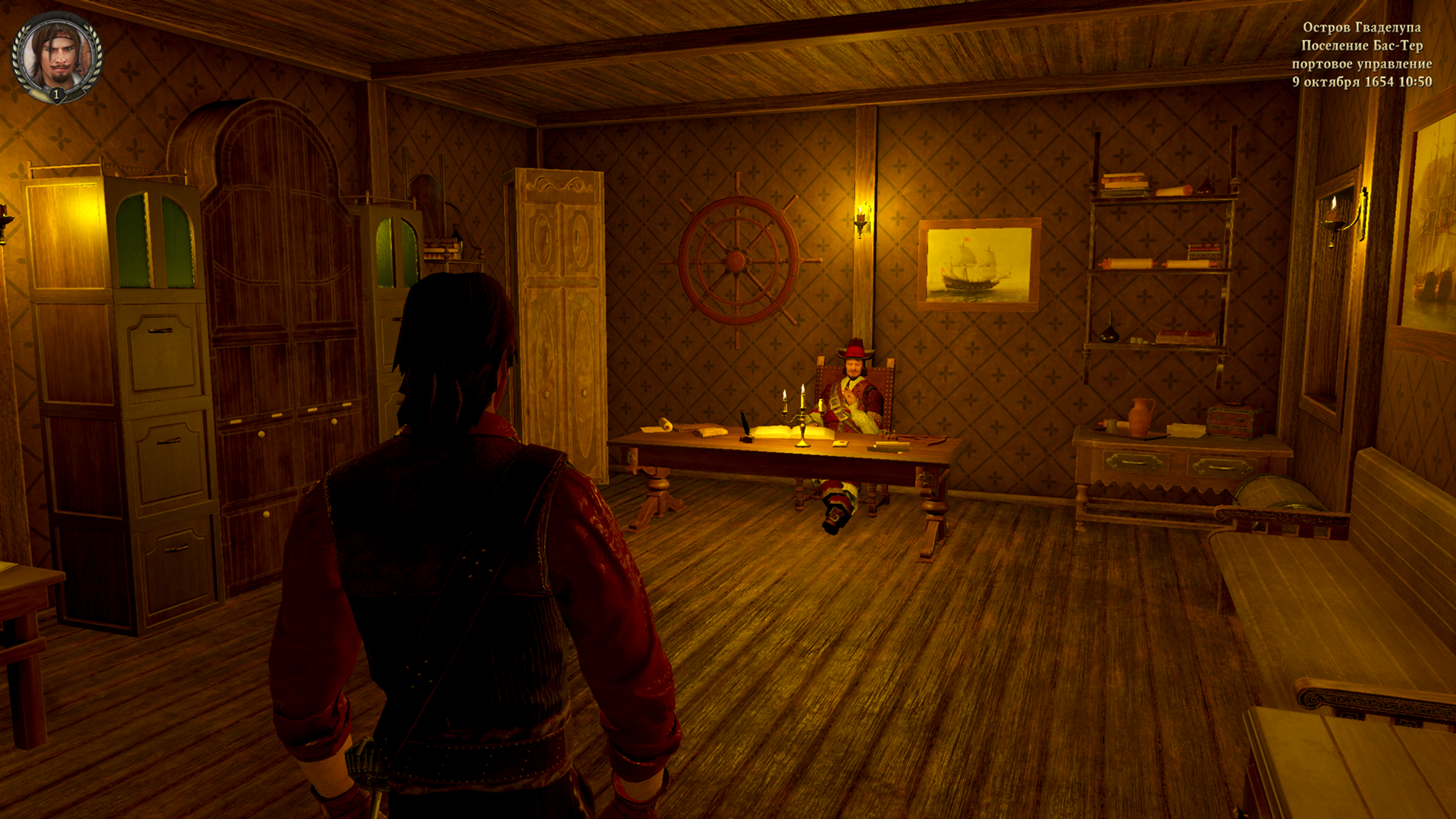


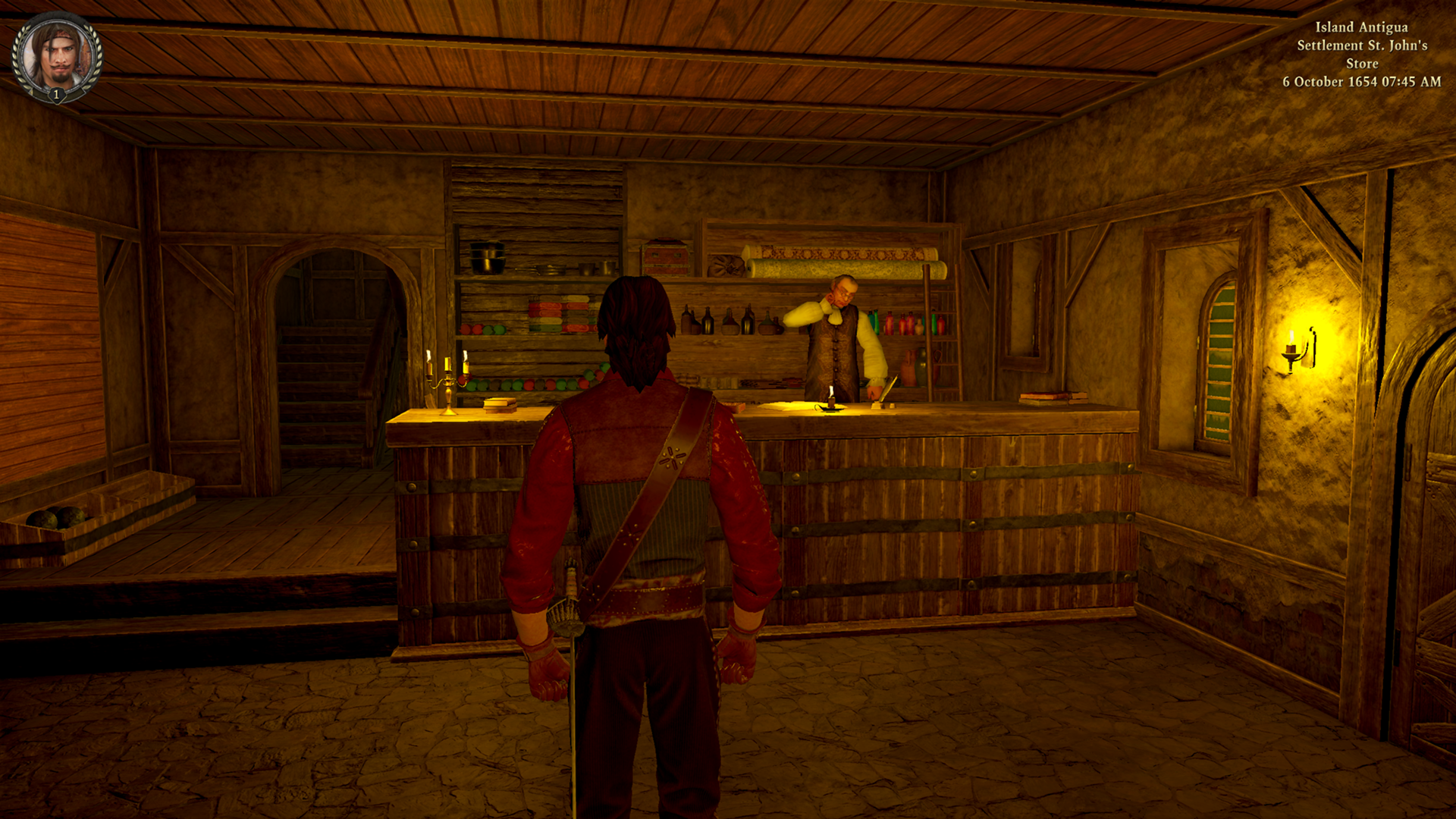

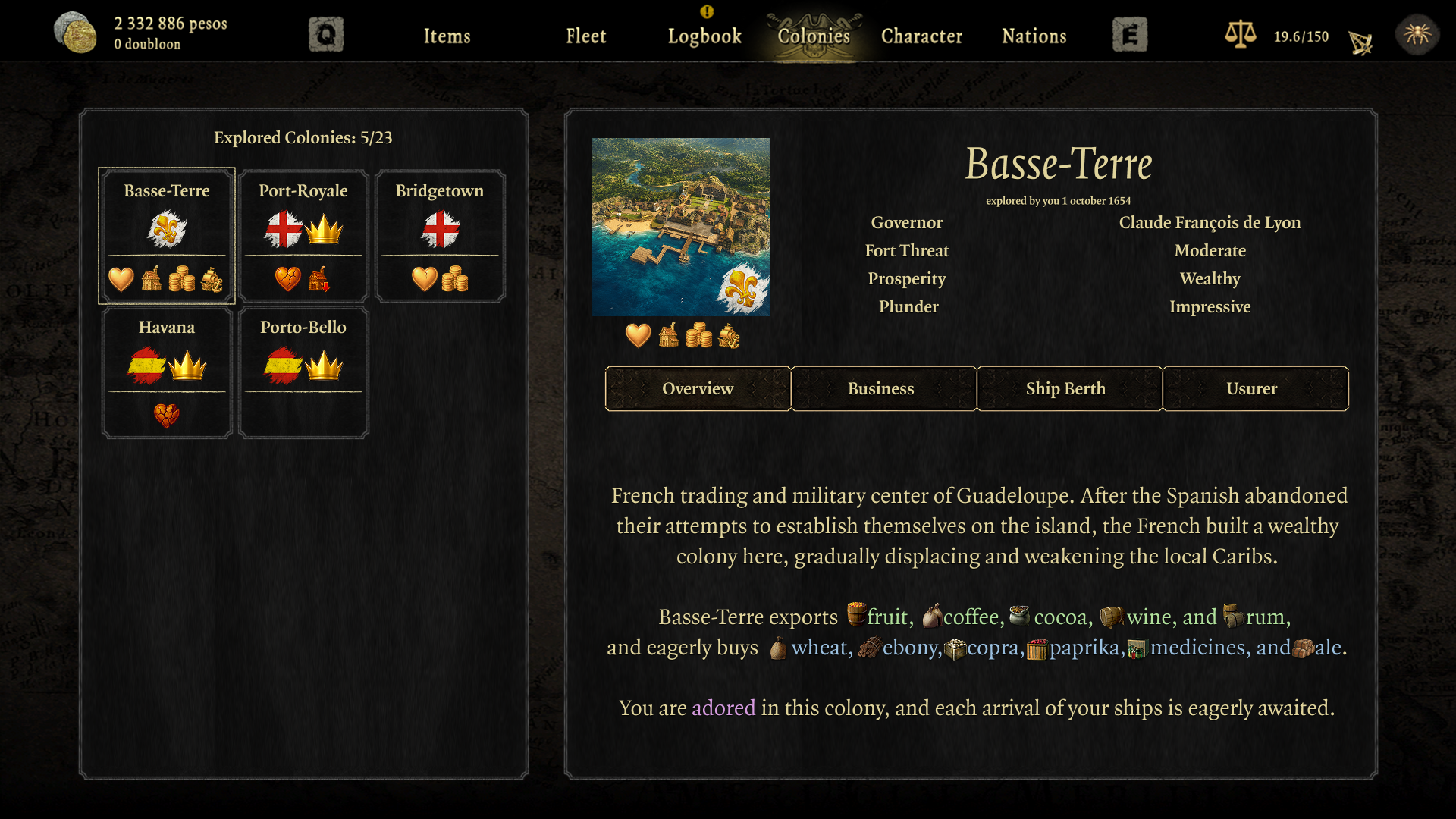
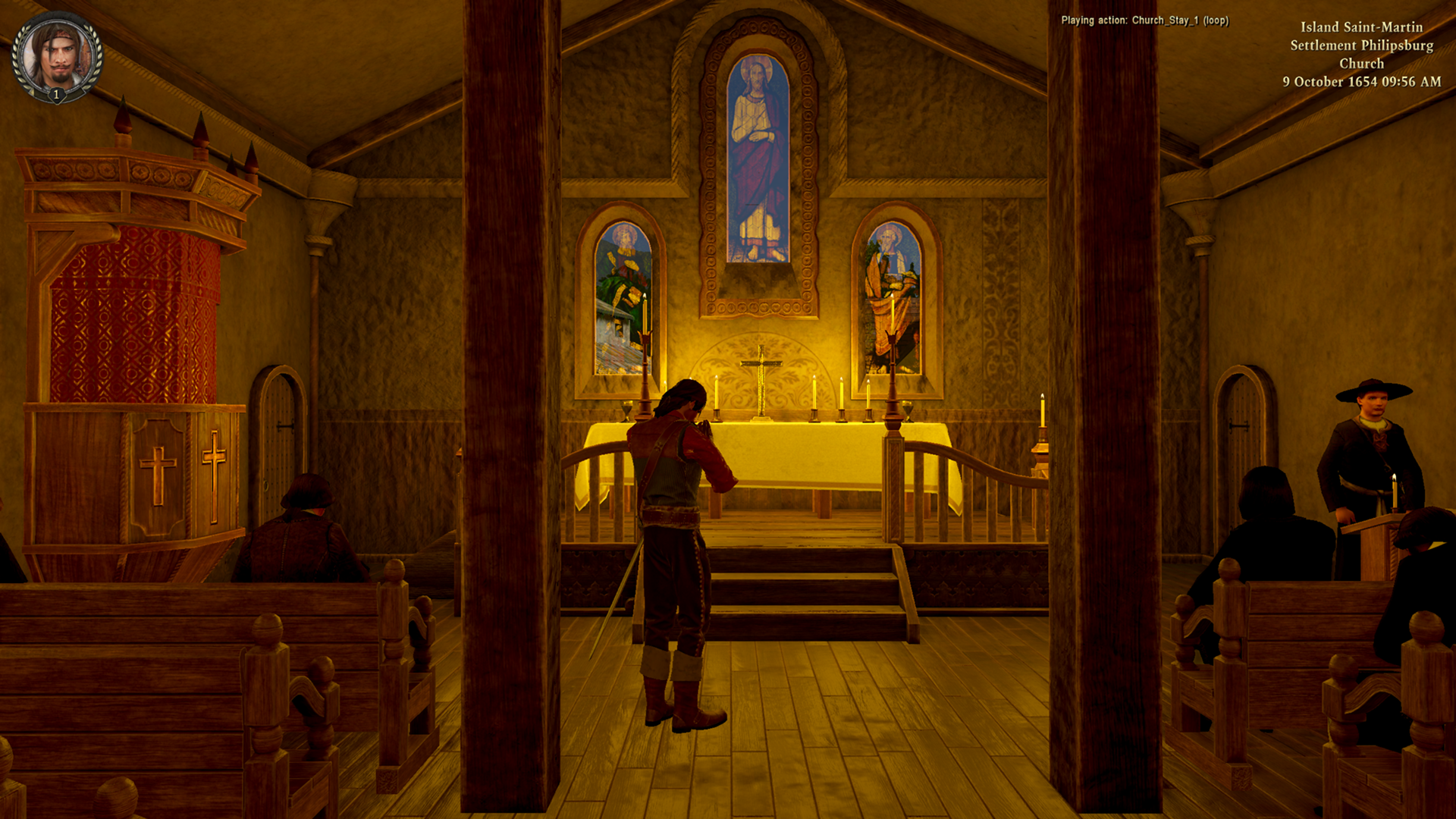







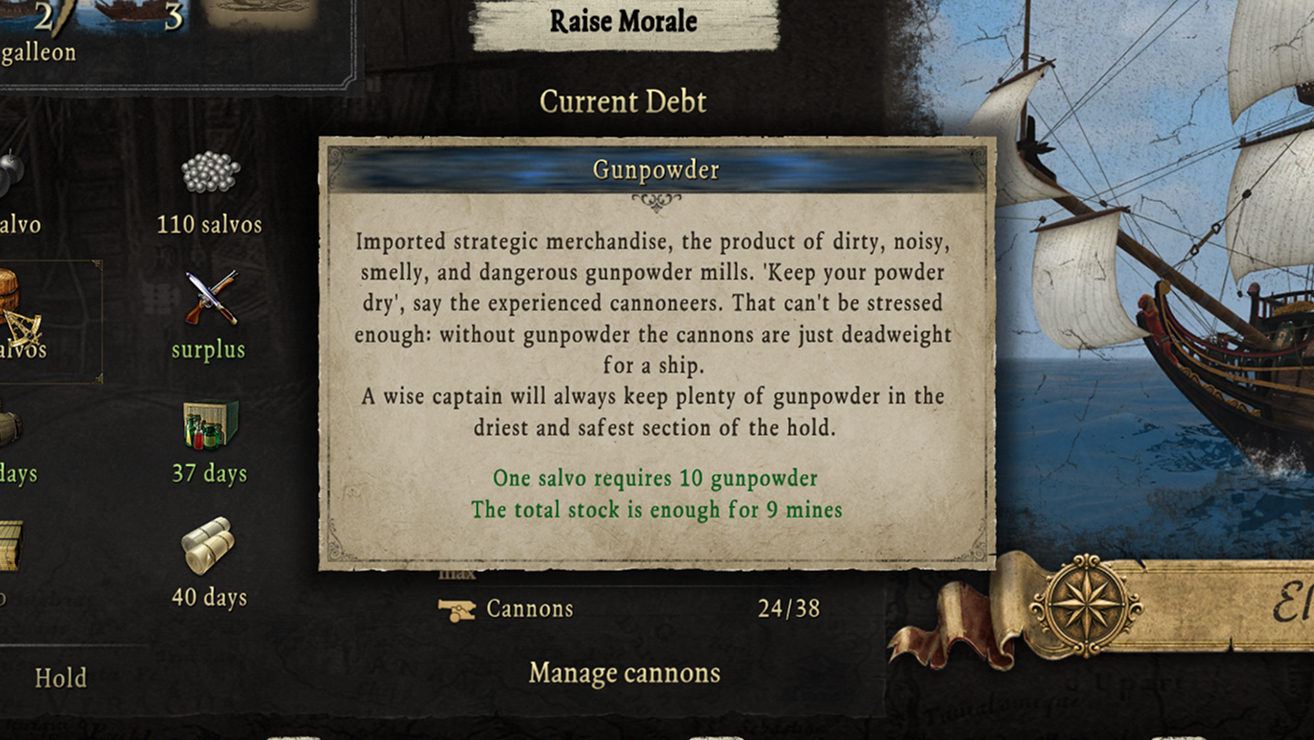
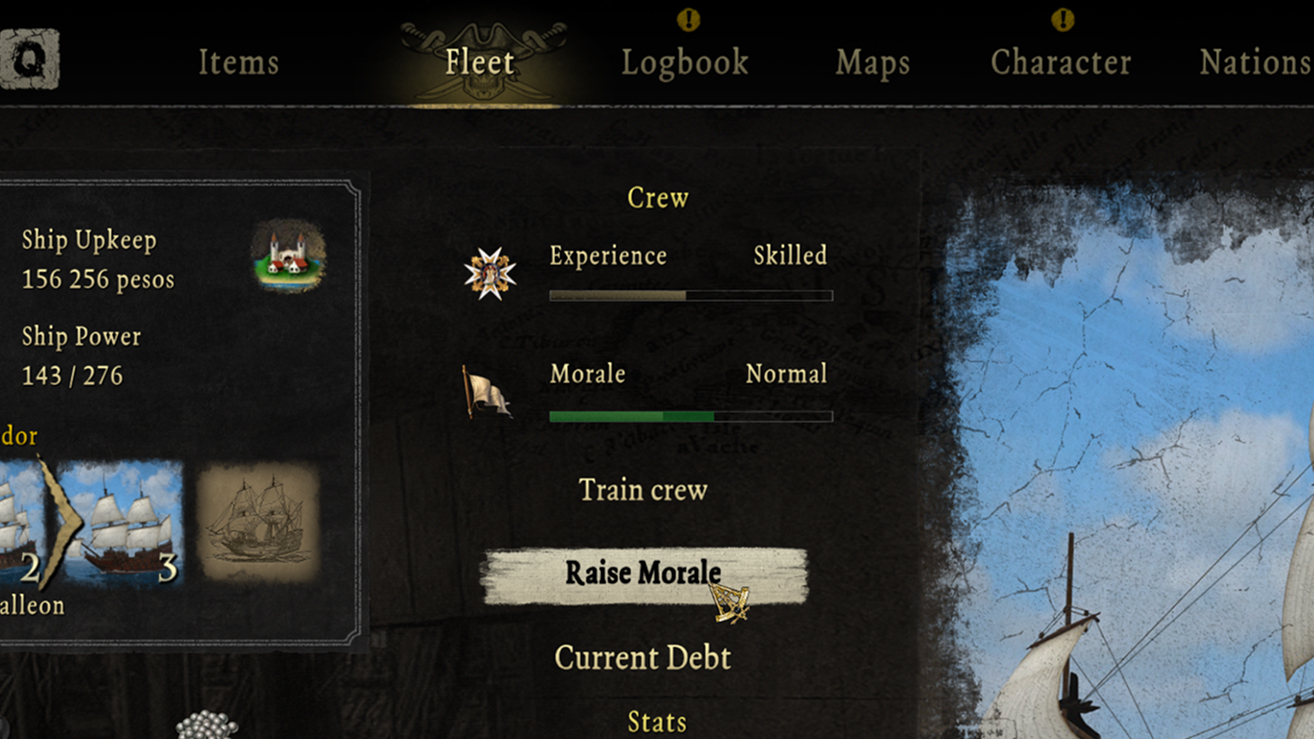
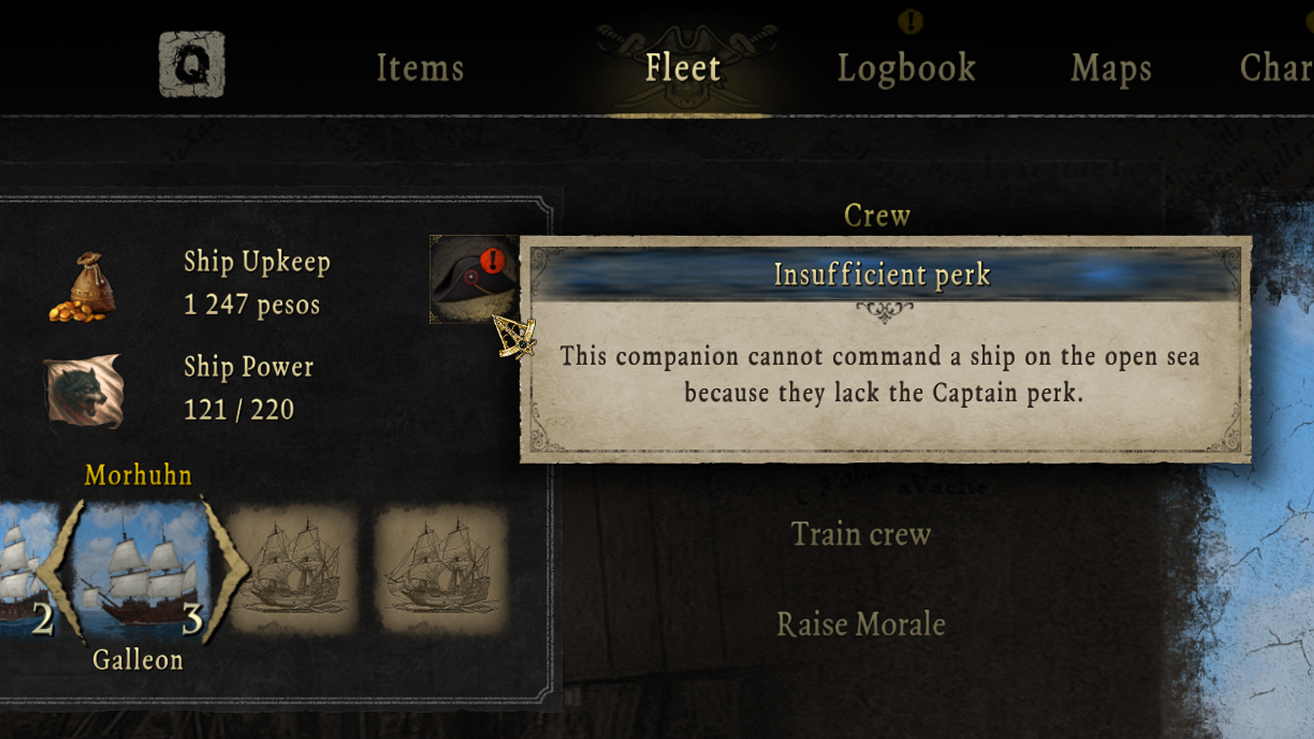
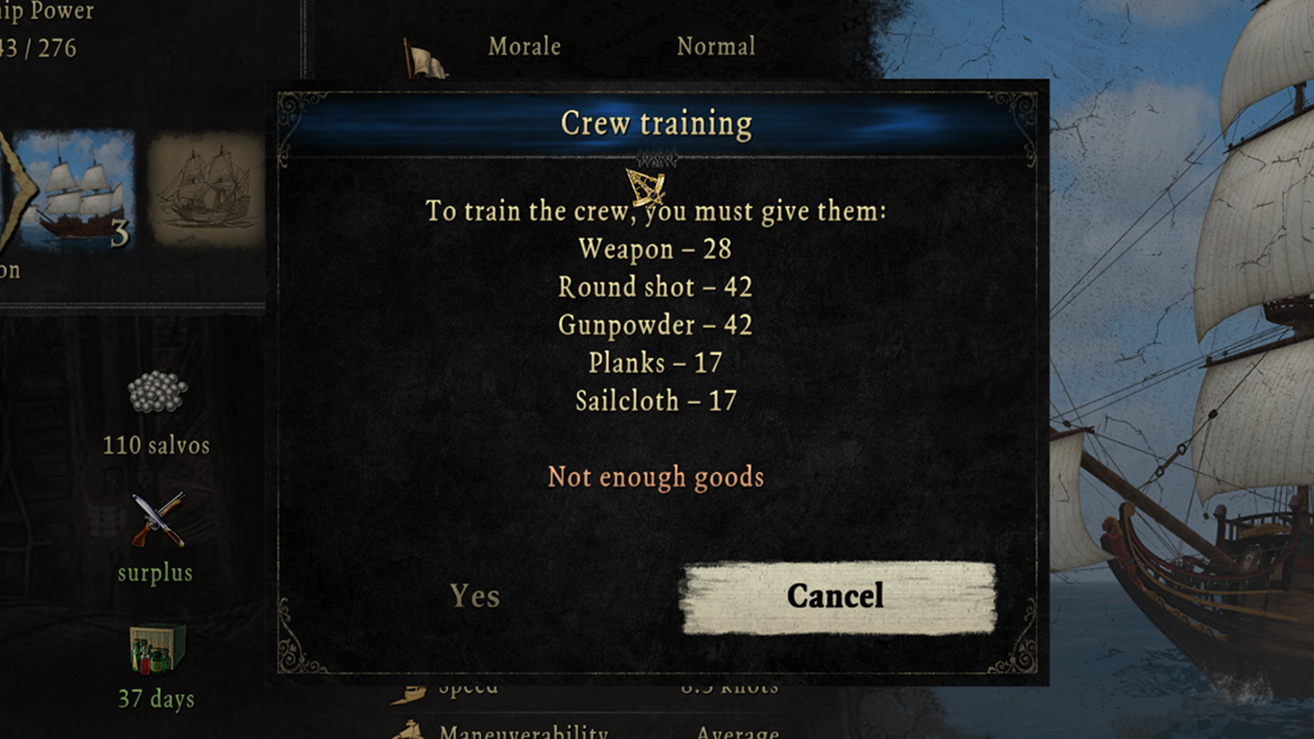
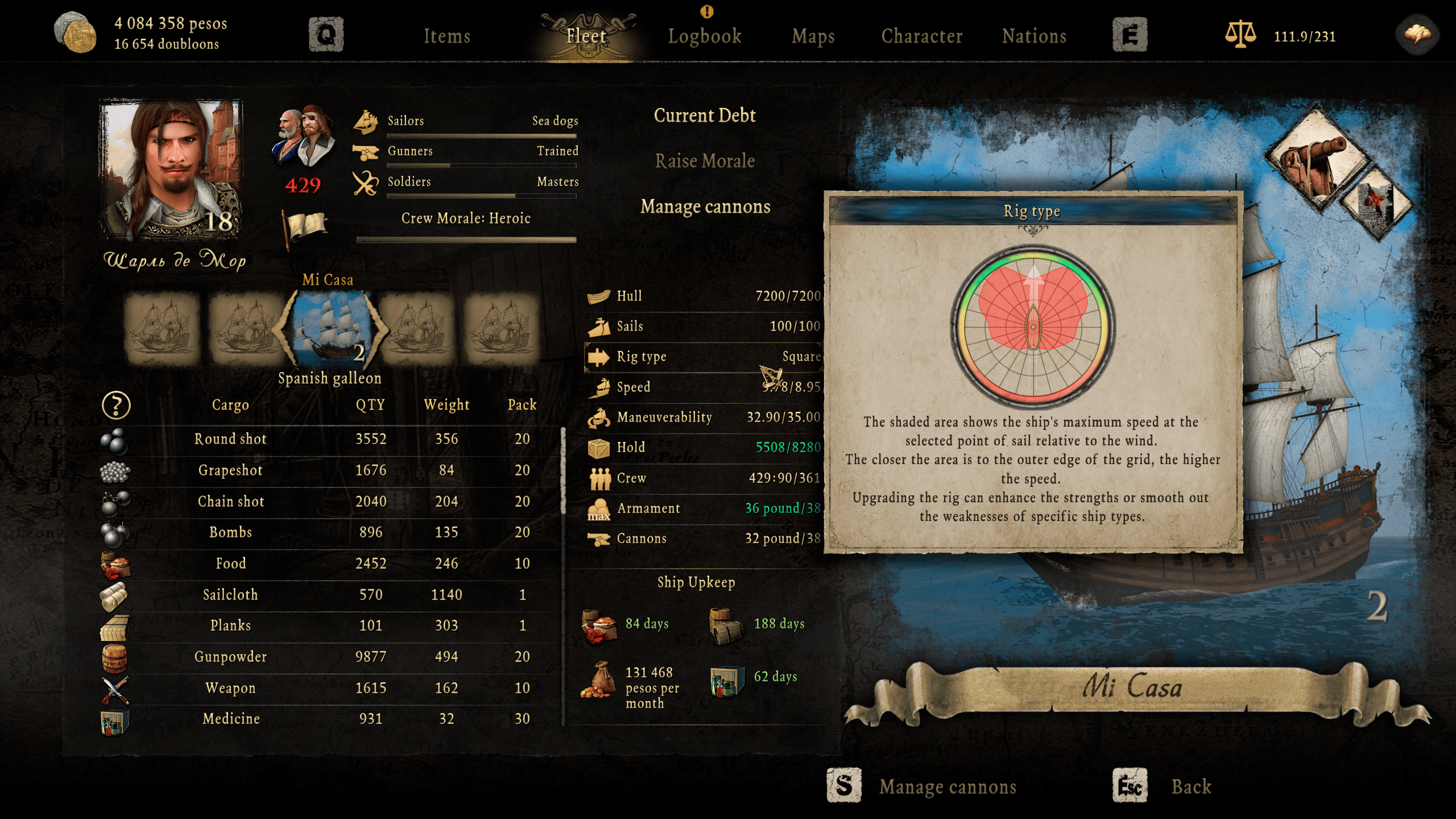
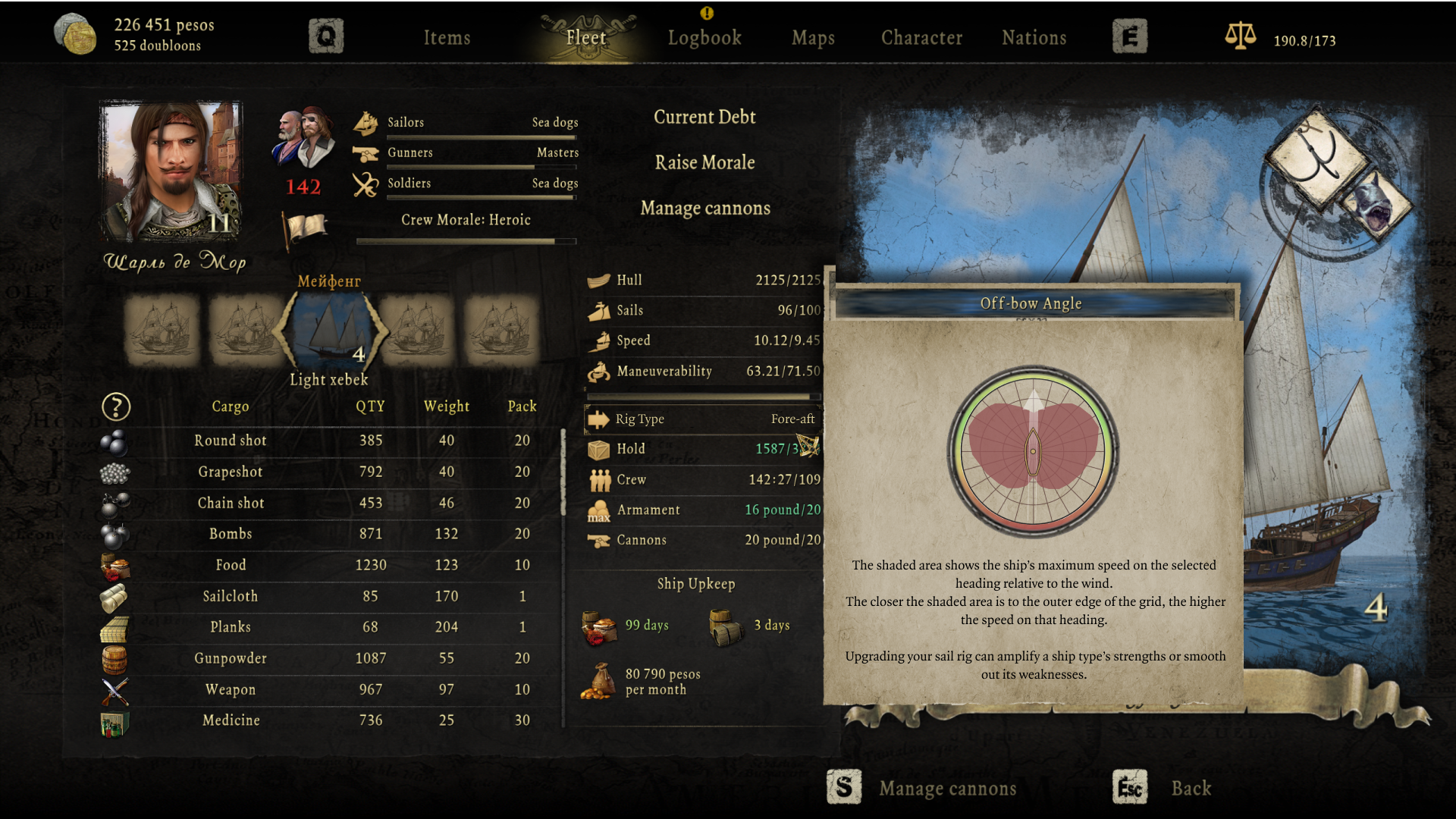
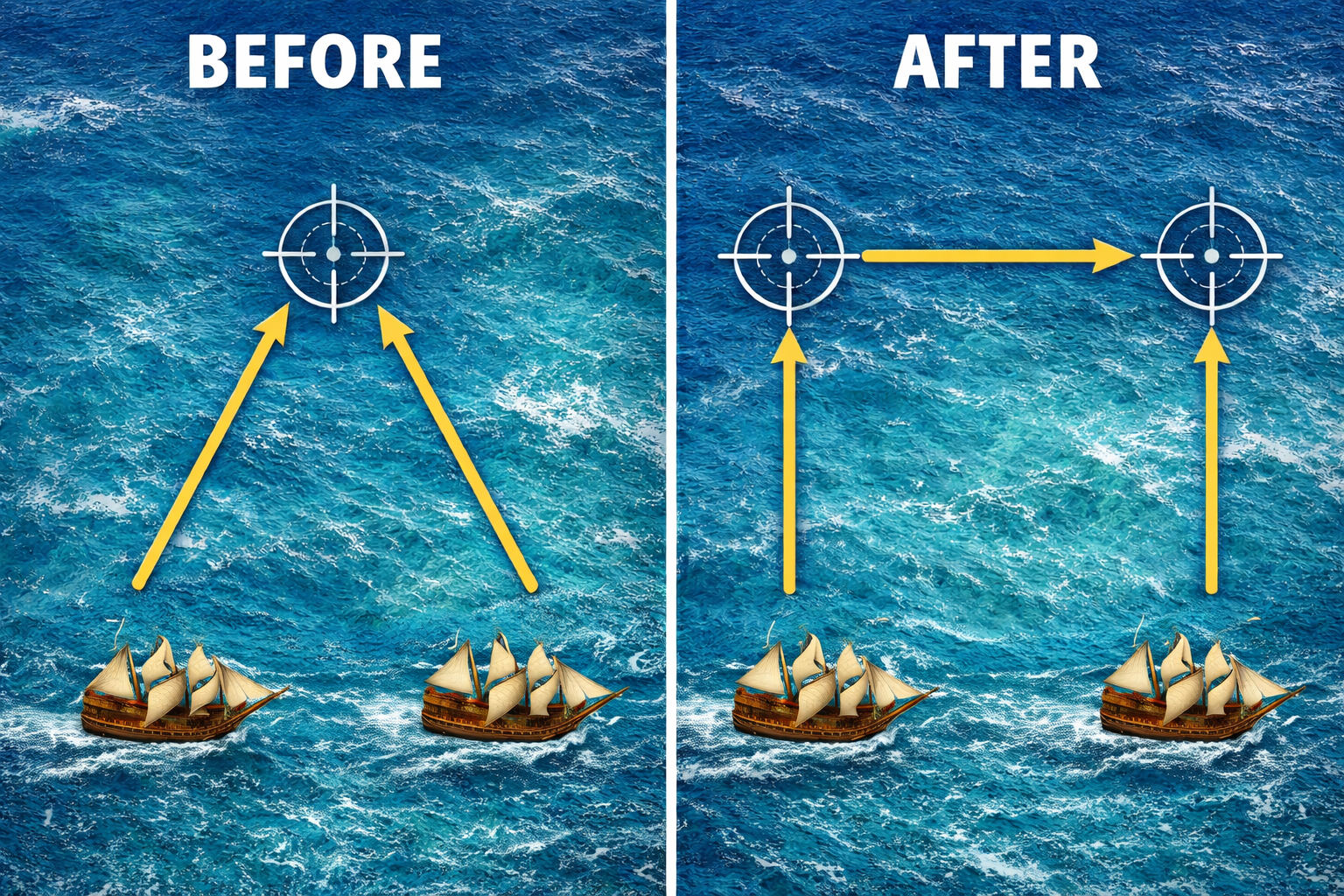
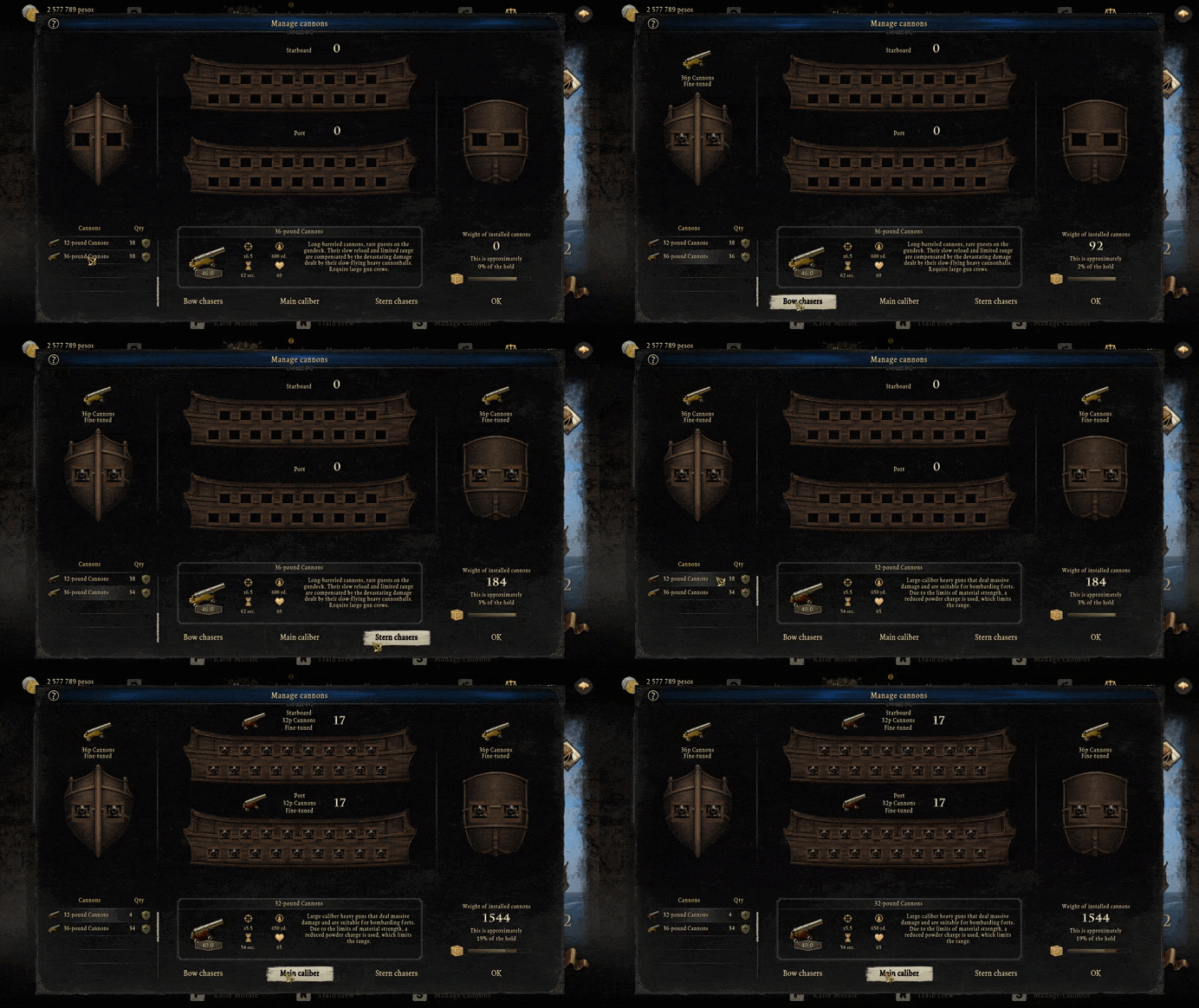 All these new mechanics lead us here: the cannon management screen. The old version was cumbersome, demanded far too many clicks, and even allowed you to adjust the number of guns on each side manually—a feature that served very little practical purpose.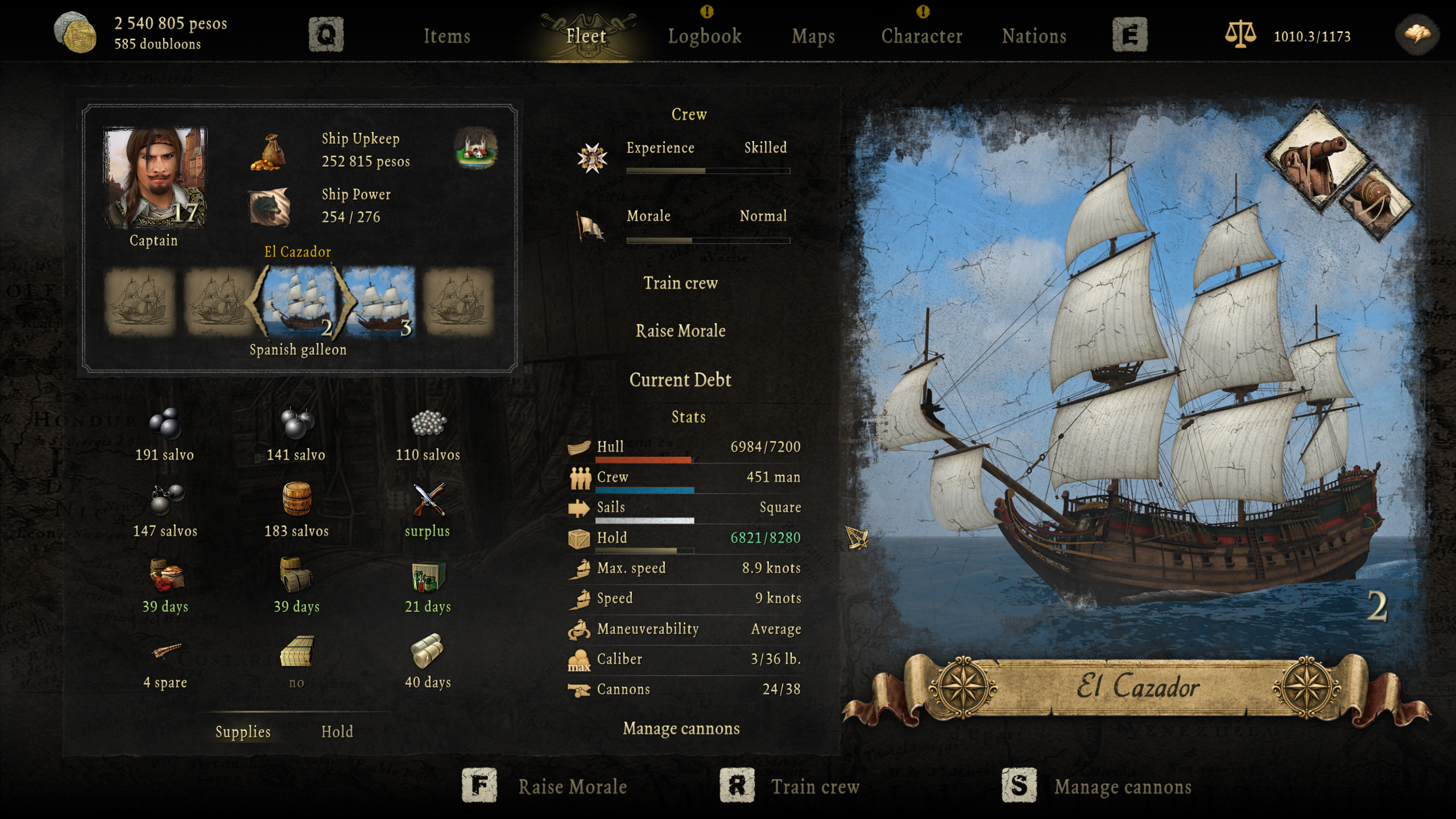
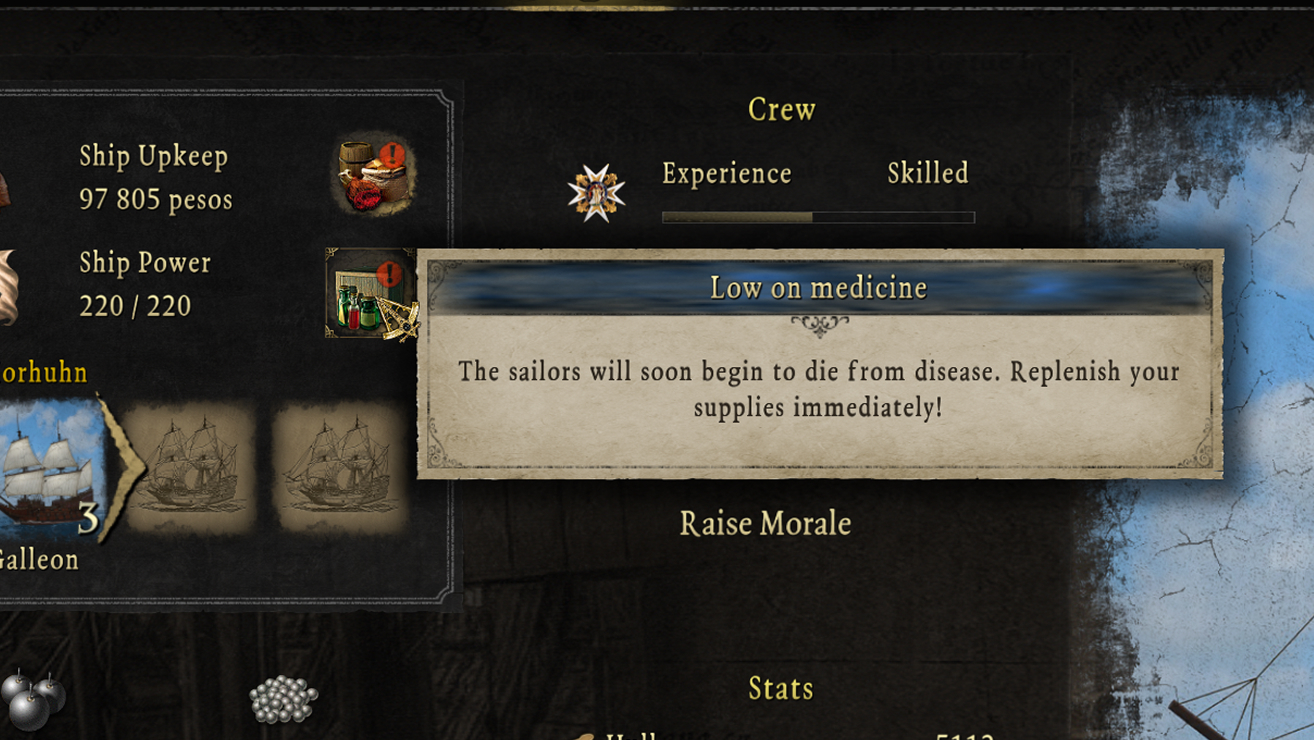
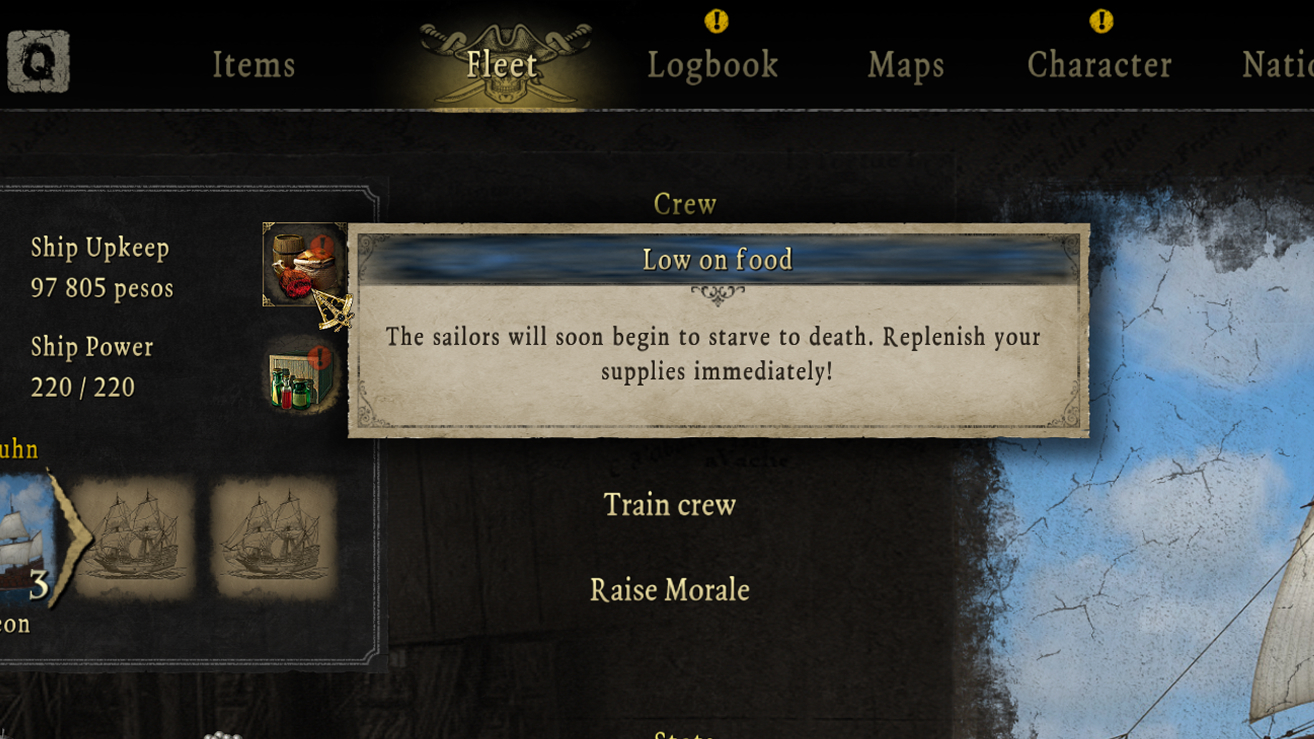
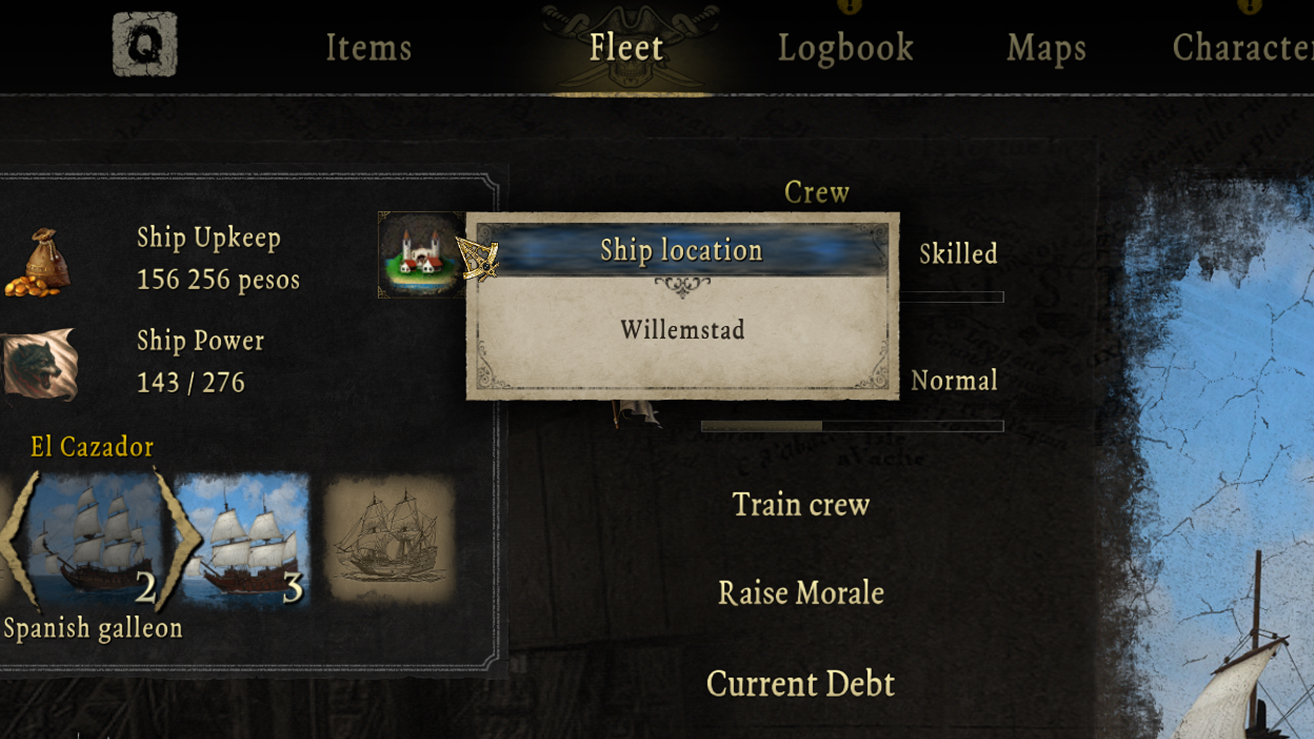
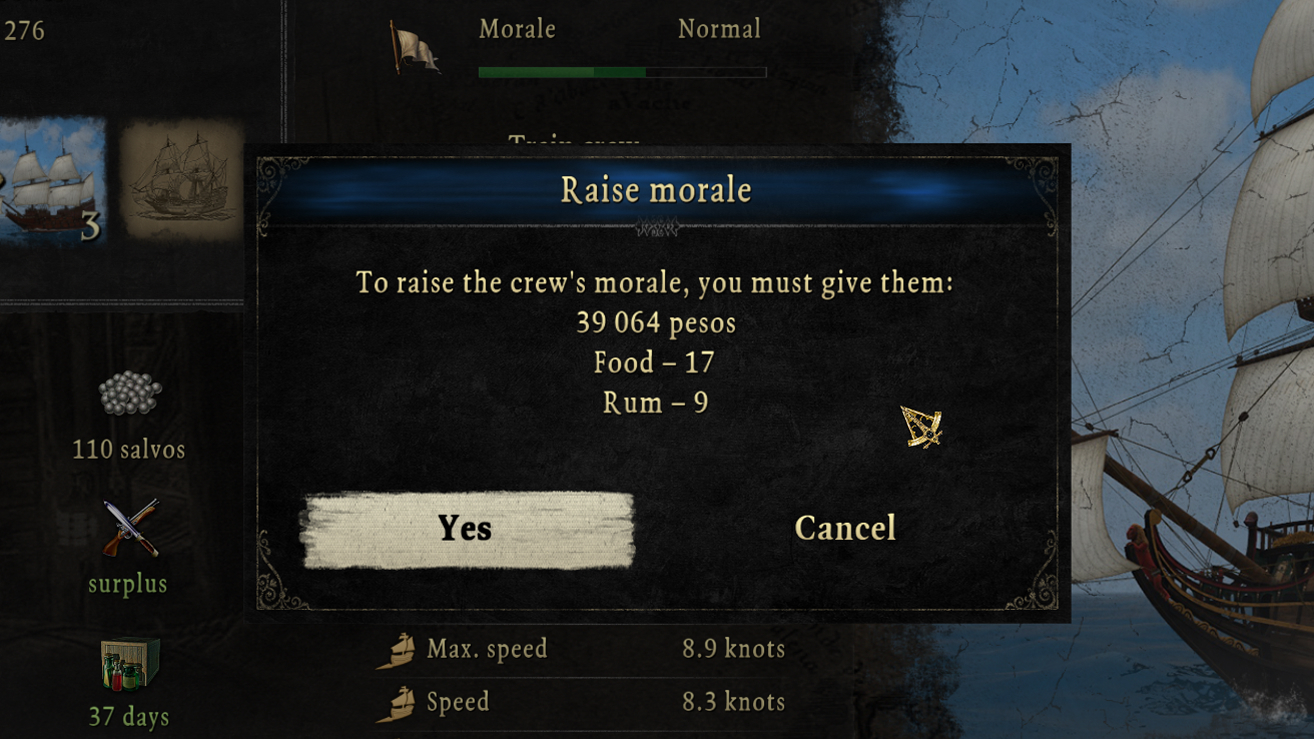
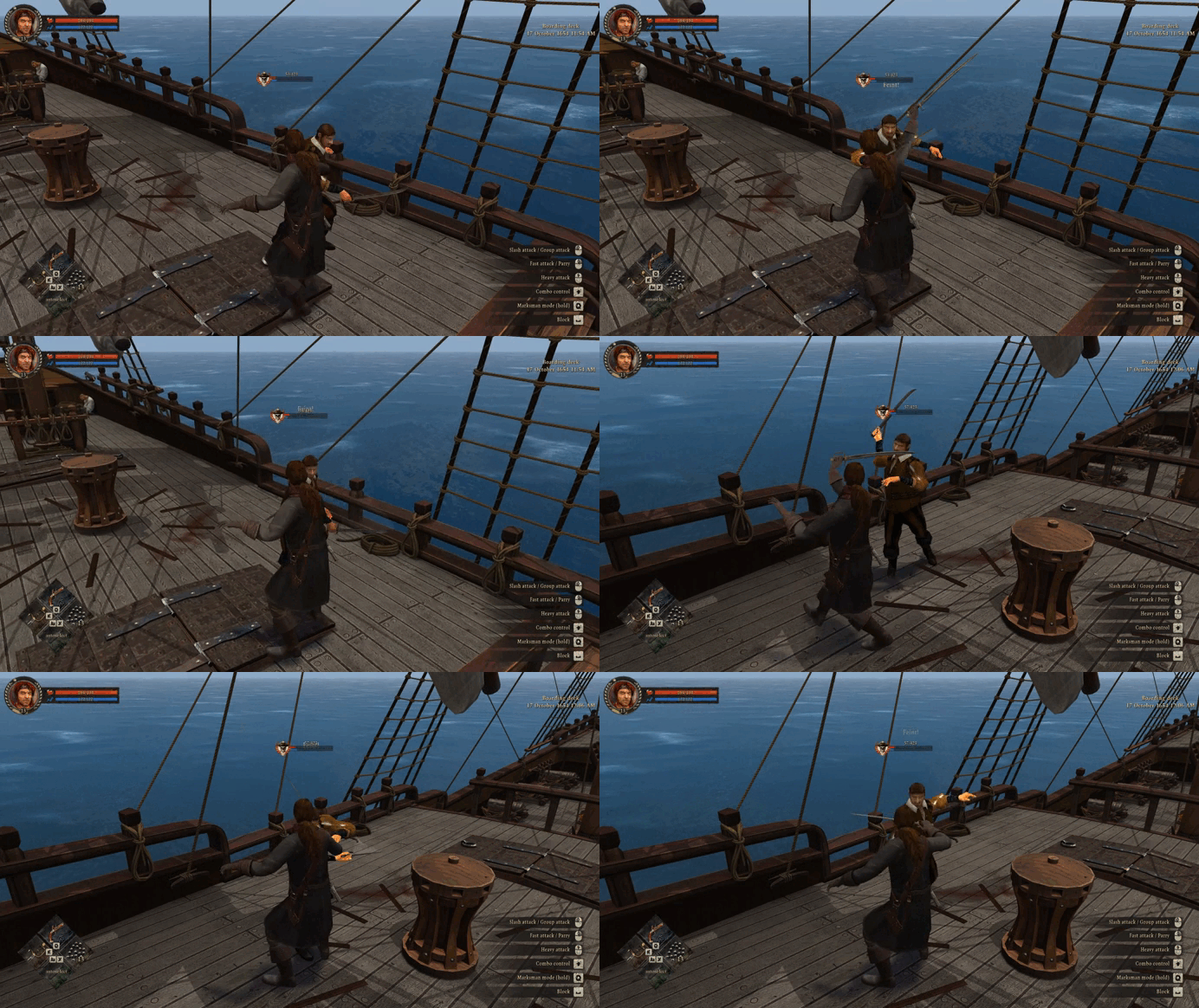
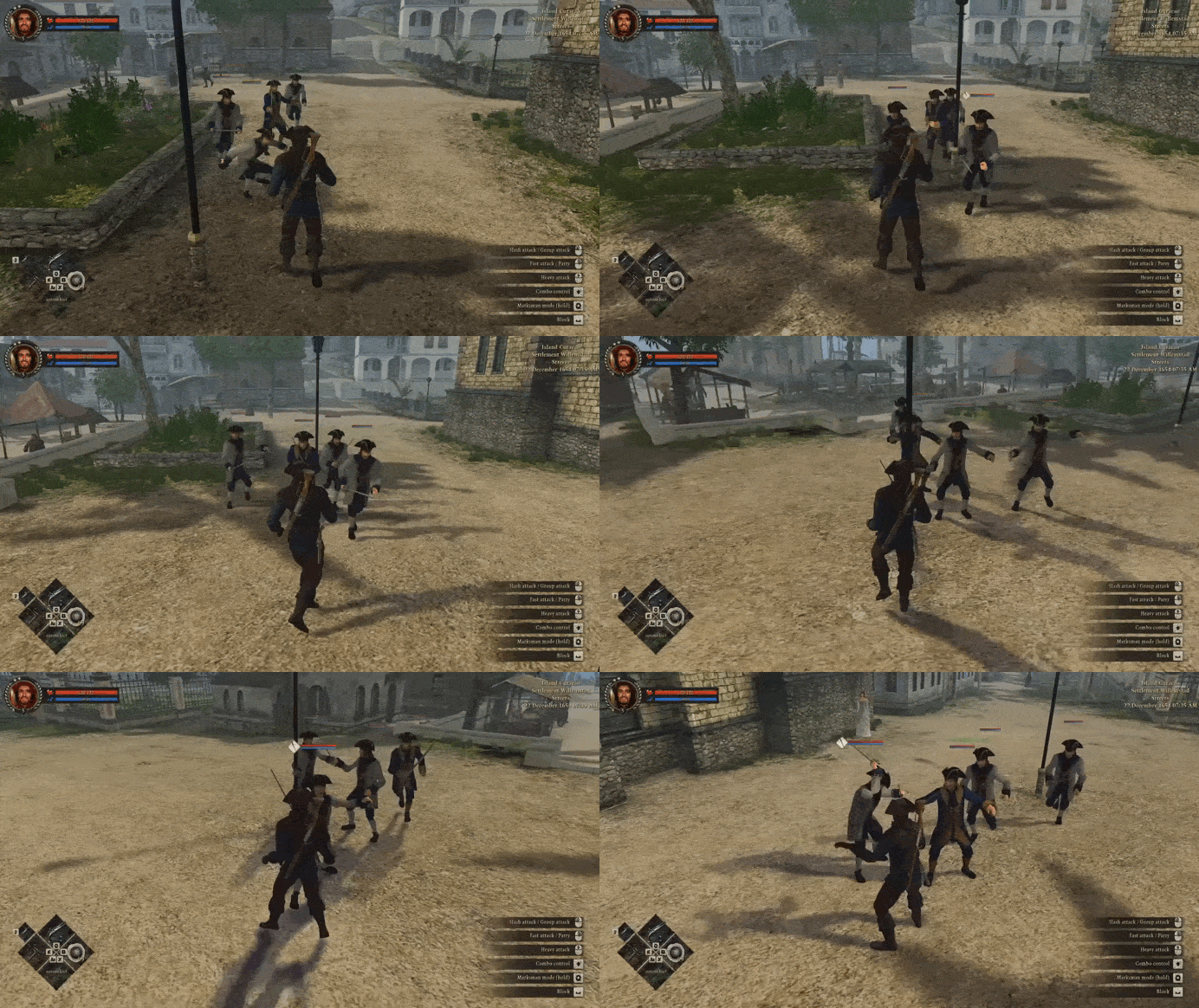
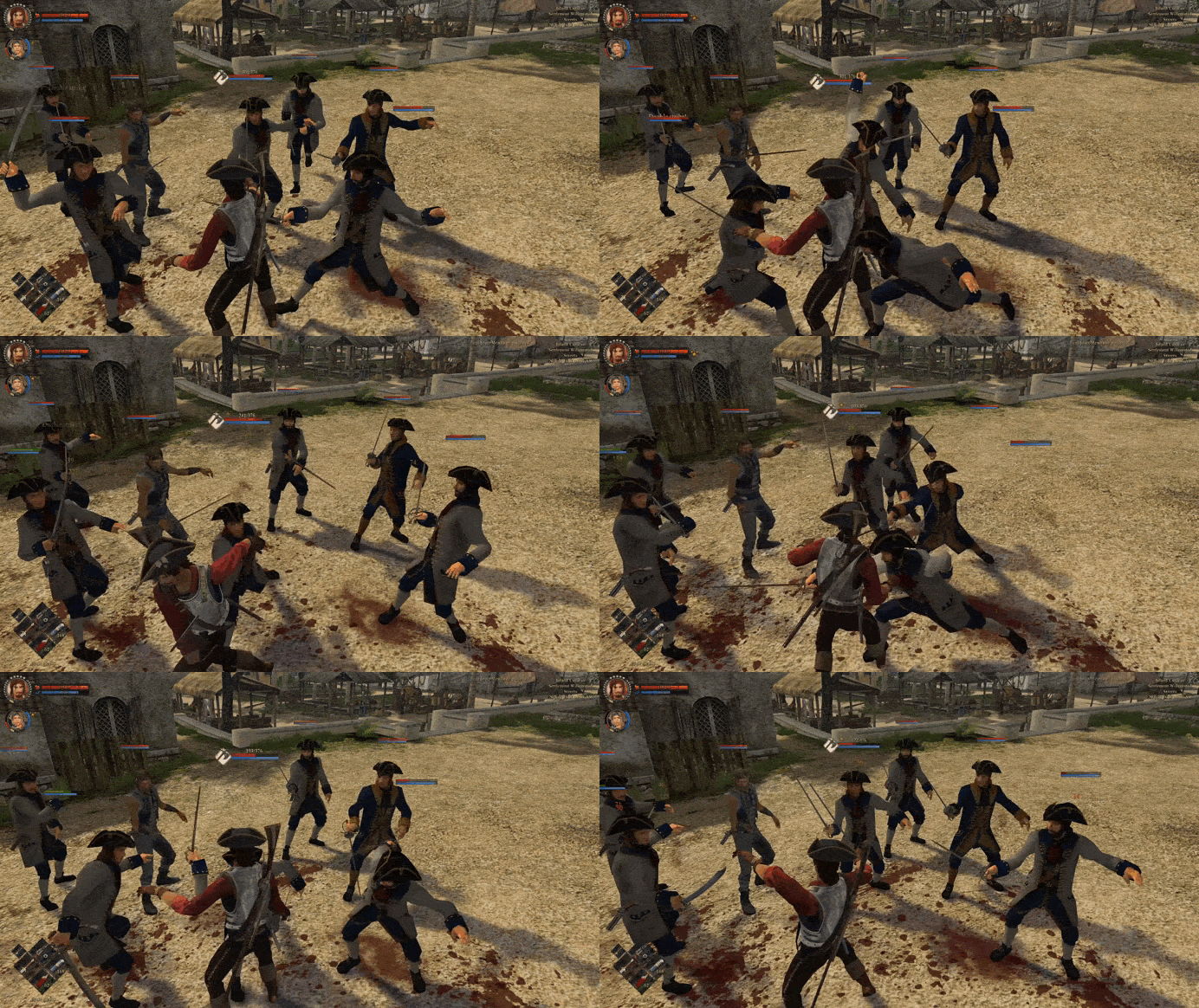 In a large brawl, you will always have an opportunity to strike back. Duels, meanwhile, will become more demanding now that you can no longer stagger-lock an opponent by simply mashing attacks.
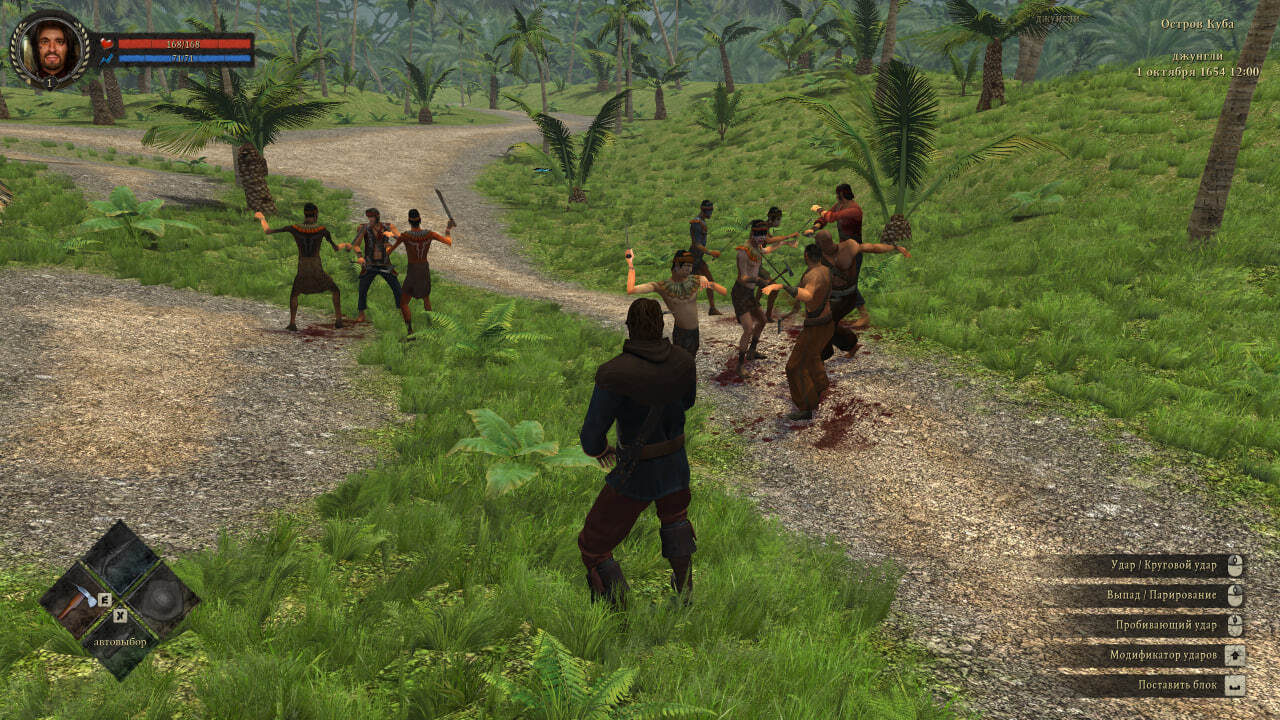 Two groups are fighting each other. You can join the battle by attacking either side and claim a reward if you emerge victorious.
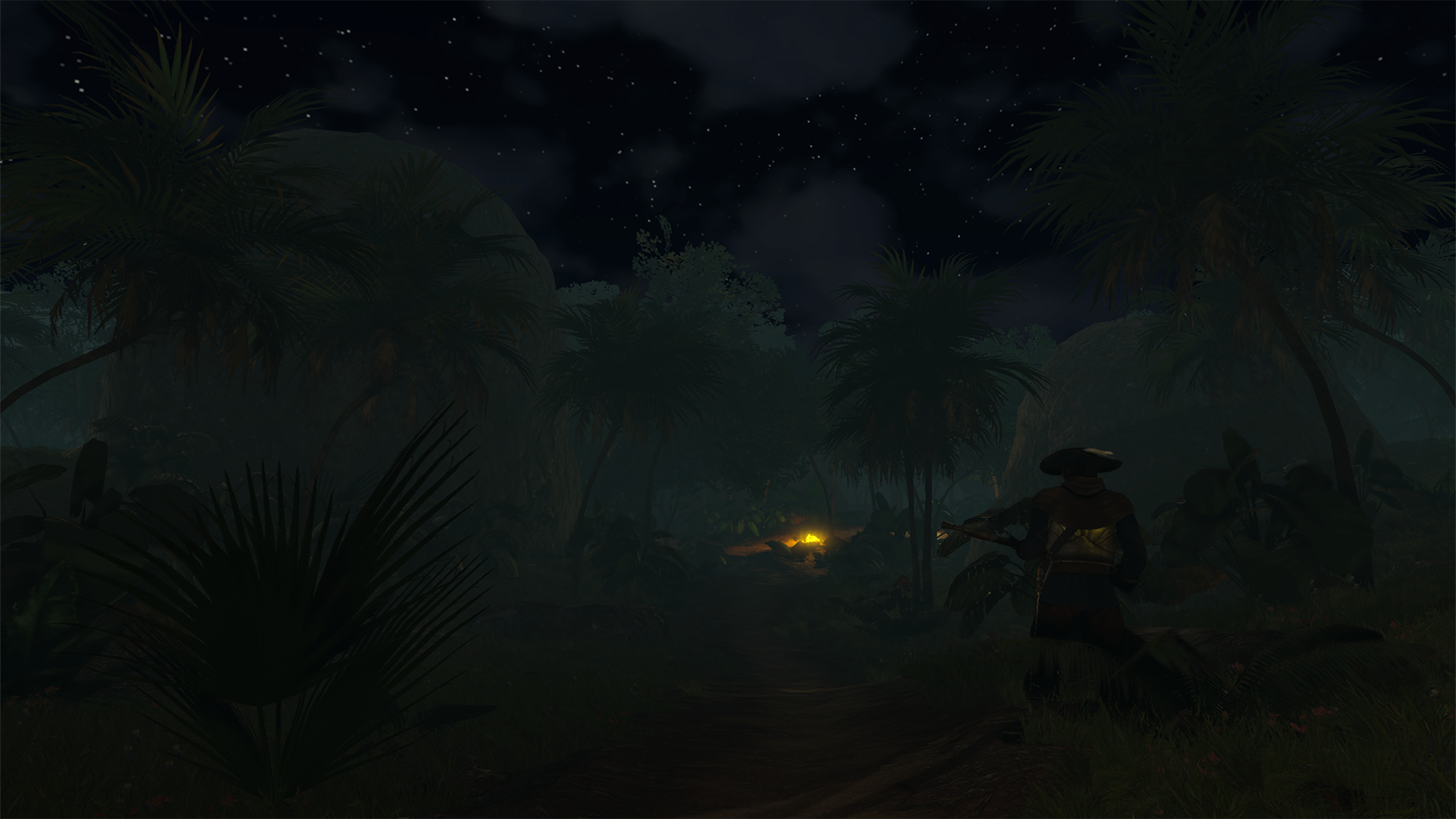
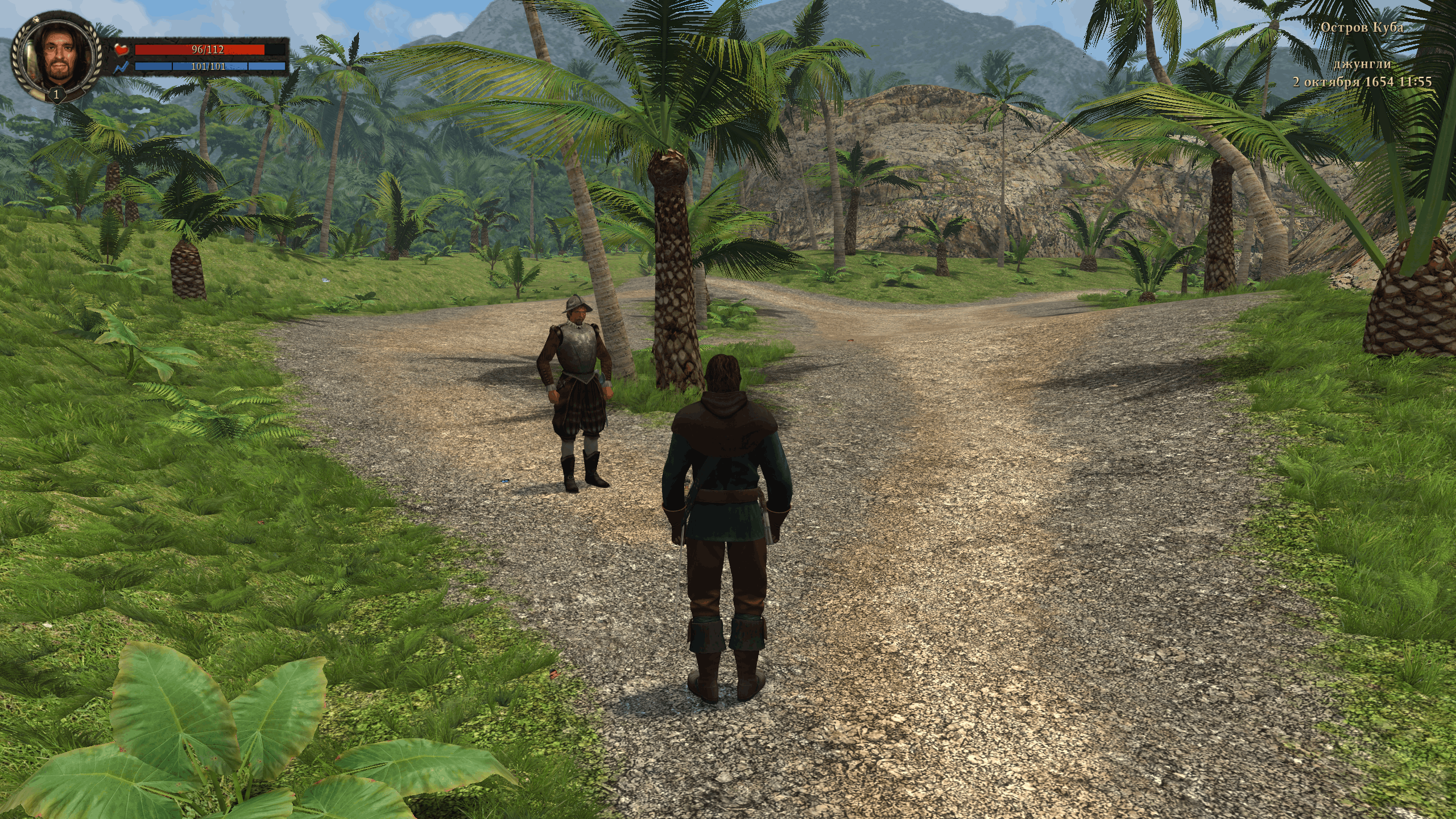 A guard is patrolling the area, exhausted by the tropical heat. Treat him to some rum or wine, and he will put in a good word for you with his fellow guards.
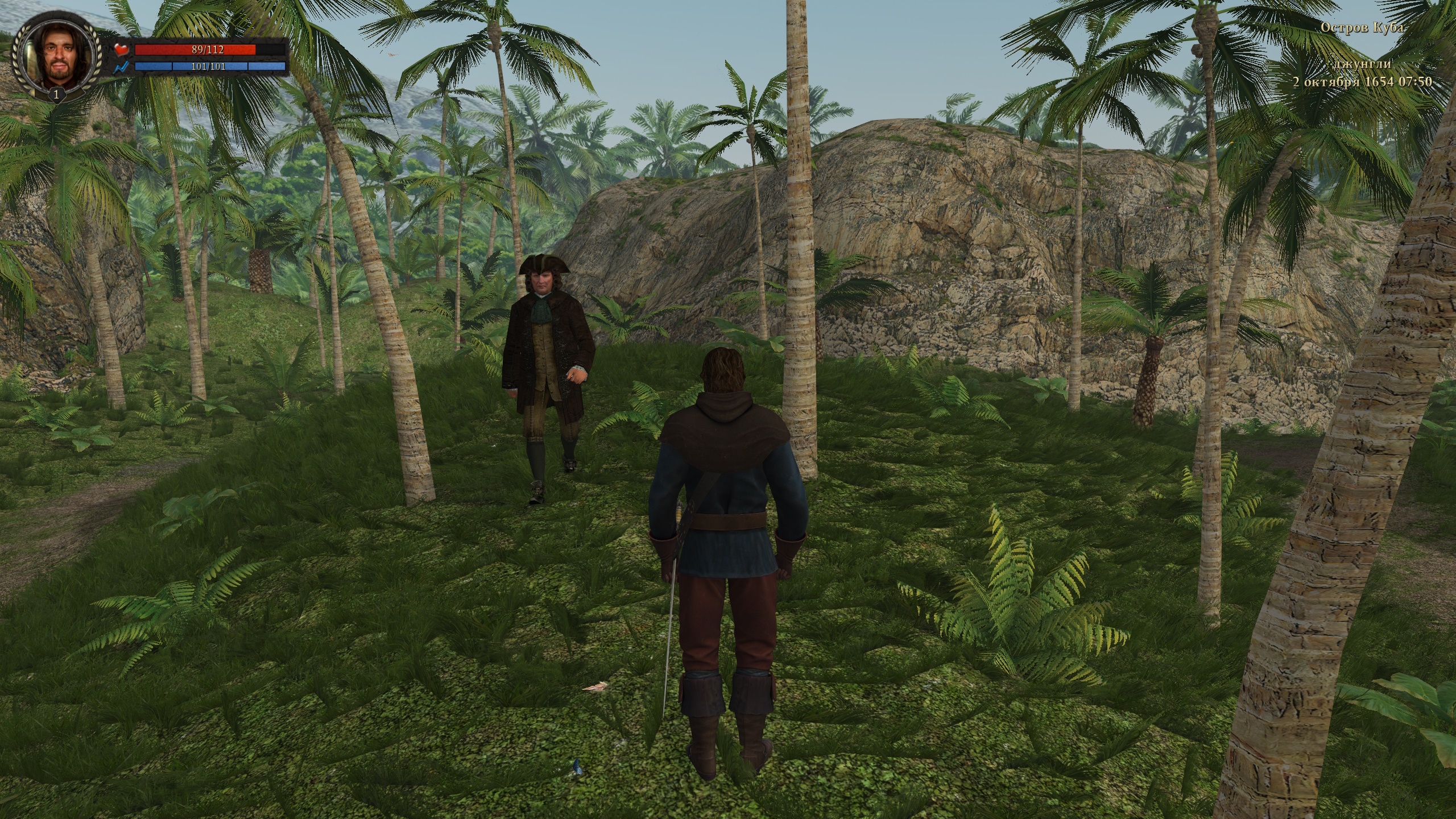 He can share the latest local rumors. If you are not particularly concerned about your reputation, you may also relieve him of his valuables—provided you can be persuasive enough.
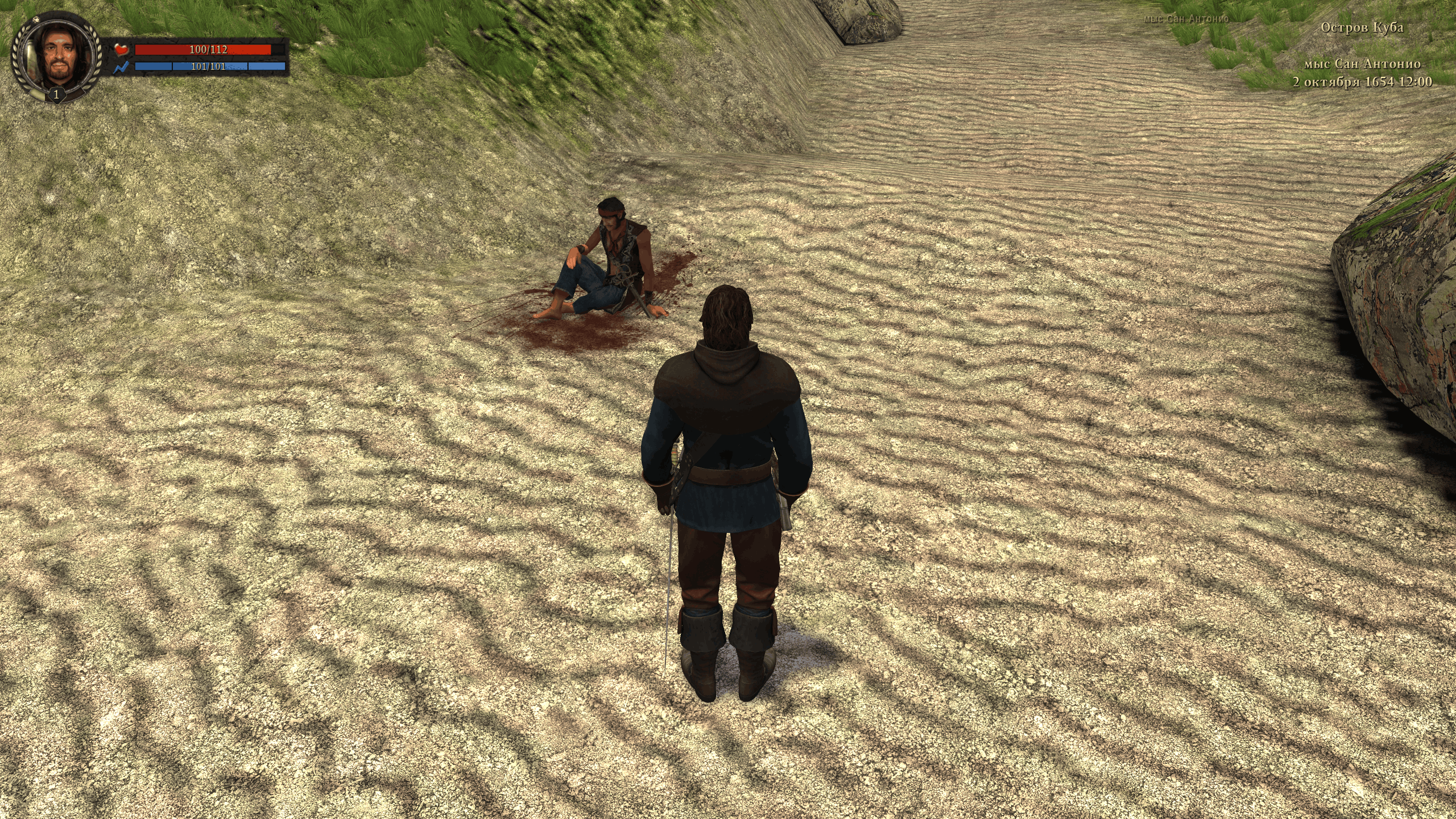 You can help a man in need—or finish him off.
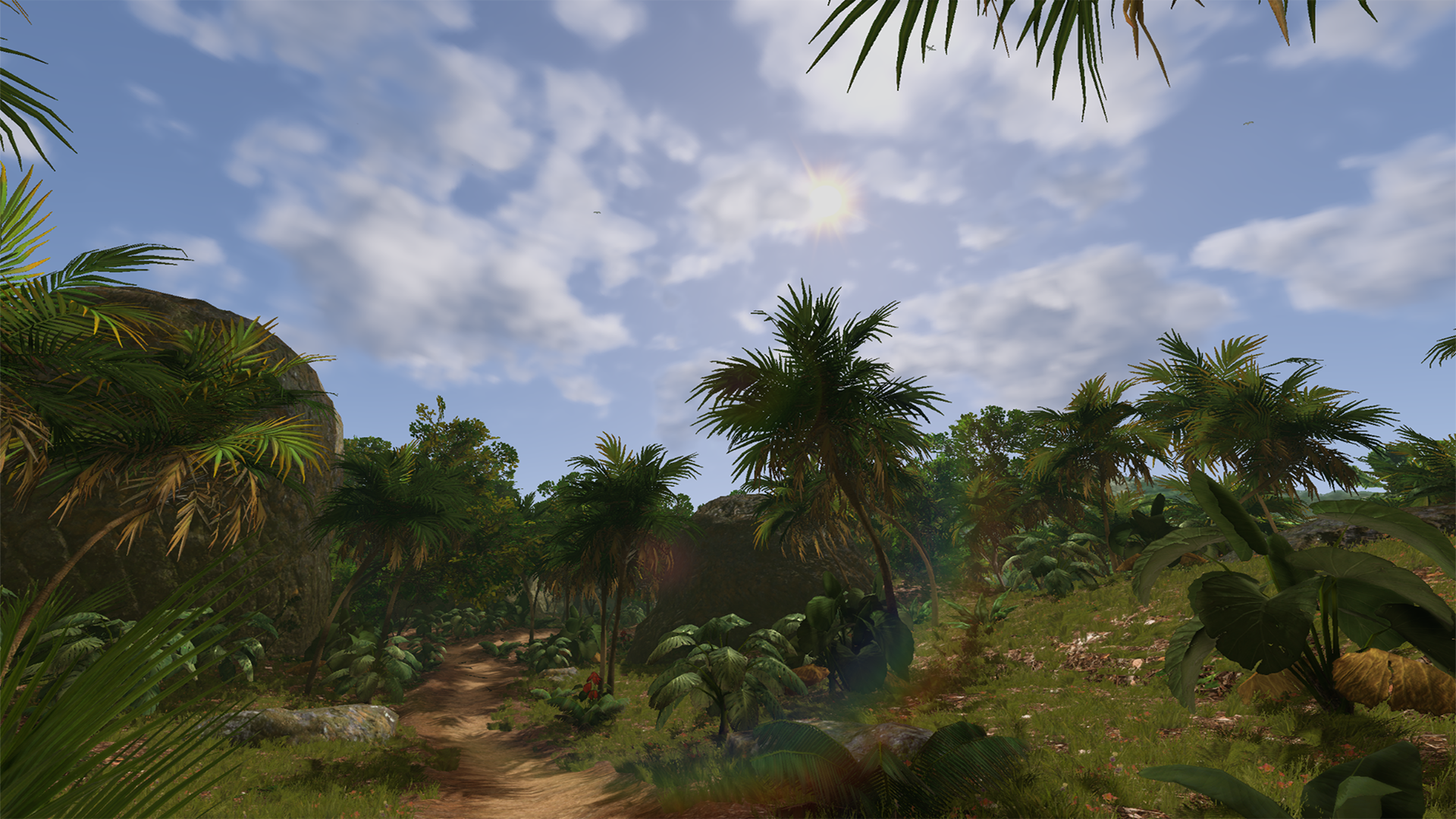
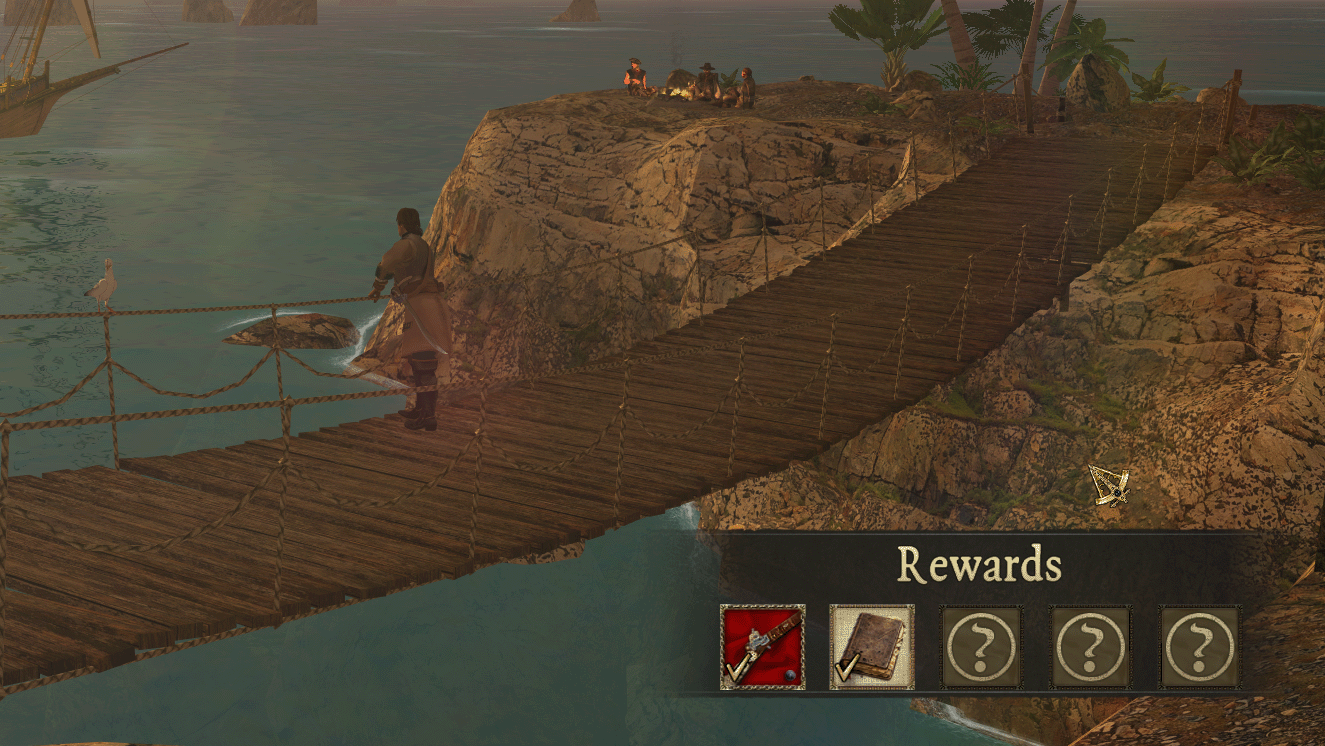
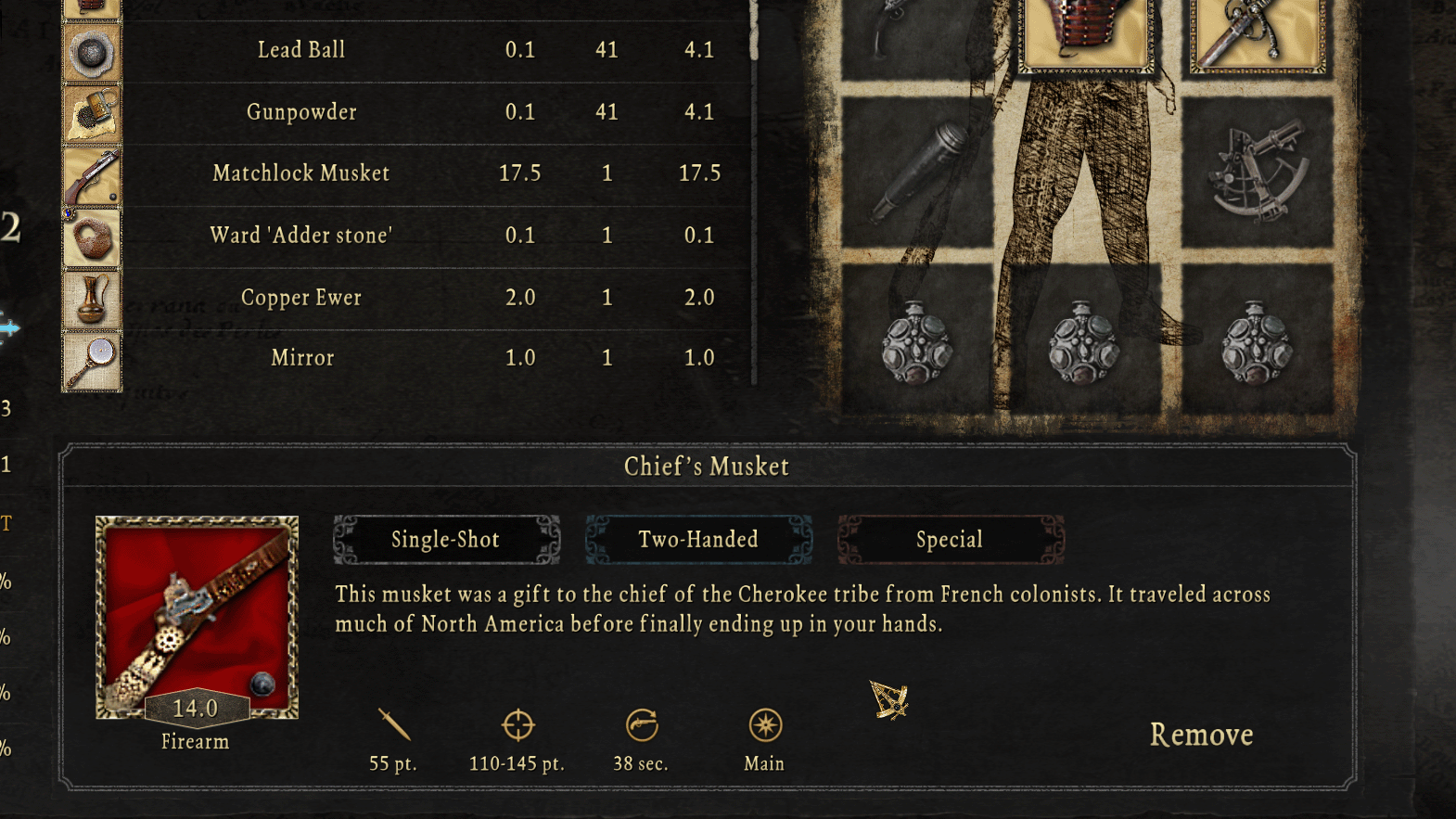
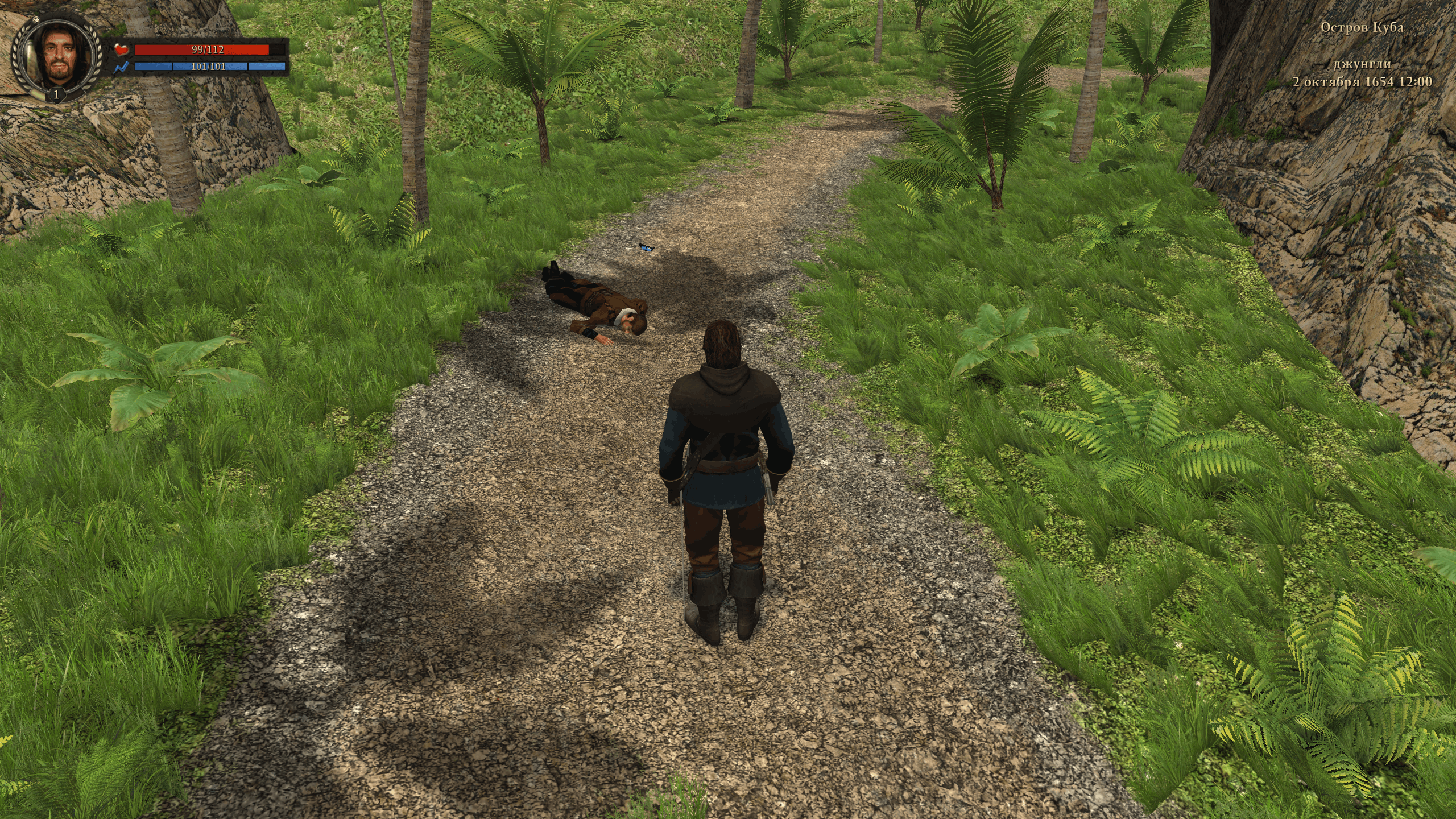 The jungle is a dangerous place. But whatever someone valued in life may still prove useful to you after their death.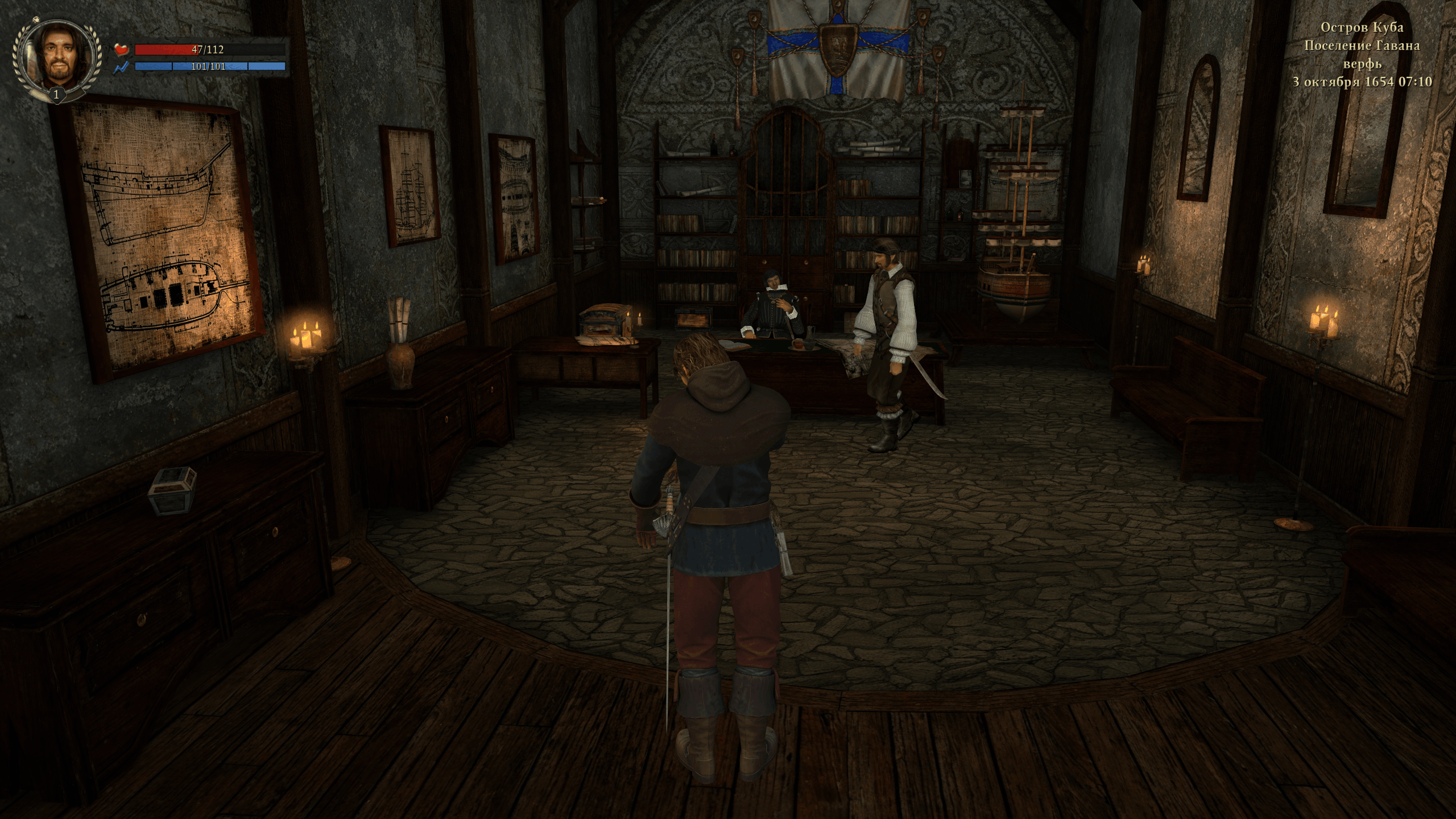
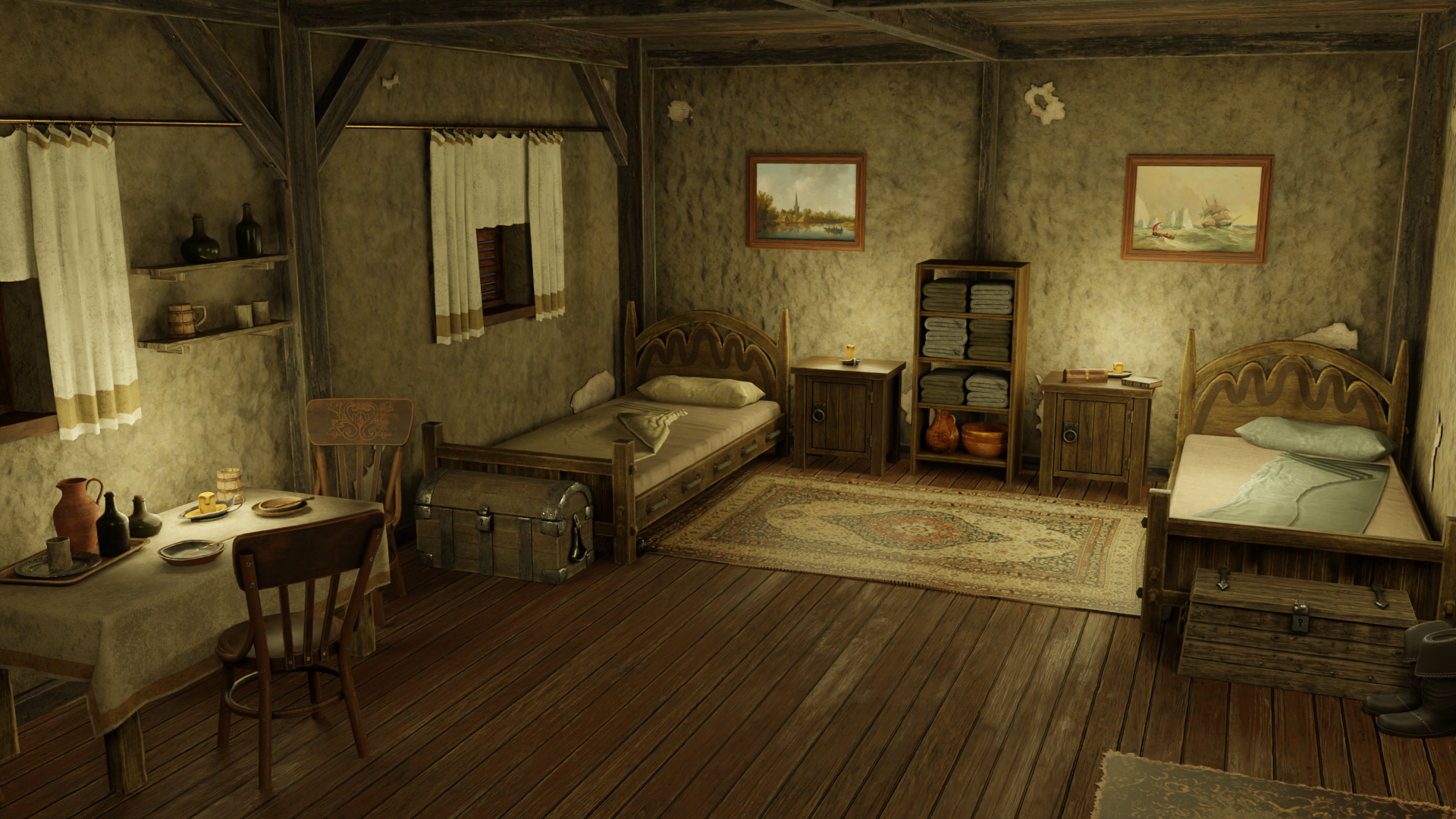
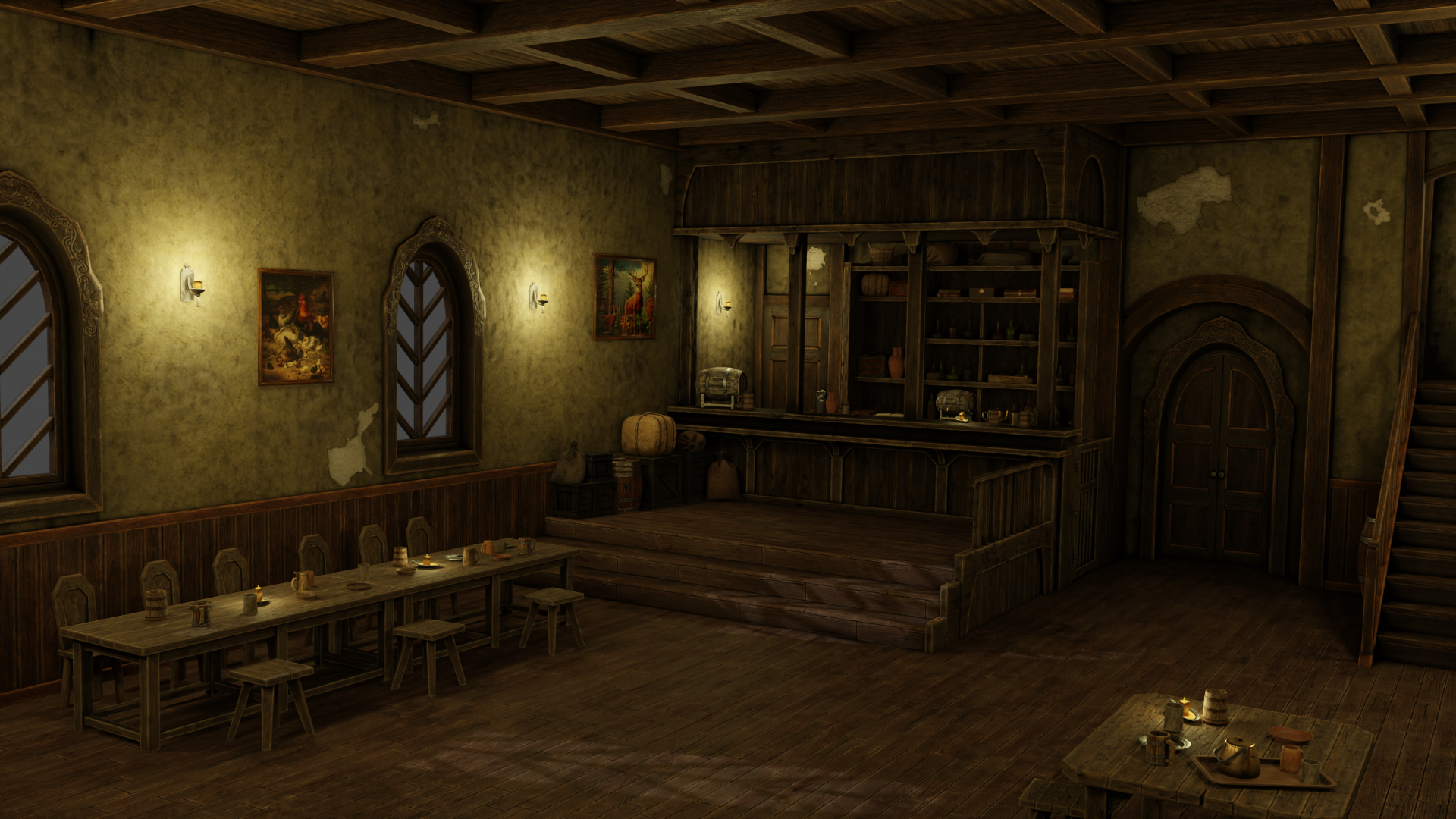
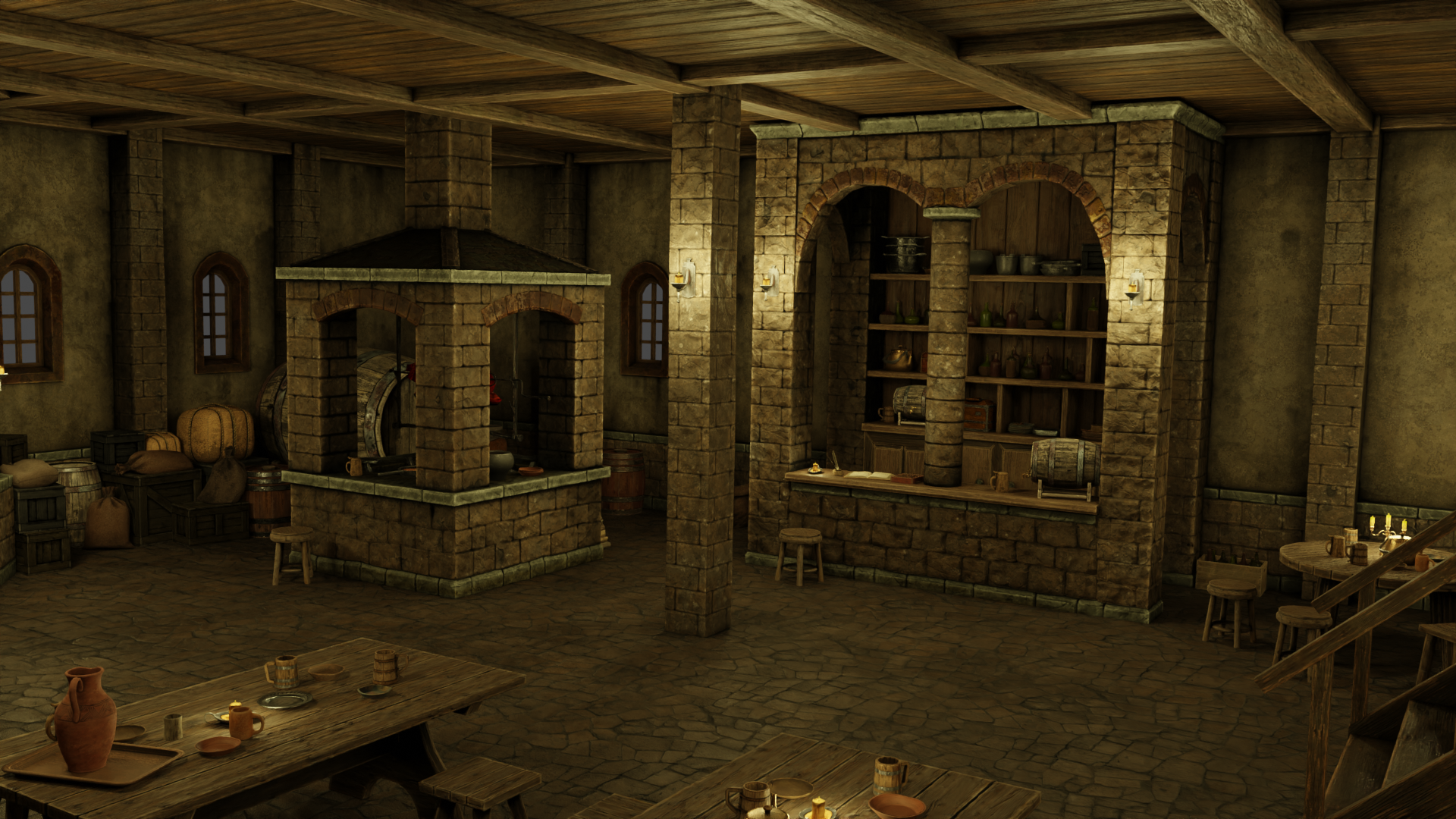


















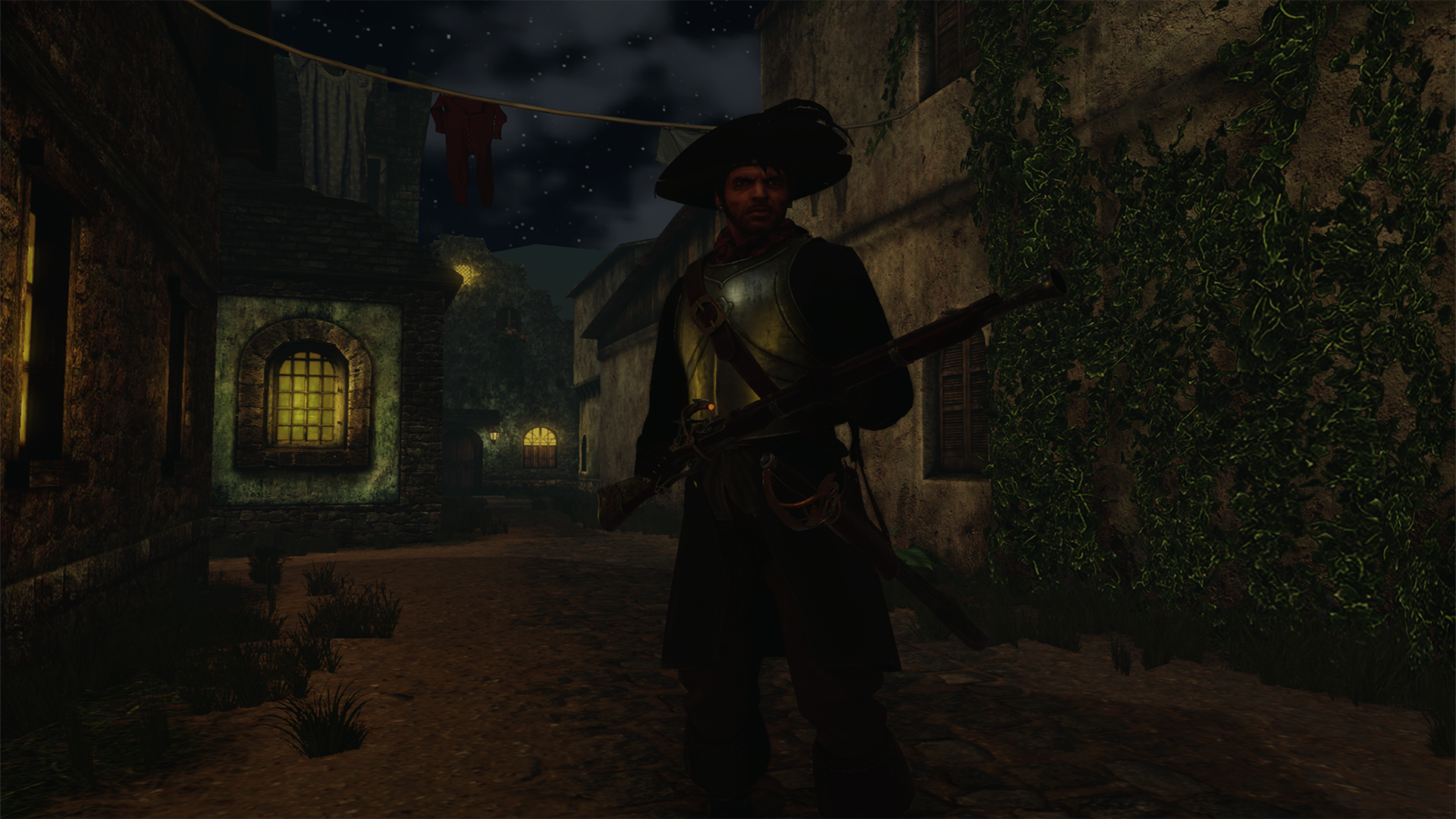

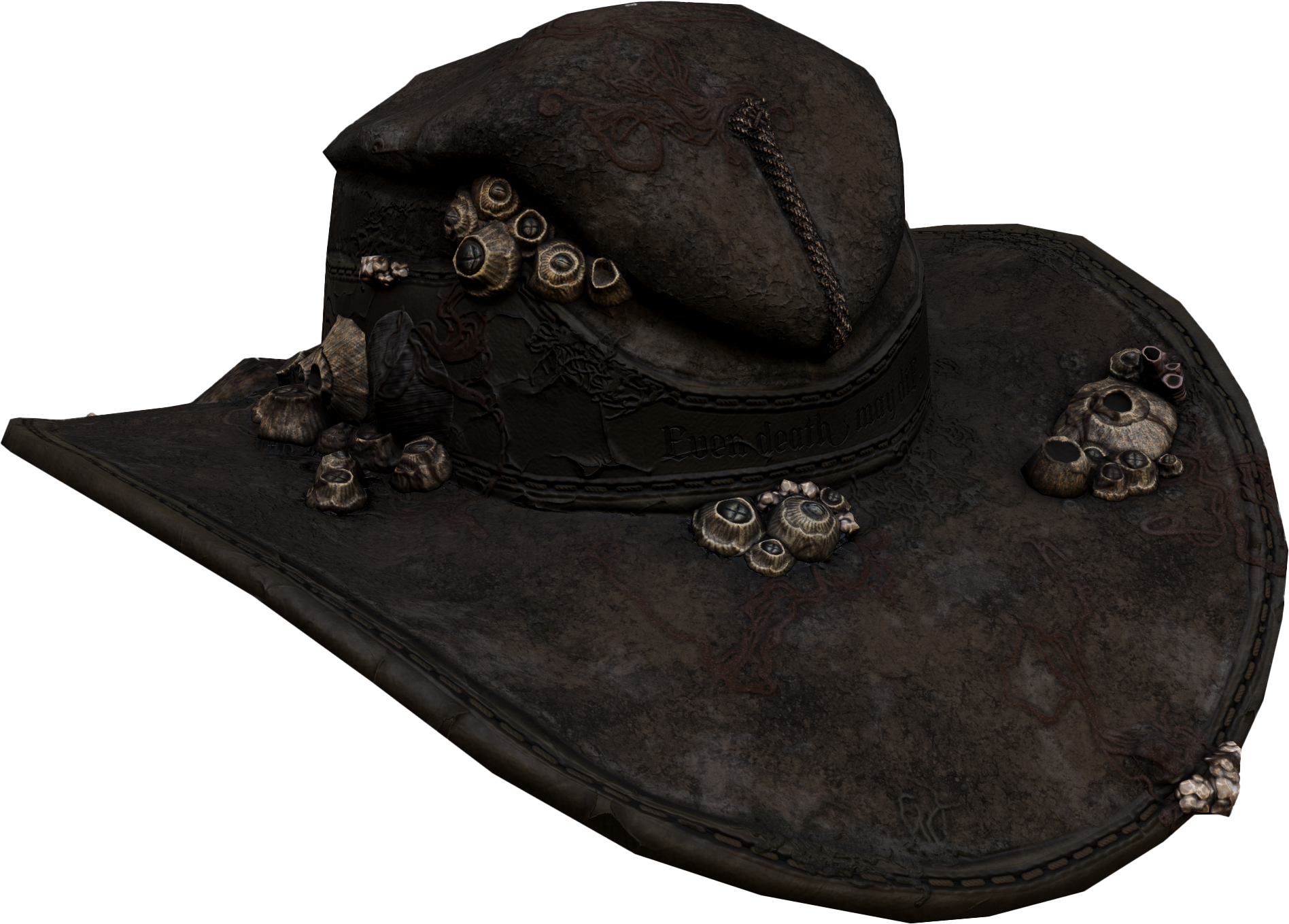






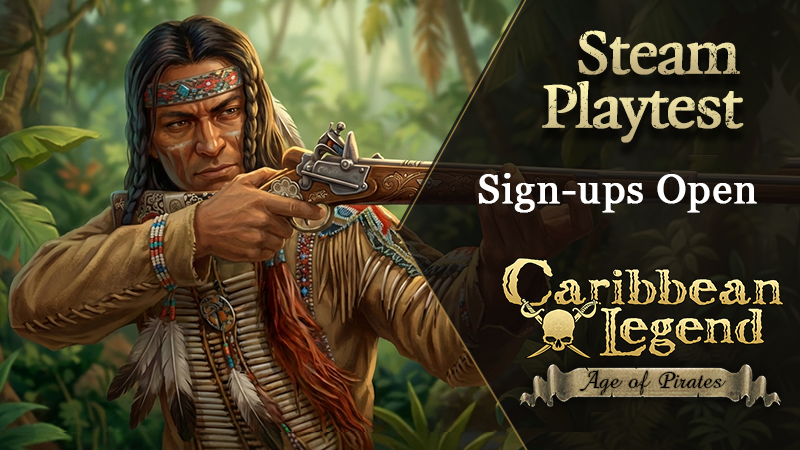

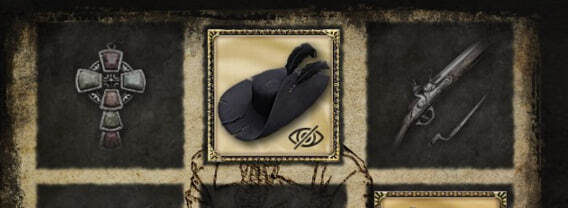
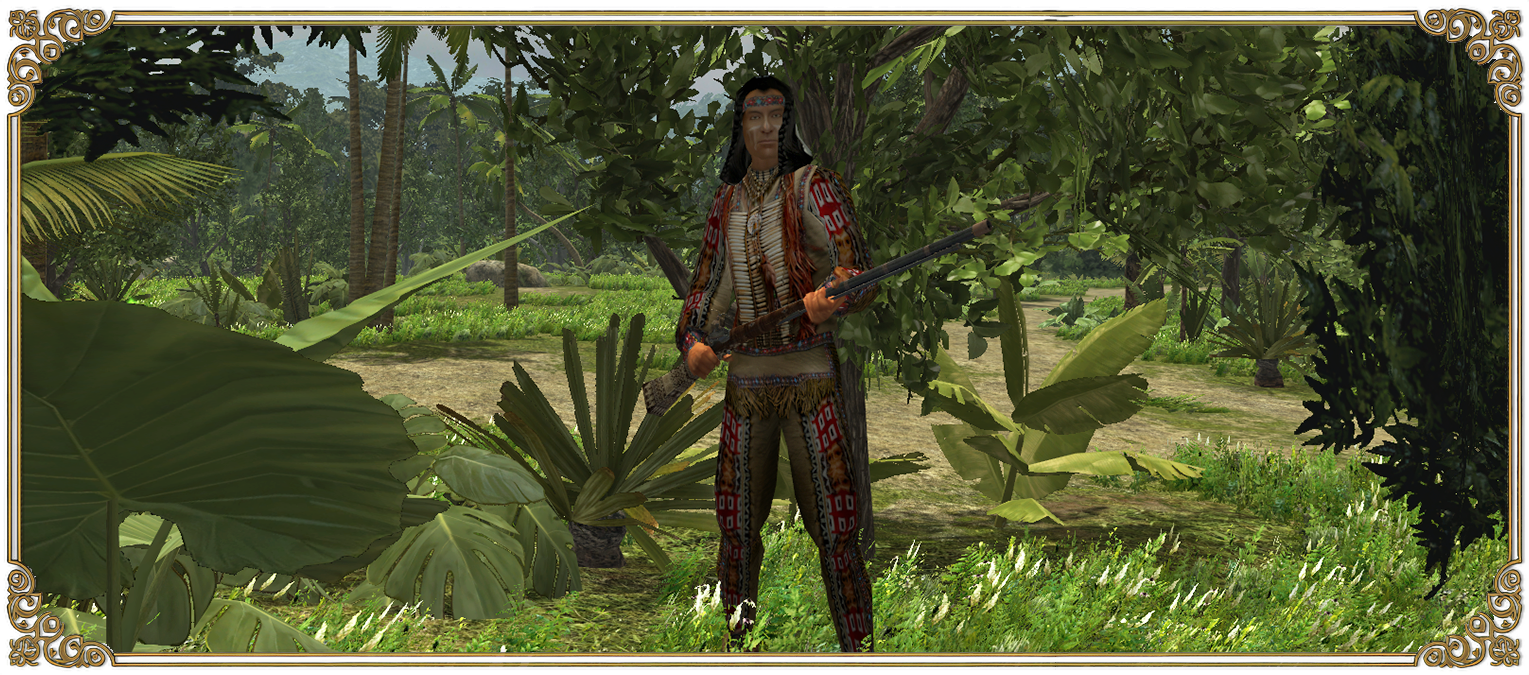 and his ancestral musket!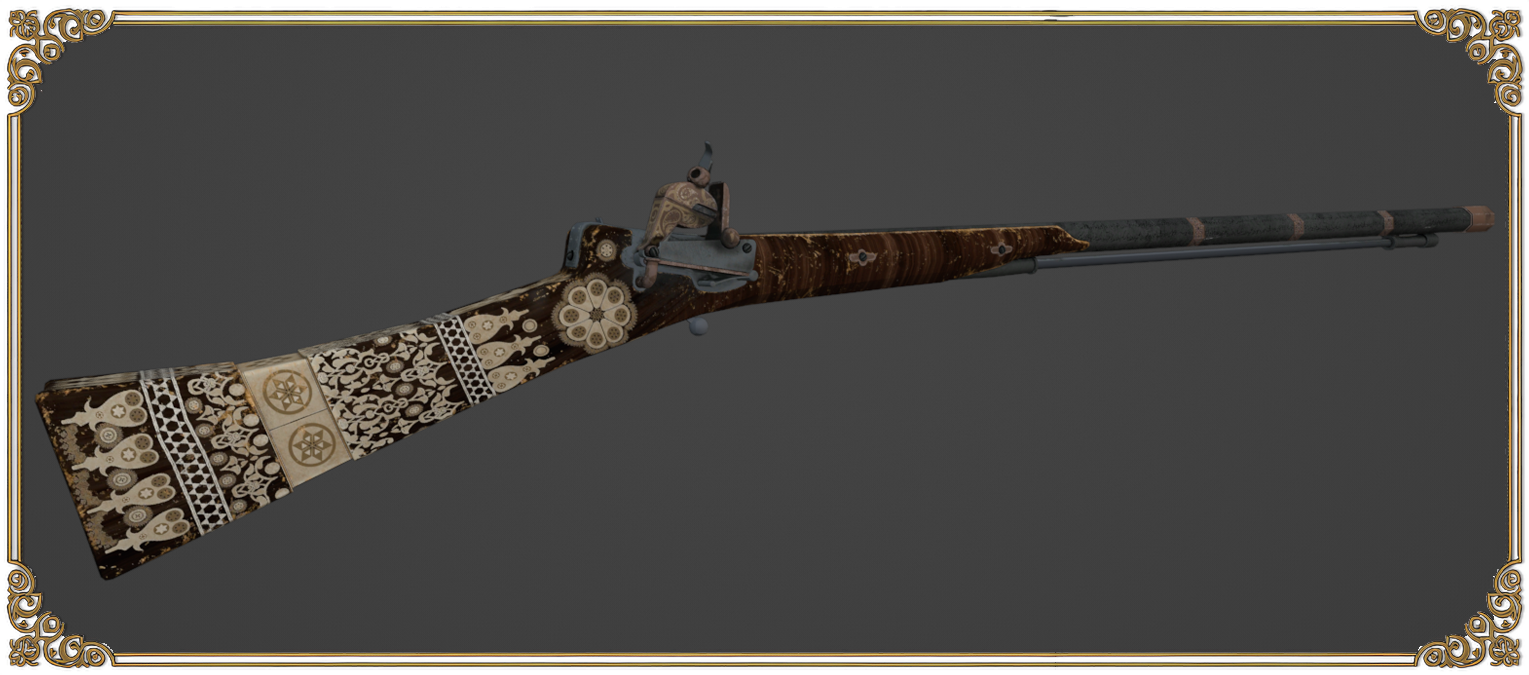
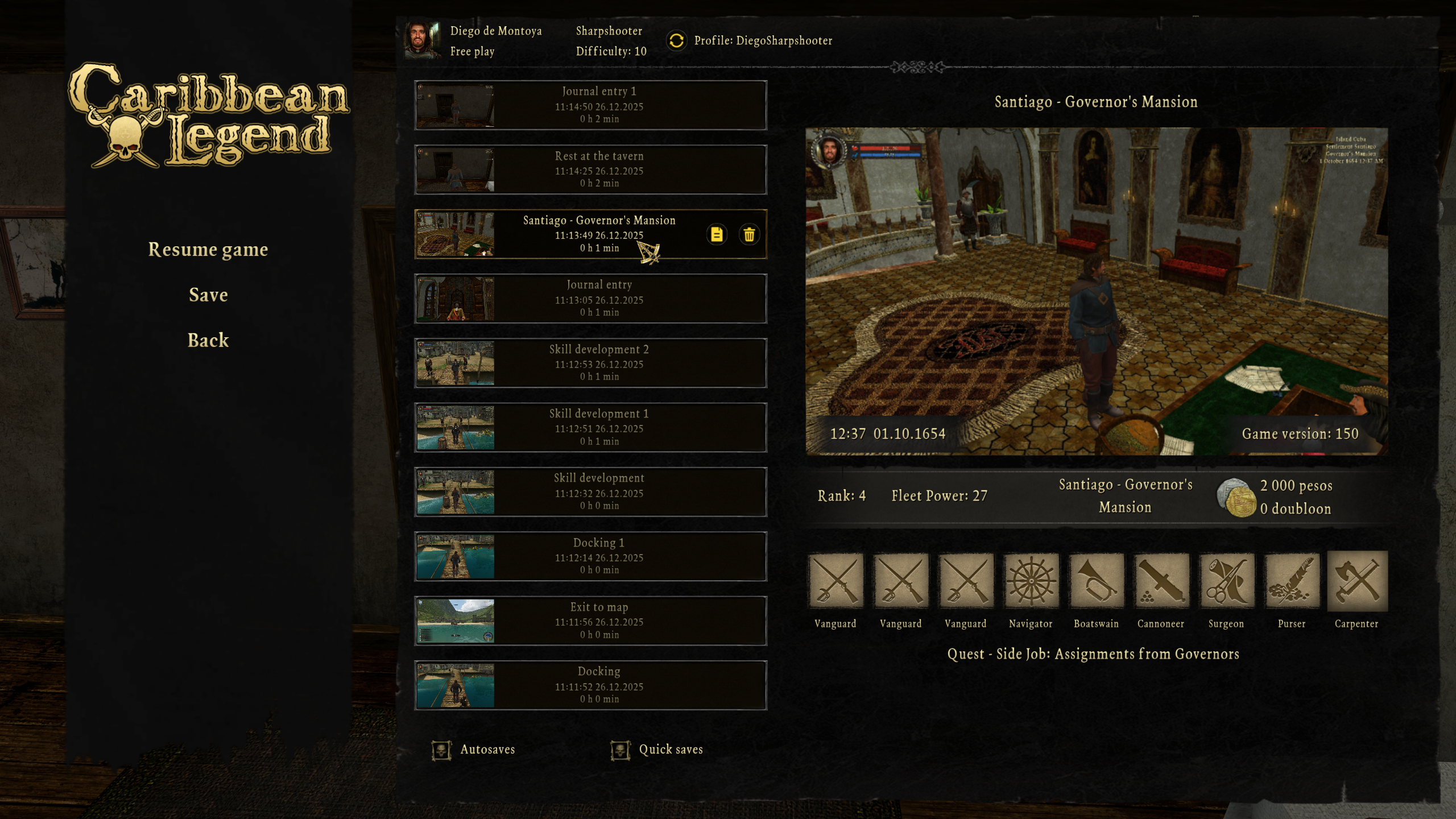
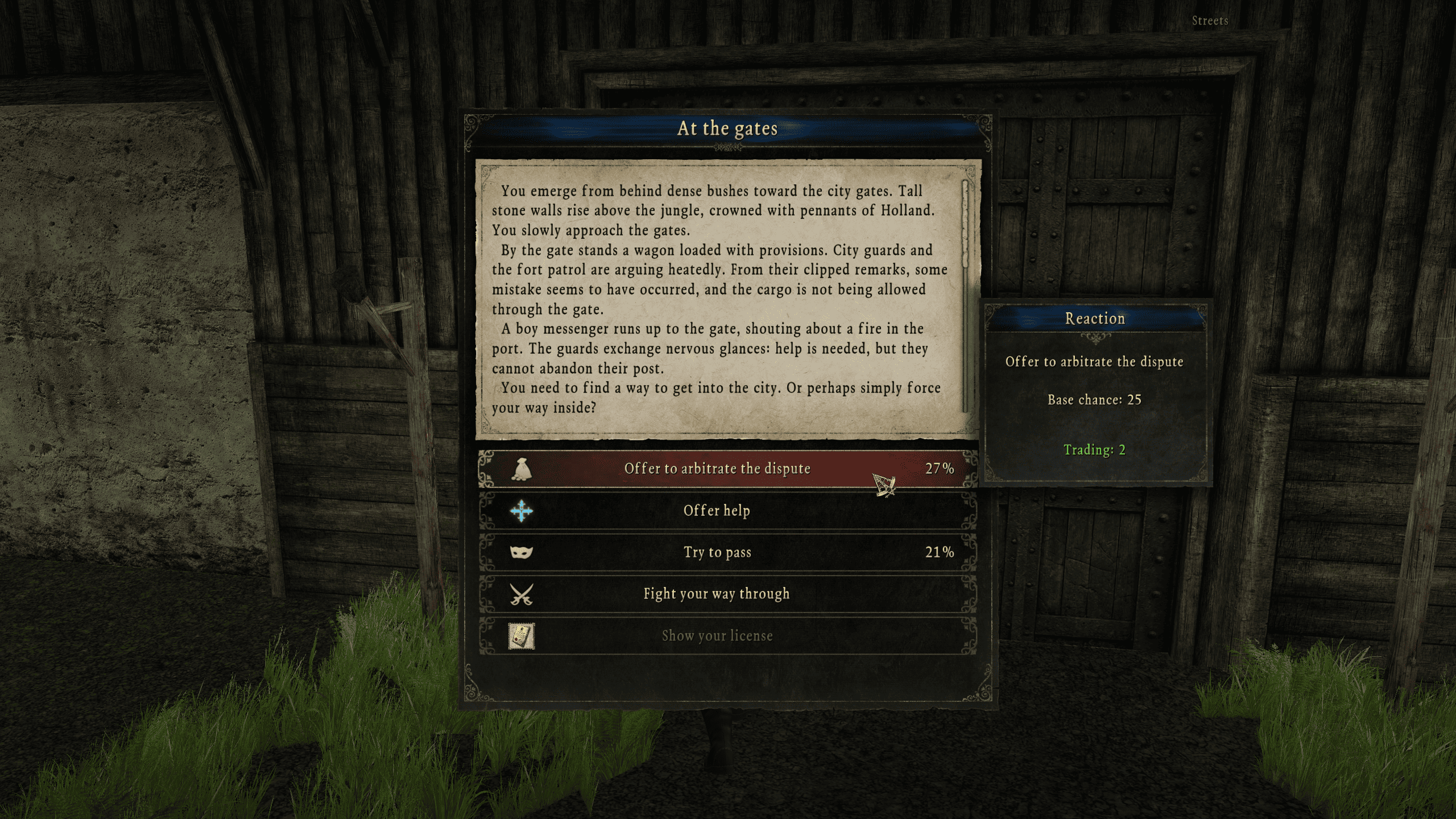
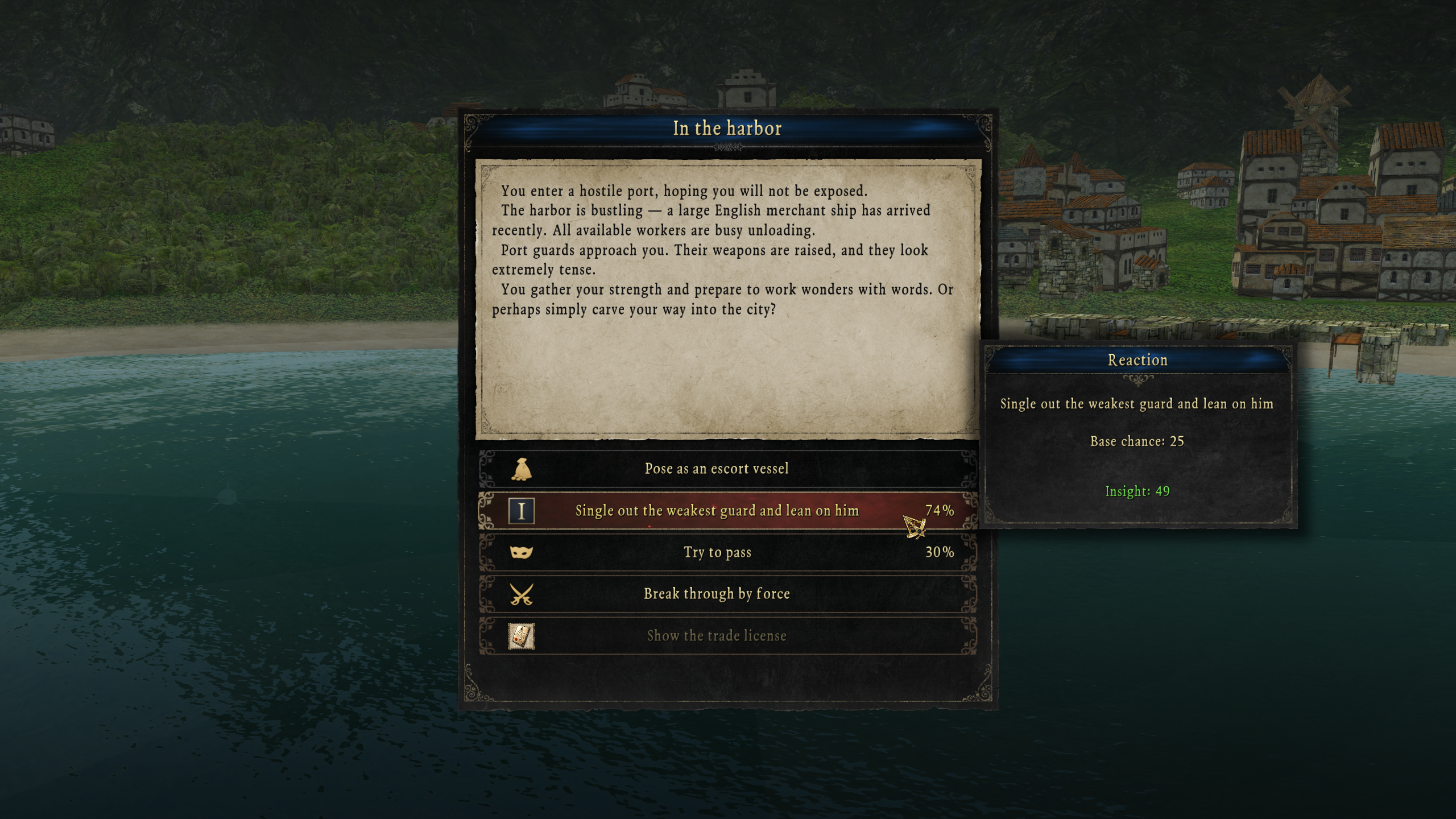 Every action you take affects the outcome and is recorded in a chronicle, letting you play through a complete narrative each time. The variations built into this version allow for over a thousand unique situations.