Seven
Hey friends! 👋 I hope 2026 treated you well so far! On my side, eight months seemed to fly by. I'll be back at the start of the year turned into I'll save it for the post on August 28th . So without further ado – here's the state of the game on TRACHI's seventh anniversary! Abst
Hey friends! 👋
I hope 2026 treated you well so far! On my side, eight months seemed to fly by. I'll be back at the start of the year turned into I'll save it for the post on August 28th. So without further ado – here's the state of the game on TRACHI's seventh anniversary!
Abstract
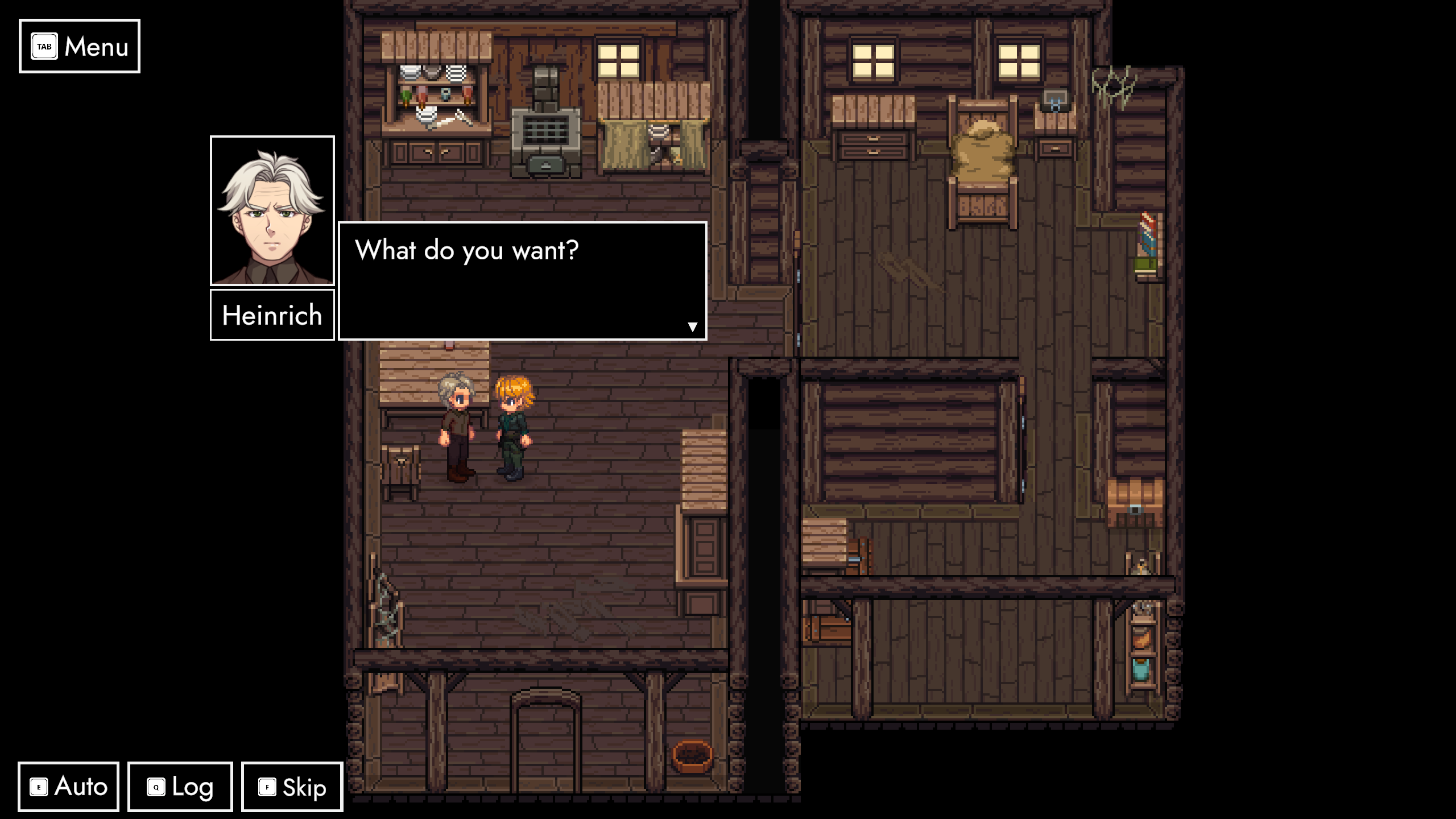
First and foremost, InvitAtion's renovation: the map and the quests are now a hub-based buffet. Main tasks advance time, side-quests (custom's office, Heinrich etc.) are optional, but affect the act's finale. Following that, overall improvements to the game. Seamless travel, elevation and click-to-move change the way it's played, while the Sprite Compositor assembles the characters' appearance as you play the game.
To conclude, I'll present the roadmap for ANARCHY 0.5 (InvitAtion). Now that nory has landed a permanent position (yay!), two words should structure development. Stability and - hopefully - consistency.
Let's dive in!
Situation
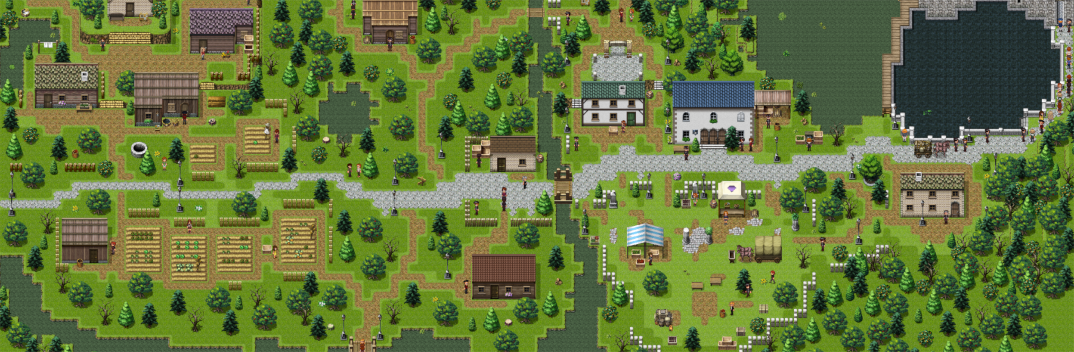
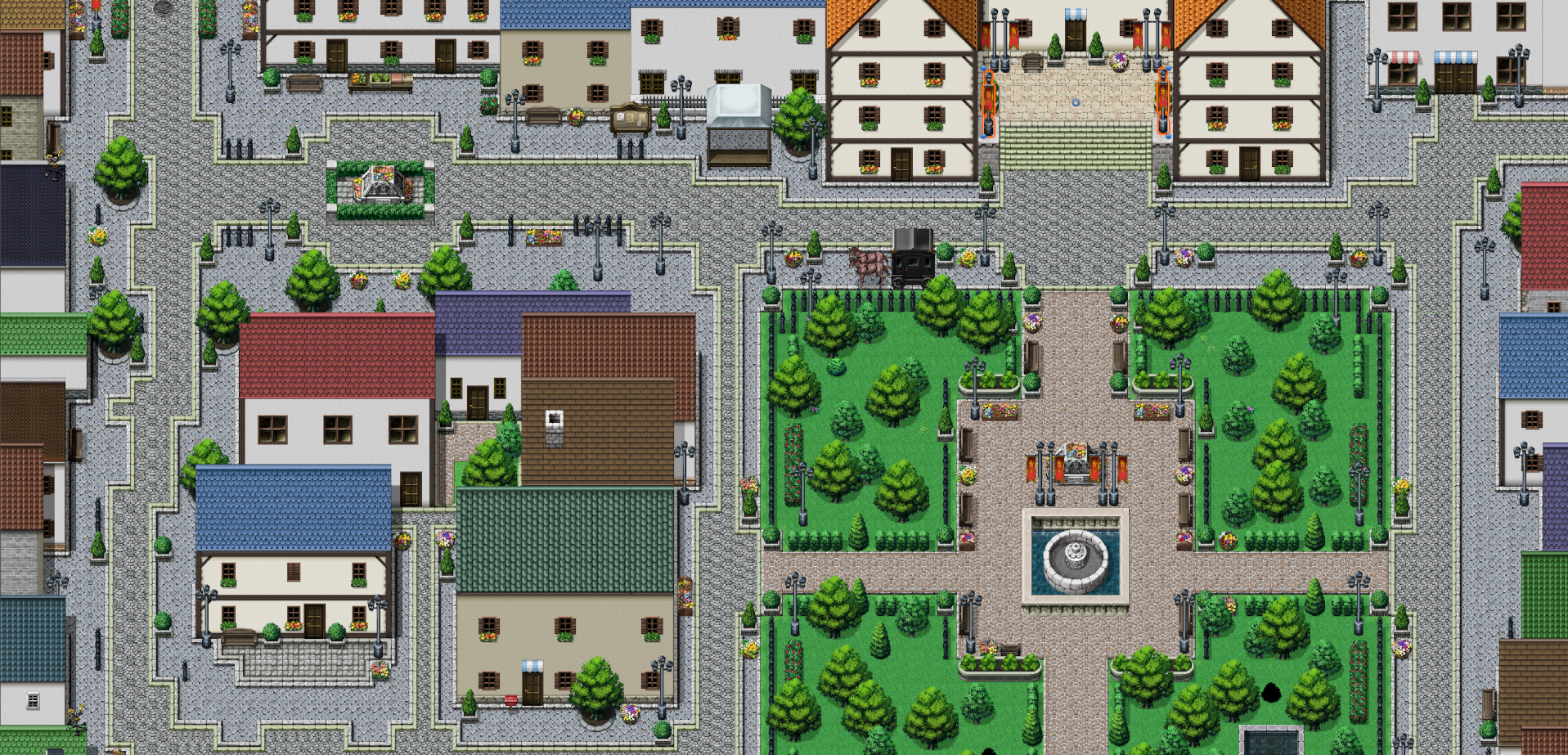
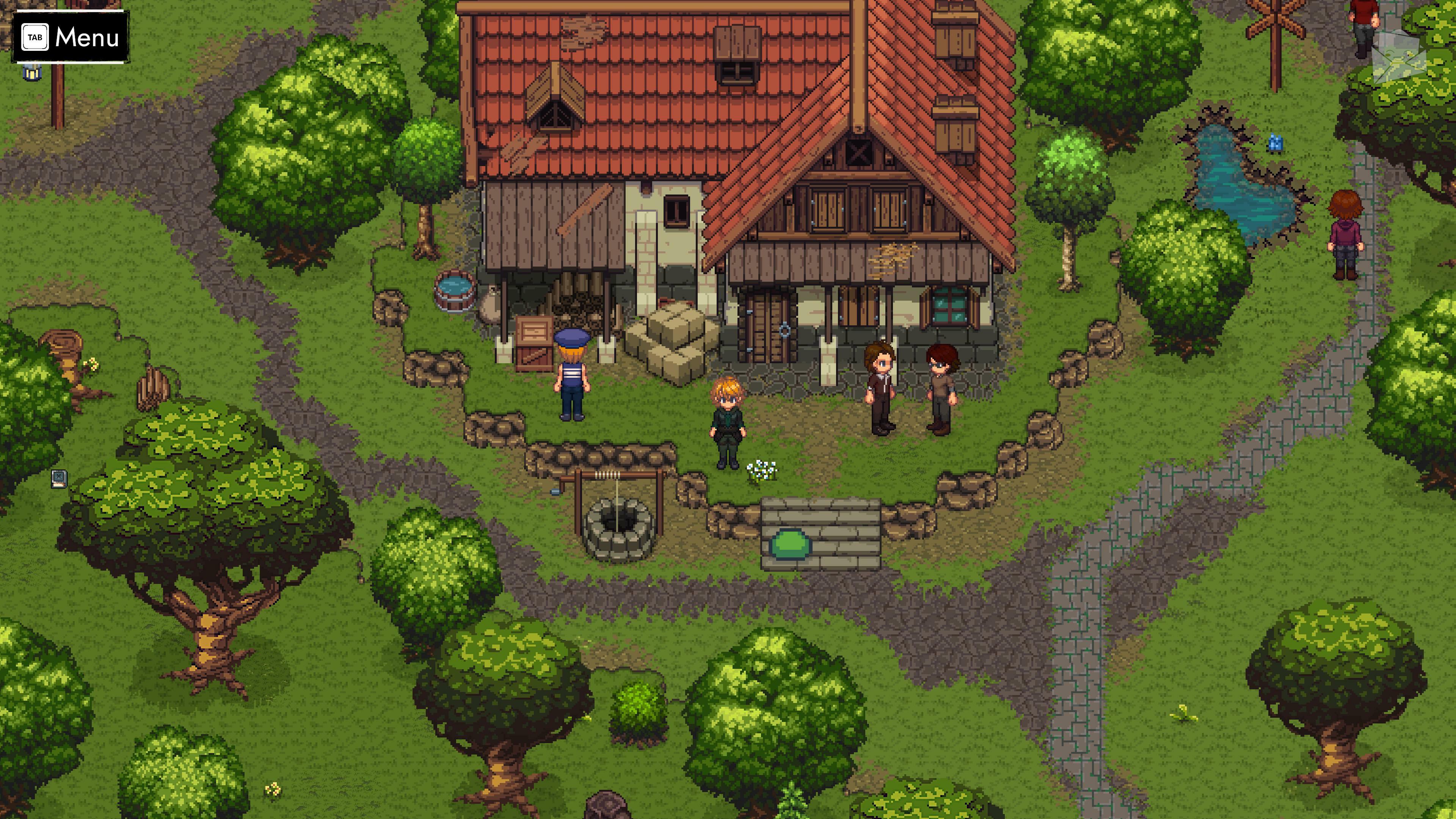
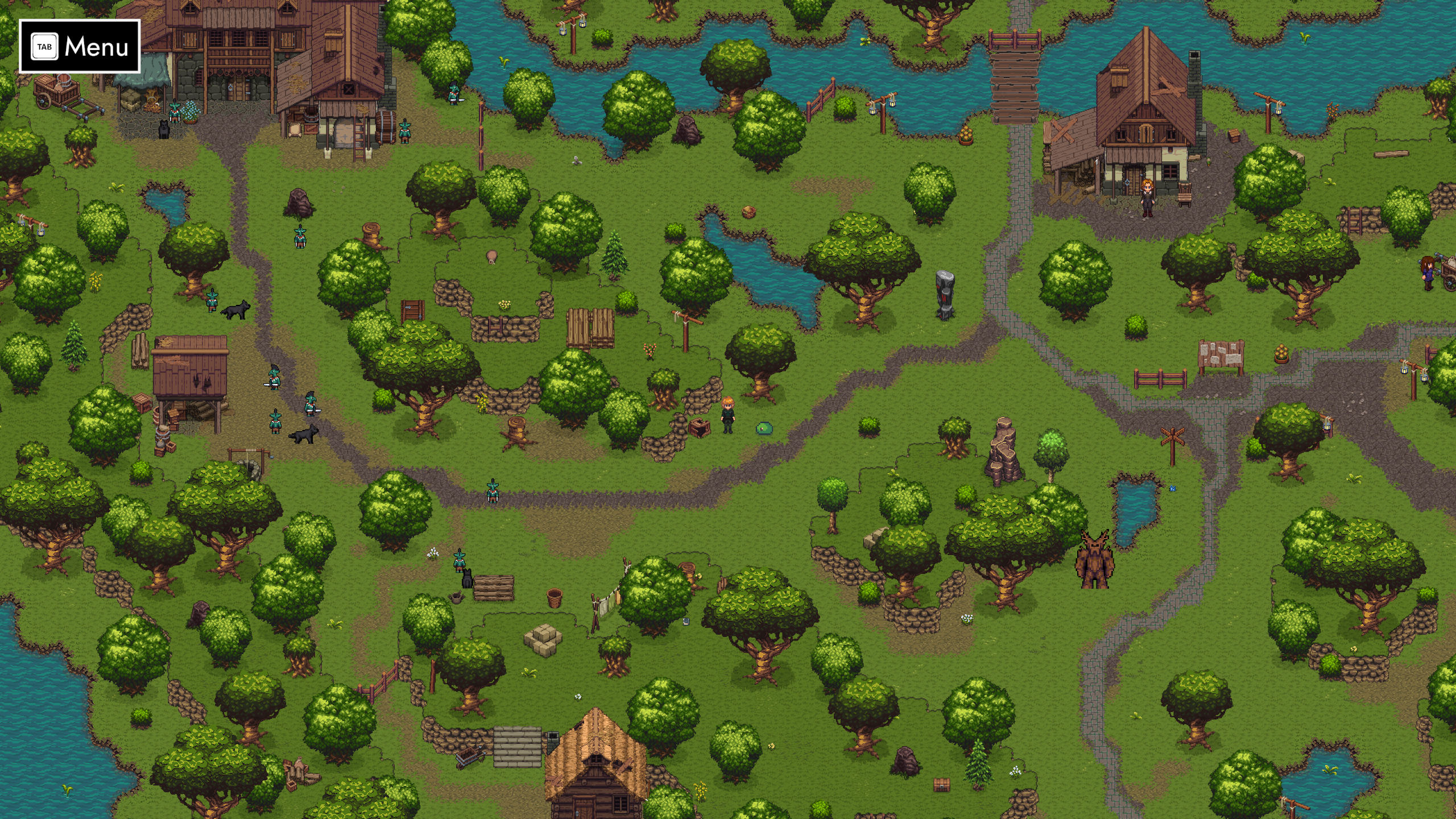
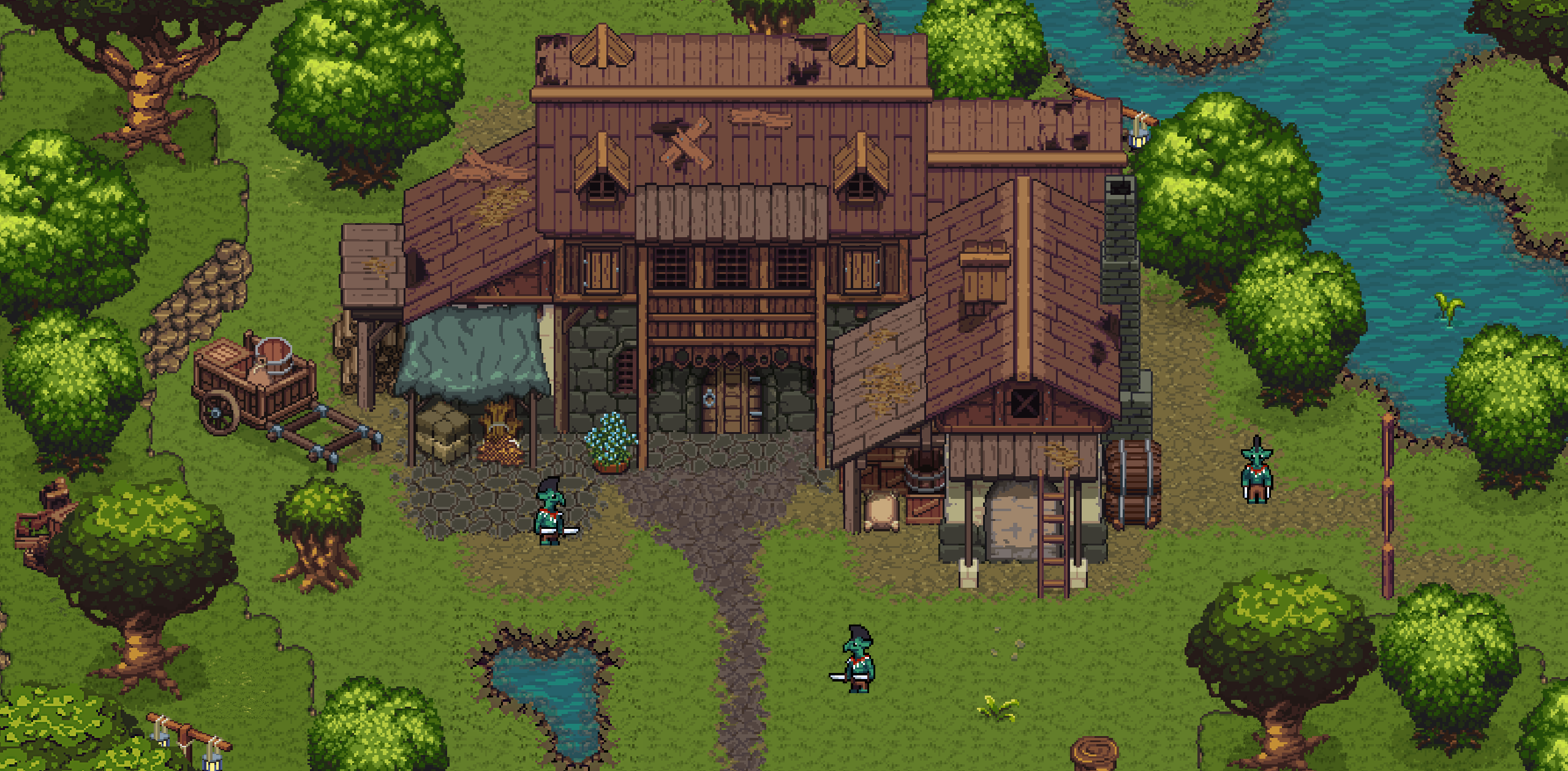
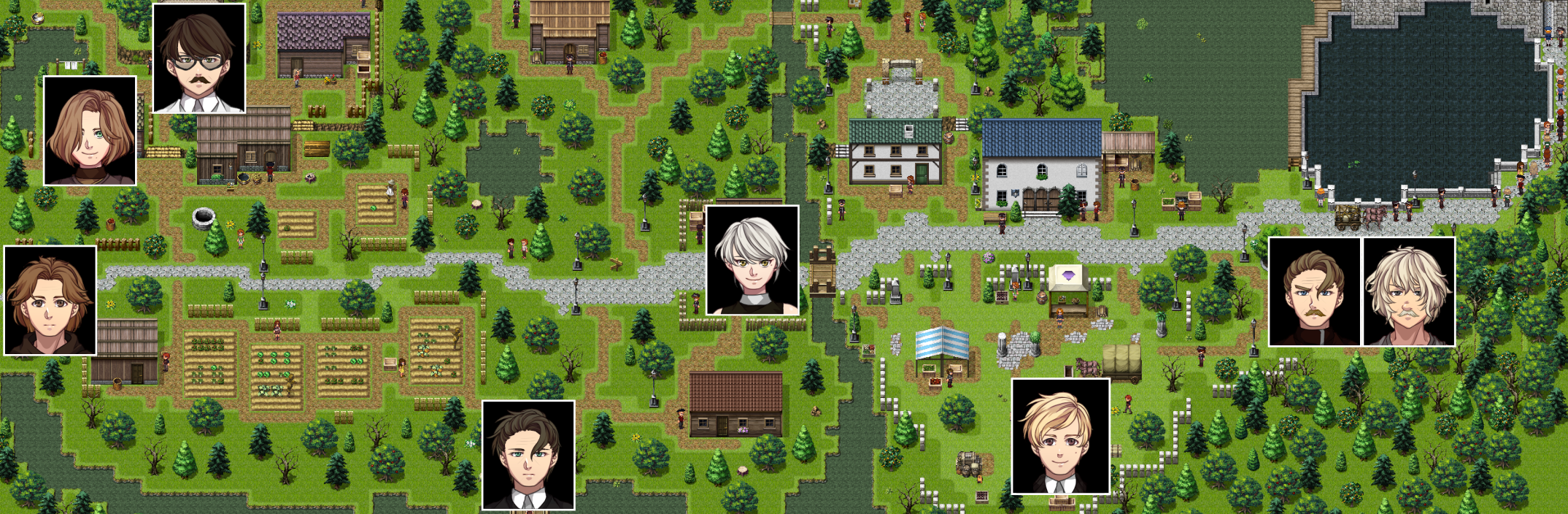
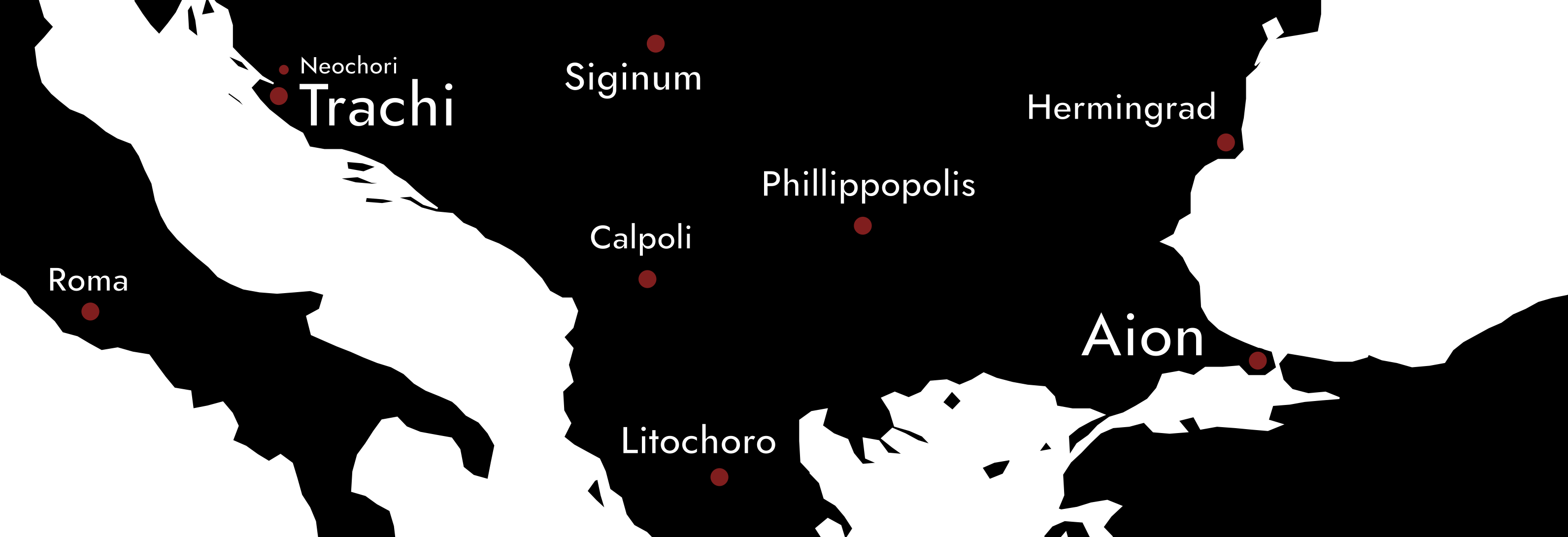
As you recall, the prologue tracks three Ionians in foreign territory. Specifically, a demilitarized zone (DMZ) next to an independent city-state (Trachi). Per the map above, I've done some rearranging.
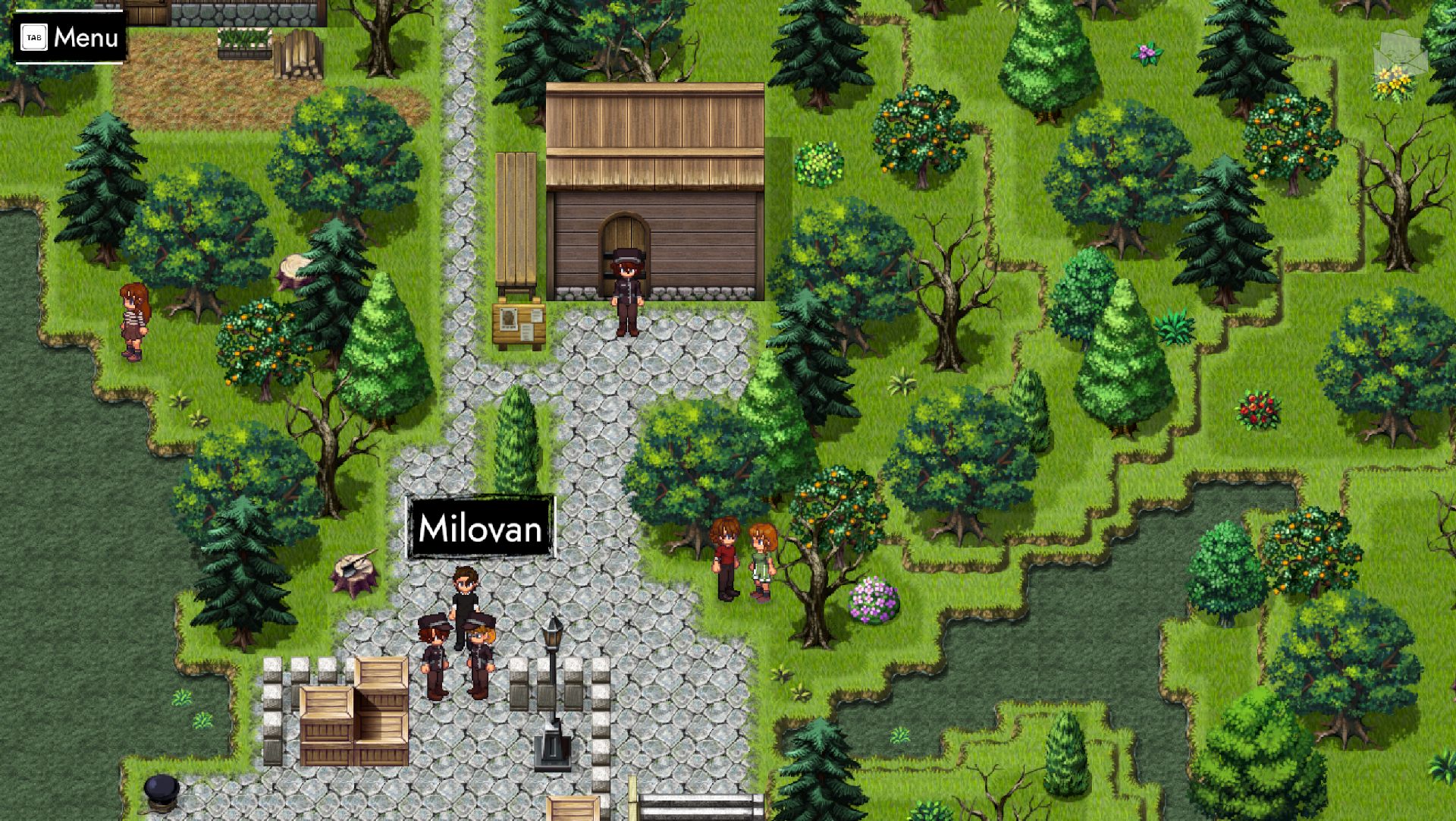
Trachi's geography was aligned with its real-life counterpart (Kotor). The Checkpoint became Trachi's southern entrypoint, with a new map showing the full bridge and the city's gates. Meanwhile, the Customs Office overlooks the ruins of a thirteenth century monastery. Though only a few paved squares remain, travelers appreciate the Campo Santo all the same.
Doubly so, as the local Inn (where the TRG barracks used to be) is booked to the brim. Similarly, the line to enter Trachi hasn't gotten any shorter. It starts at the Gurdic Gate (far eastern side) and snakes around the Gurdic Spring, under the vigilant eyes of the relocated TRG Outpost.
On the other side of the map, Neochori is a lot less isolated. To the west sits the Beach (not shown here), to the south are now a bunch of (proper) Fields. Last but not least: the Storage is effectively next door. It sits right between Neochori and the Checkpoint, forming a neutral strip of land, or – if you prefer – a DMZ.
Overall, we turned a tunnel into a block. Individual maps touch each other more, increasing interconnectivity. Paths tend to become shorter and you won't have to take the same route every time.
Operations
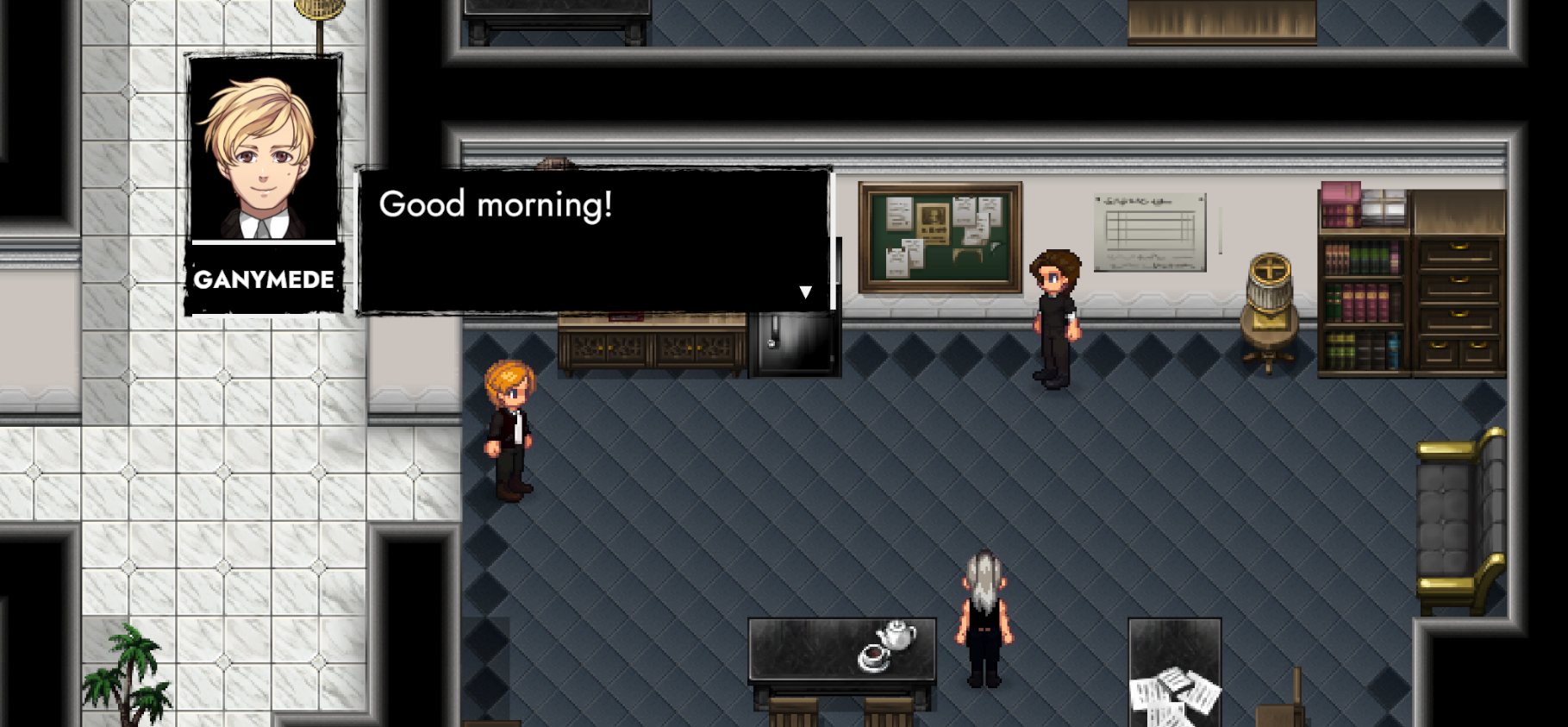
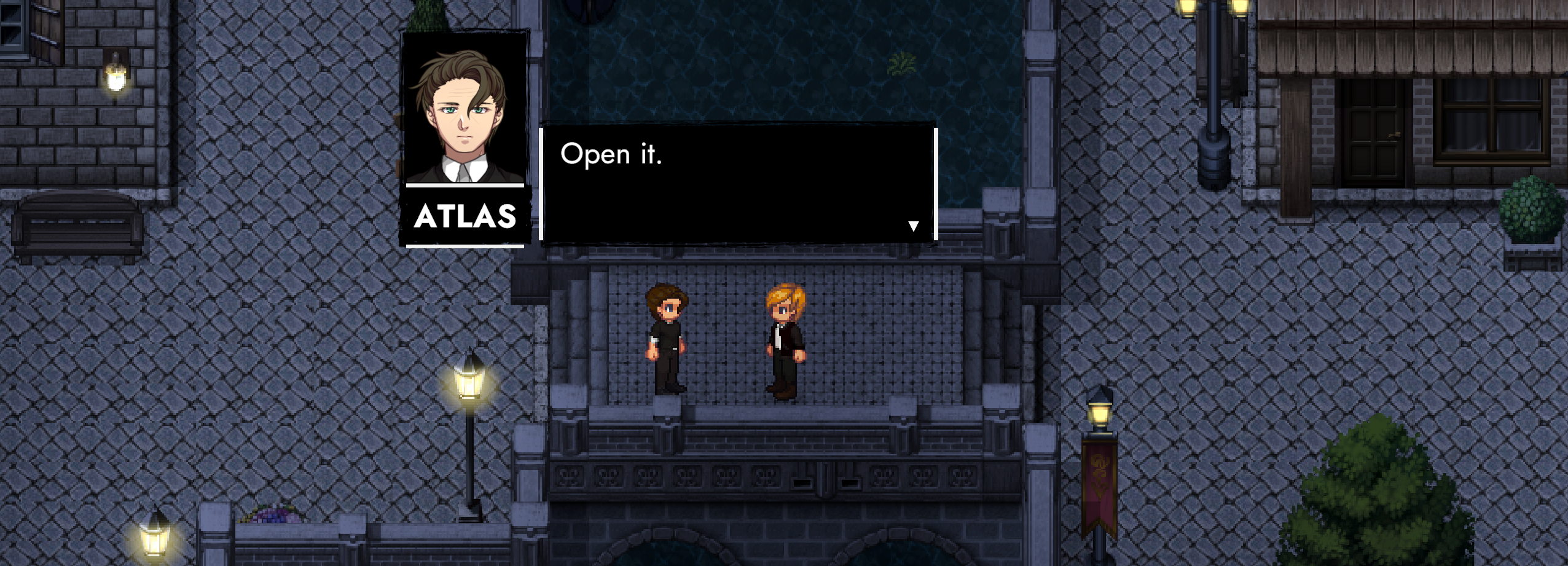
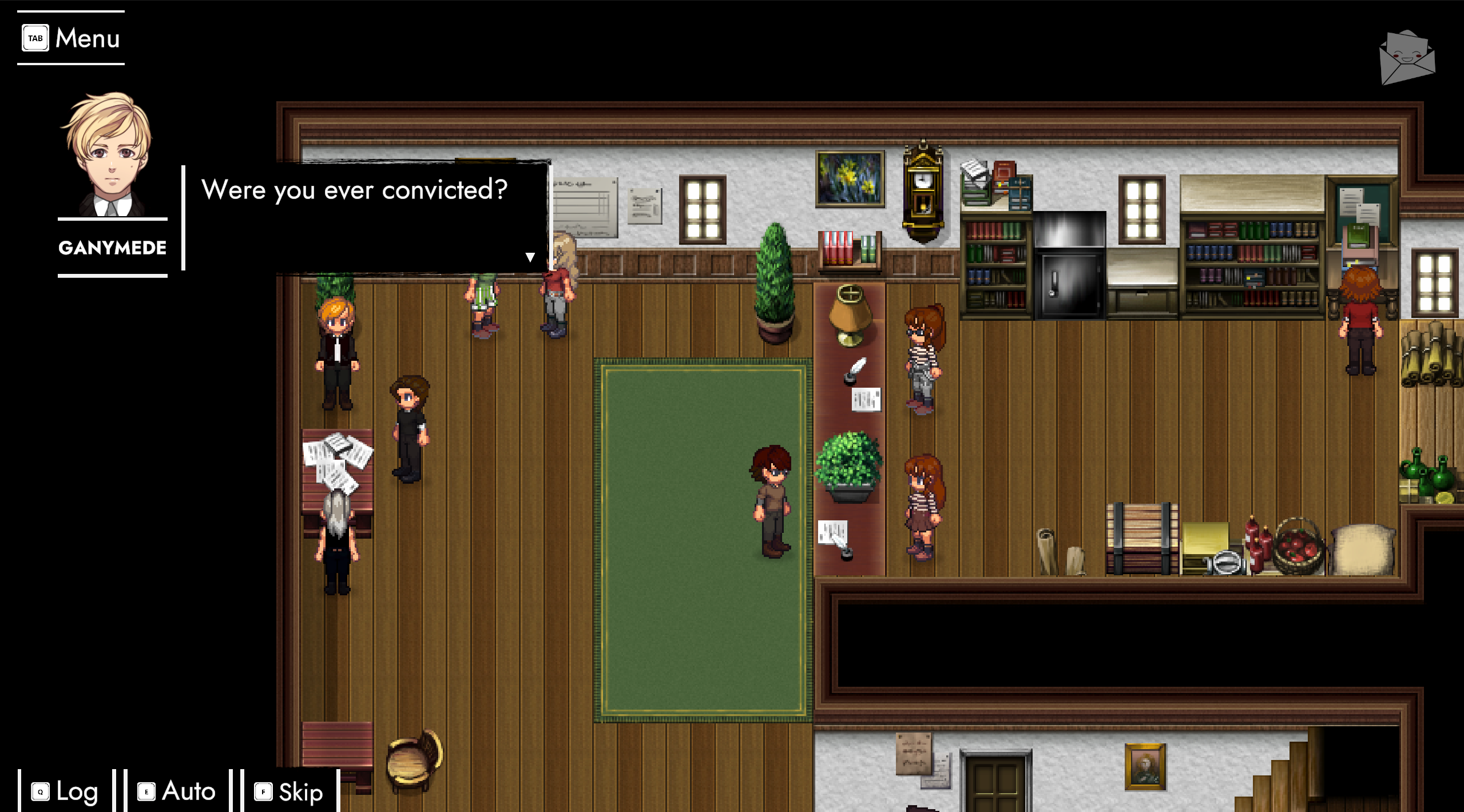
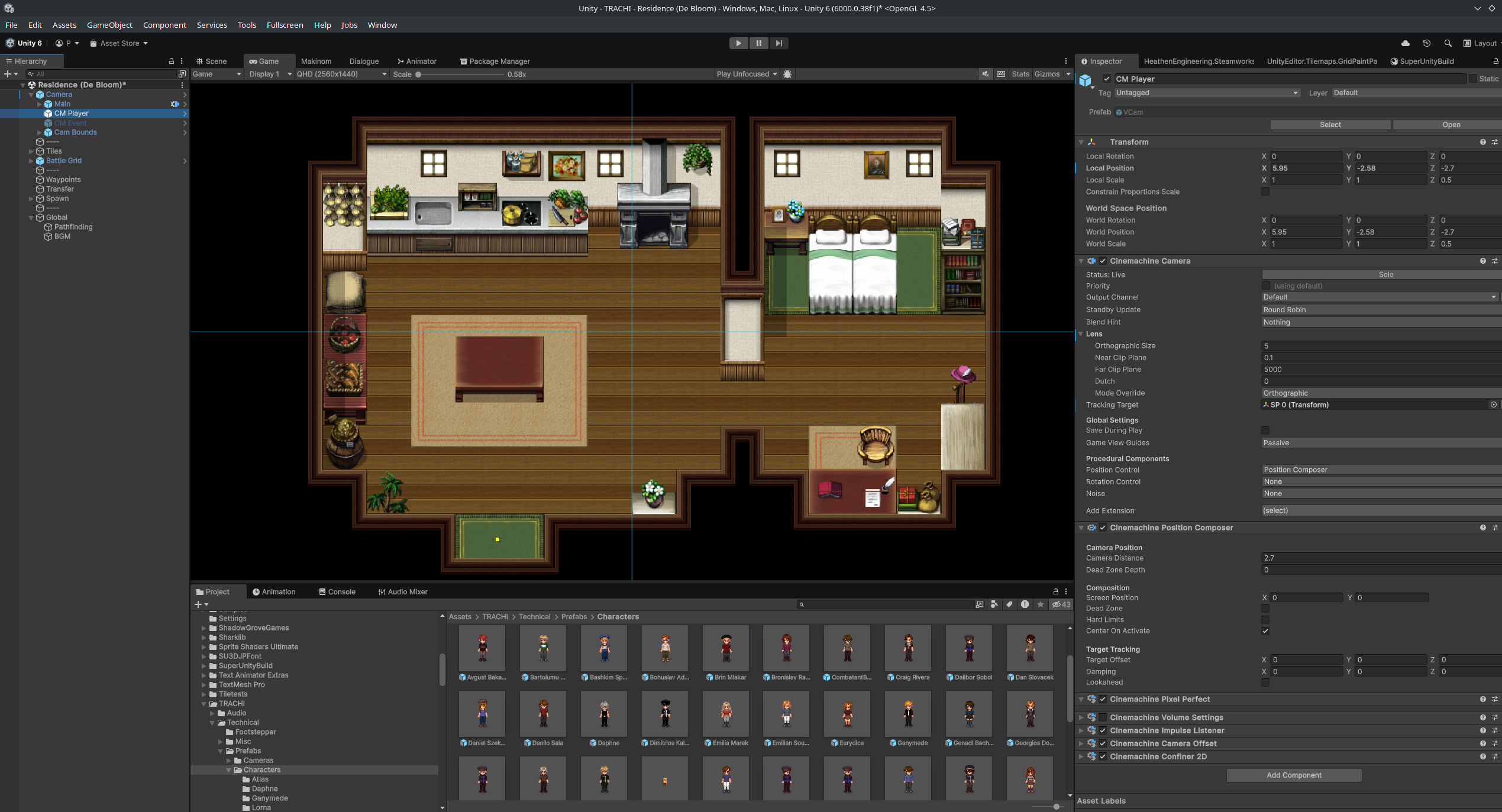
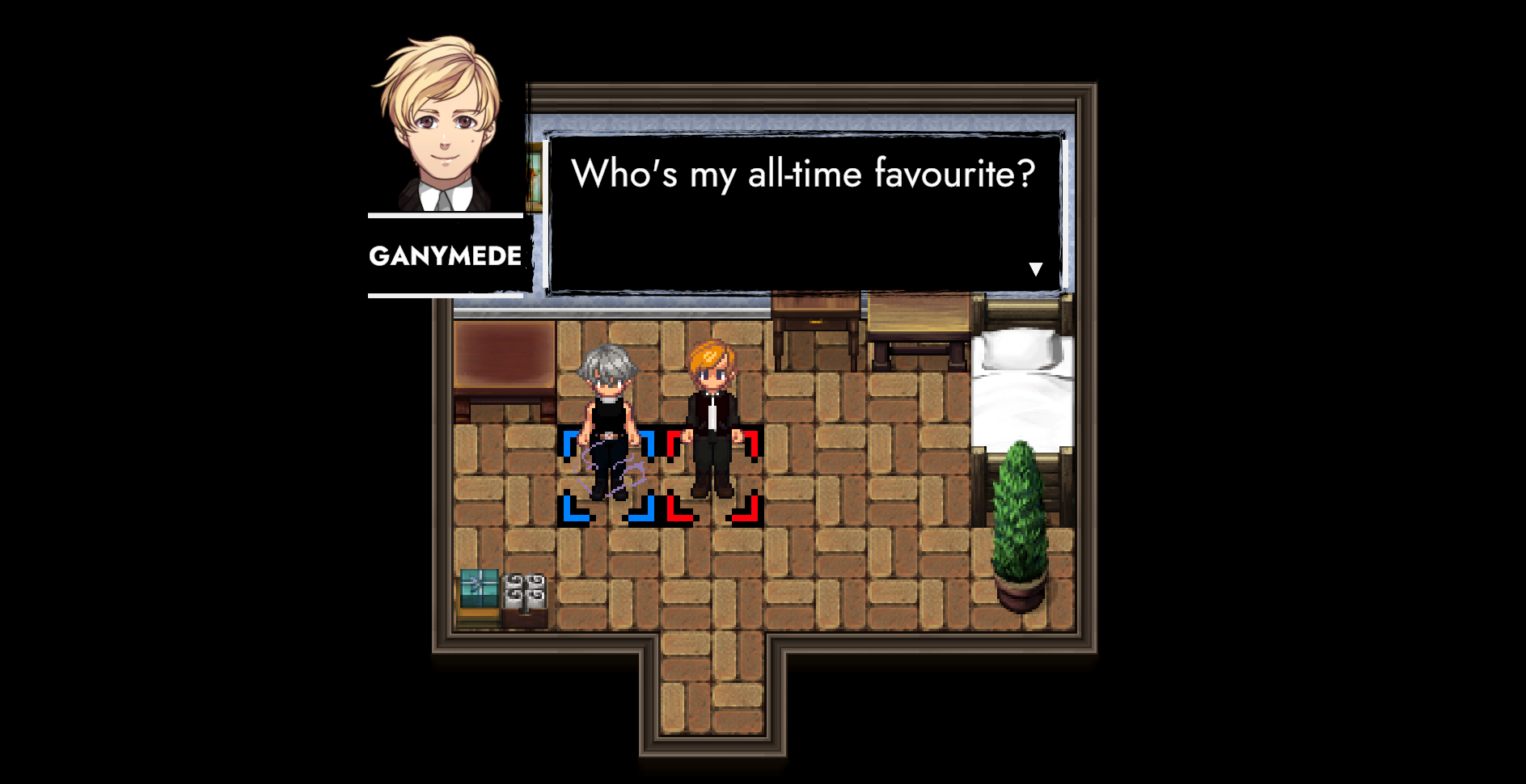
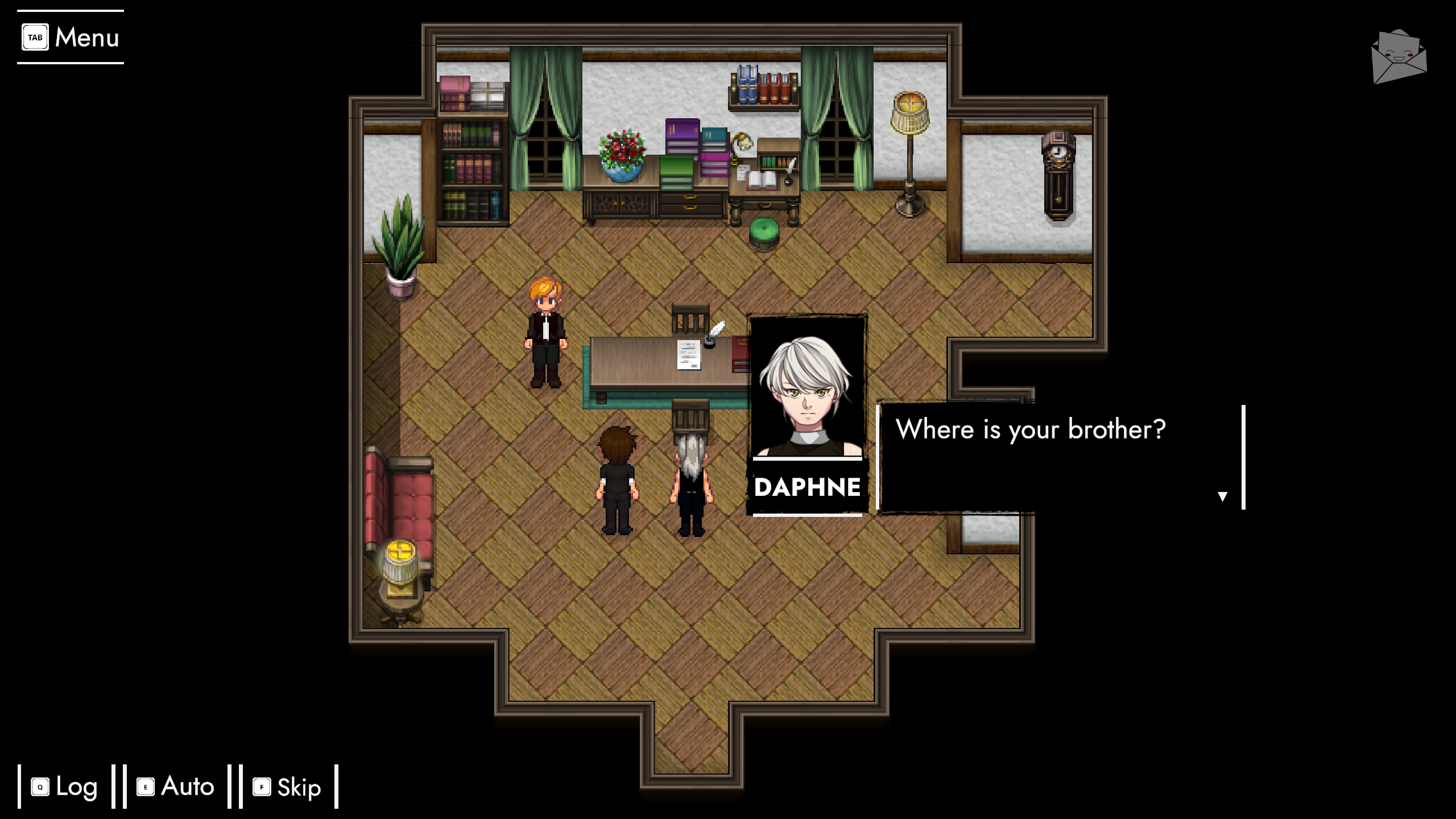
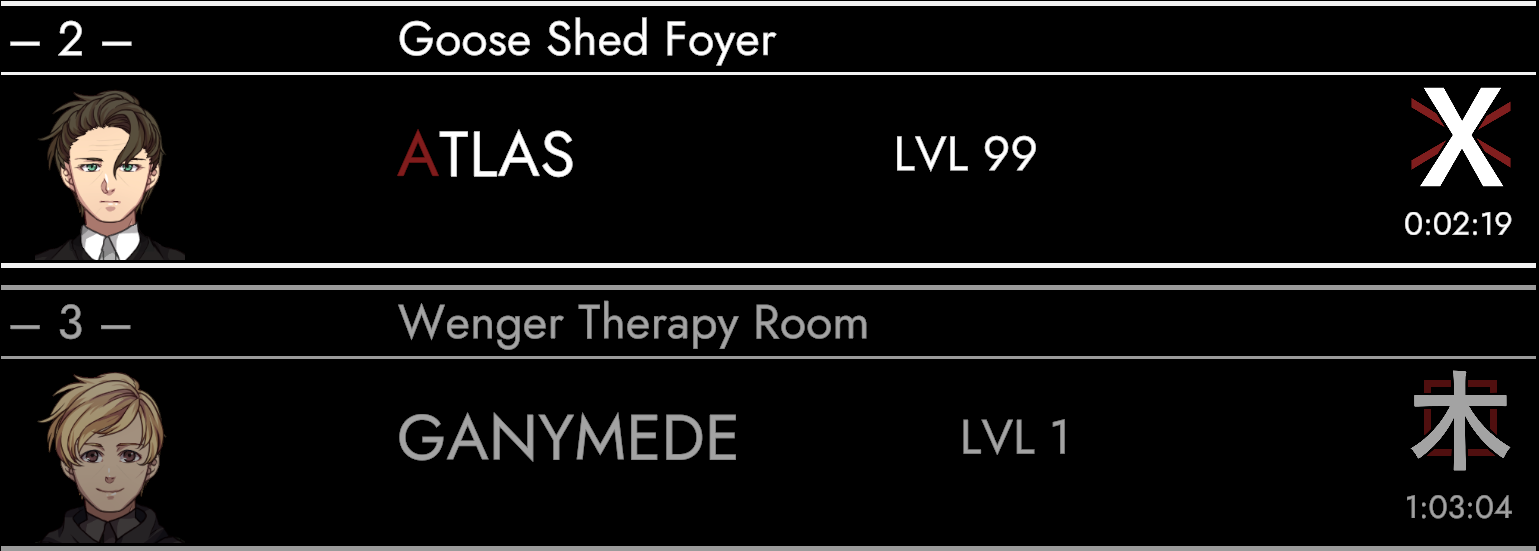
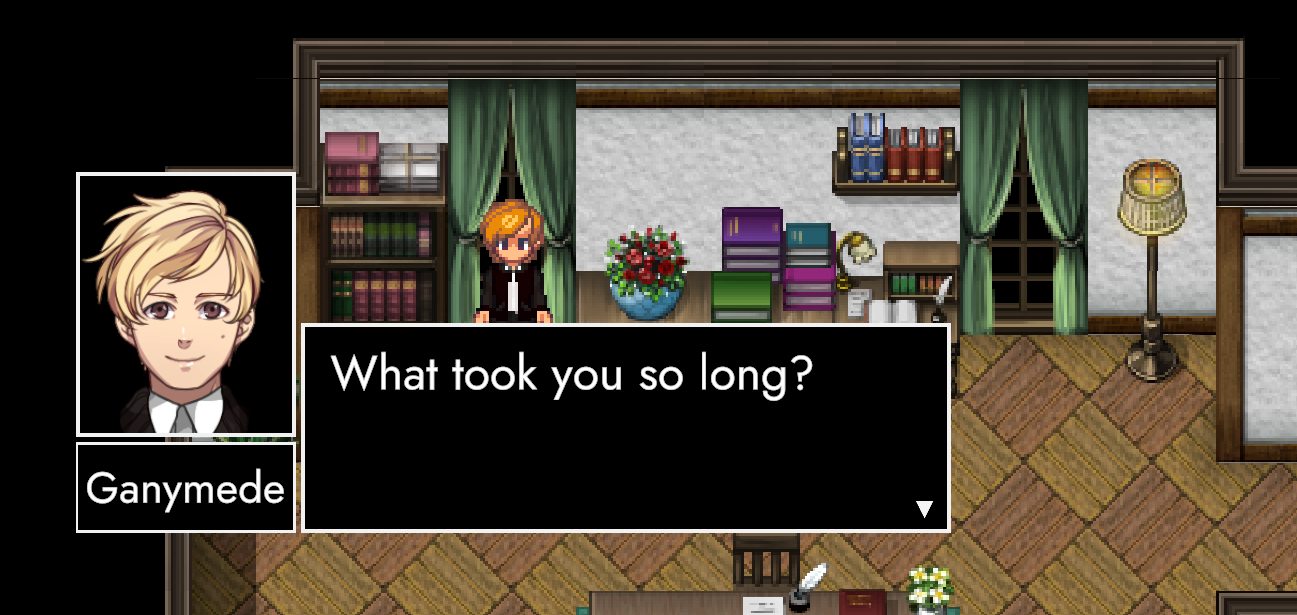
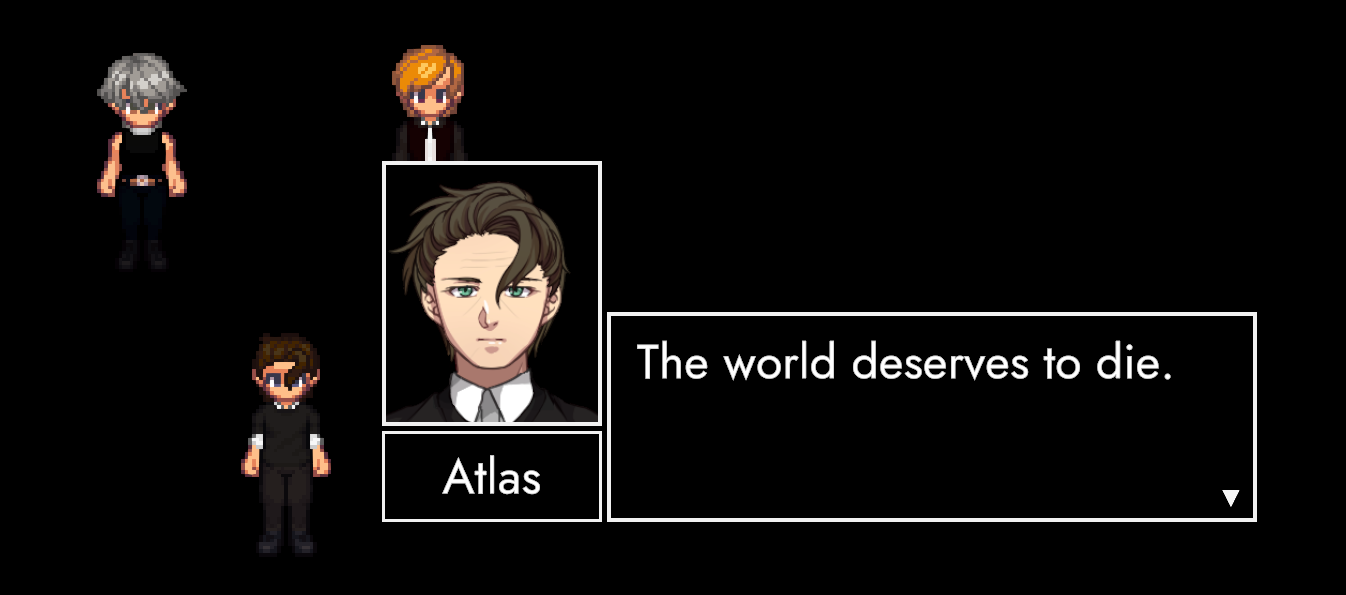
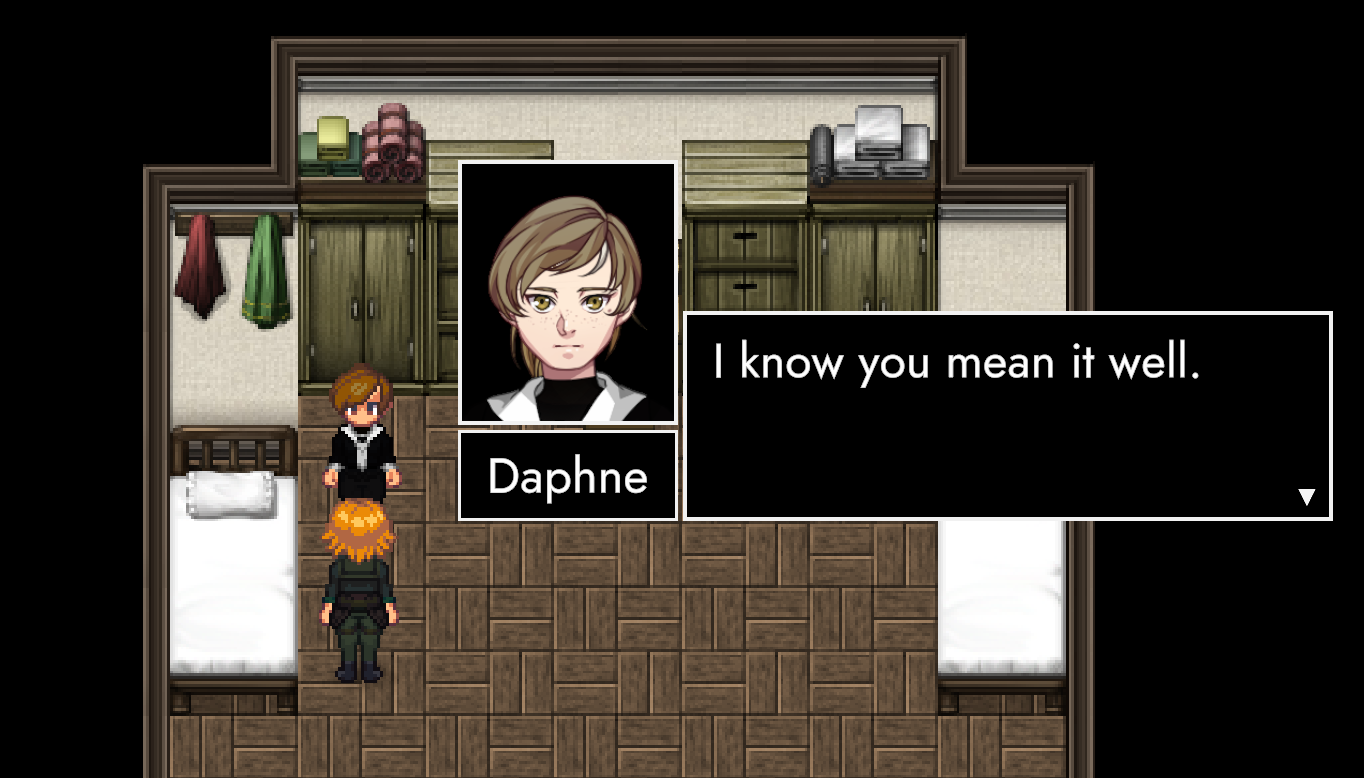
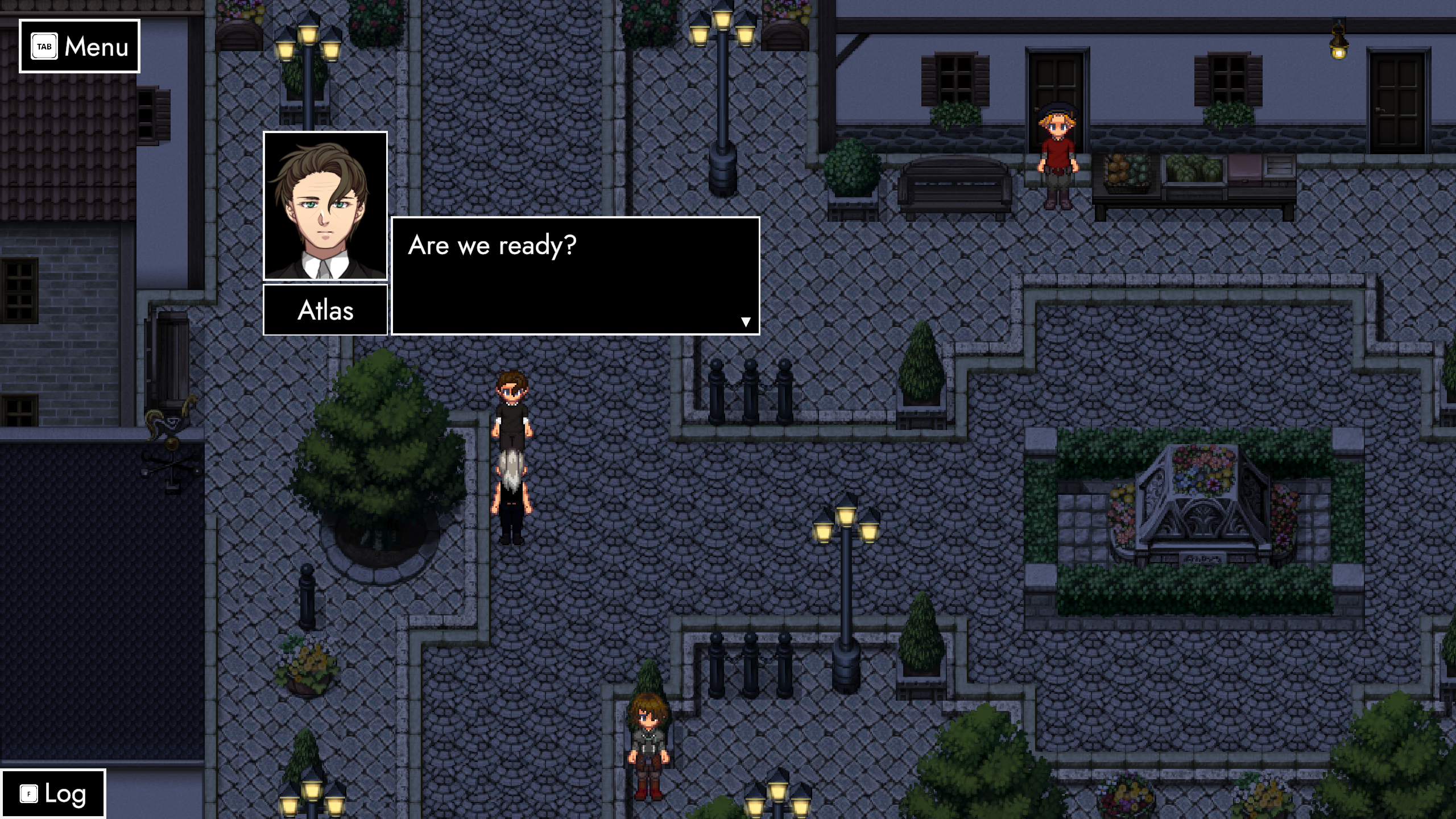
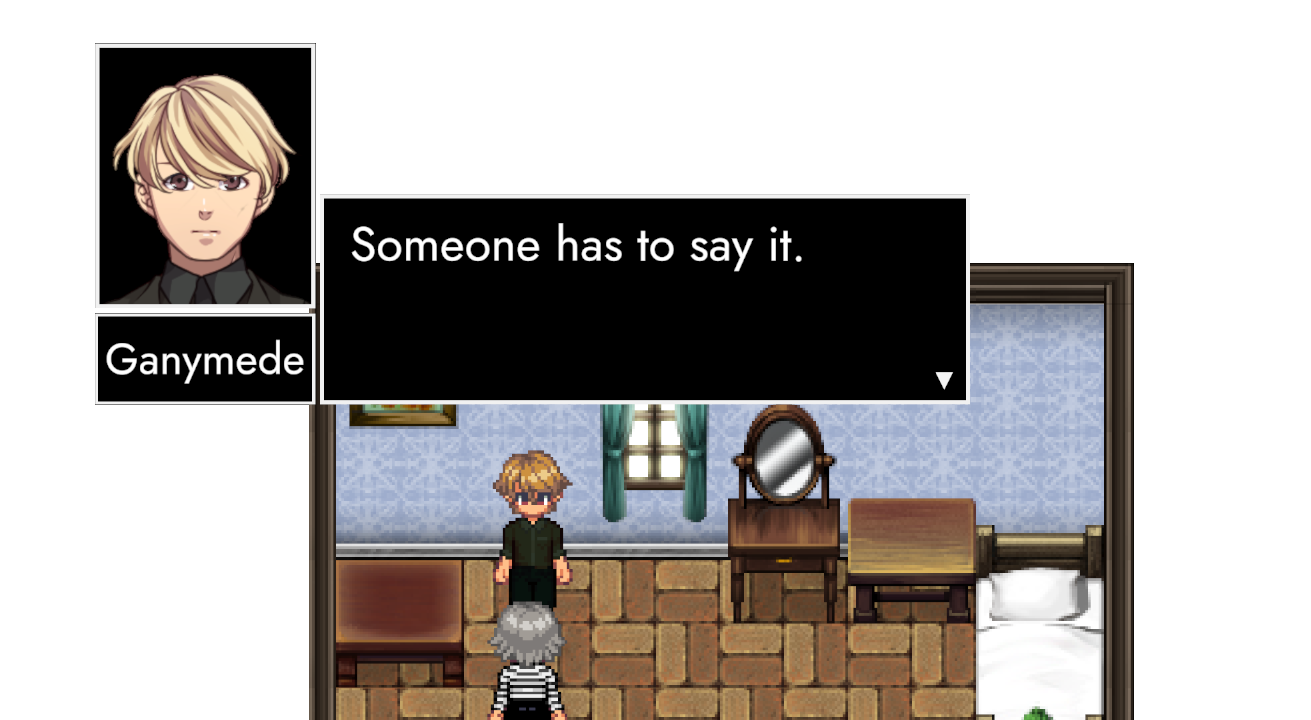
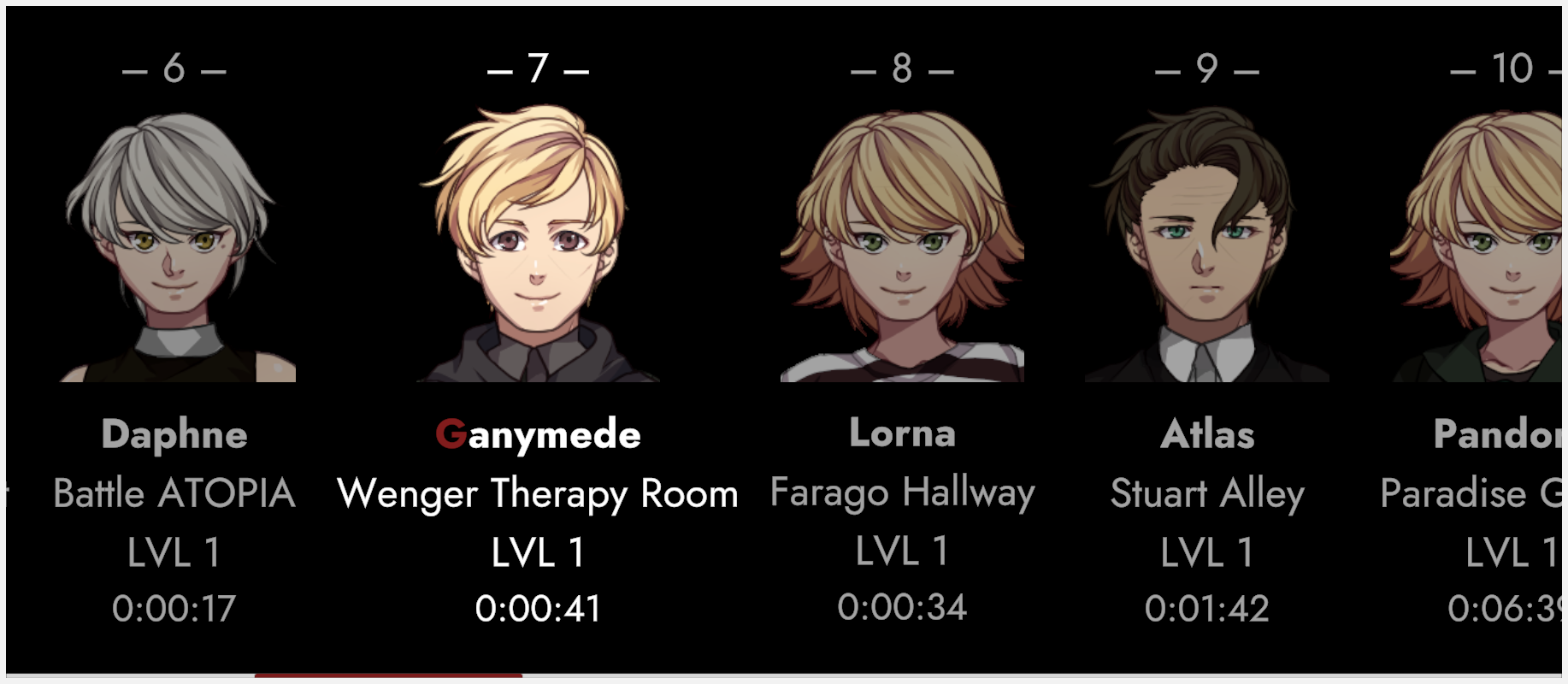
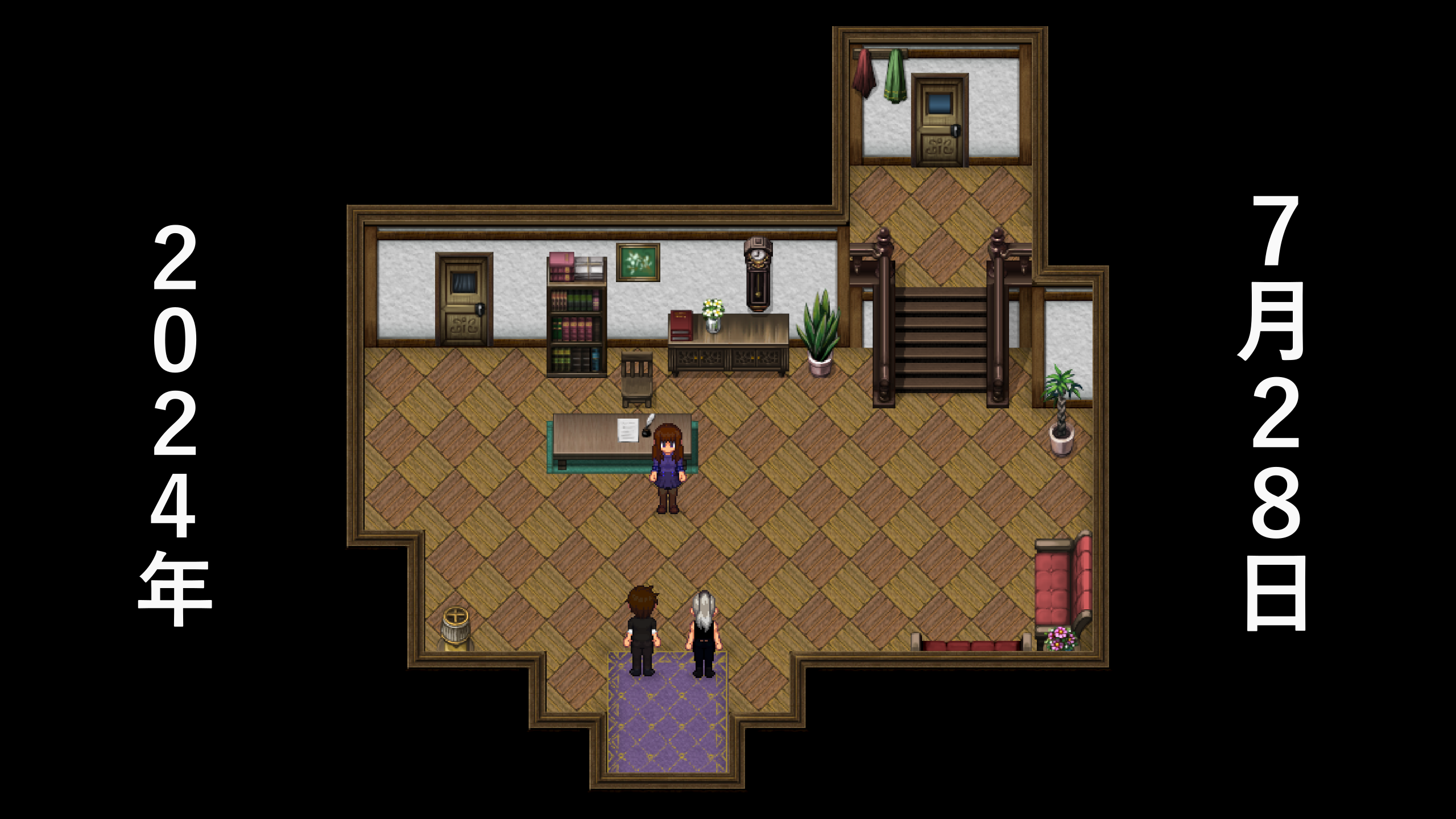
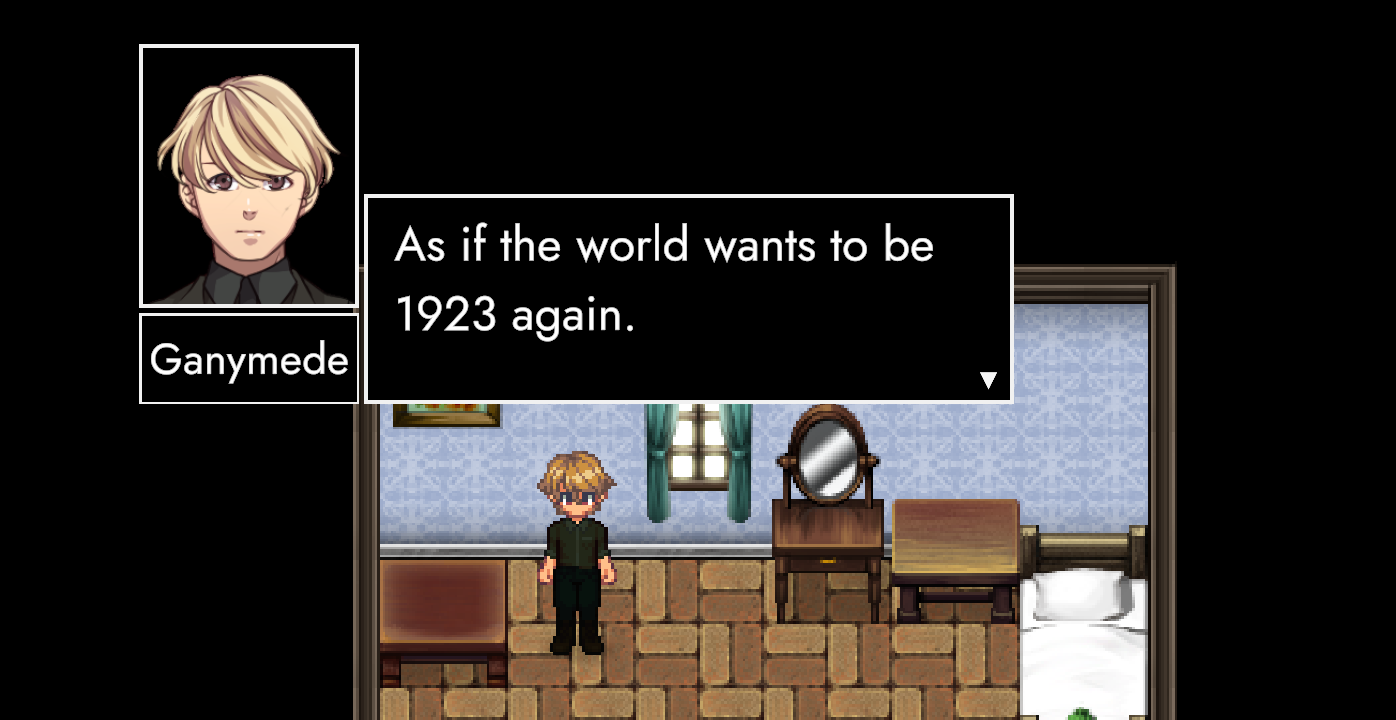
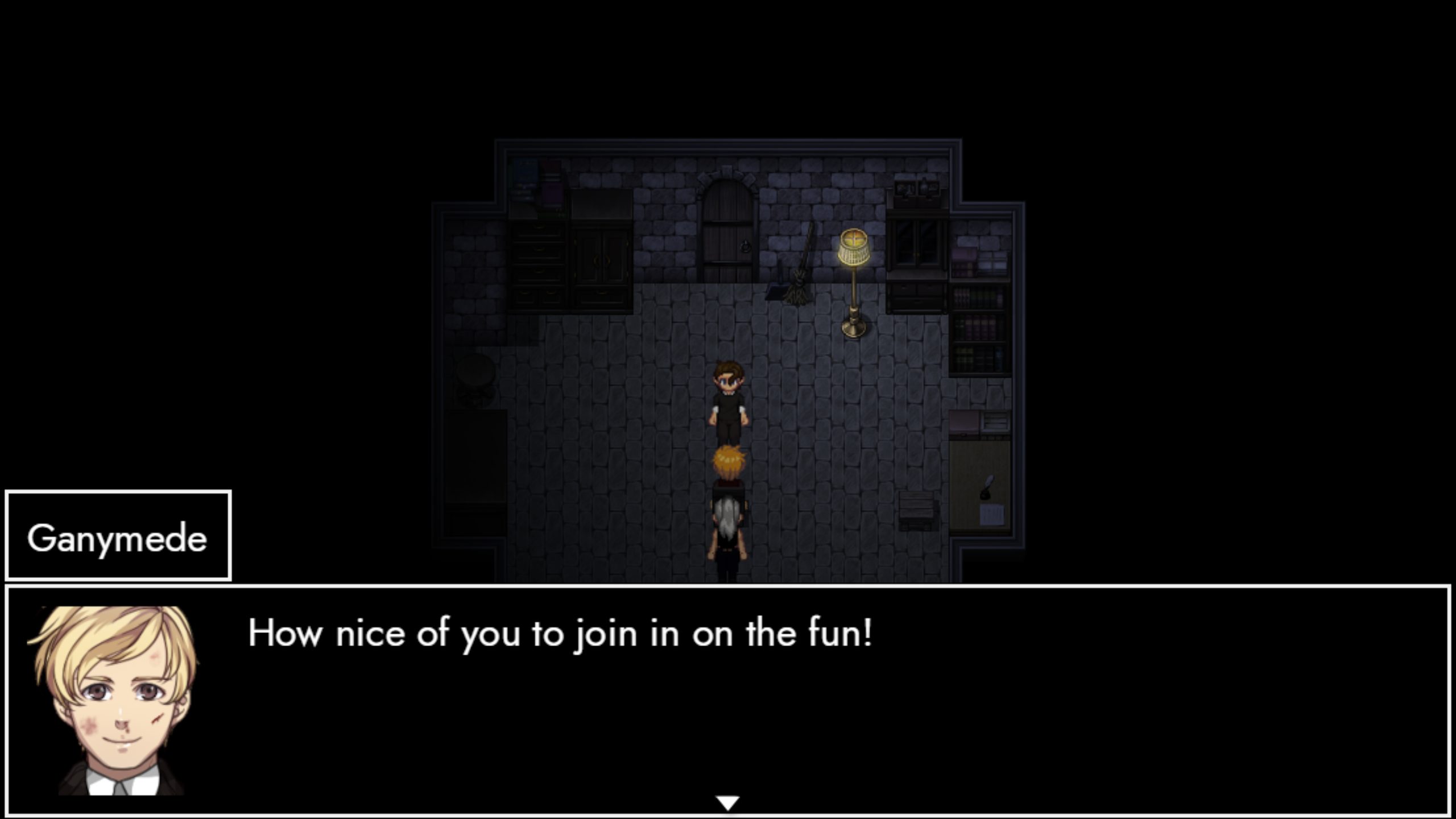
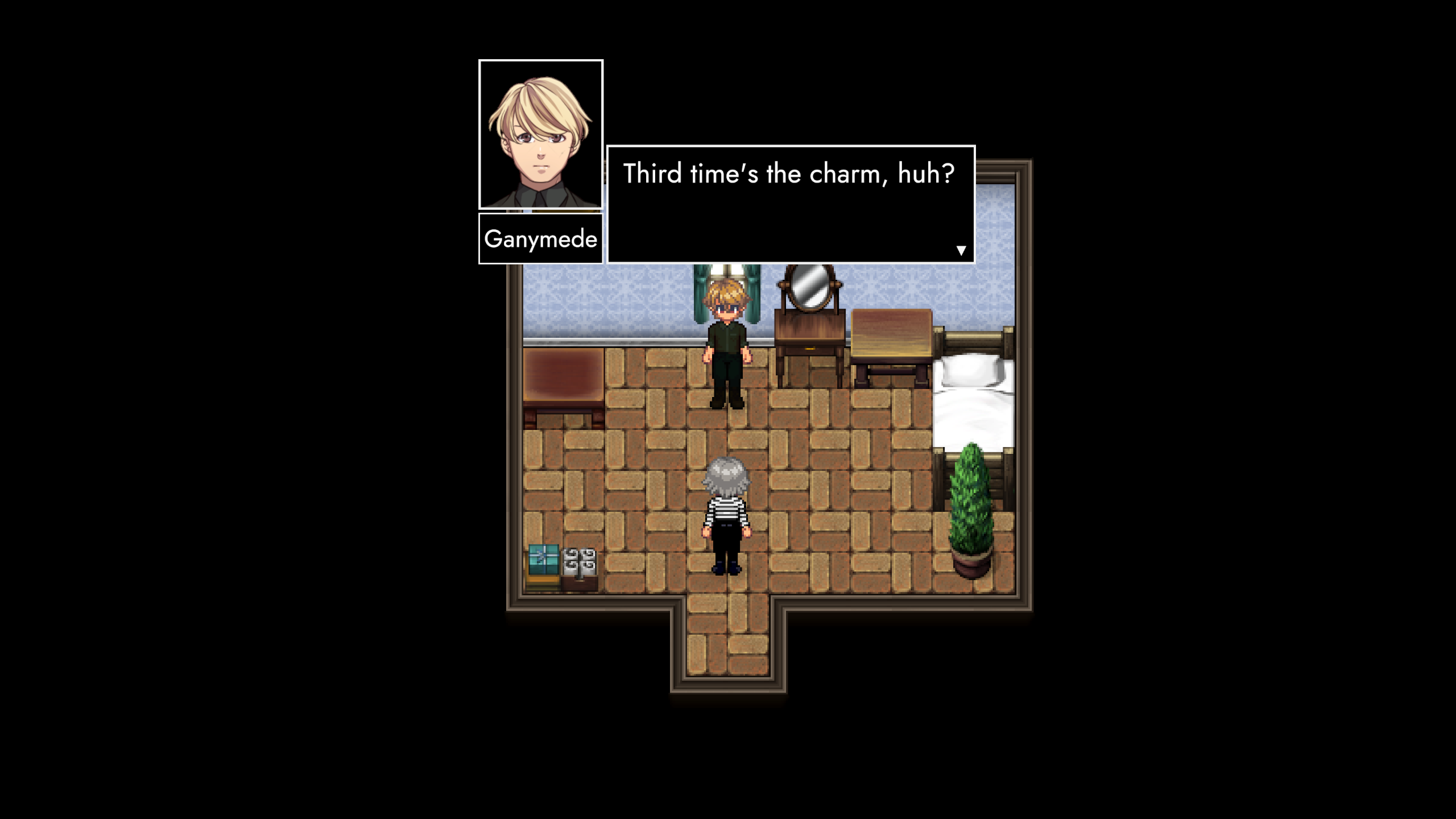
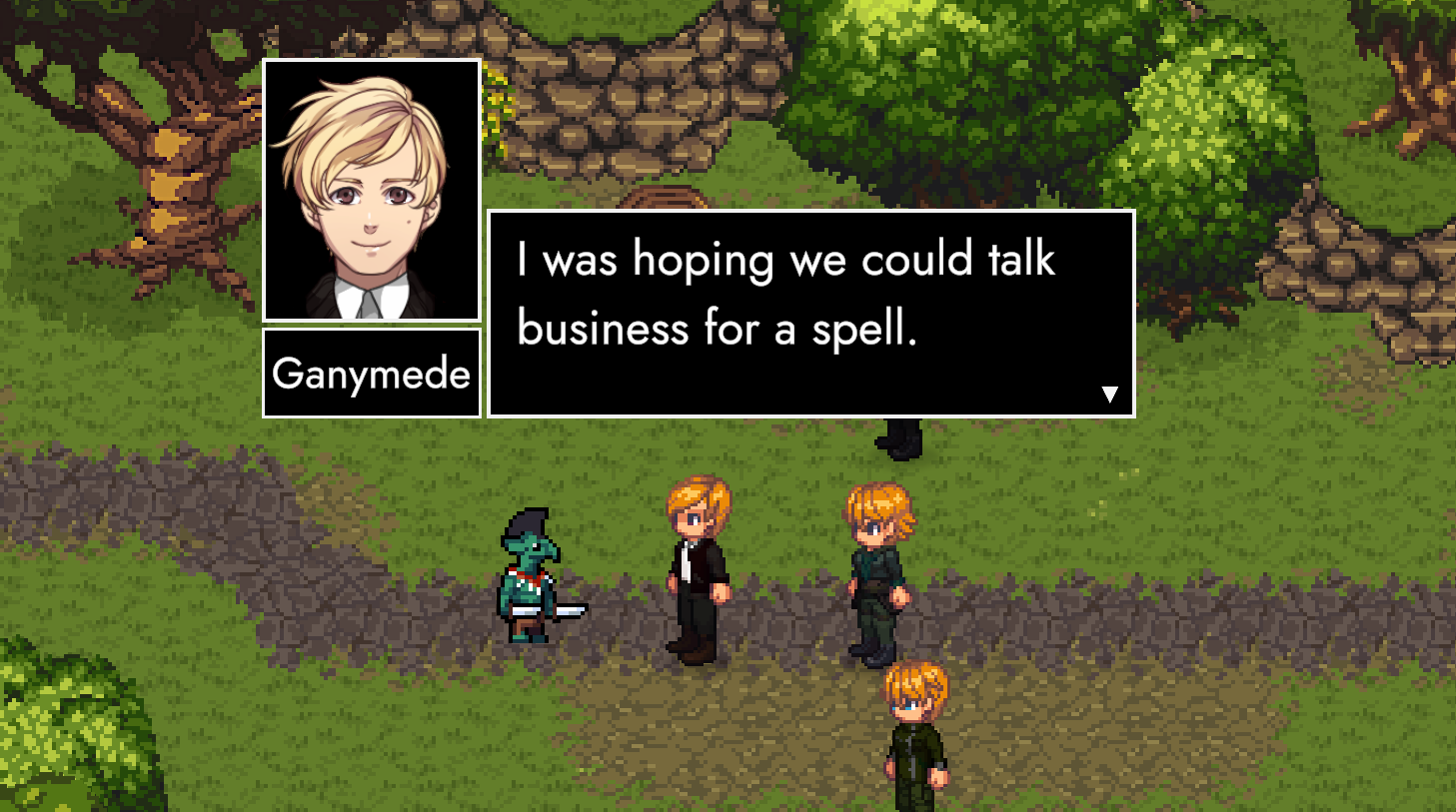
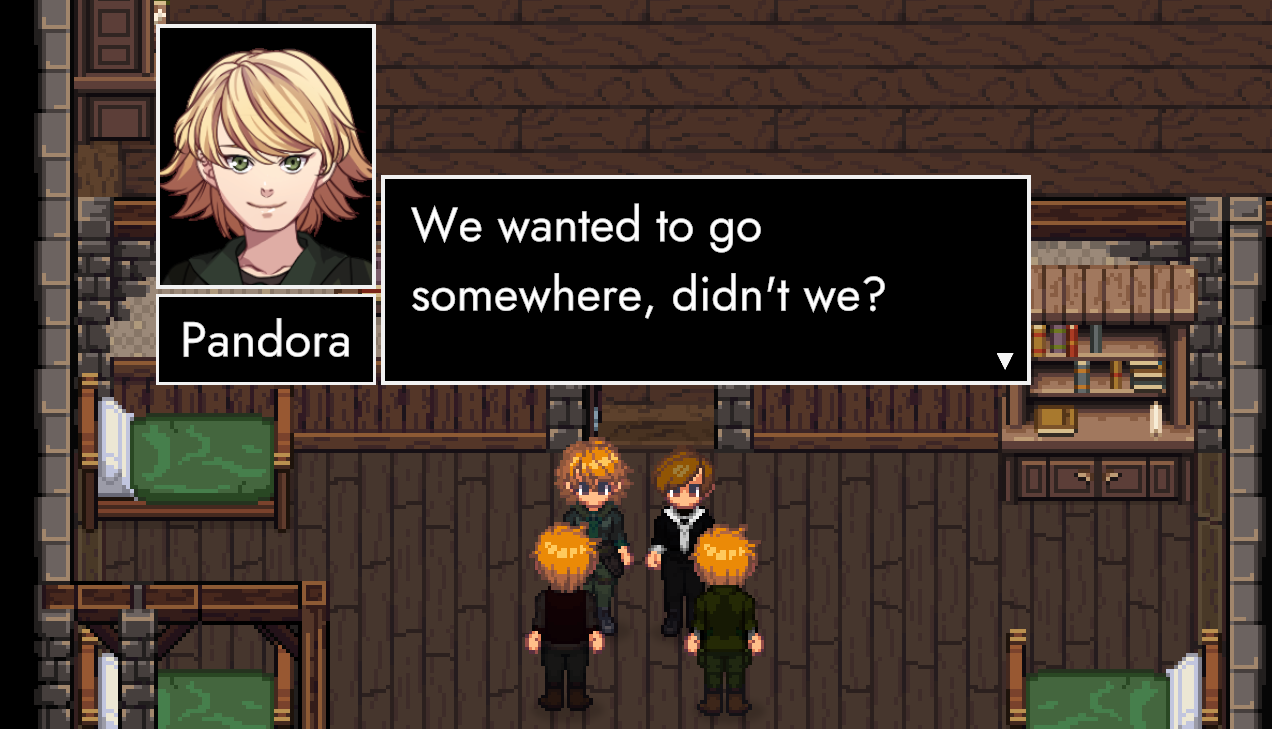
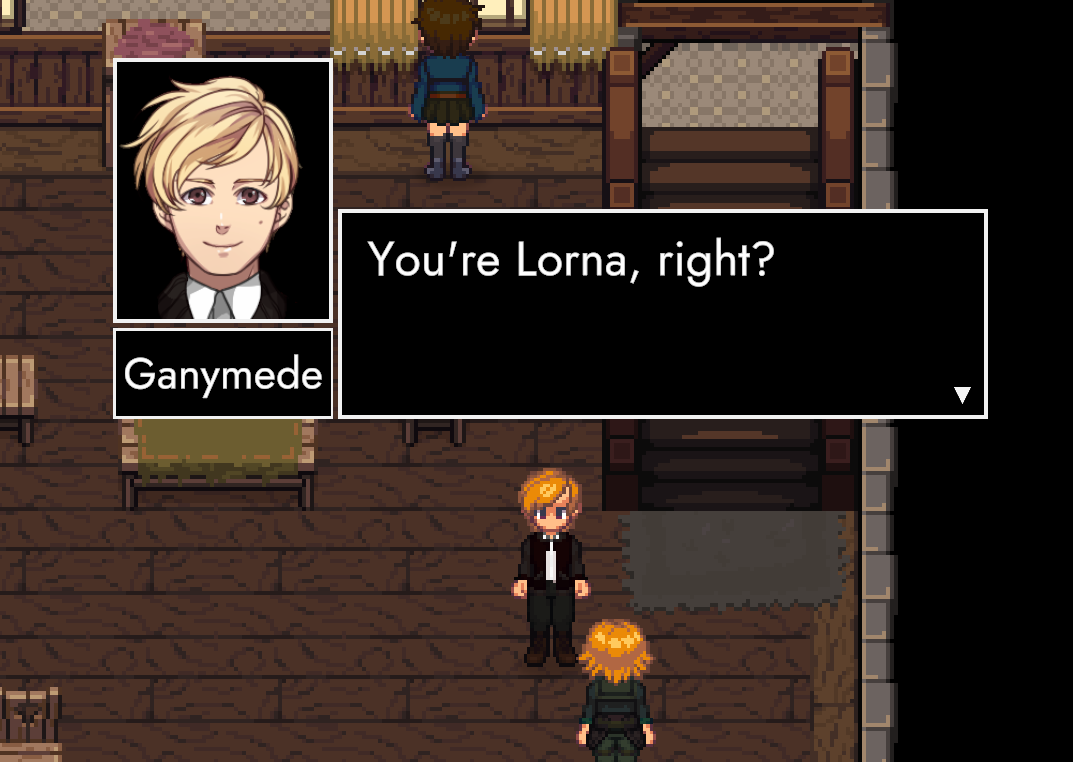
Following Dichotomy, you'll land in Aion 1923. Ganymede arrives at a building called I-4, ready for his briefing. Up on the third floor, Atlas and Daphne are already waiting.
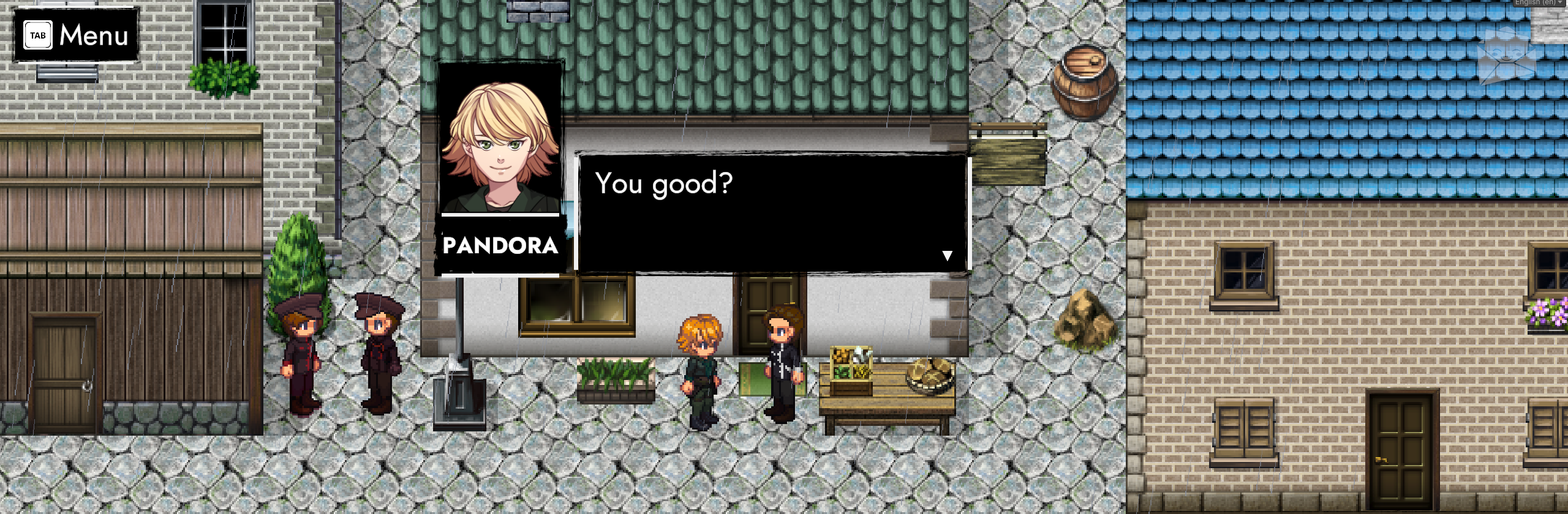
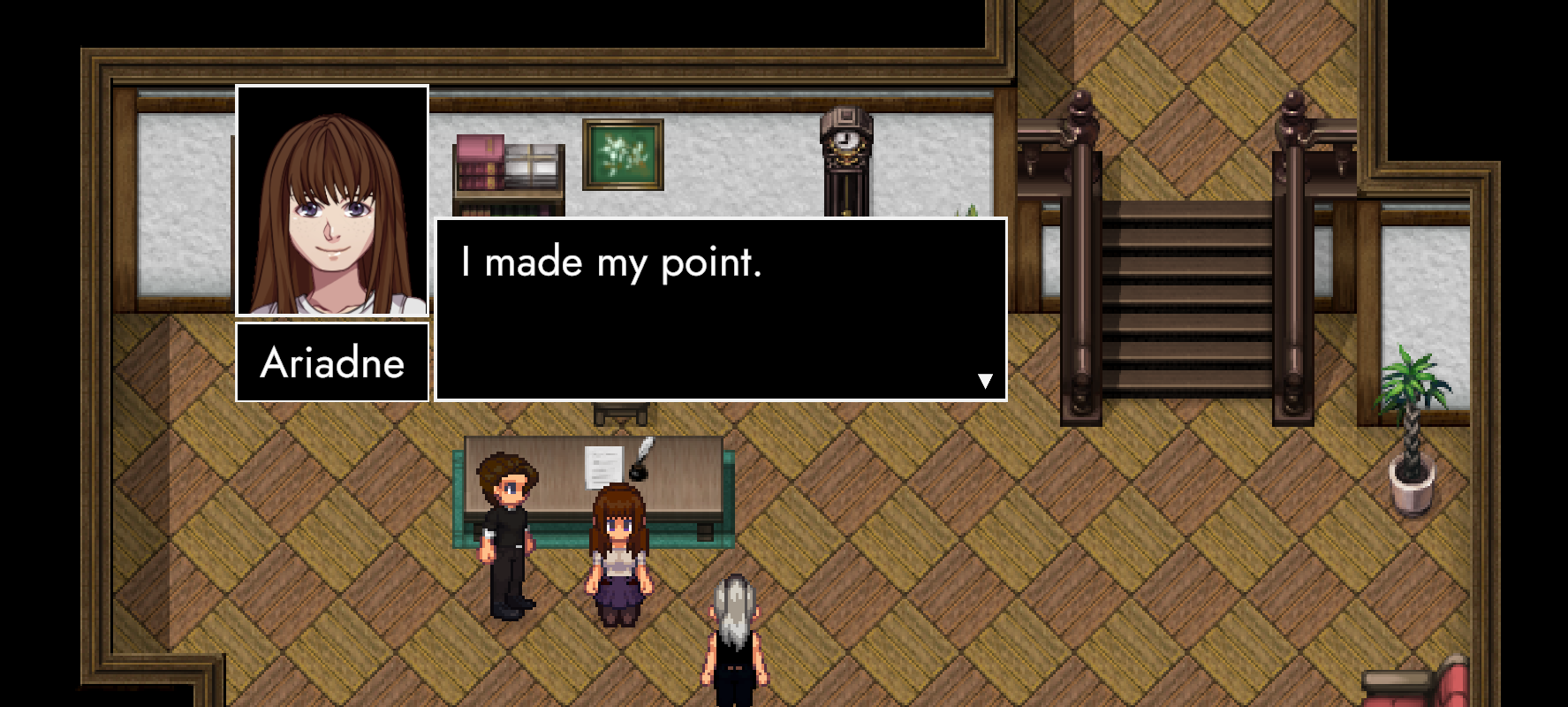
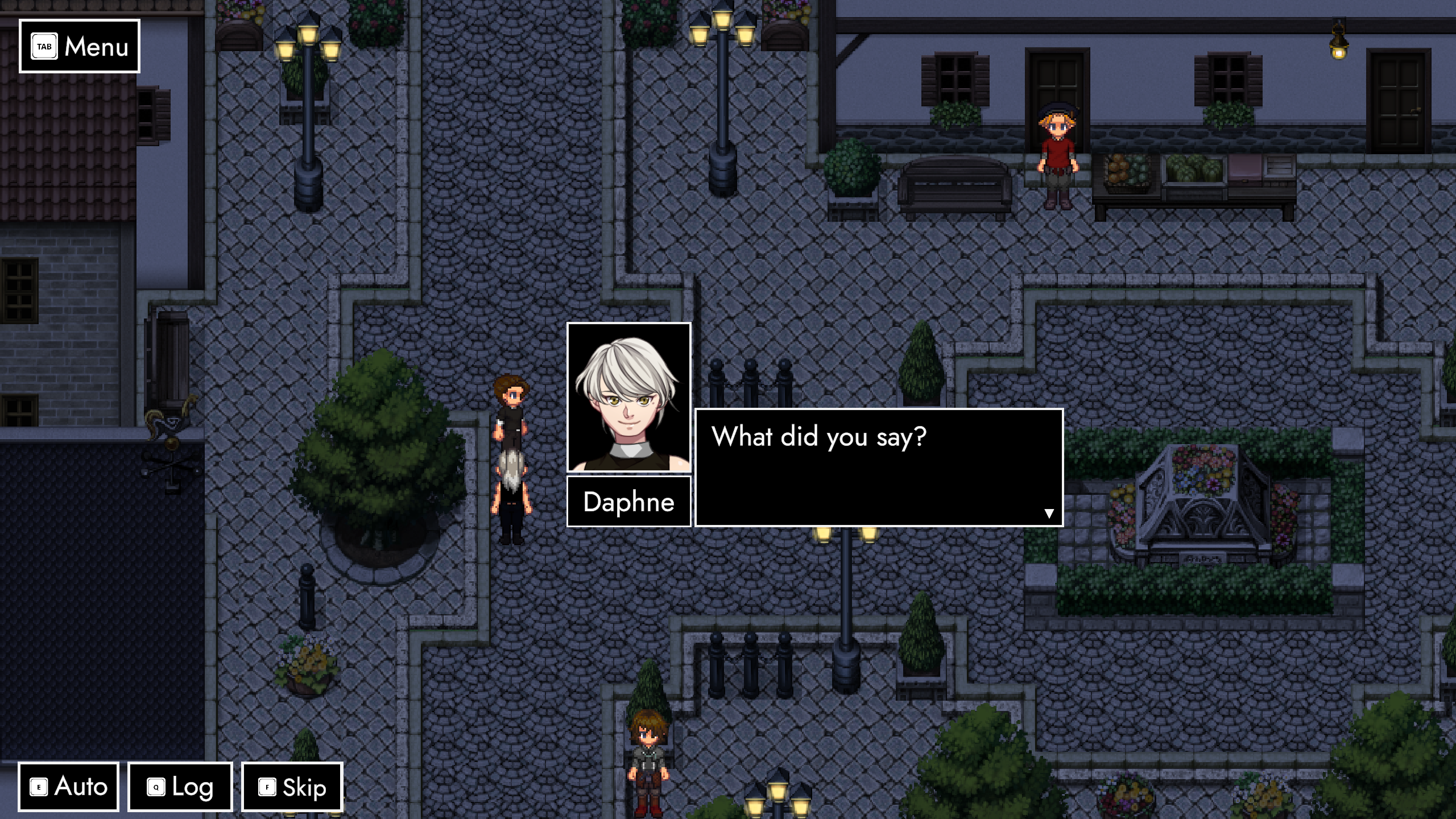
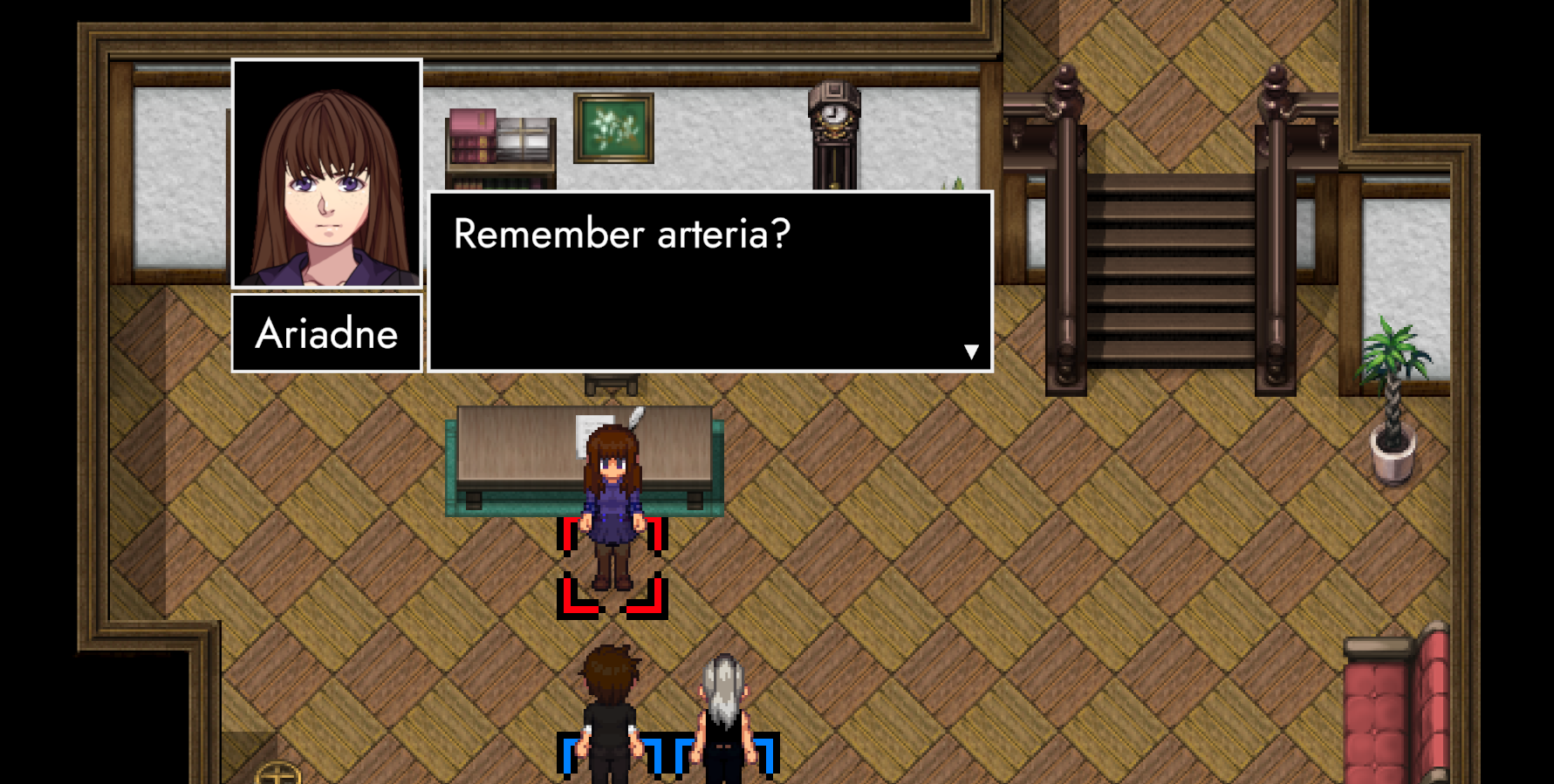
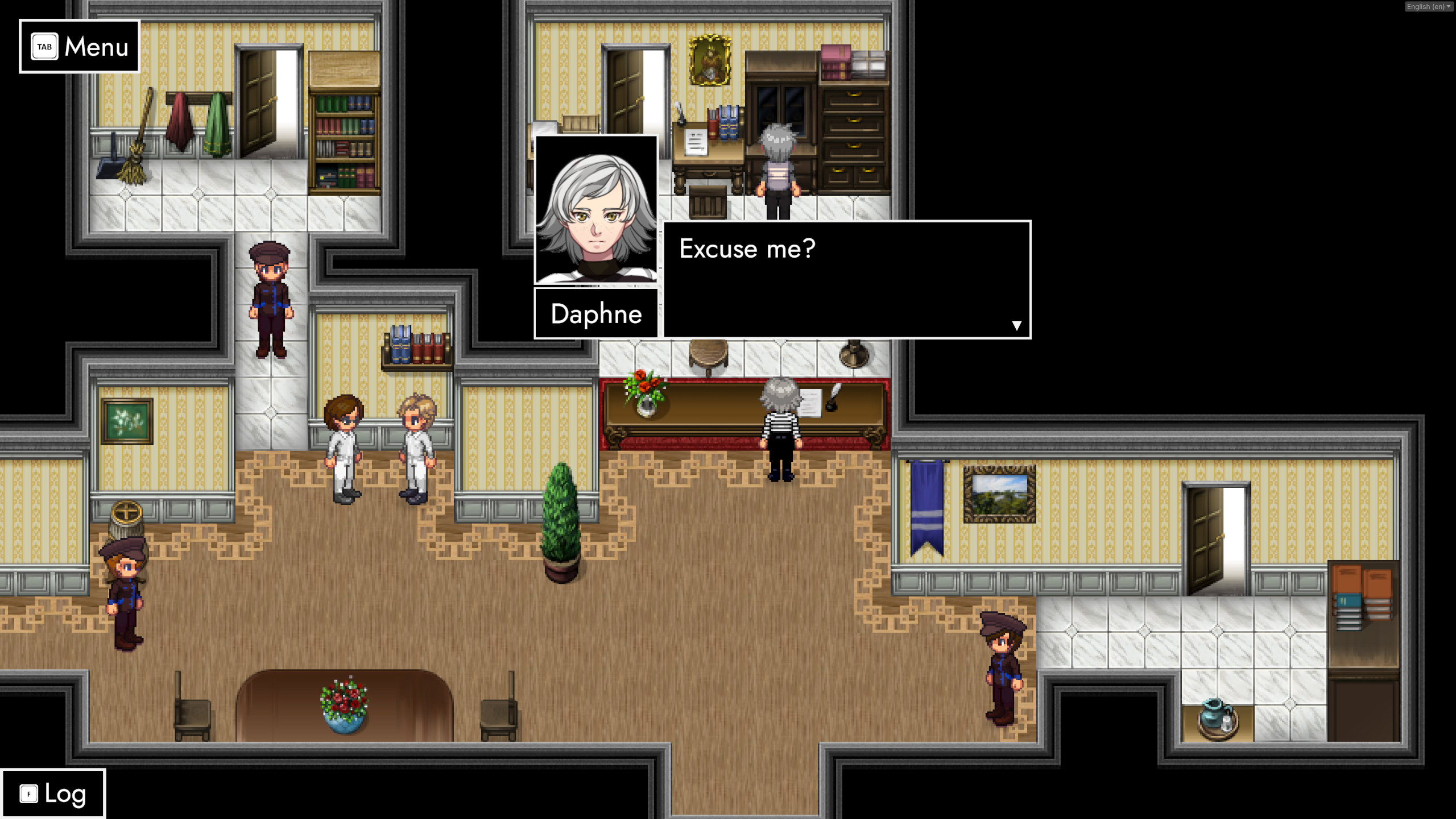
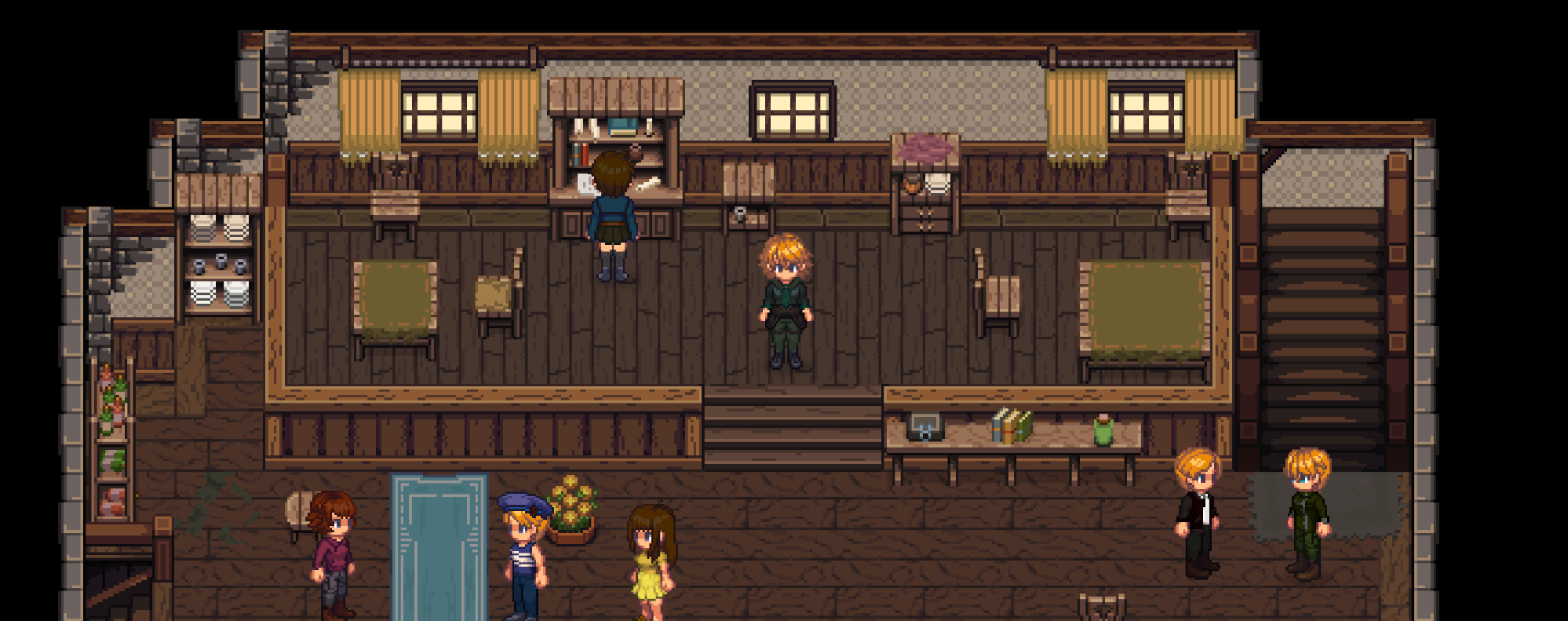
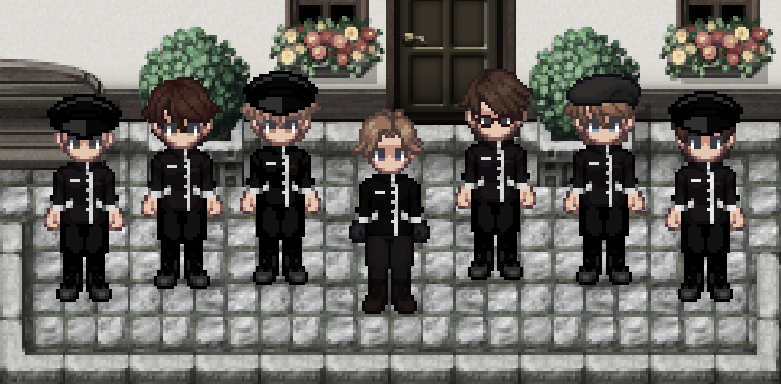
You'll get the broad strokes of operation Arteria, then we jump into InvitAtion. And I use the word 'jump' deliberately: The first segment starts at the Inn (right next to the Customs Office). As Daphne steps outside, we see a squad of Guardsmen marching by.
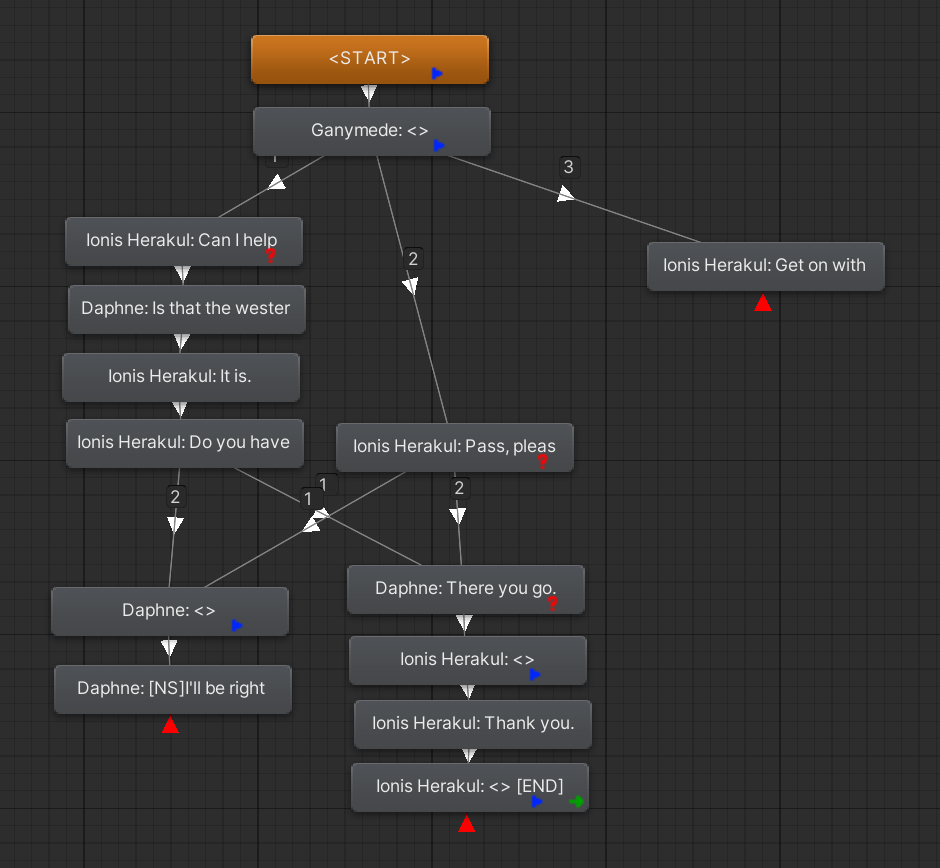
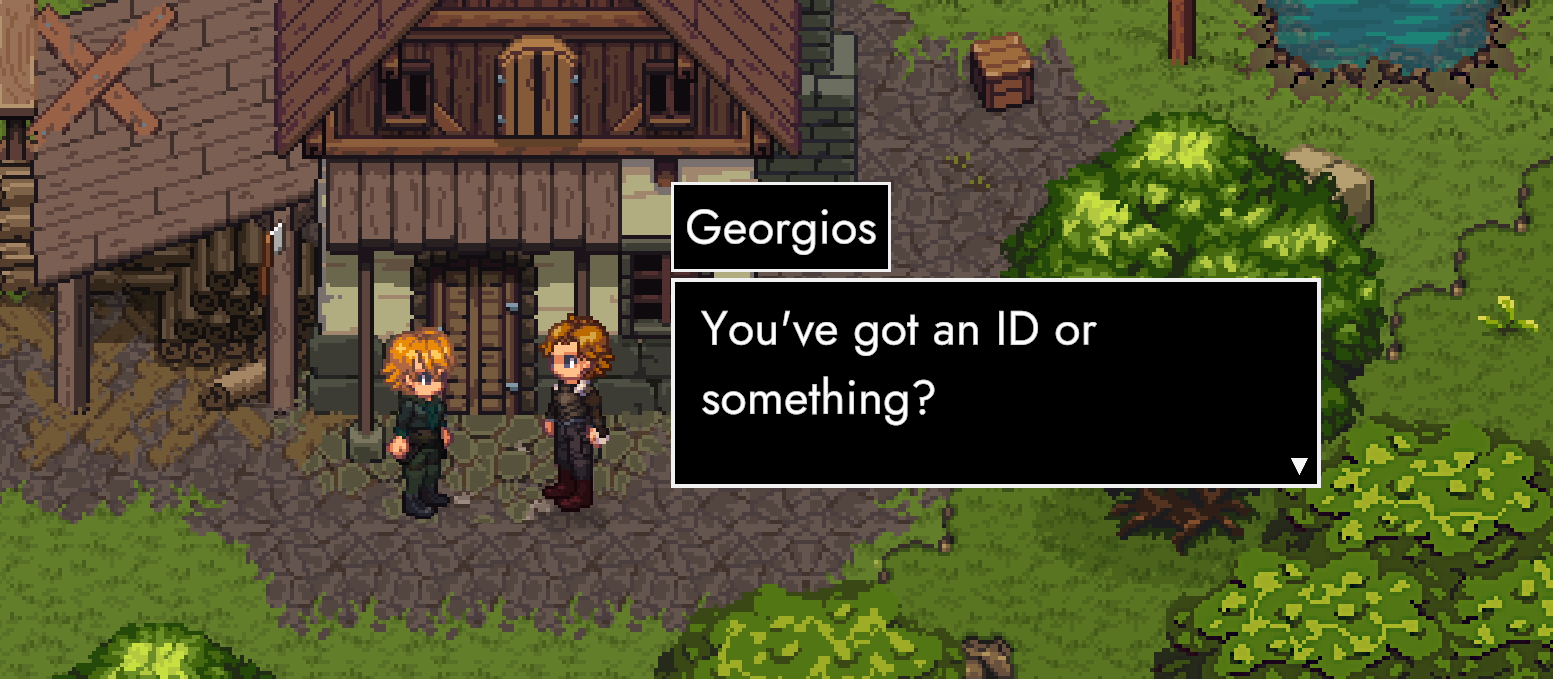
In the old days, you'd head to TRG Outpost and talk to our friend Samuil. Since he'll ask you for a visa, you might as well grab that on your way. Having mastered the ways of forms and formulations, we proudly enter the barracks, only to find out that our contact, Lieutenant Lujo Kozar, is visibly absent.
Just like the Guardsmen marching by, he went to investigate a nearby Storage. Since you already know that (or at least you know now), you could head there straight away next time. After all, the dance with the Trachian bureaucracy is, barring some in-game rewards, largely inconsequential.
The raid on the Storage, on the other hand, has a lasting impact on the world. We'll henceforth call that type of task a Main Task.
World-State
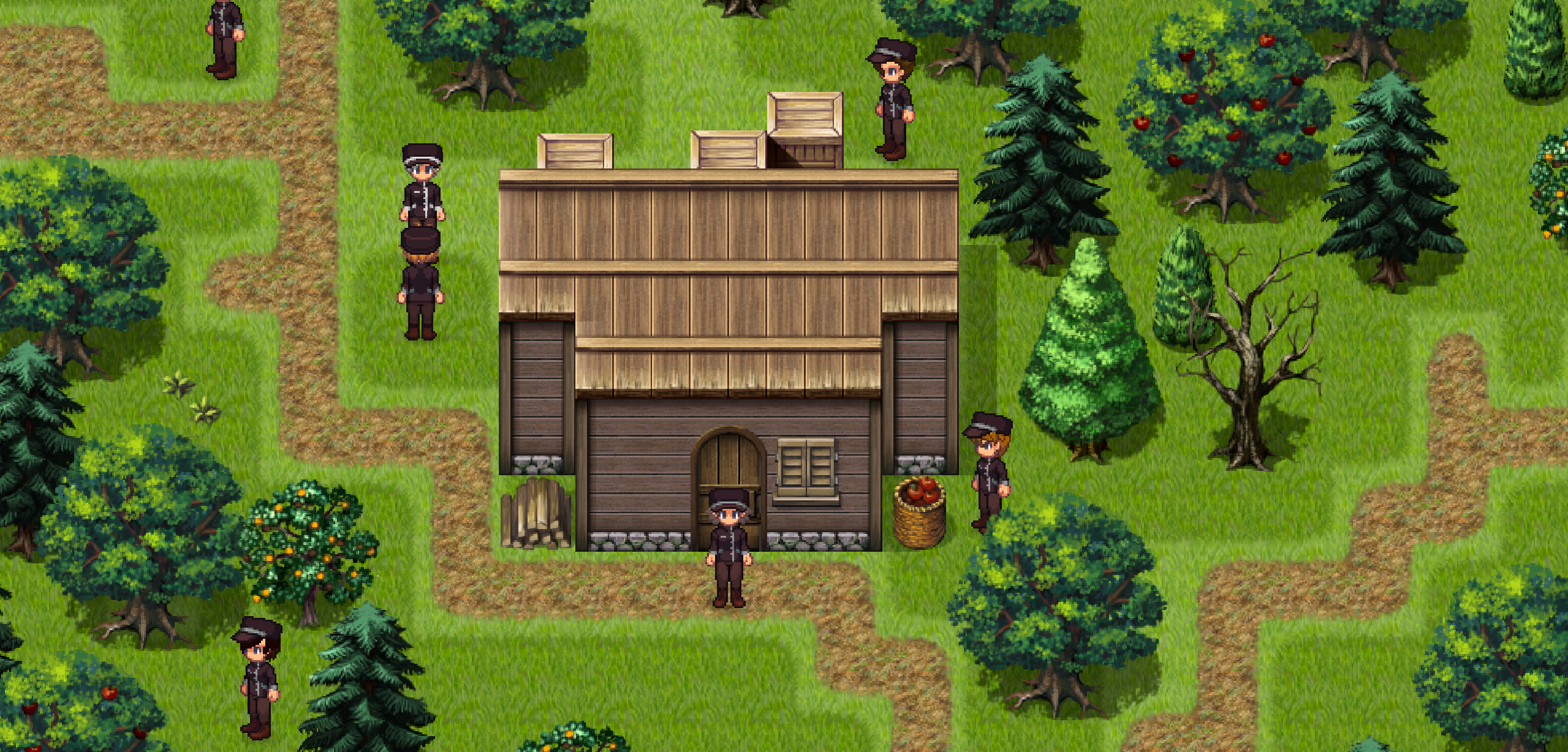
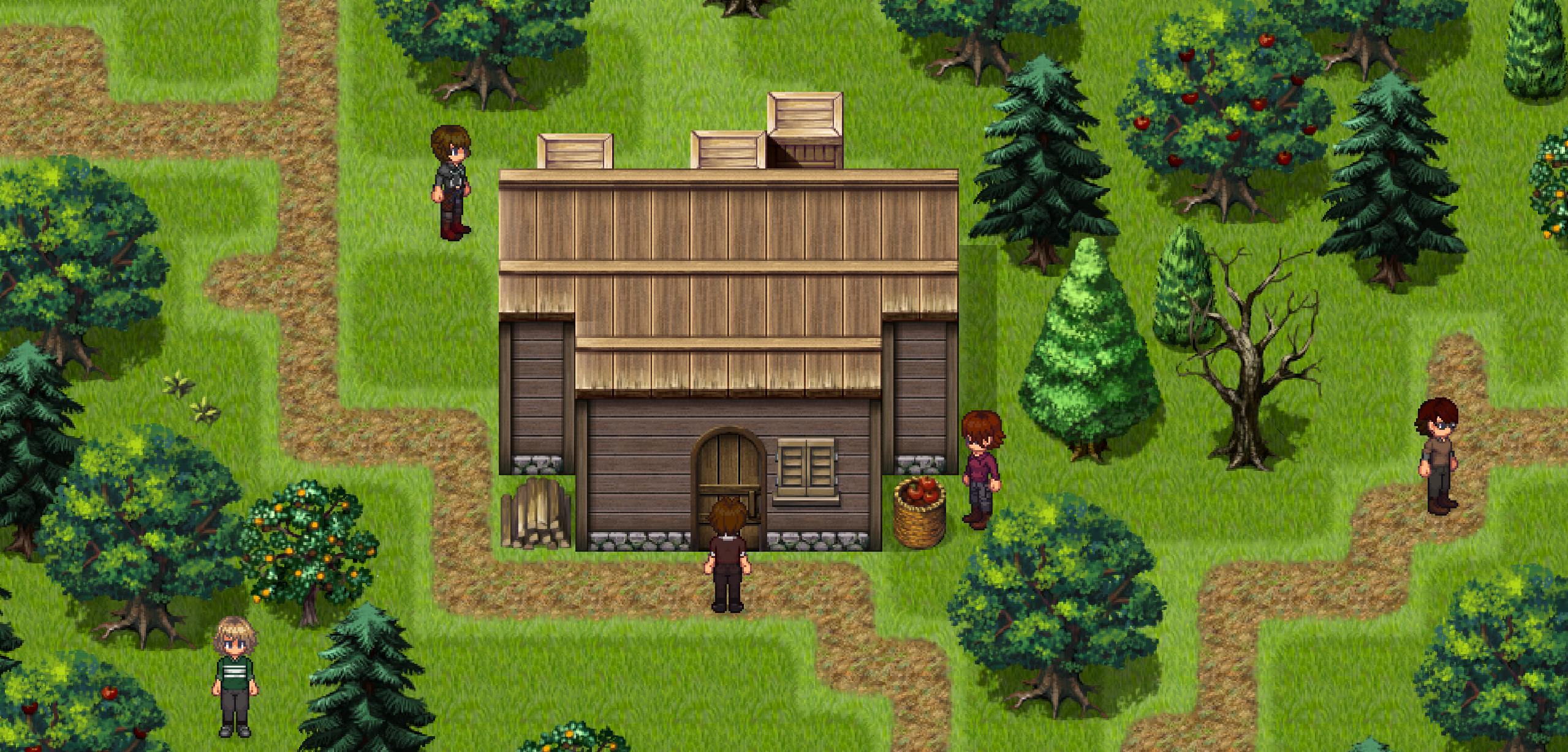
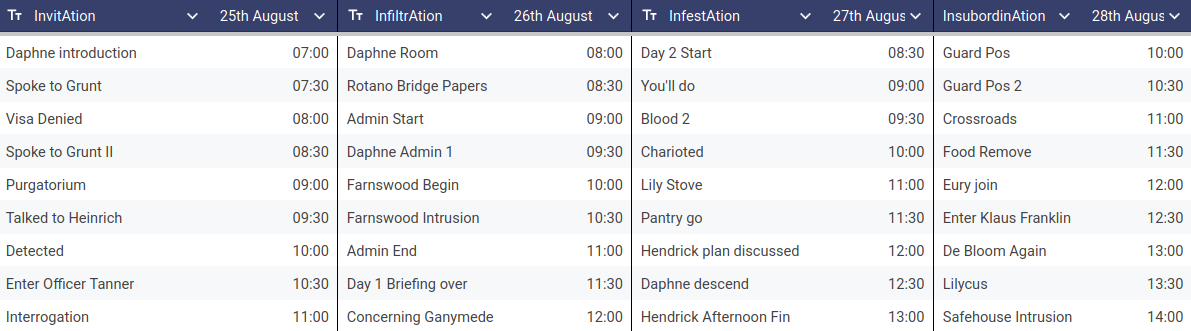
At any given time, there's one (and only one) Main Tasks active. The reason for that is that Main Tasks carry timestamps, proclaiming "it's now [someTime] on [someDate]".
From the raid on the Storage, the negotiations in Neochori, all the way to the bust-out and departure, they are "moments" that turn the present into the past. They define the position of NPCs (like Kozar) and the set of available side-quests (like the hunt for a visa).
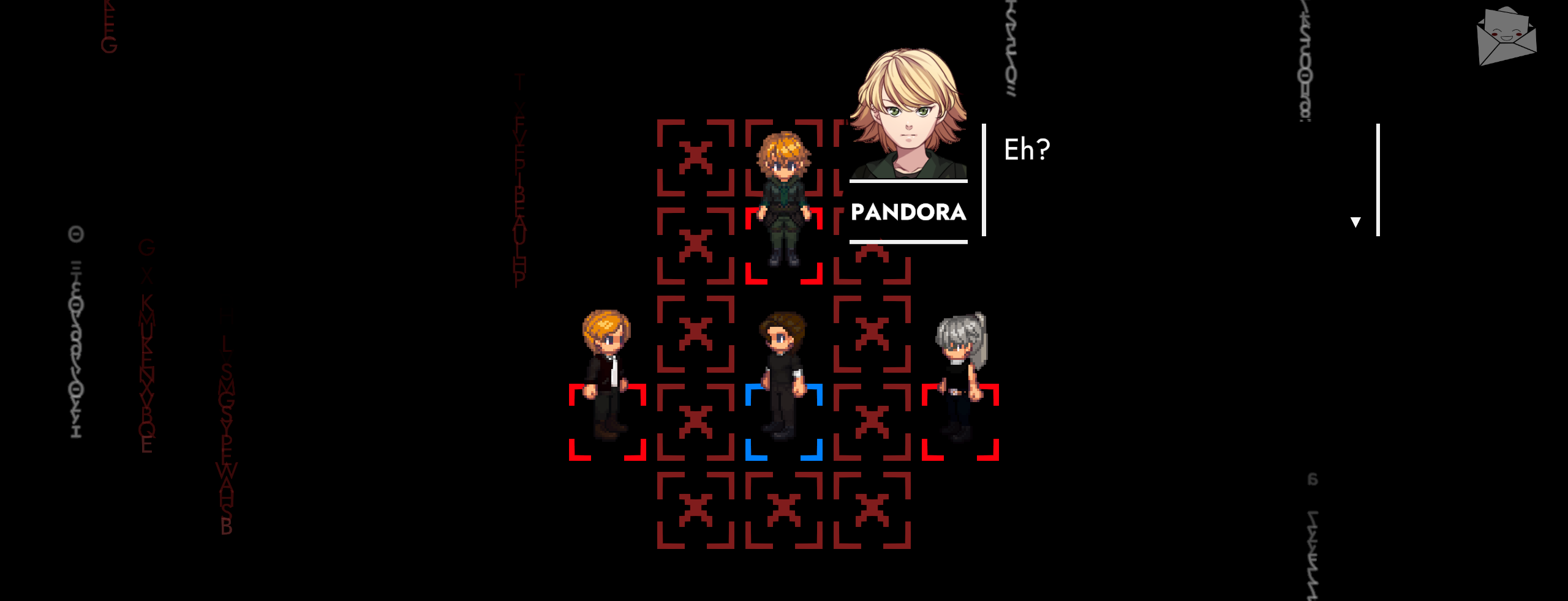
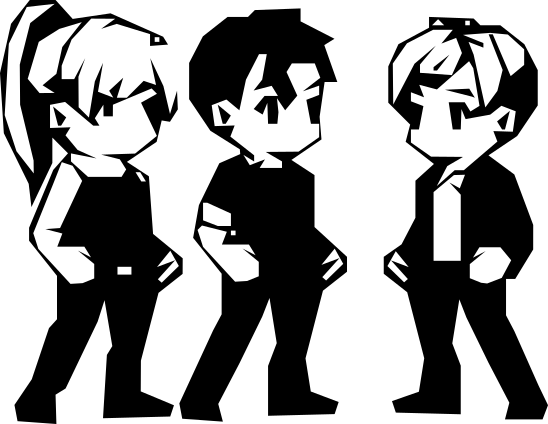
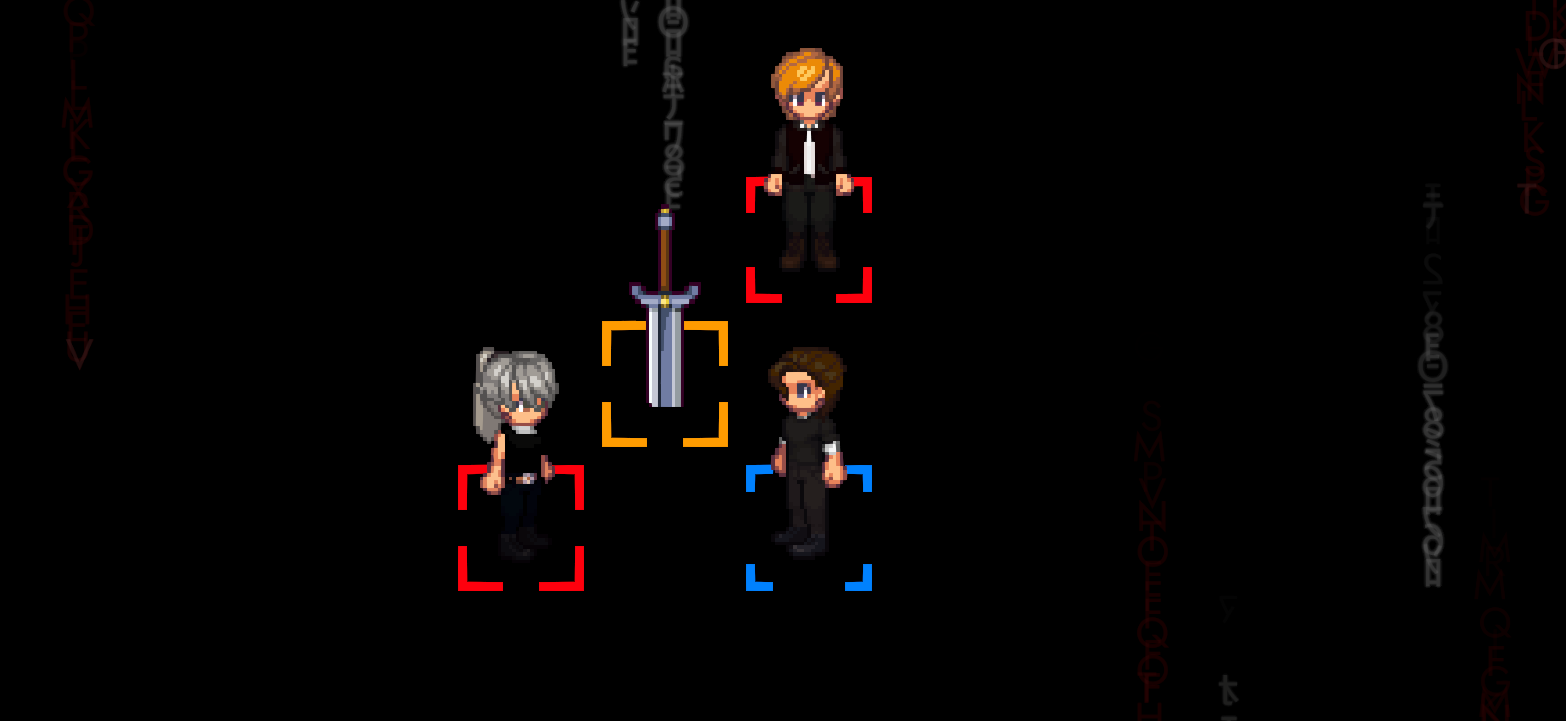
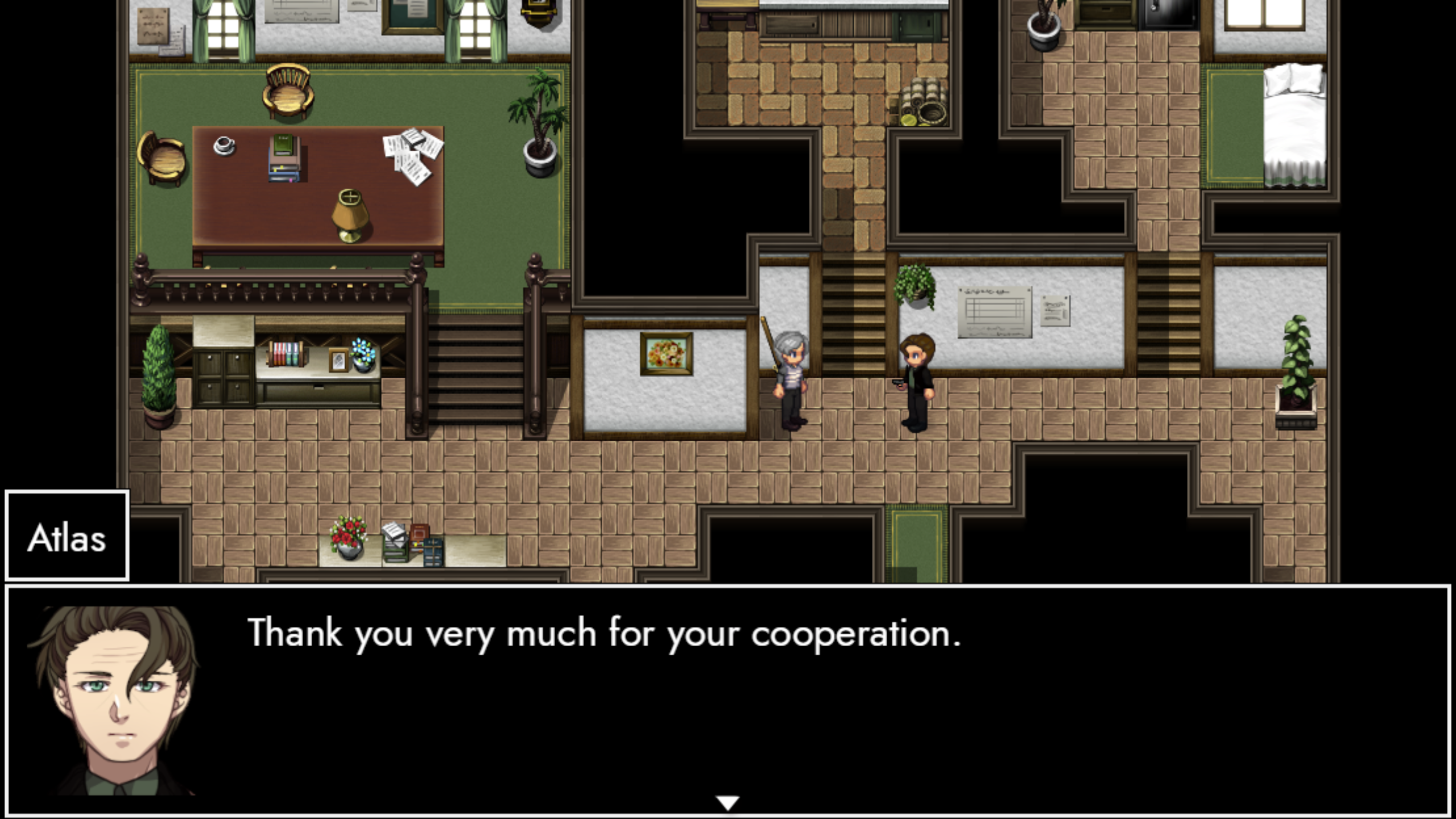
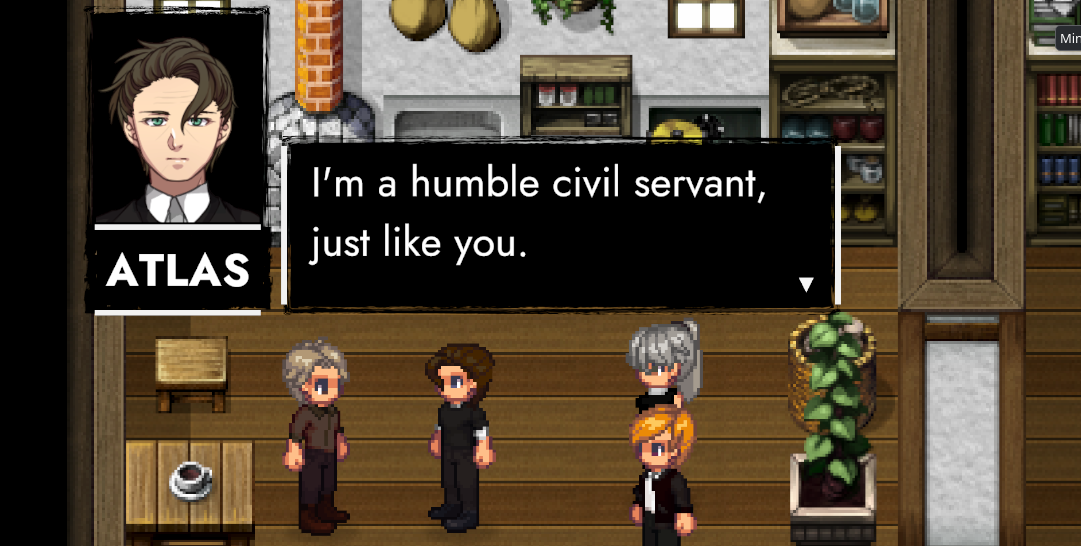
For InvitAtion specifically, Main Tasks also specify the player character. Coupled with the split. we can now play into the protagonists characteristics: Daphne handles lawfare, Atlas bullies people in power, Ganymede agitates the masses.
Checkpoint | Neochori | DMZ | |||||
|---|---|---|---|---|---|---|---|
7:00 | 11:30 | 12:00 | 13:00 | 14:45 | 17:30 | 19:00 | 20:30 |
Bureaucracy | Invitees | Campo Santo | Colony | Commitments | Fields | Friends | Bust-Out |
Daphne | Atlas | Ganymede | Daphne | Atlas | Ganymede | ? | Militia |
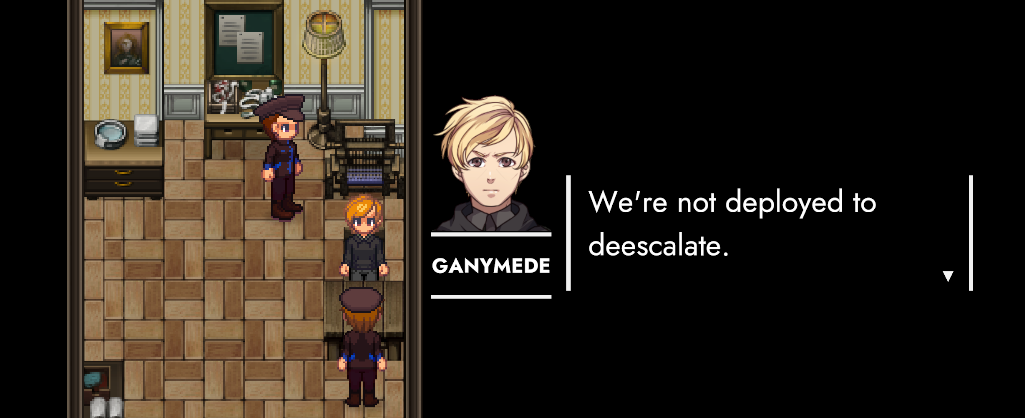
Although they operate differently, they're pulling at the same string (for once). Tensions in the DMZ are to be escalated, so that a friendly neighboring nation can be a knight in shining armor.
Hence, a tolerated / instigated TRG incursion, a standoff in Neochori's agricultural installations, a spring break at the Gurdic Gate – and the bust-out we've been waiting for.
Bust-Out
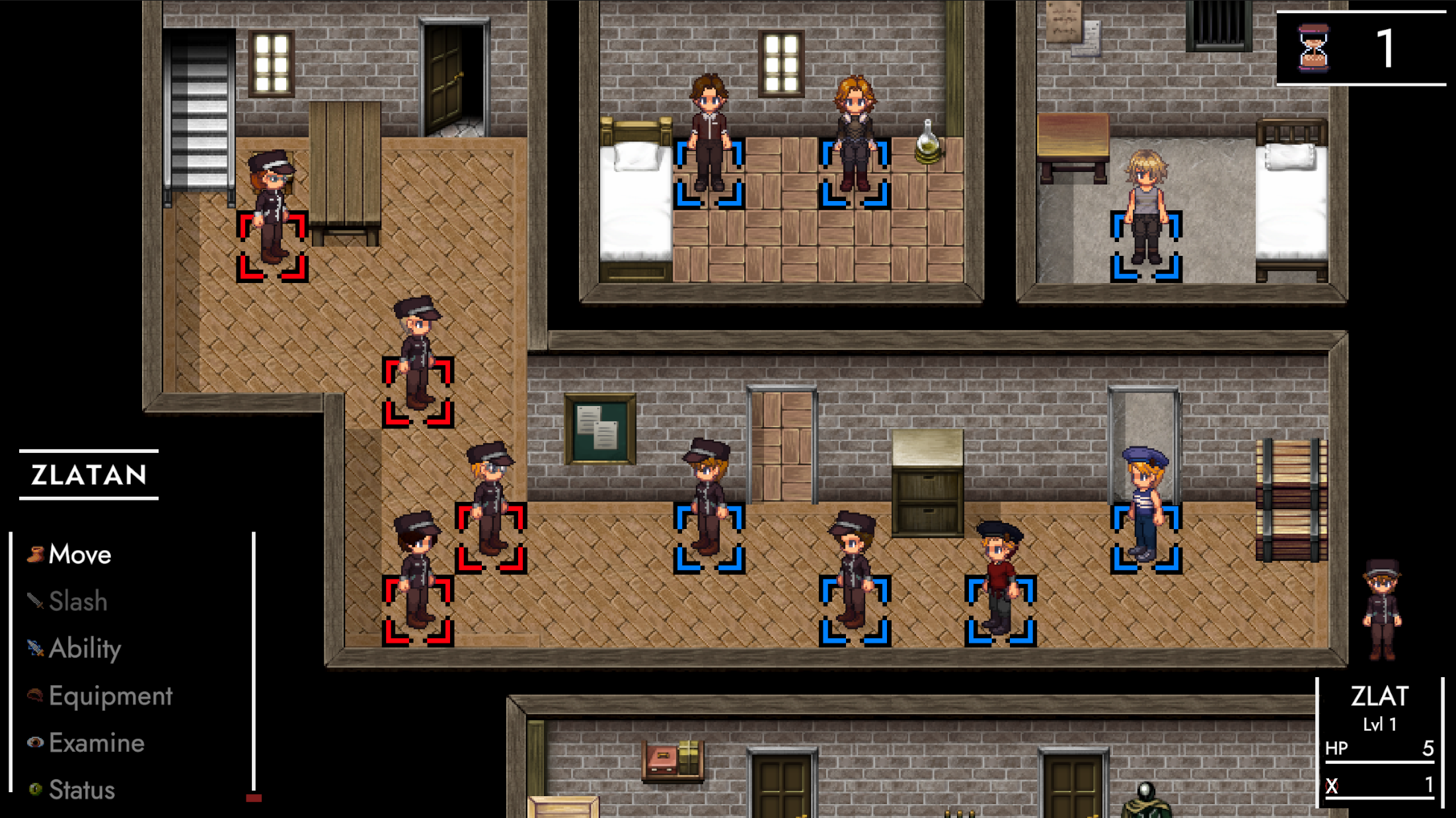
After a day of rising escalation, we're in charge of a rescue operation. You'll commandeer a squad of Neochori's finest, delivering suspects to the TRG.
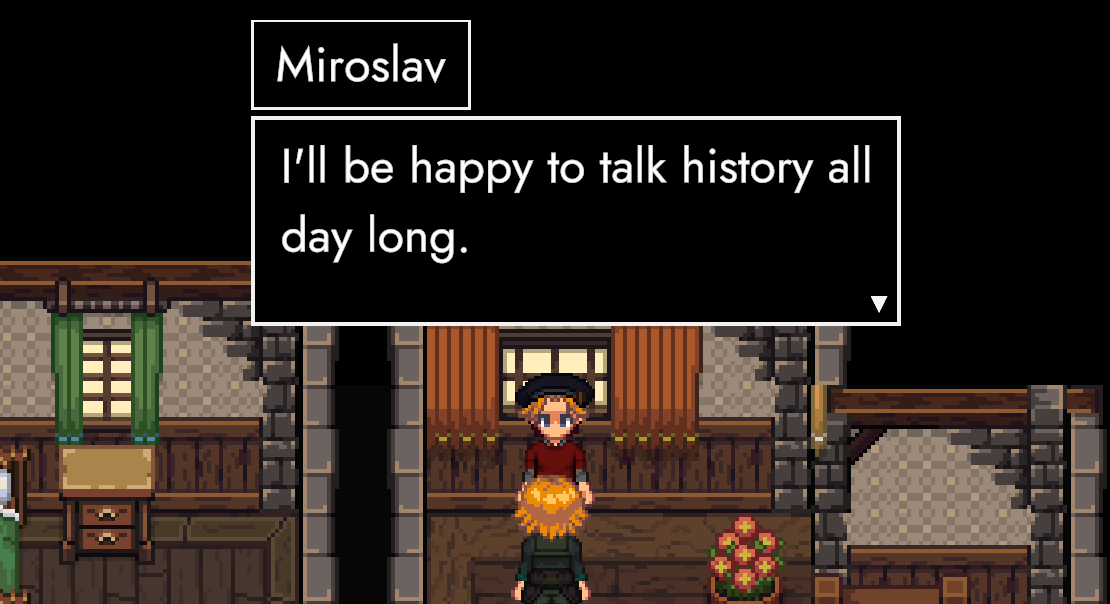
This requires three primary elements: people, uniforms and guns. Actions taken throughout the day (side tasks) increase these numbers. Our friend Miroslav happily accepts donations, be it weapons or TRG uniforms. Conversely, you can also disrupt the TRG.
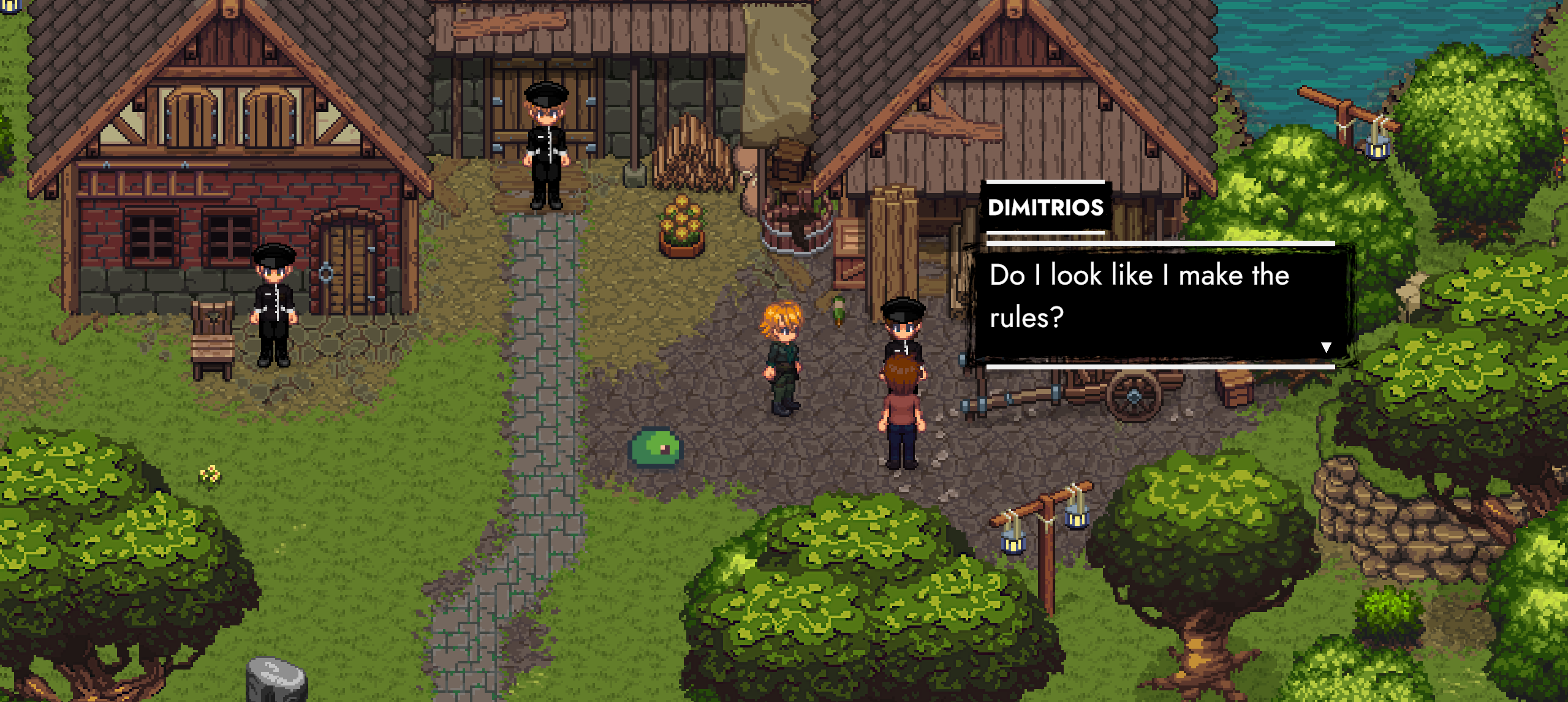
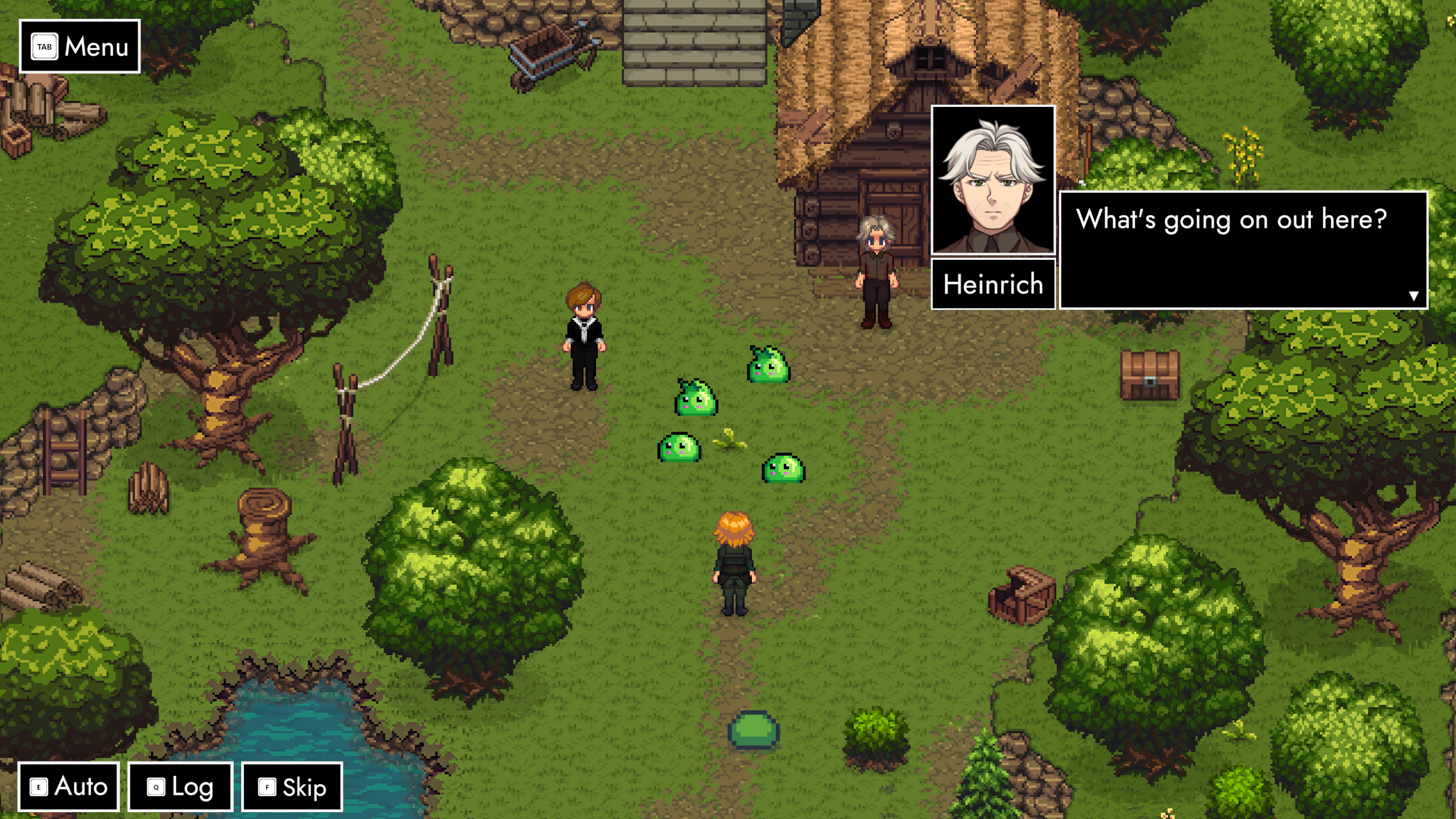
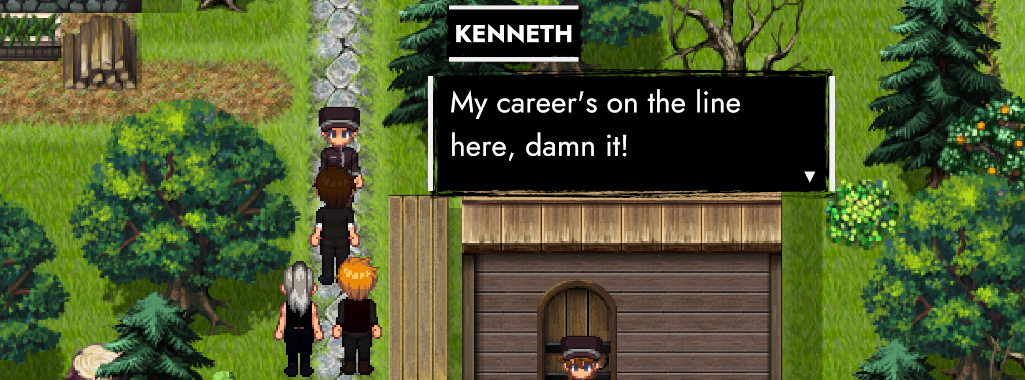
A piece of disinformation planted on Kozar's desk, or perhaps an angry group of unnerved travellers. As the day advances, measures get increasingly direct. A lonely Guardsman is an easy target, others need a bit more motivation. Our friend Kenneth, for example, is star-struck by his idol, Heinrich Navratil. Eager to prove himself, he'll deliver a letter to Neochori post-haste.
For all the Guardsmen, the rules are roughly the same. Handling them during the day means they won't be able to shoot you by night. It makes the backtrack to Neochori so much easier, because no jailbreak is a jailbreak without the sound of a blaring siren.
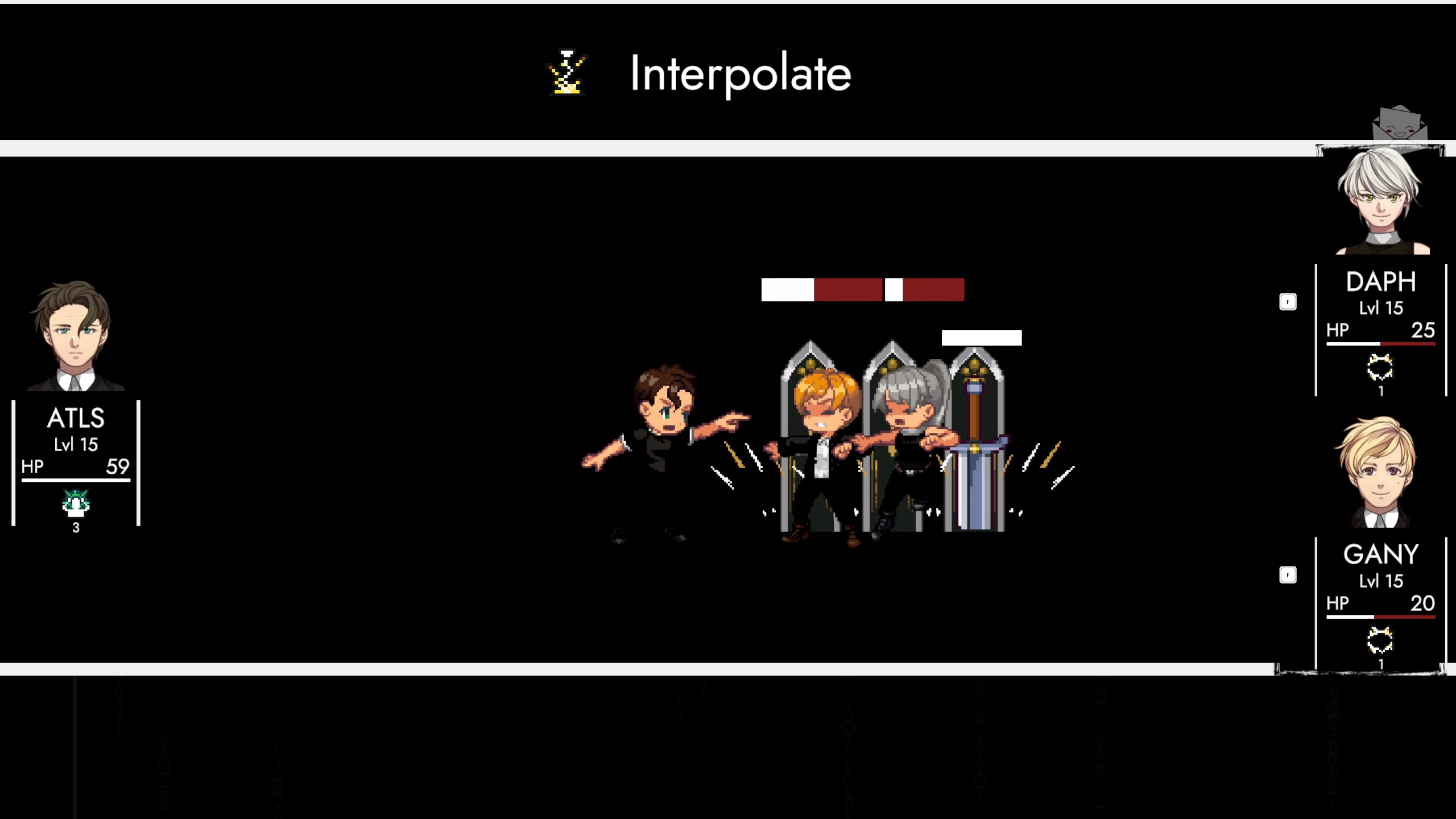
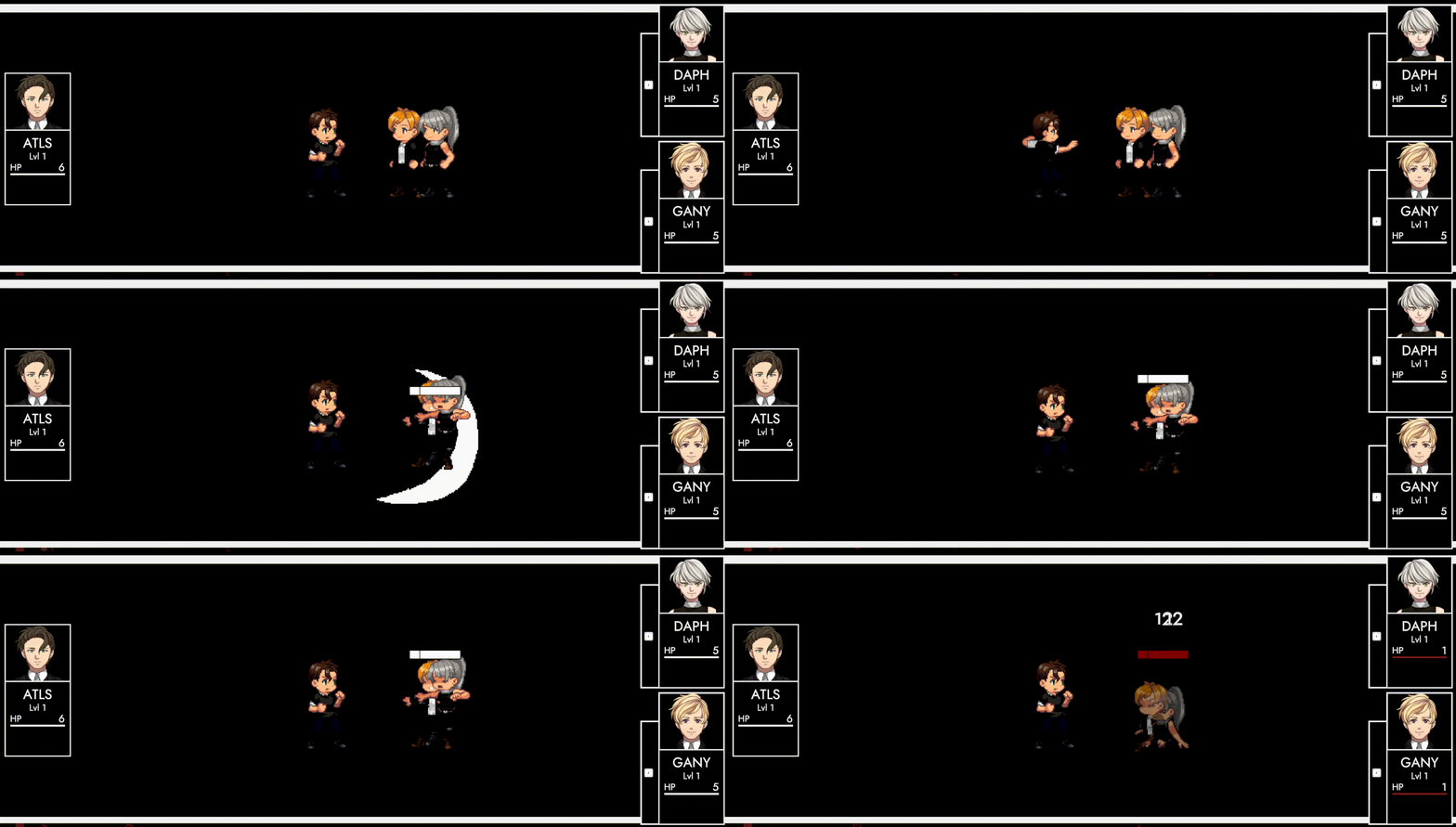
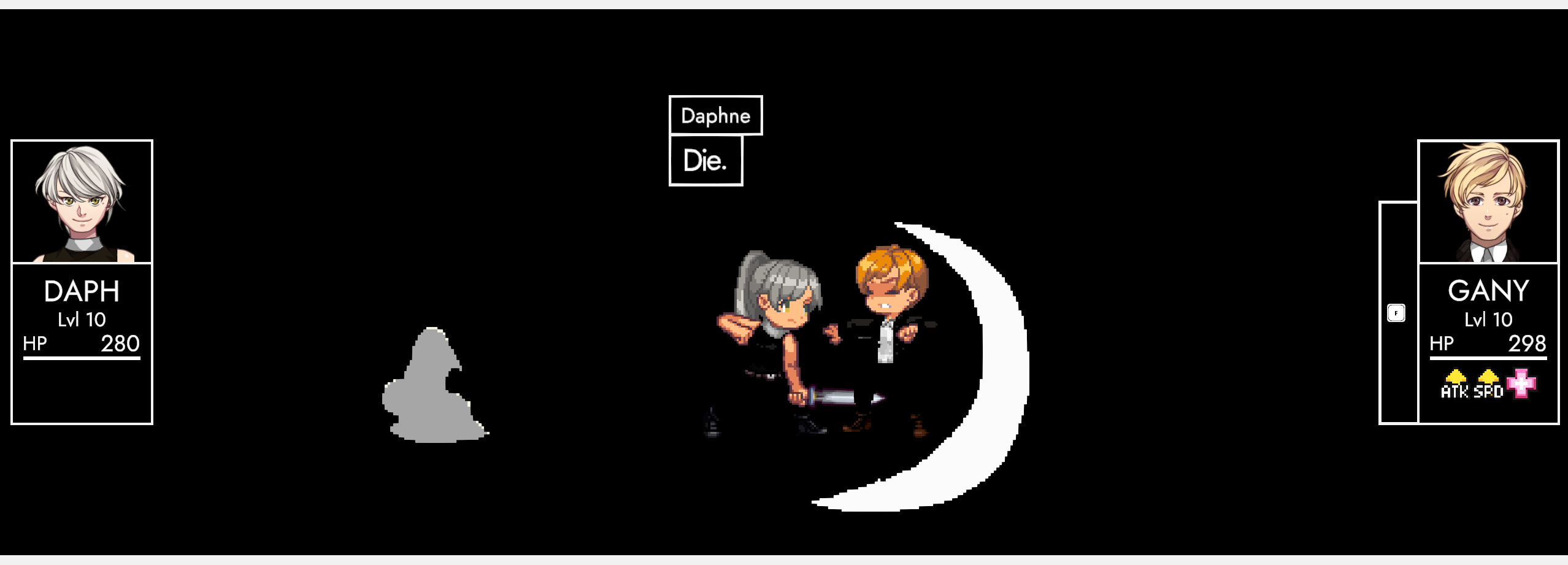
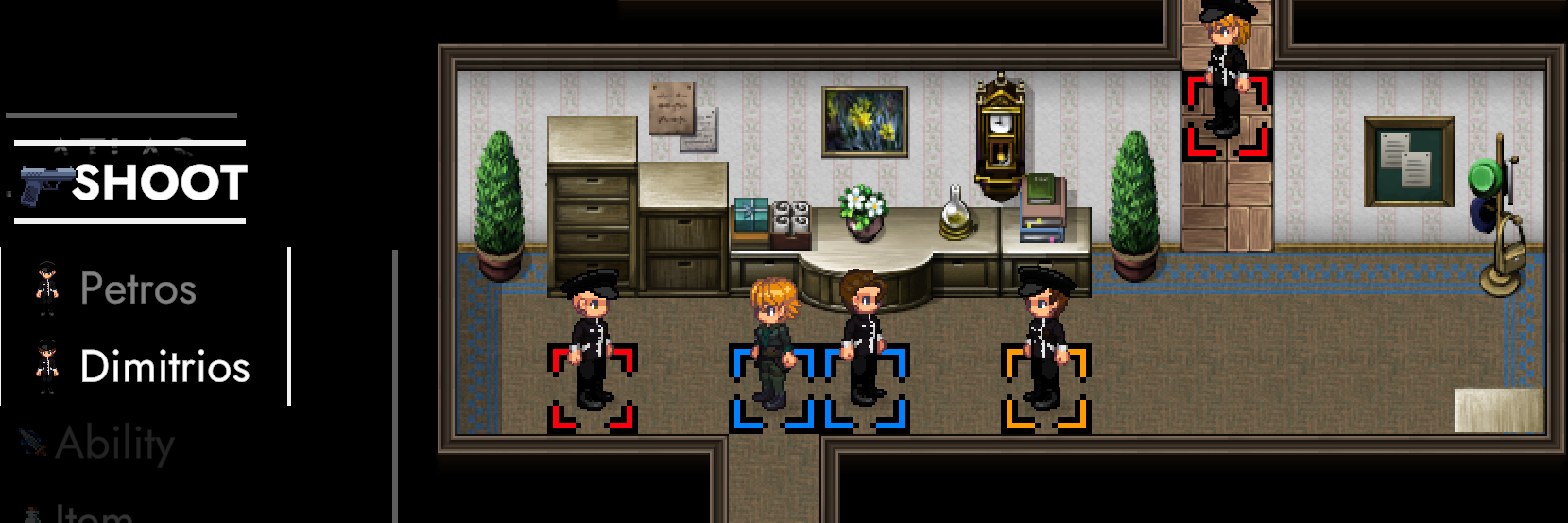
Your daytime efforts save you headaches and casualties as well. As the Combat happens in Reality, there's no revival. Important NPCs have to survive, otherwise there's a Game Over screen. 'Not-so-important' people are technically expendable, though you won't see them again.
At least not in that playthrough. Not outside a flashback. Until someone, somewhere hits Monolith. Simple, isn't it?
Death

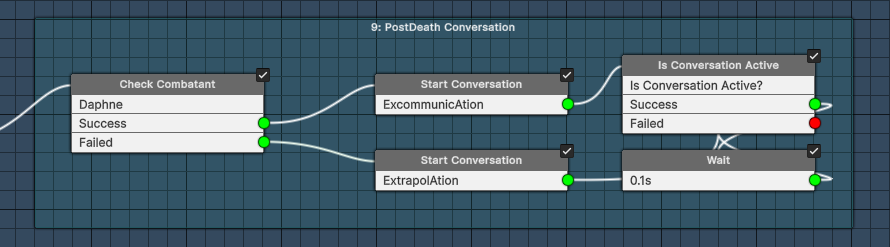
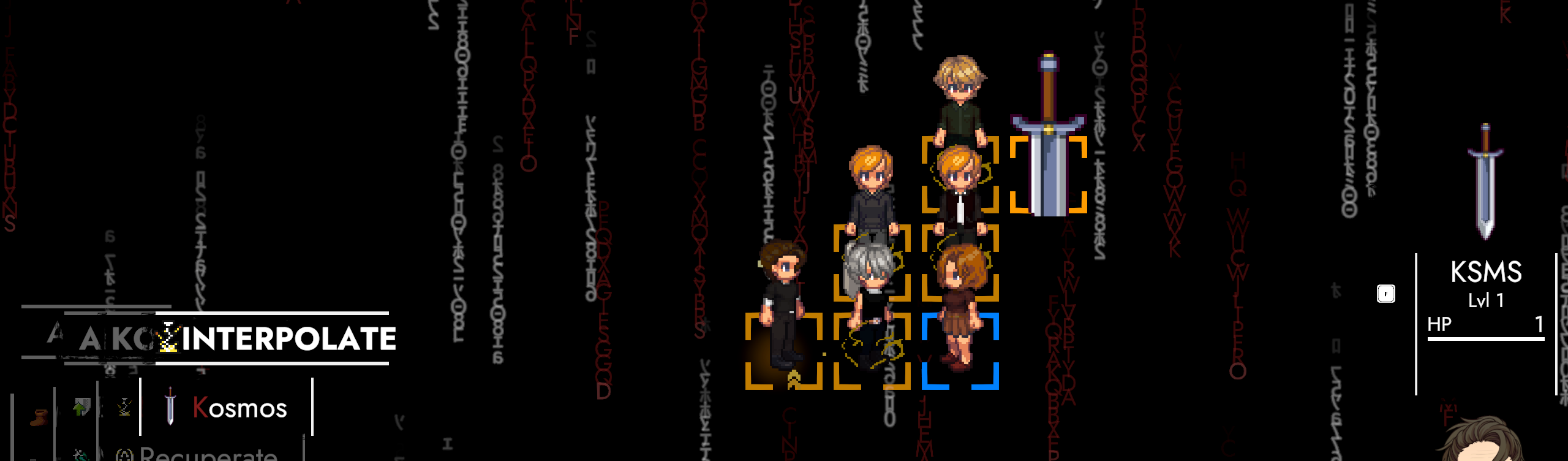
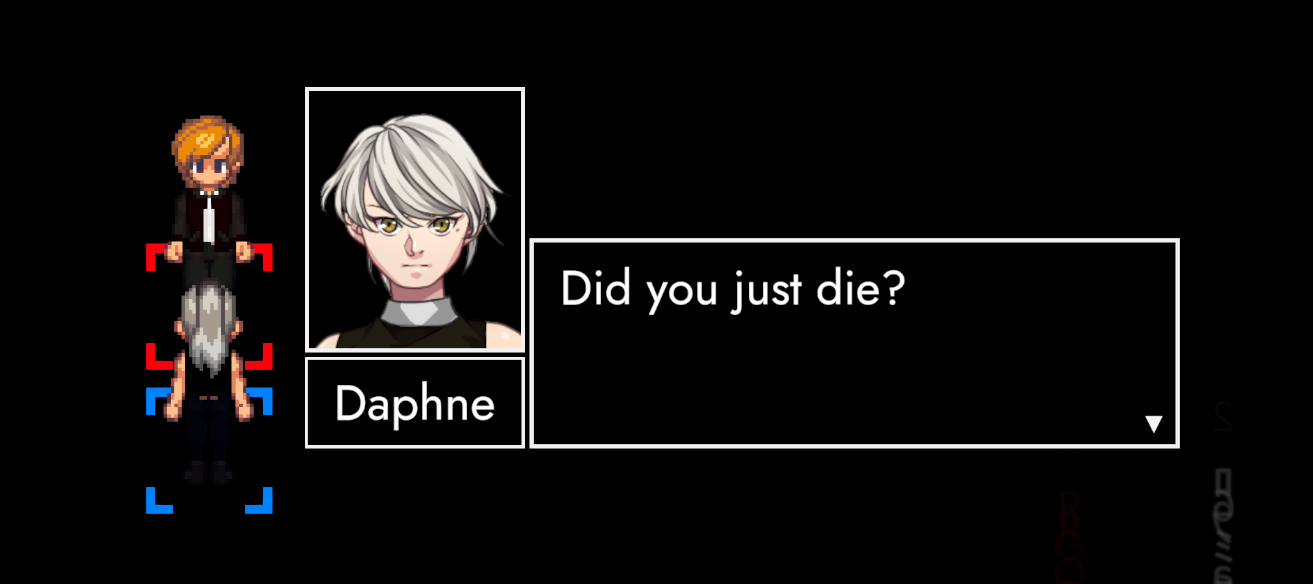
Every time we spawn a Combatant, we ask a simple question: Is this character currently alive?
Under normal circumstances, the answer is straightforward. If a character dies, say in 1922, he's NOT alive in 1923 and onward. However, since Flashbacks take us back in time, we could land at a point where the combatant didn't die yet.
So we also need to record the time of death. We can then check that against the current time (the timestamp of the active Main Task) – and call it a day.
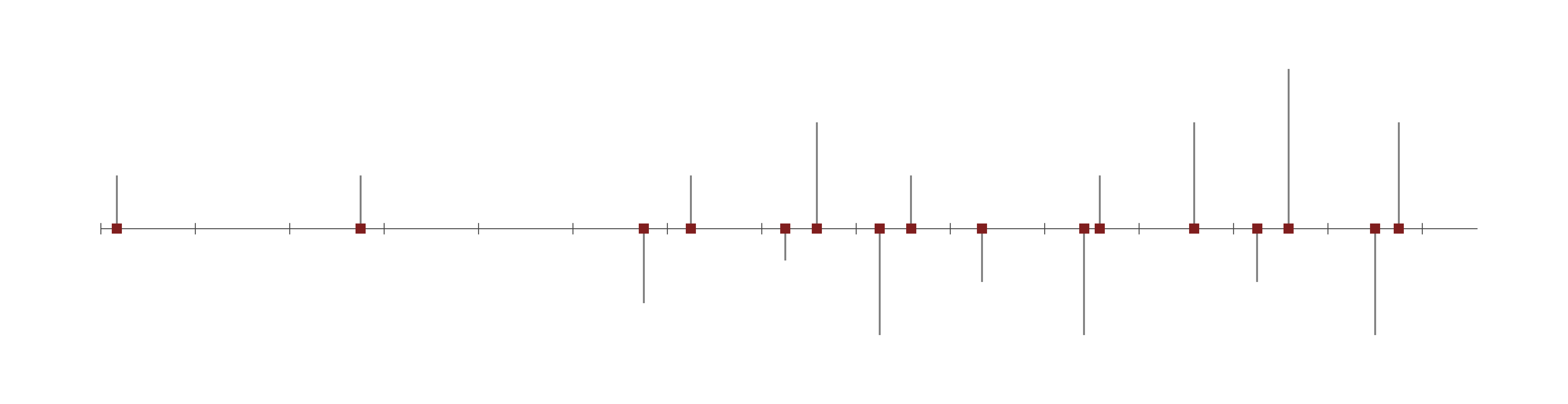
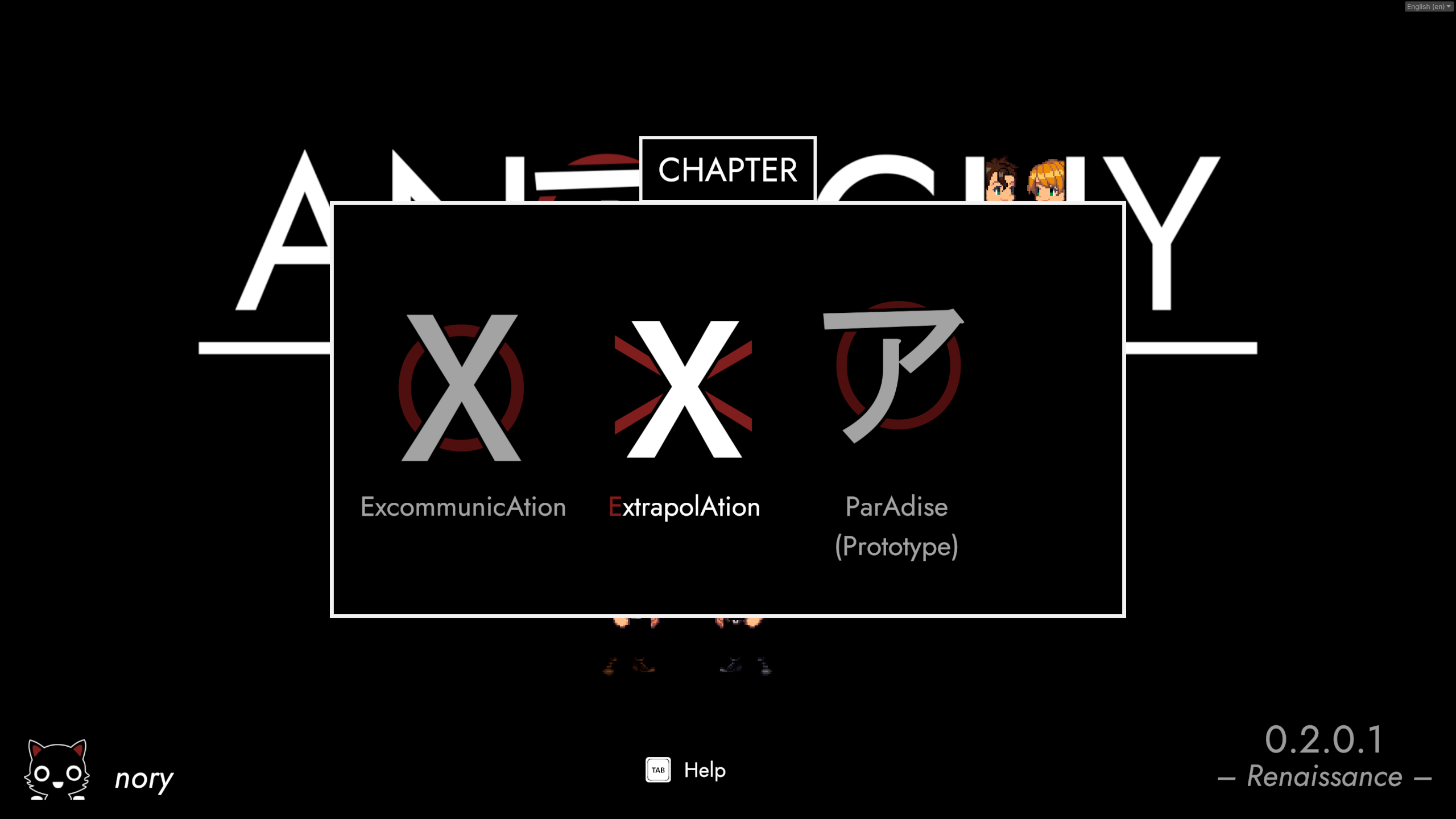
Dichotomy | Calpoli | Effigy | Arteria |
|---|---|---|---|
1916 | 1919 | 1921 | 1923 |
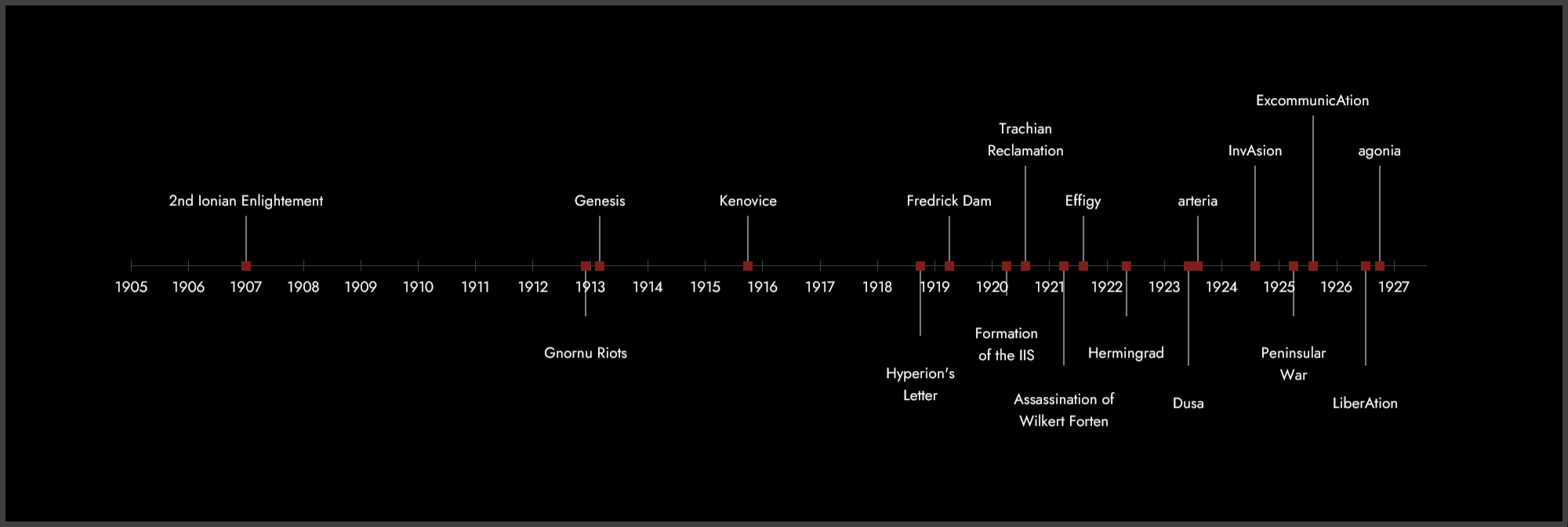
Monoliths are a special case. Following their first appearance in 1924, our question becomes: Did the Combatant die since the last Monolith activation? "But wait!", you say, "Doesn't that mean that Monoliths advance time?"
Exactly right! We don't want to end up in the year 5000. Monolith cycles shouldn't advance time in the horizontal (left to right) direction. Instead, each activation adds a fresh slice to an ever-growing stack, advancing time vertically (bottom-up):
ParAdise | # Cycle | Direction |
|---|---|---|
192X + 2i | Cycle2 | ^ |
192X + i | Cycle1 | | |
192X | Cycle0 | | |
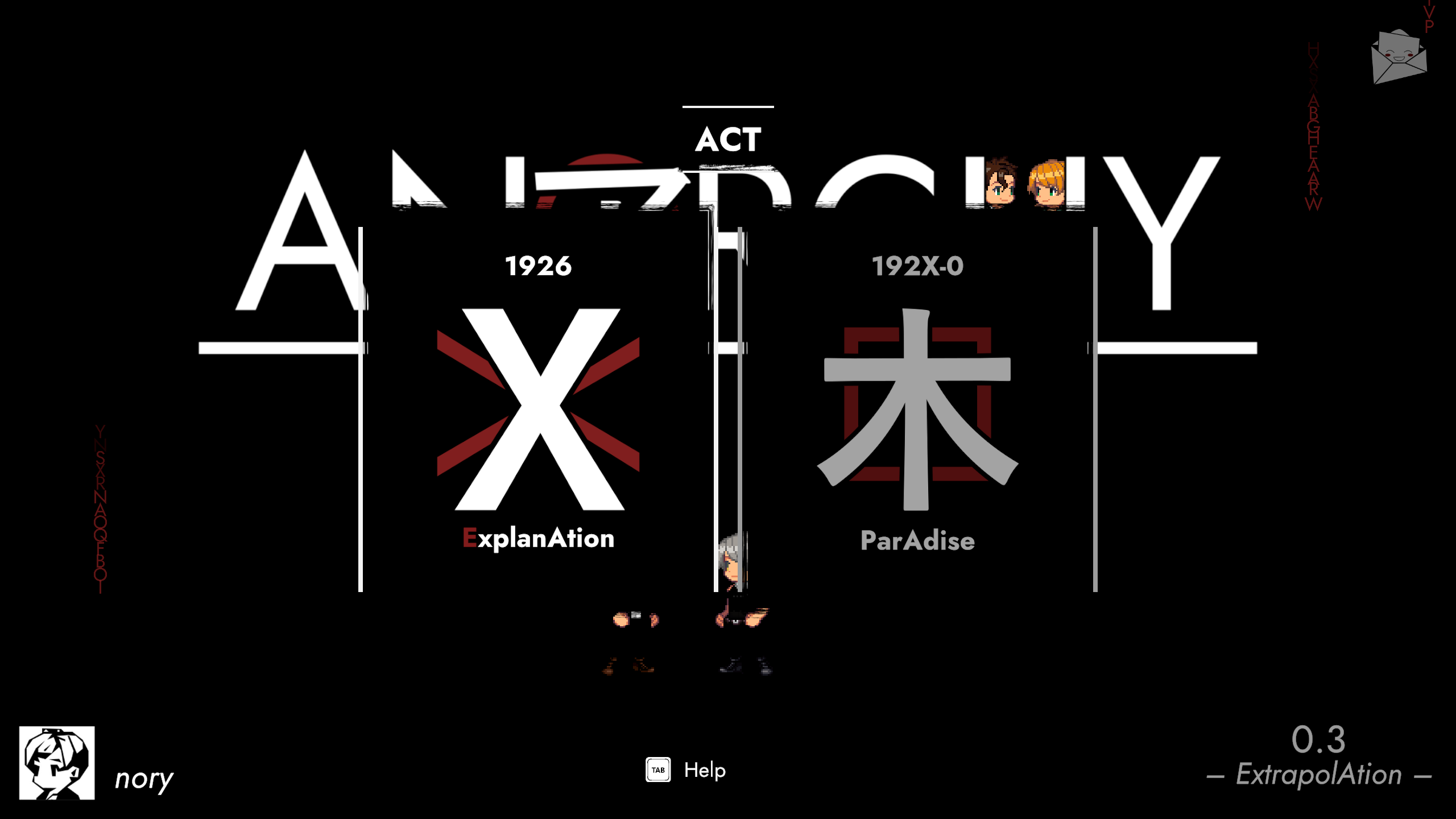
Spawners set to Cycle (in ExplanAtion, ParAdise, etc.) ask whether the Combatant died in the current slice. Fragments and everything else set before ExplanAtion (Spawn type Chronology) consult history, checking the current time against historical deaths.
So every Flashback, coming from ParAdise or earlier, sends a signal that says: "Send us to [somePlace] at [someTime] on [someDate]". The spawners automatically prevent the dead from spawning.
Though that's just half the picture. Because if you think about it, being alive is to "exist at some place at a given time".
Presence
 Suppose that Eurydice is in Neochori at 12 PM on August 25th. Specifically, she spawns at a spawner in the Anthiadis Residence. That alone tells that they should NOT spawn anywhere else during that time.
Until two weeks ago, we would implement that fact like so:
Spawner | Action |
|---|---|
Eurydice's spawner in Anthiadis Residence | Spawn Eurydice if it's 12 PM August 25th |
ALL her other spawners | DON'T spawn Eurydice if it's 12 PM August 25th |
Suffice to say, this drove me up the wall.
So we streamlined it into a single compendium. For the case above, that's one entry: "Eurydice, 12PM August 25th, Anthiadis Residence, spawner [soandso]". As a consequence, no character will ever spawn in two places at the same time. If someone's not spawning here, they're either dead or spawning elsewhere.
Side-tasks are the big exception. They don't hold a timestamp, so we still need a condition. Though saying "override Eury 12PM August 25th to [someOtherSpawner]" is an exception – not a condition among thousands.
At any rate, we got the IF (death) and WHERE (location). Putting both together gives us a unified Book of Life and Death (BoLD). It's the resource that spells out the facts, while the dialogue expresses the characters' perspectives.
A set of snapshots from the ground, if you will.
Locomotion
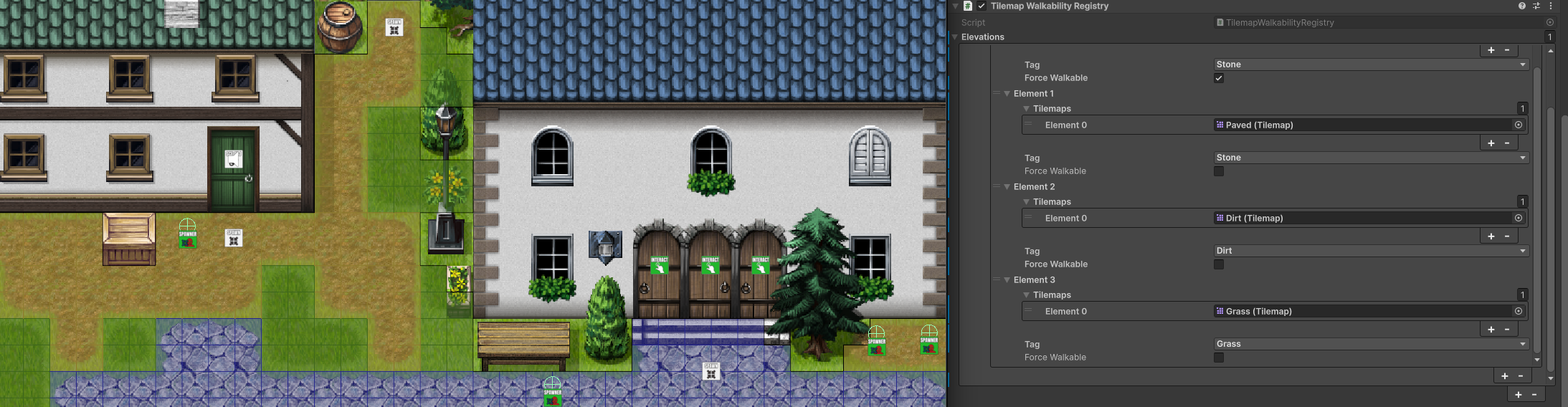
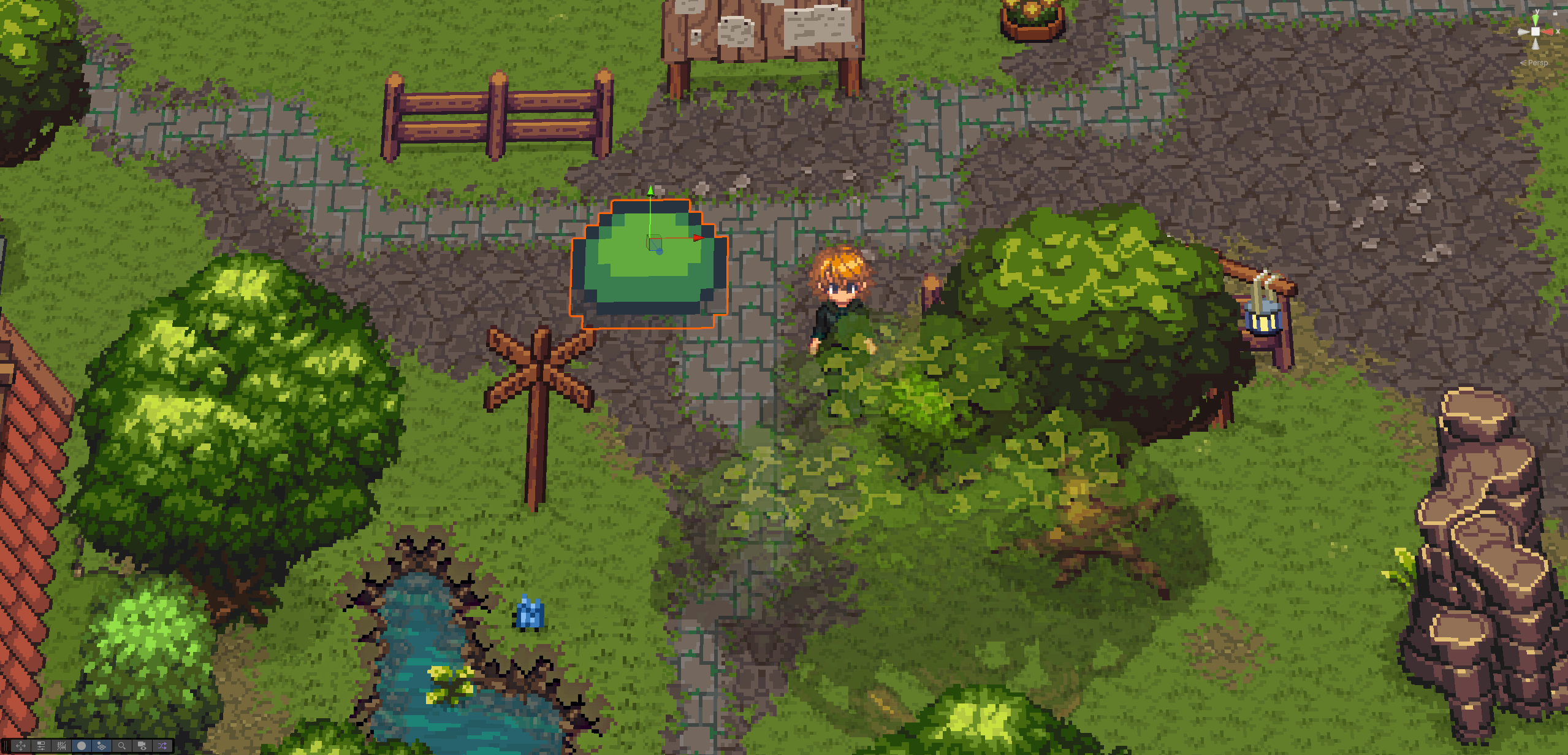
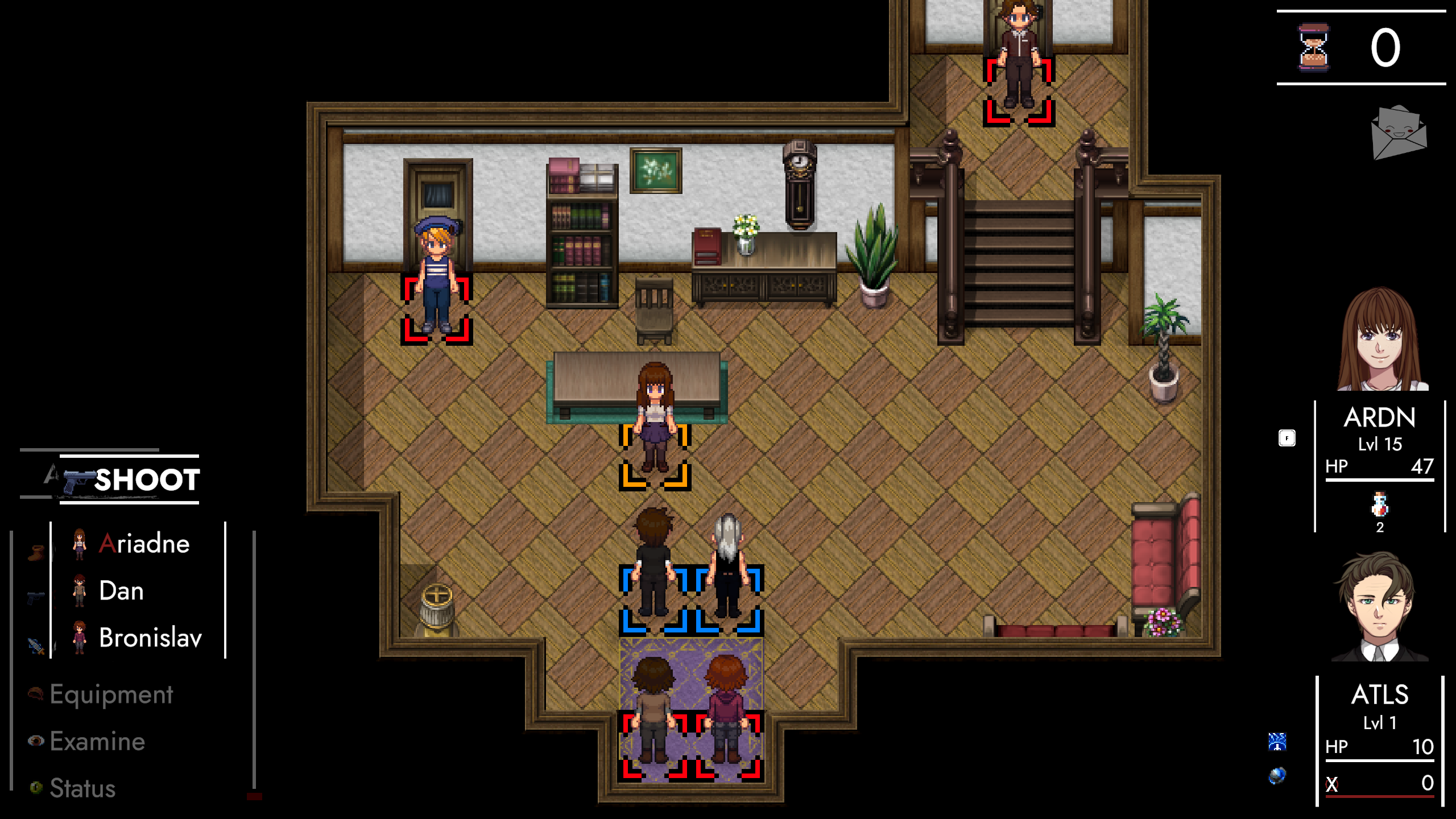
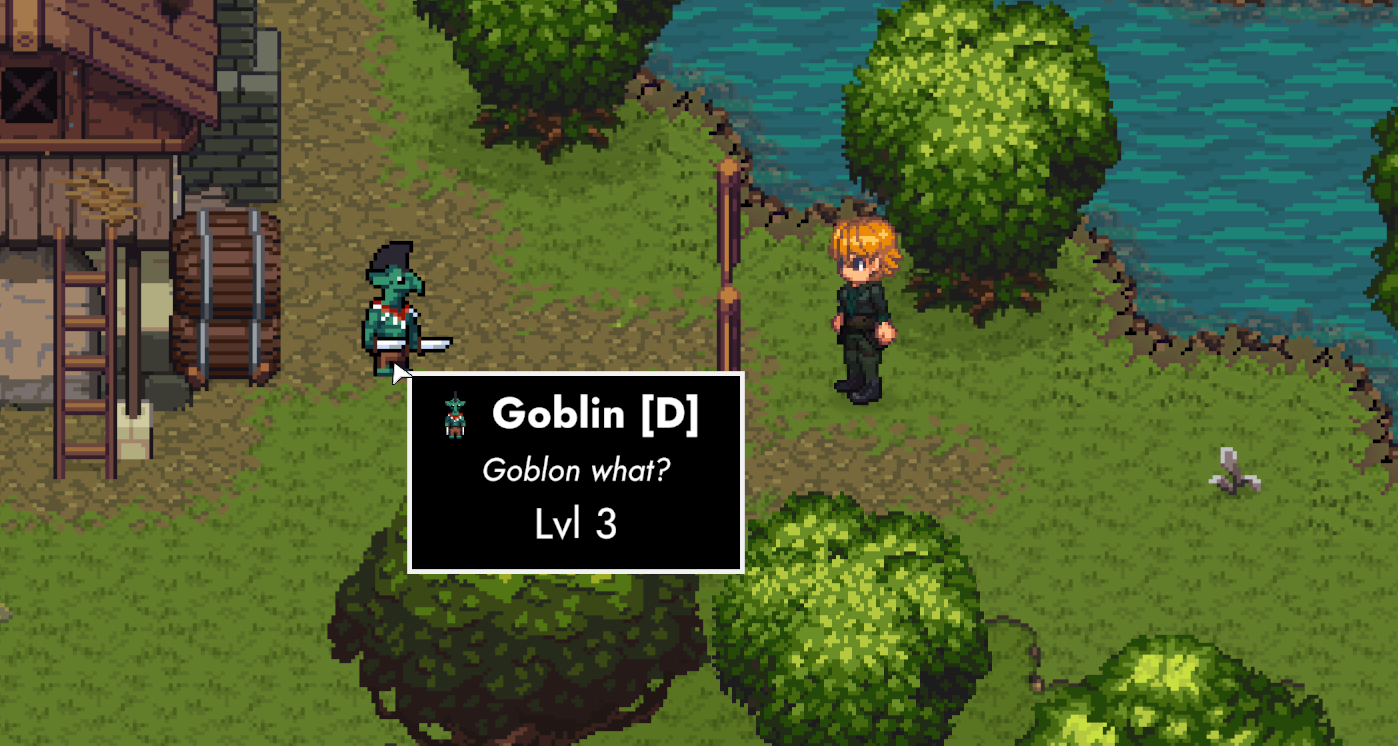
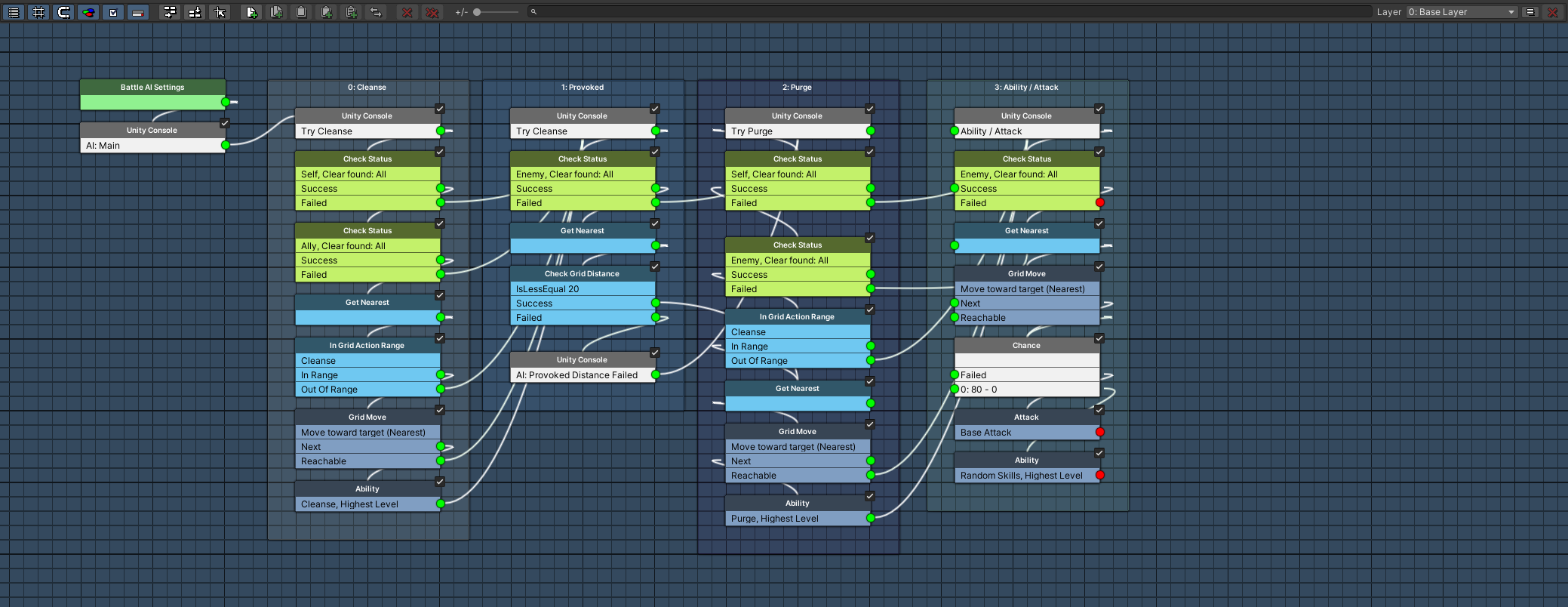
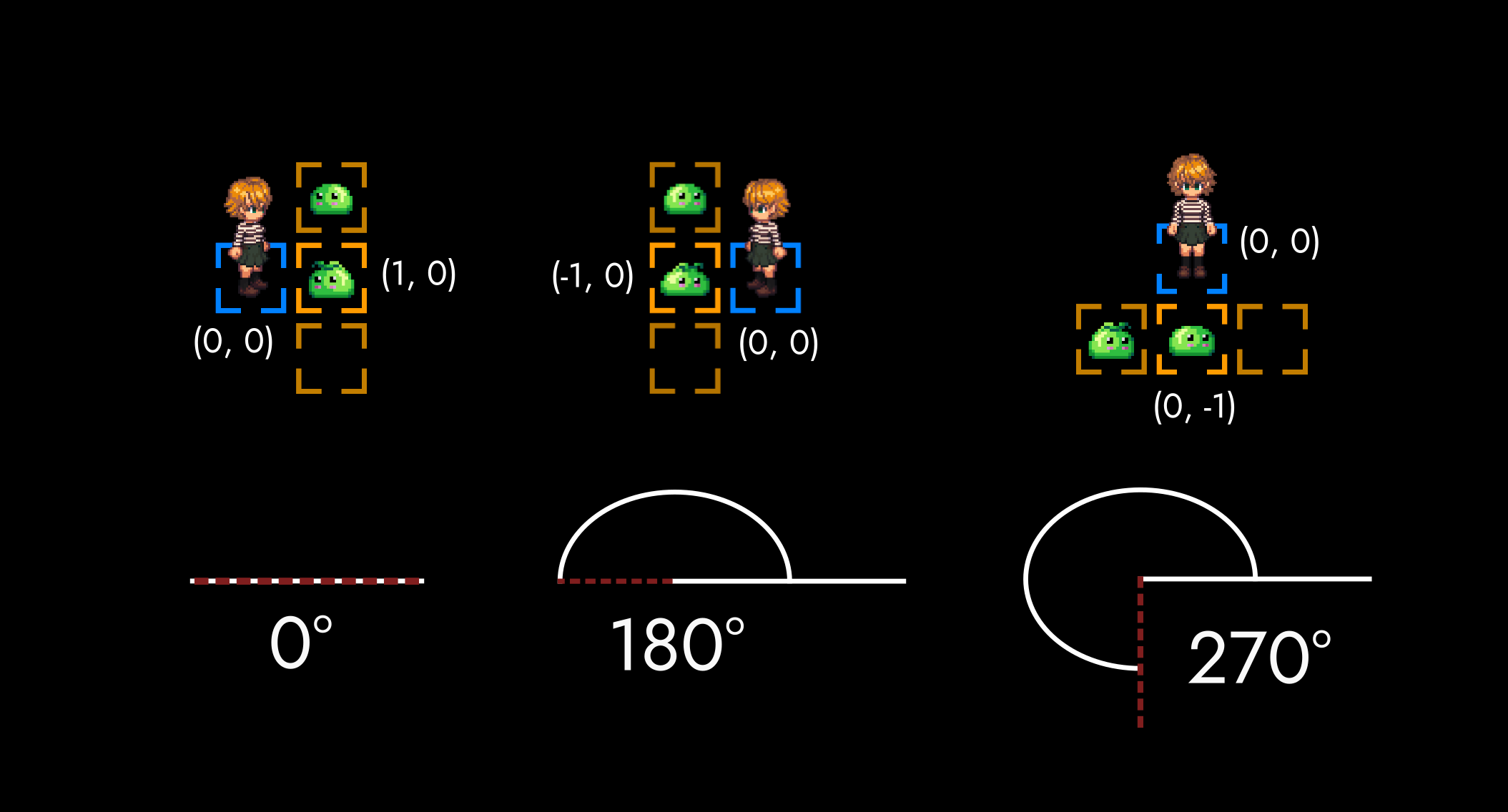
Most forms of in-game movement happen on a grid. Some script – be it a patrol, companion manager, or cutscene – plots a destination for a combatant. An A* algorithm then calculates the shortest unblocked path and has the combatant follow it.
Historically, one entity diverged from that. Player movement relied on colliders (aka physics). This produced a lot of inconsistencies, where players could move to places NPCs couldn't – and vice versa. We hence dropped direct player movement and have keyboard/controller inputs plot a destination right in front of you.
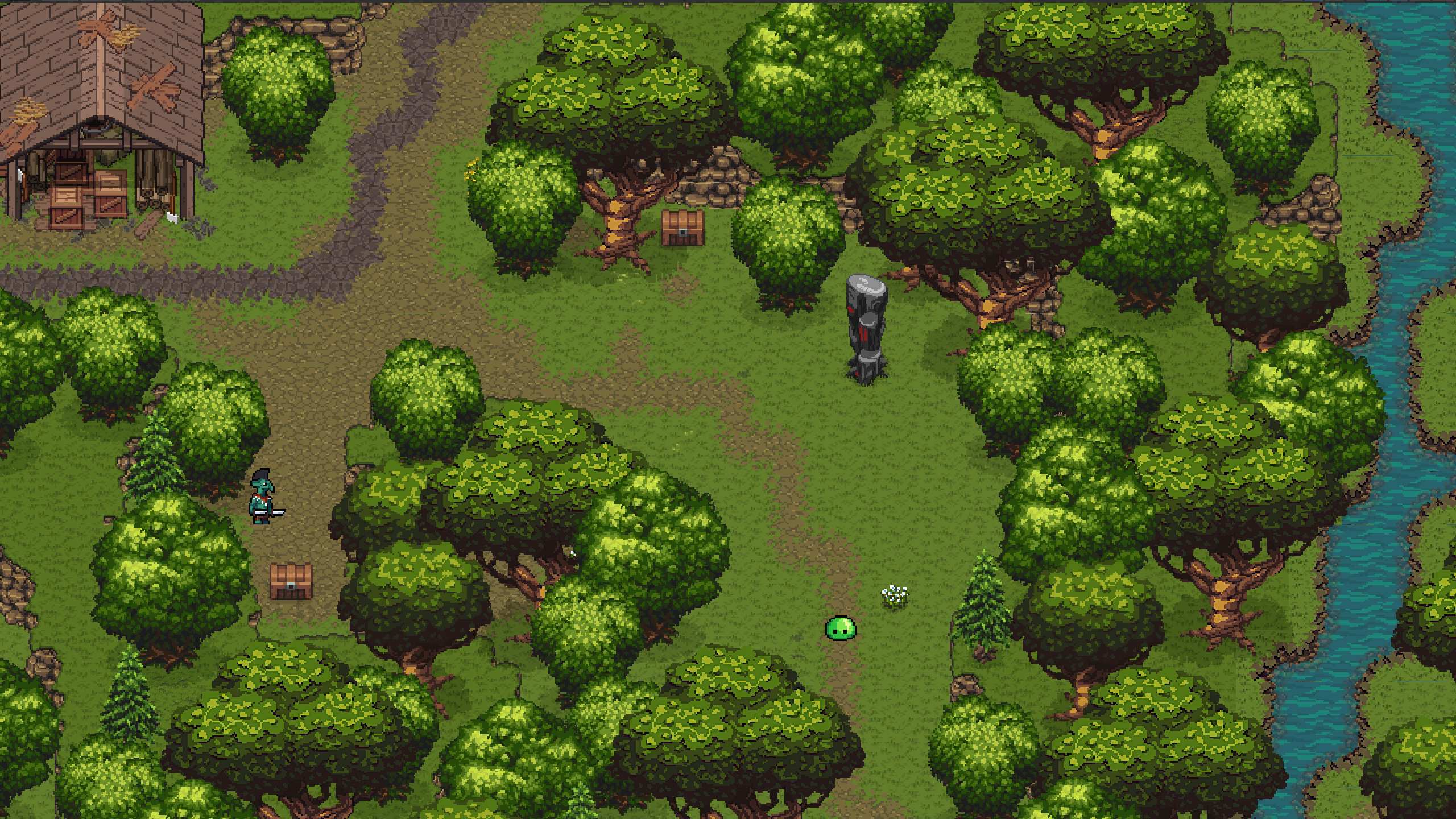
Beyond the fact that this gives us click-to-move for (basically) free, we also unlocked the power of semantic tiles. Henceforth, we further distinguish walkable cells into different Ground Types (Grass, Dirt, Paved, Snow and Carpet).
These Ground Types will handle footsteps (formerly physics-driven) – and give us yet another feature for free. Each Ground Type has a speed modifier, making movement on a paved road around 20% faster than walking on grass.
If you use click-to-move, or watch some other mid-distance pathfinding, you'll see how it factors in those modifiers, preferring whatever makes the quickest path.
All of that is grand, yet it doesn't address two other long-standing problems. A bridge over water can have the walkable bridge override the unwalkable water underneath. But that won't allow us to walk on top of a bridge AND under it on the same map.
Elevation
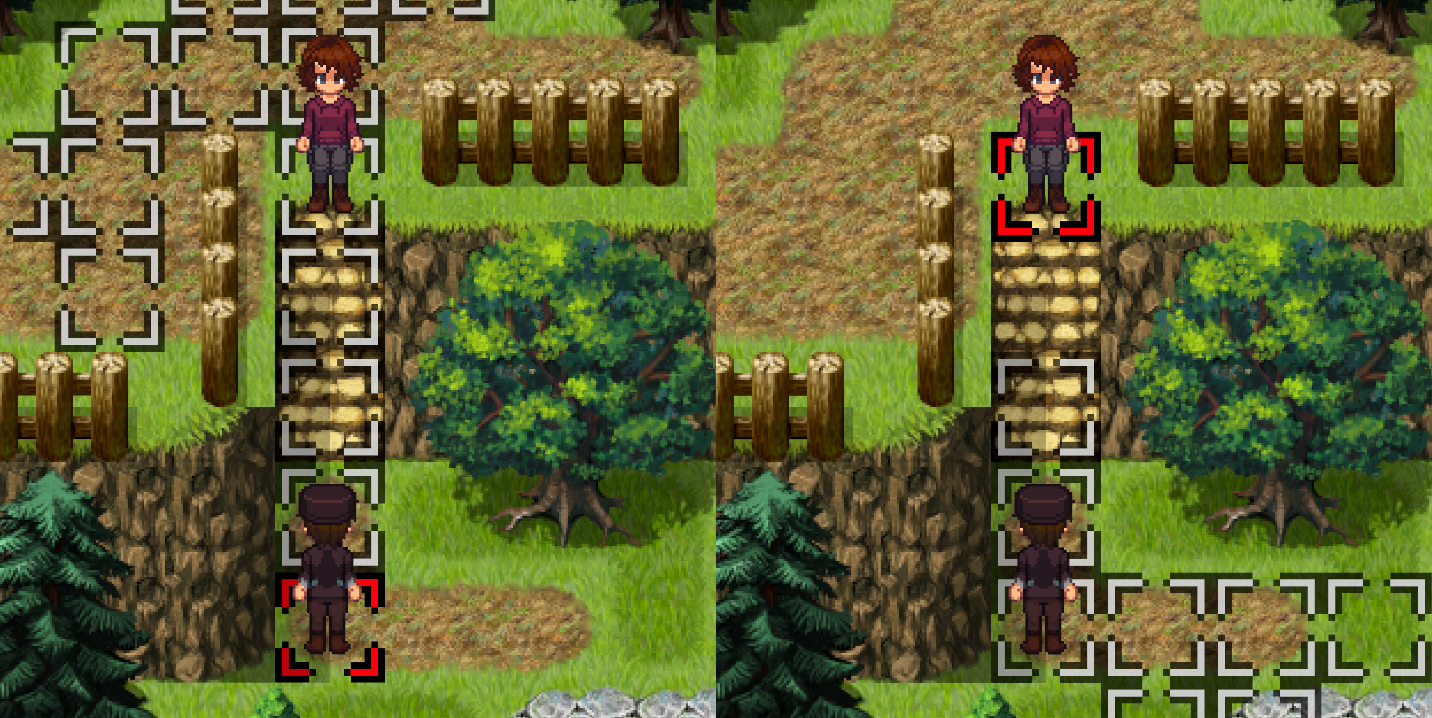
Three years after our 3D excursion, we finally tackled some of the biggest limitations: we took a plane with two dimensions (width and length) and introduced a third dimension (height).
As the in-game world is flat as a board, there's no formal notion of 'above' and 'below'. However, if you walk up some stairs or climb a ladder, you're visibly at a higher elevation. We can thus treat the world as a building with several floors.
As a consequence, we take our grid and slice it into levels (-2, -1, 0, 1, 2 etc.). Stairs and the like hence become elevators that let us move up and down between the layers. This works in the field, but also in battle.
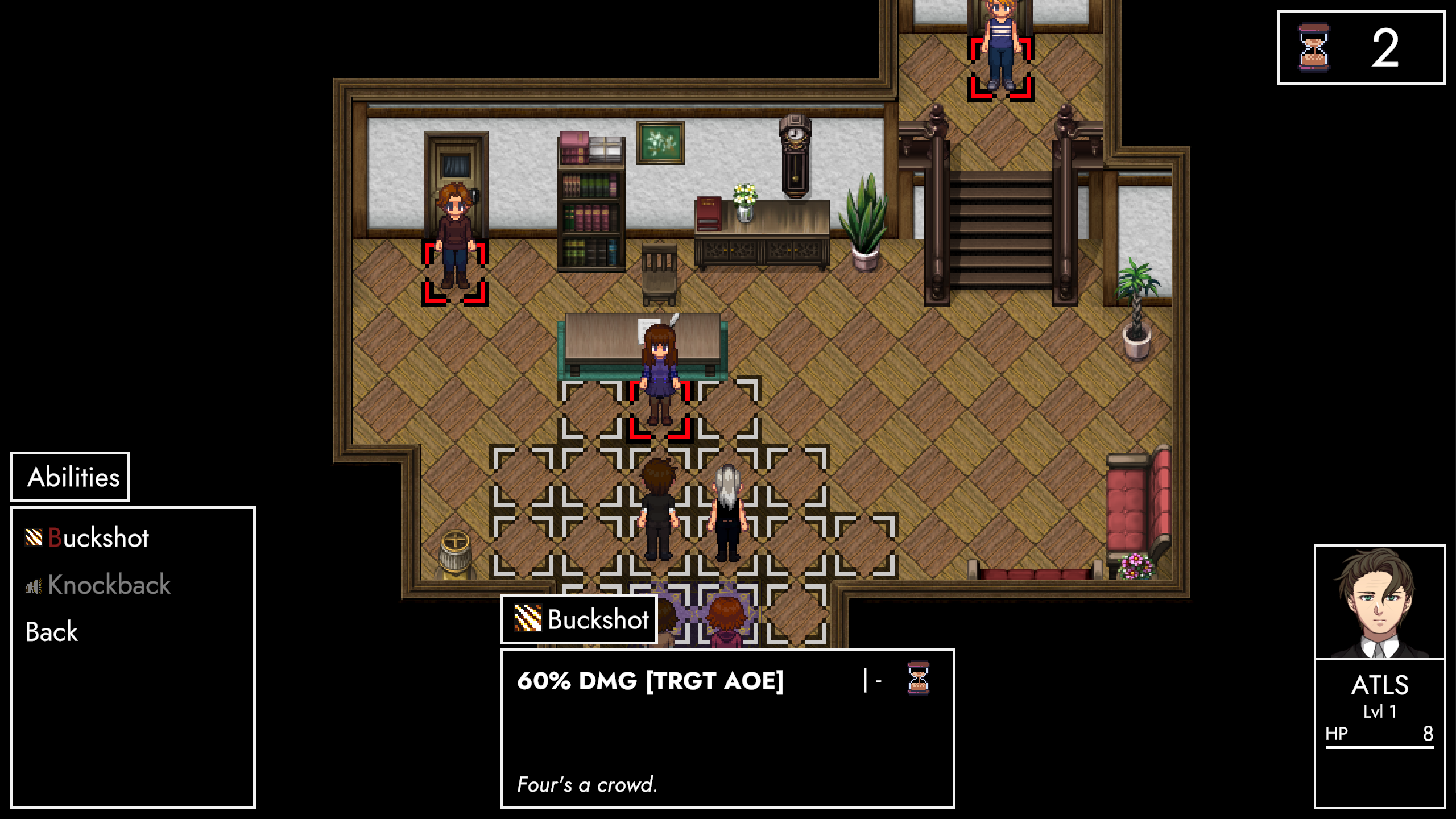
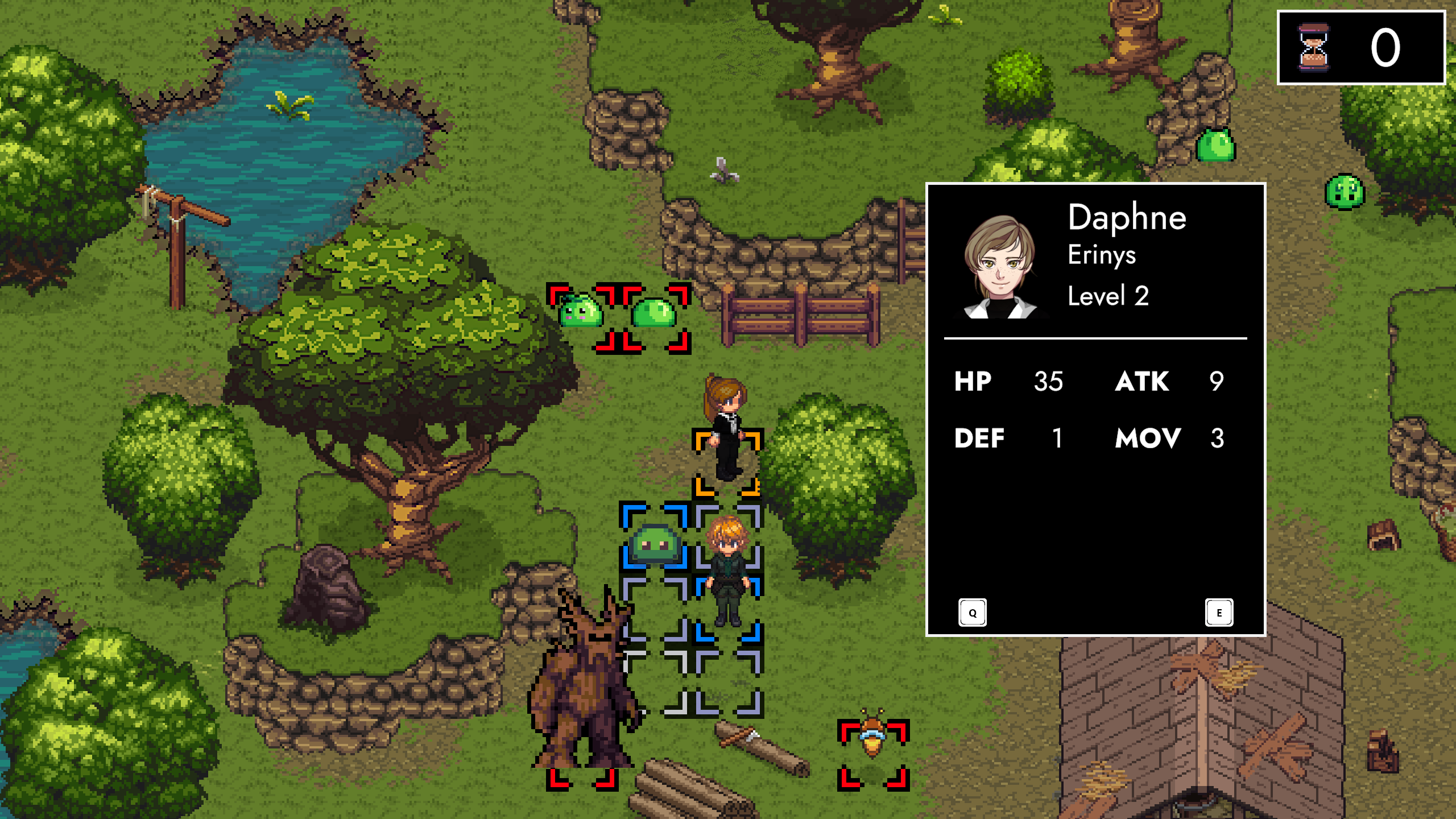
For one, we finally have range attacks from high- to low-ground and vice versa. While we're at it, we also made it asymmetric: Shooting downwards gives extra range (+1 per elevation), shooting up deducts it accordingly.
Speaking of layers: Let's get to the final subsection of this post.
Composition
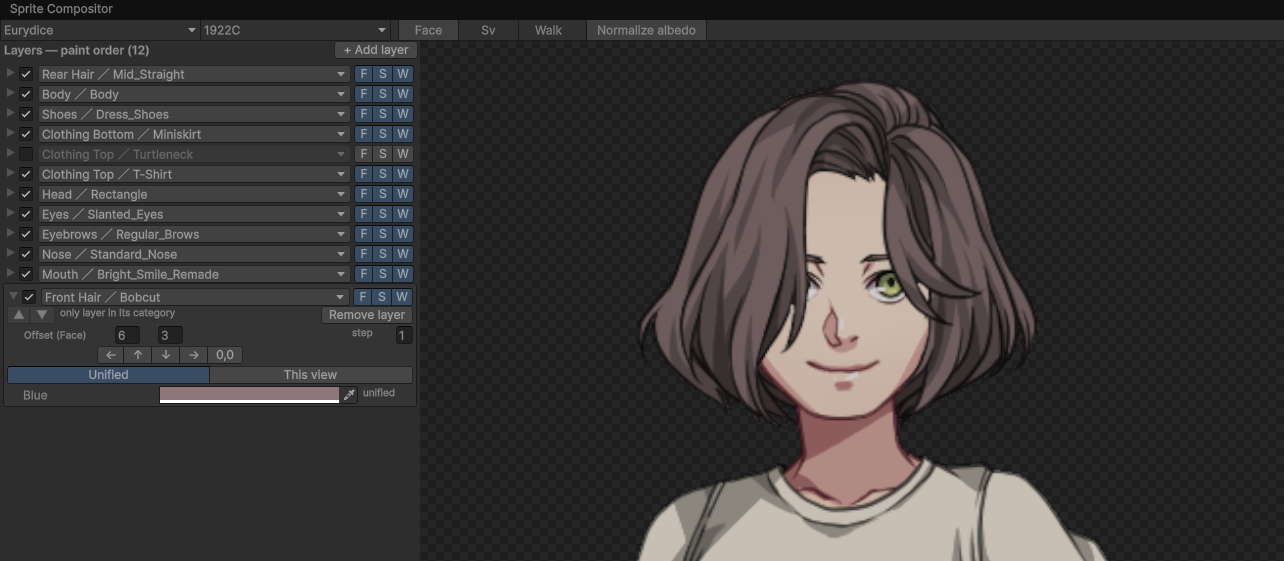
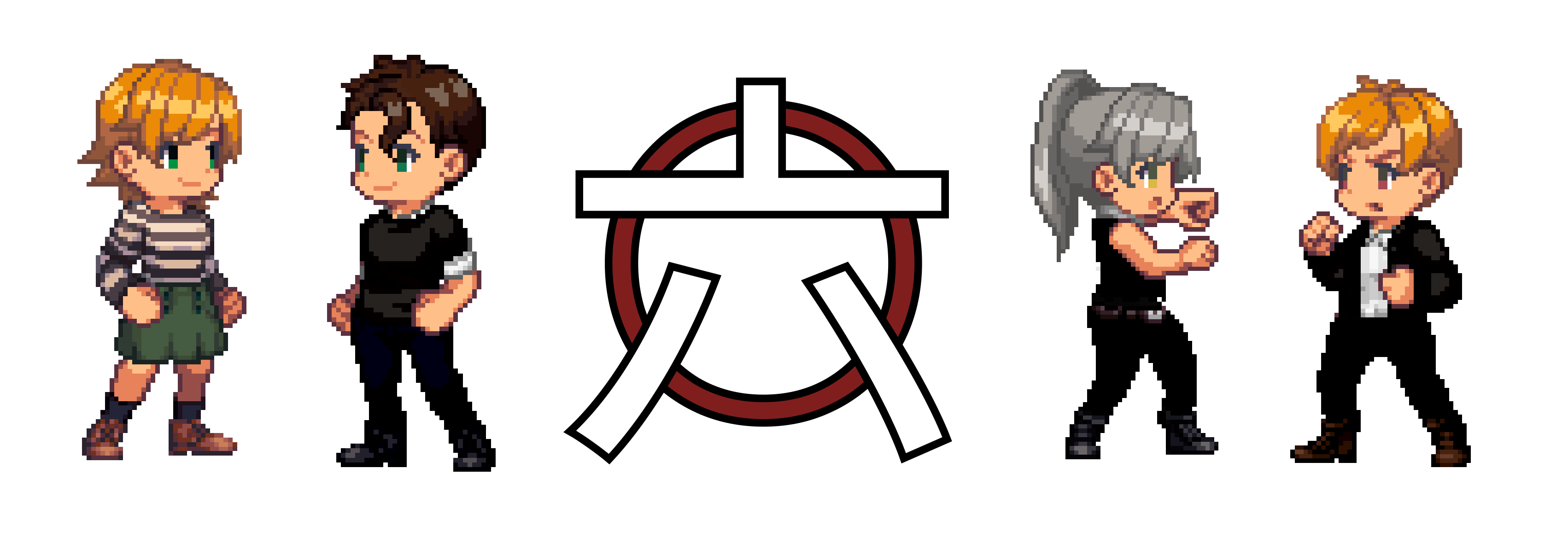
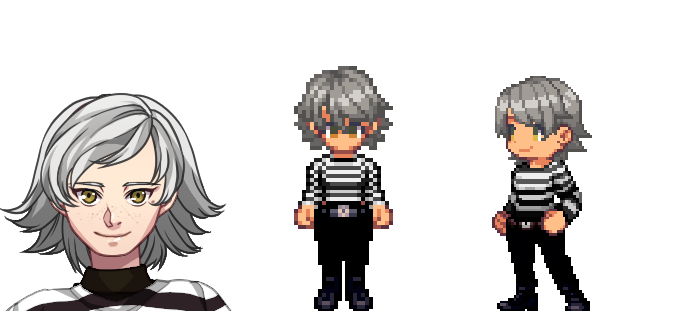
You might recall my frequent complaints. I've been embarrassingly vocal about the release schedule of the Stella Character Generator. Case in point: It still hasn't been updated since 2023.
Barring the fact that I'm thirsting for the assets (coats and running sprites among them), the current version is riddled with bugs (like colours not being saved). Coupled with the fact that the new version has been on the horizon since 2024, I've been holding back on character creation.
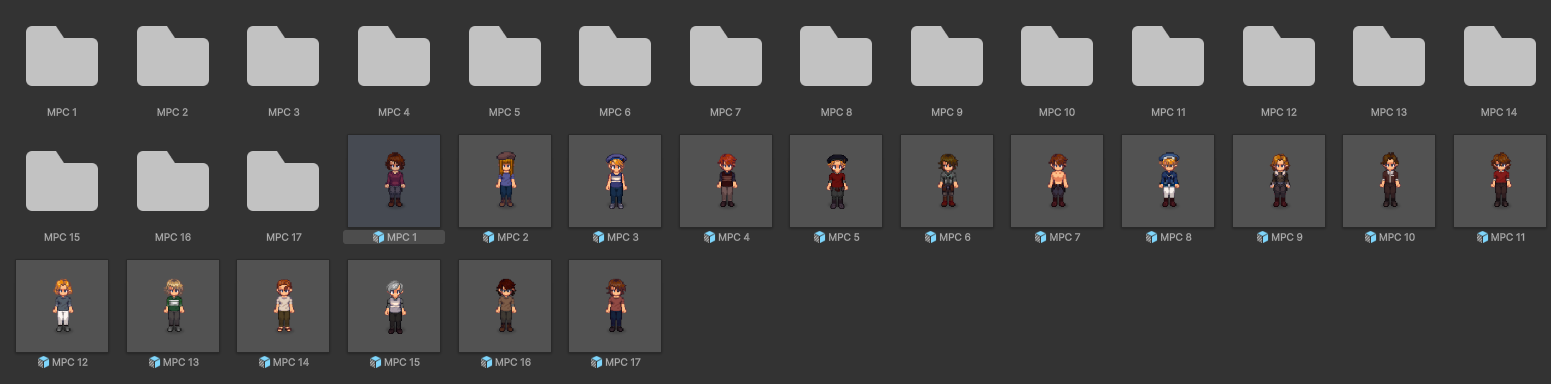
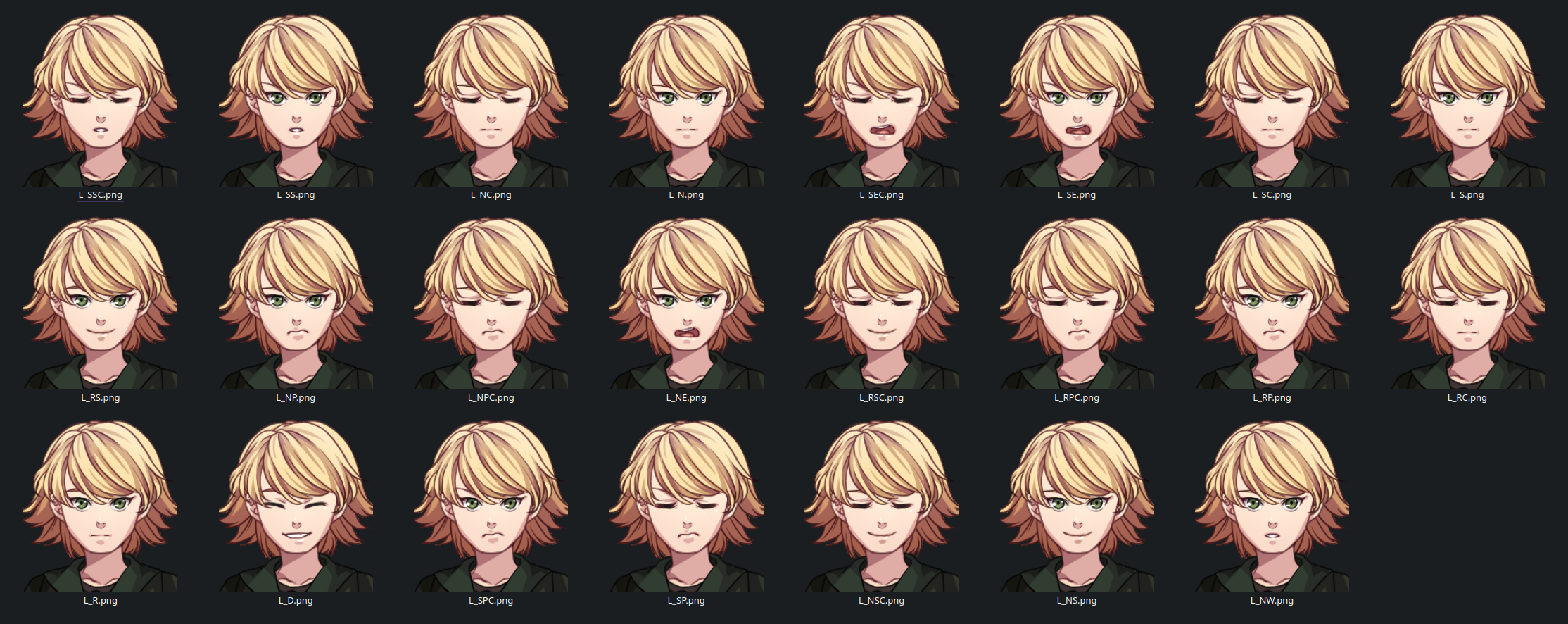
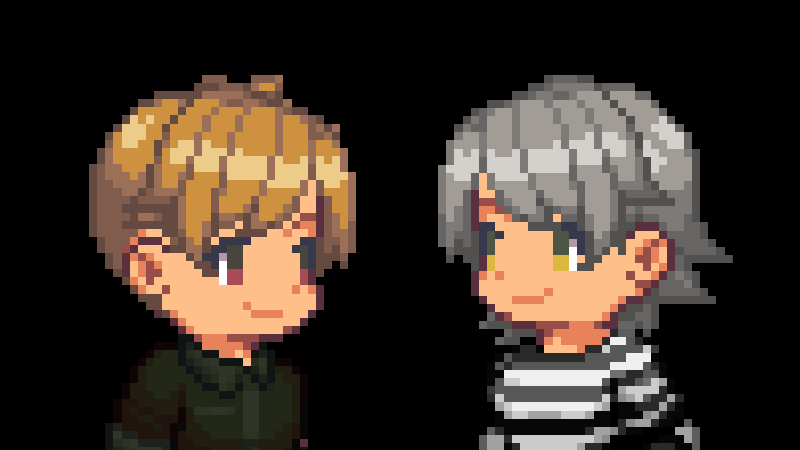
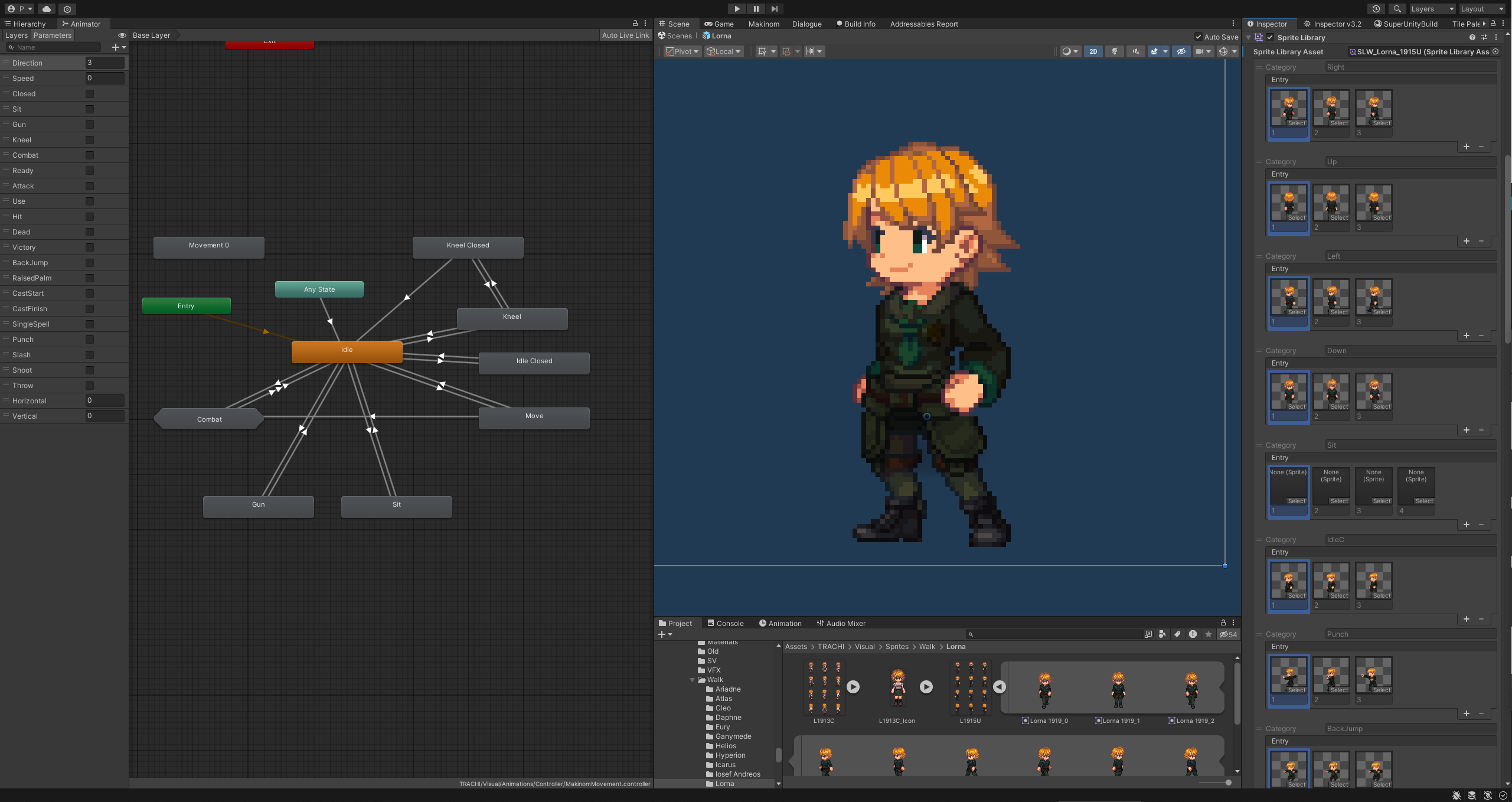
Two months ago, I couldn't take it any more. We took the parts and built our own Generator in Unity. Since that's where the rest of the game sits as well, we won't have to export a portrait or any other sprite ever again.
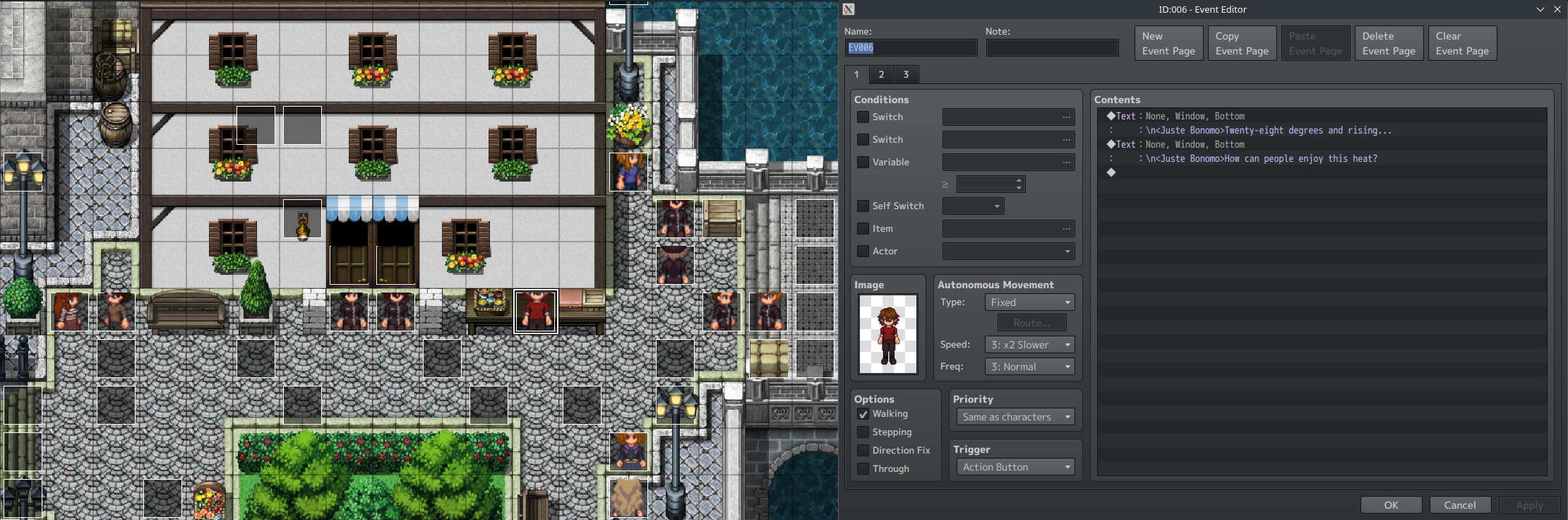
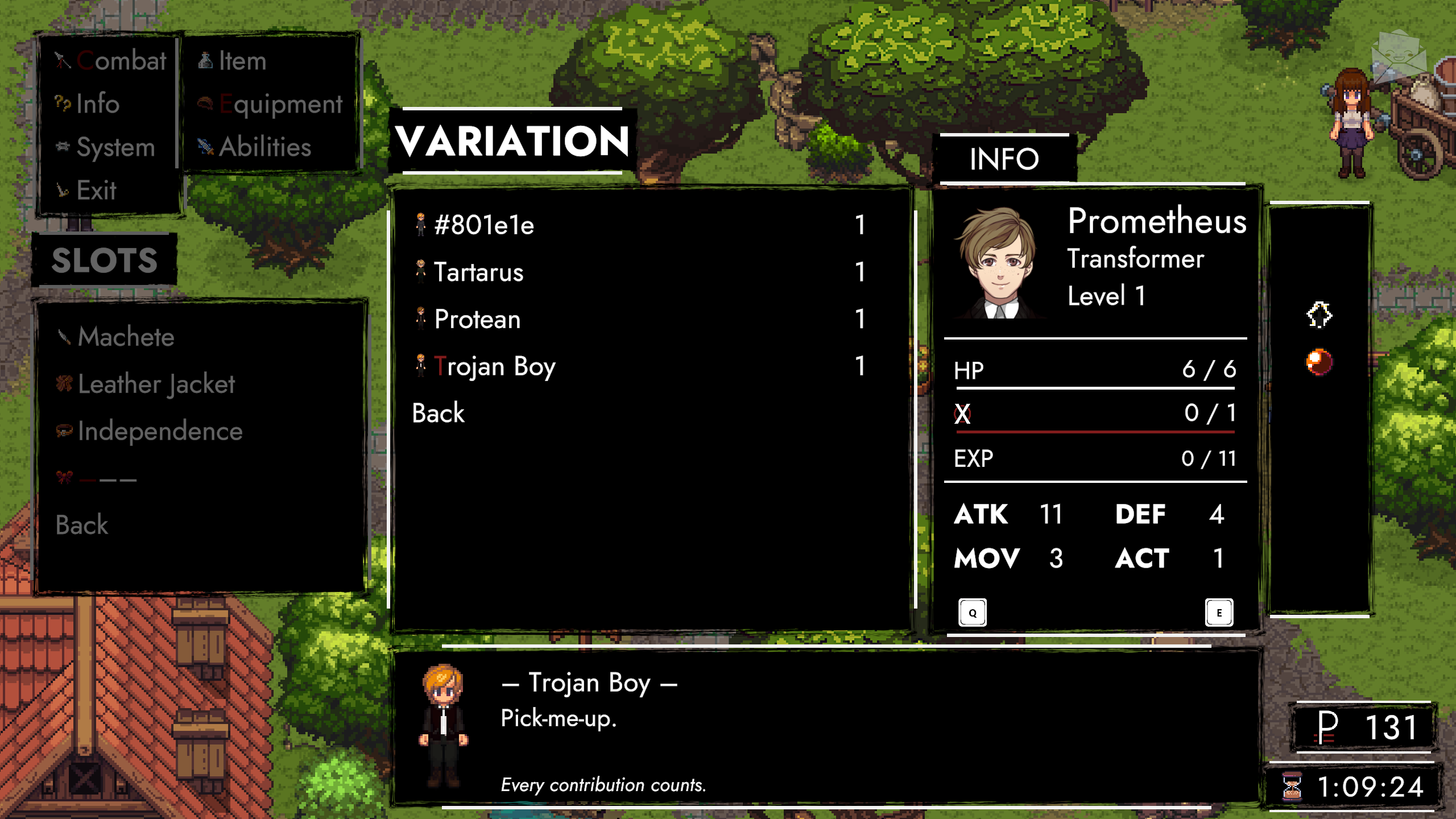
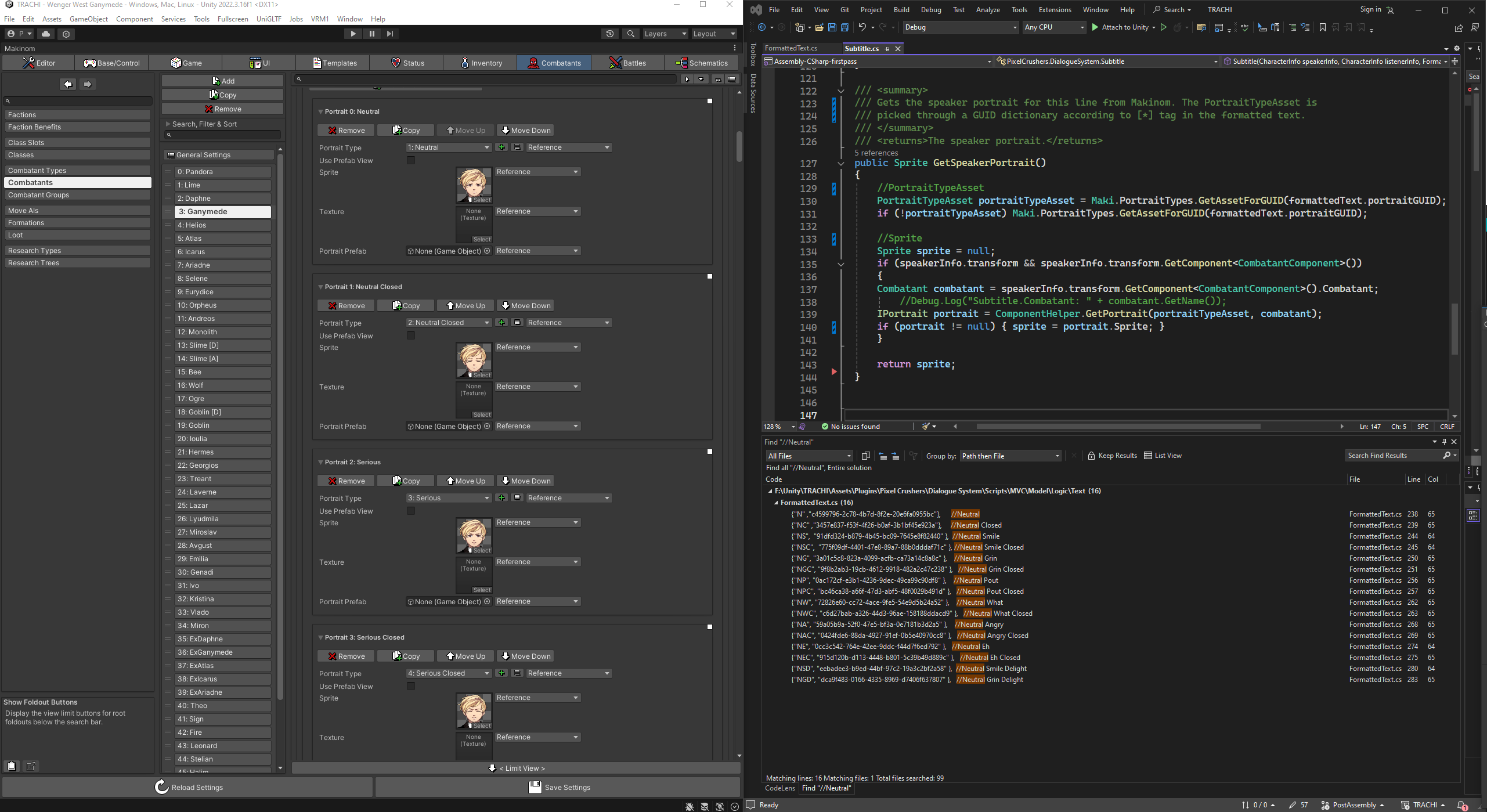
Instead, we use the structural information (body type, layers, parts, and colours) in the Generator's json-files and assemble the parts while the game is running. As a consequence, the game got around 100MB smaller, while I won't have to do the 'adjust character -> export 20-30 portraits + Walk / Side View sprites' dance ever again.
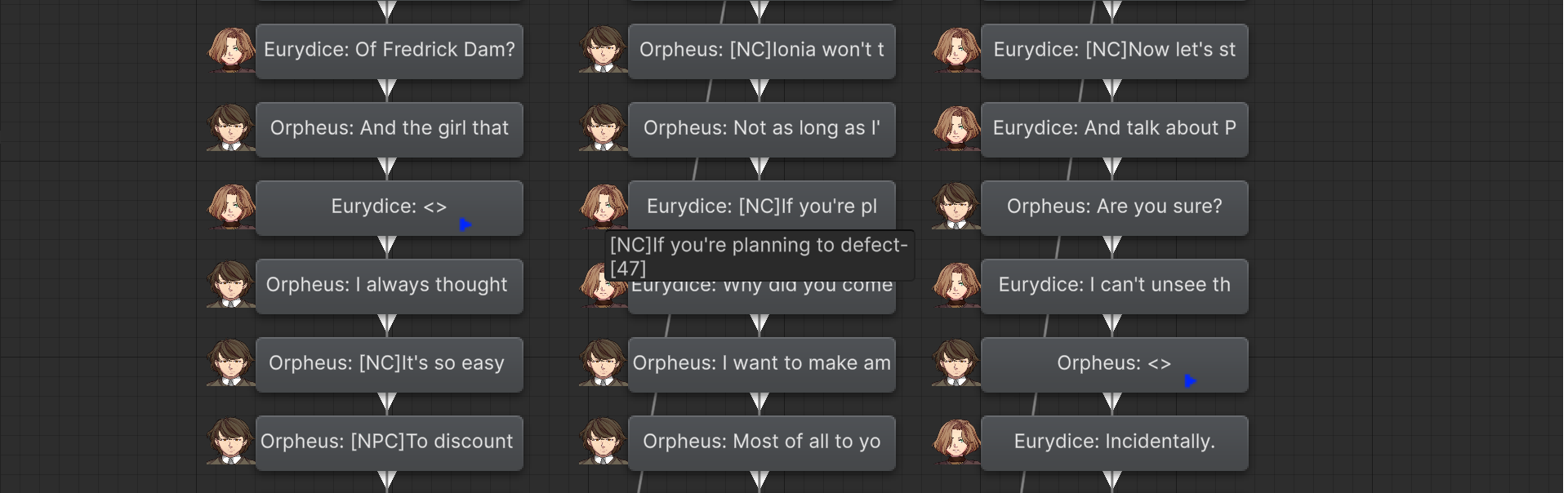
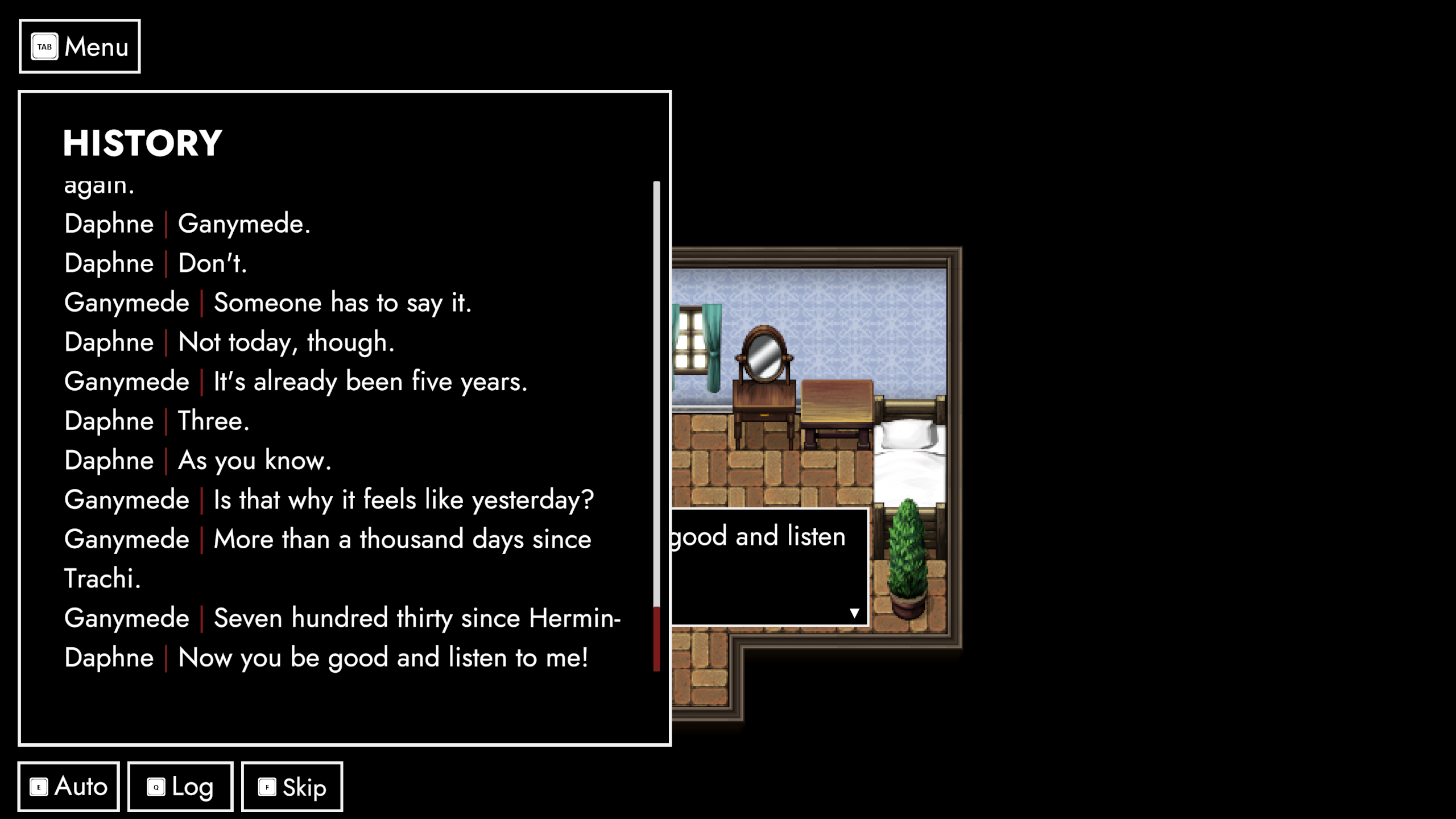
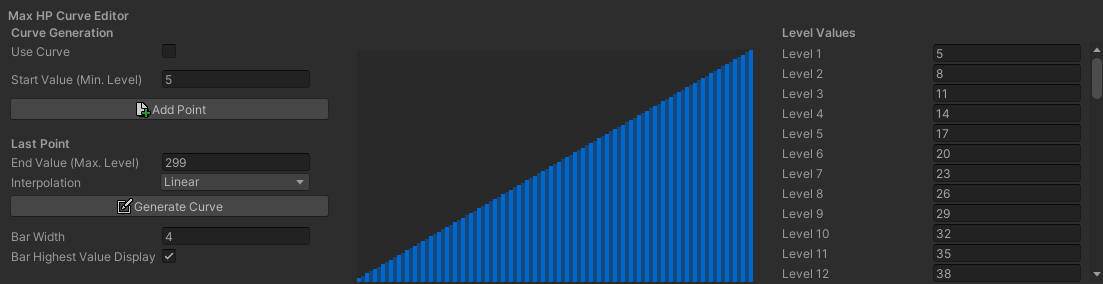
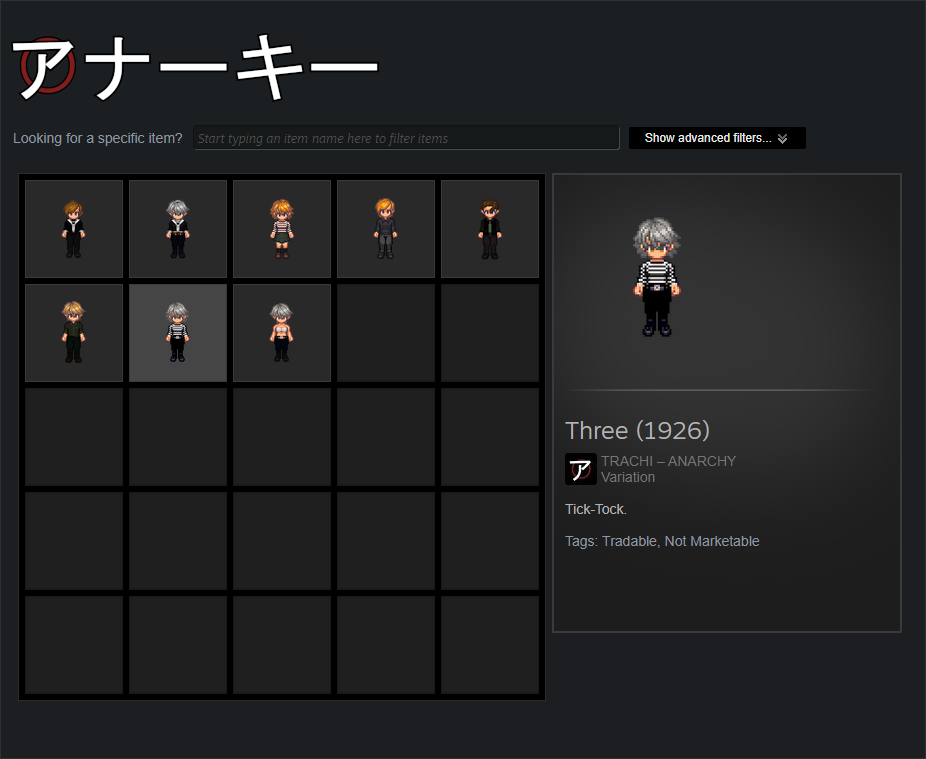
Instead, I'll change a few lines of json (for example through the editor above). Since we've also merged a character's base form and variations into a single, we add variations through a one-line override.
As a bonus, we'll be able to absorb the new parts, if and when the Generator is updated. Last but not least – and this is a statement, not a promise: Exposing player-side customization would – technically speaking – not take more than a few days of work.
Conclusion
There's a lot more to talk about, but I think we'll save that for the next announcement.
On the whole: We're wrapping up the systems-side, but the big ones are hooked up and tested. What's left is largely content work. Although InvitAtion's segments are mapped out and most of the side-quests already exist, there's a big swath of rewriting needed (largely due to the protags now being split).
The finale is roughly half-way there, but does need one or two extra features (flooding parts of a map is a first time for us). Last but not least, we do need to test the game from start-to-end. That stretch is the moment where I usually realize how much we already have.
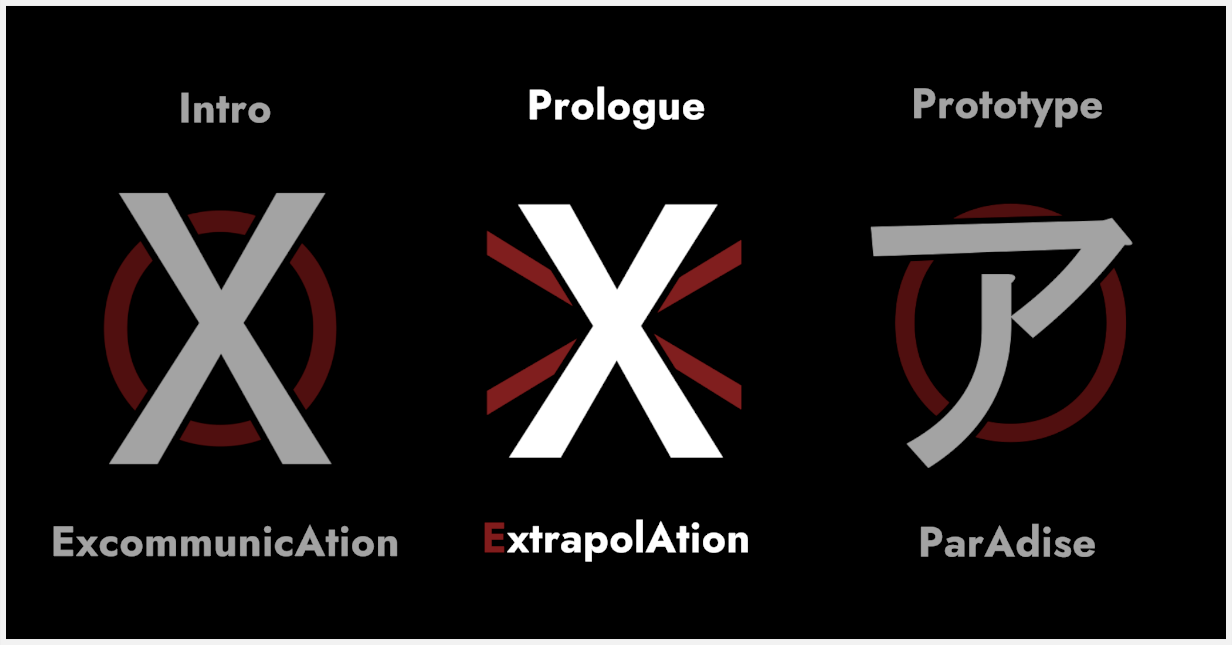
If you put it all together, ANARCHY is already bigger than AUTONOMY. The problem is that the content is smeared across three Epochs, two of which (Arteria and ParAdise [itself the first act of Ambrosia]) are proof-of-concept, if we're being generous.
So for ANARCHY 0.5, I'll focus on InvitAtion exclusively. It's the blueprint for the other three acts, where I'd put my efforts into mid-term. Once we're confident in the state of Arteria, we'll finally revisit ParAdise. By that point, we'll have the historical background and most of the necessary systems sorted out.
Since I'm still settling into my new job (and am days away from moving into a new apartment), I'll hope to be back with a story-based preview sometime in September / October. Barring any major incidents, we'll also have a proper release date by then (November / December seem reasonable).
Seven

Three years ago, we began a journey to succeed AUTONOMY.
On ANARCHY's third birthday, we're miles away from that. Partially because I couldn't check my ambition, but also because I had to prepare my post-PhD career. The latter paid off: I escaped the fixed-term contract hell (commonly known as academia). Though the process cost me my weekends, evenings and vacations across two-and-a-half years.
Now that we've reclaimed that space, I've got the time (and stability) to maintain a routine. With a bit of discipline, we'll return to consistency, followed by semi-regular releases throughout the year.
Because no matter how far I've strayed, TRACHI was, is – and will always be – my personal answer to 'why I'm here'.
Thank you for your attention and continued patience. Happy seven, TRACHI! Happy three, ANARCHY! 🥂 Most importantly: not-so-fictional kissies to the most handsome people in reality! 😘
much love
nory

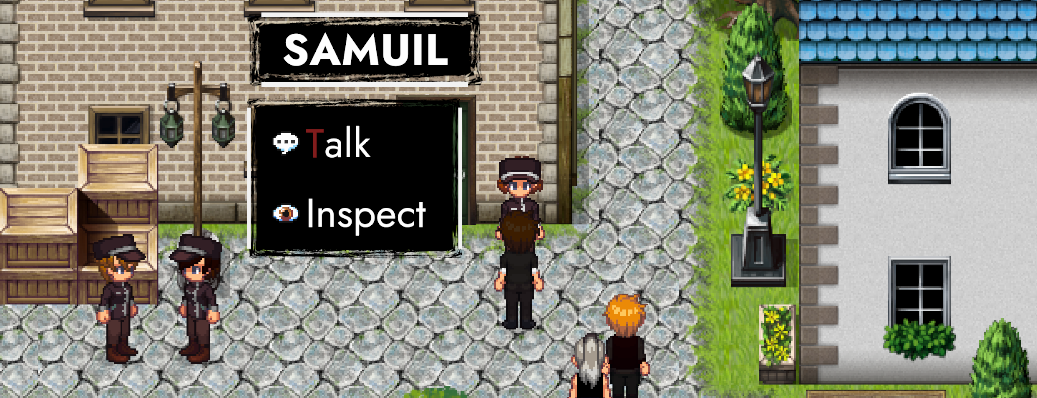
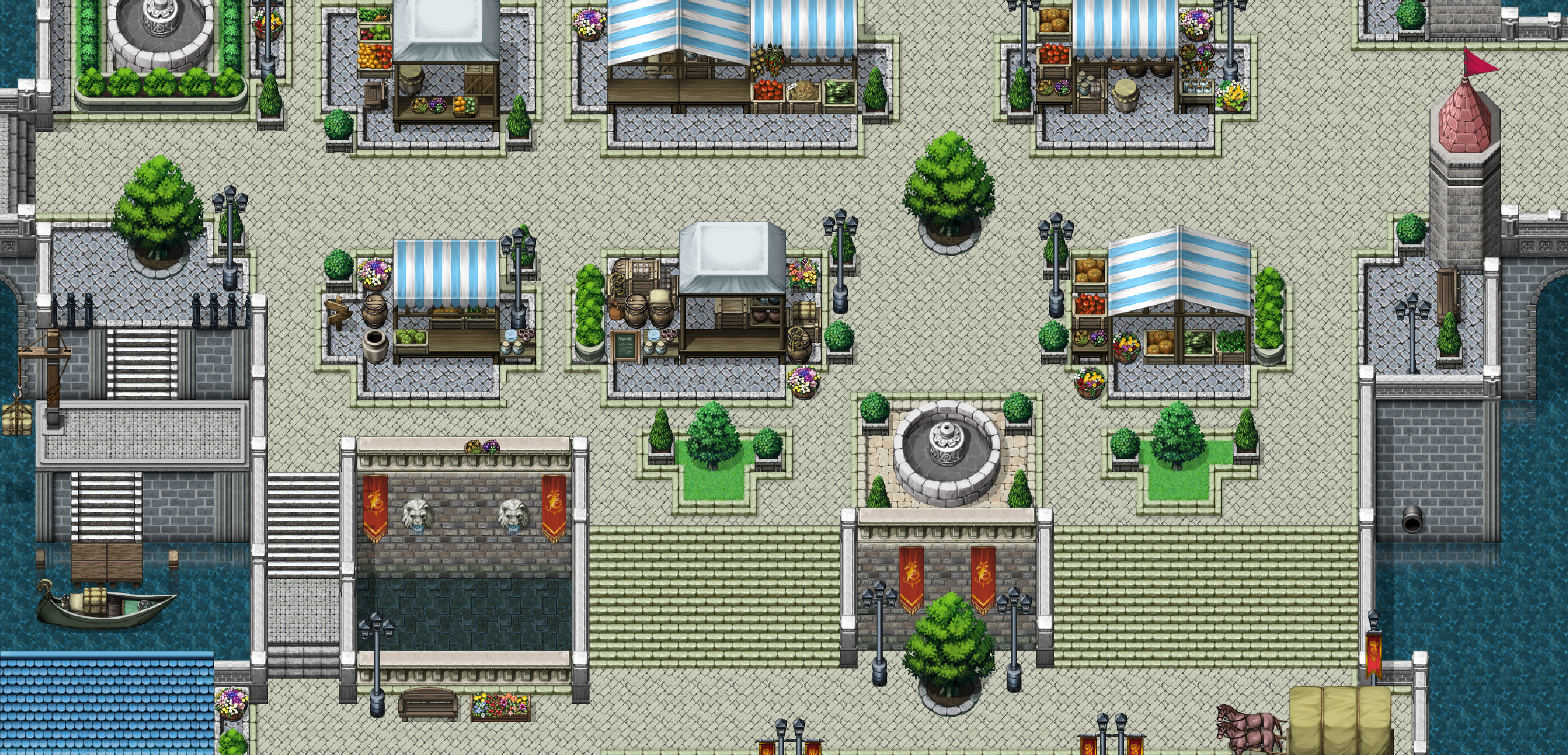
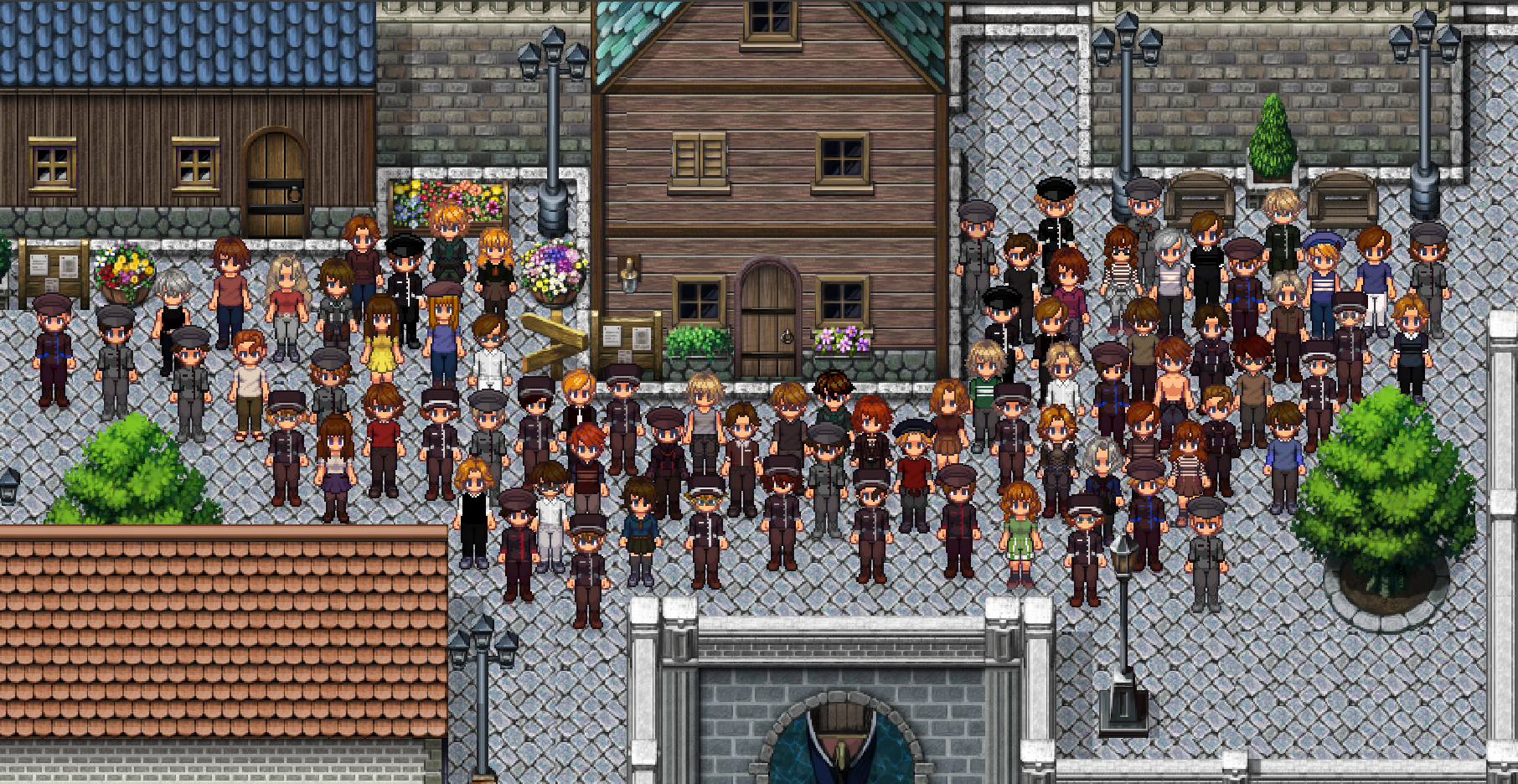
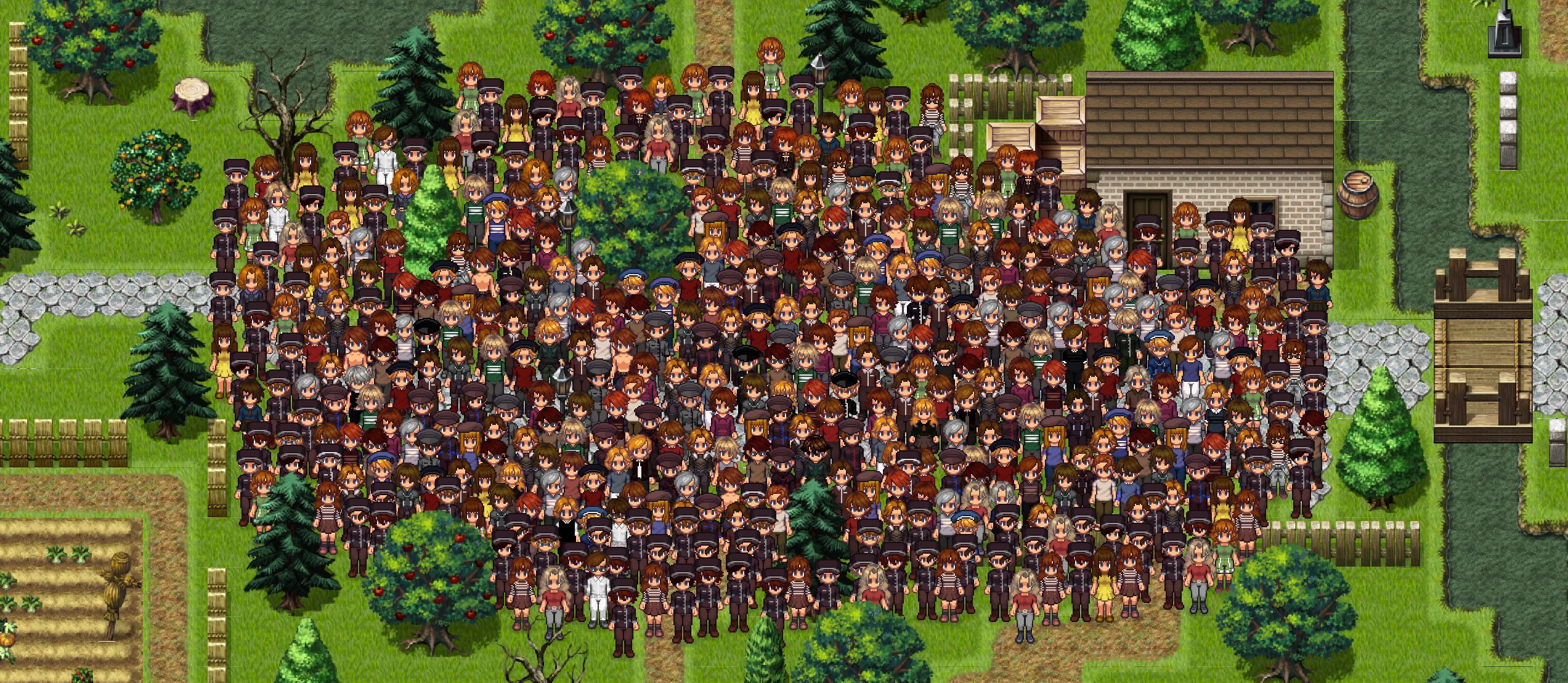
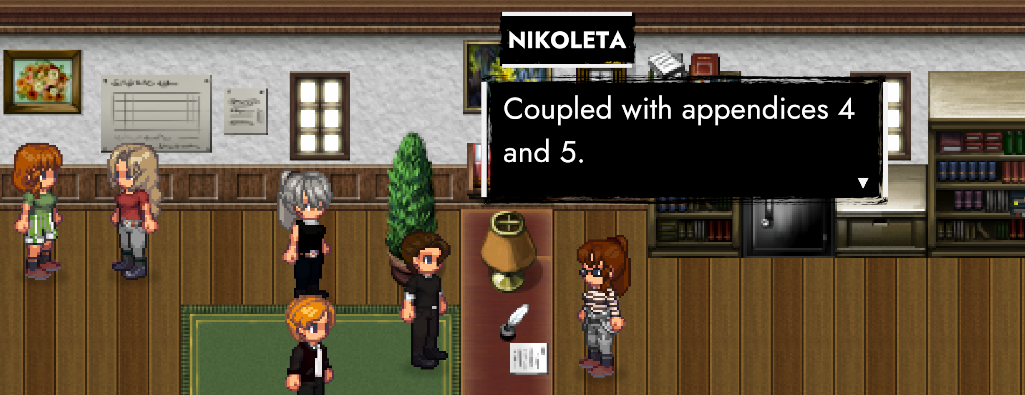 Compare, for example, the crowd outside to the queue inside the customs office. I'm sure some of you pondered the shape of this administrative bottleneck. In the future, I'd like to reward your investigative gaze.
  Among the many things we didn't do justice in AUTONOMY (R), the legal status of the DMZ is one of the top contenders. Mind you: we're talking about an area that is internationally defined as no-man's land. In technical terms, neither the TRG nor our three StateSec protagonists are allowed to act on behalf of their governments in the DMZ.
 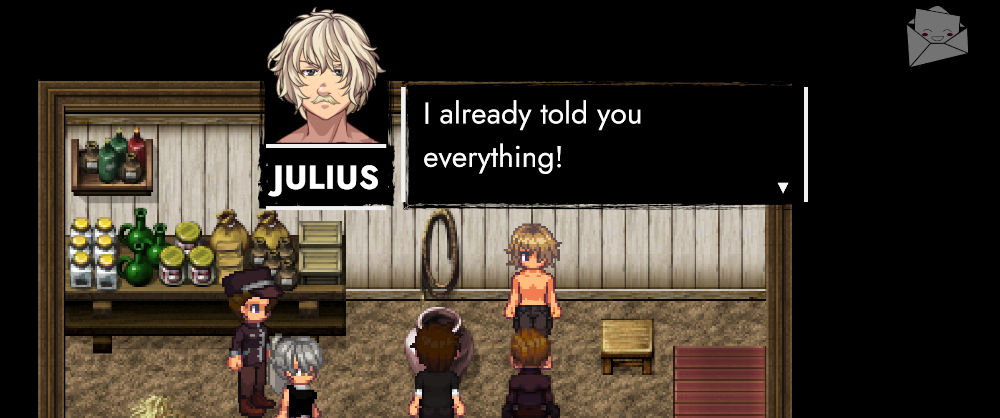 With a bit of extra context, we understand the gravity behind Lieutenant Tanner's raids. Apprehending people in foreign countries – even your own citizens – is illegal. Yet the man is holding people hostage as he's interrogating a suspect outside his jurisdiction.
 Technically, he's still in the Republican Guard. It makes for a better picture, you see? Heinrich is the hero who stopped a terrorist attack on Fredrick Dam. Even if you account for the fact that the operation was a false flag – the explosives were as real as the fourteen people who lost their lives.
 As you can see, Nestville is ready to defend itself. Tilian introduces himself as leader of a militia, but we never saw his crew. The armed civilians in the later stages of the game could either be from Nestville – or Ionian sleepers.
  On the civilian side of the village, we remember Kristofor De Bloom. He used to be Rondham's administrator, before being voted out – largely due to changed demographics (caused by the Ionian exodus). Although not a natural Ionian, Nestville's people naturally accepted their former administrator as head-councilor.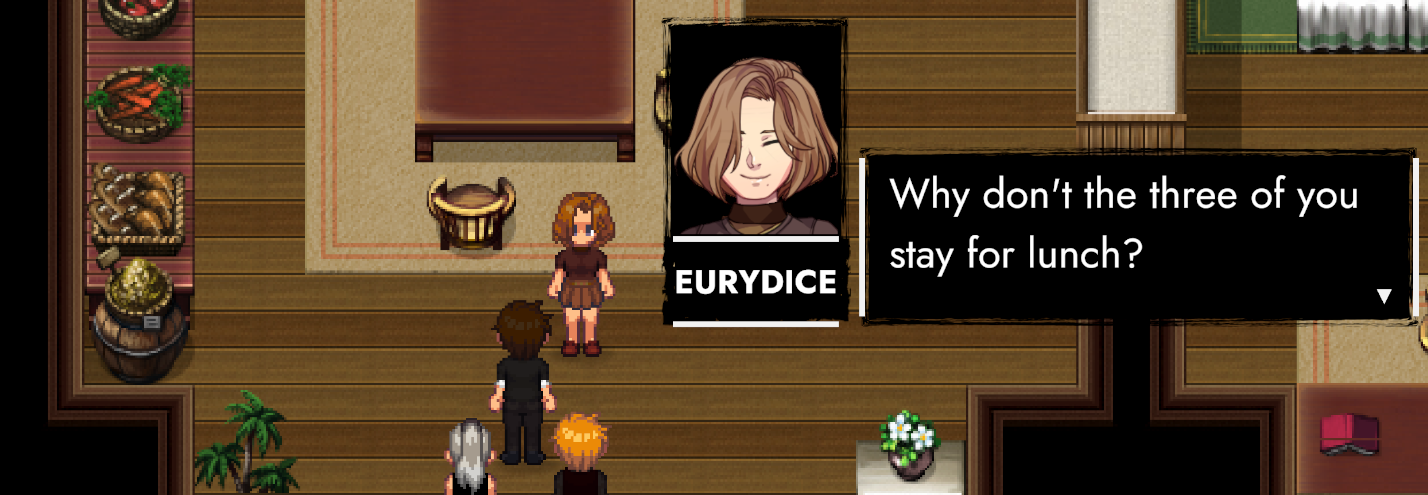
 To sum up, there's two things I'd like for you to take home. First and foremost: I broke my promise and already revised a couple of things. I hope the improvements make up for the fact that we'll ship AUTONOMY (U) as a remake straight away.