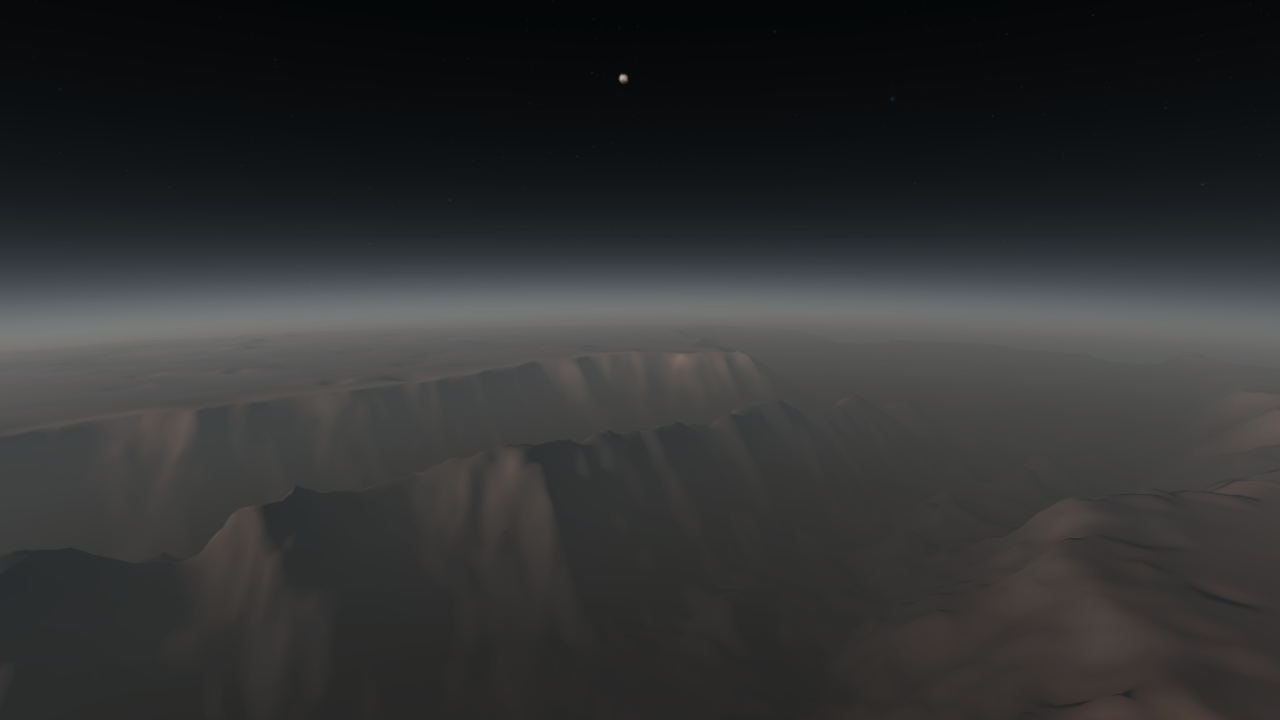
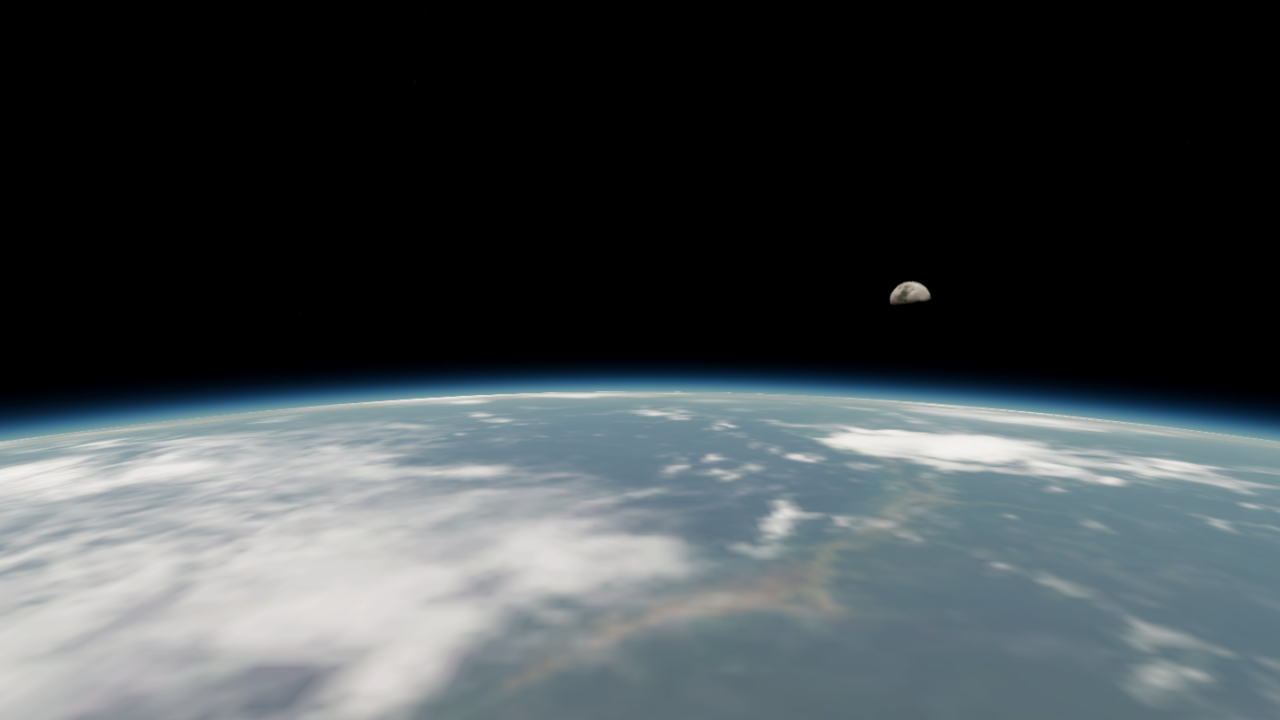
Improved atmosphere brightness near the terminator (day/night not the other kind) and various related bugs. Improvements/Bug fixes: Atmosphere is now consistent with scale changes and location. Pluto and other tall/sparse atmospheres working correctly. Auto-Tour now shows spacecr
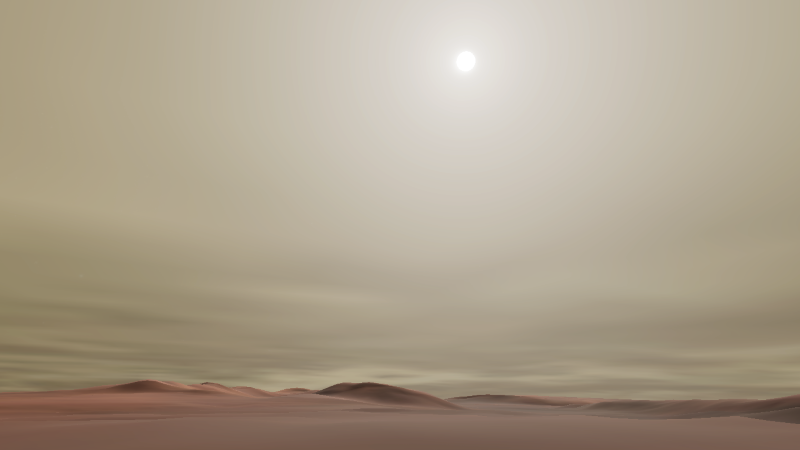
Improved atmosphere brightness near the terminator (day/night not the other kind) and various related bugs.
Improvements/Bug fixes:
Atmosphere is now consistent with scale changes and location.
Pluto and other tall/sparse atmospheres working correctly.
Auto-Tour now shows spacecraft at 1:1 scale.
Smoother changes for stellar object text size when passing stars.
Better altitude ray-casting protection when regenerating terrain.
Corrected bug where starting AstroVR with HMD connected resulted in an automatic VR start even if desktop was selected. Changes: AstroVR now accepts "-novr" as a command line argument. May still start the Vive Console application when XR not running. Audio may go to the HMD, depe
Corrected bug where starting AstroVR with HMD connected resulted in an automatic VR start even if desktop was selected.
Changes:
AstroVR now accepts "-novr" as a command line argument.
May still start the Vive Console application when XR not running.
Audio may go to the HMD, depending on external settings.
Starting Astro in VR when no XR subsytem is already running can result in an incorrect floor height. Restart AstroVR with SteamVR already running.
Correction for terrain failure to re-load on second entry into planetoid surface frame. -Note This fix untested in VR. Post in Discussions if there is a problem.
Correction for terrain failure to re-load on second entry into planetoid surface frame. -Note This fix untested in VR. Post in Discussions if there is a problem.
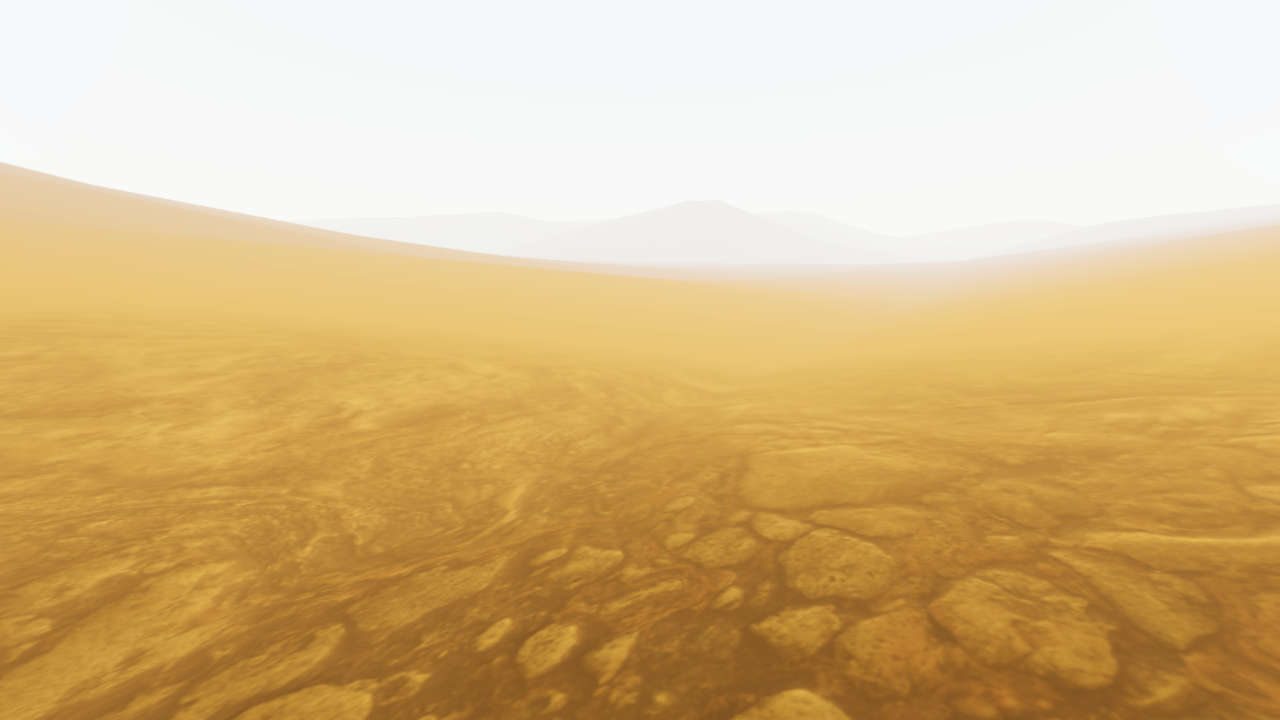
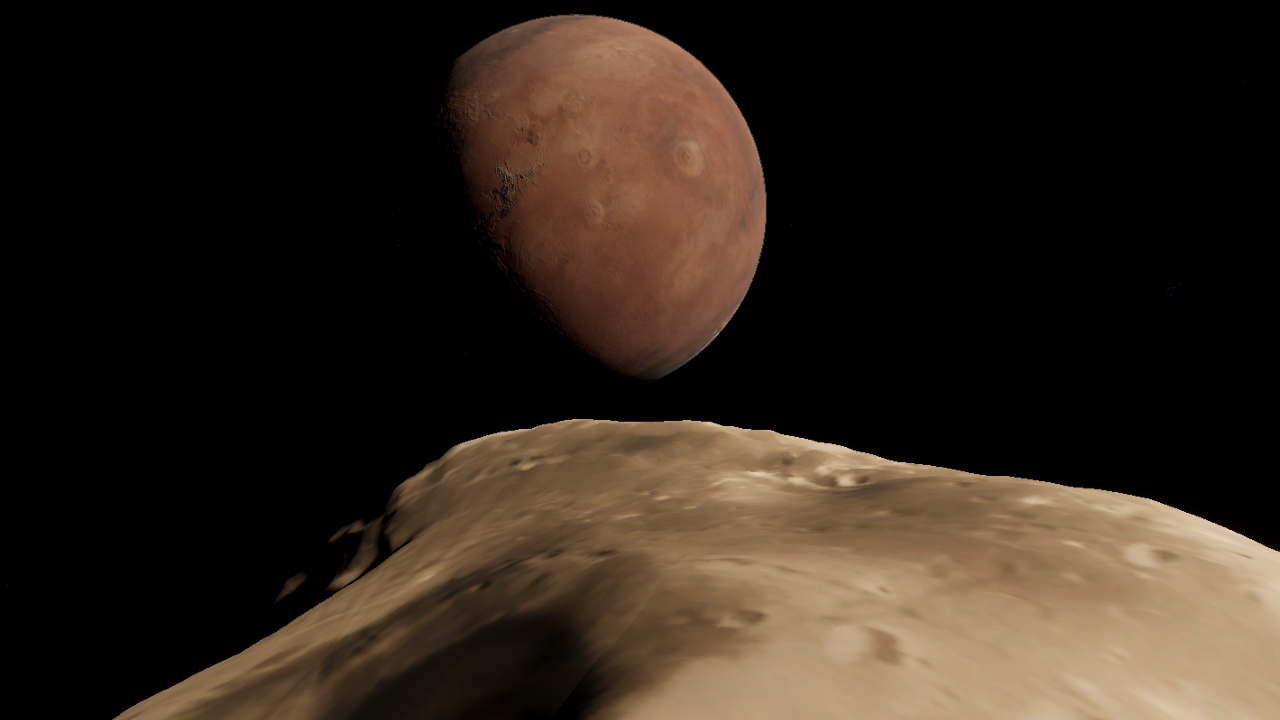
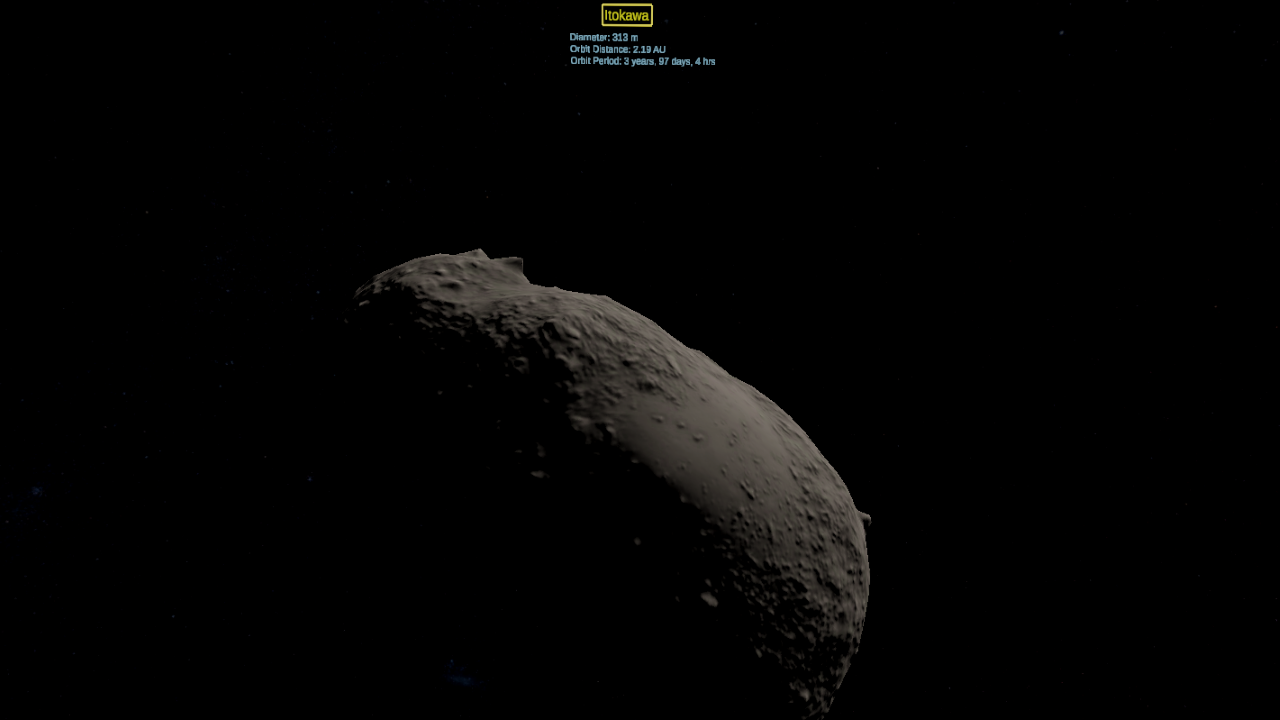
AstroVR now features realistic planetary terrain and atmospheres allowing true one-to-one scale exploration. Descend from space and walk directly on the surfaces of asteroids, moons, planets, and exoplanets. Dynamic terrain and irregular body support make small worlds feel physic
AstroVR now features realistic planetary terrain and atmospheres allowing true one-to-one scale exploration. Descend from space and walk directly on the surfaces of asteroids, moons, planets, and exoplanets. Dynamic terrain and irregular body support make small worlds feel physically distinct, while large planetary surfaces can be explored at human scale with detailed textures, lighting, and surface geometry.
All bodies have some form of terrain whether typical (exoplanets or unsurveyed solar system bodies), height mapped or Digital Elevation Models (DEM). Atmospheres (even micro-atmosphere) have been added to bodies known to have them.
Features:
Surface Frame - Once a planetoid is highlighted, just zoom in until the on-screen/right controller display turns light blue. When that happens you have entered the surface frame and can continue zooming or just point the movement controller in any direction.
Keyboard 'T' or VR control 'B' button if available toggles text on/off.
Background auto-brightness brightens or dims the background stars depending on the overall scene brightness.
Bug Fixes:
Brightness fixes to some coronas and brown dwarf planet lighting.
Planet sudden change in size when zooming.
Known Issues:
Some moons or asteroids are from 3rd party models and will have texture shake at 1:1
Some solar system objects use inaccurate image based elevations.
Haumea shifts terrain imagery when LOD-ing.
Infrequently, zooming to ground can stutter and zoom to extreme distances. Return Home to reset the scale.
Command line for VR/NON VR use does not solve the problem of SteamVR auto-starting when headset is plugged in.
Movement and low resolution terrain are complete. Working atmospheres for our solar system as well as extrapolations for exoplanets. As it stands the plan is as follows: Release with low res terrain (known or typical depending on the available data) Release with updated planetoid
Movement and low resolution terrain are complete. Working atmospheres for our solar system as well as extrapolations for exoplanets. As it stands the plan is as follows:
Release with low res terrain (known or typical depending on the available data)
Release with updated planetoid positions for the next year
Release with high resolution terrain for planets with known data.
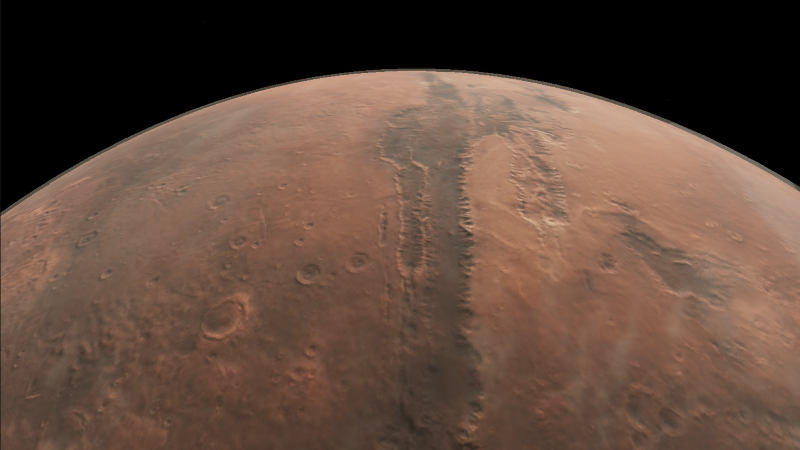
I know there hasn't been an update in a few months. That's because I am working on getting down to one to one scale. Along with that will be terrain (where available), atmosphere, and the ability to walk the surface of planets. The next release (phase I) will be 1:1 scale and low
I know there hasn't been an update in a few months. That's because I am working on getting down to one to one scale. Along with that will be terrain (where available), atmosphere, and the ability to walk the surface of planets. The next release (phase I) will be 1:1 scale and low resolution terrain for Mars. Standby.
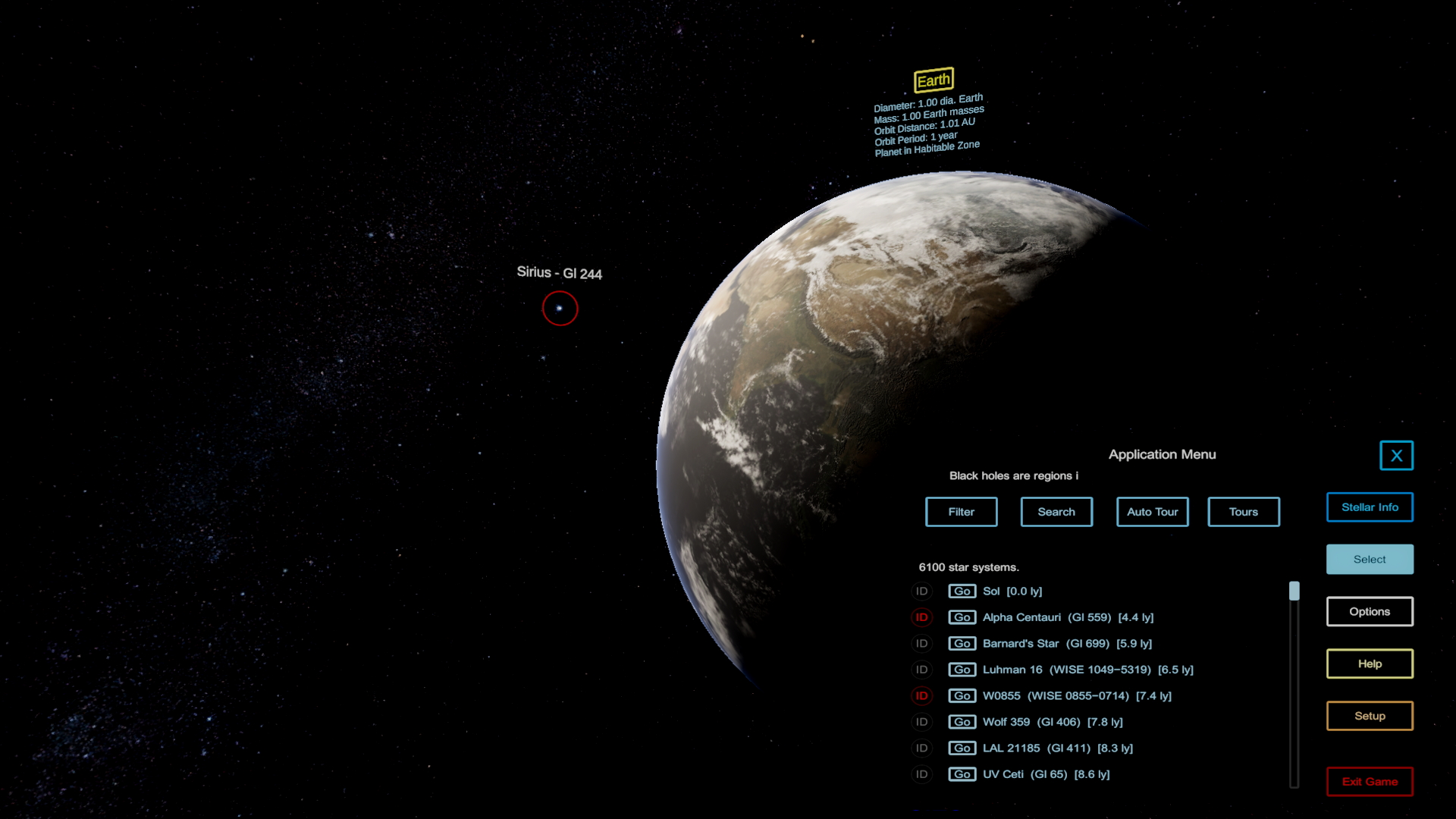
In the Selection menu, click the ID button to highlight the star system in the sky. The location will be identified with a red circle and the name of the system even if the stars themselves are not visible. Other improvements include correcting close orbiting binaries distances a
In the Selection menu, click the ID button to highlight the star system in the sky. The location will be identified with a red circle and the name of the system even if the stars themselves are not visible. Other improvements include correcting close orbiting binaries distances and to add a nova effect for the upcoming T Coronae Borealis eruption.
Now launch a light pulse 1 second long that will move at the speed of light based on the time scale. Be amazed by the speed of light, but probably not in the way you think. Select objects directly for improved viewing when motion is enabled. Also, rotate objects by hand to see th
Now launch a light pulse 1 second long that will move at the speed of light based on the time scale. Be amazed by the speed of light, but probably not in the way you think. Select objects directly for improved viewing when motion is enabled. Also, rotate objects by hand to see the dark side. Spin eventually slows and returns to correct facing angle. Enable swap controller functionality to allow both left and right controller capabilities from a single controller.
Improvements:
Fire a 1 second long light pulse from the left controller trigger. Pulse scales with size and time.
Select objects directly from the right controller. Objects stay selected until empty space is selected.
Rotate objects in place by spinning by hand.
Single controller mode allows left/right controller functionality to be swapped with the grip button.
Point light to direct light cross-over matches brightness better.
Corrected bug where narration (Windows platform only) was causing a crash while using Linux+Proton. Added the "-noMicrosoft" command line option and provided a a 3rd option for launch. Future plan is to improve narration quality using a non platform specific solution.
Corrected bug where narration (Windows platform only) was causing a crash while using Linux+Proton. Added the "-noMicrosoft" command line option and provided a a 3rd option for launch. Future plan is to improve narration quality using a non platform specific solution.
Added credits text and fixed some bugs. Updates: Added credits text around SagA* from the Help menu. Added Exoplanet only selection to AutoTour. Corrected bug where stars with unknown temperature produced no light, defaulted to 4000K. Corrected text in tutorial indicating no one
Added credits text and fixed some bugs.
Updates:
Added credits text around SagA* from the Help menu.
Added Exoplanet only selection to AutoTour.
Corrected bug where stars with unknown temperature produced no light, defaulted to 4000K.
Corrected text in tutorial indicating no one had seen an exoplanet, but there are direct images.
Corrected bug where first item in in star systems list would not be used in auto tour. Corrected bug where minor items would not be used in auto tour unless solar items was also checked.
Corrected bug where first item in in star systems list would not be used in auto tour. Corrected bug where minor items would not be used in auto tour unless solar items was also checked.
Big and small bug fixes. Fixed hard crash when narration enabled and user attempts to edit a user tour with narration enabled. Fixed bug where mouse clicks would sometimes not work near stars. Restore time state when tour ends.
Big and small bug fixes.
Fixed hard crash when narration enabled and user attempts to edit a user tour with narration enabled.
Fixed bug where mouse clicks would sometimes not work near stars.
Minor corrections to tours. Improvements/Fixes: Turned off screen data during a tour. Turned off data on right hand controller while main menu is up. Added a "selected item only" when cycling through label settings. Corrected bug where first push on button in Tour menu did not wo
Minor corrections to tours.
Improvements/Fixes:
Turned off screen data during a tour.
Turned off data on right hand controller while main menu is up.
Added a "selected item only" when cycling through label settings.
Corrected bug where first push on button in Tour menu did not work.
The Encyclopedia Galactica update adds a descriptive paragraph for all 12,485 objects in AstroVR narrated by Stephen Hawking. Also added are automatically generated tours for solar system planets and moons, small planetoids and spacecraft, or stars and exoplanets. Stars and exopl
The Encyclopedia Galactica update adds a descriptive paragraph for all 12,485 objects in AstroVR narrated by Stephen Hawking. Also added are automatically generated tours for solar system planets and moons, small planetoids and spacecraft, or stars and exoplanets. Stars and exoplanets are chosen from the scrolled list of systems so they can be limited by the Filters or Search menus. User defined tours let you zoom to any object and capture the location, set a duration, narration, and time scale for replay later.
Improvements
Added an AI generated paragraph for each stellar object visible in Stellar Info or narrated using a voice from your (Windows) computer.
Auto Tour added that takes you to various object categories in random or distance order.
User defined tours added to create, save, and edit tours for later playback.
Minor updates to brown dwarfs for temperature differences.
Re-added lost default configs for some controllers and added a text based search for star systems by name. Please report BUGS, especially with controllers. Like many Indie developers I typically have no way of knowing there is an issue with controllers I don't have. Bug Fixes: De
Re-added lost default configs for some controllers and added a text based search for star systems by name. Please report BUGS, especially with controllers. Like many Indie developers I typically have no way of knowing there is an issue with controllers I don't have.
Bug Fixes:
Default controller settings re-established.
Improvements:
Selection Filter and Search buttons now remain lit when a filter/search text is active.
New search feature added where name or partial name is used to filter the systems list. The text is used on the filtered results, if any. Text searches names from catalogs not shown in the app.
Updated solar system data for the April 8 eclipse and some bug fixes. Updates: Updated all solar system data from JPL. Bug Fixes: Corrected bug where planet and star sizes sometimes became unscaled. Corrected orbit drift while motion is running. Enhanced size moons will now cast
Updated solar system data for the April 8 eclipse and some bug fixes.
Updates:
Updated all solar system data from JPL.
Bug Fixes:
Corrected bug where planet and star sizes sometimes became unscaled.
Corrected orbit drift while motion is running.
Enhanced size moons will now cast a normal sized shadow.
Star systems of all types now have motion based on Keplerian orbital data within a system. The motion of binaries, ternaries, and above are all simulated including black hole - star binaries (see Cygnus X-3) which tend to have the fastest orbits or the triple star Algol (90 Ly).
Star systems of all types now have motion based on Keplerian orbital data within a system. The motion of binaries, ternaries, and above are all simulated including black hole - star binaries (see Cygnus X-3) which tend to have the fastest orbits or the triple star Algol (90 Ly). Complex orbital motion is also modeled such as Rigel's (732.9 Ly) 4 stars where star C orbits Rigel A, Ba orbits C, and Bb orbits Ba.
Stars are all organized in the same fashion as the data, two stars one being a primary and one a companion. Note that currently you can only transition from companion star to primary while motion is running.
Improvements:
Star orbital motion added for 2 or more star systems.
Performance optimization during motion.
Smoother transitions from object to object while motion is running.
Updated time control to give a greater range.
Bug Fixes:
Orbital data, especially semi-major axis has been reviewed and corrected.
Brief flash fixed when going to a distant star from the Selection menu.
Far orbit planet stuttering (when viewed from a moon, e.g. Charon to Pluto) has been fixed.