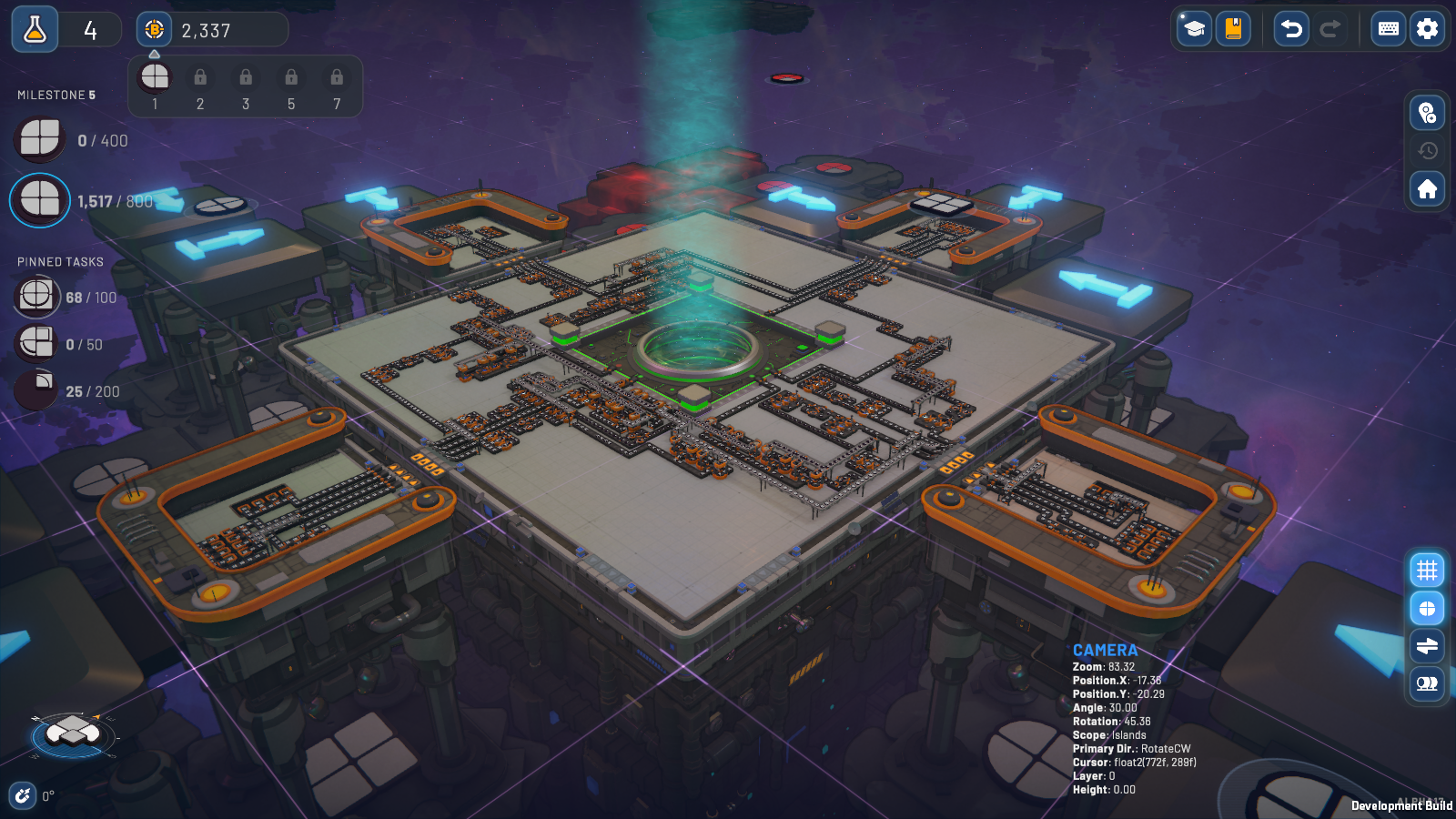
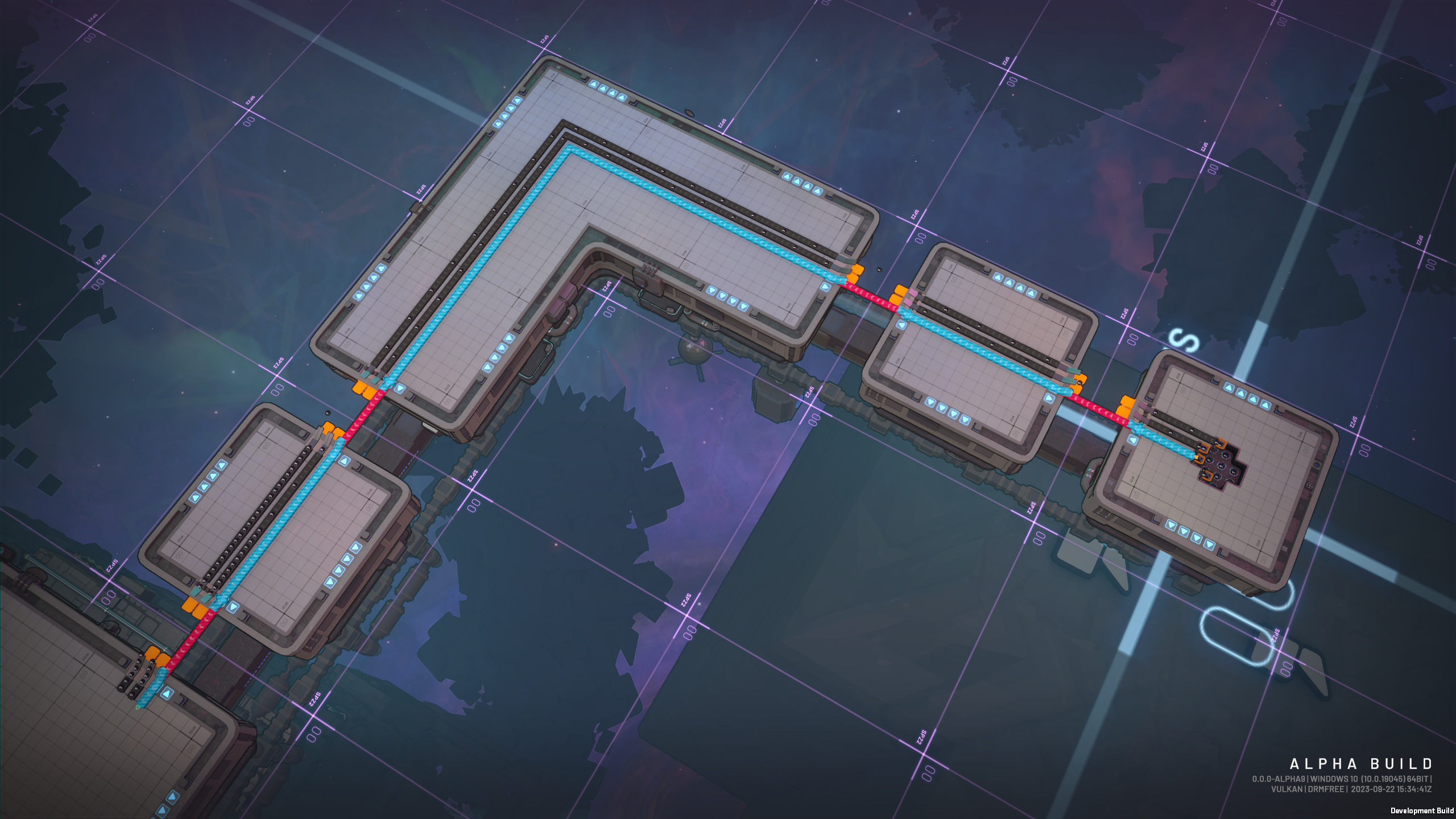
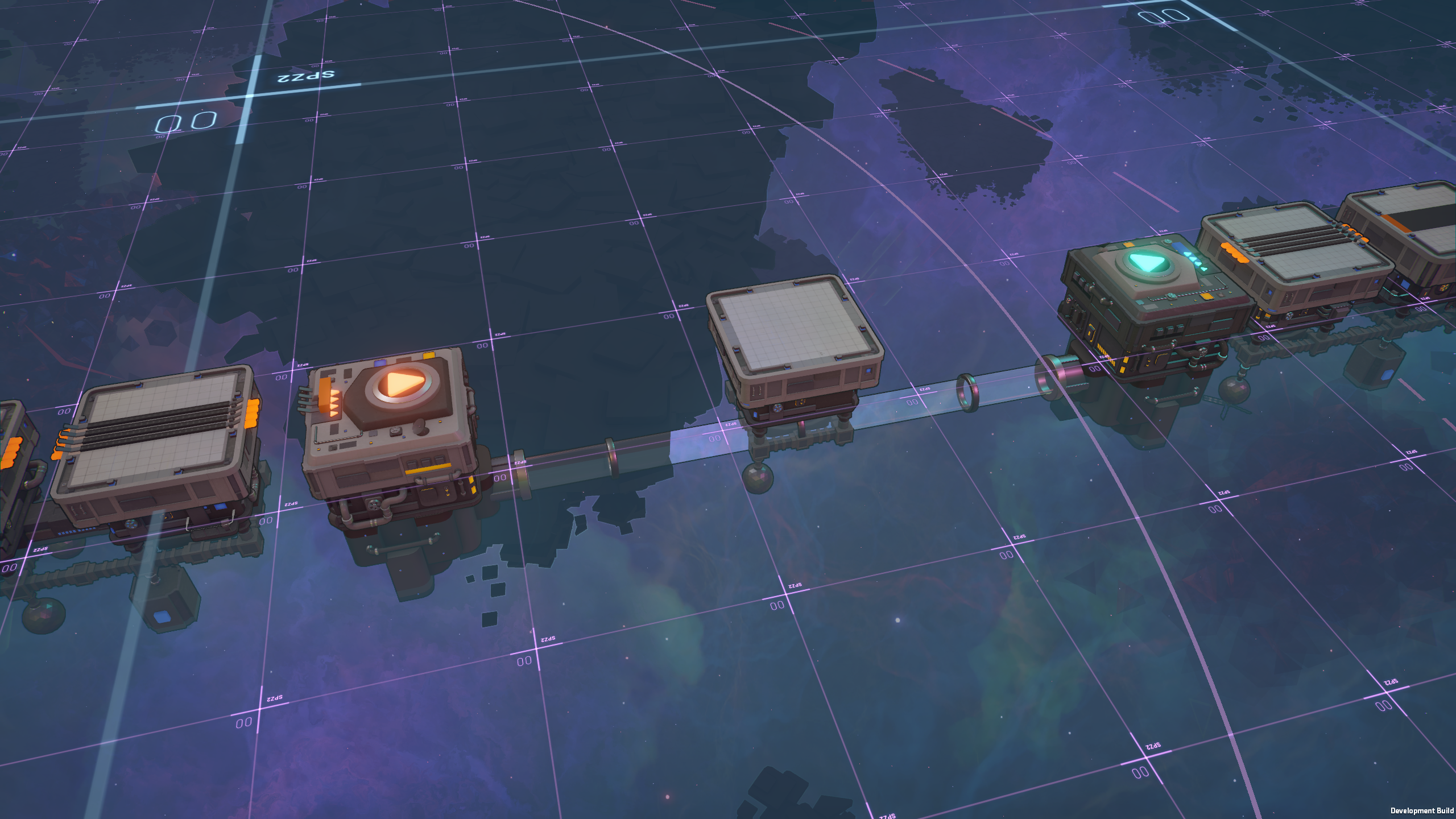
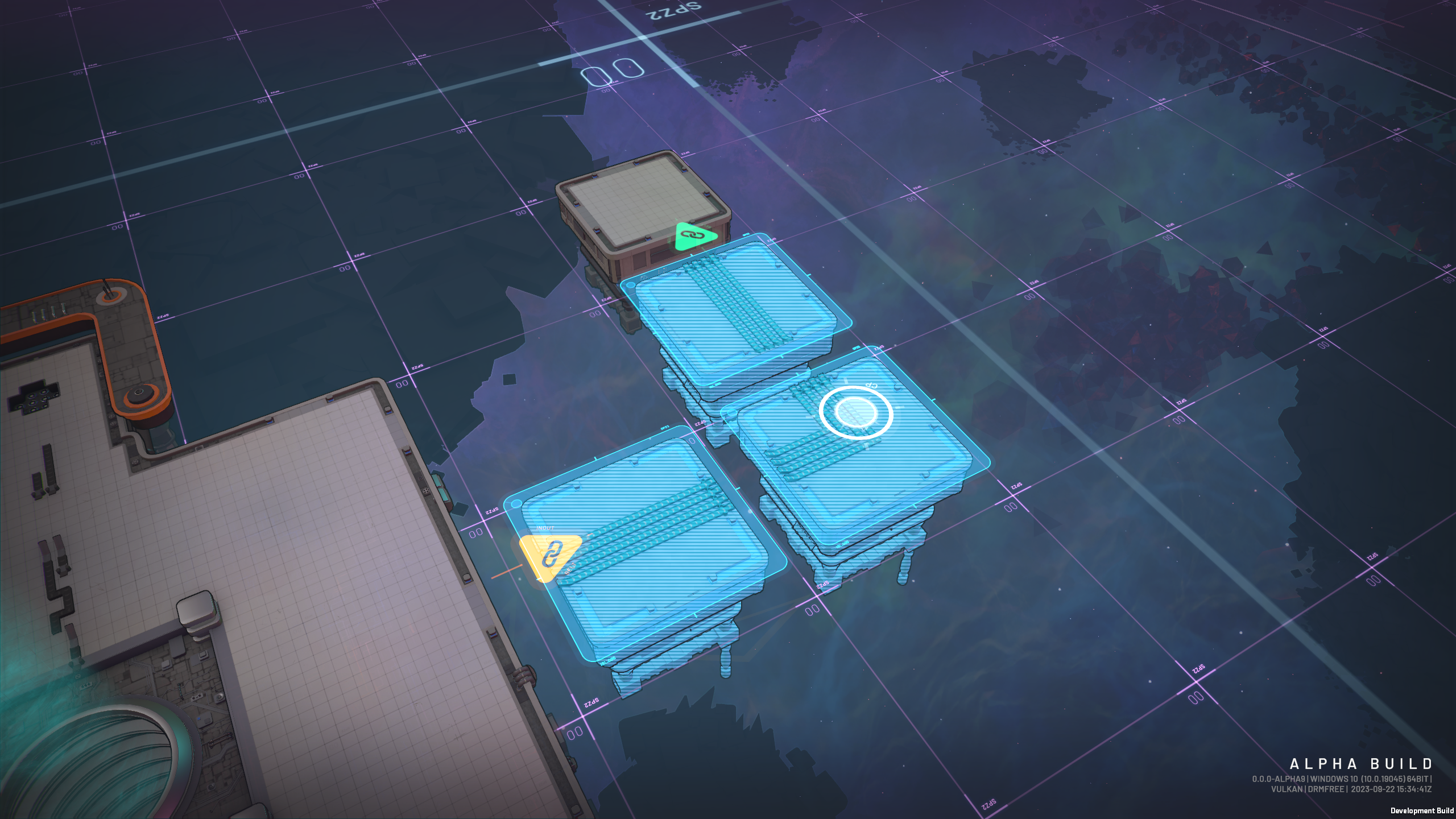
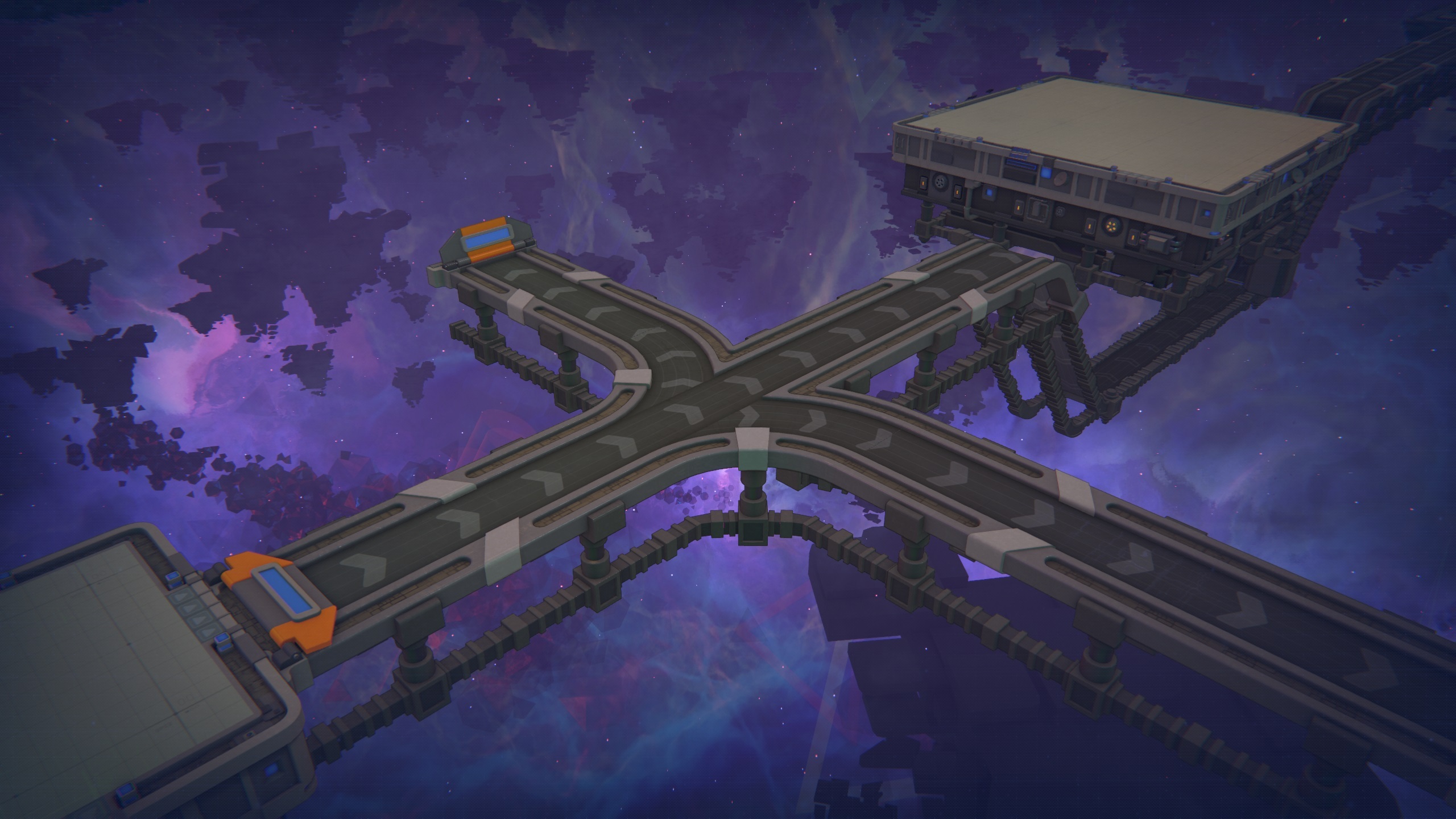
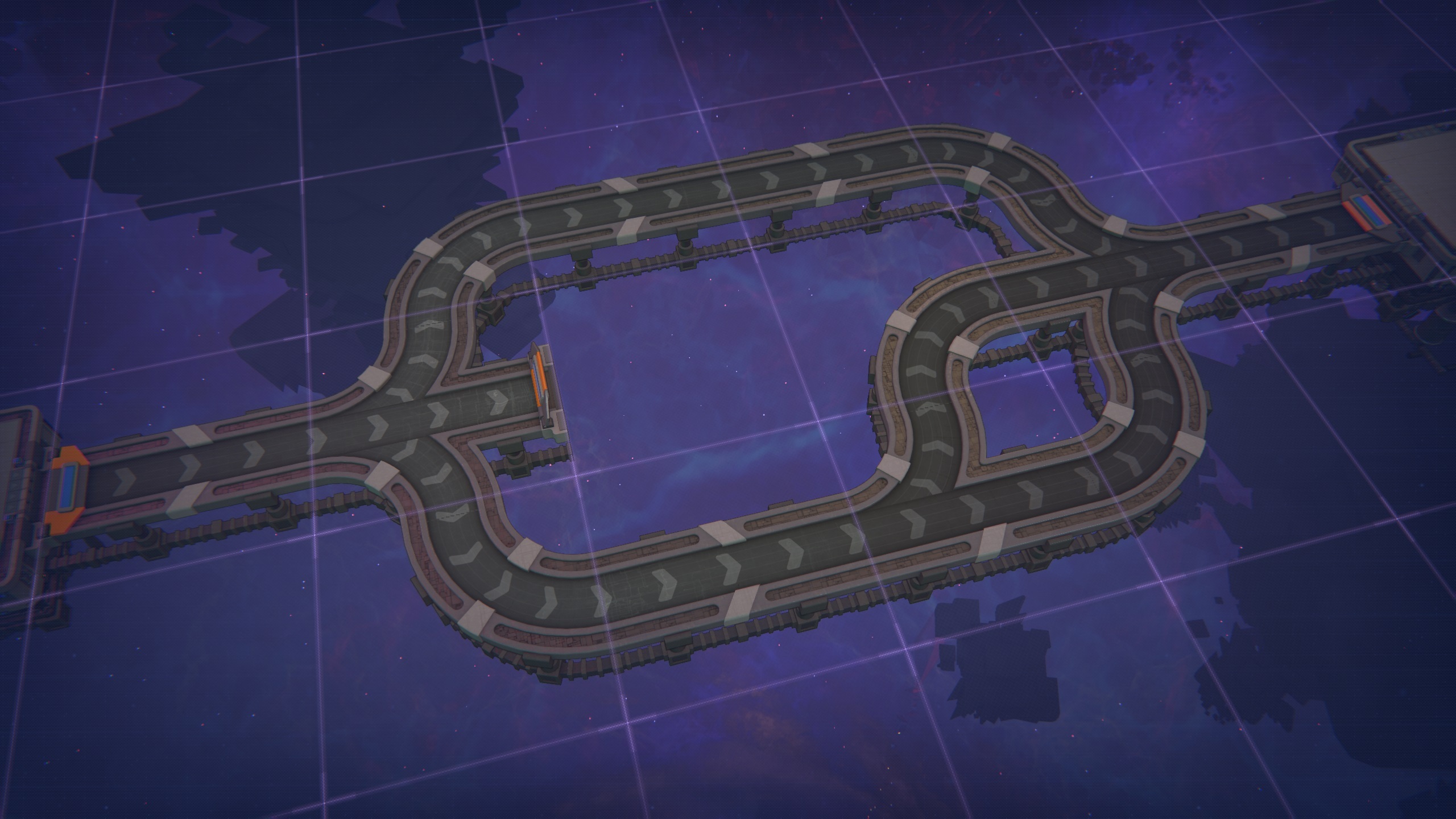
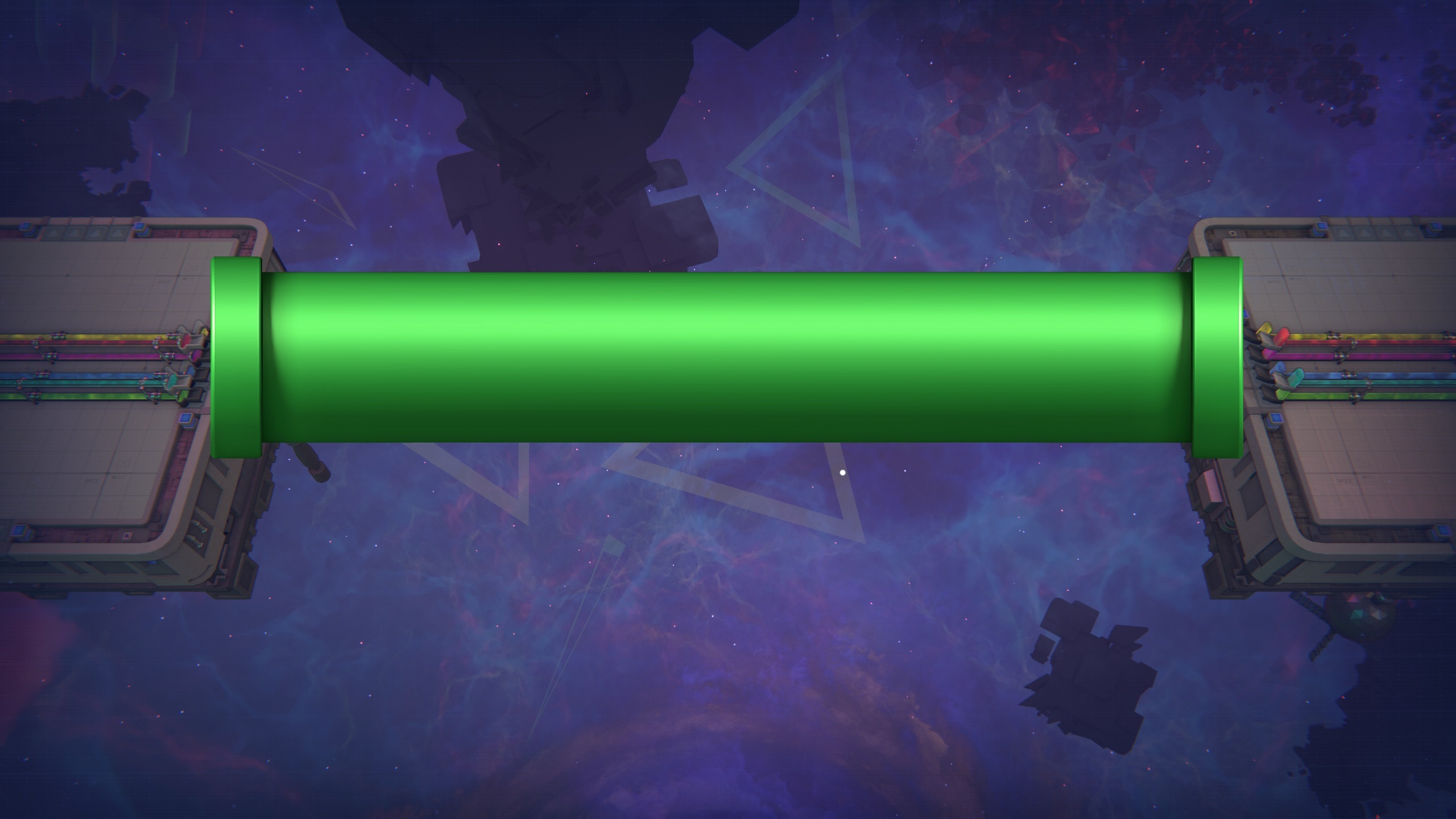
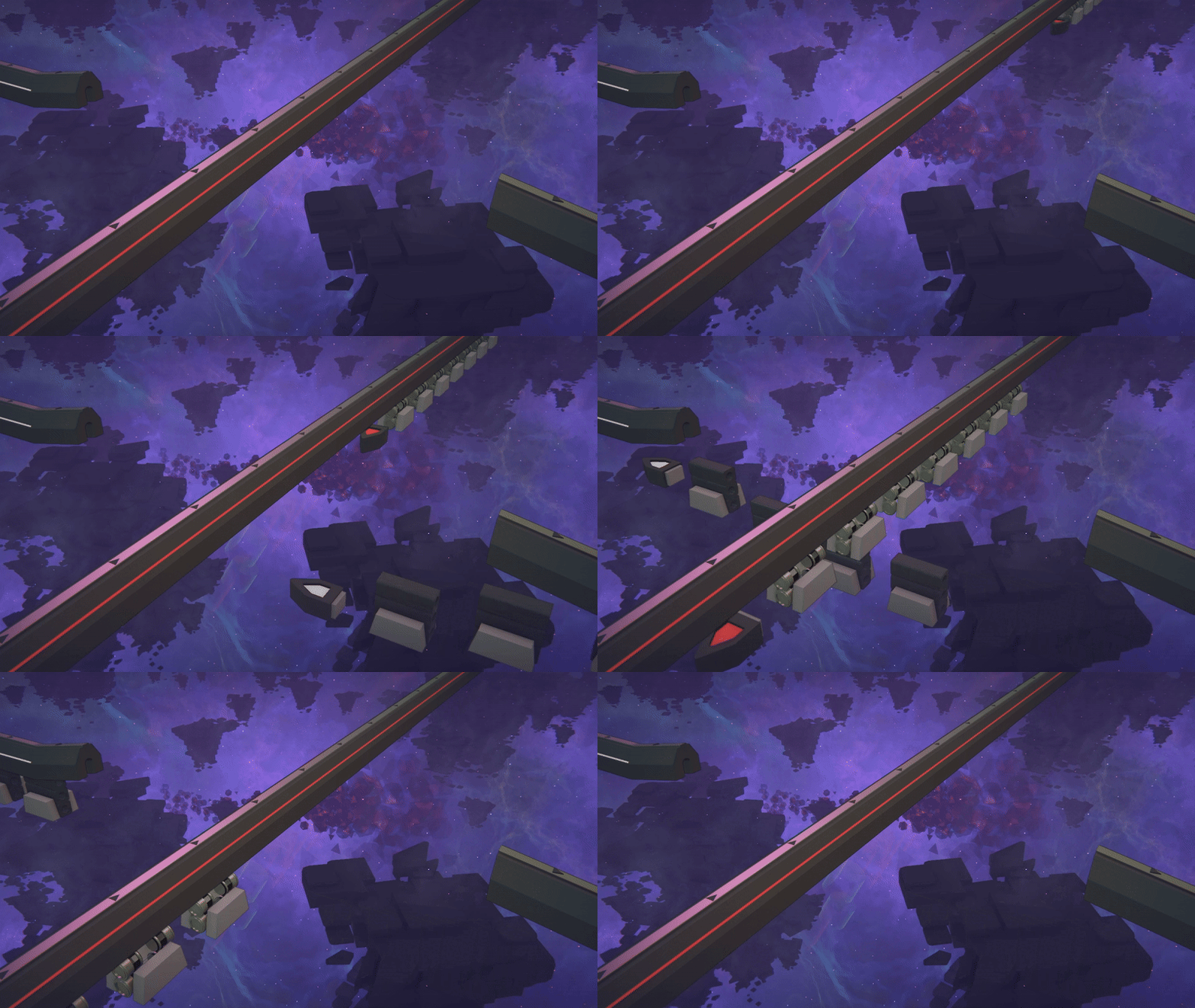
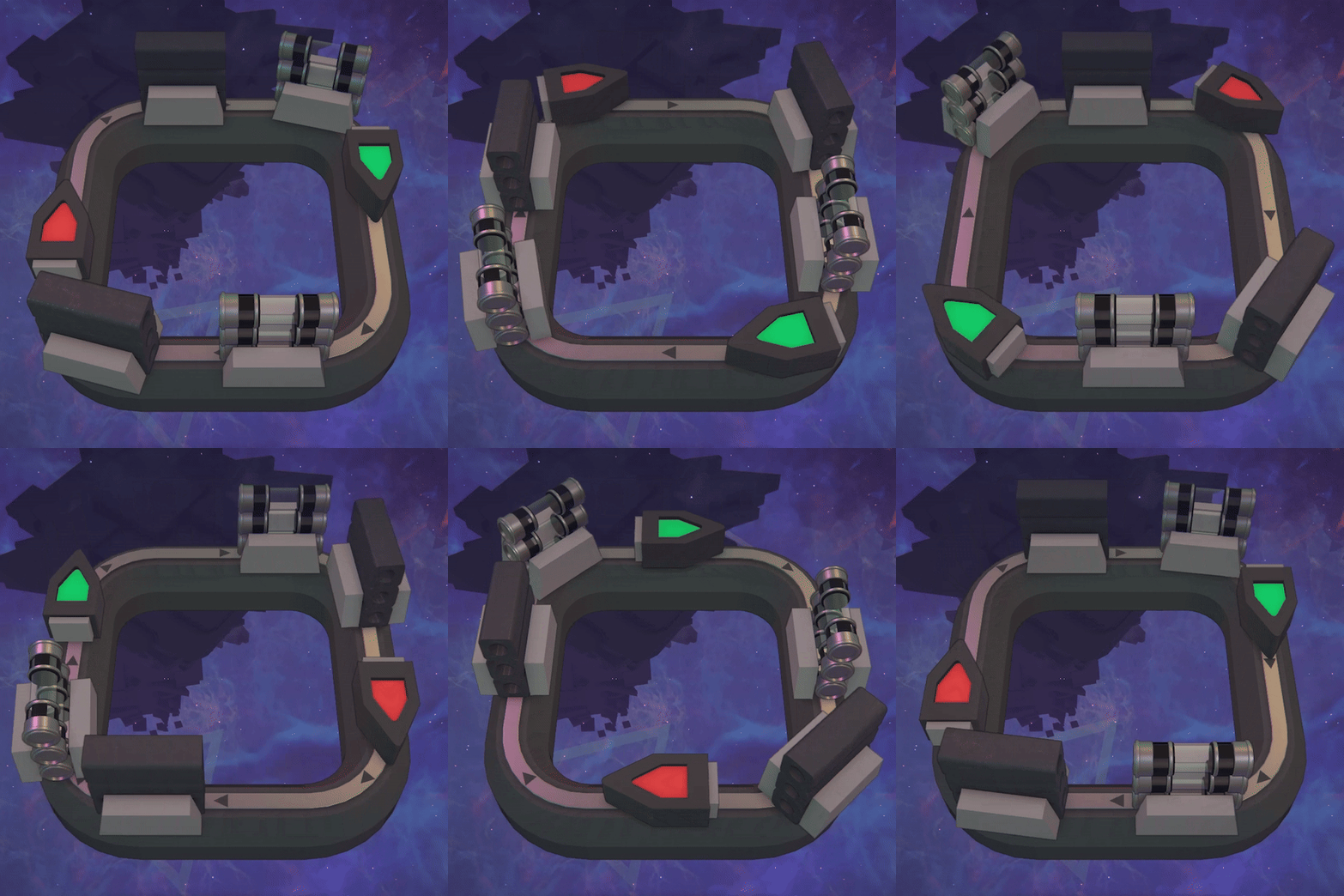
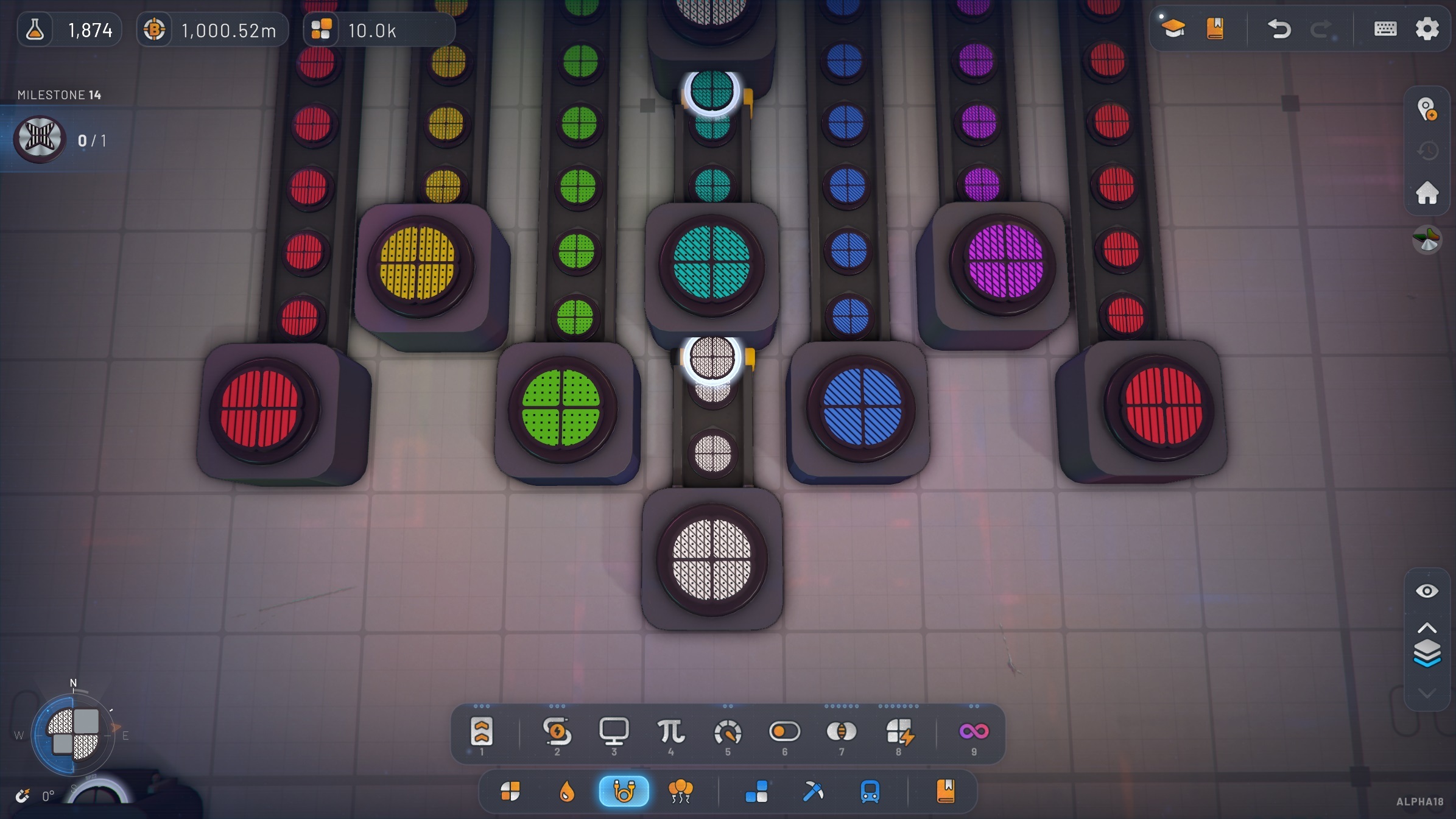
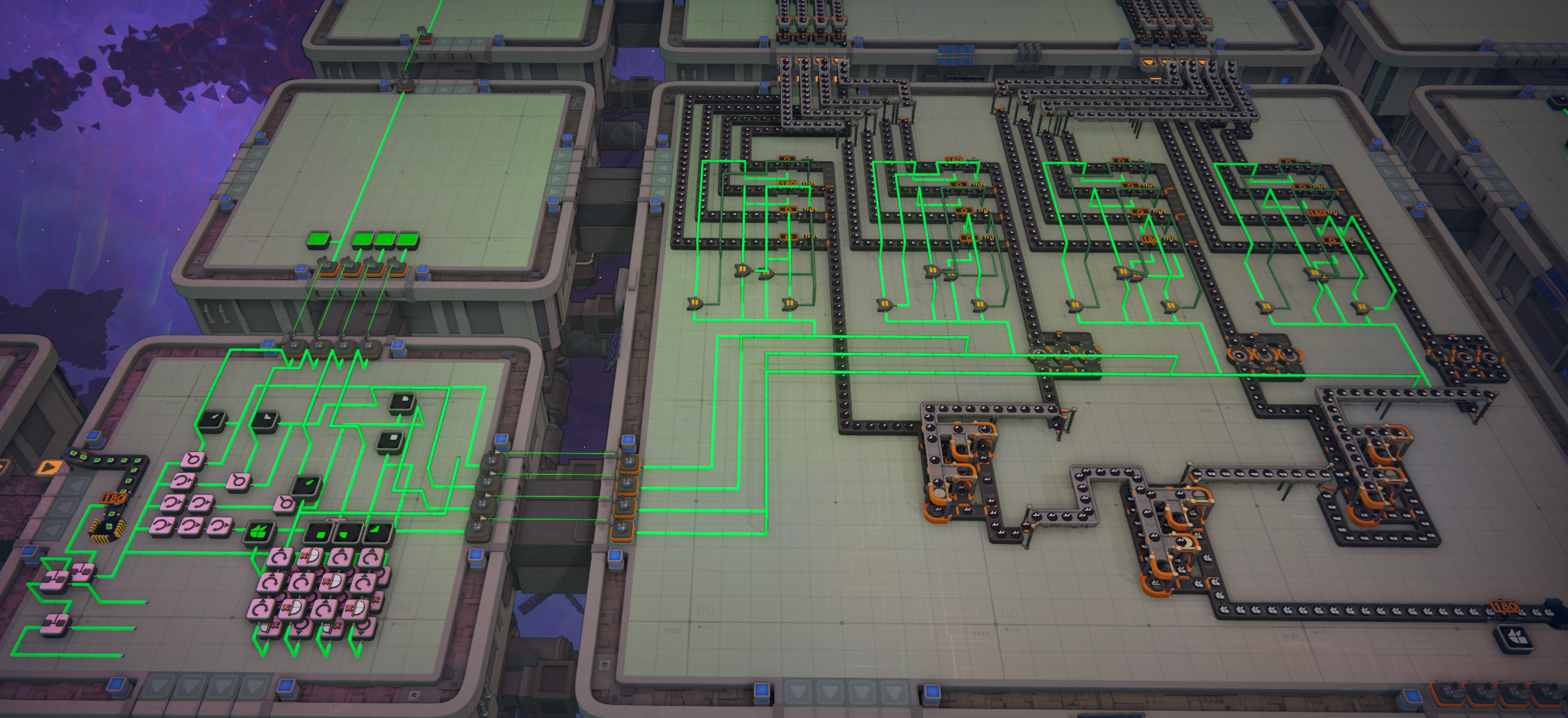
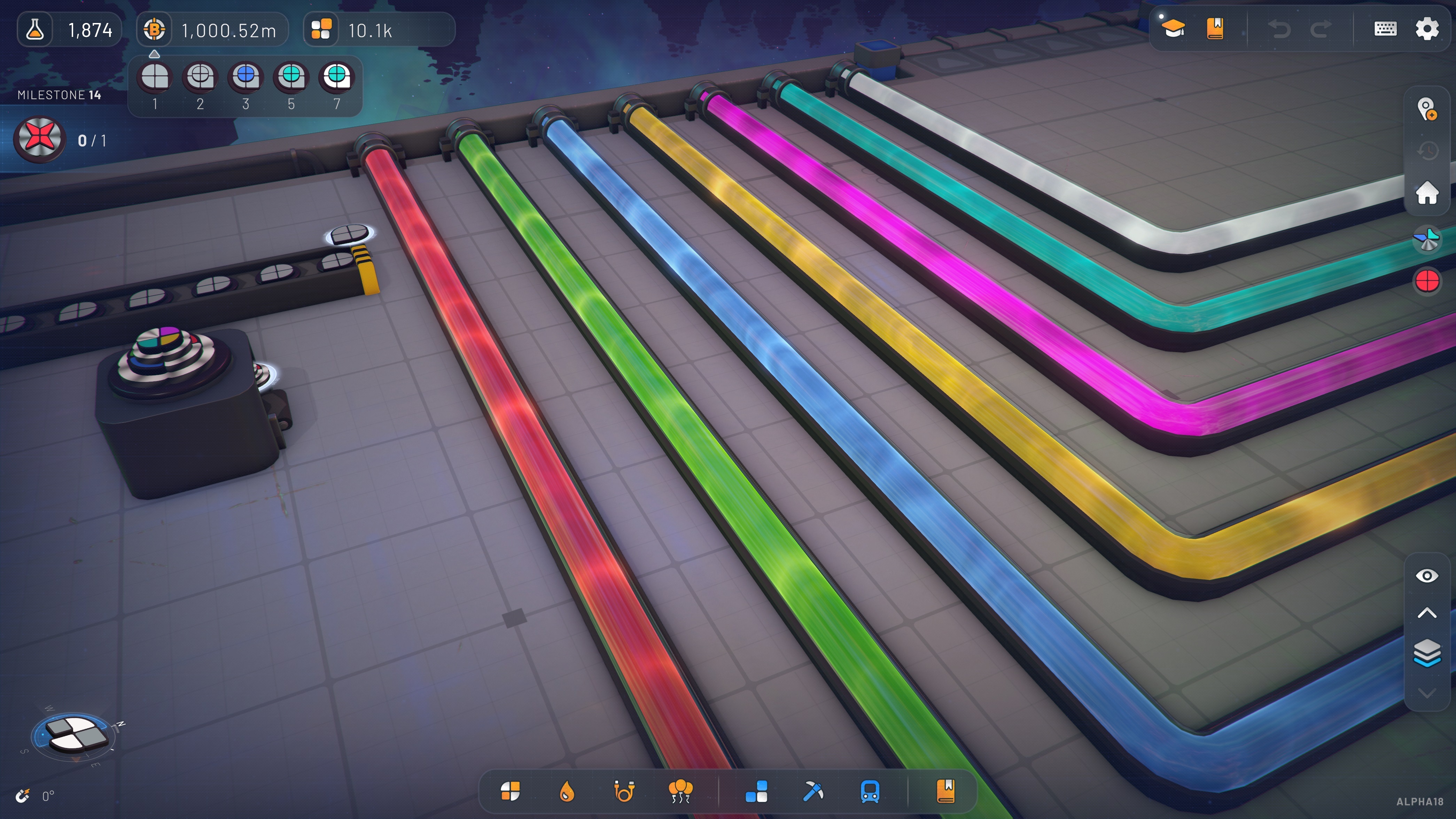
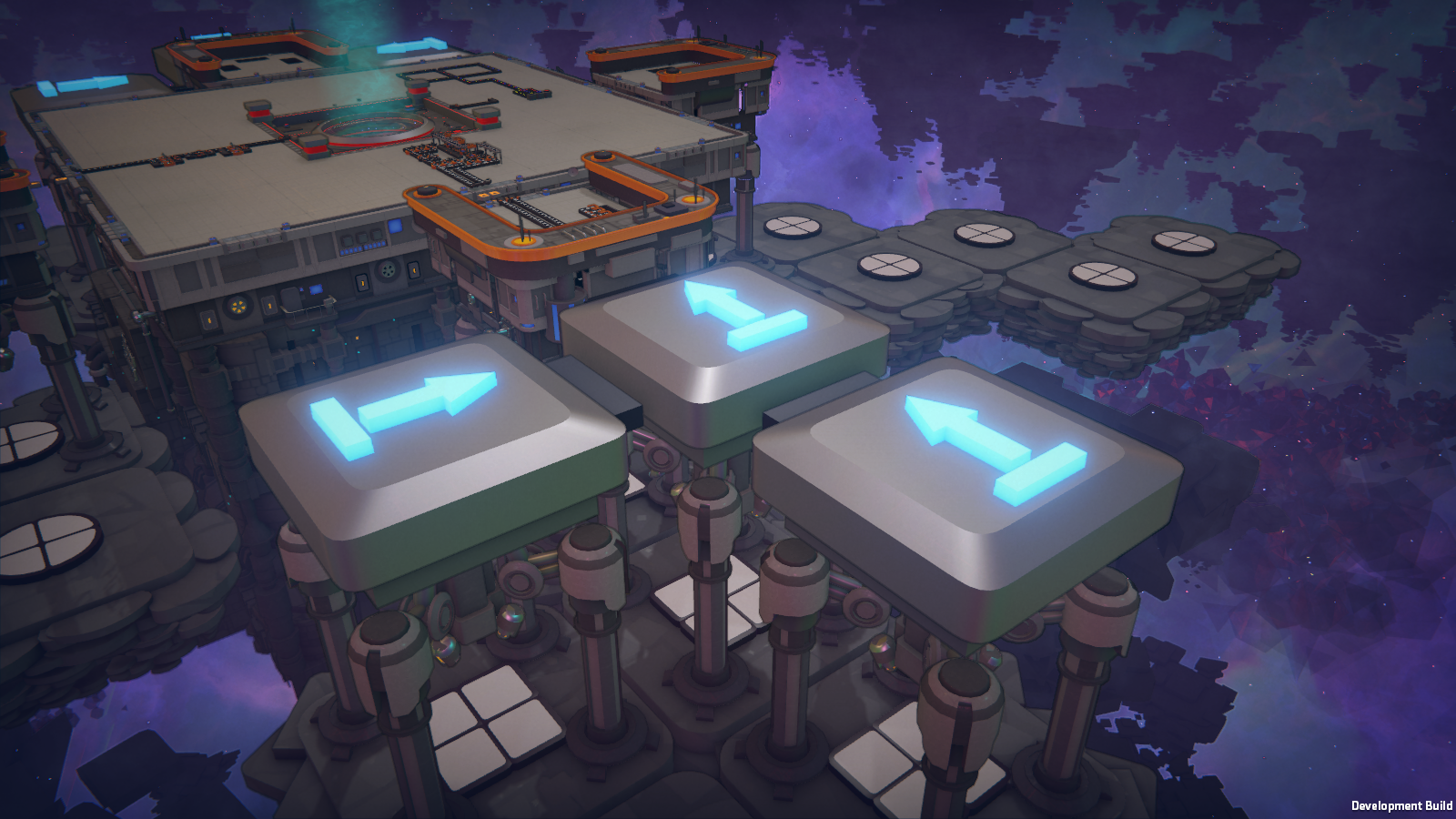
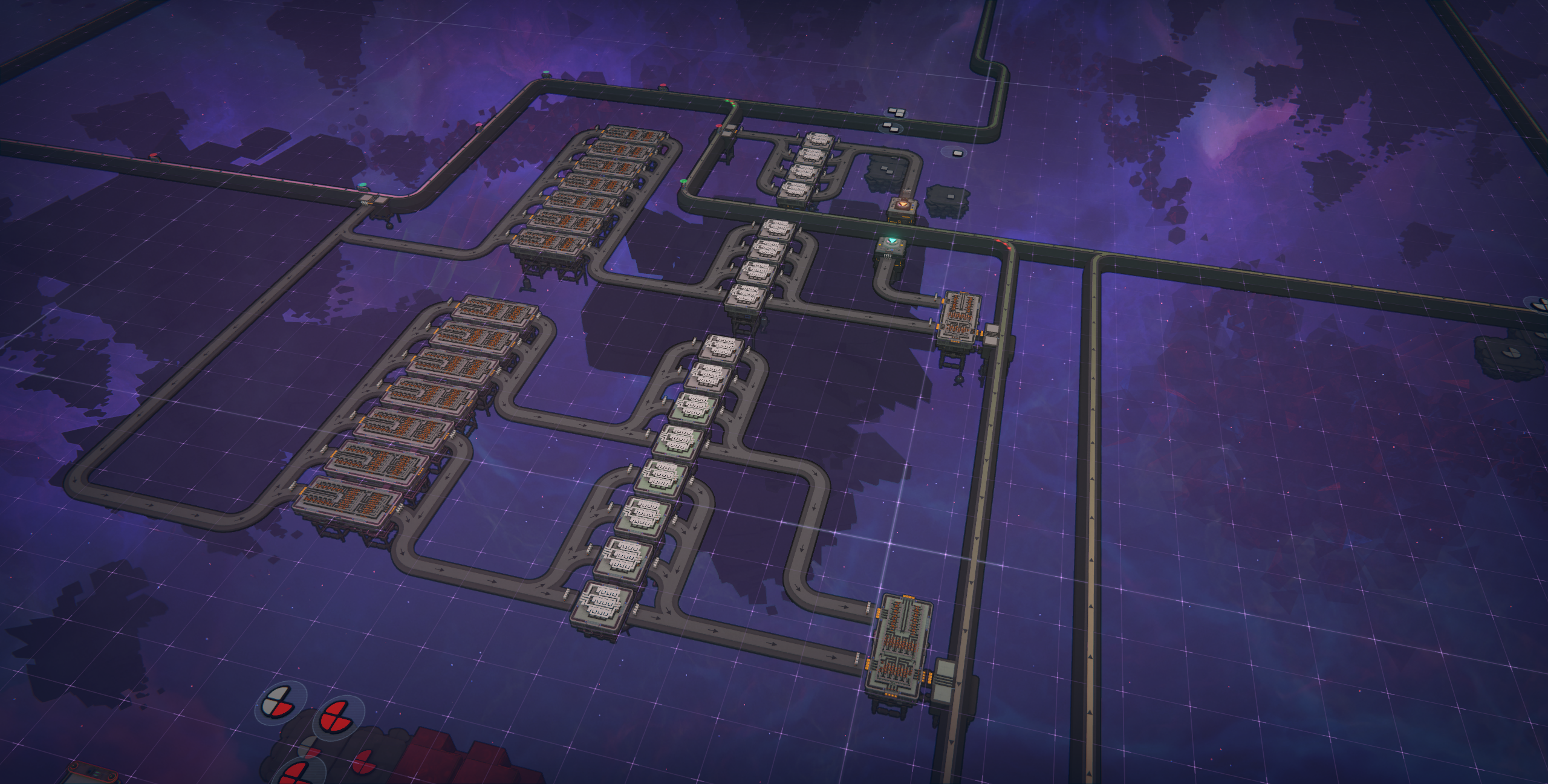
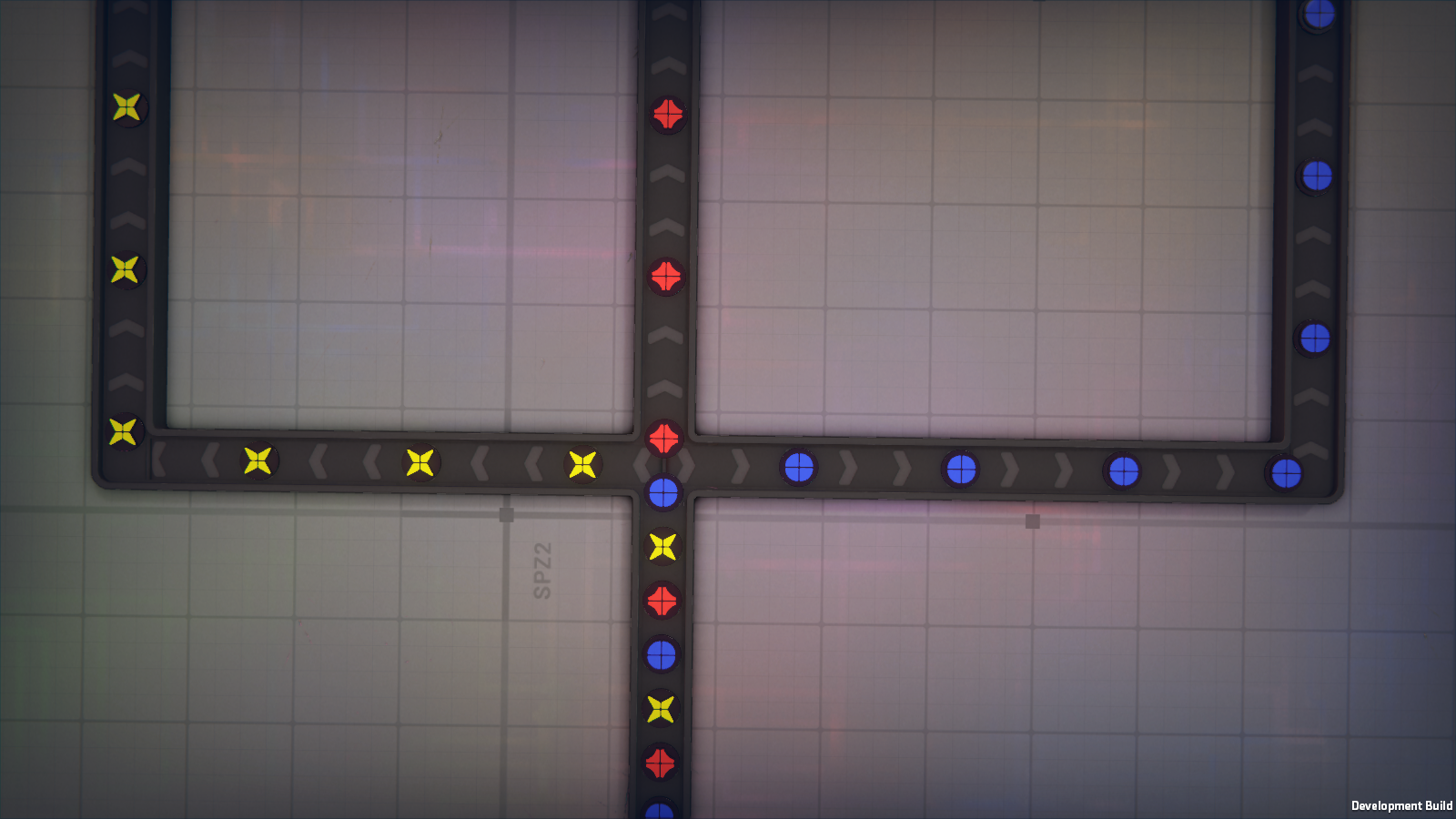
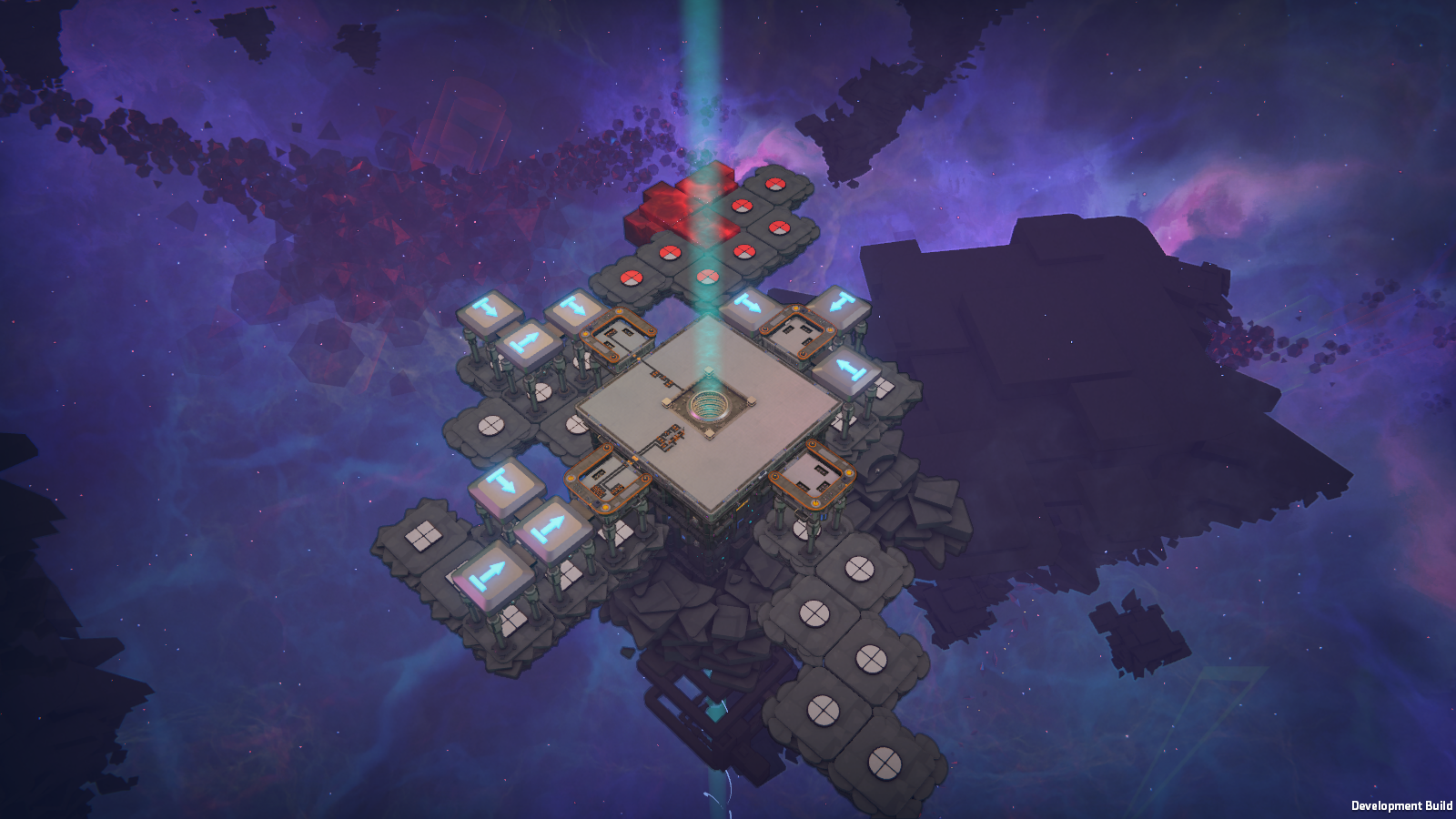
We're super excited to announce puzzlez - a shapez game ! This is a standalone game that focuses more on the puzzle aspect of the shapez franchise, and is an evolution of the puzzle DLC for shapez 1! We originally planned this as a DLC for shapez 2, but had so many ideas that we
We're super excited to announce puzzlez - a shapez game!
This is a standalone game that focuses more on the puzzle aspect of the shapez franchise, and is an evolution of the puzzle DLC for shapez 1!
We originally planned this as a DLC for shapez 2, but had so many ideas that we figured it would make a lot more sense as it's own product.
We also listened to you and learned from the past, so we will launch with 75+ official puzzles. As always, you will also be able to create & share your own puzzles!
Before we dive into more details, here's the trailer:
The 1.0 release of shapez 2 is AVAILABLE NOW , bringing a whole lot of new features and improvements to the table – especially compared to shapez 1! Much of the feedback and untapped potential of the first shapez has been addressed in shapez 2, so let's take a look at why we high
The 1.0 release of shapez 2 is AVAILABLE NOW, bringing a whole lot of new features and improvements to the table – especially compared to shapez 1! Much of the feedback and untapped potential of the first shapez has been addressed in shapez 2, so let's take a look at why we highly recommend you check it out now that it's officially released.
shapez 2 allows you to scale up your factories many times more than in shapez 1 without the game slowing down. You can now also build in the third dimension with three building layers at factory level, but also three building layers at platform level! It's up to you whether you'd like to build your factory wide, or build tall.
Connect everything up by Space Belt or Train, which allows for much higher throughput than just regular belts, and take all your shapes to the Vortex - the new central HUB in shapez 2.
Manufacture Mode
The release of 1.0 brings a whole new game mode: Manufacture Mode! This mode introduces Trade Stations that need a constant supply of shapes to produce a brand-new shape type needed to progress.
In Manufacture Mode, your entire factory stays in use into the end game and you'll want to keep expanding to meet demand – as if you needed more reasons to make huge factories.
New Visuals
As you probably already spotted, shapez 2 looks a lot different to shapez 1! Aside from just looking pretty, buildings now have an open design, allowing you to see what's going on inside. Are you producing the wrong shape? Have a look at your buildings to see where the issue lies!
New Mechanics & Shapes
New shapes
There are a bunch of new shapes in shapez 2 that introduce new challenges. Crystal shapes break if they're dropped, Pins streamline floating shapes and Hexagonal shapes are a separate scenario where shapes consist of sextants instead of quadrants!
Fluids
Fluids now replace paint, which is transported through pipes!
Blueprint Library
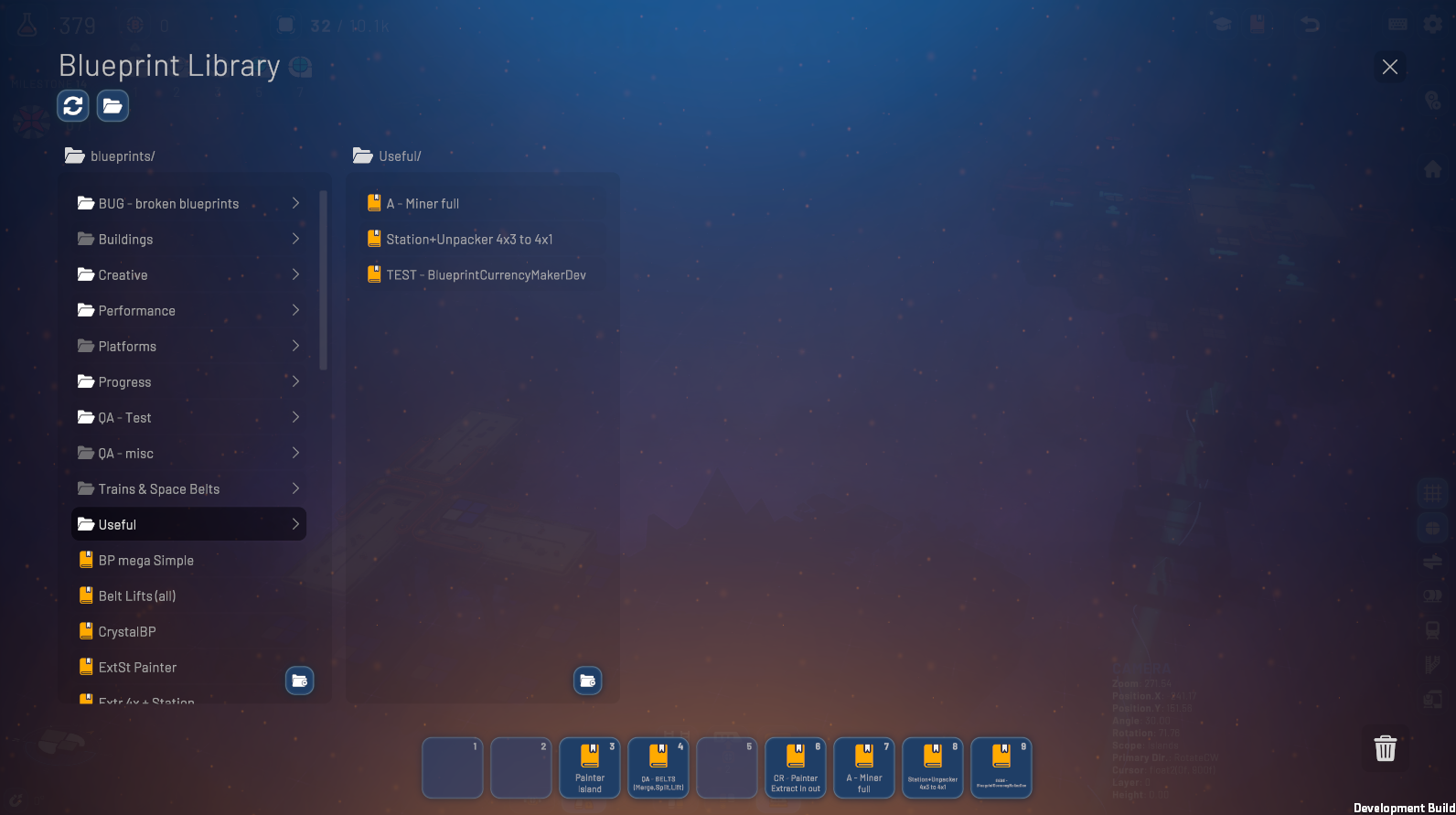
Create a big collection of blueprints to streamline your factory building, and save them all in the handy in-game Blueprint Library! Here, you can easily share your blueprints with friends and import others'.
Steam Workshop Modding
Modding is now officially supported through the Steam Workshop! Simply subscribe to your favourite mods and manage them through the in-game Mod Manager. Everything is possible, from small quality of life tweaks to new buildings, new shapes and whole game overhauls!
There's much more to check out in shapez 2, especially in 1.0. If you enjoy shapez 1, we're sure you'll enjoy shapez 2 as well!
Been meaning to pick up shapez 2, or just missed out on the launch discount? You can now pick up the game with 25% off, the deepest discount so far! shapez 2 uses many of the game elements of shapez, but with tons of new features and ways to play. Build in 3D on space platforms a
Been meaning to pick up shapez 2, or just missed out on the launch discount? You can now pick up the game with 25% off, the deepest discount so far!
shapez 2 uses many of the game elements of shapez, but with tons of new features and ways to play. Build in 3D on space platforms and connect everything by Space Belt or Train. See exactly what's going on inside the buildings and make a larger factory than ever before! There are many options for difficulty and map generation, an all-new Hexagon mode and big updates in the works. Check it out!
It's here! Shapez 2 is officially available! Shapez 2 is finally out in Early Access and we couldn't be more excited to see you all play it! We'd like to thank everyone involved with development and of course the community for all your thoughts and feedback. Be sure to share your
Shapez 2 is finally out in Early Access and we couldn't be more excited to see you all play it! We'd like to thank everyone involved with development and of course the community for all your thoughts and feedback.
Be sure to share your builds and blueprints through the channels below! We'd love to see what all of you are building :)
Hello everyone! We’ve shared a lot of information the last couple months, so we’d like to recap everything you should know for the Early Access release of shapez 2 tomorrow. Launch time What to expect Last week, Tobias talked you through some of the history of how shapez 2 came t
Hello everyone!
We’ve shared a lot of information the last couple months, so we’d like to recap everything you should know for the Early Access release of shapez 2 tomorrow.
Launch time
What to expect
Last week, Tobias talked you through some of the history of how shapez 2 came to be and what you should expect from Early Access tomorrow and the first few months. It’s a fun read so check it out here:
If you haven’t seen it yet, be sure to check out the Gameplay Trailer! It gives you a good impression of what shapez 2 is and what content will be in the game tomorrow:
Steam Deck won't be officially supported for the Early Access release. The current state is 'okayish' as Steam identifies it as 'Playable'. Keep in mind that the game is not optimized for the Steam Deck and you could run into issues.
We do plan to improve Steam Deck compatibility in the future, we'll keep you posted!
If you really want to show your support, you can pick up the Supporter Edition! You can either pick it up alongside the base game for $34.99 / €33.49 / ₤27.99. Want to give shapez 2 a go first? You can always upgrade later.
The Supporter Edition’s purpose is to give you a way to support us further if you’d like. We didn’t want to let you go empty handed though, so you’ll get something in return. Included are a Rail Loop & Rail Twister for your trains, 40 minutes of extra in-game music and the full soundtrack will be available for download. You can find the full soundtrack below:
Disc 1 (base game)
Disc 2 (Supporter Edition)
1
Sphere
1:27
Prism
5:15
2
The Vortex LTD
3:32
Perpetual Motion
3:40
3
Operator's Journey
3:32
Tetrahedron
4:04
4
Trains Go Choooo
4:46
Torus
3:49
5
Exploring the Void
3:13
Icosahedron
3:46
6
Endless Shapes
3:44
Belts Be Massive
3:32
7
Dodecahedron
4:09
Distant Calls
4:26
8
MAM
3:20
Signals
3:31
9
CwRwCwCw
3:58
Merging Matter
4:58
10
Cubical Cosmos
4:12
Wired Up
3:15
11
Stellar Expanse
3:29
12
Deep Space Pyramid
1:10
The base game and the Supporter Edition will both have a 20% launch discount for the first two weeks! The Supporter Edition Upgrade DLC will have a 10% discount at launch.
A friendly reminder that there are no free or heavily discounted versions or copies of shapez 2 being supplied by us. Be wary of third party vendors claiming otherwise!
Changes to regional pricing
The astute among you may notice that some of these prices are different from what we previously communicated. After the initial announcement, we got a lot of feedback from you with concerns about the price of the game in certain currencies. We made several adjustments based on these conversations, taking account average monthly income and purchasing power (more information here).
There are a couple of ways to connect with us and the community.
Discord Our primary channel where you can connect with the community, chat with us, participate in surveys, report bugs and share blueprints.
Steam forums Ask questions, give feedback and report bugs on the forums. You can of course use Steam’s features to upload screenshots, artworks and guides.
Suggestions Portal Leave suggestions & feedback here and vote for others' input! Don't use this for reporting bugs.
Reddit A shared space with shapez 1 to show your builds & blueprints, ask questions, participate in discussions and connect with the community.
YouTube Where the trailers for all our games go. We also share news through the community tab!
X (Twitter) Another good place to stay in the loop with what we’re working on. We share a lot of news and coverage here, and show off screenshots and footage from the game.
That’s it, you’re up to date and ready for tomorrow! We’re super excited to finally release the game and we hope you’re just as excited as we are. See you then!
Hey guys! Before shapez 2 releases on August 15 (that’s less than a week!) I wanted to do a personal post about the history of shapez 2 and what to expect during early access. We’ve been super transparent in the development process so far, and thus I thought it would be a great o
Hey guys!
Before shapez 2 releases on August 15 (that’s less than a week!) I wanted to do a personal post about the history of shapez 2 and what to expect during early access. We’ve been super transparent in the development process so far, and thus I thought it would be a great opportunity!
This post is a bit longer, but I tried to include a bunch of images and interesting insights! If you'd like to skip to the Early Access expectations part, click here.
TL;DR
Shapez 2 releases August 15, 13:00 CEST
It should be polished & enjoyable and basically bug-free
No roadmap; Instead we will survey after the release what you want us to actually work on
First update might take a few months
Why shapez 2?
Back in early 2021, I was struggling to come up with new ideas for content and updates in shapez 1. The game loop felt very closed, all new ideas evolved around adding more complex shape mechanics at the end of the game, which would only benefit a fraction of the playerbase. Popular mods like shapez industries did exactly that, but they also heavily modified the early game already, which I didn’t want to change (as I felt it was already in a good place - except for blueprints being a bit late).
Performance was a frequent complaint, but there was nothing left to optimize. Shapez 1 is written in JavaScript, so it’s literally just a website. There is no support for efficient rendering, memory management or proper multithreading and the language itself is at least a magnitude slower than C++ or C#. If you look at it from this perspective, it’s actually quite insane how well the game runs up to a certain scale.
These were just a few of the factors that led me to the conclusion to focus on something new, instead of adding more content and features to the first game. Now that shapez had shown huge promise (which, by the way, was totally unexpected!) my goal was to now do it “properly” with a real engine and build a base that could be expanded for many years.
Due to personal reasons it took me a bit longer to actually start, but back in July 2022 I wrote the first line of code for shapez 2, without any clue how it’d eventually turn out.
Researching
As during that time a lot of sequels couldn’t deliver on the expectations, I was very worried and careful to make sure we build a great sequel that is both liked by existing players and potential new players. While this sometimes meant going for less experimental changes, I think we found a great compromise by now.
To determine what defines a “shapez” game, I did a survey in the shapez 1 Discord server. I wanted to avoid changing the essential things that made shapez stand out in the first place:
The results showed me what to keep and expand on, as well which mechanics we could probably exchange or get rid of entirely. For example, only 18% of players voted for the complex shape mechanics that are introduced in level 20. I never really liked the mechanic in the first place, and so we decided to remove it and add more intuitive mechanics instead.
Additionally, I wanted to find out what new features could be exciting for a sequel:
These surveys immensely helped us to determine what to focus on. If you look closely, you’ll see that we’ve implemented almost everything from the list already 🙂
The Discord
Starting from day 1, I shared a lot of development progress in the shapez 1 discord. I wanted to try making a perfect game (spoiler: quite impossible) and I knew I could only do it with the help of the community.
The early community input helped a lot, and during the whole development process, many ideas were discussed and then later discarded. I never held something back, instead as soon as there was an idea or prototype (be it just a paint sketch) I tried to get feedback as soon as possible.
We even let the community decide the art style for shapez 2! I initially didn’t want to make another space-themed factory game, so we proposed a bunch of concepts:
The initial winner was D, which later evolved into the space theme
Unfortunately developing a sequel isn’t as easy as just doing a survey and implementing everything. We had to make a lot of tough choices, and sometimes even decide against the initial community response. As the discord is somewhat of an echo chamber of players that like shapez enough to be interested in the early development of a sequel, we always had to be careful to not just listen to this vocal minority and actually get different opinions and perspectives.
Some of these topics evolved in very heated discussions with more than 1000 comments. To name a few:
Straight Stacker vs Bent Stacker (spoiler: both made it in)
Art Style (CPU Theme vs Space Theme)
Floating shapes (aka Level 20 Logo Shape from shapez 1)
Cutters always cutting from north to south, regardless of orientation
RGB vs RYB color scheme (now a setting)
The name of the new ‘Diamond’ shape
If you are interested, all of these are still available in the #discussions channel on the shapez 2 discord!
In total, we did around a hundred surveys on the discord so far. I’m very happy with how it turned out, and I really like this way of developing a game together with the community instead of presenting a finished product. This way we can be sure that starting from day 1, we are moving in the right direction!
This also means despite launching into early access, the game has already been hugely impacted and improved by community feedback. The main reason we are launching into early access is to show our commitment to keep updating and improving the game even further!
The move to 3D
I knew from the beginning that I wanted shapez 2 to be 3D, simply because I saw a lot of people not trying the game because of the simple graphics. So besides improving the gameplay, I also wanted to package the game nicer to make it appeal to a wider audience.
shapez 2 very early on in development
It also added the opportunity to make all buildings open and animated, something that sets shapez 2 apart from all other factory games: because all operations are ‘logical’, we can visualize how a shape is cut, stacked, rotated and so on. Other games only have black box machines that receive inputs and spit out the result and we believe this is something truly new to the genre (which we are very proud of!).
However, while 3D was the most prominent addition in the beginning, over the course of time so many new gameplay features and mechanics have been added that instead of calling it “shapez 1 but in 3D” it feels more like shapez 1 was a prototype for shapez 2, and shapez 2 is now the real game.
While switching, we also decided to switch to a new engine (Unity) which allowed us to use a more performant language and rendering pipeline.
Growing the Team
Whereas shapez 1 was developed by me alone back then, I realized that shapez 2 was too ambitious to develop alone. I wouldn’t be able to focus on all areas with enough attention if I would have to work on the development, game design, marketing and art.
Over the course of the two years, the team grew to 8 full time members, which was only possible because we got funding from the German government, which we are very grateful for! Without this team, shapez 2 wouldn’t have been possible and I’m very proud of what the team has achieved together.
Iterating and iterating
Since you always just see the end product, it’s easy to forget how many iterations sometimes are required to get something “right”. There are so many mechanics we tried that didn’t work out or required a major rework: Fluid packing & simulation, Trains, Platform building, Research, Shape crates, and many more.
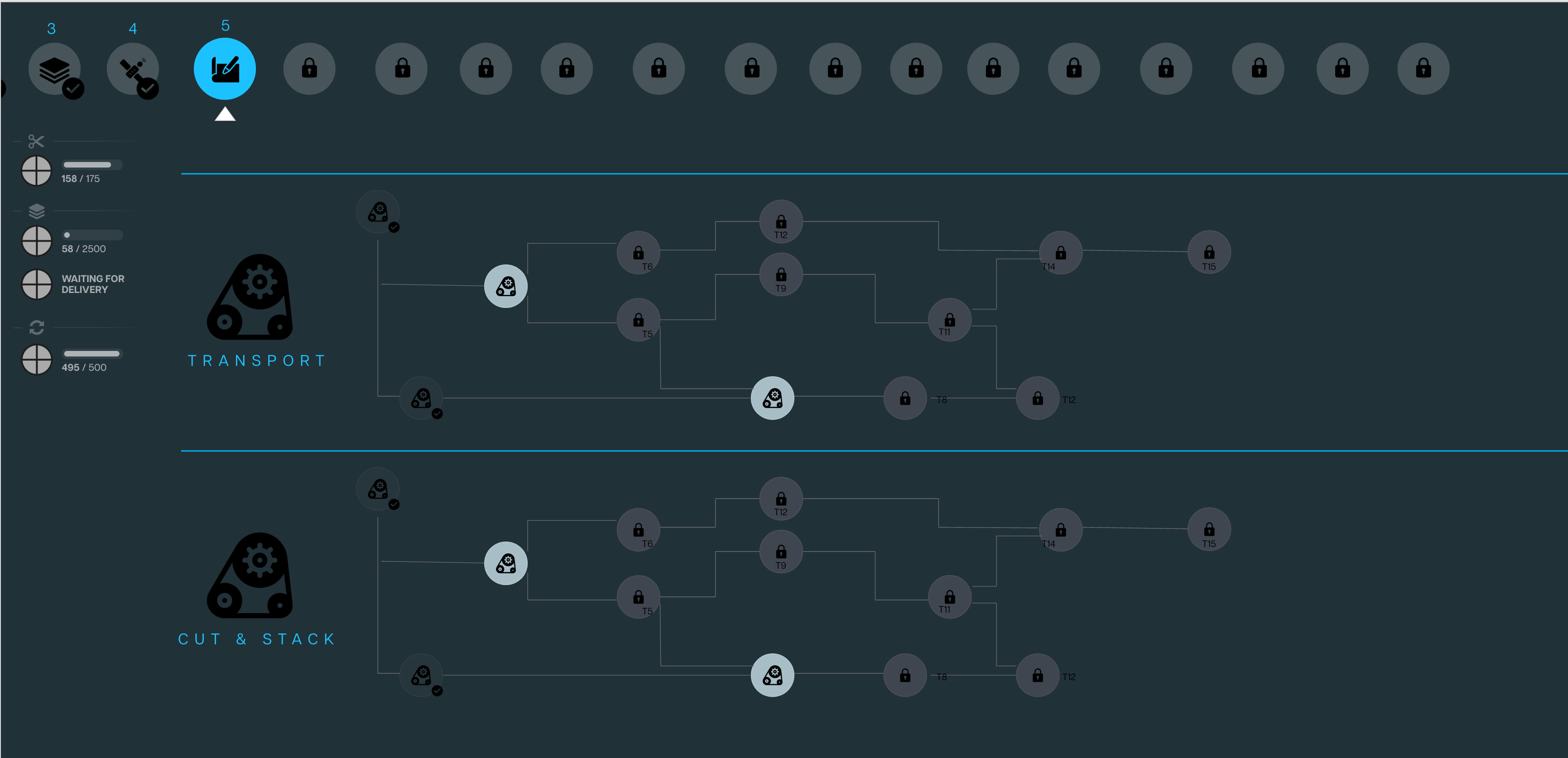
For example, we implemented around 10 (!) different research systems until we found the current one, which we now quite like (until #11 arrives). You can read more about this journey here:
One of the biggest challenges was (and still is) balancing the puzzle part with the logistics part. Our surveys show that the player base is split, with some players preferring more complicated shape puzzles whereas others are focused on building and scaling huge factories.
(Left = Puzzle , Right = Logistics)
Finding the balance has been very hard, and is one of the reasons we have added so many customization, difficulty and game modes - to make sure everybody can enjoy the game how they want to.
While talking to experienced players all day in discord, it’s easy to forget how difficult the game can be for first time players. We tried to get better insights by running a lot of playtests (we captured around 450 hours of playtest footage) with different audiences and optimizing the early game experience, but finding the perfect ‘default’ difficulty was very, well, difficult. Adding more complex game modes like the insane or hexagonal mode definitely helped though, because now you can simply adjust the difficulty to your liking.
What to expect from Early Access
We’ve spent a lot of time polishing the game already and are really happy how it turned out. We believe it’s in a great state and is meant to be played. With 4 game modes, there’s plenty of content to be explored. There should be at least 40 hours of content but it’s easy to get over a hundred hours or more, as our playtesters have proven already.
As we have over 1000 patrons playing the game on a regular basis already, we were able to fix a lot of bugs and issues already. There are no major issues known to us at the time of writing, except for the usual driver-related crashes (which we can’t really do anything about - except recommending a different backend like DirectX 12 / Vulkan). We also spent a lot of time on the tutorial and UI/UX, making the belt placement really easy to use and everything feel smooth (which we’ve already gotten a lot of praise for!).
That being said, there are still a bunch of things that can be further improved – we don’t stop when something is just ‘good’ but always try to go the extra mile. For example, space belt placement is missing a few quality of life tweaks like automatic tunnel placement, unfinished space pipe visuals and so on. However, all of these should be minor in the grand scheme of things – it’s more our perfectionism speaking here.
Space pipes don't look like pipes yet
We would also like to explore a few more experimental game modes, if there is demand for it. For example having to explore the map, or introducing (as an alternate game mode!) energy or power requirements.
Performance
As mentioned above, shapez 1 started to bog down after a while when scaling to huge factories. We tried to improve this for shapez 2 and are happy with the results so far.
For shapez 1, your factories would start to lag starting at around 5,000 - 10,000 buildings, and would be almost unplayable at 40,000 buildings, depending on your setup.
In shapez 2, everything should currently run very smooth until 100,000 buildings, pretty smooth until 250,000 buildings and depending on your setup somewhat smooth with 500,000 buildings (30 fps on a higher end setup). Players have built factories with up to 1,25 million buildings and above, but they encountered significant lag. For reference, the average player has around 40,000 buildings when completing the game, so we already support 12x more than that.
Recorded on Alpha 23. Contains placeholder visuals (mostly the trains)
However, keep in mind that you might encounter lag if you are GPU bound (which is independent of the simulation). You might want to experiment with lower graphic settings then if you are experiencing low FPS for smaller factories. There are also some shaders and effects that are unnecessarily complex, causing the game to use slightly more resources than necessary. While it is not too noticeable on mid and high range setups, there’s still a few things we can enhance for the lower end setups.
While we are happy with the performance - this is just the beginning. We believe we can easily make it run twice as fast, as we still have some pending optimizations like multi-threading or certain optimizations for the space belts. However, since buildings are free to place and copy/paste over and over again, there will always be a limit to how much the game can handle. The limit may be 100 times greater than what it is now, but you'll still be able to hit that limit if you really want.
Future roadmap
You might be wondering - if we are satisfied with the game already, what will we be working on next?This is exactly the reason we are releasing the game now in Early Access - we need your input!
I don’t like launching with a roadmap immediately, especially not for early access. If the roadmap is already predetermined, what impact do players actually have?
Instead, we will be doing surveys after the release to find out what you want us to work on next! Additionally, we have a suggestions portal where you can leave feedback and suggestions, or vote on existing ones!
Early Access Duration
We haven’t set a duration for early access because it could be years in theory. This is not because the game is not ready but because we want to show our commitment to keep updating and improving the game even further.
How long the game stays in early access also depends on the success. Our dream goal would be to keep updating the game for many years while it finances the development. However, as the game industry is unpredictable, we don’t want to promise something we can’t keep.
That being said - please do not purchase the game if you don’t like it in its current state and just hope that it gets better in the future. Quoting Steam: “If you are not excited to play this game in its current state, then you should wait to see if the game progresses further in development.”
First / Future Update Timing
Finishing everything up for the launch has been a challenge, so we're taking it somewhat easy for a little bit. With so many big factory game releases and updates coming later this year, we wanted to make sure to hit this deadline. We will of course be monitoring the release and early reception – if a major issue pops up, we'll be sure to hotfix it.
Once the release has cooled down a bit, we plan to work on a few fundamental things that didn’t make it into the launch build due to time constraints. We want to refactor a few things that we had to hack in and also prepare the game to make it easier to expand and add new features (like multi threading). Of course, we don't know yet what you want us to work on, so we'll have to see!
However, this does mean it might take a while until the first major update. We're sure certain other factory games will keep you busy in the meantime though ;)
We're looking to use the following structure, depending on how things go:
Major Updates: Every few months with big changes that justify picking up the game again and fit our quality standards (localized, well tested, etc.)
Beta Branches: Irregular updates anyone can opt into, with previews of upcoming updates that might not be finalized yet
Closed Betas: Irregular (but more frequent) builds for our patrons to try out bleeding edge features (untested and possibly broken)
Thank you for reading! We are super hyped for the release, and hope to see you there! I hope you will be able to enjoy the game as much as we do.
Hello everyone! We’re super excited and proud to announce that shapez 2 will release into Early Access on August 15th, 2024 ! Almost exactly a year after the Reveal Trailer, you’ll finally be able to play the Early Access of shapez 2. Watch the shapez 2 Gameplay Trailer here: Sha
Hello everyone!
We’re super excited and proud to announce that shapez 2 will release into Early Access on August 15th, 2024!
Almost exactly a year after the Reveal Trailer, you’ll finally be able to play the Early Access of shapez 2.
Shapez 2 will cost $24.99 / €23.99 / £19.99*. If you’re looking to support us further, consider the Supporter Edition! This would really help us out with the development of the game. The shapez 2 Supporter Edition (which includes the base game) will be $34.99 / €33.49 / £27.99*. If you’d first like to give the base game a go, you’ll be able to pick up the Supporter Edition Upgrade DLC at any time. Everything will have a 10% discount for the first two weeks after the Early Access launch!
*Pricing adjusted on Aug 1 2024
As a thank you from us for your extra support, you’ll get the Rail Loop & Twister for your trains and 40 minutes of extra soundtrack with the Supporter Edition.
Before the Early Access release, we’ll have another blog with a full overview with what’s in the release build of shapez 2 so you know exactly what you’re buying.
While shapez 2 will already offer what we think is a full experience with Early Access, we want to work together with you to make the game even better and refine everything for the full release come next year. We’d love it if you’d join us!
There are only 3 more weeks to go, so be sure to wishlist the game to help us out for the release! 300,000 of you already did and we truly appreciate it.
Whether you’re looking for something similar to shapez or just can’t decide between shapez and Mini Metro, we have something for you. We’ve partnered up with our friends over at Dinosaur Polo Club to bring you the ‘Subways and shapez’ bundle, allowing you to pick both games with
Whether you’re looking for something similar to shapez or just can’t decide between shapez and Mini Metro, we have something for you. We’ve partnered up with our friends over at Dinosaur Polo Club to bring you the ‘Subways and shapez’ bundle, allowing you to pick both games with a sweet discount. After all, why not get both?
Mini Metro is all about seeing to the needs of your city’s commuters. As more stations appear, it’s up to you to connect them by subway with the limited resources available. You’ll need to adapt and redesign the system with the new assets you unlock every week. It’s in your best interest to keep everything running efficiently: if your transit network clogs up and commuters spend a long time waiting, your subway-building privileges may just be revoked.
Interested? You can now get both shapez and Mini Metro in a bundle with a nifty 10% off until August 13th! This stacks with other sales, so if you're reading this at the time of posting, you get 10% off the total price after the 90% discount on shapez and 50% discount on Mini Metro. If you already have yourself a copy of shapez, you can still get Mini Metro with the discount through the bundle.
Hello everyone! We’re getting very close to wrapping up development on the shapez 2 Early Access release build. At the end of last week we released Alpha 23 with 23.1 and 23.2 – the last Patreon-exclusive Alpha build – following shortly after. We’re moving to Beta builds where Pa
Hello everyone!
We’re getting very close to wrapping up development on the shapez 2 Early Access release build. At the end of last week we released Alpha 23 with 23.1 and 23.2 – the last Patreon-exclusive Alpha build – following shortly after. We’re moving to Beta builds where Patreons can test the release candidate and report any remaining issues they find.
In two weeks, we’ll officially reveal the exact release date (which is set in August) of shapez 2. If you don’t want to miss out, be sure to follow and wishlist the game here on Steam and join the Discord!
If you really want to get your hands on this build before the release, be sure to check out our Patreon! You’ll also get access to the betas to help us iron out the last couple bugs, the first of which released today! Your savegame will be compatible with the Early Access build from Alpha 23.2 onward, barring any unforeseen issues.
This devlog will be a bit shorter as we’re currently very busy, but let’s walk you through what Alpha 23 brought to the game. Final note, even at this stage everything is technically still subject to change.
New Content
Hexagonal Scenario
As teased in the last devlog, Hexagonal shapes are now real! Added as a separate scenario, a layer now holds 6 segments (sextants), 90° Rotators now rotate 60° and there are three new shape types exclusive to this scenario:
H – Hexagon
G – Gear
F – Flower
Hexagon (left), Gear (middle), Flower (right)
The shape code works as you’d expect, with an example below. We’ll leave the rest for you to explore for yourself :)
Train loop & Twister
We added the Rail Loop and Twister to spice up your trains. Wildly inefficient, but I'm sure you'll be forgiven. They're unlocked as part of the shapez 2 Supporter Edition alongside a whole lot of additional soundtrack!
Gif contains some placeholders
Other new things
Aside from that big ticket addition, there are a handful of other new bits of content and balancing changes.
Added train speed and capacity upgrades, as well as an upgrade to allow you to dunk a train directly into the Vortex to deliver all its cargo at once.
Rebalanced fluid buildings to be more intuitive and added more information in the panels.
Supplying a different fluid to fluid buildings now makes them slowly drain and eventually consume the new fluid instead of waiting for the previous fluid forever.
The same system also applies to trains loading a different shape or fluid.
Visuals
We added brand new visuals for Shape Miners, Fluid Miners and their respective Extensions.
Train locomotives finally have their visual!
Added new visuals for train loaders and unloaders.
Added animations for belt/fluid launchers launchers towards space belts/pipes.
There’s a new animation for shapes going into the Vortex.
Also included are several animation fixes and improvements across the board, including improvements to fluid shaders.
Development
As we’re finalizing a lot of things, there were lots of rendering, blueprint and simulation performance improvements. Placing blueprints and large islands should now be much faster, various issues with wire logic were fixed and we’ve vastly improved savegame loading times.
To show off the current state of performance optimization, here's the game running on a Mac Book Pro M1 Max at full HD with 420,000 buildings. The goal is still 1 million buildings at 60 fps, but we're happy with our progress!
The origin point (the part of a building that’s placed where your cursor is) of the Painter and Crystal Generator buildings was moved to the conveyor belt instead of the tank. This makes placing these buildings feel a lot better, but it does break any blueprint made prior to Alpha 23 that uses them.
There’s now a button to clear the selected platform, space belt/pipe or train (un)loader of all its contents.
Additionally, rail placement and the Feedback dialogue have been improved, the latter of which now has a link to report translation issues. Speaking of translations, the translations for almost all of the languages we wanted to include were added.
That’s it! As we said, a shorter devlog this time. The Beta has started in order to hunt down the last issues. Once that’s done, we can freeze development on the Early Access release build. We’re super excited to finally release shapez 2 next month, so be sure you have the game wishlisted (sorry for asking so often) and we’ll see you again with a big announcement in two weeks.
Hello everyone! With the Early Access release of shapez 2 set for August, we’re creeping ever closer to finishing development. Our current focus lies on remaining visuals and polish, especially when it comes to the UI. However, we still have some exciting new content additions to
Hello everyone!
With the Early Access release of shapez 2 set for August, we’re creeping ever closer to finishing development. Our current focus lies on remaining visuals and polish, especially when it comes to the UI. However, we still have some exciting new content additions to show you, so today we’ll walk you through what we’ve been working on lately.
Last week we released Alpha version 22 for our Patreon supporters, which includes most of what we'll cover in this blog. If anything here makes you want to check out the game immediately and want to give us feedback, consider supporting us!
Disclaimer
As always, a lot you see in this devlog is still subject to change. We’d love to hear your thoughts on everything, but if anything still looks a bit rough around the edges its likely still being worked on. For more info on what to expect from the Early Access release build, be sure to check out our previous blog.
Gameplay
New Scenarios
We’ve added more scenarios to the savegame customization options. These scenarios affect the shapes you’ll need to deliver to the Vortex in order to progress. The higher the difficulty, the more shape types, layers and colors you’ll need to put together.
The types of shapes you’ll need to deliver are unique to their scenarios. We’re not talking small differences – these goals are completely different designs. We had a lot of fun making these challenges so we hope you’ll enjoy them as well!
Do keep in mind that unlike the difficulty Setting, scenarios are permanent and cannot be changed after the savegame has been created. You'll need to start a new savegame to play a different scenario.
Operator Certification We highly recommend new Operators to obtain their Operator Certification before you do your own thing! You’ll be guided through building your very first factory with extra information and hints. The Operator Certification uses the default scenario settings, but you can customize the difficulty before you get started. Once you’re deemed worthy of the Certificate, you get to choose between continuing with the normal scenario or the hard scenario – more on them later. Your progress is fully transferred, including buildings and unlocked upgrades.
Factory - Normal This is the default scenario and recommended for players unfamiliar with shapez. Eases you into newly-unlocked mechanics and shape goals are relatively straightforward.
Factory - Hard Recommended for players who have already done a playthrough and are looking for an extra challenge. If you’re here from shapez 1, this scenario may be a good fit for you! Shape goals get more difficult faster, requiring additional cutting, stacking or painting when compared to the normal scenario.
Factory - Insane If you’re a very experienced player and you’d like to push your brain to the limit, this scenario is for you. Will require game knowledge, precise planning and thinking ahead: shape goals need many different shapes and colors, often stacked to the maximum amount of layers – which for this scenario goes up to 5!
There's a lot of room for us to add more scenarios to the list and we already have some ideas in mind. Here's a teaser:
Show detailsThis is not in the game yet and we can't guarantee it'll make it in for Early Access release, but it's something we're working on!
Scenario customization This option allows you to customize the settings of any of the previously mentioned scenarios. You still need to select one of them, but you can then customize map generation (as highlighted in this blog) and set additional savegame rules of which there are more now! If the Insane scenario isn’t insane enough for you, you can make it even more difficult here :)
Operator Level
Keep delivering previously unlocked shape goals to increase your Operator Level! Every level unlocks additional chunks and research points to aid you in growing your factory! Completing a goal will allow you to complete it again, but with an increased amount of shapes needed. Be sure to diversify!
Operator Levels allow your old factories to remain useful after completing their milestones. Instead of quickly building something and to get rid of it once you advance, this incentivises to expand instead of replace and long-term solutions instead of quick and dirty ones. We want to see big and tidy factories!
If you want to go the extra mile, you can also produce the Randomized Goal! This requires less shapes to produce in order to level up, but you’ll need to switch up your factory frequently to adapt to the new goal. Or, just set up a Make Anything Machine!
Blueprint Icons
Remember two weeks ago when we said we probably wouldn’t be able to add Blueprint Icons before the Early Access release? Yeah, about that…
Introducing Blueprint Icons! You can now customize your Blueprints with up to 4 icons at a time to make it easier to tell them apart in lists and hotbars. There’s a big list of icons already used elsewhere in the game and a couple of preset shapes. You can also add custom shape icons with Shape Codes!
Other new things
Platform and platform blueprints can now be mirrored! We’ve also expanded the tutorial (now Operator Certification) and expanded the Knowledge Panel with all milestones, mechanics, example videos and translations.
Visuals and Graphics
We’re working with new Rail visuals! Rails now look a lot less bulky and it clearly indicates which direction trains can travel. All the other visuals for trains are still work in progress though, so you’ll have to wait a bit longer to see everything else!
Development
We’ve done a big simulation refactoring pass to improve simulation accuracy and stability. There have also been several more performance and rendering improvements.
DirectX 11 is now the default rendering backend on Windows systems, as we got a lot of feedback on the demo about some issues caused by Vulkan.
Factories outside of your view are now simulated at lower tick rates for up to 20x simulation performance improvements. This will prevent the simulation from struggling with huge factories, as only what you’re currently looking at is fully simulated. Your factory will continue to run perfectly fine if you’re not there to keep watch! It’s not like the belts start slacking off the second the manager is busy elsewhere. Or so they tell us.
Lore
You read that right! We’ve begun to sprinkle bits and pieces of lore around the game to give it some flair. This includes the aforementioned Operator Certification, but you’ll be able to find lore and flavor text around various places in the game.
UI & UX
As we’re getting closer to the Early Access release and most of it is ready, a lot of the remaining work consists of UI and UX changes. Here’s a list of what we’ve done!
Cleaned up train toolbar & icons
Added new 'conflicts' visualization: Whenever an issue is detected – like belts moving in opposite directions – an exclamation mark will appear at the location. There’s a button in the bottom right of the UI to toggle conflict warnings, though we suspect turning the warning off won’t fix the problem.
Merged Upgrades and Shop into one shared tab: Allows you to shop for upgrades
Added the option to clear all fluids in all fluid buildings
Added setting to disable chromatic aberration
Added setting to disable vignette: there will still be some vignette, but a lot less
Added setting to choose the target display: for your sextuple monitor setups
Added setting to reduce input latency: this may make the game feel more responsive, but will increase CPU load and may result in a lower frame rate.
Disabled auto-rotation for large buildings, like the Painter
Added setting to disable custom cursor (will make us sad)
Splitters and Mergers are automatically placed when connecting or disconnecting belts or pipes.
Added glow indicator for shapes that are actively being delivered
Improved difficulty & scenario selection screen (see related section above)
You’re no longer required to hold 'Shift' to replace conveyor belts / transport structures
Transitions between waypoints or moving to the vortex are now animated
Added placement indicators for fluid & wire buildings to better show inputs / outputs
Improved fluid miner placement indicators
Updated game logo: we gave it a real good scrub
Added a button to take you directly to the relevant knowledge panel entry while placing or selecting a building
Updates to the wire icons
Improved & fixed belt launcher placement indicators & logic
Added a setting to toggle toolbar selection mode between ‘deselect’ and ‘cycle’, with ‘deselect’ being the new default.
Improved space belt & pipe placement, now should behave similar to belts but at a much larger scale (more improvements coming)
Removed confirmation when purchasing speed upgrades: We know you got a need for speed
Indicators for wrong connections are introduced for Buildings, Wires, and Pipes: These are the checkered blockers and separate from conflicts, though currently serve largely the same purpose.
That’s it for now! Only a couple devlogs left to go before you get to play shapez 2 for yourself in August. We’re very excited (and very busy) and we hope you’ll join us again for the next devlog.
Hello everyone! Put it in your calendar, our Early Access release should be in Mid-August! We’re 97% sure we’ll make that, so while the odds are very good it’s not completely impossible that we’ll still need to reschedule. What can you expect from the Early Access version of the
Hello everyone!
Put it in your calendar, our Early Access release should be in Mid-August! We’re 97% sure we’ll make that, so while the odds are very good it’s not completely impossible that we’ll still need to reschedule.
What can you expect from the Early Access version of the game? We’re glad you asked!
Early Access Release Status Update
Generally, we think the game is in great shape with plenty of polish already! There are so many improvements over the first game that shapez 1 now feels more like a prototype for shapez 2.
In no particular order, there are:
Multi-layer factories
Trains
New research system
Fluids
Blueprint library & toolbar
Lots of quality of life improvements
Crystals
Pins
Multiple progressions,
Customizable map generation,
Mirrorable buildings,
Platforms
Undo/redo
So much more!
We also have a very high quality standard that we want to meet, so we have invested a lot of time in optimizing the user interface, onboarding & tutorial and making sure you have a smooth experience!
Launch Month!
We are now aiming to launch in Mid August. This is around 97% confirmed so while we are pretty certain, please don’t be mad if we have to reschedule it!
Our Plans for Early Access
Generally, we think the best time to get started with the game is already during Early Access. During Early Access, we will be mostly working on adding big new content iterations every few months that justify picking up the game again. We will of course release hotfixes and so on, but we believe fewer, bigger releases make more sense than more numerous smaller increments. Less frequent releases also allow us to work more effectively on bigger updates.
For these bigger updates we want to try more experimental things like new game modes with bold changes that we didn’t want to try for the main game mode. However, we will decide what to work on based on surveys that we’ll run after the release! After all, we want to work on things you actually care about!
Of course there may be issues (minor bugs, unfinished or non-optimised visuals, etc) but we’re not using Early Access to put out an unfinished game for testing - for us Early Access is a way to get feedback and show our commitment to updating the game!
We want to make sure that you can make an informed decision about whether to jump in with the Early Access launch, so here’s an overview of what to expect…
What’s looking good for Early Access
Game Design, Progression & Balance
We are happy with how the game design is going. The overall progression and balancing feels very nice already. Obviously this is always an on-going part of development and we will continue to fine tune based on your feedback.
We also got way more done than initially planned - if everything goes well, we will launch with 3 progression modes - Normal, Hard, Hexagonal. This does depend on how the final weeks leading up to the launch go, but we’re hopeful!
Usability
We have invested a lot of time to make sure the belt placement & general UI/UX is as smooth as possible. There might be an initial learning curve, but after that it should feel pretty natural - even elegant!
We are also currently working on doing the same improvements to the Space Belts & Trains and are confident we’ll get that in for the Early Access launch as well. A few minor things might not make it, but we have them tracked and will do our best to fix them as soon as possible.
Technical Systems
The game is very stable and you shouldn’t see much in the way of crashes. However, it’s not impossible that you will encounter some issues with DirectX 11. If that does happen, you can try switching to Vulkan or DirectX12. We don’t do anything vastly different to other Unity games, so if you can run most Unity games fine you should not run into any trouble with shapez 2.
We are also still planning improvements to our input system for people who want to use exotic configurations or rebind modifier keys like ‘Shift+C’, which will cause issues in the initial Early Access release.
Performance
We are already very satisfied with the rendering performance, and we are constantly improving the simulation performance, with the ultimate goal of simulating around 500k-1 million buildings well. To put that in perspective, you need about 15k to complete the game, and currently we can simulate around 100-200k.
Rendering performance is another area we will continue working on, but with average setups you should already enjoy smooth performance. However, on low end setups, you might have to reduce the graphical settings to achieve your desired frame rates, since additional effects or very detailed 3D geometry can drag down the performance. There are also some individual animations which are not yet optimized for performance (like the vortex animation), causing unnecessary high GPU load. These will of course be improved.
Also, every setup, driver, OS is different, and we need more data from players to optimize the game for all the different combinations, so please let us know if not everything is running smoothly for you yet!
Reusability of Factories
Already vastly improved since the demo, there are even more big improvements planned for the Early Access release. We don’t know exactly how far we’ll get with this by the time of the release, but we will of course be working to make things even better throughout the Early Access period. In fact we are already working on a new “Operators Badge” mechanic that will also improve this, but more on that later!
Wires
We initially thought wires would not make it into Early Access, but a fun weekend of prototyping them changed that! The wire system has grown quite a bit but never got the attention it deserved, which is why there are a few issues we still need to iron out. So to be clear, they are fully functional, but lacking a lot of quality of life features.
Our patrons are already building Make Anything Machines with them, even for crystals. There’s around 25 wire buildings, although that number is inflated by logic gates and simulated buildings.
Here’s what we still need to polish:
Update order is not deterministic, so you might run into issues when you build memory cells or attempt to build a CPU with wires.
The art is placeholder, so don’t expect anything fancy - and there are issues like buildings not showing where exactly which output goes (i.e. where does the fluid input go and where does the shape go) making them harder to use than they should be.
There is no tutorial or knowledge panel entry for wires yet, so you are a bit more on your own on them. However, they are also in no way required to complete or enjoy the game.
The Vortex does not output the current shape signal yet, so if you want to build a MaM you have to manually input a signal.
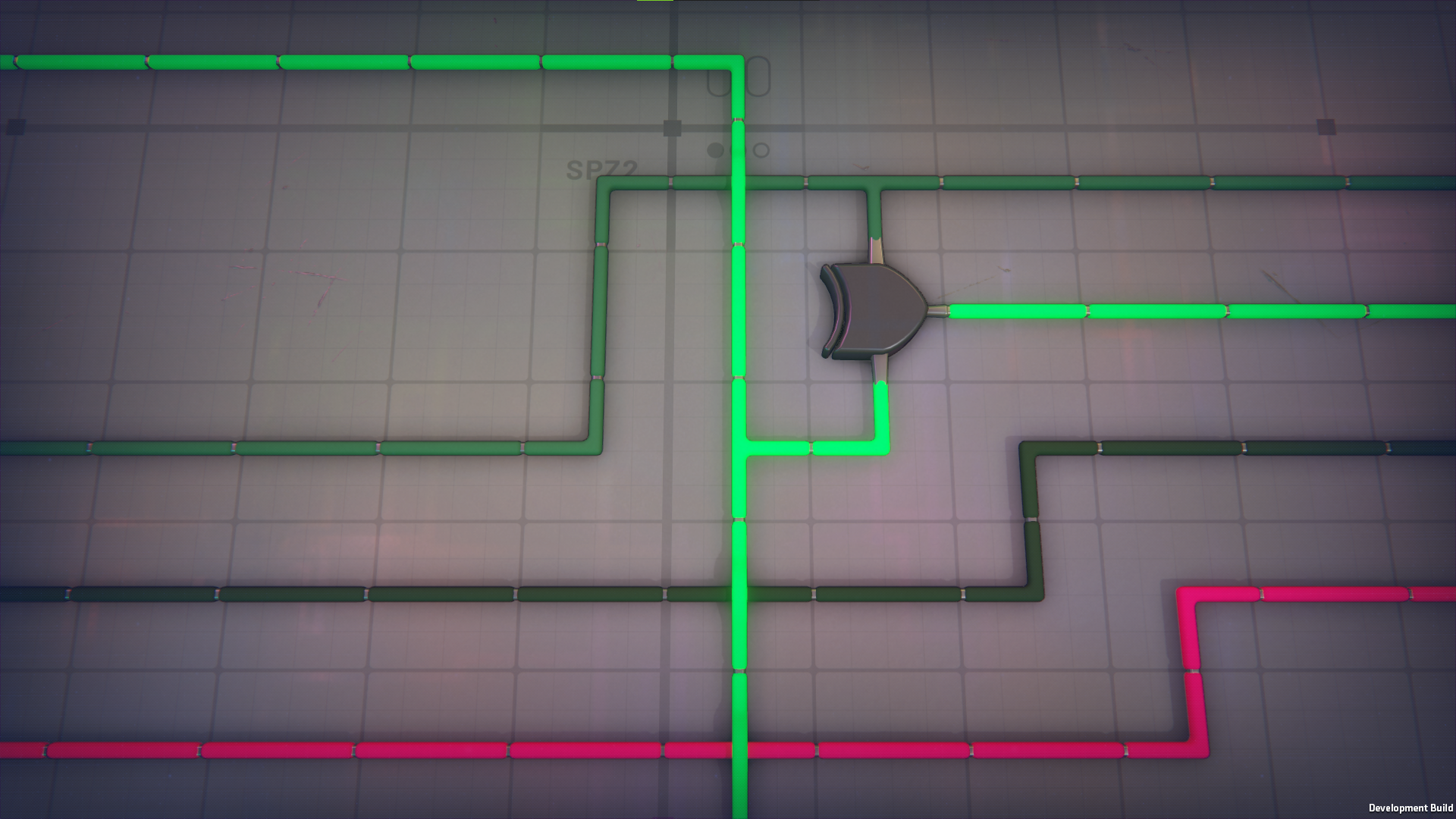
Some wiring and a XOR Logic Gate. Signals are represented in light green (active), green (connected but inactive), dark green (not connected) and red (conflict)
To Be Improved During Early Access
There are a few areas (mostly visual and audio) where more work is needed or placeholders are still in use and we don’t have final assets yet. These will be updated and added during Early Access.
Vertical Inputs / Outputs i.e. for Pipes & Wires
This is a technical issue and we will need to refactor a good chunk of the game before we can implement something like an ‘L’ shaped pipe and actually split the pipe up into two structures. Right now every building can only have 4 outputs (right, left, up, down) and we would need 2 more (upper, lower) to support this. This is a lot of work however, so it won’t be there for the Early Access launch and may even take until after Early Access.
Artwork
There are a few items in the game that simply didn’t get their art pass in time, so they might have placeholder visuals or at least don’t live up to our standards on release:
Pin pusher
Crystal generator & Crystal shapes
Space pipes (They just re-use the space belt visuals for now)
2-Layer Conveyor Lifts
A rare visual glitch with shapes on splitters - this one is actually a tricky logic issue, but we’re working on it
Blueprints
We have a few items on our todo list for blueprints which probably won’t be done by the time we launch into Early Access.
Blueprints don’t support icons yet, and there is no preview in the library, making it harder to distinguish than necessary.
The blueprint toolbar configuration is not saved when you exit the game (a minor issue, but still).
Blueprint placement indicators of platforms could be further improved, for example computing & showing arrows on notch inputs / outputs to make them feel more like buildings again.
Placing huge blueprints is slower in performance terms than required right now - once placed, they should run fine though.
Sound
Most buildings from the demo in the game have sound, but we didn’t get to add sound to the new mechanics like fluids, trains and wires yet. Sound in general is something we want to improve during Early Access.
Modding
The game already supports custom progressions (there’s even a community created editor!) but it only works by copying a JSON file to the appropriate folder. Later we want to integrate Steam Workshop support and add the ability to create Code-Based mods - this is something we’ve prototyped, but it’s not ready for release yet.
We hope to see you there!
That should give you all the info you need to tell if you want to join our Early Access! See you again in two weeks!
Hello everyone! We got quite a few requests in our devlog feedback survey to talk about Fluids! It's a subject we haven't really talked about much before, mostly in passing and progress. So, let's have a look through what we're working with right now! As always, a lot you’ll see
Hello everyone!
We got quite a few requests in our devlog feedback survey to talk about Fluids! It's a subject we haven't really talked about much before, mostly in passing and progress. So, let's have a look through what we're working with right now!
As always, a lot you’ll see in the devlog is work in progress. The mechanics are there and almost at 100%, but the visuals are in various stages of development.
Fluids are what you’ll use to give shapes different colors. If you’ve played the first shapez, you’ll remember mining colors and transporting them by belt. For shapez 2 though, we wanted something different. Colors have been turned into colored fluids, which you move around through Pipes. This adds some visual variety and a couple of new challenges. In short, coloring shapes should be more exciting!
Gathering & Transporting Fluids
The process of gathering and transporting fluids starts off very similar to regular shapes, though you’ll need the fluid variants of the regular buildings you’d use:
Fluid Miner instead of Shape Miner
Fluid Miner Extension instead of Shape Miner Extension
Pumps instead of Extractors
(Space) Pipes instead of (Space) Belts
Fluid Wagons instead of Shape Wagons
All the specialized fluid variants behave the same as their shape counterpart. Pipes have some differences though.
When placing, Pipes currently behave mostly the same as belts. They have the same placement limitations: They can split off horizontally in every direction. We plan to add more flexibility to the pipes, allowing you to branch them off of vertical parts, but this is planned for later.
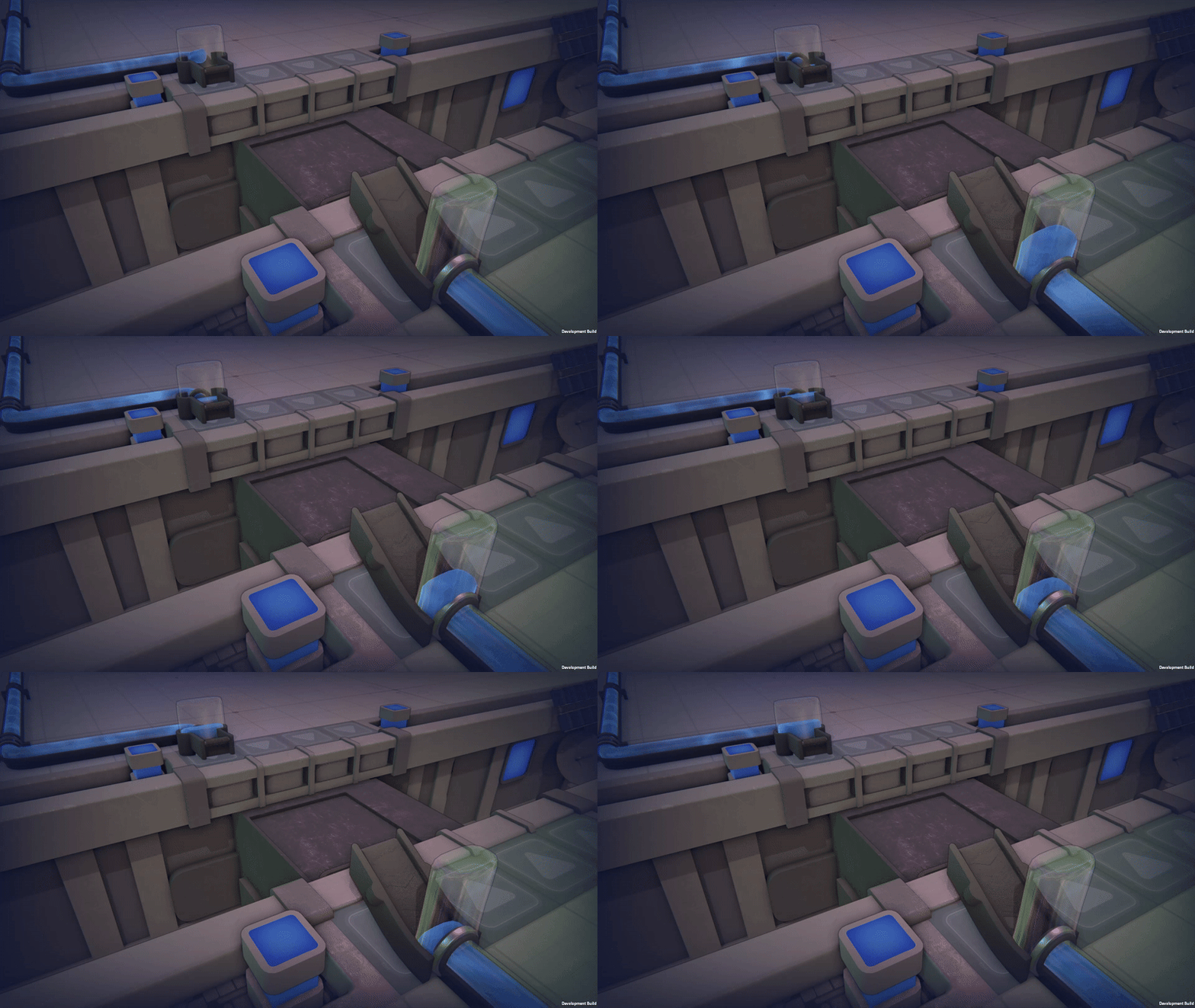
To get fluids across a gap, you can place a Fluid Launcher. This version of the Launcher will accumulate fluid to create a blob that it will launch to the other side. It can store two blobs-worth of paint, scaling with painting speed. One fluid launcher will be enough to support one full belt of painters.
Unlike shapes and belts however, there’s currently no limit to throughput for pipes. Pipes do not have capacity of their own: if there’s fluid available in the buffer of the output building, it will show the fluid in the pipes. When this buffer is empty, the pipes will be empty as well. Essentially, any paints used by another building will be taken directly out of the Painter buildings. The pipes determine where the building can get paint from.
We plan to make some improvements for this, like a limit to throughput would be introduced to make pipes behave more realistically. However, there is no advanced fluid simulation planned. Adding flow / pressure-based simulation would add a lot of complexity to the game without major added gameplay value. We want you to be able to focus on solving shapes, instead of having to worry about fluids getting stuck in pipes.
Then there’s the Fluid Tank. This building holds up to 1,800 liters and works as a buffer between out- and inputs to make sure the flow continues to flow for a while when your Painters run dry. They give you room for error, but can be optimized out of the system if you’d like!
Painter
To paint a shape, you have the Painter building. This building can paint any shape you send through it, but only the top layer. To paint multiple layers, you’ll need to paint first, stack later. It has a buffer of 20 liters and has inputs on three sides for extra flexibility. Painting a layer uses 10 liters.
In previous builds, we had a Full Painter building that painted every layer of the shapes you run through it. However, we recently removed it as it was not very useful for the challenges we set.
Mixing
With default world settings, you’ll only be able to find Red, Green and Blue fluids throughout your world. To get the secondary colors and the tertiary, you’ll need to mix the fluids. For this, you have the Color Mixer! This building has two inputs next to each other, and one output on the opposite side. Colors are mixed as followed:
Colorblind: RGB with textures, with additive textures (dots mixed with lines becomes dots with lines)
All three buffers have a capacity of 50 liters each. The ratio is 1:1, so 25 liters of each input fluid makes 50 liters of the output fluid.
Visuals are work in progress
Crystals
Towards the later stages of the game, you’ll start to run into Crystals. We did a deep dive into Crystals last year, though a lot of it is quite outdated by now.
To summarize, Crystals are made by providing fluids to the Crystal Generator. This building will pump the fluid into any Empty or Pin quadrants up until the top layer of the shape you run through it. This paint will then harden into Crystal, matching the color of the fluid used. The problem with Crystals is that when you try to separate two adjacent Crystal quadrants or try to stack it on top of another shape, it will shatter and disappear. You can separate Crystal from a regular shape and stack shapes on top of Crystals, however.
Filling a shape uses 20 liters of fluid, regardless of the amount of quadrants it has to fill.
Both the building and crystals themselves are still work in progress
Other tidbits
The fluids fully support the newly added Color Schemes, including Colorblind RGB!
When generating a new world, you have the option to include secondary and tertiary colors, allowing you to gather them using Pumps. If you choose to include all colors in the world, the Mixer becomes optional. You can also choose to remove primary colors, but some patches of primary color fluids will remain near the Vortex to allow you to progress.
That’s about everything! We hope the new fluids make for a more interesting system than using belts to move colors. Let us know what you think!
Hello everyone! It's been a little while since we've done a progress devlog! We have a couple of bigger changes and various small improvements across the game, so let's take a look. As a side note, thank you to everyone who filled in the devlog survey! Based on the responses, we'
Hello everyone!
It's been a little while since we've done a progress devlog! We have a couple of bigger changes and various small improvements across the game, so let's take a look.
As a side note, thank you to everyone who filled in the devlog survey! Based on the responses, we've made two changes to this devlog. First up, more images! We'll try to show off as much of the game as we can in blog format, though gifs didn't make much sense for today's topics. Secondly, we've tried to keep our writing a bit more to-the-point. Let us know what you think!
We’ve added a ton of new settings and features to customize a new start to how you want to play shapez 2. Patreons can expect these features in Alpha 21, coming soon!
Difficulty Presets
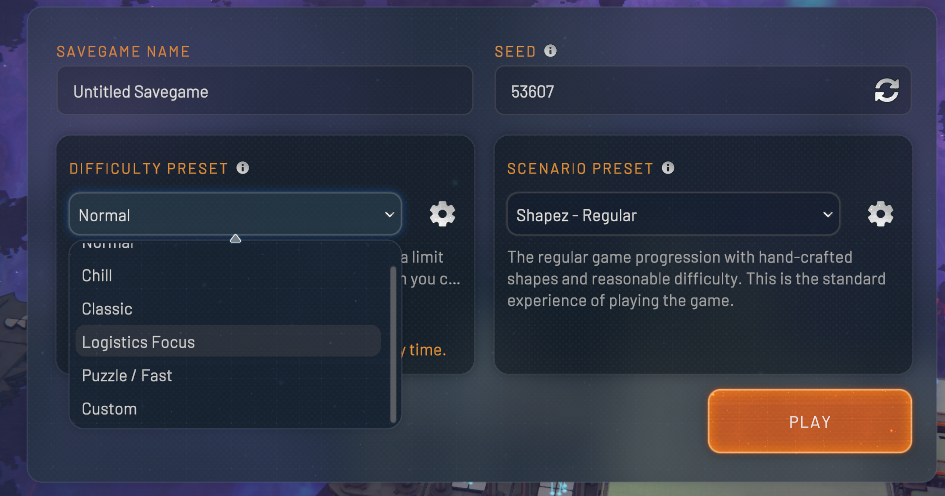
You can currently select from 5 different difficulty presets that change a handful of modifiers to change the way you play. You can customize all of these presets, or start off with the Custom preset at the bottom of the list. These presets can be changed at any time!
Normal: Copy/Paste is free once unlocked, but there’s a limit to how many platforms you can place.
Chill: Copy/Paste is free once unlocked and there’s almost no limit to how many platforms you can place. Research goal costs are decreased slightly.
Classic: Copy/Paste costs blueprint points, but there’s a limit to how many platforms you can place. Research goal costs are decreased slightly.
Logistics: Copy/Paste costs double the amount of blueprint points and there’s a limit to how many platforms you can place. Research goal costs are quintupled. Will require you to move a lot of shapes around!
Puzzle / Fast: Copy/Paste is free once unlocked and there’s almost no limit to how many platforms you can place. Research goal costs are minimal. Little need to optimize production or throughput.
Scenario Presets
Scenarios will allow you to completely change the game. From core mechanics to map generation, everything can be changed. For now though, we just have the normal preset and custom. When you go to edit a Scenario Preset, you get 3 tabs.
Scenarios This is where you can select a scenario separate from map generation and game rules. Again, for now it’s just the standard experience and something we’re experimenting with but won’t show today.
Map Generation Just make it a setting? Fine, we’ve made everything a setting. Aside from the Seed, you can customize pretty much everything about how the map will be generated.
At the top are the general Shape & Fluid patch settings. You can customize how many will generate, how large they start off, how much they will grow based on distance from the Vortex and the max size. For Shape patches, you can set how colorful they’ll be and how often rare shapes will appear. For Fluid patches, you can choose whether primary, secondary and/or tertiary colors are generated. Scrolling down, you can set the likeliness and minimum distance from the Vortex for each shape category. On the right, you’ll see a preview of the map you’re about to generate. You can zoom, look around or hide it if you don’t want spoilers.
Do keep in mind that with this much map customizability, there are plenty of ways to make your time very difficult or even impossible to progress. We highly recommend keeping all the settings at the default for your first playthrough.
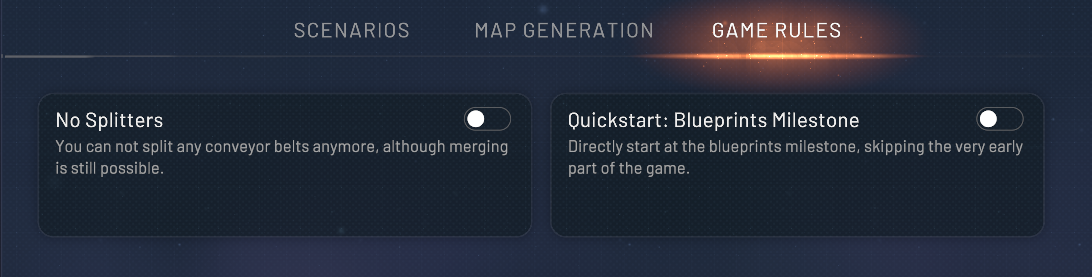
Game Rules In the last tab you can set extra rules that can really change up certain mechanics. For now, there are just two.
These settings will allow us – as well as modders – to create presets that massively overhaul the game and make shapez 2 infinitely replayable! Sharing options for map generation are being worked on.
Colors
The name of the shape color Purple has been changed to Magenta. If you’re using shape codes, this means that any use of p needs to be changed to m to work. Keep this in mind when importing shape codes from shapez 1! If you’re not familiar with shape codes, don’t worry about it.
The contrast between uncolored shapes and white ones has been increased to make it easier to keep them apart.
We’ve added two more color schemes that change all the shape colors and fluids, totaling to four color schemes. Whether you need a change of scenery or struggle differentiating certain colors, be sure to check out the other modes! They can be changed at any time in the settings.
RGB (Default): Red, Green, Blue, Cyan, Magenta, Yellow & White
RYB: Red, Yellow, Blue, Orange, Green, Purple & Black
CMYK: Cyan, Magenta, Yellow, Blue, Red, Green & Key (Black)
RGB (Colorblind): Increases contrast of the default RGB colors and adds a texture
The same shape in RGB (top left), RYB (top right), CMYK (bottom left) and Colorblind (bottom right)
Keep in mind that the shape codes stay the same, regardless of the color scheme you’re using. In RGB, CwCwCwCw will create a white circle. In RYB, this circle will be black.
Other changes
We’ve made a large amount of changes to fluids, but we’ll save that topic for a dedicated Fluids blog.
Gameplay
There’s now a separate miner extension for fluids. Miner layouts now have a new layout, reducing the maximum amount of extensions that can be attached to a miner to 4. However, patch arrangements have been improved!
Miner Extension visuals are still placeholder
The Full Painter building has been removed. It just wasn't very practical and there was little reason to use it. The regular Painter building is still available, which colors the top layer of any shape you run through it.
Map generation has been made more interesting. The farther from the HUB you go, you'll get rare shape patches that can save you some work. Patches in general are much bigger, but everything can be customized in the map generator now!
Visuals
Fine-tuned the pins shader to be more visible on top of shapes, keeping in mind the new color schemes.
The visuals of the Stacker building have been finalized!
There are new placement indicators when placing fluid miners & pumps, to make it a bit less confusing when your camera is angled.
User Interface
The top left corner now has a button for every research tab: Milestones, Shop, Tasks, Upgrades. If you unlock something new in any of those categories, it will show a small notification marker.
Unlocking a milestone now shows an overview for the newly unlocked tasks, upgrades and content. You can click the info icon on the new milestone to see the overview again, or check out any of the other milestones’ overviews.
The Upgrades UI has also been improved to clearly show the effect it has on speed.
There are now Feedback buttons in several places of the game that will open a window with several more buttons that take you to either the Discord, Feedback Form or Suggestions Portal.
That's the devlog! A lot of our focus is currently set on refining the game, but we have plenty more to show soon.
Hello everyone! Last devlog we talked about trains , so let's look at your other option today: Space Belts. You'll likely be using these a lot, so let's take a look at what we're working with. News Devlog survey We're really interested to learn if there are ways for us to improve
Hello everyone!
Last devlog we talked about trains, so let's look at your other option today: Space Belts. You'll likely be using these a lot, so let's take a look at what we're working with.
We're really interested to learn if there are ways for us to improve the quality of the devlogs and/or align them more with what you'd truly like to know about shapez 2! This survey includes questions about quality, usage of visuals, your interests as well as a suggestion box where you can suggest topics for future devlogs. So whether this is your first devlog or you've already read all twenty(!) of them, we would really appreciate it if you could take the time to check out the survey!
Not only do you get Devlog 020 today, Patreons also just got access to Alpha 20! This new build includes everything mentioned in this blog, plus a bunch of new features and visuals. Updated content includes train collision avoidance, simulation improvements, map generation improvements, new visuals for a couple of buildings and much more.
Disclaimer
Just a reminder, everything shown in this blog is still in development and is still subject to change. They're not quite placeholders anymore, but the visuals of the Space Belts are not finished yet. Your thoughts and feedback are welcome, as always!
A brief history
Space Belts are an essential tool to transport large quantities of shapes between platforms. Ideal for short distances, they allow you to easily cross a gap or connect a train station to your factory for pickups or deliveries. However, their original design was quite different from what we’re working with now. Let’s walk you through it!
Just build it yourself!
Initially, you were expected to build connections using these platforms manually. You would place platforms and then build belts and launchers on them to create connections. It quickly became obvious that this is very burdensome to do all the time for every connection (as you may expect), so we started working on improvements.
Old build
Space Tunnels
One of the first improvements was the addition of special tunnel platforms. These allowed your connections to transport shapes under other platforms, making connecting across sections much easier. Additionally, their ability to consistently transport large quantities of shapes essentially made them function as Space Belts, but without the flexibility of seamlessly splitting and merging. The tunnels exist as their own form of transport alongside the buildings you know from shapez 1, as well as Shape Launchers.
Old build
Hyperbelts
The first step towards improving space platform connections was Hyperbelts. Despite the fancy name, it was just a tool that allowed you to easily place prebuilt versions of the space platforms with belts & launchers without having to build all of it yourself. It was based on the idea of belt placement in your factory, but very simplified - it didn't support merging or splitting unless you manually made platforms to do so.
Old build
This system is what you saw in the demo and this is – as expected – something we got a lot of feedback on. Technically we could’ve made more prebuilt versions to allow for more complexity, but it would still be clunky and not very pretty. We can do better.
Space Belts
With a ton more feedback under our belt, the Hyperbelt’s flaws became clearer and clearer. Aside from the lack of complexity we already mentioned, it was also just very slow. They moved shapes at the same speed as all other belts in your factory, and when you’re crossing larger distances, it really did take a while before your shapes got anywhere. Essentially, what we needed was a system that had all the functionality of regular belts, but much larger, faster and independent of platforms. So, we made just that.
Enter: Space Belts. They’re huge belts that support up to 12 regular belts across 3 layers, move shapes way faster and retain the flexibility you expect from belts, all without needing platforms to build on! This makes Space Belts your best option to connect platforms over shorter distances. If you need to move something over long distances however, Trains are the better option.
Shapes moving across the Space Belt
When there are Space Belts, you also need Space Pipes. With the recent fluid system rework, it became possible to transport fluids across notches with pipes. This then allowed us to make the prototype of the Space Belt’s younger brother, Space Pipes! These work identical to Space Belts, but move fluids instead of shapes and have a different look to reflect this. Have a look at the concept below.
This may or may not be what it will actually look like
Merging with Tunnels
For close-distance transport, we would now have both Space Tunnels and Space Belts & Pipes. The key difference between the two is that Tunnels can move shapes under a platform, bypassing it without slowing down. However, they can only go straight and have a range of 4 chunks, which is where Space Belts and Pipes come in.
Now, you’ll likely come across a situation where you’d like to place your Space Belt across a platform, without connecting to said platform. That’s where you connect a Space Tunnel to your Space Belt! However, keeping Space Tunnels and Space Belts separate doesn’t make much sense anymore as they work closely together now. So, Space Tunnels now have a brand new visual that matches that of the Space Belts, they’re both part of the Space Belts category in the UI and Tunnels can now be integrated into the smart-placement tool.
What’s next?
Space Belts are already in a really good state, but there are some improvements yet to be made. As we just mentioned, the Space Tunnels still need to be integrated into the placement behaviour of Space Belts. That’s to say, Tunnels should automatically be placed when you drag a Space Belt across a platform.
We are already considering other ways of improving them even more, however: a topic that has come up internally is that merging or splitting across different factory lanes and layers in space is too troublesome for too small of a result. To make this easier, we are evaluating Merge/Split Balancers. These special space platforms would have one side that can receive up to 12 belts and another 36 split across 3 other sides. The Merger takes up to 36 input lanes and distributes contents evenly across up to 12, while the Splitter takes up to 12 input lanes and distributes the contents evenly across up to 36.
Well, that's everything for now. The bottom line is that Space Belts should act similar to regular belts, but a lot bigger. Anyway, progress is going very well and we have plenty more to show, so we hope to see you again for the next devlog.
Hello everyone! It's finally time to talk about possibly the most anticipated feature of shapez 2: Trains ! We'll keep the intro short, but please remember to wishlist shapez 2! There's a high chance you already have (in which case, thank you very much!), but every single wishlis
Hello everyone!
It's finally time to talk about possibly the most anticipated feature of shapez 2: Trains! We'll keep the intro short, but please remember to wishlist shapez 2! There's a high chance you already have (in which case, thank you very much!), but every single wishlist helps out!
Please note that the vast majority of train visuals are placeholder or early concepts. The mechanics and balancing explained in this blog are also subject to change, depending on community feedback. To read more about how we implement new content and the current state of the game, check out our previous devlog!
You can explore everything you see and read in this blog yourself in Alpha 19, available to Patreons.
Our goal for trains
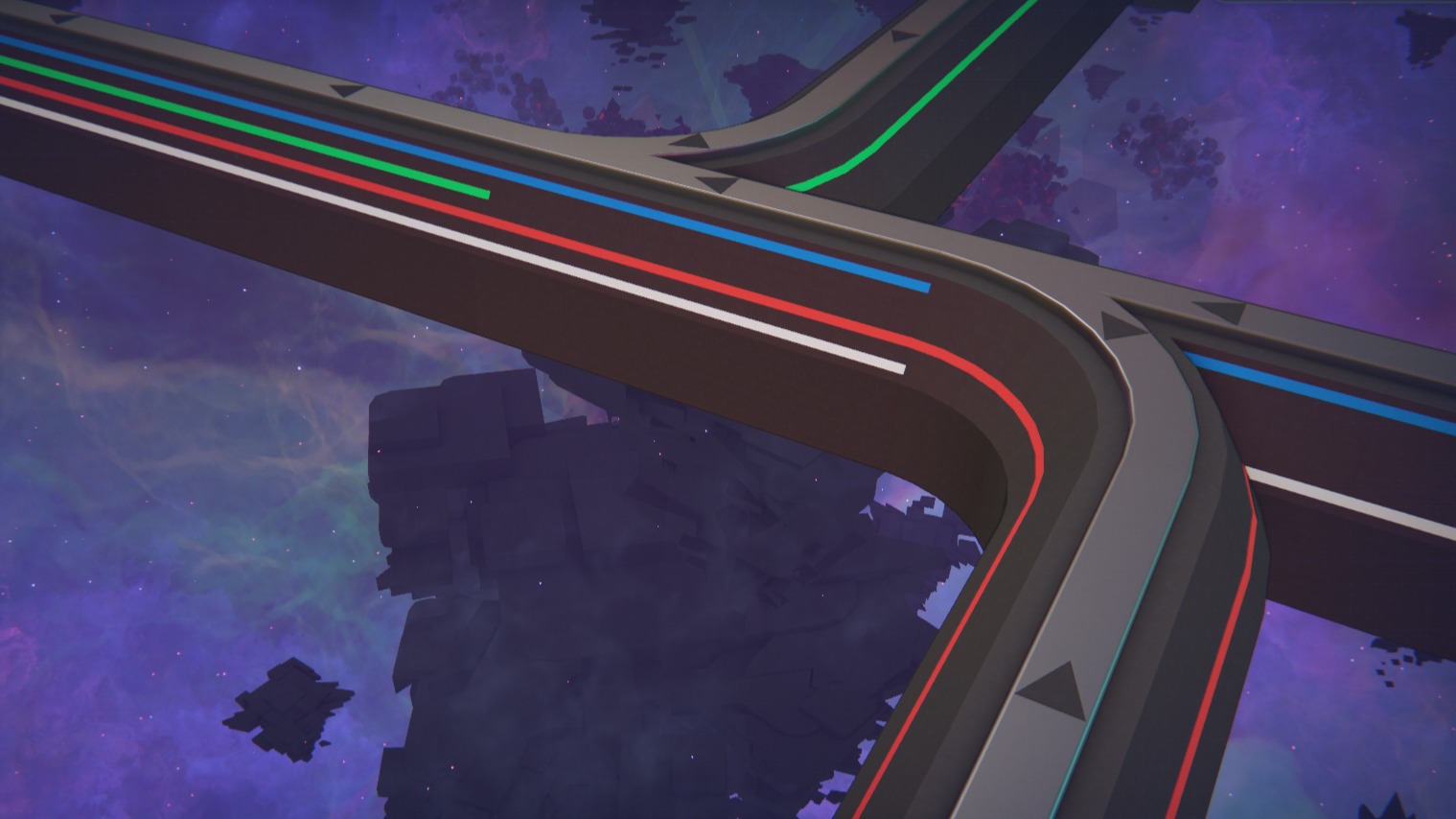
We’d like to quickly preface the blog with our intentions for trains. Their purpose is to transport a large amount of shapes over large distances. While tunnels and space belts work fine to connect nearby platforms, trains will connect your distant platforms that mine that specific shape you really need, but spawned multiple sectors away.
Ultimately, our goal was to create a fun, long-distance transport option that fits well into the existing shapez world and the mechanics you’re used to. It should be easy to get into but provide depth for optimization and versatility. For this reason we’ve omitted signals and other, more complex train mechanics in favor of a simpler line system that still offers a lot of depth for those willing to invest their time into optimization.
The basics
To get started, let’s place a station! You can also choose to start with the track or a depot, but we’ll start with a station as they come with a pre-build segment of track. The station building tells a locomotive where to stop. To load and unload the wagons you need to place Train Loaders and Train Unloaders, both of which are available for both shapes and fluids. Each (Un)Loader can service one wagon.
Once the stations are in place, it’s time to place tracks. You don’t have to worry about the length of the line, as placing tracks is completely free. Connect the stations by track in any way you want, but do keep in mind that tracks are directional. Additionally, trains have to slow down when making a turn and speed up on long, straight sections. You’ll want to minimize the amount of turns a train needs to make in order to maintain a high speed.
When your stations are connected, you won’t have to worry about making a loop or a place where the train can turn around: tracks are double-sided. When a train reaches the end of a line, it will flip to the bottom side of the track and turn back to where it came from. This helps a lot with space management as you won’t have to worry about frontal collisions or need to make two tracks to allow trains to travel back and forth. However, trains traveling along the bottom of a track cannot be serviced by stations and only travel in a straight line. If the line has junctions or switches, you may still need to complete a loop to get your train back to the start.
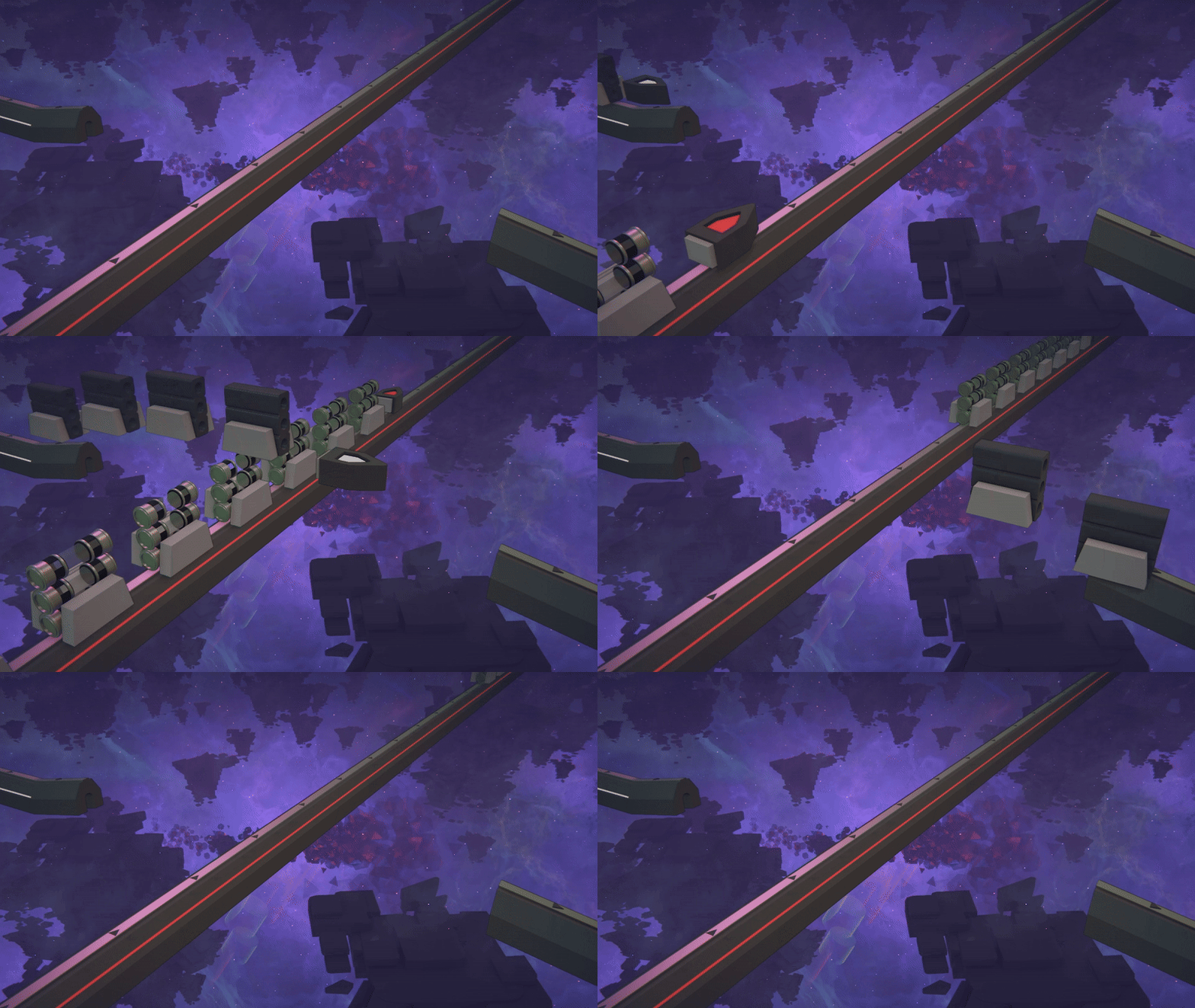
Now that you’ve connected an input station and an output station, it’s time to get a train running. To spawn a train, you need a train Depot. This depot is one chunk big and allows you to spawn a single locomotive that cannot carry any products by itself. To add capacity, you’ll need to attach a Wagon Extension to the Depot. You can choose between two types of cargo wagons: Shape Wagons and Fluid Wagons. Filler Wagons are also available to space out two cargo wagons, but can’t be used to transport products. You’re free to mix and match the wagon types, there’s no need to stick to just one. With these wagon extensions attached, any train spawned by the Depot will pull a single wagon for every extension. If you’d like a second train, you’ll need to place a second train Depot with its own wagon extensions.
A train will automatically spawn from the depot and do its thing: it will follow the track and stop at every station it comes across. It will load shapes at Train Loaders, and unload shapes at Train Unloaders. This is the simplest use of trains: a single train moves along a line and does its thing. You can stop there, but there’s a lot more possible.
Lines
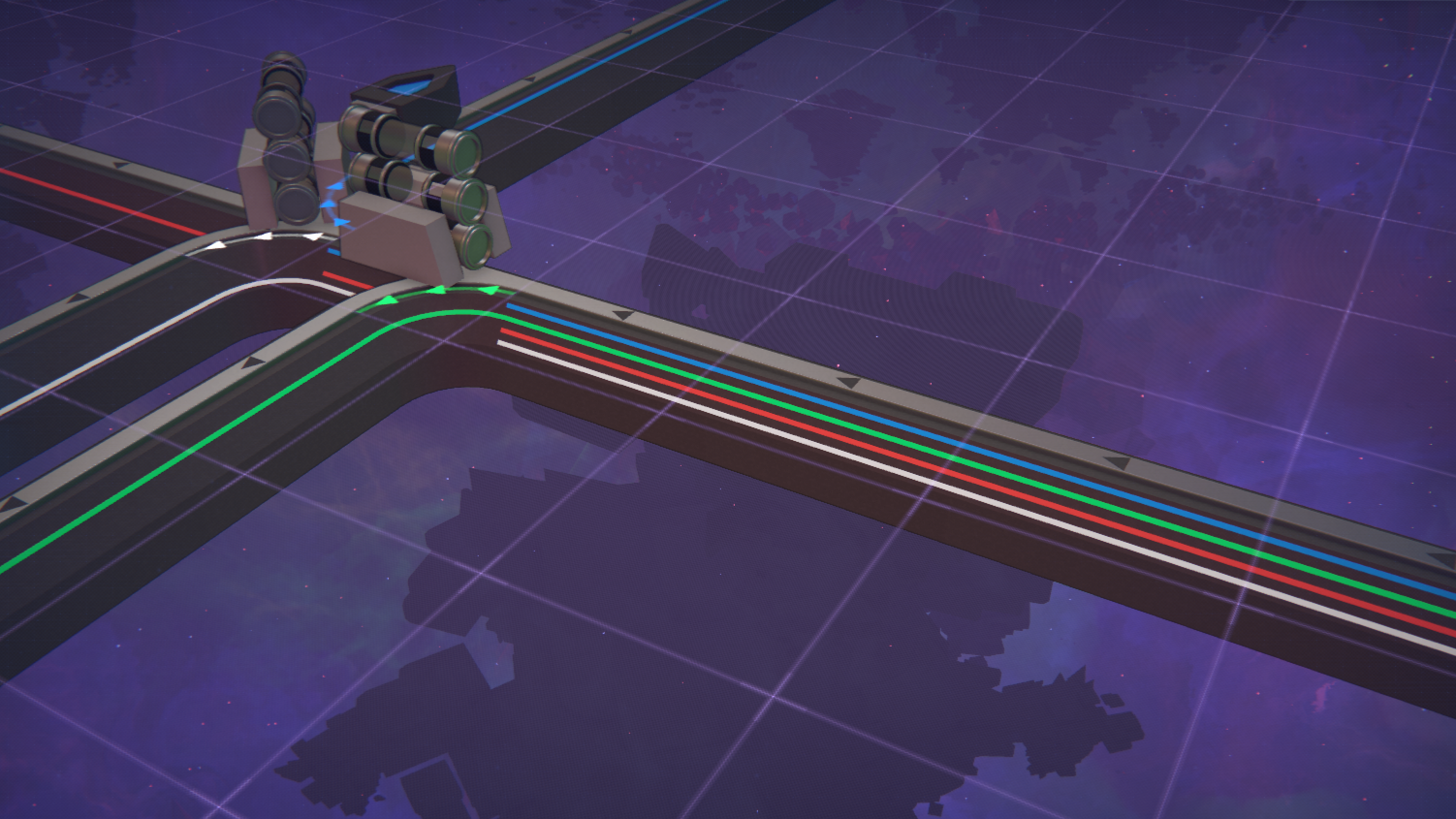
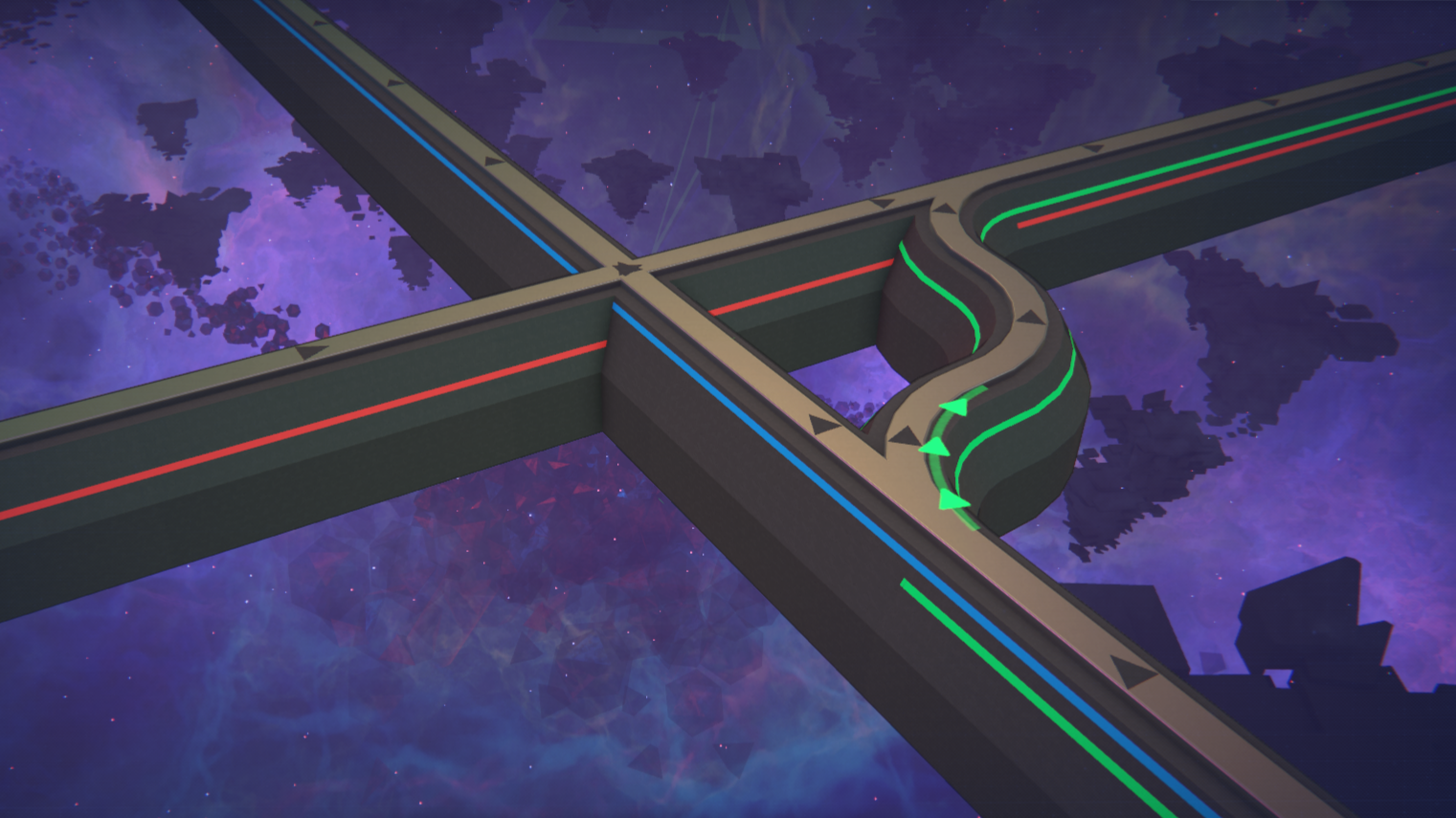
If you were to give every single line its own track, you’d need to reserve a lot of space for all the tracks you’d need. Instead, you can work with colors! When placing a track or a Depot, you can currently pick between four colors: red, green, blue and white. The color determines which line which train will follow. For example, a train from a red Depot will always follow the red line in case of a switch.
The colors come into play once you merge two or more tracks of different colors into a single track. If you have a green line and you merge a red line onto the same track, the track will become both green and red in the direction of the track. This means that both red trains and green trains can travel along this line! If you were to split the green line off this track, you’d get your separated red and green tracks back.
A track can support all four colors simultaneously, giving any piece of track an effective limit of four different lines. If you require more lines, you’ll need to make a parallel track that travels in the same direction or separate your train network into smaller subnetworks. When traveling along the bottom of a track, trains will no longer follow their line and only go straight at switches.
Crossings
If you need to cross tracks, there are two ways to do it. The first one is to simply create a crossing by placing a second track across an existing track to create a crossing. At a crossing, lines and trains can only go straight. If you want to give trains the option to merge into the other track as well, you need to manually build a switch.
However, the second way is a lot more fun: just make a Train Launcher! Just like with conveyor belts, you can place a launcher that will launch the train into the air and across any other tracks and onto the catcher. Unlike the conveyor belt equivalent, you can change the strength of the launcher to determine how far the train will fly.
Before you ask: Yes, the Train Launcher also works on trains at the bottom side of the track.
Balancing
So after all this, you may wonder why you’d use trains instead of tunnels or space belts. Aside from being way cooler, it’s a matter of cost, speed and throughput.
Costs
Below, you see a table with the costs of running a train. For this example, we run a single train with three wagons between two stations with capacity for all wagons.
Object
Chunk cost each
Amount
Chunk cost sum
Locomotive
10
1
10
Wagon
5
3
15
Station
1
2
2
Platform
2
6
12
––
Chunk cost total
39
39 chunks may sound like a lot, but the best part is that tracks are completely free! This means that no matter the distance, be it 5 chunks or 500, the cost remains the same. Additionally, locomotives don’t require fuel and there’s no maintenance fee either. If you compare this to our other mass-transport options like Space Belts and Space Tunnels, both of which have an effective per-chunk cost of 1, trains become increasingly more chunk-efficient the longer the distance traveled. The cheapest possible setup for a functioning train is one locomotive with one wagon running between two stations, which would cost you 21 chunks.
Throughput
Shapes and fluids are loaded on a train in packages. A single wagon has capacity for three packages – one for each building layer – with each package having a capacity of 960 shapes or 9,600 L of fluids. This gives every wagon a maximum capacity of 2,880 shapes or 28,800 L of fluid when using all three layers. Trains will only pick up packages that are completely filled, giving a wagon a minimum required load of 960 shapes or 9,600 L as well.
A wagon can only pick up one package per layer. If you only use the bottom layer of the station, the wagon can only pick up one package: it does not automatically place a second package on top of the first one. Additionally, Loaders and Unloaders can store up to two full packages per layer. To make full use of both the wagons and the (Un)Loaders, you’ll want to split the load across all three layers.
When it comes to speed, trains are considerably faster than the alternatives. If you were to move shapes across a distance of 300 chunks using space belts, you’d be looking at almost an hour of travel time! A train however, will cross that distance in under 30 seconds. Trains slow down for turns and take some time to get back up to speed, so every corner will considerably increase the travel time of a train. Adding wagons to a train does not affect the speed or acceleration.
To summarize the balance, space belts and tunnels are ideal for short-distance connections between platforms. Trains are what you’ll want to use for medium and long distances. They’re incredibly versatile and you can add or remove trains and wagons as needed. However, it takes time to set them up and poor planning and/or using too many trains can create bottlenecks when collision avoidance enters the fray – more on that next.
Future possibilities
Collision avoidance
In the latest Alpha build (Alpha 19 at the time of writing), trains still just phase through each other. However, we’re currently experimenting with a collision avoidance system. How it will work exactly is still to be determined, but a train should brake when another train gets in its way. Once the path is clear, it should continue its journey.
This also means that congestion would be possible if you have a lot of trains on the same line or have a very busy crossing. Avoid conflict points, build station bypass tracks and use the line colors to the best of your ability to avoid gridlocking your entire transport system.
Colorblind features
Since we’re working with colors, we’re planning to use the same color pattern shaders we showed in the last devlog for the line colors as well. How exactly this will look depends on what the final train and track visuals end up looking like.
We have some more ideas, but they require more testing before we can say with certainty they'll make it into the game. Names pending.
Side swapper track: Special track segment that will ‘flip’ the track and allows trains to swap to the other side while continuing in the same direction, without slowing down.
Locomotive recoloring platform: Change a locomotive’s line color and reroute them on the fly with a special platform.
Vortex train launch: Launch trains directly into the Vortex to deliver a large amount of shapes at once.
Can't wait to try trains and want get involved in the process? Consider supporting us on Patreon to get access to the bi-weekly Alpha builds as they release! Your feedback is essential to us while we're working very hard to get shapez 2 ready for Early Access.
That's all we have on trains for now! We hope to soon be able to show you what trains will actually look like, but we first need some more time to get all the features in. Thank you for your time and we hope to see you again in two weeks.
Hello everyone! We have something a little bit different for you today! Our topic for this devlog is the future – more specifically, where we are with the development of shapez 2, what still needs to be done and how we’re looking at the Early Access release. In general, it should
Hello everyone!
We have something a little bit different for you today! Our topic for this devlog is the future – more specifically, where we are with the development of shapez 2, what still needs to be done and how we’re looking at the Early Access release. In general, it should give you a better insight of how we work.
You could technically call it a roadmap, though all the information we’d like to be included is a bit too wordy to be put into a single fancy image. You’ll have to do with a 5-page devlog again. Sorry!
Demo reception
To get us started, let’s talk about the demo again. Two weeks ago we shared a survey with everyone. There’s a lot of very useful information here that will help us determine the sentiment on the demo now that it’s over and gives us more to work with when it comes to the eventual release of the game. However, we would like to share the results of one of the questions.
These are the ‘grades’ you all gave the shapez 2 demo. Of course, these results will be biased. We shared the demo within the Discord and the blog, so the people filling out the survey will be big fans of shapez. It’s safe to assume that the grades will be higher than they would be if we were to ask a group of players that have no prior knowledge of shapez.
However, even if we were to subtract a point of every grade for a possibly more accurate score, we’re very happy with the responses. It fills us with confidence that the demo gets such high scores, considering the flaws it had – most of which have been fixed by now.
Shapez 2 today & the road ahead
Shapez 2 and the development thereof is looking very promising. With the demo, we were able to show what we’re capable of, now that we’re more than just a single person working on a game. We want to deliver the same quality for Early Access, but aspire to go beyond.
The biggest challenge we face now is to finalize the newer mechanics. The demo mostly consisted of “proven” mechanics, things from shapez 1 that we know work well. Shapez 2 and its Early Access will of course have a lot of new mechanics as well, which require more iterations and testing to make sure they’re functional and fun.
So, let's start to look ahead. There are three phases: developing the core mechanics, making them work in the game & polishing everything up for publishing. This system is used when it comes to developing mechanics, but it also applies to the game as a whole.
Phase 1: Game Mechanics
The beating heart of any game are the mechanics and core elements. We’re still partly in this phase, developing new mechanics, reworking old mechanics and gathering feedback on everything to make sure it all feels right. It’s a lengthy process, but you can’t really continue when parts of the core game are still missing.
Currently, we’re happy with the following major mechanics:
Fluids
Wires
Crystals
Research
Building layers
Blueprint library
Pin mechanics
Space belts & tunnels
Shape types (including the reworked Windmill shape)
The majority of buildings
Colorblind mode (see below!)
...and many more smaller features and improvement to tie everything together
This is not to say that we will never change anything about these mechanics ever again, but we’re confident that they are fun and work as intended leading into Early Access.
Colorblind mode – colors have patterns to help differentiate them if two or more colors look alike
Colorblind mode – these patterns are also applied to icons in the UI
There are also some mechanics that are still in the concept or prototype phase and we’re actively gathering feedback on how they should work. Once the concept is sound, we can finalize the concept and work on implementing it all into the game. These mechanics are as followed:
Trains
Chain miners & Fluid Extractors
Infinite Research (not yet started)
MAMs (Make Anything Machines): Everything you need to make a MAM is in the game, but there currently is no incentive to make it without the Infinite Research goals.
We’re aiming to have all the major mechanics done by the end of April. When everything is functional, it’s time to move onto the next phase.
Phase 2: Production
This is the phase where you turn the mechanics from phase 1 into a completed package. It includes all the visuals, quality of life improvements, placement, optimization, sounds and music – all in the name of making shapez 2 a nice experience. Let’s go through a couple of these points.
Wires are functional, but everything is still missing its visuals
Fluid pipes were in already, but got some improved visuals
We are always improving the simulation (don’t make me link the blog again). Currently, our focus lies on the precision issues of shapes and factories that are not on your screen. This is important to make sure every shape is where it should be and the factory keeps behaving when you look away for a second. Additionally, we have lofty goals when it comes to maintaining performance for huge factories. Not all our planned improvements made it into the demo but did get implemented shortly after, so it’s already in a very good state compared to what you got to try. We didn’t stop there though: it’s our goal to allow for 500k to 1 million buildings in a save on an average PC setup. For context, shapez 1 would start stuttering at 50k on the same system.
Then there’s our planned input rework. Shapez 2 works well with its default keybinds, but things start to break down a bit when you start customizing them. It’s very easy to produce conflicts or unexpected behavior – rebind Shift at your own discretion. When it comes to physical keys, there are some issues as well. For example, on the German QWERTZ layout you have to press Ctrl+Y instead of the expected Ctrl+Z to undo an action. Outliers like these are very difficult to fix, but not impossible.
Other ongoing work includes readability improvements – like the overview mode needing improved visualizations – and a statistics panel.
How long this phase will take is hard to predict, but we’re currently planning to spend about three to four months to get this phase right. That puts us around early August!
Phase 3: Polishing
Now, the gameplay is mostly done. There’s still a lot to do though! This is where we work on the tutorial and the knowledge panels with all the necessary content. The research goals need images or videos and the game should be localized for all the major languages.
Work on UI is also always ongoing, but you can now bind blueprint and folders to your toolbar!
New animation when you deliver your first shape
This is also the moment where we do a lot of testing of all parts of the game with the help of the community and external partners. A feature may work in phase 2 but a bug could still suddenly rear its head when you’re finalizing it with an image.
At this point it’s also time to work on the trailer for the Early Access release. The visuals will be done by this point, so we can record the footage we need.
This phase should take about one or two months, putting us around September or possibly October.
Early Access
So looking at this all, it’s unrealistic we’ll be ready for Early Access before September. Our bottomline is to release the game this year still. The latter half of the year already seems quite busy when it comes to factory games, so we’ll need to find a good window of opportunity to release shapez 2 – and we would like the game to be ready for us to jump on said opportunity.
As we’ve always said, our outlook on Early Access is that while the game is technically not finished yet, it should feel and play like a complete and polished game. We don’t want you to think you’re missing out on anything by playing it early! A lot of you tried the demo and gave us incredibly valuable feedback on the game, and the same goes for Early Access. We’ll be confident in the state of the game, but there are always other perspectives and ideas to explore that could make shapez 2 even better.
If you’d like to be part of this process and support us during development, do consider supporting the game on Patreon. It helps us fund the ongoing development costs, and gives you access to bi-weekly Alpha builds with the newest features before they go into Phase 3. Your feedback on these builds will in turn help us make a better game.
Another way to support us is by simply wishlisting the game on Steam!
Hello everyone! It’s been a while since you last had a look into our progress. In fact, we haven’t really updated you since the release of the demo! While we already did a deep dive into the evolution of the Research System (which you can read here ), it’s time we show you what o
Hello everyone!
It’s been a while since you last had a look into our progress. In fact, we haven’t really updated you since the release of the demo! While we already did a deep dive into the evolution of the Research System (which you can read here), it’s time we show you what other parts of the game we’ve been working on and what will be available in Alpha 18.
News
End of the shapez 2 Demo
The demo will soon be coming to a close. It will remain available until Monday, March 25th, 10 AM CET. This gives you the entire weekend to give the demo a go and see what shapez 2 is all about, or finish the projects you’re currently working on! Pick up the demo here:
A ton of you have already given us your feedback and thoughts on the demo and its system. As always, thank you so much for your time! We have a couple more specific questions we’d love you to answer.
We just released Alpha 18, which includes all of the changes mentioned in the blog and a little bit more. If you'd like to test it and share your opinions with us, consider subscribing to our Patreon!
Devlog 017
Production
The Windmill shape has been reworked. The previous design was the only shape type that was asymmetrical and always looked a bit awkward because of this. The new design is symmetrical, allowing for better looking shapes – in our opinion. The shape goals with Windmill quadrants have also been changed to make better use of the new design. It may take a bit of time to get used to it, but let us know your thoughts!
We have a new design for the Pin Pusher you’ve seen in the bonus build of the demo. Before, it only placed one pin in one quadrant, but it now places a pin under every existing quadrant. This changes where in your production line it would be best to use the Pin Pusher, as you may need to utilise a couple more cutters if you don't want pins under everything.
A grey circle after going through a Pin Pusher
Inspired by the original shapez, we’ve added Chain Miners and Chain Fluid Extractors that you’ll be able to connect to your main extraction platform. This saves you from having to go through the trouble of having to set up multiple platforms and connect them all. It also allows you to use all nodes of a cluster if one of the nodes is completely surrounded by other nodes without blocking any of the adjacent nodes. The map generation has seen some changes to allow for better usage of these chain miners and extractors.
Visuals are still WIP
Transportation
The old hyper belts (single platforms with four belts on them) were replaced with Space Belts. These new belts work similar to regular belts in that you can split and merge them, but a space belt carries four regular belts on three layers and can split the load into different directions. They are quite a bit more versatile than tunnels, but move shapes at a lower speed. Use them for short-distance connections between platforms or train stations.
Trains now travel along a solid set of rails, instead of the old rainbow ones. This makes the rails look a lot more weighty and inline with platforms. You can place a station platform along any set of rails. Connect the station with your factory using your second-favorite mode of transport, load them on a train and watch your shapes go off into the sunset.
You can build centralised train stations and connect them with your factory using space belts
We are still determining what role exactly trains should fill in shapez 2, but we've been getting some good feedback from the Patreon testers in the Discord. We hope we can share more about trains soon!
The first prototype of the 3-way splitter is here! While it’s still missing the visuals to make it make sense, we know it’s been a highly requested feature and are glad it’s making its way in.
We are working with a new Fluid Simulation system that should be more accurate and intuitive. To make sure the pipes feel good to use and keep the simulation running smoothly, we’re essentially working with a signal-like system. If there’s any fluid anywhere in a continuous pipeline, any connected building will be able make use of it. There will not be any fancy liquid simulations or advanced pumping mechanics. Additionally, Fluid Tanks are now directional to prevent back flow.
You now start with a new Vortex platform layout. It’s a 3x3 platform with a Miner on every side, supported by Chain Miners. These will pump up the shape output of the Miners so you have enough shapes to keep you busy until you unlock Chain Miners yourself.
Mechanics
There has been some progress on the wiring content for the game. We now have functioning Buttons, Displays, Virtual Rotators, Virtual Analyzers and Virtual Unstackers! It’s still early days for wiring so there’s still a lot of progress to be made.
Alpha 18 has the brand new Blueprint Library design. Essentially, it works just like the files in your operating system. You’ll be able to organise all your blueprints into separate folders by simply dragging and dropping them as you wish. If you’d like to use a blueprint, you can drag the file into the hotbar for quick access.
Want to organise your blueprints without launching the game? Just head into the blueprint folder using something like Windows File Explorer and you’ll find everything exactly as you left it in game. Your library is synced between save games and devices.
Various other changes
A lot of rendering refactoring & performance improvements
Various improvements and extra visuals for the UI in many parts of the game
Further changes to simulation ticks & steps per unit to fix (some) precision issues
The shader of the shape viewer has been improved. Shapes now reflect some light.
We brought back larger platform layouts as optional unlocks.
The max range of tunnels has been changed from 3 chunks to 4. Their entrances now input and output shapes on 3 layers, with 4 belts on each layer.
Platforms are now one tile bigger in every direction. This has decreased the gap between platforms and belt launchers had their range reduced to match this change.
Thanks for checking out our progress! Again, you only have a couple days left to try the demo before it goes on cooldown. Be sure to give it a go and wishlist the game if you're into it!
Hello everyone! A popular point of feedback on the demo was the research system. It's kinda a hassle to navigate and you couldn't really play how you want to play, unlock what you want to unlock. We went back to the drawing board and took another look at the research system, Ther
Hello everyone!
A popular point of feedback on the demo was the research system. It's kinda a hassle to navigate and you couldn't really play how you want to play, unlock what you want to unlock. We went back to the drawing board and took another look at the research system, There's a new system now, and we'd like to explain it to you! However, we think it would be interesting to walk you through the history of the research system.
If you'd just like to read about the newest system, feel free to skip to design #4.
So to get where we are now, we had to make a number of iterations of the research system, see what elements worked and which didn’t and then improve upon that iteration by making a new, hopefully better one. Let’s walk you through these iterations, so you have a good idea of our progress!
Design #1: The initial research tree
Way back when, the research system had a classic tree structure connecting one research to the next. Every research could require multiple previous ones and each and every individual building and building variation had a unique research you’d have to unlock.
While such a research tree would be functional – in the end you’d have everything – this design brings a couple of major problems.
Features were extremely broken up. You had to complete multiple separate researches to unlock all the bits and pieces of a single mechanic. You could make painters but wouldn’t have a way to move paint around to make use of the new unlock. You’d also be missing out on a lot of quality of life features that make building a lot easier, so you waste a lot of time and space building elaborate factories while a single unlock would make that system a lot easier and compact to work with.
The research–per–building system also means the tree would be extremely large and overwhelming. It was hard to find out what exactly you were working towards, if you could even find what you’re working on right now.
What we needed was a new tree design that combined various buildings into single researches to make the tree more compact and easier on the eyes.
Design #2: Main progression line with categorized subtrees
For this design, we went with a linear research tree – a tree trunk, you could say. Core elements such as rotators and stackers would be right at the top and the main mechanic you unlock when completing the research. Many of the smaller bits and pieces were unified as part of these core unlocks to make sure you unlock all the necessary buildings you need for the main new mechanic.
Other unlocks that weren’t part of the core mechanics would be in separate, smaller subtrees. You’d have a subtree for belt speed, one for building speed, one for blueprints, etc. This removed the clutter from the main tree and organized all the other unlocks in separate tabs.
This design made it a lot easier to see the next big thing you were working towards, and made it impossible to miss any core mechanics you’d need to progress the game. The fact that you’d immediately have all the elements you needed to fully enjoy the new mechanic prevented a lot of frustration that came with the old design.
However, this design too came with issues. The splintered subtrees would still make it difficult to find some researches, since some researches could fit in multiple categories. Is fluid packing part of fluids, or part of transport? It also made it difficult to keep track of your progression across subtrees: you sometimes had to flip through multiple tabs to find out what you just unlocked and where a new research had just become available.
Additionally, it was hard to understand the connection between the main progression line and the subgoals. The small trees give you a general impression of what you had to do to progress – unlock one belt speed increase to unlock the next increase – but subgoals also needed you to progress the main progression line at times. The only way to find out about this was to guess. Can’t progress this subtree? Got to be the main line.
The tree-like design also just didn’t really add much. Some researches would be locked behind other researches just for the sake of looking like a tree. You had to unlock the CCW rotator before you could unlock the 180° rotator, even though you can definitely do without the former to use the latter.
To add insult to injury, some unlocks most would consider essential and were huge QoL improvements were spread across these subtrees. You had to go out of your way to unlock splitters and mergers for example, and while you could technically progress without them, it made complex factories unnecessarily painful and inefficient to build.
While this iteration fixed a lot of the issues of the first design, it brought a whole host of other issues to light. So, we went back to the drawing board.
Design #3: Milestones & Side goals
We decided to ditch the trees and go with stones instead. This new design consolidated the main progression line into milestones: bigger, more meaningful unlocks. Every milestone you reach is like a whole new world of options and side goals to explore. The tree structures and all the separate tabs were completely removed and everything was centralized within the new milestones. Essential quality of life unlocks like mergers and splitters are now unlocked from the start, and more minor unlocks could be found behind optional side goals you unlock with the milestones.
It was now extremely easy to understand when you unlock what mechanic and when new side goals become available. You have complete freedom in choosing what side goals you want to take on, as you no longer have to unlock full cutters to unlock the swapper, for instance. Milestones are now the only dependency.
This iteration of the research system is the one currently seen in the demo. While it worked well enough for the part you could play in the demo, some issues started popping up here and there. Thank you again for all the feedback!
The big issue here is that the progression of the shape you needed to make to unlock the milestones didn’t really progress in a logical way. The required shapes were too different from each other, and with the limited space available – especially before you unlock space platforms – it required you to demolish your previous work to make space for the new production line. This process is very mentally draining and doesn’t feel as rewarding as it could. The milestones should incentivise growth, not feel like a rogue-lite game.
Additionally, the long, single line of milestones made it difficult to keep track of all the available and completed side goals. You had to navigate back and forth constantly to find the ones you wanted. Again, since the demo wasn’t that large, this isn’t that big of a deal yet. When all the milestones become available in the full game however, finding anything will be a struggle. Adding more goals to the game would be a challenge as well as they’re tied 1:1 to the milestones, but it would also make the previous problem worse.
Design #4: Evolving milestones & Side tasks progression
With all that in mind, we move on to the research system that’s currently available in the latest Patreon-exclusive Alpha. We stick with the milestone system, but have made a handful of big changes.
Milestone goals are no longer limited to one shape type. Some goals may have multiple shape requirements that either build upon shapes you had to deliver previously or will be reused in a future goal. This is a fairly standalone change, but there’s more.
Introducing: Research Points. Optional unlocks, like belt speeds and blueprint limits, are no longer tied to goals. Instead, you’ll be rewarded Research Points by completing ‘Side Tasks’, which in turn are unlocked by reaching new milestones like before. These side tasks start off simpler than milestones, but you unlock new, more difficult side tasks by completing them. These ‘side tasks lines’ (name pending) can have between 3 and 7 tasks and will continue to ramp up in difficulty until you reach the end of the line. Side tasks can also award other minor rewards alongside research points, like extra blueprint points and platform limits.
The research points you obtain can be spent on whichever upgrade you like as long as you have completed the milestone to unlock the mechanic you want to upgrade. All possible upgrades are now on one dedicated screen – a shop, as it were – instead of being tied to a long, single row of milestones. You can really go wild with your research points: want to max out belt speed in the early game? If you can afford it, it’s yours.
This system is quite a big departure from the iterations we had before, but it brings a lot of improvements to the unlocking experience. Milestones now feel even more important and rewarding to unlock. They clearly show what you get by unlocking them, without being bloated by small upgrades. The research points and the ‘shop’ where you unlock upgrades gives you both a lot of freedom to play how you want to play and also makes it a lot more clear what upgrades are available. This also helps make the game more replayable – you could decide to focus on different upgrades and challenge yourself in new ways.
The new system is clearly the perfect solution to all current and future problems and will never have to be improved ever again! …is what we tell ourselves to sleep at night.
Joking aside, we’d love to hear your feedback on the new research system. It won’t be added to the demo, but it is currently available to Patreon supporters.
With all these iterations, the research system of shapez 2 is the single most reworked element in the game. It’s really important to get this right. The game should feel both challenging and rewarding, without being frustrating. We will continue to tweak this system until we nail the balance!
That's the devlog! We hope you enjoyed reading about the history and old designs of the research system. See you again soon!
Hello everyone! The demo period has been very insightful for us, so today we’d like to talk you through some of our learnings from the demo and our plans leading up to the Early Access release. Though, there’s something else we’d like to tell you first! Demo extension To start us
Hello everyone!
The demo period has been very insightful for us, so today we’d like to talk you through some of our learnings from the demo and our plans leading up to the Early Access release. Though, there’s something else we’d like to tell you first!
Demo extension
To start us off, we have an exciting announcement. A lot of you asked for us to extend the demo, so we did! The demo has been extended until Monday, March 25th. This gives you a whole extra month to try out the demo or get truly creative with the tools at your disposal.
However, we currently have no plans for any additional updates for the demo. You’ll have to do with what’s there now! If you haven’t already, be sure to opt-in for the Pins branch to try out Pins and complete some new challenges! You can read about how to install the update here:
We’ve received a ton of feedback from all of you. From the bottom of our hearts, thank you so much! Hearing your thoughts and having discussions with all of you really helps us out developing shapez 2. There’s been very little negative feedback, though there were some recurring topics worth pointing out.
First up, the reusability of shapes and production lines wasn’t great. You at times had to remove what you just built to make space for a completely different shape. This simply doesn’t feel good, as if you’re not really progressing. We’ve already taken action to address this and have already significantly changed the research system to allow you to reuse shapes and expand upon your existing production lines. If you’re a Patreon, you already have partial access to the reworked system.
(New research system menu mock up – early WIP)
There were a lot of suggestions for features and changes we were already working on, but did not make it into the demo. We sadly had to cut out some features to make it in time for the Steam Next Fest. Included in this list are a lot of the further performance enhancements we explained in devlog 011 as well as certain Quality of Life features for the Blueprint library, which was missing folders, icons and more.
The Pin Pusher you could unlock in the Pins branch has already seen a significant rework to make it more interesting than just pins being essentially a fifth shape.
You can find all the suggestions we are planning to add to shapez 2 on https://shapez-2.nolt.io/. Make sure to use the filters available to get a good idea of what we’re currently working on and what we’re planning for the future.
Known issues and plans to fix them
There were quite a significant amount of issues with the exclusive fullscreen mode of shapez 2. This includes difficulty alt+tabbing, flickering during the load screen, overlays not working or functioning correctly, misaligned cursors and certain crashes. These issues can be traced back to Vulkan, the graphics API we are using, and Unity, the game’s engine. We expect these issues to be resolved if we were to switch to DX12, so that’s something we are currently considering.
Rebinding keybindings and overlapping keybinds is something that could use some love. We plan to really improve this experience ahead of Early Access.
Performance in general was really solid, especially considering not all the optimizations we were working on made it into the demo. Some players were encountering unexpected performance issues however, even on systems that should easily be able to run shapez 2. We are looking into these edge cases and hope to fix them, but with some many possible PC configurations we can’t promise to fix them all.
The brave pioneers who journeyed to the “farlands” may have seen some graphical issues along the way. If you move far enough away from the hub, the map would get choppy because of floating point issues. We plan to fix this, but it’s currently not a priority for the Early Access release as most players will never come across this.
We are happy though that most players did not encounter any issues during their time with the demo.
Moving forward
Currently, we’re focusing on the mid- and end game where you’re really expanding your factory with the use of space platforms. We are prototyping and finalizing the mechanics we have planned for this portion of the game. This includes trains, space belts, fluids and the new research tree.
Work in progress
Progress is being made on improving the simulation to be fully precise, even when out of view. This feature was disabled for the demo as the scale is quite small, but this is something that needs to work in the full game. Slowing down the tick rate of the parts of the factory that are out of view allows for massive performance gains and will keep the game running smoothly when your factory reaches gargantuan sizes.
Once we’re happy with the state of the mid- and end game mechanics, we’ll move into production mode again. This is where we work on art for the mechanics, refinement, balancing, quality of life improvements and wrap it together into a finished product.
We move into the bug fixing, localization and quality assurance phase once all the features are in. This is the last step, and after this the game is ready to release in Early Access. It’s our goal to deliver a very polished experience straight from the get-go. That’s to say, while the game will release in Early Access, we internally treat it as the big 1.0 release.
To close it all off, here are some player stats from the demo:
The demo was played by 109,477 unique users so far. The median time played comes in at 48 minutes. The milestones you hit are as follows:
73% of players reached the Stacker milestone, with a median time to complete at 15 minutes
48% of players reached the Blueprint milestone, with a median time to complete at 49 minutes
29% of players finished the demo, with a median time to complete at 2 hours and 49 minutes
6,7% of players finished the extra demo challenges, with a median time to complete at 5 hours
In two weeks, your regularly-scheduled progress devlogs will finally return. We have a lot to discuss, as we've made some good progress on trains, space belts, the new pin pusher design and much more – like the new vortex platform design as seen below.
Hello everyone! Thank you all for playing the shapez 2 Demo! As a little thank you gift, we have a small content update for you. This update adds pins to the game alongside some new demo challenges to go with it! Be sure to read on, as the update won’t automatically install. New
Hello everyone!
Thank you all for playing the shapez 2 Demo! As a little thank you gift, we have a small content update for you. This update adds pins to the game alongside some new demo challenges to go with it! Be sure to read on, as the update won’t automatically install.
New content
The new update brings pins to the game. These pins aren’t a shape, but do occupy the space they’re placed in. This allows you to put shapes on top of the pins and create so-called ‘floating layers’. You can gain access to pins by unlocking the new ‘Pin Pusher’ milestone in the research menu, situated between ‘Space Platforms’ and ‘Demo Challenges’.
It may not sound like much at first, but it adds a lot of new challenges and possibilities. The challenge goals at the end of the demo have been updated to require the use of pins, so be sure to give this new mechanic a go and let us know what you think!
If you're ever unsure on whether or not a shape is using a pin, remember to click on the shape you need to make to see a 3D view!
How to install
Now, this addition required us to make some changes to the research unlocks. As to not erase your research progress, this update has been added as a separate game branch. You’ll need to manually opt in for this branch. You can still load your existing savegame in the Pins branch, however you will lose all progress past the space platform unlock. If you’re planning to do this, please make sure to make a backup of your savegame before you overwrite it in the new branch. A savegame from the Pins branch is incompatible with the main demo.
To install the new update, follow these steps:
Go to your Steam library.
Right click “shapez 2 Demo”.
Click on “Properties…” (the last option in the menu).
Click on “Betas” in the new menu (fourth option in the list on the left).
To the right of “Beta Participation”, click on the dropdown menu.
In the dropdown menu, click on “pins - New Pin Pusher Content”. If you do not see the option, you may have to restart Steam.
The shapez 2 Demo should now automatically begin updating. You can close the properties window.
Wait for the game to fully update and play the game!
Please keep in mind that this update does not fix the known issues of the demo. We are actively working on fixing these, but this most likely won’t be ready before the end of the demo period. Additionally, the new pin branch hasn’t been tested as much as the main branch, so please report any bugs you may find!
We recommend you play the base version of the update first before diving into the update, though there’s nothing stopping you from going with the pins version immediately.

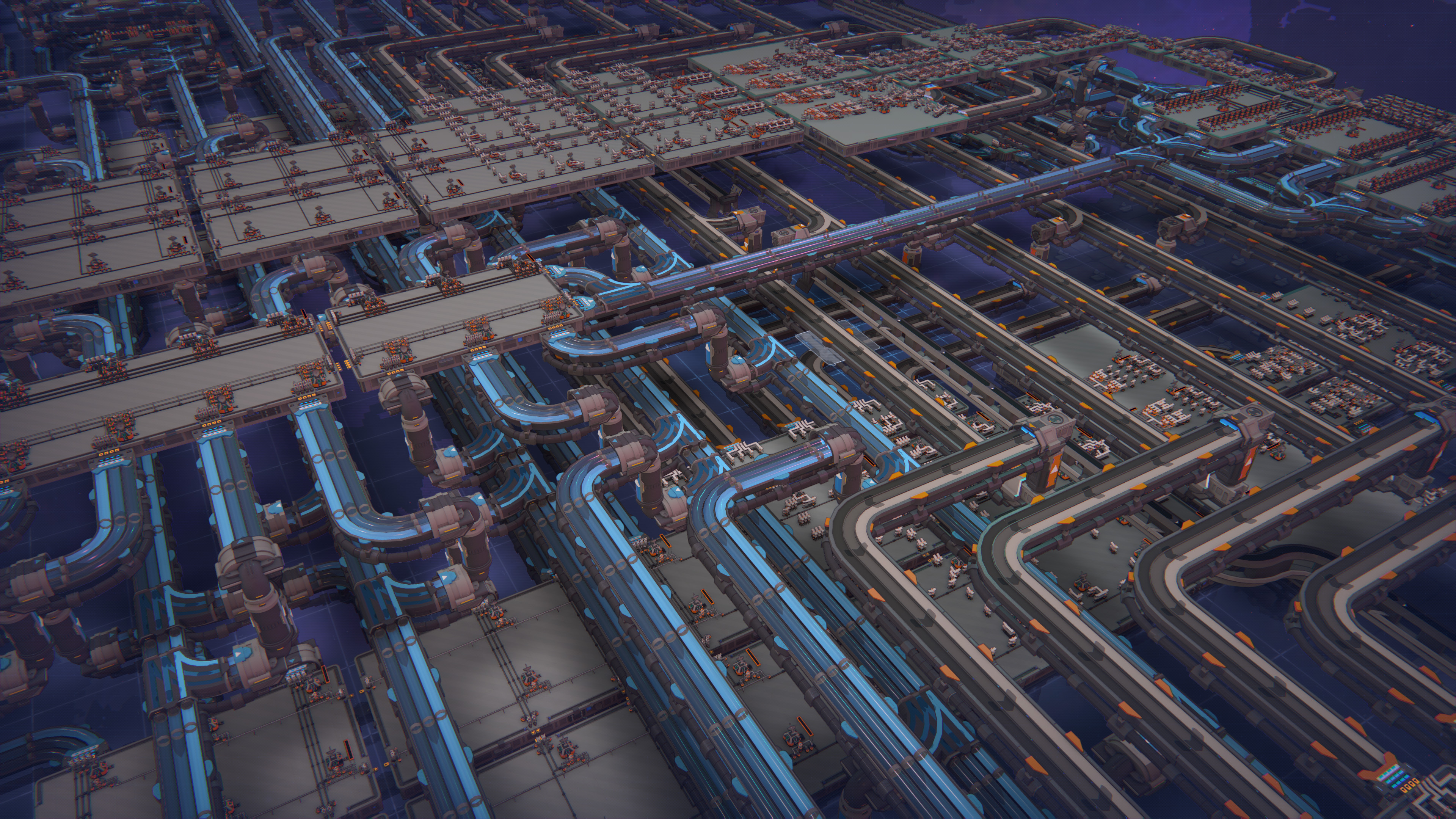
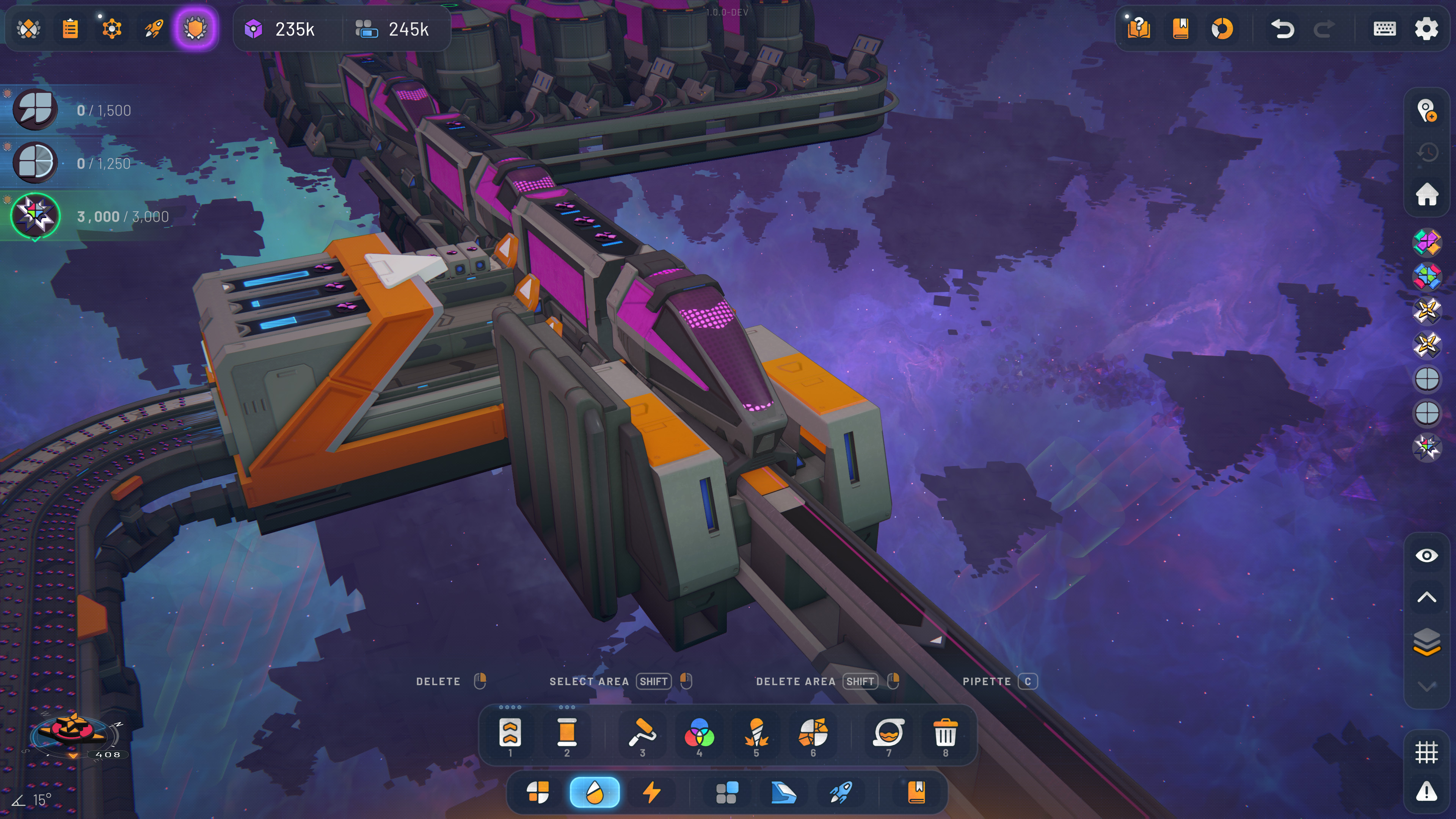
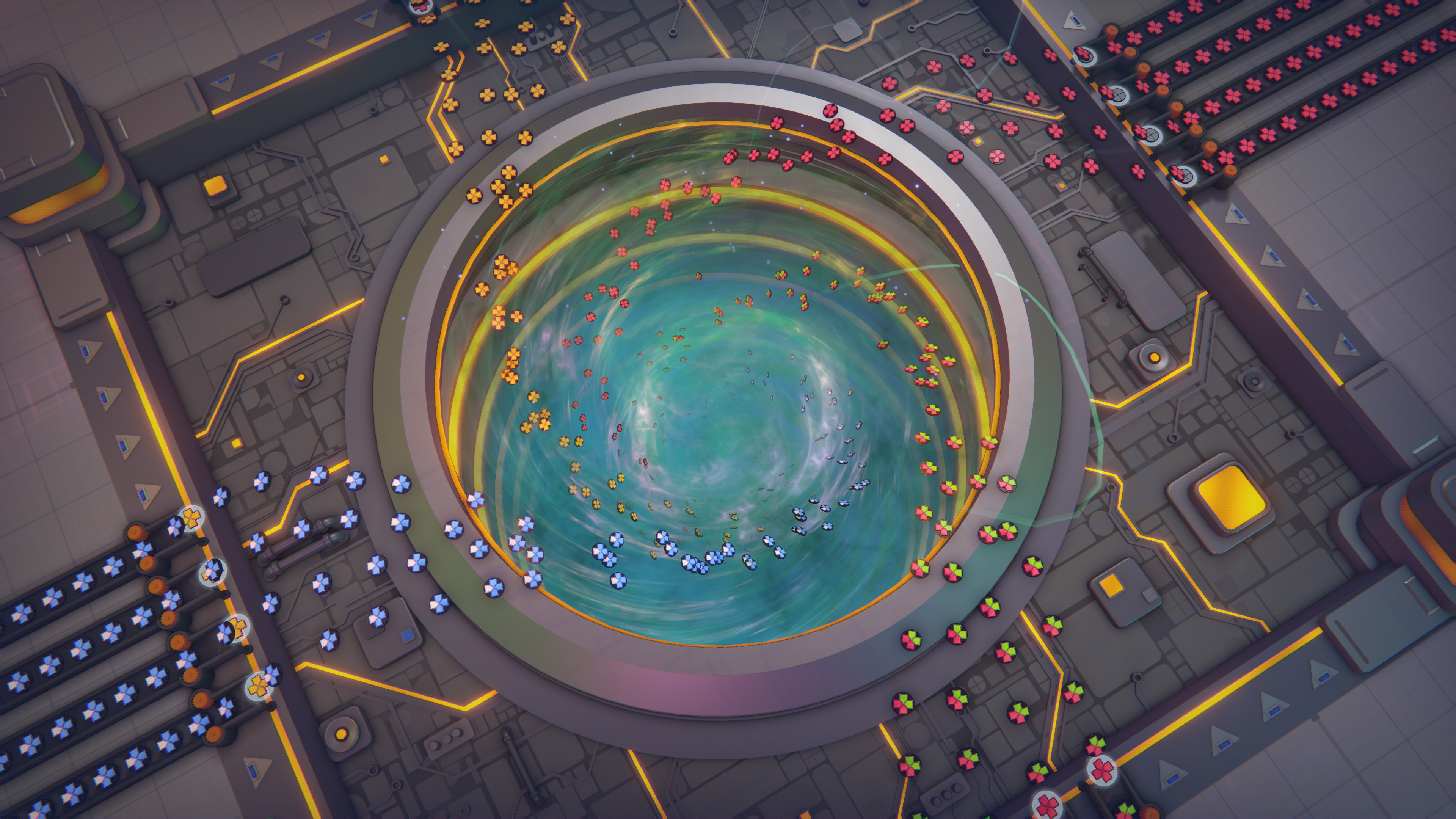
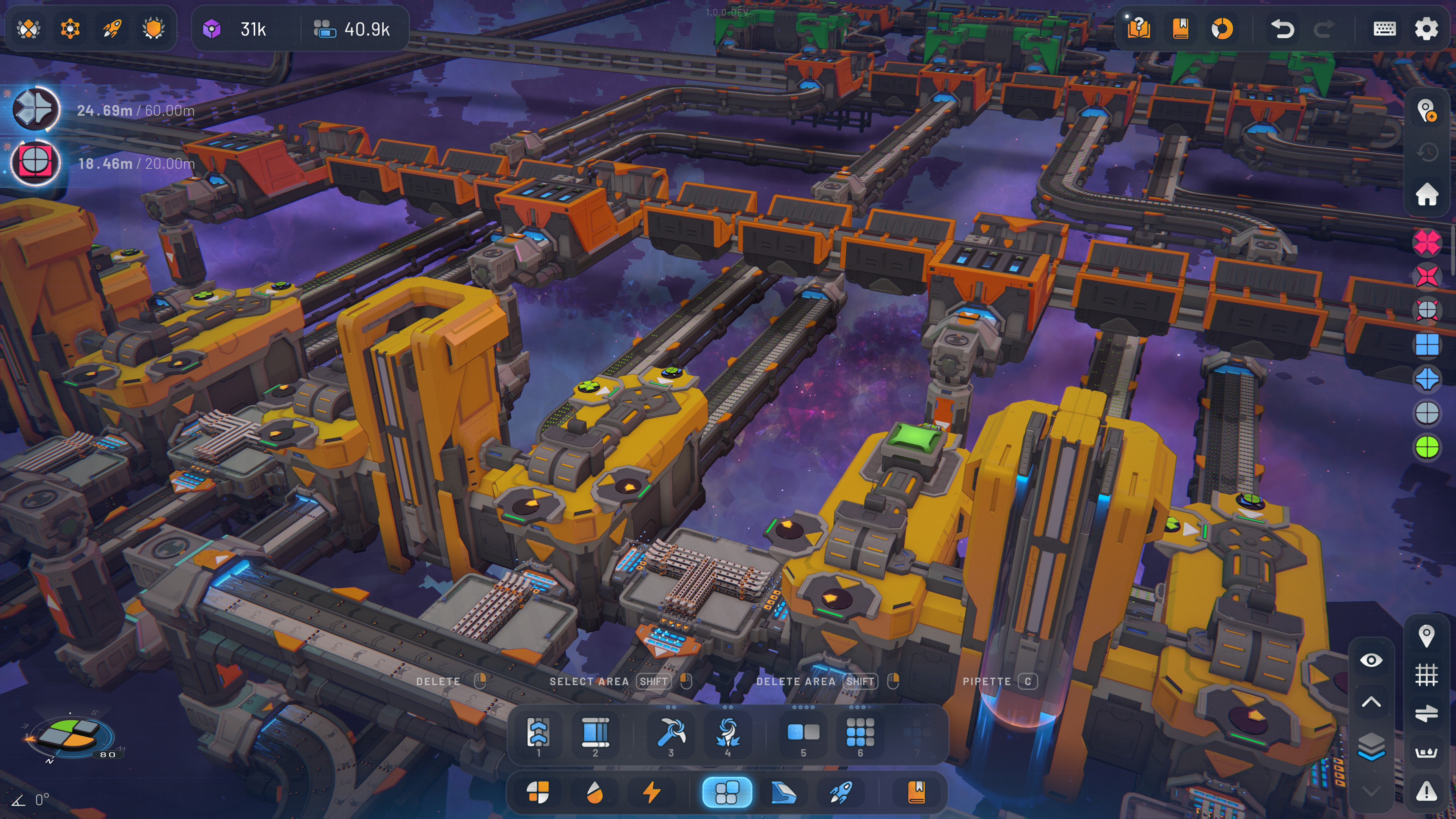
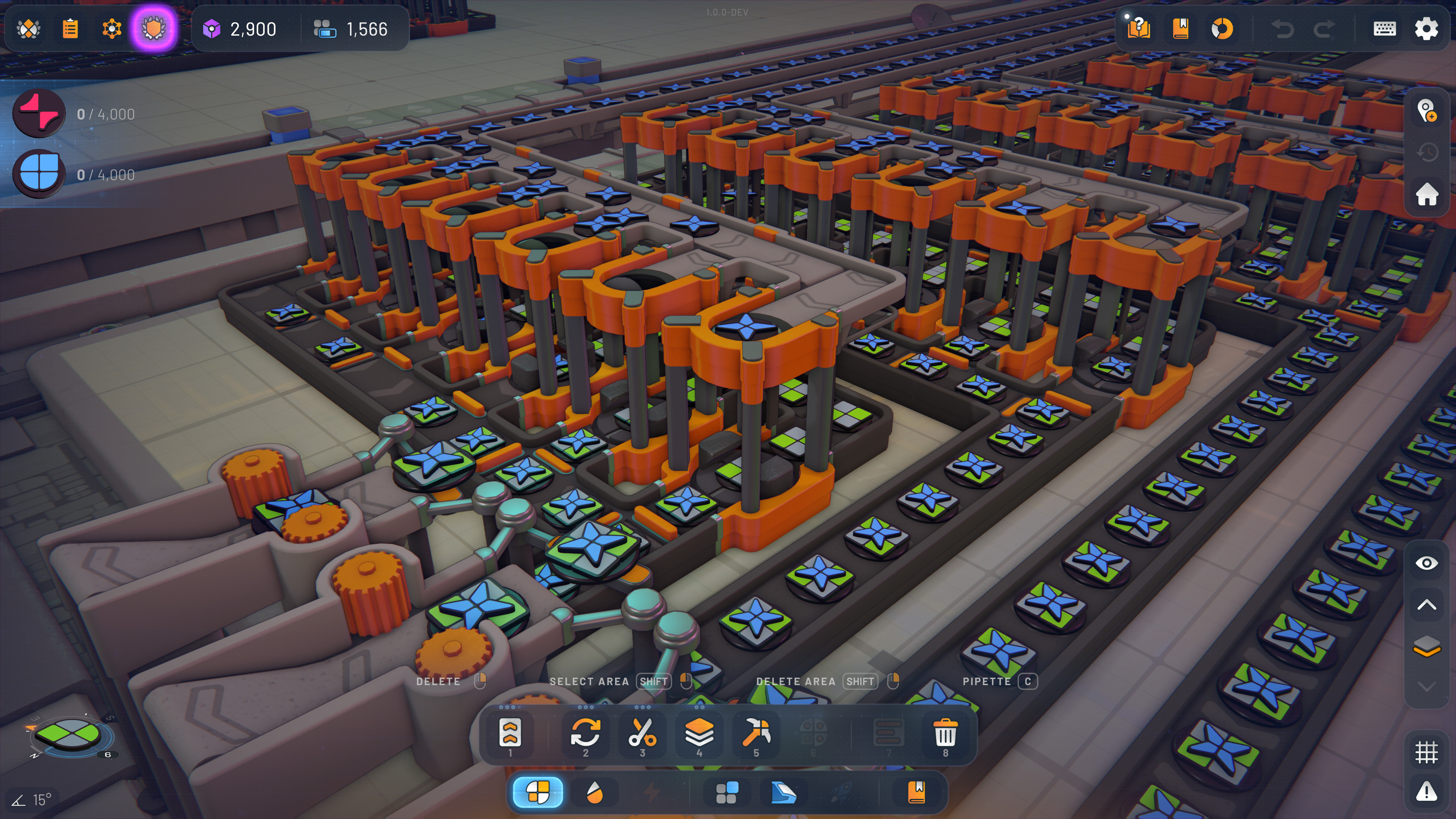
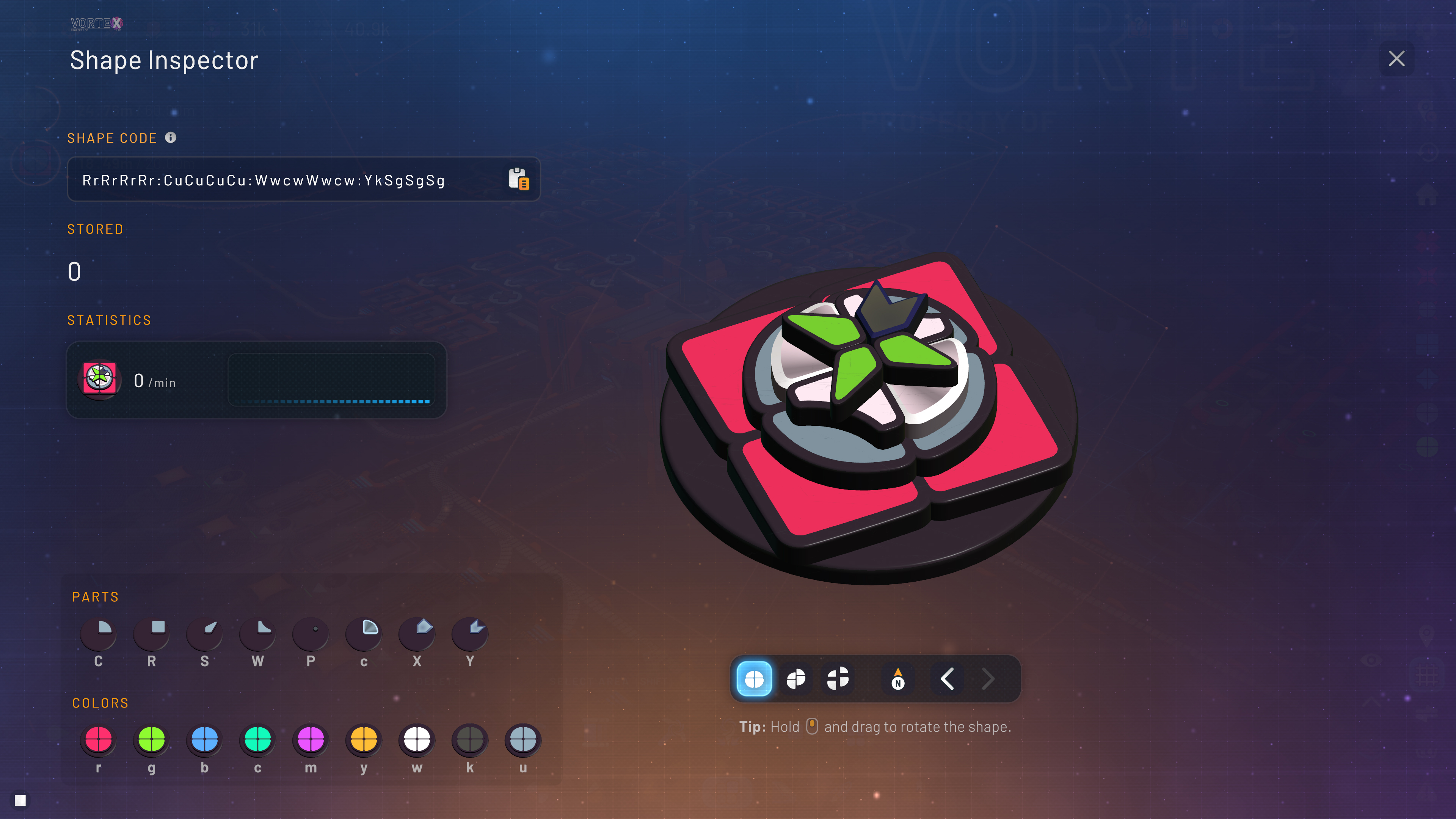
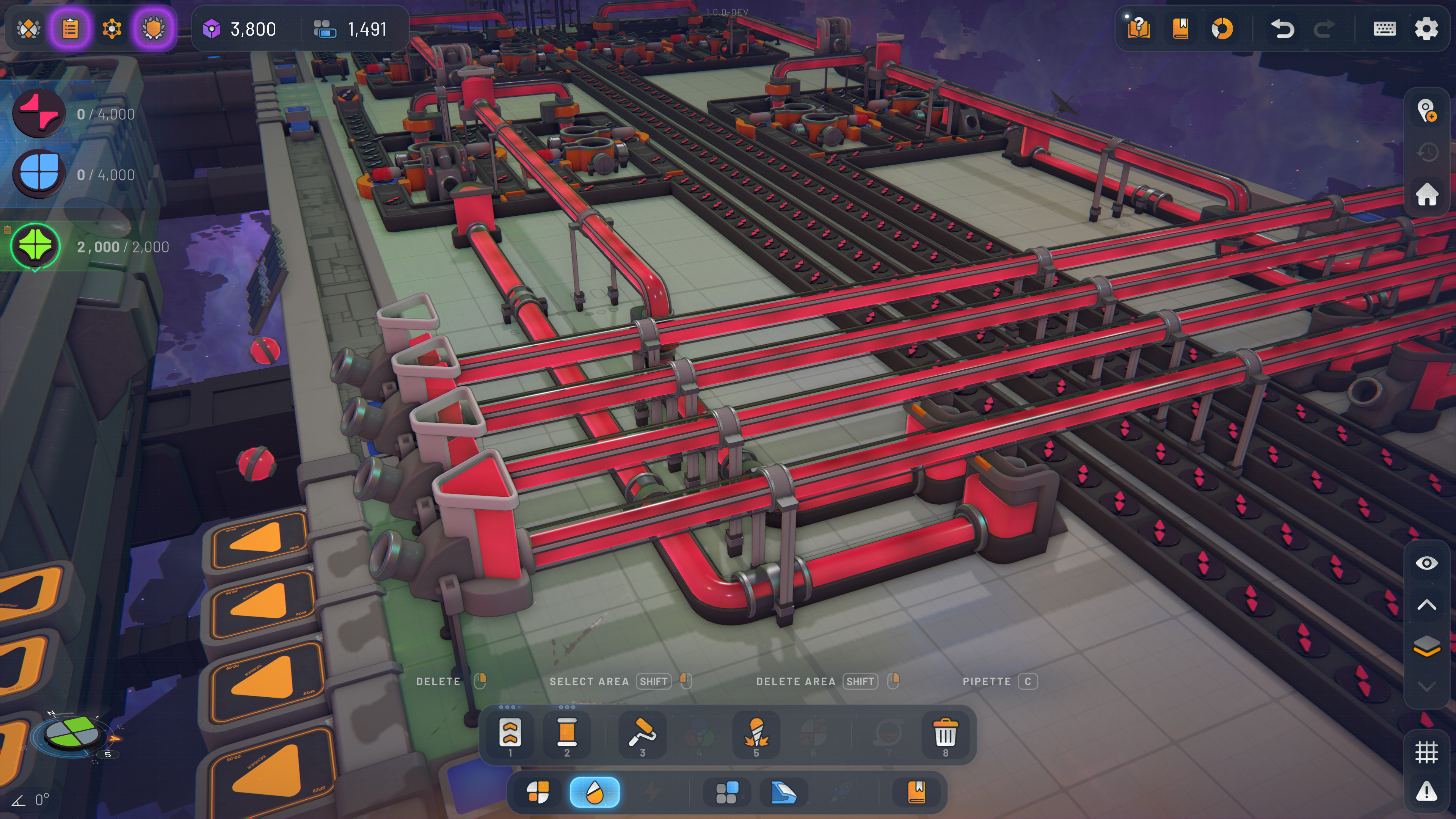
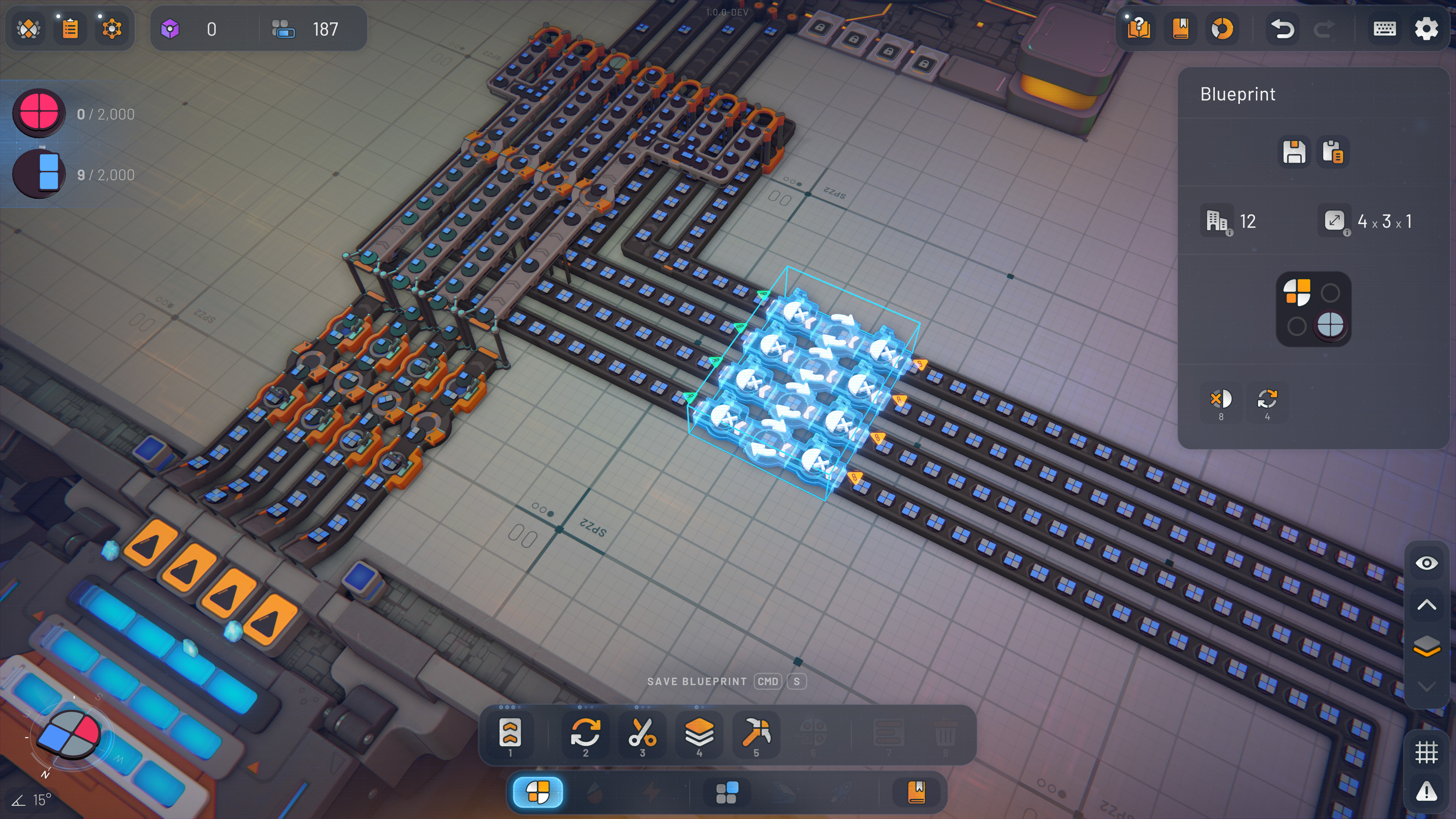


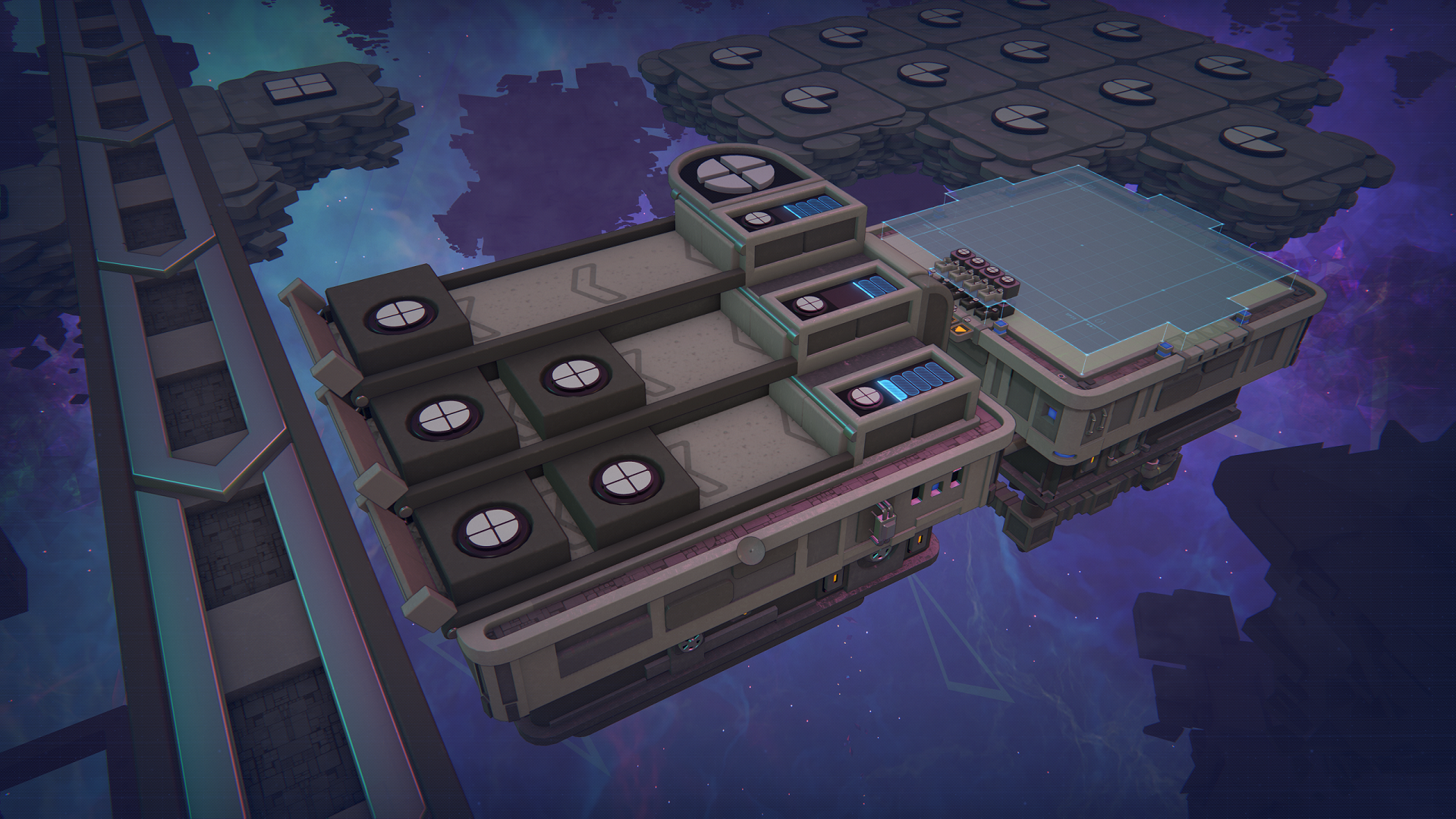


 This is not in the game yet and we can't guarantee it'll make it in for Early Access release, but it's something we're working on!