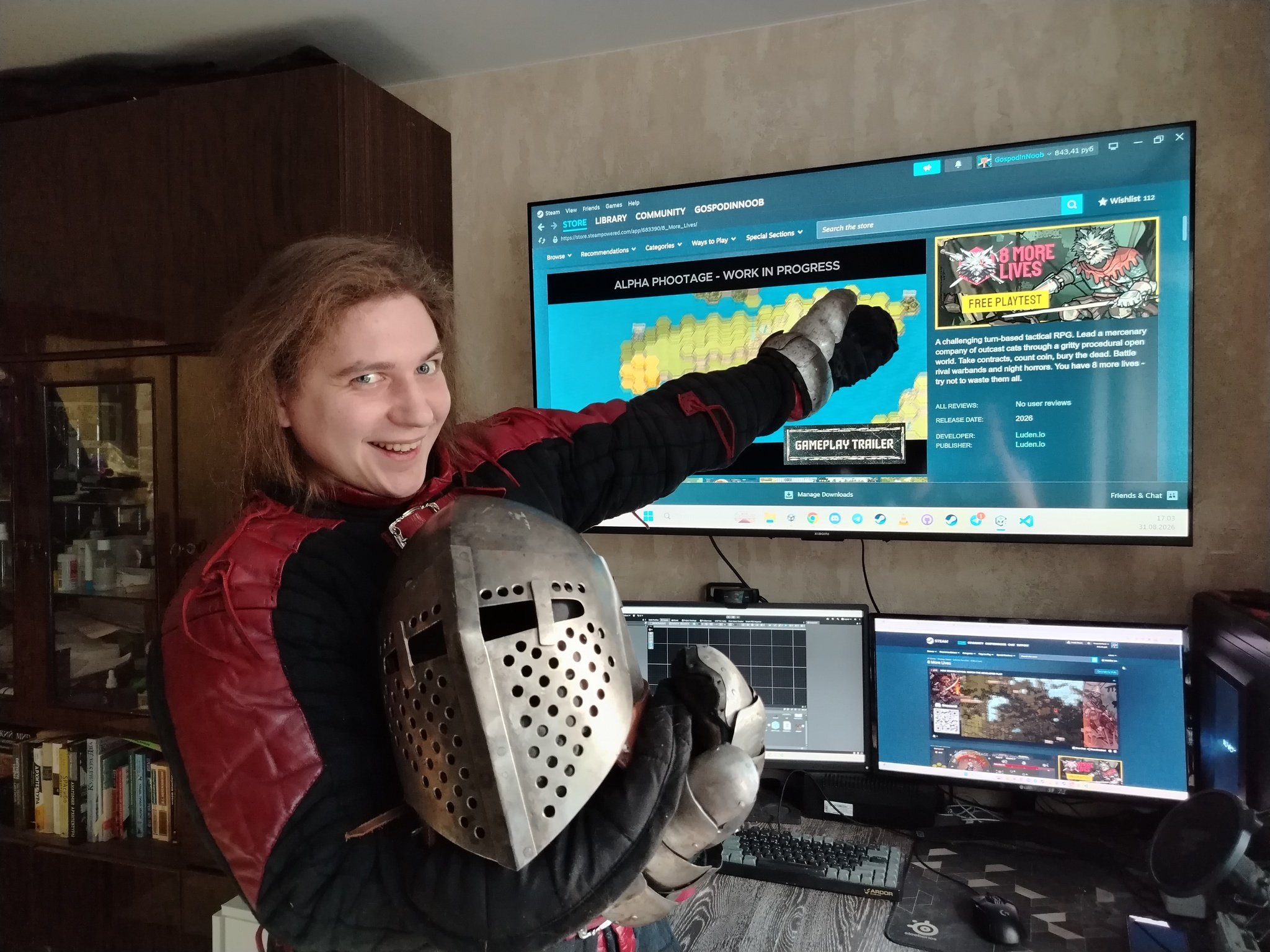
Hey, friends! My name is Ivan Kapranov, and I make 8 More Lives.
Today I want to tell you what happens between updates. How I watch your playthroughs, why I change some mechanics and leave others as they are, and why we decided to skip the upcoming Steam Next Fest.
I've wanted to make a game like this for a long time. I built prototypes in the evenings, played Battle Brothers, tried out all sorts of ideas. I love deep systems, odd skill combinations and mercenary companies that slowly grow a story of their own. And it's really nice to see that many of you have been waiting for something like this for a long time too.
How I watch your videos
Recently Splattercatgaming and Nookrium put out big videos about 8 More Lives. Thank you both! Those videos brought in lots of new players, and with them streams, questions and feedback.
I read Discord, reviews and comments, and I watch YouTube videos and streams. A playthrough shows things that are hard to put into a bug report: where someone got confused, what they understood their own way, what they tried to do and why they didn't like how it turned out.
An hour of video usually takes me two to two and a half hours to watch. I pause, rewind and try to understand what happened: was it a bug, did the game fail to explain something, or did the player find a way to use a mechanic that I never thought of?
Then the actual work begins. As a very rough estimate, each of these recordings turns into another eight to fifteen hours of work on average. Sometimes it's small stuff in tooltips or the interface. Sometimes I have to go back to the rule itself and honestly ask myself whether it works at all.
Streams have one more great thing going for them: you can ask the person right in chat why they did what they did. I've long had an explanation for every button in my head. The player doesn't, but they do have habits from other games. When those two pictures don't match, you get the most interesting conversations.
After the latest videos and streams, my feedback to-do list has grown to 61 items. I used to get through it faster; now I'm pulling tasks out of it bit by bit. So if your suggestion isn't in an update yet, it's most likely just waiting its turn.
Why we're skipping the upcoming Steam Next Fest
This wave of feedback changed our near-term plans too. We thought it over and decided it's better to do it right than to come out early. So we're skipping this Steam Next Fest.
I'm really happy those videos brought us people who are interested in 8 More Lives. And now there are a lot more eyes on the game. It's become clearer which systems already hook people, where things break, and what I still explain badly.
That's what I want to work on: go through the pile of feedback, fix the problems and make the first meeting with the game a nicer experience. Some of it is already making it into updates; some will take more time.
So right now we're polishing the game. For the next big showcase, I want a version where your feedback is noticeable from the very first hours.
In the meantime, let me tell you about a few decisions these conversations have already shaped.
1. Weather: choose where and when to fight
Rain reduces Ranged Accuracy. Not just yours, but your enemies' too, so weather is one more reason to think about when to start a battle.
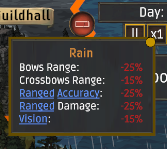
See a company of enemy archers ahead? Rain is good news for you: you can meet them where their advantage gets weaker. But if your own company relies on shooters and a horde of zombies who couldn't care less about rain comes your way, then it's you who has to be careful.
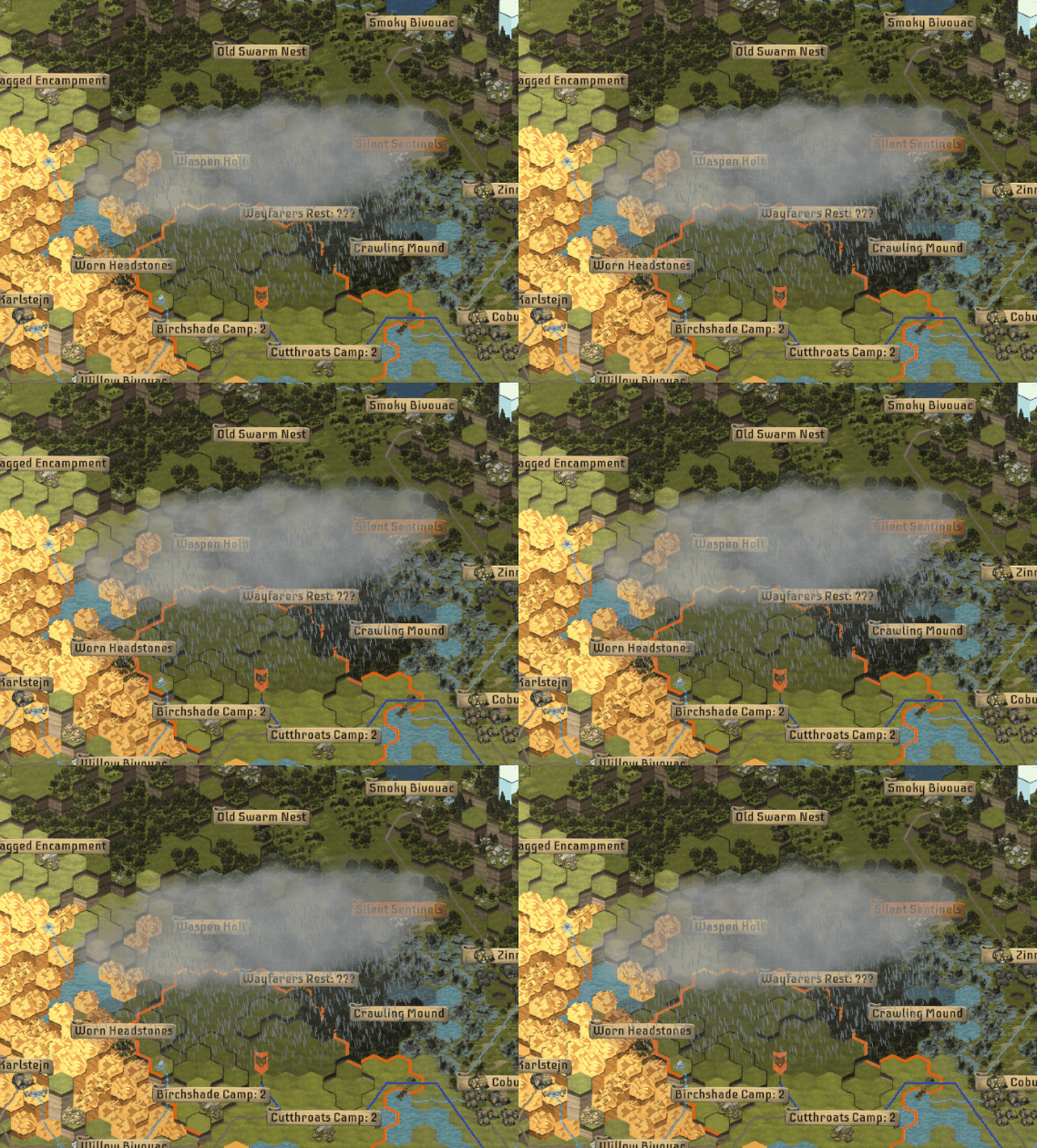
I like that preparing for a battle starts on the world map. Your company's lineup, the terrain and the weather together push you toward a decision: fight now, look for a better spot, or stay out of it altogether. On high difficulties this matters a lot; on low ones these modifiers play a smaller role.
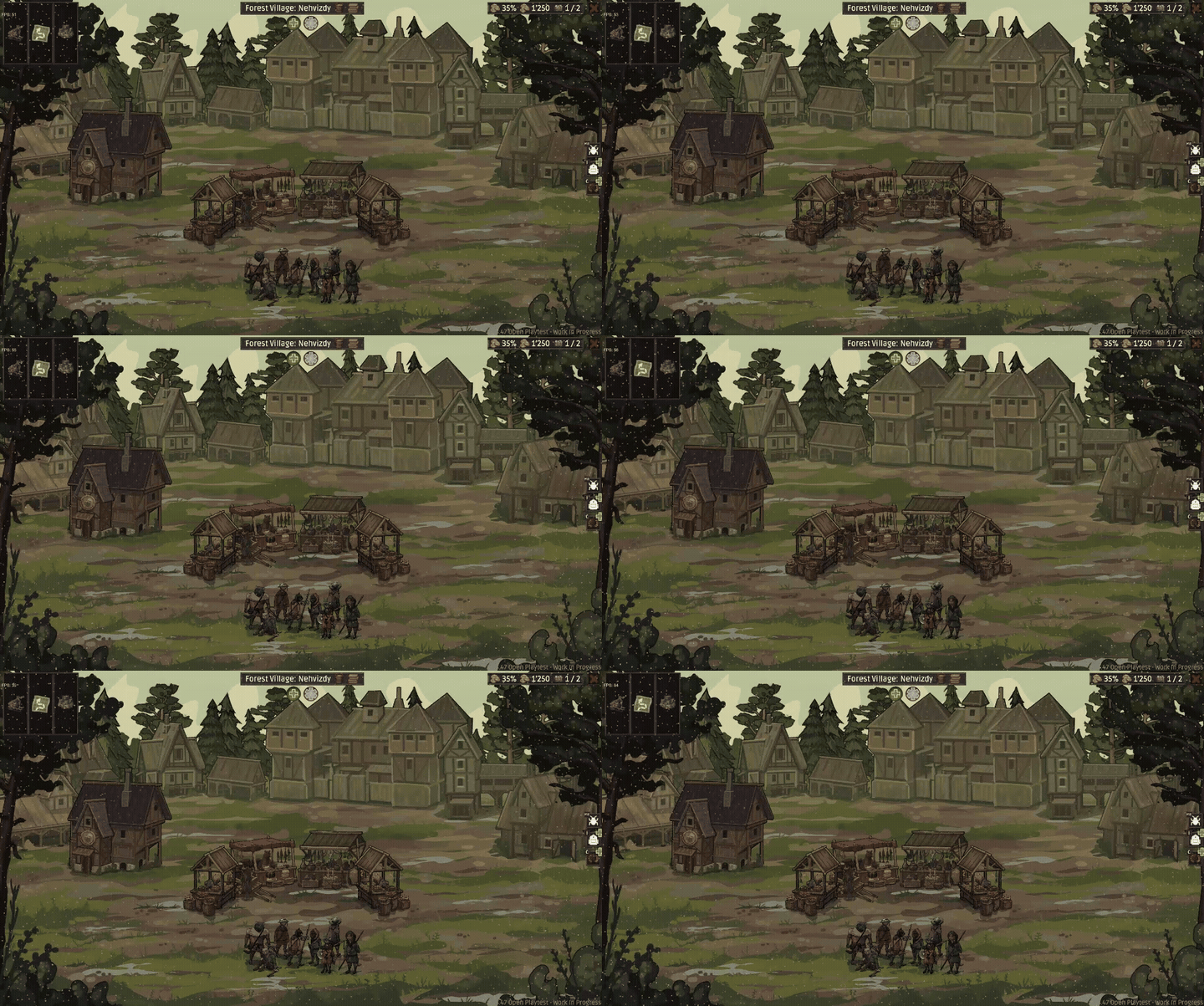
But the first version of the weather turned out to be confusing.
I ran a playtest with players from our Discord. Back then, the weather could differ across parts of the battlefield, depending on what the weather was in those spots on the world map, since the battlefield is built one-to-one from it. Players looked at the effects on the tile where their company stood on the world map and expected the same in battle. And then in battle the rain and darkness were in completely different places. Everyone was surprised, and fairly so.
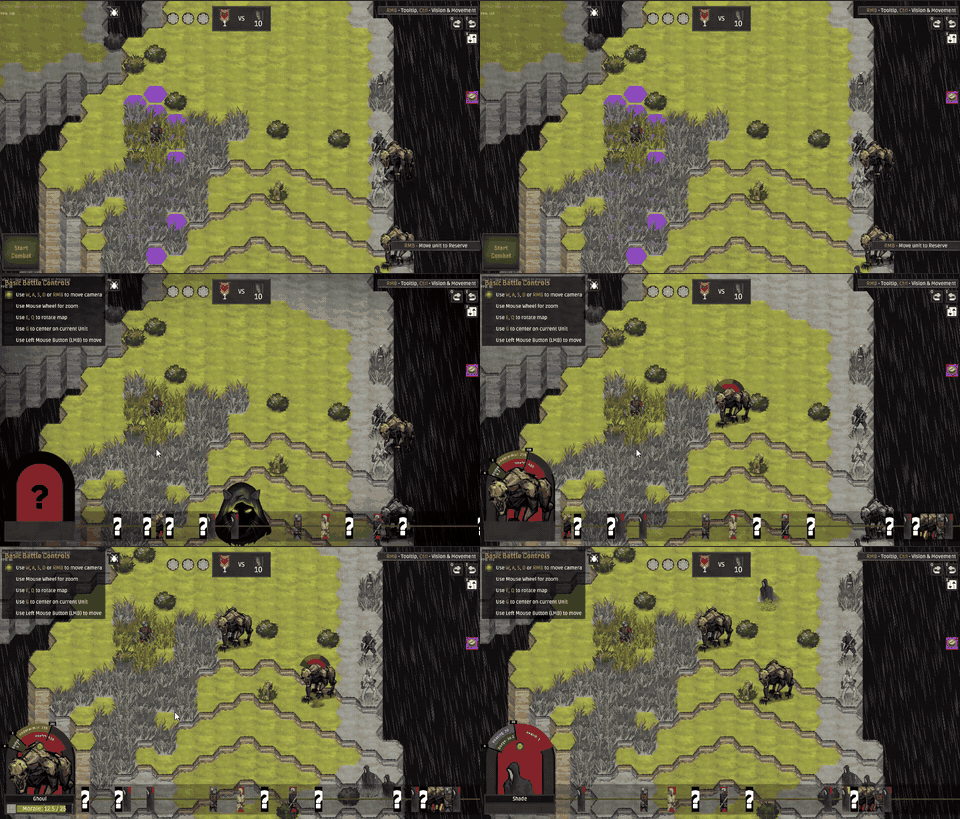
I reworked it right during the playtest. Now battles use the weather and night conditions of your company's current tile on the world map.
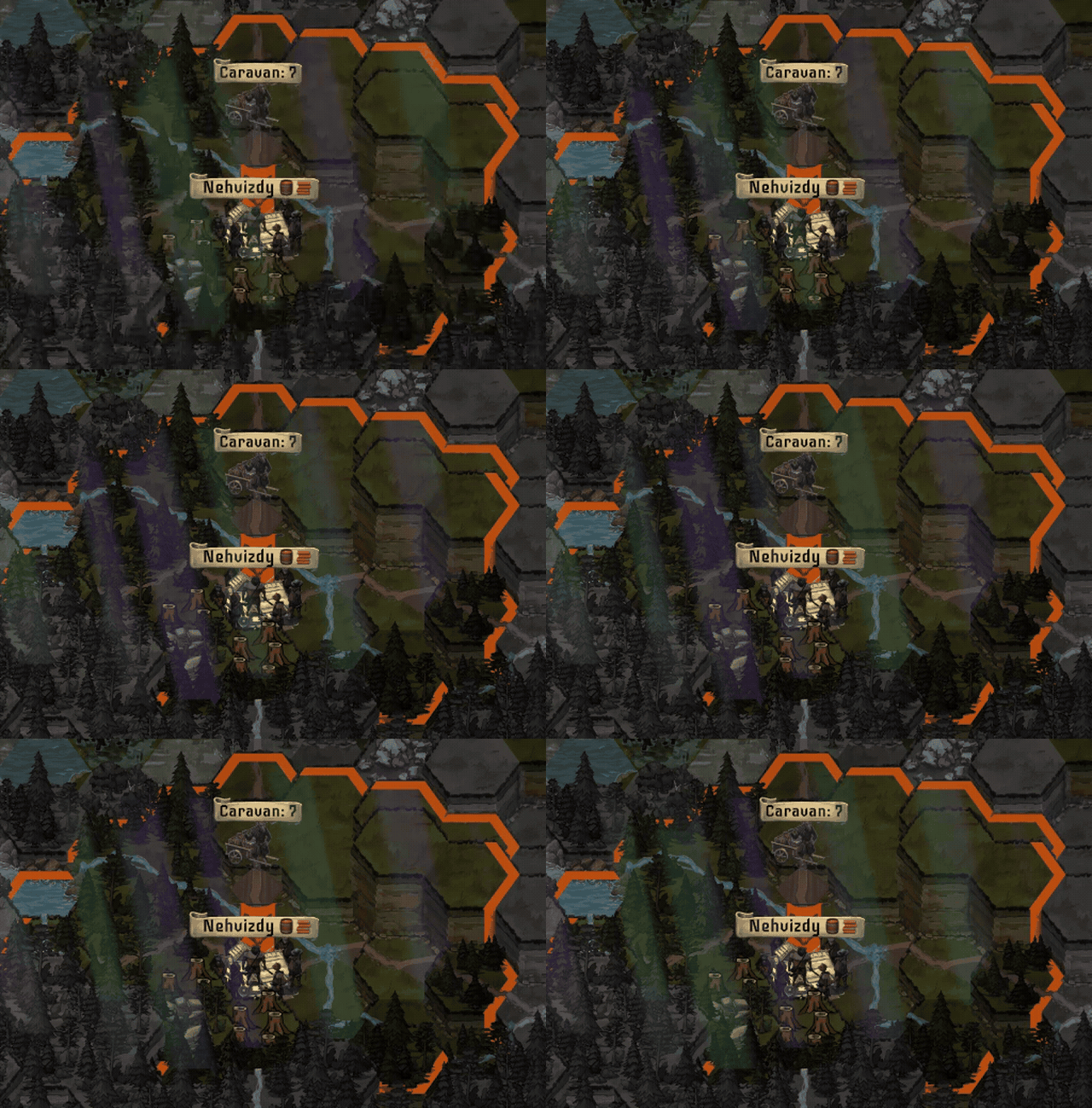
What matters to me here is a simple chain: you looked at the conditions, weighed the risk, went into battle. After that it should be clear why your shooters are missing and what you can use against the enemy. That's why I chose a clear rule over my original idea.
2. Bad level-ups: what to do with a fighter who didn't turn out right
One player wrote that he was leveling a character into Strength, got two bad level-ups, and now the most interesting late perks were noticeably harder to reach. He was upset.
I know that feeling. You've already planned a role for the fighter, invested in him, you're waiting to see who he'll become. And the game goes: nope.
But in 8 More Lives, adapting to situations like this is part of the campaign. Cats will get killed, cats will get injured, cats will sometimes level up suboptimally. What you do next is up to you.
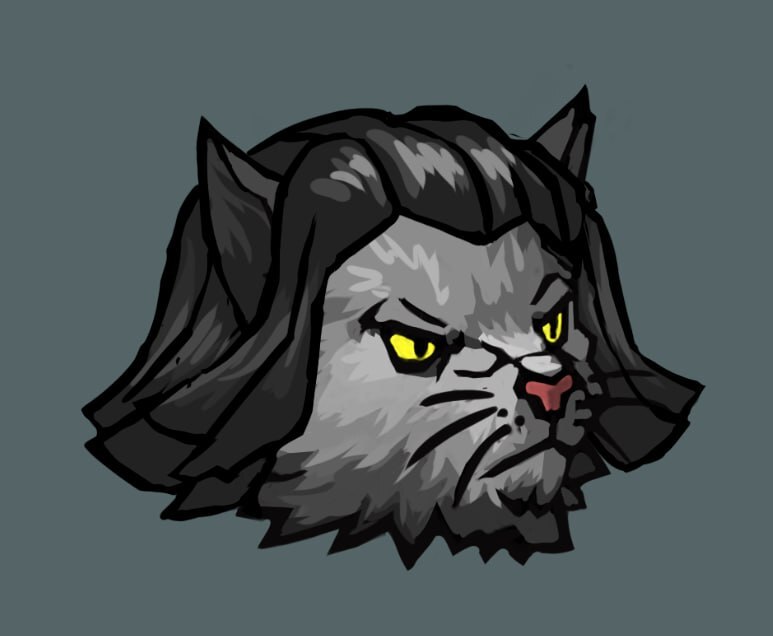
You can look for a better recruit. You can change the role of someone you already have. Or you can keep your favorite character and keep investing in him, even if someone else would be more effective. Some people roleplay more, some min-max more — and I want the game to support both.
I sometimes love a rags-to-riches campaign myself: you hire literal vagrants with low stats and try to get anything at all done with that bunch. A kind of Peasants' Crusade, only with cats.
Besides, a couple of bad levels partly even out over time. After level 10, veterans get a fixed stat bonus every level. Lost a couple of points of Strength at levels 6–7? By level 13 you'll partly catch up. It takes a while, so keeping a fighter like that is also a choice with a price.
A lot depends on difficulty. On Unfair, recruits are weaker on average and their stats vary more, so finding and leveling the right fighters is a big part of the game. On low difficulties, starting stats are higher, and the chance of running into this problem is many times lower.
I want your company to always have several ways forward, including after a setback. And I want the most memorable fighter to sometimes be the one nobody expected anything from.
3. Minor masteries: time to get to know a recruit
Minor masteries, tied to a fighter's background, solve this problem: how to give a character useful abilities before you've finally decided who he's going to be.
You can first take a recruit through a few battles, see how he grows, and only then pick a major mastery. Say you planned to build him around Strength, but he keeps rolling Dexterity. A great reason to rethink the plan.
A minor mastery helps a fighter be useful in those first levels. It comes with him, costs nothing, gives a small set of perks and can be removed for free through retraining.
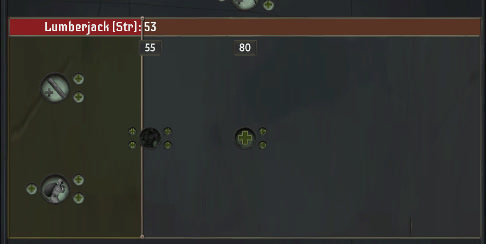
But it can stay useful much longer than that.
I try to build minor masteries out of their own perk combinations rather than just cutting half a branch off a major one. The Brawler isn't "half a Berserker". Sometimes it's exactly a minor mastery that gives you the combination you'd otherwise have to collect from two or three different masteries. If you love digging deep into builds, that's one more reason to take a closer look at your recruits.
I try to keep minor masteries at roughly the same power level. But two characters with different backgrounds, stats and personal perks can differ a lot. Sometimes one really is better than the other. This is a mercenary company simulator after all, not a PvP strategy where every unit is balanced.
Same with hiring. The price isn't the "unit's value", it's how much this particular cat wants you to pay him. Some are greedier, some more modest. On average, strong fighters cost more, but sometimes an excellent candidate asks for pennies, while next to him stands a vagrant with awful stats asking for more. Pretty true to life :) I like that looking for people for your company includes both lucky finds and letdowns like these.
To make it easier to figure out, the hiring screen has sorting options, including by potential. If you're just starting out, you can safely look at the top of the list and take whoever you can afford. Maybe not optimal, but definitely fine.
4. Weapon proficiency is now part of the major mastery
Weapon proficiency used to cost a perk point. While playing myself and watching other people's playthroughs, two problems came up.
The first was with newcomers. Someone would pick a mastery, skip the proficiency it needed and lose some of their abilities. If an experienced player does that on purpose, that's totally fine. But a newcomer might simply not realize what he'd skipped and how much it mattered.
The second was with combining masteries. If two masteries gave the same proficiency, you had to keep track of the overlaps so you didn't waste a perk point. A nice themed build left you feeling like part of your investment had gone up in smoke.
It's a D&D classic: you build a sea-themed character — a triton, with the sailor background, some kind of sea warlock — and all three give you a swim speed. Story-wise it's perfect, but two bonuses out of three are effectively wasted.
I thought for a long time about how to solve this through perks. The last piece of the puzzle turned out to be minor masteries. Now major masteries immediately give an innate perk with weapon proficiency, without spending a perk point. Pick a mastery and you get its basic abilities, and your perk points go into growth.
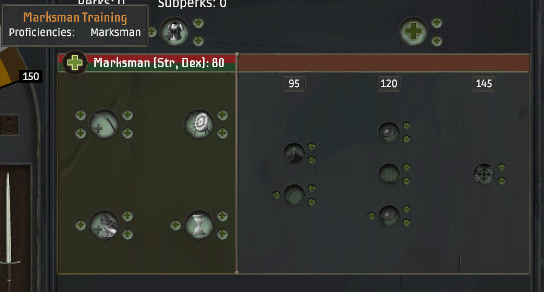
In minor masteries you can still get proficiency through subperks. It's cheaper there, so it doesn't hurt as much. That way builds keep extra room for combinations.
I want the interesting part of building a character to be about choices: what he can do, how he works together with other fighters and where he's especially useful. Innate proficiency cleared a few awkward bumps off that road.
Strong builds, cats and my vision for the game
I'm not one of those developers who think everything must be perfectly "balanced". Weak fighters against weak enemies is boring. It's way more interesting when you've built something overpowered and the enemies are tough too. That makes the game far more unpredictable, but we can afford it: cats have eight lives, and they don't die the first time. This isn't XCOM, where an enemy hits with a 3% chance, crits, and your operative is gone.
Sometimes, of course, it goes too far. Our tester Vitya built a single fighter who cleared the entire map solo on the highest difficulties. Had to nerf that. But I really love it when players send me their saves themselves, going "look at this monster I built", and we figure out together what turned out too strong. That's how I spot interactions I missed myself.
Criticism gets to me too. Including when someone likes the mechanics but is put off by the cats.
The cats came out of a mechanic. I wanted fighters not to die the first time: it lets newcomers survive their mistakes and lets experienced players take risks earlier and jump into dangerous battles. And who has several lives? Exactly. Around that, a whole world gradually grew, inspired by Redwall and Disney's Robin Hood.
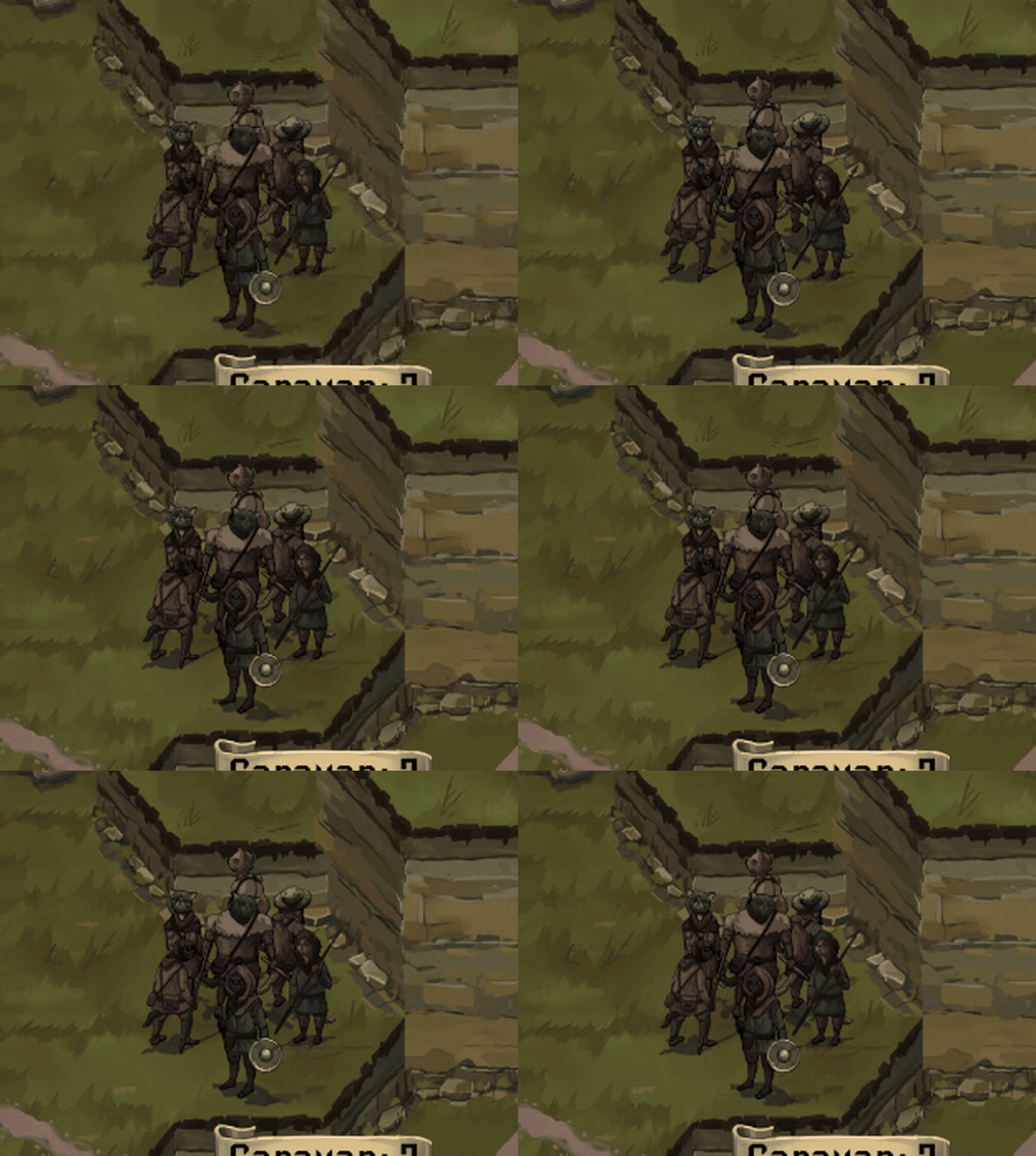
I get that animals instead of humans make some people wary. But if we remove the cats, we become yet another generic fantasy game. And being nothing special scares me more than being a game with a controversial hook. So I want to keep this world. At the same time, it matters to me to hear what keeps you from accepting it: how the characters look, the tone, confusing rules or something else. Feedback helps me understand the problem, and then I look for a solution that fits the game.
And finally — zombies
One of the upcoming additions I'm really looking forward to myself is corpses on the battlefield. You've been asking for them for a long time, and they solve several problems at once.
Right now, fallen fighters just disappear. Hence the questions after a retreat: why do I lose the ones who stayed in battle if there's nothing of them left on the field?
With corpses, everything gets clearer. The fallen will lie where they fell until you win and pick them up. The link between victory, retreat and losses will be easier to understand, and the world itself will feel noticeably harsher.
And it will open the way for a feature no medieval fantasy can do without. Right now our necromancers can't raise zombies. Because there's literally nothing to raise.
Corpses will fix that. Necromancers will finally get to work in their field.
Thank you for playing, sending saves, recording videos and arguing with me about mechanics. I keep making the game I've wanted to play for a long time. And your playthroughs show me what it turns into in other people's hands — and what still needs work so that you'll want to keep coming back to it too.