
This is a big one. Your mages have new spells: walls of fire, firestorms and cones of cold. Beasts swim in off the sea, the grieving raise the dead and your army can sail to its fights. Battles are fought in clashes now, dwarves cut runes, greenskins dance for their spirits and every race gets elite troops. You can drag a building's walls into any shape, every race builds in its own style, sworn dwarf brothers carve a son out of stone and smiths take orders for named swords. And there's an early test of a Campaign on the main menu to try.
New spells for Fire, Water and Life
The Healing school is now called Life.
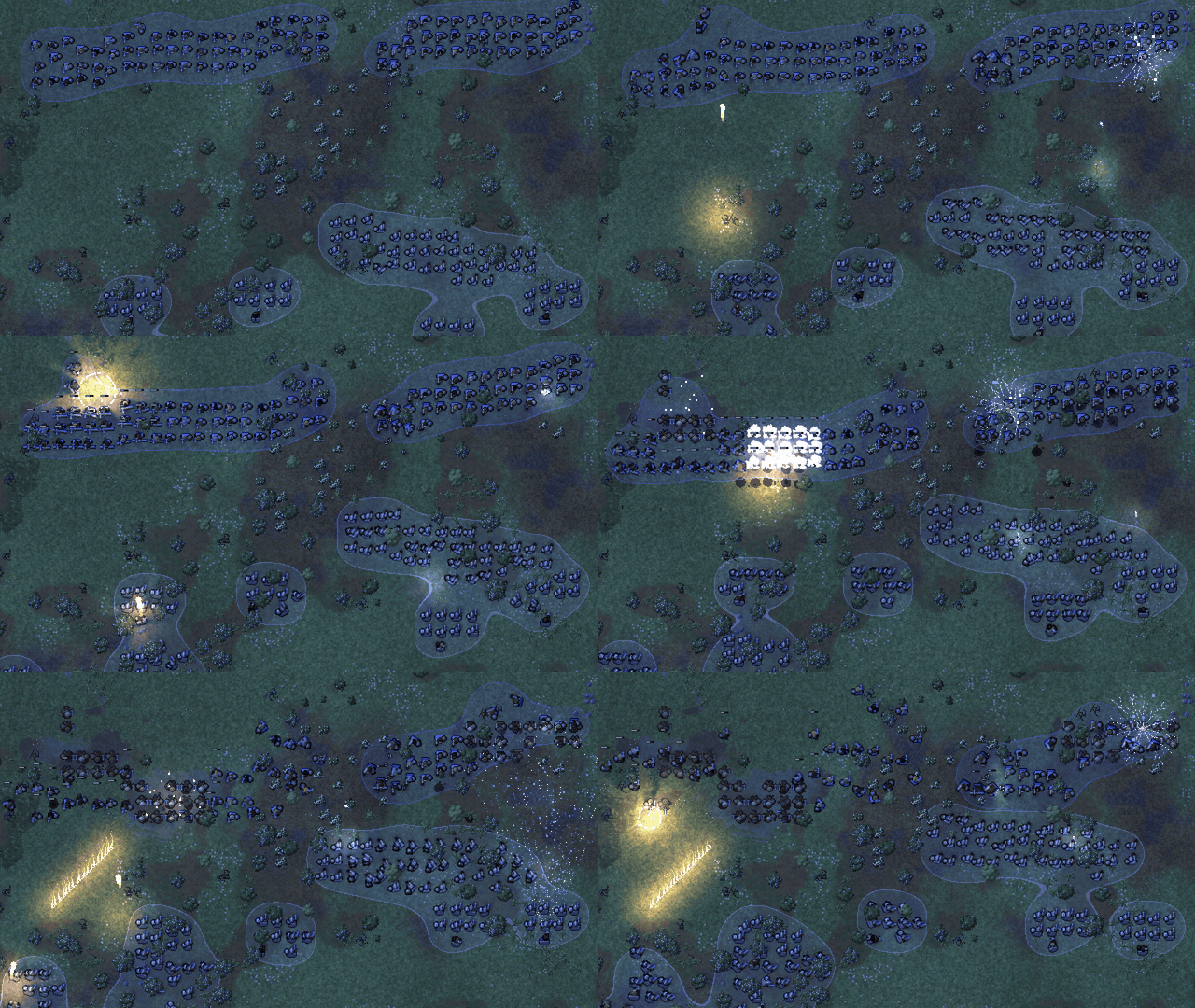
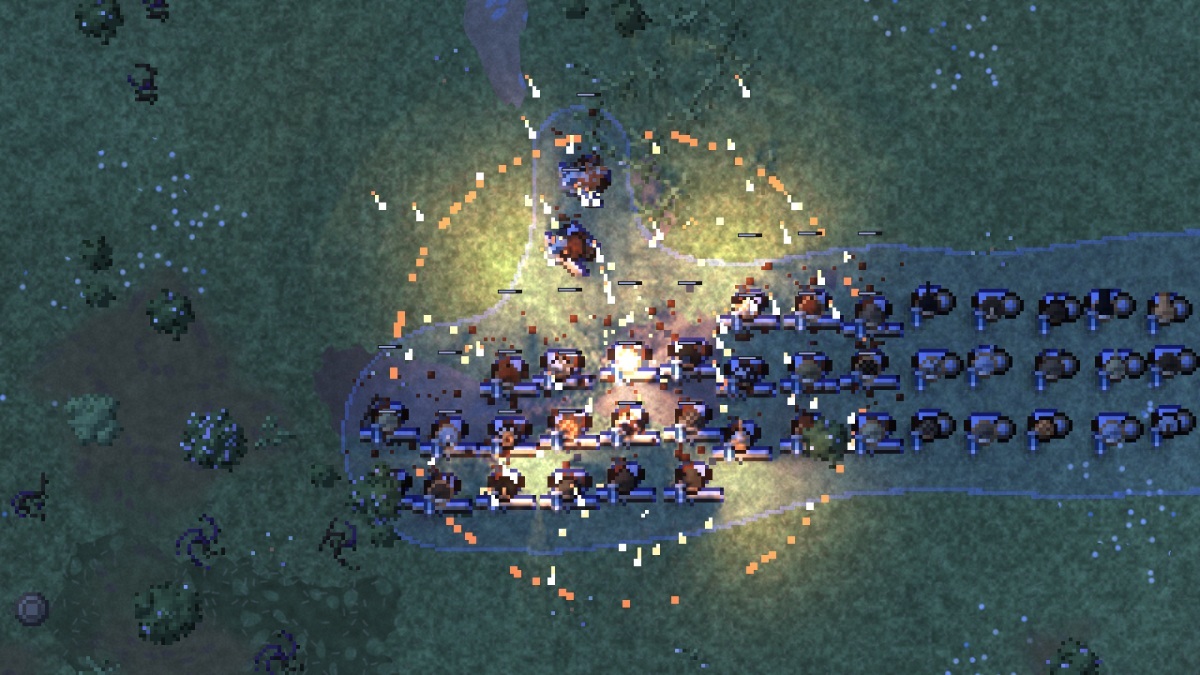
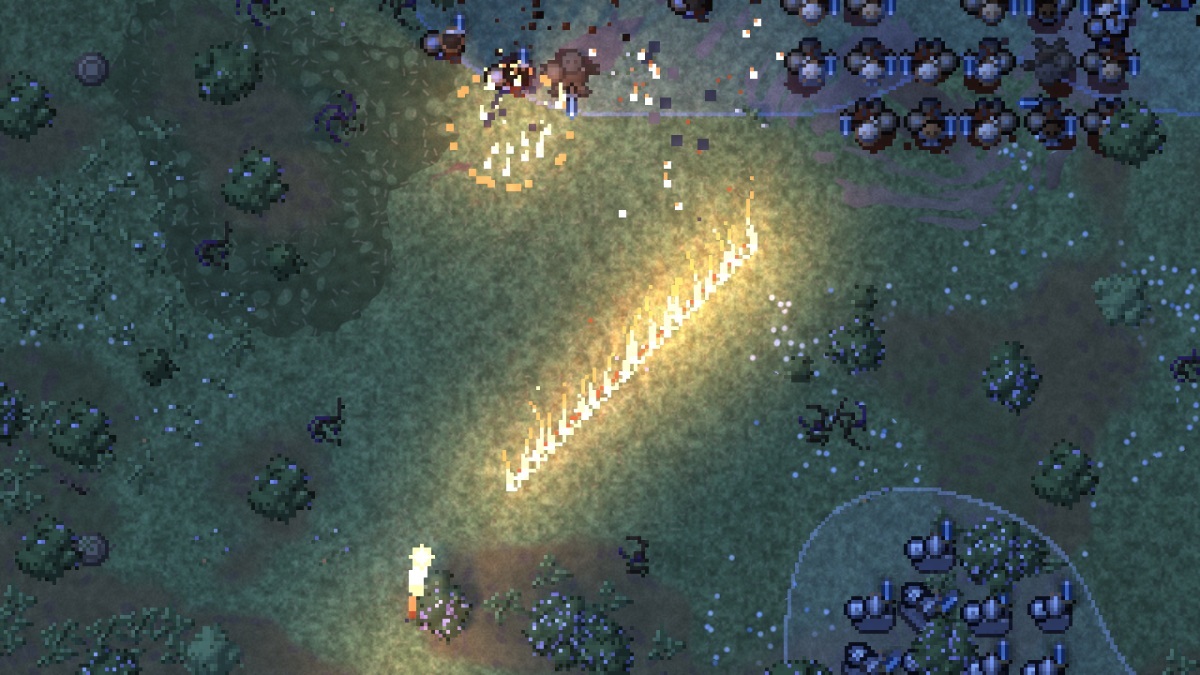
- Fire: journeymen lay a wall of fire across enemies coming on. The enemy goes round it or burns, and your own side walks straight through. Masters throw a firestorm wherever six or more enemies stand together.
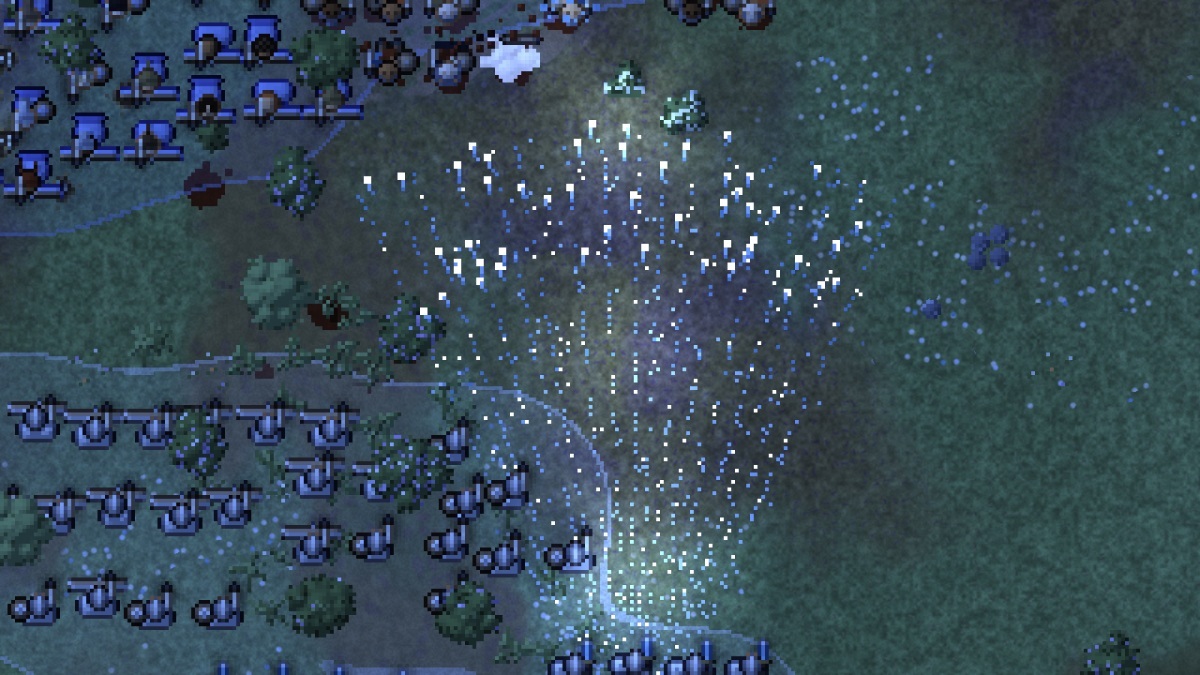
- Water: journeymen throw frost at a crowd of enemies and slow them to half speed for five minutes. Masters blast a cone of cold that strikes a whole host at once, through any armour.
- Life: from journeyman, Life mages at the tower can fix a limp or give back a lost hand, but not a hand the court cut off. Masters Quicken a company as its clash joins, for the whole clash: a master by a fifth and a grand master by half. They also go out from the tower to quicken settlers fighting nearby.
- A Life mage with their guard follows a company and gets its struck-down back on their feet while it catches its breath after a clash, more of them the higher the mage's rank. Green light sweeps over the fallen as they're mended, and a chime rings.
- Every new spell has its own look and sound.
Beasts and raiders from the sea
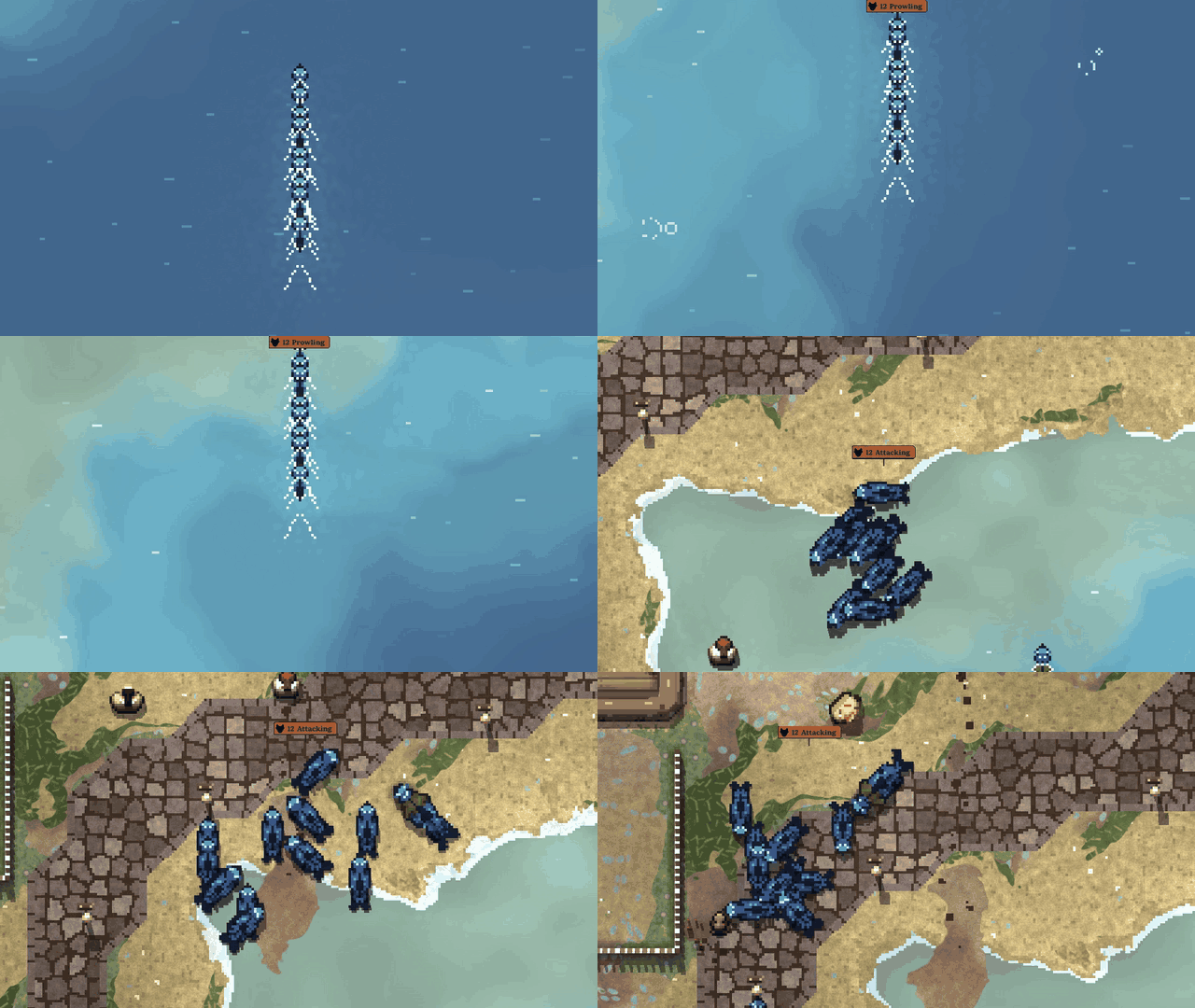
- Wrackhounds, a drownmaw and a reefback swim in off the sea at towns on the coast. They swim low with a wake behind them, the wrack bull close behind its pack, and a drownmaw can't be seen while it swims.
- Wrackhounds and the drownmaw drag the dead into the sea, and the sea gives them back on the beach a few days later. A drownmaw comes up rivers, harbours and moats past any wall, and light along the water keeps it out.
- Your warships put out against wrackhounds and reefbacks swimming in, and a beast killed at sea sinks. A pack that loses its bull, or a reefback badly hurt, swims back out.
- Bandits and a realm's war band now reach an island town by ship, rowing ashore at dusk, and your warships can sink their ships before they land. Raiders from the sea make for the shore nearest your town's heart.
- Pirates from their haven may lie off your harbour for a season and ask for silver to leave. The haven has its own mark, card and Guide page.
- On an island, thieves, drifters, refugees, a wanderer and the necromancer land from a small boat on a quiet beach, and the enemies' cards no longer warn of a raid or an attack that has no way to reach you.

The grieving raise the dead
- A settler still grieving hard a season on may turn to necromancy at an unhallowed grave. They raise the dead by night and walk them after dark, and jailing them sets the dead loose.
- A necromancer grows in their dark craft with each raising. Once ambition outgrows their grief they raise strangers by night, and some of those break free.
- A necromancer your town takes in can serve it, raising the fallen of either side to fight for you in battle.
- The risen dead rot green-grey, their eyes aglow and their grave clothes torn.
- In a big town Uthren turns down more pacts and fewer settlers turn to necromancy, so a city no longer fills with the marked.
Send your army out by land and sea
- Your army can sail to a lair out at sea or a foe along the coast, on merchant ships hired for silver on the march panel or on your own warships, their crews sailing with it. It musters at the shore nearest your town's heart and is rowed out and back. Merchant ships can be hired behind your warships for soldiers past their places.
- A march on a bigger enemy halts at forks on the way, where you pick which of its fighters out ahead to beat first or press on, and your wounded ride along until they're whole.
- A march on a realm town halts at forks before the realm's villages and towns on the road, and burning one leaves the next guard weaker. Beat a realm town's guard and choose on the army's card whether to sack, burn or spare it. Spare it and one of its masters follows your army home.
- Each battle your army wins abroad offers a few spoils to take one of: a settler, a mage, a fine piece or a herd, rarer the harder the fight. Each win also pays into what your army carries home, and an army that breaks loses it to the enemy, so retreat to keep it.
- An army on foot can rest a day at a friendly realm's town on its way, where its wounded heal, it buys food with its silver and it can sell its captives.
- A beast you hunt comes after your army once you engage it, archers shooting from afar included. The odds on a great beast weigh your soldiers' arms, armour and drill against its hide, and come true.
- While a third or more of your soldiers are off on a march, attacks hold off, then come two or three mornings after they're home, bigger for the wait.
Battles fought in clashes
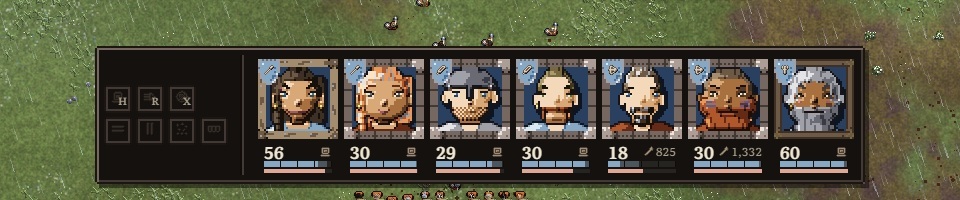
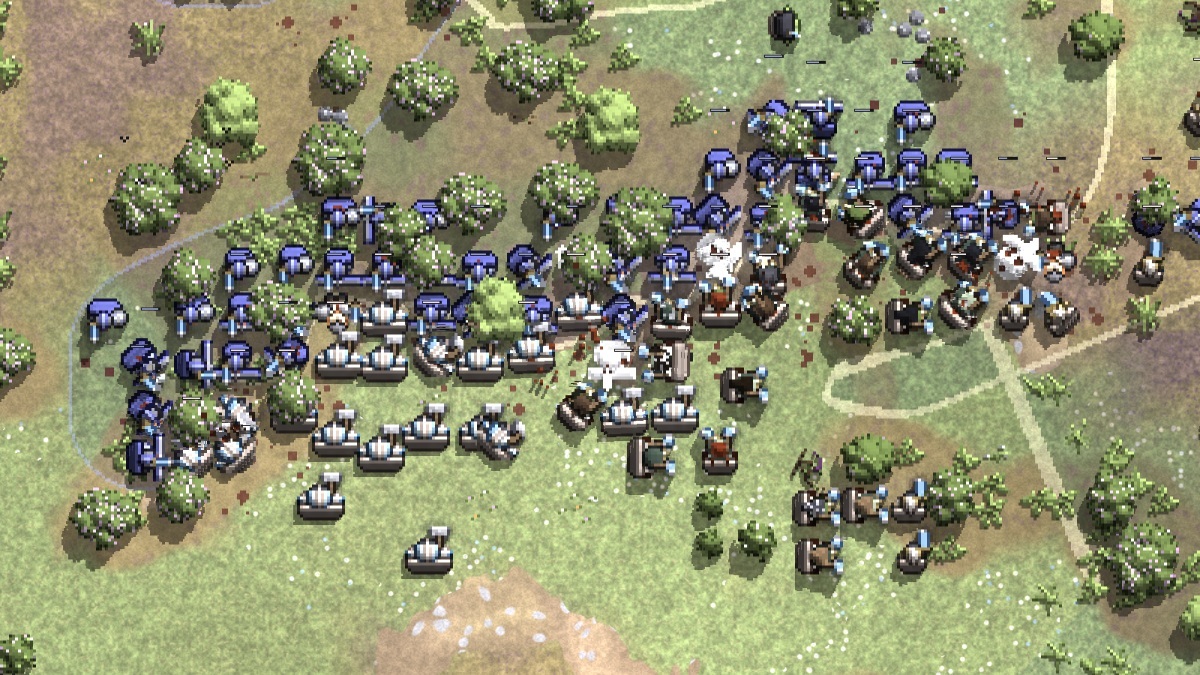
- Companies on foot now fight in clashes. The side that gives more ground and loses more soldiers steps back, both catch their breath, and the steadier side goes in again. Archers keep shooting at an enemy your soldiers are fighting hand to hand.
- Your companies' cards show each captain's face, smiling while the company holds and grim once it breaks, in a frame of poles, timber, stone or gilded stone by how well it's trained.
- Armies form up just out of bowshot. Your side wears blue and the enemy red. The ends of a company that goes in sweep round the enemy's flanks, and soldiers in good armour who know their weapons keep their nerve far longer.
- Battles are fought on open ground, with trees only along the field's edges, so you can see your soldiers.
- Archers never run out of arrows, and a shield wall stops nearly every arrow from the front. A healer's company told to advance keeps a few steps behind your nearest line.
- A troll or any great beast turns smoothly toward whoever it fights, and a figure hit by many blows in a row flashes at most twice a second. Fights grunt and scream now and then rather than at every blow, and the horns no longer sound one call after another.
- At home, a company drills outside the barracks you pick for it on the War page, or the nearest one, and takes turns at the archery ranges and fighting rings beside it.
Dwarf runesmiths and greenskin shamans
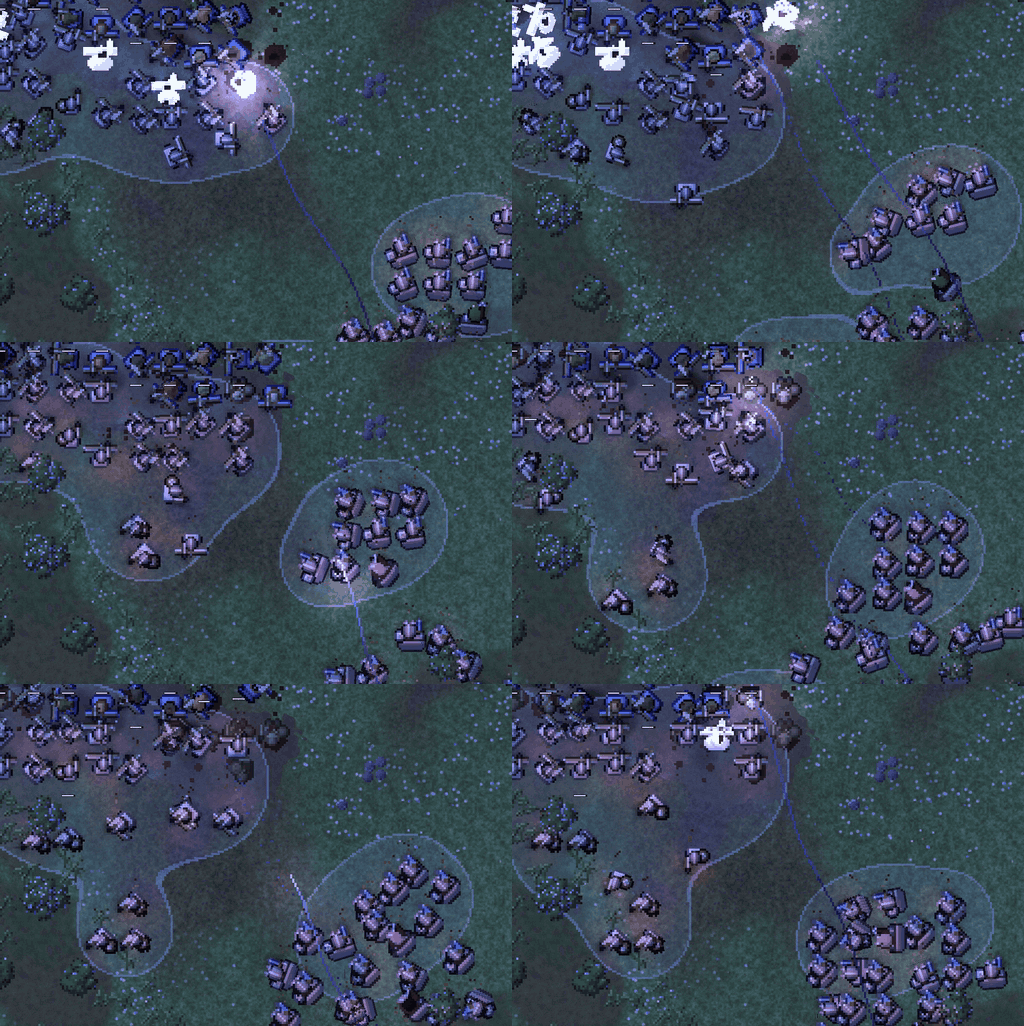
- Dwarves take up runecraft at a rune hall, and greenskins take up shamanism at a lodge.
- A runesmith cuts runes into lamps, so a lamp burns a year without fuel. A runesmith also cuts runes into arms and armour made to order:
- a bite rune that cuts through armour
- a weight rune behind every blow
- a ward rune against blows
- a hale rune against bleeding
- Runesmiths fight in a company of their own. Their stone and thunder runes wake on the whole company: in stone it can't be driven back, and thunder charges its blows. They wake Stone first, then shake the ground under the enemy.
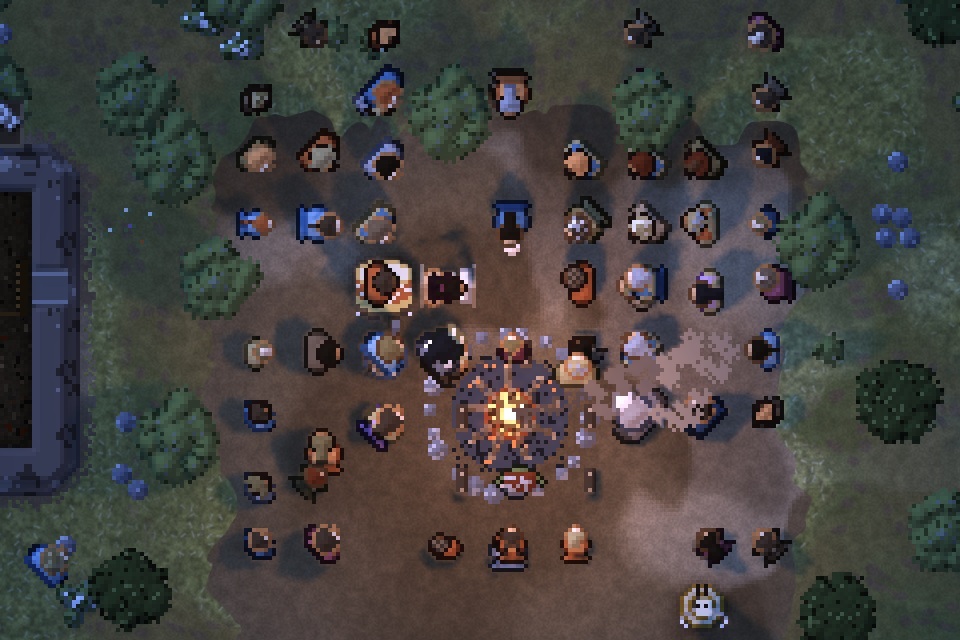
- Every evening the shamans dance round their lodge's fire, and anyone can join in. In battle they lash the enemy with spirit and drive their own side into a Bloodrage. Their Blood mend heals their side as enemies fall nearby, and master shamans throw a Spirit chain that leaps through enemies standing close together.
Elite troops for every race
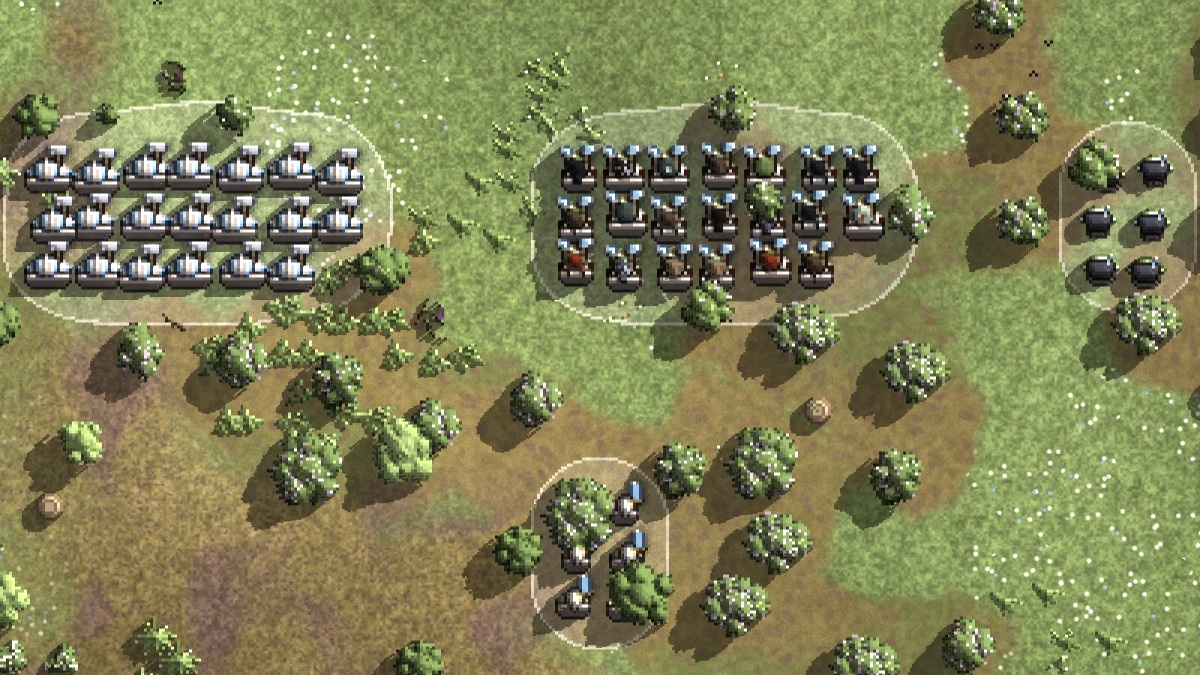
- Dwarf hammerers swing great hammers that knock enemies flat.
- Orc berserkers fight with an axe in each hand and shrug off wounds.
- Goblin assassins slip round the enemy line unseen and knife its captains and mages from behind.
- Human knights wear armour almost nothing cuts. A blow from the flank or behind never shakes them, and their greatswords hit the hardest of anything in battle.
- At home, a soldier who's a master guard can be knighted from their Honours. They're Sir or Dame from then on, in a knights' company paid each season. Your smithy forges the great hammers, greatswords, war axes and assassins' knives, and beats out knights' harness, once one of your companies carries them.
- You choose what your guardhouse's guards take in each hand and what armour they wear.
Shape every building and wall
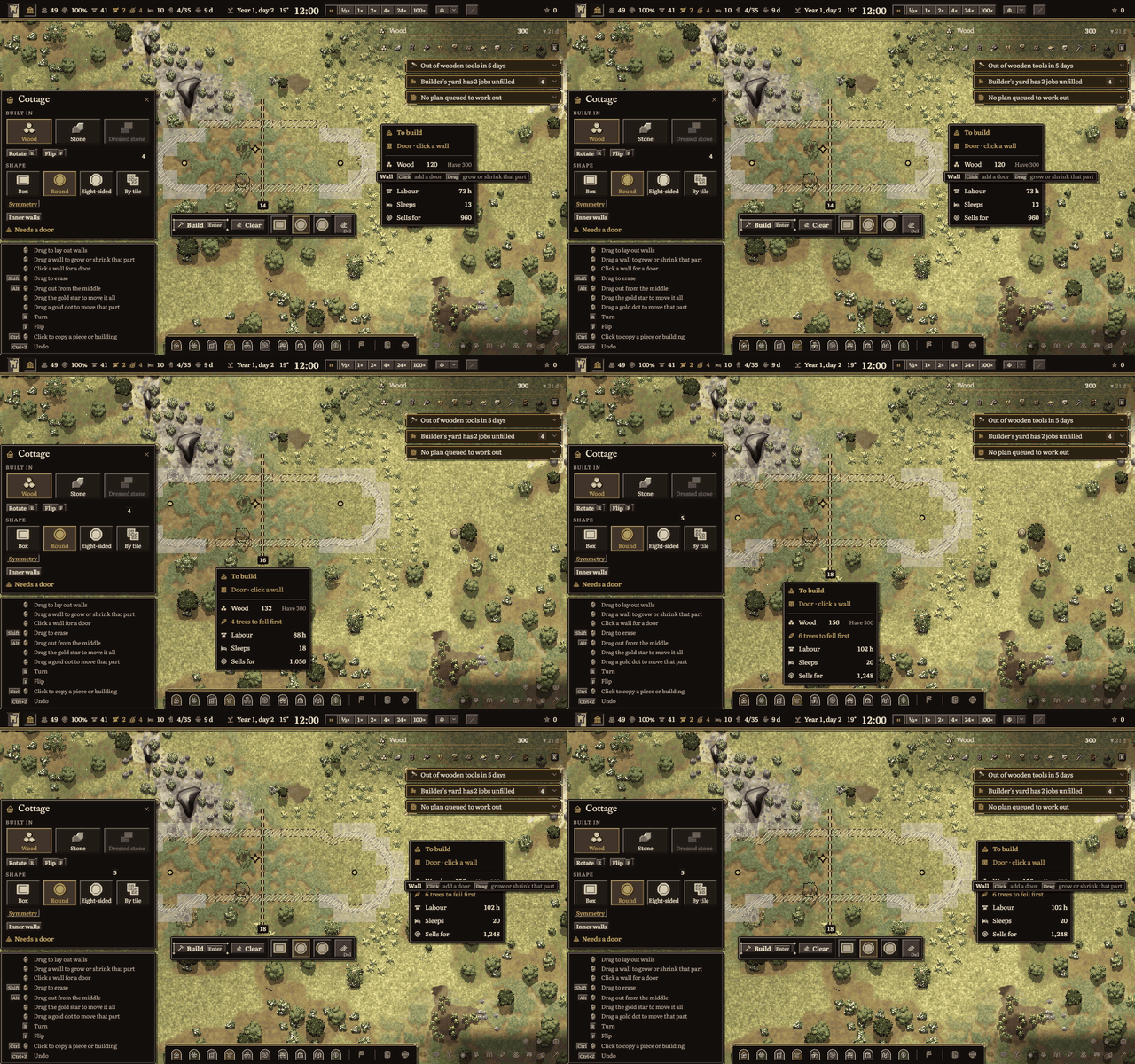
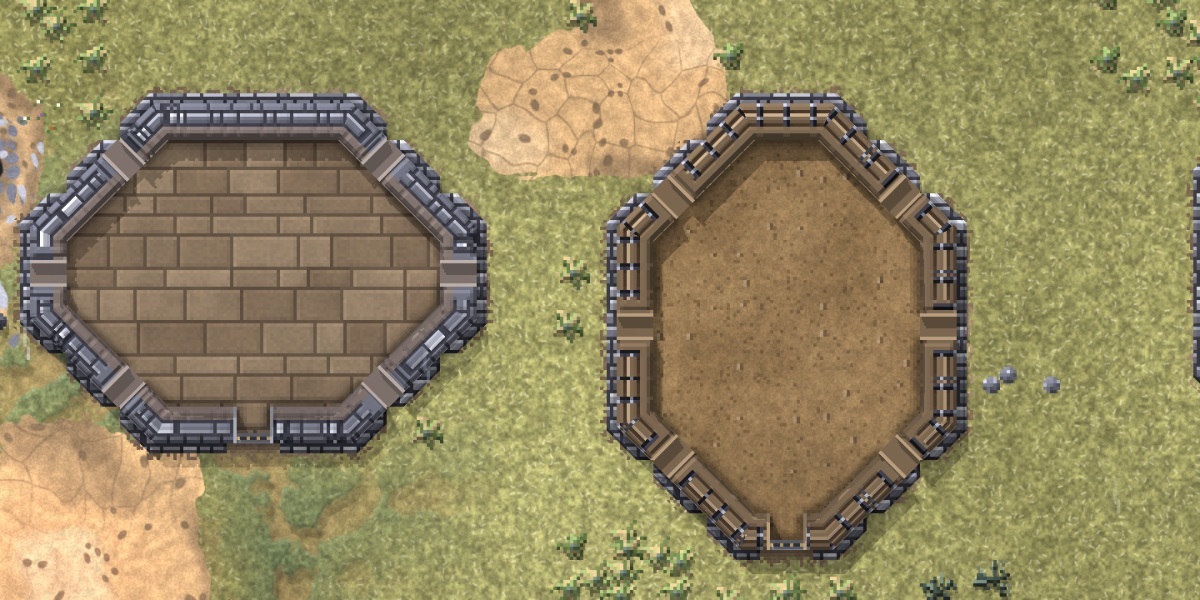
- Draw a building's outside as a box, a circle or an eight-sided shape, and blend them: a round tower on a hall, or a porch on an octagon. Gold handles move the plan, and R turns it.
- Drag any wall of a building's plan to grow or shrink that part. Change a part's shape from the keys beside Build, flip the plan with F, and turn on Symmetry to keep both sides the same.
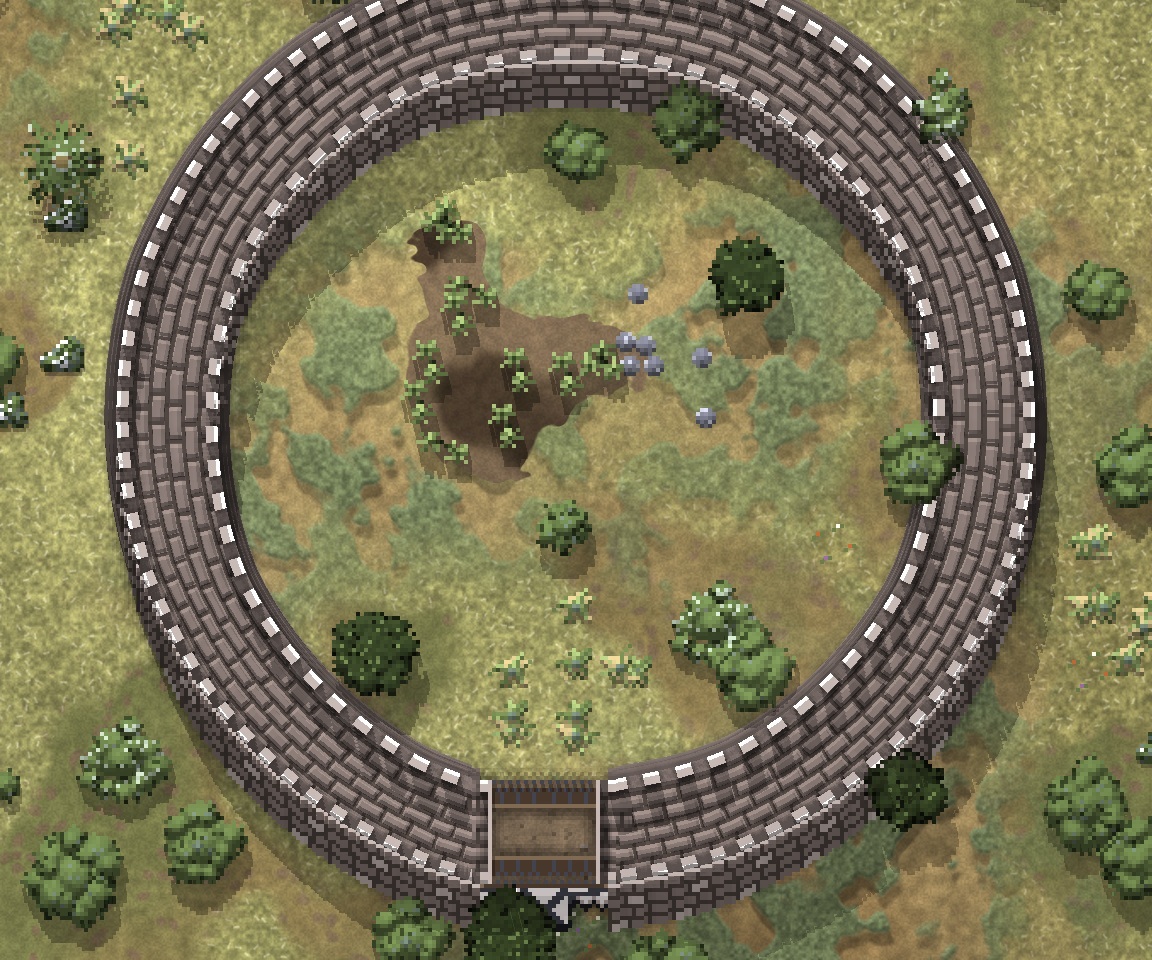
- The wall tool draws a round or eight-sided ring as well as a square one. Palisades, earth walls and stone walls laid round, eight-sided or on a slant draw as smooth curves and straight lines instead of steps, with their stakes, battlements and walkway following the wall.
- Round and eight-sided buildings show a smooth wall under the curve on their upper storeys, with windows only where the wall runs straight, and no floor shows past the curve.
- Two eight-sided buildings can share a side that runs the same way. It's drawn as one wall in one building's style, timbers or stonework and all, and the other's walls end cleanly against it.
- The build card sits bottom left with what each key and click does in a box under it, and every choice on it is a carved key. The shape, style and material you pick stay picked for the next building, and undoing a building you laid out puts it back on the pointer.
- Trees standing where you plan to build are drawn as just the outline of their leaves, so you can see the plan through a wood.

Every race builds its own way
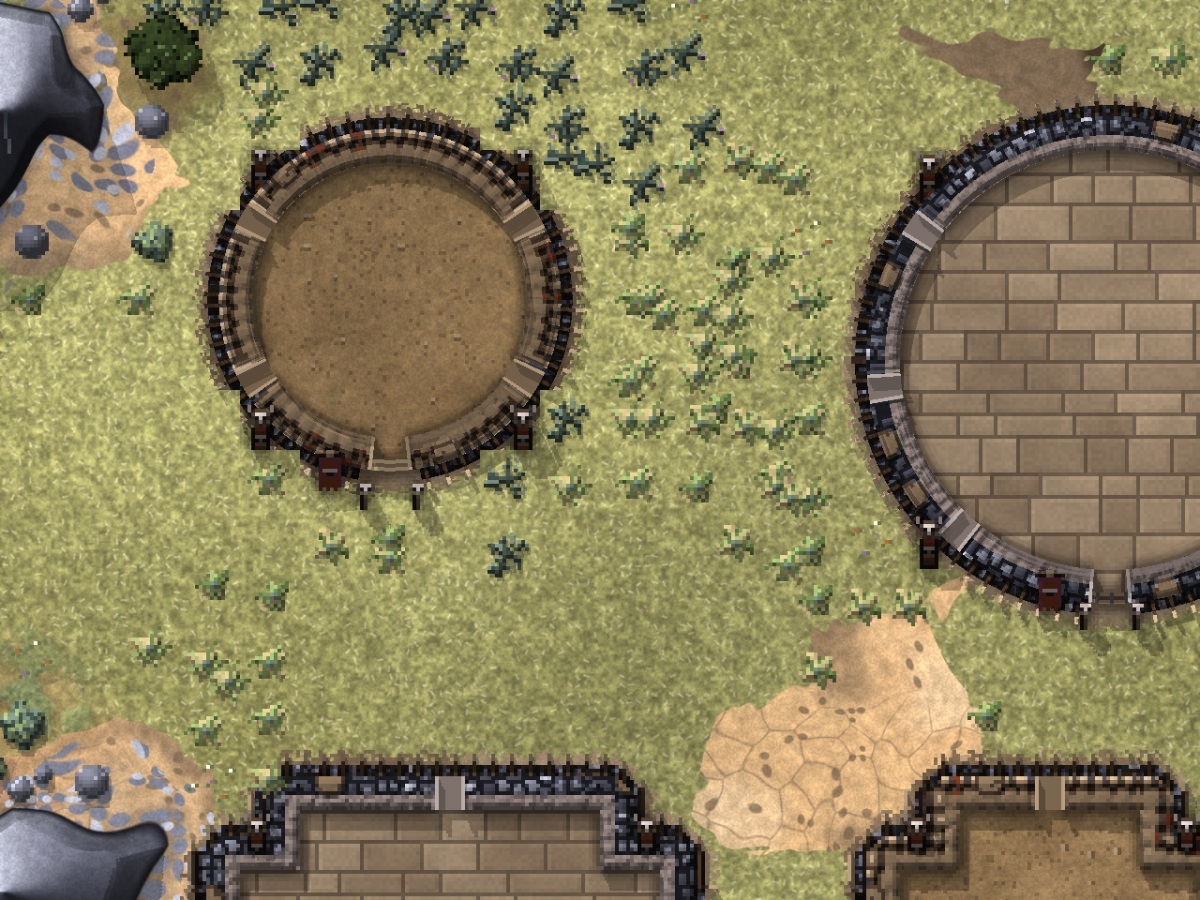
- Greenskins raise round halls of logs and piled stone, hung with hides and spikes. Dwarves cut octagon halls with runes and iron doors. Pick a style on the plan card once someone of that race has lived in your town, or rebuild a building in another style from its card.
- Rooms' inner walls are built in each race's own way, with posts where the walls turn and a sill across every doorway.
- The greenskins' beast pit is sunk behind a kerb of stones, with a ring trodden round its stake and straw and bones at its walls. A beast taken alive stands in its cage, and while a handler goads one it circles the pit on its chain and lunges at them.
Dwarves who swear to be brothers
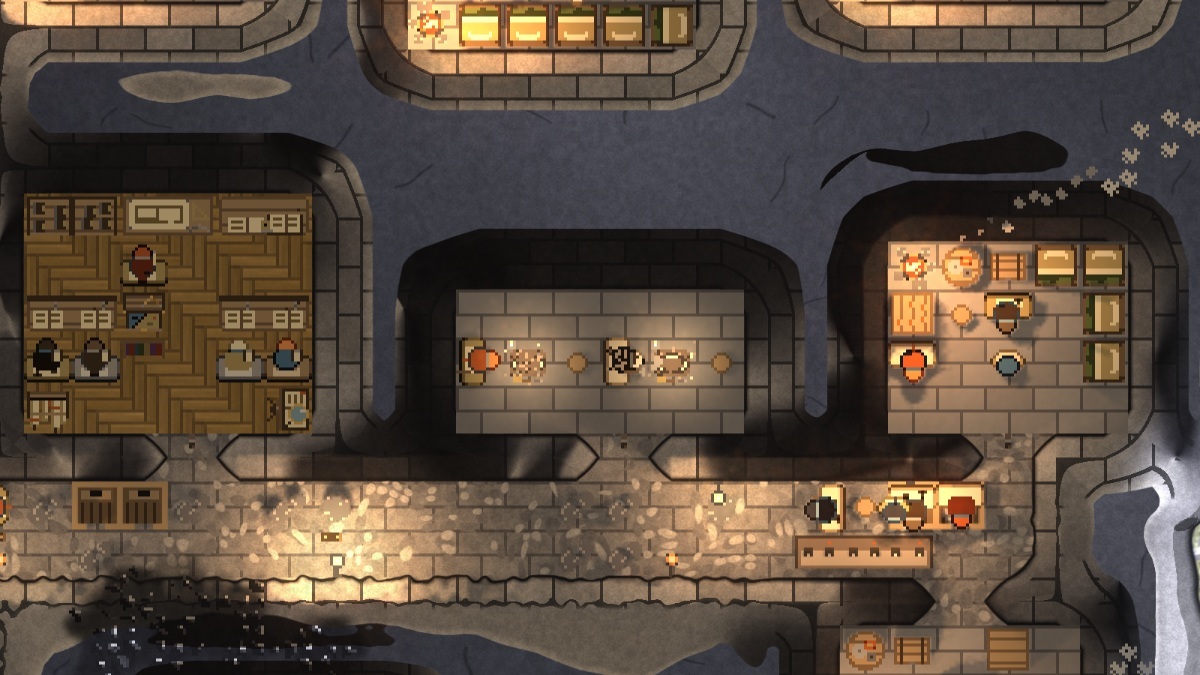
- Two dwarves who are close can swear to be brothers for life at Ilvara's temple, sharing a home and everything they own.
- Sworn brothers carve a son out of stone in a waking hall deep in the rock. He wakes on the evening they strike the last blow together.
Order a sword with a name
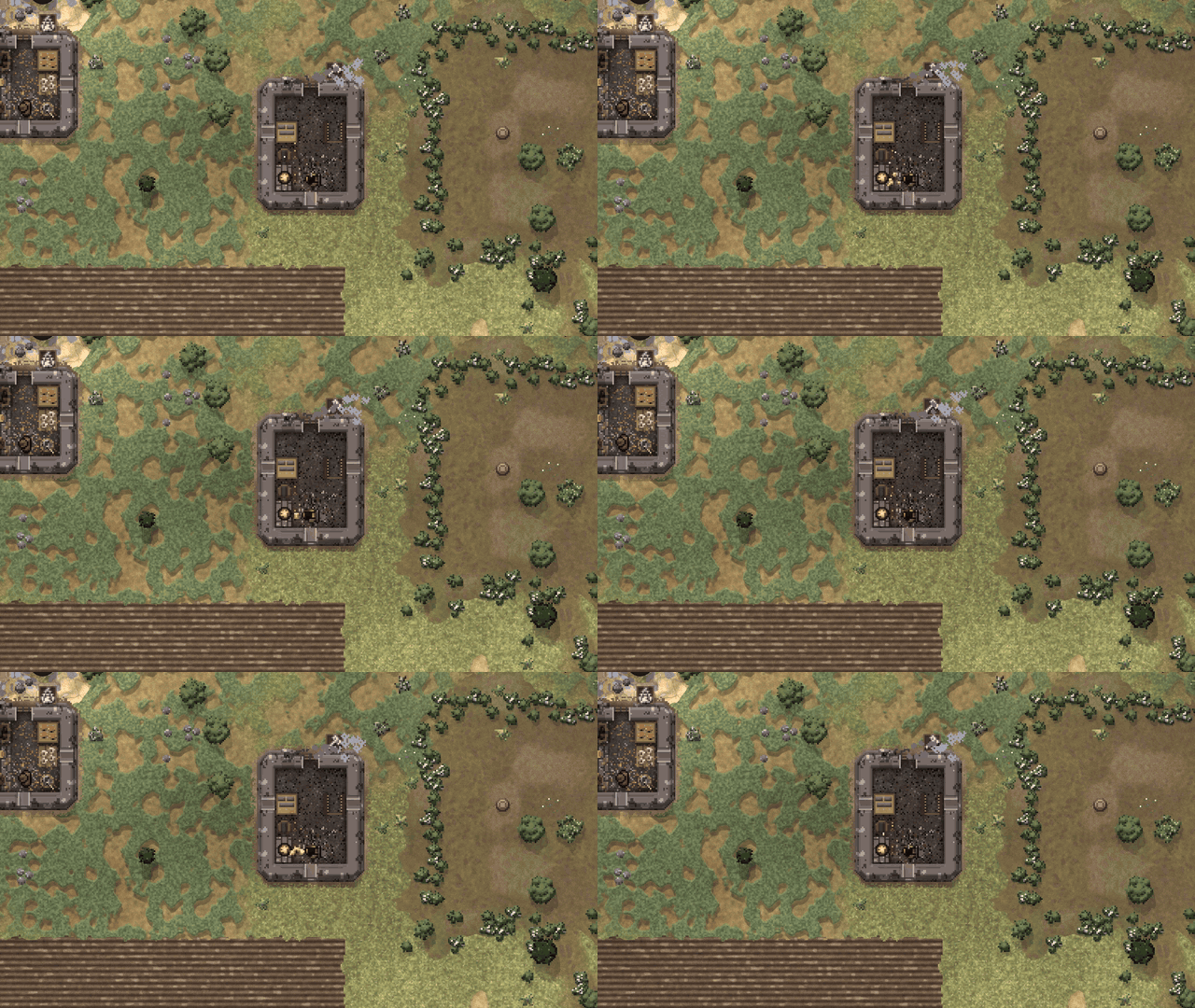
- Arms and armour now come in six grades, from crude to masterwork. A smith who's more skilled and happier makes finer work, and your best fighters take the finest pieces off the racks.
- Order a piece from a weaponsmith or a smithy and give it a name. About a season later it comes out the best they can make. Fighters who can afford it order their own, and a badly worn piece goes back to be mended.
- A piece made to order carries its name, a carving and its story. The ledger lists them under Named pieces. When the owner dies it goes to their nearest grown heir, unless they're Torva's faithful or a legend, who are buried with theirs.
- Settlers are proud of the fine pieces they carry, and thieves go after them, a famous one most of all. The rich who don't fight order arms and armour to hang at home, and a burglar takes the finest.
- Now and then a master smith makes a piece nobody ordered, and sulks if you stop them.
- You can see a piece's grade on whoever carries it. A masterwork blade glows faintly, a piece made to order shimmers, and a forge working an order throws gold sparks.
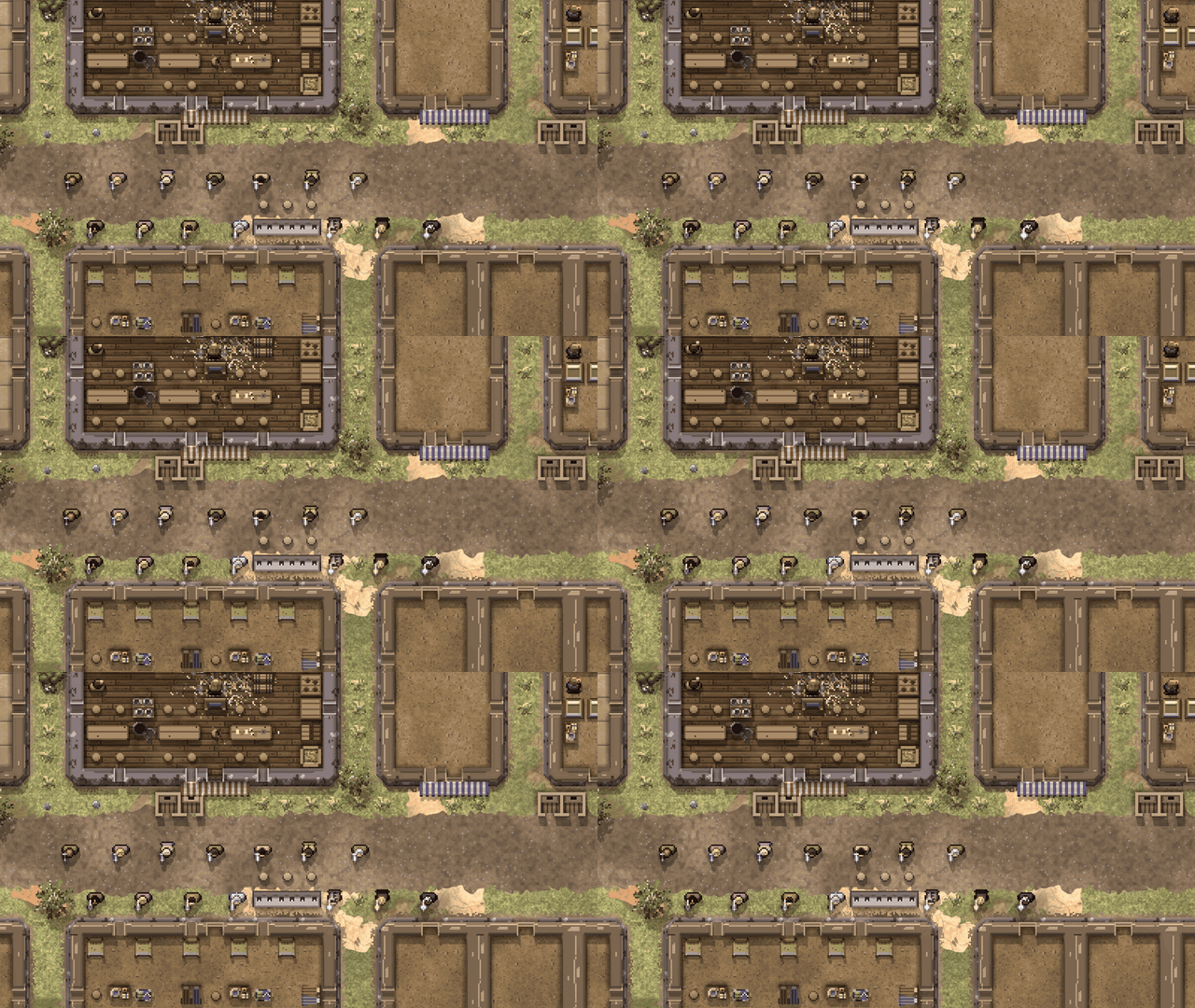
Build in dressed stone
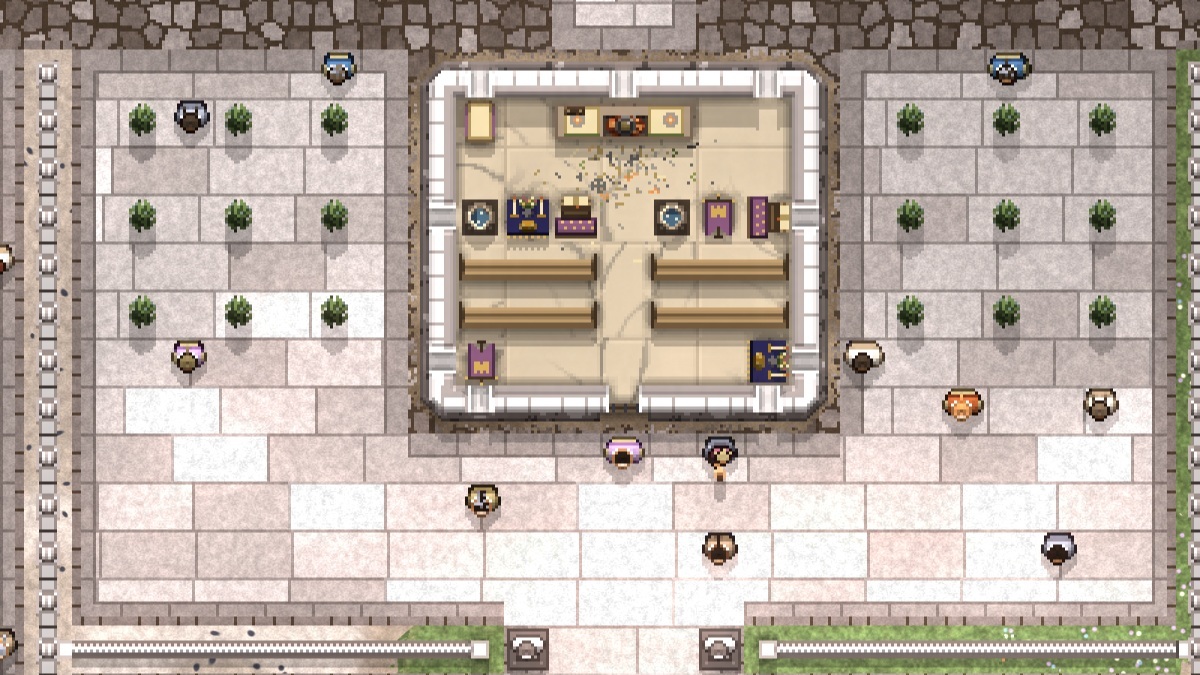
- Learn Stonecutting after Masonry to cut dressed stone at the quarry. It's stronger and builds up to five storeys, with polished floors, flagstone plazas, colonnades, cypresses, statues of the gods and urns.
- A new Forum start opens on a town of 600 in dressed stone. Its forum has a temple at the head and colonnades along the sides, with baths and an arena down the main street.
Snow and ice in winter
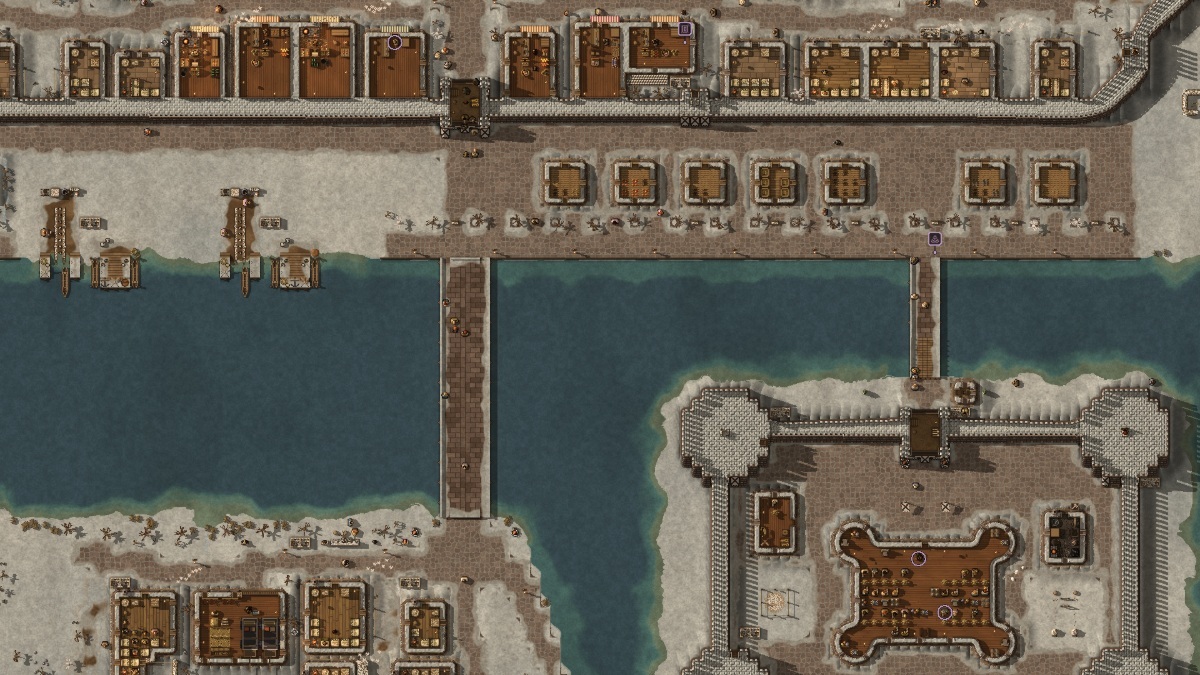
- Snow in winter looks like snow: it drifts up against walls, the streets are trodden down to wet stone, and wall tops wear soft caps instead of shiny ice.
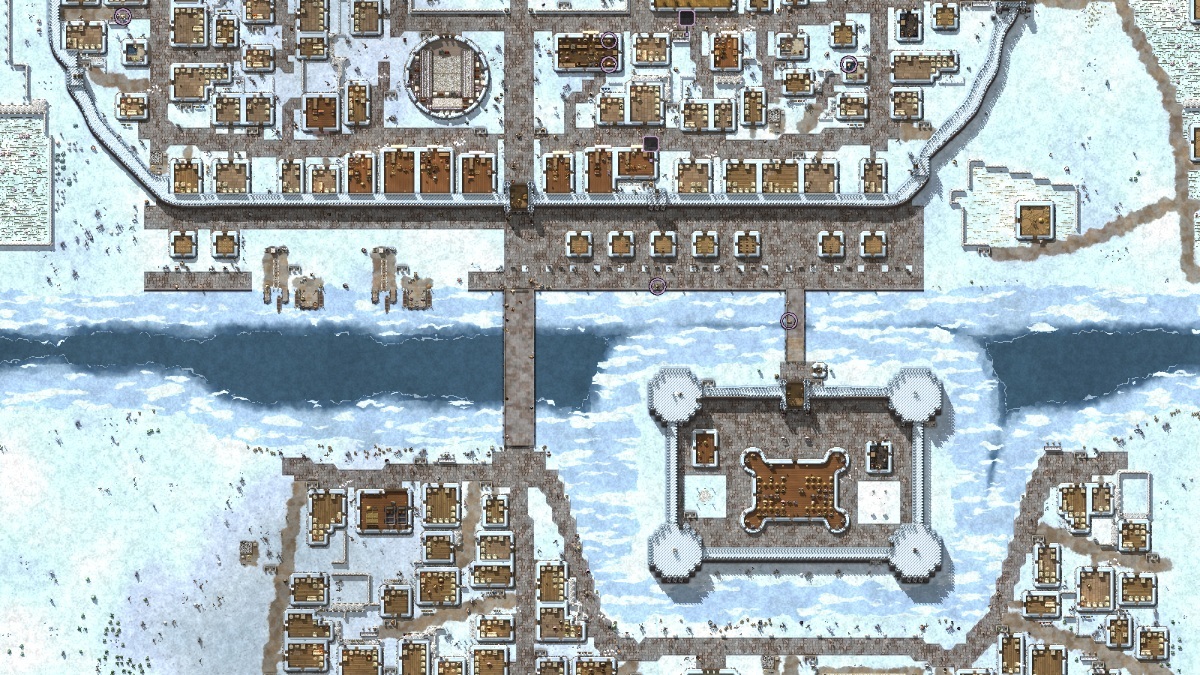
- Rivers and moats freeze out from their banks as the cold deepens, the ice pale and cracked with snow drifted on it. A running river keeps open water down its middle till the hardest cold.
Weather your settlers feel
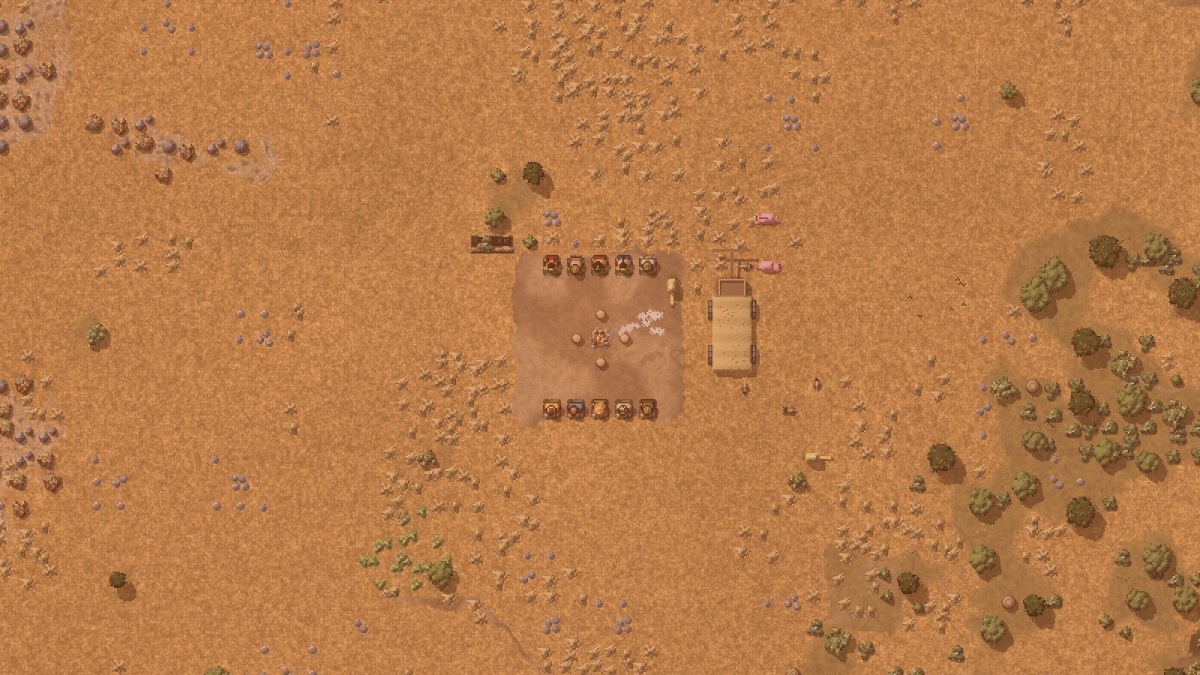
- The air now warms by day and cools by night, depending on where you settled, the season and the sky.
- Your settlers get cold or hot as the hours pass, depending on where they stand and what they wear. A cold settler stops to warm up at a hearth, a fire pit or indoors, and a hot one cools off in the shade. They fetch warm clothes before the cold sets in.
- Cold snaps, blizzards and heat waves set in for a day or two. The counsel warns you a day ahead, and homes lay in wood the day before.
- A new Warmth layer shows who's cold, chilly, warmed by a fire or too hot at this hour.
- Settlers who sat round a fire pit together on a cold day remember it fondly.
A town that looks lived in
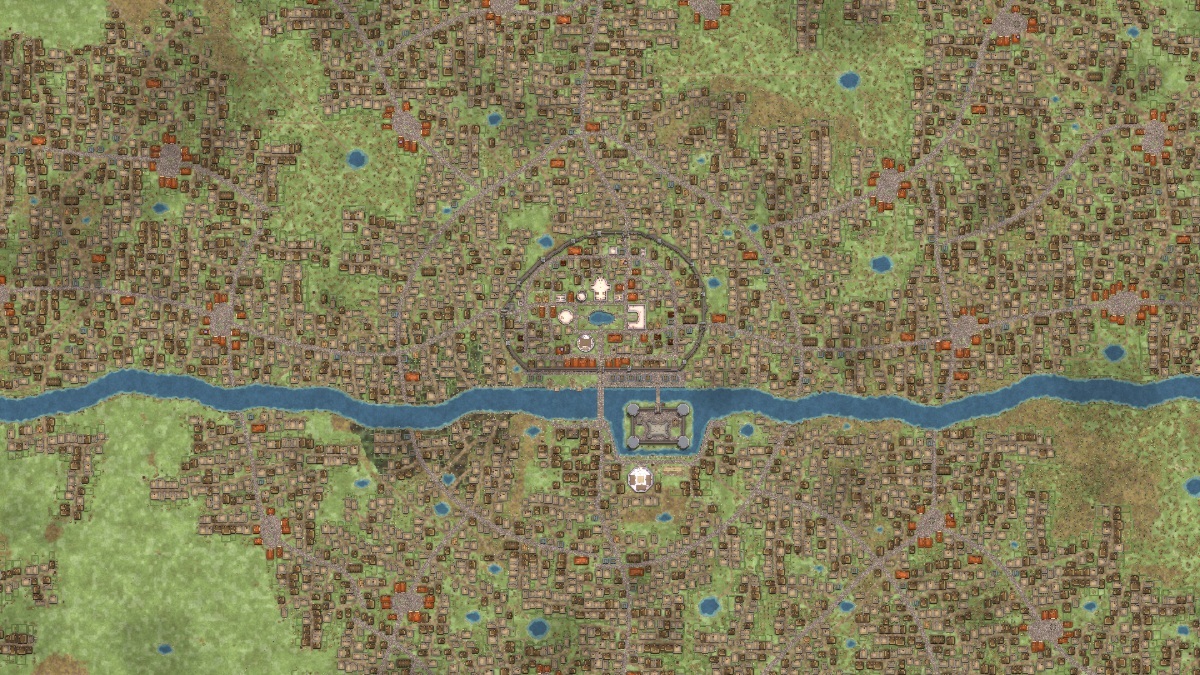
- Zoomed far out, a big town shows its quarters: wooden homes darken and stone ones pale, and shops, halls and stores take their colours off the map, so the old stone core, the squares and the landmarks stand out from the sprawl.
- At night a room with no fire lit is as dim as the street outside it, no longer a black square in the town.
- Paved streets meet the grass along a smooth kerb instead of in steps. The middle of a broad yard or square is worn pale, and moss grows in the joints along its edges and down narrow lanes.
- Where a stone road or square meets open water it ends in a built stone edge with deep water against it, and a stone road beside the water no longer looks laid over it.
- Farmhands sow, weed and reap a field along its rows, so a field half done looks worked instead of chequered.
- Hedges grow in clipped clumps of leaf. A garden's bushes are clipped round, its tubs hold a dome of leaf set with flowers and its physic beds rows of sage, parsley and lavender. Flower beds grow in rows of flowers, and the village green's four beds are square about its maypole.
- A town's banner hangs from a pole with a gilt knob on top, its edges curled back like cloth.
- Middens, cesspits, sewage beds and trenches read as muck, stone and turned earth up close.
- Settlers walk along a bank instead of wading through the shallows beside it, and cross a ford only when going round would take longer.
Factions meet in their halls

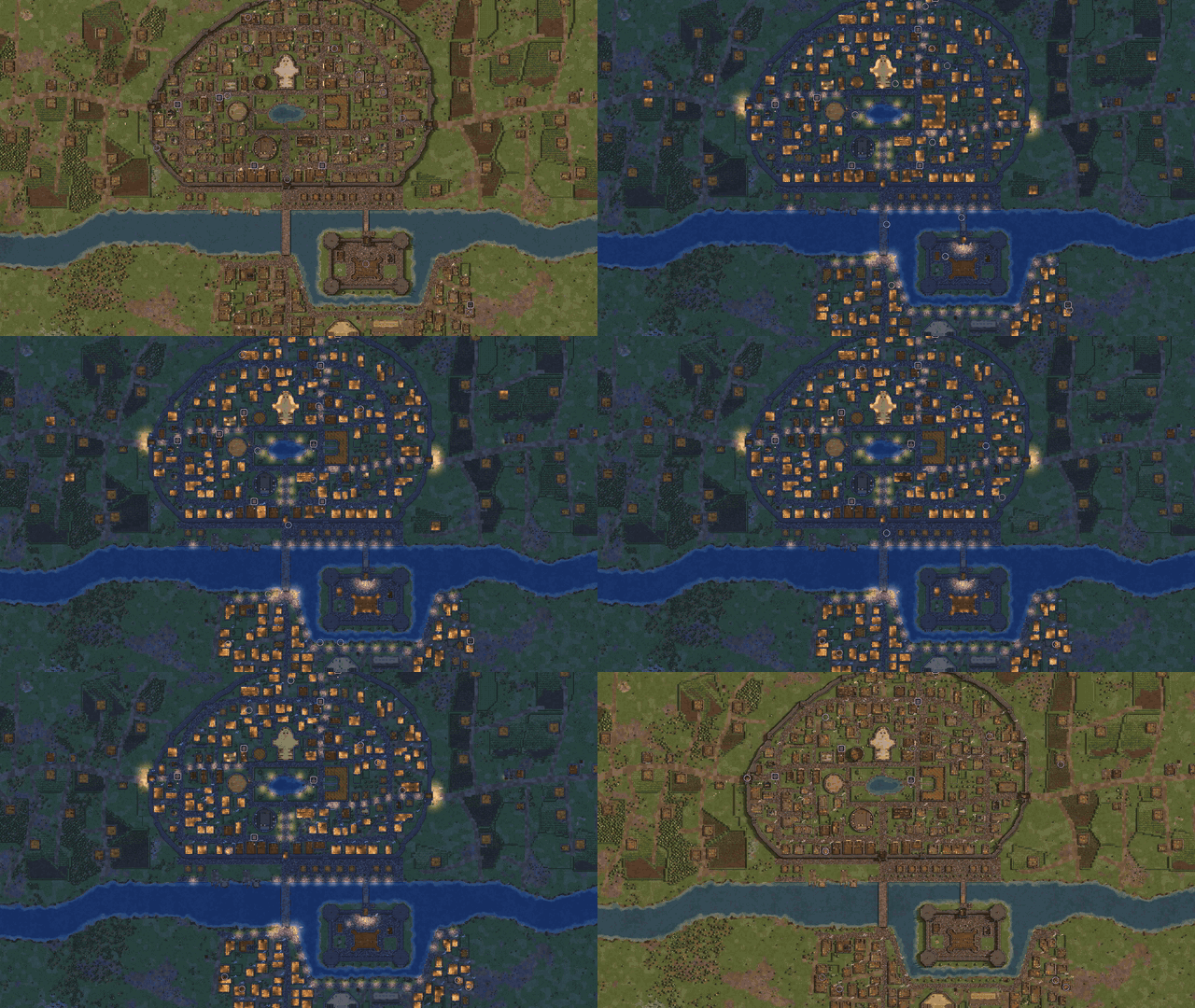
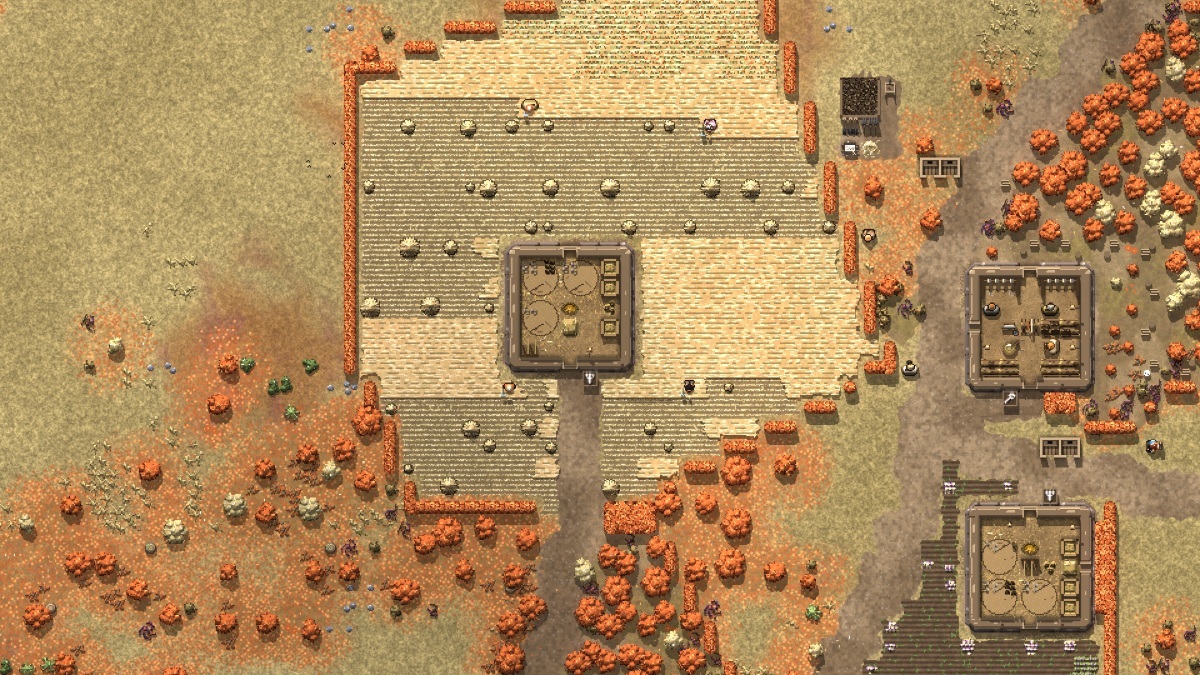
- A faction meets in its hall one evening a week. Its leader speaks, then a plain faction gives its poor alms, a war band spars and a craft guild teaches. Members sit on its benches on other evenings, and a thieves' guild buys its members' stolen goods until you raid it. Soldiers called to a gathering skip drill, and alms win a settler fame only once a day.
- A faction spends what its treasury holds past its rent on its hall. It pays your best free carpenter to remake the dais and benches one at a time, then saves for a parquet floor and has its leader lay it, and has the leader's chair made finer last. The leader sits there and talks with everyone seated in the hall. Settlers like an evening on a finer bench more and grow closer on it. Its row on the Notables page says what it's saving for or having made.
- Each faction flies its banner over its hall, by the door, so you can tell from the map whose hall is whose.
- Craft guilds start on their own: once six of your settlers are journeymen or masters in the same profession, they found its guild and each of them joins. They vote in a leader each year, and the guild's hall evening teaches the profession's learners too. Priests gather in their god's sects instead.
- A new faction is the kind its followers vote for: orcs lean to war bands and goblins to thieves' guilds.
- A faction pays the same small rent for its hall whatever's in its treasury, and takes dues only until it holds a week's rent, a craft guild's week of strike pay or the next piece of arms a war band orders. Its members pay their own fines.
- When a faction's leader dies, its members stay and choose a new one. A craft guild you refuse past its protest riots by night before it strikes again.
The faithful fill the temple
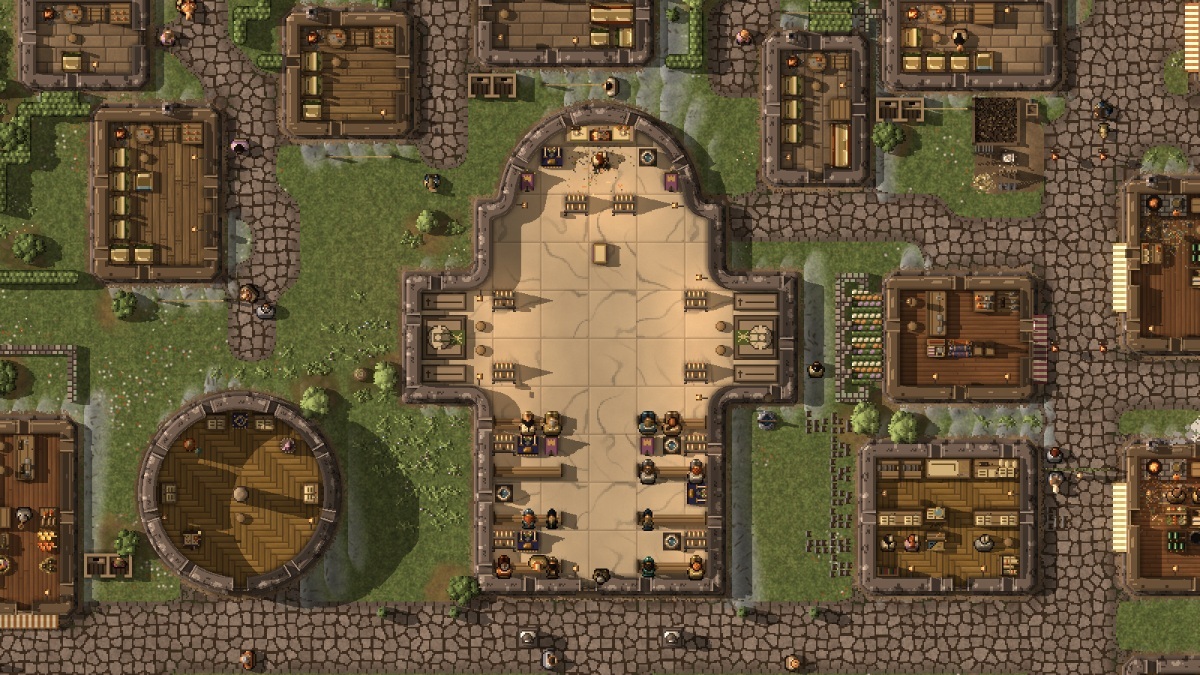
- Each evening the priest of a dedicated temple holds a service, and the god's followers who aren't at work fill the pews to pray. A temple can stand a statue of its god and candle stands.
- The faithful sit on the pews at a service, a wedding or a funeral, and kneel at the god's statue, instead of standing about. A wedding's guests stand about the couple on the temple's floor.
- At Torva's Games the faithful pair off and spar with staves, face to face.
- A sect you give leave prays together at its shrine one evening a week, and has its god's temple made finer from what it can spare.
- Settlers called to a gathering who would go hungry before their part is over eat first, and set out that much sooner.
Every settler has a calling
- Each settler now has a calling, the first profession they reach a tier in, and only rises past journeyman in that one. After a year as a journeyman in another job they take it up instead, unless they're content or already a master.
- Techniques and craft books are gone: what a settler can do comes from the rung they've reached in their trade, a journeyman hunter keeping snares and a novice tailor working leather.
- Bakers, tailors, foresters and priests each have a trade of their own, and every settler trains as a fighter and as an archer apart: a company with bows drills as archers, any other as fighters.
- Every trade's perks now do what their cards say, from a journeyman baker's oven that never goes cold to a marksman's shots in battle. Your best trader rides with the trade wagon, and a bosun drives a warship's crew.
- A new grand master takes up half their trade and its title, as their master did or as their nature leans, and seeks out work at that half. An old master leaves their legacy only to a settler who shares their calling.
- Each workplace has a head, at the top of its staff list under their title: foreman, head baker, or chief baker for the first head of a profession to reach grand master. Make any worker the head from the staff list. They're happy about it for a while, and a head you replace is angry for as long.
- A settler's card has a Professions tab showing their calling, the trade they work at now and their arms rung by rung, with what every perk does. The Knowledge page is now Professions, showing who stands on each rung of a trade.
Scholars draw your plans
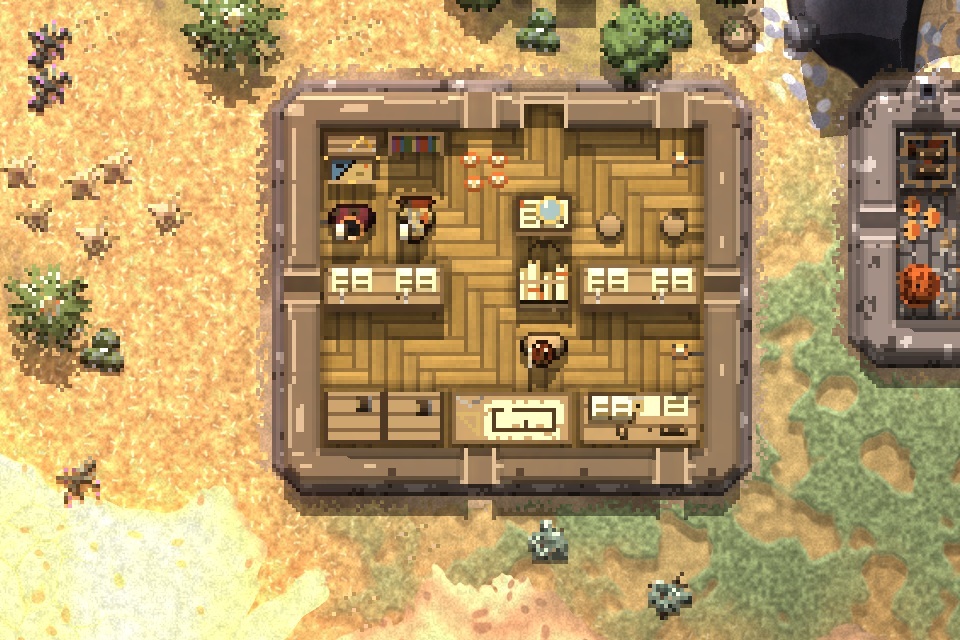
- A library's drafting desk shows the plan being drawn, its sheet filling in as the scholars work. Its card shows the room: a spine for every book on its shelves, gaps for free places, and its keepers under them.
- Any scholar can work on any plan, and a skilled one works far faster. Taking a plan out of the queue or moving another ahead no longer throws away the work on it, and everyone who worked on a plan is credited with it.
- The Plans page lists the scholars at each library with their rung and pace, and says how long a plan takes there.
- A new plan opens a card in the news saying who worked it out, what it opens and what's next, with a button to build it. A plan for a town or bigger gets a band across the map.
Settlers spend their spare coin
- Settlers give away a quarter of their spare coin each season. The pious give at a temple, the kind-hearted to someone they know in need, and the sociable buy the tavern a round. With nobody they know in need, the gift goes to the town.
- A household with coin to spare lays a table for its guests at its own wedding, coming of age or funeral, and a rich settler who loves company lays an evening feast by their home once a season. Both are known for it.
- Clothes come in qualities from crude to masterwork, finer from a more skilled tailor. Settlers buy the finest their spare coin covers, and ambitious ones order their own from a tailor and are proud to wear them. The fine jacket, cloak and hood are now the doublet, mantle and cap.
- A settler with coin to spare has a carpenter make a finer bed, table, chest, shelf or cradle for their home, and carries it there to stand in place of the plain one. It counts in their wealth, and their card lists it. The fine bed is now a double bed, two tiles wide.
- The Guide has a page on spare coin: what settlers set aside each season and what they spend it on.
Pick the world you start in
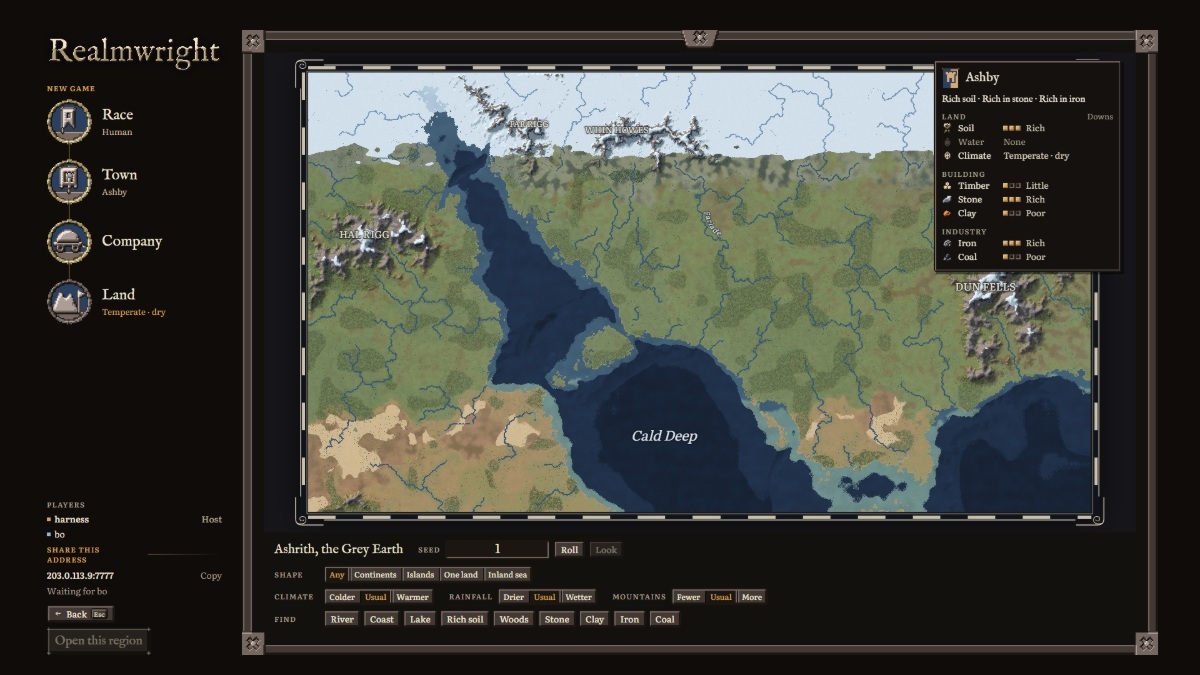
- Choosing where to found your town is now the new game's fourth step, Land. The map fills the page, and under it you can give the world continents, islands, one land or an inland sea, make it colder or warmer, drier or wetter, with fewer or more mountains, and light up the regions that have everything you want, like a river, rich soil and iron.
- The main menu opens over a new town, walled in stone on a river under a moated keep, its heart a green round a mere under the temple.
The world around your town
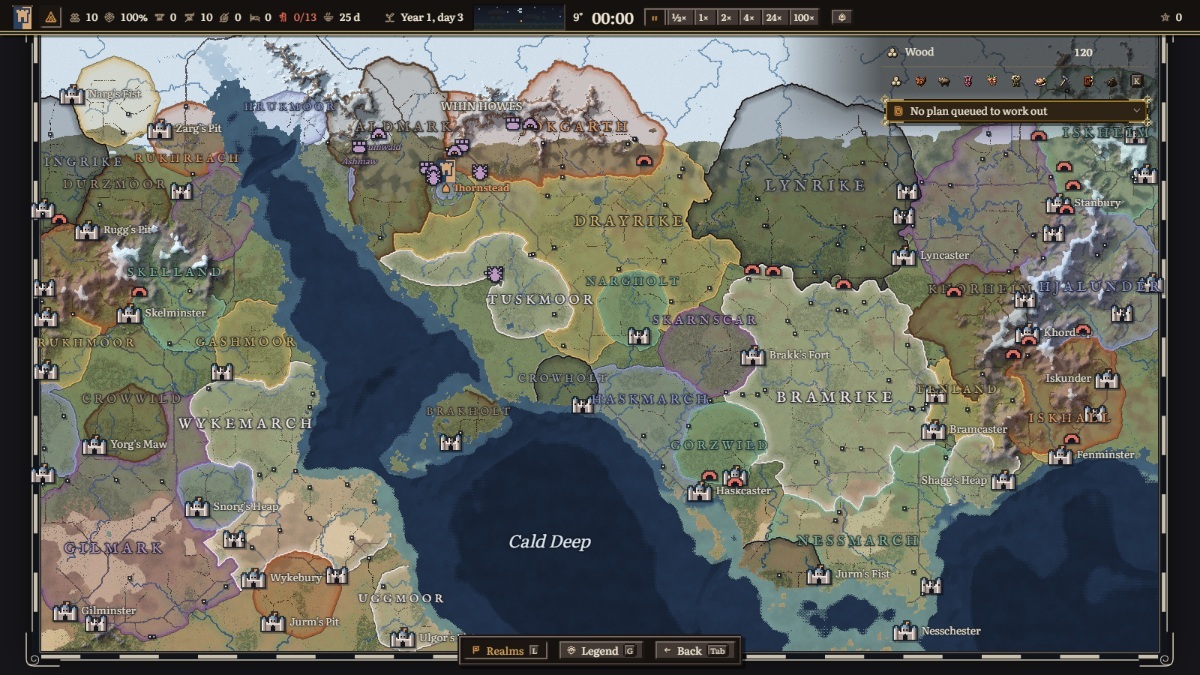
- On the world map, every realm now holds all its land, edged in its banner's colour, with its name written along it. There are three views: Realms, Standing and Your land.
- Every threat now has a den, a lair or a barrow out in the country. You can march on one and destroy it, and the beasts come into your region from the side facing their den, so you know where to build your walls. A realm at war marches its war band in from the side facing its nearest town, and its war card says how many it would send and how soon.
- A bandit chief camps near your town and climbs a rank each season. Once it's an outlaw captain it asks for tribute. If it gets away from a beaten band, it comes back hunting whoever led your army.
- An outlaw's band grows a rank each season and raids with its own men, the outlaw at their head. A mage your hunt drove out now holds a hideout and leads its men at you; break it and they come home your captive.
- News of a den, a haven or a camp out in the country has a "Show on the world map" link, and a place you pick on the world map shows its card right beside it.
- Marches, caravans and envoys take a quarter of the time they used to.
- A broad river that runs to the sea is now deep enough for warships to sail up.
- An island town is safe from anything that comes on foot. A town on the coast, or on a river that reaches the sea, takes some of its migrants by ship, rowed ashore every other morning; where no ship can lie a short row from your shore, they walk in instead. An envoy from an island town sails on the passenger ship and comes home on a later one.
Your town's first days and its last
- A new town's goal lists the five things to build first, ticks each as it stands and goes once all have stood.
- A new town's founders bring a journeyman baker for the oven in place of a cook, and a cookhouse has a bare earth floor, so you can build one before you have any stone.
- A camp keeps its road open after one settler dies of hunger or sickness; it takes three to shut it. Fewer migrants come for a season after settlers die of hunger, cold or sickness, and none if many do.
- When your last settler is gone the town is lost. The game goes quiet, the view pulls back and a card tells how long it lasted, who was last, the lives worth telling and its timeline. You can look round the town, write its book, load an earlier save or go to the main menu, and the Load page marks a lost town's saves while Continue skips them.
Households and servants
- The ledger has a new Households chapter that lists every household's servants, its open seats, and who's looking for work in service.
- Servants stay as loyal to the heir as they were to the master. Stewards get paid for their shopping, and a family renting its home can keep servants too.
Laws
- Decisions now come one at a time, half a day apart. Each one pauses the game when it comes up.
- The Curfew law is gone. A new Inheritance law settles who gets what's left when someone dies, and two new Family laws set how long children stay at school and how young they can start work.
- A cause whose leader dies a martyr carries on under its best-known backer, and so does one whose leader stands guard for the town once it takes to the streets, so its protest goes ahead.
- A burglar can be seen by anyone awake inside the home as well as by those outside its door.
Work and pay
- A job's pay follows the worker's place. Each workplace has one head, paid up to a master's wage, each profession has one grand master in town, and everyone else's pay stops rising at journeyman. Farming, quarrying and building pay a trainee's wage.
- Odd jobs pay by the hour what a new worker's job pays, so settlers with no job earn a living from the town's orders. A worker whose workplace is waiting for goods, or has no room for what it makes, does odd jobs on their usual wage until there's work again, and poor settlers with a job do odd jobs outside their shift while their household earns too little to live on.
- Once your town has coin it keeps some settlers as labourers, who do odd jobs, so building and hauling carry on when every workplace is hiring. Set how many on the Settlers page.
- A household's class follows what it earns, and counts everything that class wants, from clothes and baths to a servant's wage, and every child the household keeps. The working class is now the middle class, and towns keep a lasting mix of poor, middle-class and rich settlers: heads earn more, a bed costs more to rent, and poor lodgers sleep on the floor for less.
Food, prices and trade
- Food is now meat, veg and grain. A cookhouse cooks simple meals, a tavern fine ones as well, and a restaurant lavish ones. The food line tells you how many meals the town makes a day against how many it eats.
- Prices follow your stores. Anything in short supply costs up to double, and anything piling up costs as little as half.
- Every home owner pays the home tax, which follows what a home is worth. It's no longer a law you can turn off. The town runs any shop nobody rents until someone takes it, and keeps a tenth of the rent settlers are paid and of what a shop makes once it has paid for its goods, wages and rent.
- The cookhouse and the bunkhouse ask a little coin of anyone who has it, and still feed and bed anyone who can't pay.
- A funeral takes a quarter of a dead settler's coin, and the rest is shared among their children before their spouse.
- Caravans come more often, and each brings its own hands, who carry what you sold it from your stores, so a deal always gets loaded. A deal pays both ways the moment you make it, and what you buy is set down by the caravan's wagon straight away.
Set what gets done first
- The work list, next to Orders, sets which odd jobs get done first, and settlers now build before they fell, mine or pave unless you say otherwise. A building's card says which priority is which: build, hauling or staffing.
- When materials are short they go to high priority work first, building site or order alike, then to the work that needs the fewest more loads, and work that has waited gets its turn sooner. A building site you pause no longer takes wood and stone other work is waiting for.
- Settlers carry ten at a time and haul full loads: a building sends for more once a load fits and has its goods carried off once there's a load. They need the privy about once a day.
- Settlers no longer walk across the map to put away what they're carrying. They take it to a store nearby, never to another workplace's own pile, and with no store near they leave it in a heap to be hauled in, so a warehouse near far work saves the walk.
- Settlers start an order on the nearest part they can walk to, and a bridge is built from a bank they can reach. The Now list tells you when work has no path to it, and when a road, bridge, wall, fence or pipe you ordered has waited an hour for materials.
Around town
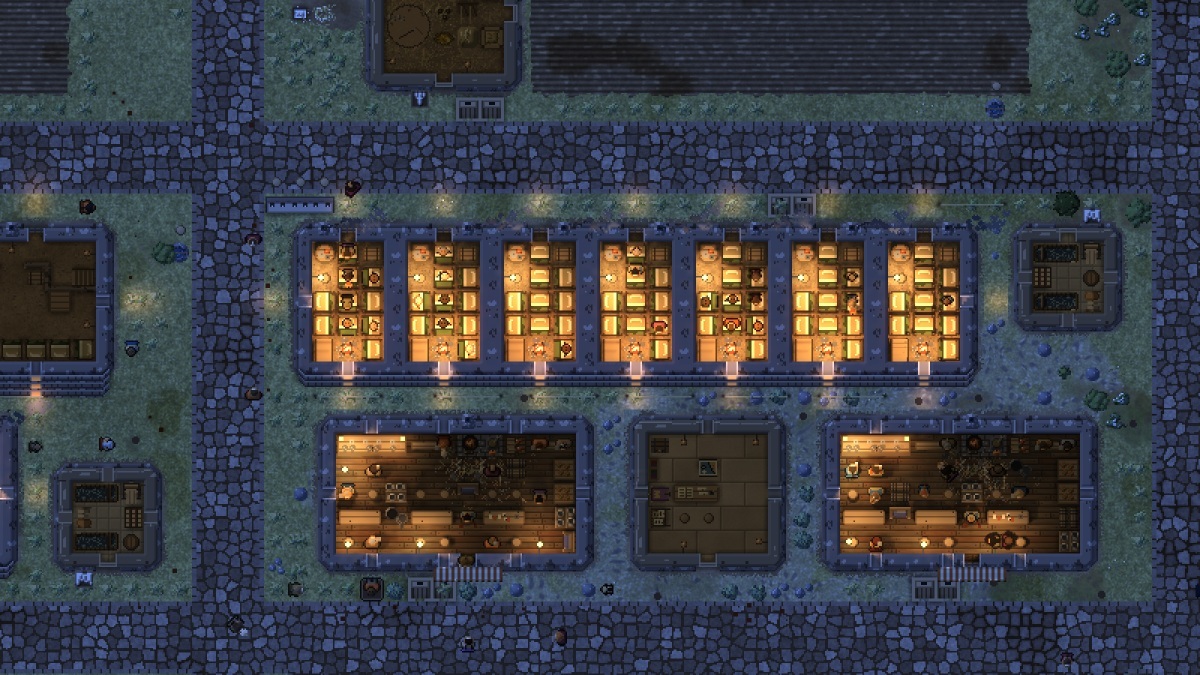
- Walled buildings hang lanterns on their inside walls and light them from dusk to dawn while anyone is inside.
- You can count a house's floors from the street, and families live on the floor their beds are on.
- With a building selected, drag any of its pieces to move it, or select several to move, turn or remove them together. Ctrl+Z takes back the last thing you did to a building's pieces, and Ctrl+Y does it again.
- Walls and bridges go up twice as fast, and porters stack the wood and stone right beside them.
- Prioritise a building to choose which jobs your settlers fill first, or pause it to send its workers away.
- The plans page and the War chapter are each split into pages.
- A settler whose wound or fever would kill them now leaves work for the healer's cot.
- Hunters drag a sledge out of their hut and bring three kills home a trip, and a wild hut's card says when nothing is left in reach.
- A stone floor survives a fire, so a wooden building that burns down is rebuilt on it with only its walls and pieces to raise.
- Buttons, tabs, filters and dropdowns have a new look. A button stands up as an iron block and sinks when you press it, the main button on each screen is bronze, and a button you can't press yet is only an outline. Every picture in the ledger and on the laws and questions is carved anew as one set.
- A very large town with many settlers out of work no longer stutters, a big town's picture hitches less as buildings go up, come down or change, and slowing the game from a fast speed no longer makes everyone stutter for a moment.
- Settlers taking cover in a crowded building stand still instead of swapping places until the danger passes.
- Towns saved at an awkward moment load again: after a shop's refit or a ruin's rebuild, as a funeral is missed for want of a priest, as a listener is called away from a speech, and more.
Try an early test of the Campaign
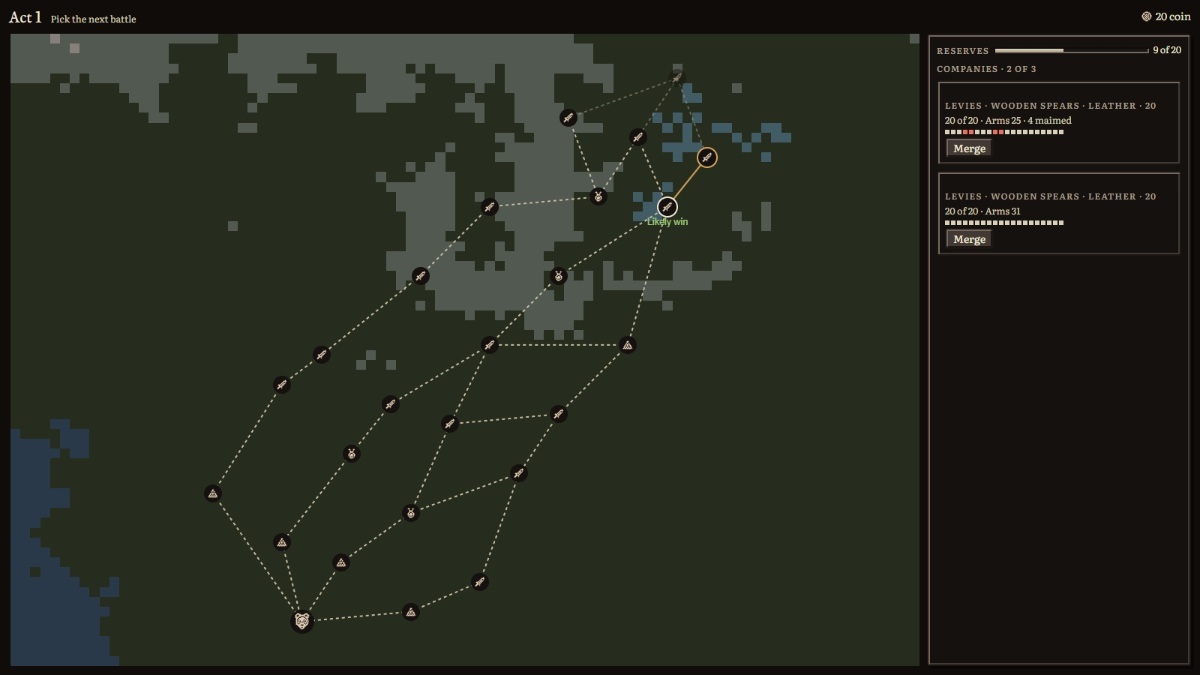
The Campaign is an early test. Tell us how it plays.
- Start a Campaign from the main menu and march a small army across the world, one fight at a time. You pick its road, its rewards and where it camps. It goes on until you lose a fight or the boss falls, and past the first boss there are two more acts on the road to a rival realm.
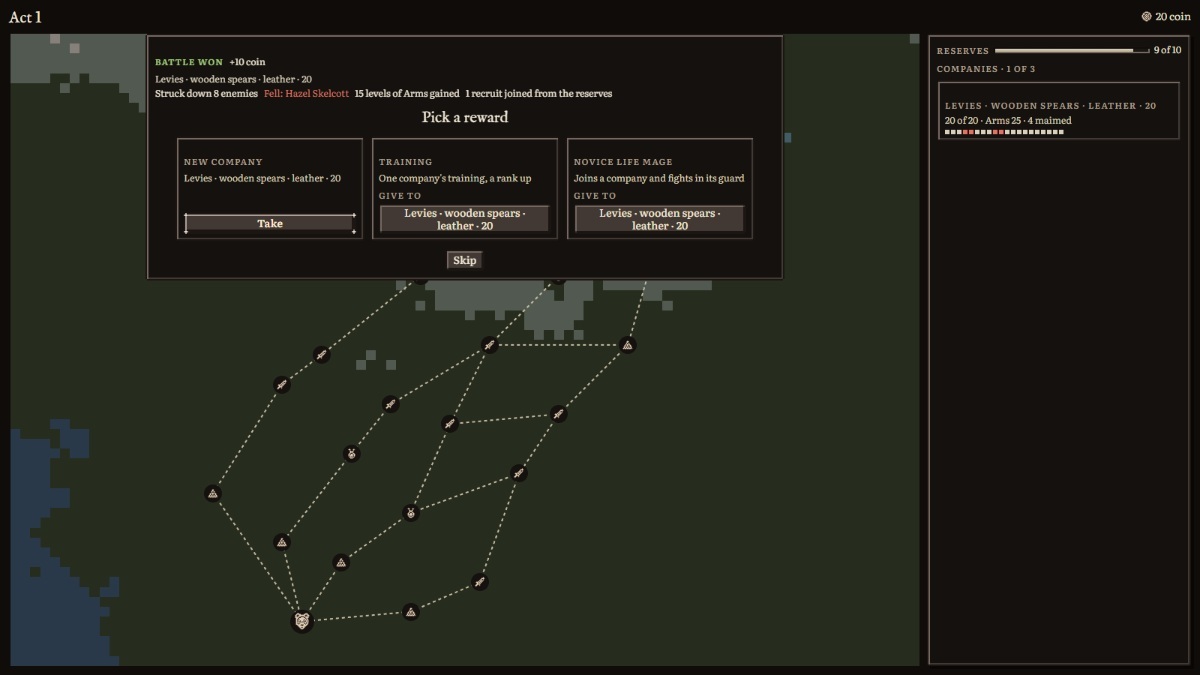
- Your companies start full at sixty. Winning a fight can bring coin, better weapons and armour from good up to masterwork, horses, a higher rank for a mage, or knights and assassins.
- Hire companies and recruits at Musters, which sell elites later on. The stop before each boss offers one beside the camp, to spend what the act paid before the fight. Beating a boss offers your own people's troops.
- Each company has a captain you can see by face and name, who leads it from battle to battle until they fall and another takes over.
- The enemy rides out too, brings mages with their guards, and fields its race's own troops. Your mages use your race's own magic.
- Your army heals fully on every march, and nobody comes out of a fight maimed.
Fixes from your reports
- Ctrl-click a farmhouse, a field or either half of any pair to copy both halves together.
- A wharf laid from the sea side in now gets built.
- Joining or rejoining a big town in co-op no longer drops you while the town is still loading.
- Through autumn the town keeps back a winter's fodder for its animals.
- Libraries no longer stall on a plan whose goods the town lacks, and they warn you when they need more hours than their librarians give.
- A battle no longer crashes when a knight swings a well-made or runed greatsword.