
Update 0.40: A Much Better UI, Character Traits, Contract Deals and More
Hello, movie lovers! This update changes how the whole studio looks, and it changes the people who work in it too. Every screen has been redrawn, signing talent is now a real negotiation, and the people in this town have histories, friendships, feuds and habits of their own. Here's what's new in Backlot: Hollywood Studio Tycoon.
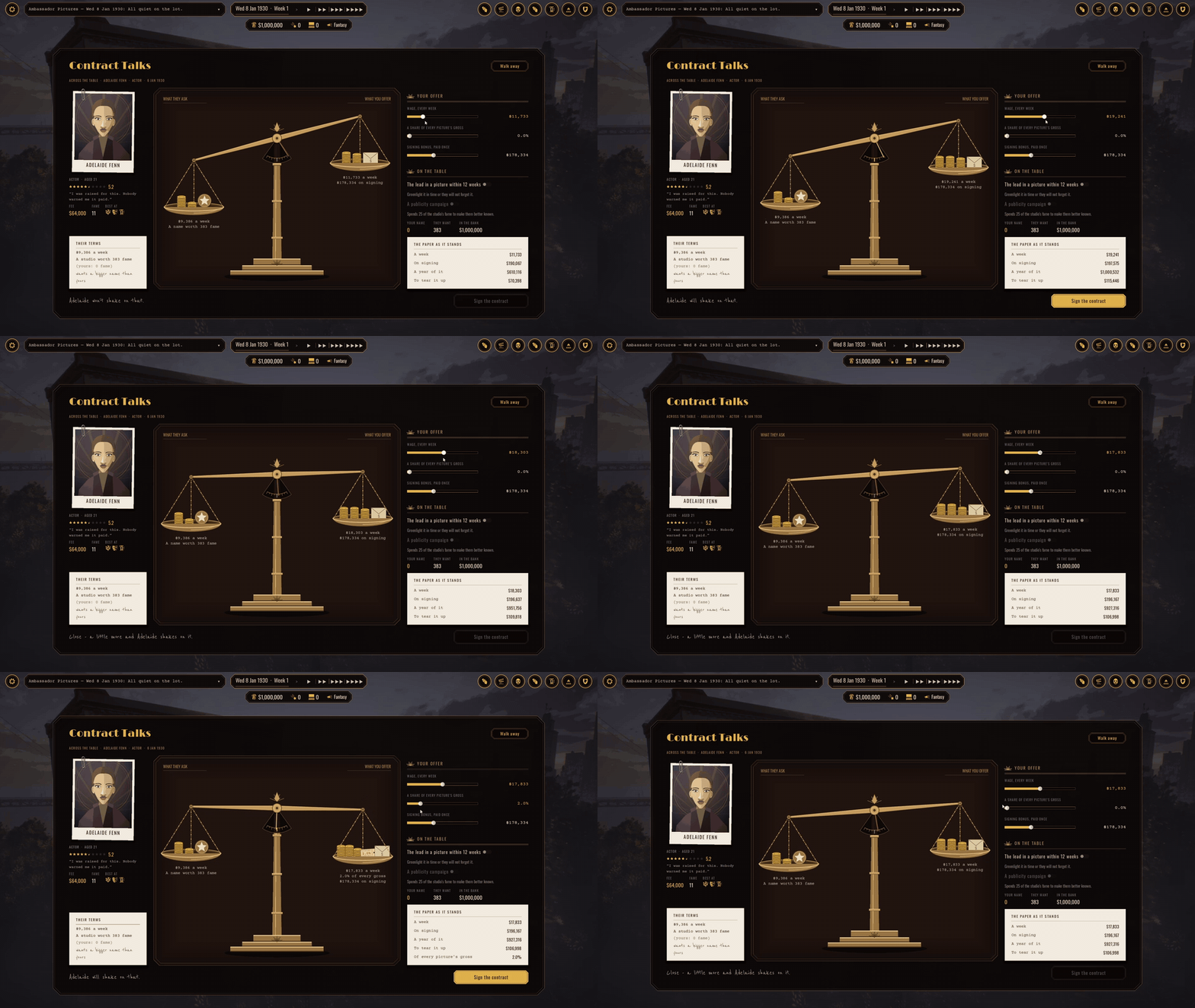
A Whole New Look:
The biggest feature in this update is the paper and brass redesign. We re-designed every screen in the game so it looks like the desk of a 1930s studio head, with typed memos, trade papers, ledgers and brass fittings.
Contract Talks and Casting Talks:
Signing an actor or director is no longer a single click. It's a negotiation. On one side of a balance is what they're asking for, and on the other is what you're offering. When the scale tips your way, you have a deal.
What you can offer: a higher wage, shares on the gross, a signing bonus, a promised part, a publicity campaign, or a word from somebody they trust.
No name is too big to sit down with. A studio nobody has heard of pays more for the same star, but money and promises can make up the difference, so you don't have to wait for your fame to catch up before chasing a big name.
Shares on the gross: once your studio is rich, the biggest stars will ask for a share of the gross on top of their fee. You can offer points to anyone, even when they don't ask, and trade them against cash. Just remember those shares come out of every week's takings.
Promises count. Promise a star a part and don't give them one, and they'll remember it.
You can now sign an artist, or buy one out of a rival's contract, straight from a casting pick. A buy-out costs twice what tearing up the contract would. Producers still don't sign contracts; you hire them one picture at a time.
The Town Has a History:
The people in town now know each other. Work together and you may end up friends, or you may end up rivals, and those feelings shift over time.
Friends open doors. A producer who's close to a star, or a star of yours who's close to another, can put in a good word for you at the table. Each favour uses up a little of that friendship.
Feuds cost you on set, and chemistry pays. Two people who can't stand each other drag a picture down, and a close pair lifts it a little.
The papers love a feud. Expect gossip in the Herald and in Film Row's "Around the lots" column, and new events built around falling out and, sometimes, making up over dinner.
The town starts with a history already: a hundred authored friendships and grudges, plus five producers who know nearly everyone. Talent Relations, a new research subject, shows you who knows whom.
Everyone Has a Weakness:
Every person in town now has a trait, and a career can add more. We don't show them anywhere (for now), on purpose. You'll find out the way a studio head really would: from what people do.
Maybe a star's fee doubles the week your bank account gets fat. Maybe a director you've kept on for years forgives something another would have walked out over. Maybe somebody's name keeps turning up in the gossip columns, or somebody doesn't turn up to the set at all. Pay attention and you'll learn who you're dealing with.
Changes From Your Feedback:
Thank you to everyone who has been sending notes. A lot of this section came straight from you.
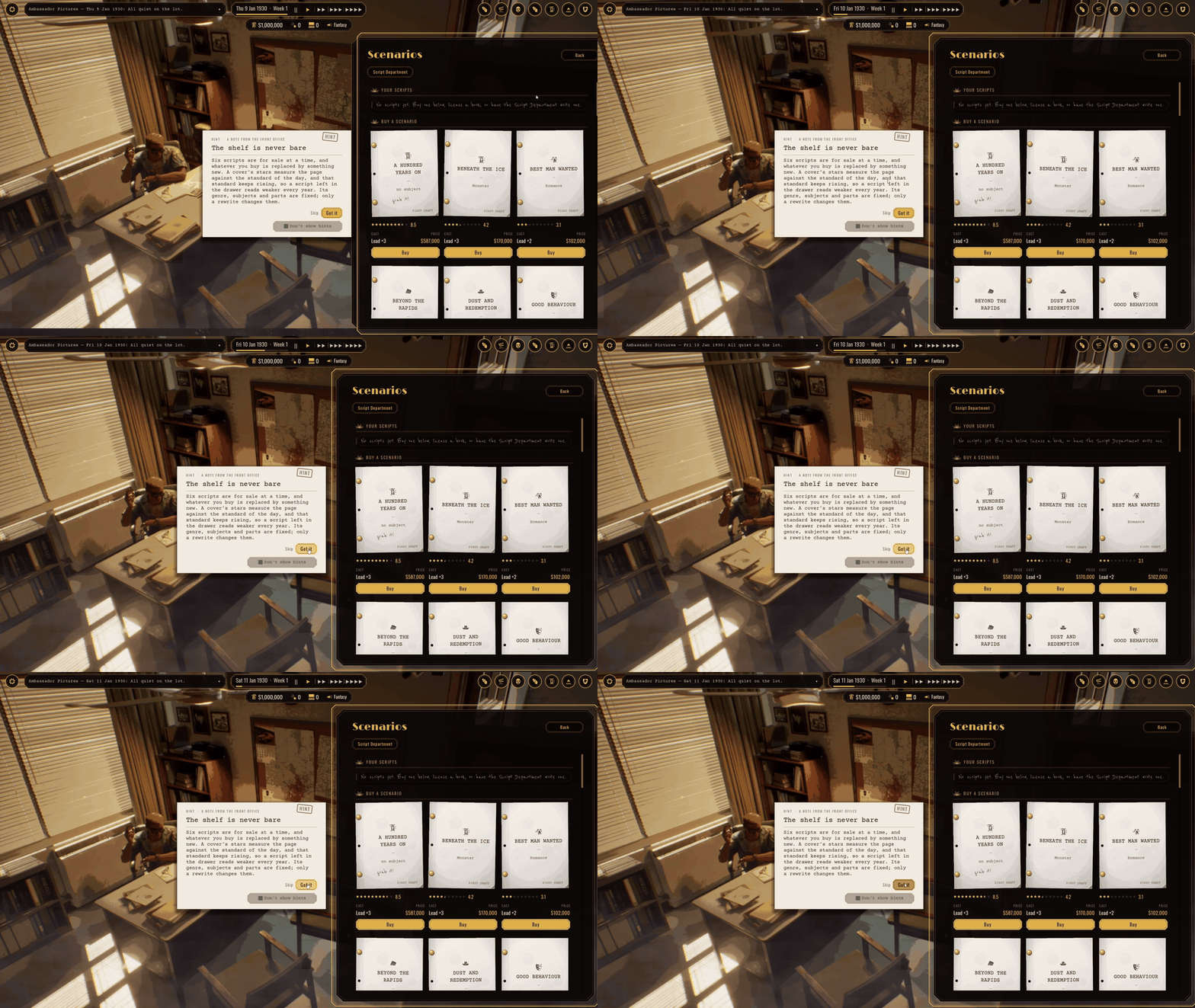
Staff writers in the Script Department and composers in the Music Department can now be trained on their own department page, the same way as in the Casting Office. Actors, directors, musicians and writers can all be trained now.
The training genre no longer snaps back to someone's best genre after every Train press.
The Casting Office has new profession and genre filters. Pick a genre and your roster is ranked by talent in it.
Research is slower and more expensive. One of you finished nearly the whole tree by 1936, so every subject now costs five times as much and takes three times as long. Choose what you research carefully.
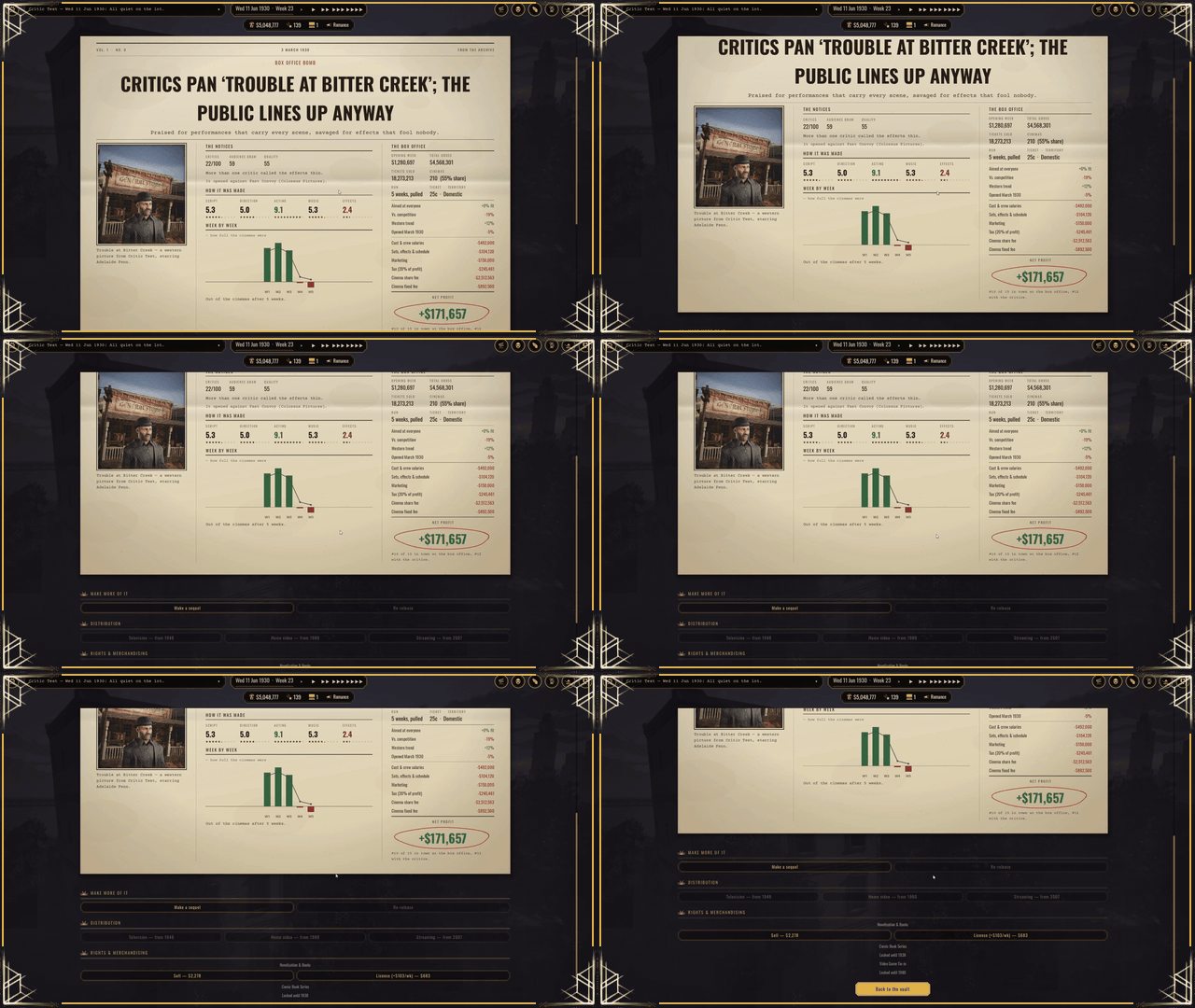
Quality of Life
Hints: once the tutorial is over, an optional set of notes explains the deeper systems (departments, research, finance, the town) the first time you run into each one. You can turn them on or off on the New Game screen and in Settings.
Release Day now opens at 200 cinemas, which is a starting point, not a recommendation. Use the sales office's forecast to set your width.
When you re-book a run, you can lock the cinema count in for a set number of weeks and pay a lower weekly fee.
You can top up the publicity campaign on any first release.
Events now arrive every three to eight weeks, so they no longer bunch up or disappear for long stretches.
Our immediate plans
More balance tweaks
More hints, and a tutorial that goes past your first picture
Day & Night cycle (visual)
Creating a wiki or a guide for the game mechanics
Improving the character portraits system, with more faces so fewer people share one
Adding more events, including event chains where one choice leads to the next
Creating more event videos
Making owned cinemas earn their keep