
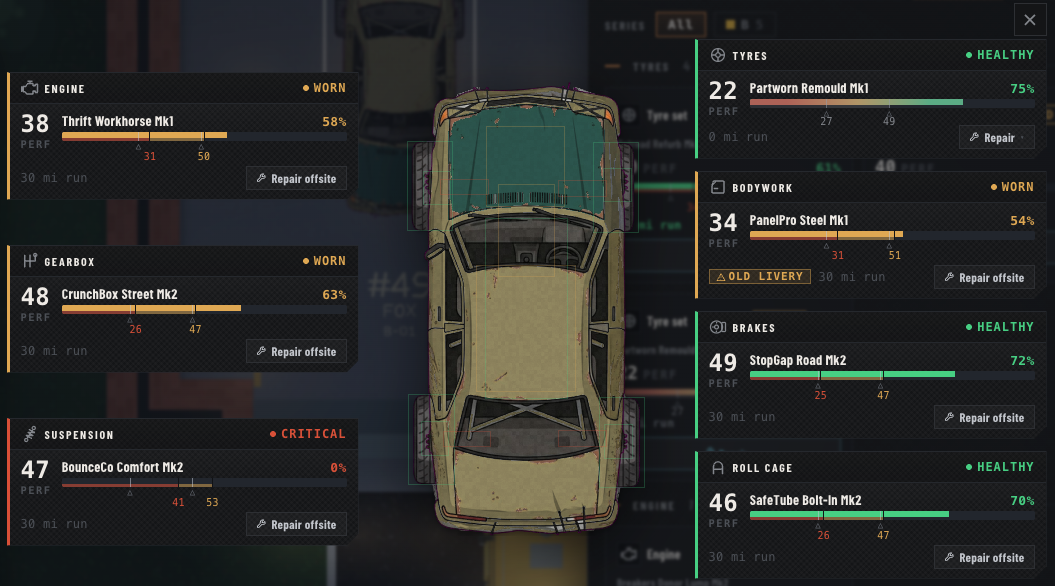
Every racecar is made up of parts. Each part is a physical object in the game. Every mile run and every knock are recorded in it's history and it can definitely get complicated when you're chasing peak performance or endurance.
Last guide we covered designing, manufacturing and testing parts for the cars in your factory. This time we're talking about the various stats that help you understand the parts you own whether you bought them brand new, from a second hand marketplace or made them in your factory.
Condition:
Condition represents a parts current state and how well it can deliver the performance the part offers. It's a useful stat to see how well in general a part will get through the next race.
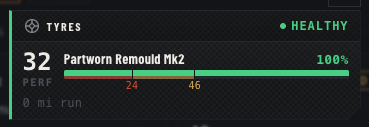
In the example below, the part on the top is in better condition than the part on the bottom. If you took them to a race, the top one would last longer. that bit is simple.

Durability, Endurance and Lifespan
Endurance
The Yellow number is the parts endurance, once the condition gets below this point, the part will start to lose performance, a little at first, then a lot.
Durability
The Red number is the parts durability, once the condition gets below this point, there's an increasingly high chance the part will fail meaning a crash is likely (Crashes can damage other parts too)
Lifespan
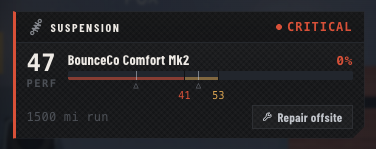
Lifespan is represented by miles run, repairs done and crashes experienced. The longer the part lives, the worse it's stats. As the lifespan of a part reduces the endurance and durability stats will creep up. This means a brand new part on day one, won't perform the same at the end of the season.
In the example above, the lifespan has pushed this part so hard the durability of this part is almost double the value when it was new (41%). This has double the chance of critical failure than when the part was new. It's condition at 0% means this is almost guaranteed to fail the moment it hits the circuit.
Second-hand marketplace parts
The marketplace is a fantastic place to stock up early in your career for some cheap bargains. But, you have no idea whether a part you bought was near-new or sent straight from a demolition derby.
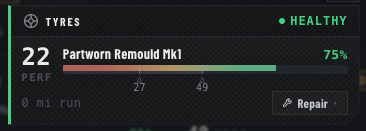
The actual Endurance or Durability markers won't be visible, the marks you'll see are the only known values a retailer would give you for a new version (the values in grey). The lifespan will also be unknown, you'll only know the miles you've put on it. The part shown below with a condition of 75% could have a safe margin to the retailers durability mark (27%)... or it could be already in that zone and failure is almost guaranteed
Repairs
All parts can be repaired, potentially restoring their Condition to 100% again.
Be aware tho, this won't improve Endurance, Durability or Lifespan and risks making those stats worse if the mechanic isn't high enough skilled.
Inhouse repairs.
The cheapest way is in your own factory. But that requires expensive machinery (in the build menu; Build > Repair) and takes time from your mechanics. It carries a risk your own mechanic will permanently damage the part, it also reduces the lifespan of the part more depending on the skill of the mechanic.
Offsite repairs.
Sending a part off to be fixed by a professional is expensive and time consuming - the company will pick up the part and take it back to their workshop to repair, potentially a several day turnaround. But the parts are far less likely to break during the repair and it's far more likely to repair to 100%.

Managing your inventory
As your factory grows you'll need to keep a close eye on your parts. Making decisions on when to repair or scrap a part becomes the difference between your racing team winning or losing but also between your business staying solvent or insolvent.
Pushing your parts too hard to save money could cost your team dearly, but it could also give you the breathing space you need to make wiser investments like better machines for repair or hiring better mechanics to save you those expensive off-site repairs.