
Major Mission Change
The mission film has been able to fly a convincing formation for a while now. Eighteen Fortresses hold a combat box, flak walks through it, ships fall out of it, terrain slides past underneath. What it could not do was tell you who any of it was happening to. Every silhouette looked the same, so when the running commentary said a ship was going down, there was no way to find her.
Worse, The bomb run never played.
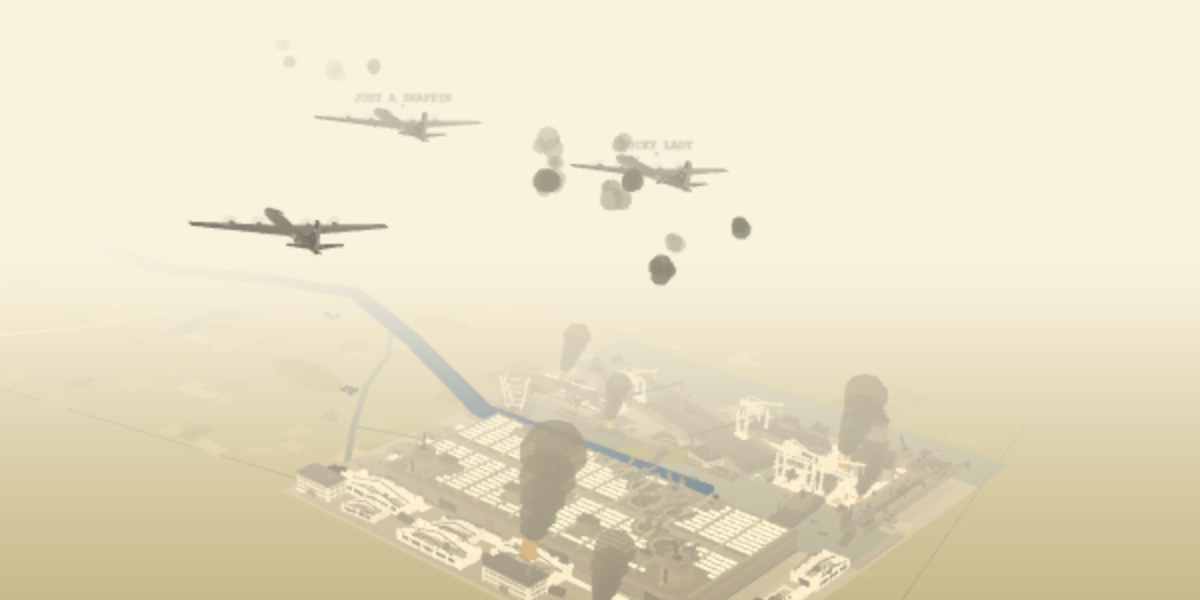
The bomb run plays now
Two separate faults were hiding it.
The first was a playback policy. The film holds when it reaches a decision and waits for you. When you pressed on and the record grew past that held beat, the theater treated the jump as a seek and cut straight to the aftermath. The release existed. It just never got shown. Pressing on now means roll the film rather than jump to now, so the release always plays through.
The second was scale. The bombs were there, at roughly one pixel each against the terrain. Now every surviving ship in the box drops a stick, bay doors open across the run in toward the aiming point, and the size of a falling bomb and an impact flash is pinned by a test rather than tuned by eye. A mark that reports a fact has to cover at least three pixels at the smallest window the game supports.
Names in the sky
Every ship the engine has named now carries that name in the air, lettered the way a photo interpreter would annotate a reconnaissance print: typewriter capitals, ink on paper, a leader tick to the aircraft. No floating health bars, no hovering game interface, nothing a draughtsman in 1943 could not have put on a chart.
Your own ship and the squadron leads are always lettered. Everything gets a name when the box is six ships or fewer, or when the commentary names someone.
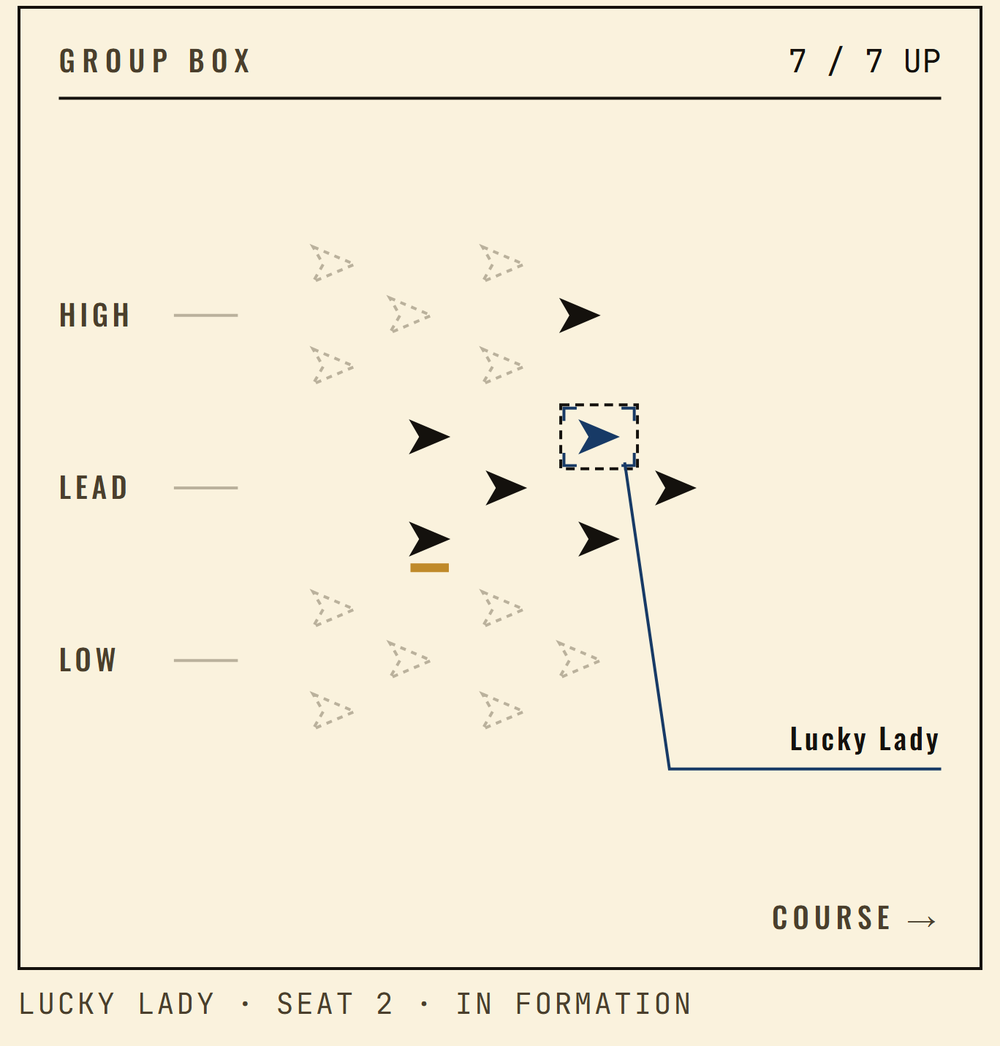
The group box answers questions
The group box panel used to be a poster. Now every seat is clickable and reachable by keyboard, and selecting one prints a status line beneath the plate: her name, her seat, the worst thing that has happened to her so far, and how many chutes were counted if she went down.
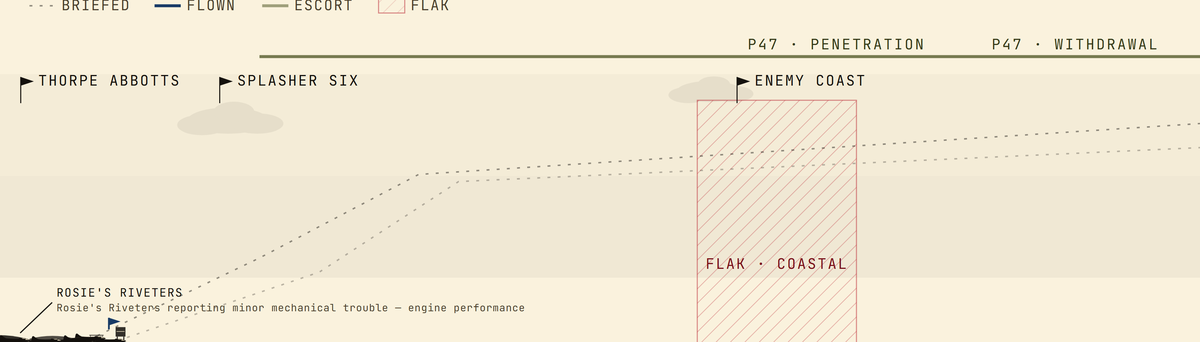
The record points at her
When a line of the running commentary names a ship, the film draws a leader line to her and types the first clause of that line beside it. Scrub back through the commentary and the tag follows the cursor. It appears only when the record actually names a ship.
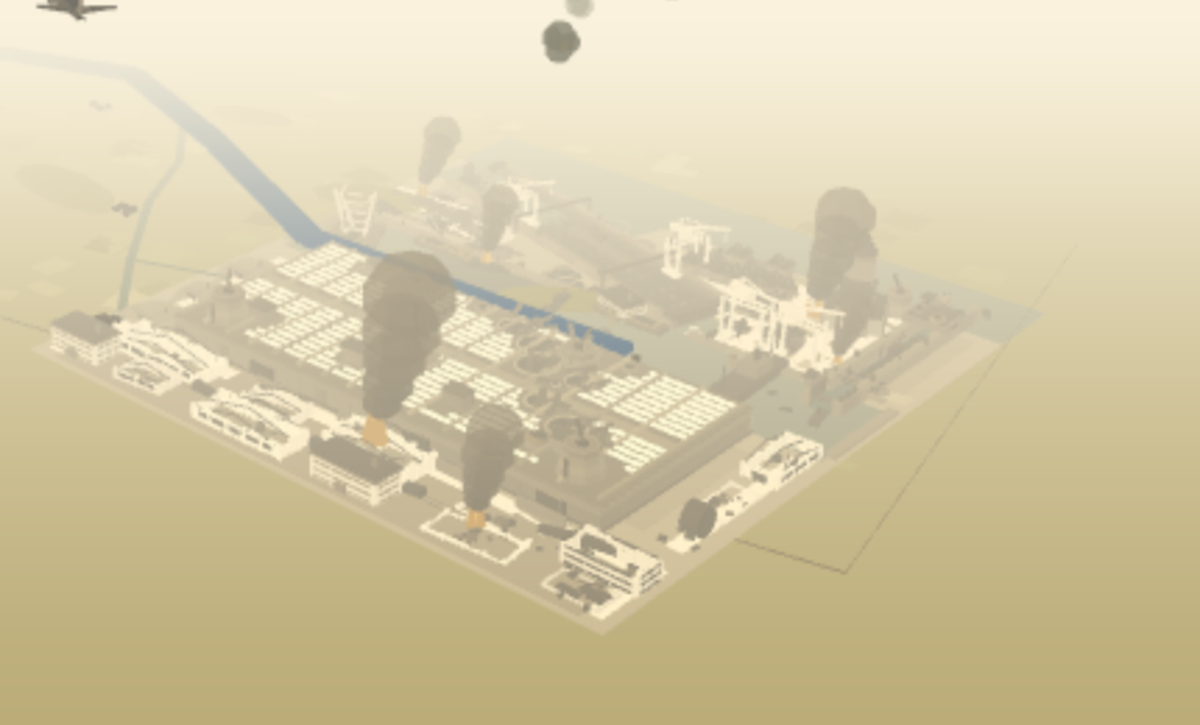
The catch that made all of it worth doing
Reviewing the whole page at both supported widths before merging, one measurement did not add up. The film band was being sized against the flat mission chart, and the three dimensional theater was overflowing several hundred pixels below it, underneath the commentary column. The formation was visible. The target and the bomb impacts were not at any window size, in the running game.
That is why this update has the shape it does. The theater now takes the band the layout actually gives it: a wide strip, the same world vertically, more of it across.
Also landed
Mission results are now scored on two independent axes: what the bombing did to the target, and what the raid cost you. They used to contaminate each other, so an expensive raid could be read back as a bad piece of bombing.
Every debrief now reports the cost in aircraft, morale and fatigue. That block used to appear only when the outcome was grim, which meant the game withheld information exactly when you most wanted it.
An accessibility pass across every screen, with a regression guard so it stays fixed.
Next
Ground crew and the base economy. Rest that actually lowers fatigue, a supply loop, and a ground echelon that reads straight.
Thanks for reading. If you want to follow along, the wishlist button is the most useful thing you can press.