An addendum to 0.11 – and most of it swims: three new koi varieties turn variety into a decision for the first time, because from now on they are no longer equally common and equally valuable. Plus three small things that were in the way, and three bugs.
Three new koi varieties: the Utsuri — and rarity as a breeding goal
Kohaku, Showa and Tancho used to be equally common and equally valuable; variety was pure looks. With the Utsuri it gains two axes: how often it drops and what it pays.
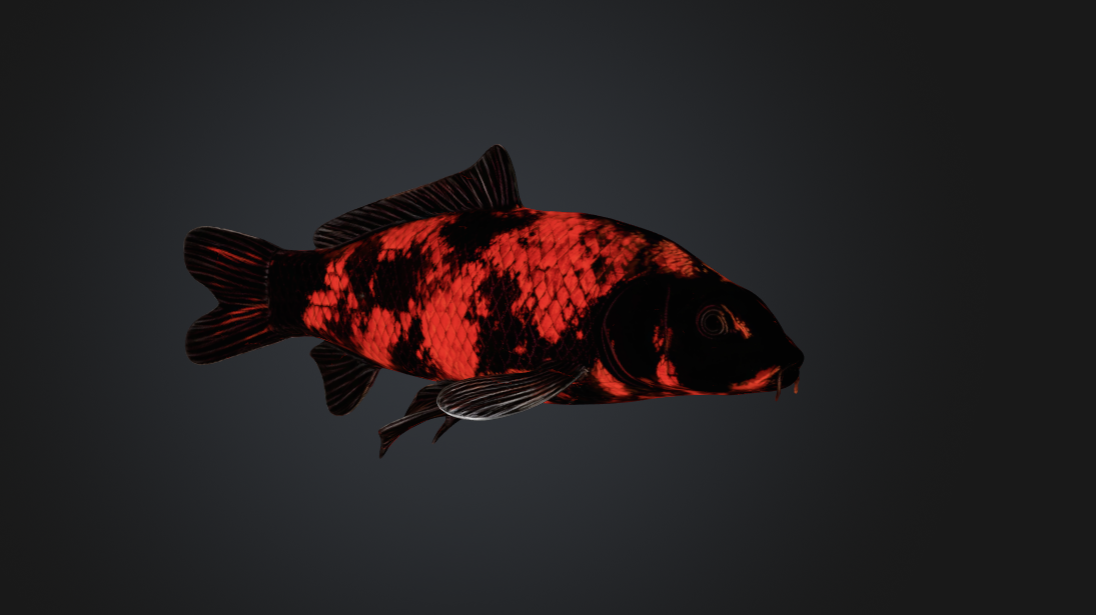
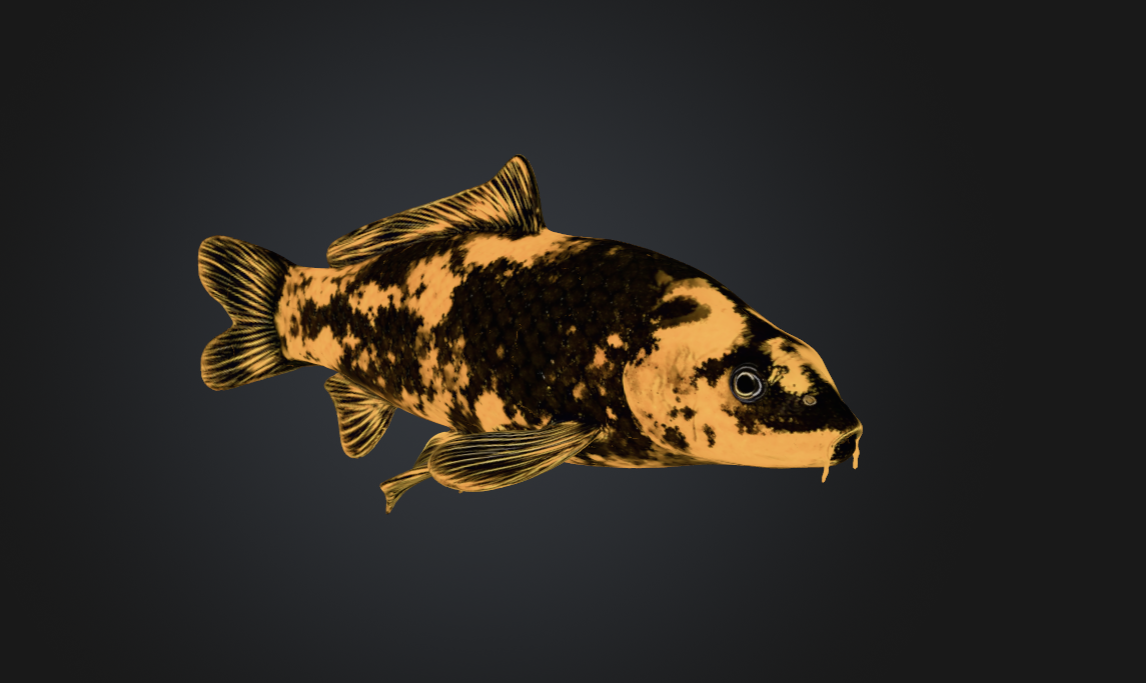
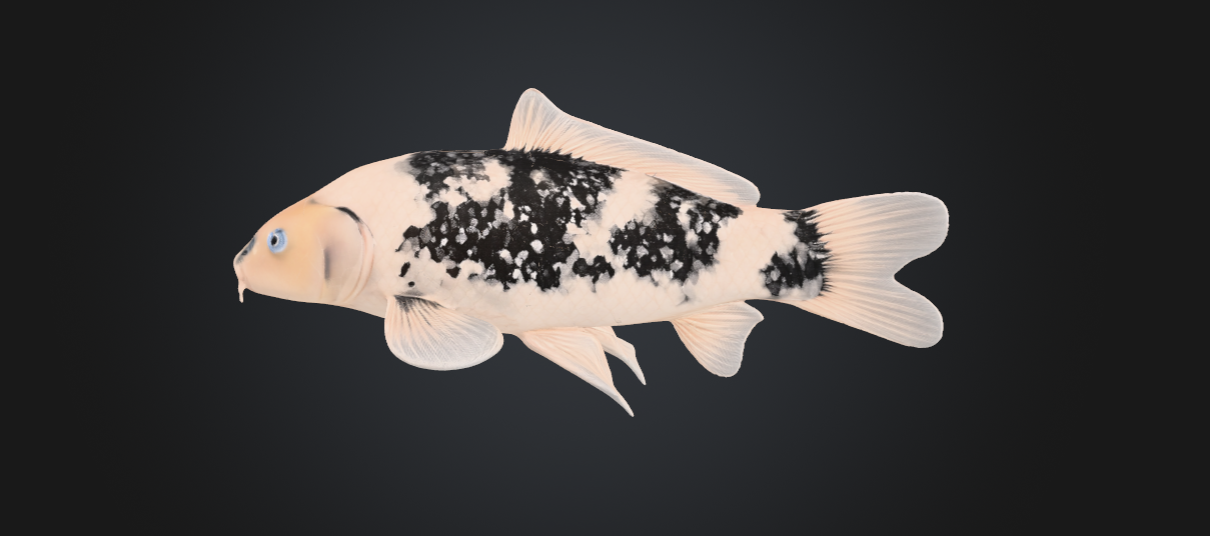
Shiro Utsuri (white on black), Hi Utsuri (red on black), Ki Utsuri (yellow on black) — each with its own model, in the tank, in the tub and in the transport bag.
Bought juveniles now follow a rarity table. The three classics stay the rule (20 % each), plus Shiro Utsuri 26 %, Hi Utsuri 10 %, Ki Utsuri 4 % — within the Utsuri that is 65 / 25 / 10.
Rarer means dearer. A Shiro Utsuri is worth 1.15×, a Hi Utsuri 1.7×, a Ki Utsuri 2.5×. A perfect Ki Utsuri jumbo is therefore €1500 instead of €600; a five-star Ki brings roughly €1000 to €1500 depending on size.
The Utsuri are a closed breeding group. Two Utsuri produce Utsuri without exception — the only line in the game you can keep pure.
Colour favours the parents, but no litter is ever single-coloured. Two Shiro give about 92 % Shiro, the rest splits between Hi and Ki; from six fry upwards every one of the three colours is guaranteed to appear. That admixture follows trade rarity — mass breeding is no cheap route to a Ki Utsuri.
Rarity is shown where you decide: in the inspection, on the fish card and in the culling grid (tooltip). Variety is the only trait visible on a juvenile from day one — and since the Utsuri the only reason to keep one before any value shows.
Existing saves load unchanged. Kohaku, Showa and Tancho keep their price to the cent; the extension only reaches upwards.
Small things that were in the way
The golden middle acknowledges itself. Hit the narrow bonus band while pumping and you hear a short, quiet two-note chime as you release. Until now you only found out at settlement whether you had hit it – and by then you no longer knew what you had done differently. The chime comes on release, not when you pass through the band: it confirms your decision, it does not aim for you.
Putting a fish back actually lands. After stripping you stand at the workbench a few metres from the tank – and the gesture barely triggered, because the crosshair had to hit a flat water surface at 78 cm. From that distance six degrees of pitch were left. Now the whole tank counts as the target (34 degrees), and while you hold a fish the spawn brush steps aside as a target – you do not want to touch it at that moment anyway. With free hands it is as reachable as before.
Trout can be taken out of your stock. New on the fish card: a spent hen or a runt no longer has to go the long way round via a customer. There is no payment for it – so the button asks twice, and the card tells you beforehand what happens. Locked fish, listed fish and fish promised to an order stay untouchable and say why. For koi the path stays where it was, in the inspection.
Fixed
Stripped parents produced another brood afterwards. Sedating and stripping only work in the spawn tank – and that is exactly where the automatic pairing takes any mature pair. The recovery pause held that off for six days, barely one brood; the moment it was through, it started again. One handling turned into two broods. Stripped fish are now out of the automatic pairing until you move them – and the spawn tank panel says so. An untouched pair still spawns on its own, and stripping itself is unchanged.
The feed shop kept showing "10 kg" and "€4.00" after the upgrade. €9.00 or €13.50 were being charged all along – the till always calculated correctly, only the card did not follow. It sat on the values from game start and refreshed only when you touched the order quantity.
The water panel shrank when you bought the biofilter. The filter tier's name sat in a field meant for trend arrows and therefore drove the window width. "Biofilter" is shorter than "Doppelkammer-Filter" – the window collapsed by 96 pixels and every bar with it. It now has a fixed width that fits every tier.
Fish management: names, colour tags, a sales lock and a stud book
Until now your stock was anonymous. Keep forty fish across two tanks and your breeder is just a number in a row – and it goes out with the next order by accident. Every fish now has a lasting identity.
The fish card. Click a row on the tank's stock board (or "Fish card" in the koi inspection) to see everything about that one fish – with three marks you set yourself.
Colour tags. Eight colours, each with a name. A tagged fish then carries a coloured stripe in every list: stock board, inspection, netting panel. Pure recognition, no effect on the simulation.
Sales lock. A padlock per fish. Locked fish are skipped by every exit: customer orders, Aquamart24, packing, the seine net, processing, the show hall sale and culling. Moving, pairing and stripping stay possible on purpose – you lock a fish because you breed with it.
The seine net passes locked fish by. That is what the lock is for: one haul takes half the tank, and your best hen should not be in it.
A tub holding a locked fish fulfils no order – the customer takes the whole tub, not just the matching fish. The tub sign, the due warning and the order detail view say so in plain words before a deadline blows.
Names for koi. Up to 24 characters, given on the fish card. The name then shows everywhere the fish appears – including in the ancestry of its offspring.
New on the office PC: the stud book. Every koi with a permanent place is listed, including the sold and the dead. For each one: the pedigree across any number of generations as an indented chain, its offspring, its siblings. Every row is clickable – the book is a browser through your breeding lines.
A fish appearing twice in one pedigree means the line has narrowed. That is not a display glitch but the point: a pedigree counts the paths to the ancestors.
Existing saves load unchanged. No fish is locked, tagged or named; all living koi enter the book on load and form its root – the tree grows on from there.