
Curiosities from the Lower Lockers
A few small things currently aboard, excerpted from The Pilot Book
Sour Lemon Balance
Found: Bought from a bathhouse cashier who used it to settle arguments over towels.
Known: A glazed ceramic balance with limewood arms. One pan is permanently stained yellow from preserved lemons.
History: Weighed medicine. Weighed gunpowder. Weighed dates during the captain’s confectionery partnership. Partnership ended when the captain discovered the cook had been using the official weights for backgammon stakes.
Velvet Parasite
Found: Bought from a traveling haberdasher who claimed it cured melancholy.
Known: A velvet-lined insect cage with mesh shutters and a detachable feeding tray.
History: Housed silk moths during the captain’s textile venture. Housed medicinal leeches. Housed counterfeit pearls while the captain posed as a jeweler. Recently houses dried herbs because nothing alive survives our captain’s bookkeeping.
Black Sun Fuse Cabinet
Known: A narrow cabinet divided into GOOD, DOUBTFUL, and OFFERED.
History: GOOD goes to service. DOUBTFUL goes to drills. OFFERED contains fuses too suspicious to trust and too expensive to throw away. They are reserved until the end of the season, then sold in bulk to shore contractors who do not share the superstition.
Moon-Shadow Dial
Found: Made by a clockmaker who disliked clocks.
Known: A pierced brass plate mounted before a small lamp. Turning the outer ring changes the projected scene from crescent to courtyard, bedchamber, clinic doorway, and finally breakfast table.
History: Originally sold as a marriage gift. It became popular among unmarried officers, then among married ones, then among everyone except clockmakers.
Herat Wall of Flora
Found: Copied from a physician’s courtyard fresco onto glazed tiles.
Known: Twenty-eight stylized plants painted with their trade names, seasons, and lawful uses. Several reproductive remedies appear beside cough syrups and stomach bitters without special marking.
History: A censor once demanded that the abortive plants be removed. The ship’s surgeon painted the censor’s hemorrhoid remedy beside them and sent the revised panel back for approval. No reply survives.
Blanket from Orvenne
Found: A wool blanket made in Orvenne. The yarn is loosely spun, and repeated brushing raises a dense layer of fine nap that swallows the palm when stroked. Dry weather makes it wonderfully prone to static. Tiny blue-white sparks skitter through the wool, so touching the wall before reaching for a door latch is considered common sense.
Known: The label bears the name of La Veuve Joyeuse, an old Orvenne household-goods company.
History: Local legend says Saint Safwan once took a ferry past the Orvenne coast and dropped his La Veuve Joyeuse into the sea. Soon afterward, a gigantic clam rose from the water, opened its shell, and asked, “Safwan. Did you lose the golden blanket, the silver blanket, or this La Veuve Joyeuse?”
Safwan pointed to the last. “That one. Gold is too heavy, silver is too cold, and mine needs washing.” The clam admired his honesty and stuffed all three blankets into his arms.
Safwan sold the golden blanket to repair the ferry, donated the silver blanket to a small chapel by the harbor, and went on sleeping under his own wool blanket. Orvenne children's versions tend to end at this point.
Two months later, the chapel discovered that its silver blanket had begun to lose color. The supposed silver thread was actually a secretion, and once damp it smelled strongly enough to drive prayer from the room. The clergy found Safwan and explained the problem. He listened.
“Can we find the clam?”
The La Veuve Joyeuse trademark depicts Saint Safwan riding it. Some crew members bury a hand in the wool, rub for a while, then touch whoever happens to be nearby.
Shipboard: Soft and pleasant in a dry cabin, though occasional static discharges are inevitable.
Ablahshikar Double Blanket
Found: Two layers of wool are woven at the same time. At selected parts of the design, the layers exchange positions, so either face shows a complete pattern. One side displays dark grey and dull yellow squares, stepped motifs and interlocking forms; turn it over and dull yellow occupies the places previously occupied by dark grey.
Known: Since either face can go upward, nobody has ever reached agreement about which side is the front. A hole is patched from one face and the needle passes through both layers. Years later, damage appears on the opposite face and receives a patch of its own. A burnt section may acquire double cloth cut from an unrelated rug whose pattern matches nothing nearby. More repairs accumulate from that patch.
History: After enough years, parts of the textile no longer correspond correctly when reversed. Someone once spent an entire night tracing patches, stitches, and inverted motifs backward through the blanket's construction. By morning, they announced that the original warp and weft had probably vanished altogether. The person beside them declared that, in that case, the blanket ought to count as communal property. A cup was thrown before the discussion could develop further.
Later, somebody asked which part of the blanket could possibly be original by this point. “Lice?” came the answer.
The blanket was boiled that night. Debate over whether it remained the same blanket consequently moved to the medical bay, while the blanket continued covering the instigator's legs.
◆◇◆◇◆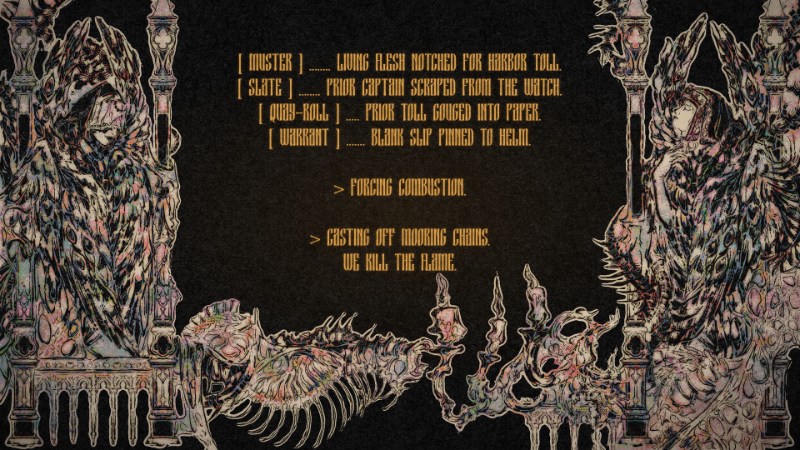
〖IGNITION PAGE VISUAL LEAK〗
◆◇◆◇◆
Wan and strait is the Candle Sea. Outcasts drown there, and condemned souls; of ten scarce one rises living, and he rises blind or sore. Of late, from dross and cast-off hulls, we drew a thrall called Mehrdad, B-031 upon the crew-roll. Dull was their nature, stubborn their temper. Call them, and answer comes none.
Hard is ship-law. The hand that earns no keep is broken down for remnants. Engine-hands were sorely few, so we set them to tend the fire-veins. Then a perverse fancy took me. I combed his hair and smoothed it with my hand. Wide they stared, and a little from me they shrank. “What ails thee to do this? There is no sense in thee...”
All flesh drifts; all flesh founders. Some are plunged in water for their hubris is high; some have breath withheld to set their labor aright. Rule a ship by torment, they know the fear of it. Dote upon the maimed in secret, and none can name the poison.
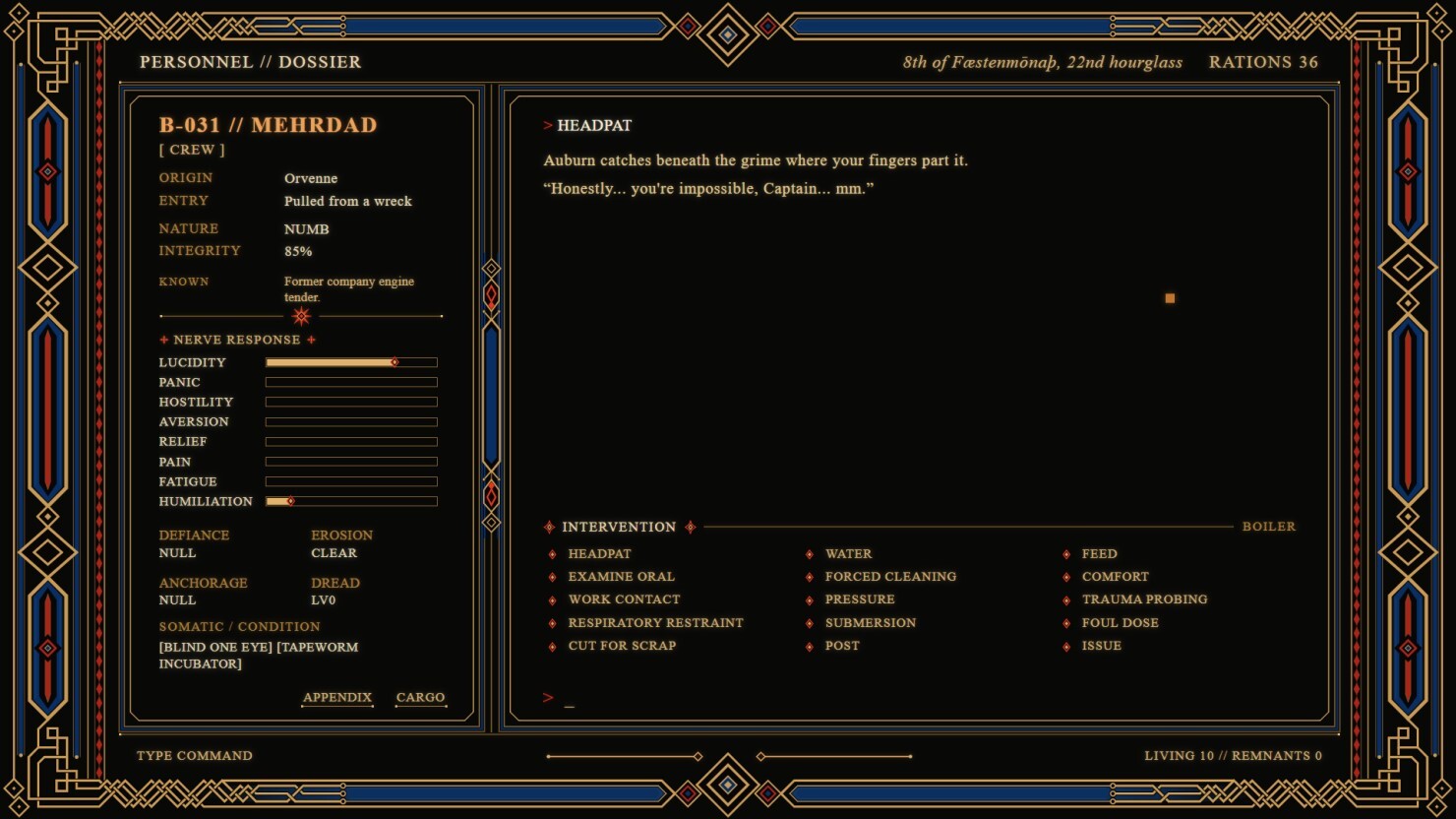
◆◇◆◇◆
In the long age when humanity had yet to invent “sitting down to work,” everybody simply lay in the mud. You can see the posture in the trilobites routinely sighted at seafood markets, or in the developer carcass that has just spent four straight days drawing gothic ribs. Gravity presses your organs evenly toward the center of the Earth, while the ground supplies an equally unsympathetic reaction force. Many historians consider the chair the worst technological regression of the Renaissance, since it deprived humanity of the right to crack the back of the skull properly against a wooden floor and drain excess code from the brain pulp.
Around 4000 BC, the Sumerians of Mesopotamia came up with the wheel to transport barley and prove to everybody nearby that circles really do roll more easily than squares. Around the same period, the ancient Egyptians began messing around with chairs. The core purpose of this arrogant technology was to lift the noble human buttocks thirty centimeters above the mud so everybody could pretend they did not belong to the earth. Far deeper in prehistory, when Homo sapiens had yet to work out how to cook raw beef with fire, some exhausted Neanderthal had reached the far more advanced solution of dropping flat onto the ground. The Egyptians later built pyramids into the sky and wrapped pharaohs into long parcels, yet even Tutankhamun himself, after a heroic amount of embalming, ended up lying flat at the bottom of a stone sarcophagus.
This is where the traditional fraud surrounding the image of the creator comes in. People finish a horror manga full of human heads twisted into spirals and assume the artist lives on raw fingernails and bats. In reality, Mr. Ito is a mild-mannered citizen who makes squeaky little voices at his two cats. A stranger opening a game packed wall to wall with barbs and maritime bureaucratic rulings tends to picture its developer as some humanoid slug hermit living year-round in a damp cellar, draped in sulfur-stained robes and drawing with a bone dipped in ink.
If you happen to be that author, certain things become familiar. Sharp-eyed professional pickpockets at subway gates scan the whole passage, yet their gaze slides away from particular patches of shadow. Even the bracelet hustlers who can slip red-and-green braided cord around a passerby’s wrist without a sound will take a synchronized half-step back as they brush past you, then tuck the merchandise into a sleeve. At a rainy alley corner, an exhausted old chain-smoker may wander over, snap their fingers and ask you for a light, despite the fact that you have never smoked a cigarette in your life.
For centuries, humanity has invented elaborate medical treatments for collapse: pouring ice water over patients’ heads, forcing them into tedious social gatherings, providing gas-lift desks and lumbar support cushions. None of them help much after an author spends four straight days drawing dense etched linework at a screen. Their intelligence rapidly and irreversibly degrades until even a wooden stool from second-millennium-BC Babylon becomes incomprehensible. They regress to the Stone Age and spread themselves flat across RMB 200-per-square-meter laminate flooring.
The author must locate an arthropod stuffed with premium polyester fiber and clamp it over their face. The furry tail of this silicon-based organism wraps considerately around their forehead, blocking most of the visual field available to a carbon-based organism and ensuring that no painful schedule or shader error can reach the eyes. It is on backwards. Nobody minds. Parasites can also become confused when confronted with a brain that has completely crashed.
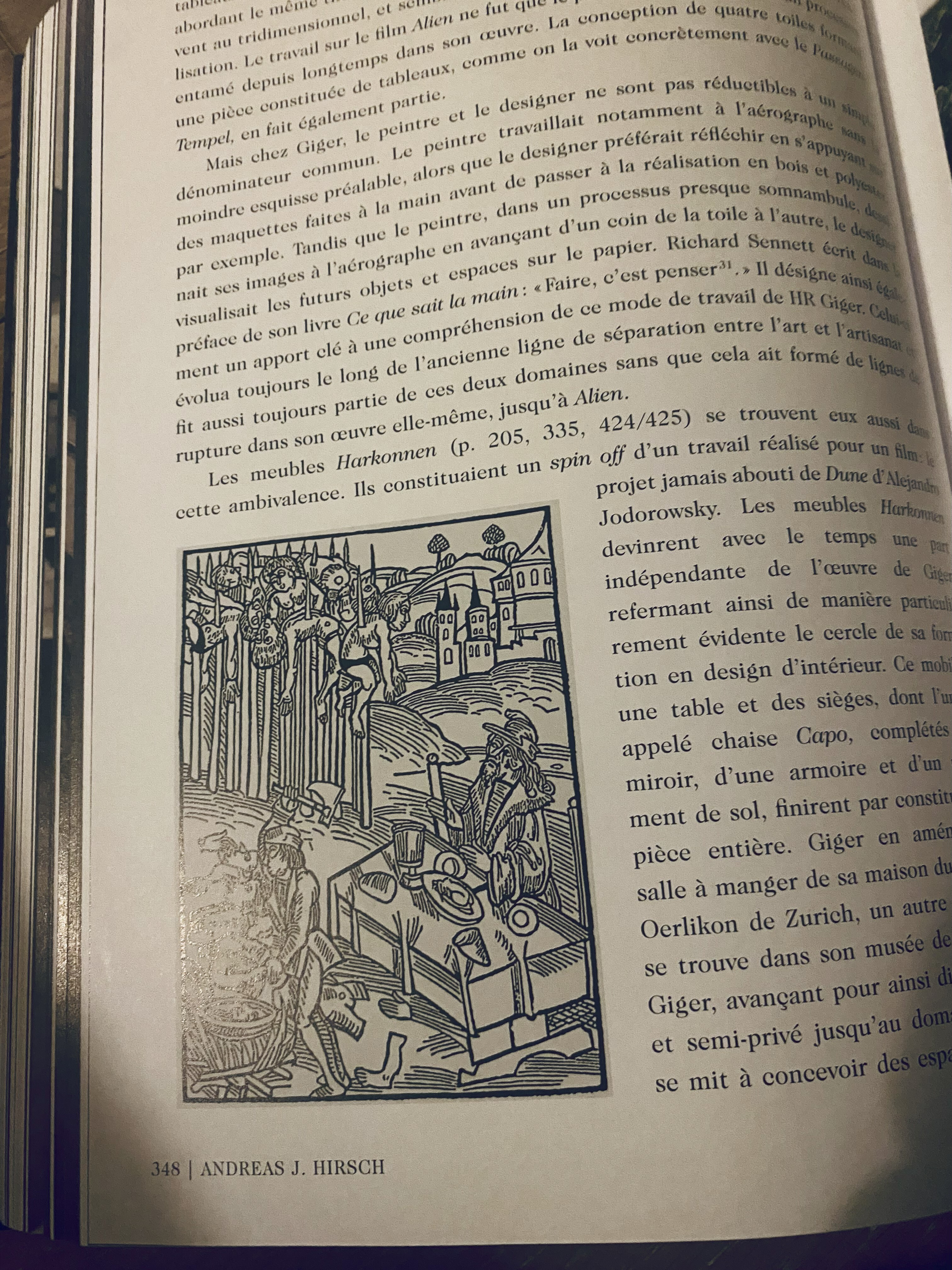
A hefty artbook by the late H.R. Giger must lie open within reach. Turning the pages of an art book is a standard ritual for restoring sanity. Craftsmen have been smearing acid-resistant wax over copper plates to etch devils since the eighteenth century.
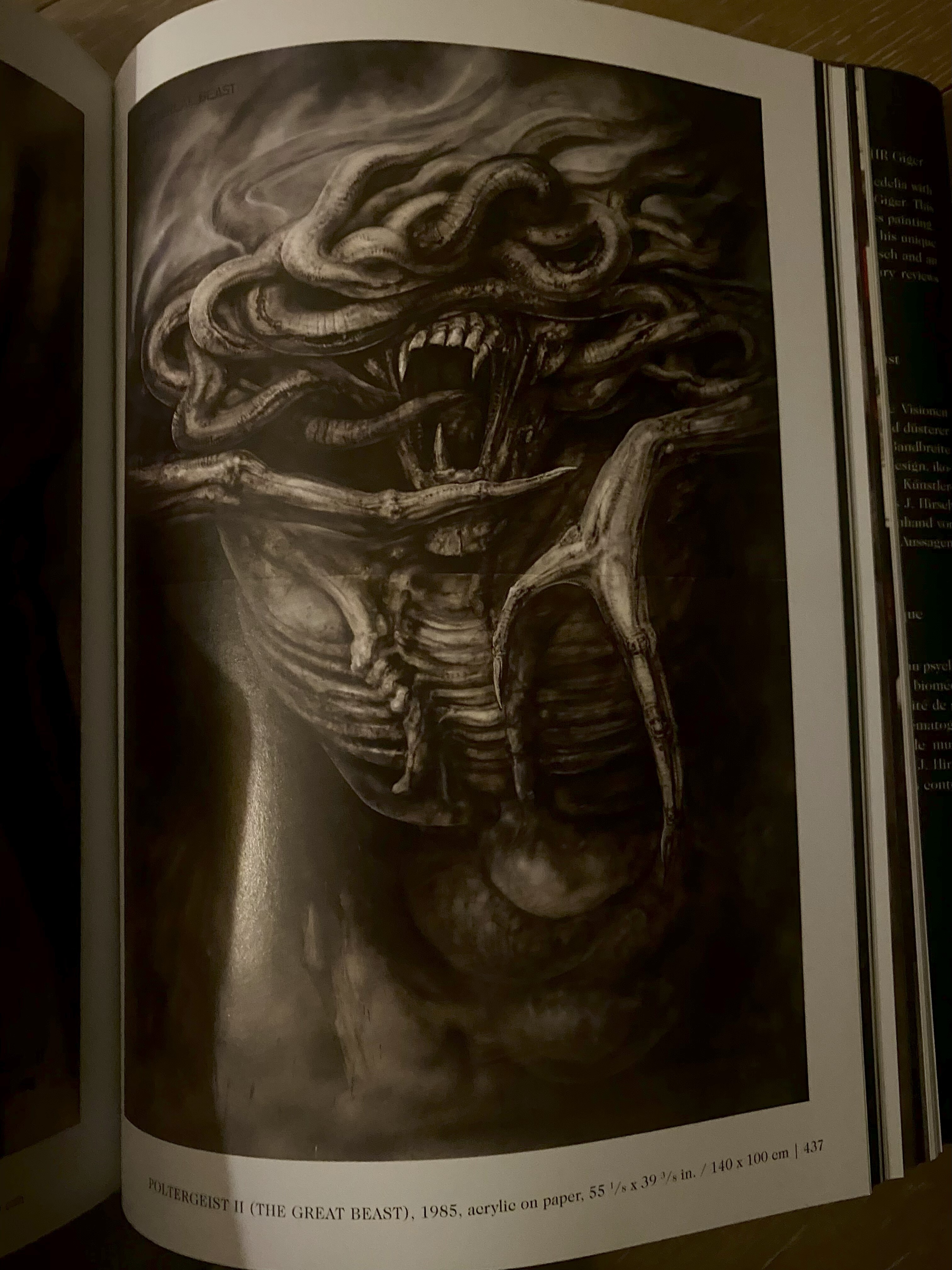
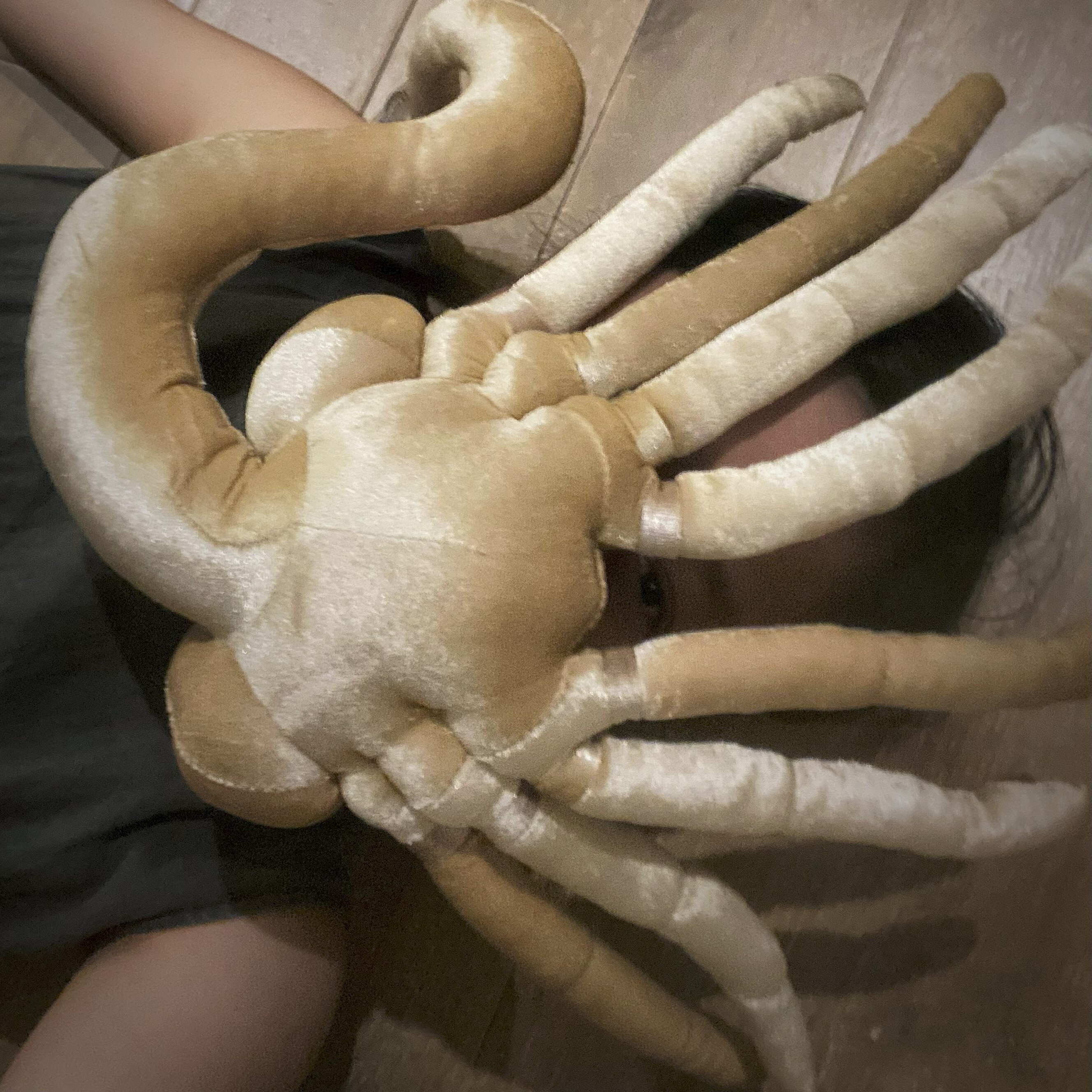
Far back in the ancient world, Switzerland produced a gentleman named H.R. Giger. His daily work was to sit in an expensive chair and consider how human nightmares, metal condenser tubes and organs unfit for disclosure might best be welded together. That selfless artistic labor went on to inspire generations of neurasthenic authors. According to the instructions Giger left behind, the only thing preventing the brain from melting into hot chocolate is a flesh-colored cushion with eight legs clamped over the facial organs.
You lie on the floor, face sealed by an alien arthropod, anatomical atlas in hand, and feel unprecedented peace and health. After roughly twenty minutes of shock, the host recovers faint neural reflexes.
Neither the Sumerian wheel nor the Egyptian chair has managed to scrape me off this floor. To protect what remains of my fragile organic sanity, I have become a Czech carp waiting to be served at Christmas dinner, although Christmas is three months away. Anyone planning to make me get up and work should bring two slices of bread and place one on either side of my head, thereby completing a proper idiot sandwich.
Yesterday, while facing the fourteenth viewport bug that refused to render properly, my brain suddenly fired a message of extraordinary holiness at me:
“Hey. Why don’t you go get an amateur radio operator license right now?”
The reasoning sounded impeccable and full of academic devotion. If I want to record the purest shortwave hiss and interference for the game with my own hands, surely the developer should begin immediately by memorizing radio regulations, studying Morse code and learning antenna gain.
I came within a hair of sitting down amid copperplate drafts and longswords and hand-soldering a crystal radio.
The remaining trace of sanity, assisted by fear of deadlines, cut the neural circuit in time. I locked the impulse into the post-demo prize list. Until you have successfully played the demo, any attempt to call extraterrestrial civilizations or radio relay stations will be executed on the spot by the military police in the lower hold for treasonous collaboration.
◆◇◆◇◆
Deep inside this subtropical ecosystem, sunless year-round and saturated with blue-light radiation and the roar of air-conditioning, lives a rare and easily startled invertebrate primate variant. Deadlock is the coldest kind of stagnation in the digital world. No matter how long you stir-fry and stew things at the keyboard, the same stubborn error buoy hangs in the void, neither boiling nor degrading.
At such moments, a temperature-controlled soldering iron sleeping in the corner of a drawer becomes the most private comfort available after midnight. To a hominid driven close to violence by abstract logic, the soldering iron becomes irresistibly attractive. Plug it in. Ninety seconds later, the alloy tip reaches 350 degrees Celsius. Rosin releases its bitter-sweet scorched smell. The silvery core slumps lazily under the heat and melts into a scalding bead with the gleam of liquid mercury. A pleasurable pop. A wisp of blue smoke rises between the fingers. A full, round solder joint with the shallow curved shine of a pearl bites onto the green solder mask. Thick without sagging, juicy without spilling, like a scallop seared almost through on a hot plate.
The tip sweeps lightly with a little massage, and molten metal runs along the trace. Current rushes through, then the pads in front of you are spotless. Even the functional audio jack at the corner of the desk has been plated again and again until it wears an absurdly fat silver shell.
And now, dear viewers, the hidden camera records a dangerous failure of predation. Nature is cruelest at the instant the hallucination falls apart. A sharp pain up the back of the neck, earned by hours in a twisted sitting posture, spanks the creature out of its steam-engine mechanic fantasy. Solder cannot repair a logical deadlock. It has to seize the keyboard and ram its own body into the unclosed code gate like a sperm whale stranded in shallow water.
The specimen possesses an instinct for environmental camouflage. Faced with obstruction at a logic gate, its clawed limbs secrete a craving for solder alloy. If none can be found, the animal emits a sustained sigh and resumes injecting sacred pain into the host code. When startled or severely exhausted, it dehydrates rapidly and mimics a hardwood-floor fossil covered in a many-legged plush xenorganism, while confirming that the Earth’s mantle is safe and sound. Very few wild individuals are known worldwide. If an exhausted specimen is encountered, avoid snatching away the stylus while it bares its teeth at a screen. Approach from the blind side and unfold a faux-cashmere blanket. The blanket cuts off the dopamine stampede that would send it toward the soldering iron and a circuit board.
◆◇◆◇◆
For the soundtrack, I have collected a batch of sound-producing blunt instruments that look better suited to carrying out private executions somewhere along the road to the Crusades:
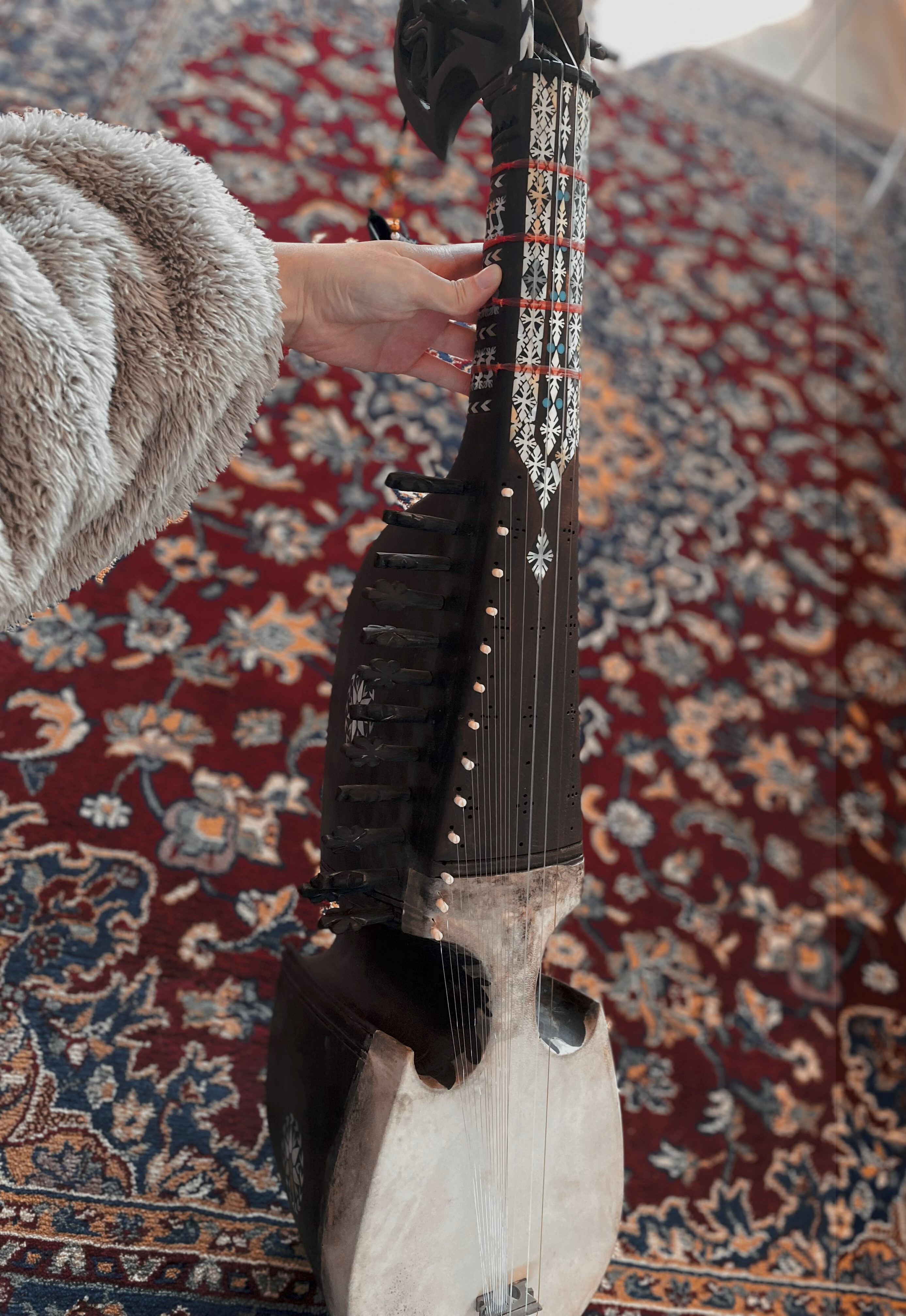
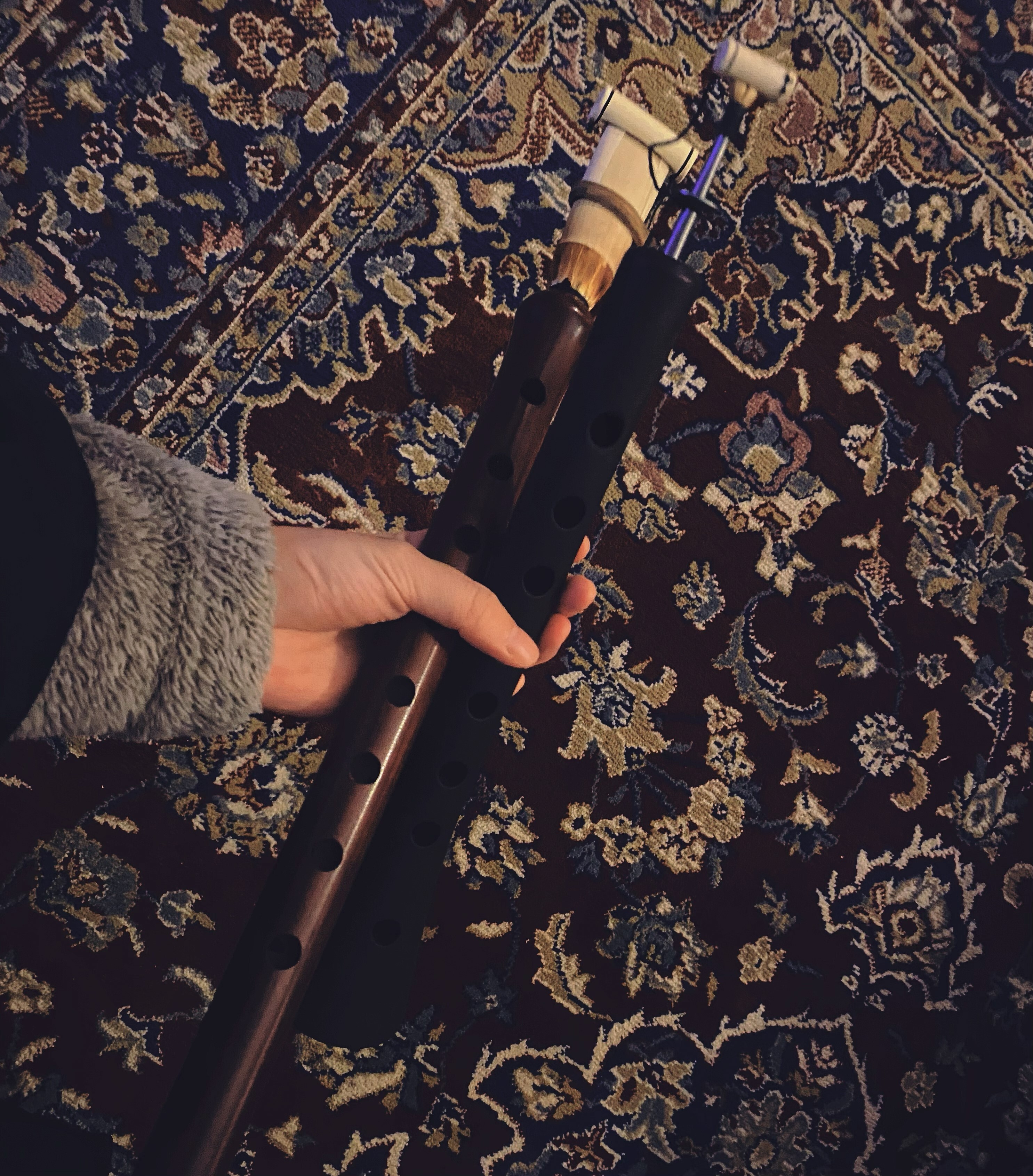
The duduk is a woodwind powered mainly by turning the player’s face aubergine.
It is made from hollowed apricot wood and fitted with a double reed large enough to dislocate the jaw. It tests the pressure tolerance of the player’s pulmonary capillaries and whether they can make a sobbing sound like a shepherd mourning a flock of dehydrated sheep without passing out. The moment it goes into a recording, room humidity drops by five percentage points.
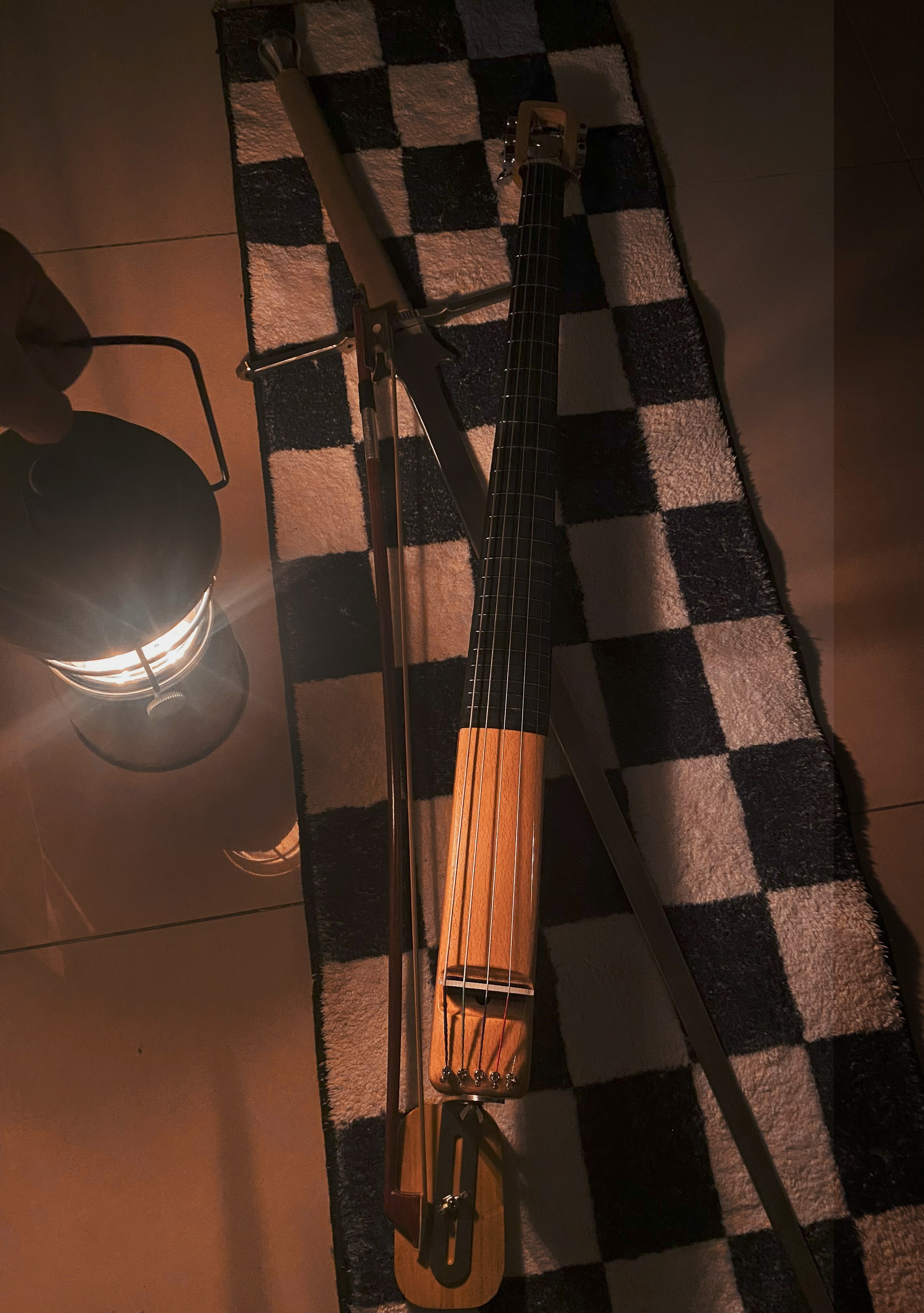
An electric cello is a crowbar fitted with strings. Naturally, it leans against a longsword so the musician, in this case me, can resolve a wrong note through knightly combat.
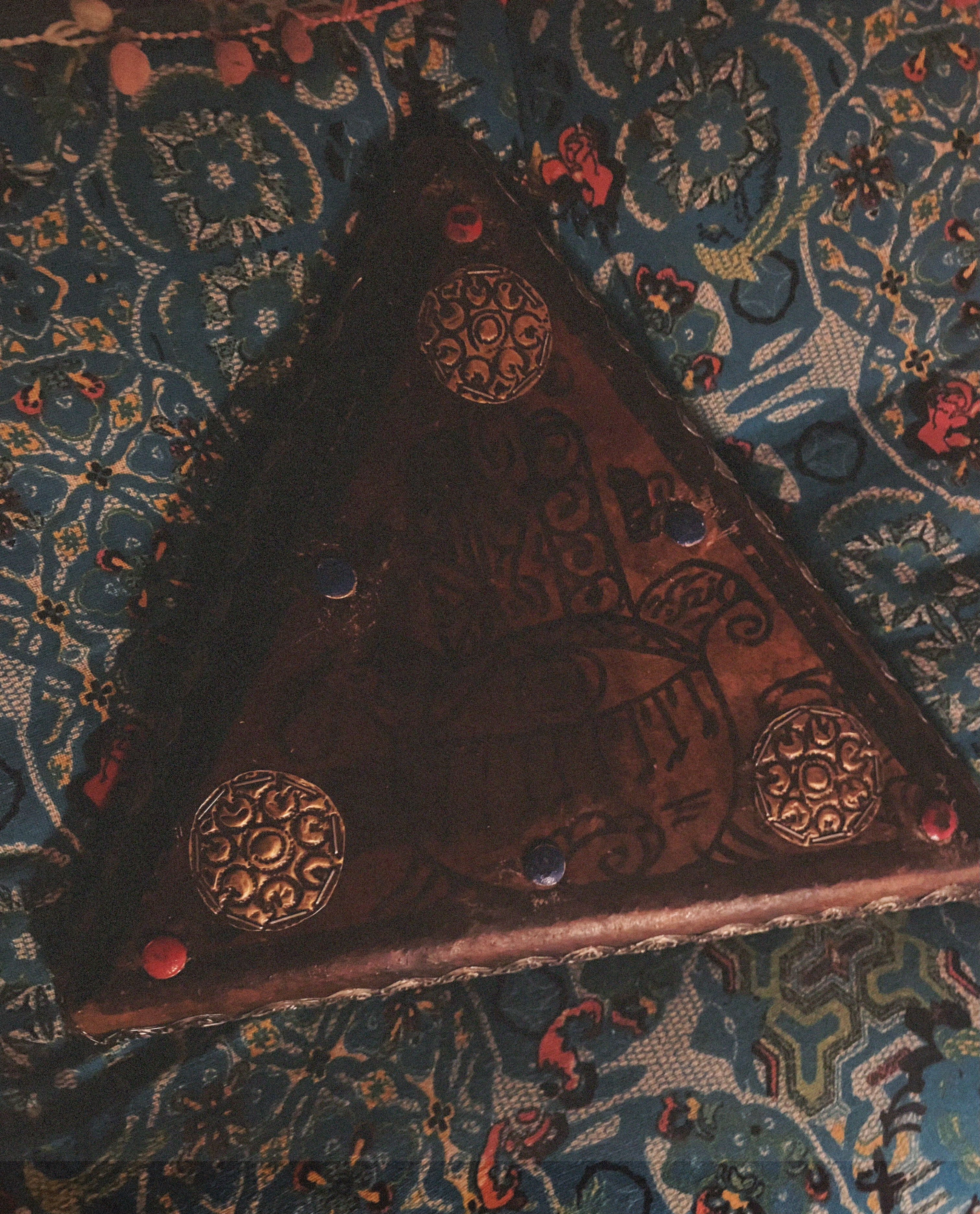
In acoustical engineering, an asymmetrical triangular cavity means sound reflecting inside follows almost no regular pattern. This drum is plainly trying to break with the laws of symmetry in three-dimensional space. Heavy rivets and medallion reliefs wrap around the body.
*Normal human understanding of percussion stops at stretching a skin over a round barrel, because most cross-sections of things that roll are round, and circular forms distribute force evenly enough that a drummer does not get confused every time the stick lands near the rim.