
The most important change is cutting off 88.88% of a regular baseball game. 24 of the usual 27 outs. Put quite simple, baseball takes a while. I wanted a snappy game with 45-60 minute runs. A normal baseball match is maybe halfway done in that time, and I wanted the player to go through at least half a dozen of those. So I had to make that pretty big cut to start off with.
That naturally led to not having the player go through the defensive part of their inning. In other words, cutting off pitching and fielding entirely on the player's side. While there's some baseball enjoyers out there that love watching those, it's generally less fun to watch your team defend than it is to see them bat.
That also let me put my full focus and attention on the batting side of the game, and keep pitchers as The Enemy To Beat. I briefly toyed with a design that would've had the player pitch too, with essentially the same setup as the current one for batters, but I abandoned it.
Around half a year ago, I played a game called Pinch Hitters by a Megacrit developer. It's free and very fun, I recommend it. I shamelessly stole the idea of a pitch wheel from it, replacing a huge and unreadable list of probabilities. It's built around the idea of sending pinch hitters out to bat.
https://joespacio.itch.io/pinch-hitters 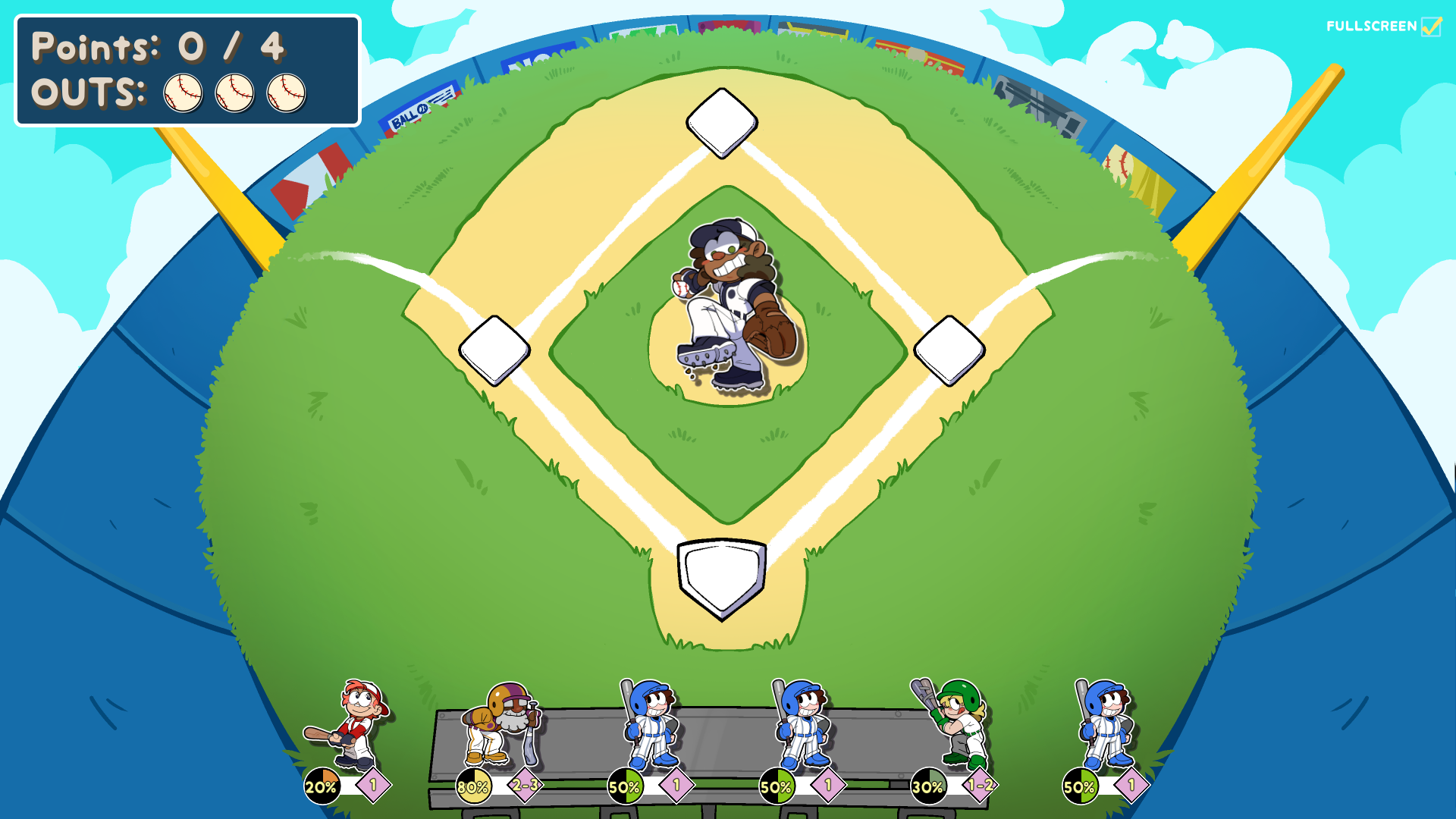 The indie game Pinch Hitters.
In a traditional baseball game, you usually have four batters on the bench. In Pinch Hitters, you have six. I split the difference with five. It just felt right, though I may change that number as I develop the game further.
Certain edge cases or niche rules are simply not programmed in. Foul tips, the infield fly rule. Others are outcomes that can happen only as a result of specific cards or manager actions (think consumables): balks, wild pitches, double plays, hit and runs, etc.