
Night Frontier is a gritty camp-management survival game about building a camp, sending recruits beyond the wire, and dealing with what comes back.
Your camp needs food, scrap, medicine, weapons, shelter, and people. Getting those things means taking risks. You equip recruits, send them on missions across the frontier, fight through encounters, bring back supplies, and try to keep the camp alive long enough to expand.
Survive the Camp
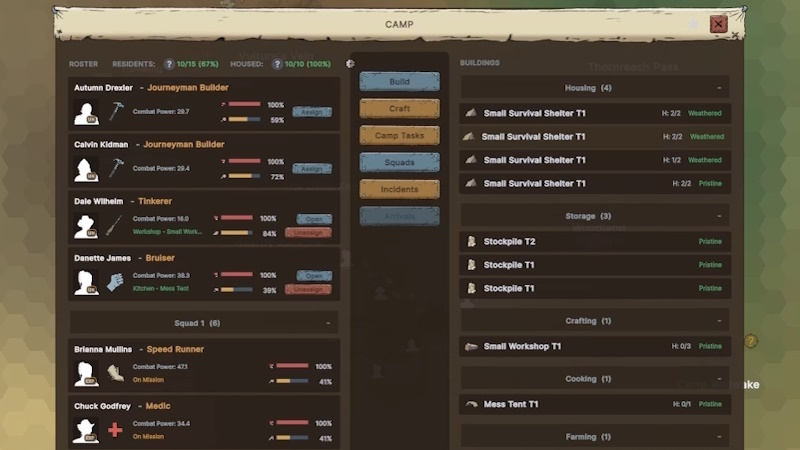
The camp is the center of Night Frontier. Recruits need food, health, morale, equipment, and somewhere useful to work. Assigning people to buildings helps the camp grow, but every assignment has an opportunity cost.
A recruit working at camp is not available for a mission. A recruit sent on a mission may come back injured, sick, exhausted, or not at all.
As your influence grows, new recruits arrive. More people can help you build faster, scavenge more, and survive bigger threats. They also create more pressure. But too many recruits without enough food, infrastructure, and gear can turn growth into a liability.
Send Squads Beyond the Wire
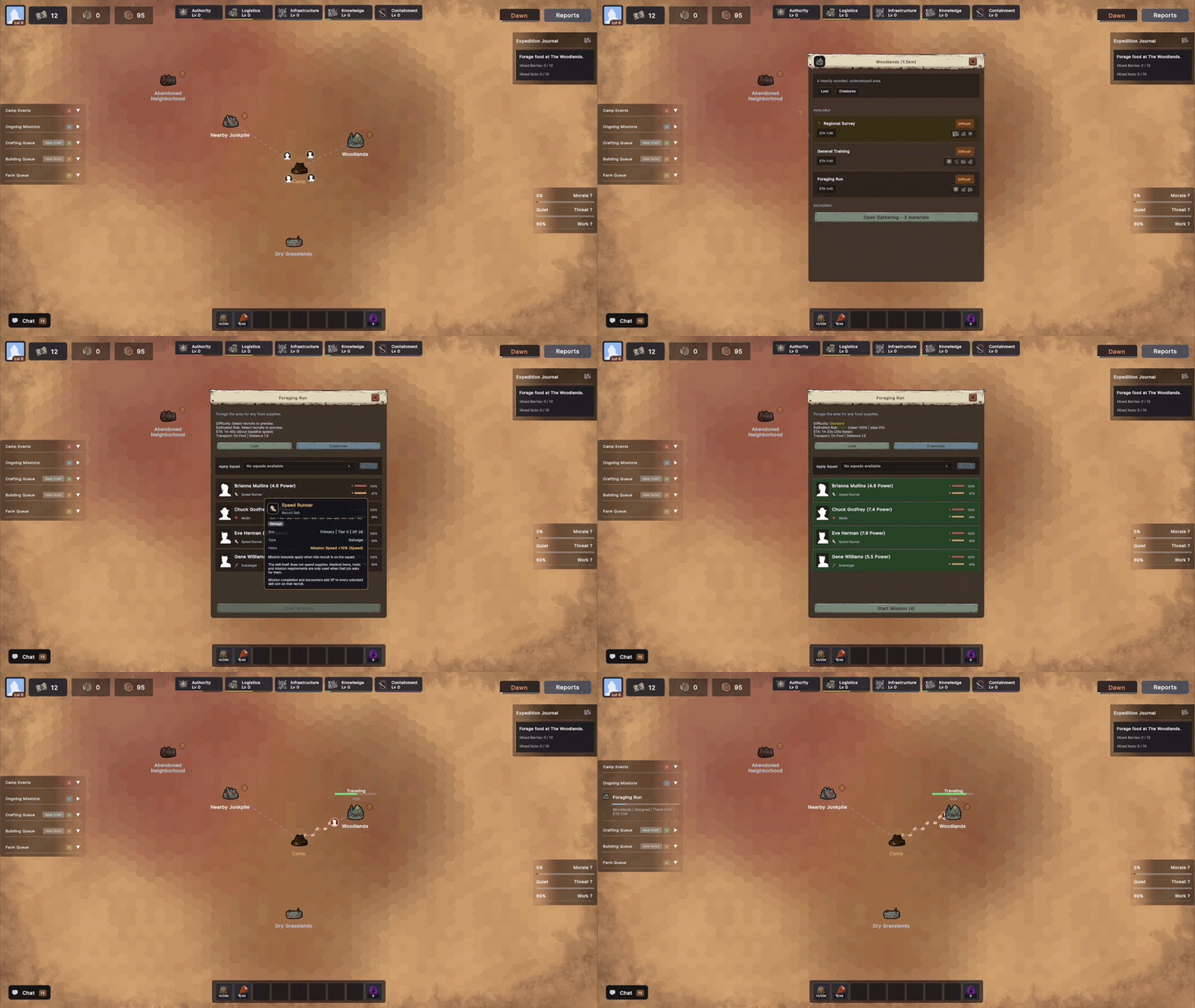
Most progress comes from missions. You choose a destination, equip a squad, and send them into the frontier to salvage supplies, clear threats, recover resources, or push deeper into dangerous territory.
A mission might bring back exactly what the camp needs. It might also trigger a fight, create new injuries, reveal a threat, or force a hard decision back at camp.
The goal is simple: every trip outside camp should feel useful, risky, and a little uncomfortable.
Fight, Loot, and Bring Them Home
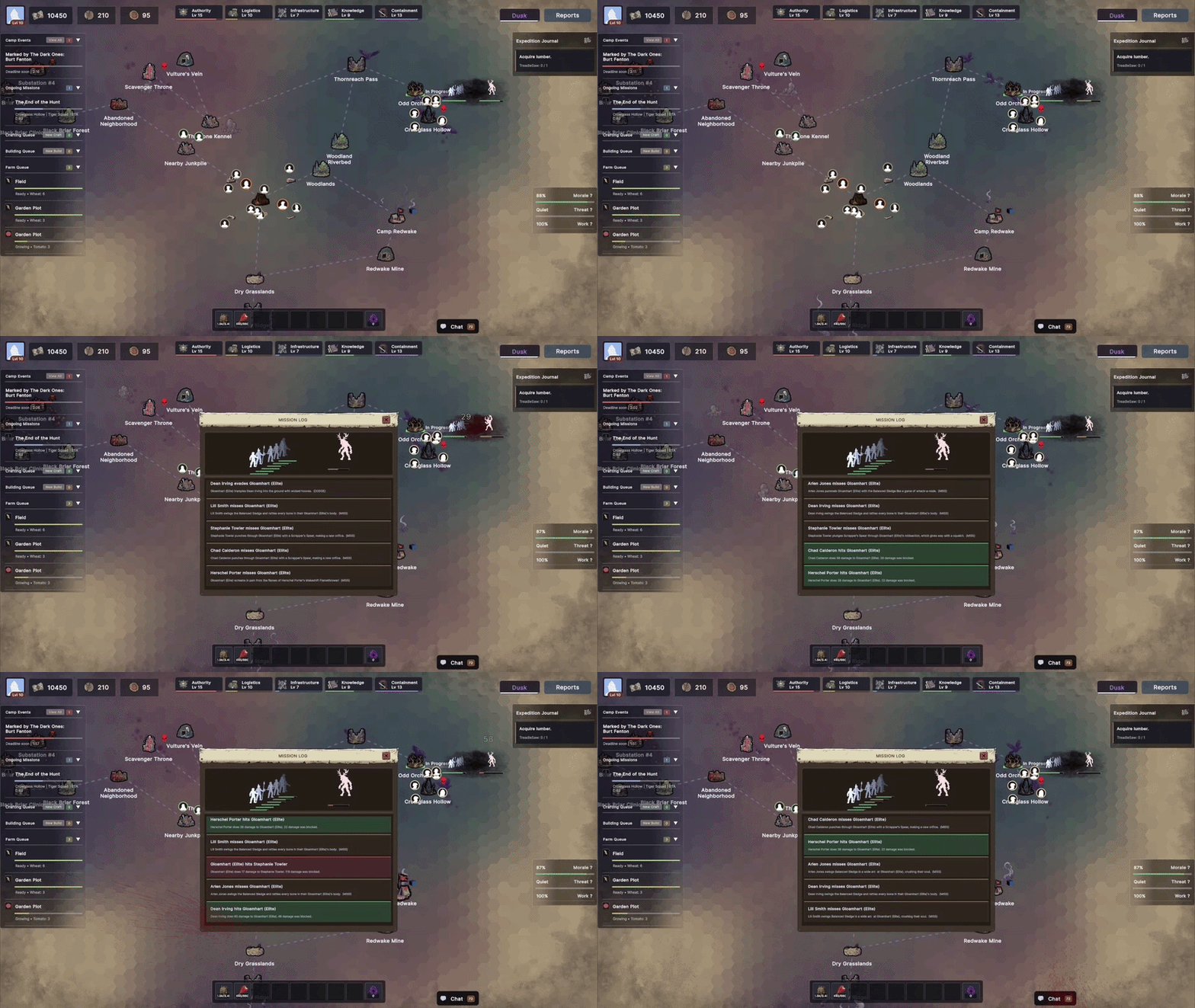
Combat in Night Frontier is built around readable tactical pressure rather than fast reflexes. Recruits bring their gear, stats, injuries, and weaknesses into each fight. The better prepared they are, the better their odds of success.
But preparation costs resources, and resources are almost always short.
Winning a mission can mean food, scrap, weapons, medicine, blueprints, or new access to the map. Losing can mean injuries, deaths, morale problems, and a camp that is now weaker than when the mission started.
The Frontier Pushes Back
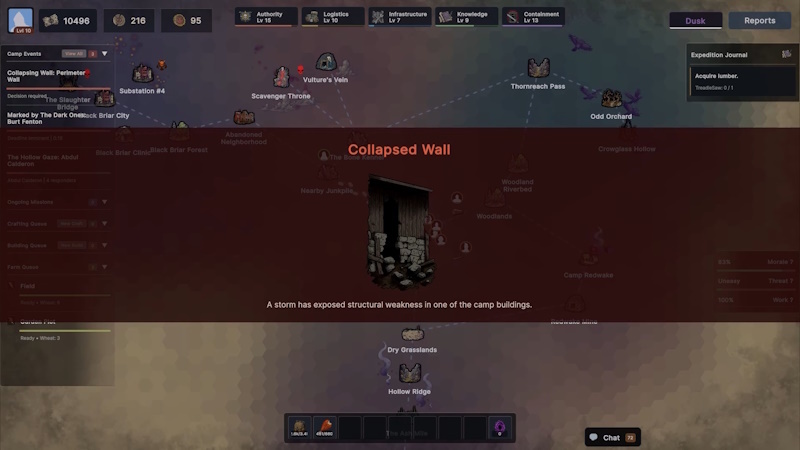
Night Frontier is not only about external threats. The camp itself creates problems.
Hunger, sickness, broken bones, accusations, strange visitors, morale collapse, and other incidents can hit while you are trying to expand. Buildings and missions help you survive, but they can also increase pressure and attract worse problems over time.
The more the camp grows, the more visible it becomes.
Helping Players Find the Loop
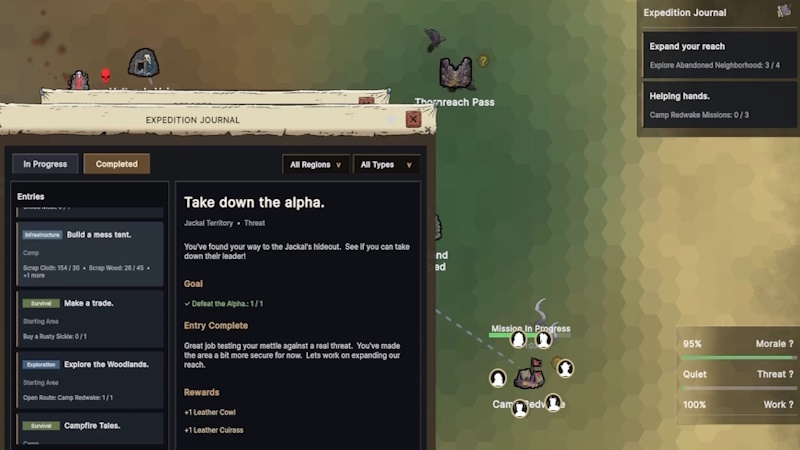
Based on private playtest feedback, we recently added an Expedition Journal to help guide players through their first days in Night Frontier.
The journal gives players early objectives, points them toward useful missions, and helps explain how to start building a functional camp. We want the game to stay systems driven, but with enough structure that players understand what they should care about first.
Where Development Is Now
Night Frontier is being developed by a two-person studio. Both of us are developers, and we are building the game’s systems, UI, writing, and art as directly as we can.
Right now we are running internal playtests, polishing existing mechanics, improving the early-game flow, and preparing for an extended public playtest and demo.
The current focus is not adding endless new features, but on making the core loop clearer, sharper, and more reliable:
Build the camp
Recruit survivors
Send squads on missions
Fight through threats
Bring back supplies
Manage the consequences
Expand before the frontier overtakes you
If that kind of survival strategy sounds like your thing, wishlist Night Frontier and follow the Steam page for playtest and demo updates!