
Yuanrong Update: Battle Doctrines, Equipment, and Performance Improvements
This update introduces two new systems for army progression: battle doctrines and equipment.
1. New Content
Battle Doctrines: Develop Your Army’s Fighting Style
Infantry, Ranged, or Cavalry—choose a direction that suits your army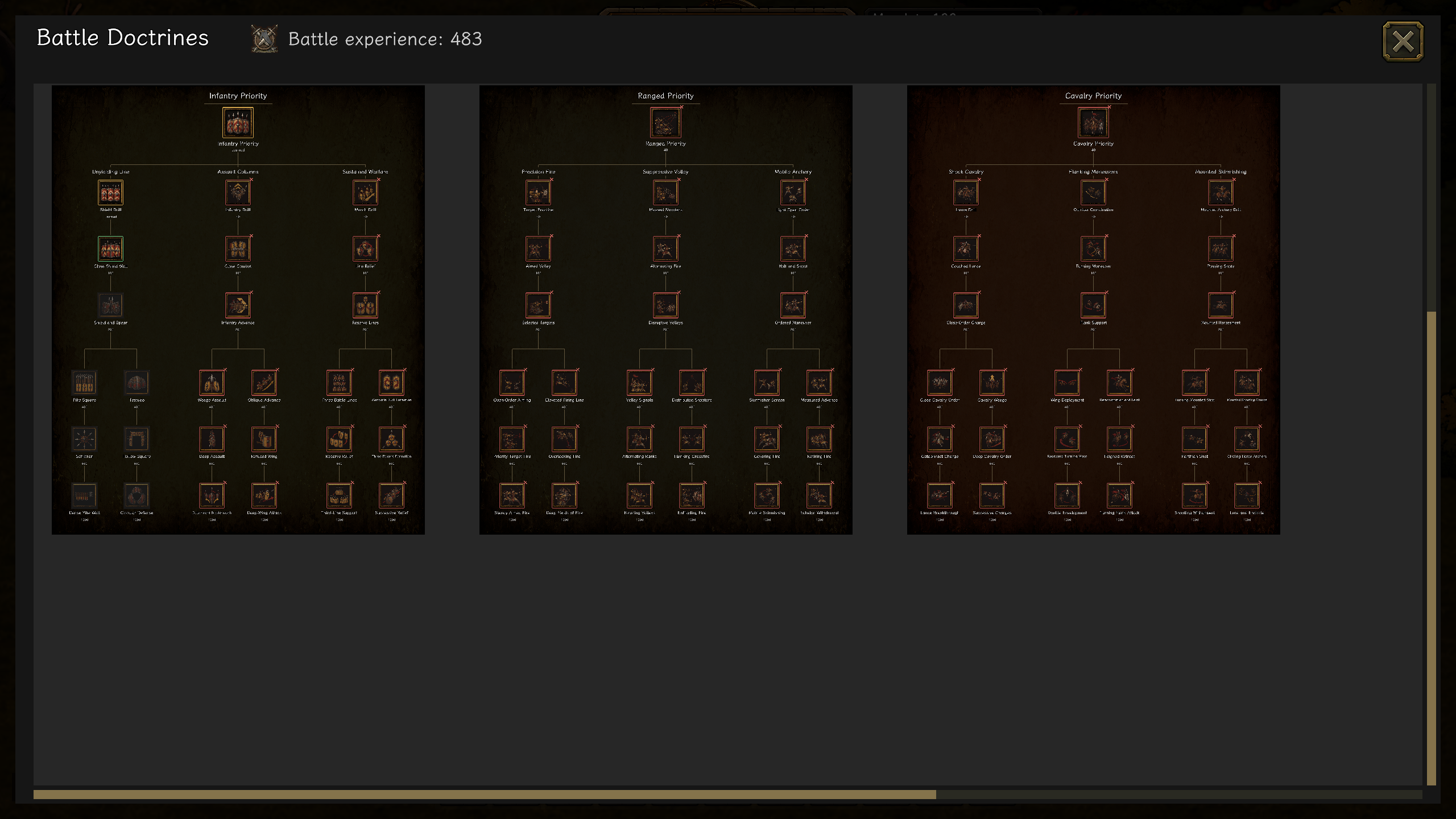
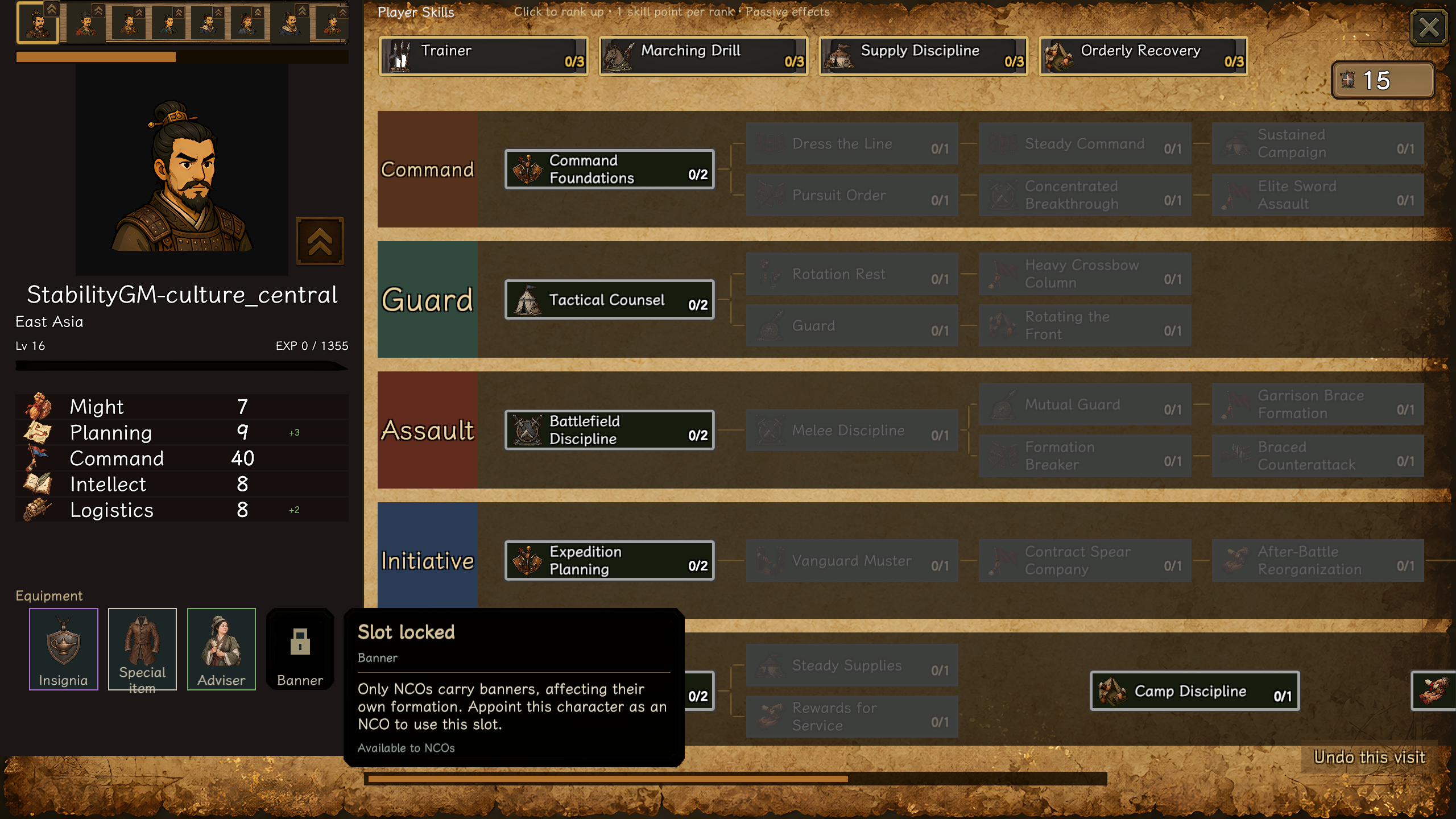
The doctrine tree offers three main directions—Infantry, Ranged, and Cavalry—with 84 nodes and 18 specialization paths. Choose your path based on your army composition and preferred tactics.
The full doctrine tree: three main directions, 84 nodes, and connected specialization paths.
Node tooltips: quickly review effects, learning costs, and current status.
Let every battle shape your army’s development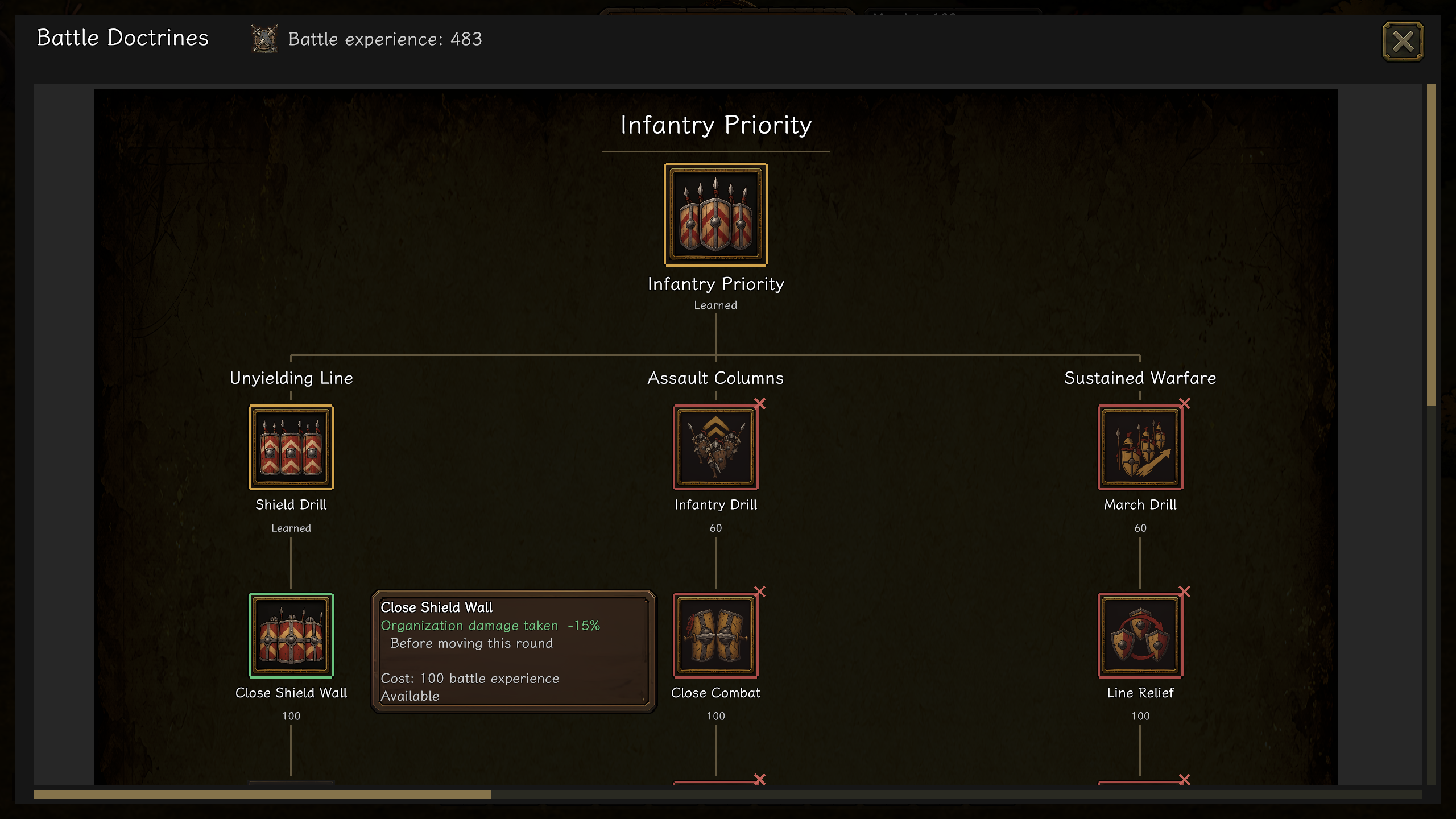
Doctrine experience reflects actual battlefield results and your own fatalities, rather than victory or defeat alone. Heavy losses can result in a net experience loss. Learned doctrines remain unlocked, while future earnings first offset any negative balance. The current version uses whole-number points, with progression costs and higher-tier bonuses rebalanced together.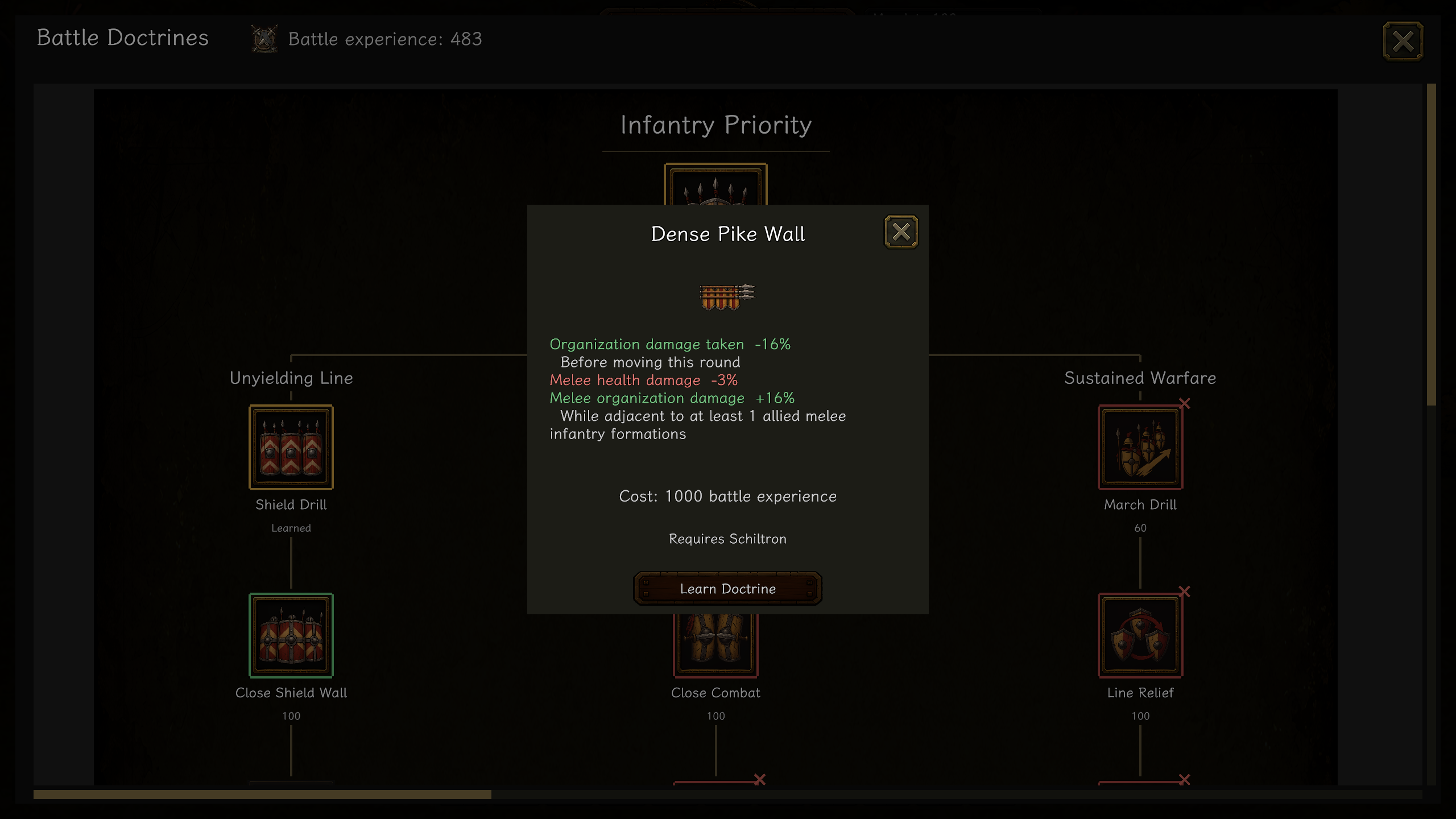
Full node details: effects, conditions, costs, and learning requirements in one place.
Equipment: Outfit Your Leaders and Strengthen Their Commands
Four equipment categories tailored to leadership roles
The equipment system features four slots: Insignia, Special Items, Advisers, and Banners. There are 168 items across four cultures and four rarity tiers—white, green, blue, and purple. Each slot holds one item, while identical unequipped items stack in the inventory, making it easier to distribute equipment among your leaders.
Insignia focus on organization and discipline. Special Items improve their holder’s personal attributes, Advisers support military administration and assistance, and Banners convey formation orders through NCOs. Each item has its own defined effects, allowing you to match equipment to a character’s responsibilities and your army’s needs.
The character equipment panel: Insignia, Special Items, Advisers, and Banners are displayed together beneath the character’s attributes.
Equipment benefits follow command roles, with items acquired throughout the world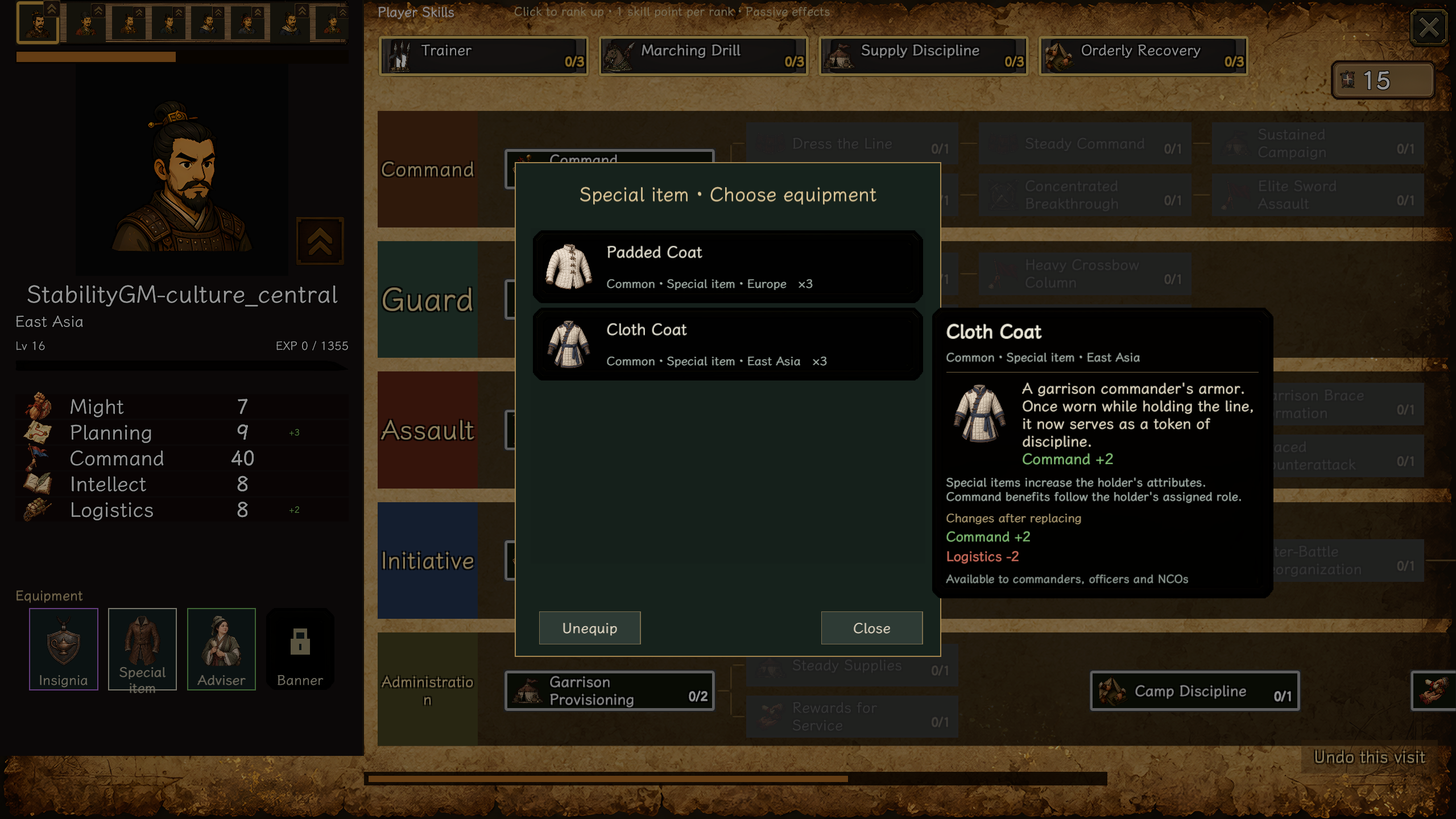
Equipment benefits follow the holder’s actual position in the chain of command: NCOs affect their own formation, officers their branch, and the overall commander the entire army. Advisers are available to commanders and officers, while Banners are used by NCOs. Restricted slots remain visible, with tooltips explaining their requirements. Unassigned characters do not provide command benefits to troops.
Markets, taverns, and battles provide the main sources of equipment. Regular equipment can be purchased from eligible markets, Advisers are recruited at city or capital taverns, and victories may yield equipment actually held by defeated enemies. NPCs also purchase, equip, and retain items. Blue and purple equipment is subject to global quantity limits, making rare items resources with tangible origins in the campaign world.
Role restrictions: equipment slot permissions reflect a character’s responsibilities within the command structure.
2. Fixes and Improvements
Fixed duplicate handling of caravan losses and escort mission settlement that could disrupt the return from battle.
Fixed incorrect checks on civilian parties from newly conquered territory that could block subsequent campaign progress.
Fixed ownership checks and banner display for independent bandit camps inside conquered regions.
Moved the warning about active trade caravans blocking an ownership transfer to the pre-battle stage, avoiding a failed occupation only after victory.
Fixed mission generation failures caused by ambush spawn points that could not connect correctly to navigation paths.
Fixed automatic interceptions being triggered when the player had no battle-ready formations, and errors when attempting to attack a friendly player-owned patrol.
Fixed misaligned columns, broken related-entry links, and jump targets not fully entering view in the Military Encyclopedia.
Fixed doctrine tooltips disappearing during scrolling, zooming, and dragging.
Optimized combat target detection, auto-resolve confirmation, and battle report loading to reduce repeated calculations and temporary allocations.
Optimized world queries, patrol pathfinding, and daily refresh work. In targeted measurements, one world query’s temporary allocations fell from 82,040 B to 29,128 B, a reduction of approximately 64.5%. Allocations for a full-tree doctrine learning-cost query fell from 16,880 B to 32 B, approximately 99.8% lower.