
When court officials paid homage and memorials arrived from across the realm, both the Emperor and Empress were hailed as the "Two Sages." The Emperor sat in the eastern chamber, while the Empress sat in the western chamber.
The twelfth month of the first year of the Linde era (664 AD)
*Zizhi Tongjian* (Comprehensive Mirror in Aid of Governance)
---
In today’s article, we travel back to one of the most prosperous eras in Chinese history to witness how the only empress regnant in the history of the Middle Kingdom ascended to the pinnacle of power amidst treacherous political struggles. Meanwhile, in a small county far away, countless ordinary people caught in the torrent of the times were quietly swept into this vortex of power.
Beneath the surface of this golden age, undercurrents surged; what fate awaited them?
A Daoist Priest Lacking Competence
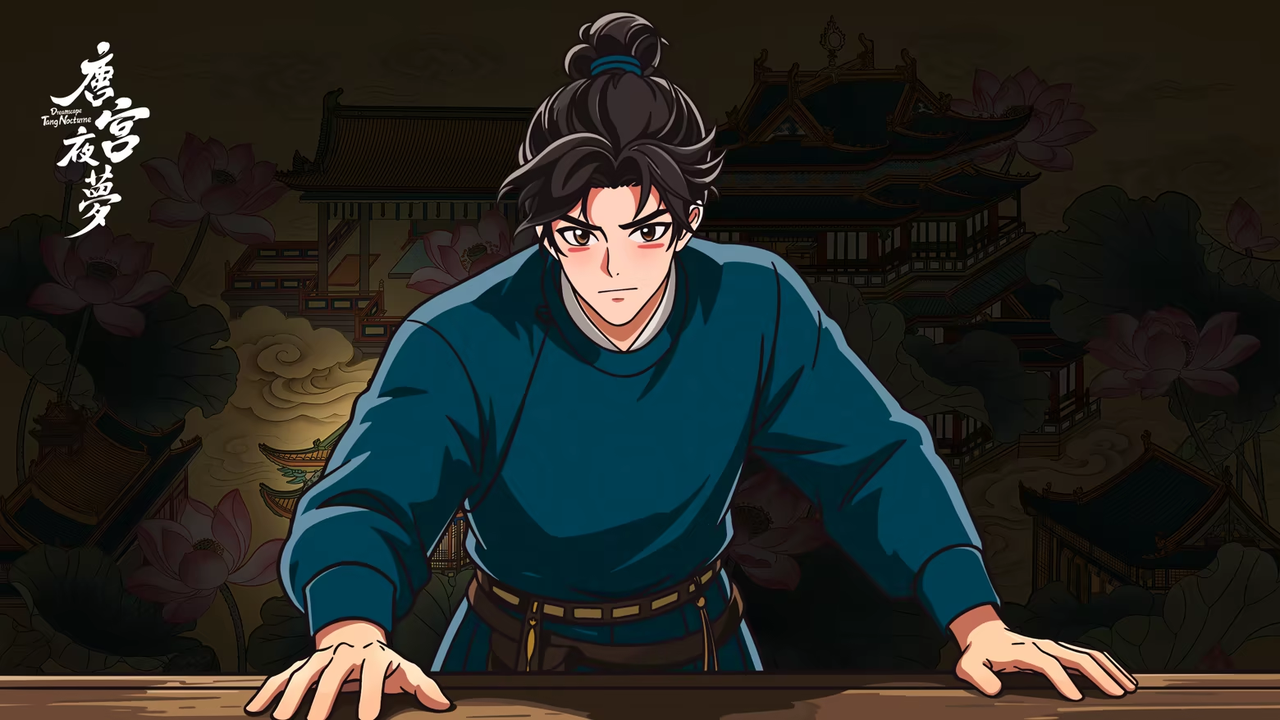
In the first year of the Linde era, there was a Daoist priest in Chang'an named Guo Xingzhen who enjoyed the deep trust of the imperial family.
He was no ordinary street-corner fortune-teller; he held the official rank of *Chaosan Dafu* (Grand Master of Palace Leisure), specializing in imperial religious affairs and participating in major ceremonies.
During the *Fengshan* sacrifices at Mount Tai, Guo Xingzhen had erected the "Twin-Bundle Stele"—also known as the "Mandarin Duck Stele"—for the imperial family, earning him the profound confidence of Emperor Gaozong and Empress Wu Zetian.
One day, Empress Wu secretly summoned Guo Xingzhen to the palace to perform *yansheng*—a form of sorcery involving prayers, talismans, and mystical rituals intended to curse and suppress political rivals. Unfortunately, the priest lacked professional competence; not only did the ritual fail to achieve its aim, but it also attracted unwanted attention.
At that time, many within the court remained loyal to Emperor Gaozong. The eunuch Wang Fusheng discovered the matter and immediately reported it. Gaozong was furious upon hearing the news. Due to health issues, Gaozong had already delegated some state affairs to Empress Wu; however, deep anxiety over the erosion of imperial authority, combined with suspicion regarding her ever-expanding power, led him to consider deposing her.
Chancellor Shangguan Yi keenly seized this opportunity and immediately submitted a memorial advising the Emperor to depose the Empress. A decree of deposition was soon drafted.
Once the decree was issued, the political power base that Empress Wu had painstakingly cultivated would suffer a devastating blow. After the "Two Sages" began ruling jointly, she was no longer merely an empress confined to the inner palace.
She wielded supreme power equal to that of Emperor Gaozong, cultivated her own faction, and suppressed the group of founding officials from the era of Emperor Taizong (Li Shimin); consequently, she became a thorn in the side of countless aristocratic clans. Prominent among her adversaries were the Guanlong Group led by Zhangsun Wuji, the Hedong Pei clan backing Pei Yan, and the Julu Wei clan backing Wei Xuantong—elite families entrenched in the court for generations that would not idly watch her retain power.
In the current climate, losing Gaozong’s trust meant losing power for Empress Wu; and in the game of power, losers rarely met a good end. Should she lose her authority, the fate awaiting her and her loyalists would not be a mere return to the inner palace as an ordinary consort; instead, she faced total ruin and death.
This was a genuine life-or-death crisis—the first major challenge she had faced since assuming power.
Faced with Gaozong’s fury and suspicion, Empress Wu did not waste time arguing whether Guo Xingzhen had actually performed the *yansheng* curse. Instead, she zeroed in on a more critical question: who was the true enemy, and who was the Emperor’s true friend?
She pointed out that all her actions had been aimed at upholding imperial authority. Aristocratic clans had long monopolized military, political, and economic power, while Chancellor Shangguan Yi was exerting increasing influence over key matters such as official appointments. If such forces were allowed to expand unchecked, who would ultimately be the one truly threatened—the Empress, or the Emperor?
Her words ultimately swayed Gaozong. The edict to depose her was rescinded, and she weathered this life-or-death crisis for the time being.
Yet, the matter was far from over; well-versed in the intricacies of power struggles, Empress Wu immediately launched a counterattack.
She first directed her trusted ally Xu Jingzong to accuse Shangguan Yi, Wang Fusheng, and the deposed Crown Prince Li Zhong of plotting treason.
With Gaozong’s tacit approval, Shangguan Yi, his son Shangguan Tingzhi, and Wang Fusheng were executed on the thirteenth day of the twelfth month of the first year of the Linde era (January 4, 665); two days later, the deposed Crown Prince Li Zhong was ordered to commit suicide. Shangguan Yi’s entire estate was confiscated, and his clan suffered a devastating blow as a result.
Empress Wu emerged completely victorious from this incident! The power of the aristocratic clans was thoroughly suppressed; yet, this was merely a brief skirmish, and she would soon face an even greater crisis.
As for that incompetent Daoist priest—whose actions had ignited a political storm that cost countless people their heads—he managed to escape execution himself, suffering only exile to a remote prefecture.
A Masterstroke in Winning Hearts and Minds
Emperor Gaozong’s health deteriorated steadily in his later years. According to the *Zizhi Tongjian* (Comprehensive Mirror in Aid of Governance), "The Heavenly Empress presided over court sessions and made decisions." By this time, the arrangement—nominally a "Joint Reign of Two Sages"—had effectively shifted into a reality where the Empress held the reins of power. She personally adjudicated many major state affairs and matters of government administration.
As Gaozong grew increasingly frail, Empress Wu began laying the groundwork for the impending transfer of power. This strategic maneuvering was primarily reflected in personnel appointments: she promoted rising officials like Di Renjie, Lou Shide, and Wei Yuanzhong, placing them in key positions.
Simultaneously, she gradually reassigned officials from the Guanlong Group and other aristocratic clans—who opposed her and supported the old Li-Tang establishment—to posts far from the capital. She also utilized the imperial examination system to recruit talent from humble backgrounds, thereby cultivating a political faction loyal to herself.
She understood clearly that the true struggle for power would only begin once Gaozong passed away.
Before long, Gaozong died.
Empress Wu had no time to indulge in grief before a new challenge confronted her.
Li Xian, Emperor Zhongzong of Tang, ascended the throne.
He was Empress Wu’s biological son and the legitimate heir to the Tang throne.
Yet, for an Empress who already held power and was accustomed to controlling the court, her own son had become her greatest potential threat.
Shortly after his enthronement, Li Xian began promoting his father-in-law, Wei Xuanzhen, and attempting to build a power base of his own.
This meant the relationship between mother and son was no longer defined merely by familial affection.
It had transformed into a question of: who truly held the power of the empire?
Having weathered years of bloody political strife, Empress Wu was no longer merely a mother who doted on her children. She made her choice without hesitation: depose the emperor.
Li Xian was deposed, and Empress Wu installed Li Dan as the new emperor—Emperor Ruizong of Tang.
This move undoubtedly crossed the line for veteran officials loyal to the Li-Tang imperial house. In 684 AD, the aristocratic clans launched a final counterattack; Xu Jingye raised an army in Yangzhou to rebel against Wu.
Spreading across the realm alongside news of the rebellion was Luo Binwang’s stirring *Proclamation Against Wu Zhao*.
The proclamation was a sweeping indictment, enumerating Empress Wu’s alleged crimes—ranging from "illicit affairs within the inner palace" and "persecuting loyal ministers" to "slaughtering her siblings and murdering both the sovereign and her own mother." Every word was a stinging condemnation aimed directly at her. It concluded with a rallying cry to restore the Li-Tang dynasty and mobilize the nation to overthrow her.
The piece sent shockwaves through the empire. Anti-Wu forces from various regions converged on Yangzhou; within little more than ten days, an army of over one hundred thousand had gathered. The stability of the realm hung in the balance.
Yet, faced with this massive uprising, Empress Wu remained composed. After reading Luo Binwang’s proclamation repeatedly, she felt no rage; instead, she remarked in the imperial court:
"To possess such talent yet leave him unrecognized and unappointed—that is the fault of the Chancellor."
On the surface, this comment praised Luo Binwang’s genius; in reality, it revealed Empress Wu’s extraordinary political magnanimity.
Her words caused a sensation. Instead of seeing a ruler enraged by a manifesto and bent on revenge, the public saw a stateswoman capable of appreciating an enemy's talent and reflecting on the court's own failures in personnel selection. Factions that had previously remained on the sidelines began to reconsider their stance, and cracks of doubt appeared within the rebel camp itself.
Seizing the moment, Empress Wu rapidly assembled a massive army and marched south to suppress the revolt. The formidable rebellion was quickly quelled. Once again, she demonstrated formidable political judgment and masterful statecraft; after this campaign, no member of the aristocracy dared to oppose her. From an empress dwelling in the deep recesses of the palace to a stateswoman who truly commanded the empire, every step of her journey was marked by power, bloodshed, and pivotal choices. The era that was hers alone was steadily drawing near.
Founding the Wu Zhou dynasty and reigning supreme over the realm.
In the year 690 AD, on an ordinary night, Wu Zetian had a dream.
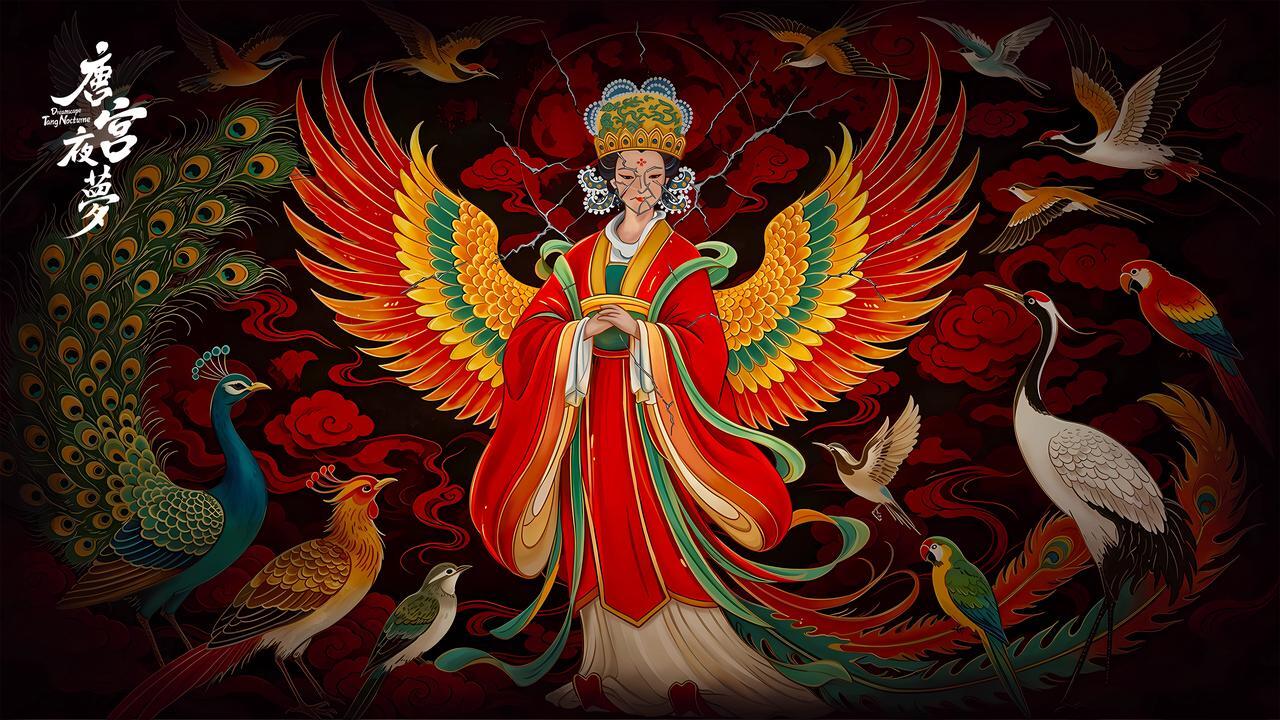
In the dream, the Great Tang was ushered into an unprecedented golden age. The markets of Chang'an teemed with throngs of people and merchants; the populace lived in peace and prosperity, and envoys from myriad nations arrived to pay homage, bearing countless treasures. Suddenly, a phoenix flew in from the east and alighted atop the Giant Wild Goose Pagoda. From all directions, a hundred species of birds gathered, prostrating themselves at the phoenix's feet.
When she awoke, Wu Zetian was sixty-six years old. She had presided over the court for years, weathered countless shifts in power, and personally vanquished one political rival after another. She gazed alone into the depths of the palace, where the imperial throne—upon which she had sat so many times—stood waiting. Wu Zetian stared at it for a long time; her eyes held a depth that seemed to stretch endlessly, beyond all reckoning.
By this time, having employed ruthless officials to purge the opposition, no one in the imperial court dared to openly defy Empress Wu. She was but a single step away from the supreme throne.
Just then, reports of various "auspicious omens" began to emerge across the realm. Officials from various regions reported sightings of the miraculous phoenix. In the waters of the Luo River, a strange stone was discovered, bearing a striking inscription:
"The Holy Mother descends to rule; the imperial reign shall endure forever."
Monks, led by Fa Ming, promptly presented the *Great Cloud Sutra*, proclaiming that it contained an ancient prophecy: a female sovereign would arise to rule the world. Soon after, "Great Cloud Temples" were erected across the provinces. A carefully orchestrated campaign of public opinion and political momentum was quietly coming to fruition.
On the morning of October 16, 690 AD, at the Ziwei Palace in Luoyang, Wu Zetian formally held her enthronement ceremony.
In that moment, she seemed to see the very scene from her dream: a hundred officials offering congratulations and envoys from myriad nations coming to pay homage. And the phoenix that had flown from the east had, at last, found its resting place. From the eleventh year of the Zhenguan era—when, at fourteen, she first stepped into the imperial palace—to her eventual ascension to the throne, she endured fifty-two years within the deep confines of the palace and fifty-two years of power struggles.
She had been a *Cairen* (a low-ranking consort), an Empress, and a "Heavenly Empress" ruling from behind the curtain; she had stood at the epicenter of countless political storms. Now, she had finally crossed that ultimate threshold.
Thus emerged the only empress regnant in Chinese history to officially ascend the throne.
Wu Zetian’s "game of power" had reached its most dazzling zenith.
Yet, for the empire itself, the true story was only just beginning.
The Story of *Night Dreams in the Tang Palace*
The theme of Chapter One of *Night Dreams in the Tang Palace* is "A Hundred Birds Pay Homage to the Phoenix." The story unfolds in the first year of the Zaichu era, following Empress Wu’s deposition of the emperor. South of the Qinling Mountains lay a county named Qingliu—a place nestled between mountains and waters, blessed with a mild climate and fertile soil. To the north, the county bordered the Qinling ranges; deep within those forests teemed a multitude of birds and beasts, giving rise to the ancient saying: "A hundred birds roost in Qingliu."
In the wake of the emperor's deposition, the political landscape was in turmoil. The Magistrate of Qingliu, keenly aware of the shifting times, was anxious to find a way to advance his career. Just then, a rumor reached the county: a wondrous bird had appeared in the mountains, boasting magnificent plumage and a form resembling that of a phoenix. Overjoyed, the Magistrate immediately issued an order to capture the creature and dispatched men into the mountains to search for it. He believed that if he could capture this bird and present it as an auspicious omen, he could align himself with the Mandate of Heaven, win the Empress's favor, and propel his official career to new heights. Yet, no one could have foreseen that the issuance of this capture order would mark the beginning of a nightmare for Qingliu County.
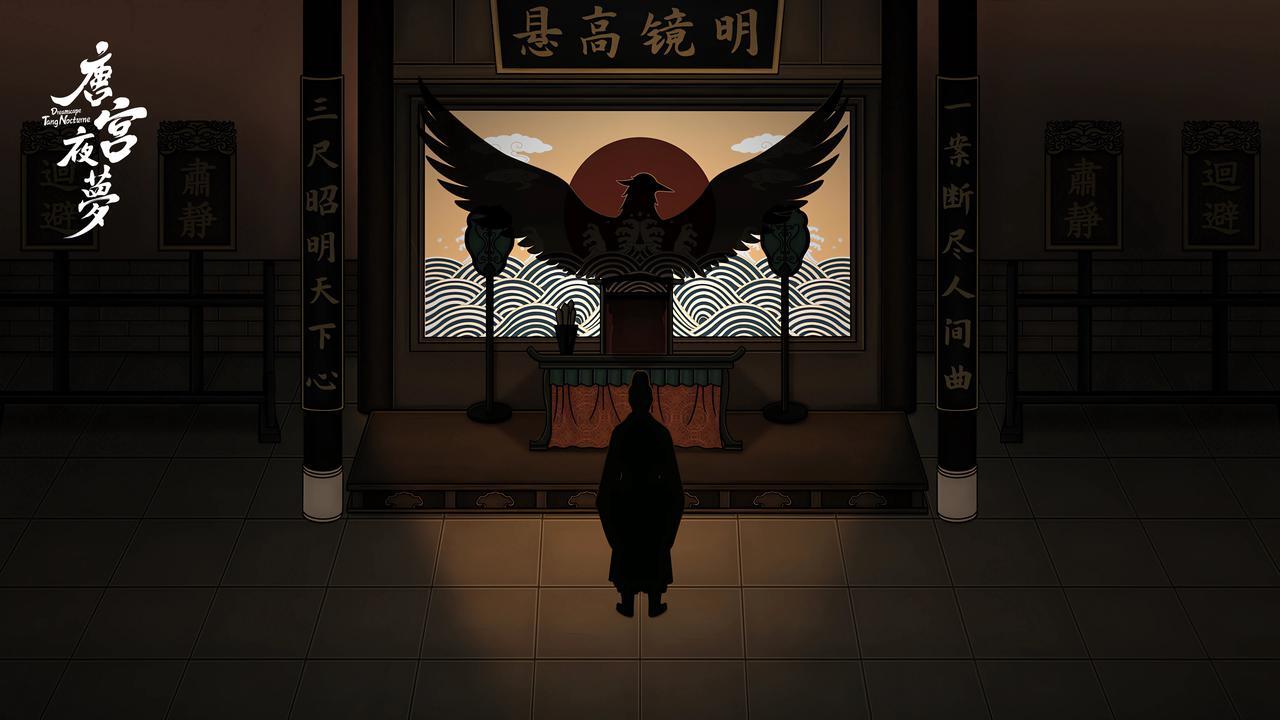
Bizarre incidents began to plague the county. In the dead of night, townspeople would witness a colossal bird soaring over the city walls; its dark silhouette blotted out the moon, and its wings spread like clouds. Each time this "Bird Deity" appeared, a mysterious death would follow within the city. The victims came from all walks of life, and the causes of their deaths were baffling and shrouded in mystery. Rumors ran rampant as townsfolk flocked to the City God Temple to offer prayers; it was whispered that the authorities’ bird-catching activities had enraged the mountain spirits, causing the "Bird God" to descend and exact retribution in human lives. Fear began to grip Qingliu County. Amidst the clamor of speculation, another corpse plummeted from the sky, crashing into an ordinary courtyard. The scene was witnessed by a young scholar passing through town—Song Haikun. Thus, he found himself entangled in a homicide case that should have been the sole concern of the local magistrates.
The county magistrate, intent on his political career, cared little for the victim's identity or the actual truth; his only goal was to quell the rumors of the "Bird God's" killings as quickly as possible. Eager to close the case, he prepared to pin the crime on an innocent weaver from the local textile workshop. However, Song Haikun discovered a host of peculiar clues suggesting the victim had died from other causes. The so-called "Bird God" was far less mysterious than the legends claimed. Behind this seemingly bizarre murder, a hidden hand appeared to be quietly orchestrating events from the shadows.
Is the Bird God a deity or a mere mortal? Was the falling corpse an accident or a meticulously staged murder? Why was the magistrate so desperate to rush to a verdict? While everyone else looked up to the heavens in prayer, Song Haikun chose to look down and uncover the truth.
As the protagonist, you will step into the perilous world of Qingliu County. Examine corpses, scour crime scenes, trace evidence, and interrogate witnesses to unearth the truth buried beneath layers of lies. Save the wrongly accused, expose the reality behind the "Bird God," and identify the true mastermind.
This time, are you solving a simple murder, or unraveling a scheme as elaborate as the "Hundred Birds Paying Homage to the Phoenix"?