
We have compiled the historical references behind some of the designs in the *Tang Dream* (Tang Meng) project to share with those interested in Tang Dynasty culture.
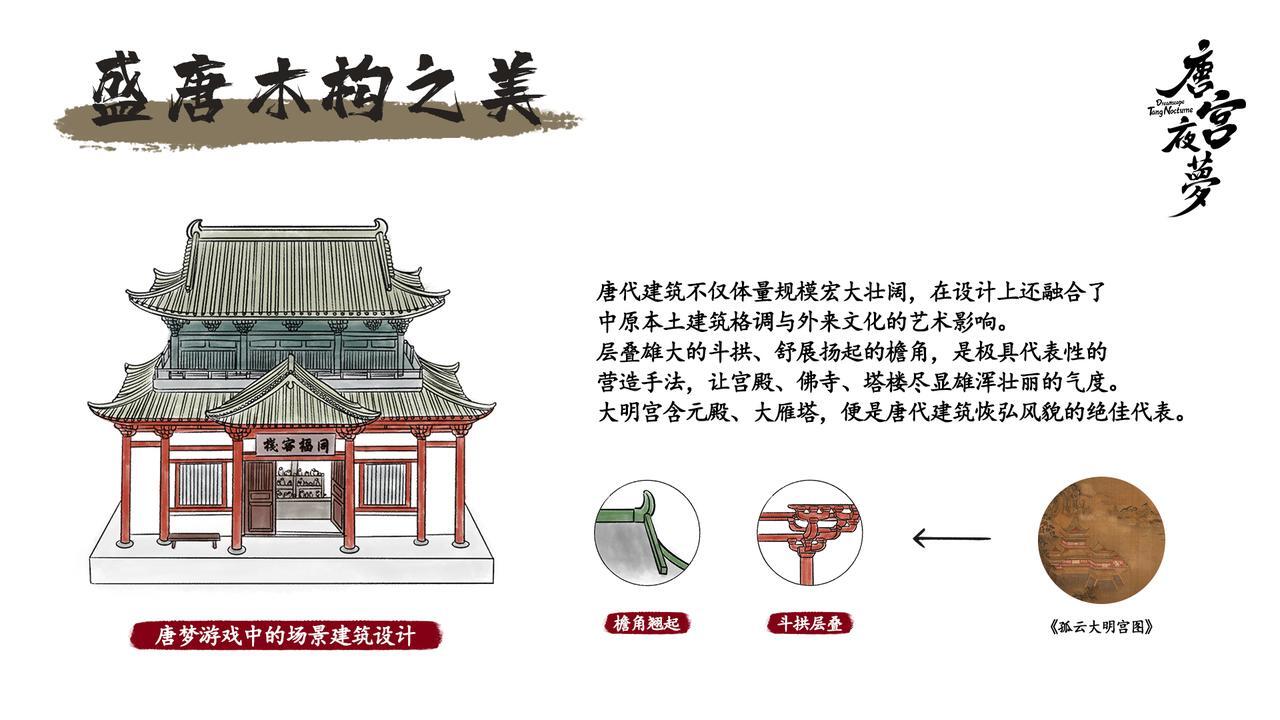
🏯 Architecture | Grand *Dougong* Brackets and Sweeping Eaves
Tang Dynasty architecture blends indigenous Central Plains styles with foreign cultural influences; its most iconic structural features include massive, multi-layered *dougong* (interlocking wooden bracket sets) and eaves that sweep gracefully upward and outward. Architect Liang Sicheng famously described Tang wooden structures as having "grand *dougong* and deep, far-reaching eaves." A prime example is the Great East Hall of Foguang Temple, where the *dougong* support eaves projecting nearly four meters—the longest cantilevered eaves among all surviving ancient Chinese structures.
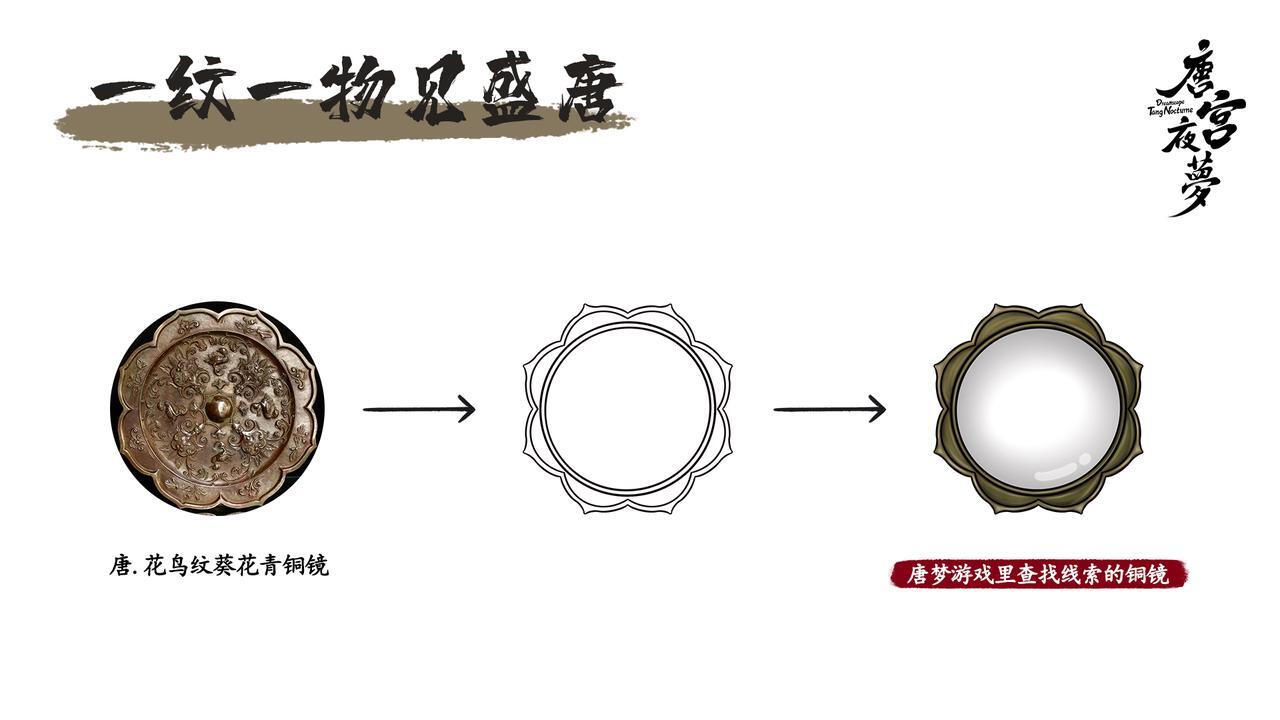
🔍 Artifacts | Sunflower-Shaped Bronze Mirrors and "Lamp-Hanger" Chairs
The bronze mirror used for finding clues in the game is modeled after the sunflower-shaped bronze mirrors featuring bird-and-flower motifs common in the Tang Dynasty. Tang mirrors broke away from the traditional circular shape, introducing new forms such as sunflower and lozenge-flower shapes. The eight-lobed sunflower mirror typically features realistic depictions of flora and fauna—such as flowers and flying birds—arranged in a free yet ingenious layout that captures the vibrant spirit of the High Tang era.
The "lamp-hanger chair" (or *denggua yi*) featured in the game traces its historical roots back to the Sui, Tang, and Five Dynasties periods. Depictions of this type of high-backed seating appear in Tang Dynasty murals at Dunhuang and in the famous Five Dynasties painting *The Night Revels of Han Xizai*. The chair gets its name from its top rail (*danao*), which resembles the bamboo hooks used in the Jiangnan region to hang oil lamps. With its simple, upright silhouette, it stands as a significant example of the evolution of high-seated furniture during the Tang Dynasty.
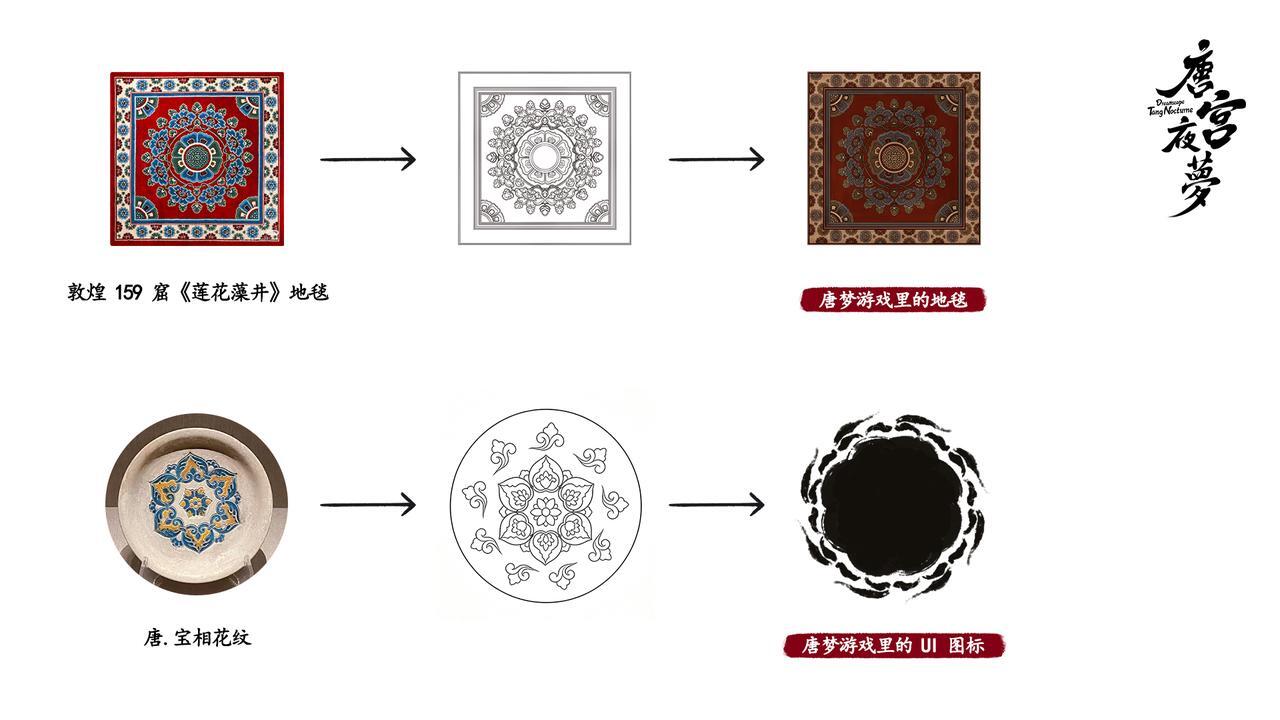
🎨 Patterns | Lotus Caisson Ceilings and *Baoxiang* Flowers
The carpet pattern in the game draws inspiration from the lotus-themed caisson ceiling found in Cave 159 at Dunhuang. As a decorative centerpiece for the ceilings of Buddhist structures, the caisson—featuring an inverted-pyramid structure combined with aquatic plant motifs—embodies traditional concepts regarding the Five Elements (specifically the idea of water suppressing fire). In Buddhism, the lotus symbolizes purity, while also carrying auspicious connotations within traditional Chinese culture. UI Icon Design: Inspired by the *Baoxiang* (precious image) floral pattern—one of the most popular traditional Chinese auspicious motifs during the Sui and Tang dynasties. The term "*Baoxiang*" originated during the Wei, Jin, and Northern and Southern Dynasties as a description for Buddhist images, symbolizing a majestic and solemn appearance. It does not represent a flower found in nature but is instead an idealized decorative motif that synthesizes characteristics from various plants, such as the lotus, peony, and pomegranate. By the High Tang period, the styling and ornamentation of the *Baoxiang* pattern had reached their zenith, achieving a look that was opulent yet dignified.
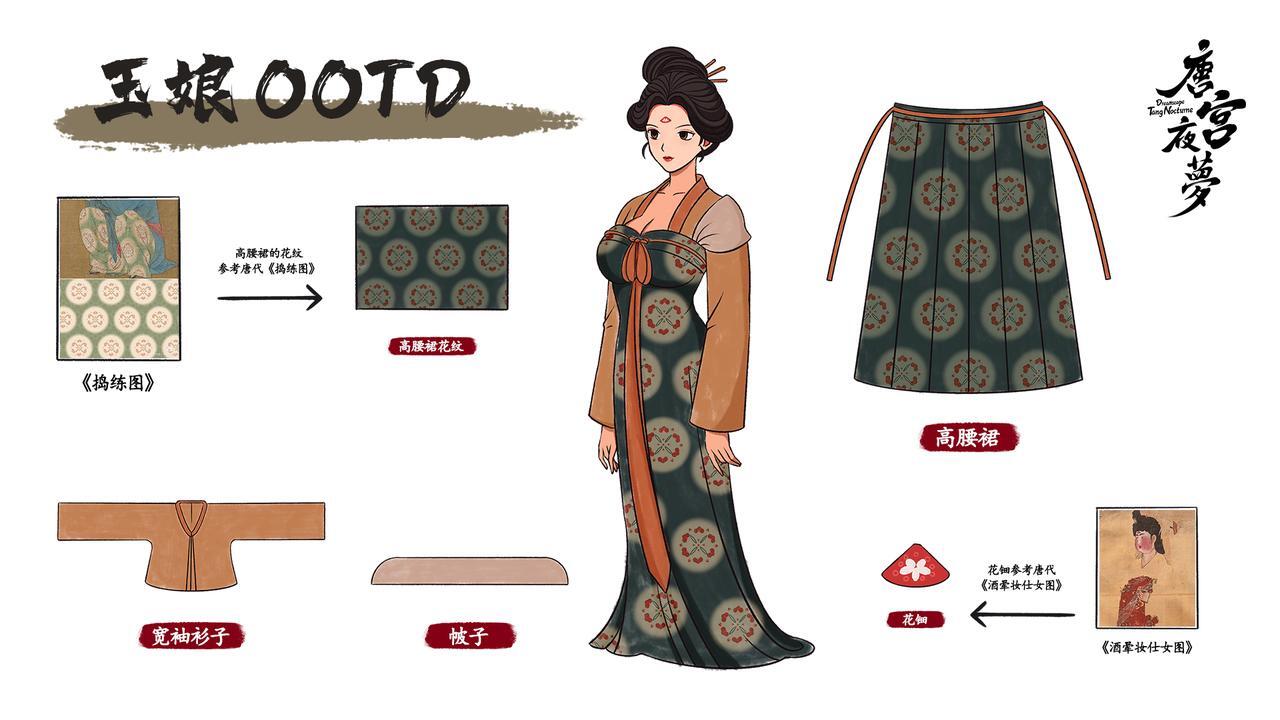
👗 Attire | High-Waisted Skirts and *Huadian* (Floral Forehead Makeup)
The pattern on the character's high-waisted skirt draws inspiration from the Tang Dynasty painting *Court Ladies Preparing Newly Woven Silk* (Dao Lian Tu) by Zhang Xuan. This painting vividly depicts the quintessential High Tang female fashion, characterized by *ruqun* (blouse-and-skirt) ensembles featuring high-waisted skirts and flowing silk scarves (*pibei*). Tang Dynasty skirts generally featured high waistlines, falling into three categories: waist-level, high-waisted, and chest-level. The *Huadian* (floral forehead makeup) design references the painting *Lady with 'Wine-Flush' Makeup* and represents a classic style of facial ornamentation for women of the Tang era.