
The Biggest Skyline Sim Playtest Update Arrives August 9
The next major Skyline Sim update will go live in the playtest on August 9.
This is the largest update we have released during Playtest 1. It rebuilds Brand and Executive management around negotiations, active partnerships, operational obligations, loyalty, and consequential correspondence.
Playtest 1 will remain available until August 18.
That gives everyone nine days to explore the rebuilt systems, test the new workflows, and submit final feedback before this phase of development closes.
A complete rebuild of the Brand experience
Until now, Brand was mostly a collection of numbers.
This update changes that.
Brand is now structured around four connected areas:
Standing — where your airline sits against its competitors
Marketing — how you build awareness and acquire partnerships
Identity — what your airline represents and how consistently it delivers on that promise
Loyalty — how you turn passengers into long-term customers
These systems are no longer isolated dashboards. They now feed into one another and create longer-term strategic decisions.
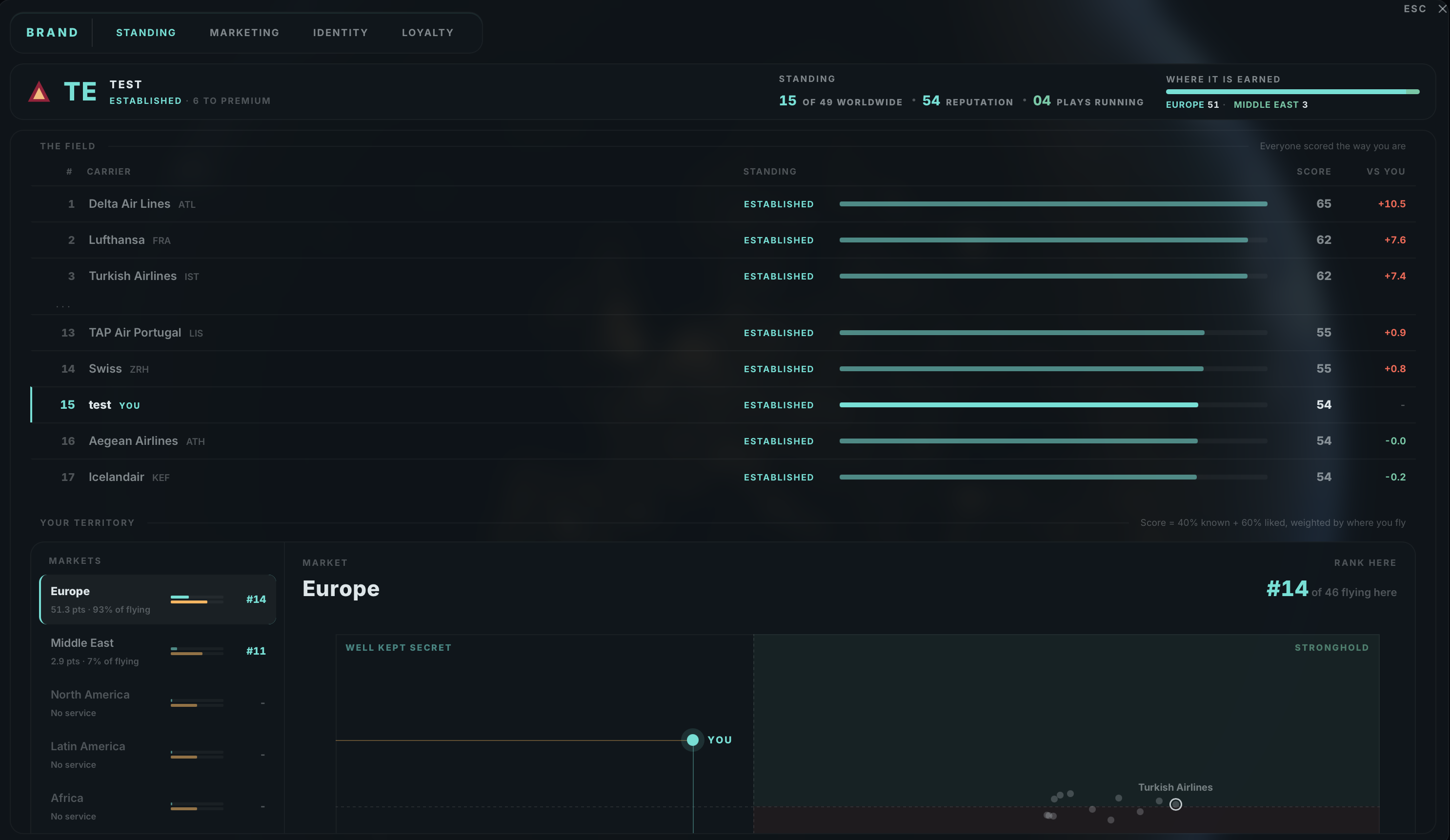
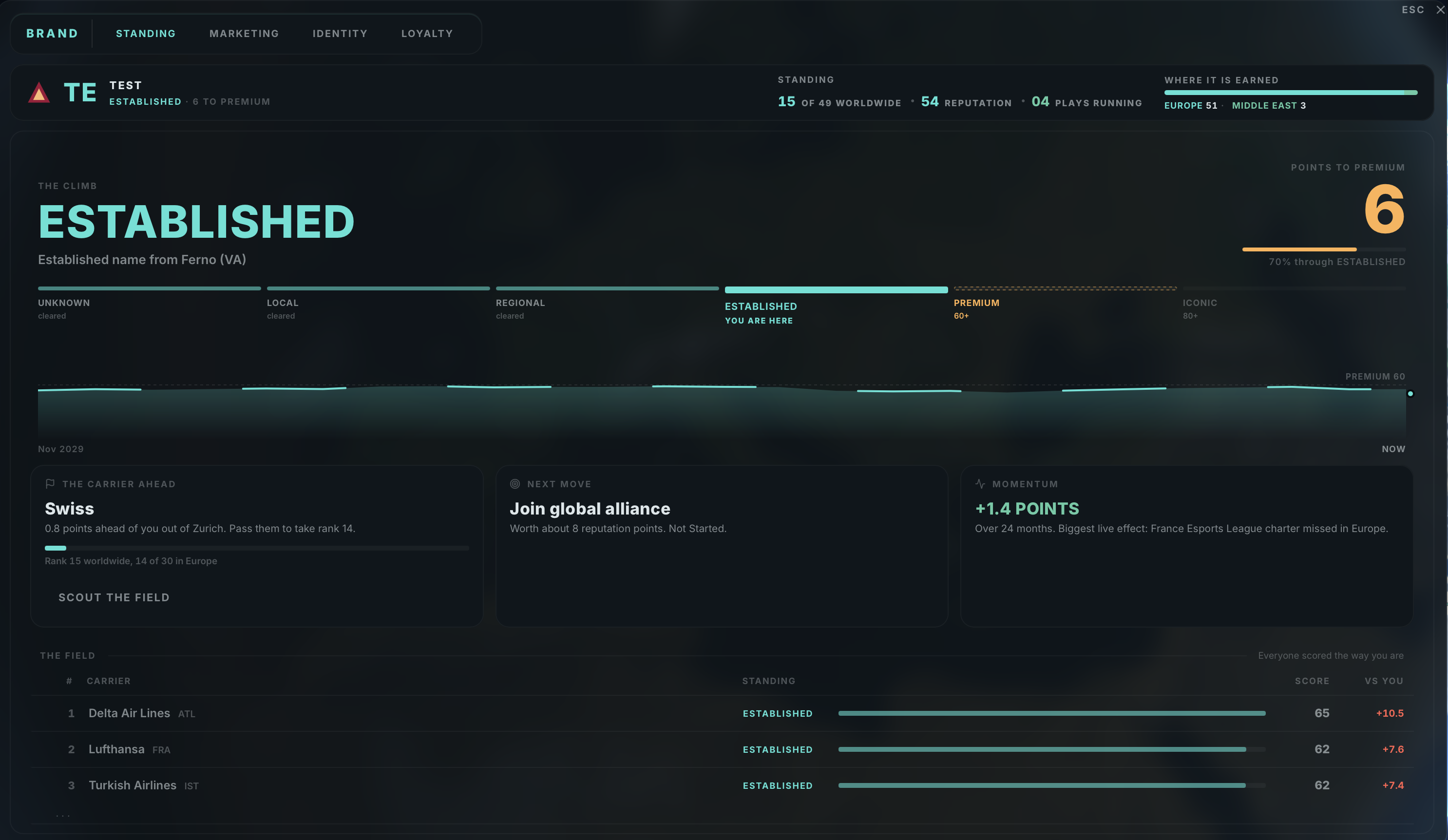
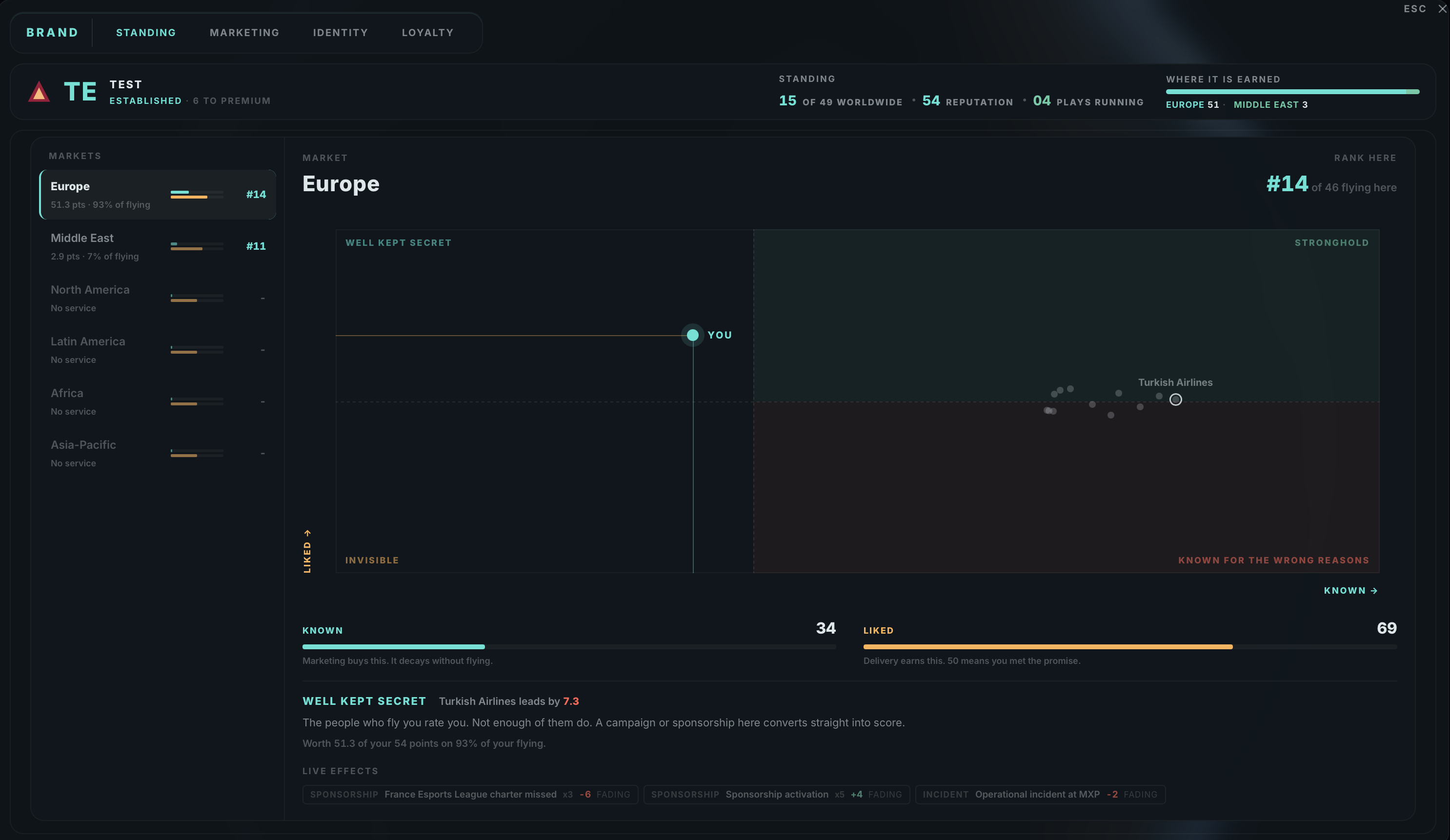
Brand Standing
The new Standing screen places your airline against its competitors, tracks its momentum, explains what is strengthening or weakening its position, and shows what must change before the brand can reach its next tier.
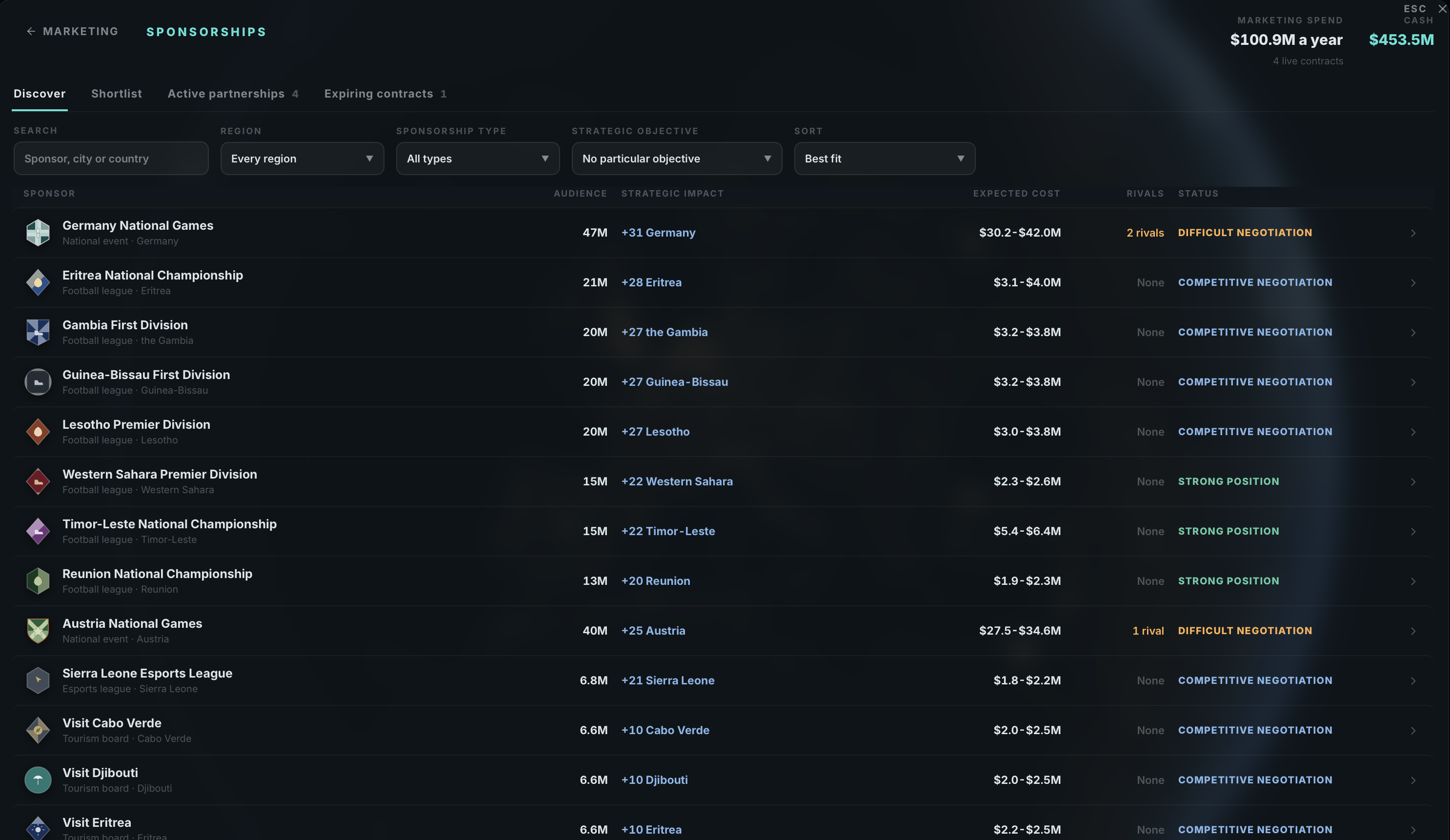
Sponsorships are now a full strategic system
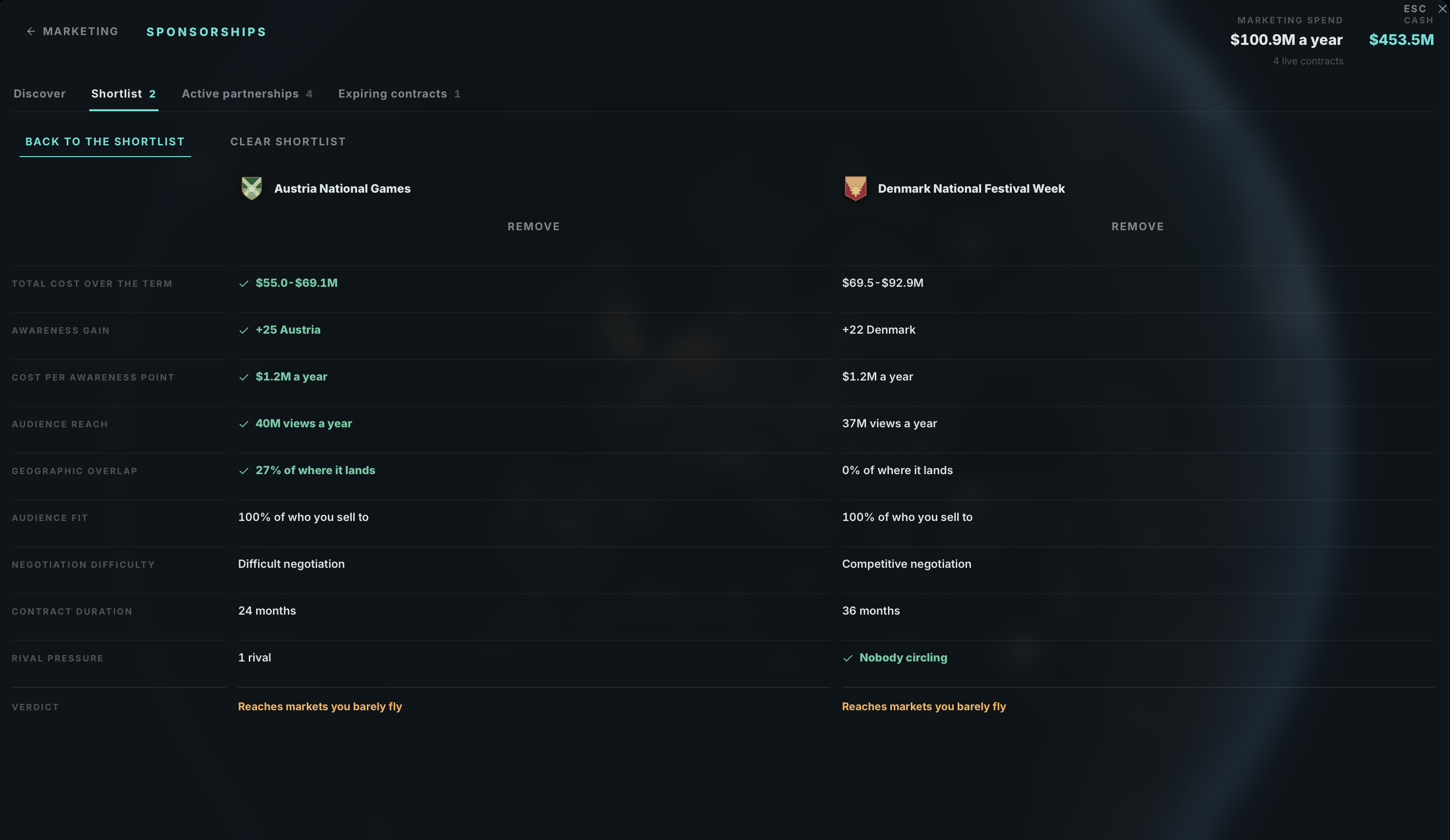
Sponsorships are one of the largest additions in this update. Sponsorships turn awareness into something you acquire from specific properties, in specific markets, against competing airlines, through real negotiations.
The world contains fictional sports, cultural, commercial, tourism, venue, and event properties tied to real cities and countries. They are attached to real cities and countries, but all property names are fictional. Each property offers something different.
A business forum may strengthen your position with premium and corporate travellers. A music festival may deliver broad consumer reach. A local arena may dominate one city, while a continental competition may spread weaker awareness across a much larger region. The player is not simply buying “a sponsorship.”
Rights packages
You negotiate a rights package against each property rather than purchasing a generic modifier. Available rights can include:
Naming rights
Shirt sponsorship
Official airline status
Hospitality rights
Exclusive travel rights
Stronger packages deliver more reach and exclusivity, but prestigious rights demand a stronger airline. A smaller carrier may qualify as an official airline long before it can secure naming rights.
A living sponsorship market
Properties are exclusive, and AI airlines compete for them. Major opportunities may already be held by rivals, but contracts expire on known cycles. The game shows the incumbent’s renewal strength, competing interest, and what your airline must improve before it can become a serious bidder. Relevant properties may also approach you directly.
A completely new negotiation flow
You can probe their priorities, place an offer, make a concession, request better terms, apply pressure, or ask for a final decision.
You begin with incomplete information and must uncover what the other side values by probing their priorities and reading their reactions before patience runs out.
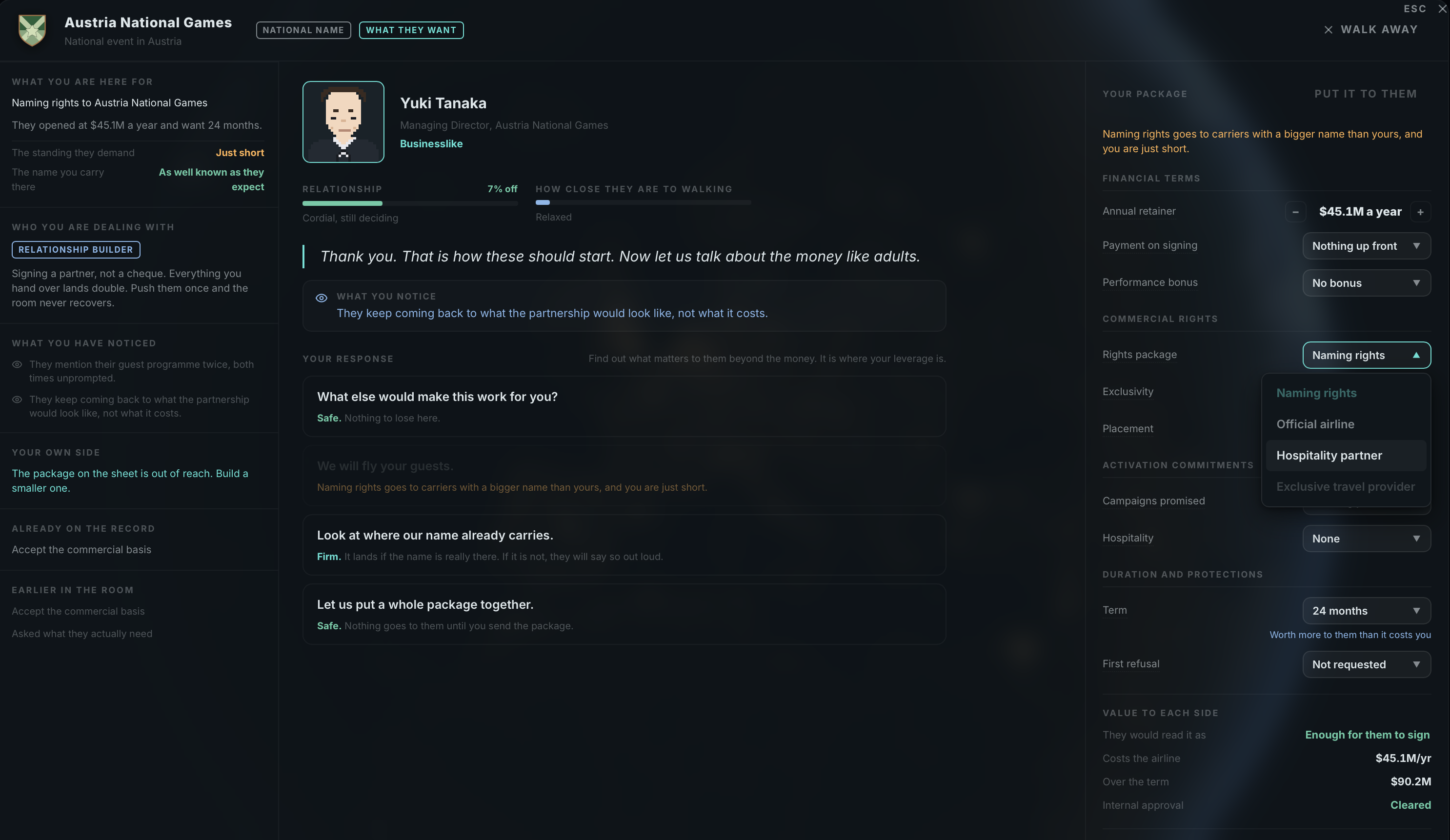
Terms include the retainer, signing payment, contract length, hospitality seats, advertising placement, bonuses, rights packages, exclusivity, and renewal options.
A cash-rich airline can pay more. A smaller airline may compensate with a longer commitment, inventory, hospitality capacity, or a better relationship with the counterparty.
Rapport matters.
The other side remembers how you behaved, and walking away from a negotiation can affect future discussions.
The same negotiation flow now powers aircraft deals
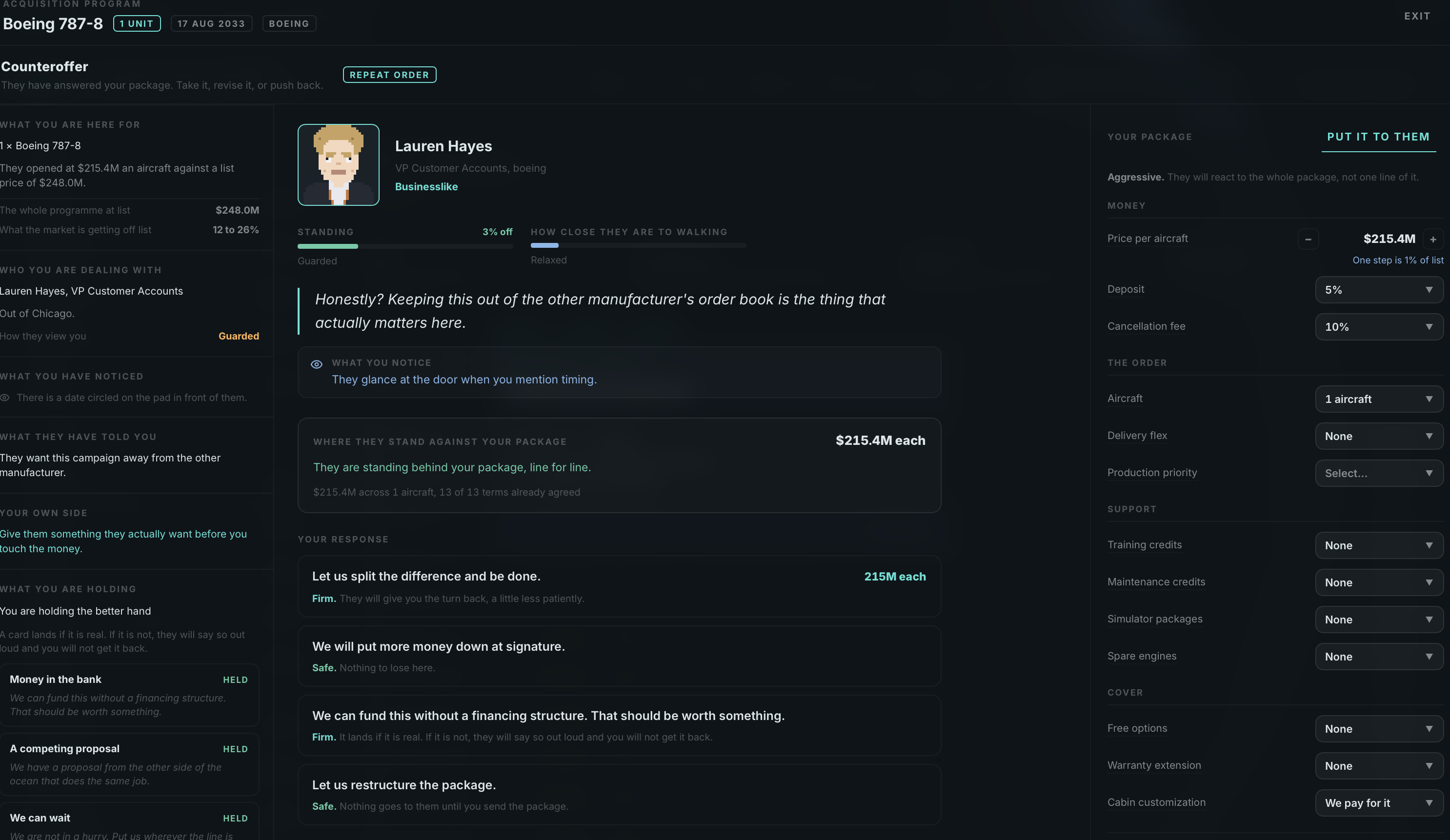
The new conversation-driven flow also extends to both new and used aircraft acquisitions. Manufacturers and sellers are no longer simple storefronts: aircraft campaigns move through correspondence and negotiation, where availability, delivery timing, commercial terms, and the relationship with the counterparty matter.
Signing the deal is only the beginning
A sponsorship does not deliver its full value simply because the contract has been signed. A dormant partnership produces only its baseline exposure. To unlock more of its potential, the airline must actively use it.
Activations cost additional money and deliver diminishing returns, so the goal is to choose the few that best match the property and your airline. Ticket promotions connect the partnership directly to your network. Properties identify the markets they care about, and enrolling routes trades yield for additional demand from their audience.
Partnership performance and consequences
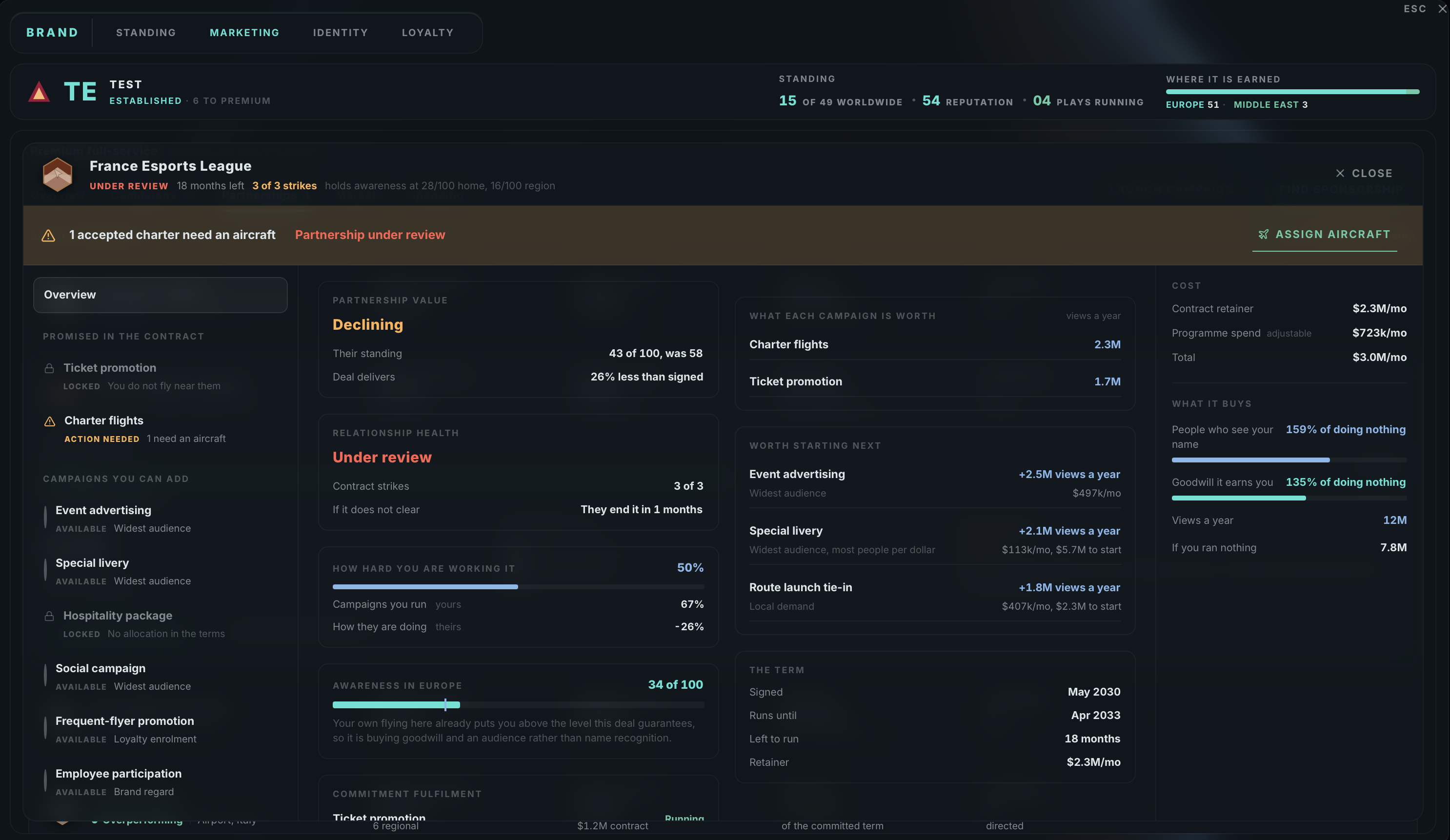
Both sides can disappoint: the property may lose standing or suffer public problems, while your airline can damage the relationship through cancellations, unreliable service, financial weakness, or missed commitments.
Your airline can also disappoint the partner through cancellations, unreliable service, financial weakness, or missed commitments.
If performance falls far enough, the partnership can enter review. Repeated failure may cause the property to terminate the contract.
A successful partnership can contribute more than awareness. It can support corporate relationships, loyalty enrolment, local demand, and the longer-term credibility of the airline.
Charter obligations bring marketing promises into operations
Some sponsorship agreements now include real charter obligations. This is where a promise made by the marketing department lands on the fleet. Clubs, competitions, touring organisations, and other travelling properties can require dated flights throughout their season. These are not abstract modifiers. Accepting a charter obligation creates real flying.
The calendar is known in advance, giving the player time to plan fleet capacity around upcoming fixtures.
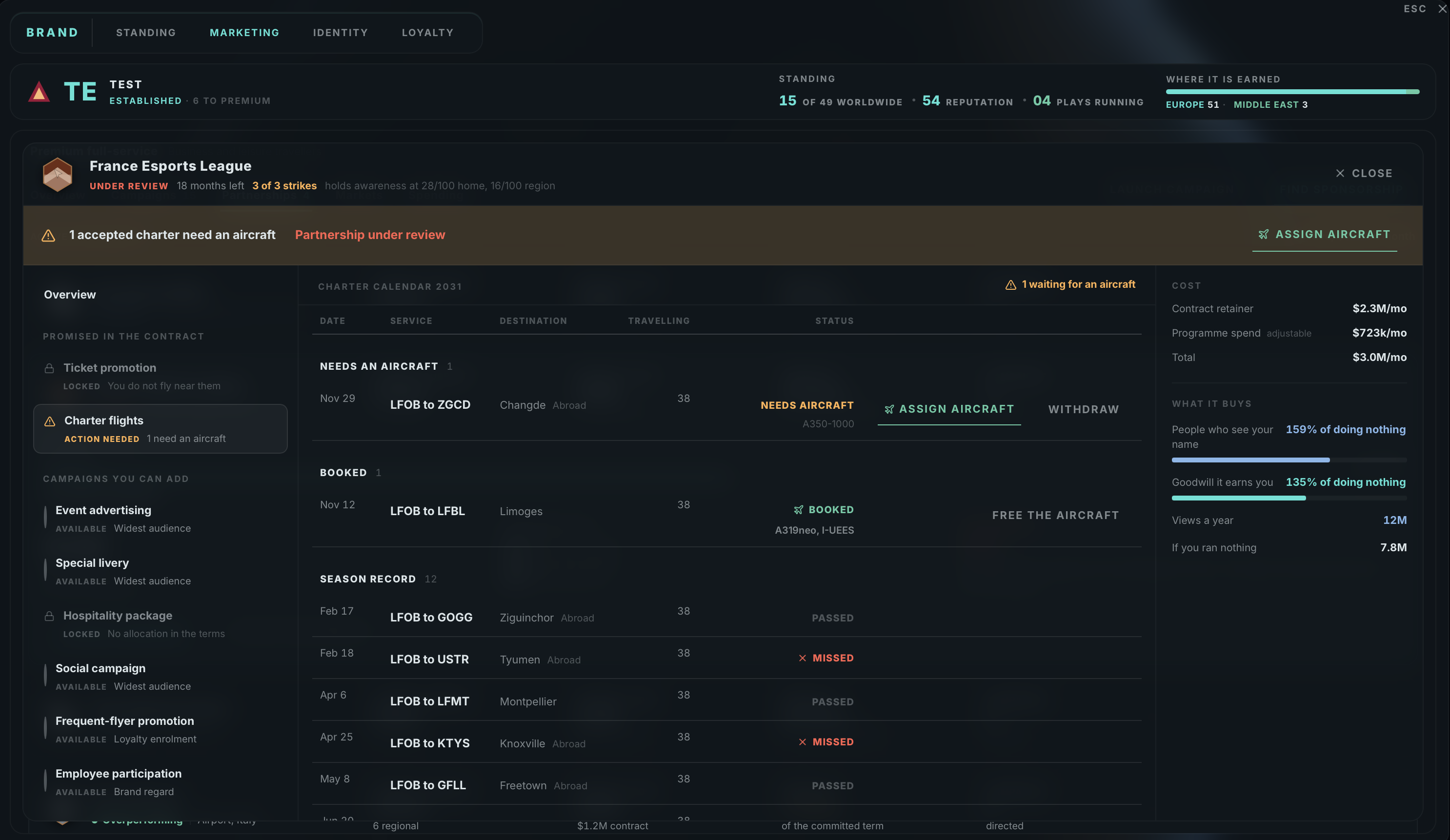
You must assign an aircraft capable of carrying the party, flying the route, and operating at both airports. When no tail has enough free time, the game shows which scheduled flights would need to be displaced before you confirm the trade. Misses caused by poor planning, technical failures, weather, crew shortages, or recovery problems all count against the partnership, and repeated failures may trigger a review or termination.
The Executive Inbox
Important airline decisions now have a proper home.
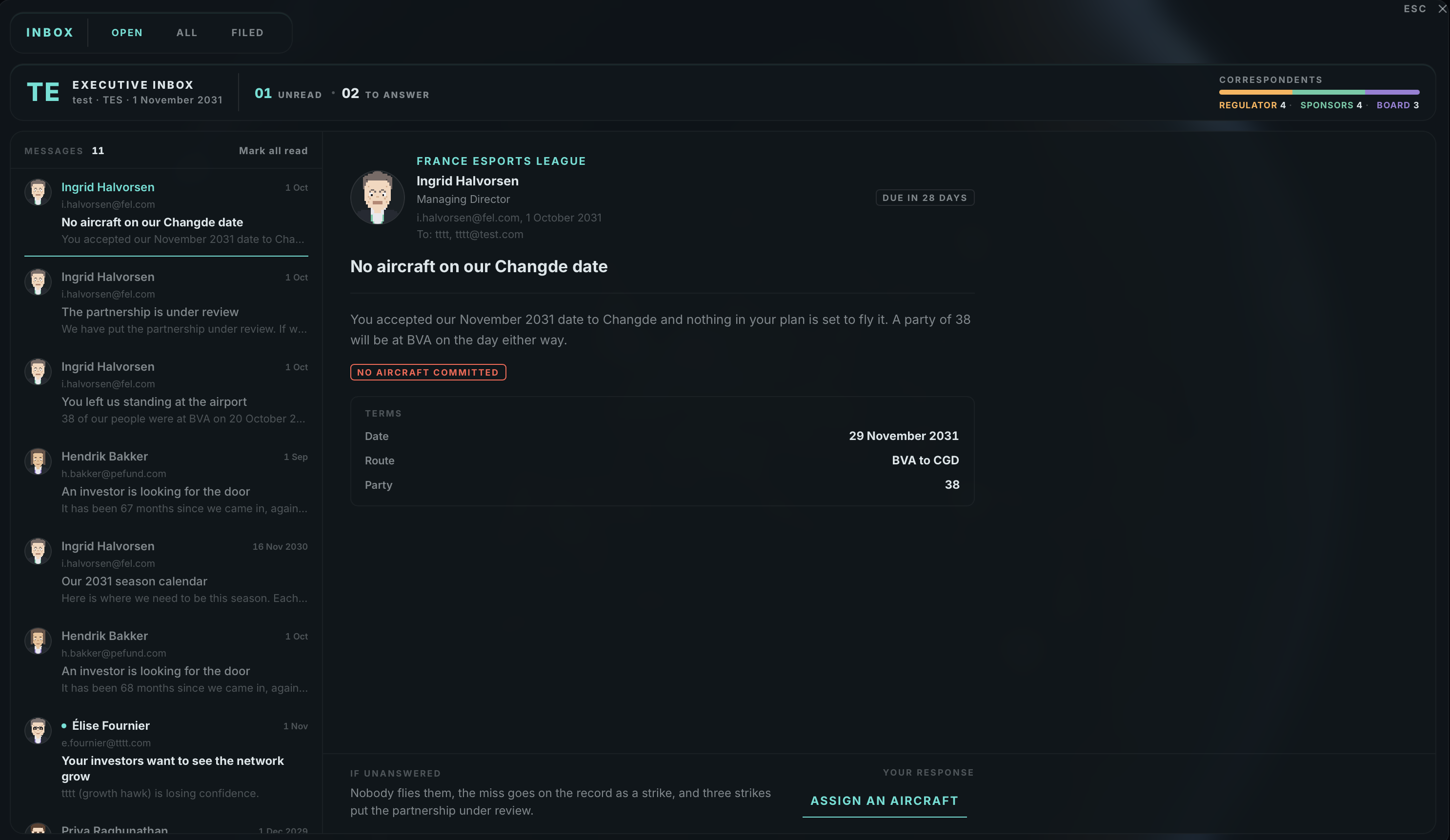
The Executive Inbox is a two-way correspondence system where manufacturers, authorities, board members, rival airlines, airports, sponsors, and other counterparties can contact the player directly.
Every message is attached to a real game record and carries either important information or a decision awaiting your response.
Messages with real consequences
There are two broad classes of correspondence. Notices provide information without requiring an immediate answer.
Answerable messages carry a deadline and require the player to make a decision.
Ignoring a message is always allowed, but silence is not consequence-free.
A manufacturer may give a production slot to another customer. A regulator may escalate a finding. A sponsor may cool on the relationship. A rival airline may successfully poach a crew member.
Some decisions resolve directly inside the letter through actions such as accepting, declining, appealing, transferring, or responding.
Longer negotiations are not compressed into simple email buttons. Instead, the letter opens the relevant campaign and hands the player into the dedicated negotiation room.
The Inbox currently connects to areas including:
manufacturer invitations,
aircraft campaigns,
overdue aircraft delivery payments,
AOC decisions,
regulatory findings and appeals,
bilateral and capacity changes,
board and investor pressure,
crew poaching offers,
sponsorship approaches,
charter fixture warnings,
missed obligations,
and partnership reviews.
Airport lifecycle changes are no longer silent
Airports already changed across Skyline Sim’s historical timeline, but too many of those changes happened silently.
Airport closures, openings, relocations, renames, runway changes, and slot-coordination promotions now reach you through the Executive Inbox whenever they affect your airline. Each message explains your network exposure, operational restrictions, successor airport where relevant, and the expected actions of rival carriers.
Relocation notices include changes to runway length and identify which aircraft in your fleet may become restricted or newly compatible. Airports also notify the airline about major renames and upcoming Level 3 coordination, where slot holdings will become mandatory for scheduled service.
Loyalty becomes an airline system, not a single number
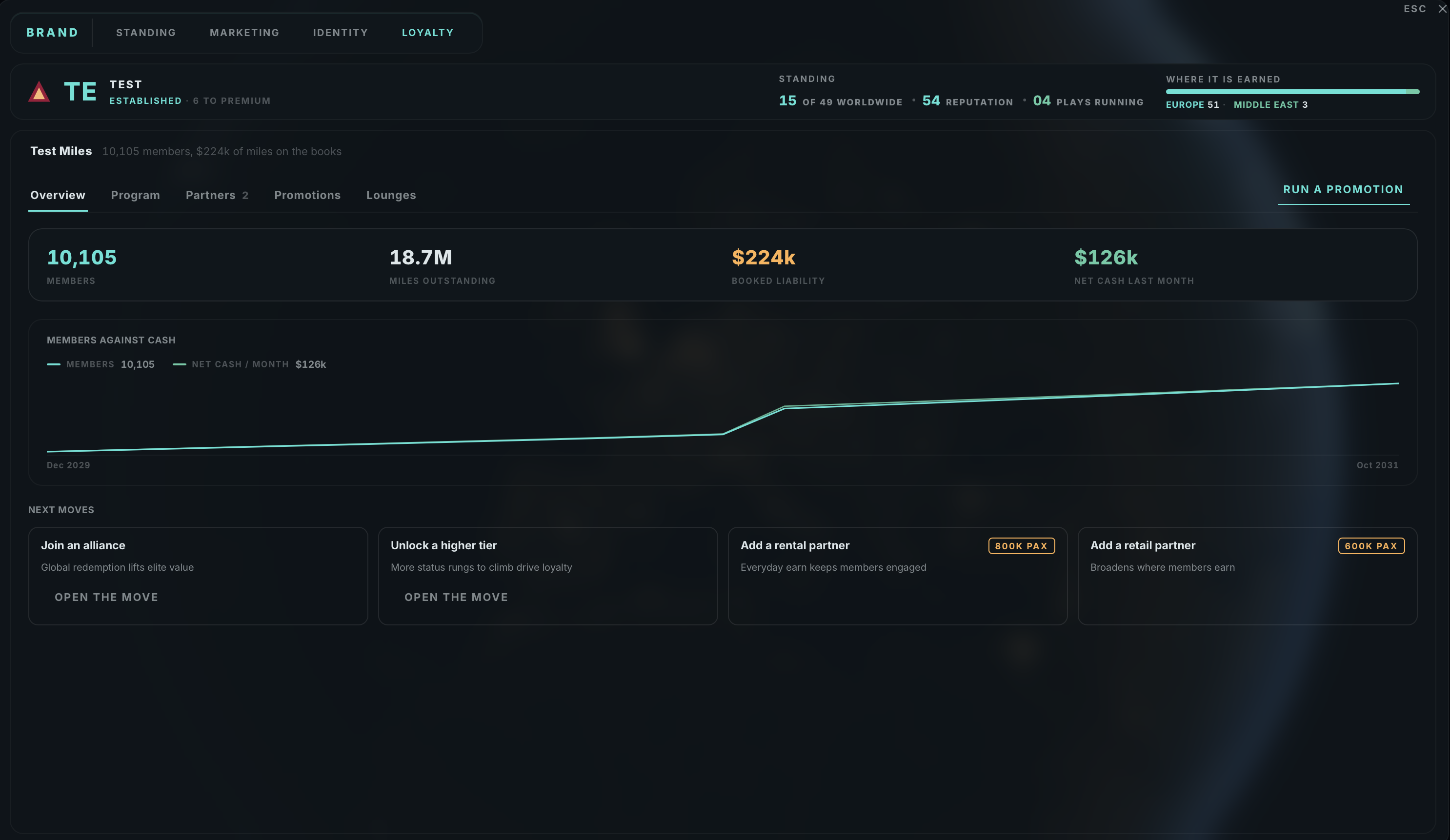
The rebuilt Loyalty screen now tracks programme enrolment, member activity, outstanding miles, financial liability, partners, promotions, lounges, and progression. Sponsorships can drive enrolment and create new promotions, while network quality and the airline’s wider brand determine whether members have a reason to remain loyal.
Brand Identity
Brand Identity now defines the promise your airline makes and measures whether pricing, service, reliability, network design, marketing, and partnerships support it. Claiming an identity that the operation consistently contradicts will weaken its credibility.
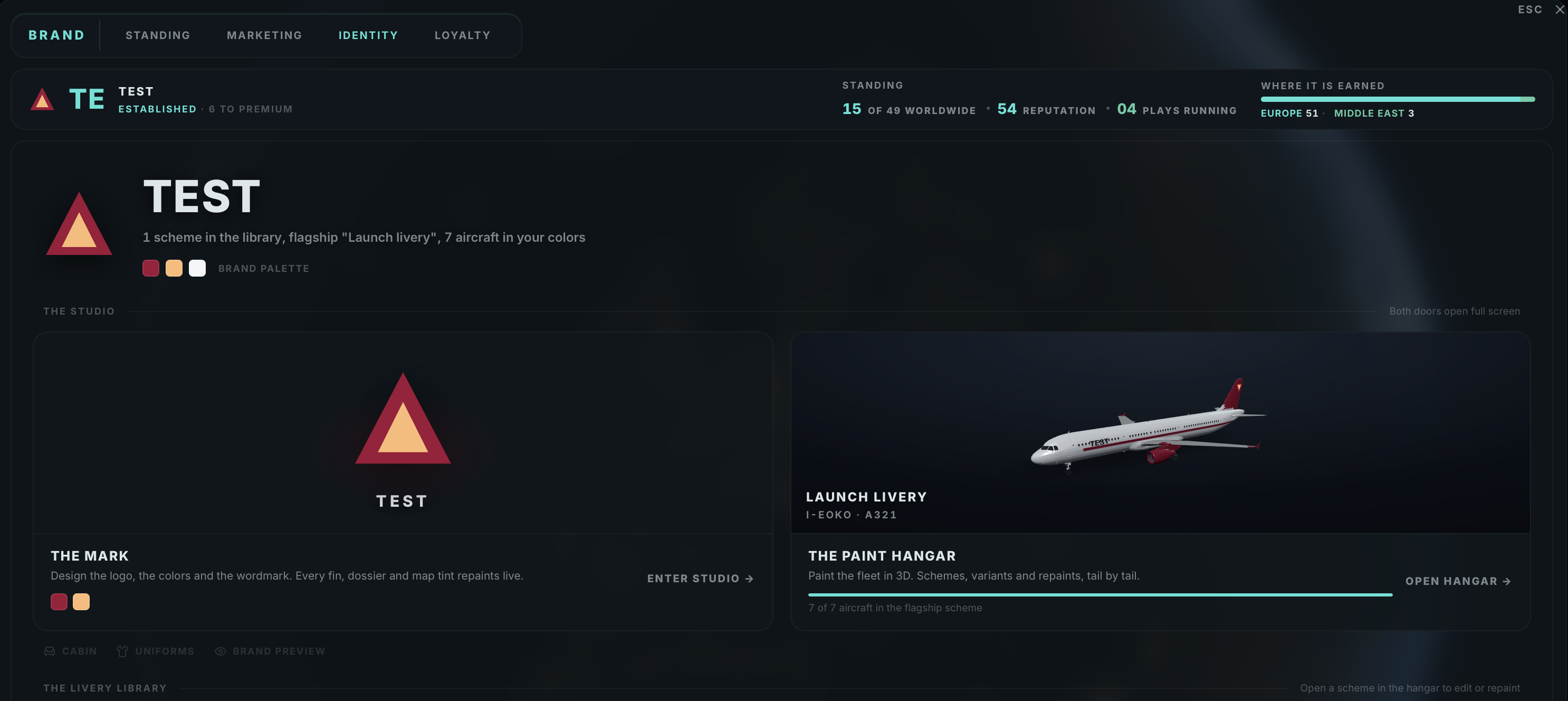
Over time, this should make airlines with similar fleets and networks feel meaningfully different.
The final phase of Playtest 1
The major update will go live on August 9.
Playtest 1 will end on August 18. The period between those dates will be the final testing phase for this playtest.
During the final nine days, we will focus on negotiation pacing, sponsorship balance, charter clarity, Inbox usefulness, airport lifecycle correspondence, and how well Brand, Marketing, Identity, and Loyalty work together.
This playtest has already changed Skyline Sim significantly.
Your reports have shaped route planning, maintenance, recruitment, pricing, scheduling, fleet management, and many smaller areas across the game.
This final update is another large step in that process.
Thank you to everyone who has tested the game, reported issues, challenged design decisions, and spent time helping us improve it.
We look forward to seeing what kind of airlines you build when the update goes live on August 9.

Major update release: August 9
Playtest 1 ends: August 18