
A rating is only the beginning
Every chess career begins with a number. But a number alone does not make a Grandmaster.
In Grand Chess Manager: Road to Grandmaster, your personal career is built across seasons of training, tournament choices, difficult opponents, changes in form and the pressure of chasing the next milestone. Today, we want to take a closer look at the systems behind that journey: ELO ratings, title norms and the decisions that connect them.
Your rating tells the story of your results
Rated games constantly reshape your career. A strong tournament can push you toward a new personal best, while a difficult run can cost points, confidence and momentum.
The important decision comes before the first move: where should you compete?
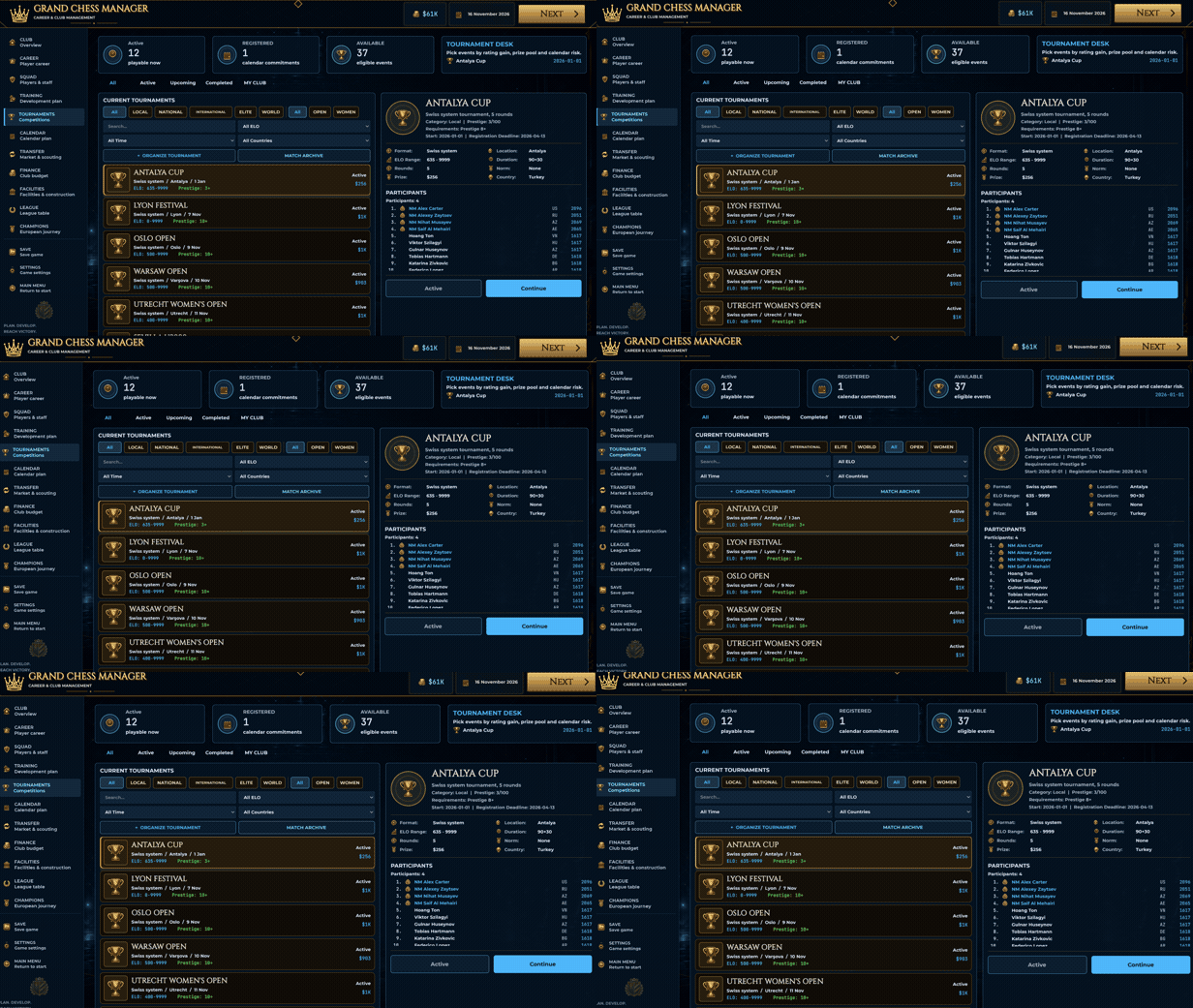
The tournament calendar includes events at different levels, from smaller local competitions to national, international and elite stages. Each event can have its own rating range, prestige requirement, prize pool, format and place on the calendar. A safer event may protect your rating and build form. A stronger field may offer more prestige and a better chance to prove yourself, but it also carries greater risk.
Your goal is not simply to enter every available tournament. It is to build a calendar that fits your current level, your condition and the next step in your career.
Titles require more than grinding ELO
Reaching a rating threshold is an important achievement, but the highest titles demand more.
The current career system includes rating-based titles as well as norm-based paths for International Master and Grandmaster. To earn the highest titles, a player must reach the required rating and collect three qualifying norms.
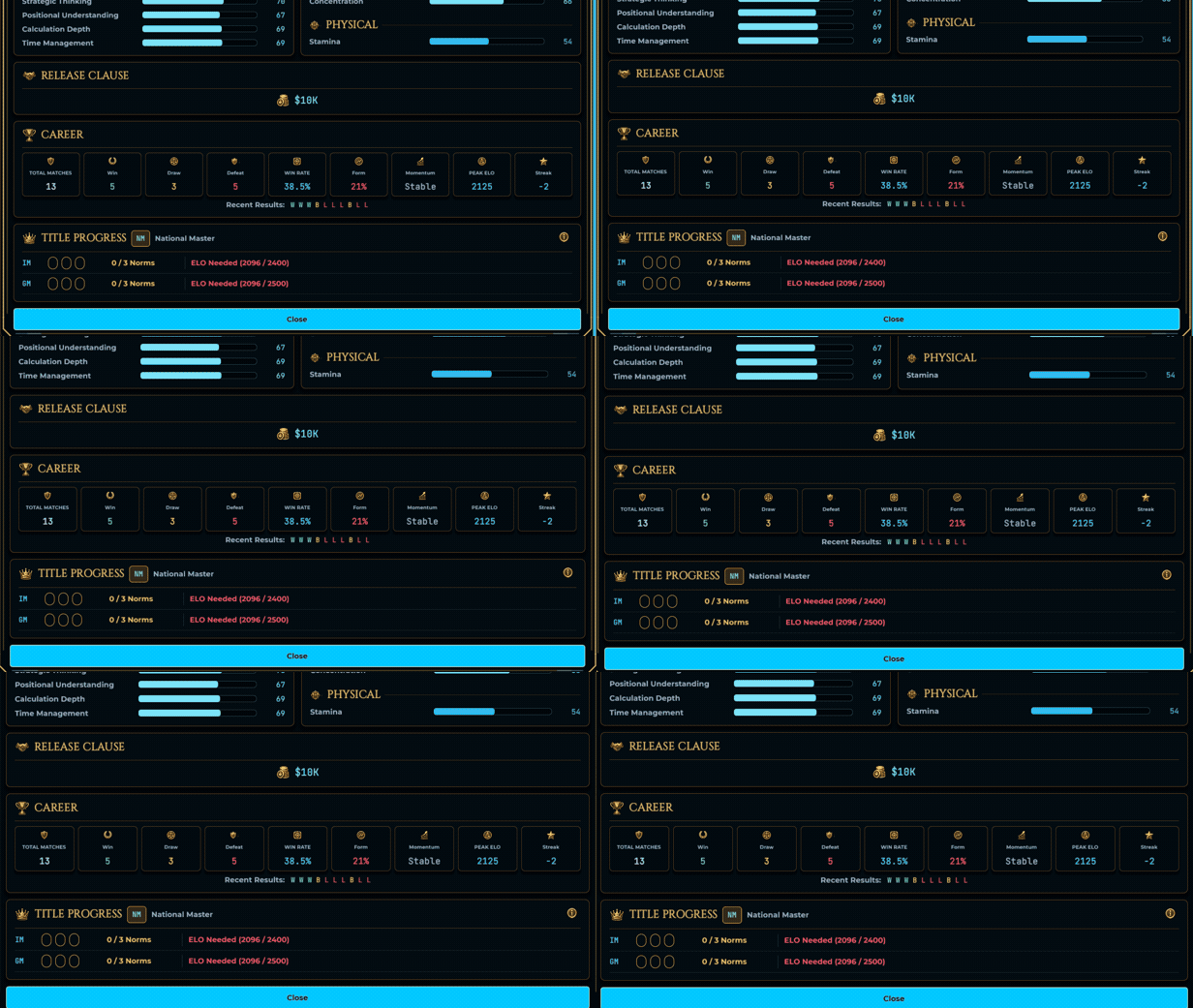
A norm is not awarded for one lucky victory. The game evaluates your performance across the tournament, the average strength of your opponents and whether the event contains enough games to represent a serious competitive test. This means the road to a title is made of complete tournament performances, not isolated moments.
Your player profile tracks this progress clearly: current and peak ELO, title status, completed norms, remaining requirements and the history of the milestones you have earned.
Preparation creates the opportunity
Results do not come from rating alone. Every player develops across multiple chess skills, including opening knowledge, middlegame play, endgame technique, tactical ability, strategic thinking, positional understanding, calculation depth and time management.
Mental and physical factors matter as well. Motivation, confidence, composure, determination, concentration and stamina can all influence how prepared a player is when an important tournament begins.
Training can improve weaknesses and sharpen strengths, but preparation always has a cost. Should you push for one more intensive session, focus on a specific area, or allow time to recover before the next event? A good plan can create the conditions for a breakthrough, but it can never guarantee the result.
A career you can look back on
We want progression to feel like a history, not just a bar filling up.
Career pages record your peak rating, results, form, title progress and recent performances. Norms and titles become permanent milestones. When a major title is finally achieved, the game marks it as a career-defining moment rather than silently changing a label in the interface.
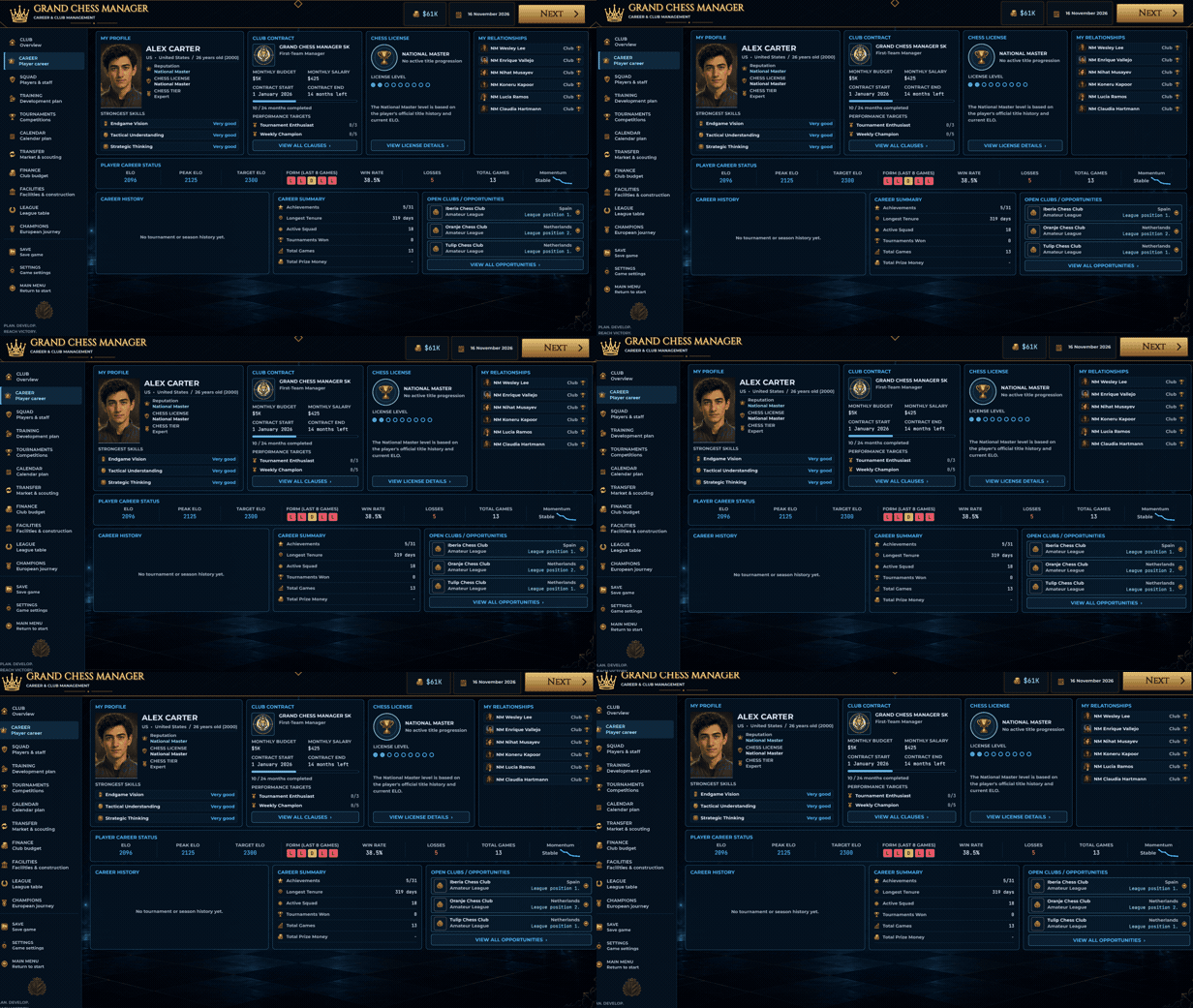
Over time, the story becomes uniquely yours: the tournament where you earned your first norm, the losing streak you recovered from, the rival who blocked your progress, and the final performance that completed the road to Grandmaster.
One destination, many decisions
Do you protect your rating or enter the stronger tournament? Do you chase prize money, prestige or a norm opportunity? Do you keep playing while your form is high, or rest before exhaustion becomes a problem? Do you train broadly, or build your career around a distinctive playing style?
These decisions are the heart of Grand Chess Manager. The board matters, but so does everything that brings you to the board.
The title and norm systems are still being developed and balanced. We will continue refining tournament requirements, progression speed, presentation and the connection between training, form and competitive performance.
Which milestone would feel most rewarding to you: reaching 2000 ELO, earning your first norm, or finally becoming a Grandmaster?
Thank you for following the development of Grand Chess Manager: Road to Grandmaster. If you want to support the project, please add the game to your Steam wishlist.