
On the way through the terminal, Flynn stopped beside the window.
One aircraft outside looked freshly painted. The one parked beside it did not.
“Why would an airline buy the older one?” he asked.
Lina kept walking. “Because the new one probably costs more.”
“It also burns less fuel.”
“And when can they have it?”
Flynn looked again. “Good point.”
“The older one might not belong to them anyway.”
“What do you mean?”
“It could be leased.”
“So, new, used, or rented.”
“Leased.”
“That is a more expensive word for rented.”
Passengers only see the aircraft waiting at the gate. For the airline, deciding how to acquire that aircraft shapes capital reserves, operational flexibility, and delivery schedules for years.
Flightline gives players three ways to build a fleet: order new airframes from manufacturers, purchase existing inventory from the used market, or lease aircraft for a fixed term.
Start with what the airline needs
Fleet planning starts with the mission rather than a favorite airframe.
A regional turboprop serving short runways faces very different operational constraints than a long-haul widebody. A low-cost carrier often prioritizes purchase price and low fuel burn, while a premium airline might prioritize passenger comfort scores, range, and cabin configuration potential.
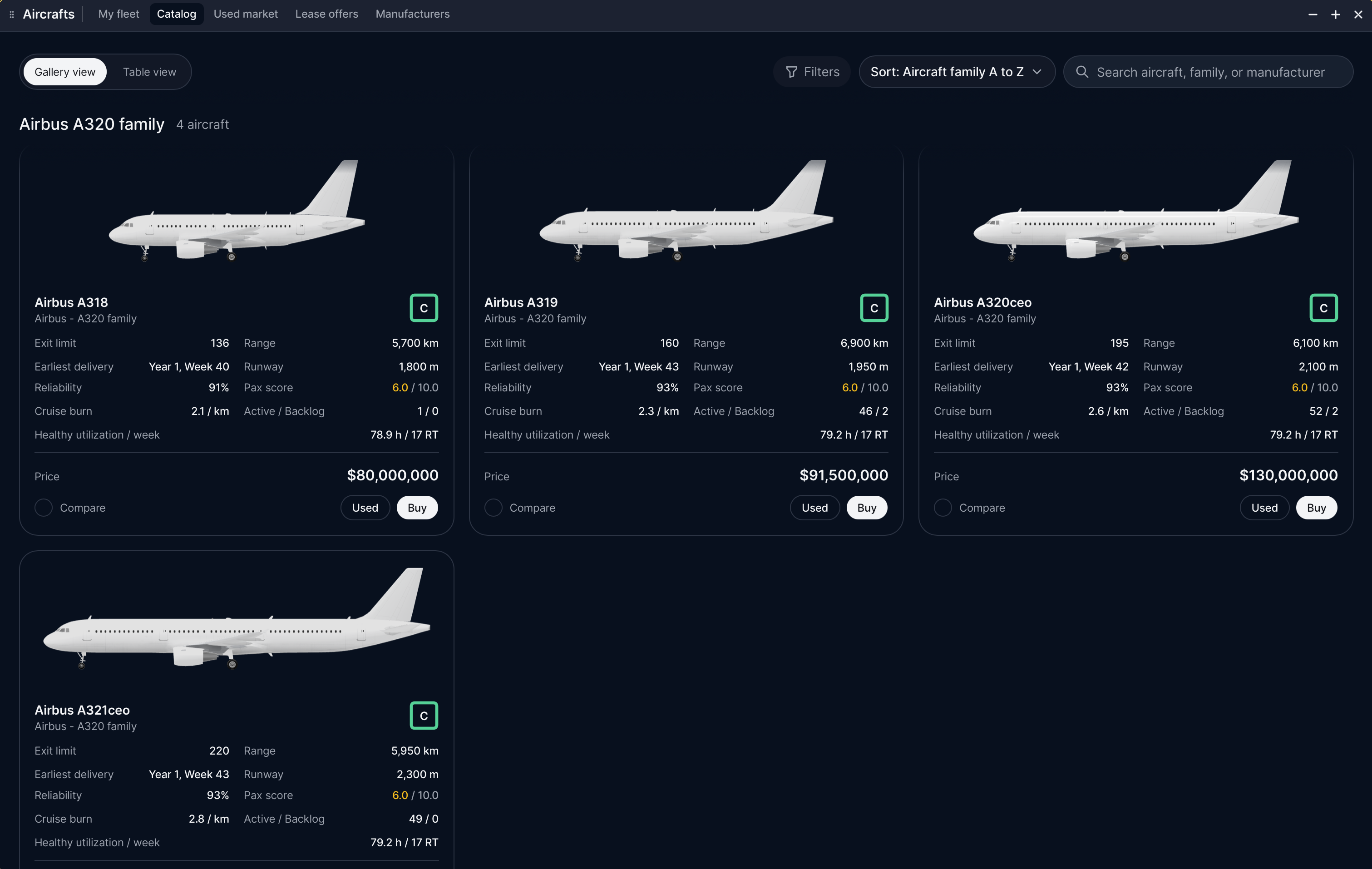
Flightline’s Aircraft Catalog brings these trade-offs into a single view. Aircraft can be compared across base price, ICAO class, certified exit limits, range, cruise fuel burn, runway requirements, reliability, healthy weekly utilization, passenger scores, and delivery lead times.
A lower value on one metric often comes with tradeoffs & consequences. An aerodynamically efficient jet may demand more runway than your destination airports offer. A high-capacity airliner can lower seat-mile costs, but only if your routes generate enough demand to fill the cabin.
Baseline passenger score matters. The aircraft itself establishes the ride quality and noise baseline before cabin seating, meals, Wi-Fi, or entertainment are configured.
Delivery timing adds another constraint. An aircraft may look ideal on paper while carrying a multi-year manufacturer backlog. The Catalog displays earliest available delivery, forcing airlines to weigh performance gains against delivery delays.
Ordering new aircraft
Flynn continued reading.
“This one has better range, lower fuel burn, and a higher passenger score.”
“How much?” Lina asked.
He told her.
“For one aircraft?”
“Yes.”
“And you wanted four of them?”
“I was comparing.”
“You had the quantity set to four.”
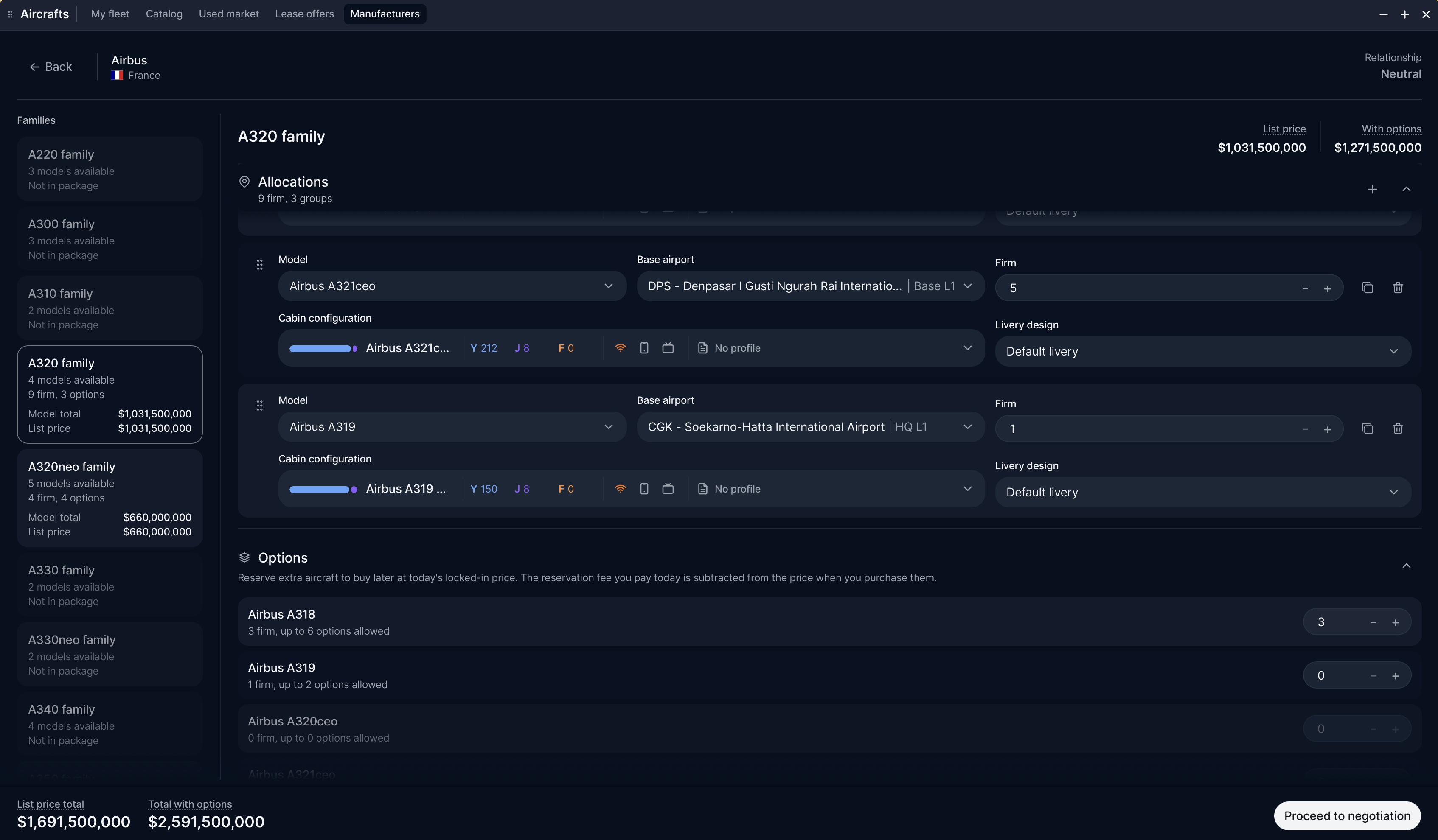
Ordering new aircraft in Flightline starts in the Catalog and moves into the Manufacturers workspace to structure the purchase package.
Players select models and set firm order quantities, assign airframes to specific home bases, liveries, and custom cabin configurations prior to delivery.
These specifications do not need to be uniform across an order. A single package can split aircraft across different bases, liveries and cabin layouts, allowing one order to support multiple network expansions.
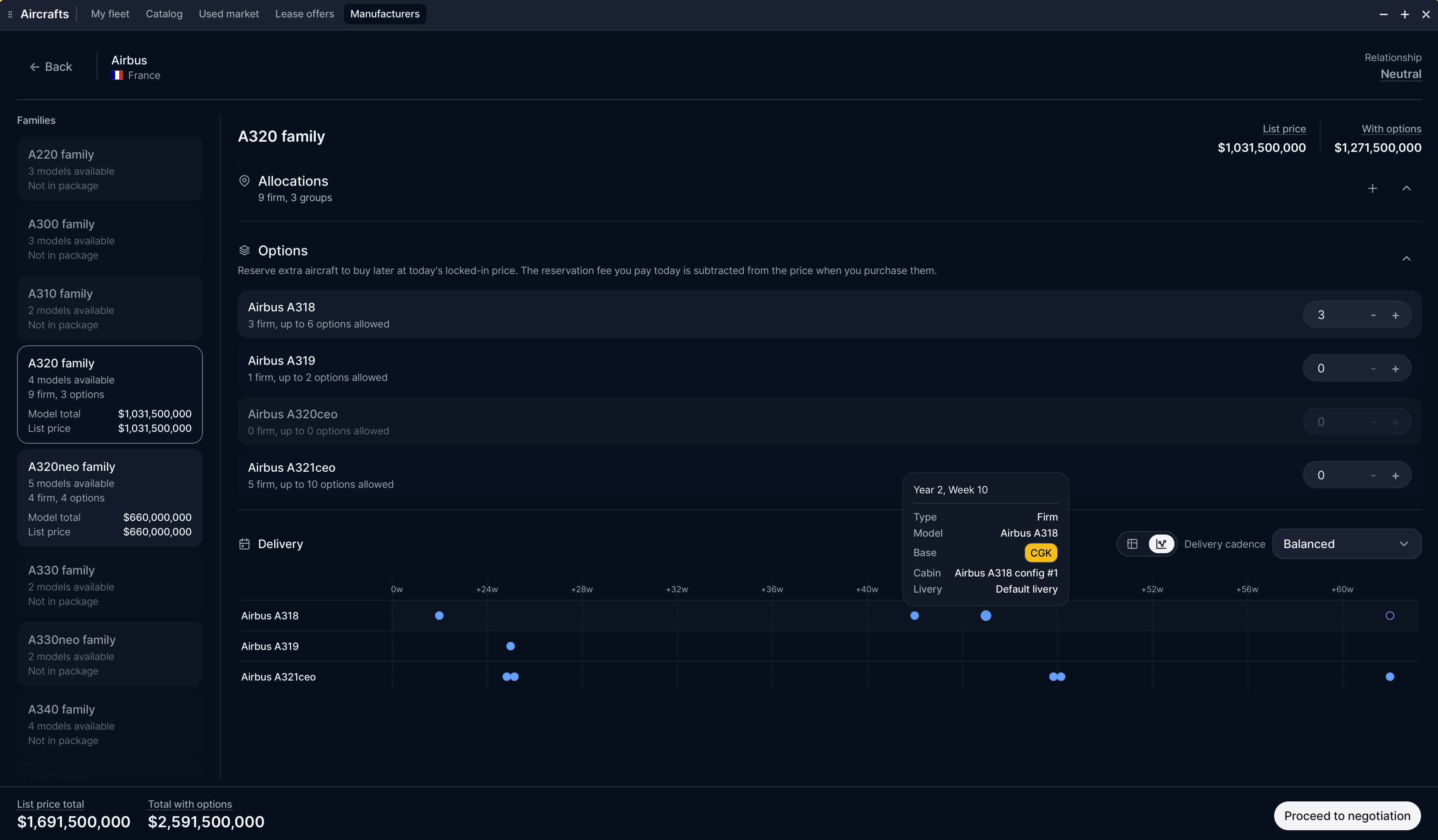
Delivery schedules appear as both a milestone table and a visual timeline, showing exactly when each airframe arrives, where it will be based, and how new capacity enters the fleet over time.
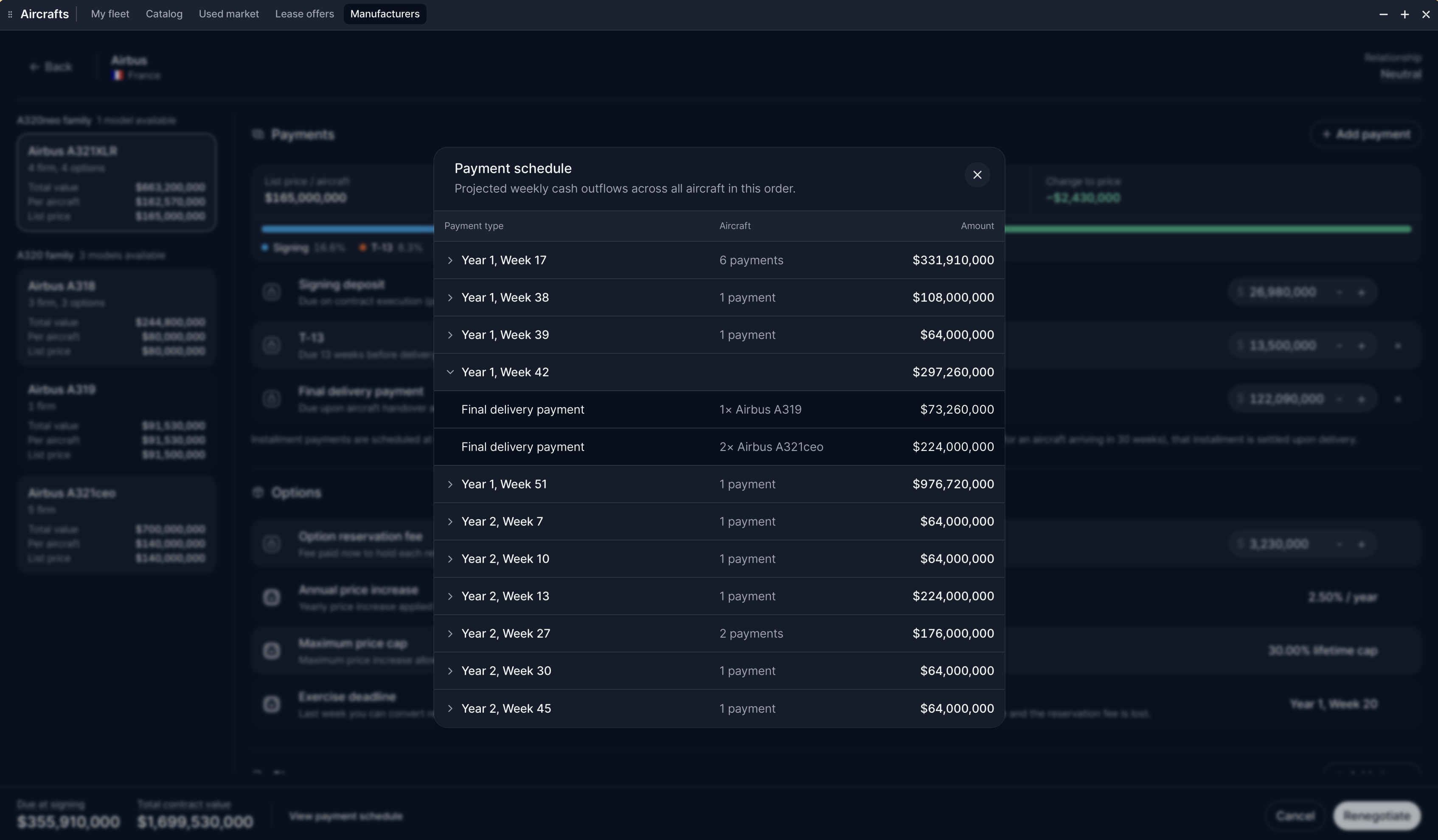
Players can also secure option aircraft alongside firm orders. Options lock in delivery slots and pricing without requiring an immediate full capital commitment; the reservation fee is credited back when an option is exercised. Structuring the order creates a predictable multi-cycle delivery pipeline tailored to planned route growth.
Negotiating the order
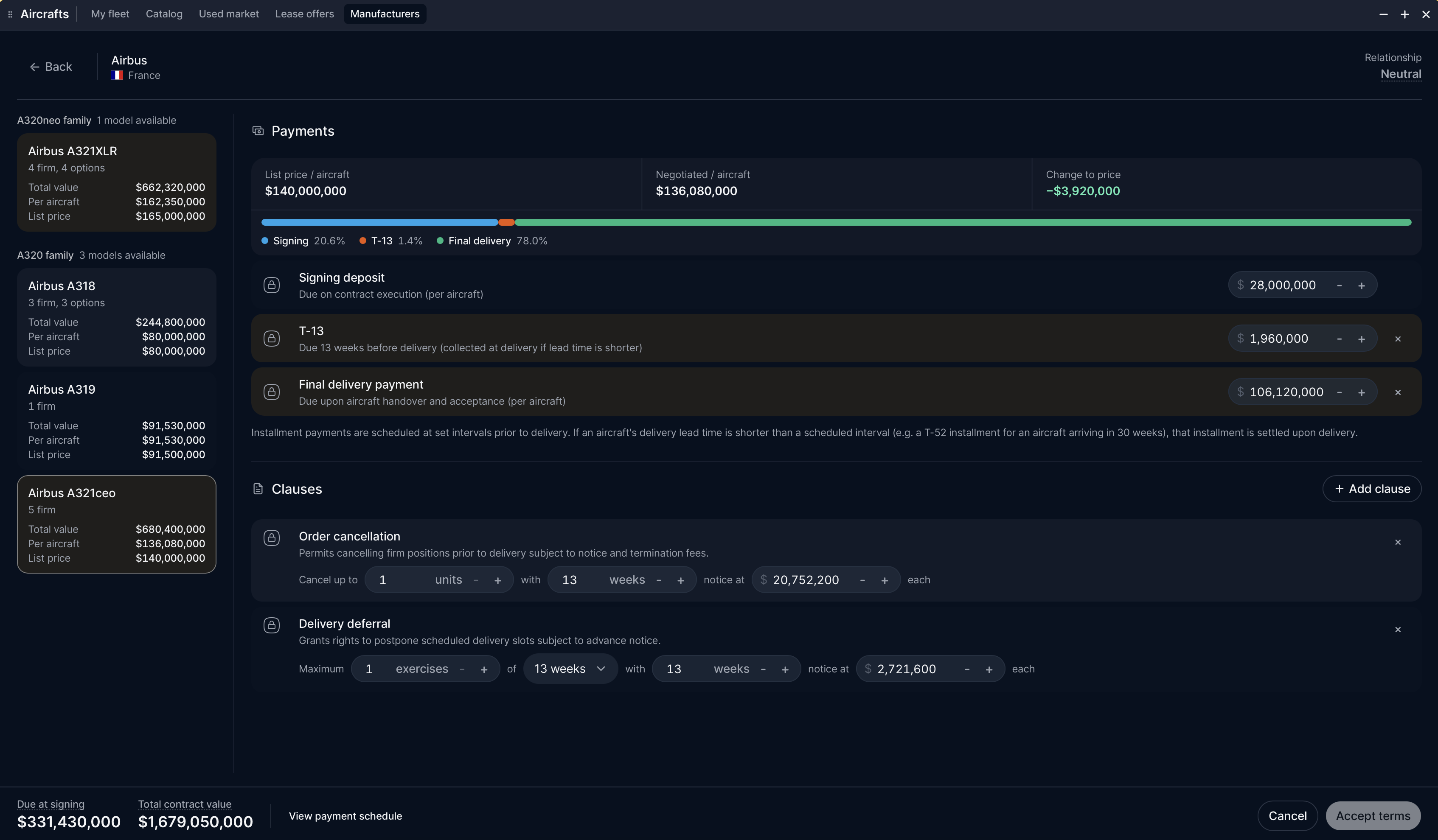
Aircraft list prices serve as a baseline for manufacturer agreements. Flightline allows players to negotiate the contract structure directly, adjusting down payments, milestone installments, delivery balances, option terms, and contractual flexibility around deferrals and cancellations.
A large upfront deposit suits airlines with substantial cash reserves, while capital-constrained carriers often structure payments into future cycles to preserve liquidity for route launches, base expansions, and cabin retrofits.
Contract flexibility also mitigates risk. Securing deferral and cancellation rights protects the airline if growth slows, though manufacturers demand commercial concessions in return.
Manufacturers can accept proposals, reject them outright, or return counter-offers. Instead of exposing abstract formulas, Flightline surfaces the terms, counter-proposals, and concrete tradeoffs needed to close a deal.
Existing contracts and relationship standing remain tracked in the Manufacturers workspace, turning aircraft acquisition into an evolving commercial partnership.
Buying used aircraft
“Here,” Flynn said. “This one is much cheaper.”
Lina looked at the listing. “It is also eighteen years old.”
“Still has plenty of range.”
“What does ‘condition’ say?”
Flynn paused.
“Keep looking.”
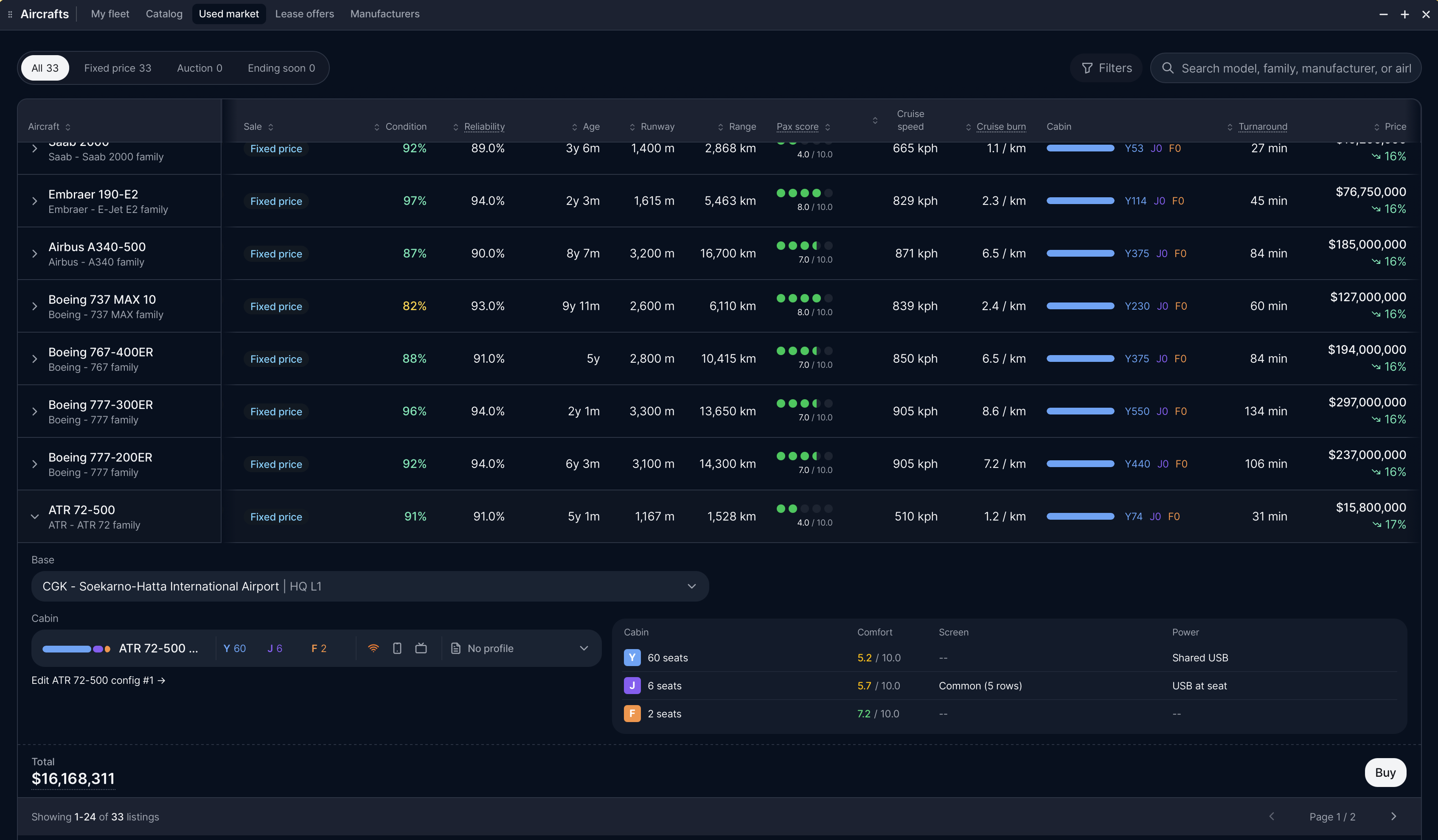
The Used market provides immediate fleet capacity without production lead times. Listed there are individual listings with full operational histories: registration tail numbers, former operators, airframe age, current condition, reliability ratings, existing cabin layouts, performance metrics, and pricing. Listings sell through either fixed-price purchases or competitive auctions.
Two aircraft of the identical model often carry very different total costs. A discounted listing might arrive with heavy wear and low mechanical condition, while a slightly younger airframe might include an immediately usable cabin layout that saves retrofit costs.
The purchase flow incorporates base assignment and cabin refitting into the final transaction quote, making the total onboarding cost clear before funds are committed.
Used aircraft solve immediate capacity deficits, though they introduce fleet diversity in age, maintenance demands, and wear that active airlines must manage carefully.
Leasing aircraft
Flynn opened the lease offers.
“So we pay every week.”
“Yes,” Lina said.
“And return it later.”
“Yes.”
“But we still pay to configure it.”
“You wanted to call it renting.”
“I am beginning to see why they use the ‘lease’ wording.
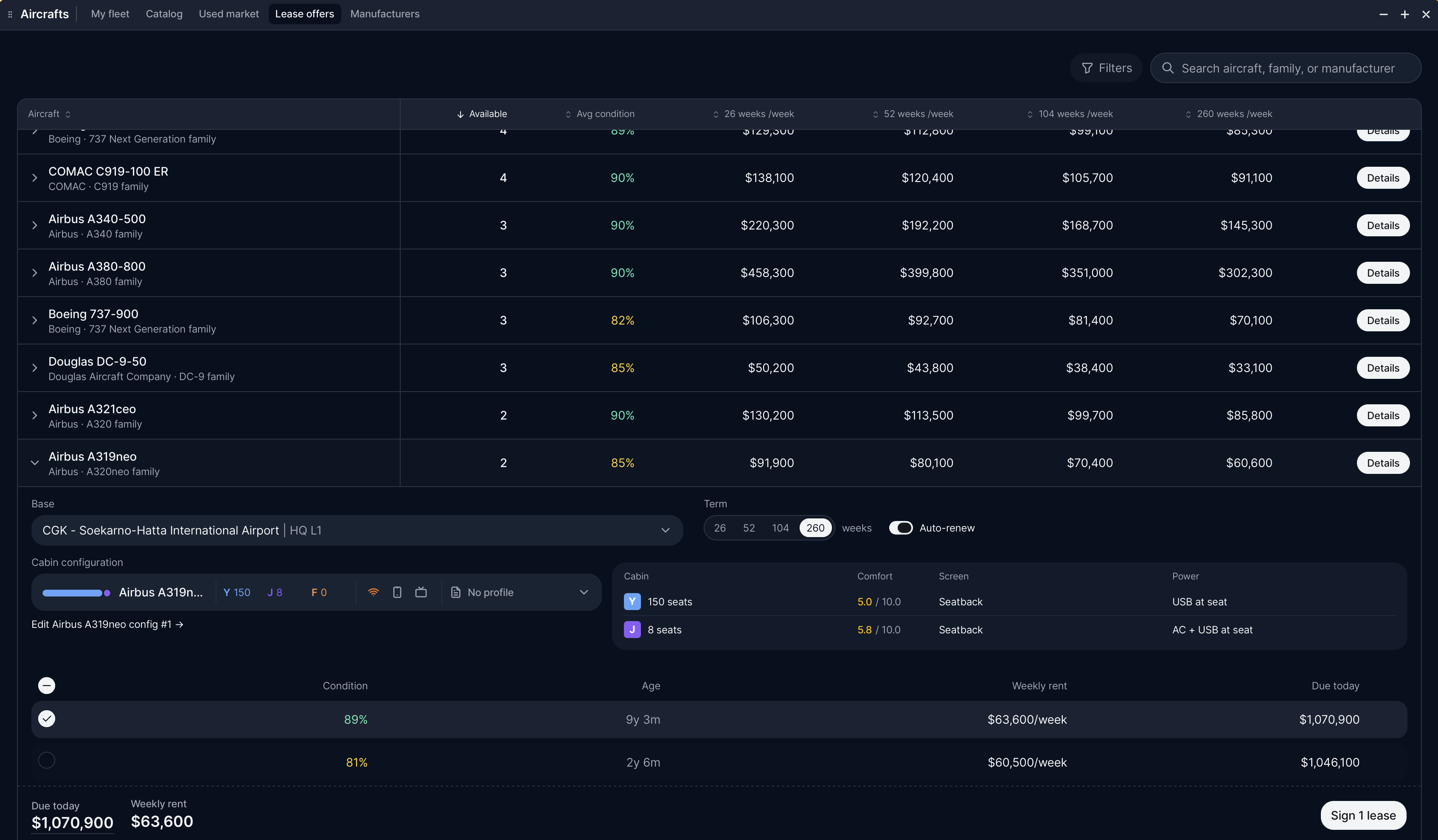
Leasing avoids large upfront purchase capital, but comes with ongoing cash obligations. The Lease offers market displays available models, market supply, average condition, and weekly rental rates across four standard terms: 26, 52, 104, and 260 weeks.
The lease workflow lets you review candidate airframes, assign bases and cabin configurations, and execute leases in bulk. The checkout summary distinguishes upfront capital from recurring operational costs. The initial Due today charge covers the lease setup fee, security deposit, first week's rent, cabin fit-out, and onboard hardware installation or activation.
Shorter terms limit financial exposure when testing new routes, while multi-year agreements offer stable capacity without long-term debt. Startups frequently lease their first aircraft to protect early liquidity, whereas mature carriers use leases to bridge delivery gaps.
Building a mixed fleet
Airlines are rarely locked into a single acquisition model. New deliveries anchor long-term fleet standardization, used acquisitions seize immediate market opportunities, and dry leases provide temporary capacity during network expansion.
Fleet composition evolves alongside company finances. A startup might rely on leased and pre-owned aircraft to minimize upfront debt, transitioning to factory-direct orders as cash flows stabilize. A low-cost carrier may prioritize owned standard narrowbodies, while a boutique operator mixes regional leases with targeted used purchases.
Fleet planning succeeds by matching airframe capability and delivery timing to capital constraints.
Flynn looked through the window again.
“Which one would you rather fly?” he asked. “The new one, the used one, or the leased one?”
“Yes.”
Lina watched the ground crew unloading the aircraft they had just left.
“The one with our bags on it.”
“That is not how fleet planning works.”
“It is how passenger planning works.”