
The flight home from Gatwick had been full.
At JFK, Flynn and Lina joined another crowd. Families waited around luggage carts while business travelers hurried towards their connections.
Flynn looked back.
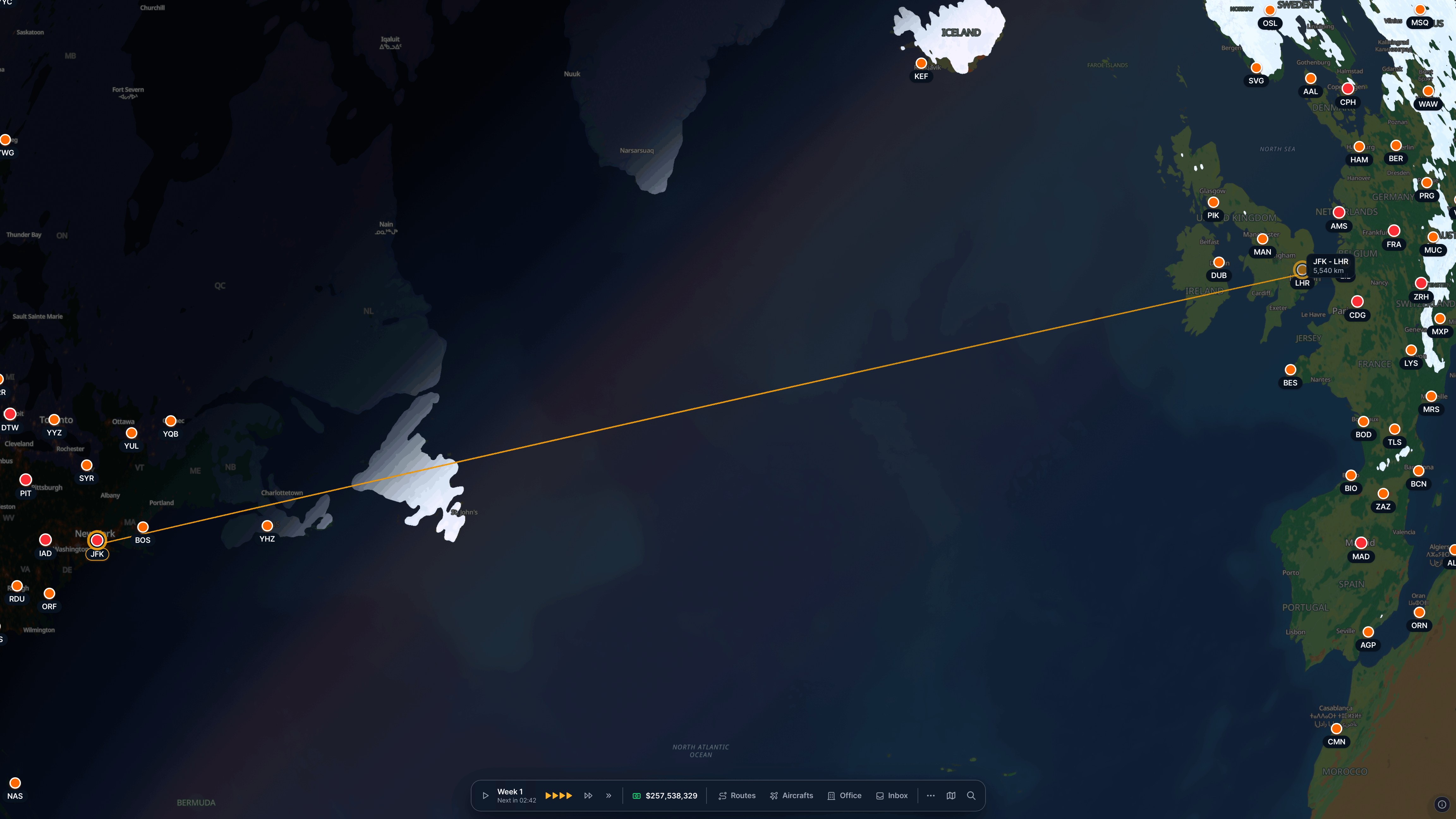
"How many people fly between New York and London every day?"
"Enough to fill our flight," Lina said.
"And all the others."
An onward-connections screen listed another flight to Boston.
"Who flies from New York to Boston?"
Lina looked at him. "People who don't want to spend hours on a train."
"After getting to the airport, security, boarding, and getting back into the city?"
She stopped. "All right. Who does fly to Boston?"
Every traveler moving through JFK had a reason to travel. Some were returning home. Others had work waiting, family to visit, or a holiday they had planned for months.
Together, those individual journeys create demand between one place and another.
Behind the crowds at JFK
In Flightline, those places are home pools. They represent where journeys start and where passengers want to go.
Population is the obvious starting point. More people create more possible journeys. But the number living in a home market cannot explain how many will travel, why they are travelling, or whether flying makes sense.
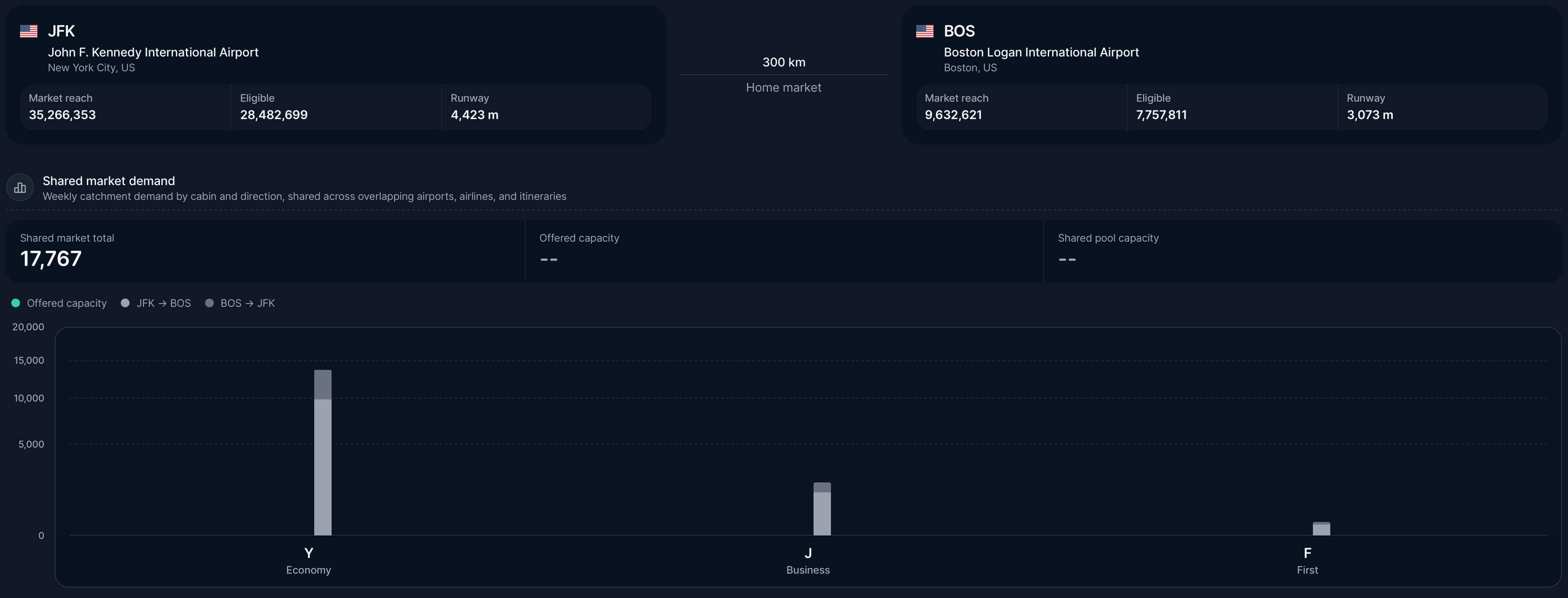
The Route Planner puts Market Reach and Eligible Population beside each airport. The first shows how many people live within its reach. The second narrows that population to those who can realistically participate in the travel market.
Together, these describe opportunity. They do not guarantee a passenger.
Big cities, short distance
New York and Boston are large, prosperous home pools. People travel between them for work, study, and family.
Some fly, others drive or take the train. On a short journey, flying competes with the time spent reaching the airport, using the terminal, and travelling into the city after landing.
That does not make New York to Boston a weak travel market. It changes how much of that travel becomes air demand.
A business traveler with a tight schedule might still value the speed of taking a flight; someone living near a railway station may make a different choice. Distance matters, but the alternatives available across that distance matter too.
Flightline accounts for that distinction. Two busy home pools can generate considerable interest while sending only part of it into the air.
It takes more than a crowd
Flynn returned to the question after they reached home.
"So big cities create big markets?"
"Sometimes," Lina said.
"That sounds suspiciously simple."
"It is. What about Macau?"
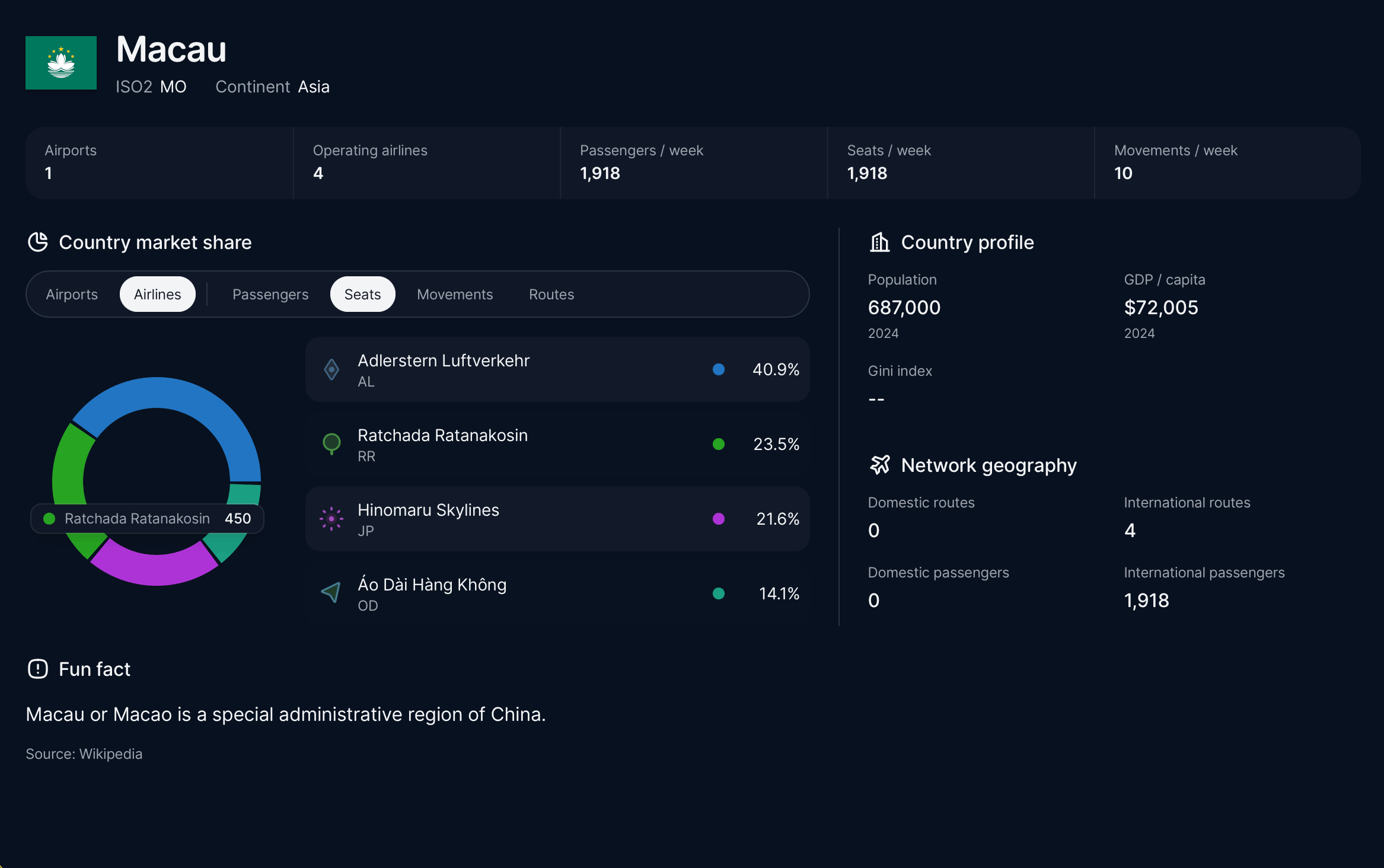
Macau has nothing close to New York's population. Yet people travel there from home pools around the world.
Tourism changes the equation. The resident population alone cannot describe how strongly Macau attracts people from elsewhere.
Geography matters as well. There is no train from London to Macau. Driving while possible is not really a serious alternative. For an international visitor, air travel is part of reaching the destination.
That creates a very different market from New York to Boston. One has large populations and several ways to travel. The other has a smaller population, strong visitor demand, and few substitutes for flying.
Neither can be understood from city size alone.
The relationship between places
"Then tourism explains it," Flynn said.
"Some of it."
"What about Los Angeles to Mexico City?"
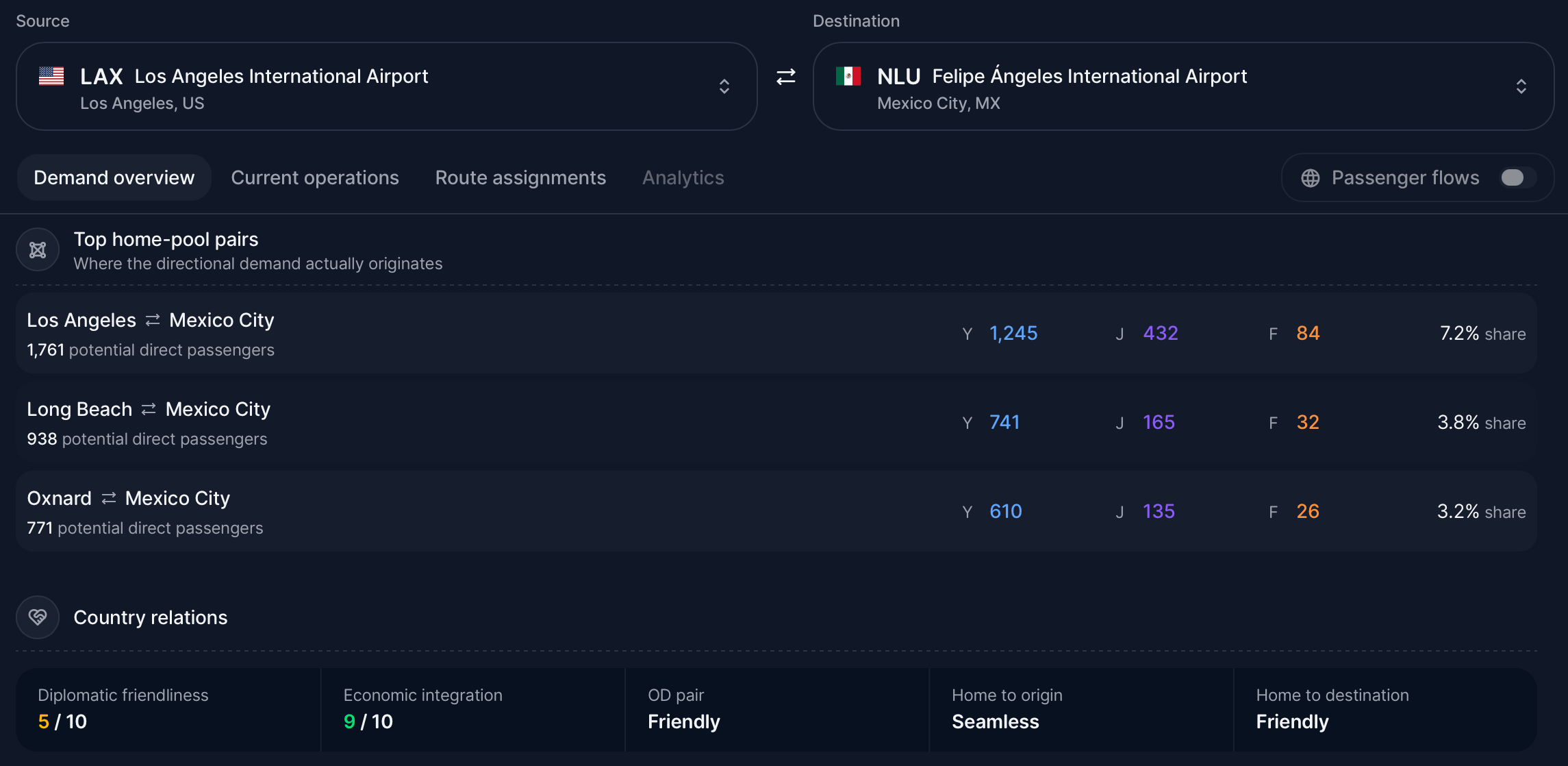
Now both home pools are large. Tourism matters, but so do business activity, affordability, and the ties that bring people back and forth.
People travel for business, study, events, and to see friends and relatives. The strength of a market depends partly on the connection between the two places. This is why two home pools with similar populations can produce different demand. One pair may have strong reasons to travel between them. Others may have very little drawing them together.
Then Lina changed the map again.
"Jakarta to Jeddah."
Flynn nodded. "Mecca."
For many passengers travelling from Jakarta, Jeddah is the air gateway for a journey onward to Mecca, which has no commercial airport.
Hajj is the annual pilgrimage to Mecca and one of the Five Pillars of Islam. Umrah also brings pilgrims to Mecca outside the Hajj period. Those journeys create a specific reason to travel between home pools that might otherwise seem distant from one another.
Population and affordability still matter. So does the number of people able to make the trip. But pilgrimage gives this particular market a purpose that population and distance cannot explain on their own.
A remote island, a business corridor, and a pilgrimage gateway can each support air travel for different reasons.
Different journeys, different cabins
Lina tapped the screen. "A business-heavy market like London-New York might support more premium demand, but it isn't a guarantee."
"Because people are individuals?" Flynn asked.
"Exactly. It's about their priorities, not just the market label."
The reason people travel also affects what kind of demand reaches the aircraft.
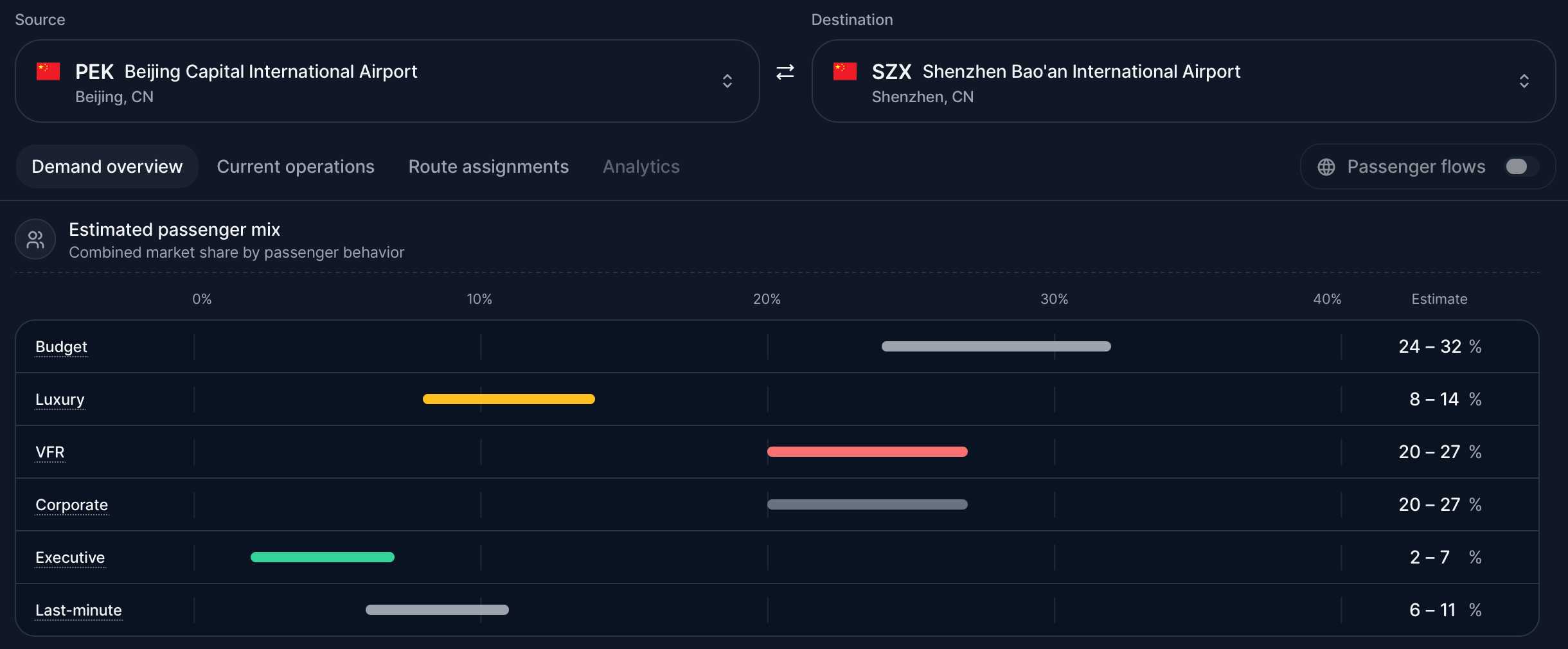
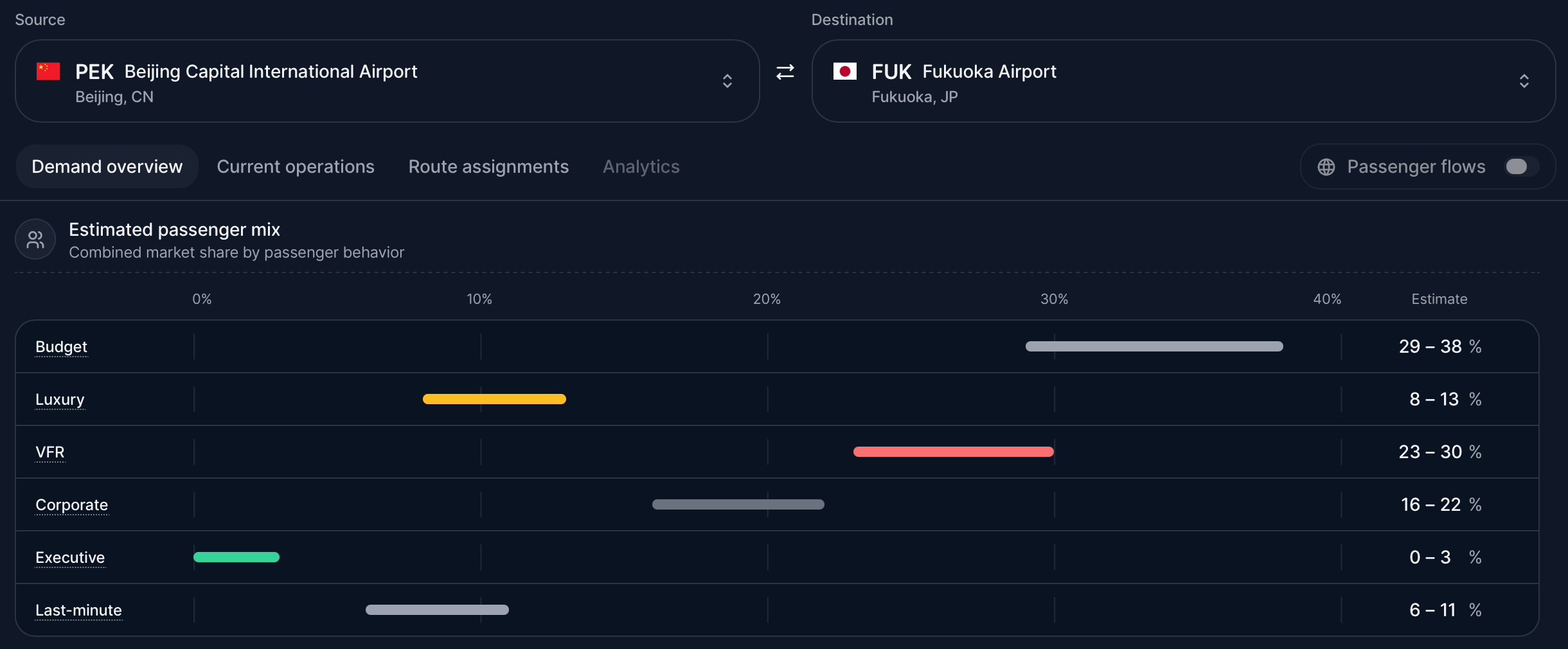
A business-heavy market may support more premium demand. A large leisure market may place greater pressure on Economy. Affordability affects how many people can travel and which cabins they can realistically consider.
These are tendencies, not assignments. A business traveler does not automatically book Business, and a holidaymaker does not always choose Economy.
In the Route Planner, Estimated Passenger Mix shows how much of the market is travelling with different priorities. It gives the player a clearer picture of the people behind the total demand and the cabins they are most likely to consider.
When flying makes sense
Flynn looked again at the Boston flight.
"So who takes it?"
"People with a reason," Lina said. "And people for whom flying still makes sense."
That may be a traveler saving time on a work trip. It may be someone reaching an island, visiting family across borders, or continuing from Jeddah to Mecca.
Flightline begins by asking how many people can travel, why they would go, what connects the places, how far apart they are, and whether the journey belongs in the air.
Only then do airports and airlines enter the contest.
Finding two large cities is easy. Understanding why people travel between them is where route planning and the fun begins.