
In the initial visual drafts, the main character, a volunteer named Lena, was a teenage girl. The niji model I was experimenting with kept creating smooth, anime-style faces with huge eyes. I wanted to keep the eyes, as well as Lena’s fragility, but make her look more mature. I searched for references on Pinterest and found a lookalike real-life model, but I described her using text prompts.
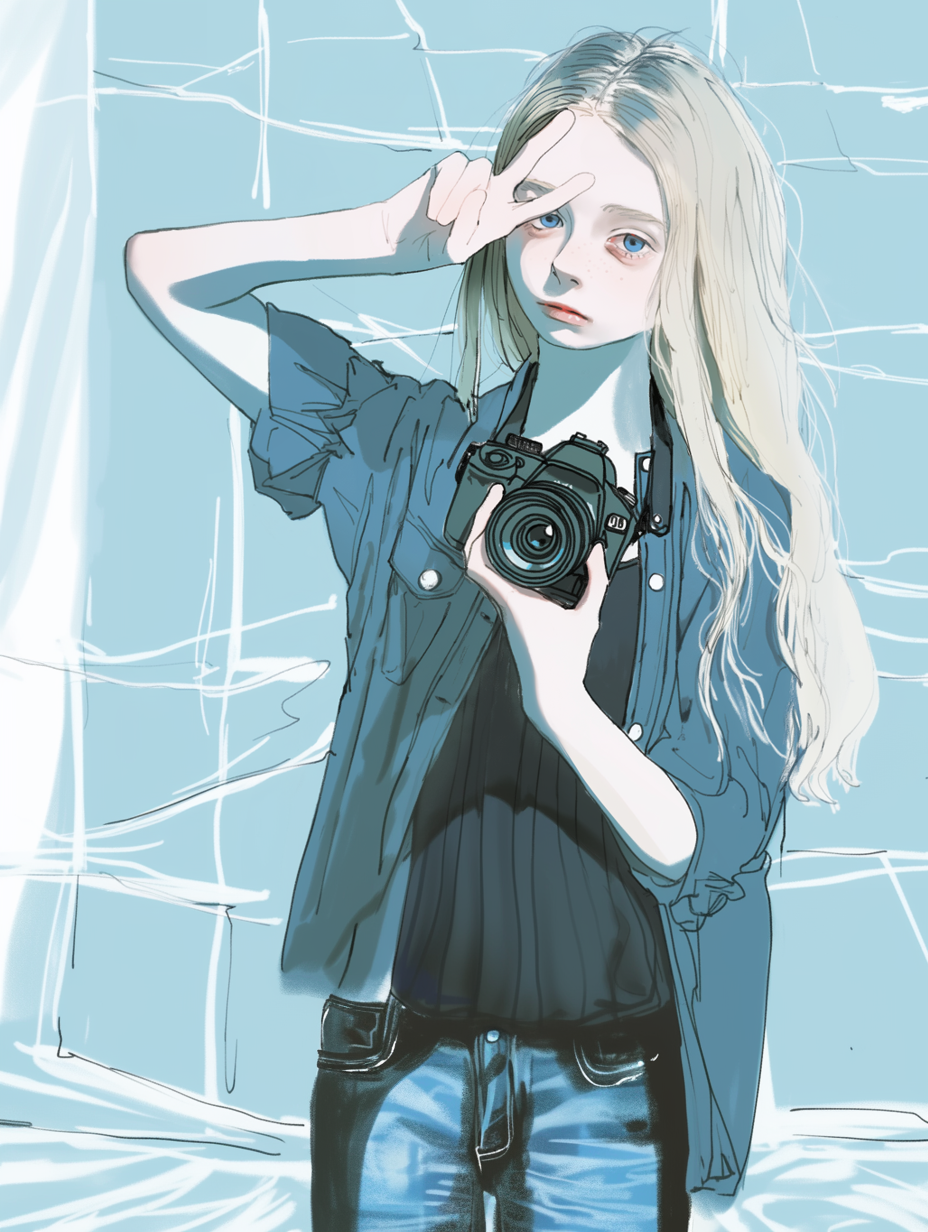
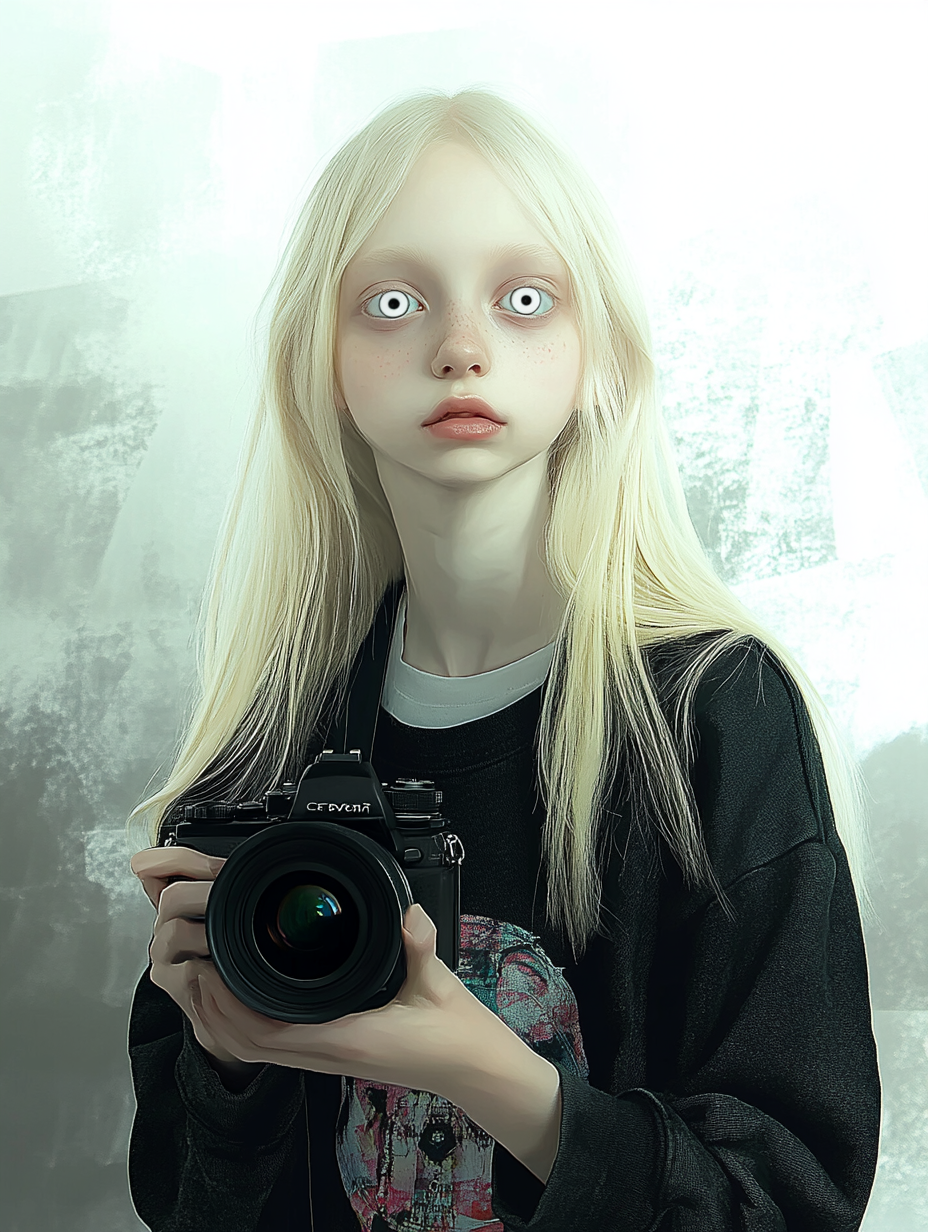
Her look came together gradually—pale skin, blonde hair and eyebrows, grey-green eyes, hoodies, long-sleeve shirts, and a DSLR camera. At first, Lena came out looking cold, emotionless, or just sad. At one point, while searching for the right style, I cranked up the Weirdness slider, and Lena ended up with white, fish-like eyes and tiny black dots for pupils. I think that was the exact moment I realized I wanted to create a revenge route, where Lena gradually loses herself and turns into a sea monster.
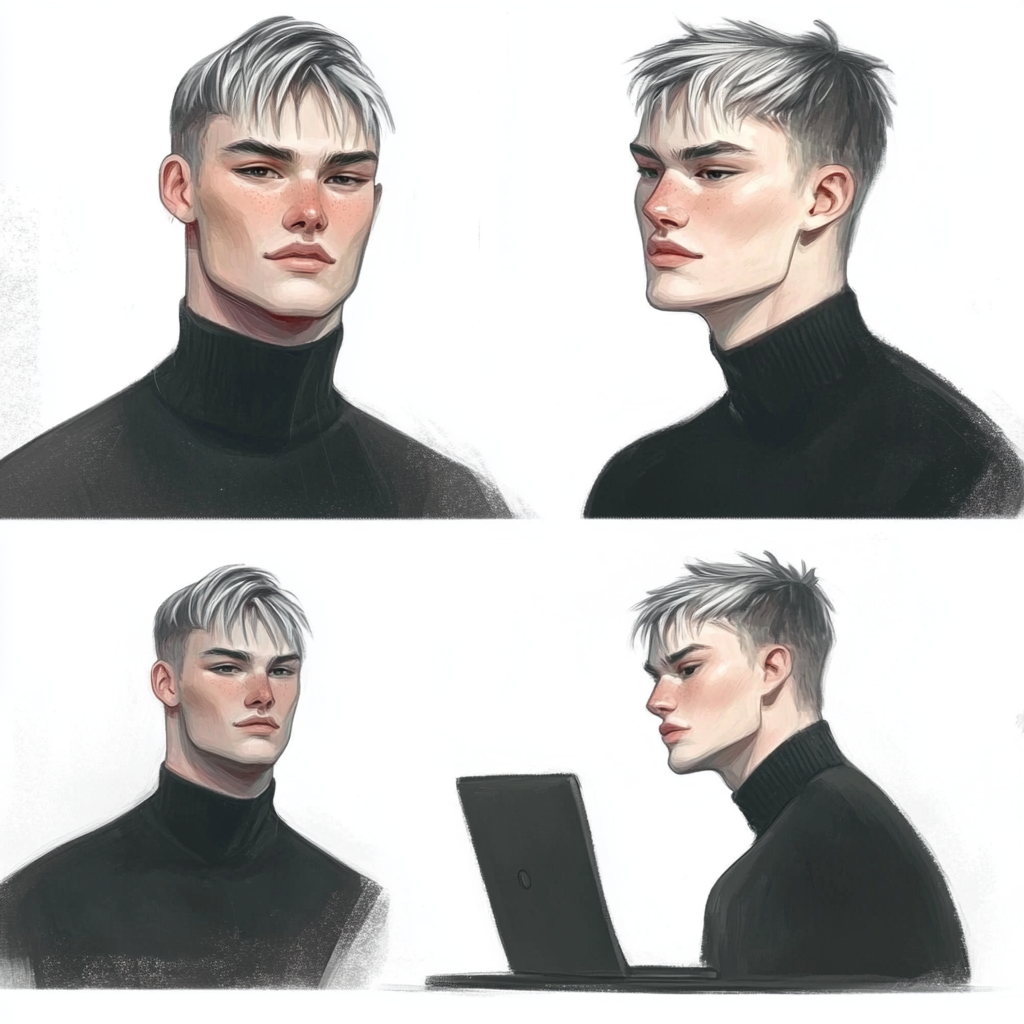
Artem—a volunteer from the pro-government headquarters whose storyline spans the second and third phases of the game—was a bit easier to figure out. Almost immediately, I liked the concept of an arrogant hipster with bleached streaks in his hair, wearing a branded hoodie. Plus, his facial features didn't distort during generation as much as Lena's did. For a while, I envisioned Artem more as a hacker than a PR photographer. A black turtleneck and a trendy laptop remained as a nod to that idea.
I spent several weeks looking for the characters' visual styles, and even during the final build, I was still tweaking some images using Midjourney V.7, which was brand new at the time. Looking back, I think it would have been better to use Nana Banana, which keeps the images more consistent. I could have made things even simpler by creating a few poses and expressions for each character and swapping them out according to the dialogue lines. But for some reason, I chose the hard way, embedding the characters directly into the overall composition of the image rather than just overlaying them on top. Because of this, I had to regenerate the character's pose and expression from scratch for almost every single illustration (and let me remind you, there are over 400 of them).
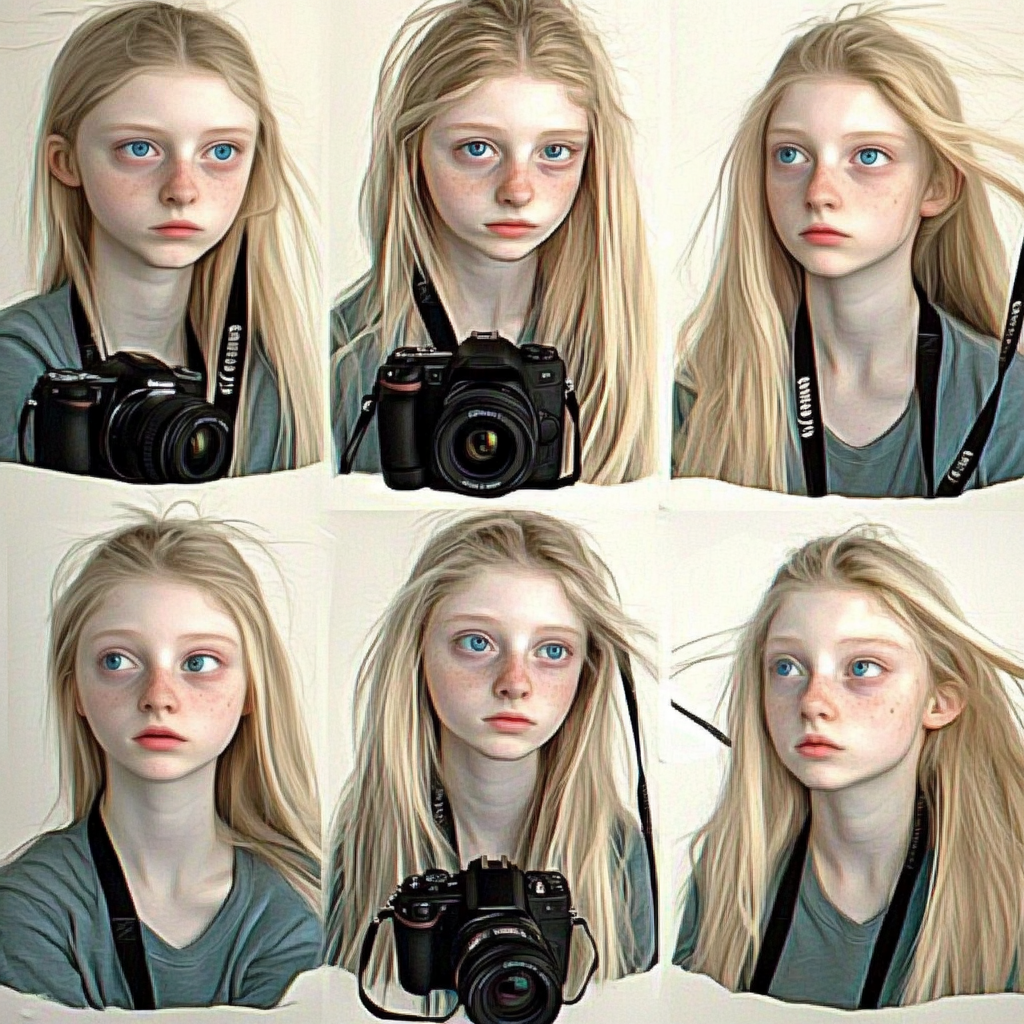
At that point, Midjourney's short video generation feature was a lifesaver—it rolled out right when I was working on the illustrations. In just a five-second generation, the character managed to change several poses and facial expressions, so all I had to do was take screenshots. Now, looking back again, I would have used the Flow AI for this, since its videos are much more stable, but back then, my only choice was between Midjourney and free services.