
…is exactly the kind of comment I expect to see. And honestly, I’ll probably get them.
There are over four hundred illustrations in the game, and working on them took several months. I’m certain human artists would have done a better job, but then the project would have taken years.
Every single illustration was pieced together by hand. First, I looked for photos of Anapa's landscapes (recalling my own trips there before the spill and what the atmosphere felt like back then) alongside references that could capture a moody, liminal vibe. I generated a few dozen backgrounds, which I later combined. I’ll talk about the characters separately, but I didn't use photos of real people as a baseline, nor did I type prompts like "in the style of [specific artist]." I only started liking the first results about a month in, but not a single one was used "as is"—every image was touched up and refined.
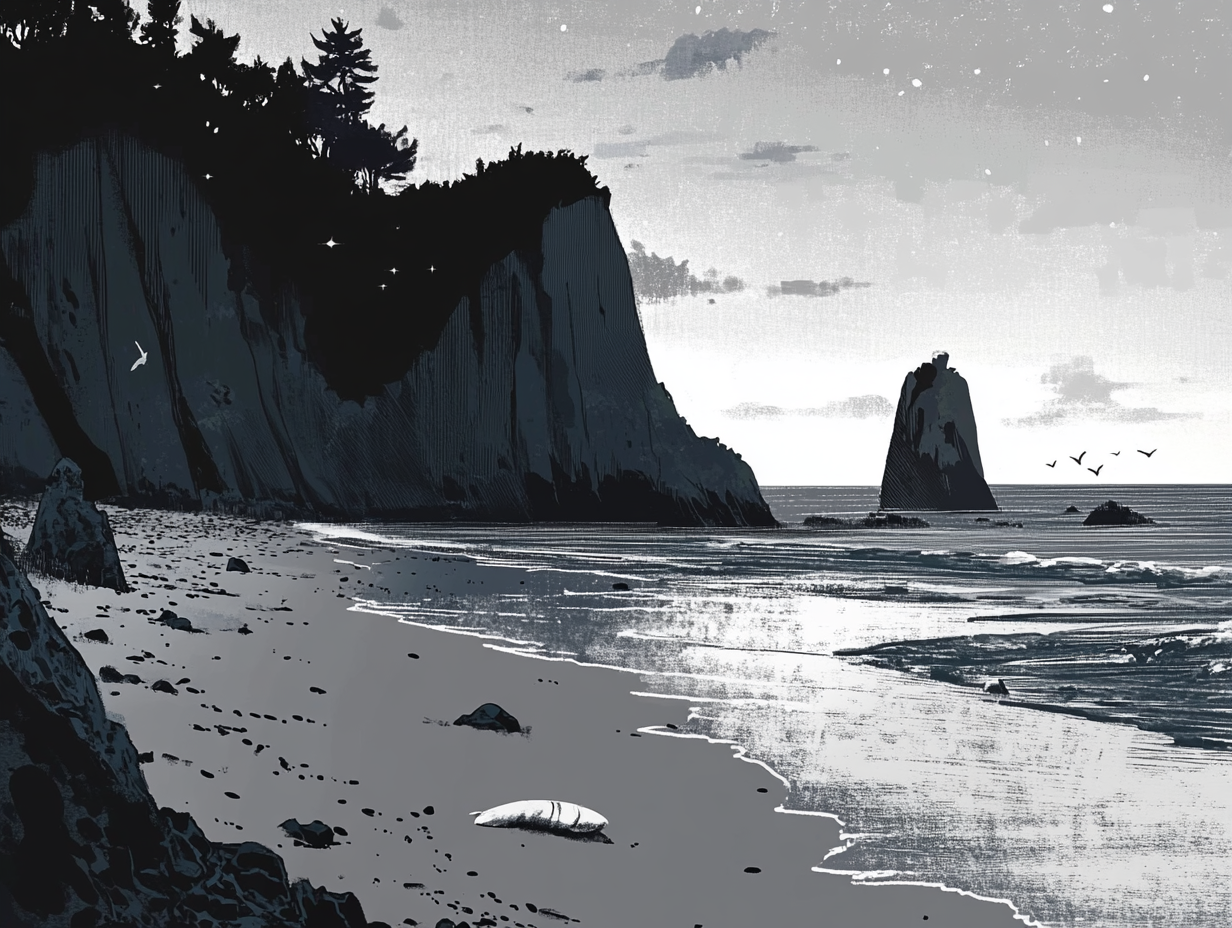
The illustrations in the game are part of the narrative. They are packed with details you can examine closely: text on banners, screenshots of chat logs, notices. Some of them function as micro-films: characters move around, take photos, a TV anchor reports the news, birds fly across the sky, and the sea washes up new layers of fuel oil onto the shore. This was one of the last ideas to cross my mind, and I love how a subtle animation of water or clouds suddenly breathes life into the otherwise static artwork.
I've already mentioned how I used data analysis, but a purely technical part of the job involved Cursor, which helped translate the finalized text from Twine format into code for the Ren'Py visual novel engine. Now that felt like actual magic to me: I’ve barely worked with code before, and learning it from scratch would have taken months. Being able to just say in plain English, "Please add a stat panel to the top right corner in the following order," was priceless. The same goes for debugging the already loaded game, where I'd ask Cursor to playtest different narrative routes and show me how the stat balance held up.
Finally, there’s the soundtrack. I initially wanted to use pre-existing music, but finding the right fit proved difficult. Surprisingly, generated tracks turned out to match the atmosphere perfectly. I phrased my prompts using terms like "ambient," "industrial noise," and "dark jazz," and got exactly what I was looking for: a chillingly artificial sound, with the howling wind and crying seagulls in the background set to a broken, unnatural rhythm. A paid subscription was enough to get me ten tracks, four of which made it into the game.
That is how technology helped a tiny team of journalists achieve something that used to be the exclusive privilege of big-budget studios.