
Hello everyone.
In the previous devblog, I talked about the rework of the Skill Properties system. Each Property installed on a gene unlocks two Forms for the corresponding skill. These Forms can significantly change the mechanics of the skill and turn it into different variations. The main idea behind Forms reveals itself during combat: the player does not choose a specific Form at the moment of using a skill. Instead, the skill automatically switches between its available Forms throughout the battle.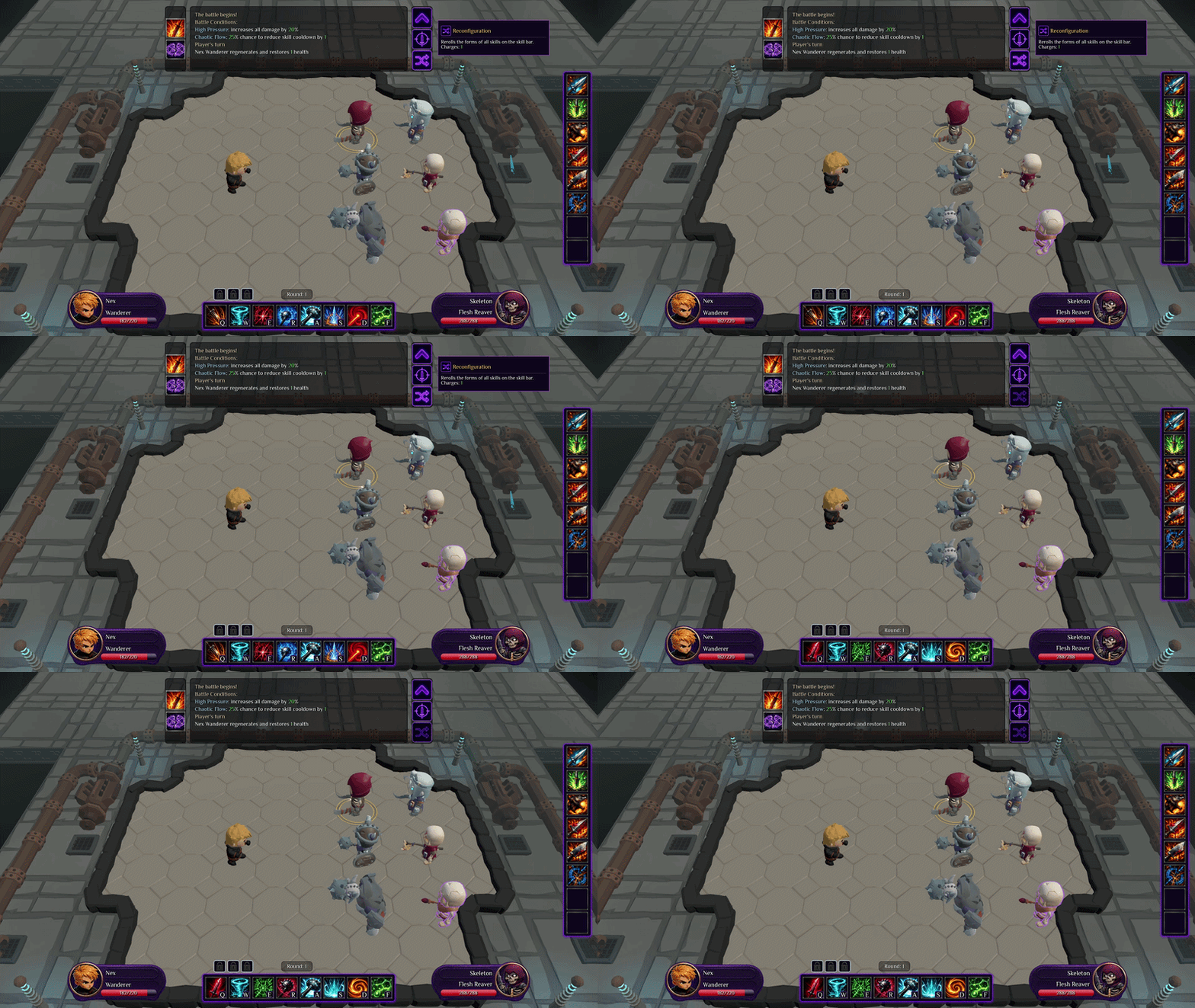
Choosing the Current Form
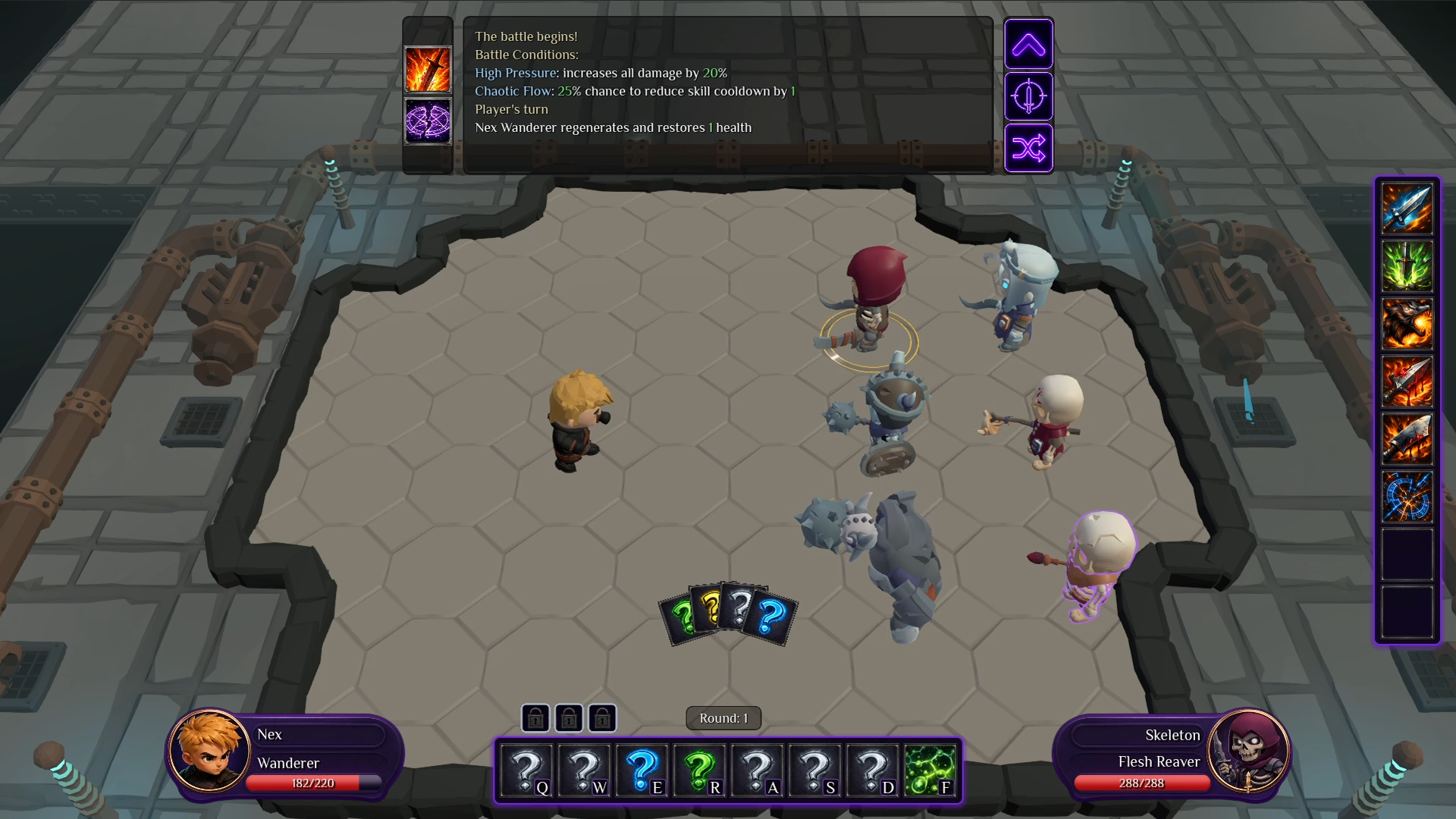
When a battle starts, every skill with an installed Property receives one of its two available Forms. That Form becomes the current version of the skill. The skill itself also changes in the interface. Its icon, name, and description are updated, while the tooltip shows the actual parameters and effects of the current Form. Before using the skill, the player can always see which Form is currently active.
For example, if Rending Strike has the Hemorrhagic Cycle Property installed, the skill may start the battle in the Deep Laceration Form. In that case, this version of the skill will be used, together with its stronger Bleeding effects. After the skill is used, its next Form is selected randomly. For example, the next Form may be Blood Reaper. The same skill slot will then contain a different version of Rending Strike, which can collect the Bleeding effects already applied to the target and convert them into additional instant damage instead of strengthening Bleeding.
The new Form can also be the same as the previous one. The system selects a Form randomly from the available set rather than simply cycling from the first Form to the second and back again.
Chances of Rolling a Form
While developing the Property system, I did not want Skill Forms to be permanently available, because that would not make the system very different from what already existed. At the same time, having only one possible Form for an entire battle would remove most of the combat variation.
Randomly choosing the ability at the exact moment it is used would also break the player’s tactical planning, because different Forms can work in completely opposite directions. I decided to use a random roll after each skill use instead. This way, players can plan their tactics while already know what they are going to use, but cannot be sure that the skill will remain the same during the battle.
The next Form becomes known immediately after the skill is used. The Property defines the possible versions of the skill. The roll determines which version is currently active. And the interface shows the result of that roll in advance.
Shuffling Forms
I also added the ability to reroll Forms during combat with a button.
Once per battle, the player can activate a Shuffle that rerolls the current Form of every skill that has Forms available. This does not allow the player to directly choose a specific Form, but it gives them a chance to refresh the skill panel if the current set does not fit the situation.
For example, a skill may have a Form that attacks an entire row of enemies. The player may want to finish off one specific enemy, but cannot reach it with a single-target skill because a Tank prevents switching targets. If the wrong Form is currently active, rerolling the panel can provide another chance to get the desired Form and carry out the intended action.
This is my way of adding a little more control to a system built around randomness. I also added a new Implant. Taking it into battle gives the player one additional charge for rerolling the skill panel.
Form Weights and Probabilities
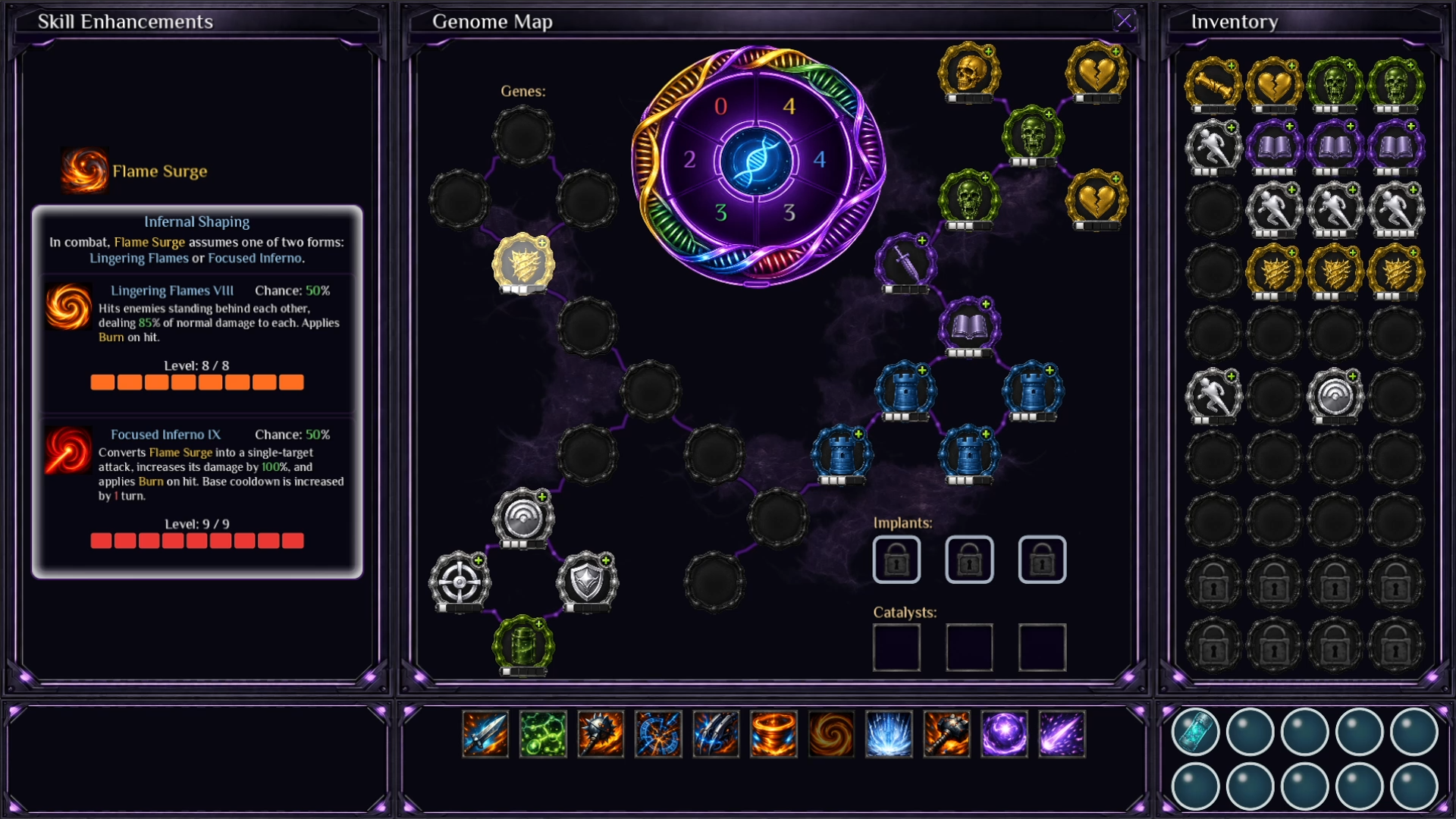
Each Form has its own weight, which determines the chance of rolling it in combat. A Form's weight can vary from 20% to 80%. Initially, when a Property is installed on a gene, both Forms have a 50% chance of appearing. The more the player upgrades the desired Form, the higher its probability of being rolled during combat. At maximum progression, that probability reaches 80%.
Why Forms Change During Combat
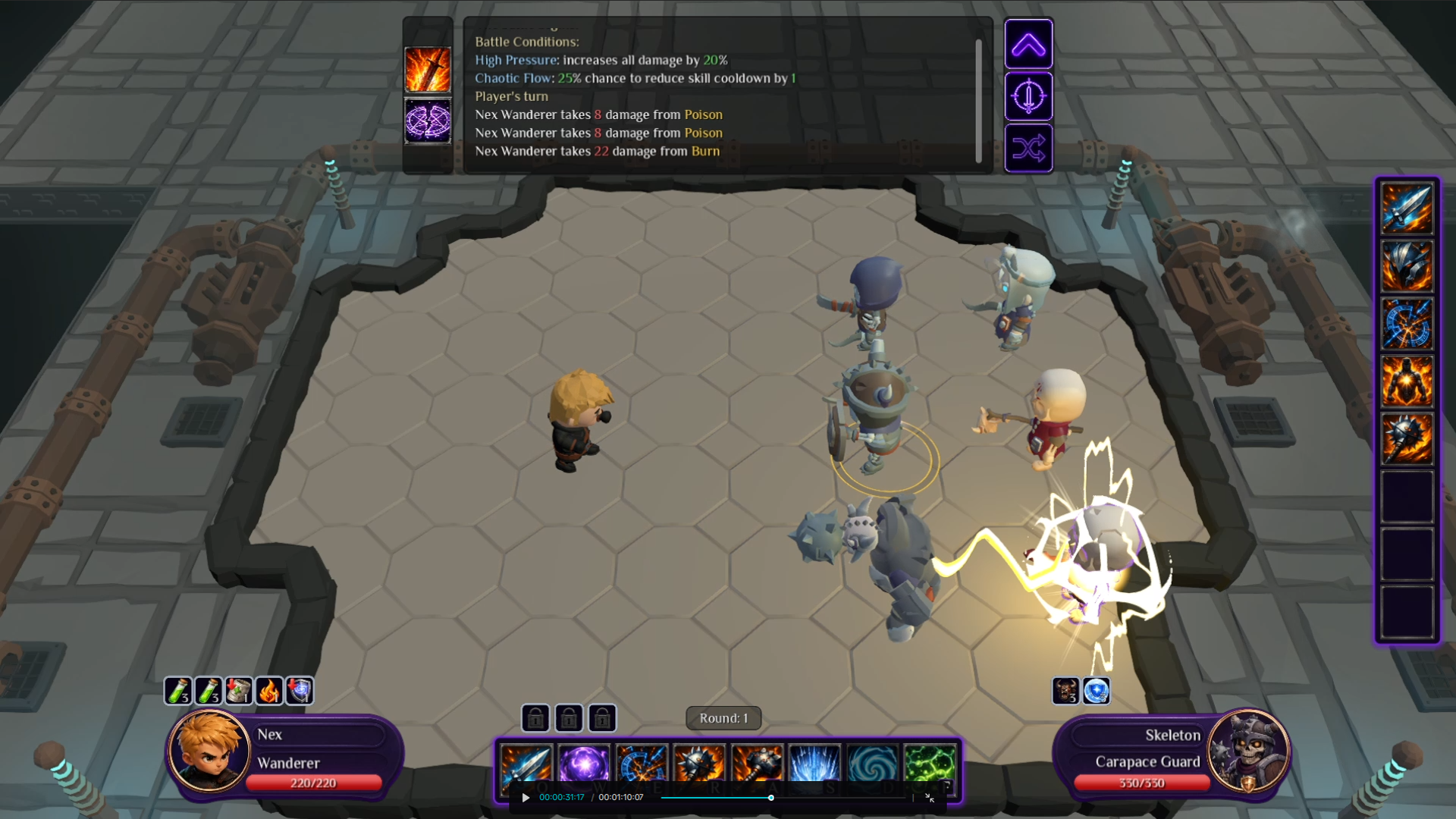
One of the reasons I introduced this mechanic was that I did not want a completed build to remain completely identical from the beginning to the end of every battle. The player decides in advance which genes to use, builds gene chains, and unlocks skills. After obtaining Properties, the player chooses which ones to install, decides which skills to modify, and which Forms they want to bring into combat. But once the battle begins, the system continuously determines which version of each skill is currently active.
This creates two levels of control. On the Gene Map, the player defines the boundaries of randomness: which Forms can appear at all and how likely each of them is to appear. During combat, the player works with the specific set of Forms that has been rolled at that moment. If necessary, they can spend a Shuffle charge to try to change that set.
As a result, randomness does not simply add a chance for extra damage or another effect. Instead, it changes which version of the skill is currently available. Because of this, even the same build can behave differently from one battle to another.