
Hello Hunters!
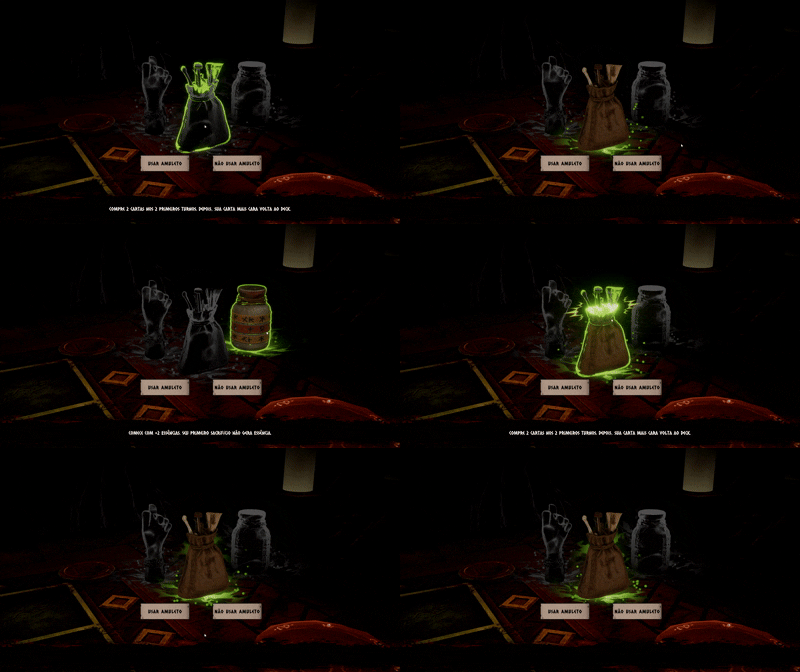
Today, we are talking about amulets. In the game, these are ritualistic items acquired throughout your journey and equipped outside of combat. You have a few strategic options for how to use them: buy a new amulet, upgrade your current one, or buy a new slot.
Design Objectives
Amulets in games are usually just passive status modifiers. For Obscurium, we wanted them to alter your strategy in a more dynamic, active, and heavy way. Because of that, we looked to the roots of Brazilian popular culture and folklore, where all protection demands its price. If you’ve played, you know we start with three: the figa, coarse salt, and the patuá.
Why did we choose these amulets?
None of these elements were chosen at random. Beyond being items easily found in homes all across Brazil, they carry centuries of superstition, faith, and resistance:
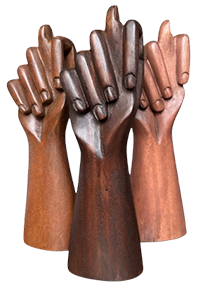
The Wooden Figa: Far beyond a common decorative item, the figa is one of our most classic shields against the evil eye. As Câmara Cascudo points out in the Dictionary of Brazilian Folklore, this gesture of closing the hand with the thumb inserted between the index and middle fingers has ancestral origins and was adopted in Brazil to "close the body" against bad luck and envy. In the game, it negates the 1st direct damage that would end your run. But the protection collects its toll in flesh: the next card you draw arrives in your hand with 1 less Health.
The Patuá of the Crossed Name: From the outside, it looks like a small pouch of cloth or leather, but the patuá carries the country's history of resistance and religiosity. Present historically since enslaved uprisings and consolidated in terreiro epistemologies, the patuá guards prayers, herbs, and axé.
Axé is the vital force, the power to manifest, and the sacred energy present in absolutely all things in the universe. In terreiro epistemologies, it is the spark that makes the world pulse and paths open up. The patuá exists to harbor, concentrate, and protect this power close to the body of whoever carries it.
Mechanically, it helps you open paths: you draw 2 extra cards in the first 2 turns. The cost? It collects from your deck. Your highest-cost card goes back to the bottom, and you only find it again later (if you find it at all).
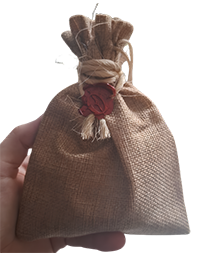
This was actually the giveaway we handed out at the Festival we attended in Brasília.
Coarse Salt: If you are reading this, someone has probably already suggested a coarse salt bath to you. Used ancestrally in Brazil to purify environments and people, it cleanses energetic weight. However, popular belief warns that if used without care, it washes away the bad energy, but takes the good with it. In the game, it makes you pull ahead: you start with 2 extra Essences. However, it collects in economy, and your 1st sacrifice on the board gives you nothing back.
Dev Note
We didn't set out to make three versions of the same effect, but rather to apply the game's own rule three times. In Obscurium, every card played is a votive offering (ex-voto): you pay the sacrifice first and receive the grace after. Amulets turn this upside down. You receive the advantage first, and the bill arrives while you are still using what you gained.
The part we like is that the three bills fall in different places. One takes 1 card from your deck, one zeroes out your 1st Essence generation, and another claims 1 Health directly from your body. So, choosing an amulet isn't about choosing how much protection you want. It's about choosing what kind of debt you are willing to carry.
What's still not quite right is that the Patuá has been too punishing in the late game; losing your highest-cost card in Act 3 has led to a win rate of only 28% with this amulet. We're tweaking its math for the next patch.
Speaking of the next patch, in our next devlog we’ll talk about the build arriving on September 25th, and you can already sign up here:
https://obscurium.firstlook.gg/signup/playtester1
At the end of the day, the dead do not rest. They bargain. Which of these three debts hurts the least for your initial strategy?
See you in the dark,
The Wild Pepper Games team