
Everyone knows that game development is a breeze. Nothing ever goes wrong. Technology behaves impeccably. You set a build in motion with zero bugs, grinning with child-like delight as your pixelated paradise floods the screen.
That being said, there are challenges - occasionally. Even in Aisle Survive, there were times when we worked our fingers to the bone, “kept keen on the grindstone of pain.” Here are three of the toughest challenges we faced…
The hub
In Aisle Survive, the main character (Glen) goes to a hub level whenever he fails a shift. For the longest time, this was a simple menu. It would have been a fully-fledged train station, if I’d had my way; a large, labyrinthine environment loaded with sidequests and secrets.
But time and budget limitations meant that we were ‘stuck’ with just an interactive screen, and it stayed in the game for months. In the end, though, I thought it looked a bit… well, naff - especially when the rest of the title looked so sharp. But I’d run out of funds to commission anything lavish.
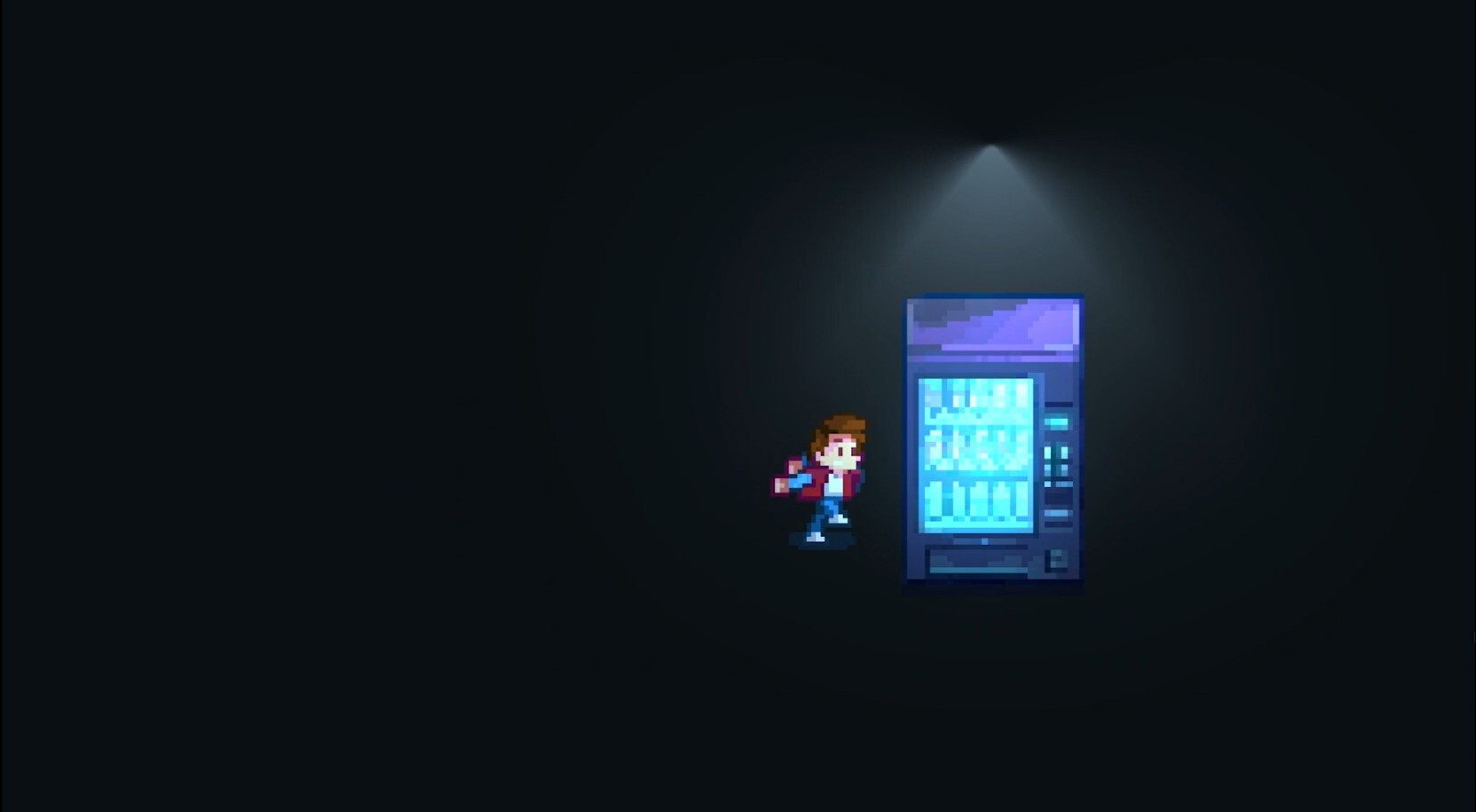
This was when Jack, the developer, suggested a mysterious void - a dark, dreamlike space that, for all we knew, could exist in Glen’s head. We didn’t need any artwork - not when we had a black screen at our disposal.
Personally, I love the void - a liminal space in every sense, a “dark place of the inside,” to quote a famous sci-fi show. After all, who needs real-time ray tracing when you can have neverending nothingness?!
The bladder bar
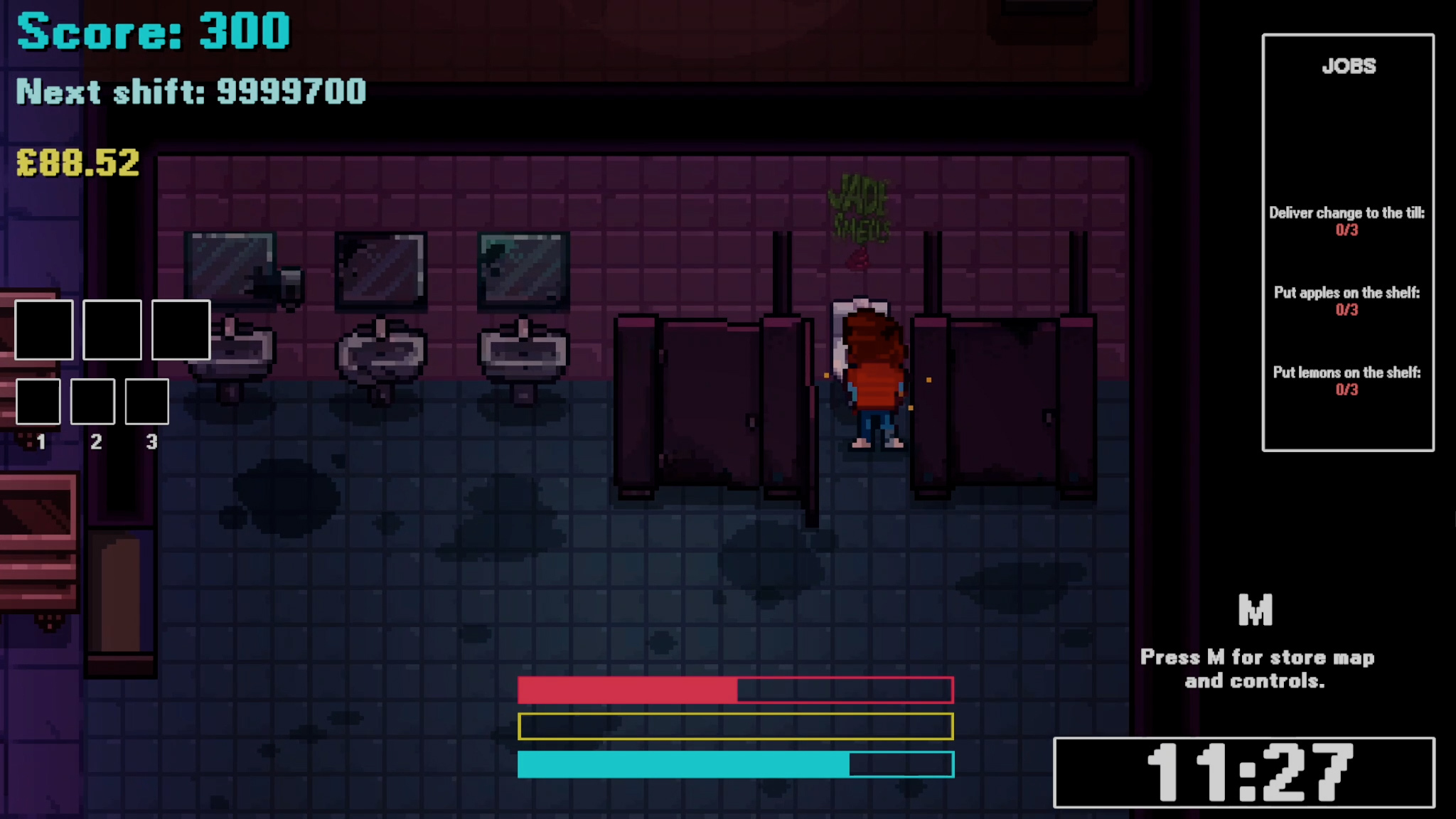
Peeing is a core game mechanic of Aisle Survive. But how quickly should your bladder fill up after drinking? And how long should you (reasonably) give the player to reach the bathroom before the floodgates open?
This simple question devoured fifty per cent of the game’s budget - most of it spent on Sprite and sundry pairs of fresh jeans. Oh, and a stopwatch. But it was worth the pain.
Customer combat
I originally wanted Glen to have Pokemon-style fights with the store’s shoppers. You’d bump into a customer, and be transported to a combat screen. The HP bar was Willpower, and your weapons were your words - everything from sass to sarcasm to passive aggression. Wonderful.
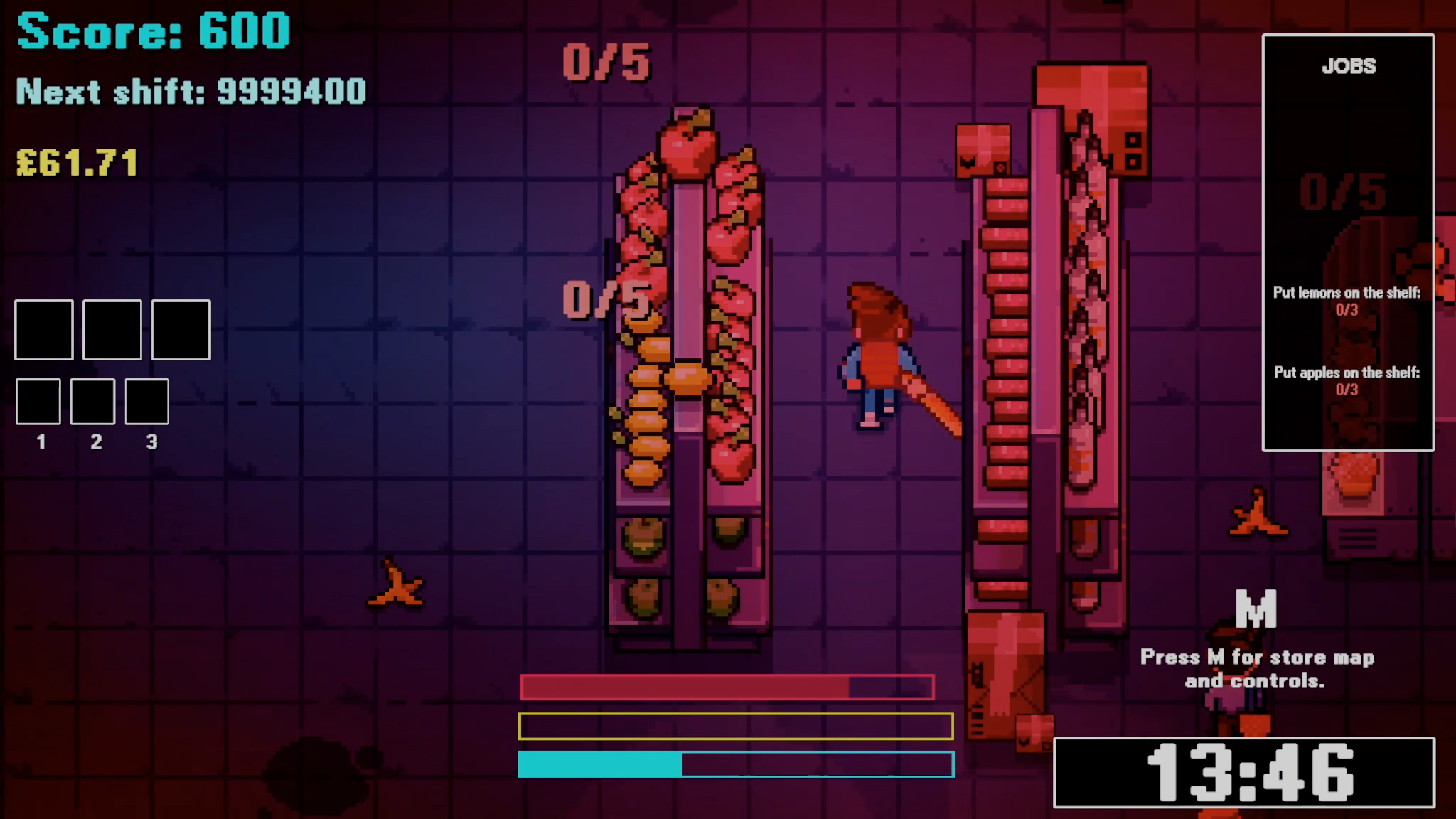
However, Jack (using the lesser-known weapons of logic and reason) pointed out that this idea was… rather complicated. And perhaps unnecessary. So I settled on the humble baguette: Glen could arm himself with a breadstick, and crack those cranky customers round the cranium. Perfect.
Ah, but I also wanted them to be pushing trolleys - this was a supermarket, after all. Thus began the debate with Miky, our talented artist and animator. He wanted to know what would happen to the trolley when the unsuspecting shopper was sent tumbling into the floor. Would the cart simply trundle away? If so, how would they get it back? And could Glen interact with this object? And, and, and…! The questions kept coming.
Ultimately, I had to bid farewell to my cherished shopping cart. The customers were given bags instead. Problem solved. Bags don’t have wheels.
I think this is my biggest take-away from the world of game development: the simplest of ideas can prove themselves to be anything but. You can dig yourself into holes, and go crazy trying to climb out.
My advice? Write a novel. Paper is cheap.