
Hey! Welcome to the first developer blog for Project Biosphere.
We’re Nine Hostages Games, and we’re excited to start showing more of this voxel physics sandbox we’ve been building.
If you'd rather watch this developer blog, you can check out the video version on our Youtube: View game page
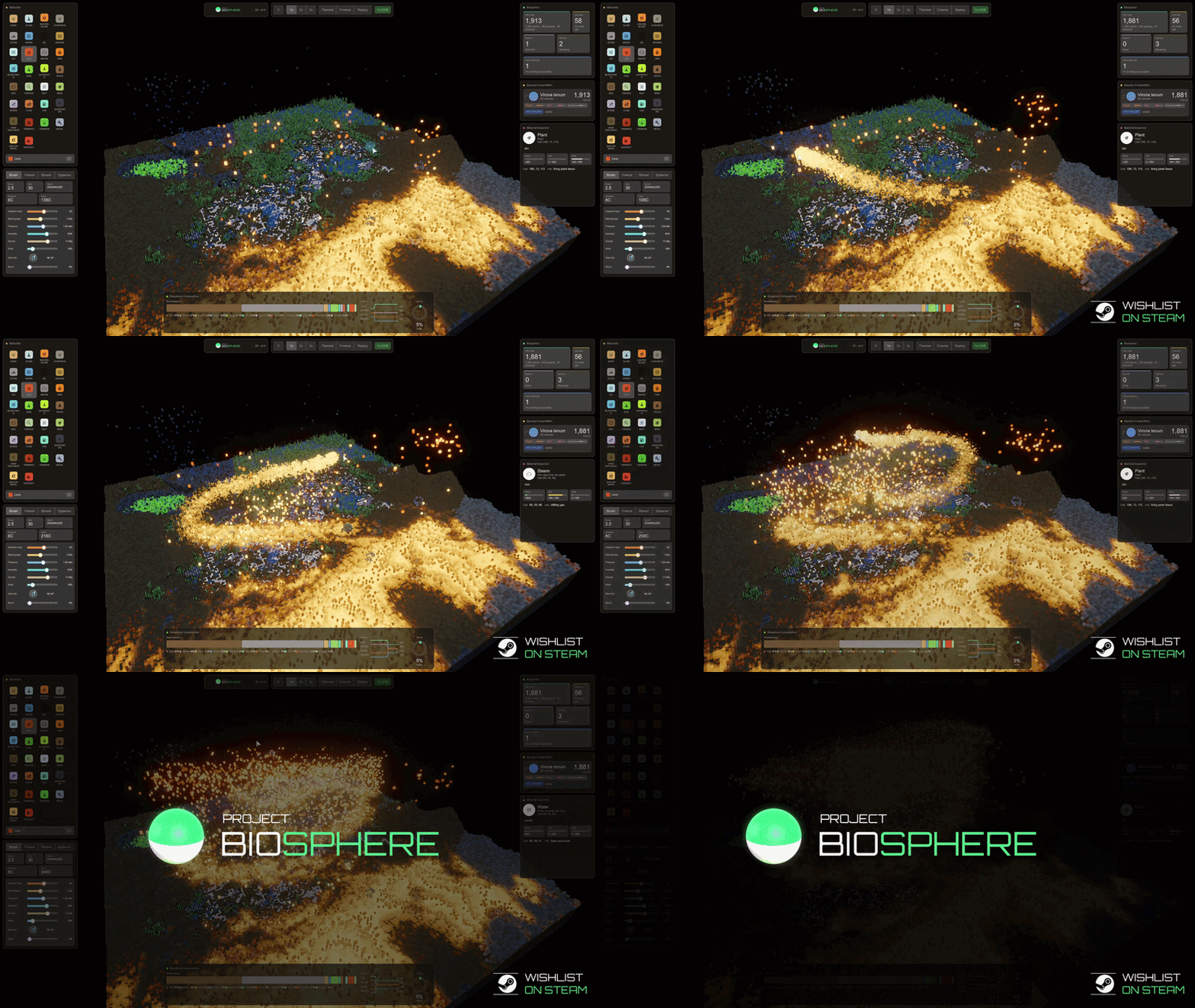
Project Biosphere is a real-time ecosystem sandbox built on top of a falling-sand simulation. Water flows, heat spreads, fire consumes, plants take root.
There’s no strict goal & No scores to chase. Relax and Waste some time. Its simply a toy.
For this first devlog, I want to start with the core of the game.
Creating a World:
When you boot up Project Biosphere, you’re presented with the Biosphere setup screen. This is where you choose what kind of world you want to experiment with before the simulation begins.
You can pick from different presets, each designed around a different kind of sandbox. Some of the presets include Eden, mountains, wasteland, volcanic and swamp, but there are many more. Some are lush, with water, soil, plants, food, and spores. Some are harsher, with dry terrain, dangerous materials, trapped lava, or unstable conditions waiting underneath the surface.
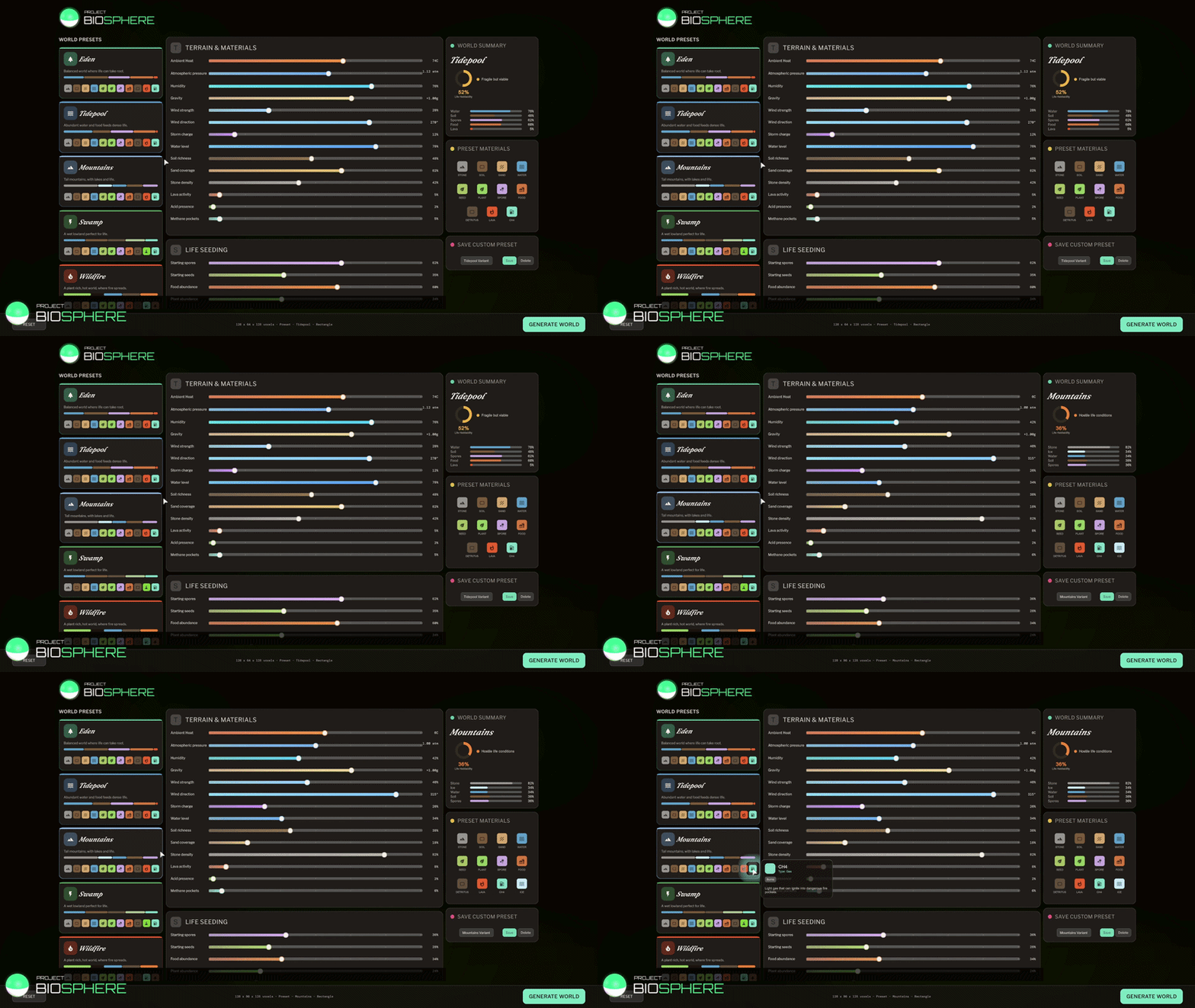
You can also adjust the world yourself. Change how much water there is. Make the soil deeper. Increase plant life or Raise the ambient heat. And many more world conditions. We’ve also included the option to save your own presets. so you can easily revisit past creations.
Once you’re happy with your world, you hit Generate, and the simulation begins.
The Simulation:
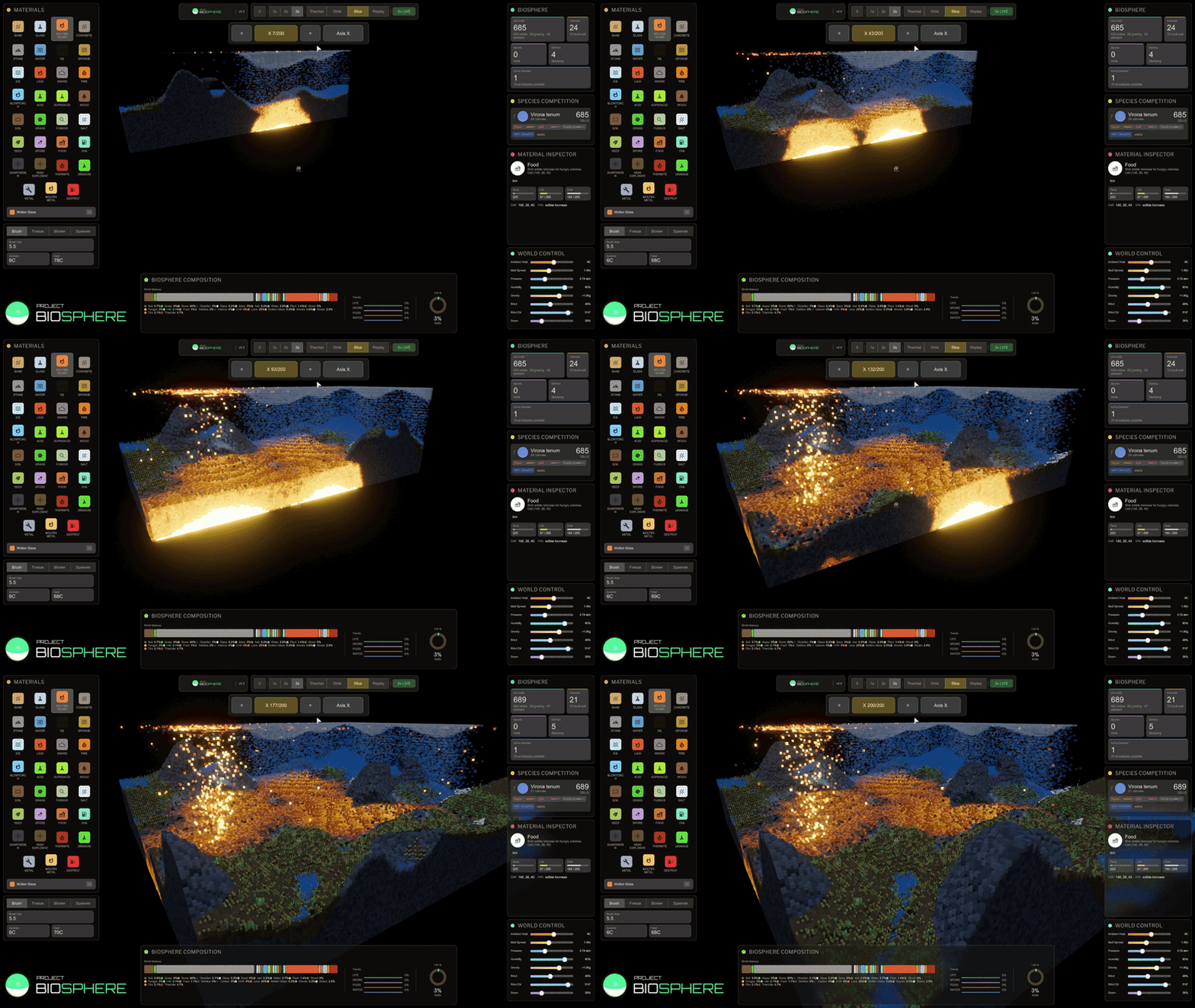
From there, everything is live. Materials fall, flow, fire and explosives burn, melt. You can sit back and watch the ecosystem develop, or you can interfere directly with tools, sliders, and materials. Every material interacts and reacts with others, and we’re working on lots of unique interactions. A few interesting examples include uranium, which mutates plant and fungus growth causing rapid changes and oversized organics to grow
Various types of acid which each selectively eat away different types materials.
Plants and fungus produce seeds, spores and food, all organics can eventually decay, adding their nutrients back into the soil which supports life.
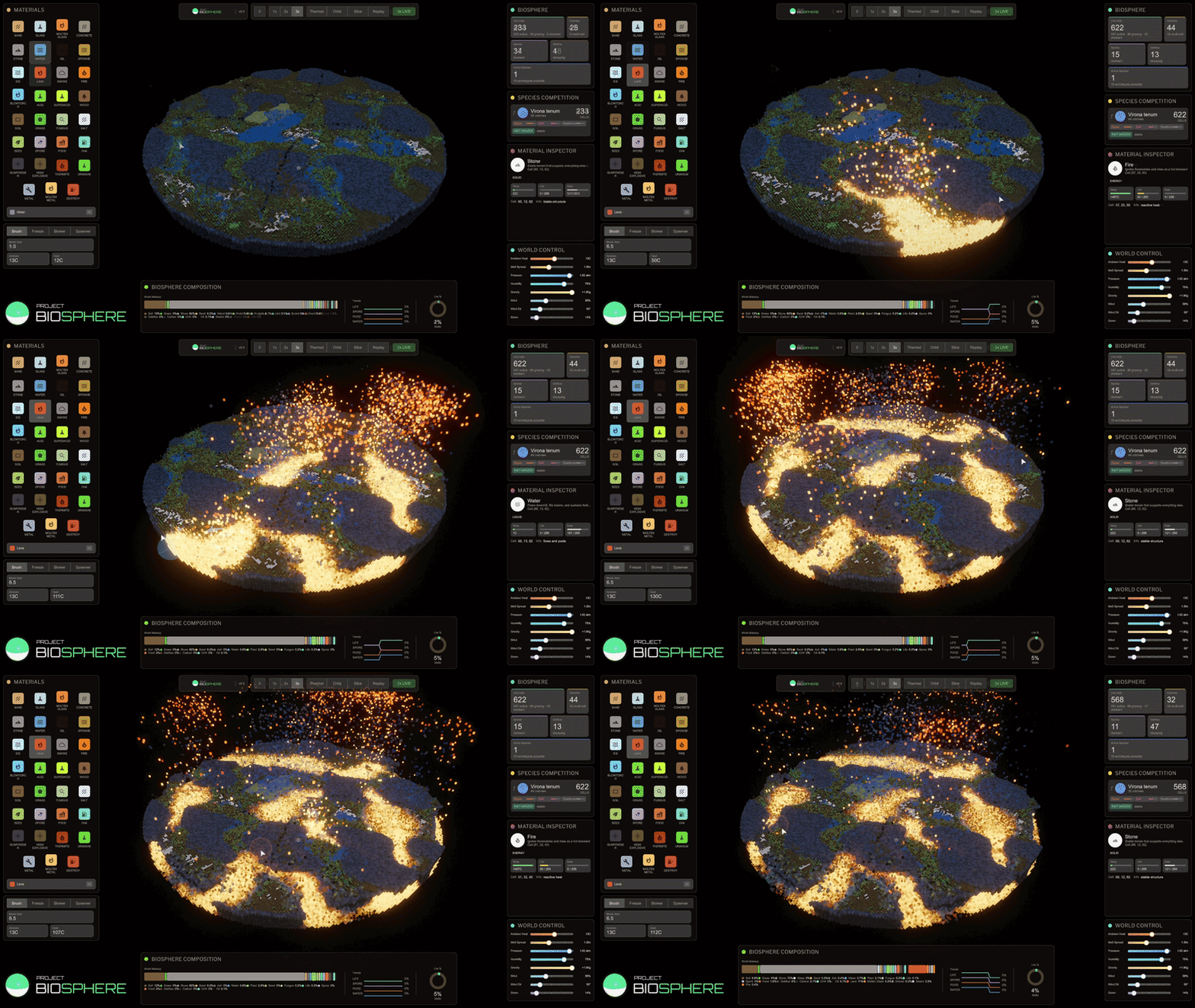
That’s the basic idea behind Project Biosphere: create a tiny world, change the conditions, and see what happens. Sometimes it grows. Sometimes it collapses.
Next time we’ll take a more detailed look at some of the materials you can place and interact with in the world.
Thanks for checking the first devlog. If you enjoy, please consider giving Project Biopshere a Wishlist on Steam!