
When building a post-apocalyptic world, everything starts with a single question: what actually tore said world apart?
For our team, the catastrophe that set everything in motion is a foundation that defines the rules of the world, its atmosphere, and the stories we want to tell. From the beginning, we wanted the apocalypse to feel grounded and mysterious at the same time, something that leaves visible scars on the land while also changing how reality itself behaves, which should enable us to tackle more gameplay mechanics.
Right now, we are exploring two core concepts. Both lead to the same version of America that you will experience in the game, set decades after the fall, but the origins of that fall are quite different.
The Moonfall Anomaly

In this version, everything begins with a massive meteorite colliding with the Moon. The impact does not destroy it, but it alters its state in ways that are not immediately understood.
On Earth, the consequences escalate quickly. Tides begin to behave erratically, weather systems become unstable and violent, and magnetic fields start to fluctuate in ways that disrupt both technology and natural instincts. Over time, anomalies begin to appear, creating locations where the familiar rules of physics no longer fully apply.
Nature responds to these changes in unpredictable ways. Plants grow into unusual and often hostile forms, while animals adapt rapidly and develop traits that do not align with known biology. The world does not simply collapse, but instead transforms into something unfamiliar.
The Human Error
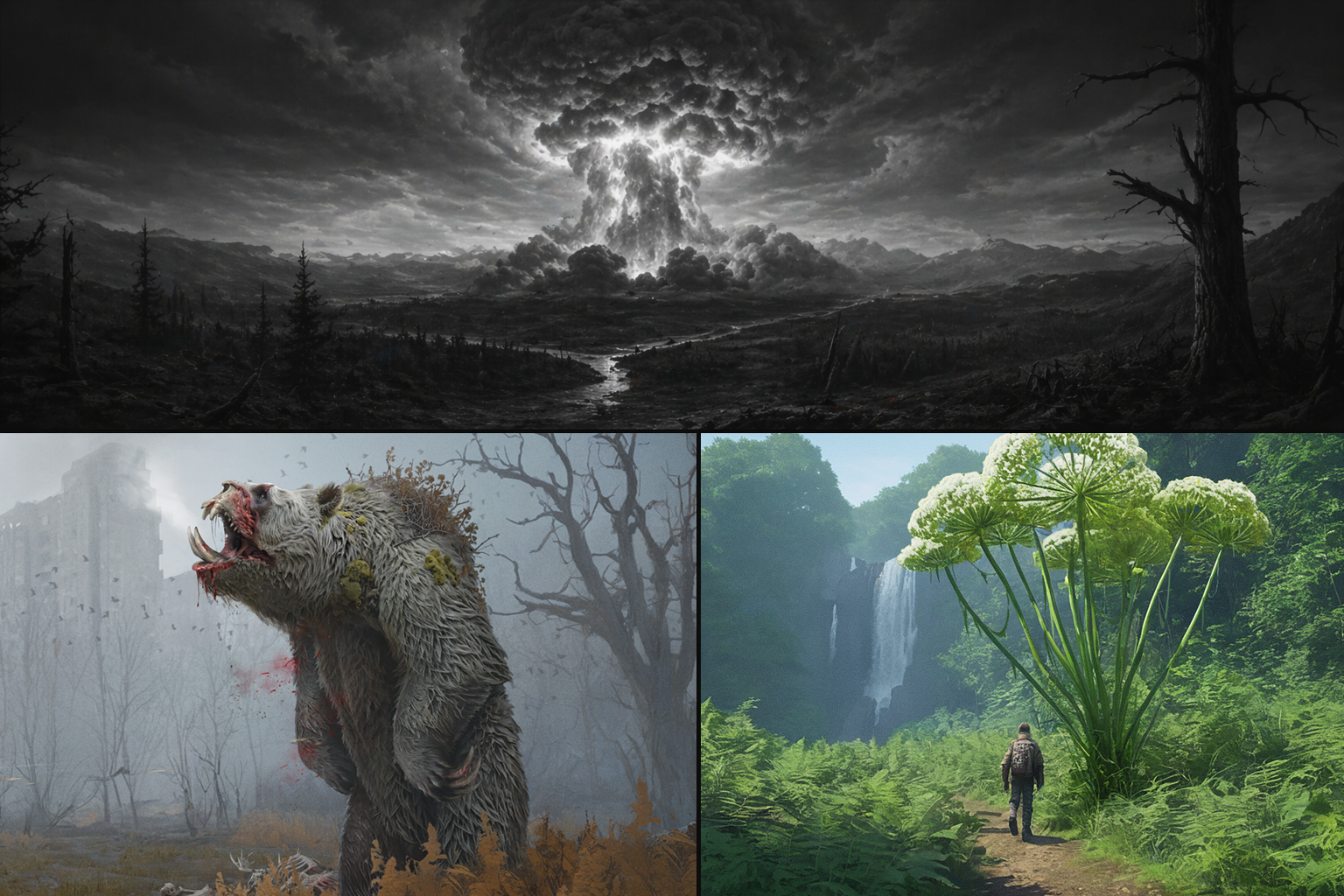
The second concept focuses on a catastrophe created entirely by human actions.
A large-scale weapons test goes wrong due to a critical miscalculation. What was intended to be controlled quickly spirals and triggers a chain reaction of nuclear launches across the globe. Defensive systems activate, and within a short time the planet is consumed by widespread destruction.
The aftermath extends far beyond the initial explosions. Fallout spreads unevenly and interacts with ecosystems in complex ways, creating environments that are not only dangerous but also transformative. Radiation zones begin to evolve into new ecological systems, and life adapts in ways that are rapid and often violent.
In this version, the apocalypse is not a random cosmic event, but the result of human decisions and their consequences.
A Shared Outcome
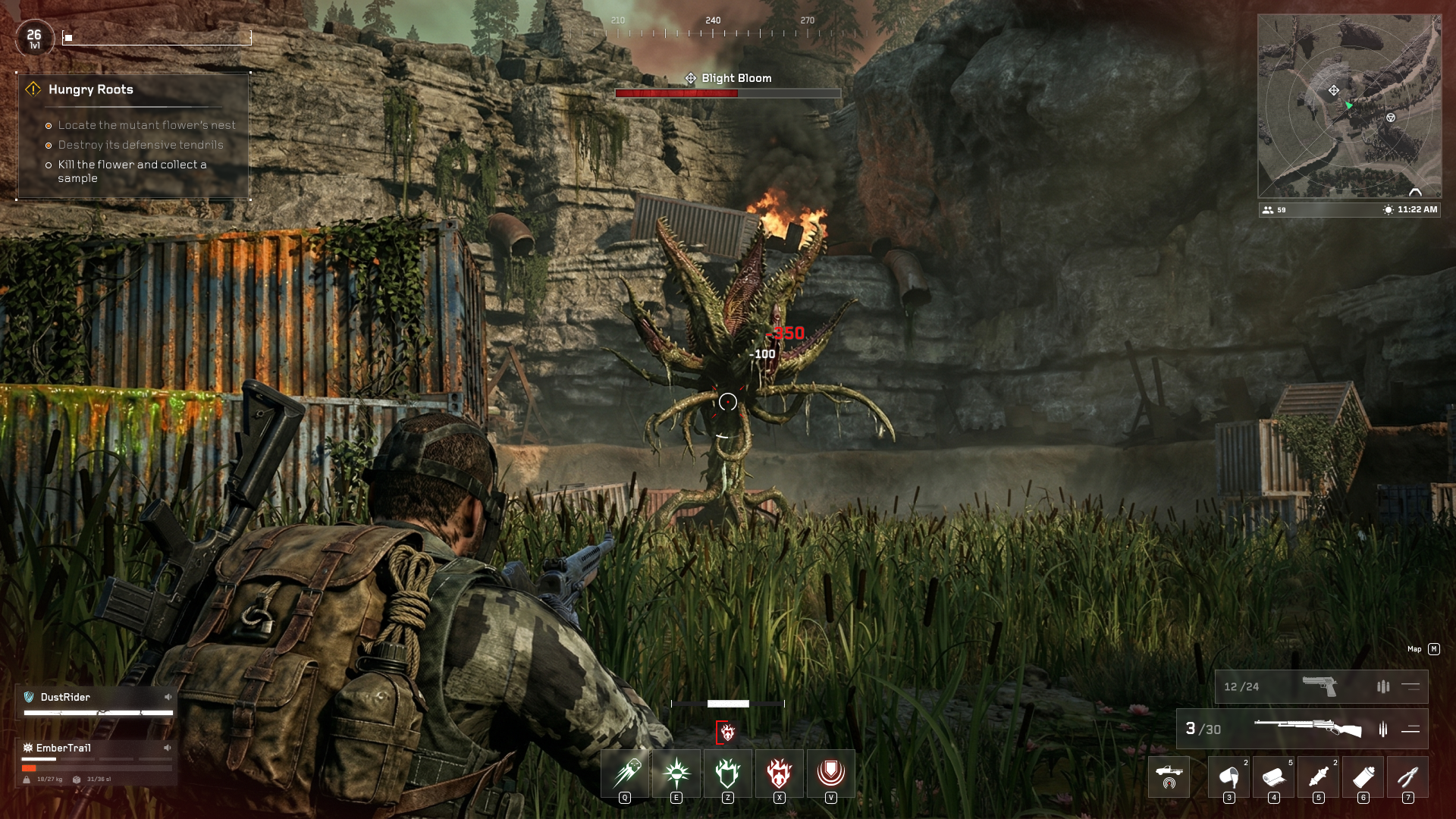
Despite the differences in origin, both concepts lead to the same outcome.
The world becomes a place where nature has rewritten itself. Forests grow in unnatural patterns, creatures evolve into forms that should not exist, and entire landscapes reflect forces that are no longer fully understood.
Humanity survives in a very different way. Those who endure the initial catastrophe do so by retreating into underground bunkers designed to withstand extreme conditions. By the time they return to the surface, the transformation of the world has already taken place.
As a result, humans remain mostly physically unchanged. They are not visibly mutated like the environment around them, but this also makes them feel out of place in a world that has moved on without them. We wanted players to feel like they’re rediscovering and reshaping familiar places in Broken Frontier.
We are still deciding which origin best supports the story we want to tell. But the goal is to ensure that whichever path we choose, the world feels believable and fun to explore.
We would love to hear your thoughts on this. Which version of the catastrophe feels more compelling to you?
— Frontier Division Team