
The exact prompts from day one of Fire Field — 31 files, 3,834 lines of code, none of them written by me.
At 10:44 p.m. on February 7th, I typed this into Claude Code:
I'm wondering if I could build a game like the original Diablo with AI. Graphics from that era. Weapons drop randomly from enemies, and you keep descending deeper into the dungeon.
(I typed it in Japanese. Claude doesn't care.)
By 11:40 p.m. there was a git commit: 31 files, 3,834 lines of TypeScript. I wrote zero of them. I can't code. I still can't.
That prototype is now Fire Field, a dark 90s-style ARPG in Early Access on Steam — 180,000 lines of code, subtitles in 95 languages, voiced in 70.
This series is the steps I actually took, not a memoir. Each post tells you what to prepare and what to type, in order. The prompts are the real ones from my logs, typos included. They worked. That's the only qualification a prompt needs.
Tonight's goal: a game that runs. It took me about three hours. Four steps.
STEP 1 — GET THREE THINGS
- A PC. Not a gaming PC. No GPU needed — the game runs on browser tech.
- A paid Claude account. Claude Code is the tool that writes the code. The $20/month plan is enough, and this is the only real cost.
- The name of one game you love. You don't have to describe your dream game. One name does the work. Mine was Diablo 1.
No game engine. No Unity, no Unreal. Don't install them. The AI picks the tech.
STEP 2 — INSTALL CLAUDE CODE, THEN MAKE IT DO ONE SMALL THING
I won't write install steps here; they'd be outdated in a month. Ask the browser version of Claude instead:
I want to install Claude Code on Windows. I'm not good with computers. Walk me through it one step at a time.
Asking the AI about everything you don't know — that's the entire skill set of this series.
8:49 p.m., February 7th. The first time I ever opened Claude Code. At this point I had never written a line of code.
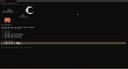
Once you're in, warm up. My first command ever, at 9:29 p.m.:
Make a file called hello.txt and write 'D drive setup complete!' inside.
It has nothing to do with games. It teaches you one thing: you type, it does. The black screen stops being scary.
STEP 3 — DESCRIBE YOUR GAME IN TWO SENTENCES
Before the big ask, I had it do homework: "Do you know CODEX MORTIS? A game made entirely with AI. Look it up on the web." Knowing such a game existed was the reason I was trying this at all.
Then, at 10:44 p.m., the prompt at the top of this post. Two sentences. No spec sheet. No feature list.
Two sentences are enough, because the AI asks you the rest — click-to-move or keyboard? what should it build first? — and you just pick from its options. My very next input that night was:
Show me the questions again. I thought I picked one.
I couldn't even operate a menu. The game got built anyway.
Two rules:
- Name your reference game instead of describing it. Claude knows Diablo 1 better than I do.
- Stay out of decisions you don't understand. I let it choose the whole tech stack. To this day I can't really explain what my game runs on.
While Claude worked, I searched "diablo 1" on Bing — so I could point at things later: "make the floor feel like that."

At 11:16 p.m. I typed npm run dev — the launch spell. Ask the AI what it means if you're curious. I wasn't.
11:19 p.m., night one. My character is the blue rectangle. The enemy is the red one.
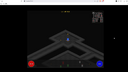
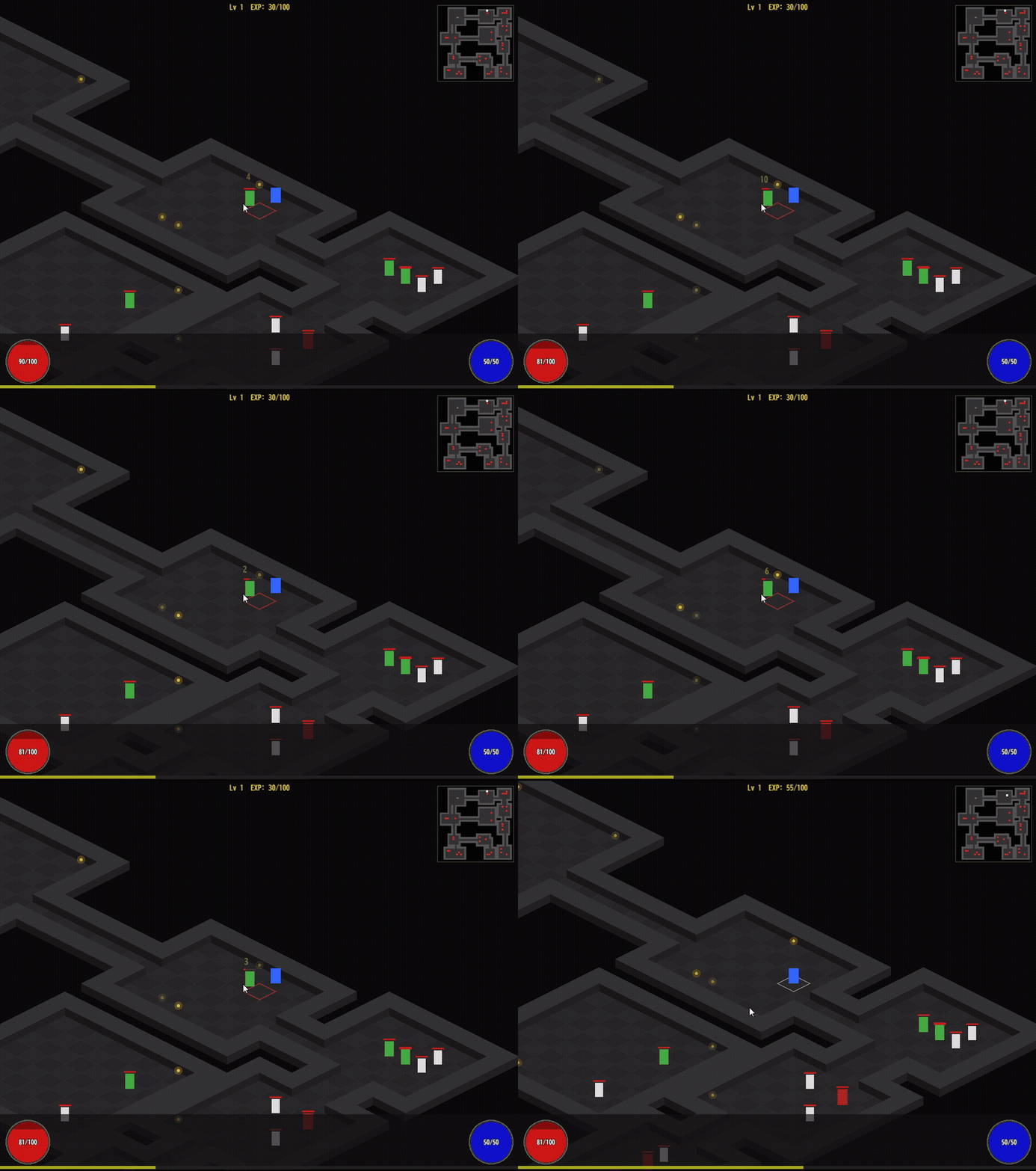
It walks where you click. Enemies chase you. They drop loot. It's a game. An ugly one, but a game. Every sprite gets replaced later — tonight only needs "it runs."
STEP 4 — SAVE, IMMEDIATELY
At 11:33 p.m. I typed:
Save the current state to Git as a commit. Use this message: FF Version 1.0, 7 February 2026, prototype complete. Then tag it v1.0 so we can find it later.
You don't need to know what git is. I still barely do. It's a save point you can return to. AI breaks things — cheerfully, and often. Whether you can say "go back to the last save" decides how you feel tomorrow morning. Don't play hardcore mode with your own project.
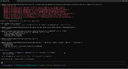
11:40 p.m. The first commit: 31 files, 3,834 insertions. Lines typed by me: zero. What I typed instead was Japanese.
THAT WAS THE WHOLE NIGHT
Ten minutes after saving, my log shows this input: "Give me the URL, I'm going to play." The maker, off to play his own gray boxes.
At 2:38 a.m. I typed:
I want to make a game entirely with AI and release it on Steam.
Absurd at the time. Three months later it was true.
The last line of the night, at 3:01 a.m.:
Thank you. Good night.
That's the whole method, honestly. Not prompt engineering. Telling the thing what you want, in your own language, and saying good night when you're done.
Next post: what to do when the AI can't fix its own bug. Four days after this night, I lost a full day because items wouldn't pick up — and escaped by making one AI write a handover document for another AI. That's a step too. See you then.
Your two sentences are ready. Type them tonight.
This series is also on the blogs.
- English (Substack): https://robeoffire.substack.com/p/how-to-start-a-game-with-ai-in-one
- 日本語 (note): https://note.com/robe_of_fire/n/nf26924545b9d