
Hello out there! I've been busy this month working on level, quest, and character design. I've also made a lot of art improvements, squashed some bugs, and wired in a few fun surprises too! Here's a look at some of the things I've been working on for the full game this month, and some funny bigger picture thoughts on level design:
Level Design: Erioran Space
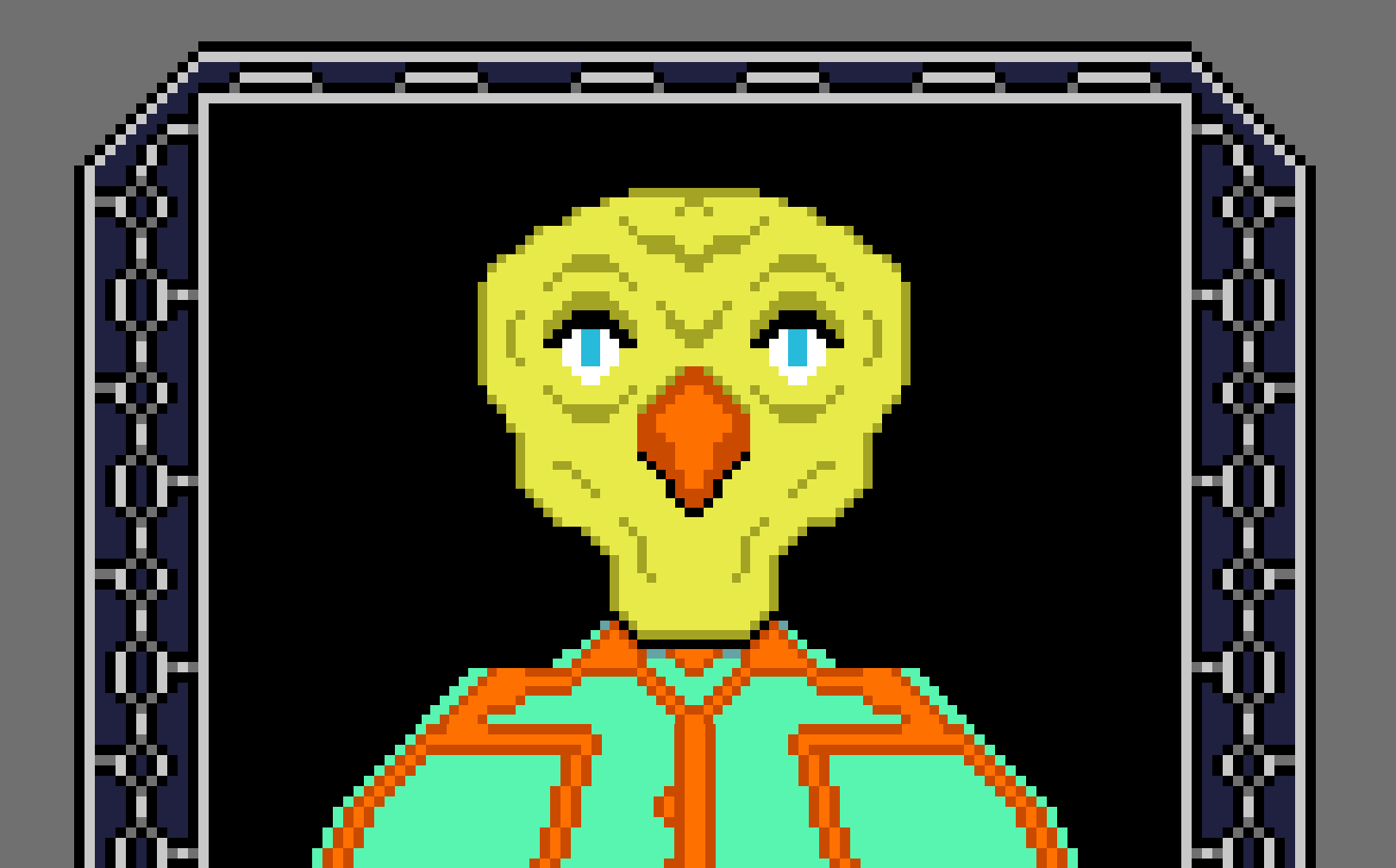
My main level and quest design work this month has been creating levels and quests for the Eriorans, a fierce race of bird-like aliens who use heat beams to overheat and destroy enemy ships. Here's what Eriorans look like:
And here's a ground view from their homeworld, Erior:
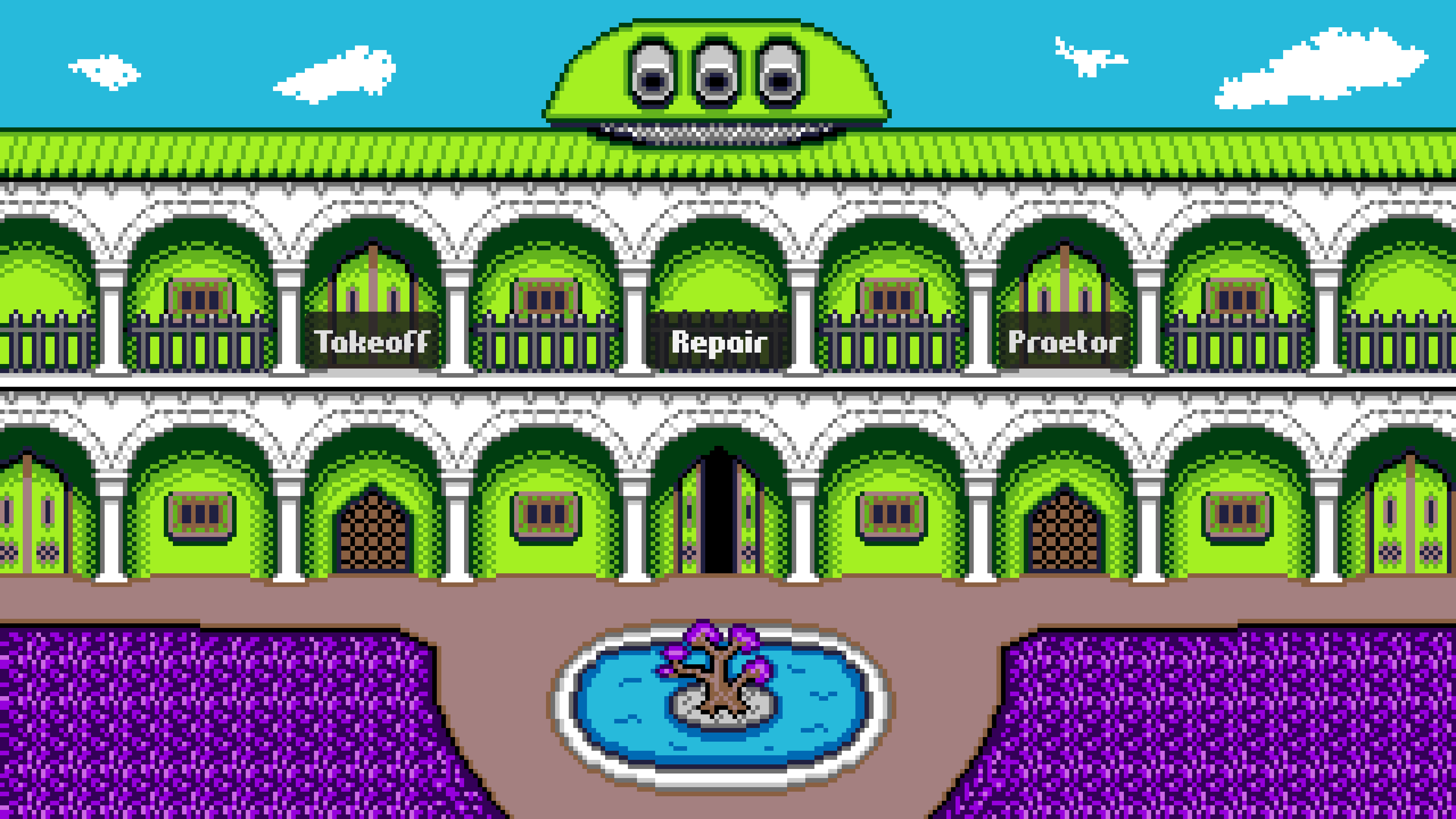
Erior was once a lush jungle world, but their climate slowly began to change. Erior became increasingly arid, and is now mostly desert. This drove the Eriorans to develop more advanced technology and explore nearby star systems looking for more hospitable climates. Eriroans keep small trees both to honor the memory of their world as it once was and as a symbol of their mastery of their harsh environment.
Erioran space is currently divided against itself. The Erioran hegemony was conquered by the Republic a hundred years before the events of the game, but the Eriorans rebelleed during the Civil Wars. Parts of Erioran space remain aligned with the Republic, but others are in open revolt, and the player will need to navigate that situation in the game.
There are also some other, weirder problems lurking in Erioran space... I won't spoil anything, but here's a teaser:

Art Improvements
As I mentioned last month, I've also been working on higher resolution art both for portraits and in some other areas of the game. I've now created larger portraits for all my existing faces and made plenty more as well. Here's a gallery showing off some new aliens and a few of the improved faces as well:

I'm still pretty slow at pixel art, so these took a while, but I'm pretty pleased with them. In any event, almost all of the game art is now drawn on the same scale, and those pesky "Mixels" (i.e. pixel art drawn on different scales) should be a thing of the past!
Devlog: Everything's a Dungeon Even in Space
This next part includes some abstract musings about game and level design, so feel free to skip it if you aren't interested in that kind of thing!
The level design work on the game has been going a little slower than I had initially hoped, and I'd like to talk a little bit about why that is. When the Stars Threw Down Their Spears is the first serious video game I've ever made, and so I'm still very new to making pixel art, writing code, and making music. But level design for games is actually something I've been doing and thinking about for a very long time now, just for a different type of game.
I started playing tabletop role-playing games (like Dungeons and Dragons), when I was 8, and started game mastering when I was 10 or 11. If you haven't played a tabletop role-playing game before, running the game requires the game master to either design game levels and quests or to understand and tweak existing ones. So, as a result, I've been thinking about level and quest design for more than 30 years. That means that when I work on designing the star systems and quests for WtSTDTS, I've got a much deeper well of tools and ideas to draw on than I do for, say, the art or sound design.
You might be asking yourself 'How does making up a bunch of dungeons for your friends have anything to do with a space game?' The answer is that its relevant because everything is a dungeon. That probably sounds silly, but let me explain what I mean by it.
Here's a map of a dungeon I made a few years back for a tabletop game I was running. It shows a haunted mushroom farm (right) and the formerly hidden crypts underneath it (left):
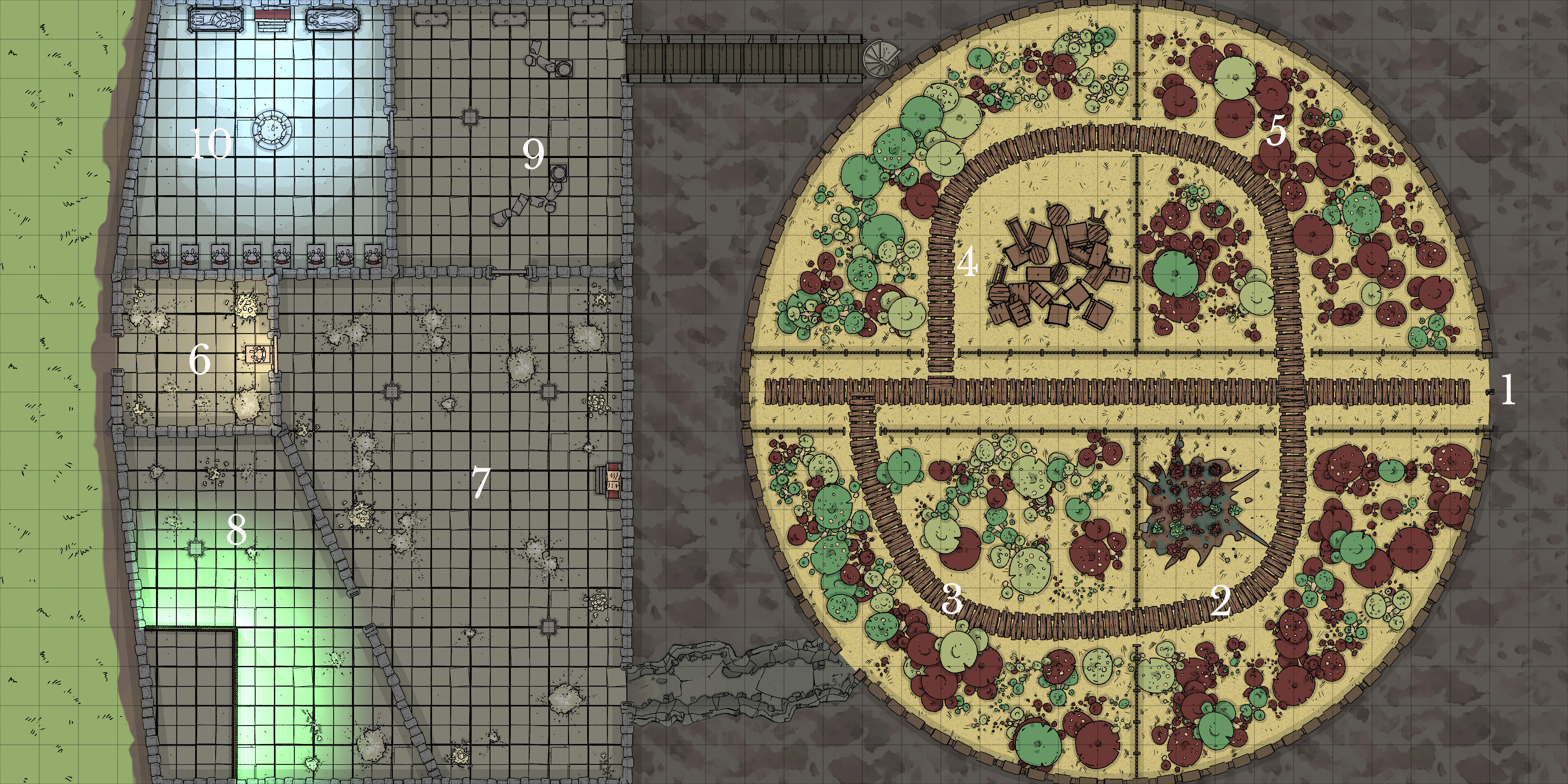
Each of the white numbers on the map correspond to rooms or areas of interest where I had designed encounters for the players to experience (or ignore!) A haunted mushroom farm looks pretty far removed from a star sector, right?
But looking a little deeper at the structure, you can see that what the dungeon really is, is just a series of connected nodes. Each room is a node, which is connected to some, but not all, of the other nodes, and there are specific rules for how players can traverse those nodes. Here's a version of the dungeon map showing the node connections in red:
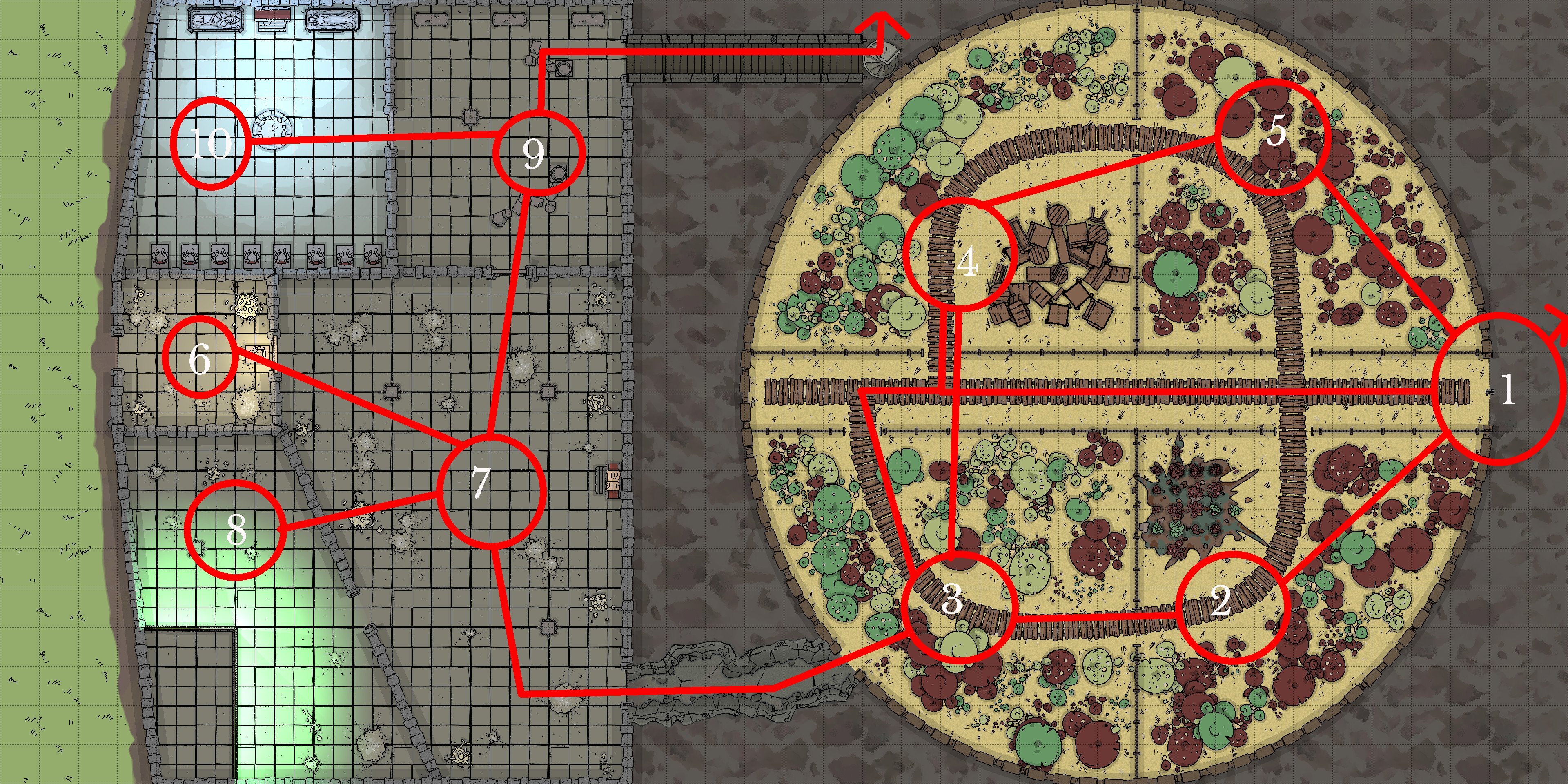
It's that underlying "connected node" structure that I'm referring to when I say everything is a dungeon. Now here's a similar diagram for the star sector from the demo for this game:
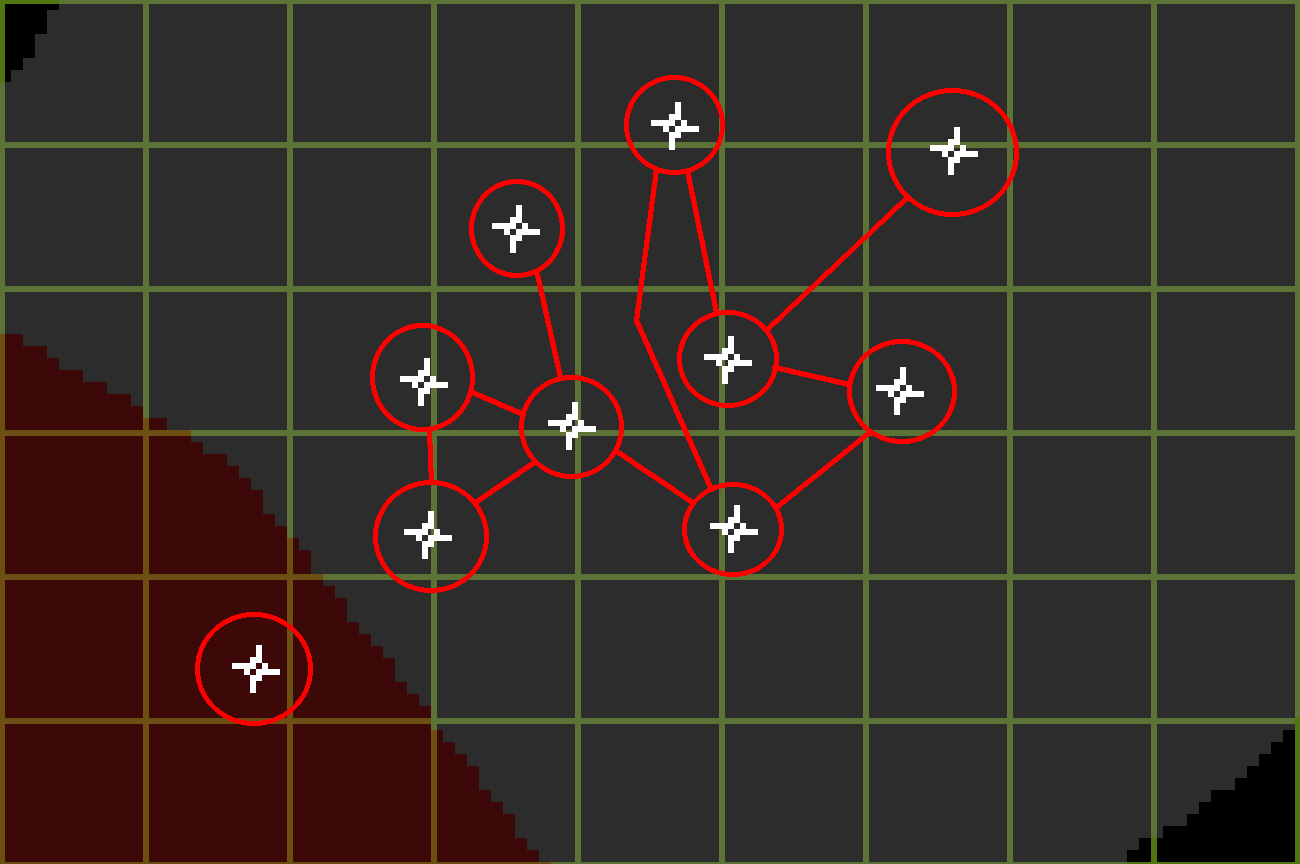
Each of the individual star systems is a node where things happen, and the connections shown here represent all the quests or rumors you can encounter that connect one star system to another. While, unlike a traditional dungeon, you can travel freely from any star node to any other star node in the game, the quests and rumors connect each node to some, but not all of the other nodes. That web of partially connected nodes looks a little bit like the dungeon diagram above, no?
Likewise, when you enter each of those individual star systems, they also have a set of nodes inside them (planets, asteroid fields, objectives, etc.), and those nodes are also connected to each other by quests or rumors. Here's a marked up map of the Naxos system from the demo showing the quest and rumor connections:
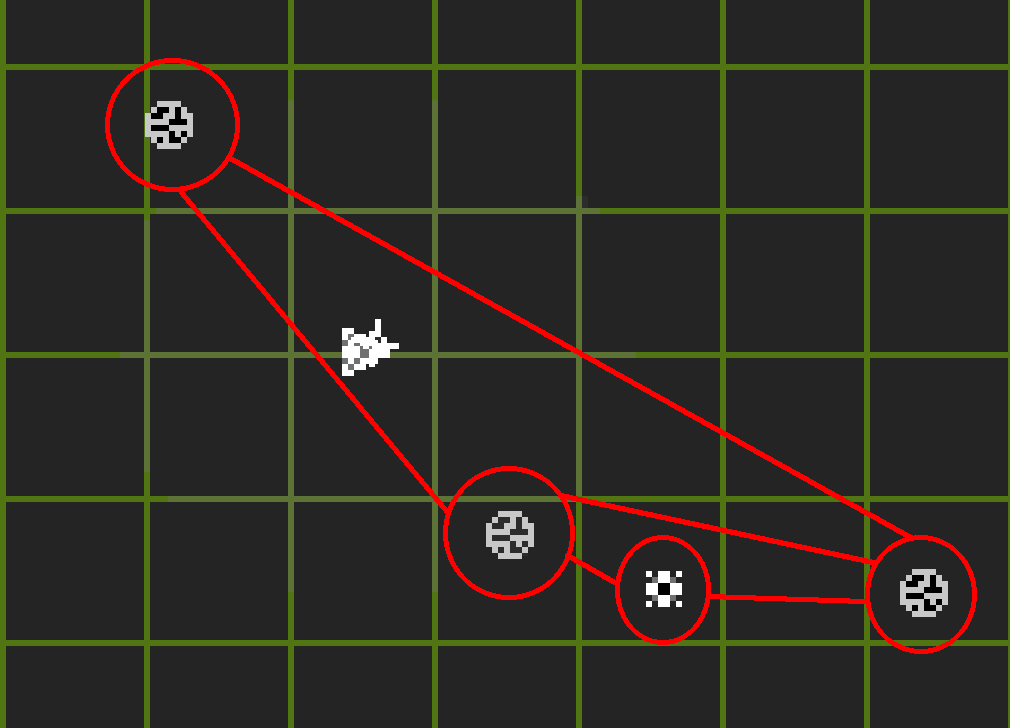 A dungeon within a dungeon!
And, to go another step down, at each of the planets in the system there are people to talk to or planetary exploration events to explore. By now it probably won't surprise you to learn that those dialog trees or text adventure style events are also just a series of nodes selectively connected to each other with rules for how you traverse them! Here's one of the first conversations in the game diagrammed to show the flow of connections between the nodes:
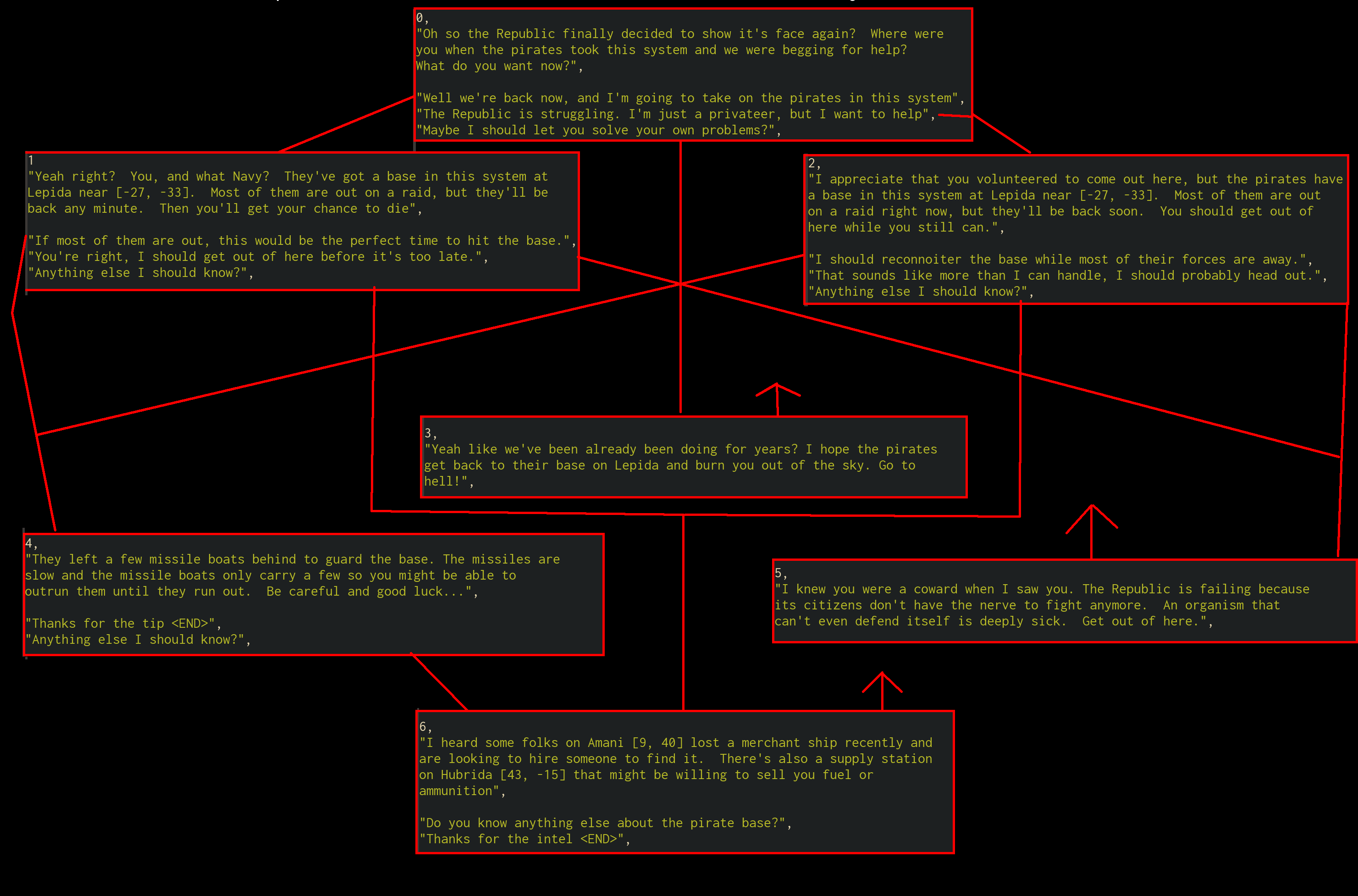 Conversations? Also dungeons. It's dungeons all the way down!
Once you recognize that all these seemingly unrelated types of game parts have a deep underlying structure in common, you can then apply design principles or tools from one of those things to reason about other kinds of things.
A concrete example: a bedrock principle of good design for traditional TTRPG dungeons is that a dungeon should have multiple different ways to enter and leave. This allows different players who find different ways in and out to have very different experiences of the same dungeon, or even for the same players to approach the same dungeon differently at different times.
And that same idea of multiple entrance and exit points can be fruitfully applied to quest and story design: a good open world game will have nodes that include quest hooks to other nodes, and those other nodes will in turn have connections to other nodes, and those to other nodes, and so on. This creates a large interconnected web of quests and rumors. Depending on where a player chooses to start, or which string of the web they pull on, they'll be led in a different direction and the game world will unfold differently for each player. In a truly well designed game the choices of which quests to prioritize will lead to interesting consequences so that the order the player does things can actually matter to the narrative.
And that's just one example of the kind of dungeon-esque level and quest design I'm trying to create for When the Stars Threw Down Their Spears! But a side effect of that style of design is that it makes level design take much longer. When I design a level, I'm not just designing and testing that specific level, I also need to think about how it connects to the other levels, many of which haven't even been created yet! And once the other levels *are* created I then need to test all the interconnections too!
That hostage the player rescues from pirates has to have a home to return to. Where should that be? When a merchant needs the player's help to recover an ancient seed sample, where should they suggest the player look for it? Each time I need to leave the level I'm working on to quickly sketch the skeleton of another one, it all takes a little longer. The good news is that as the map fills in and the skeleton of the overall "dungeon" becomes more complete, the level design process should accelerate because more and more levels will already exist to link to, if you see what I mean
Thanks for coming along on this long and goofy dungeon digression! With a little luck maybe the next time you find yourself looking at a spreadsheet you might wonder: Could this too be a dungeon?
Next Up
Dosians
Next month my goal will be working on more new star systems, quests, NPCs, and planetary exploration events, this time in the systems inhabited by the Dosians:
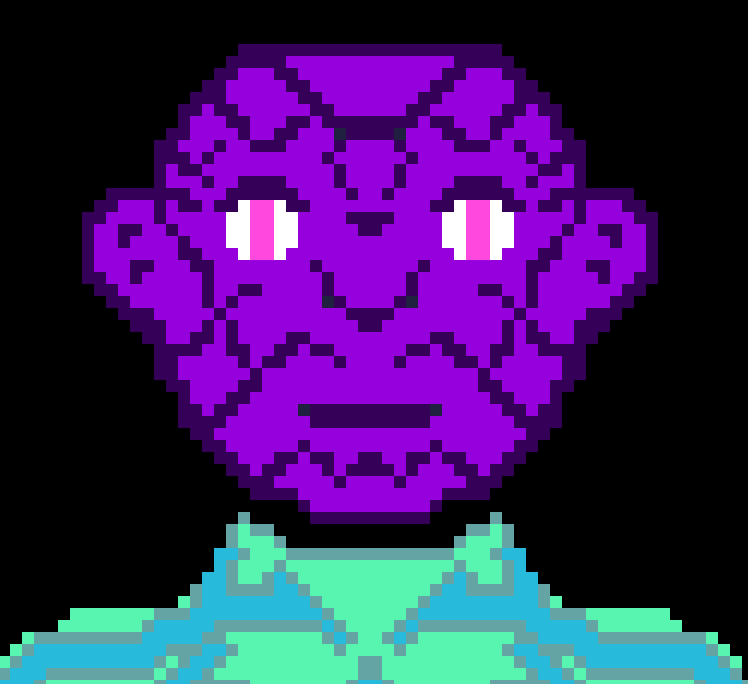
If you've played the demo, you may already have met a Dosian or two. The Dosians are an ancient race that once had a mighty sector-spanning empire. Then a mysterious warp catastrophe drove their empire into collapse, and they are now a vassal state of the Republic. The Dosians possess extremely advanced technology like cloaking devices and autonomous fighters, and their brightest scientists are still trying to unravel the puzzles of their past. Players will have to decide whether to help them, and how to navigate the dangers of ancient technology!
Crew Stories
Another goal for this month is to write dialog and some quests for crew members, so that players can talk to your crew and learn more about them when they're onboard, instead of just seeing their stats in the crew view. This will also give your crew an opportunity to ask you for help with a thing or two (i.e. give you a quest!) so you can participate in their lives and stories a little more.
That's what I'll be up to in September. Have a good one and I'll see you in October!