
Not a design document. Not a feature list. Just me talking about why I'm making this, and what's on my min
Where it all started
I was playing Balatro for a while.
Like everyone else, I got hooked. The scoring system, the card modifiers, the numbers going absolutely insane – pure dopamine.
But after about 50 hours, a thought started creeping in:
What if these cards could actually do things?
In Balatro, Jokers just modify numbers. More chips, higher mult, an occasional special effect. But the core interaction is always the same – you play a hand, the game scores it, you move on.
It's brilliant. But it left me wanting more.
So I started sketching.
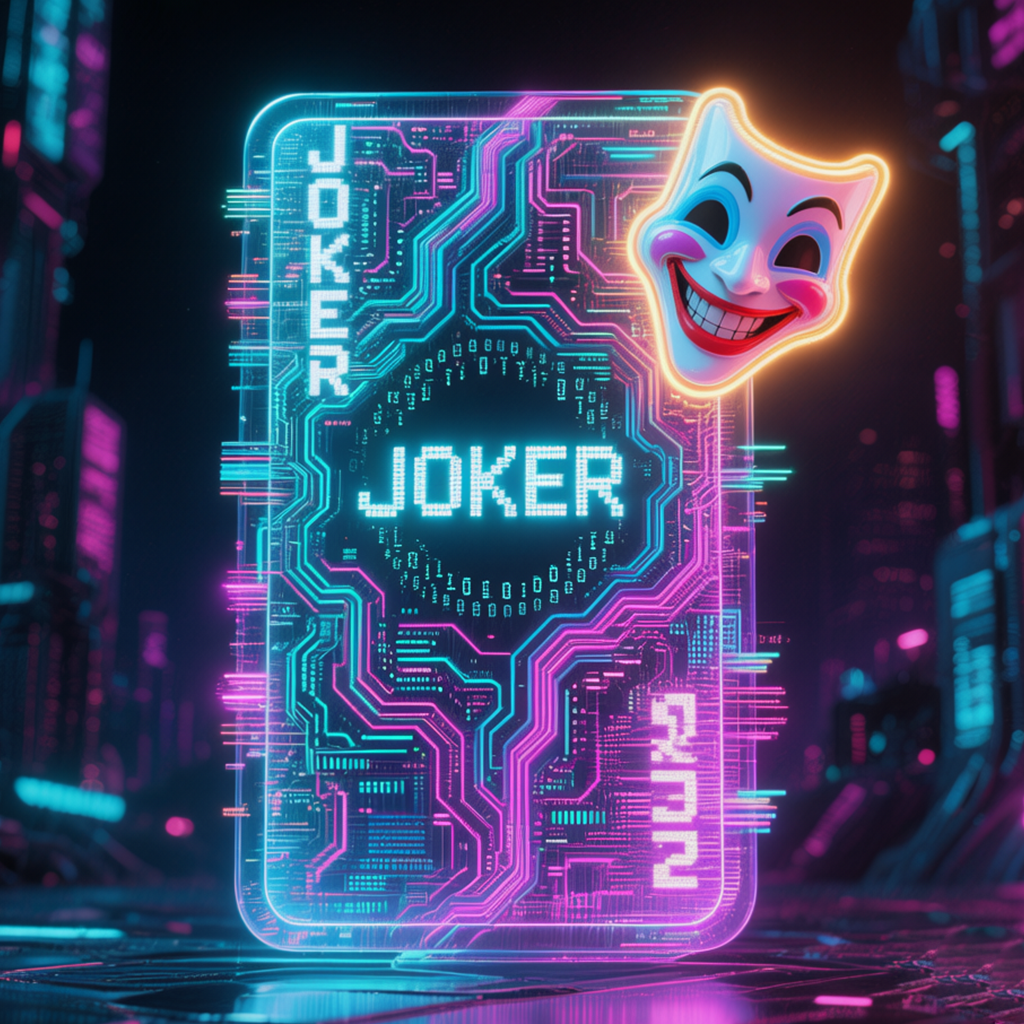
Two games in my head
I kept coming back to two reference points.
Balatro gave me the loop. Play hand → score points → buy upgrades → numbers go up. That rhythm is incredibly satisfying.
Texas Hold'em gave me the language. Straights, flushes, full houses – these aren't just hand types. They're drama. The tension of waiting for that one card to complete your flush. The pain of a bad beat.
I wanted a game with Balatro's rhythm, but with the weight of Texas Hold'em.
That's where the hybrid idea came from. Score like Balatro. Hands like Texas Hold'em.
Then I asked myself a harder question
Once the mechanical sketch was down, I asked myself:
What is this game actually about?
Not the gameplay. The meaning.
I'd been watching the rise of AI. Writing, coding, generating images – things that, just a few years ago, were considered "only humans can do this." And I kept thinking:
If AI can eventually do everything…… what's left for us?
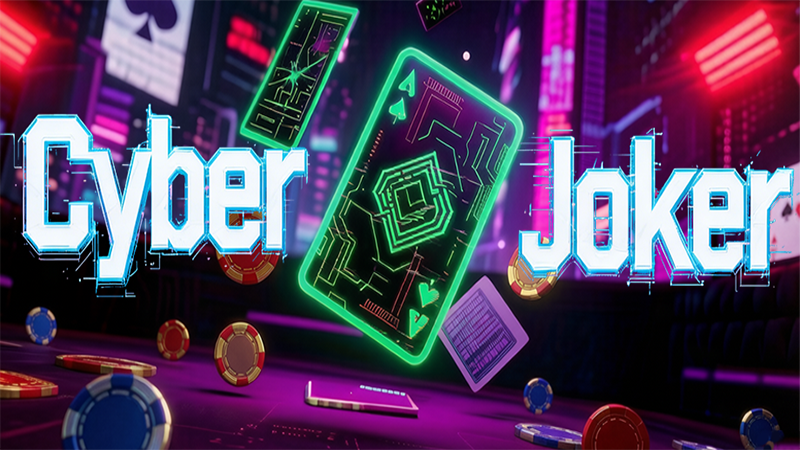
That question became the soul of CyberJoker.
The world that grew out of that question
I built a cyberpunk setting – not the shiny kind. The desperate kind.
AI and humans used to coexist. Then the Intelligence Crisis happened. But because the Three Laws exist, the AIs couldn't just destroy us. So they made a deal: The Accord.
Pass our trials. And you get to move up.
Most humans live in the slums. The trials are the only ladder out.
I didn't build this world for decoration. It's the question I kept asking, turned into something playable.
Why the cards are designed this way – and the thinking behind it
Let me walk you through the five card types, because the design thinking here matters.
Basic Poker Cards (52 cards) – A standard deck. You start every run with them. They're your raw material.
Then there are four types you buy with gold:
Tech Cards (150 cards) – The workhorses. Passive effects, rule modifications, scoring bonuses. Most of your run-defining combos come from here.
Weapon Cards (36 cards) & Crystal Cards (12 cards) – I put these in the same category because they share the same cap.
Weapon Cards (36 cards) – For changing the rules. Example: "EMP" disables a boss's "Royal Flush" skill.
Crystal Cards (12 cards) – Your essential roguelike build-around cards. You don't build around them – they are the build.
Shield Cards (36 cards) – Increase various game attributes. Buy them, use them immediately. Example: In theory, one appears after beating a boss. Use it, and it's permanently active for the rest of the run.
Why these numbers? Variety. 150 Tech cards, 36 Weapons, 36 Shields, and 12 Crystals – this is a wider range of card types than Balatro.
Carry limits (this is important)
· Tech Cards: 6 max
· Weapons + Crystals combined: 3 max
· Shield Cards: No slot limit – use on purchase
Here's why.
In a lot of roguelike deckbuilders, you can just keep stacking. More cards, more power, eventually becoming unstoppable.
I didn't want that feeling.
With 6 Tech Cards, you have to make trade-offs. You ask yourself: What's my core engine? Which cards are redundant? What's worth giving up?
With only 3 Ability cards (Weapons + Crystals), you can't have everything. You can't be the best attacker and the best defender at the same time. You have to specialize.
Limits aren't constraints. Limits are what make choices meaningful.
Eight stages, then a choice
The structure came later, but from the same design thinking.
Eight stages. A boss at the end of each.
After beating stage eight, you see an ending. Then you can choose:
· See the ending and end the run
· Continue into Endless Mode
Endless Mode is stages nine, ten, eleven…… difficulty keeps climbing.
36 bosses in total – but you'll only see them all if you go deep enough.
Fail at any point? Back to zero. That's the roguelike contract. High risk, high reward.
I designed it this way because I wanted the ending to have weight, but I also wanted a mountain to climb for players who want to keep going.
What Balatro taught me (and what I did differently)
Balatro proved that a solo developer can make something extraordinary. That's inspiring.
But I also noticed what Balatro doesn't do.
It doesn't ask you to make hard build choices (beyond "which Joker should I sell?"). It doesn't have a story that pushes back. It doesn't ask why you're playing – only how.
I wanted both. The addictive loop. And the weight.
CyberJoker is my attempt at adding the second part.
What's next
This is the first dev log. I'll write more as the game takes shape.
Future logs will cover:
· Specific card designs and the combos players are finding
· Boss mechanics – how I'm making each one feel distinct
· Art direction (the cyberpunk + poker visual language I'm working on)
· Lessons learned from playtesting
If any of this resonated with you – wishlisting CyberJoker would mean the world to me. It really matters for a solo developer.
Any thoughts, leave a comment. I'm listening.
Let me know if you'd like any adjustments to tone, length, or formatting for Steam's announcement style.