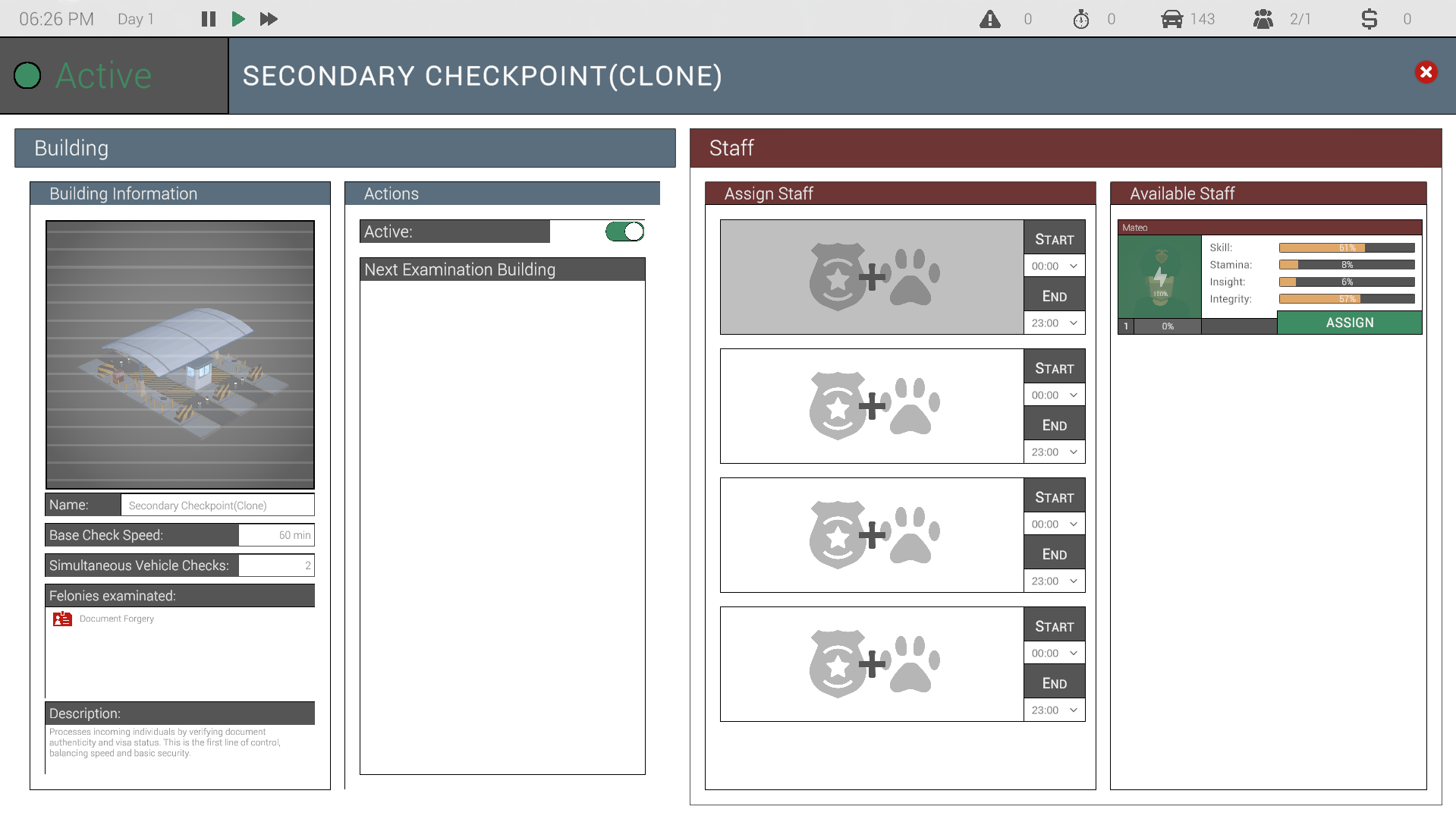
Checkpoint 19 just got more complex
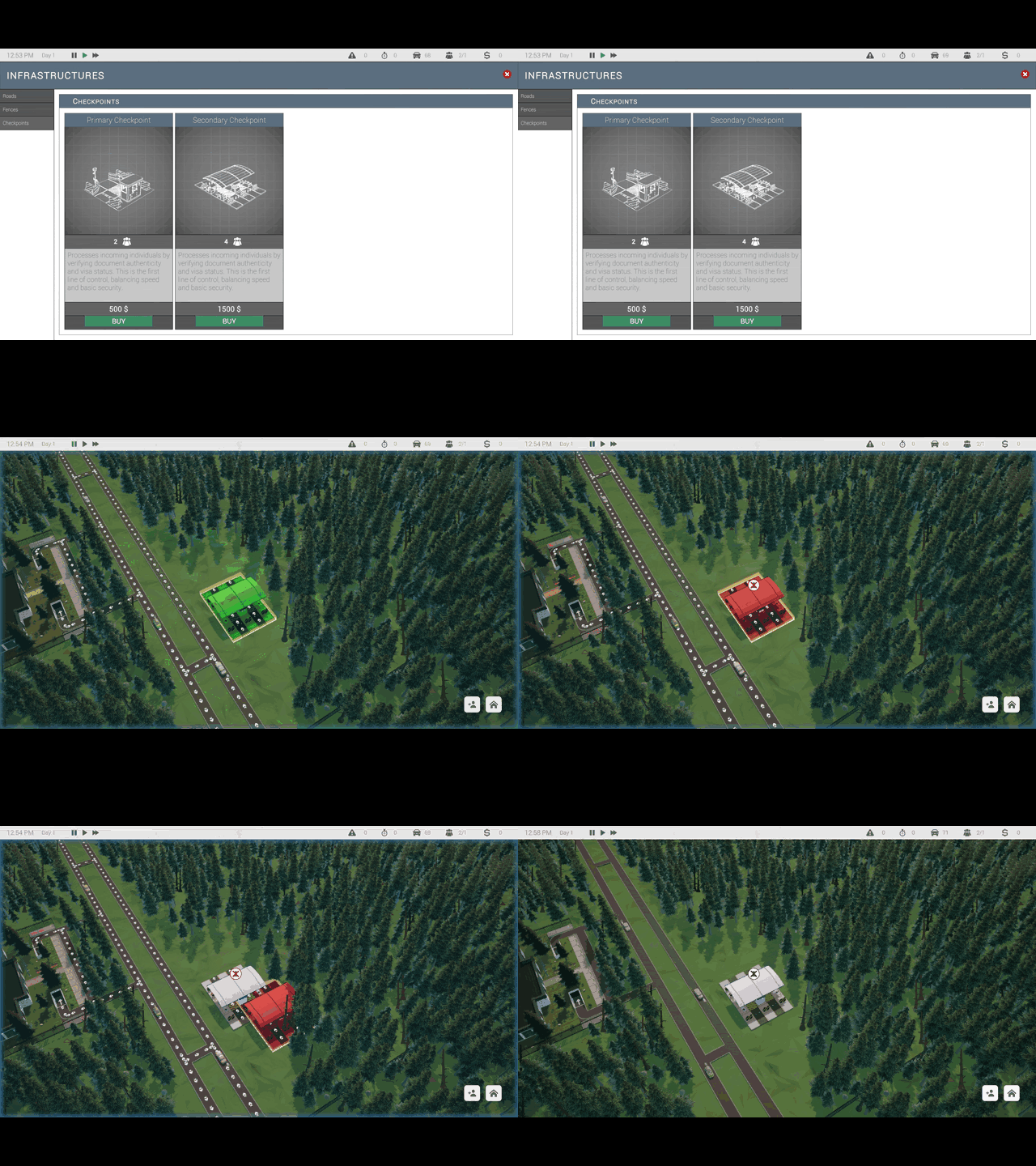
A new Secondary Checkpoint building has been introduced, designed to perform deeper inspections on selected vehicles. This is where more advanced and hidden felonies can be uncovered, the kind that primary checkpoints will miss.
But there’s a catch.
Secondary inspections are slower, require more staff, and can quickly become a major bottleneck if overused. Pushing too many vehicles through them will impact your throughput and create congestion across your checkpoint.
Note: This feature is still under development and will continue to evolve.
Alongside this, Canine (K9) staff specialization has been added.
Buildings that support staff specializations can now assign canine units, significantly improving detection capabilities, especially for hidden or harder-to-detect felonies. Used correctly, they can reduce risk without fully sacrificing flow.
Used poorly, they just add cost and complexity.
You now have more tools but also more ways to fail.