
Welcome to the first Dev Log for Don’t PANIC!
I’m Yusup, and I’m excited to finally share this journey with you.
A Bit About Me
When I was a kid, space science captivated my imagination. Video games were my other great passion — and by the age of 8, I was already tinkering with game mods. A few years later, I started creating my own games: some simple 2D experiments, others ambitious 3D projects with advanced physics.
None of them ever made it past the prototype stage. Most got lost or deleted over time. But each attempt taught me something.
Don’t PANIC! is my attempt to revisit one of my earliest game concepts — something I first dreamed up when I was 14. This time, I know better than to aim too high right away. I’ve learned that before making something big happen, I have to start small.
Gameplay: Combat
My main goal for combat is a fast‑paced, tactical shooter that would feel equally engaging in both 1‑on‑1 encounters and situations where you’re totally overwhelmed by lots of enemies.
I want the gameplay to reward skills and knowledge.
This means:
Using the right weapon and defensive system.
Placing direct hits with the lead‑indicator.
Hitting the weak spots.
Damage Sprites
All enemies have 3 states:
Normal.
Damaged.
Destroyed.
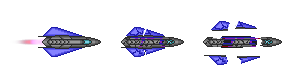
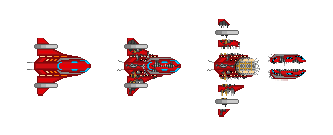
Some enemies go beyond the basic three‑state system.
The L1 "Hurricane", for example.
This ship has modular components:
Wing armor (outer layer).
Rocket launchers (hidden beneath the armor).
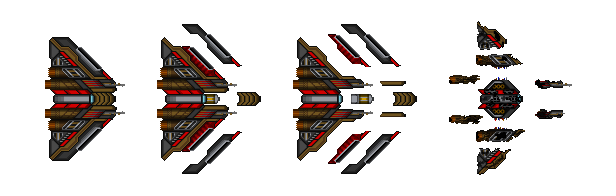
You first strip away the wing armor.
Once the armor is gone, the rocket launchers are exposed. They’re now vulnerable to direct fire.
If you destroy a launcher, that side of the ship loses its ability to fire rockets.
This creates tactical depth:
You can choose to focus fire on one side to disable a specific weapon.
You might opt to chip away armor gradually, preparing for a decisive strike.
Or you could ignore the modules and go for the core — but that might leave you dealing with more firepower longer.
Armor System
All enemy ships have armor — and some feature additional armor plating.
Here’s how it works in practice:
The S2 «Stinger» has a base armor level of 2.
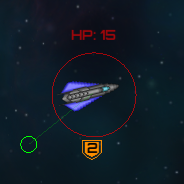
The L1 «Hurricane» has both base armor and reinforced plating:
Base armor: Level 2;

Armor plating:
Wings: Level 3;
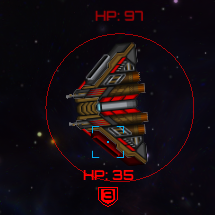
Front: Level 5.
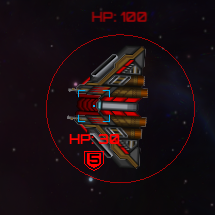
Higher armor levels reduce damage taken.
Damage Ratio:
Minimum 0.25 — even weak weapons deal some damage (25% of base).
Maximum 1.75 — highly penetrating weapons can deal 175% of their base damage against vulnerable targets.
Critical threshold: no damage below -4 levels
If your weapon’s penetration is 4 or more levels below the armor value, it deals zero damage.
Example: a weapon with penetration level 1 cannot harm a section with armor level 5 or higher.
This system ensures that:
Skill and knowledge are rewarded (knowing when to aim for weak points).
Armor feels meaningful (not just a health buffer).
Combat stays dynamic (you can’t rely on a single strategy).
That’s It for Now
Looking forward to sharing more details in future updates!
See you in the next log!
-Yusup