
Late Night Manifest - Development Update
I’ve been spending the last few weeks polishing Late Night Manifest and, this time, a lot of the work has been focused on the small details that can make a surprisingly big difference in how the game feels.
Some of these changes may not look very significant on their own, but together they help make the controls more predictable, reduce unnecessary backtracking, improve readability, and make exploration feel smoother.
Here’s what I’ve been working on.
🎮More Predictable Controls
One of the things I’ve been working on is how option selection behaves when a button is held down.
Previously, some of the options in loadout scenes and machine controls would continuously cycle while the button was being held. This could sometimes cause the selection to move further than the player intended, especially when they only wanted to move one step.
I’ve changed these interactions to use discrete selection.
Now, each button press moves the selection one step instead of continuously cycling through the available options while the button remains pressed.
It’s a small change, but it makes these interactions feel much more deliberate and predictable.
🚗Improvements to the Car Sequences
I’ve also made several changes to the car-related sequences.
Engine Start Sequence
The car engine start process now happens only once per session.
Once the player has gone through the engine-start process, the game remembers that it has already been completed during that session.
However, if the player returns to the main menu and starts a completely new session, the process will be shown again.
This gives us a better balance between introducing the mechanic and avoiding unnecessary repetition later in the same playthrough.
Car Signal Tutorial
I’ve added tutorial text to the car signal phase as well.
This should make it clearer what the player is expected to do during this part of the sequence, especially for players encountering the mechanic for the first time.
I want the game to retain its tension and uncertainty, but I don’t want players to be confused simply because the rules of an interaction were never properly communicated.
🧩Making the Mixer Puzzle Less Tedious
I made an important change to the mixer puzzle.
Previously, solving the puzzle could require the player to repeatedly move between different parts of the world:
Puzzle → World → Note → World → Puzzle
While this kind of back-and-forth can sometimes be a fun part of an investigation, I felt that in this particular case it was creating more busywork than meaningful challenge.
Players can now activate the memory map directly from the puzzle.
The intention isn't to make the puzzle easier by giving away the solution. Instead, I am trying to remove unnecessary friction from the process of gathering and checking information.
I want the player to spend their time thinking about the puzzle, rather than simply walking back and forth between the puzzle and the place where they found the information.
This is part of a broader goal we're working toward: keeping the exploration and investigation aspects of the game intact while reducing interactions that feel repetitive rather than rewarding.
🗺️ Fast Travel
I’ve also added Fast Travel.
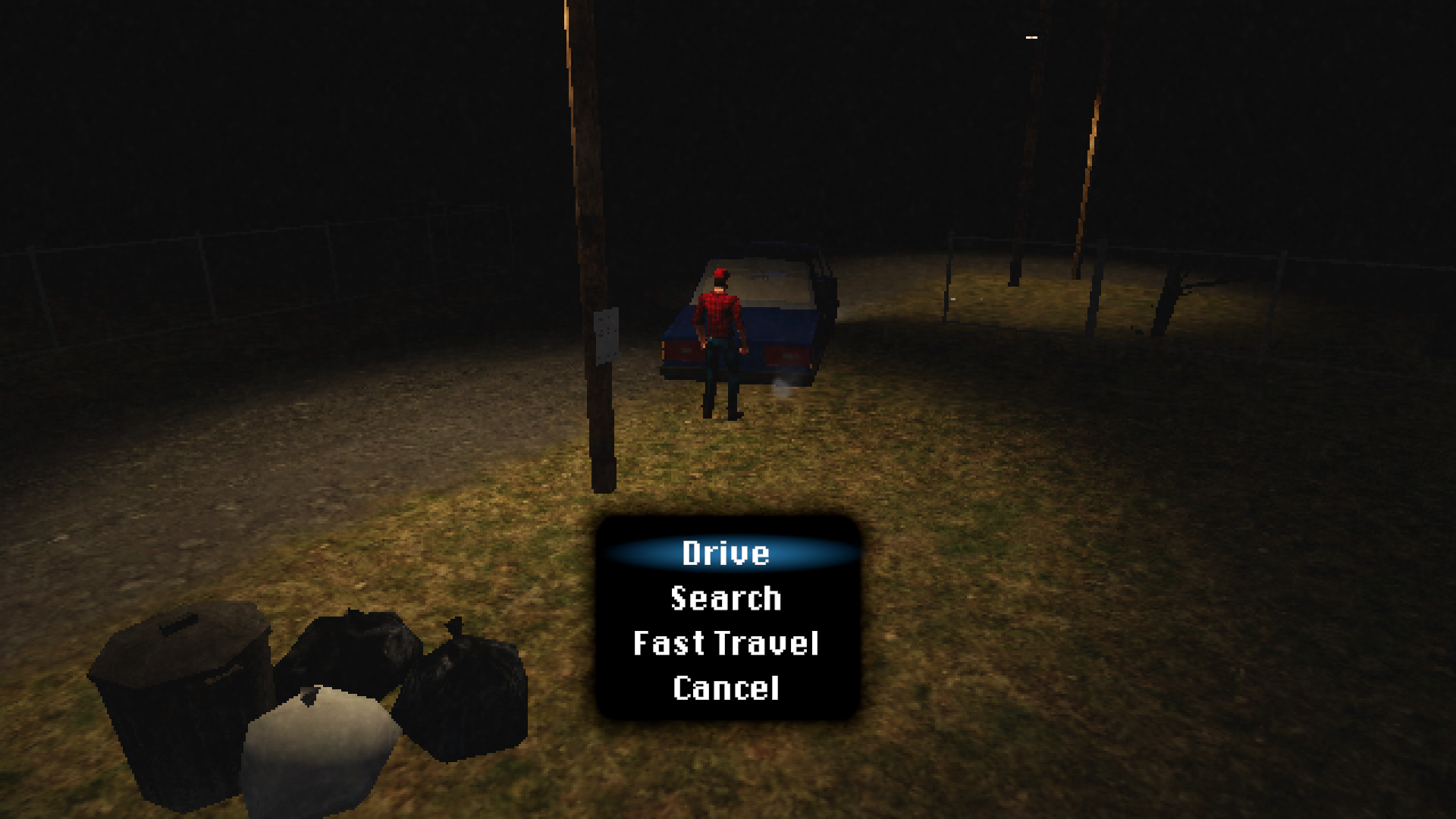
Once the player has visited a location at least once, that location becomes available for fast travel.
Late Night Manifest has several locations that players may need to revisit during their progression, and I realized that repeatedly walking through already-explored areas could eventually become more of a chore than an interesting part of the experience.
Fast Travel gives players the option to move between previously discovered locations without having to repeat the entire journey every time.
I still want exploration to matter the first time you visit somewhere, and I still want the world to feel connected, but once you've already established that route, I don't think the player should always be forced to drive it again.
🎥 Modern Controls & Camera Improvements
I’ve continued working on the Modern Controls as well.
I added an angle check to the camera-relative input system. This allows the game to better determine how the player's input relates to the current camera orientation and helps us handle camera changes more reliably.
This is particularly important because Late Night Manifest uses fixed-camera environments while also supporting a modern control scheme.
The character's movement needs to feel intuitive even when the camera suddenly changes from one angle to another.
I am also making additional adjustments to our camera regions.
There were still some situations where the camera could create blind spots or obscure important parts of the environment. I've adjusted several regions to reduce these situations.
This is still an ongoing process, and I am continuing to tune the camera placement and transitions throughout the game.
💡 Improving Marco's Visibility
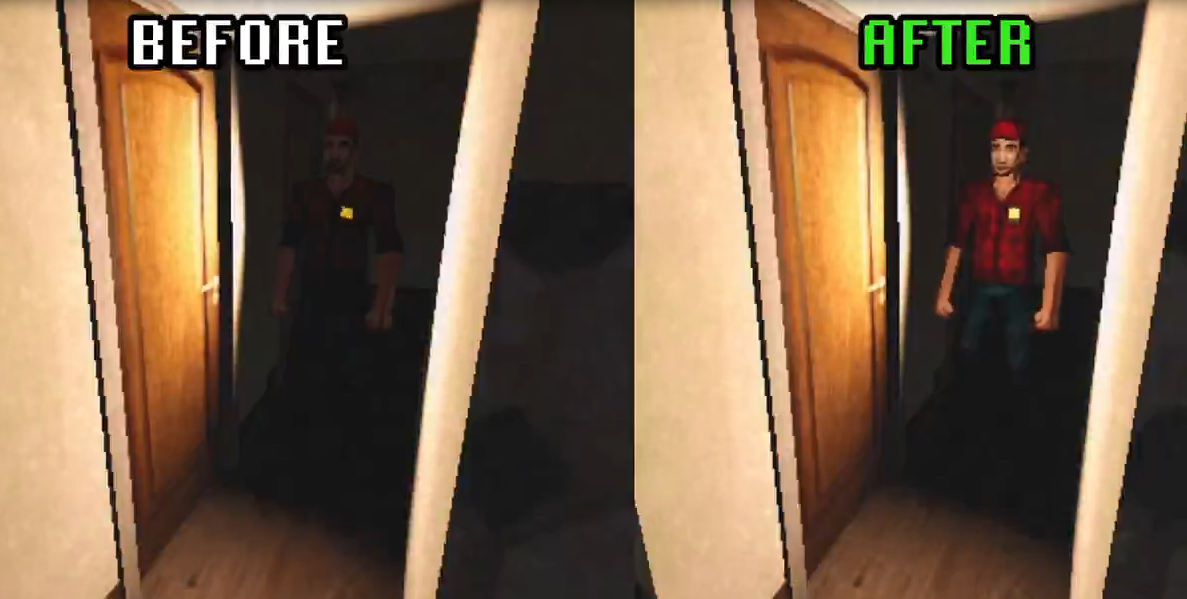
I have made a small lighting change that has a noticeable effect on readability.
When Marco's pocket light is active, we've added an additional light specifically in front of him.
The goal isn't to make the environment significantly brighter. I still want the darkness to play an important role in the atmosphere.
Instead, this additional light helps separate Marco from the environment and makes his immediate surroundings easier to read, particularly in darker areas.
I am trying to find the right balance between visibility and atmosphere. Horror games need darkness, but darkness shouldn't make the player feel like they're fighting the rendering system rather than the environment.
🔧 Still Polishing
A lot of this update is about things that might seem small individually: a button behaving differently, a camera region being adjusted, a tutorial message appearing at the right time, or a few seconds of unnecessary repetition being removed.
But these are exactly the kinds of details we're trying to improve as development continues.
I want Late Night Manifest to feel tense and mysterious because of its world, atmosphere, puzzles, and situations — not because the player is fighting unclear controls, repetitive interactions, or awkward camera behavior.
There’s still plenty left to polish, and I am continuing to iterate on these systems based on testing and feedback.
More updates soon.
Thanks for following the development of Late Night Manifest. 🖤