
Getting Started
Hi, everyone! This is Rohr, developer of Land and Sword!
I’m thrilled to announce that version 0.5.8 is now available on Playtest!
The main new feature in this update is the arrival of the long-awaited winter mechanics, but it also includes several quality-of-life improvements, performance optimizations, and bug fixes.
In this devlog, I’ll walk you through each of these new features and also share a bit about what’s planned for upcoming updates.
❄️Winter Mechanics
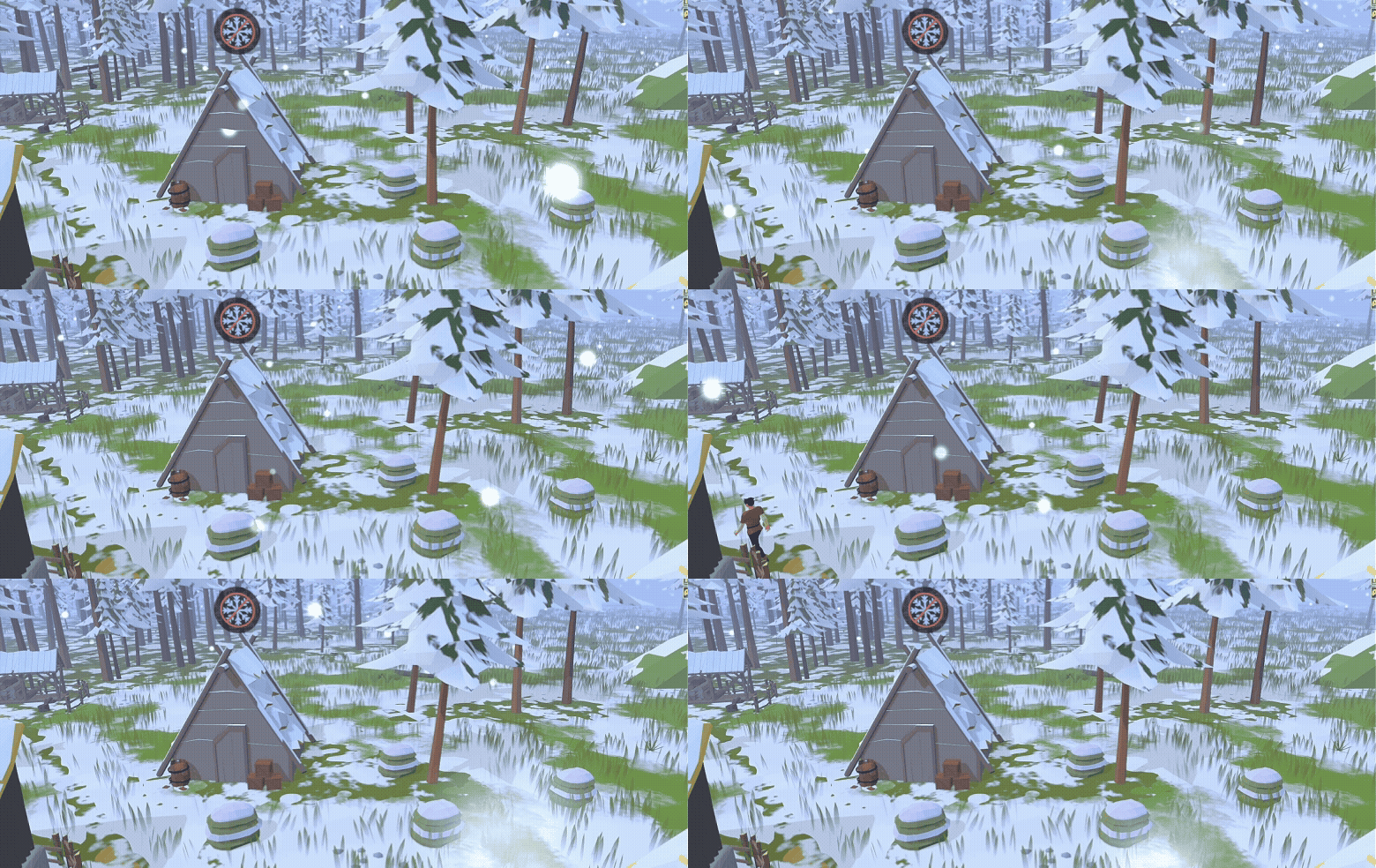
With the arrival of winter, new challenges have been added to the game, requiring players to prepare to survive the coldest times of the year.
• 🌡️Temperature and Villager Achievements
The first of these mechanics is villager temperature, which can be tracked on the status screen shown below. 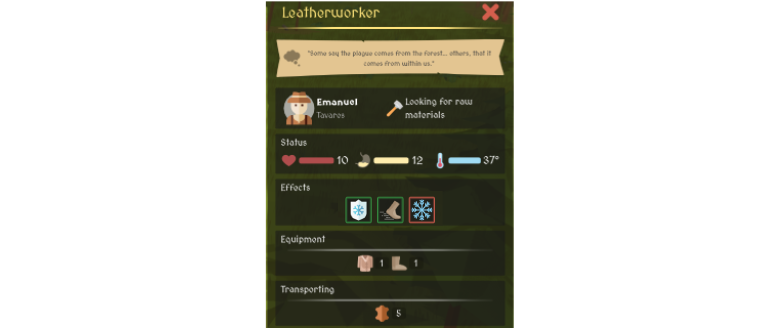
Temperature: A body temperature indicator has been added to the villagers’ status window.
Whenever the ambient temperature drops below 10 °C, the villager’s temperature will begin to decrease gradually. If it drops to 32 °C, the villager will suffer from hypothermia, taking continuous damage until they recover their temperature or die.
To warm up, the villager must return home and stay near the fire for a while. Of course, the house must have firewood available to keep the fireplace burning.
Effects: Villagers now also have a list of active effects, which can be positive or negative.
In the image above, you can see some examples of positive effects, such as increased movement speed, granted by wearing shoes, and cold resistance, provided by a coat.
Negative effects include starvation, caused by a lack of food, and hypothermia, caused by prolonged exposure to the cold, as well as others that will be added in the future.
Equipment: Finally, there is equipment.
It must be produced by your town, and whenever an item is available, a villager who can use it will automatically pick it up.
Each piece of equipment provides specific benefits, such as increased movement speed, better protection against the cold, and other advantages that will be expanded upon in future versions.
• 🐇New Professions
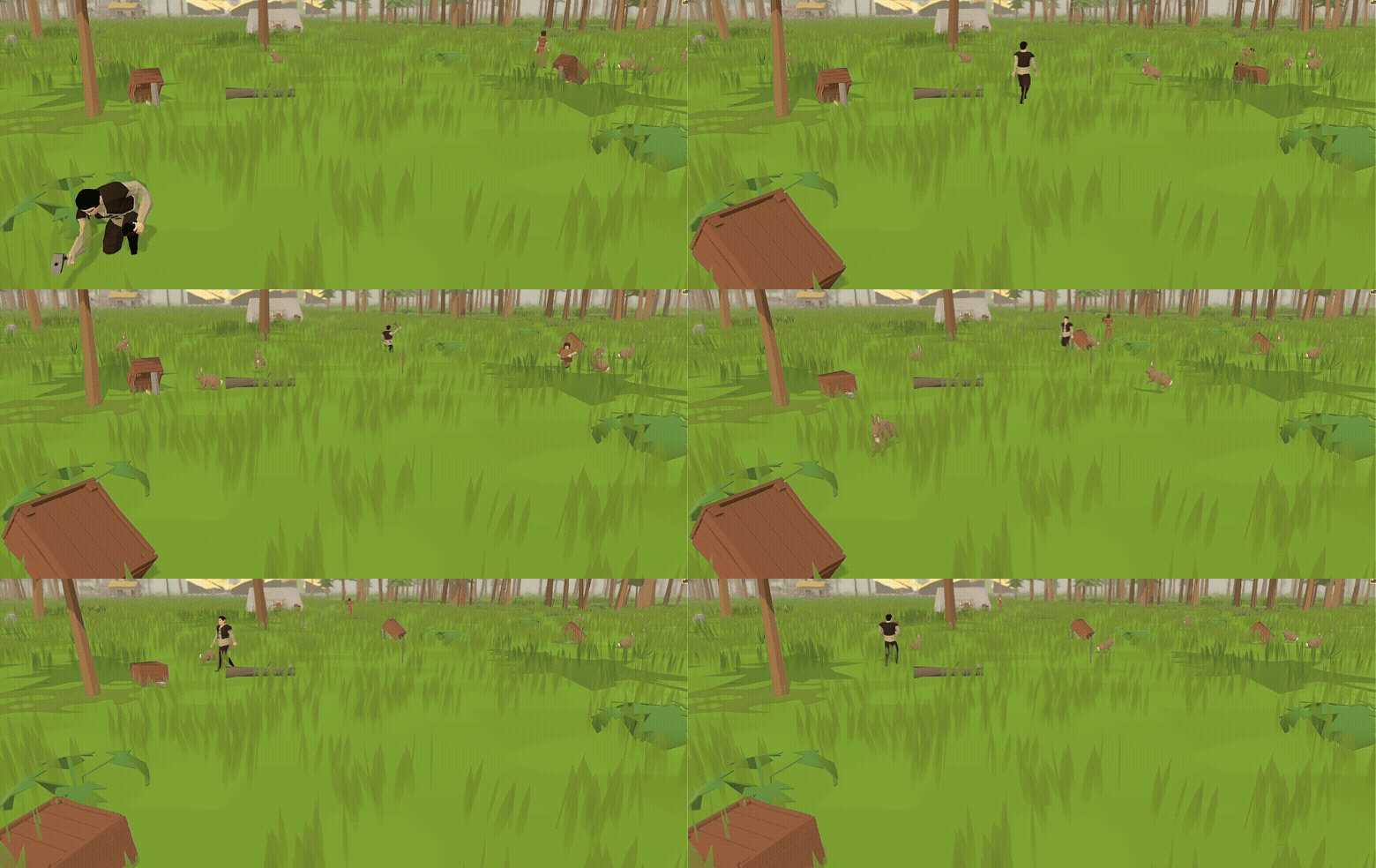
To expand the production chain during winter, two new professions have been added: Hunter and Courier.
The Hunter is responsible for setting traps in nearby hunting areas to capture rabbits, providing meat and skins for the village.
Complementing this chain, the Courier uses the hides to produce leather gear for the villagers. In this first update, they can craft shoes, which increase the villagers’ movement speed, and coats, which offer protection against the cold winter temperatures.
• 🌱Production and Consumption
Winter now directly affects your town’s economy.
During this season, farms and gatherers suspend their activities. Any crops that aren’t harvested before winter arrives will be lost, while berry bushes dry up and stop producing food until the next season.
In addition, homes begin to consume twice as much firewood to keep the fire burning and keep their residents warm, making stock management even more important.
• 📋Summary
This is the first implementation of the winter mechanics, designed to make survival more challenging and encourage long-term planning.
It is now essential to prepare the city in advance by stockpiling food, firewood, and equipment to ensure the population can get through the coldest months of the year.
This update lays the foundation for the winter system, which will continue to receive new features, challenges, and improvements in future versions.
🛠️Improvements
• ⚡Performance
In this update, much of the work was dedicated to optimizing the game. Until now, there were three systems that accounted for most of the processing load, and all of them received significant improvements.
Vegetation: Since the game features a large number of trees visible at the same time, vegetation has always been one of the main performance challenges. Additionally, because it uses a low-poly style, the trees rely more on geometry than on textures to create detail, increasing the rendering cost.
Although the game already used Chunks and MultiMeshInstances, new, much lighter tree models were created, which not only reduced the rendering cost but also improved the visual quality of the forests.
Animations: Villagers’ animations use a skeleton-based system (rigs), which requires numerous calculations for each bone of every character. With dozens or even hundreds of NPCs on screen simultaneously, this computational cost increases rapidly.
To address this issue, a dynamic animation update system was implemented. Nearby NPCs continue to be updated normally, while more distant characters have their animations updated less frequently. NPCs that are off-screen, on the other hand, are no longer updated until they return to the player’s field of view.
The result is a significant reduction in CPU usage without compromising visual quality during gameplay.
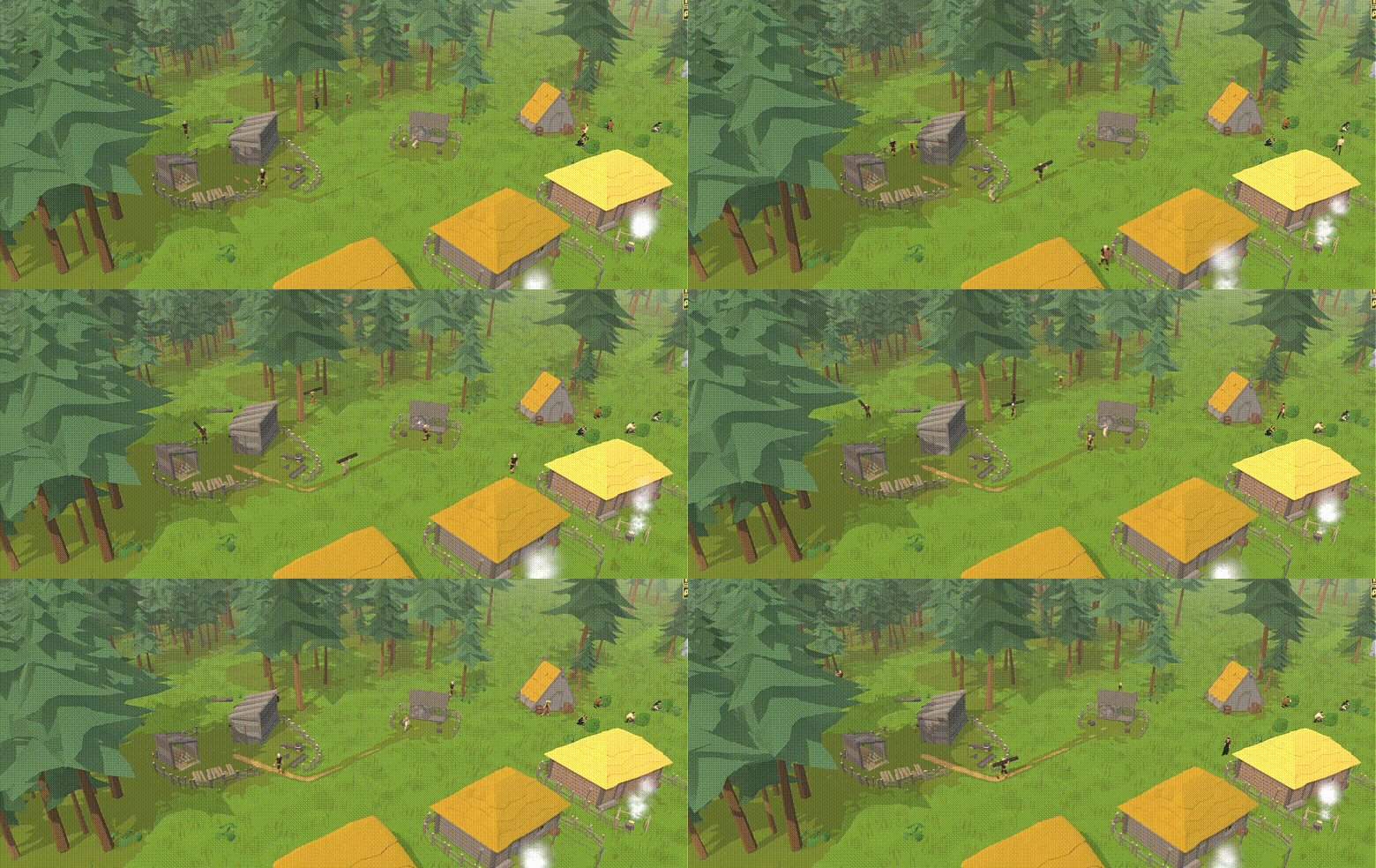
Roads: Roads are procedurally generated using an image mask that is updated in real time as villagers walk.
Previously, this mask had a resolution of 256×256 pixels. Although relatively small, updating each pixel individually still represented a high processing cost.
In this version, a memory buffer system was implemented, which updates only the pixels that have actually changed, eliminating unnecessary calculations.
This optimization allowed the mask’s resolution to be increased to 1024×1024 pixels, resulting in much more detailed and smooth roads, as well as better performance than the previous implementation.
• 🪵Item Categories
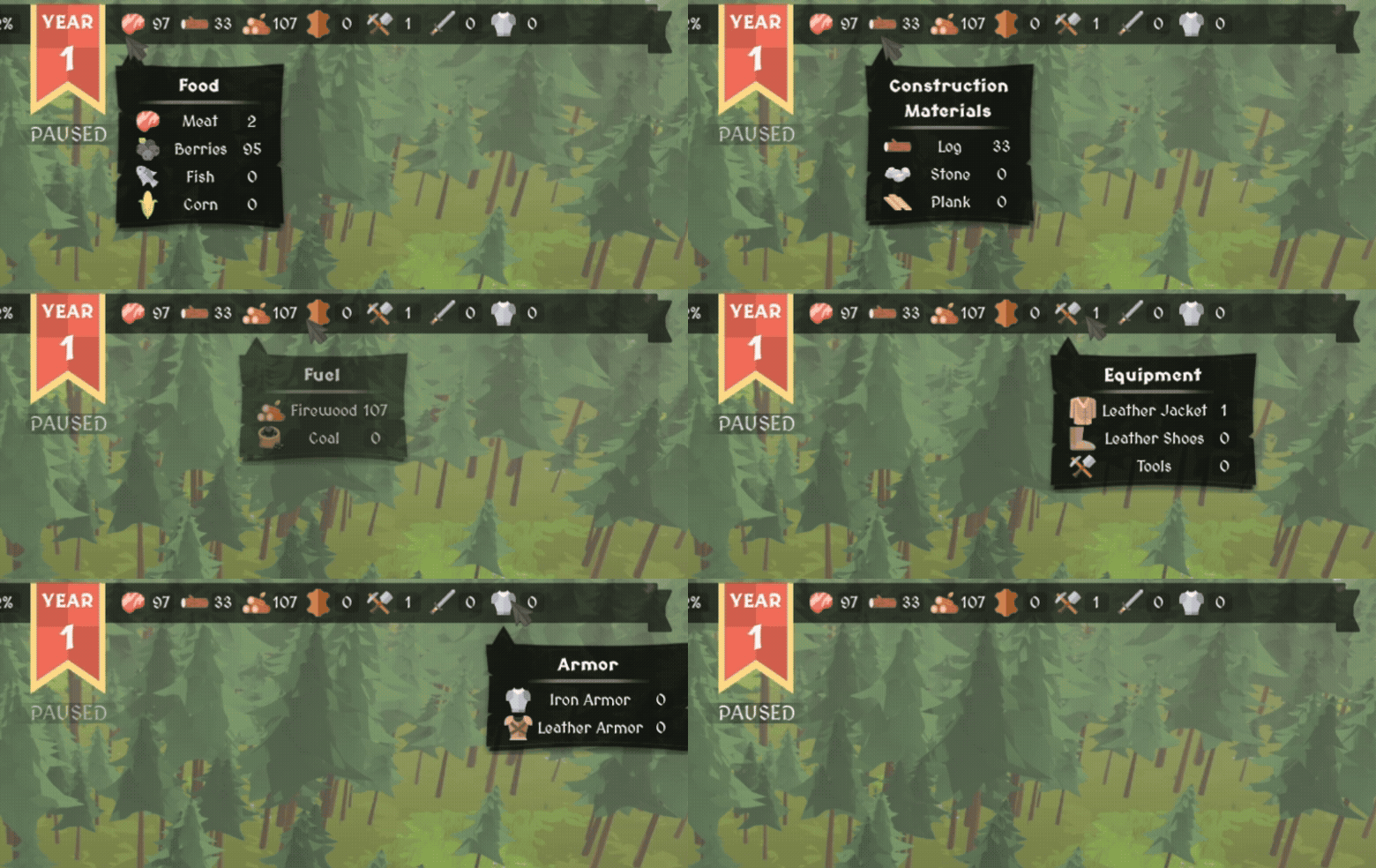
The top resource menu has been completely reorganized and now uses item categories.
The previous system could no longer handle the number of features added to the game and tended to become increasingly cluttered as new content was implemented.
With this change, the interface is now cleaner, more organized, and ready to accommodate many more items in future updates.
• 📈Production Metrics
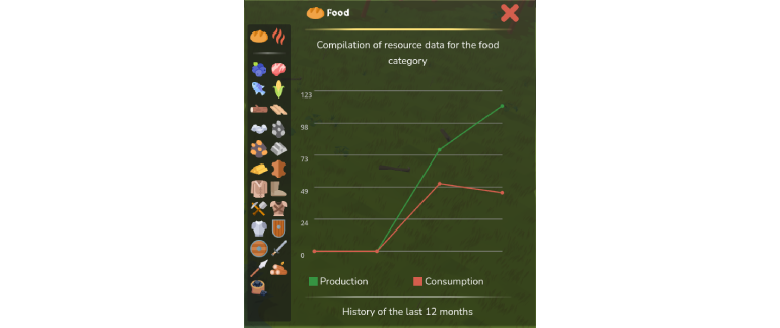
To make it easier to manage your economy, production and consumption charts have been added.
You can now track the amount of resources produced and consumed over time, allowing you to identify bottlenecks and surpluses and more easily predict whether your village will be able to meet the population’s needs.
• ➕Other
In addition to the main new features, this update also includes several minor improvements that contribute to a more enjoyable experience, such as:
Translation fixes;
Bug fixes;
Improvements to the interface and menu layout;
New informational events;
Hint system;
And various other adjustments and refinements.
🔜Next Steps
There is still a lot of content planned for Land and Sword.
Among the features already mapped out for upcoming versions are procedural maps, rivers, new production chains, item deterioration, family professions and specializations, as well as several other mechanics that will deepen city management.
However, the priority right now is to expand the village attack and defense system.
The next major features will be the implementation of walls, archers, defense towers, new types of enemies, and a significant improvement to enemy AI, making combat much more strategic and challenging.
Thank you for following the game’s development and for all the feedback you’ve been sending. It has been essential in defining our next priorities.
If you'd like to follow the development more closely, share suggestions, or chat with the community, join the game's official Discord. I hope to see you there!