
Ground telescopes are essential
They establish a direct line of communication between vehicle and ground control so we always have telemetry and communication with our vehicles.
They serve another equally important purpose as ground telescopes can be fitted with sensor units capable of scanning bodies in different bands.
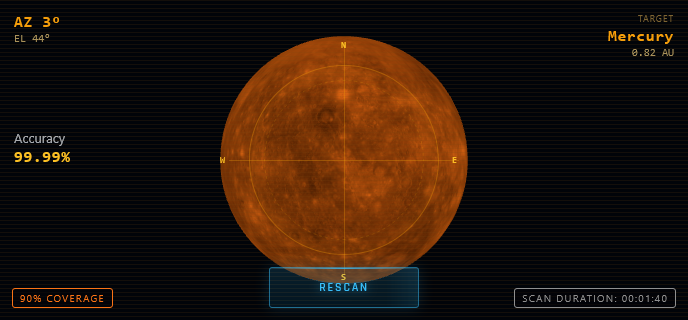 - Mercury scanned using infrared
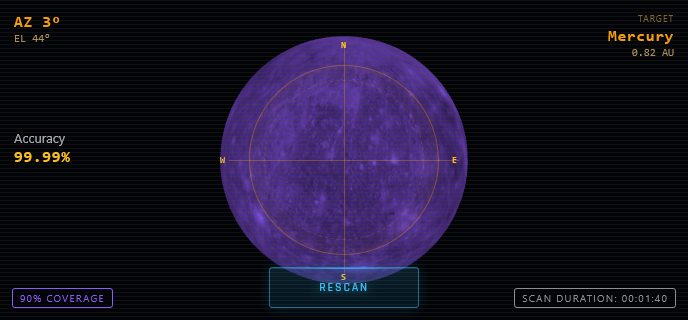 - Mercury scanned using ultraviolet
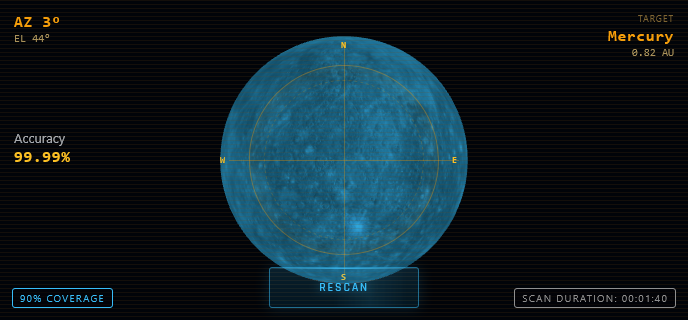 - Mercury scanned using X-ray
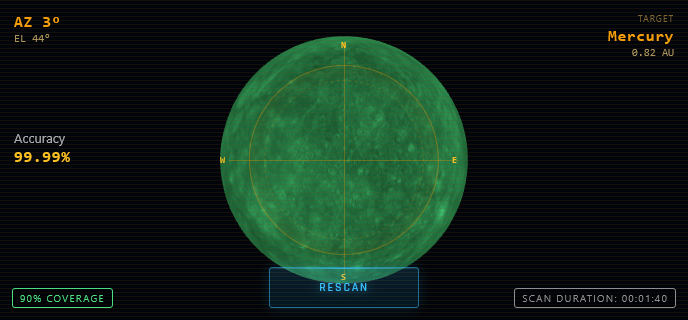 - Mercury scanned using radio
Each band provides valuable information, that together can give us the full picture of a planet or moon, such as temperature, density, size, atmosphere, flux, rotation etc.
Such information is required in order to successfully put a satellite into orbit. Without it we cannot calculate any trajectory thus never be able to reach any orbit. But aside from that, telescopes also serve another purpose. Telescopes can work together if connected, and then we can suddenly start to look further ahead and try to find new moons or planets that have never been discovered before. It requires patience, and usually a good idea of where you should look, but look hard enough, and maybe you will find something new.
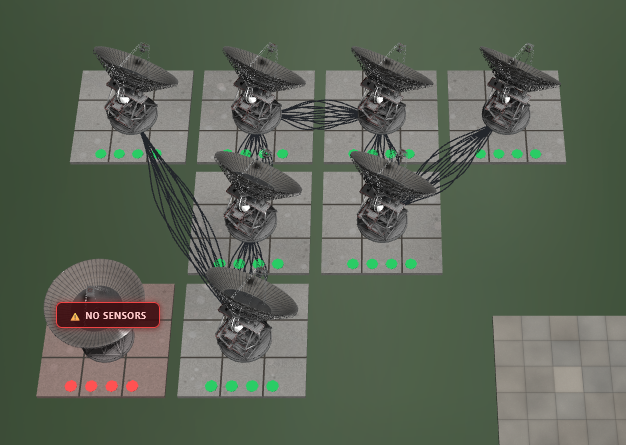 - 7 Dish telescope array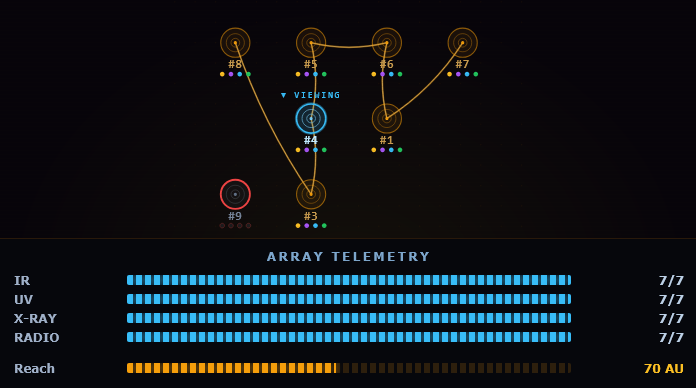
- Details of the telescope array
With the above telescopes connected in an array we have the capability to start doing deep space scans up to 70AU (or 10,471,860,000 km).
The sky is divided into quadrants - we can select a quadrant to start scanning.
Depending on the array size, times and coverage will vary.
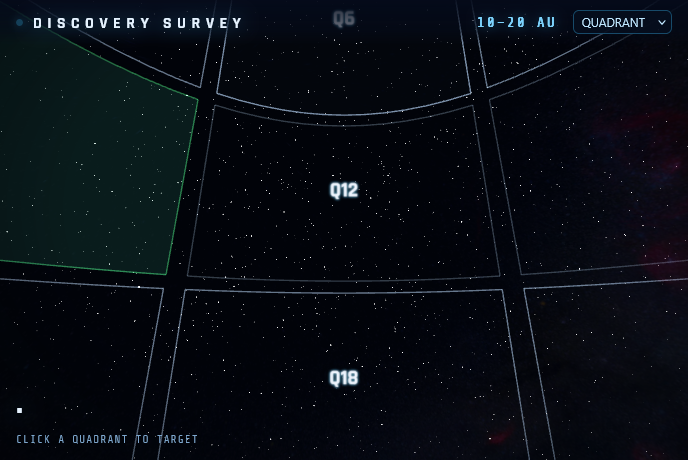 - Space quadrant selection for target range 10-20AU
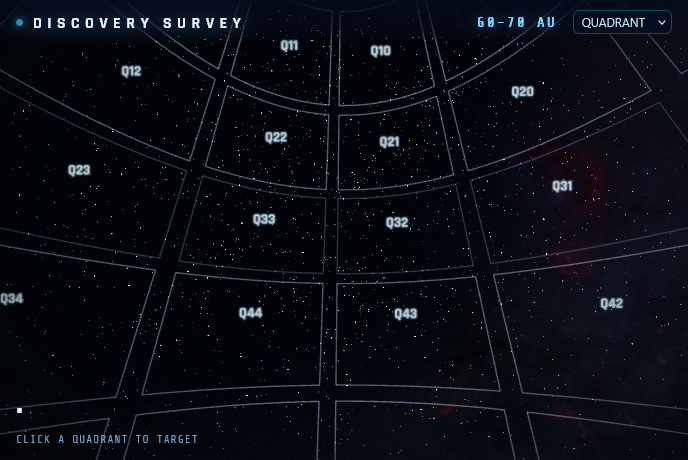 - Space quadrant selection for target range 60-70AU
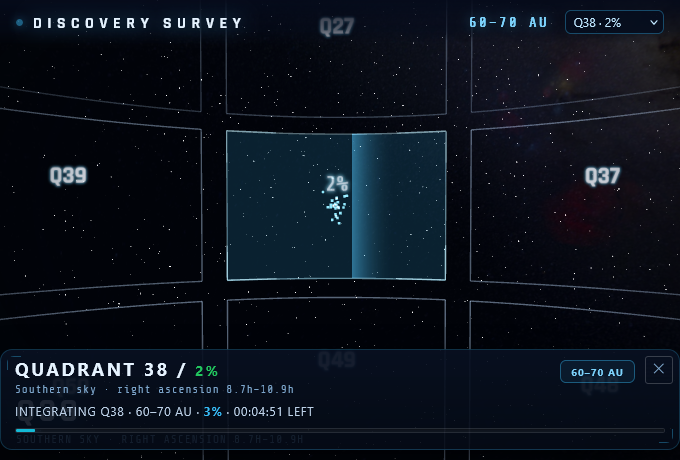 - Active discovery survey on quadrant 38
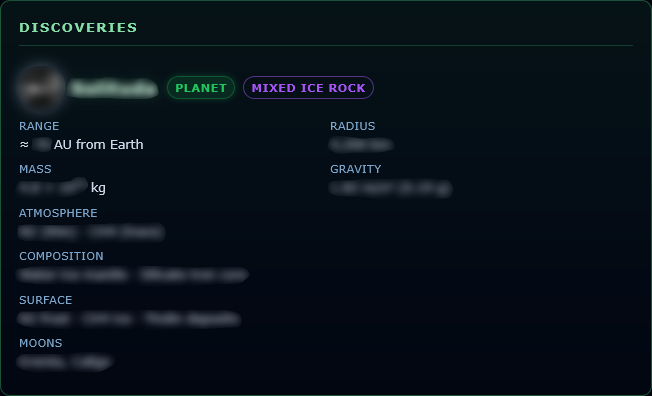
- Something was found far far away, ready to be inspected further, and spark the world's interest $