
Well met, Kindred.
Last time we answered why this world, why Berlin, why a visual novel at all. We closed by saying the Art team would go next, so here they are.
This one is about places. How a location travels from nothing to a finished painted background, which ones nearly broke us, what tools are actually open on the screen, and where the light and the colour come from. Characters get their own devlog after this. Trying to fit both crafts into one post would have done neither of them justice.
A word on how these are put together.
The questions get written on the comms side, sent over to the team, and the team writes back. What you read under each heading is their answer, not a rewrite of it. That means the register shifts from one section to the next. One answer is technical and lists software, another opens with a grudge and ends on a joke about UI work. We leave that alone on purpose. Nobody here talks about their own job in a house style, and the moment we smoothed it into one, it would stop being worth reading.
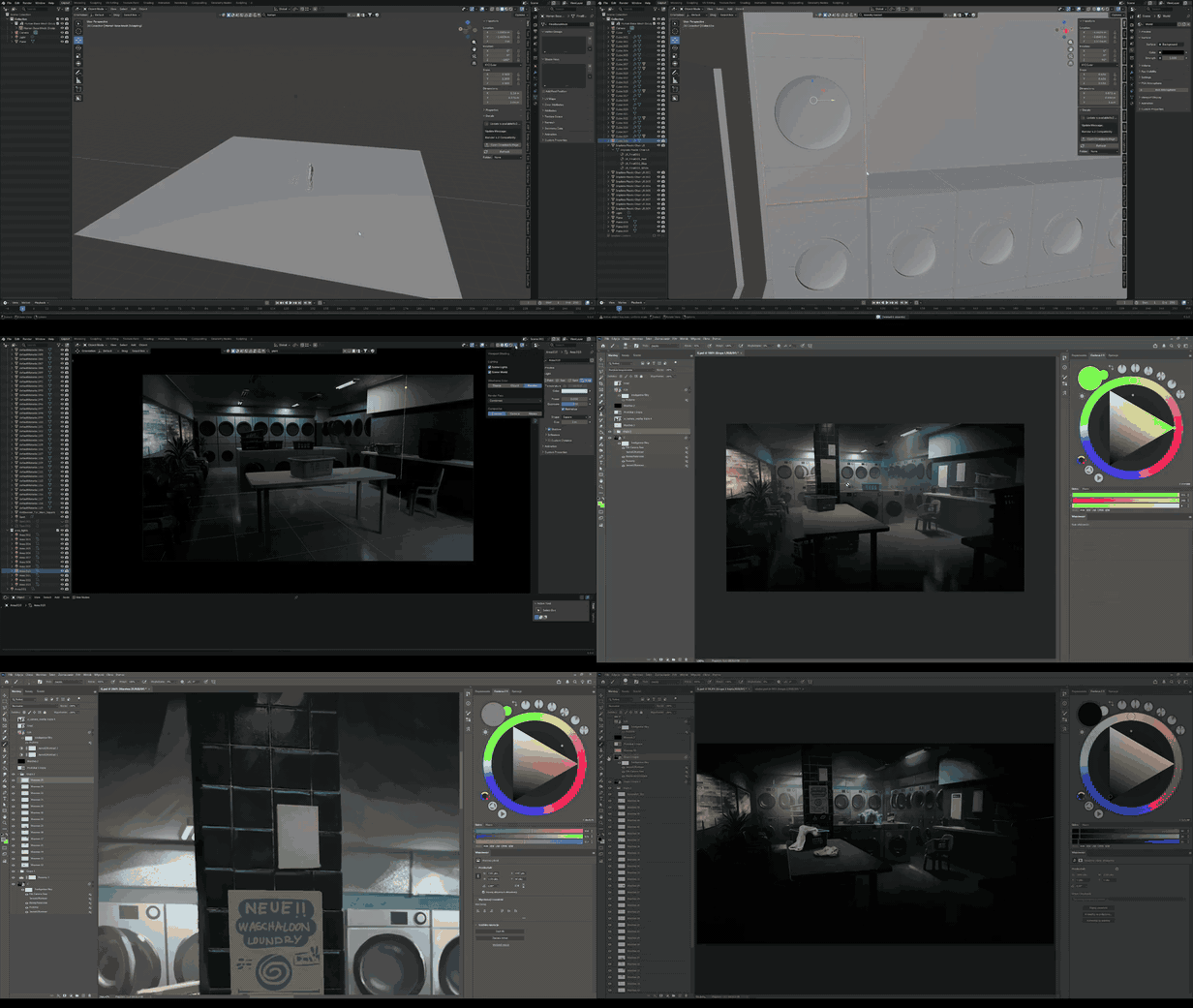
This is a full loop showing the making of one scene. From blank canvas to actuall piece used in the game.
What are the steps from a blank canvas to a finished background, and what do you use?
We rarely start with a sketch in the traditional sense. The briefs from the writers give us enough of the scene to go straight to a blockout in 3D, a rough geometry for the things that matter, enough to establish the space, then several camera positions to choose between. We pick whichever one does most for the scene.
Working from a 3D base is the only reason a team our size can produce this many locations. Moving a wall, changing the frame or relighting the whole room takes minutes. Redrawing it takes days. If we sketched every location by hand we would have fewer of them and we would experiment far less, because every experiment would cost a week.
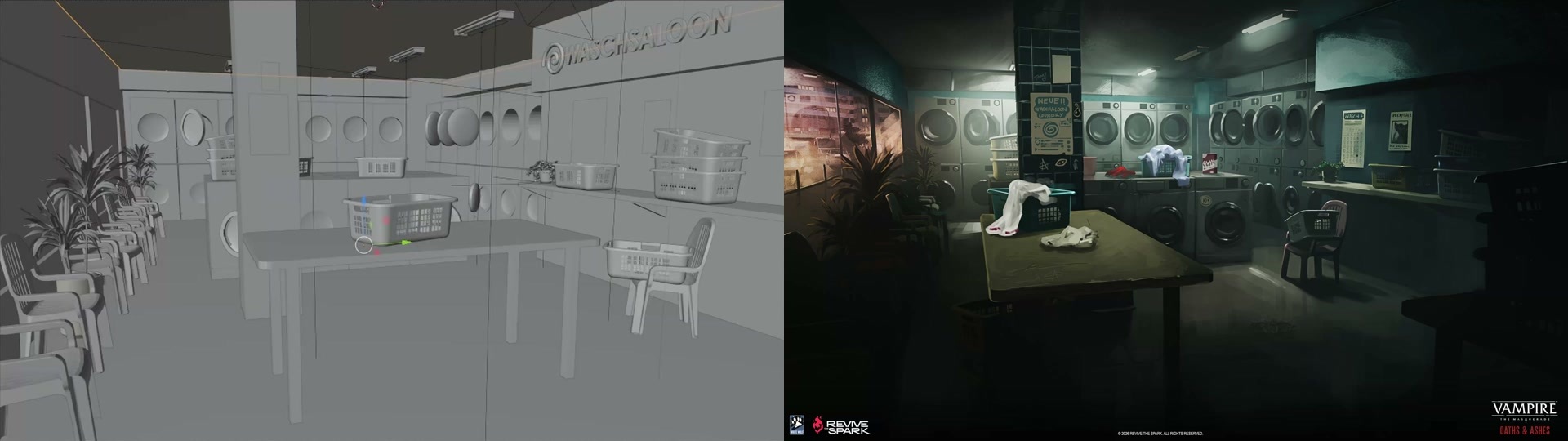
The 3D scene on the left is "the scaffolding" and a right one is a finished scene from the game.
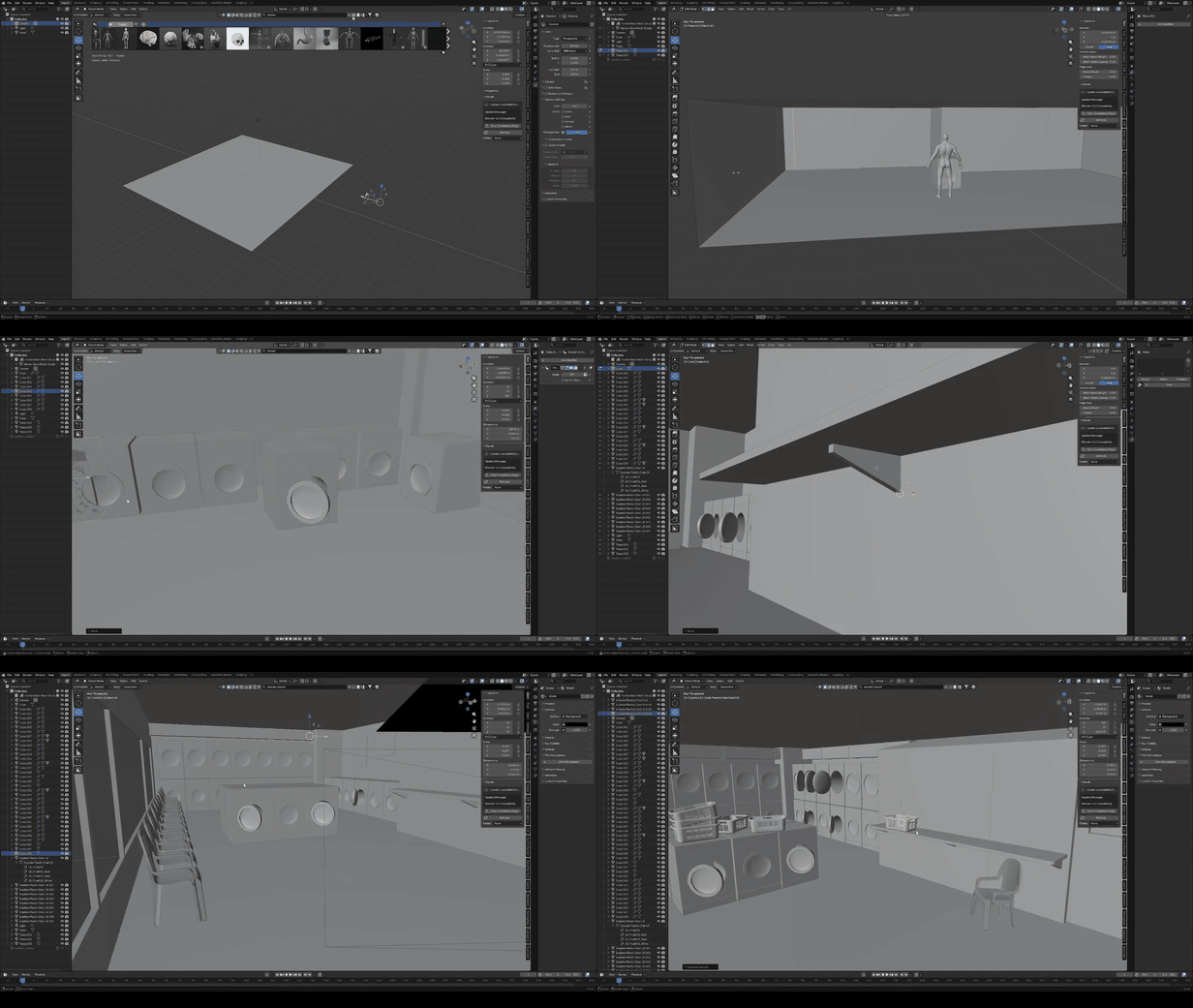
The blockout. Rough geometry first, just enough to establish the space and find the camera.
The toolset is fairly small. We build the 3D scenes in Blender, then render them and repaint them by hand in Photoshop. Some backgrounds start from a more traditional base instead, photobashed plates that get colour matched and overpainted the same way a Blender render would. Around that we lean on PureRef for gathering reference and Miro for sharing work and talking it over with the team. Neither of those is an art tool as such, but with dozens of illustrations to keep track of, they are what holds the process together.
The pipeline exists for another reason too. There is a much faster route available these days and we do not use it. Nothing in this game is generated. Every location is built and then painted by a person, and the process looks the way it does so that a small team can hold that line and still finish the game on time.
Once the frame, the colours, the lighting and most of the detail are approved, the last stage is giving the image a character. 3D on its own is clinically sterile, and plenty of 3D artists spend enormous effort scrubbing that artificial quality out. We came up as 2D artists, so we go the other way and leave the 3D scene as early as we can, with plenty of it deliberately unresolved, because nearly the whole image is about to be repainted by hand anyway. That final pass is where the brush marks go in, along with the imperfections, and where the atmosphere gets tuned to exactly what the scene needs to feel like.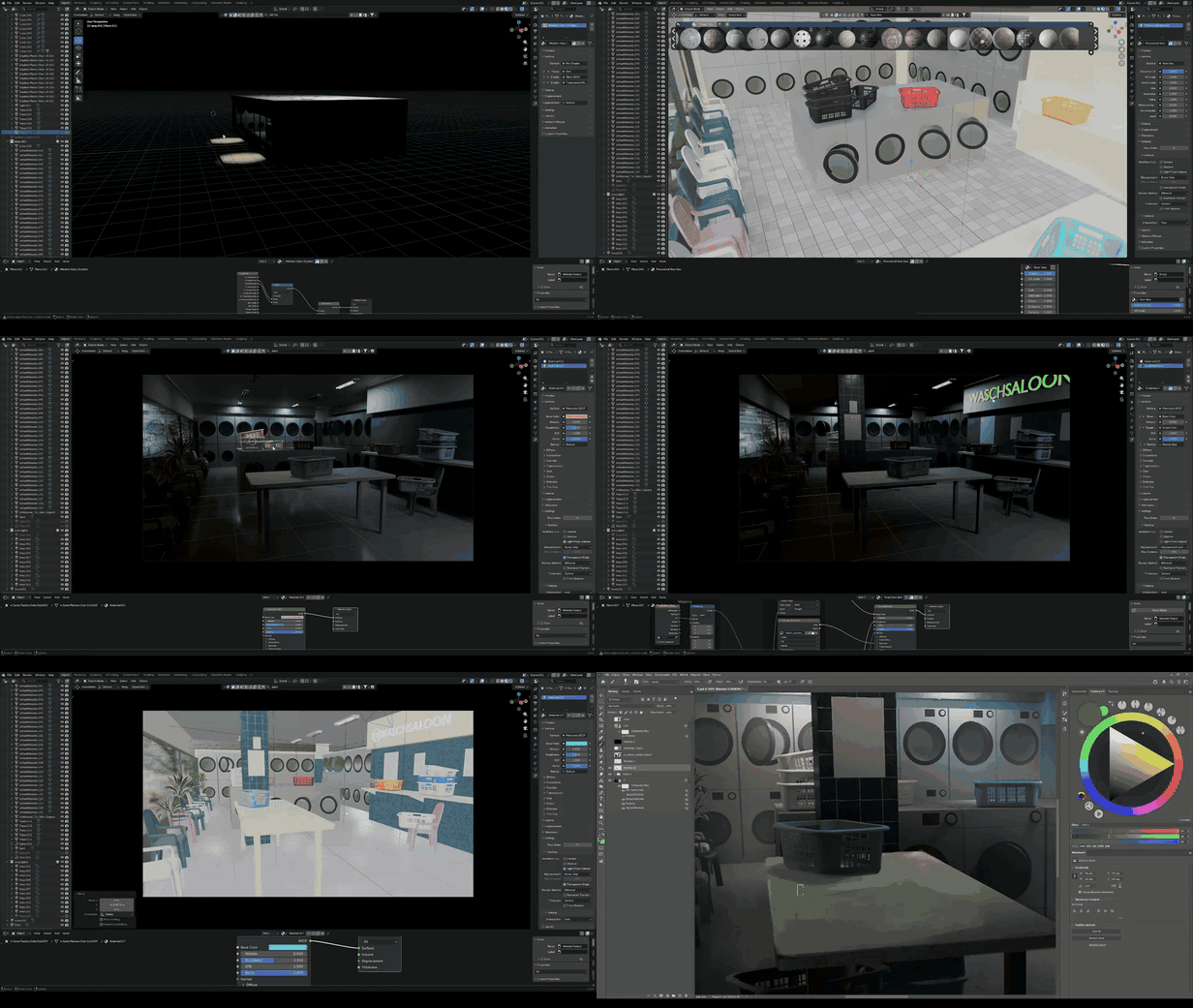
Lighting and materials go in, and the room starts behaving like a place instead of a model.
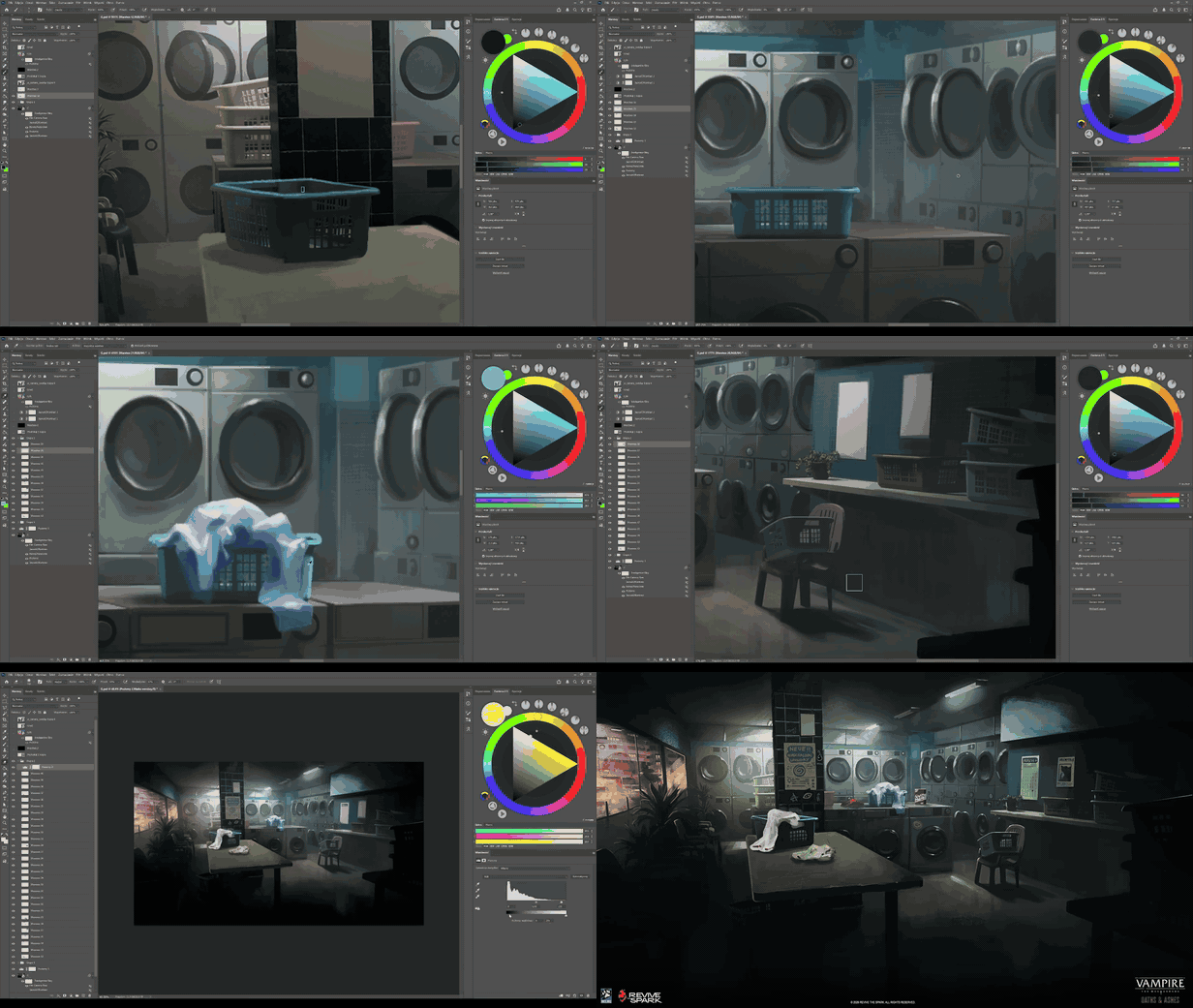
The last pass, and the longest one. This is where the render stops being a render.
Which location was the hardest to paint, and why?
hree of them, for different reasons. With the Offering Pit the whole weight sat on atmosphere and a loose reading of the text, so there was very little to hold on to. Lenz's old flat was the opposite problem, precision work, fitting in every object the writing refers to and keeping the place legible. The hardest are the ones that want both at once, and one particular brothel in the Anarch underground is the worst of those. It needed an unsettling underground atmosphere, pitched somewhere between grotesque and realistic, and it needed a lot of detail packed into a small room, all of it readable without the picture turning into an inventory. We still describe painting that background as walking through a minefield.
The briefs make the first half of the job easy. Our writers describe a location with everything in it: the light, the smells, what you would hear, three or four ways of looking at the same room, and a folder of reference. What they do not do is tell us what the picture is. That is the right call, and it is also where our problems start. We are handed a mood and a situation, and turning that into a single image means throwing most of it away.
The decisions that eat the time are which details survive, where the camera stands, how the space is lit and what is lying around in it. Every location also has to sit next to all the others without looking like it came from a different game, and it has to carry whatever the scene is doing emotionally. A dull background lets the reader drift off, and one that is too pleased with itself pulls them out of the text. Finding that middle is the hard part, and the answer changes every time, because the lighting that works for an interrogation is wrong for a scene about grief.
Where do the palette and the mood of the game come from?
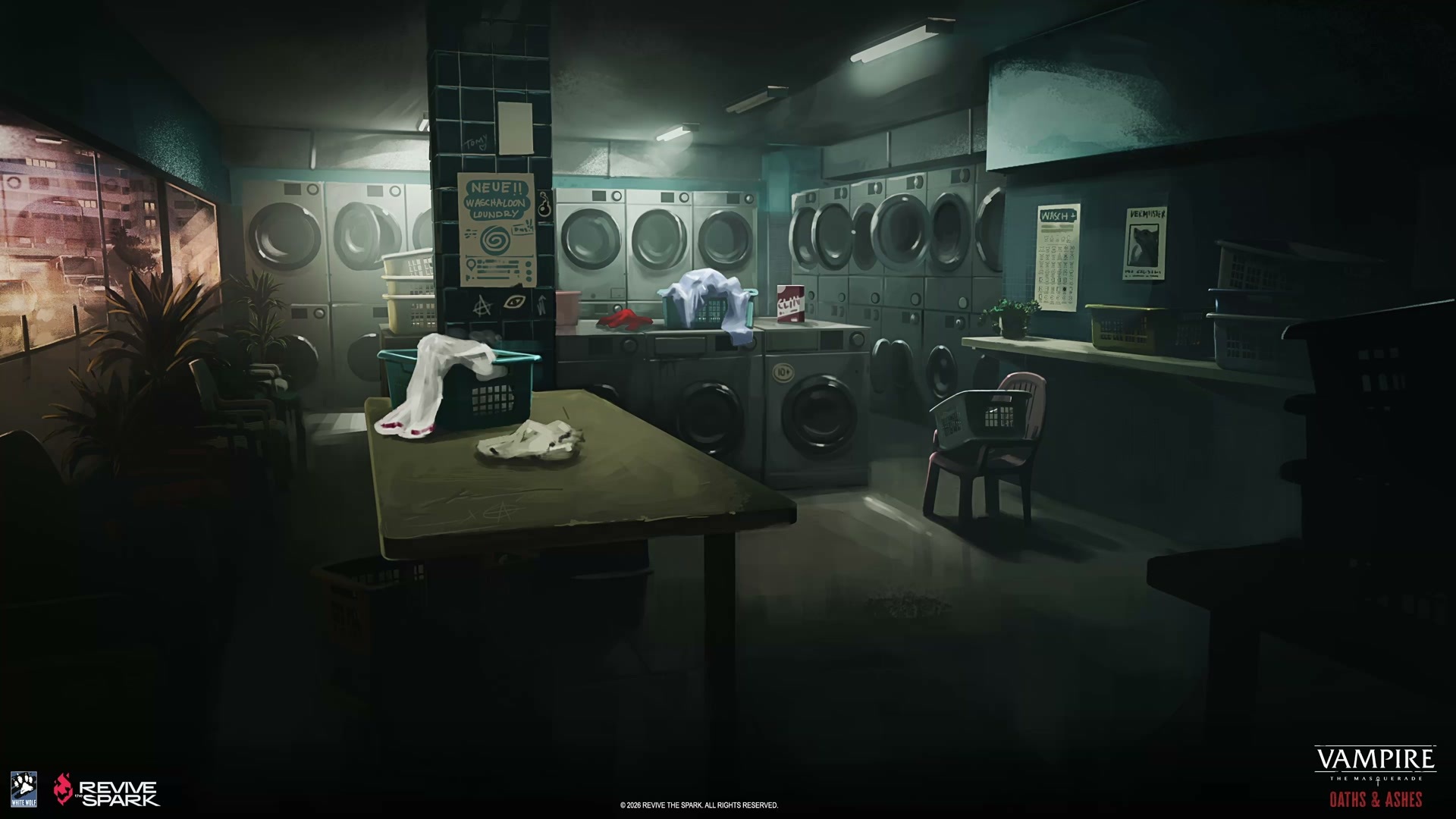
We started from one decision: the game should feel grown up, in how it looks as much as in what it says.
There are two established ways of making a Vampire visual novel look. One is painterly and illustrative. The other pushes into photomanipulation and collage. Some of us have a real weakness for the second, partly because almost nobody in games works that way, and we did consider it for a while. What stopped us is that collage announces itself. It puts a layer of style between the player and the scene, and we wanted people falling into these rooms rather than admiring them.
So we aimed between the two. Realistic enough that you believe the place exists and that Kindred could be standing in it, on a street you have walked down, but visibly painted rather than photographed. Scope came into it as well. A small team producing this many locations has to choose an approach it can actually finish, and that ruled out several things we might otherwise have tried.
Our reference point was dark Baroque painting, Rembrandt above all, and later Sargent. What both of them do is leave most of the frame in shadow and let you assume the rest. A face lit from one side, a room you can only half see. That suits a game about a species that lives in the dark and would rather you did not look too closely, and it leaves the illustrations with a slightly dreamlike quality that stops the realism turning clinical.
Next devlog goes to the Narrative team, and the question is how the story actually gets written. What a branching script looks like before it is a game, how a scene goes from an outline to the version you read, how two narrators end up sounding like two different people, and what it takes to keep a choice from the first act paying off hours later.
View game page

Goodnight, Kindred.
- The Revive the Spark team