From Sunderfolk to Shadowstone
Hi, my name is Julia, and one of my favorite parts of UX/UI design is taking something that works and asking, “How could this feel even better?”
That became the driving question behind Shadowstone's combat UX. Building from Sunderfolk's unique main screen and phone experience, I worked to reimagine the experience for PC.
This is a look at that evolution and the continuous iterations that helped shape the experience.
Background
From a shared screen to a personal play space
Shadowstone's combat experience started with the foundations of Sunderfolk, where information was split between a shared main screen and each player's phone.
The main screen acted as a shared board, while each player's phone became their personal space for actions, abilities, and planning.
As Shadowstone evolved toward a PC-oriented experience first for early access, that relationship needed to change.

Problem
How might we preserve the clarity and intentionality of Sunderfolk's shared-screen experience while creating a faster, more flexible PC combat experience?
Research
Understanding the spaces players need
I looked at how strategy and deck-building games such as Teamfight Tactics, Slay the Spire 2, and Root organize information and player interactions.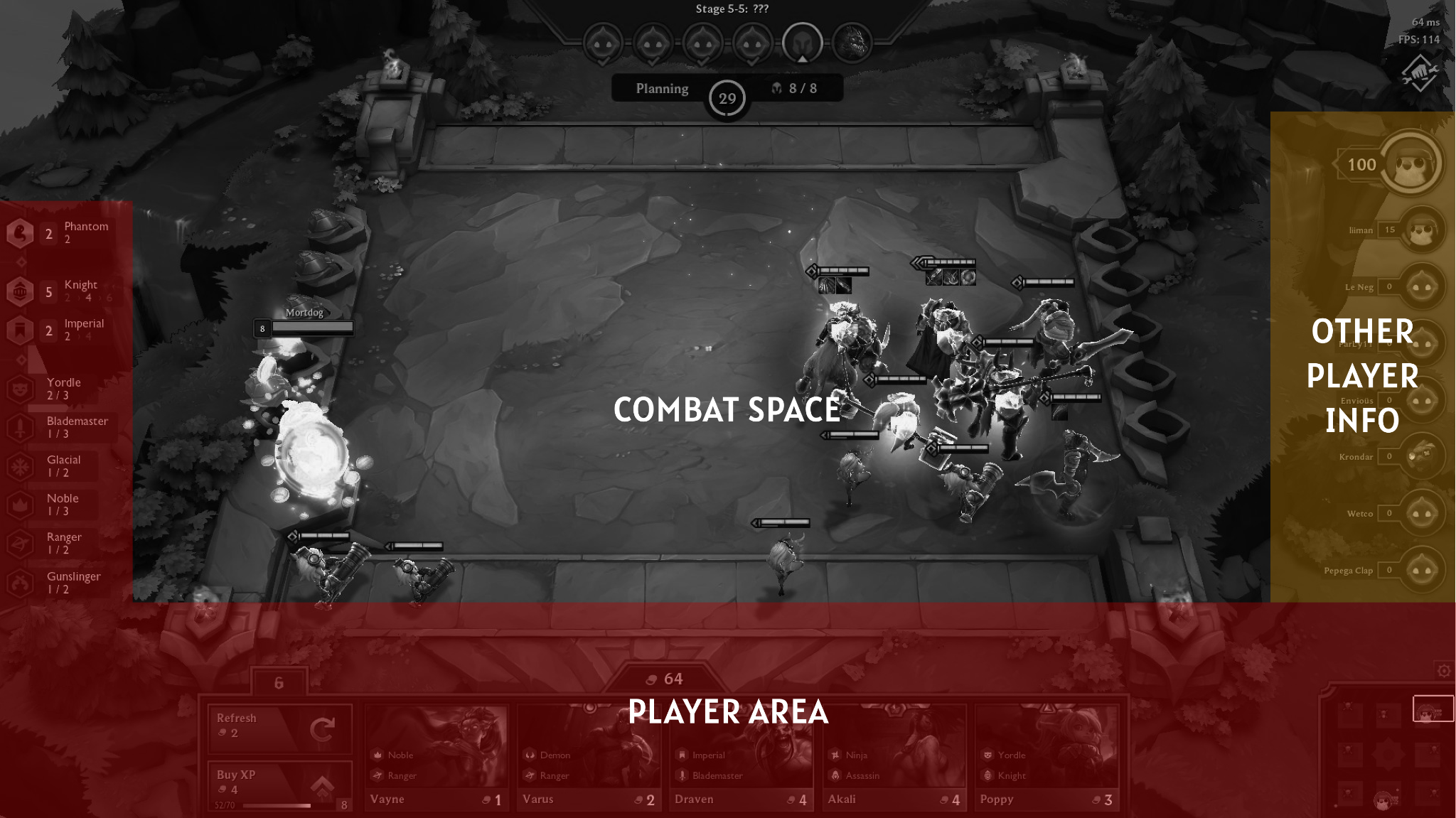 Teamfight Tactics from Riot Games
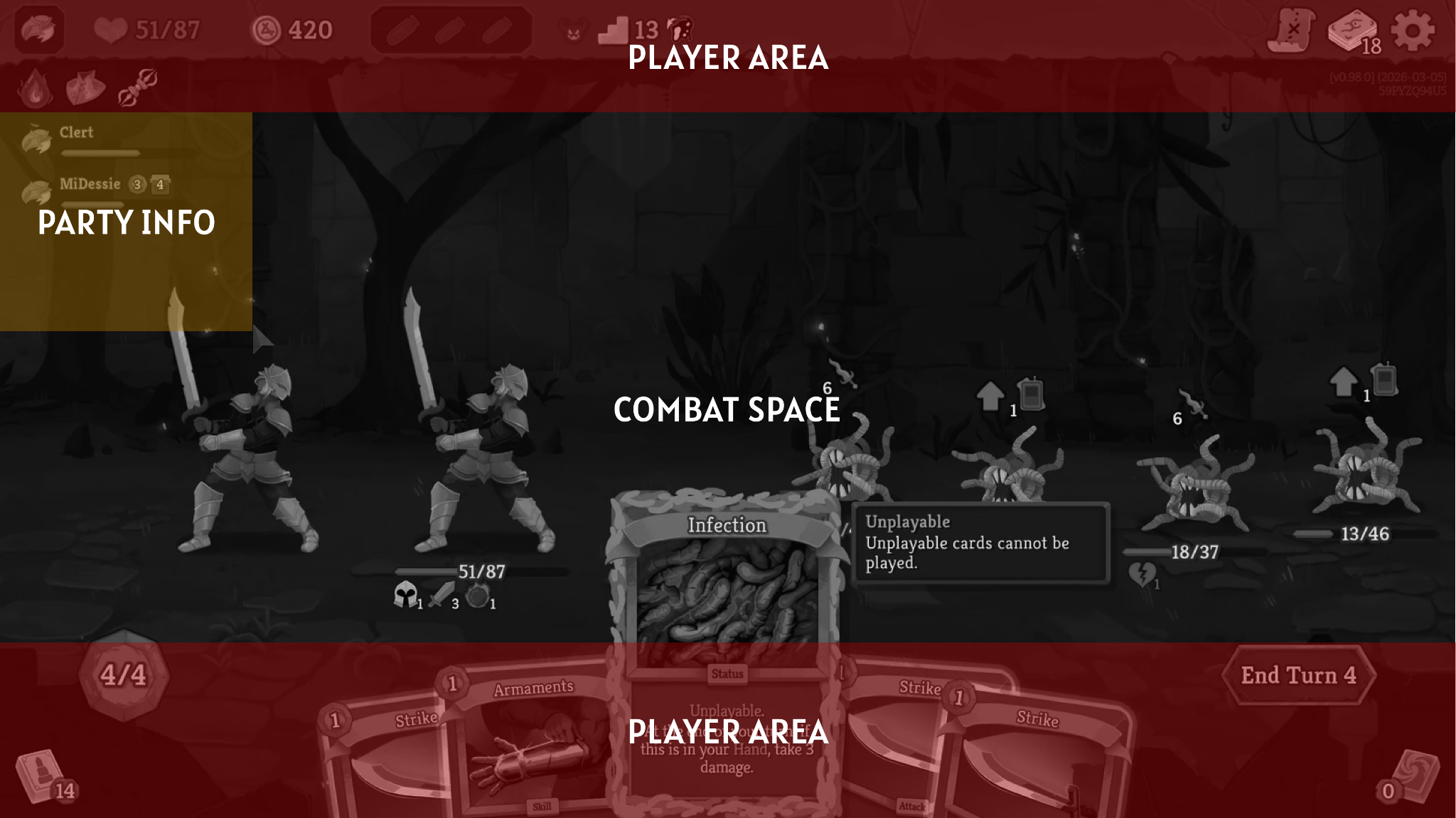 Slay the Spire 2 from Mega Crit
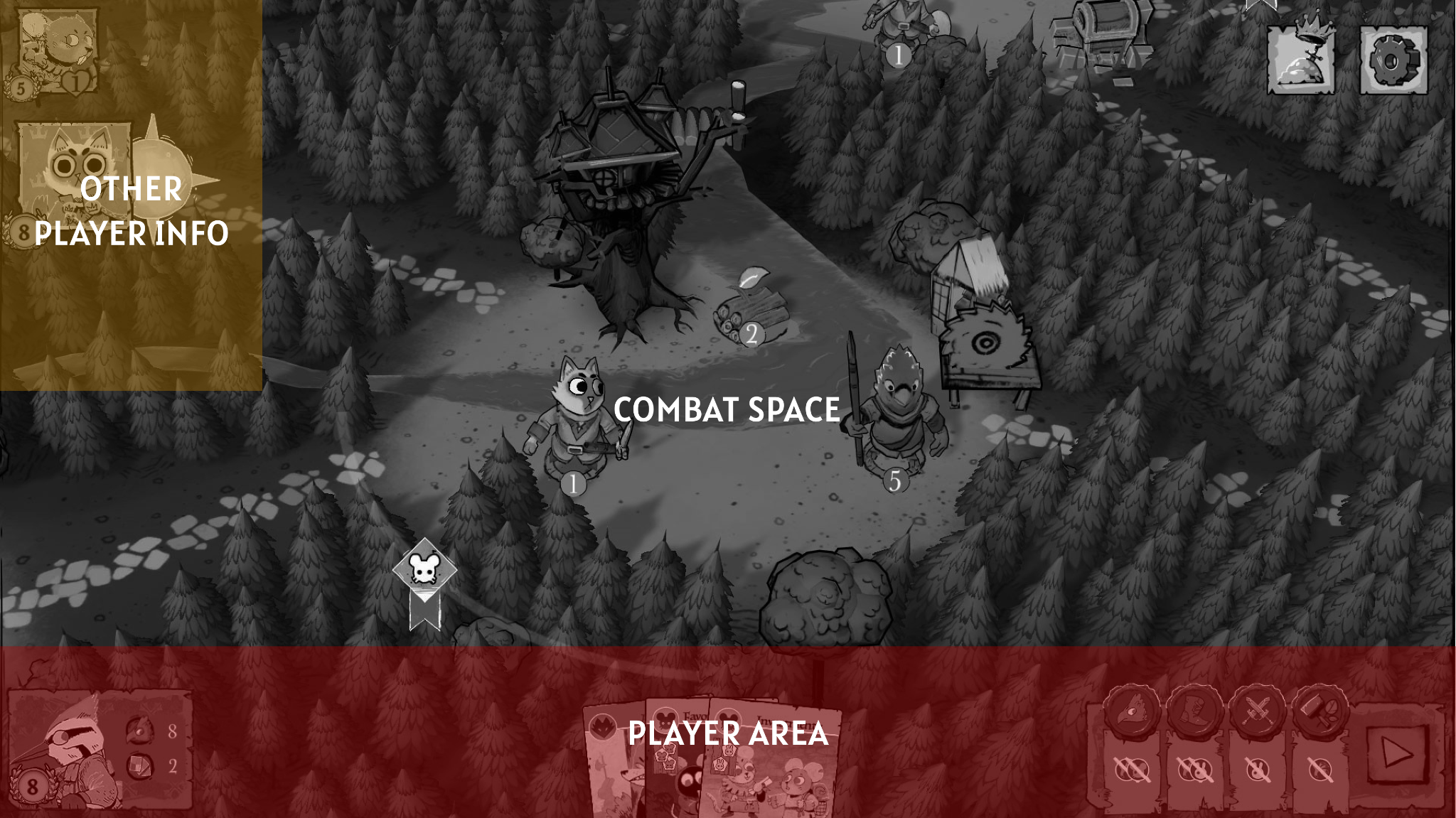 Root from Dire Wolf
Key findings:
Players need a clear distinction between what they are playing on and what they are planning with.
Starting Point:
Sunderfolk naturally created this separation through the main screen and phone.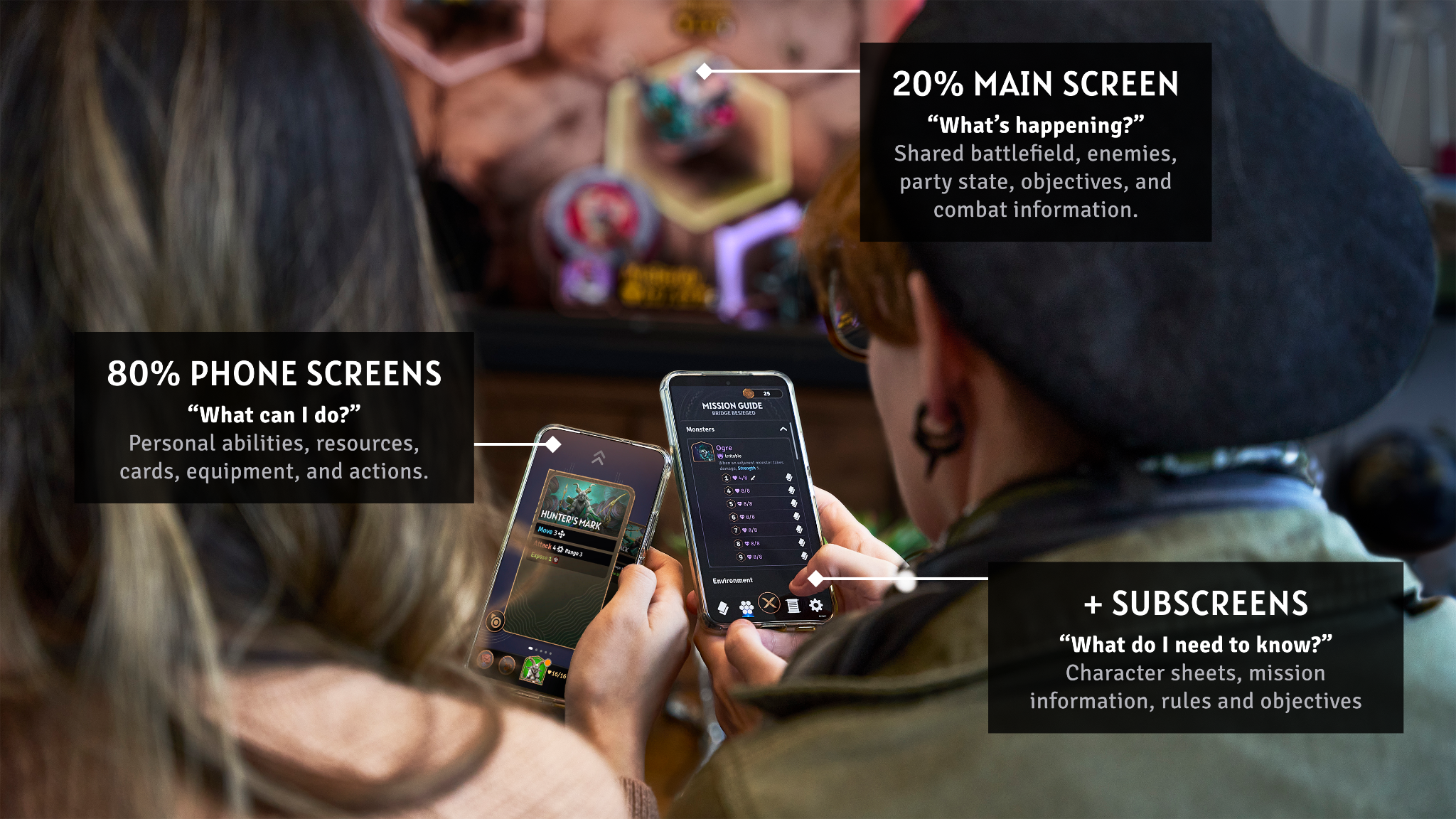
For Shadowstone, I needed to recreate that relationship within a single screen.
Two guiding principles:
Play Space: Understand the current state of combat.
Planning Space: Make decisions, inspect information, and prepare actions.
Design
Rebuilding the combat layout:
The biggest shift was moving away from treating the original Sunderfolk layout as something that needed to be preserved.
Note: In Sunderfolk 2.0, online multiplayer had shared elements to allow flexibility of keyboard+mouse and mainscreen+phone.
This version helped jump start a fully PC oriented experience.
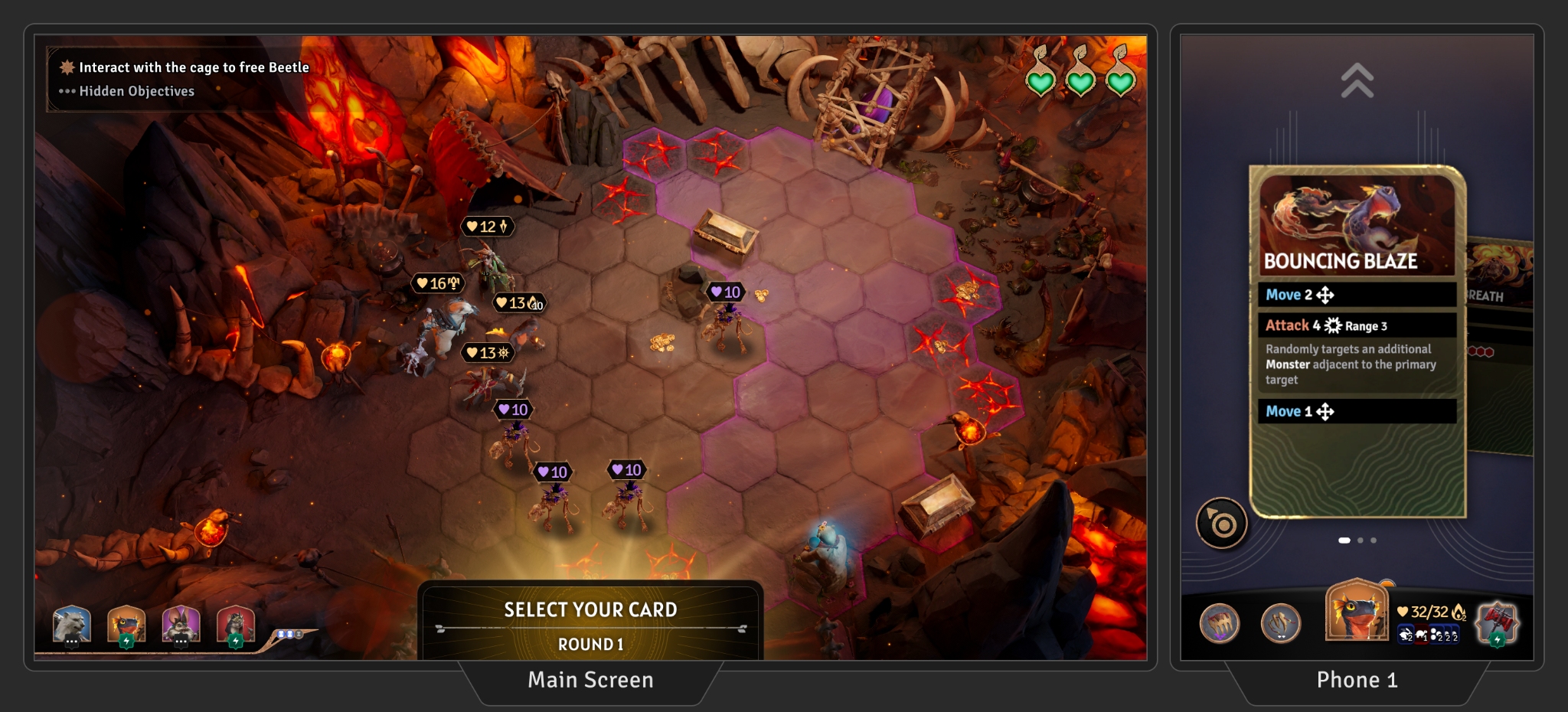
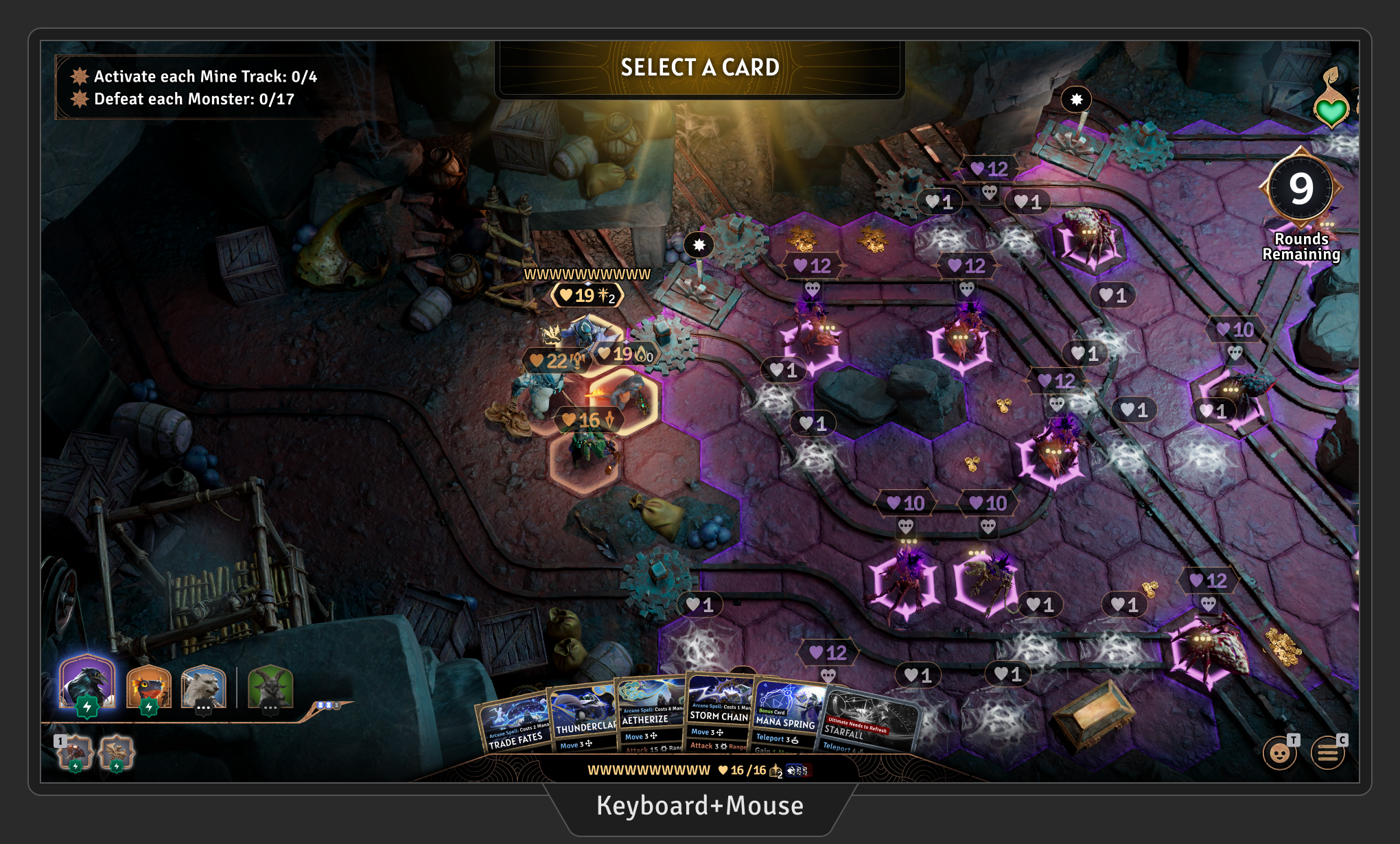 Sunderfolk 2.0 UI
What should combat feel like when the player has the entire screen?
Snappier Gameplay
I focused on designing around the player's attention.
One of the biggest improvements came from intentionally creating free space within the interface.
This allowed the UI to breathe while making important elements easier to identify.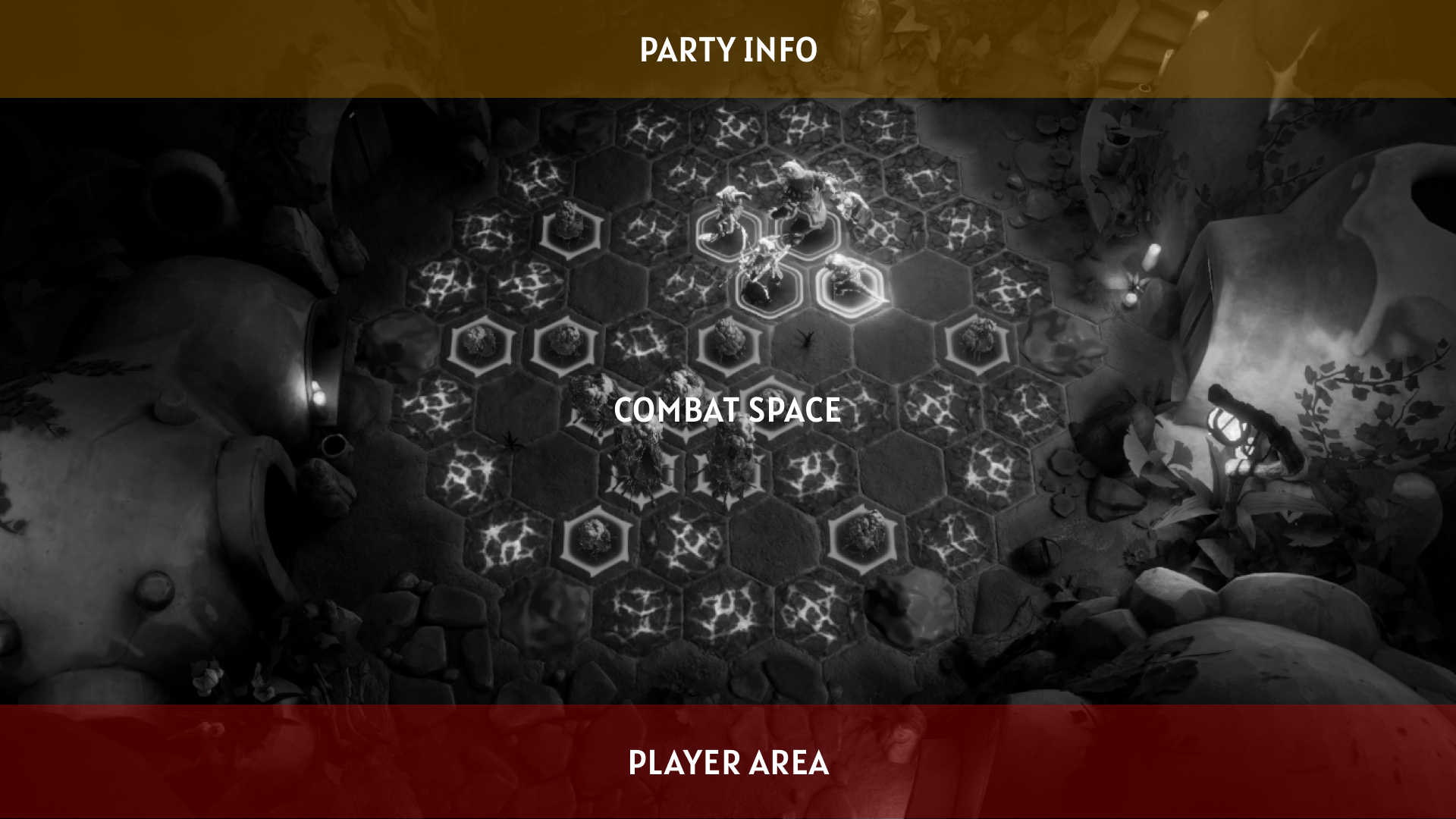
Gameplay flow:
I mapped the most common gameplay actions and looked for unnecessary movement between them.
Can the player accomplish the same actions with fewer interruptions?
Concepts:
Creating space
I reorganized the layout to give important gameplay and player-owned information more room.
Improving access
I introduced clearer access points through hover states, inspect hubs, and contextual information.
Removing unnecessary steps
Where the player's intent was already clear, I removed unnecessary confirmation steps to make interactions feel more immediate.
Designing for growth
As new features were introduced, I designed for available spaces where new features may exist.
Testing & Iteration
The design wasn't finished when the mockup was.
A major part of the process was testing these changes in actual gameplay.
Playtesting exposed problems that weren't always obvious in static designs.
Center Hub
Reorganized its centered visual dominance so it wouldn't compete with the primary gameplay space. 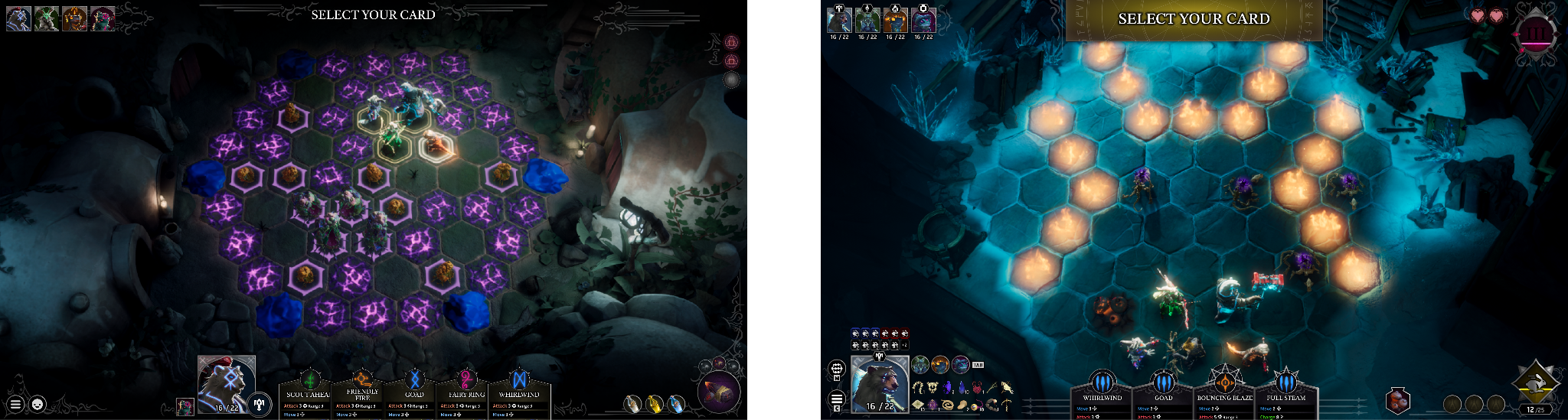
Earlier Shadowstone game build on the left with recent on the right.
Spell Actions
Increased emphasis and clarity around available actions. 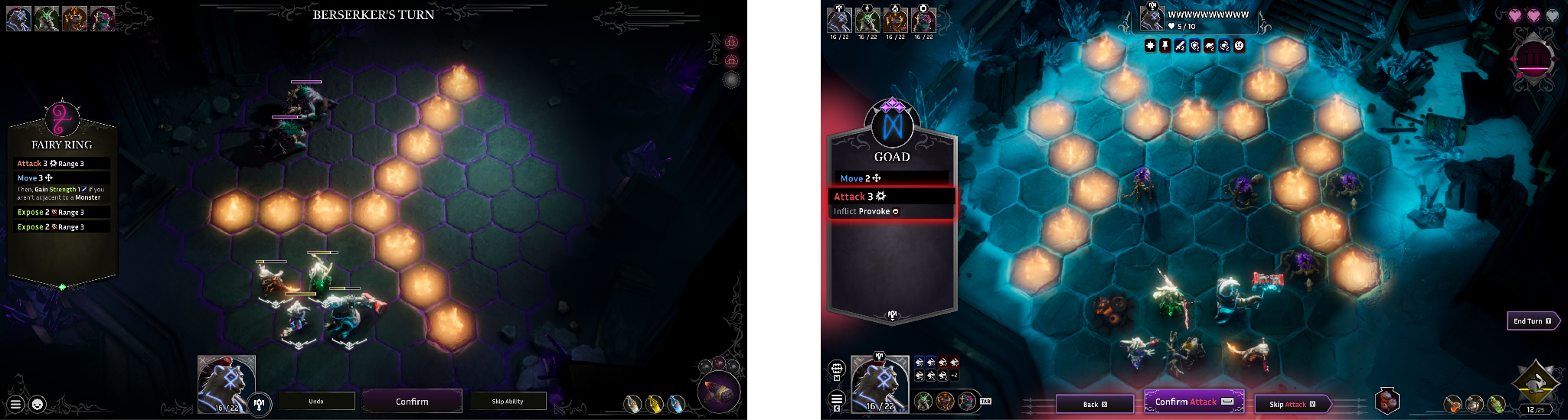
Inspect Hubs + Pinning
Added detailed information out of the primary UI while keeping it easily accessible. Allowed players to keep important information visible when they needed it. 
Next steps
Shadowstone's combat experience continues to evolve through player feedback, playtesting, and iteration. Each round of feedback helps us identify what can be clearer, faster, or more intuitive, from small improvements to larger changes in layout and interaction flow.
Thank you to everyone who has played, shared feedback, and helped shape Shadowstone. Your input continues to guide the work and make the experience better.
The Secret Door Team
Curious about our previous dev blogs?