
TiefenWolf — Development Update
Hello everyone! It’s been a while since our last update because we’ve been actively focused on development. We’d like to share the current state of the project and some of the latest news.
Modeling
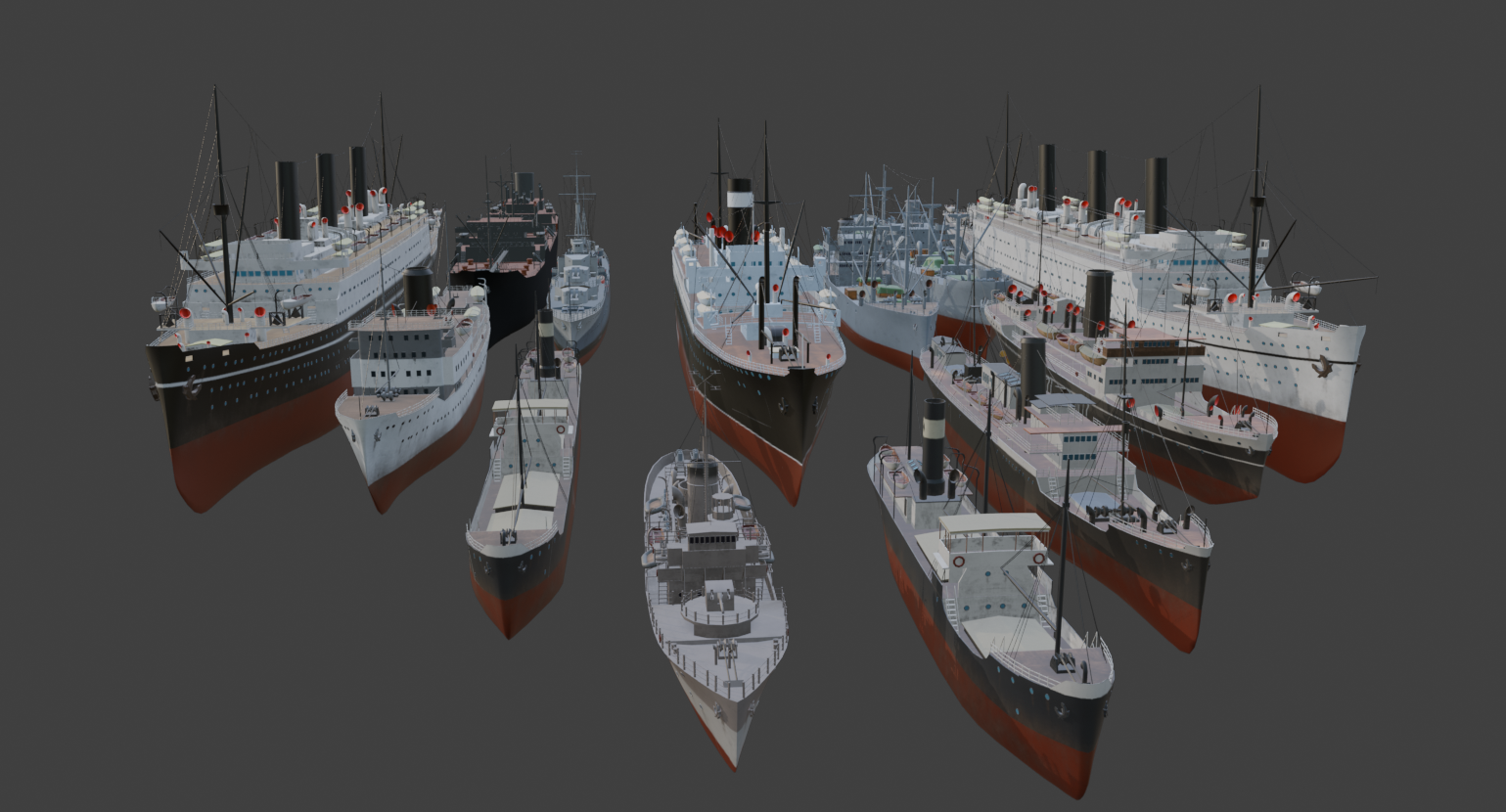
Work continues on modeling a variety of ships.
We are optimizing a large number of the submarine’s textures and models to reduce video memory (VRAM) usage. This is a fairly time-consuming process.
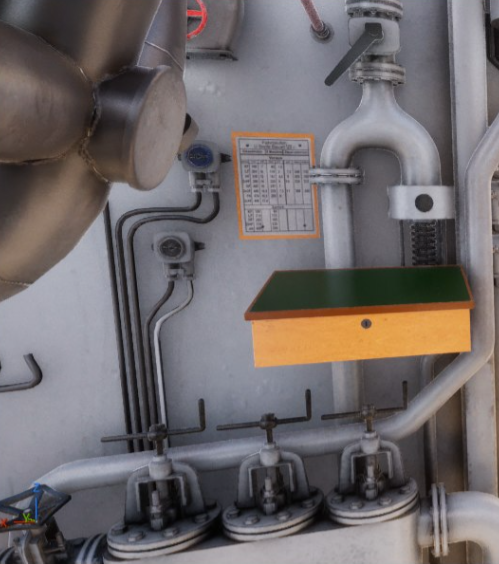
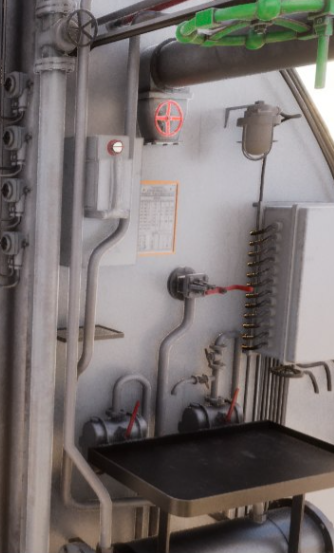
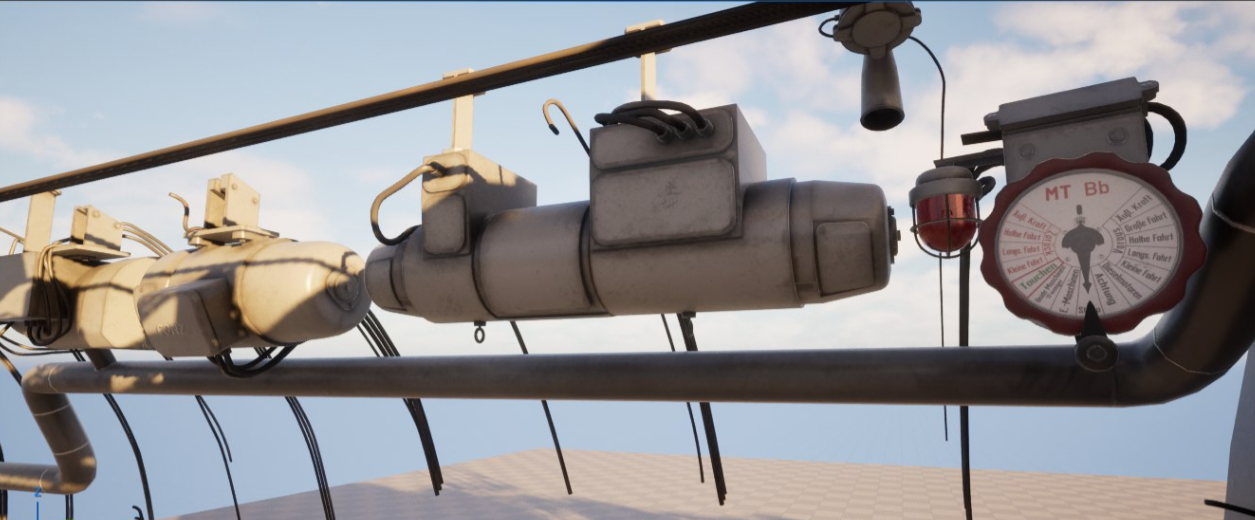
Work on modeling and detailing the submarine’s interior is ongoing.
images not full. have some black parts
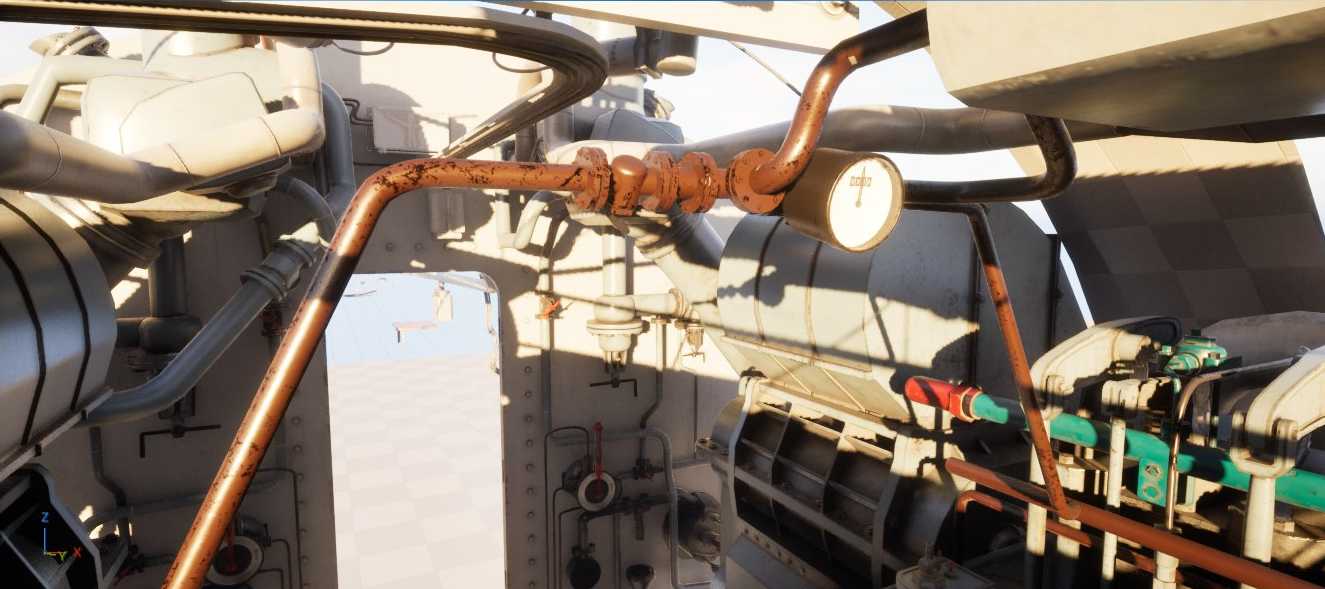
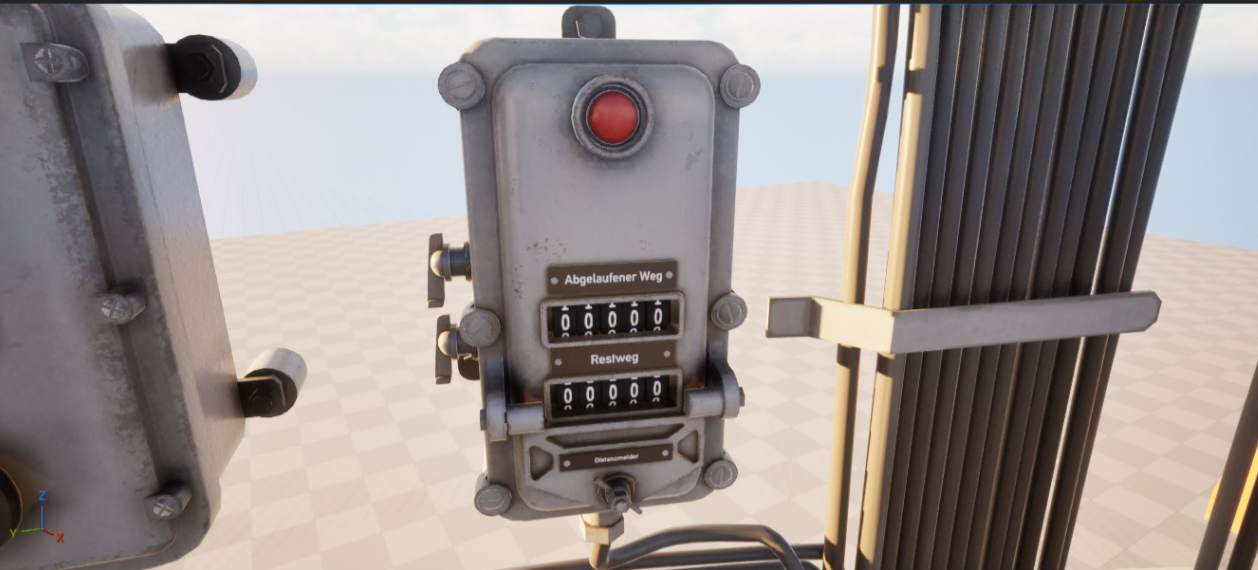
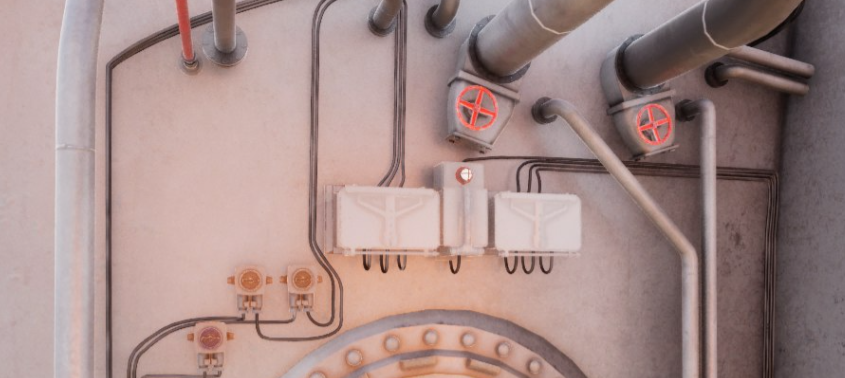
Interaction System
The player interaction system has been completely redesigned and rebuilt. The new system provides several important improvements:
Significantly lower network traffic.
Greater functionality and flexibility when configuring interactions.
Improved synchronization between players.
A new compensation system for poor or unstable internet connections.
The Submarine
We are receiving help from some excellent people with extensive technical knowledge of the Type VII U-boat. They have provided us with a great deal of new information and clarified the operation of several systems. As a result, some of the submarine’s systems have been reworked to improve their historical and technical accuracy.
Closed testing conducted in the spring also revealed several problems. Fixing them required a considerable amount of time and a major overhaul of how information is exchanged between the submarine’s individual systems.
To give a simplified example: a diesel engine produces a certain amount of power at the shaft and drives the propeller. It receives information from the clutch and electric motors, reports the current RPM to the submarine’s movement system, and also informs the fuel system of its current fuel consumption. Most of the submarine’s individual components communicate with one another in this way. The previous method used for this communication was responsible for several synchronization problems experienced by players.
We have now created a new communication architecture for these systems that is designed to eliminate these data-synchronization issues.
The electrical system has also been configured. Every piece of electrical equipment aboard the submarine now consumes power, and fuses have been added that can fail and require replacement.
The submarine’s primary controls and core functionality are now complete.
Hydrophone
The first version of the hydrophone system has been created, and we will continue improving it as development progresses.
Ships generate several distinct types of noise, including engine hum, propeller-shaft noise, and cavitation. These sounds occupy different frequency ranges, allowing the hydrophone operator to gather information by monitoring changes in volume at specific frequencies.
The distance over which a sound can be detected depends on both its volume and frequency. Low-frequency sounds travel farther through seawater than high-frequency sounds, meaning the first indication of a distant vessel will usually be the low, muffled sound of its engines. As the target approaches, propeller blades, shaft noise, and cavitation will become increasingly distinct.
Artificial Intelligence
We are currently developing the AI for enemy ships. The current system includes or is being developed to include:
Ships can operate independently or as part of a larger group.
Following a set course.
Moving toward a designated point.
Operating as part of a convoy.
Searching for, intercepting, and making attack runs against the submarine.
Improved submarine detection logic based on the submarine’s noise level (dB), distance, depth, crew proficiency, the capability of the ship’s hydrophone, and natural ocean background noise. Thermocline effects will be added later.
The various ship attack behaviors are still under development, but are nearing completion. ========================================================
We have not abandoned the project, and we never have.
Development is continuing, and we want to show you up-to-date gameplay as soon as possible.
We also want to give you a more detailed look at the ways players will be able to interact with our submarine.
Submarine Equipment and Functionality
Diesel Engines
The submarine is equipped with two GW-type diesel engines featuring the following simulated systems:
Fuel-air mixture adjustment. Mixture settings affect diesel performance and fuel consumption.
Starting-air reserves.
Roots-type supercharger, used to increase intake-air pressure and allow the diesels to operate at high RPM.
Lubricating-oil circulation pump.
Diesel cooling-water pump. Engine overheating can lead to engine failure.
Each piece of equipment has its own electrical power consumption and noise level.
Oil-filter system. As filters become clogged and worn, oil pressure drops and engine wear increases. Oil filters are consumable items and must be replaced.
A functional instrument panel is provided for monitoring the engine systems.
Fuel System
Fuel-transfer system from external fuel tanks to the gravity/day tank.
Fuel quantity monitoring system.
Compensating tanks used to offset the changing weight of consumed fuel.
Flooding and Ballast-Blowing System
Three main ballast tanks, two regulating tanks, one negative-buoyancy tank, two torpedo-compensating tanks (one forward and one aft), and two trim tanks (forward and aft).
Fully functional high-pressure air distribution valves.
Diesel-exhaust ballast-blowing system.
Tank filling is monitored using differential pressure gauges and sight glasses.
Two bilge pumps are fitted. One transfers water between Main Ballast Tank 3 and the other tanks, or pumps water from compartments into Main Ballast Tank 3. The second pumps water from Main Ballast Tank 3 overboard.
Compressed-Air Replenishment System
Piping and valves for drawing air from the atmosphere.
Functional Junkers diesel compressor with operating controls and fuel consumption.
Electric compressor. It consumes electrical power and therefore increases the load on the electrical system.
The compressors have different noise characteristics.
Rudder and Diving-Plane Control
The primary drive for the rudder and diving planes is electric. It produces noise and places a load on the electrical system.
Emergency mechanical control is slower but produces minimal noise.
Multiple electric rudder-control stations are available in the control room, conning tower, and bridge. Mechanical rudder control is located in the aft compartment.
Electrical System
The submarine features an advanced electrical-system simulation consisting of:
Two battery groups (forward and aft), including the possibility of connecting shunt failures.
Compartment-based lighting circuits divided between port and starboard sides.
Battery charging/discharging and current/voltage regulation.
Fuses and circuit breakers. Fuses are consumable items and must be replaced after they blow.
Every functional electrical device has its own power consumption.
Two main electric motors with fully functional VOIGT & HAEFFNER AG control panels.
Command and Control Systems
Engine telegraphs used to transmit orders to engineers in the diesel and electric-motor compartments.
Rudder-order telegraph for manual steering. The required rudder angle is set from the control-room instrument, while the receiving instrument in the aft compartment displays the ordered setting.
Dive-readiness system. Each compartment has a readiness switch. When activated, the corresponding indicator illuminates on the dive-readiness panel in the control room.
Torpedo Fire-Control System
The torpedo weapon-control system includes:
A Torpedo Data Computer (TDC), with its core operating mechanics recreated. It calculates the torpedo gyro angle required to hit the selected target.
Two gyro-angle receivers that receive data from the TDC and transmit the gyro angle to the torpedo before launch.
The forward-tube gyro receiver supports both manual and automatic gyro-angle input; the aft-tube receiver supports manual input only.
Torpedo-tube selection and indication system. From the control-room panel, the crew selects the tube(s) and firing method (single shot or salvo). Indicator lights near the torpedo tubes and in the conning tower show which tubes have been selected, after which the crew prepares them for firing.
Torpedoes can be launched remotely from the conning tower or bridge using an electrical trigger, or manually at the tube using the firing handle.
Torpedo launching requires a reserve of compressed air for the torpedo tubes.
Torpedo tubes include controls for setting running depth, torpedo speed, flooding and blowing the tube, and replenishing the tube’s compressed-air reservoirs.
The submarine is equipped with a functional deck gun and high-explosive fragmentation ammunition.
The submarine is equipped with a functional anti-aircraft machine gun.
Torpedoes
Two torpedo types are represented: the steam-powered G7a and the electric G7e.
Each torpedo has gyro-angle and running-depth settings that must be checked before loading into the tube. Default settings may contain small deviations, and these values must be synchronized with the settings on the torpedo tube.
Each torpedo has two fuze modes, contact and magnetic, which must be selected directly on the torpedo before loading.
Electric torpedoes must be periodically charged, while steam-powered torpedoes require warming. These procedures increase the load on the electrical system.
Torpedoes are loaded entirely by hand using the loading crane.
Maximum torpedo capacity is 12, four of which are stored beneath the deck of the forward torpedo compartment.
Instrumentation
The submarine includes the following functional instruments:
Shallow- and deep-depth gauges.
Rudder and diving-plane position indicators in the control room and conning tower.
Papenberg depth gauge and inclinometer.
Diesel-engine and propeller-shaft tachometers located in the machinery spaces, control room, conning tower, and hydrophone station.
Pressure gauges for monitoring liquids and compressed air.
Differential pressure gauges for monitoring main ballast tank filling.
Ammeters and voltmeters for monitoring the onboard electrical system.
Compasses in the control room (at the helmsman’s station and above the chart table), conning tower, bridge (watertight units), and hydrophone station.
Carbon-dioxide indicator.
Clocks.
Ventilation
Oxygen consumption and the resulting buildup of carbon dioxide inside the submarine.
Ventilation used to reduce CO2 concentration, including ventilation by opening doors where appropriate.
Storage and Personal Inventory
The submarine contains dedicated storage locations for consumable and operational items, including oil filters, fuses, torpedo-tube tools, repair and emergency equipment, and flashlights. These items are generally stored in tables, lockers, and dedicated cabinets.
Each player’s personal inventory can hold up to three items.