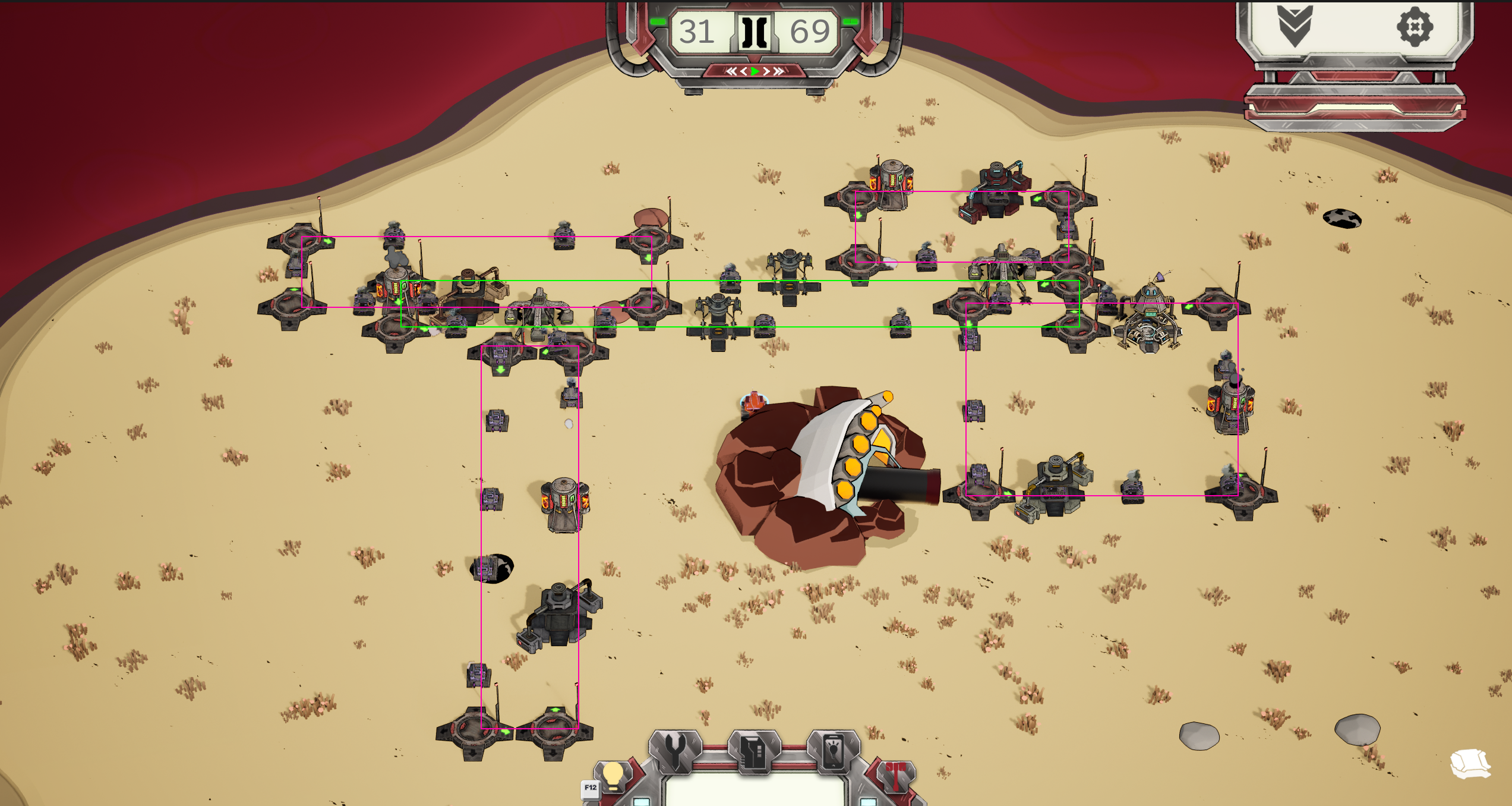
Botlings move in one direction and keep on moving until you turn them. Because they are born from a simple source, this tends to make lanes of the botlings. These lanes have similarities to conveyor belts in classic automation games, but have some key differences.
Lanes are not static and you don't have to delete and reposition them like conveyor belts. You just need to reposition the botlings. Since Botlings are required to do all the work in buildings, you can have working botlings in addition to carrier botlings with these two being different types. This makes more sense in late game, when only certain types of botlings can do certain kind of work (ie. work with radioactivity) and because more advanced botlings work faster.
There are several buildings that have an effect on botling routing:
Turners turn botlings to one or many directions.
Splitters split a lane of botling to multiple lanes (or combine them back together)
Catapults vault botlings over another lane
Bridges allow botlings to traverse up a layer
Surfaces allow botlings to traverse on a higher layer (or on top of water)
Common routing errors:
Looping lanes
You know you have this, if you have constant traffic jams and need to lift botlings to fix it.
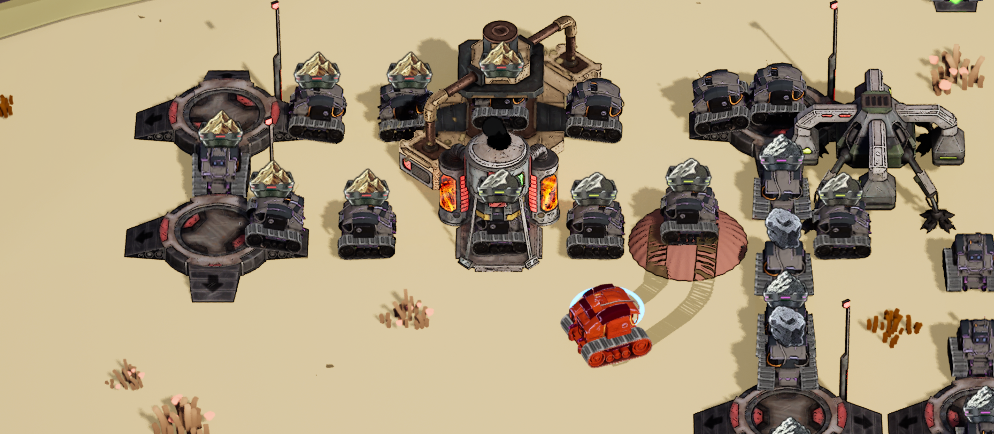
A looping lane is when your botlings do a loop back on their previous location and cross a lane they came through. This is often fine, but when the loop is tight or gets a massive influx of queued up botlings, they can end up stuck because the whole loop gets congested.
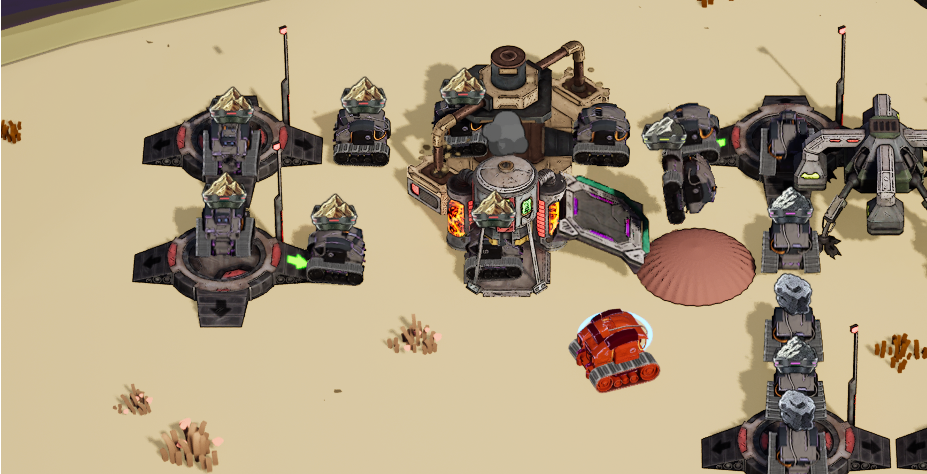
There is an easy fix for this though - catapult over the lane. This is what catapults are mostly for.
Uneven ratios
Uneven ratio is caused when your system has too many botlings routing one way and too few the other way, making them queue in another section. If you are playing a casual game, it's not a huge problem, but this makes your factory less efficient and takes production longer and produces too much of one thing vs another.
You can identify this by long queues, but also by a constant lack of a certain resource.
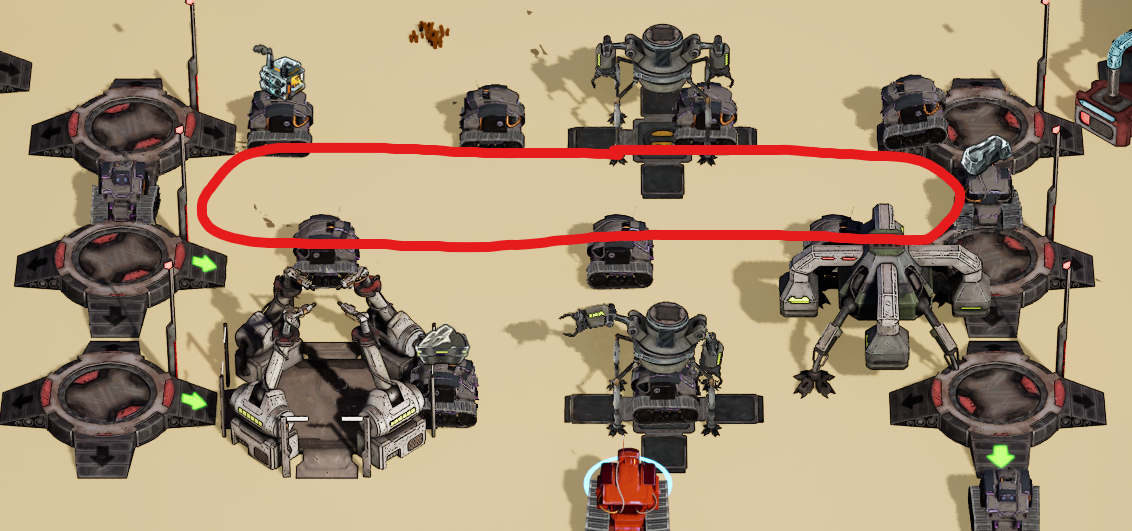
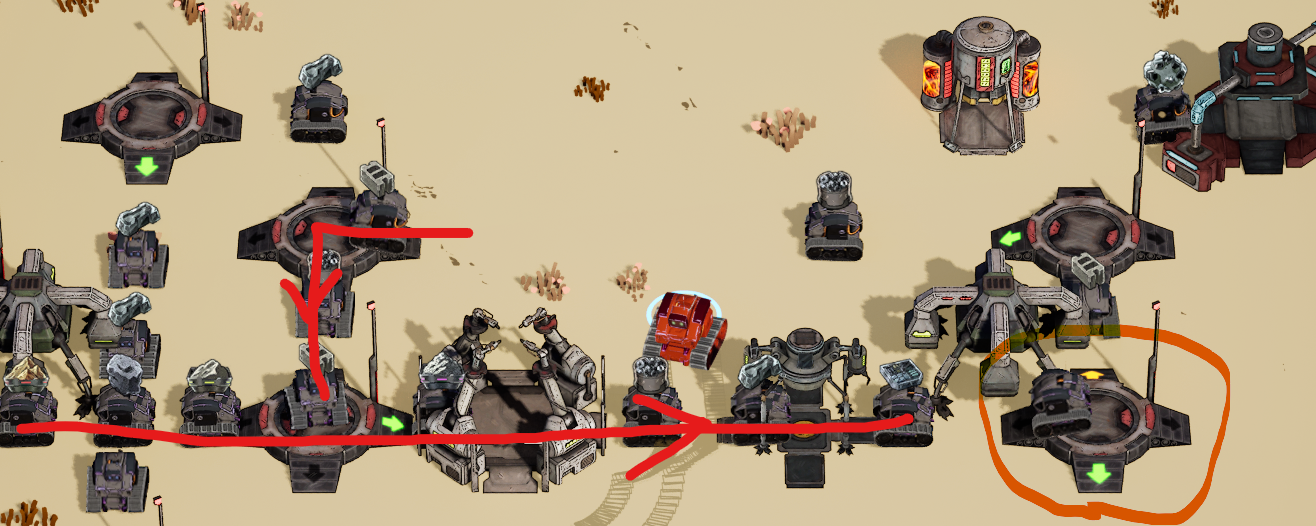 See where the ratio is skewed - the turner circled in red routes HALF of all botlings to the other way which is sure to congest the assembler + constructor lane.
This is slightly more difficult to fix in early game, because you don't have access to advanced turners and splitters. These buildings allow players to affect the amount of botlings that go to one direction vs. another. It's still doable though, by placing loop backs within the system, or bypassing a production facility by splitting a lane.
Too many botlings on the dance floor
This is a simple error in calculation. You have a loop with too many Botlings, so they end up queuing and waiting to do something.
It's not a huge problem, since it mainly affects your theoretical maximal throughput of the whole system, but it's still an inefficiency. Usually in early game you don't get to feel the effects of this, because you are producing a fairly finite amount of resources to get your botling count up, but in later game it can skew your numbers.
 Here you can see that there are 9 botlings tied to this upper production lane. Because they walk empty handed, you can easily verify the needed products they should be getting from the container aren't being produced fast enough
Fix is easy though, just pick up the extras (or use your routing to direct a few botlings out of the loop) and put them in a loop that can handle more botlings.
Keep it basic
Designing lanes can be tricky if you are trying to build the perfect megaloop that has a complex resource as the end product, and which also produces all the raw resources. Routing in a system like that is very prone to traffic jams and requires quite a few catapults usually.
I recommend doing smaller loops at first that produce a key ingredient in a single loop. That loop is connected to a container, and the container functions as a resource swapper for another loop that uses that resource.
Good early game setup can work with a loop for each mine + processor and a separate one for constructor + assembler - all tied to a few tactically placed containers. Check an example in the image below.