Welcome back,
In the first part of this Dev Diary (if you haven’t read that, we recommend you read it here), we introduced you to the origins of Eternal Whisper’s identity from CHAPTERS, as well as how we are framing Montreal in this digital space.
This time, we are going to explore specific places, inspirations, and methods for curating the art of Eternal Whispers. Remember, we want to show you the game as it is being made. Some scenes are already close to our final vision while others are still going through iterations. The magic of game dev is that you can peel back the curtain and peek at the world coming together.
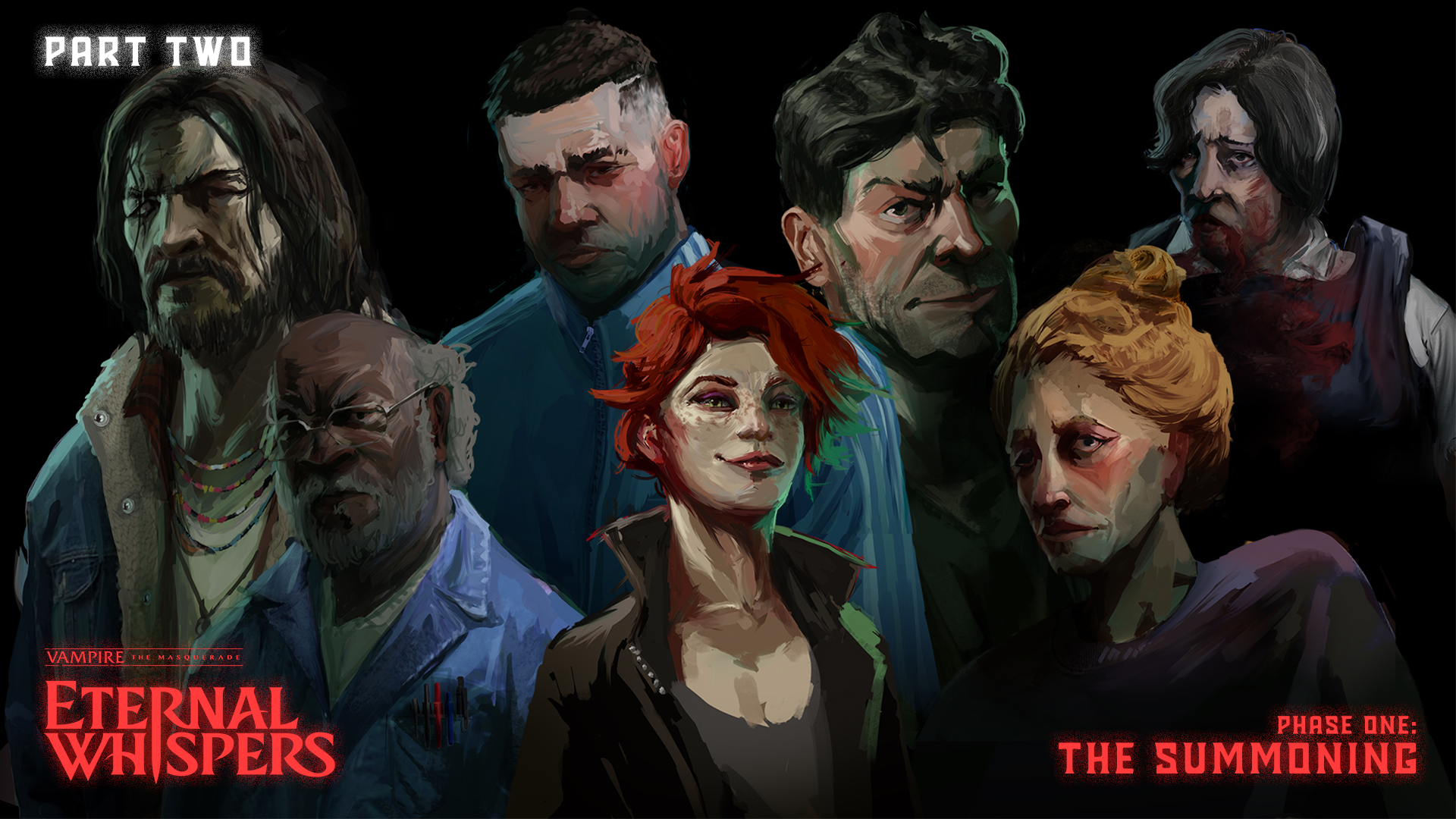
Sam’s Haven: A Place That Evolves with the Player
Between missions, players return to Sam’s Haven.
Sam is a Thin-blood who lives beneath a small neighborhood bookshop selling somewhat antiquated books. The store does not attract large crowds, but it belongs to the local landscape. It is the sort of place residents are proud to have in their neighborhood, even if they do not visit it often. That discreet presence provides Sam with a believable front while protecting her from unwanted attention.
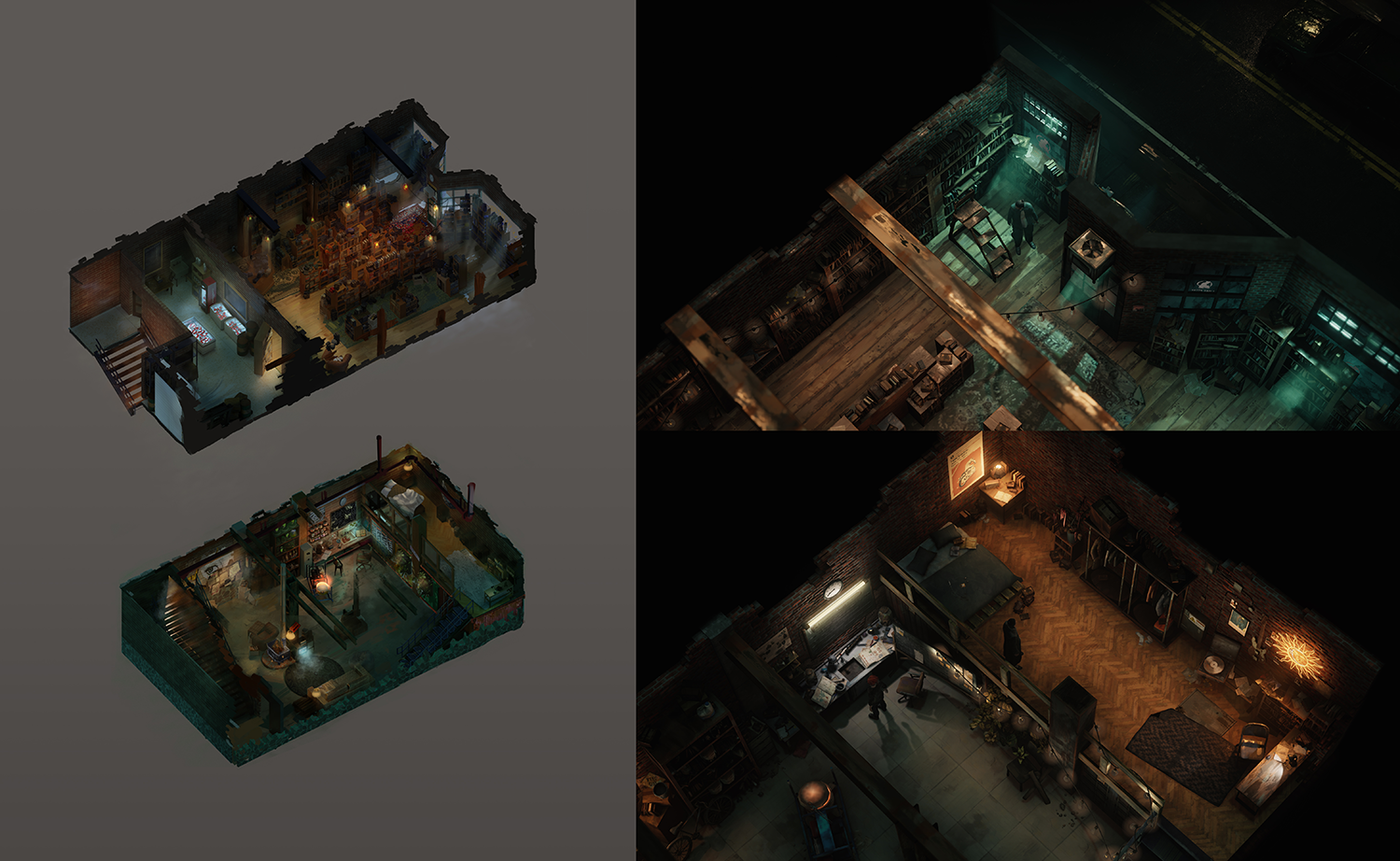
During the day, Sam’s accomplice Jade runs the bookshop and helps protect her secret—though Jade has an agenda of her own, which you may uncover over the course of the game. Once the store closes, Sam is free to pursue her nocturnal activities with you at her side. At first, however, you are more of a burden than a partner. You’re the new Kindred in town, placed under her watch by order of the Sheriff.
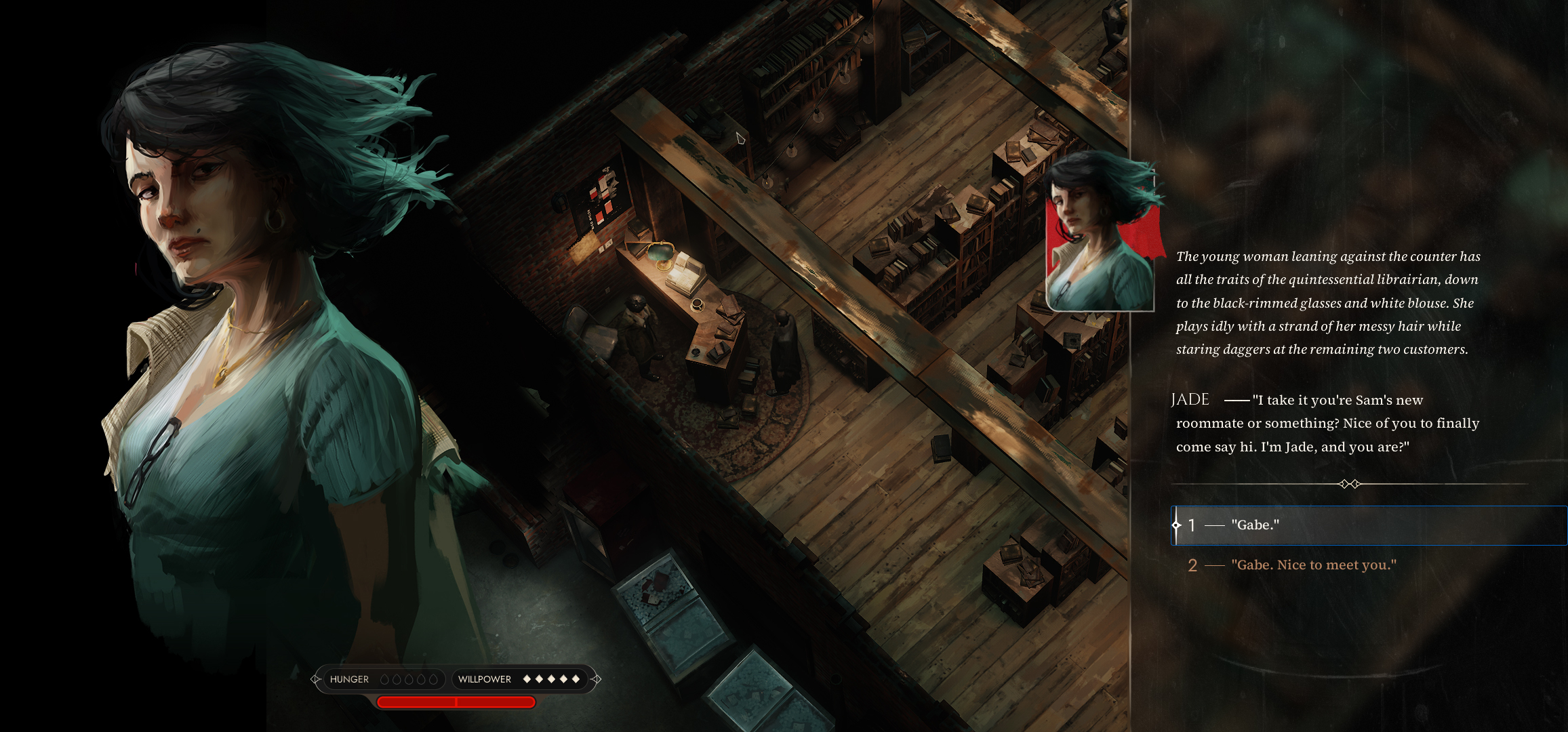
As a Thin-blood, her safety and status within vampire society remain precarious. However, she has earned a certain degree of respectability through the concoctions she creates using Thin-blood Alchemy.
The Haven was designed to be much more than a menu between missions. It is a narrative environment in its own right, where players will be able to:
Get Alchemy concoctions from Sam;
obtain equipment and resources;
examine the evidence board summarizing previous events;
uncover clues about the next mission;
spend XP to level up your character;
strengthen or damage their relationship with Sam (or Toy);
solve day-to-day vampire events that don’t tie in strongly to the main plot.
Players may grow closer to Sam and develop a more intimate relationship with her, but they may also sabotage that relationship. The Haven must therefore visually communicate both the evolution of this bond and the consequences of decisions made during missions.
Painting the World
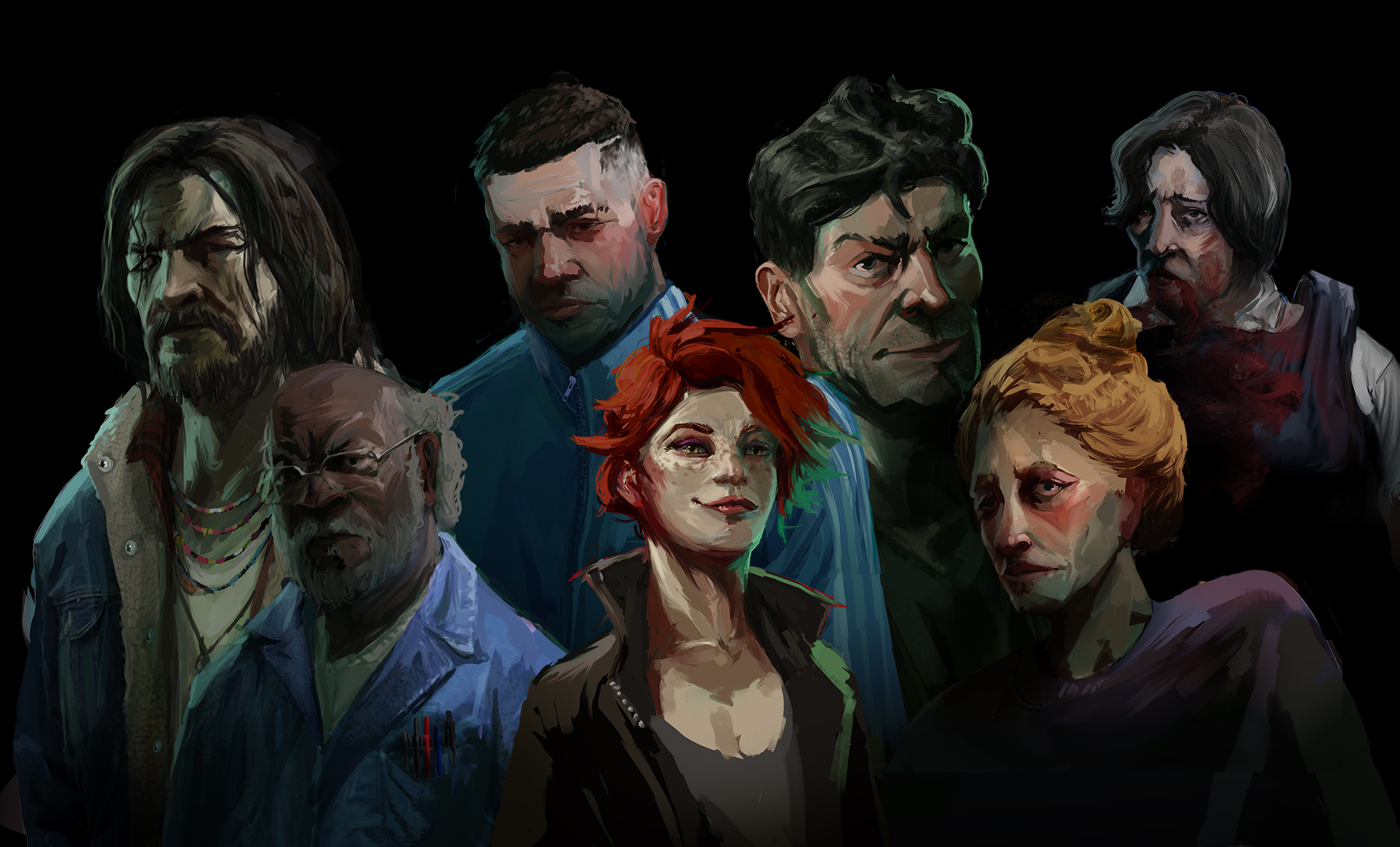
I was looking for a balance between 2D and 3D, between characters with believable human proportions and environments that can be stylized more freely. Shapes, colors, textures, and sometimes even proportions may be reinterpreted to make certain scenes feel like explorable concept art. We chose style over photorealism.
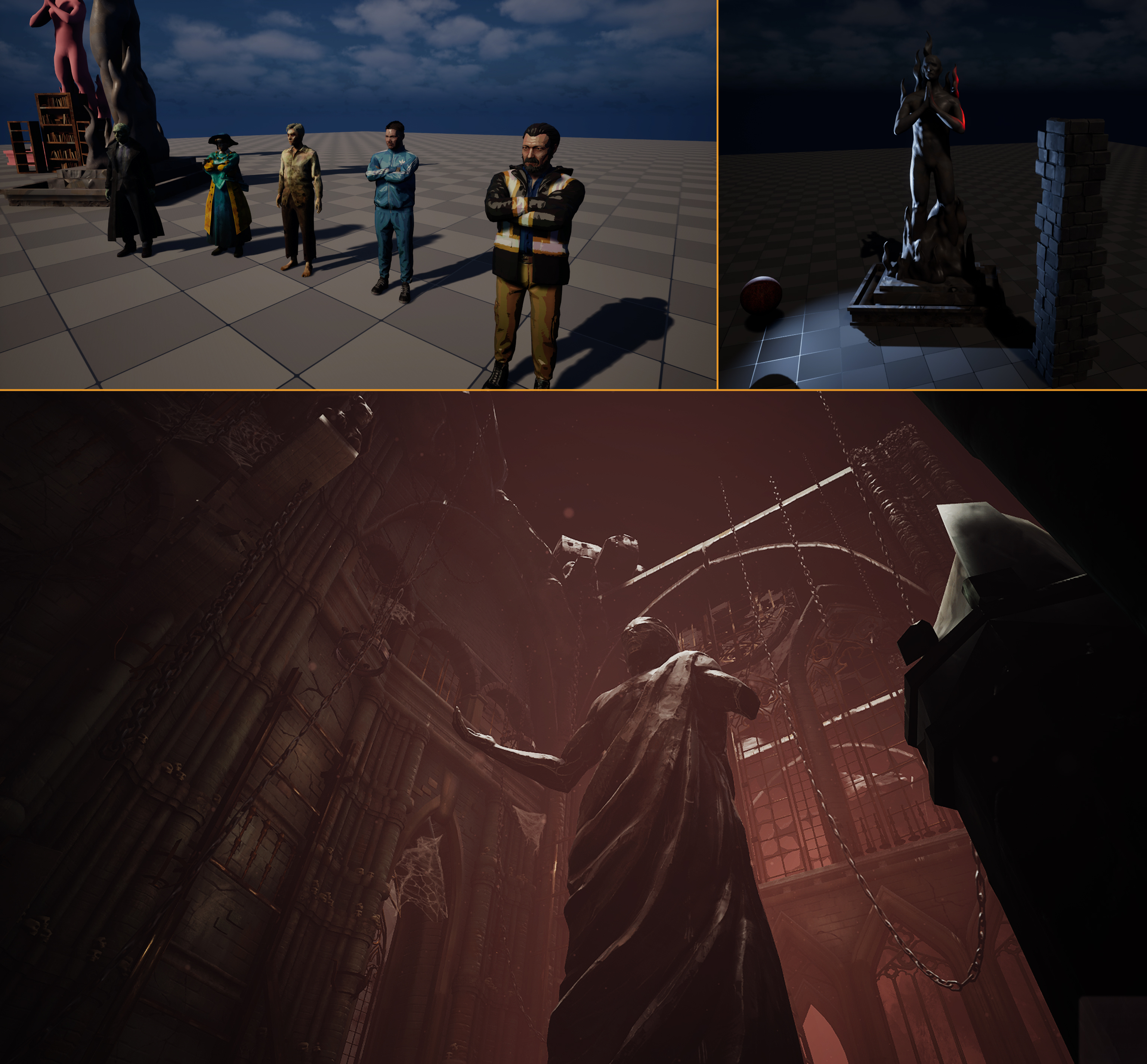
Nearly every texture in Eternal Whispers is reworked and painted by hand. Rather than relying on ready-made texture packs, we approach each surface individually, giving it a more organic character and ensuring that it belongs to the game’s visual language. That language draws heavily from Gothic art and Impressionism, combining dark, dramatic forms with expressive color, light, and visible painterly texture.
Some parts of the environments are built from flat, hand-painted 2D elements placed within the 3D space (such as the sky behind the Mount Royal Cross at the end of the trailer). We take a similar approach to the character portraits shown during conversations: each one is drawn by hand, and none are generated using AI.
The vast majority of our 3D assets are also modeled specifically for the game. While we gather references and draw inspiration from real objects and places, the final assets are created around the project’s particular artistic and technical needs. This gives us greater control over both optimization and stylization. Because the game is viewed primarily from a top-down perspective, most objects are not meant to be examined from extremely close range. Their shapes, details, and textures are therefore designed for the distance and angle from which players will actually experience them.
Composing Each Scene Like a Cinematic Shot
We try to approach every environment as if it were a scene from a film.
Composition, volume, color, and light must create a strong image while guiding the player’s eye and movement. Our intention is for the game’s most important shots to evoke some of the cinematic imagery that has influenced us.
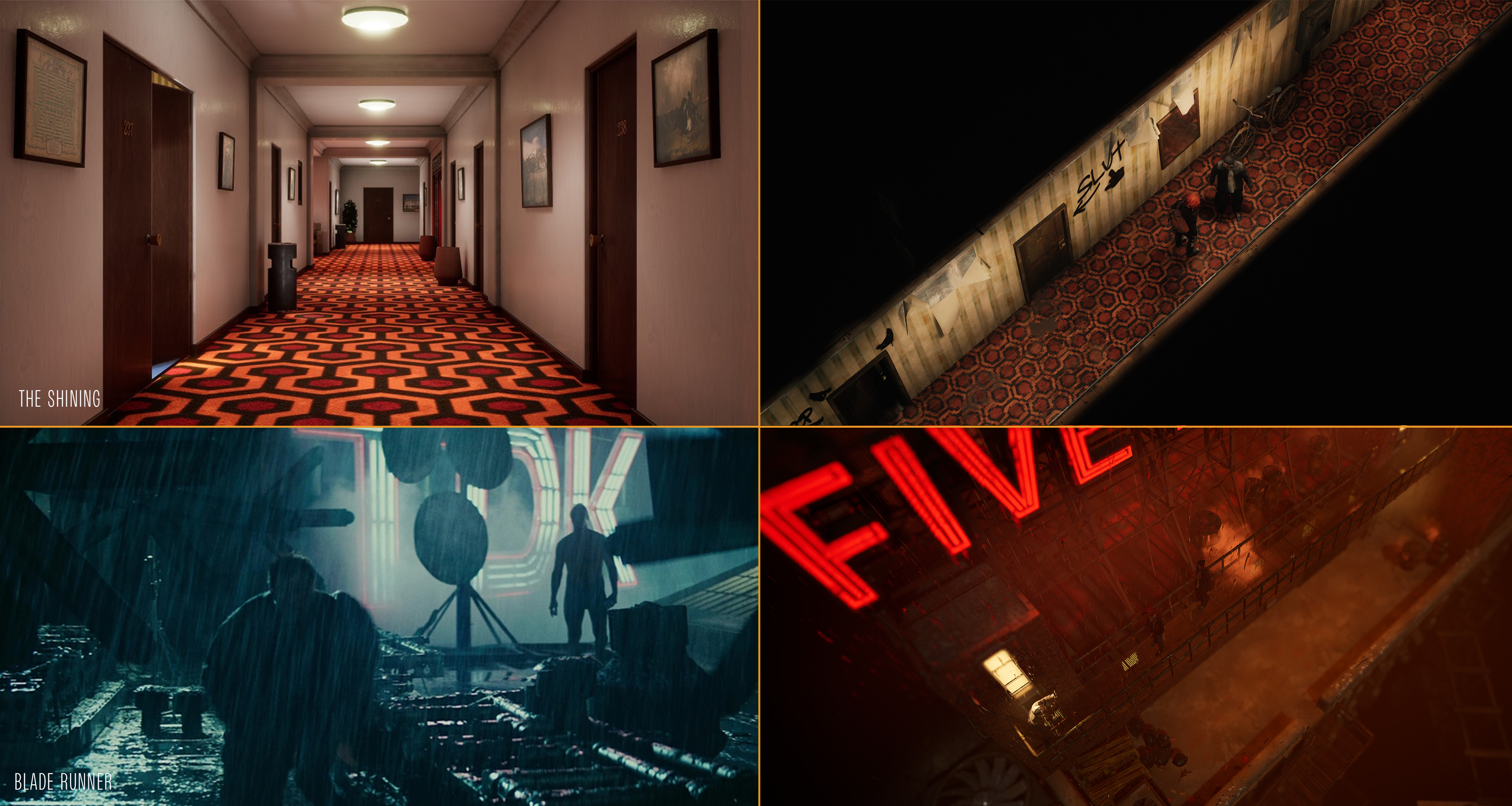
At the end of the first mission, a scene takes place above the former Five Roses Flour mill. The enormous red neon letters illuminate the space and create a powerful atmosphere reminiscent of films such as Blade Runner.
The catacombs draw from the visual imagination of Interview with the Vampire, particularly the scenes surrounding Louis and Armand’s encounter in Paris. Eric’s apartment in the second mission incorporates references in its composition, color, and lighting to works such as Breaking Bad and Trainspotting.
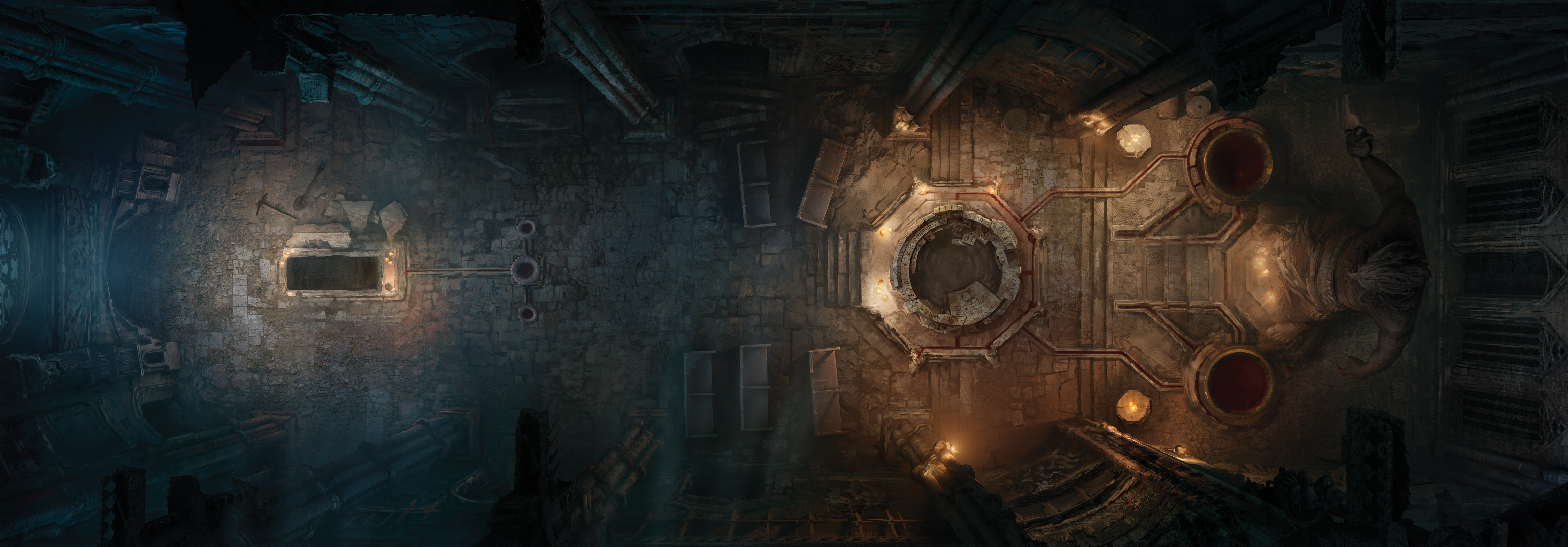
These references are not models we reproduce literally. They provide us with a shared vocabulary that helps define the intended emotion of a scene: unease, grandeur, abandonment, intimacy, danger, or devotion.
Bringing to Life a World That Almost Never Sees the Sun
Creating a game that takes place primarily at night presents a significant challenge. Most scenes are illuminated by artificial sources: neon signs, urban lighting, interior lamps, and, more rarely, open flames (although we know vampires and fire obviously do not make the best combination).
We must create dark and dramatic atmospheres without sacrificing the readability required by gameplay. Lighting needs to reveal spaces, guide players, and reinforce emotion without dispelling the mystery of the night.
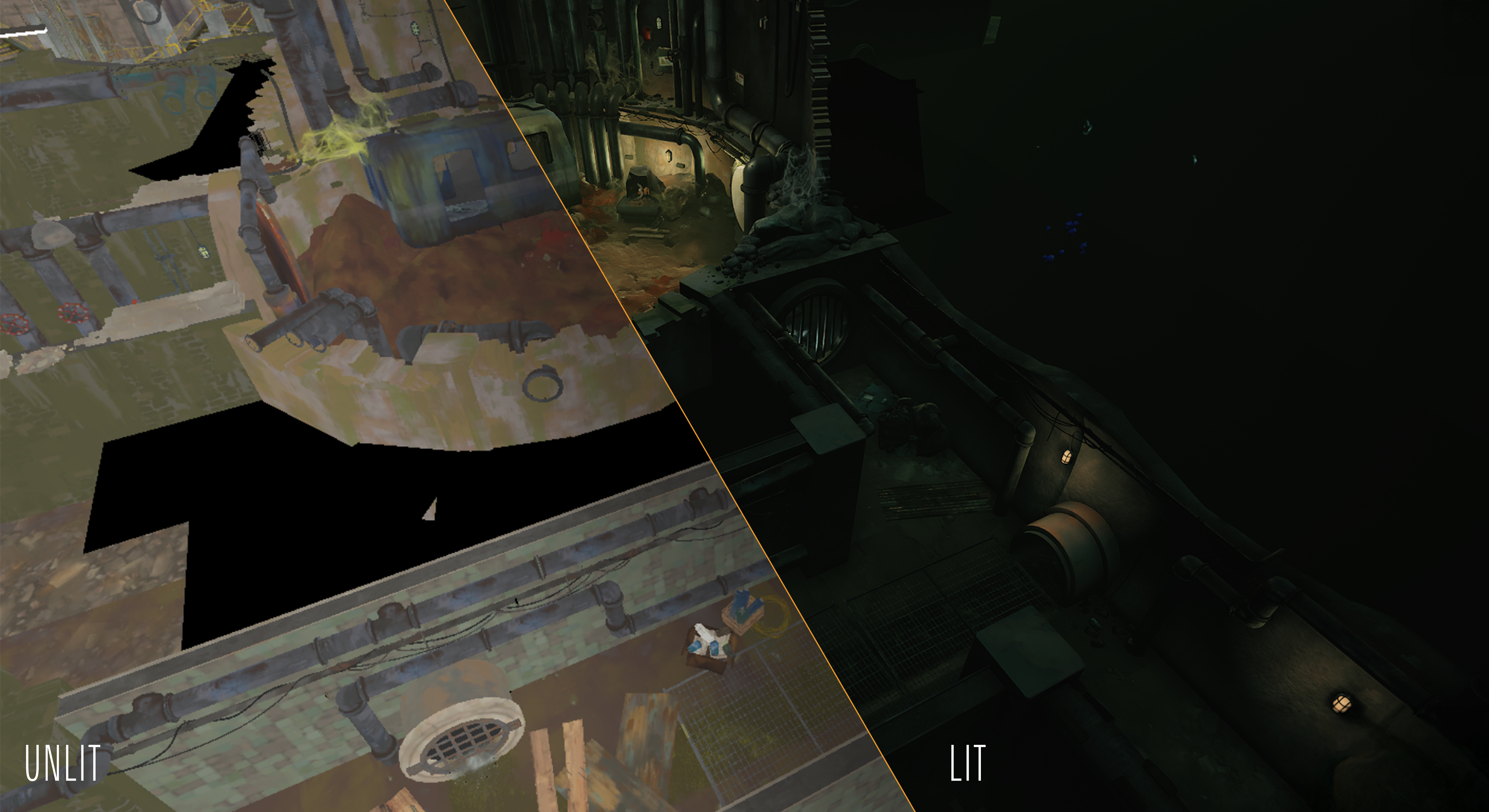
Lighting is also one of the areas that will evolve the most throughout production. We are working within a very tight production schedule. Each mission must first be developed far enough for us to validate its structure, gameplay, and narrative progression.
We can then return to individual scenes to improve:
lighting;
textures;
set dressing;
composition;
readability;
atmospheric effects;
the density of environmental storytelling.
Images shared during development should therefore not all be considered final. They represent different stages of an evolving production process.
Telling Stories Through Environmental Details
An environment does more than provide a setting for a mission. It can tell players what happened before they arrived. Game development works as a cascading process. A new asset created for one scene may eventually enrich several other locations. Conversely, identifying a new narrative need may require us to return to a mission that is already playable and deepen its environmental storytelling.
For example, during the first mission, players hunt Eric, a rogue ghoul. In the second mission, they discover his apartment.
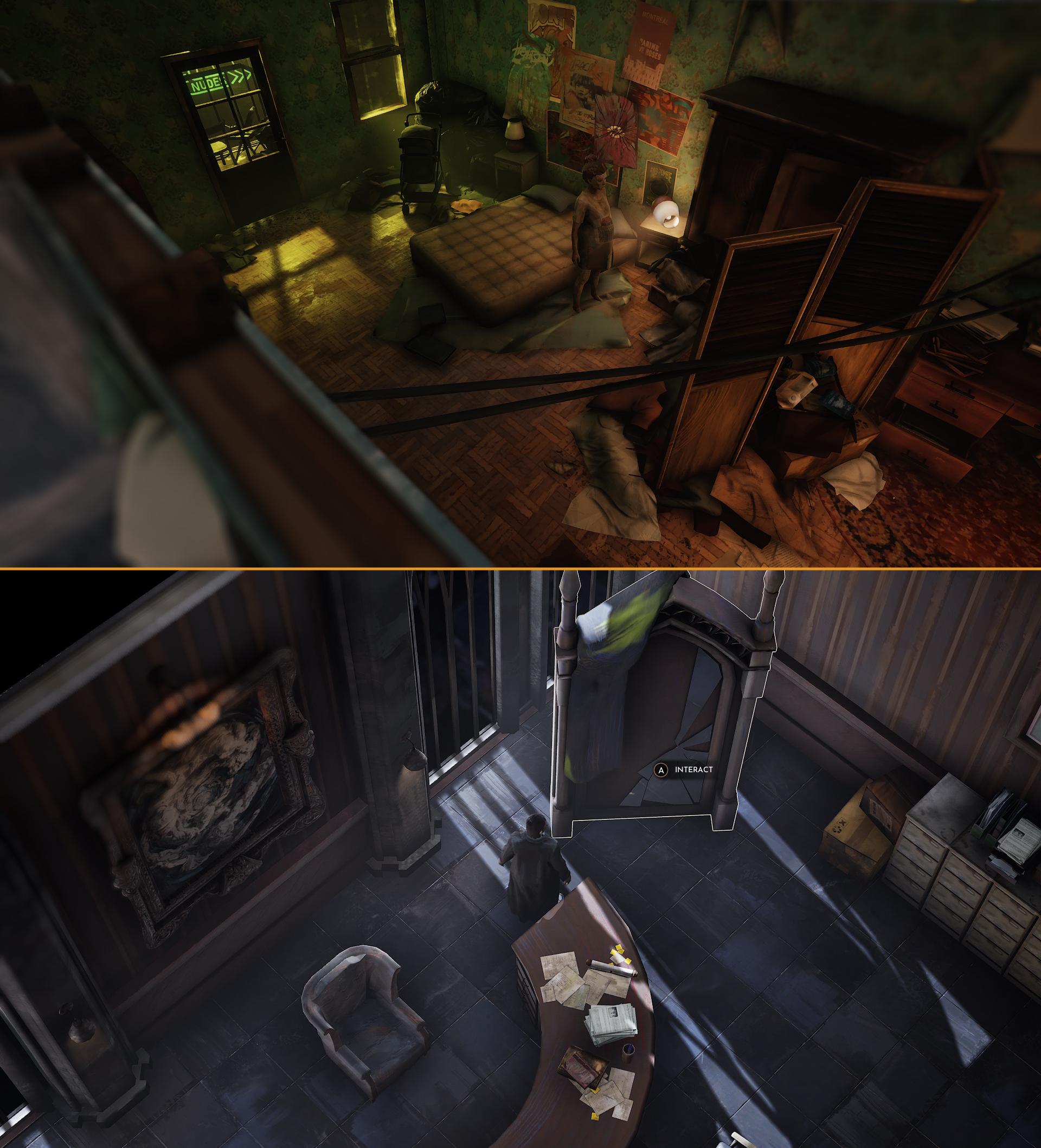
We want the location to visually express Eric’s relationship with his domitor. Portraits and other personal objects will show how emotionally attached he had become and how that attachment eventually developed into a form of total devotion. We eventually reach Caleb's office atop the iconic 1000 de la Gauchetière tower, where every detail of the interior reflects his personality and ideals.
This kind of environmental storytelling is essential. The objects themselves, their placement, and their condition should help players understand a character before a single line of dialogue explicitly confirms their story.
Stay tuned for Part Three,
Wishlist Vampire: The Masquerade – Eternal Whispers.
Keep your ears piqued for more news, and stay connected with the whispering across the internet by adopting the following channels:
TikTok ⛧ Instagram ⛧ YouTube ⛧ Reddit ⛧ X(Twitter)