
Mon Général!
The first campaign in Grand Tactician: Napoleonic Wars is the Italian Campaign of 1796-97, where Napoleon gained great fame. While the regiments and uniforms of the later Grande Armée are the definition of Napoleonic era French unit roster and looks, Napoleon's Armée d'Italie was very different kind of beast. Let's have a look at the native French units available in this campaign, now that the artists have finished their work on them.
Infantry
It's worth noting that during the beginning of the Italian Campaign, the French military is still in the middle of a large reorganization (le deuxième amalgame). While the first amalgamation of French infantry in 1793 saw the organization of the infantry from regiments to demi-brigades, in which old regiments of the Ancien Régime were mixed with the new volunteer battalions, the second amalgamation of 1796 sees the collection of different infantry units, old and new, combined into 110 demi-brigades of the line and 30 light demi-brigades, with the aim of bringing them up to proper combat strength. This reorganization may make following the Italian campaign battle descriptions a bit difficult, as the same unit may appear with old and new names in different official documents, as well as newly named units still carrying their old flags.
While the demi-brigade is the main administrative unit, the main tactical unit is the infantry battalion. The French logistical system has been unable to keep up with the fast-growing numbers in the army. This is especially true in the case of the Armée d'Italie, a secondary front to the main theater on the other side of the Alps along the Rhine. For this reason, Napoleon's soldiers may resemble a rag-tag bunch in comparison to the later, well uniformed imperial armies.
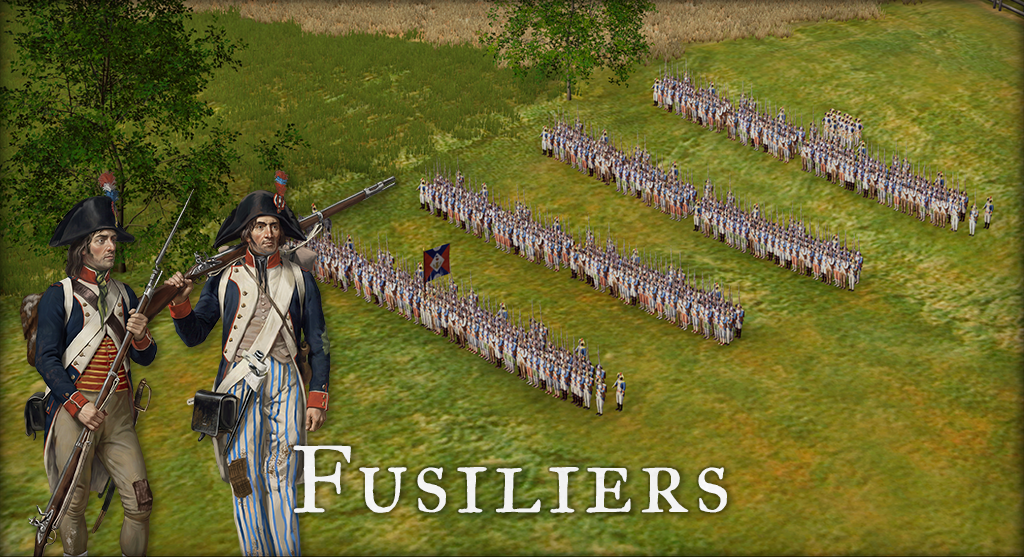
Type: Line Infantry
The basic line infantry demi-brigades consist of three fusilier battalions. Each battalion has eight fusilier companies and one elite grenadier company, with a total strength of over 1000 men, if at full strength (which is rare). Fusiliers fight in the line, but can also utilize open order where needed. They lack the formal light infantry training of the more specialized chasseurs.
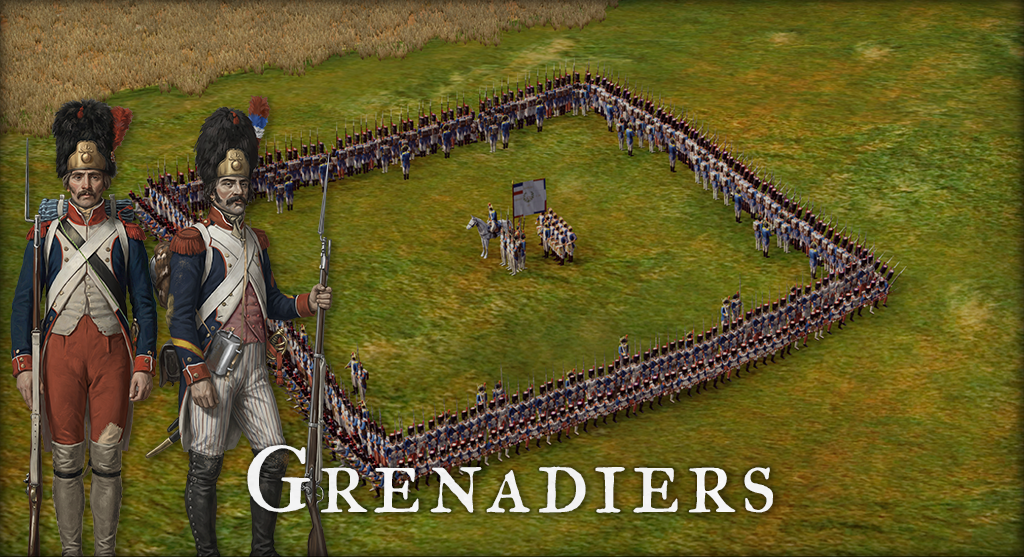
Type: Elite Infantry
Grenadiers are the most experienced and tallest soldiers of fusilier battalions. They wear the bearskin hat, which makes them appear even more intimidating. During the Italian Campaign, it became quite common to detach the elite grenadier companies of the fusilier battalions to form composite grenadier battalions. These grenadier units were often leading elements of assault columns, such as in the Battle of Lodi, or held as a decisive reserve, a role that would be given to Napoleon's guard later.
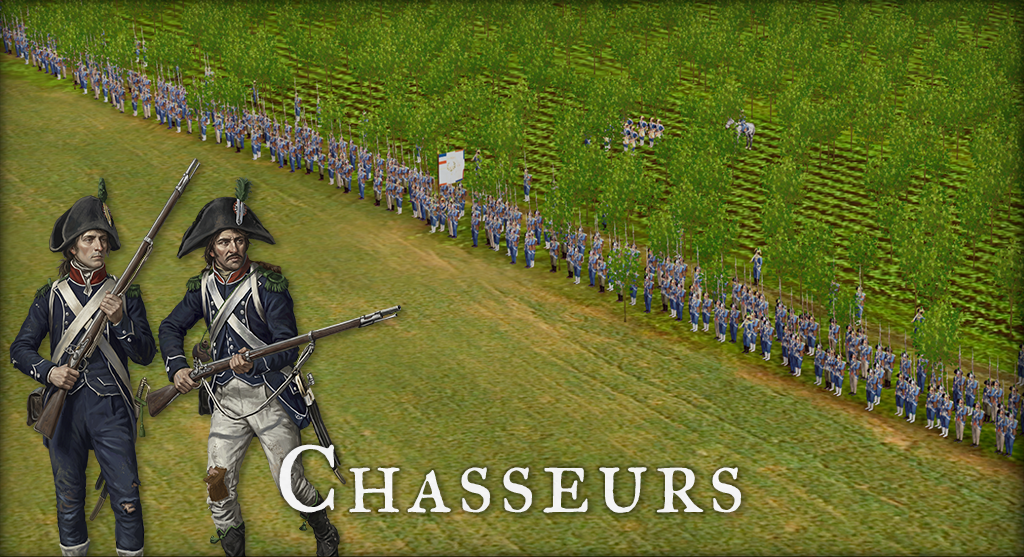
Type: Light Infantry
The organization of light (légère) and line (de ligne) demi-brigades was similar in numbers. However, instead of fusilier and grenadier companies, the light battalions contain chasseur and carabinier companies. The chasseurs are dual-purpose light infantry, trained in screening and skirmishing, but also capable of fighting in close order like the fusiliers.
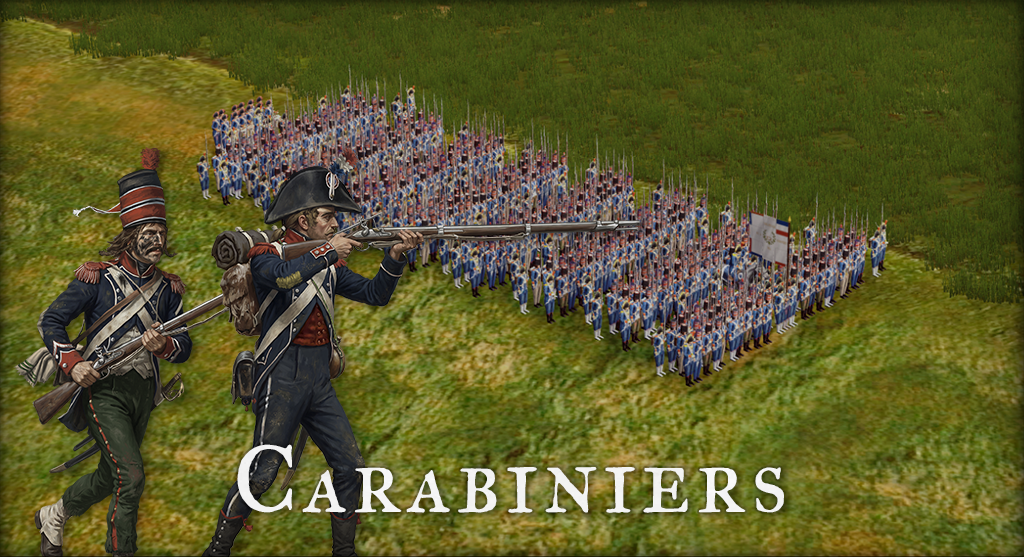
Type: Elite Infantry
The best and most experienced marksmen among the chasseurs are formed into carabinier companies. Like the grenadiers in line battalions, the carabiniers can be detached to form composite elite battalions for the most demanding combat duties. As expert marksmen, they are the most capable skirmishers (tirailleurs) of the French army.
Cavalry
Cavalry retained their regimental organization during the revolutionary wars, and are split into heavy and light cavalry. Heavy cavalry is the battering ram of an army, charging knee-to-knee to break enemy formations with sheer weight of their formation. Light cavalry are the eyes and ears of an army, flexible in skirmishing, scouting and raiding, while effective at screening and pursuit during battles. At the beginning of the Italian campaign, Napoleon's cavalry is in a sorry state, with many troopers missing mounts. Due to the restrictive terrain in Italy, and the needs of the main theater, Napoleon has mostly light cavalry and dragoons available to him. But in the game, some heavy cavalry may appear as reinforcements also south of the Alps.
The main tactical unit of the cavalry is the squadron, formed of two companies of cavalry side by side, deploying in two lines. In the French system, officers form to the front of their units, increasing command and control and providing example to the troopers. A heavy regiment has three, and other regiments four squadrons in general.
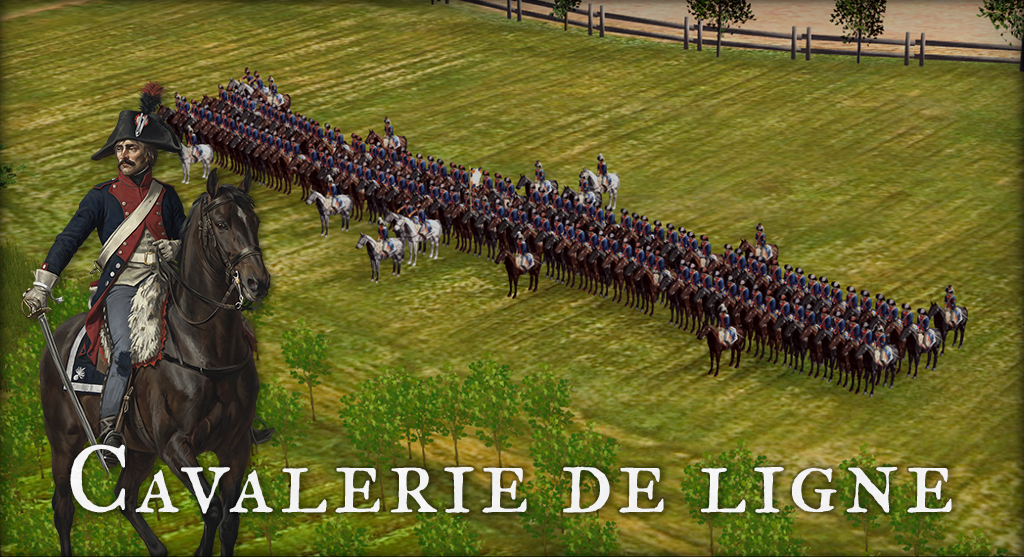
Type: Heavy Cavalry
The "line cavalry" is the predecessor of Napoleon's later famous cuirassiers. During the revolution, the heavy cavalry was stripped of armour (except the 8th regiment, see below). Heavy cavalry has the largest chargers and strongest men in general, making the unit exceptionally strong in charge. They use a straight thrusting cavalry sword as their primary weapon, also commonly carrying pistols (and a number of troopers also carry carbines, though for campaign duties only.)
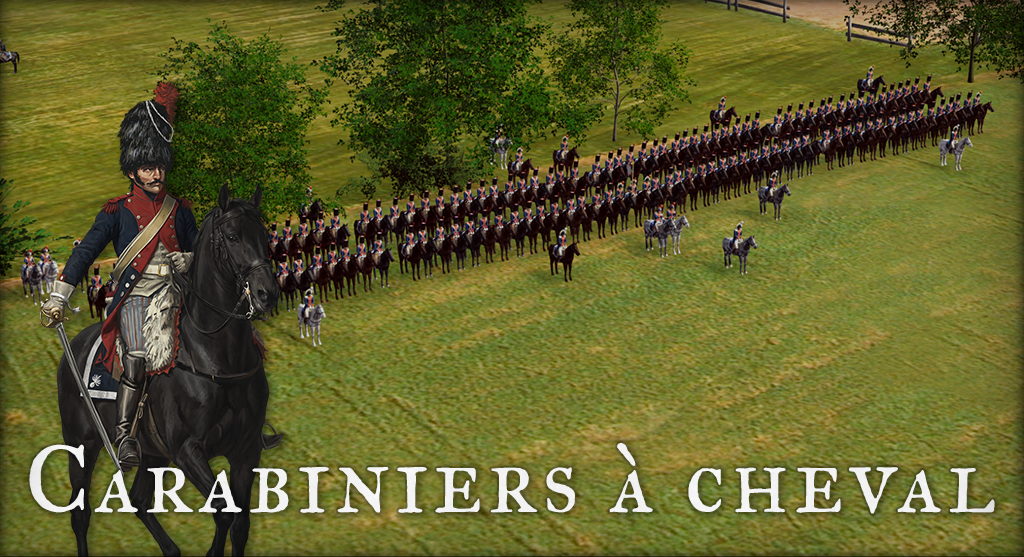
Type: Heavy Cavalry
Originally the elite element of French light cavalry, armed with carbines as their name suggests. By the time of the revolutionary wars, the carabiniers were made an independent arm, forming two regiments of four squadrons each. They are the elite heavy cavalry, the "grenadiers of cavalry", tall horses ridden by tall men wearing bearskin hats. The carabiniers would retain their elite status until being disbanded in 1871.
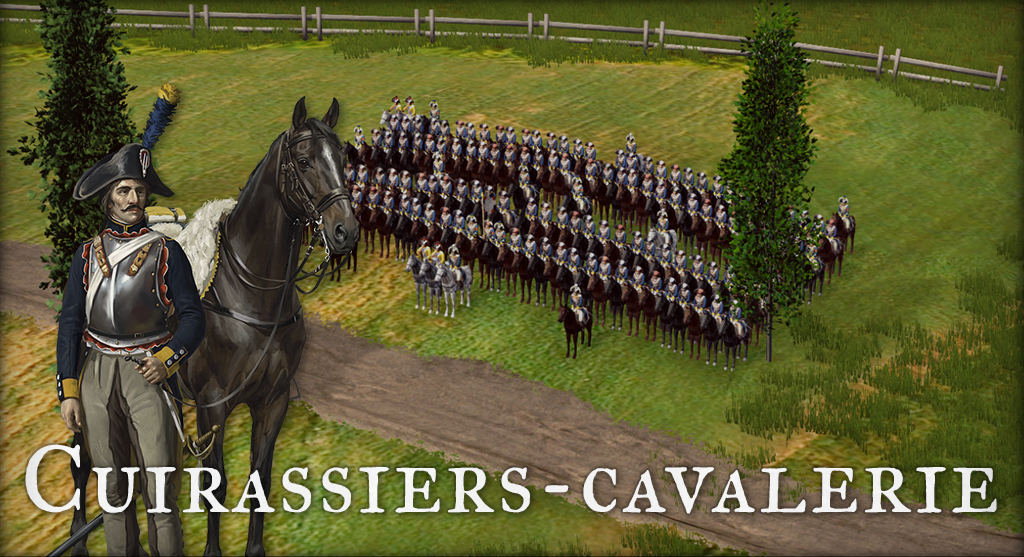
Type: Heavy Cavalry
Formed from the Royal Cuirassiers Regiment, the 8e régiment de cavalerie was the only unit to retain the use of cuirass during the revolutionary wars. The cuirass consists of breast and back plates that can stop a bullet when fired from a distance, also protecting the torso against sword cuts and thrusts. Later, under Emperor Napoleon, the cuirass would make a grand comeback.
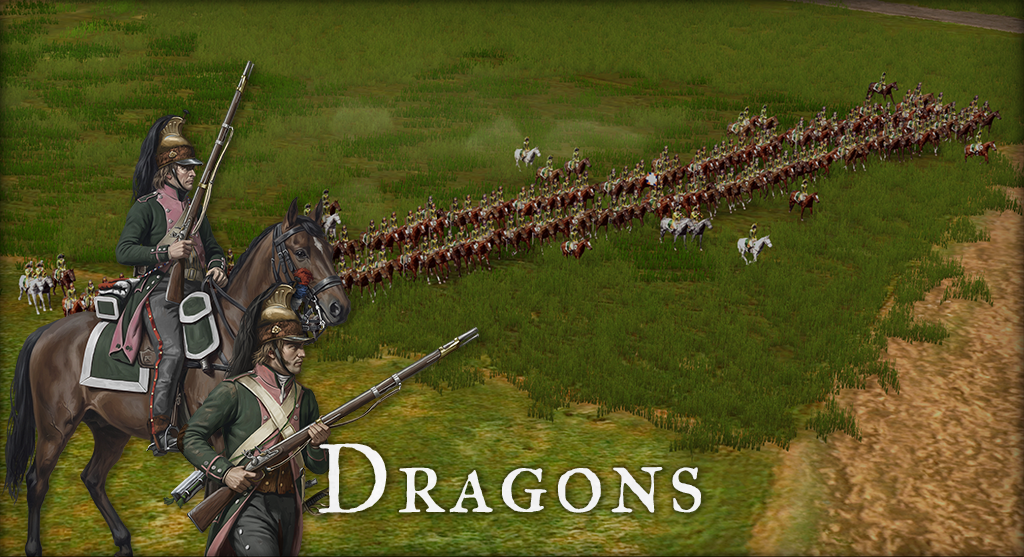
Type: Dragoons (Medium Cavalry)
The multi-purpose cavalry of the French, dragoons can fight mounted as heavy cavalry like dragoons in most other nations do, but they have also retained the old dragoon role of mounted infantry. For this reason, the dragoons are a versatile tool for any French commander, allowing heavy hitting charges as well as dismounted skirmishing. For the latter purpose, they carry dragoon muskets, which are heavier and have longer range than basic cavalry carbines.
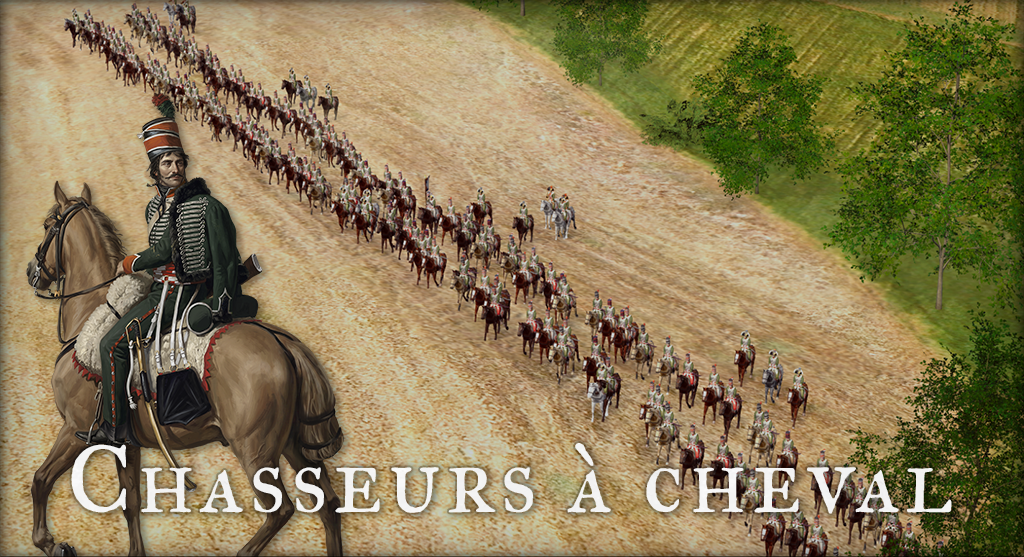
Type: Light Cavalry
The mounted chasseurs are the eyes and ears of an army. They are fast-moving and trained to skirmish while mounted, which makes them versatile in a battle. While mounted fire is usually rather ineffective due to low accuracy, it's possible to discourage enemy light cavalry from charging or to attrit infantry formed in square to break their cohesion.
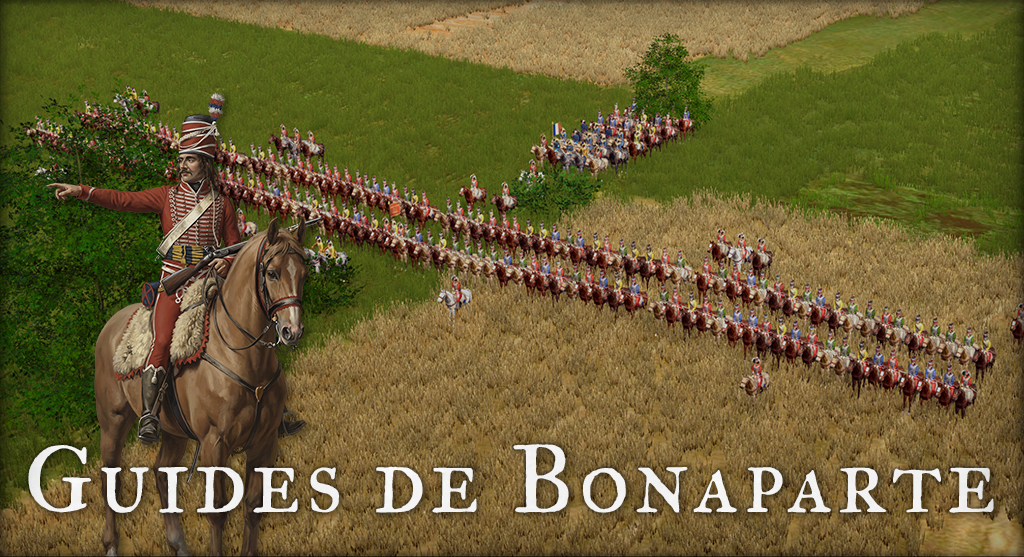
Type: Light Cavalry
Soon after the beginning of the Italian Campaign, Napoleon organized a squadron (initially a company) of veteran mounted chasseurs to act as his personal guides. The role of the guides was manning outposts, to carry out reconnaissance for Napoleon himself and to escort him during the campaign. They were also occasionally used as a backup force for daring raids or as a reserve force in battle. The guides became known for their colourful and flamboyant uniforms.
Later, once Napoleon would reach the title of the First Consul, he would call back his guides to his side in the horse chasseurs of the Consular Guard, who would later become the horse chasseurs of the Imperial Guard.
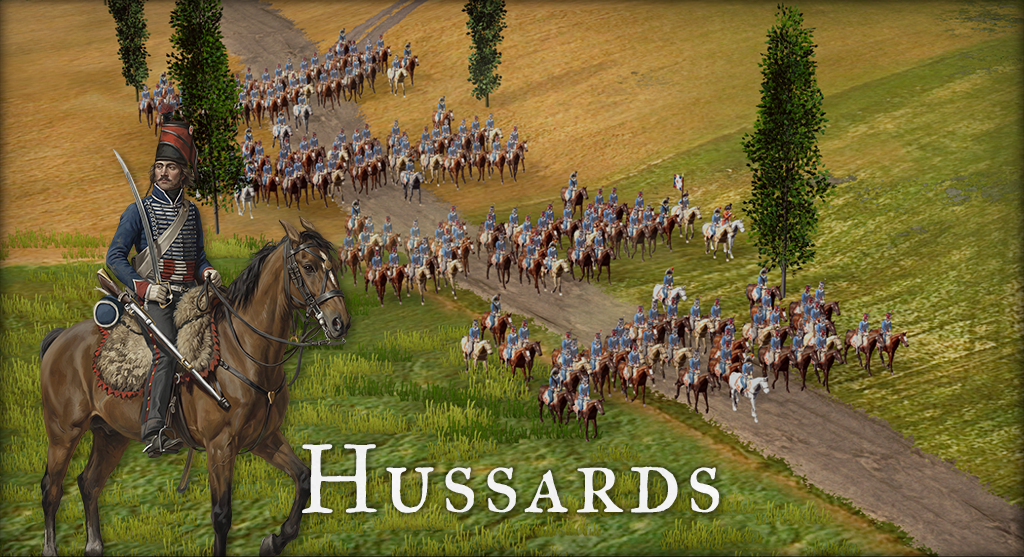
Type: Light Cavalry
Like horse chasseurs, the hussars are a versatile light cavalry force. They are experts in raiding, screening and pursuit. While often armed with carbines, in battles they fight with cold steel, namely a curved cavalry sabre for slashing.
Artillery
The French artillery in 1796 is following the Gribeauval system, which standardizes the branch and weapons used. For field battles, the main armament are light 4-pounder cannons, medium 8-pounder cannons and heavier 12-pounder cannons. When forming batteries, the heavier cannons are usually paired with 6-inch howitzers, capable of firing explosive shells, which the cannons cannot not fire. Main ammunition is solid (round) shot, grapeshot and canister. The latter two are used with deadly effect when firing at enemy infantry at close range, transforming each cannon basically into a huge shotgun.
Napoleon, being an artillery officer by formal education, prefer centrally commanded large concentrations of artillery rather than evenly distributing the cannons he has among the different units. During this time it is common for infantry battalions to have two light cannons as regimental guns (a practice that started during the Thirty Years' War). Under Napoleon, it is more common to combine these regimental guns into ad hoc light batteries, increasing concentrated firepower but at the same time freeing the infantry from the burden of moving the cannons with the line of battle.
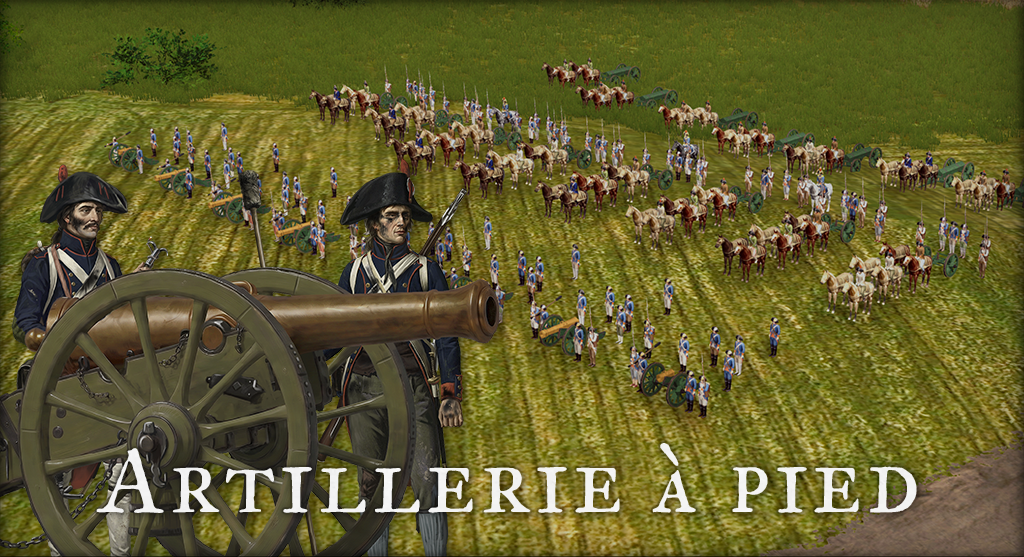
Type: Foot Artillery
The foot artillery is formed into batteries combining artillery companies and civilian contractor manned train companies to move the cannons and ammunition, or by combining light regimental guns of multiple battalions. A full battery may contain up to six cannons and two howitzers. In battle, the batteries are also augmented with infantry soldiers to help move and defend the cannons. The guns are limbered up to move longer distances, and manhandled to move shorter distances. In foot artillery the gunners and assisting infantrymen walk alongside the limbers, reducing speed to that of walking.
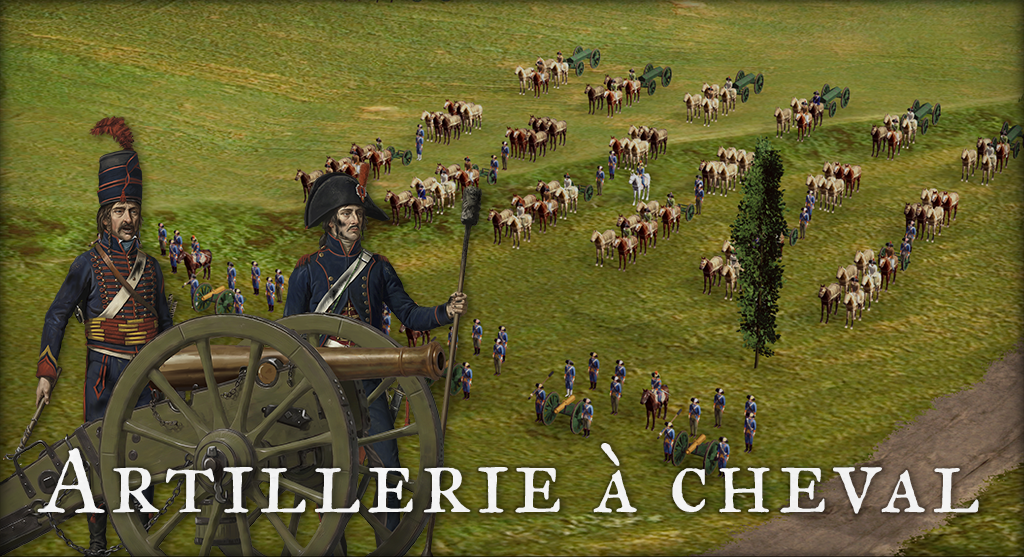
Type: Horse Artillery
To support operations requiring fast movement, such as vanguard, rear-guard or cavalry actions, small part of the French artillery is organized into mounted (horse) artillery. The difference from foot artillery is that all the gunners have horses (or ride the caissons), which allows the unit to move with cavalry. For this reason, horse batteries use lighter cannon types and form smaller batteries.
...And There's More
The above are not the only units available for Napoleon, as can be seen in our recently released video, showing some of the additional units in the campaign:
Currently the artists' work continues with the Austrian roster, and we'll take a closer look at that a bit later. Though, you may already spot some of the new models and textures in our latest videos on YouTube.
Cheers,
Grand Engineer Corps