
Hi all, Ivan here (our team's animator)
To celebrate International Animation Day, I thought it could be fun to share some of the behind the scenes process of creating Éalú. Warning for those who haven't completed the game: There are spoilers ahead but I'll use Steam's feature to hide them unless you want to see!
Today I'm excited to share:
The physical setup for animating Éalú.
How we planned & stayed organized during production.
Some of my sources of inspiration for the animation in our project.
Physical Animation Setup
The world of Éalú was built inside my roughly 2.5m x 4.5m (8ft x 15ft) garden shed, on top of this beast:
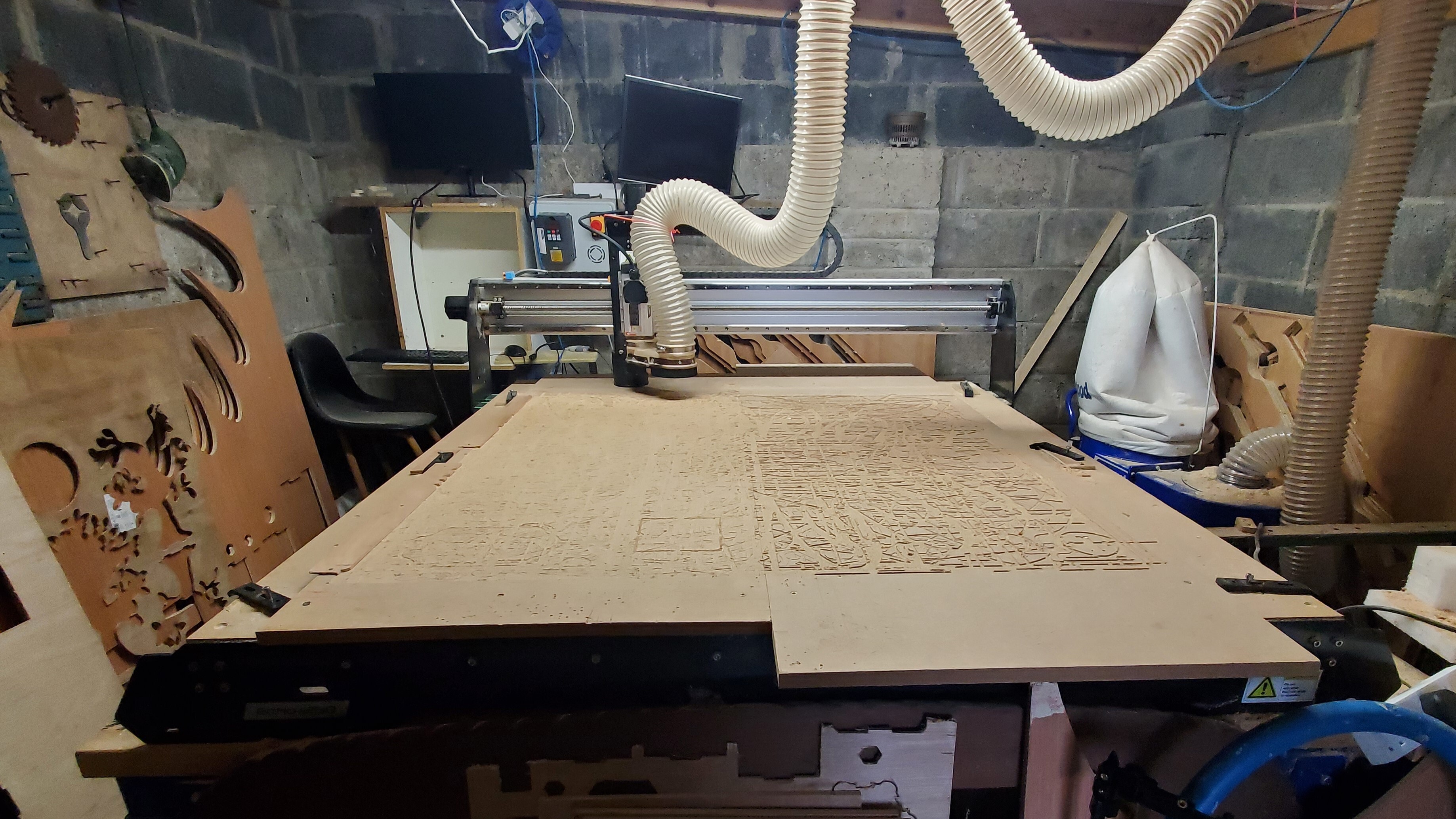
That's my 1250x1250mm CnC routing table I normally use to build parts for live theatre sets, and is also the tool I used to carve all the wooden parts for the maze, puzzles, puppets and set pieces for our game. It doubles as an excellent stopmotion animation table, as it's massively heavy & quite rigid and therefore doesn't vibrate much or shift position if you bump into it or lean against it. Add in the fact that, with the lights switched off, my shed is dark inside even in the middle of the day, & you have the makings of a pretty decent place in which to animate... especially considering our lack of budget!
As space on the table is limited, I made the sets for Éalú modular. I created 3 walls with doors cut into them, and 3 solid walls, and some other custom walls for special rooms. This way, instead of needing enough space to build all 74 rooms of the maze ahead of time, as I animated I could select the appropriate walls, build a single room, set up my lights, animate said room & then tear it down and get ready for the next one. Here's an example of a room set up and ready for animating:
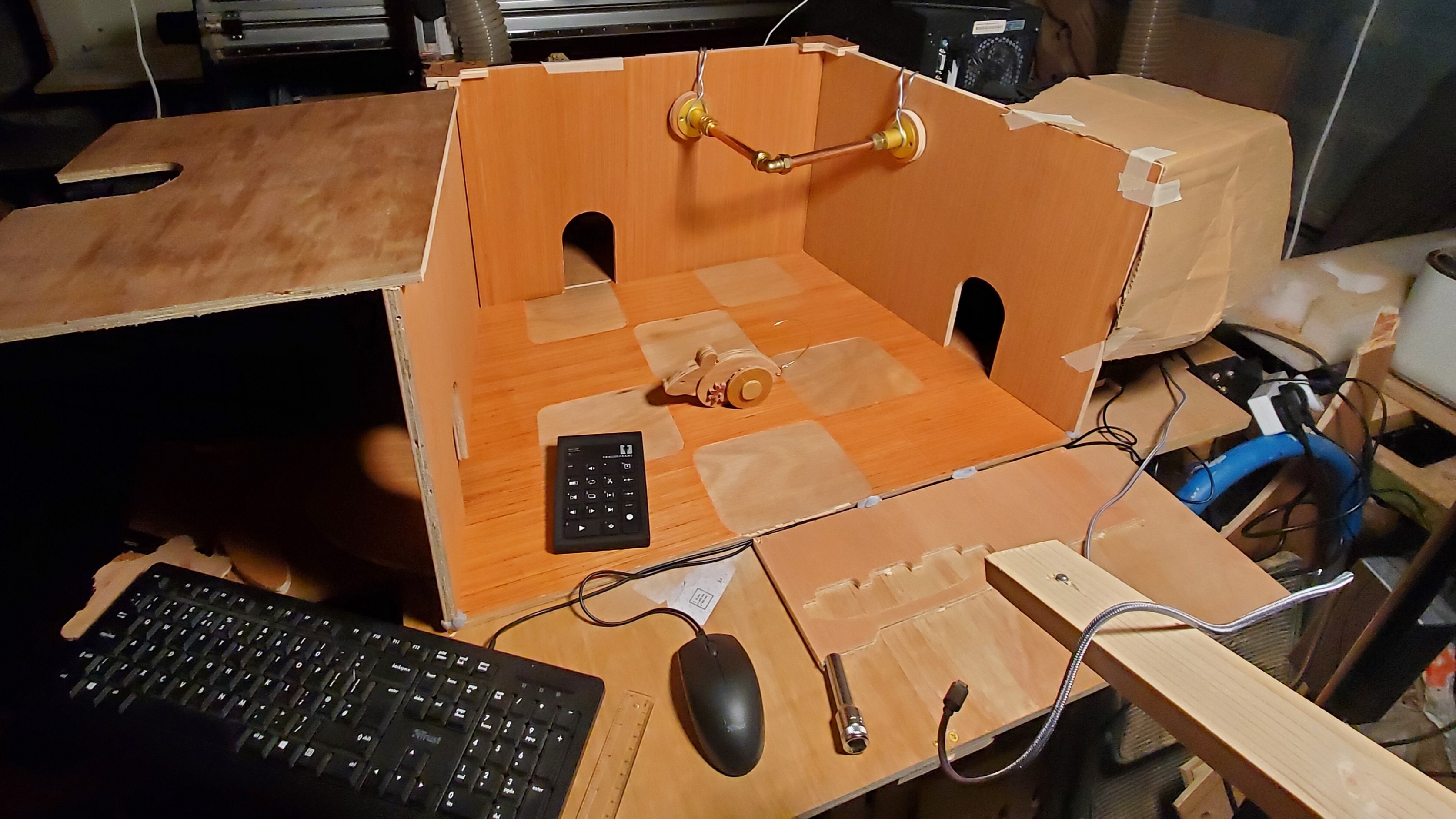
And a screenshot of what that room looks like in the completed game:
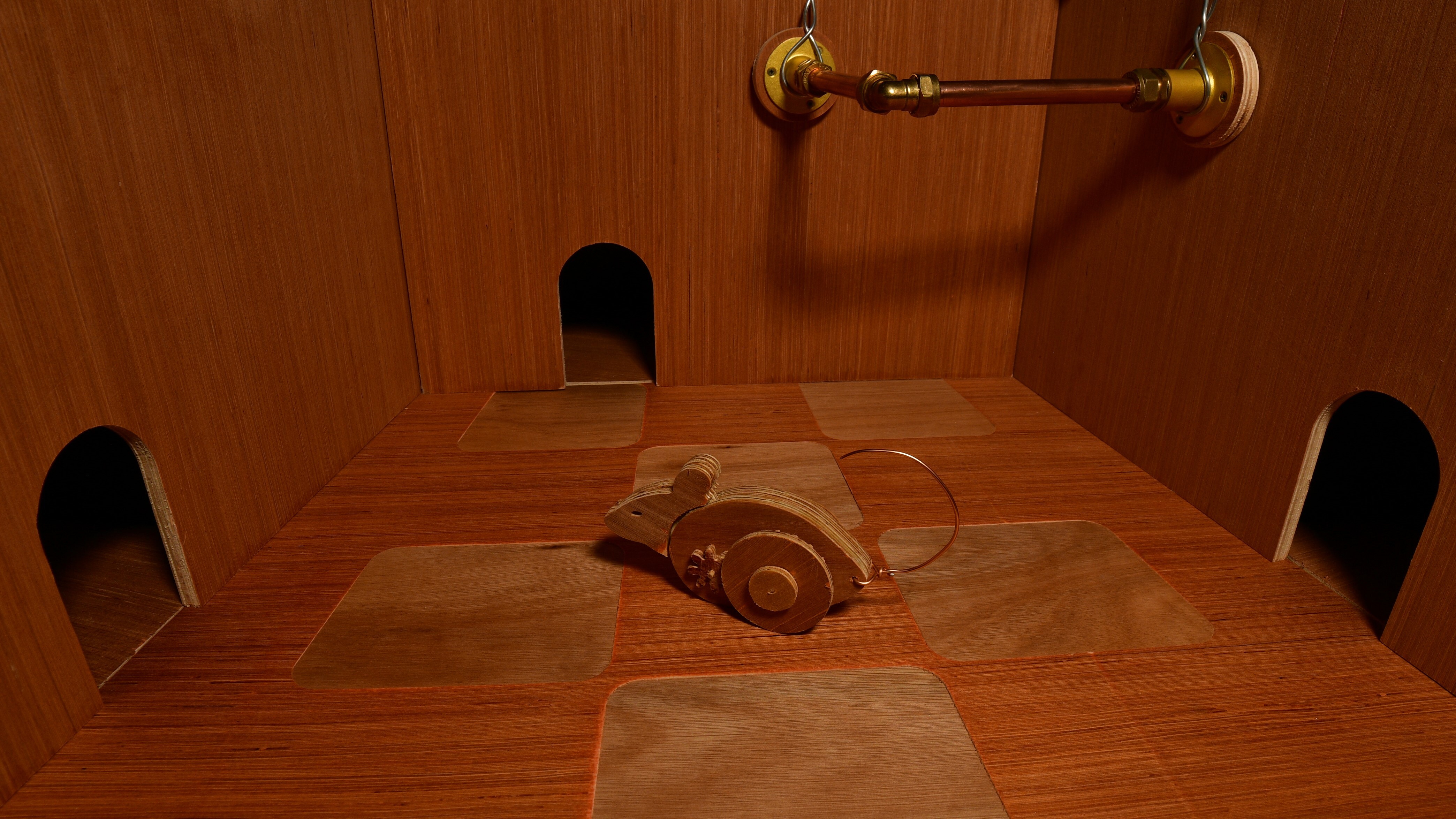
Once I had a room set up, the next step was animating every action the mouse could take in that room, one photo at a time! The room in the above screenshot required 7 animations: An entry & exit animation for each door, and an "idle" loop animation of the mouse rocking in place in the center of the room. To get everything just right, I would use a still frame of the end of the "idle" animation loop as a reference point to start/end the other animations. Here's an example of a different room where I was testing the mouse entering from the front, and stopping just before the position where the "idle" animation in that room should start:
With 74 rooms in the maze, and 512 animation clips needed, something absolutely essential which we planned out before creating a single frame of animation was....
Planning & Staying Organized
All of the animation and back end development for Éalú was done by just 2 people; myself and Ben Orr. Due to our commitment to making everything in the game hand-animated, we knew we would need to stay very organized or get buried by what we set out to do, so the first thing we did was create a way to easily pass work back and forth to each other & track our progress.
At the beginning a drew out our map of the maze with pencil & paper, and then I created a digital PDF map of the maze & turned each room into a clickable button. MAJOR SPOILER - PORTION OF MAP:
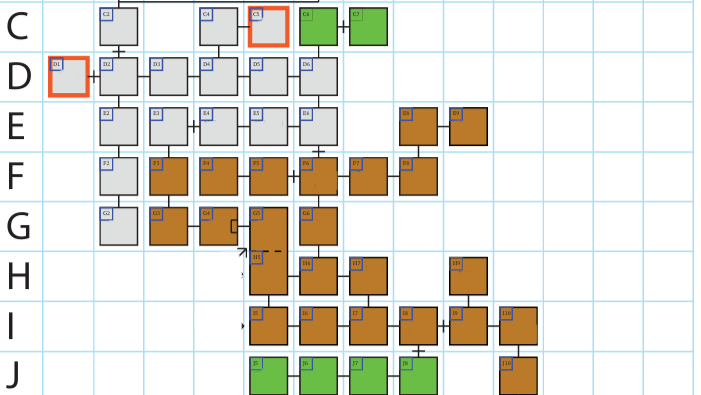
Clicking on any room in our PDF would open up a tab in a google spreadsheet with an animation shot list for that room, along with the status of each animation:
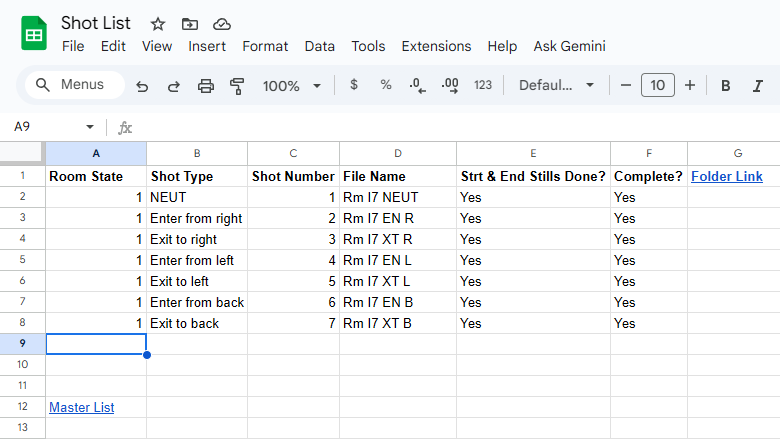
And within that shot list was a link to where completed animations would be stored, for easy access by Ben during development:
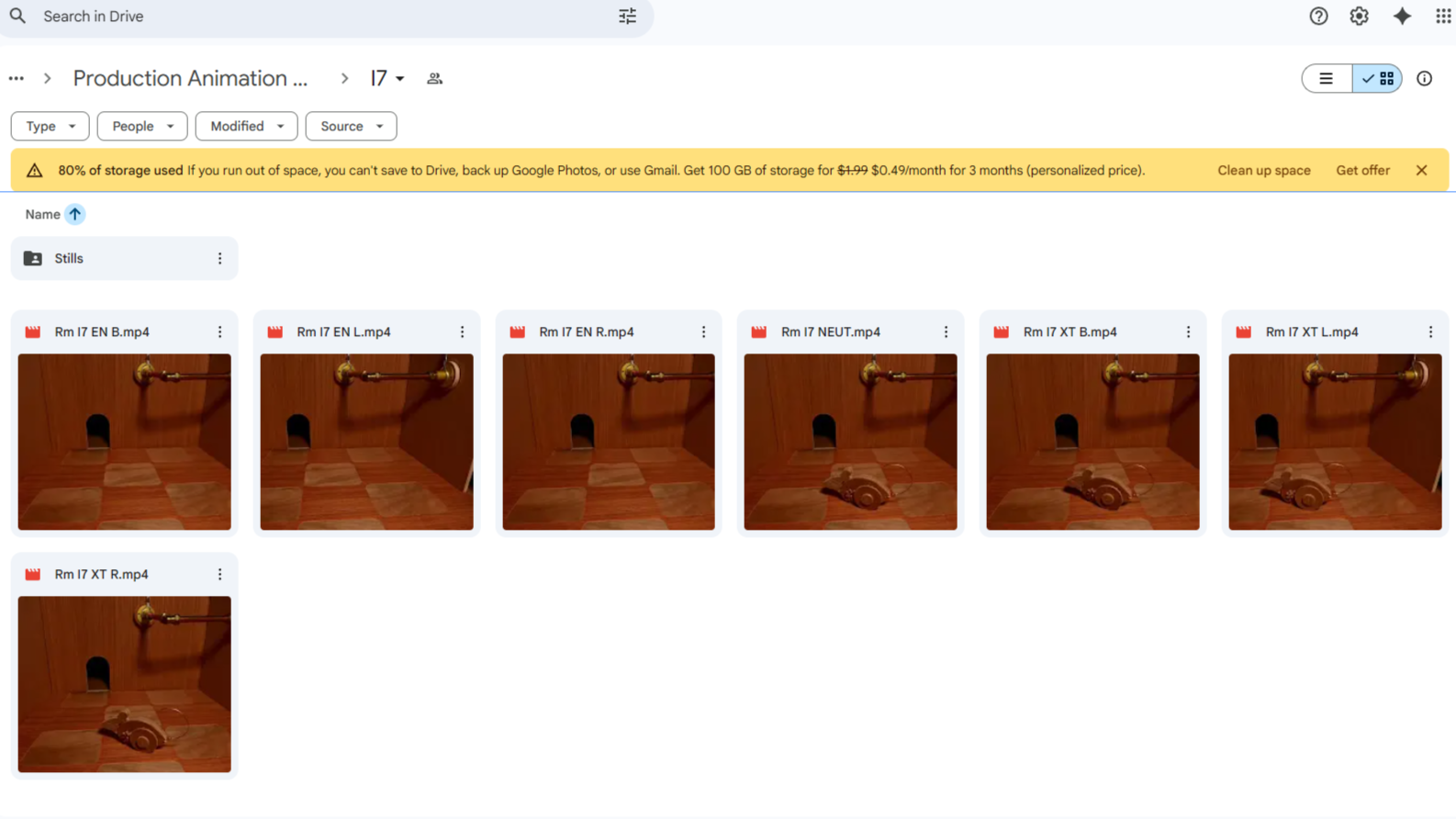
All of this was absolutely essential and it helped Ben & myself a lot that we built an organizational architecture together before we started. This way we could always easily see what was done, what still needed doing & where are assets all were. While corridor rooms (rooms with only doors in them) were relatively simple, puzzle rooms get pretty darn complex. This puzzle room, for example, was made from 28 separate stopmotion animation clips, and Ben put them all together using the media player in Unity and a lot of careful thought and imaginative thinking to make it all work based on mouse click inputs:
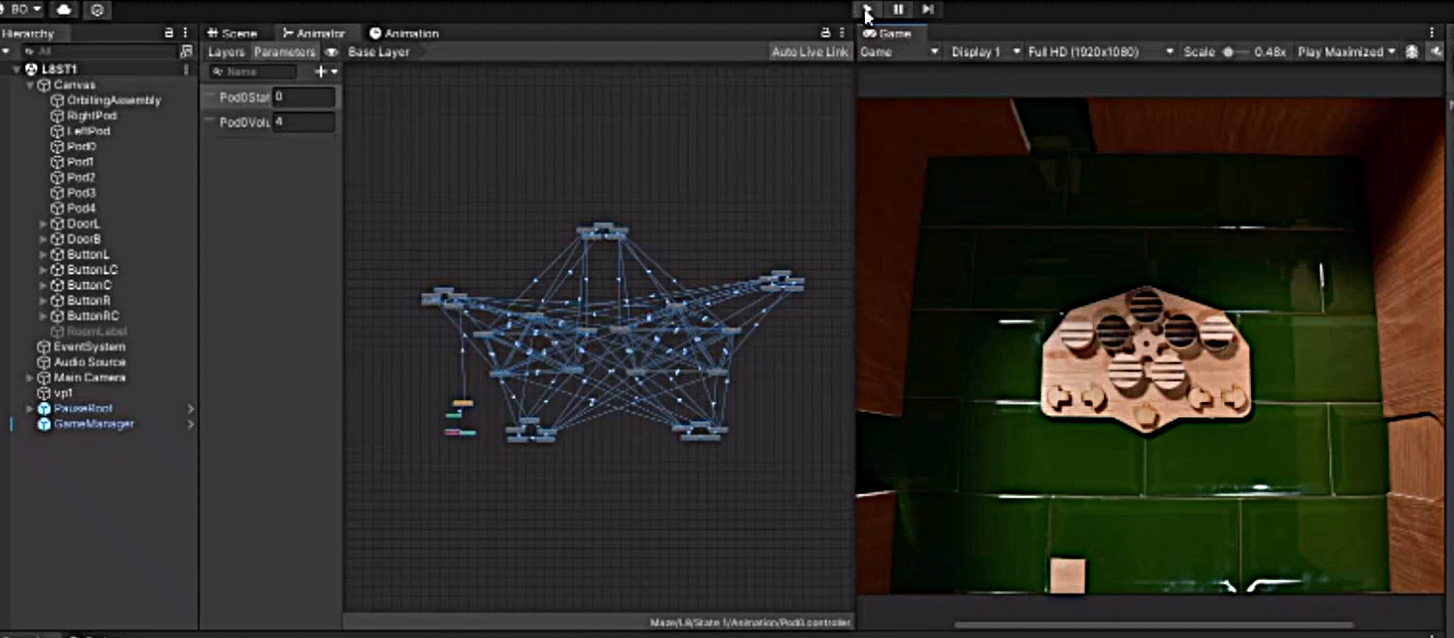
That spider web of connecting lines is the state machine he built to track the state of each circle in the puzzle, how full it was, which portion of the corresponding animation was to be played based on the next button clicked, etc. Being a programming & dev novice myself, I'm in absolute awe of how he made this all work. For all the careful, methodical detail I had to put in animating each frame by hand, Ben was doing the same behind the scenes to build our world out of the huge pile of animation files I handed to him.
We probably could have saved ourselves a ton of work by generating a sprite for our mouse based on sequences of photos, but I really wanted the mouse to truly be in-situ to get all of the perfect, subtle reflections, shadows and lighting that comes from real photography. A lot of this is because of the people who were...
Sources of Inspiration for Éalú's visual design
Ever since getting really into stop motion animation, I've taken inspiration from and wanted to emulate animators who have become heros of mine. In this project, I'd say the biggest sources of inspiration for me were Lotte Reiniger & Jan Švankmajer. Both of them had projects they created that were beautiful silent films & I very much wanted Éalú to feel like an interactive silent film. Individually their work spoke to me in different ways.
Lotte Reiniger
My wife first introduced me to Lotte's incredible works many years ago. In addition to her co-invention of the multiplane camera & creation of the first surviving feature length animation, I was very inspired by her resourcefulness. The fact that she created her earliest silhouette stop motion by cutting a hole in her table & converting it to a light table with a camera mounted above is a testament to creating complex art with minimal equipment & being creative with what you have on hand.
Jan Švankmajer
I greatly admire how surreal and tactile Jan's work is, and the dark & even humorous nature of some of his most macabre short films. Many of his pieces also play with confined space & constrained camera angles, both of which were very useful sources of inspiration in attempting to create the feeling of a restrictive maze for the mouse to inhabit.
Ask me questions!
If you're reading this far, thanks for taking an interest in a portion of how Éalú was made! If there's things I didn't cover here you're curious about, or you wondering something more in depth about what I did share, please feel free to ask! Ben and I have no desire to be closed off or secretive about how we made Éalú, as we both learned so much from the past work of others to make this possible and we would be thrilled to pay it forward.