
Hi everyone,
Music is an important part of any game, and Carthage: Bellum Punicum is no different. In Carthage: Bellum Punicum, the music is designed to react to the world around you. Your battles aren’t just accompanied by one fixed track, but by dynamic music that changes depending on your enemy and the stage of battle you’re in.
If that’s music to your ears, then today’s devlog is for you.
Today, we’ll be going into exactly what it takes to write the soundtrack for a time millennia gone by. The video version of this devlog is here, and includes the words and footage of composer Cosme Leites for your viewing pleasure:
The Sounds of War
The Music of Battle
The music in Carthage: Bellum Punicum has been created to be more than just background ambience. It’s been designed to constantly adapt to what is happening in the game, helping every battle and campaign feel unique.
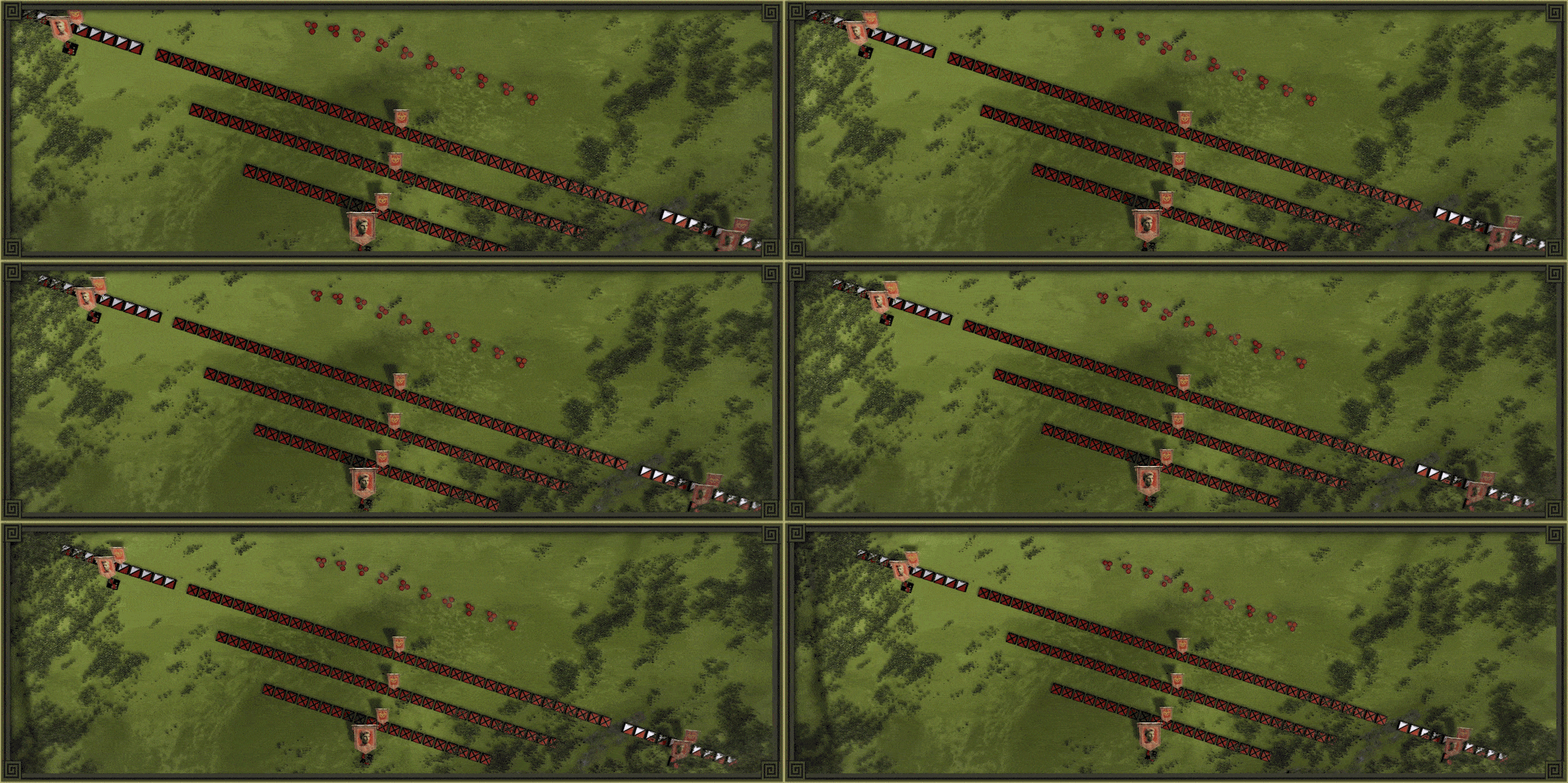
In the throes of battle, the music you’ll hear is determined by the enemy army’s faction. You’ll hear something different depending on whether you’re fighting Romans, Iberian tribes, Gauls, Greeks or Carthaginian forces. Each cultural group has had its own battle soundtrack carefully crafted using many different styles and instrumentation, creating a distinct musical identity for each.
Outside of the distinct musical identity for each enemy faction, every battle track is also divided into three dynamic intensity levels that you’ll hear as the battle unfolds.
The first intensity plays before the battle starts. You’ll hear this when manoeuvring your armies into position, preparing for the inevitable clash to begin.
The second starts sounding as the armies start the engagement, bringing more tension and energy to match the battle begins.
And finally, the music reaches its highest intensity as your units are engaged in the fray, ramping up the energy as the battle does.
Campaign Notes
Dynamic music is present in more than just your battles, though. The campaign map follows a similar philosophy, with some specific differences, which we’ll explain here.
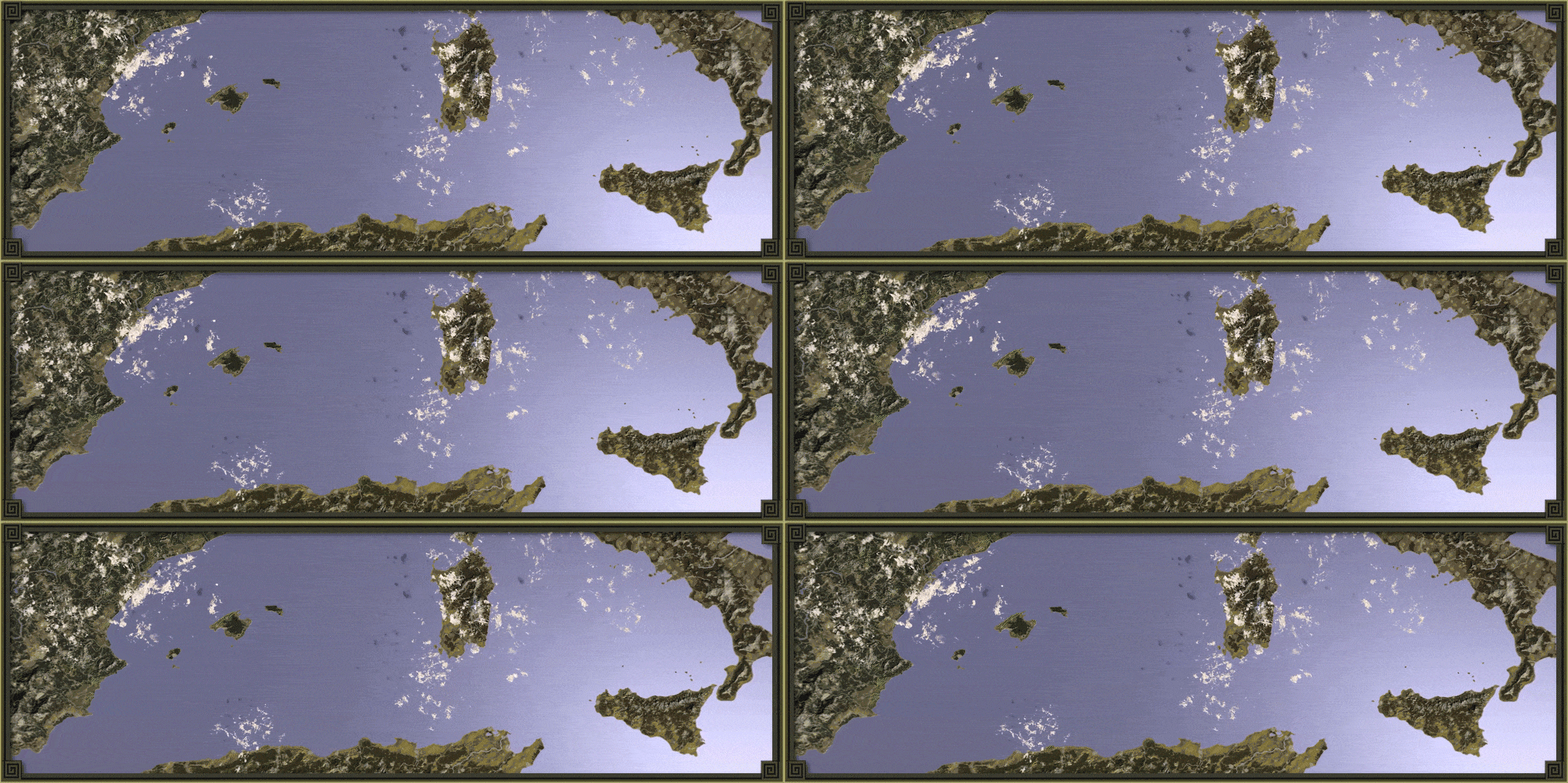
As we described above, the music of battles in Carthage: Bellum Punicum depends on your variables like your enemy, or the phase of battle you’re in, but the music of the campaign map changes according to the region where the your army is located. Exploring Iberia brings Iberian-inspired music, marching through Gaul introduces Celtic themes, Italy features Roman music, while North Africa is accompanied by Carthaginian-inspired compositions.
The goal is simple: whoever you’re fighting, or wherever your army is on the map, the music should reflect it.
An Interview With Carthage: Bellum Punicum's Composer
Creating a soundtrack that represents moments from millennia gone by was one of the biggest challenges of the game.
We sat down with Cosme Leites, composer of Carthage: Bellum Punicum, to talk about the ideas and inspiration behind the music, which you can read below:
Before writing a single note for Carthage: Bellum Punicum, I asked myself one question: What should a war that took place more than two thousand years ago sound like?
When we think about video game music, we usually think of memorable melodies. But to me, music has a much more important mission: to make you forget, if only for a few minutes, that you're sitting in front of a screen.
That was one of my main goals when composing the soundtrack for Carthage: Bellum Punicum.
I wanted players to feel they weren't observing the ancient world from the outside, but experiencing it first-hand. That, as soon as a campaign begins, they stop being just a player and become a strategist, a general leading their people. That they feel the responsibility of protecting their civilization, conquering new lands, and writing a story that could have happened more than two thousand years ago.
The challenge was even greater because Carthage: Bellum Punicum features a variety of civilizations, each with a very distinct personality.
To achieve that level of immersion, the music had to convey the feeling of marching alongside an Iberian army, managing the resources gained after conquering a Greek city, or preparing for a long siege.
Each civilization and each culture needed its own sonic identity.
To achieve this, I built the soundtrack on two very different pillars.
The first is the orchestra and percussion, whose role is to represent war. Low registers, dissonance, brass, and percussion create constant tension while conveying danger, uncertainty, and the feeling that every battle has consequences.
At the same time, the orchestra speaks a musical language that feels familiar to modern players. It acts as a bridge between the present and the past, allowing me to combine a cinematic aesthetic with historical instruments to create music that immerses the player without distracting them from the game.
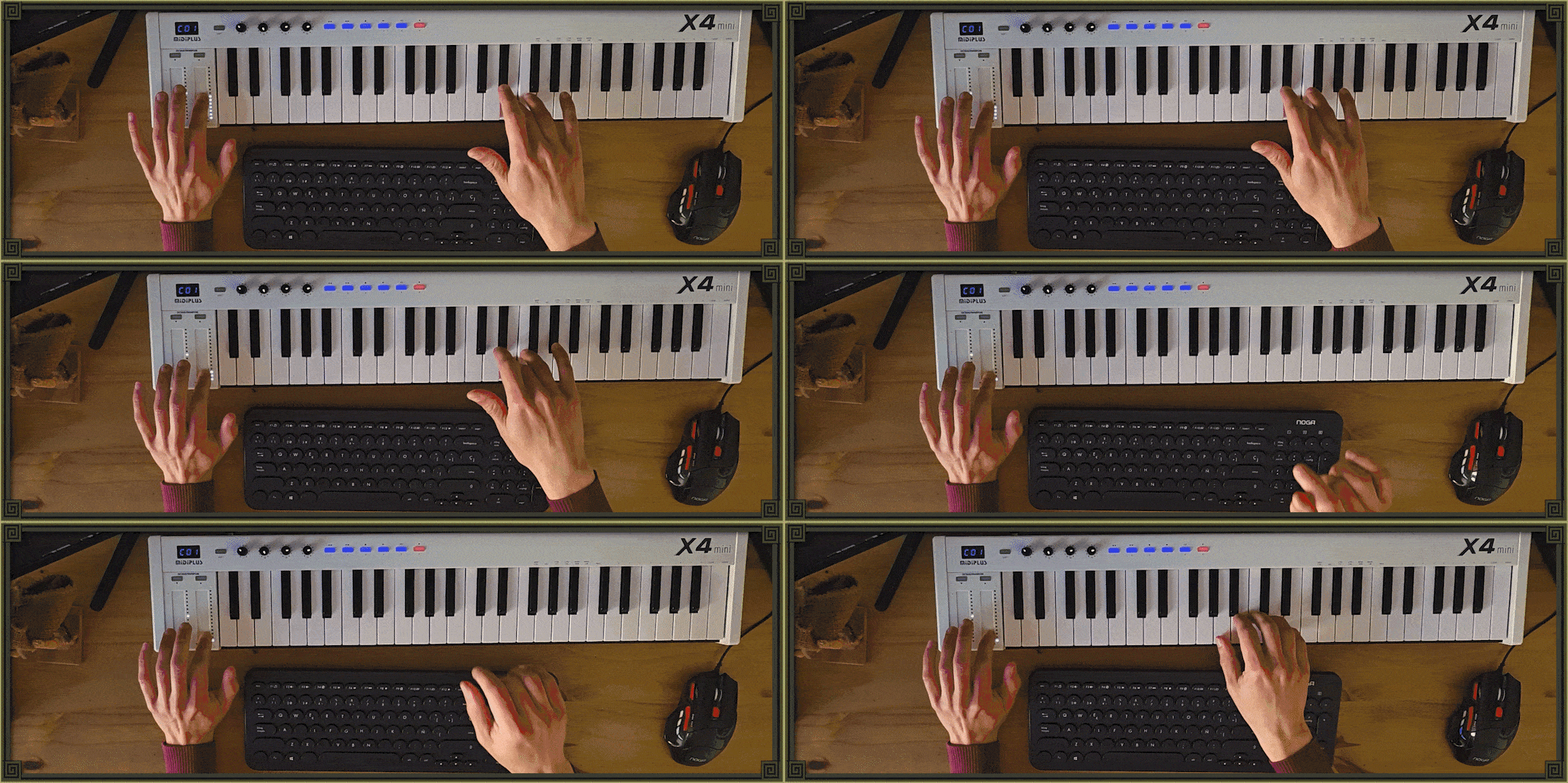
The second pillar are historical instruments from those ancient times and their authentic sounds that to me hold a part of the soul of each civilization.
They give every faction its own personality, making it possible for players to recognize a culture within just a few seconds of hearing its music.
To reinforce that feeling, I gave these instruments a wider reverberation, creating the impression that their sound has travelled for more than two thousand years before finally reaching our ears.
To bring each civilization to life, I used a selection of instruments inspired by its historical identity:
Iberians: aulos and Middle Eastern-style lutes.
Greeks and Carthaginians: kithara, kemençe, and other instruments from the Mediterranean tradition.
Gauls: Irish flutes, tin whistles, and bouzouki, aiming for a wilder, more tribal sound.
Romans: the powerful cornu, accompanied by male voices and percussion that evoke the discipline and strength of the Roman legions.
Even the percussion changes from one civilization to another. Each army has its own drums, rhythms, and sonic colors, reinforcing the feeling that every people has its own identity on the battlefield.
I didn't try to reconstruct with absolute accuracy what the music of Antiquity actually sounded like. Historians, archaeologists, and outstanding documentaries already do that.
What I truly wanted was to capture an emotion.
What would it have felt like to hear an army on the march, celebrate a victory, or lay siege to a city more than two thousand years ago?
But if, during a game, the music makes you forget for just a moment that you're sitting in front of a screen, and instead makes you feel like you're part of that ancient world, then I'll have achieved exactly what I set out to do.
And you'll probably end up watching your enemy run away waving a white flag.
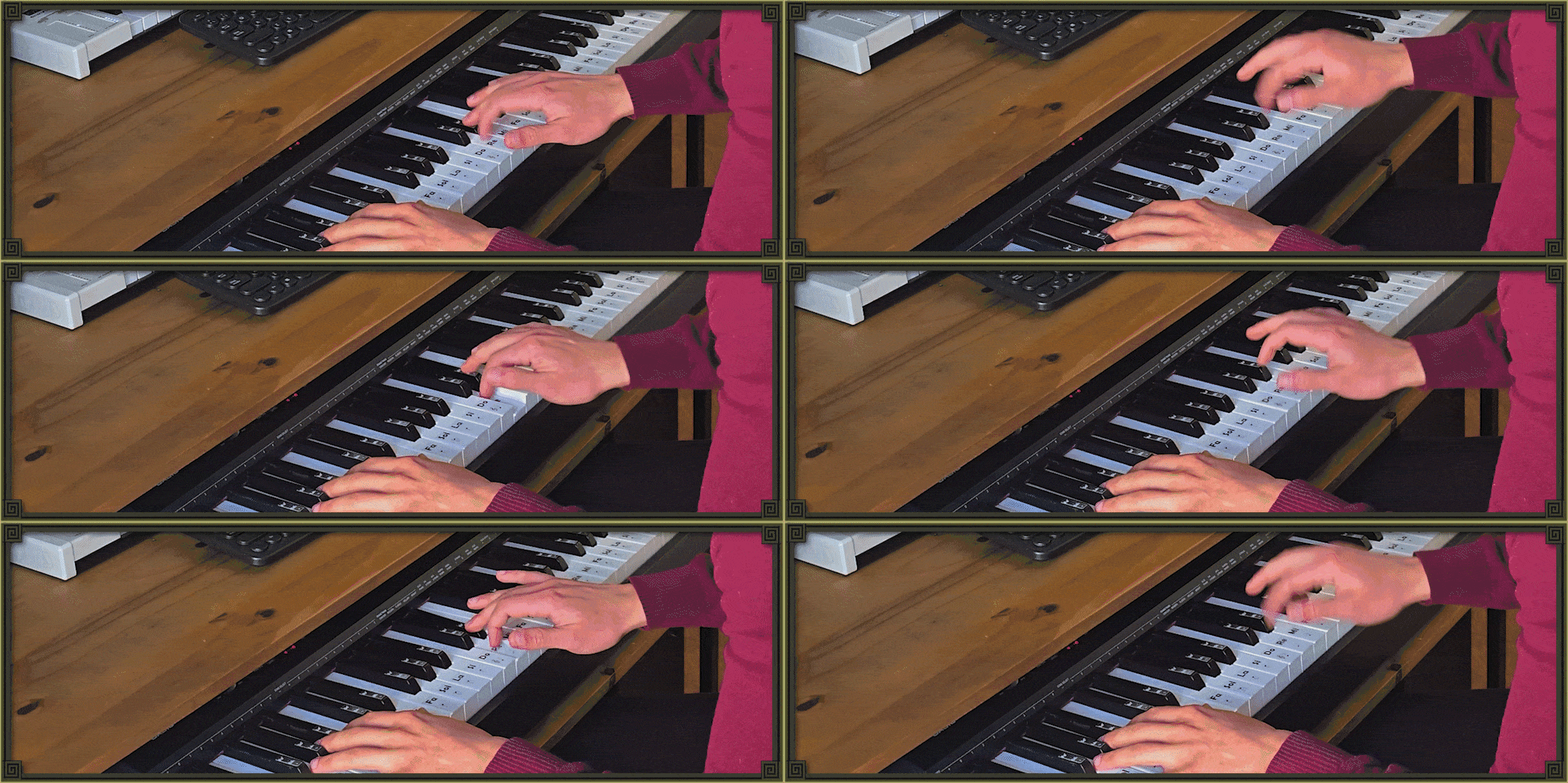
As you can see, the music of Carthage: Bellum Punicum has been created to help you feel a part of the world, there to help you feel the weight of each decision, the tension before a battle, and to represent the identity of the cultures that shaped this era.
As usual, thank you all for your support!
And if you haven't added Carthage: Bellum Punicum to your Steam wishlist yet, now's a great time. Every wishlist helps get the game in front of more players!