
Hi everyone,
Today's devlog covers one of the systems that makes every battle in Carthage: Bellum Punicum feel unique: AI battle formations. We'll also be showing two new visual display options coming to the game.
You can also check a video version of this devlog here:
Battle Formations
In Carthage: Bellum Punicum, AI commanders choose from a wide variety of battle formations, each with its own tactical logic. Roman armies fight differently from Iberian ones. Gaulish commanders approach the battlefield differently from Carthaginian ones. Even within the same culture, individual commanders can favor different formations based on their personality traits.
How AI Chooses Formations
Three factors determine which formation an AI commander picks:
Culture: Every culture (Iberians, Gauls, Romans, etc.) has its own pool of battle formations reflecting its historical military traditions. This is the primary factor in a commander's choices.
Commander Personality: Each culture’s formations include a wide variety, from classical to more unusual ones. Traits like "Conservative" or "Traditionalist" favor stable formations with strong central lines and protected flanks. Traits like "Innovative" open the door to more unconventional approaches.
Army Composition: Some formations suit cavalry-heavy forces; others suit infantry better. The AI takes stock of what it has and adapts.
Formation Examples
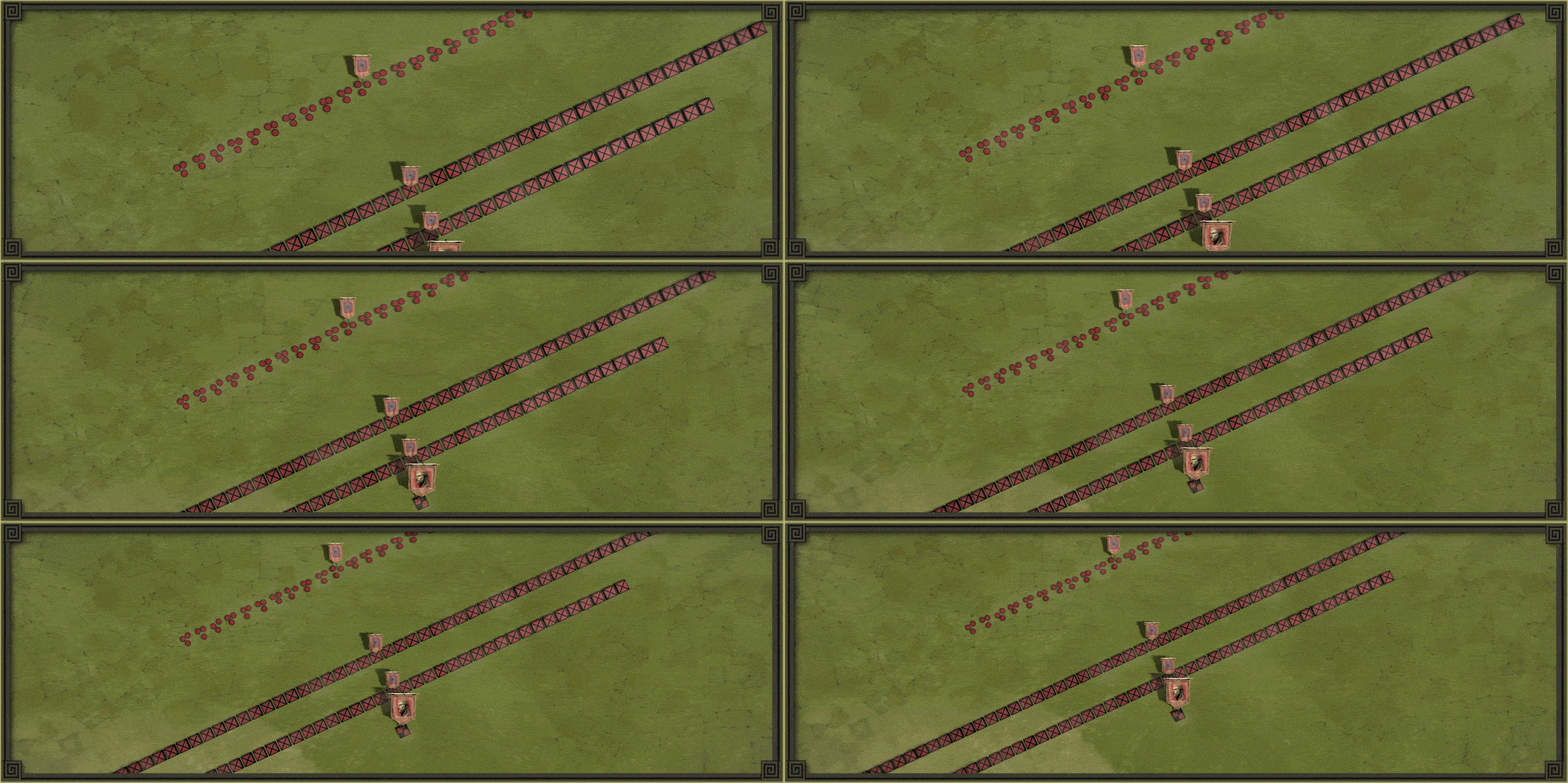
Classic: a balanced formation with a solid center and cavalry on both flanks.
Triple Axis: a Roman-style formation with three central lines: light infantry in front, medium infantry for depth, and heavy infantry at the rear, with cavalry on both flanks.
Broken Triples: a variation of Triple Axis where the front lines split into smaller groups, allowing the second line to fill gaps and push forward.
Split Triplex: a more open Triple Axis, where all three lines spread across a greater battlefield width, with the flanks arranged in a V.
Spearhead: a V-shaped formation where the center strikes first, giving the flanks time to react and reposition.
Crescent Trap: an inverted V where the flanks engage first, drawing the enemy in as the center closes in around them.
Flank Fortress: the army splits into two wings with a protected center. A high-risk formation, but a successful flanking action can lead to full encirclement.
Clanwall: a balanced tribal formation with a solid center and stable flanks.
Crescent Line: a U-shaped formation with a strong double-lined center and extended flanks.
Hammer Right: a strong right flank of cavalry and light infantry acts as the hammer. The reinforced center and weaker left act as the anvil.
Twin Hammer: both flanks are reinforced at the expense of the center, meaning this is a formation built for double envelopment.
Moon Wedge: similar to a Spearhead, but with a wider gap between center and flanks. The center forms a double line designed to break through enemy formations.
Visual Display Options
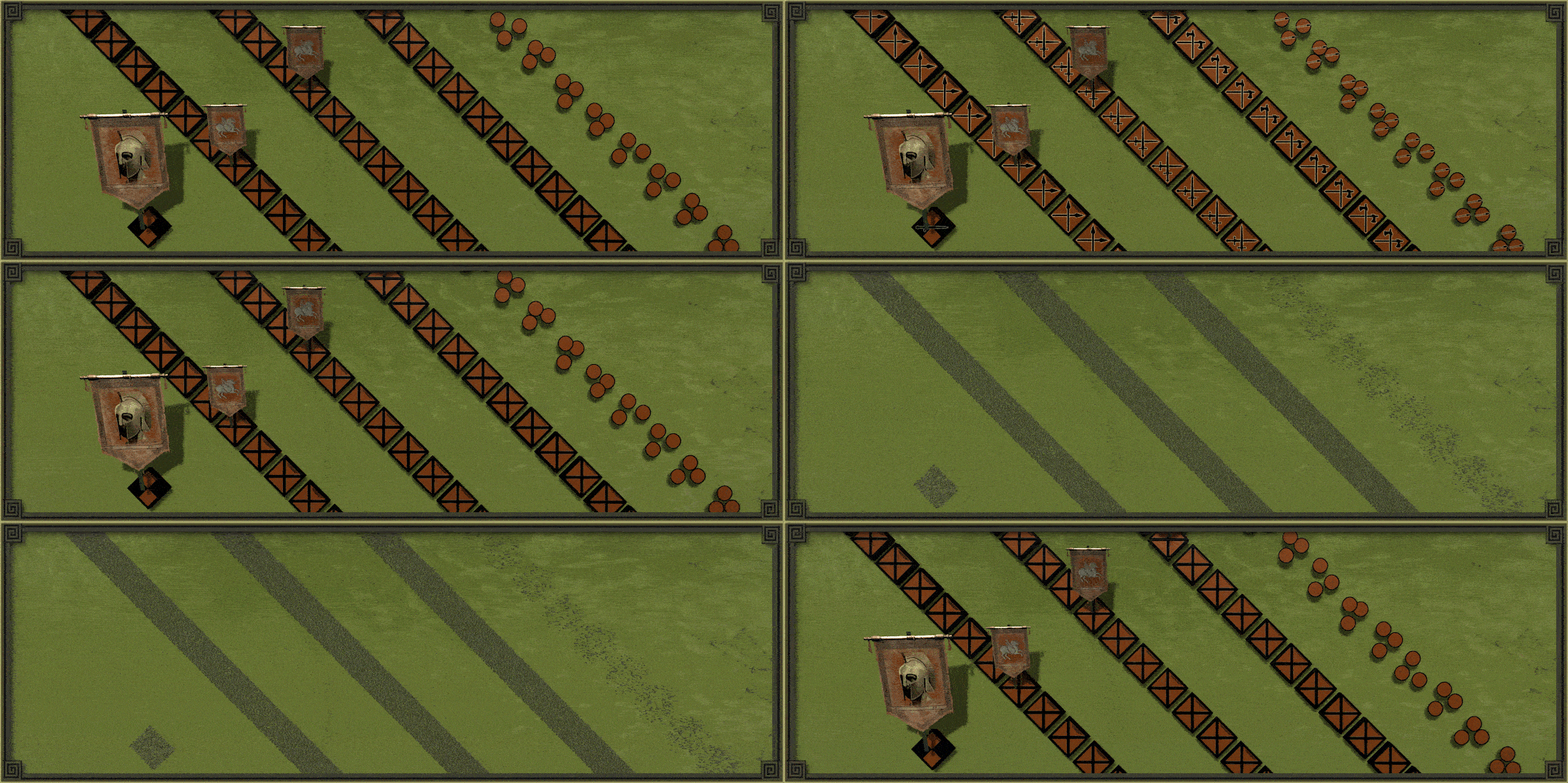
We're also adding new ways to customize how units appear on the battlefield. By default, units are shown as square symbols in a HistoryMarche-inspired style. Two optional modes can change this:
Weapon Display Mode: units show their primary weapon icon instead of a symbol, such as swords, spears, axes, maces, bows, slings, and javelins. Toggle at any time during battles, or set it to activate automatically when a unit is selected.
Individual Soldiers Mode: units are displayed as individual soldier models instead of a single square. A unit of 484 soldiers appears as 484 individual models in Eagle view. Toggle freely, or set it to activate automatically as you zoom in.
Thank you all for your support!
If you haven't added Carthage: Bellum Punicum to your Steam wishlist yet, now's a great time. Every wishlist helps get the game in front of more players!